
Abstract:
Project progress is one of the three main objectives in engineering construction. However, most projects face challenges in effective progress control, and plans are often not executed as intended. The causes are mainly twofold: inadequate planning and unreasonable scheduling, as well as insufficient control during project execution. The emergence of BIM technology provides new approaches and methods for project planning and management. This article analyzes and explains 4D management practices in commercial complex projects, aiming to offer references for project management.
Keywords: BIM, 4D, Collaboration, Progress Management
BIM (Building Information Modeling) serves as a database containing information relevant to the entire lifecycle of a building. It frees construction professionals from complex and abstract graphics, tables, and text, utilizing vivid 3D models as information carriers in construction projects. This promotes communication among project stages, disciplines, and personnel, minimizes losses from information overload or loss, and enhances both individual efficiency and industry-wide productivity.
Engineering schedule preparation and management are central to project management, alongside cost and quality control. A well-developed construction schedule ensures coordination among all involved parties. Both owners and contractors must pay great attention to plan preparation and management. However, complex factors often cause recurring problems in schedule management across projects, mainly due to limitations in traditional management methods. Thus, exploring technological innovation in schedule management is critical. In the Qingdao Wanda Plaza project, the application of BIM technology in 4D schedule management was studied and implemented. This article analyzes the differences between traditional and BIM-based management methods, and proposes new guidelines for implementation.
1. Plan Preparation
Engineering project schedule preparation often depends largely on the experience of project managers. Although supported by construction contracts, schedule targets, and construction plans, the unique characteristics of each project and subjective judgments inevitably result in unreasonable schedules. Current methods and tools are relatively abstract, making schedule validation difficult. If problems arise, construction according to the plan will not proceed smoothly.
Currently, planners are often younger and lack extensive work experience. They may not fully understand the complexity of multidisciplinary coordination and the relationships between different processes and working hours in large-scale, high-end integrated projects such as Wanda Plaza. This increases the likelihood of unreasonable plans.
Traditional planners often do not estimate quantities for each task. Instead, they rely on drawing areas and allocate time based on previous projects, without verifying schedule rationality. For complex designs such as Qingdao Wanda Plaza, engineering quantities differ greatly between floors. Simply applying one floor’s construction period to others is inaccurate; structural complexity also impacts duration. Although careful review and quantity analysis can yield accurate data, traditional methods do not allow planners sufficient time or energy for detailed work.
During internal planning review, traditional network planning diagrams are computationally complex and abstract, failing to intuitively display planning progress. This increases the entry threshold for reviewers, requiring substantial time to analyze task logic and corresponding works, and even repeated drawing reviews. Otherwise, planners must spend more time on detailed explanations during review meetings, reducing efficiency.
The introduction of BIM technology has greatly simplified these tasks. First, BIM models contain component size information, and BIM software can automatically generate concrete consumption for each area. By adding parameters, even different grades of concrete consumption can be obtained (Revit software provides accurate concrete statistics, while Luban and Guanglianda software offer steel quantity data). With these references and historical experience from Wanda Plaza, planners can determine reasonable working hour requirements. Secondly, BIM’s visualization allows planners to easily check for steel structure engineering and complex structures like ramps, eliminating the need for complex drawing reviews and enabling schedule adjustments. Finally, dynamic 4D construction simulation enables all stakeholders to quickly and accurately understand the plan and provide comprehensive suggestions.
The specific steps are as follows:
1. Rapidly create a BIM model based on CAD drawings. The steel structure model, developed separately by the steel subcontractor using Tekla software, may not meet progress requirements. Therefore, a simplified steel structure model can be made in Revit during the initial stage.
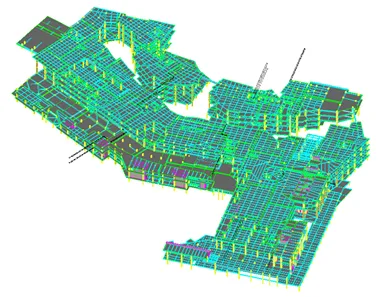
Figure 1. Structural Model of Qingdao Wanda Plaza
2. Export engineering quantities for each task from the BIM model, then determine accurate working hour requirements based on statistical data from previous Wanda Plaza projects.
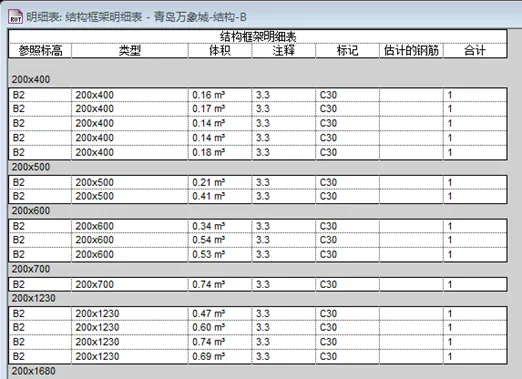
Figure 2. Revit software automatically calculates the amount of concrete used in each area and floor
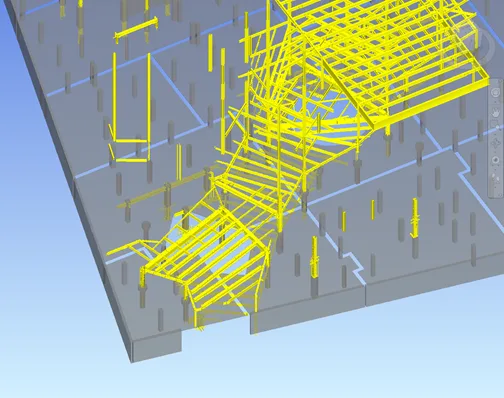
Figure 3. BIM Structural Model (Visual View of Steel Structure Quantity in Each Region)
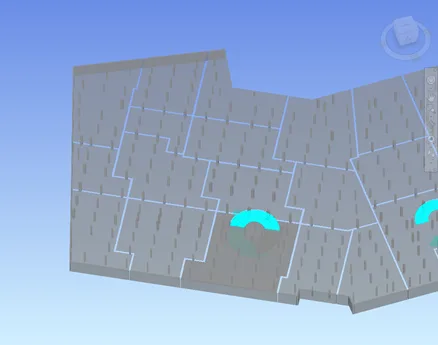
Figure 4. BIM Structural Model (Visual View of Circular Ramp Area)
After completing the plan in P6 or Project software, it is combined with the BIM model in Navisworks to form a 4D schedule. In Navisworks, different forms can be set to various display states, enabling visual checks of time settings and reasonableness.
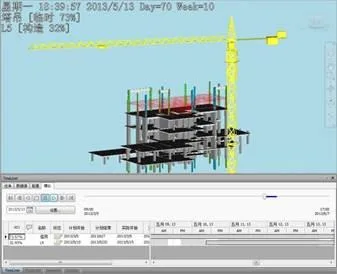
Figure 5. Dynamic simulation of apartment building construction
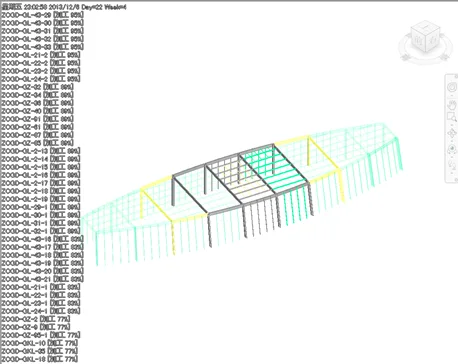
Figure 6. Simulation of main skylight processing, transportation, and installation
2. Plan Implementation Management
Traditional methods can only optimize schedule plans to a limited extent due to inherent shortcomings. Some issues remain undiscovered and only become apparent during construction, leading to passive plan modifications and loss of control over the construction process. The implementation process is illustrated in Figure 7.
BIM-based 4D schedule management repeatedly simulates construction processes, allowing potential issues to be detected early in a simulated environment. They are then addressed and countermeasures are developed, optimizing the schedule and construction plan to guide the actual construction, ensuring smooth project completion. The implementation process is illustrated in Figure 8.
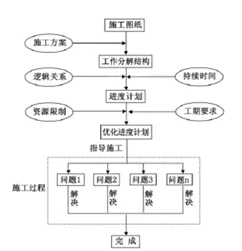
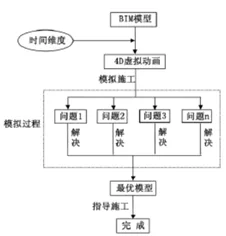
Figure 7. Traditional Schedule Management Implementation Process Figure 8. BIM-based 4D Schedule Management Implementation Process
In actual progress management, detailed schedule plans and technical tools like network diagrams and bar charts are available, yet accidents still frequently occur, directly affecting the project’s economic outcome. The main reasons are as follows:
2.1 Progress management issues caused by architectural design flaws.
The main task in the design phase is to complete construction drawings. For projects like Wanda Plaza, thousands of drawings contain vast data. Designers and reviewers have limited capacity, making errors inevitable. Tight timelines often affect quality. Additionally, each discipline’s design is completed independently, making spatial collisions and contradictions common. If not addressed before construction, these issues lead to delays, often measured in months due to extensive design changes.
To address this, the project team organizes drawing reviews, but spatial design errors are often hard to detect. While building the BIM model, the modeler reviews all drawings to understand dimensions and spatial positioning, inherently performing a drawing review. BIM’s visualization quickly identifies unreasonable design areas, such as checking stair, ramp, and escalator clearances, helping to avoid on-site rework and ensuring project progress as planned.
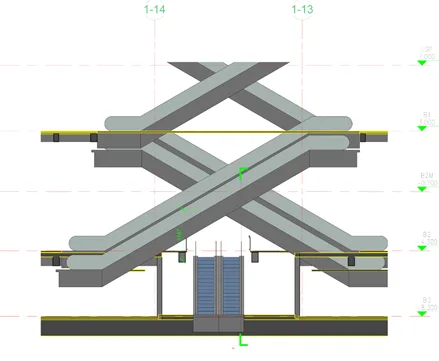
Figure 9. Escalator net height detection
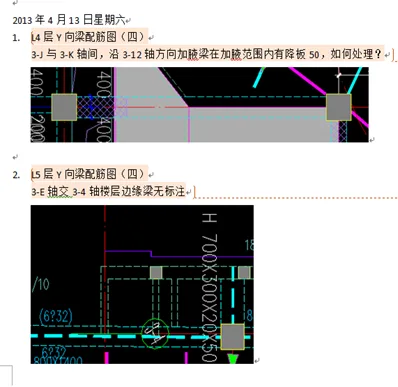
Figure 10. Drawing errors discovered during modeling
2.2 Progress management issues due to unreasonable schedule preparation.
This issue has already been discussed in detail above and will not be repeated here.
2.3 Progress management issues due to quality of on-site personnel.
Construction personnel’s understanding of drawings, familiarity with techniques, and operational skills impact project execution. BIM visualization enables all personnel to intuitively and accurately understand design intent, reducing issues caused by miscommunication, speeding up progress, improving quality, and ensuring timely decision execution. Visual models also provide on-site engineers with a robust standard for quality inspection. With smart devices, engineers can view models on their phones, enhancing efficiency compared to paper drawings.

Figure 11. Reinforcement Layout of Multi-beam Intersection Node
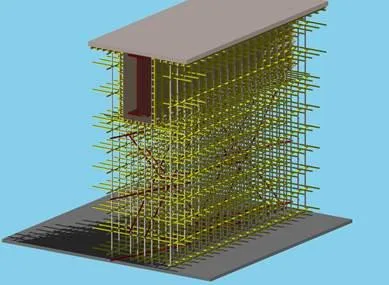
Figure 12. High Formwork BIM Model Disclosure
2.4 Communication and coordination difficulties among participants cause schedule management problems.
Construction projects consume substantial financial and material resources, requiring detailed plans for funds and materials. During construction, insufficient communication among contractors, owners, and suppliers, as well as mismatches between funding, material supply, and schedule, can lead to project delays.
The article further analyzes the steel structure engineering of this project. The steel structure was severely delayed early on, affecting the project’s critical path. Main reasons: 1) Inadequate information transmission between site and workshop caused processing delays, resulting in no steel for installation; 2) Inadequate communication and coordination with civil engineering led to missing insertion columns and rework; 3) Deviations after concrete pouring of embedded parts affected steel beam lifting.
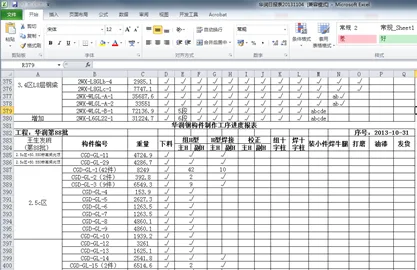
Figure 13. Steel Structure Processing Daily Report
The daily report shown above records factory processing progress each day, but does not clarify component locations on site. It is likely that urgently needed components have not yet been processed, while less urgent ones have been.
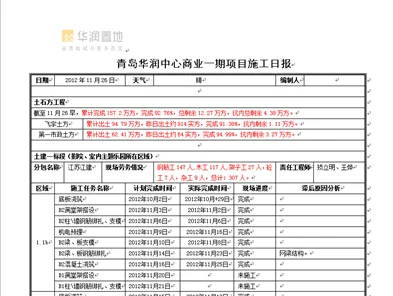
Figure 14. Project Construction Daily Report
The above report is the current management method, where managers use documents and photos to monitor site activity. This format is not efficient for quickly understanding site status. Although photos are intuitive, they are passive, and for large complexes like Wanda Plaza, a single floor of 50,000 square meters cannot be represented clearly through photos.
The main skylight steel structure project adopts a BIM-based 4D management method. In the BIM model, display effects are updated in real time according to site progress and workshop processing status. This integrates abstract progress information into a single platform (see Figure 16), enabling intuitive viewing of progress across works and quick understanding of their mutual impacts.
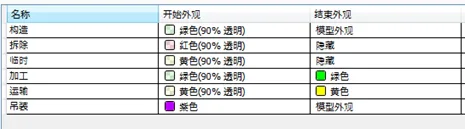
Figure 15. Navisworks display settings for different operations
The timeline window at the bottom of Navisworks is equivalent to P6/Project management software. Information is generated by linking to P6/Project, and updates in P6/Project are reflected in Navisworks. Real-time progress information from daily reports is added, allowing daily viewing of completion status in a 3D view, and processed steel structures in the workshop are clearly visible.
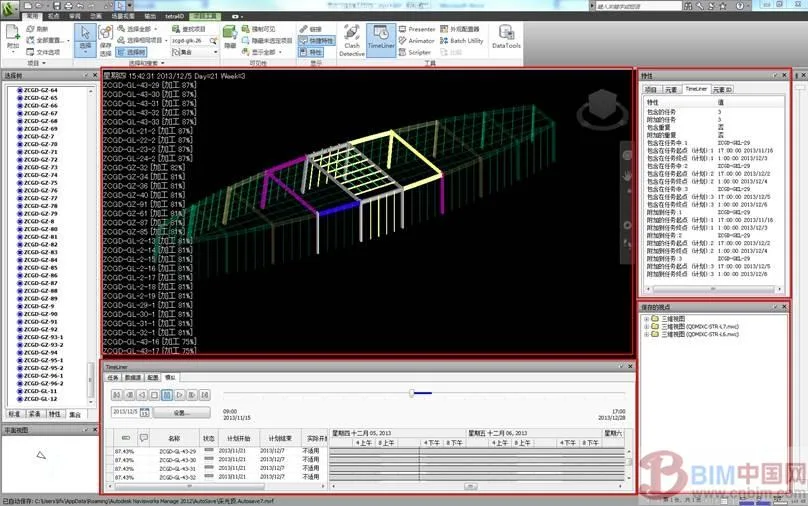
Figure 16. Navisworks Operating Interface
The gray parts in Figure 16 indicate completed lifts, purple-red indicates ongoing lifts, yellow indicates components delivered to site awaiting lifts, yellow semi-transparent indicates in transit, and green semi-transparent indicates factory processing. All components are in normal flow, ensuring processes proceed smoothly. Delays can be quickly identified and addressed with the factory to avoid schedule impact.
2.5 Construction environment impact on schedule management.
Engineering projects are affected by local geology, climate, transportation, regional location, and water/power supply. Any adverse environmental factors may seriously impact the schedule. BIM technology offers limited assistance here, and management personnel must rely on experience and careful consideration.
3. Conclusion
Based on the above analysis and engineering practice, it can be concluded that BIM technology fundamentally solves shortcomings of traditional project management and shows superiority in schedule management—improving plan rationality, reducing design and engineering changes, enhancing information transmission efficiency, and strengthening communication and collaboration among participants. Although BIM technology is still in early application stages in construction, the exploration and practice in this project demonstrate that BIM-based 4D management technology is completely feasible in the current environment, but benefits vary with scope and investment.
Author: Li Fengxi, Mechanical and Electrical Department, Qingdao Wanda Plaza Project














Must log in before commenting!
Sign Up