
BIM Technology is not only applicable to architectural design, but is expected to play an even greater role in community management and municipal planning in the future. This perspective was recently shared by Cai Jiaming, Vice President of Yunnan Urban Investment Group, during the 2014 Owner Project Management BIM Strategic Summit Forum.
BIM, or Building Information Modeling, is a method of creating digital models of buildings using comprehensive project data. It digitally simulates real building information, providing an accurate representation of the project.
According to Cai Jiaming, BIM Technology serves as a big-data-based work platform for the construction industry. It enables a unified collaboration among design, construction, and operation teams—moving away from the traditional model where each party worked separately. This unified approach significantly improves productivity, reduces costs, and shortens project timelines.
As the economy develops, both the scale and standards of buildings are rising. Traditional building methods, which rely on paper drawings, can no longer meet the demands of large-scale and complex construction projects.
“BIM Technology functions like a comprehensive project management manual,” Cai Jiaming explained. “It not only promotes collaboration among design, construction, and operation teams, but also provides scalable, replicable experiences for the construction industry, accelerating the growth from ‘novice’ to ‘expert’.”
“Although BIM technology has been used abroad for over a decade, I believe it will achieve significant breakthroughs in China,” Cai Jiaming added. Currently, China leads the world in terms of annual construction area and the size of single buildings. By implementing BIM technology, project management standards can be greatly enhanced, and the BIM management system will continue to improve through ongoing application.
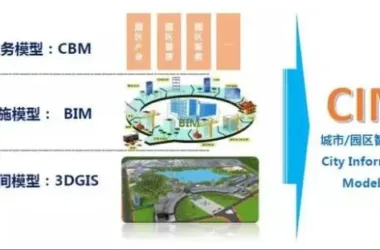
Moreover, BIM technology extends beyond construction—it can also be used in community management, municipal administration, and even national governance.
For instance, there is currently no unified collaboration platform among departments such as water, electricity, gas, and communications. Under traditional management models, major cities often face recurring problems, such as frequent road excavations. With BIM technology, these issues can be easily addressed. Management platforms can clearly display the layout of underground pipelines, enabling collaborative work and rapid identification of problems. By raising the level of management, BIM technology effectively solves municipal management challenges in large cities.
It has been reported that Shanghai now requires all departments to submit 3D versions when filing underground pipeline design drawings, preparing for the future adoption of BIM technology.
Improved management efficiency directly translates to economic benefits. Cai Jiaming pointed out that by using BIM technology, construction projects can save between 3% and 5% of total building costs. For example, with an investment of 1 billion yuan, savings can reach approximately 50 million yuan.
According to statistics, China’s annual investment in construction exceeds several trillion yuan. By enhancing management efficiency, it is possible to save tens of billions of yuan annually in construction costs, which greatly reduces waste and improves the utilization of funds.













Must log in before commenting!
Sign Up