
Summary:
BIM has revolutionized engineering project management informatization by enabling full lifecycle management, breaking down information silos, and achieving comprehensive data sharing. Through the adoption of innovative 5D models for pre-simulation analysis, BIM enhances project refinement and engineering efficiency. However, current BIM applications still face “Three Unifications and Two Incompleteness” issues, which require coordinated solutions from both policy and industry levels. Moving forward, BIM should integrate more advanced technologies and accelerate improvements in building information models to further support China’s construction industry and promote the sustainable development of BIM.
Chen Meijuan, School of Management, Fuzhou University, Fuzhou, Fujian 350000
1. Introduction
The construction industry is fundamental to the national economy, accounting for one-tenth of global GDP and consuming two-fifths of the world’s resources. Its development is closely tied to the progress of any country. Construction projects are typically characterized by large scale, significant investment, long timelines, broad geographic distribution, involvement of multiple stakeholders, and high levels of risk. Effectively managing these projects with information technology remains a significant and meaningful challenge.
China’s engineering project management informatization has evolved over the past two decades. Despite notable progress, several issues persist: At the enterprise level, management models are often disorganized, management personnel lack adequate training, and investment in informatization is limited. At the industry level, the sector lacks unified standards and regulations, the supporting management software industry is underdeveloped, and information silos remain prevalent. From a national perspective, relevant laws and regulations are incomplete, with a lack of technical standards and national-level indicators.
BIM (Building Information Modeling) is an information management model spanning the entire lifecycle of a project. Since its introduction to China, the government has recognized BIM as a key part of the Ministry of Science and Technology’s Eleventh Five-Year Plan. The Ministry of Housing and Urban-Rural Development further highlighted BIM as a core technology in its “2011-2015 Outline for the Development of Informationization in the Construction Industry,” emphasizing the need to accelerate the promotion of BIM and collaborative engineering technologies. Today, many major projects in China, including Shanghai Tower, Disney China, and SOHO China, explicitly require the use of BIM Technology to improve project management and increase engineering efficiency.
2. The Importance of BIM-Based Project Management Informatization
(1) Lifecycle Project Management: Breaking Down Information Silos
BIM Technology provides robust data and technical support for refined, intensive, and information-based management in construction enterprises. It overcomes the limitations of traditional management, enabling a transformative approach to project management. During the decision-making phase, BIM aids in evaluating project feasibility and rationality of cost estimates, supporting scientific decision-making. In the design phase, 3D graphic design allows multidisciplinary teams—architecture, structure, equipment, electrical, HVAC, and more—to collaborate efficiently. The bidding phase benefits from direct calculation of quantities and integration of pricing details, forming comprehensive bills of quantities. For construction, BIM models combined with schedule information enable 4D simulations, while 5D simulations assess costs at every stage. During operations, BIM facilitates digital management, and in the demolition phase, models are used to optimize demolition plans and simulate the effects of blasting to ensure safety for the building and surrounding structures.
(2) Data-Centric Approach: Achieving Data Sharing
BIM establishes a digital building model based on comprehensive project data. It is defined by five key features: visualization, coordination, simulation, optimization, and graphic output, all of which drive significant changes in construction informatization. By adopting a data-centric and collaborative approach, BIM enables data sharing and greatly increases industry efficiency. Furthermore, it enhances building quality and supports green, sustainable development. This article is sponsored by the Paper Alliance __AI_SBT-URL-0__.
(3) The Innovative 5D Model
Leveraging BIM’s 5D model (3D + time + cost), project teams can clearly identify funding needs at each stage of construction, simulate and optimize financial planning, and maximize returns on investment.
(4) Pre-Simulation Analysis
BIM offers simulation and analysis for personnel in design, construction, and cost estimation. Its collaborative platform uses 3D digital models to support project design, construction, and operation management. Ultimately, this enables engineering projects to achieve energy and cost savings and improved efficiency during all phases—design, construction, and operation.
3. Current Status and Solutions for BIM Informatization in Engineering Project Management
(1) Current Status of BIM Project Management Informatization
Currently, BIM implementation faces the “Three Unifications and Two Incompleteness” problems: inconsistencies in systems (software, hardware, networks), BIM standards (modeling, data, application), and BIM application management; along with incomplete basic data/components and underdeveloped domestic software.
1. Limitations of BIM Software
BIM software is not yet fully mature and often fails to meet professional demands, especially during the design phase. Integration with existing operation and maintenance platforms remains a challenge. Data transfer between different software is inadequate, with many parameters unable to be shared, which restricts the full utilization of BIM through the entire project lifecycle.
2. BIM Collaboration Mechanisms Among Stakeholders
The true value of BIM lies in its full lifecycle application. However, at present, standards for BIM model handover, data exchange, workflows, and collaboration among stakeholders during design, construction, and operation phases are not well established. As a result, BIM’s potential is underutilized, with only partial functionality in use, leading to resource waste.
3. National BIM Delivery Standards
BIM application in China is still fragmented. Design institutes use BIM primarily for design optimization and drawing production, while construction companies focus on detailed construction drawings, virtual progress tracking, and complex node management. Differing standards in design and construction impede information sharing and prevent the creation of models that can transition from design to construction and operation phases.
(2) Solutions for BIM Project Management Informatization
From a policy perspective, it is essential to enhance policy support, establish relevant 3D design standards, promote standardization, and support mainstream software such as Autodesk Revit. From an industry perspective, it is important to strengthen BIM qualification certification, develop professional BIM consulting agencies, build component library platforms, facilitate information sharing, and promote domestic BIM software integration.
BIM is both a technology and a concept, requiring active promotion by government agencies, property owners, and design companies. BIM is not limited to complex or irregular projects but is also applicable to large-scale conventional buildings. More research institutions should focus on key technologies such as BIM data standards, information sharing, and data conversion, to ensure sustainable development and further enhance BIM’s role in China’s construction sector.
4. Trends in BIM-Driven Project Management Informatization
(1) Integration of BIM with Advanced Technologies
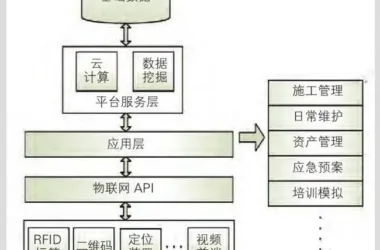
In recent years, the emergence of next-generation information technologies—including network and communication technologies, cloud computing, mobile technologies, and the Internet of Things—has provided new momentum for informatization in engineering project management. Leveraging these technologies, BIM applications will become more efficient: cloud platforms enable all parties to share and access data easily, support real-time multi-party collaboration, and mobile technologies allow stakeholders to access and manage project information anytime, anywhere.
(2) Continuous Improvement of Building Information Modeling
By implementing unified national delivery standards, building models can be utilized seamlessly from the design phase onward, enabling collaborative standards among all stakeholders and free information exchange at every stage. As domestic software matures, integration and interoperability between different software platforms will be achieved, reducing redundant design work and enhancing efficiency.
5. Conclusion
Since its introduction to China, BIM has gained significant attention from professionals in building technology, engineering management, and IT research and application. According to research by Stanford University, BIM technology can reduce design changes by 40% and increase construction labor productivity by 20% to 30%. While the full impact of BIM technology on the industry is still unfolding, it is set to become an essential tool for construction enterprises and project management, and a core technology to enhance the competitiveness of the construction industry.














Must log in before commenting!
Sign Up