
How to Design Prefabricated Concrete Structures: Key Points You Need to Know
Basic Regulations for Prefabricated Buildings
Design Principles for Prefabricated Buildings
Successful prefabricated building design requires close coordination among various disciplines during the planning phase.
Architectural and Structural Design Principles:
Focus on standardization, modular integrated decoration, minimizing specifications while maximizing combinations. Ensure structural integrity, durability, and utilize high-strength, high-performance materials. Design for reasonable prefabrication and easy disassembly.
Strict adherence to seismic fortification standards is essential.
Conduct detailed and thorough component design development.
Height of Prefabricated Buildings
Prefabricated concrete structures typically include assembled integral structures, frames, shear walls, and multi-story shear walls.
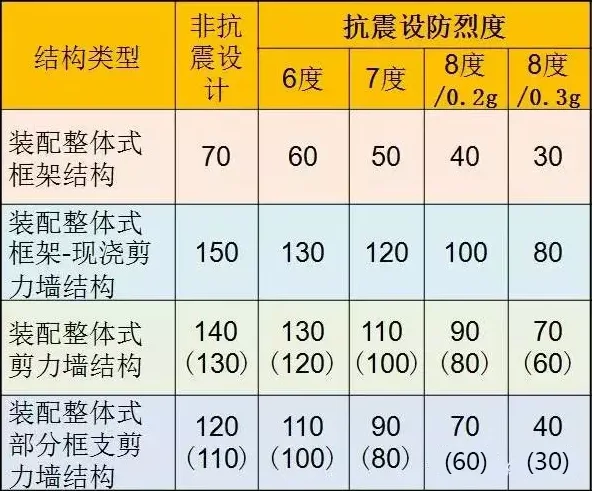
Height-to-Width Ratio of Prefabricated Buildings

Beyond general limitations concerning structural stiffness, overall stability, bearing capacity, and economic feasibility, it is crucial for prefabricated concrete structures to enhance their overturning resistance. This helps reduce tension at the base under lateral forces and prevents horizontal joints in wall panels from experiencing both shear and tension simultaneously.
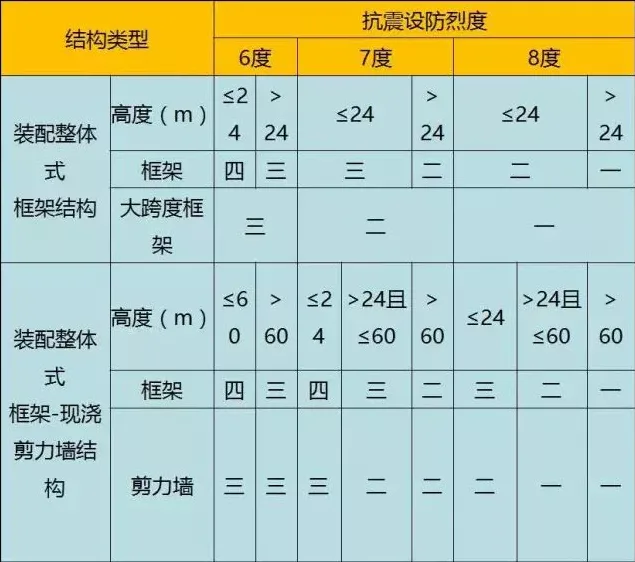
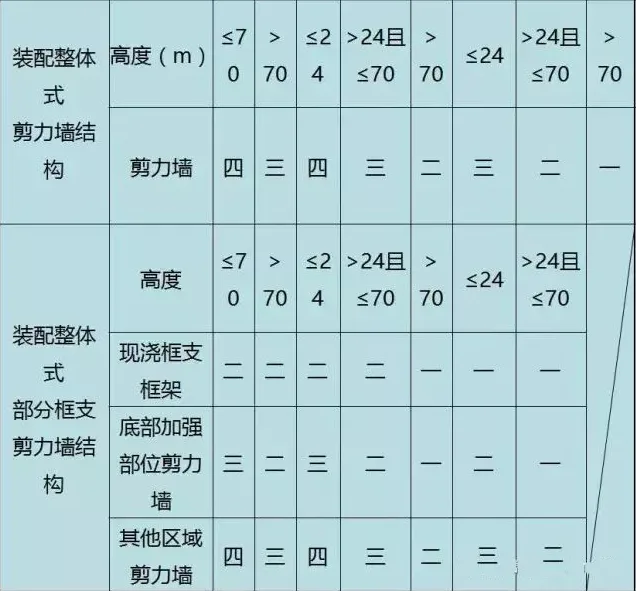
Seismic Grade of Prefabricated Buildings
Prefabricated Building Connection Design
Design Concept
The calculation for tensile, compressive, and bending capacities follows the same principles as for cast-in-place concrete components. These calculations can be omitted if structural requirements are already met.
Shear force, however, requires separate calculation for combined surface direct shear to determine the number of key slots and shear-resistant steel bars.
PC Component Connections
Dry Connections
Dry connections involve welding embedded parts or using bolts for placement and locking.
Node construction must comply with calculation diagrams. Verify the bearing capacity of bolts, welds, steel plate sections, dowels or lug tongue-and-groove bending shear, pin bolt shear, local pressure, and other forces based on actual internal loads.
Wet Connections
Wet connections use steel bar connections followed by concrete pouring or grouting to form a unified whole.
Reinforcement Connections
These may include sleeve grouting connections, mechanical connections, welding, overlapping, and other methods.
Prefabricated Floor and Staircase Design
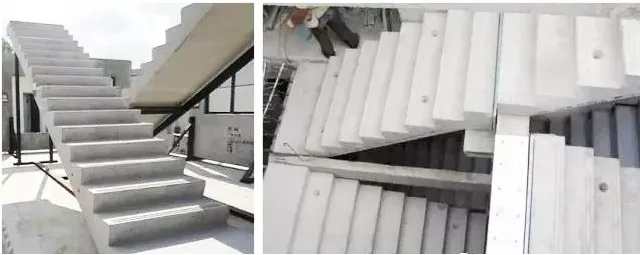
Prefabricated Staircases
Features include smooth finished surfaces with anti-slip strips, embedded parts for railings, and simple supports at both ends.
Floor System and Industrialization of Construction
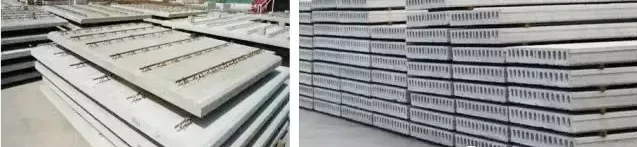
Steel truss composite floor slabs can be designed as either one-way or two-way slabs.
Design of Prefabricated Building Frame Structure
The overall concept is to assemble an integral frame structure equivalent to cast-in-place concrete, using the same comprehensive analysis and component design methods.
The assembly consists of prefabricated columns, composite beams, composite floor slabs, and cast-in-place nodes. Beams and columns are primarily one-dimensional components, simplifying production and installation. Longitudinal reinforcement bars in columns are connected using grouting sleeves.
Bearing capacity calculations focus on shear capacity at composite beam joints and precast column joints.
Component construction requirements include specifications for composite beams and prefabricated columns.
Node construction requirements cover primary and secondary beam nodes, composite beam splicing nodes, and beam-column nodes.
Design of Prefabricated Building Shear Wall Structure
The overall approach involves assembling an integral shear wall structure, following analysis and component design methods similar to cast-in-place concrete shear walls, commonly applied in high-rise buildings.
Assembly includes prefabricated wall panels, cast-in-place edge components, cast-in-place connecting sections, and laminated floor slabs. Horizontal joints and vertical reinforcement bars in wall panels are connected using grouting sleeves and grout anchor lap joints.
Bearing capacity calculation focuses on the shear capacity of horizontal joints within prefabricated wall panels.
Component construction requirements specify standards for prefabricated wall panels.
Node construction requirements address vertical and horizontal joints of wall panels, horizontal ring beams, connecting beam nodes, and other structural connections.
Summary
- Make informed and balanced decisions considering multiple factors for technical solutions.
- Account for structural intensity, climate conditions, and intended building functions.
- Meet prefabrication rate requirements.
- Consider production capacity and the level of construction and installation expertise.
- Fully consider construction logistics such as lifting and transportation.
- During design, take into account the effects on prefabricated components caused by lifting and transportation.
Article source: Dr. Jianyan













Must log in before commenting!
Sign Up