
BIM (Building Information Modeling) has become an effective approach for enhancing engineering efficiency and reducing construction costs, gradually gaining mainstream adoption. Zhuzong Vanke Plaza was among the first to implement BIM technology, establishing a BIM management platform that significantly improved project quality and shortened the construction period. This was achieved by integrating resources from the owner, designer, and contractor.
Below is an overview of Zhuzong Vanke Plaza’s BIM Technology application.
Part 1: BIM Application at Vanke Plaza

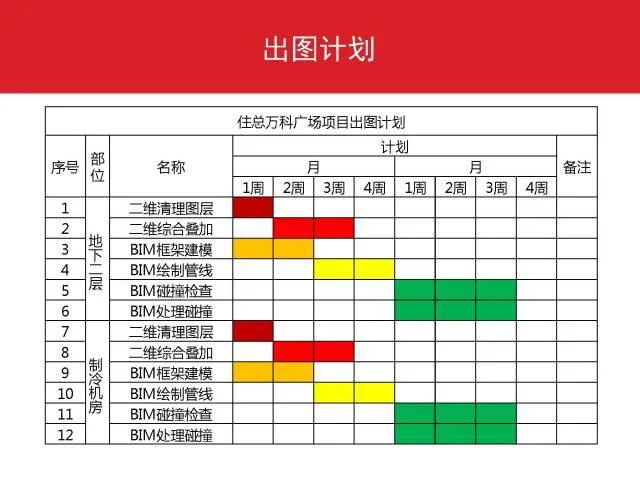
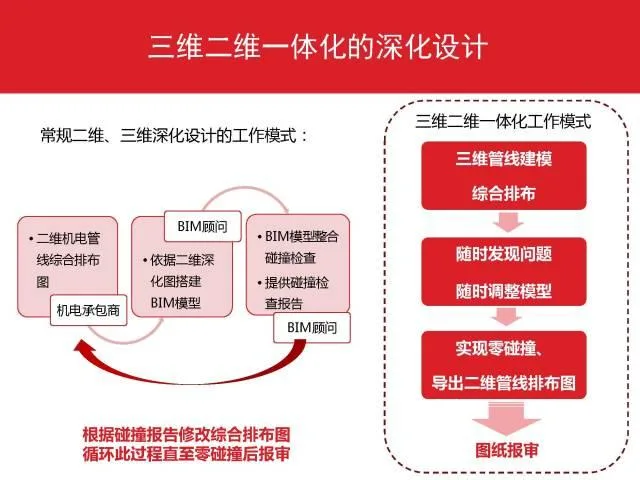
Part 2: Roaming Animation on the B2 Floor of Vanke Plaza
BIM overcomes the limitations of traditional two-dimensional drawings by visualizing construction outcomes and compensating for the shortcomings of 2D representations. However, in actual construction, a 100% match with the BIM model was not achieved, revealing some challenges.
These issues stem partly from overlapping construction processes, which prevent a complete working surface for model implementation. Additionally, changes in other disciplines, such as modifications to secondary civil walls, can impact the routing of mechanical and electrical pipelines. Such factors are often overlooked in BIM’s deepening process and represent the next area of focus for our expansion work.
Our aim is to implement BIM models more realistically and gradually promote their adoption through the pilot project at Zhuzong Vanke Plaza, fully integrating BIM Technology into the business system.
Part Three: Utilizing BIM to Achieve Accurate Cost Control
BIM Cost Control I: “How Much Money Can BIM Save?”
A frequent question from homeowners after being introduced to BIM is, “How much money can BIM actually save?” Initially, it was difficult to answer, but after several practical projects, we found that BIM’s cost savings can be quantified.
For example, in basement construction, conflicts between structural engineering and other disciplines are common. In one of our projects, by using BIM to track and analyze issues, we identified several problems. After analysis, we summarized these into typical cases and performed virtual construction claim assessments based on standard construction practices.
Case Study
During the analysis of a typical case, a collision was found between the ramp platform and the structural wall, resulting in insufficient platform height. Without BIM’s early warning, there would have been two options:
- Method 1: Modify the design, have the design institute recalculate and redesign the beam, and adjust its height. The total cost, including demolition, reconstruction, and labor, would be 45,053 yuan.
- Method 2: After demolishing the beam, reinforce the area (chisel out part of the beam and slab, then add an upper reverse beam). The total cost for this method is 34,920.62 yuan.
Other issues, such as collisions between sprinkler pipes and structural shear walls or insufficient floor clearance, can also be calculated, with individual collision errors costing between 800 and 5,000 yuan. By classifying and quantifying these collision issues, we estimated a virtual cost of 18.82 million yuan, not including indirect costs, financial expenses, or management costs due to schedule delays.
This demonstrates the value of BIM in providing early warnings and facilitating collaborative information sharing.
BIM Cost Control II: “How to Achieve Accurate Cost Control with BIM”
BIM technology is parametric, storing related data in an organized manner within the BIM model. As real estate industry profits shift from windfalls to internal growth, using BIM for cost control marks a milestone. BIM tightly couples cost and design for accurate budget estimation, supports optimal scheme selection, and enables dynamic cost monitoring during construction—offering strong data support for decision-makers.
The core of BIM is the storage, sharing, retrieval, analysis, and organization of information. Cost-related data is crucial at every project stage. Using BIM models to obtain project quantities ensures data is unique, complete, and accurate, and that results are timely and traceable. However, fully automated BIM-based quantity takeoff is not yet realized, either domestically or internationally.
To address this, Binfu Engineering Consulting developed a cost analysis plugin for Revit and other BIM software, integrating it with domestic software like Luban and Guanglianda. This enabled comprehensive project quantity and cost analysis, leveraging BIM’s speed and accuracy, and providing owners with complete project data.
BIM Cost Control III: “Can the Designer’s BIM Model Guide Construction?”
It’s common to hear design institutes claim that their BIM models can directly guide construction. However, for construction professionals, this is unrealistic. While the design institute’s BIM output may appear similar to the final construction model, there are significant differences.
For instance, designers mainly consider finished concrete walls, columns, and raft foundations, while construction engineers must account for processes and techniques, such as waterproof steel plates between the cushion layer and raft foundation. Cost engineers further subdivide concrete quantities for accurate budgeting.
In summary, while BIM design focuses on outcomes, construction BIM emphasizes process. Design BIM, construction BIM, and cost BIM each have different requirements based on their professional needs. The most effective way to establish a foundational BIM is to consider downstream construction and cost BIM during the design stage, thus integrating BIM throughout the project lifecycle.
Part Four: Utilizing BIM for Fine Interior Design Control
Most BIM discussions focus on building exteriors and architectural benefits, such as modular designs, curtain walls, expressive roofs, and detailed wall profiles. But what about interior design—unique shapes, complex finishes, fixtures, spatial requirements, process choices, furniture, and art displays? What improvements does BIM bring to interior design compared to traditional methods?
-
Eliminating Missing or Incomplete Drawings
Traditional decoration drawings were voluminous but often lacked complete detail, leading to on-site changes and disputes between owners and contractors, causing settlement discrepancies. BIM addresses these issues by offering comprehensive visual models. -
Resolving Drawing Conflicts
Original construction drawings often had style or spatial conflicts due to the limitations of 2D representation. BIM’s three-dimensional visualization prevents such issues by clarifying spatial relationships and providing clear design intent. -
Achieving Coordinated Proportions
Facade depth and spatial relationships, once difficult to represent in 2D, are now clear and intuitive in a 3D model, reducing errors and miscommunications. -
Transforming Workflows and Team Structure
Traditionally, the chief designer handled the overall concept while assistants refined details and rendered visualizations. With BIM, team members collaborate on a unified model, integrating their ideas and streamlining repetitive tasks, which enhances teamwork and creativity. -
Enhancing Team Cohesion
BIM’s collaborative nature promotes communication. Teams gather around the model, discuss and solve problems, and foster inspiration through continuous interaction. The rich, reliable information within the model greatly benefits downstream work. -
Making Full Use of Model Information
Information is at the heart of BIM. The technology enriches the model with data, making it easier for all stakeholders to access, analyze, and apply information throughout the entire project. -
Facilitating Comprehensive Visualization
Rendered spaces are vital for project presentation. With BIM, the model is built from the early stages, enabling 3D review and collaborative design. The entire team participates in model development, ensuring the design process is transparent and accessible.















Must log in before commenting!
Sign Up