
Supported by the Berlin Restoration Center, a former farm industry in southern Berlin was transformed into a training center for carpenters and restoration specialists. Originally built in the 18th century as a farm, the site saw the addition of a farmhouse in the 19th century, followed by two expansions. During the East German era, the farm buildings fell into decline, with the barns at the entrance courtyard demolished and replaced by garages.
The architect addressed these issues by drying out the farmhouse basement and renovating the roof and facade. Inside, wooden furniture was repaired, and ancient wall and ceiling paintings were rediscovered and restored.
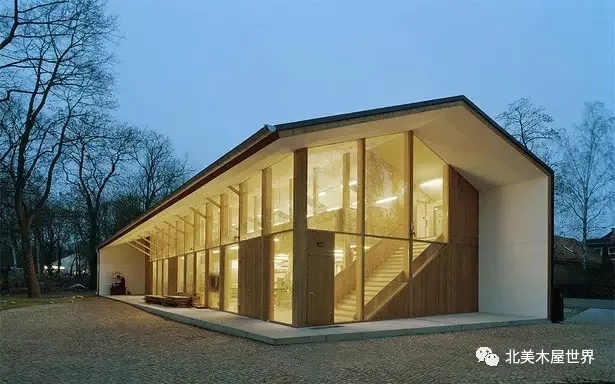
Architectural appearance with distinctive accents
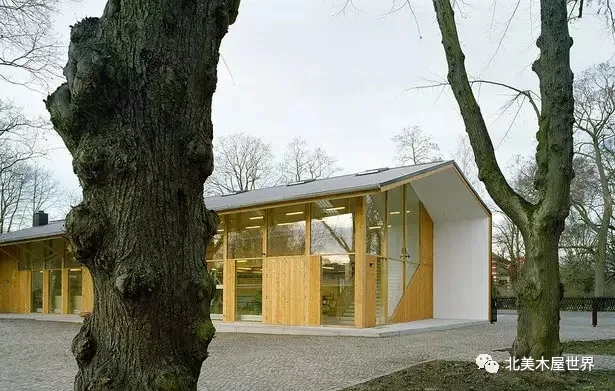
The surrounding environment is equally elegant
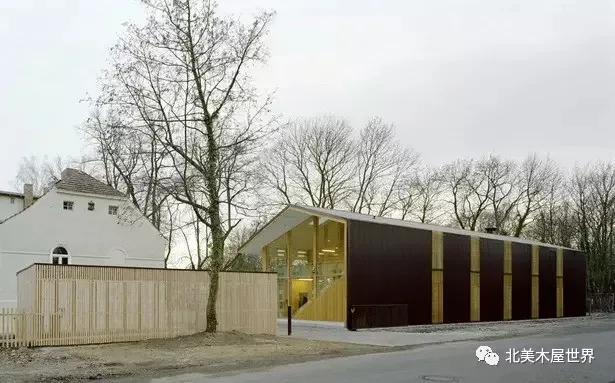
Backside view
After removing the garages to make way for new construction, the factory building and other courtyard structures were arranged to form the original U-shaped layout. The farmhouse houses the administrative offices and training classrooms, while the factory building serves as a base for craft education. This new factory building is designed with openness toward the courtyards and farmhouse.
The factory building’s external geometric shape closely resembles that of the original farmhouse but is lower in height. This ensures the farmhouse remains the dominant structure in the courtyard, while the new building recedes, resembling an open shell with a semi-open interior facing the courtyard.
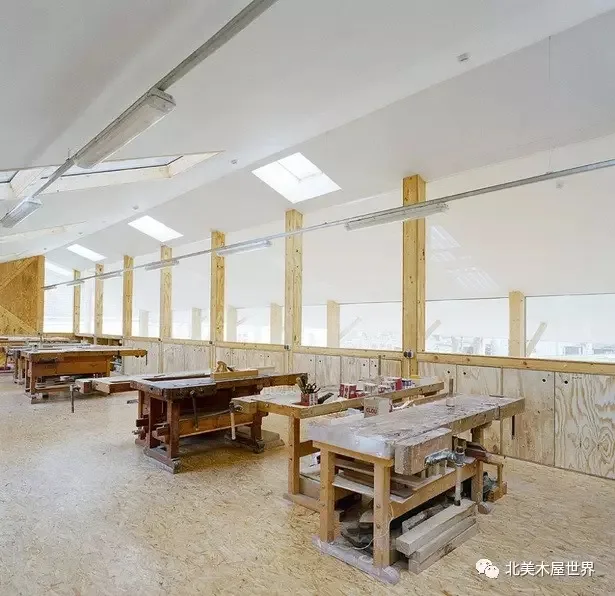
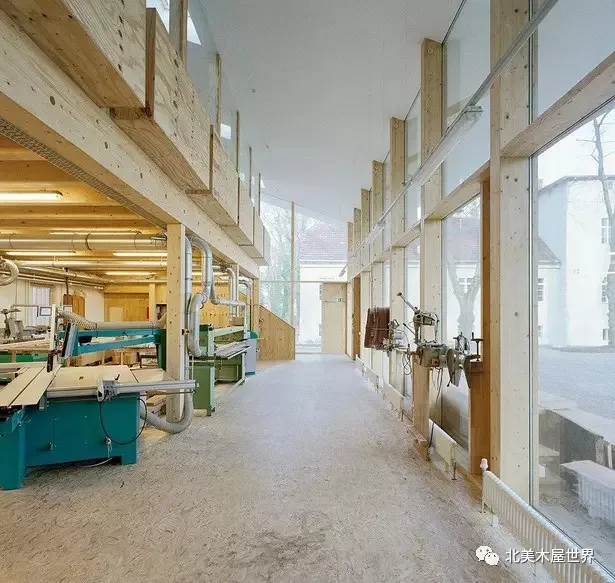
Inside the factory building
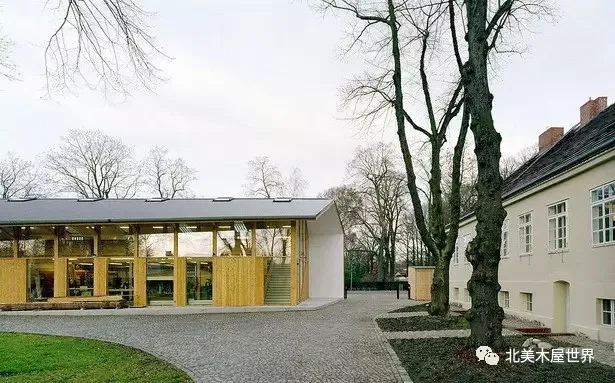
Factory building facade
The facade and roof of the factory create a continuous surface that wraps around the historic courtyard, forming an open hall. The outdoor roofed area, where machinery is located, is separated from the craftsman’s studio on the mezzanine by glass walls. This design facilitates communication among students and offers views of the courtyard from every angle.
The facade facing the farmhouse and courtyard consists entirely of glass, while the street-facing side is predominantly enclosed, featuring only a few narrow vertical windows. A metal roof extends 4 meters over the courtyard side, providing protection from sun, wind, and rain, as well as reducing noise from nearby areas. The space beneath this overhang is used for temporary storage and serves as an additional workspace for teaching or summer breaks.
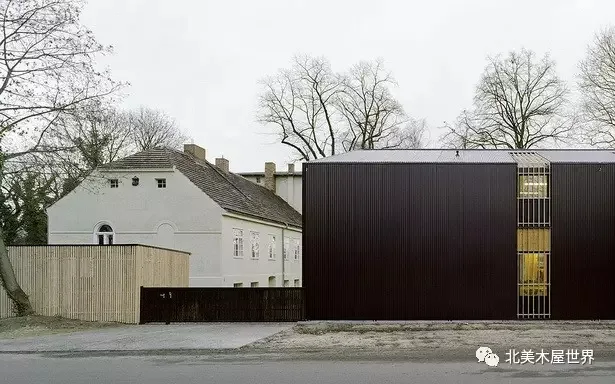
Exterior view of the factory building
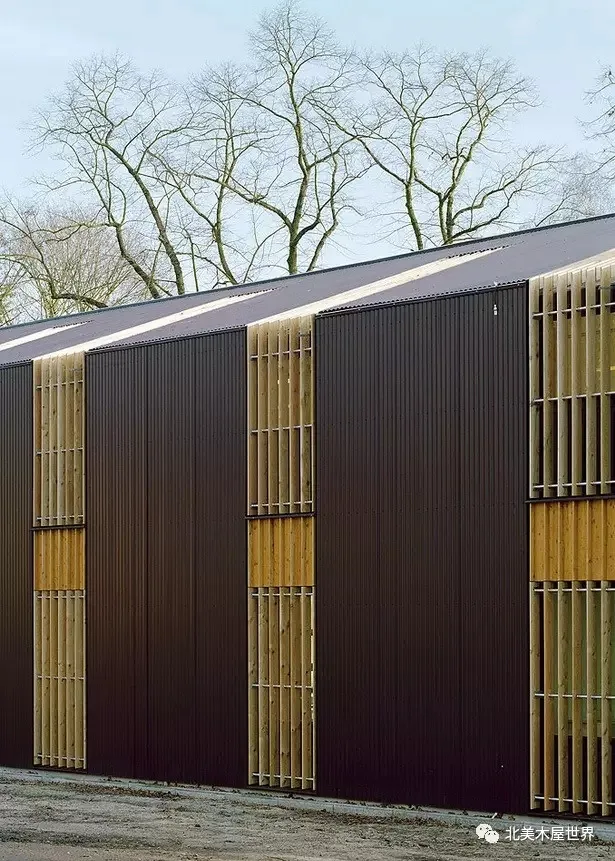
Detailed layout
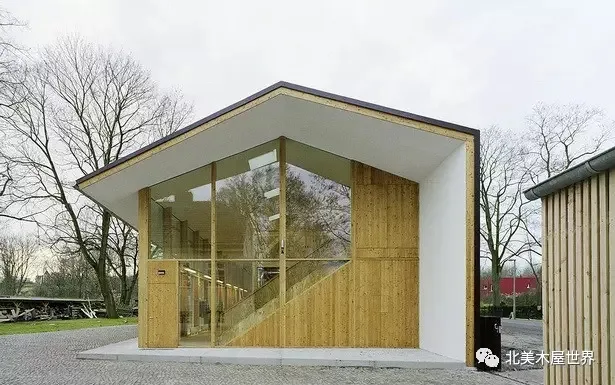
Side view of the factory building
The factory is a cost-effective wooden structure reinforced with floor slabs and stairs. All materials maintain their natural colors: the roof is clad with corrugated metal panels externally and lined with sprayed cardboard internally. Interior surfaces are made entirely of spruce wood. Both buildings are heated by a central wood-burning system that utilizes leftover materials from daily production.
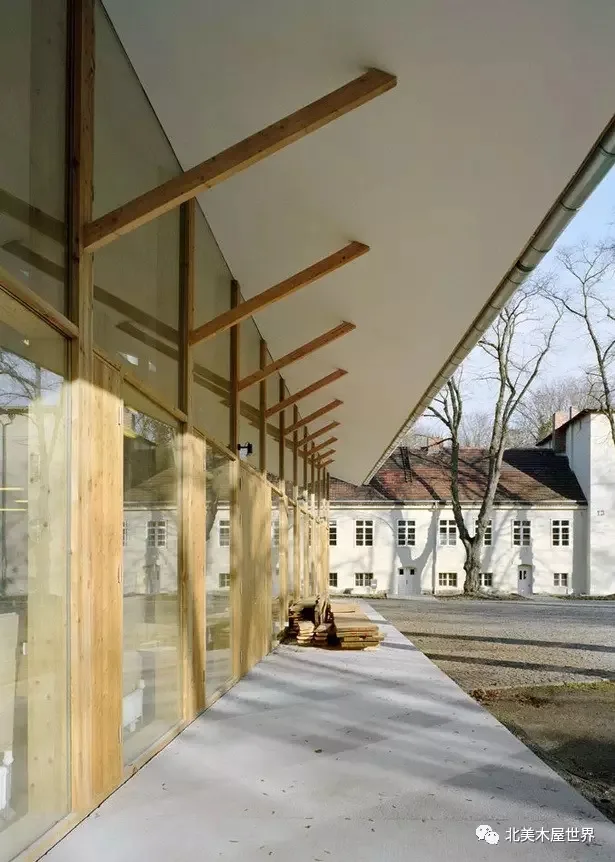
The space beneath the cantilevered roof is used for temporary storage
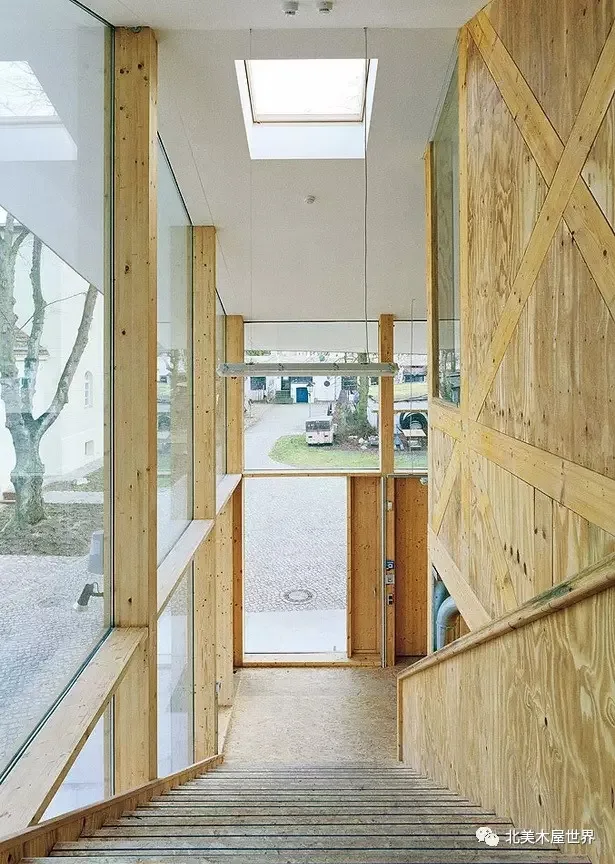
Factory buildings with floor slabs reinforced by stairs
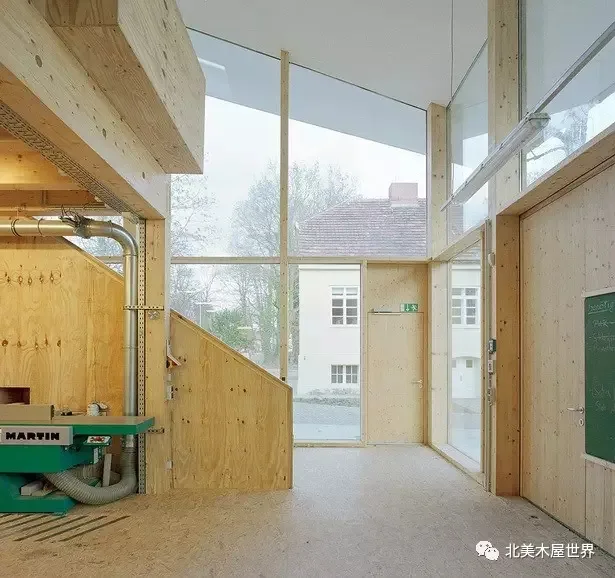
Part of the factory entrance
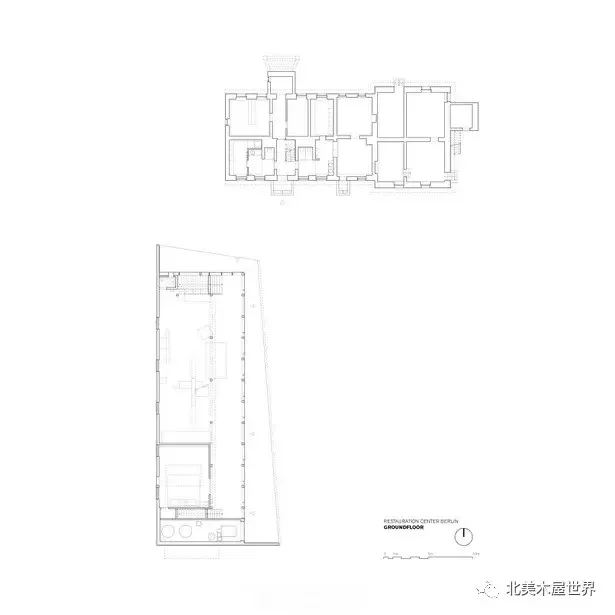
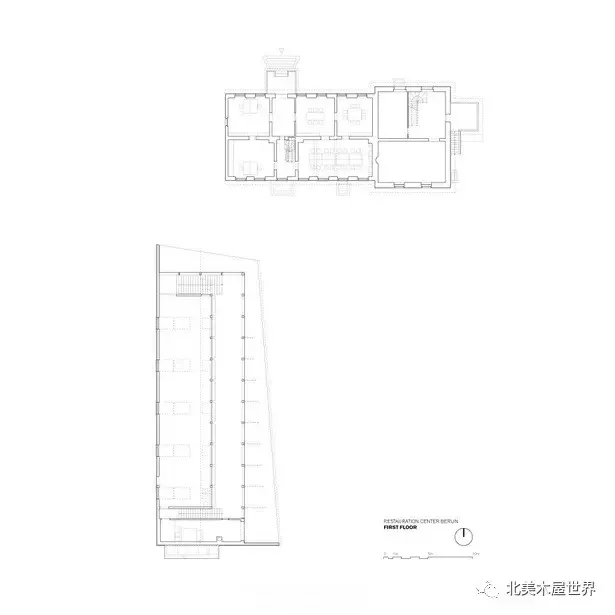
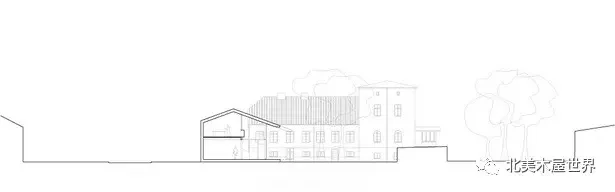
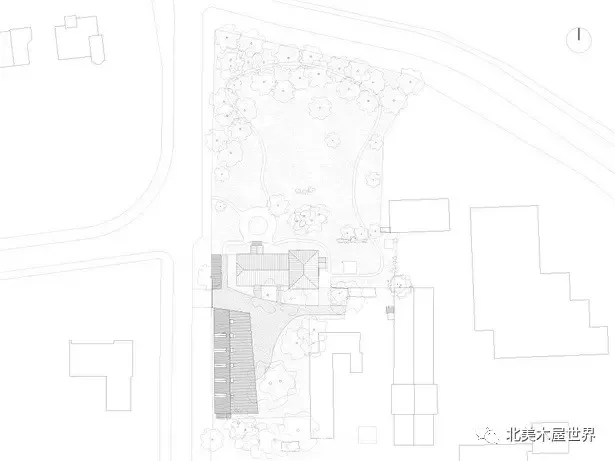
Factory design drawing













Must log in before commenting!
Sign Up