
(5) The Japanese Government’s Support for Housing Industrialization
Since 1985, Japan has been actively researching and developing models for 21st-century residential buildings. Key projects included:
- Development of new materials and equipment systems for multi-story residential buildings (1984–1990)
- Creation of new industrial residential technology systems (1989–1995)
- Development of value-creating residential buildings (1994–2000)
- Resource recycling residential technology projects (2000–2004)
The House Japan Project, led by the Ministry of Economy, Trade and Industry, aims to create innovative living values for the 21st century by advancing new technologies, specialized systems, and production supply frameworks. In November 1994, under the Industrial and Mining Enterprise Technology Research Contract Law, a technology research group was formed, bringing together 38 industry enterprises.
This research group includes experts from various industries and enterprises, who continuously receive guidance from six consultants—leading figures in the construction field—to ensure smooth progress.
A feasibility study was conducted in 1994, followed by the development of key technologies between 1995 and 1997. Practical verification was performed during the mid-phase of the research.
To evaluate these technological achievements, four experimental buildings were constructed in Maihama in 1998. These projects received ongoing advice from industry experts to validate the development technologies:
- Building A: Technologies for renovation and reconstruction of single-family small residential buildings, including DIY-related techniques.
- Building B: Technologies focused on renovating collective residential buildings and enhancing durability and safety.
- Building C: Technologies addressing health, environmental protection, and energy conservation.
- Building D: Integrated Energy Management Technology.
To make the design concepts more accessible, the Future Residential Technology Reader was published in 1996. This publication clarified the project’s approach and gathered valuable feedback from experts, which served as an important reference for ongoing technological development.
House Japan not only promotes its research outcomes internationally but also organizes overseas seminars to learn from experts, government agencies, and enterprises engaged in similar research worldwide.
On September 13, 2006, I had the opportunity to attend the China-Japan 2006 Resource Recycling High-Rise Residential Forum. During the forum, I consulted several experts about why Chinese residents predominantly live in high-rise buildings and not in low-rise housing.
The experts’ answers aligned with the consensus among Chinese officials, scholars, and experts, which I had anticipated: China’s large population and limited land resources mean that not everyone can live in low-rise buildings. In fact, about one billion people in China still reside in low-rise housing, albeit with somewhat poorer housing conditions.
I was fortunate to engage face-to-face with key members of the Japanese Resource Recycling Residential Technology Development Project and the House Japan Project consulting groups, including:
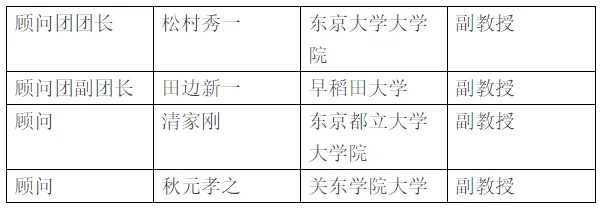
Under the guidance of Japan’s Ministry of Economy, Trade and Industry, 38 companies from various industries formed a technology research group in 1994 to conduct a feasibility study on the House Japan Project. Following this, key technologies were developed between 1995 and 1997, culminating in the construction of four experimental buildings in Maihama in 1998.
Similarly, the Ministry conducted a feasibility study on the Resource Recycling Residential Technology Development Project in 1999. Based on these findings, core technologies were developed between 2000 and 2002, and the project was implemented over five years starting in 2005.
Most of these initiatives focus on low-rise residential buildings, as the majority of Japanese people live in such homes.
China’s urban development differs considerably — older buildings, such as Shanghai’s Shikumen and Beijing’s Siheyuan, are demolished and replaced with new high-rise, high-density apartment buildings.
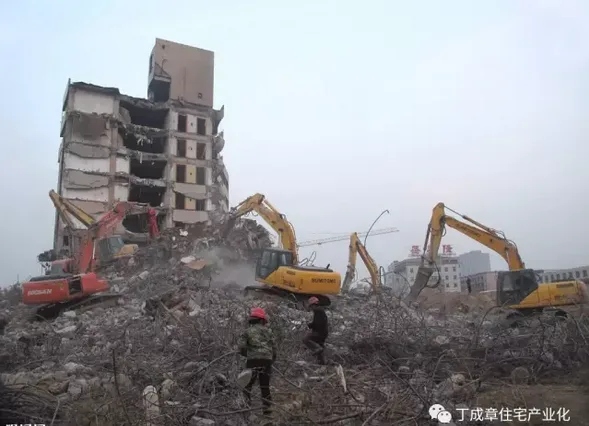
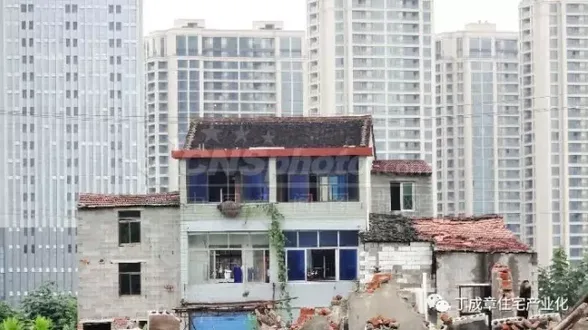
The Japanese government also encourages, subsidizes, and assists residents of low-rise homes to reinforce, renovate, and repair their buildings to extend their lifespan. For example, approximately 600,000 single-family homes in Japan are constructed using the 2×4 light wood frame method.
As part of the House Japan Project, systems for renovating and refurbishing 2×4 style residential buildings have been developed, alongside related product innovations aimed at enhancing life quality. Research has included floor expansions, elevator additions, sunroom construction, and simple scaffolding.
A model house was built in Pu’an City, Chiba Prefecture, Japan, to validate these technologies.
I asked Professor Hideyoshi Matsumura directly: “Why do most Japanese people still live in low-rise residential buildings, despite Japan’s limited per capita resources and land area compared to China?”
His initial response was that Japan lacked the technology for high-rise and multi-story residential construction when these low-rise homes were built, so low-rise living was the only option.
However, sensing my skepticism, he elaborated. He noted that Chinese people also lacked multi-story and high-rise building technologies during the construction of Beijing’s Siheyuan and Shanghai’s Shikumen. Yet, after mastering these technologies, those low-rise homes were demolished.
Privately, he shared that the political and economic systems in Japan and China differ significantly. In Japan, land is privatized, and neither the government nor real estate developers have the authority or will to evict dispersed homeowners and demolish large areas to build high-rise apartments.
As a result, Japanese residents inevitably continue to live in low-rise homes. For example, there remain a few “nail households” in the center of a Japanese airport runway who refuse to relocate, and no one can force them to move, creating a unique situation within the airport itself.














Must log in before commenting!
Sign Up