
(2) Bauhaus in Japan
Japanese modern design has evolved through several distinct stages. Beginning with the Meiji Restoration in 1864, the Japanese people gradually developed an awareness of industrial standards, laying the groundwork for modern design recognition and institutionalization. By around 1924, explorations into modern design had begun, with Japanese visitors attending the Bauhaus school. Notably, Ishimoto Kiyoshi and Nakata Kinosuke visited the Weimar Bauhaus on November 13, 1922. Later, Daichi Kiichiro and Horikosha also visited in 1924, meeting with Walter Gropius.
Horiko Seiji stands out as a pivotal pioneer of modern Japanese architecture. At the start of the 20th century, Western European architects were challenging formal historicism, seeking new architectural styles aligned with industrial society’s technologies. Similarly, in Japan, rapid industrialization and a growing modern consciousness propelled architects to move beyond historical styles, embracing new architectural forms. This shift gave rise to the early seeds of modern architecture in Japan.
In the 1920s, Japan’s first modern architectural movement, the “Separatist” movement, emerged. This group of six members, including Takashi Horikou and Takashi Yamada, rejected past styles, aligning theoretically with Vienna’s separatist faction and even adopting the same name. Creatively, however, their work paralleled Germany’s expressionism, focusing on amorphous volumes and lines that conveyed personal emotions through concrete forms.
By the 1930s, expressionism waned as rationalism took center stage in Japanese architecture. This ushered in a decade-long peak of early modernist architecture characterized by:
- Emphasis on rational floor plans
- Focus on industrialization and economic construction methods
- Geometric building forms using modern materials like steel, glass, and concrete
One of the era’s most renowned buildings is the Tokyo Central Post Office, completed in 1932. Praised by Bruno Taut as “one of the few modern buildings in the world,” its exterior features unadorned reinforced concrete with a simple, concise form (see Figure 3-7).
Other notable rationalist structures include the Tokyo Institute of Technology Hydraulic Laboratory (designed by Yoshiro Taniguchi in 1932), the Tsuchiura Kameshiro Mansion (Tsuchiura Kameshiro, 1935), the Tokyo Delivery Hospital (Mori Yamada, 1938), and the Wakasa Mansion (Takashi Horiko, 1941). Horikou’s notes reveal the profound influence of the Bauhaus on his work.
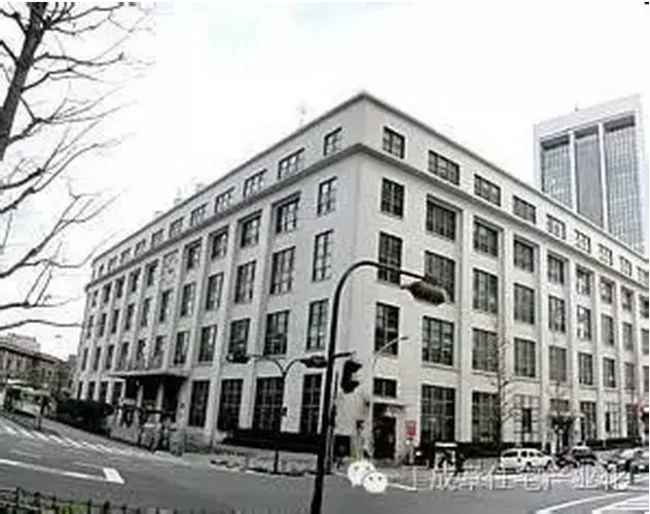
Figure 3-7
In May 1926, Fumio Yoshida visited the newly completed Bauhaus building in Dessau and met with Walter Gropius.
By March 1929, Masamune Kono also visited Bauhaus in Dessau, which was then led by Hans Mayer, Gropius’s successor.
Takehiko Mizutani was among the Japanese students who studied at Bauhaus, later bringing its principles back to Japan and becoming a significant art and architecture educator. Born in 1898, Mizutani graduated from the Pattern Department of the Motive Art School in 1921. Between 1927 and 1929, he studied at Bauhaus in Dessau on a Japanese Ministry of Education scholarship.
Returning to Japan in 1930, he became a professor in the Department of Architecture at the Motive Fine Arts School, introducing the “Constitution Principle” of the Bauhaus system. This teaching method later spread to Taiwan, Hong Kong, and mainland China, forming the “three major components” of the “Constitution System” known today. Mizutani also taught at Tokyo Metropolitan University after World War II until his death in 1969. Among his notable students was Ryuzori, who was greatly influenced by him.
On January 3, 1930, two more Japanese students, Iwao Yamawaki and Michiko Yamawaki, enrolled at Bauhaus in Dessau. They followed the school’s relocation to Berlin and, upon graduation, returned to Japan to promote Bauhaus-style design reforms. Their efforts marked the earliest direct influence of Bauhaus in Japan.
The first to introduce the Bauhaus system broadly in Japan was critic Masaru Katsumie, editor of Industrial Art News magazine (1948–1949). He championed a European-centered design system focused on “good design.” Katsumie sparked debates on Bauhaus’s intuitive design philosophy versus Nagi’s rationalism from the 1920s within Japanese design education circles. He also introduced many Western design works to Japan, including British author Herbert Reid’s Art and Industry. Katsumie regarded 1950 as the dawn of Japanese design.
By around 1955, Japanese design education expanded significantly, with key institutions established, such as the Creative Art Education Institute (1951), Kuwazawa Design School (1954), and the Visual Art Educational Center (1955). These schools adopted a clear Bauhaus-based design education system. This promotion not only advanced design education within Japan but also influenced Taiwan and Hong Kong’s design development.
Sori Yanagi is another prominent designer who evolved Bauhaus modern design principles into a system blending traditional Japanese aesthetics. Yanagi studied at Tokyo University of the Arts (1936–1940) and, starting in 1942, assisted Charlotte Perriand, who was sent by Le Corbusier’s firm to Japan to improve product design. Yanagi became a professor at Kanazawa University of Arts and Crafts in 1954 and served as director of the Tokyo Museum of Japanese Art from 1977 onward.
Though influenced by Bauhaus and Le Corbusier, Yanagi’s primary focus was Japanese folk art and culture. He believed folk crafts offered a profound source of beauty and prompted reflection on modernization’s true meaning. Yanagi maintained a unique creative vision for modern design, emphasizing the unity of tradition and innovation. He traveled extensively across Japan, studying folk life and finding in it the deeply humanized essence industrial eras should embrace.
Yanagi designed numerous industrial products, including furniture, becoming a founding figure of modern industrial design. He consistently prioritized functionality and comfort over designer ego, achieving a simple, unadorned, and highly rational aesthetic.
This section draws on Professor Wang Shouzhi’s article “Bauhaus in Japan” on Sina Blog.
(3) Steel Structure Buildings in Japan
In January 1854, U.S. Navy Captain Perry made his first visit to Okinawa Island, marking the beginning of Japan’s opening after over two centuries of isolation. In 1858, Japan was compelled to sign a trade treaty with the United States, opening four ports—Kanagawa, Nagasaki, Niigata, and Hyogo—and the cities of Edo (now Tokyo) and Osaka.
By 1863, Japan established the Nagasaki Steel Plant, fostering early industrial development.
In 1894, Haruo Wakayama, a Japanese naval shipbuilder, introduced European steel structure techniques to Japan, employing steel tubular columns and hot-rolled angle steel truss beams. He designed and built Japan’s earliest steel structure building: the three-story Hideyoshi Printing Factory in Tokyo’s Kyobashi district (see Figure 3-8).
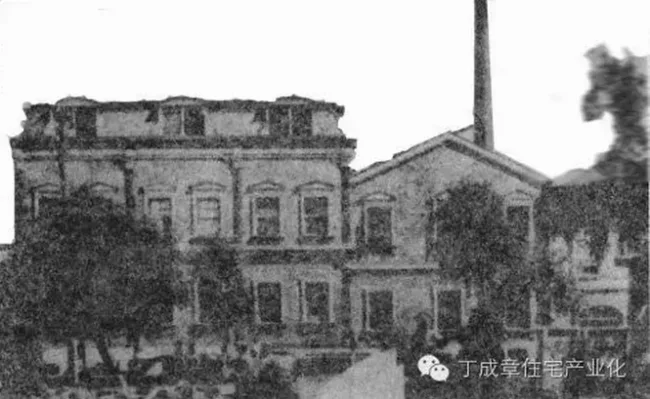
Figure 3-8
In 1903, Yokogawa Minfu designed and constructed the steel-frame headquarters building of Mitsui Bank (Figure 3-9).
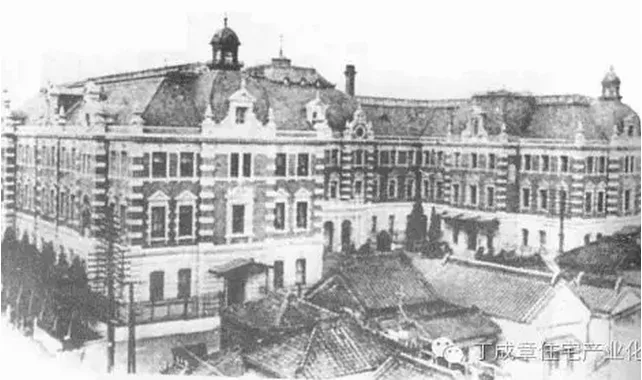
Figure 3-9
In 1905, Kikutaro Shimoda, known as the “Black Goat of the Architecture Industry” in Japan, designed the Hong Kong and Shanghai Bank Building in Nagasaki City (Figure 3-10). This building prominently utilized steel, setting a benchmark for steel structure architecture during Japan’s Yokohama era.
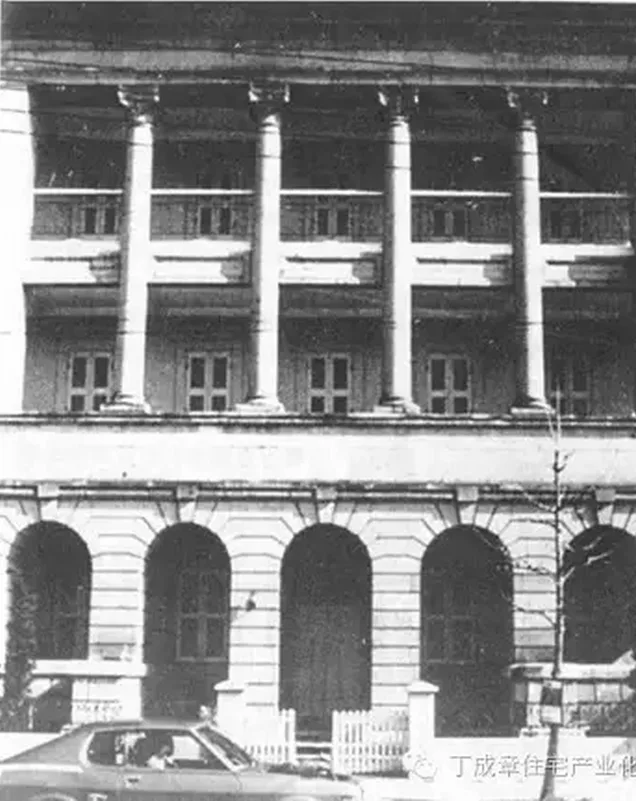
Figure 3-10
In 1909, Sano Sharp, a pioneer of steel structures in Japan, completed the Maruyama Building—a three-story steel frame structure with a 500m² footprint (Figure 3-11). Though retaining classical architectural elements, its bright glass facade featuring large windows and doors suggested a modern architectural style.
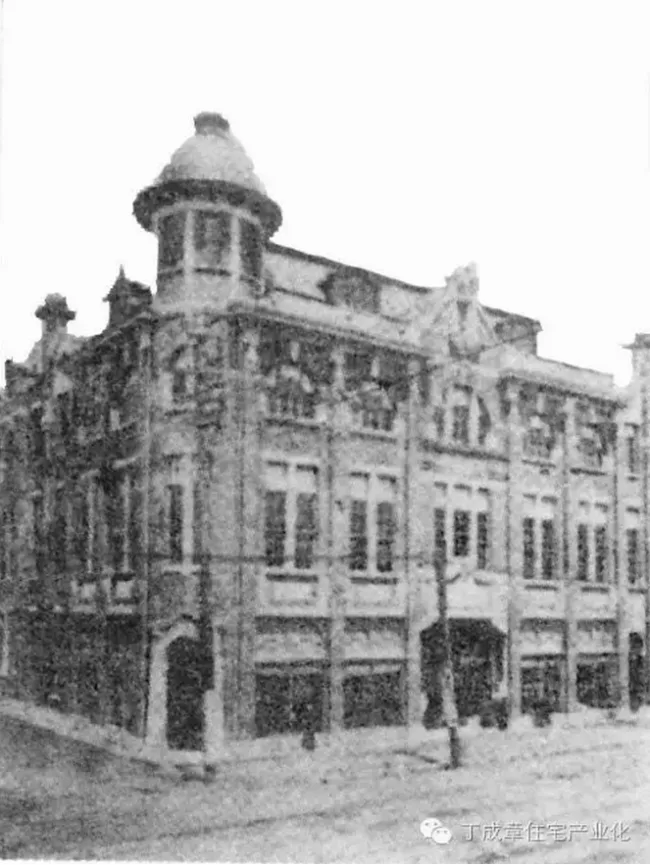
Figure 3-11
Sano Seiki (1880–1956) was a distinguished Japanese architect specializing in structural engineering and mechanics. To advance steel structure architecture in Japan, he offered a course titled “Iron Structure” in the Department of Mechanical Engineering (not Architecture) at the Imperial University of Tokyo. This strategic placement leveraged the department’s extensive expertise in steel manufacturing, processing, and applications accumulated over centuries in the mechanical industry. It also allowed access to established faculty, textbooks, and experimental equipment, advantages that the Architecture Department lacked at the time.
(4) Current State of Housing Industrialization in Japan
Throughout modern history, Japan has demonstrated a keen ability to absorb and appreciate Western civilization, including architecture, often enthusiastically adopting new ideas.
Around 1920, less than a decade after Walter Gropius proposed the concept of “housing industrialization,” the idea of prefabricated housing was introduced to Japan as a novel concept.
In 1932, a group of architecture professors who had studied in Germany founded the “New School of Architecture and Technology,” focusing on Bauhaus principles across disciplines such as painting, sculpture, and furniture production. Although a few experimental industrial housing projects emerged, none reached large-scale factory production or commercial sales at that time.
After World War II, Japan’s industry rebounded rapidly, especially stimulated by the Korean War. Steel production surged from 4.85 million tons in 1952 to 16.07 million tons in 1954, reaching 41.16 million tons by 1965, providing a strong material base for the construction industry.
In the 1950s, Japan’s industrial sectors, led by the steel industry, shifted focus from military to civilian products. Mass production of cold-rolled steel sheets and lightweight steel sections began, underpinning the technological and product development of industrialized steel structure housing.
In 1955, the Light Steel Building Association was established, playing a vital role in Japan’s steel structure housing industry formation and growth.
According to the Japan Prefabricated and Assembled Building Association, by the late 1990s, prefabricated wooden structures accounted for 18% of Japan’s prefabricated houses, concrete prefabrications 11%, and steel structure houses dominated with 71%.
Japan’s steel structure construction, similar to other industries, often lacks originality and tends toward imitation. Early Western focus on large-span and modular steel structures led to widespread use of beam-column structural systems employing hot-rolled steel sections. Japanese residential architecture has traditionally used ancient Chinese beam and column systems, which have deeply influenced the country’s residential industrialization, creating ongoing challenges in moving beyond this structural approach.
After the war, Japan developed a distinct 3D modular housing model, differing from the American approach, to address housing shortages. Figure 3-12 shows a 3D residential module being produced on a Japanese modular housing assembly line.
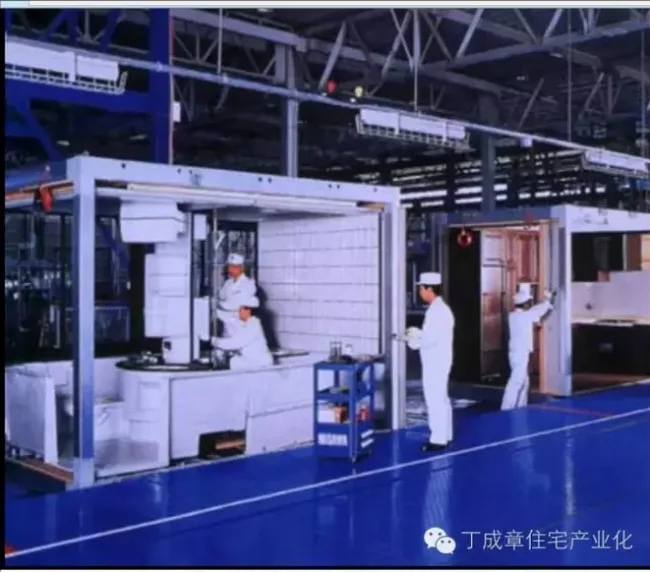
Figure 3-12
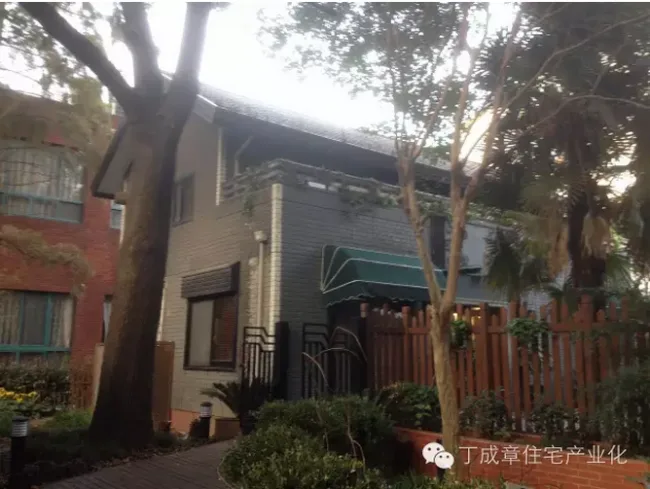
Figure 3-13

Figure 3-14














Must log in before commenting!
Sign Up