
10. The Development Trend of Wall Reform
(1) Historical Background
Over 6,000 years ago, the Yellow River (Yangshao Culture) and the Yangtze River Basin (Liangzhu Culture) entered a flourishing primitive agricultural period. The ancestors of the Chinese nation transitioned from the nomadic lifestyle of fishing, gathering, and living by water and grass during the Paleolithic era to a settled agricultural life. This shift led to the creation of the “mortise and tenon” joint system characteristic of “beam and column” architecture.
The image below shows wooden mortise and tenon joints excavated from the Hemudu Neolithic Culture Site in Yuyao, Zhejiang Province, dating from 5000 BC to 3300 BC.

Due to the longstanding tradition of “beam and column” architecture in China, many architectural terms in Chinese reflect the material properties used: for example, “wall” and “brick” relate to “soil,” while both “columns” and “beams” refer to “wood.” This tradition partly explains why the “Qin brick and Han tile” architectural system has endured for such a long time.
In contrast, English architectural terms often highlight purpose, usage scenarios, and mechanical properties, sometimes with three-dimensional directional characteristics. As a result, Western architectural building materials have continually evolved.
(2) Current Wall Reform Path in China
China’s wall reform is progressing along the following trajectory:
Red bricks → Various blocks → Various prefabricated panels
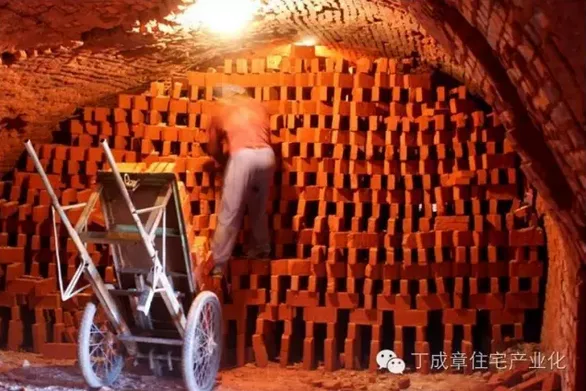
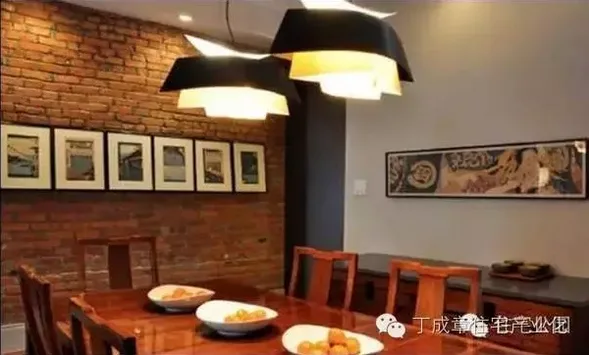
In the United States, only the super-rich can afford to use red bricks for building exterior walls.

If a typical American family decorated their living room, dining room, and study with a few red bricks, it would create a very upscale atmosphere.
More than 60 years ago, developed countries largely phased out the use of soil excavation and brick firing as building materials due to their severe ecological impact.
Brick firing has caused extensive farmland damage, turning areas around brick factories into large pits and artificial deserts.
Moreover, the firing process consumes huge amounts of energy and causes significant environmental pollution.
Consequently, China has discouraged or even banned the use of red bricks in some regions to protect the environment and conserve energy.
Since 2005, relevant government departments have issued notices to promote wall material innovation and energy-saving building practices, setting goals and specific measures.
For example, by the end of 2010, all cities were required to ban the use of solid clay bricks, and national production was to be controlled below 400 billion pieces annually—although this goal remains challenging.
Despite repeated bans, red bricks remain a typical high-energy-consumption, high-pollution, low-technology, yet “high-profit” product.
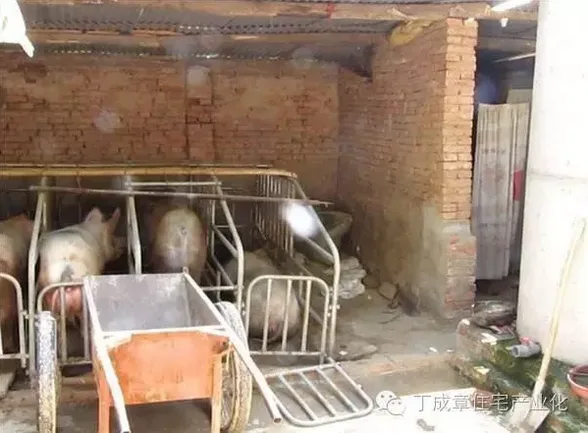
In China, even red bricks considered “luxurious” are sometimes used to build pigsties.
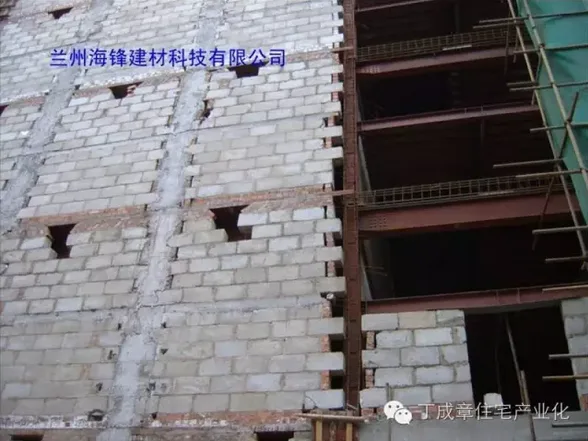
Due to a lack of suitable building envelope walls, steel structure buildings in China often use blocks as exterior walls, which contradicts the principles of prefabricated modular building technology.
In 1953, Alcoa developed an aluminum curtain wall system, first applied to the Alcoa Building in Pittsburgh.
This marked the official replacement of masonry in high-rise building exteriors by curtain walls (aluminum, glass, and various new systems).
Strictly speaking, steel frame structures (including precast concrete frames) and masonry enclosure walls do not align with prefabricated modular buildings.
I often joke with steel structure experts that steel structures are like a car’s “chassis.” Just as consumers don’t buy car chassis, building structures are sold only to developers, not end users.
In China, most steel structure enterprises focus on the “steel structure” itself but neglect the critical component of the building enclosure.
Since these companies cannot provide complete building enclosures, they resort to using blocks and manual construction methods for exterior walls, falsely claiming their buildings are prefabricated assembly buildings.
Steel structure buildings with manually constructed masonry exterior walls cannot be considered true prefabricated buildings.
Since aluminum curtain walls’ invention in 1953, high-rise buildings’ exteriors have shifted to curtain walls instead of blocks.
For over a decade, Chinese steel structure construction entities have focused on two research goals:
- Reducing steel usage;
- Concealing beams and columns indoors.
It took about ten years to overcome these challenges and develop many innovative building structural systems. However, the basic mechanical models remain largely unchanged, still relying on two columns supporting one beam, similar to steel structures from over 100 years ago or ancient Chinese beam-column buildings from over 5,000 years ago.
The steel structure industry invested heavily hoping to reduce costs by saving steel. Yet, with steel prices currently very low, these efforts have yielded limited practical returns.
The goal of hiding beams and columns indoors is also unusual. Concrete beams and columns are larger than steel ones but have never been considered problematic, raising questions about how this issue was addressed.
Using lightweight strip boards as interior partitions is generally acceptable.
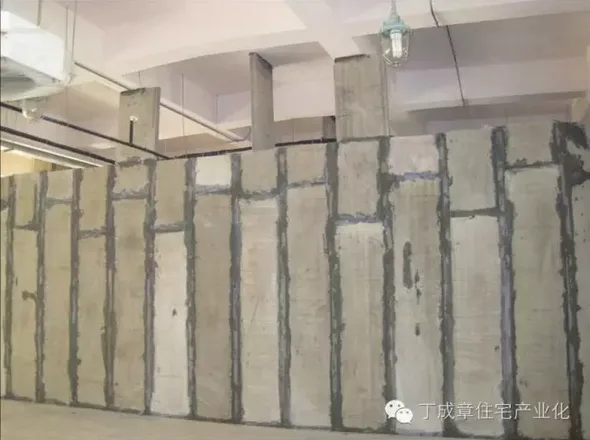
Due to the lack of suitable building enclosure walls, steel structure buildings in China sometimes use lightweight strip boards as exterior walls. However, this does not constitute true prefabricated construction.
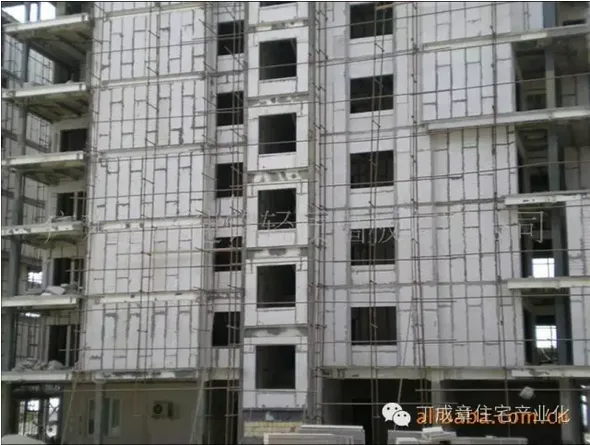
Currently, the use of lightweight panels for steel structure buildings in China represents the highest level of steel structure construction.
Japan has long produced ALC decorative panels and rarely uses ordinary ALC strips for exterior walls.
Singapore prohibits the use of ALC panels as exterior walls.
(3) Wall Reform Path in Developed Countries
In developed countries, there is essentially no wall reform. At least 200 years ago, red bricks were rarely used for exterior walls and interior partitions in North America. Around 150 years ago, lightweight wood or steel skeleton building systems were invented.
About 80 years ago, developed countries reduced or banned red brick firing.
Prefabricated modular buildings typically use large panel modules measuring 1200mm by 2400mm.
To improve production efficiency and reduce on-site labor, building panels are evolving towards full-wall sizes.
The greatest advantage of lightweight skeleton buildings is safety, especially earthquake resistance.
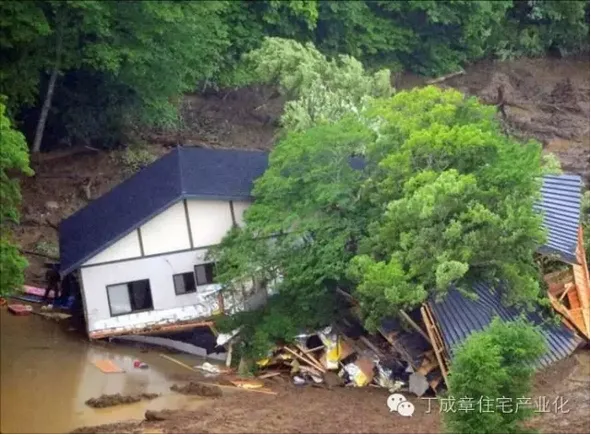
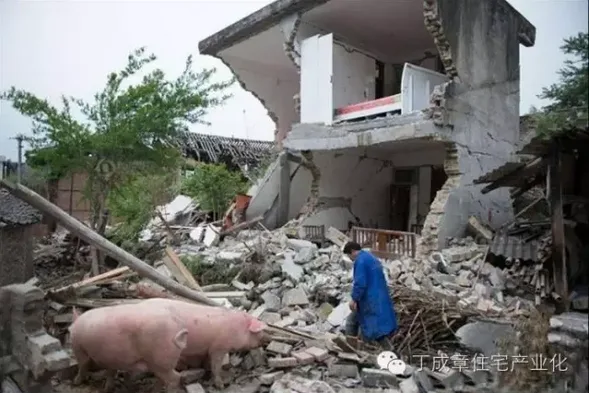
The biggest hidden risk of red brick or block houses—whether low-rise, mid-rise, or high-rise—is their lack of earthquake resistance.
(4) China’s Cement Consumption Compared to the United States
Between 2011 and 2013, China consumed more cement than the United States did during the entire 20th century.
Microsoft founder Bill Gates shared a comparative chart on cement usage, highlighting this surprising fact. China consumed 6.6 billion tons of cement during this period, while the U.S. used 4.5 billion tons from 1901 to 2000.
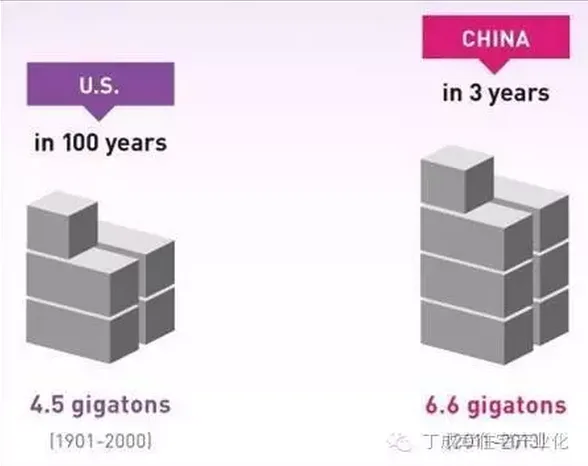
Although China’s population is over four times that of the U.S. and its economic growth rate is high, the U.S. experienced its peak expansion during the 20th century, building most of its roads, bridges, and skyscrapers then. China and the U.S. have similar land areas, ranking third and fourth globally.
Gates’ data originates from historian Vaclav Smil, who described cement as “the most important material in civilized society,” with sources from the U.S. Geological Survey.
The chart below shows U.S. cement consumption during the 20th century:
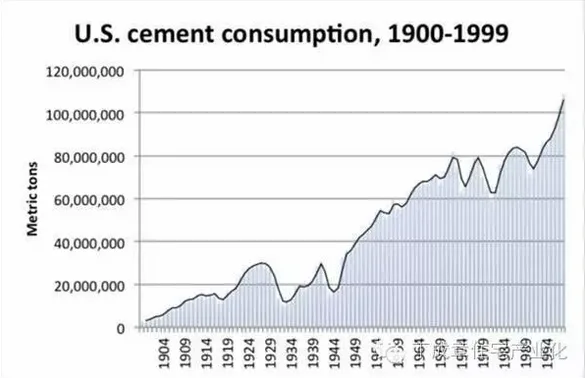
The chart clearly shows steep declines during the Great Depression, World War II, and the early 1980s recession. Total U.S. cement consumption in the 20th century was 4.4 billion tons, while China’s was approximately 6.4 billion tons in just three years.
The key reason is that throughout the 20th century, new U.S. buildings were primarily steel or wood structures, with concrete buildings being rare. From 2011 to 2013, almost all new buildings in China were concrete.
(5) China’s Construction Industry Embraces Three Unprecedented ‘Firsts’
Currently, green prefabricated and steel structure buildings are entering an unprecedented golden age, with three major policy-level breakthroughs:
- The State Council executive meeting, for the first time, proposed developing green building materials and steel structure buildings;
- On November 4, 2015, Premier Li Keqiang presided over a State Council meeting to implement the Fifth Plenary Session of the 18th Central Committee’s spirit, promoting steel structure pilot projects linked to shantytown renovations and earthquake-resistant housing. This included expanding green building material use;
- For the first time, the Central Committee of the Communist Party of China advocated green prefabricated and steel structure buildings;
- On February 6, 2016, the Central Committee and State Council issued opinions to strengthen urban planning and construction management, vigorously promoting prefabricated construction to reduce waste and pollution, shorten construction times, improve quality, and develop relevant standards and national production bases. The goal is to achieve 30% prefabricated buildings in new construction within about ten years, promote steel structure construction prudently, and encourage modern wooden structures where feasible.
- On March 5, 2016, Premier Li Keqiang explicitly emphasized promoting green and prefabricated buildings in the government work report.
I have often said that technical experts alone cannot advance steel structure buildings; political action is essential to solve the problem. This time, politicians have indeed acted decisively and simultaneously.
Positively, this shows the central government’s concern for the construction industry; negatively, it reveals a major industry problem that the industry cannot solve by itself.
The core issue is China’s construction materials, structures, and methods are too uniform, with reinforced concrete dominating the landscape.
Despite 20 years of internal efforts, concrete construction dominance remains largely unchallenged.
Therefore, the Party Central Committee, State Council, and National People’s Congress had to intervene.
Is there a problem with concrete buildings dominating the market? Absolutely. Developed countries that invented concrete buildings have not seen concrete dominate their markets because cast-in-place concrete causes significant environmental and resource damage. Except in Mainland China, few places have concrete-dominated construction.
(6) Origin of Multi-Story Steel Structure Buildings
In the early 19th century, industrialized buildings emerged in England and the United States. Following iron ore discovery in the U.S. Superior region, the country became a global steel leader.
In 1883, American inventor and architect William LeBaron Jenney designed the Home Insurance Building in Chicago, the first frame structure using cast iron and steel frames instead of load-bearing walls. This innovation revolutionized architecture and marked the beginning of modern high-rise buildings.
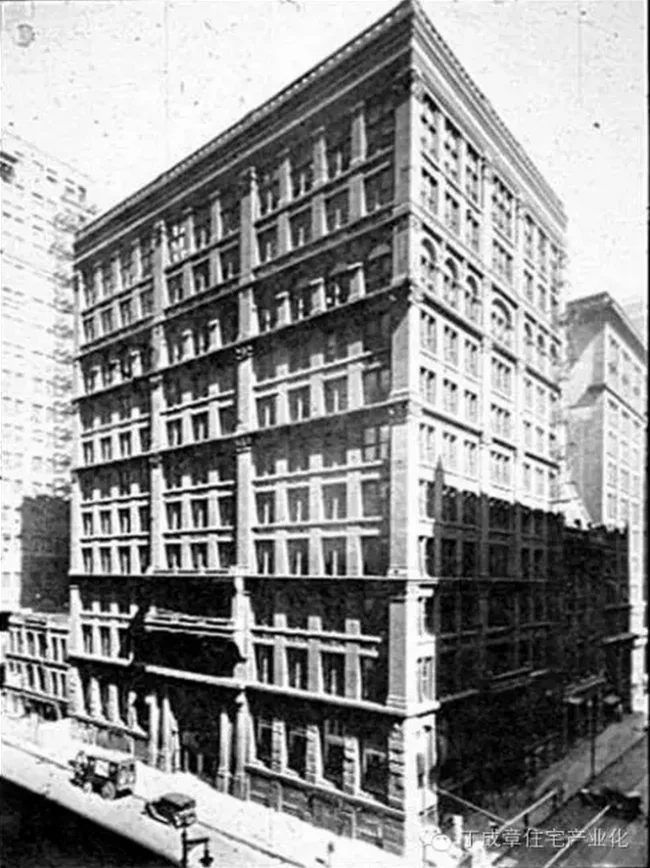
(7) Current Status of High-Rise Steel Structure Building Technology
The steel structure technology system for high-rise commercial buildings is mature, with over 100 years of history beginning with the Chicago high-rise steel structures.
These buildings are mainly in city centers where land costs dominate; construction costs are comparatively minor.
For commercial buildings in central urban areas, speed is critical, making prefabricated steel structures the preferred choice.
However, for high-rise residential buildings outside city ring roads, affordability and quality are paramount.
Despite a century of development, high-rise steel structure technology has seen little fundamental change and still relies on the frame system introduced by William LeBaron Jenney in 1883.
Globally, there is a shortage of affordable, aesthetically pleasing prefabricated exterior walls suitable for high-rise residential buildings.
(8) Prefabricated and Assembled Exterior Wall Technology in Europe and America
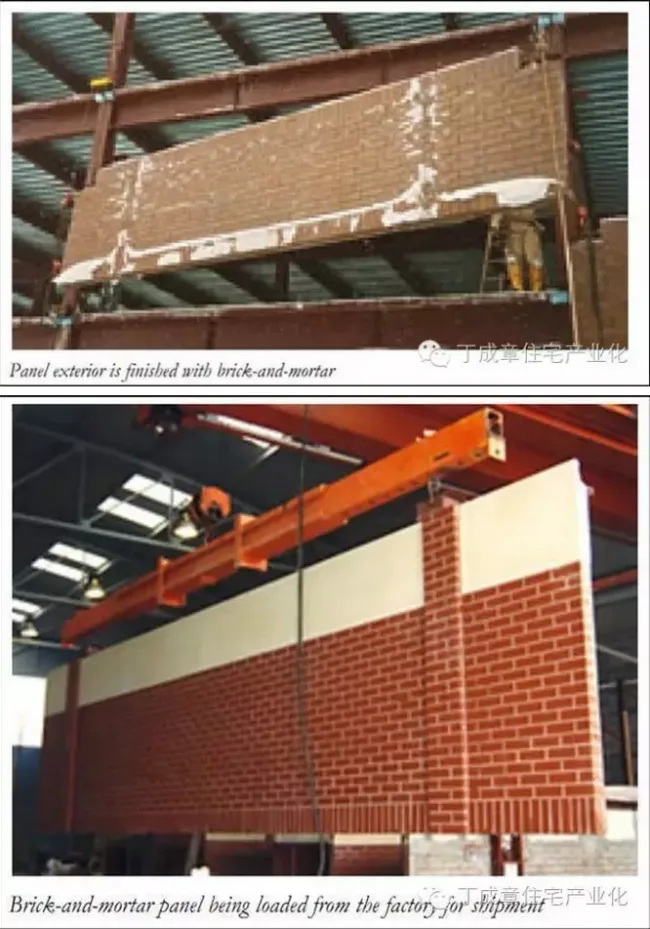
Exterior wall finishing is completed inside factory workshops.
Foam concrete exterior wall panels are installed onsite.
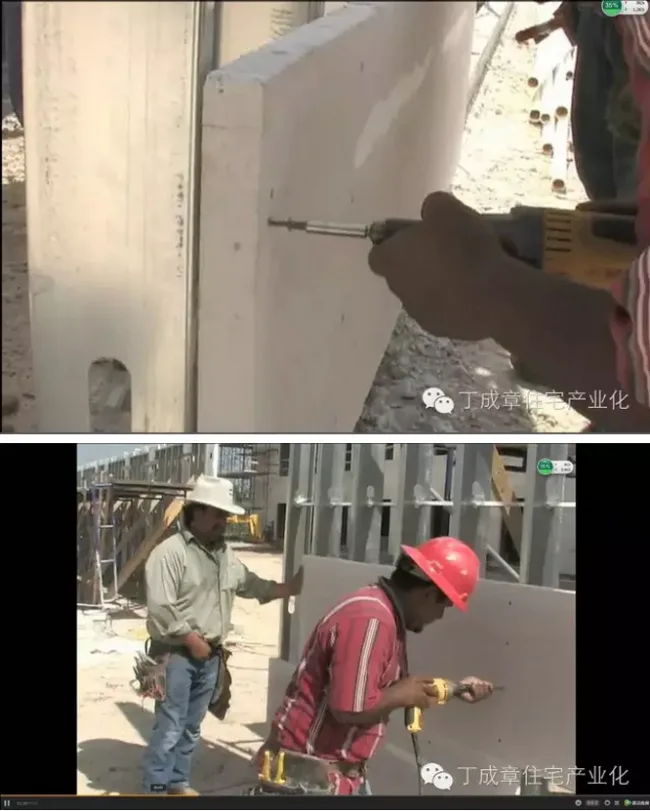
Anti-cracking nets and waterproof putty are applied onsite.
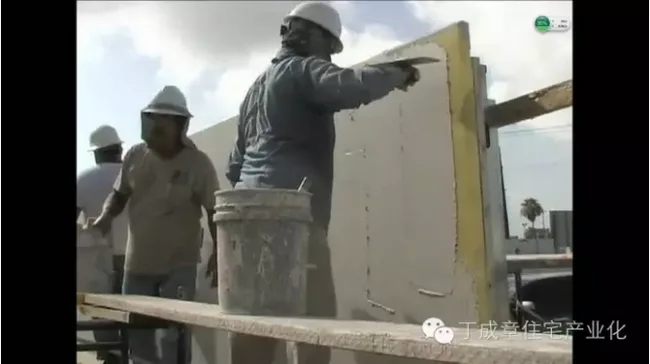
Foam concrete exterior wall panels and waterproof putty components are lifted and installed onsite.
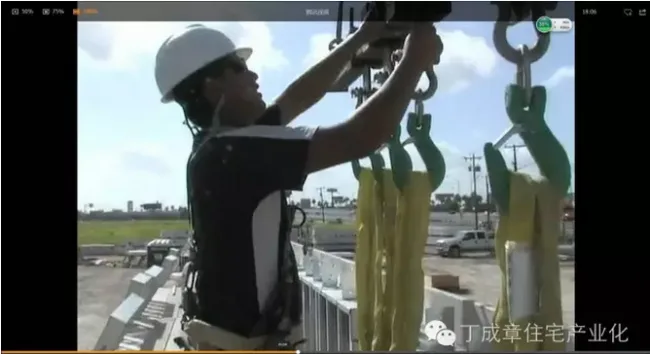
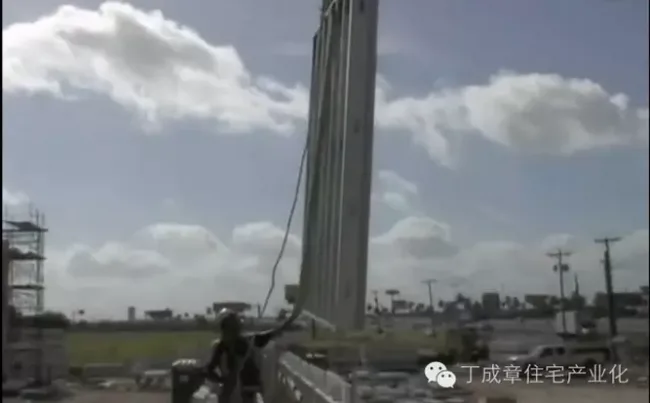
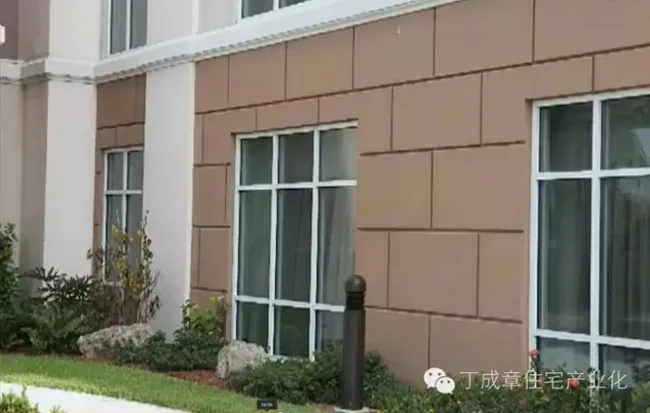
Exterior wall decoration is performed onsite.
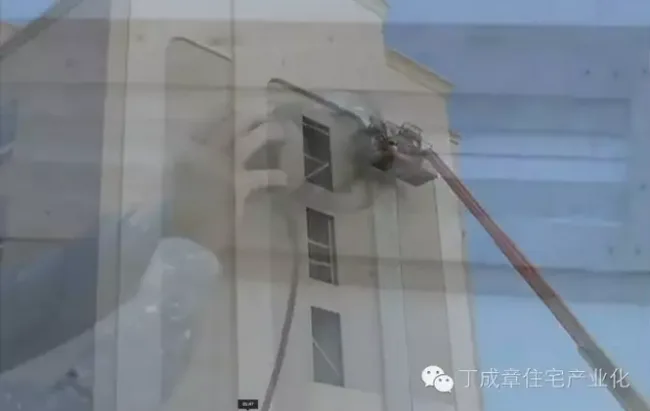
The exterior wall decoration is completed.
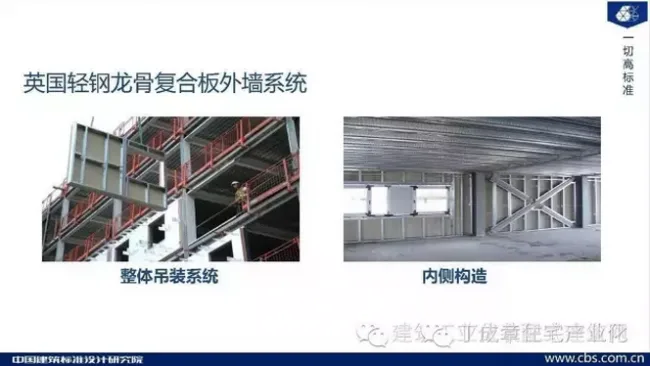
Prefabricated and Assembled Exterior Wall Technology in the UK
Exterior wall finishing is completed in the factory and hoisted onsite.
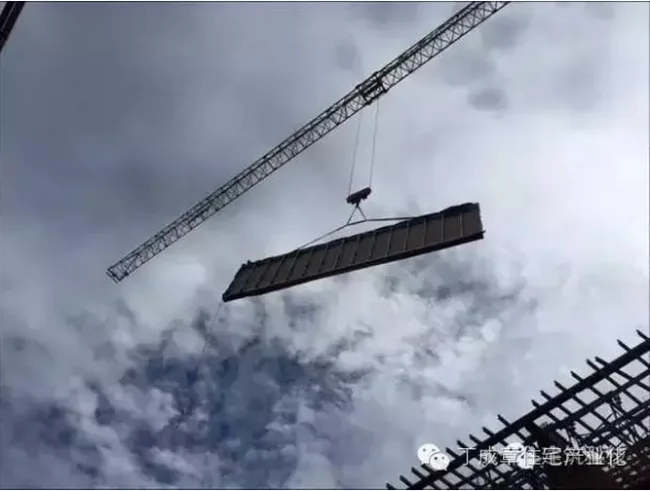
Prefabricated and Assembled Exterior Wall Technology in the United States
Exterior wall finishing is completed in the factory and hoisted onsite.
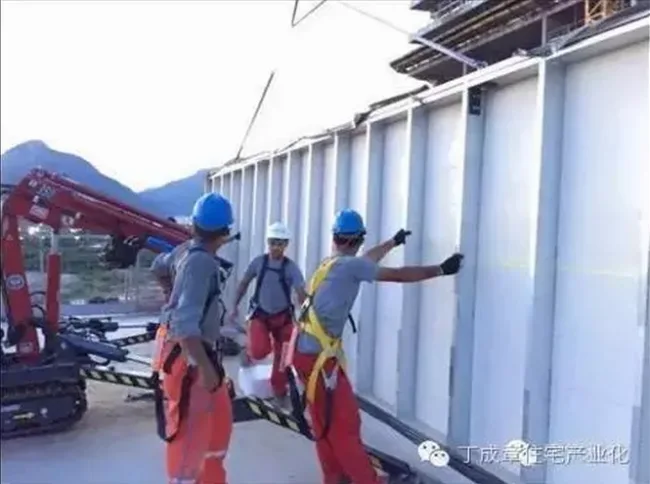
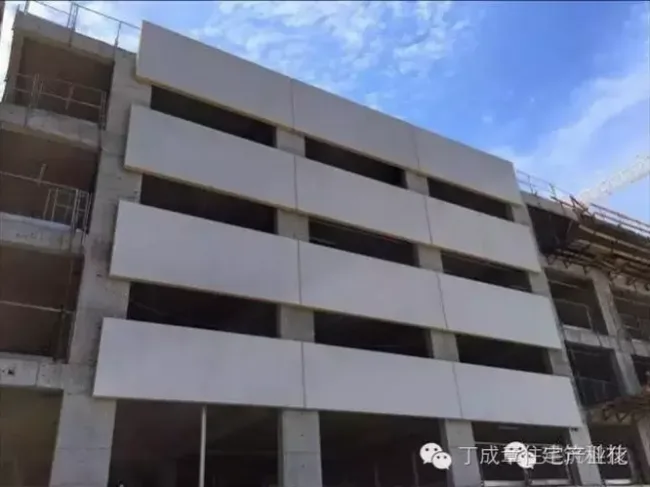
(9) Prefabricated and Assembled Exterior Walls in Japan
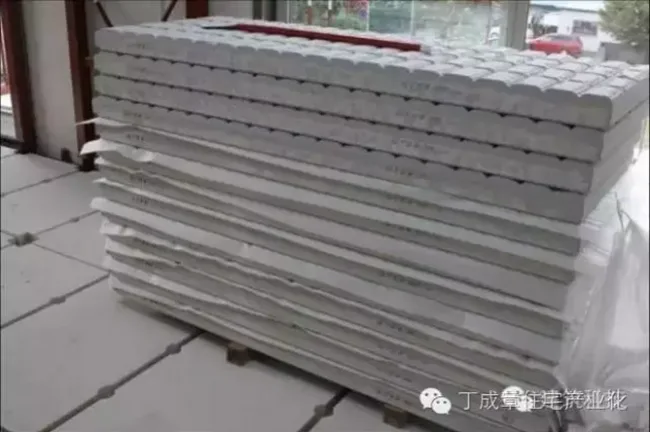
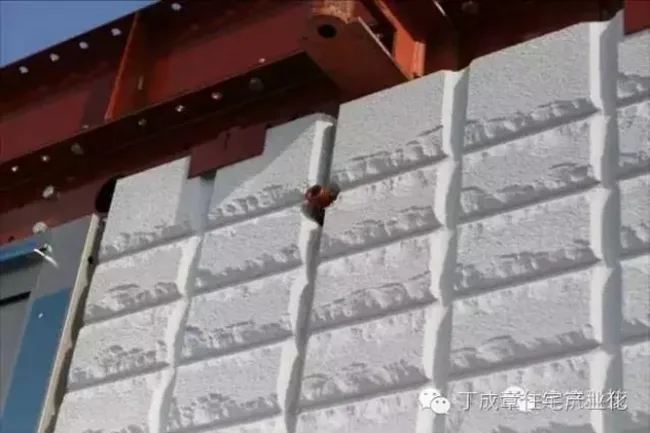
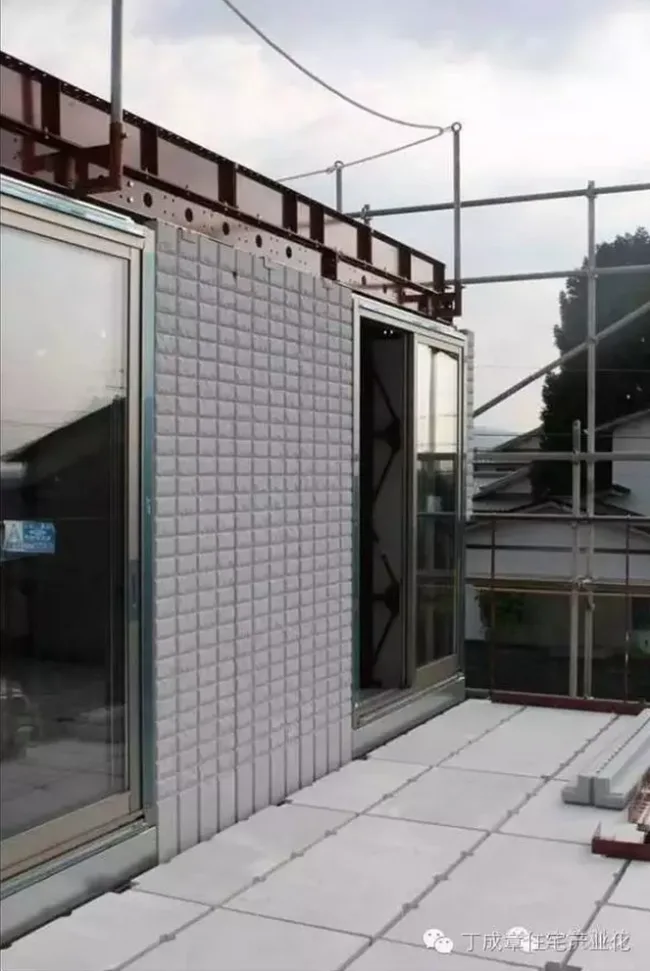
Since the 1960s and 1970s, Japan has actively developed prefabricated and assembled exterior wall systems, with dozens of companies now offering diverse products.
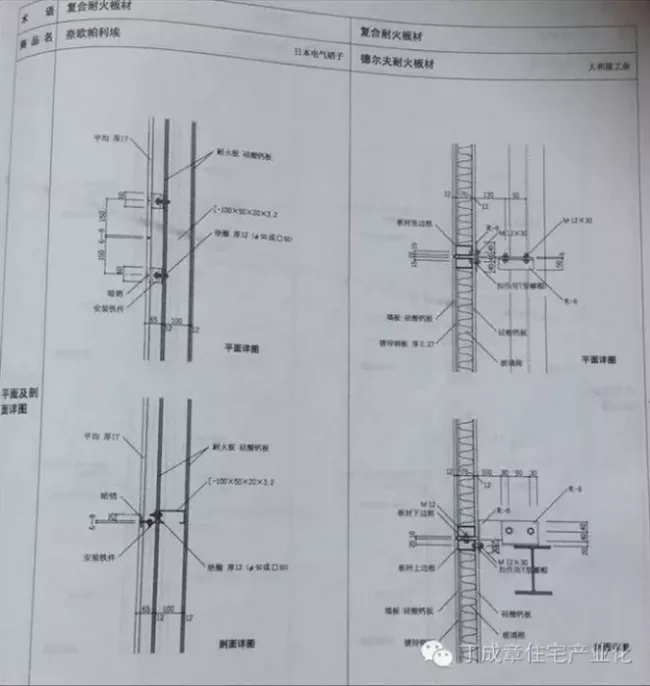
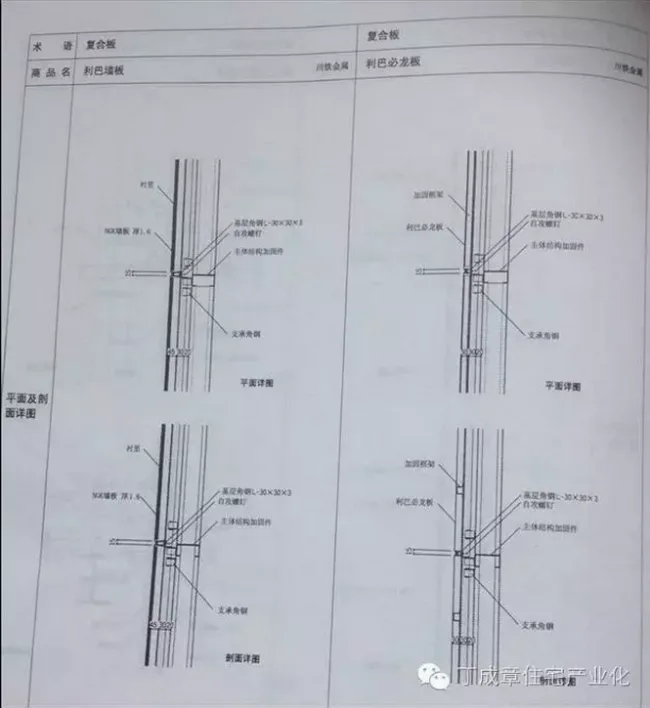
Japanese ALC (aerated lightweight concrete) prefabricated wall panels feature large formats, shallow relief designs, and decorative colors, creating truly prefabricated and assembled exterior wall products.
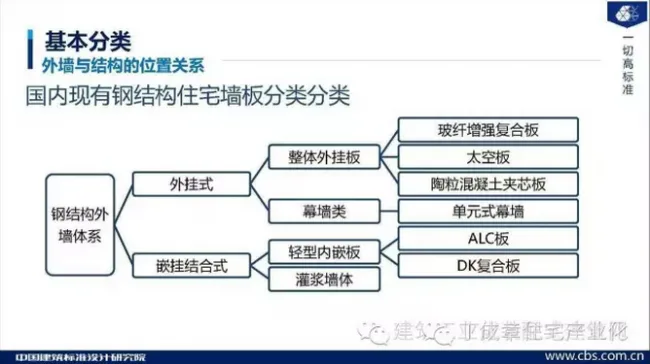
(10) Classification of Existing Steel Structure Residential Wall Panels in China
(11) Foreign High-Rise Steel Structure Residential Exterior Wall Systems
Countries and regions with high demand for high-rise residential buildings include:
- Traditional planned economies: former Soviet Union, China, North Korea;
- Urban countries and regions: Singapore, Hong Kong, China;
- Mega city centers: Manhattan (New York, USA), Ginza (Tokyo, Japan).
Demand drives the market, which in turn fosters technological development.
Due to limited demand for high-rise residential buildings in developed countries, there is no mature market or technology for high-rise residential building systems.
As a result, developing high-rise residential buildings faces the challenge of lacking mature exterior wall system references.
(12) Development Status of Prefabricated Residential Buildings in China
1. Technical Challenges in High-Rise Prefabricated Steel Structure Residential Buildings
Most Chinese officials, entrepreneurs, scholars, researchers, technicians, and designers have focused mainly on building structures when developing prefabricated high-rise steel residential buildings.
In fact, steel structure technology for high-rise commercial buildings is mature and has a history exceeding 100 years, originating from the Chicago steel structures.
Ordinary high-rise steel structure residential buildings can adopt commercial steel structure technology.
Currently, domestic high-rise steel residential systems focus on reducing steel consumption. However, with steel prices extremely low, these efforts have limited practical significance.
Glass or aluminum curtain walls from commercial buildings are unsuitable for typical residential buildings.
The real technical challenge lies not in steel structure itself, but in developing affordable, attractive exterior wall systems suited to high-rise steel residential buildings.
Due to lack of overseas demand and market, no R&D has focused on prefabricated exterior wall systems for high-rise steel residential buildings.
Therefore, promoting prefabricated high-rise residential buildings in China remains difficult, mainly due to the absence of mature exterior wall technology.
(13) Directional Error in China’s Steel Structure Residential Building R&D
Domestic enterprises and individuals engaged in steel structure residential building R&D have primarily concentrated on steel structures, neglecting the development of suitable building enclosure systems.
As a result, current steel structure residential systems mainly use concrete blocks or slabs as building enclosures.
Most enclosure work still involves manual wet construction onsite, preventing these from being true “prefabricated buildings.”
This is a major reason why steel structure residential buildings struggle to gain traction.
(14) Current Status of Prefabricated Exterior Wall Technology for Multi-Story Residential Buildings
1. Relevant Standards for Prefabricated Residential Buildings in China
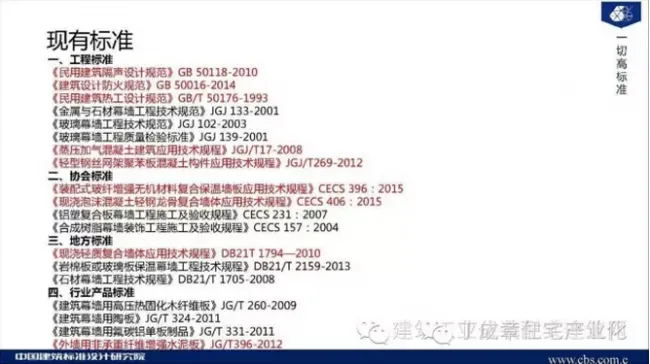
The table above clearly indicates that China’s technical reserves for prefabricated exterior walls in high-rise steel residential buildings are nearly nonexistent.
Engineering standards include:
- Technical Code for Metal and Stone Curtain Wall Engineering JGJ133-2001;
- Technical Code for Glass Curtain Wall Engineering JGJ102-2003;
- Quality Inspection Standard for Glass Curtain Wall Engineering JGJ139-2001;
Association standards include:
- Technical Specification for Application of Prefabricated Fiberglass Reinforced Inorganic Material Composite Insulation Wall Panels (CECS 396:2015), led by Zhuoda New Materials Group;
- Technical Specification for Application of Cast in situ Foam Concrete Light Steel Keel Composite Wall (CECS 406:2015), presided over by Hang Xiao Steel Structure;
- Code for Construction and Acceptance of Aluminum Plastic Composite Panel Curtain Wall Engineering CECS231:2007;
- Code for Construction and Acceptance of Synthetic Resin Curtain Wall Decoration Engineering CECS157:2004.
The fiberglass reinforced composite board standard (CECS 396:2015) was jointly developed by Zhuoda Group.
Zhuoda Group uses light steel keel composite walls for multi-story residential exterior panels, following “Technical Specification for Light Steel Structure Residential Buildings” JGJ209-2010.
For high-rise steel structure residential buildings, Zhuoda Group uses ALC panels under the “Technical Specification for Application of Pressurized Aerated Concrete in Buildings” JGJ/T17-2008.
(15) Challenges Facing Existing Steel Structure Residential Wall Panels in China
1. Building Insulation Materials
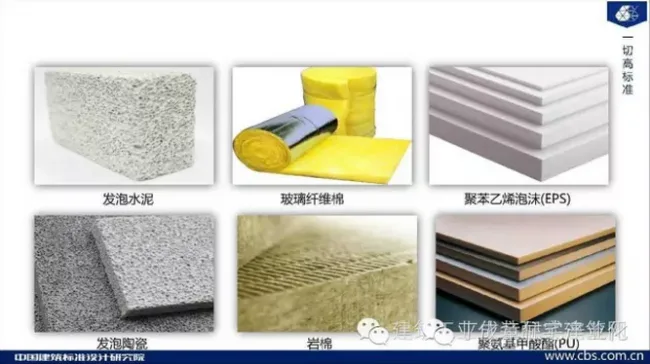
The market offers various insulation materials (see Figure 10):
- Fiberglass wool and rock wool are flexible organic insulation materials mainly used for walls, roofs, and floors in light steel and wood buildings;
- Molded polyethylene foam (EPS), extruded polyethylene foam (XPS), and polyurethane (PU) are rigid organic thermal insulation materials used mainly for SIP (“sandwich”) wallboards as described in CECS 396:2015;
- Foam cement and foam ceramics are rigid inorganic insulation materials generally used directly as exterior walls or insulation layers.
2. Fire Prevention Regulation Constraints
Since the implementation of the “Technical Code for Building Fire Protection” GB50016-2015 in May 2015, organic insulation materials such as EPS, XPS, and PU have effectively been banned.
For example, Article 6.7.3 requires that when an external wall includes insulation materials forming a hollow composite structure, the fire resistance rating must be met. If the insulation is B1 or B2 level combustible, the surrounding walls must be non-combustible and at least 50mm thick.
This means SIP (“sandwich”) wall panels using rigid organic insulation materials like EPS, XPS, and PU cannot be used.
(16) Current Status of Prefabricated Exterior Wall Technology for Multi-Story Residential Buildings
Due to stringent fire protection requirements for high-rise buildings, SIP wallboards with rigid organic thermal insulation materials (class B1) like EPS, XPS, and PU are prohibited.
The only prefabricated exterior wall panels currently permitted in high-rise buildings in China are:
- ALC panels (aerated concrete panels);
- Ceramic aggregate concrete sandwich panels (rarely used).
1. ALC Boards (Aerated Concrete Boards)
ALC boards represent mature but somewhat outdated technology.
They hold the largest market share for prefabricated steel structure residential panels in China.
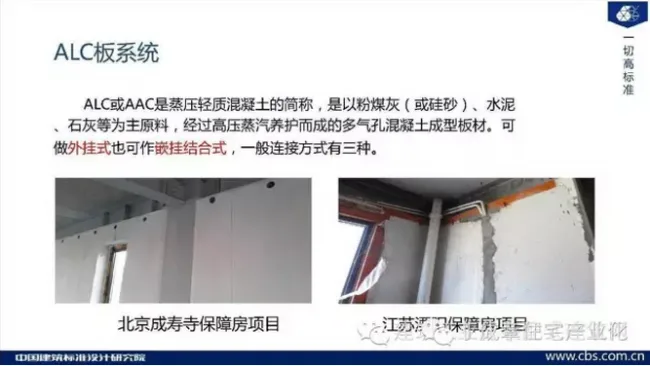
ALC boards are popular due to the dry construction method, which avoids the need for formwork workers, steel reinforcement workers, or plasterers, making them strong competitors to reinforced concrete in cost.
However, ALC boards have drawbacks:
- They are not waterproof, so if the decorative surface material lacks good waterproofing, leakage may occur;
- Joints constructed with wet methods can crack and leak during earthquakes;
- Tiling on ALC panels often results in peeling.
The installation method for ALC boards is illustrated below.
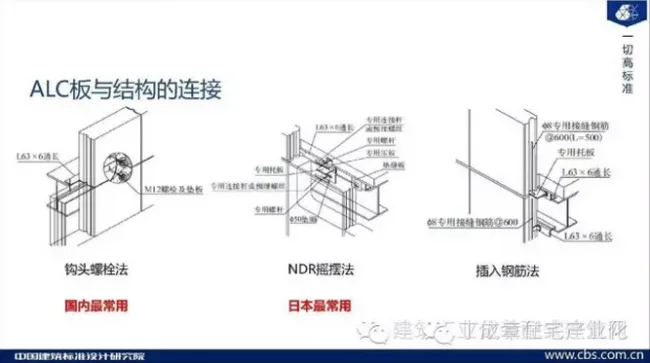
The domestic installation method commonly used is the “hook bolt method.”
Internationally, ALC boards frequently suffer from cracking, water leakage, and decorative layer detachment. Efforts are underway to develop larger, shallow-relief, and integrated exterior wall panels.
In China, steel structure buildings using ALC panels almost always face cracking, water leakage, and decorative layer detachment issues.












Must log in before commenting!
Sign Up