
Source: Building an Empty City

Located at 8 Spruce Street in Manhattan, USA, stands a dazzling skyscraper known as
Beekman Tower in New York,
later renamed “8 Spruce Street.”
This building rises to a total of 76 floors and reaches a height of 265 meters.
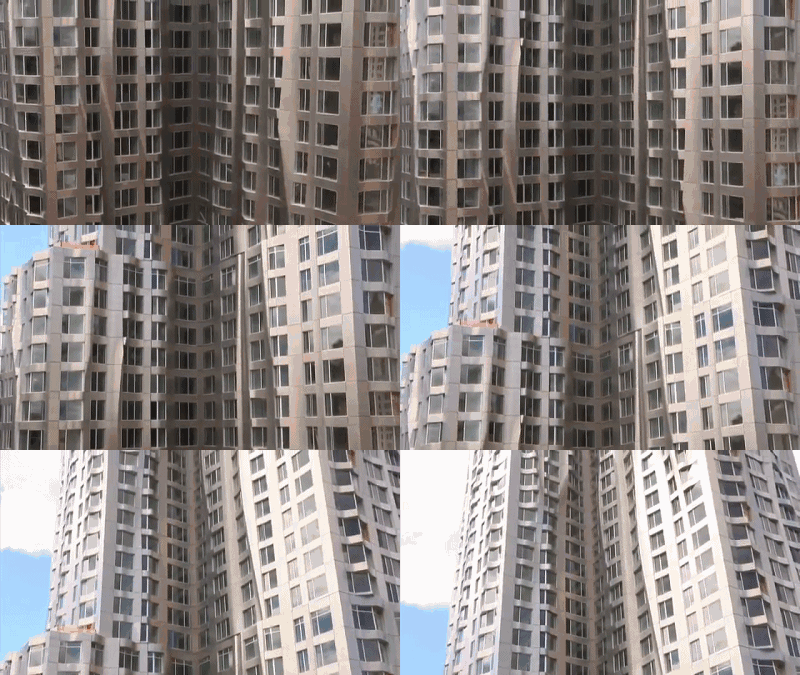
At the time of its completion, it was the tallest residential building in the Western Hemisphere.


This iconic deconstructivist structure was designed by architect Frank Gehry.
(Watching the master’s sketches is simply a delight.)
Its smooth lines and organic form have successfully redefined the Manhattan skyline.

The building utilizes innovative techniques to create dynamic curves throughout its structure. Combined with a diverse layout,
the total number of unique floor plans exceeds 200.
(Kudos to the designer who created these floor plans in record time!)
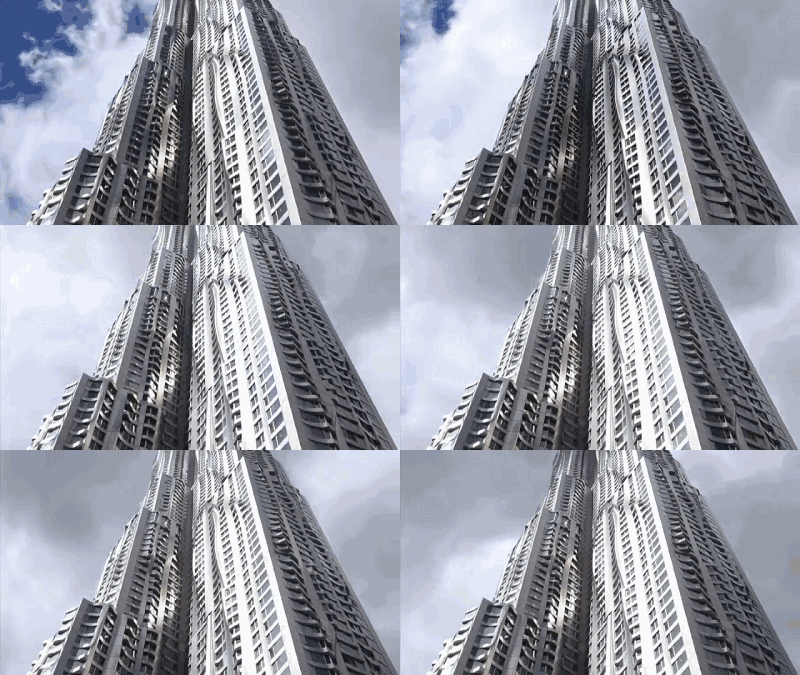
This building represents a clever innovation in skyscraper design.
In the world of high-rises,
most designs follow well-known templates,
with everything having been explored and repeated.
Standardized and modeled,
many buildings look identical.

At that moment, I realized what New York truly lacks:
A building that does not imitate others,
A building free from historical constraints,
Yet boldly proclaims, “This is New York!”
Just by looking at it,
you immediately know it belongs only to New York.
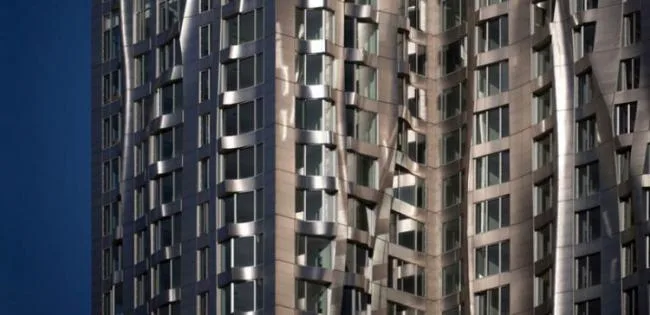
The building’s exterior is composed of 10,500 individually shaped stainless steel plates.
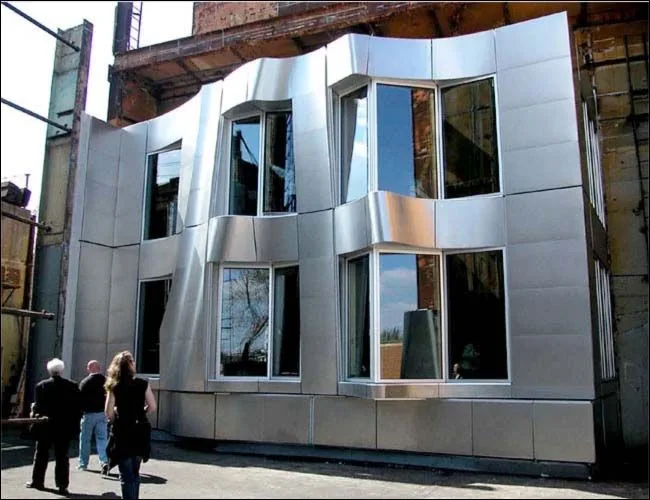
Even more impressive is that each steel plate has a unique shape.
As a result,
the building’s appearance changes dynamically depending on the observer’s viewpoint.
Prefabricated structure
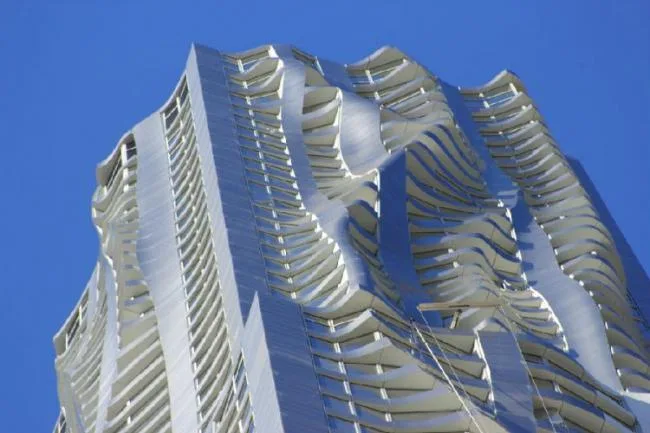
Reviewers have noted that despite the abundance of remarkable buildings in Manhattan,
this skyscraper truly stands out.
Its structural frame is made of reinforced concrete,
while its exterior resembles a water-like surface rippled by the wind,
creating a vibrant and dynamic appearance.
This remarkable architectural beauty owes much to the well-organized modular structure.
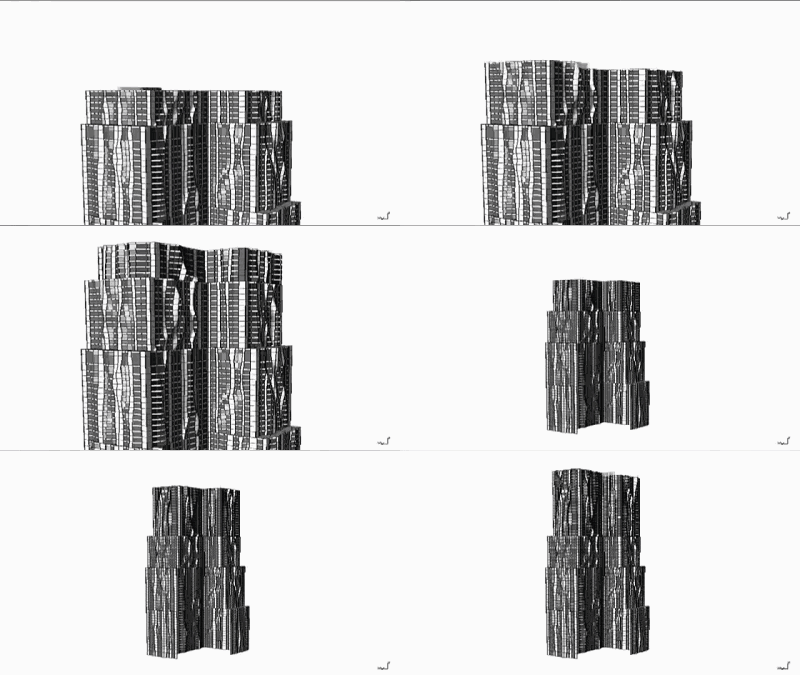
Computer simulations accurately control the entire construction process, including cost management.
The alluring curves continue irregularly from the first floor all the way to the top,
with no two floors sharing the same architectural style.

The unique charm of this building isn’t limited to its exterior.
The first to sixth floors house a public elementary school,
while the building also includes retail commercial spaces,
workplaces for the New York City Central Hospital,
and a parking garage,
as well as a 15,000 square meter public garden.

Frank Gehry’s involvement in this project ensured the successful integration of private and public spaces,
creating a harmonious coexistence of diverse functions within a single building.
















Must log in before commenting!
Sign Up