
The core tool of lean production is 5S management, which encompasses five key principles: SEIRI, SEITON, SEISO, SETKETSU, and SHITSUKE. These principles are collectively known as 5S management because their Japanese romanizations all start with the letter “S”. Originating in Japan, lean production aims to create a clean and organized work environment while fostering good work habits among employees through site and object standardization. Ultimately, 5S management seeks to improve the quality of personnel and cultivate disciplined work habits. It serves as the foundation for workshop site management and, more importantly, for managing prefabricated concrete (PC) component factories. This management approach primarily focuses on five aspects: personnel, machinery, materials, methods, and the environment.
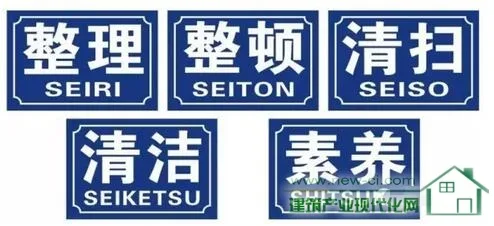
(1) Personnel Management
Employees are the heart of workshop management. The speech, behavior, and attire of operators directly influence work quality. While this impact may be indirect, it is nonetheless significant. In PC factory workshops, where many employees are new or contract workers with limited experience and weak factory awareness, cultivating strong organizational discipline is essential. Employees must consistently adhere to factory rules and the workshop site management system.
(2) Equipment Management
Equipment and production lines are vital for smooth operations in PC factories. Effective equipment management and regular maintenance are crucial. Maintenance must comply with established standards, and equipment should always be kept clean. Additionally, the area around the equipment must be maintained in a tidy state. Operators are responsible for conducting daily inspections to ensure all machinery is in proper working order.
(3) Materials Management
This includes managing raw materials and semi-finished products. All items should be stored neatly and systematically—random placement is strictly prohibited. Implementing fixed-location management ensures every item has a designated spot. Waste and garbage must be sorted and stored appropriately for unified disposal.
(4) Environmental Management
Maintaining cleanliness on-site every day is essential. Regional management practices should be implemented with clear accountability assigned to individuals. Each workstation must maintain regular hygiene, and dedicated personnel should oversee safety passages and public areas. Comprehensive management systems should cover all areas, including mixing workshops, steel reinforcement workshops, special-shaped parts workshops, production lines, boiler rooms, warehouses, and storage yards.
(5) Product Quality Management
Product quality and appearance directly impact the company’s overall image and reputation. Through effective on-site 5S management, the goal is to improve product quality, enhance employee standards, and consistently produce high-quality products. The appearance of PC components is often overlooked, especially on construction sites. In PC factories, this mindset must change. Striving for excellence and fully meeting user needs is imperative. Therefore, strict adherence to process regulations and the implementation of on-site completion inspections are necessary within the workshop.












Must log in before commenting!
Sign Up