
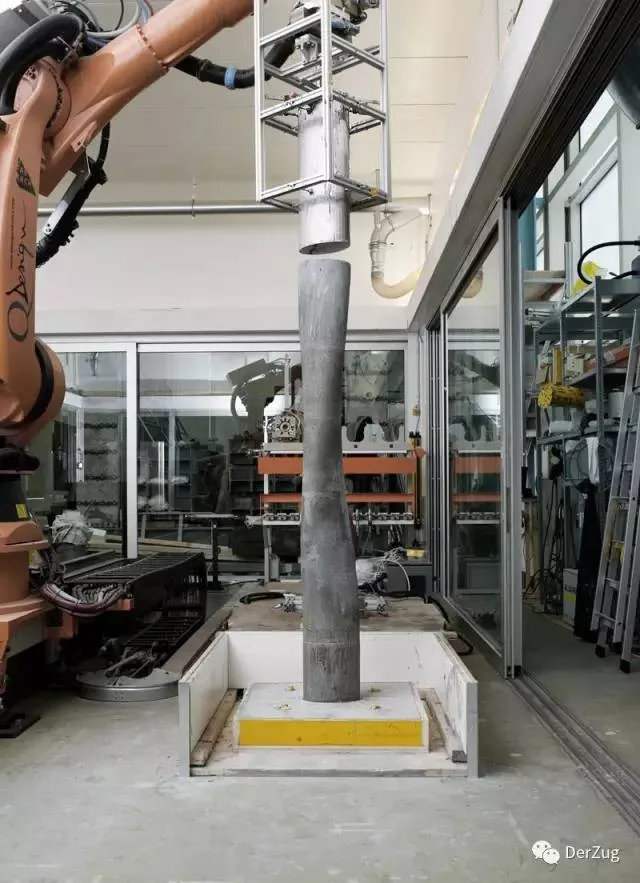
Smart Dynamic Casting, ETH Zürich, 2012-2015 © Christian Breitler
When architects discuss prefabricated construction, the term encompasses a wide range of scales—from prefabricated structural components like concrete beams, to large facade units such as curtain walls or sandwich panels, to entire prefabricated building modules like fully lifted bathrooms. Prefabricated construction of entire houses has moved beyond theoretical concepts into reality. The Mechanical Construction Research Laboratory at the Swiss Federal Institute of Technology in Zurich recently secured a substantial research grant of 13.4 million Swiss francs from the Swiss National Research Fund. Their goal is to push prefabricated construction toward full industrialization and automation.
The future this promises is thrilling: architects will soon be able to walk through offices and construction sites, rain or shine, without lamenting the loss of mundane years. Programmers passionate about algorithmic modeling will no longer be stymied by design and construction challenges. With the help of CNC lathes for precise shaping, customizable 3D printing, robotic arms, and drones for automatic assembly, the idea of instantly “baking” entire paper-like exterior buildings is approaching reality.
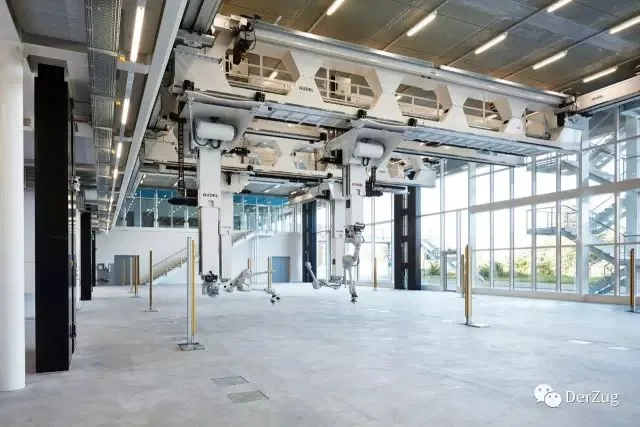
ETH Robot Assembly Laboratory © Andrea Diglas ITA, Arch-Tec-Lab AG
Yet, amid this excitement, skeptics raise important questions: When the usual tasks vanish, how will architects who lack creative engagement fill their time? Some prefabricated buildings—once realized—may present overly complex and redundant forms that fail to enclose simple, clear ideas. These structures risk losing their imaginative spaces due to abstraction, and their “pioneer” status disappears as soon as they are completed.
In Werk Bauen Women’s November 1985 issue on “Material und Detail,” Marcel Meili reflected on the exploration of industrialized prefabrication in the 1960s and 1970s:
“Ultimately, industrial products (prefabricated construction) were merely building components that offered excellent quality.”
During that period, modernists, classicists, and socially minded architects alike saw panel prefabrication as the “savior” of their architectural ideals. However, few addressed how these new construction methods fundamentally altered architecture’s essence.
Thirty years after Meili’s observation, prefabricated buildings are commonplace in Europe. His insights remain relevant, reminding us not to depend solely on prefabrication technology—technology alone cannot replace human judgment in addressing architecture’s fundamental questions. At the same time, we should not dismiss its value because of the challenges that come with prefabrication. With this caution in mind, we can explore prefabricated construction from multiple angles to answer the core question architects face: “What value does prefabricated construction bring to architecture?”
Buildings made with industrial steel, wood, stone, and other materials are never truly “non-prefabricated,” since these materials are usually pre-processed before arriving on site. Concrete, however, remains unique. Since its inception, concrete has largely been worked “wet” on construction sites. Yet concrete is the most widely used building material, prized for its properties and low technical threshold. Therefore, this article focuses specifically on precast concrete construction.
Construction as an Integral Part of Design
Compared to abstract construction systems, materials often have a more intuitive influence on design thinking. Designing architectural forms based on material properties is fundamental to architects. Nearly every architecture student encounters Louis Kahn’s famous question early on: “What do you want to be, brick?” Most agree that material properties are foundational to architectural form. But what role does the construction system play within this material-form relationship?
Eduardo Chillida once likened architects to sculptors, believing their creative processes are similar. As the object takes shape, the original idea itself evolves.
Dolf Schnebli echoed this analogy through his work on the Zentrum Ruopingen project. Initially, the architect designed a lightweight steel balcony suspension system to minimize materials and self-weight, leveraging steel’s tensile strength. However, construction logistics revealed that assembling this lightweight system required the concrete main structure’s completion first, significantly raising crane and scaffolding costs. Ultimately, the design prioritized construction efficiency over purely material logic: the lightweight tensile structure was replaced by a compressed, self-supporting steel balcony constructed alongside the precast concrete. This case illustrates how ignoring the construction process in favor of static material properties leads to overly simplistic design logic.
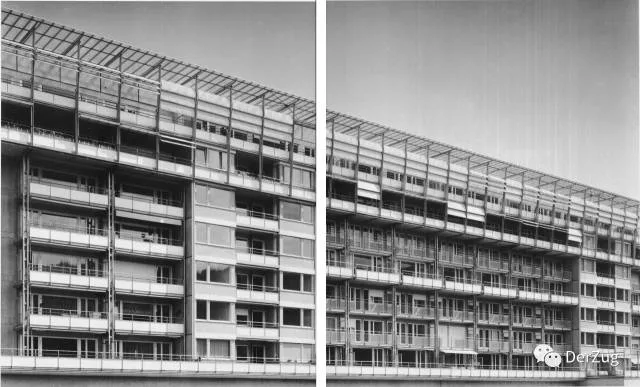
Dolf Schnebli, Centre Ruopingen, 1985.
Building on Chillida’s thinking, Schnebli explained the inseparable relationship between materials, construction, and design:
“Materials and construction processes are intertwined. Just as design ideas influence materials and construction, materials and construction shape design ideas.”
In other words, design should not stop at material logic or at the start of construction—it continues dynamically through to project completion. The iterative process of “design thinking → construction process → design thinking” is often ongoing.
Can we develop a flexible, adaptable prefabricated construction system to support this dynamic process? Such a system would meet diverse building needs and accommodate uncertainties during construction. This “systems theory” approach, foundational to the Apollo moon landing program’s success, spread widely afterward and influenced architectural practices through the 1960s to 1980s.
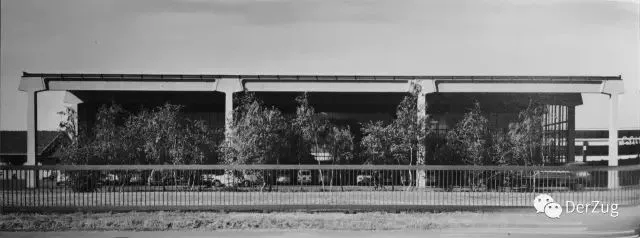
Angelo Mangiarotti, Elmag factory main facade, Lissone, Milan (© Mangiarotti Archive)
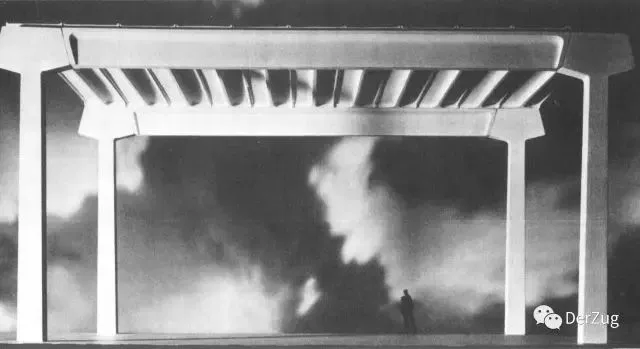
Facep Build System Model (© Domus, Nr.418)
Constructed in 1964 near Milan, the Facep factory and warehouse features a precast concrete load-bearing structure composed of just three basic components. This classic column-beam-slab system exudes a refined yet primitive aesthetic, maximizing the visibility and clarity of its structural logic. The curved contours of its elements evoke the exceptional industrial design of architect Angelo Mangiarotti, characterized by smooth transitions, a unified formal language, and industrial-grade manufacturing processes.
These qualities challenge the typical perception of concrete as cold and rough, creating a fresh and unfamiliar impression of the material.
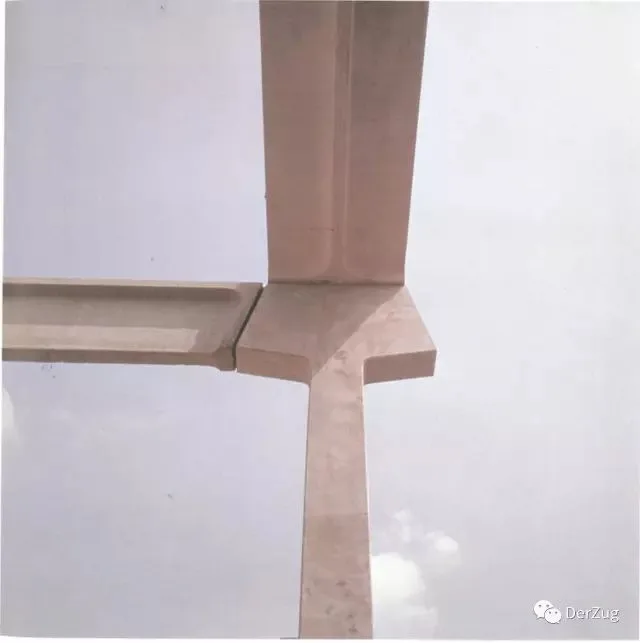
Elmag factory construction system node (© Mangiarotti Archive)
The design reveals a series of subtle but deliberate moves: transitioning from an 8-meter prestressed slab to a 14-meter clear-span prestressed beam, then transferring load to a slightly raised “receiving” column head, and finally to a relaxed column shaft. The protruding column head reduces beam span length—important because 14 meters was the truck transport limit at the time. Concave curves on beams and slabs reduce weight without sacrificing strength. A slight arch in the slab facilitates roof drainage, while grooves at the column head provide natural runoff outlets.
This thoughtful design achieves lightness and elegance in lifting heavy elements without excess, sharply contrasting with typical industrial buildings. Here, material use showcases the freedom concrete gains through casting, but its core value lies in creating a beautiful atmosphere.
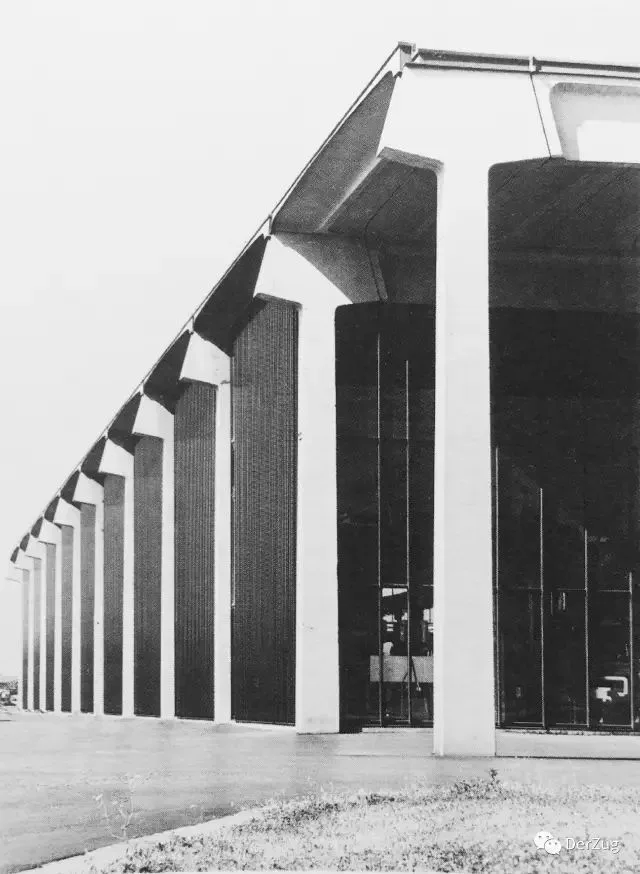
Elmag factory exterior (© Mangiarotti Archive)
Thomas Herzog praised this industrial building’s solemn yet elegant character. In many cities, industrial zones make up the largest part of suburban landscapes, where workers spend most of their day. Economic constraints often lead to low-quality construction, prompting workers to rush away and forget these places after work. In contrast, Mangiarotti’s works quietly critique this widespread neglect, offering unforgettable architectural beauty through calm and unpretentious design.
Over the next two decades, Mangiarotti designed numerous industrial buildings based on this system. Yet, evolution in design does not always equate to improvement.
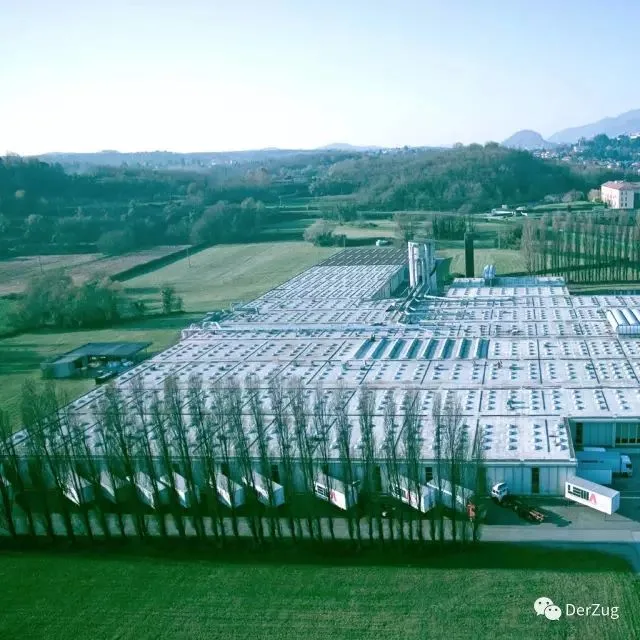
Angelo Mangiarotti, Lema plant, Alzate Brianza, Como (© Domus)
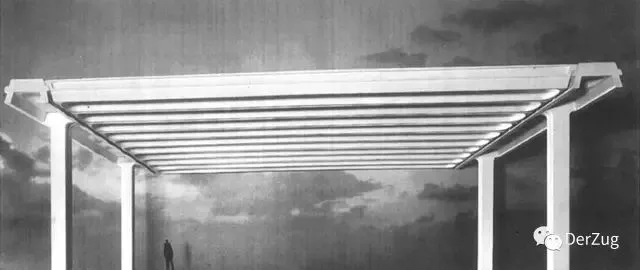
U70 Isocell Construction System Model (© Mangiarotti Archive)
The Como factory, built in 1969, uses the same rectangular column grid supporting primary and secondary beams. Its slightly curved components and double column head resemble Lissone’s, yet the atmosphere differs decisively. The Como site is five times larger, with more structural units and larger components, increasing technical complexity.
For instance, the roof slab spans 18 meters with a center thickness of only 3 cm, strengthened by ribs on either side. A central opening provides natural light. The increased span raises structural weight, complicating mid-span bending moments. The main beam runs along the short side of the grid—contrary to typical alignment with the column head. The double column head cleverly resolves this spatial and structural contradiction.
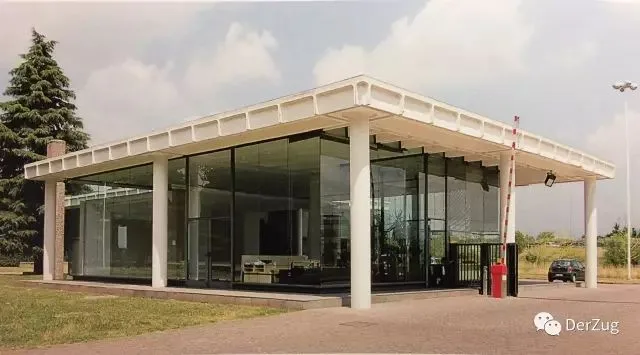
Angelo Mangiarotti, Reception Pavilion at the entrance of Feg Company (© Francesca Albani, 2013)
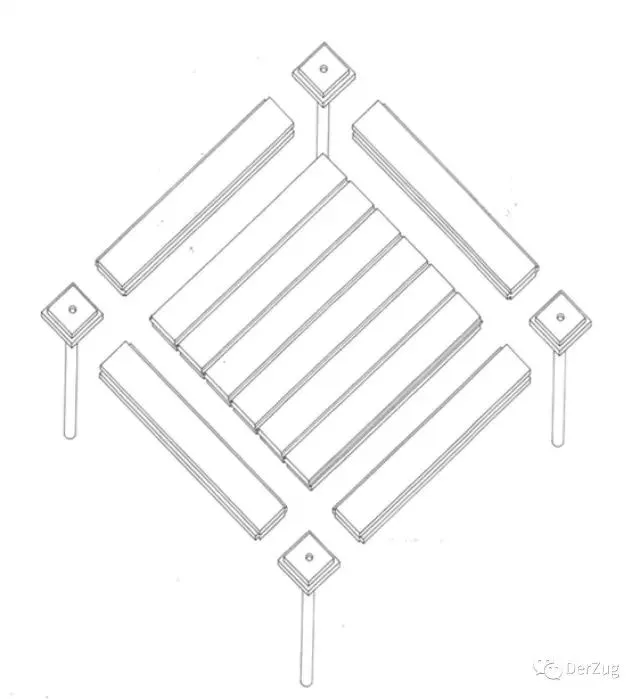
Multi-purpose construction system Briona 72 diagram (© Thomas Herzog, 1998, p. 55)
In the reception hall of Giussano’s Feg company (1976–1979), this system evolved further. Basic units with square column grids and visually similar primary and secondary prefabricated panels eliminated spatial hierarchy caused by rectangular grids and beam orders, creating a spatially uniform architecture. However, the structural system still retained hierarchical deformation: secondary plates span space along single axes mounted on primary plates, producing local spatial directionality. The system’s overall homogeneity arose from the relative vertical alignment of secondary plates in adjacent units.
A decorative strip mimicking the internal secondary panels’ modulus covers the outer structural panels, softening the primary-secondary structural division. Like the rotating column heads in Como, these details mediate conflicts between the “technical system” and the “visual system.”
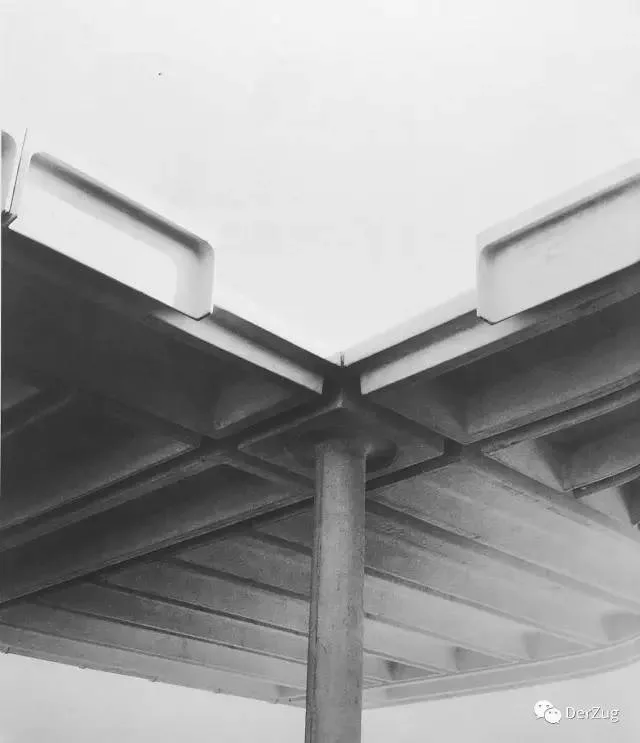
Feg Company Entrance Reception Pavilion Construction System Node (© Giorgio Casali, Mangiarotti Archive)
While praising Mangiarotti’s ingenuity in enhancing system adaptability, we must also heed Meili’s critique: relying heavily on general and universal construction systems weakens each project’s specificity. Meili argued that industrialization had long surpassed architects’ control, and construction system theory was modern architecture’s last attempt to regain influence over technological development. Architects tried to replace “objects” with “systems” as design subjects to reclaim their directorial role in construction production.
During this period, construction technologies achieved high levels of node complexity, flexibility, and adaptability. However, their weaknesses became apparent: system theory sought universal solutions to increasingly specific problems, resulting in many prototypes designed for “general situations” that never truly existed.
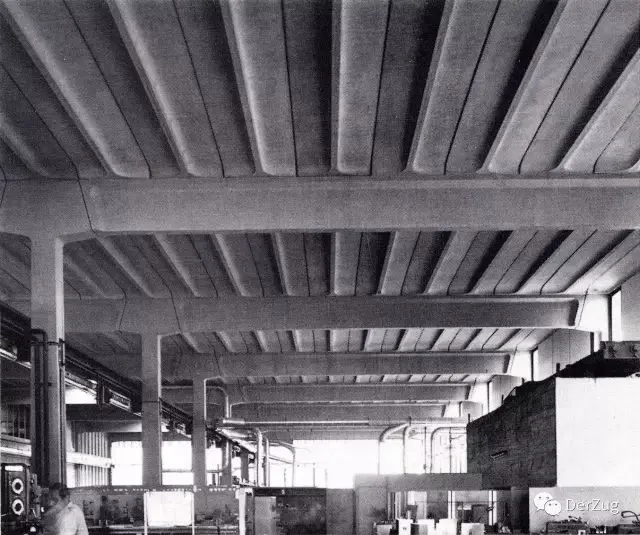
Interior of Elmag factory (© Mario de Santis, 1969)
Comparing the Lissone and Como factories: although Como met advanced construction standards and overcame technical hurdles, its large scale and numerous units led to a diluted spatial order. Lissone’s homogeneous structural system barely coordinated climate boundaries via glass partitions, yet uneven interior spaces and complex user-installed piping remained unresolved. These issues were most pronounced in Giussano’s reception hall, where heterogeneous display spaces disrupted the sought-after structural homogeneity and universality.
Viewed as a series, Mangiarotti’s projects adapt their isomorphic construction systems to each context, introducing subtle differences. This tension between typology and individuality forms a cognitive interplay, much like the aesthetic experience from Bernd and Hilla Becher’s photography.
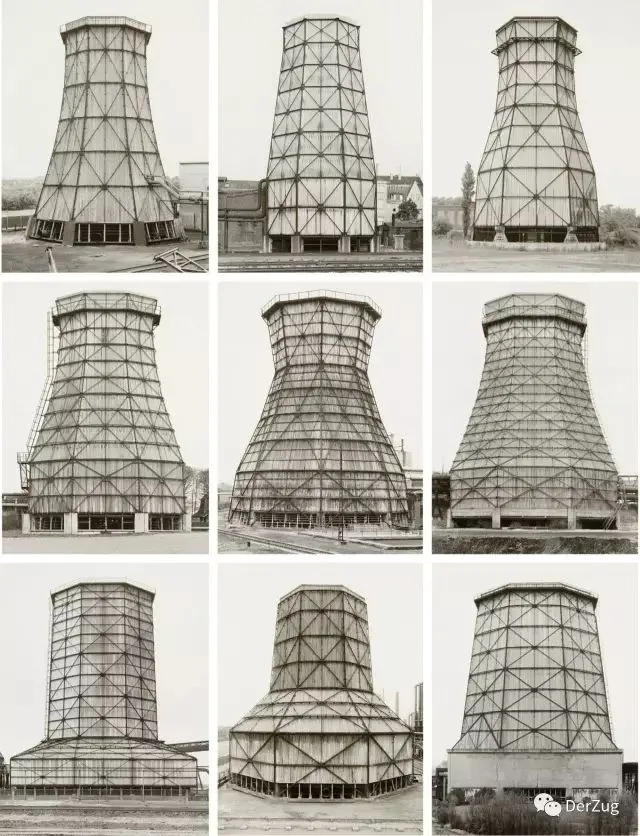
Bernd & Hilla Becher, Cooling Towers, Ruhr District, 1983
Becher’s series evokes a striking cognitive oscillation between individual variation and overall uniformity, using upward perspectives, stable compositions, strong contrasts, and extraordinary detail captured in large-format photography. Like an organism evolving through different environments, it reveals a recognizable type beneath diversity. Though built independently, houses always reference history or individual experience, and the cognitive structure we call “type” is vital in this process.
From Becher’s vantage, humanity’s collective creations resonate with our cognitive structures, generating aesthetic pleasure—the self-realization of human cognition. Likewise, Mangiarotti’s construction system rules form a “type” that similarly evokes cognitive resonance and aesthetic satisfaction.
Becher’s photographic narrative is static, observational, transcendent, and contemplative. In contrast, real buildings offer dynamic, immersive experiences triggered by specific spaces. Industrial buildings, at best, provide a “sublime” aesthetic akin to 19th-century Romanticism due to their massive scale and bold forms. Mangiarotti’s individual works, however, offer a different sensation: poetic presence. Amid generally coarse, noisy industrial landscapes, his buildings stand like quiet, orderly temples, embodying elegance and clarity.
This poetic quality shines most in Lissone, where moderate scale, concise order, and clear transitions allow viewers to grasp the building as a whole. The homogeneous system’s overlooked issues are less apparent here. The project’s poetry arises from the tension between intricate construction details and site rawness, elegant form and mundane function. While partly due to the construction system’s design, this poetry is not produced by the system itself. As with all poetry, repetition erodes tension; the triumphs of mass production and structural feats in Como and Giussano sound the death knell for this poetic experience.
A New Interpretation of Constructivism (Abstract)
The poetry in Mangiarotti’s work is symbolic and contrastive—enabled by construction but not confined to it. If systematic design alone cannot guarantee poetic architecture, what if we turn directly to construction itself?
How does Kenneth Frampton’s discussion of constructivism’s poetics compare with Gottfried Semper’s understanding? Is constructivism a visual “deception”? What is Kollhoff’s perspective on constructivism? How does Caruso St. John interpret construction techniques using precast concrete facades?
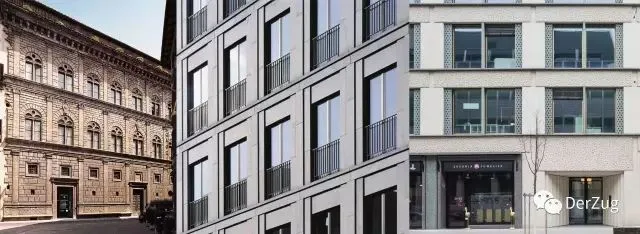
New and Old in Renovation (Abstract)
Admiring the plasticity and visual diversity of precast concrete in Caruso St. John’s projects, one wonders: is concrete merely a cheap “substitute” for stone and similar materials?
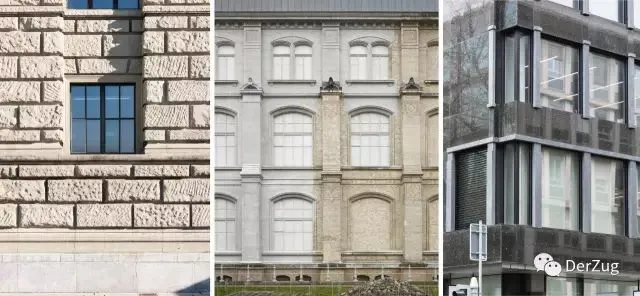
In the 1914 facade restoration of ETH Zürich’s Cathedral Building, artificial stone components replaced severely weathered limestone. Does this contradict principles of building protection and restoration?
Diener & Diener’s restoration of the Berlin Natural History Museum in 2010 cleverly used precast concrete’s qualities to devise a more convincing historic preservation strategy.
Peter Märkli’s renovation of an office building on Bleicherweg, Zurich, showcases a more universal approach to blending old and new elements.
Publication Description
This article is an excerpt with added and modified illustrations from the original text. Original title: “Demolition Prefabricated Construction,” published in Der Zug vol. 4, “Construction Speculation” issue. Author: Cheng Bo; Reviewers: Su Hang, Jiang Jiawei; Responsible Editor: Su Hang














Must log in before commenting!
Sign Up