
Technological Breakthroughs Propel China’s Construction Industry Toward “Smart Manufacturing”
The construction sector is a cornerstone of China’s economic growth. However, it is often associated with high costs, excessive energy consumption, low precision, and subpar quality. Today, amidst the digital revolution, the industry urgently requires modern intelligent technologies to drive its transformation and upgrade.

Advancing Information-Based Construction
As the construction industry rapidly evolves, engineering designs have become more complex, project scales have expanded, and the number of involved parties has grown significantly. Traditional management systems and technical approaches no longer meet these demands. Therefore, leveraging information technology to implement digitalization throughout the construction process is essential to address these new challenges.
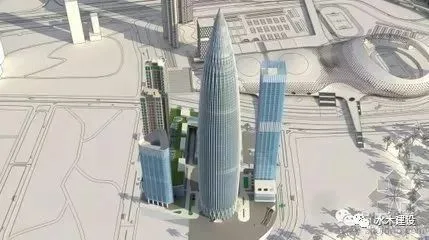
Industry experts identify Building Information Modeling (BIM) technology as a potential game-changer. BIM integrates 3D digital technology with intelligent tools to consolidate, analyze, and visualize data across all phases of a building’s lifecycle. This generates 3D models and digital reports that enable all stakeholders to monitor progress, costs, and other key metrics, ultimately enhancing project quality.
Some companies have already begun applying BIM with promising results. For example, Ge Lu from China Railway 12th Bureau Fourth Company reports successful BIM implementation in projects such as the Yinxi Railway, Fuxia Railway, Mujia Railway, Xingquan Railway, Foshan First Ring Road, and Nanning Metro. These efforts have reduced workloads and costs while improving quality and efficiency.
The Urgency of Digital Architecture
The construction sector remains highly traditional, often relying on extensive development models that cause resource waste and environmental pollution, especially in prefabricated housing. Moreover, industry opacity leads to poor project management and low corporate efficiency.
Consequently, a transformation is urgently needed to break this status quo. Digital technologies offer the best opportunity for the construction industry’s advancement and modernization.
With rapid progress in AI, big data, and cloud computing, digital technologies continuously reshape perceptions and introduce more efficient production and operational models across industries. These innovations provide valuable new directions for construction industry development.
Transforming construction requires technologies that enable interconnectivity, integration, data-driven processes, and intelligence to innovate every phase of a project’s lifecycle—from design and production to procurement, construction, and operation. This will optimize resource allocation, boost efficiency, foster innovation-driven growth, and ultimately upgrade construction methods, operations, and products.
At the same time, the evolution of smart cities and real estate drives the digital transformation of the construction sector.
To address the industry’s challenges of scale without strength, the government has introduced policies to promote and support digital transformation within construction.
In October 2017, the Ministry of Housing and Urban-Rural Development issued a notice encouraging adoption of the “10 New Technologies for the Construction Industry (2017 Edition).” Highlighted technologies include BIM-based field construction management, big data-driven cost analysis, internet-based multi-party project collaboration, mobile internet for dynamic project management, IoT for materials supervision in EPC projects, and intelligent management of prefabricated building production and construction.

The Road to “Smart Manufacturing” Remains Long
Digital architecture is rapidly gaining global attention. Market forecasts predict over 50 billion connected devices worldwide by 2025, with more than 20%—over 10 billion—deployed in smart buildings. This will fundamentally transform early building operations and planning.
Despite this, the construction industry’s digital transformation still faces significant hurdles. The sector’s defining traits—large scale, lengthy construction timelines, substantial capital investment, dispersed project sites, multiple disciplines, numerous stakeholders, and high liquidity—pose challenges. Furthermore, the lack of integration between project and enterprise data hampers industrialization and digitization compared to other sectors.
Experts note that historically, China’s construction industry has underinvested in technology. To progress, the sector must reduce reliance on traditional methods, embrace new technologies, and genuinely transform construction practices. For instance, although BIM has been developed and tested in China for over a decade, 64.7% of new projects use BIM technology in less than 10% of their processes, and only 5.6% of enterprises report BIM usage exceeding 50%.
The industry needs to fully incorporate advanced manufacturing principles and lean thinking to establish a digital ecosystem covering all stages of a project’s lifecycle. Simultaneously, it should capitalize on innovations in digital architecture and smart cities, leveraging modern technological achievements and digital tools to build a new construction industry framework. This will enable comprehensive upgrading and transformation across the entire construction value chain.













Must log in before commenting!
Sign Up