
According to incomplete statistics, workers aged 51-60 account for over 20% of the workforce, while those aged 46-50 also exceed 20%. Within the next three years, more than half of the workforce will be aged 50 or older. The demographic dividend period in our country has passed, and we may soon face the challenge of having insufficient labor to build houses.
Prefabricated buildings are constructed by assembling pre-made components on-site. By replacing traditional manual masonry with assembly operations, construction errors and human mistakes are significantly reduced. This method ensures higher construction quality, improves product accuracy, and minimizes noise pollution and construction waste, thus saving resources and energy. Similar to mass production in furniture manufacturing, building components such as beams and columns can be prefabricated in factories and then assembled on-site. Prefabricated building integrated decoration allows houses to be built like assembling blocks. In this era of rapid change in the construction industry, industrial workers must also upgrade their skills.
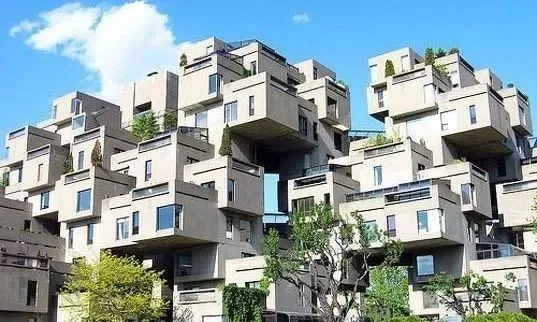
Prefabricated construction is not new internationally. Germany, known for rapidly reducing building energy consumption, has widely adopted prefabricated housing, supported by universities, research institutions, and corporate R&D. Japan introduced the concept of prefabricated housing in 1968, and today, 90% of its interior decoration is prefabricated. In the United States, a mature market for assembled residential construction exists, with nearly 100% standardization, serialization, and commercialization of components and parts.
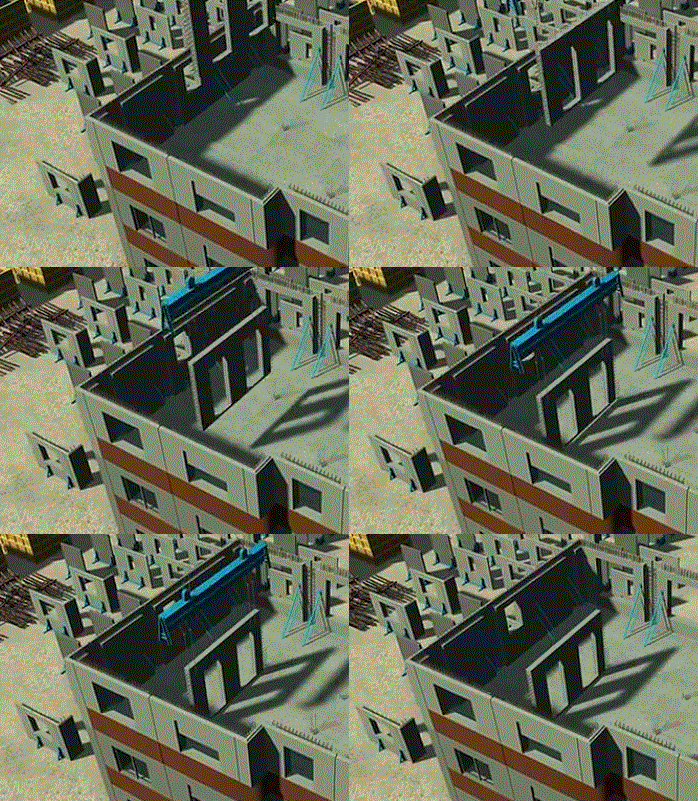
In China, prefabricated building development is still in its early stages. However, it is clearly the future trend, and the urgent need to modernize and upgrade the construction industry has caught the government’s attention. Since the State Council’s General Office issued the “Guiding Opinions on Vigorously Developing Prefabricated Buildings” on September 27, 2016, prefabricated buildings have been elevated to a national strategic priority. Subsequent policies set a target to achieve a 30% share of prefabricated buildings in new construction within approximately ten years.
Over the past two years, many provinces and cities have enacted policies to promote prefabricated buildings aggressively. By January 2018, more than 30 provinces and cities had issued relevant guidance and support measures, with 22 provinces establishing phased targets for prefabricated building scale. China has introduced standards such as the Technical Standards for Prefabricated Concrete Buildings, Prefabricated Steel Structure Buildings, and Prefabricated Wooden Structure Buildings. Various regions continue to develop standards, with over 200 prefabricated building standards either issued or under development, laying a solid foundation for the industry’s growth.
The expansion of prefabricated buildings drives the entire industry chain, including design, construction, parts and components production, prefabricated decoration, equipment manufacturing, transportation, logistics, and related facilities. Compared to traditional cast-in-place buildings, prefabricated construction shortens the building period by 25-30%, saves about 50% water, reduces masonry plastering mortar by approximately 60%, saves around 80% wood, lowers construction energy consumption by roughly 20%, cuts construction waste by over 70%, and significantly reduces dust and noise pollution.
Su Yunshan, Director of the Department of Building Energy Efficiency and Technology at the Ministry of Housing and Urban-Rural Development, emphasized that the development of prefabricated buildings depends on technological maturity and industrial chain support. Due to a weak industrial foundation, some advantages of prefabricated buildings have not been fully realized. For example, although large-scale manufacturing typically offers cost benefits, China’s prefabricated building development is still at the small-scale demonstration phase. Production of parts and components lacks standardization, universality, and socialization, and management processes have not yet aligned with modern construction methods.
Su Yunshan pointed out that when considering construction and installation costs, financial expenses, and construction period costs comprehensively, prefabricated buildings are more cost-effective than traditional methods. According to professional estimates, prefabricated buildings can reach scales of 200,000 square meters with costs comparable to traditional construction. Once a complete industrial chain is established, prefabricated construction’s cost advantages will become evident.
The positive transformation brought by prefabricated buildings is that construction workers are evolving from traditional farm laborers on sites to industrial workers and technical operators. As the market rapidly develops, industry stakeholders urgently need professional platforms and empowerment to keep pace with this growth. With aging workforces, industrial workers must upgrade their skills. The demographic dividend is gradually diminishing, and prefabricated building development is becoming a necessary trend. This approach supports green development, modernizes buildings, ensures project quality, shortens construction times, upgrades the construction industry, and meets the supply-side reform needs of the new era.
















Must log in before commenting!
Sign Up