
The Origin of the Japanese SI Construction System
Japan’s housing industrialization has been driven by a collaboration between government bodies, state institutions, and the private sector. Initially, standard designs for residential buildings aimed at large-scale construction led to the emergence of the SPH system, coinciding with advancements in precast concrete (PC) residential buildings and practical technologies. This phase transitioned from standardized residential designs into focused research on residential standardization. Subsequently, two interconnected systems—KEP and NPS—were introduced, alongside the standardization of residential components, culminating in the widespread adoption of BL-certified components.
These developments laid a strong foundation for the industrialization of Japanese housing and paved the way for CHS system research by integrating system research into residential architecture. This established Japan’s housing development direction: promoting longevity through replaceable and renewable interior components.
Today, Japan’s housing industry is mature. The advancements in housing systems and the sophisticated parts industry have enabled a shift from volume-driven growth to quality-focused development. Coupled with a declining population, Japan has entered an era of housing stock management. Minimizing waste from renovations and maximizing the use of existing residential resources has become a shared goal across the industry.
The defining feature of this era’s residential buildings is designing for maximum service life from the outset, making maintenance and upgrades of equipment and interiors more convenient. This principle forms the core concept of SI housing.
With the introduction and promotion of the __AI_T_SC_0_, SI housing concepts have gained broad recognition and support. Today, SI dry interior decoration is the mainstream in Japanese residential interiors. Nearly 100% of Japan’s super high-rise residential buildings utilize the SI system, allowing interiors to be easily renovated or replaced over a 70 to 100 year lifespan, significantly extending building service life. Since April 2009, Japan has also established __AI_S_SC_1__ to improve structural service lives, targeting up to 200 years.
If the SI residential system flexibly ensures a building’s lifespan by enhancing equipment performance, optimizing pipeline layouts, and facilitating maintenance, then it also imposes higher demands on the building structure itself. Enhancing structural durability extends overall service life, elevating SI housing to a new standard and signaling major future shifts in Japanese residential design.
Originating from the Netherlands and evolving from the CHS system, SI housing theory has a long research history, though definitions vary internationally and even within Japan. Despite this, key common features include:
① A highly durable building structure;
② Complete separation between structural walls and interior components;
③ Flexible indoor layouts adaptable to future lifestyle changes;
④ Clear and distinct boundaries and responsibilities between common and private residential areas;
⑤ Main building pipelines located in shared areas for easy maintenance and replacement.
Dry Interior System in the Japanese SI Construction System
From the very beginning, Japanese residential properties have been marketed with a focus on interior decoration, which has significantly contributed to the large scale, strong development capability, maturity, and standardization of Japan’s residential parts industry.
As the Japanese housing system evolved, its supporting parts industry matured alongside. The widespread use of BL-certified parts greatly improved quality, reduced costs, and standardized components, substantially elevating the performance of Japanese residential buildings. Consequently, Japan’s residential equipment now surpasses the standards of most countries, providing safe and comfortable living environments.
The rise of the SI housing system has also spurred corresponding advances in interior components and systems. The most common dry interior systems available include the following:
1. Technology for Separating Walls and Pipelines
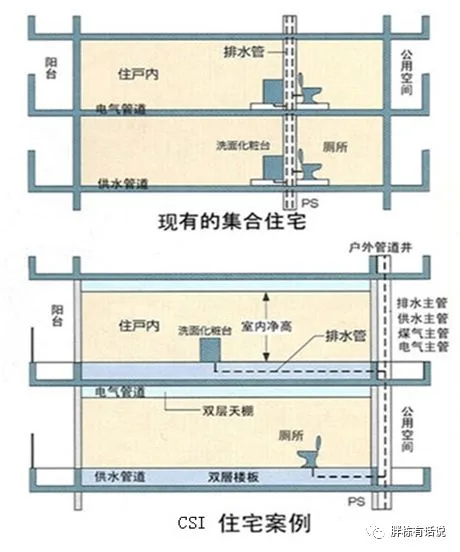
While building structures often have a service life exceeding 70 years, interior components and equipment usually last only 10 to 20 years. This means multiple interior renovations are necessary during a building’s lifetime. To facilitate easier replacement of short-lived items, Japan employs technology that separates pipelines from structural walls, unlike practices in some countries where pipelines are embedded within walls and slabs.
Embedded pipelines damage walls during renovations, pose safety risks to the building’s structure, and reduce its lifespan. They also generate noise and waste and complicate error detection and maintenance. The wall and pipeline separation technology adopted here improves transparency and facilitates future maintenance and repairs.
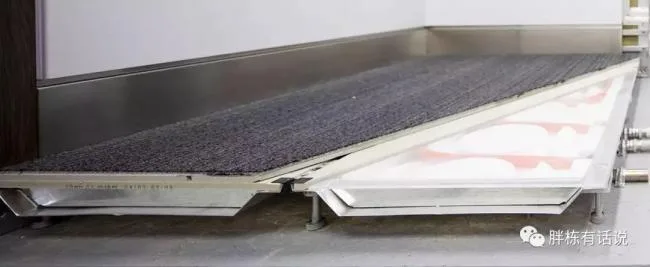
(1) Elevated Flooring Technology
Resin or metal anchor bolts support raised floors, creating a space underneath for water supply and drainage pipelines. Inspection ports installed at floor level near water separators facilitate easy inspection and repair of pipelines.
Elevated floors offer elasticity and low hardness, providing safety benefits for children and elderly occupants prone to falls. Compared to traditional cement floors, elevated floors maintain a warmer and drier surface with moderate temperature and humidity.
To counteract potential sound insulation issues between floors, a 3mm gap is left at the junction between the floor and wall to ensure air flow, achieving effective sound insulation.
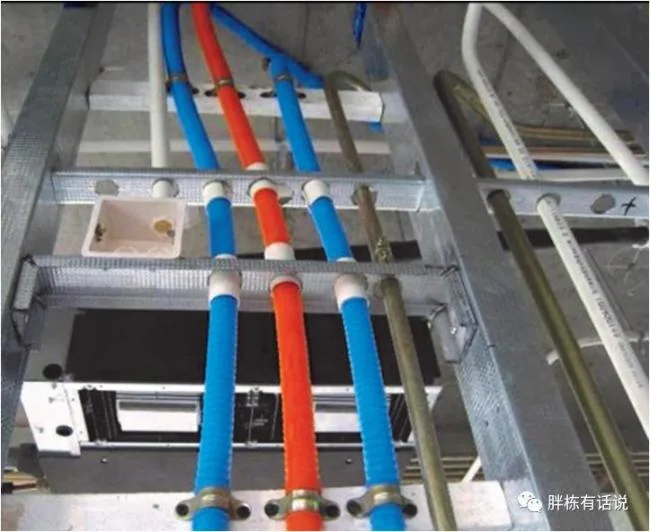
(2) Ceiling and Suspended Ceiling Technology
Light steel keels create double-layered ceilings, with overhead space used for electrical wiring, lighting, ventilation pipelines, and equipment installation.
These approaches prevent indoor pipelines from being embedded within structural walls, keeping them independent. This clarity simplifies construction, management during installation, and post-completion maintenance. The key benefit is that interior decoration remains easy to modify and repair over time.
(3) Double-Layer Veneer Wall Technology
Load-bearing walls are fitted with resin bolts or wooden keels and covered with gypsum board to form double-layer veneer walls. The cavity allows installation of electrical wiring, switches, and sockets. When coupled with internal insulation, this method maximizes space efficiency while enhancing energy performance.
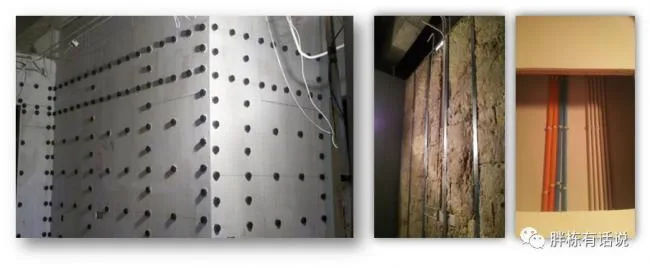
Compared to cement leveling on brick walls, gypsum board has a lower cracking rate and allows for easy, quick wallpaper application. Walls also stay warmer, eliminating cold sensations during winter and creating a more comfortable indoor environment.
2. Drainage Technology: Same-Floor Drainage with Public Pipe Wells and Boards
Unlike common underfloor drainage systems in China, which risk water leakage affecting lower floors and generate noise, this system locates public pipeline wells in corridors and drainage risers in shared spaces. Indoor drainage pipes connect horizontally to these wells, with some floor slabs lowered to facilitate drainage at slab level.
Drainage collection pipes, made of durable cast iron with a lifespan over 60 years, are designed with varying diameters to create spiral flow and ventilation, eliminating the need for ventilation pipes. This approach is both cost-effective and reliable.
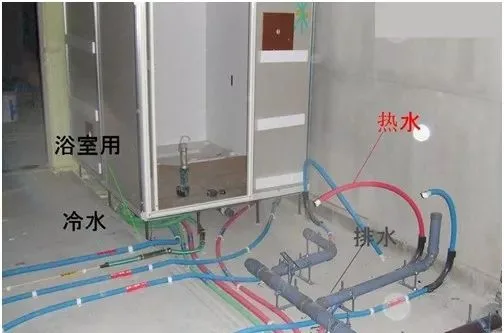
3. Hot and Cold Water Supply Technology
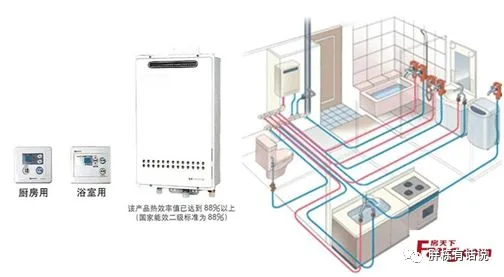
High-performance flexible pipes are used with concealed piping systems having connections only at endpoints, minimizing leakage risk and enhancing safety. Each water outlet has a dedicated pipeline, balancing water flow and differing from conventional branched supply methods.
This system maintains comfortable water pressure even with minor fluctuations, conserves water, and reduces hot water waiting times by approximately 20%. Maintenance ports are strategically installed near water separators for easy inspection.
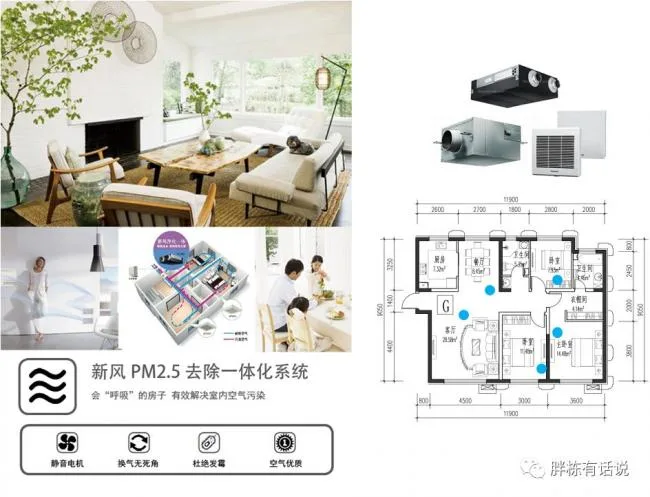
4. 24-Hour Fresh Air Negative Pressure Ventilation Technology
With tighter building envelopes and concerns over indoor formaldehyde, regular ventilation is essential. Negative pressure ventilation uses equipment to exhaust indoor air, creating negative pressure that draws fresh filtered air through wall air inlets, effectively removing dust and delivering clean air to each room.
This system allows occupants to breathe fresh outdoor air even during dusty springs, mosquito-heavy summers, or cold winters without opening windows, greatly enhancing indoor comfort.
To avoid discomfort from direct airflow, air supply outlets are placed two meters above ground, away from beds, and directed upwards. Additionally, a 10mm gap is maintained beneath each door to ensure proper air circulation.
The image below shows a ventilation fan with heat exchange functionality, ideal for cold northern regions due to its energy efficiency and comfort benefits. Its larger size requires careful planning for installation space and ductwork during building design.
5. Regular Maintenance and Repair Technology
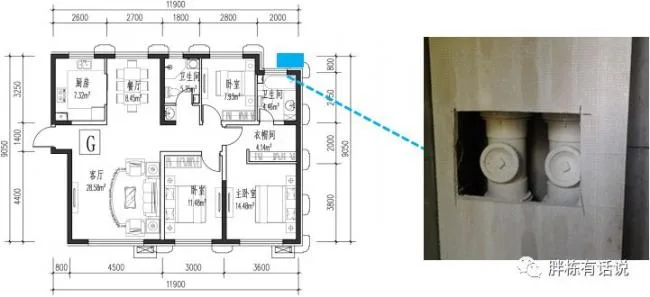
To facilitate routine maintenance and replacement of equipment, various inspection ports are strategically located: ceiling ports near ventilation equipment, floor or wall ports above water distribution units, and inspection ports near long horizontal drainage pipe joints. Drainage collection pipes also feature inspection access points, ensuring smooth upkeep.
6. Lightweight Partition Wall Technology
Indoor partitions use light steel or wooden keels with gypsum boards of varying thickness and properties tailored to each room’s requirements. For example, living rooms demanding sound insulation are filled with high-density rock wool.
This approach allows adjustable wall thickness, saving indoor space, and ensures precise dimensions for electrical installations. These walls are easy to dismantle and recycle, significantly reducing waste, although they come at a higher cost.
7. Horizontal Smoke Exhaust Technology for Kitchens
Contrary to common vertical ventilation ducts in China that connect multiple floors and pose fire and hygiene risks, this system eliminates exhaust ducts in favor of individual exhaust outlets above balcony windows for each unit. High-performance oil filters on range hoods minimize pollution to external walls.
8. Internal Insulation Technology
Japan’s widely adopted internal insulation technology involves spraying insulation materials inside double-layer veneer walls, strengthening external walls and thermal bridges. In Beijing, a 55mm polyurethane insulation layer achieves 65% energy savings.
Compared to external insulation, internal insulation is safer to install, cheaper, and avoids issues like falling exterior tiles. Over time, internal insulation can be updated alongside interior renovations, with minimal disruption and cost to residents.
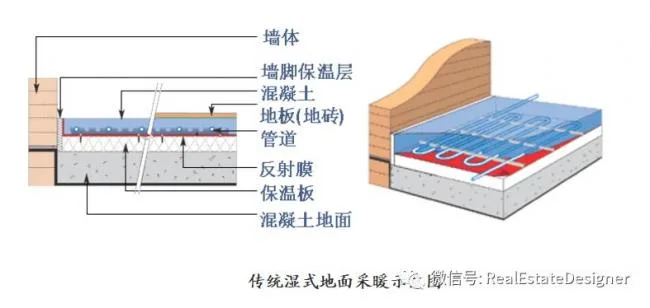
9. Dry Floor Heating Technology
To create comfortable, energy-efficient homes, dry underfloor heating powered by gas wall-mounted boilers enables individualized heating control. This system eliminates the need to wait for seasonal heating and prevents overheating or excessive cooling, enhancing comfort.
Internal insulation complements single-household heating by reducing heat loss, enabling rapid temperature increases and significant energy savings.
10. Integrated Bathroom Technology
To enhance waterproofing, durability, ease of construction, and comfort, bathrooms are factory-produced and assembled on site as integrated units.
Bathroom leakage is a common issue in many residential buildings. The integrated bathroom includes a bottom waterproof basin that offers near-permanent protection, securing residents’ well-being. Combining shower and bathtub functions, it provides bathing convenience and comfort. Dedicated bathroom air conditioning units further improve comfort during use.
Summary
Since the mid-20th century, Japan has implemented industrial policies promoting the industrialization of housing production, establishing systems to develop and disseminate residential construction technologies. This effort has driven rapid modernization in Japan’s housing industry.
Decades of work have led to industrialized production of collective housing, fundamentally transforming Japan’s residential construction and achieving remarkable successes in housing industrialization.
Japan’s proactive exploration of prefabricated and assembled housing production has placed it at the forefront globally, with its industrialized collective housing showcasing unique characteristics.
Studying Japan’s housing industrialization experience offers valuable insights for addressing challenges in China’s housing and real estate sectors and can positively influence the advancement of China’s housing industrialization.
Source: Pangdong has something to say (RealEstateDesigner)
Author: Yan Yingjun













Must log in before commenting!
Sign Up