
Source: Construction Technology
Overview of Template System Development
Template engineering has a rich history abroad. Initially, concrete templates were made from wooden planks, assembled into molds to match structural shapes. This method was labor-intensive and time-consuming, often resulting in scattered boards and significant material waste.
In the early 20th century, prefabricated fixed wooden templates emerged. These were pre-designed sets of templates in various sizes, mass-produced by processing units to meet engineering needs.
By the late 1950s, countries like France introduced large formwork systems, using machinery instead of manual labor for installation, removal, and handling. This flow method improved labor efficiency, reduced workforce demands, and shortened construction timelines, rapidly gaining popularity across Europe.
The 1960s saw the rise of modular formwork, an evolution of prefabricated formworks. With supporting assembly accessories, modular formworks could be combined into large templates of varying sizes. Unlike fixed-size large templates, their modular design allowed flexible sizing through panel combinations.
From the 1970s onward, formworks evolved into comprehensive systems with diverse features. Numerous specialized factories began producing templates, accessories, support systems, auxiliary materials, and professional tools.
Systematization of Templates
Since the 1970s, various regions including Europe, America, and Japan developed distinct template specifications. These include:
- Large template systems for concrete walls
- Combined template systems for diverse concrete structures
- Platform formwork systems for floors and platforms
- Tunnel formwork systems for simultaneous pouring of walls and floors
- Sliding, climbing, and lifting formwork systems for cylindrical structures and high-rise buildings
- Cantilever formwork systems for dam construction
Among these, large and combined template systems have the broadest applications.
1. Wall Formwork Systems
Currently, there are three primary wall formwork systems used internationally: frameless formwork, steel frame plywood formwork, and steel formwork systems.
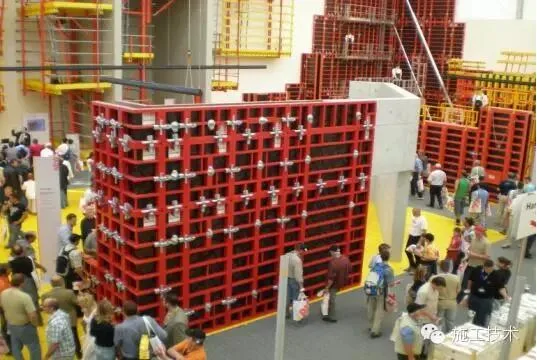
1) Frameless Formwork System
This system uses wooden beams or steel sections as purlins, with solid wood or plywood for panels. The plywood is connected to steel connectors without a frame, forming a simple frameless structure. Its advantages include low cost, flexibility, and adaptability for complex-shaped templates.
2) Steel Frame Plywood Formwork System
This system has three variants: small, light, and heavy steel frame plywood templates.
The small steel frame plywood uses hot-rolled flat steel frames and ribs, typically 6mm thick and 63-80mm in height. Panels are 12mm plywood, generally sized up to 1500mm × 900mm. It is lightweight, suitable for manual handling, and easy to assemble and disassemble.
Light steel frame plywood uses cold-formed or hollow steel frames with sections 100-120mm high, paired with 14mm plywood panels. It supports larger panels, up to 3000mm × 900mm, offering high strength and rigidity while remaining lightweight and flexible.
Heavy steel frame plywood formwork features hollow steel frames and ribs with 140-160mm cross-sectional height and 18mm plywood panels. It supports large sizes, up to 3300mm × 2400mm, with high strength and stiffness able to withstand lateral concrete pressures of 80kN/m².
Common to all steel frame plywood formworks is their high strength and stiffness, enabling assembly without additional ribs—only fixtures clamp and fix the edges. This results in faster assembly and disassembly, saving labor and materials.
3) Steel Formwork System
Steel formworks are divided into full steel, lightweight steel, and composite steel types.
All-steel formworks are known for their high strength, stiffness, durability, large formwork areas, and integrated support frames. They are easy to assemble, disassemble, and handle, making them ideal for wall concrete construction. Structural types include integral, assembled, and modular forms. However, due to their heavier weight, their use in Europe has declined.
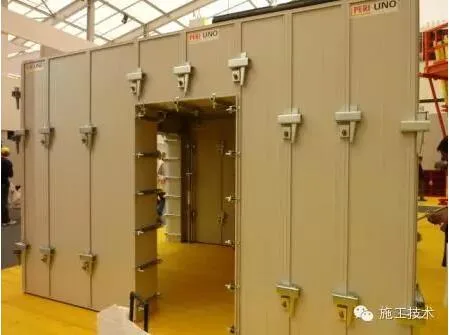
Lightweight steel formworks combine large surface areas with light weight, enabling manual handling and broad applicability across walls, slabs, beams, columns, and circular structures. They feature easy assembly and disassembly, lightweight accessories, high construction efficiency, and produce smooth concrete surfaces, earning strong preference from construction teams.
Composite steel formworks offer flexible use, versatility, easy assembly, strong load capacity, and long service life. Their diverse types are suitable for industrial and civil buildings, as well as silos, bridges, tunnels, and dams.
2. Floor Formwork Systems
Abroad, floor formwork construction mainly uses movable support column systems and platform formwork systems.
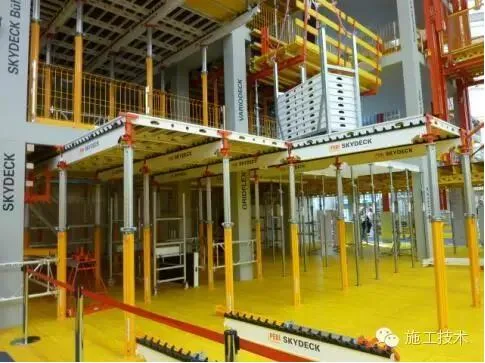
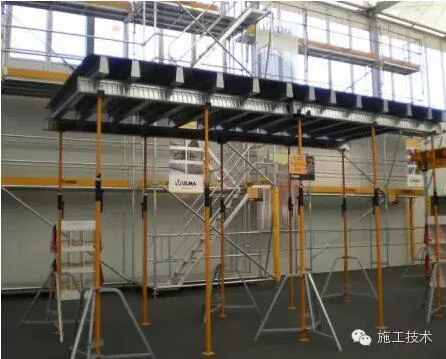
1) Movable Pillar System
After constructing each floor slab, pillars are removed and relocated to the previous floor for reuse. Pillars are typically steel or aluminum alloy, panels are made of plywood, steel frame plywood, or aluminum frame plywood, and beams consist of wood, steel sections, or steel trusses. This combination allows for multiple construction methods.
2) Platform System
Also known as flying formwork, this system consists of a panel and bracket that can be installed, demolded, and transported as a whole. Using lifting equipment, it is moved layer by layer during construction, ideal for cast-in-place floors and beams across various structural systems.
Formwork construction was first promoted in Europe during the 1960s. Its ability to be assembled and reused multiple times reduces assembly and disassembly time, simplifies operation, and offers significant advantages. Developed countries have since developed their own distinctive formwork systems.
3. Column Template Systems
Column formwork systems abroad include wooden beam and wooden formwork systems, steel section and steel formwork systems, and steel section combined with steel frame plywood formwork. Various construction methods are formed by combining these materials.
4. Cylinder Template Systems
Typically, steel and steel frame plywood formworks are used for cylindrical templates, with some employing all-steel systems. Previously, cylinder molds were adjusted by rotating a central screw or using four-corner tensioners to shift template sides.
Modern companies have introduced easier adjustment methods:
- German PERI uses a trapezoidal TSE module inserted into each side, enabling quick assembly and disassembly.
- Austrian DOKA employs adjustable angle molds at four corners, controlled by screw tubes and square tubes, allowing precise angle adjustments.
- Italian ALPI and FARESIN use triangular templates at corners, enabling installation and removal by inserting and pulling these triangles.
5. Climbing Template Systems
Climbing templates consist of large templates, climbing systems, and climbing equipment. They combine the benefits of sliding formworks and large templates, using the wall as a support to climb upward layer by layer. This system offers large-area support.
Climbing formworks are widely used for bridge piers, silos, chimneys, and high-rise buildings characterized by height, simple shapes, and thick walls. Two climbing methods exist: manual and automatic.
Originating in Western Europe in the mid-1970s, climbing formworks gained popularity due to their non-continuous climbing process, ease of operation, and safety. After concrete reaches a certain strength, the formwork is demolded, resulting in precise dimensions and good surface quality. This method quickly spread to Europe, South America, Japan, Africa, and beyond, with various climbing formwork techniques developed.
6. Single-Sided Template Systems
Single-sided formworks are primarily used for dams, slope protection, and large foundations. Since only one side can be formed, split screws cannot be used. Therefore, the support system must be robust enough to resist significant lateral concrete pressure.
7. Bridge Formwork Systems
Bridge decks, box girders, and other components are often built using prefabrication technology. With advancements in bridge design, especially for high-speed rail and highways, large-volume, heavy full-hole prefabricated box girders have been developed.
In cast-in-place box girder construction, mobile formwork bridge-building machines and hanging baskets are widely applied in urban elevated roads, light rail, high-speed rail, and highway bridges.
8. Tunnel Template Systems
Template trolleys are commonly used in tunnel lining construction. Recent innovations have evolved these from translational to through-type, and from edge arch to full section formworks.
Current template trolleys include walking full-section, translational full-section, needle beam, walking horseshoe-shaped, and non-full circular section types. These are widely employed in tunnels for highways, railways, water conservancy, and hydropower projects.
9. Other Material Templates
1) Plastic Templates
During inspections in Europe and the U.S., many companies have developed various plastic templates. For example, Germany’s MEVA developed steel frame plastic panel templates in 2002. These panels are lightweight, wear-resistant, last over 500 uses, and are easy to clean and repair. MEVA gradually shifted from plywood to plastic panels, leasing them successfully on a large scale.
Germany’s PECA developed disposable plastic cloth templates attached to steel frames, mainly for foundations and floors, offering simple construction and significant cost savings.
Slovenia’s EPIC Group created plastic formwork systems with composite material templates, connectors, and beams, suitable for foundations, walls, and floors.
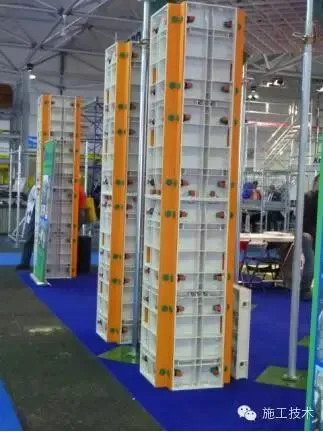
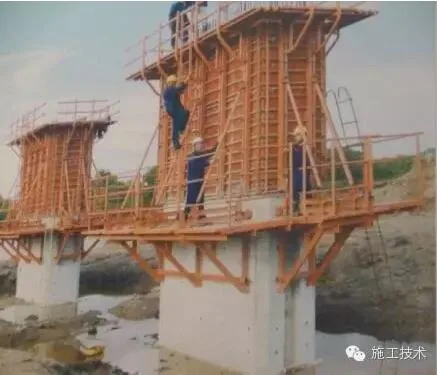
At the American International Concrete Expo, numerous plastic formworks were showcased, including full plastic wall formworks, plastic floor shells, plastic column formworks, and foam plastic disposable forms usable for exterior walls.
In South Korea, many projects use GMT plastic templates interchangeably with plywood, showing good results. Japan developed a lightweight plastic formwork weighing 6.8kg/m²—over 20% lighter than plywood—primarily for floors but also usable for walls with wooden frames.
2) Resin Decorative Templates
Various plain concrete decorative templates have been developed in Europe and America. For instance, the U.S. SYMONS company offers seven categories, 193 types, and 705 specifications of resin decorative lining templates, including wire strip, wood grain, brick, stone, and smooth groove designs. These are widely used for exterior walls and floors.
ACC Template Company (USA) produces resin decorative formworks for stone-like concrete walls, combinable with steel frame plywood formworks.
Germany’s NOE template offers over 130 patterns for bridges, overpasses, building exteriors, and public floors. Adding pigments to concrete allows one-step molding with varied designs and colors, making this technique highly promising.
3) Aluminum Alloy Templates
Aluminum alloy templates are popular in the U.S. and Canada. Historically, CONTECH used cast aluminum alloy templates known for high aluminum use, cost, longevity, and precision. Today, aluminum alloy profiles dominate, offering lightweight, strength, rigidity, long service life, and multiple reuse cycles.
Painted surfaces ease demolding and prevent rust. Aluminum templates provide high precision and smooth concrete finishes, suitable for walls, beams, columns, floors, and stairs. Companies like SYMONS, WTF, and PFI also produce decorative aluminum alloy templates for various concrete shapes.
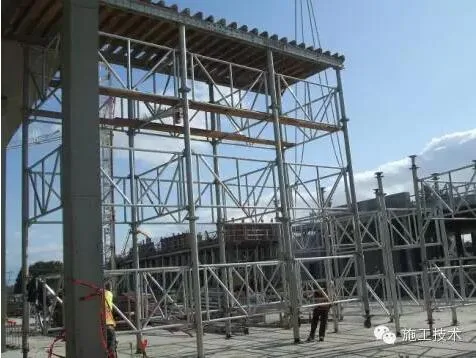
Aluminum frame plywood formworks are common for floor construction in Europe. During South Korean inspections, nearly all projects featured aluminum alloy formworks—lightweight, transportable by one person, reusable hundreds of times, and highly recyclable.
Wall, beam, column, and slab formworks often combine quick-release systems with floor templates, showing excellent results. Leasing these templates benefits construction companies economically.
Other template materials include fiberglass, permeable, translucent, and paper formworks.
Support Systems
1. Development Overview
Wooden scaffolding was the earliest support system. In the early 20th century, Britain pioneered steel pipe supports using connectors and pipes, evolving into fastener-type steel pipe scaffolding. Japan began extensive use of this type in the 1950s.
Switzerland invented adjustable steel columns in the 1930s, valued for simple structure and flexible assembly. Since the 1980s, enhancements to steel pillar turntables and top attachments significantly increased functionality. Europe developed aluminum alloy pillars in the 1990s, widely applied by template companies in Europe and America.
Portal scaffolding was first developed in the U.S. in the 1950s, then adopted in Europe and Japan. Due to safety concerns with fastener-type scaffolding, portal scaffolding gained popularity for its ease, load-bearing capacity, safety, and reliability. It was initially used in underground railway and highway projects and expanded with the growth of super high-rise buildings. Since the 1970s, portal scaffolding rental companies have surged, and these systems remain widely used today.
In the mid-1970s, the British SGB template company developed bowl buckle scaffolding, now globally promoted with local variations. Japan has improved its version by adding connectors for enhanced stiffness. China also promotes bowl buckle use but has yet to fully exploit its functionality, with some features like movable bowl buckles and telescopic crossbars underutilized.
Since the 1980s, developed countries have created various pin-type scaffolds using wedge-shaped pins connecting sockets and plugs. This design is structurally sound, easy to assemble, labor-saving, safe, and reliable, making it the international mainstream scaffold type today. Socket and plug shapes vary (circular, square, plum blossom, V-shaped ears, U-shaped ears). Disc-type scaffolds use circular sockets allowing eight horizontal and diagonal bars in multiple directions, offering firm and reliable assembly.
2. Standardization of Support Systems
European template companies offer numerous scaffolding varieties and specifications, enabling flexible and convenient template assembly and removal.
1) Steel Pillars
Widely used for floor slab and beam formworks abroad, most steel pillars are threaded and enclosed. Enhanced turntables and top accessories improve their functionality with innovative designs from many formwork companies.
2) Aluminum Alloy Pillars
Recently, European companies have produced aluminum alloy pillars extensively used in engineering. These feature slotted square alloy sleeves and toothed insertion tubes, delivering lightweight design with high load capacity—single pillars bear up to 60kN, and connected pillars with horizontal bars reach 90kN, enhancing stability.
The plug-in assembly pipes have full-length threads, ensuring reliability even if some threads are damaged. Height can be pre-adjusted via markings on the insertion tubes.
3) Portal Brackets
Long used in Europe and Japan since the 1960s, portal brackets are structurally improved by replacing open frames with closed ones for enhanced rigidity, reducing deformation during transport and use. Safety guardrails have also been upgraded.
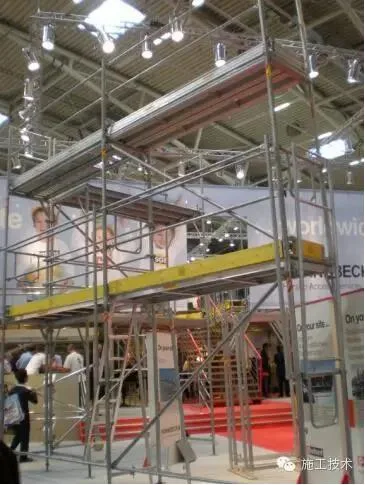
4) Bowl Buckle Brackets
Patented by the UK’s SGB Template Company, bowl buckle brackets have over 30 years of application. They remain in limited use in Europe and are promoted in Asia and Africa, with wide adoption in Japan (where improvements have been made). China promotes their use but has yet to fully master key features like movable bowl buckles and telescopic crossbars.
5) Pin-Type Brackets
Since the 1980s, Europe and America have developed pin-type scaffolding using wedge pins for easy, secure assembly. This scaffold type is labor-saving and reliable, now the international standard. Variants include circular, square, and plum blossom sockets, with disc-shaped brackets connecting multiple bars securely.
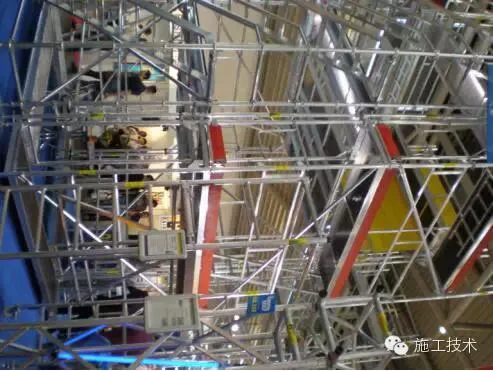
6) Square Tower Brackets
Widely used in European bridges, overpasses, and other projects, square tower supports offer a balanced structure, safety, broad applicability, high load capacity, and long service life. Various other plug-in scaffolding forms also exist.














Must log in before commenting!
Sign Up