
As governments at all levels set requirements for the development of prefabricated buildings and construction industrialization, many people find themselves confused about the relationship between the two. Does assembly equal construction industrialization? What are the key differences?
Modernizing and industrializing the construction industry is not synonymous with assembly. Simply having factories that produce building components or constructing a few prefabricated buildings does not mean construction has been industrialized. The core of construction industrialization lies in both technological innovation and management, explained Ye Ming, Deputy Chief Engineer at the Technology and Industrialization Development Center of the Ministry of Housing and Urban-Rural Development. Currently, misconceptions about construction industrialization remain widespread in the industry.
Assembly Cannot Replace Industrialization
Many companies and regions claim to champion construction industrialization. However, according to Ye Ming, not all live up to this title. Some enterprises have invested heavily and received strong government support, yet most projects still rely on traditional production methods combined with assembly, often managed in an extensive, rather than intensive, manner. In some cases, assembly is applied superficially without true industrialized organizational processes. Many companies continue to use migrant labor, and unprofessional subcontracting remains common.
Prefabricated Buildings vs. Construction Industrialization
So, what distinguishes prefabricated buildings from construction industrialization? Ye Ming defines prefabricated buildings as structures assembled onsite from factory-made components. These can include prefabricated concrete, steel, or wooden structures, all of which are important elements of industrialized buildings. The advantages of prefabricated buildings include faster construction speed, reduced weather-related delays, labor savings, and improved building quality. Simply put, it’s akin to building a house like assembling a car.
Construction industrialization, on the other hand, is grounded in the principles of green development with a focus on transforming and upgrading the construction industry. It is driven by technological innovation and supported by information technology and modern organizational management. At its core is new construction industrialization, which integrates the entire construction process into a complete industrial system. This system encompasses architectural design, production, construction, and management, enabling a shift from traditional production methods to modern industrial approaches. The result is a comprehensive improvement in the quality, efficiency, and benefits of construction projects.
Clearly, construction industrialization represents a fundamental transformation in production methods, while prefabricated buildings are just one form or carrier within this broader framework. Ye Ming emphasizes that industrialization is a strategic solution to major challenges such as improving engineering quality and efficiency, promoting green development, and addressing the disconnect between design, production, and construction management. Additionally, it offers practical solutions to current industry issues, including rising labor costs, low labor quality, and skilled worker shortages.
Global Significance and the Role of Management
The industrialization of construction carries global strategic importance for urban and rural development, involving multiple sectors rather than just one department or industry. It cannot be reduced to mere assembly.
There is only one main contractor
Why is innovative management so crucial? Ye Ming believes that management is even more challenging and important than technology because it directly determines whether construction activities can maximize their benefits.
To effectively integrate and optimize resources along the industrial chain, it is essential to clarify the core player in the construction process, identify the primary entity in the industrial chain, and define the hierarchy of authority. Without this clarity, the industry remains fragmented and scattered. One effective approach to addressing this challenge is promoting the engineering general contracting (EPC) model.
Internationally, developers typically work with a single general contracting company that handles engineering design, procurement, construction, and finishing. This allows developers to focus solely on investment and planning. In contrast, in China, developers often face numerous subcontractors for each stage—from design to final management—greatly complicating resource integration. Ye Ming notes that this stark difference between the general contracting model and the fragmented approach significantly raises management and communication costs for developers of prefabricated housing. The EPC model can break down industrial chain barriers, facilitate integrated design, production, manufacturing, and construction, and drive maximum project efficiency—aligning perfectly with the construction industry’s goals.
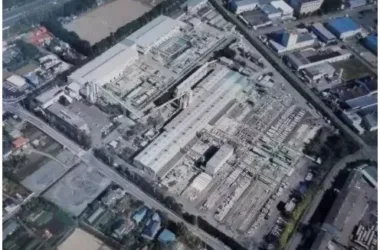
Ye Ming acknowledges that establishing such general contracting companies is challenging and demands high overall construction capabilities. However, this is a necessary step in advancing construction industrialization. He cites Japan as an example: the number of factories and industrial workers alone does not guarantee core competitiveness. The key lies in developing proprietary technical systems, maintaining control over the entire production process, and ultimately evolving into an engineering management company capable of coordinating with specialized markets.












Must log in before commenting!
Sign Up