
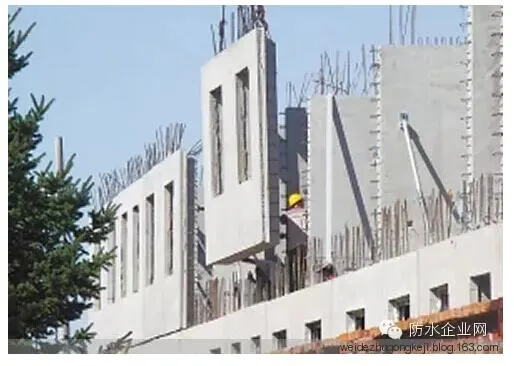
Prefabricated Concrete (PC) building technology, also known as PC building technology, is an innovative, eco-friendly, and energy-efficient construction method. It utilizes prefabricated concrete structures as the main components, which are assembled and connected on site. This technology is a cornerstone of residential industrialization.
In China, prefabricated exterior wall panels are the most widely used form of PC construction. These panels offer excellent surface flatness and high overall precision. They can be prefabricated in factories with integrated insulation and decorative layers for windows and facades, making them highly favored by many developers.
However, since prefabricated exterior walls are assembled in segments, waterproofing challenges around connection joints are inevitable. Therefore, special attention must be paid to waterproofing details in these joints. This article analyzes various waterproofing methods for prefabricated exterior wall panels and highlights critical issues to consider during waterproofing construction.
1. Waterproofing Design Concept for Prefabricated Buildings
Waterproofing is a critical aspect of building construction because its effectiveness directly impacts the building’s performance and longevity. Frequent leaks render a building unsuitable for habitation or use.
Water is highly fluid and omnipresent, so traditional waterproofing design focuses on blocking all possible water ingress points to keep interiors dry. While this approach works well for traditional cast-in-place concrete structures, it may be less effective for prefabricated modular buildings.
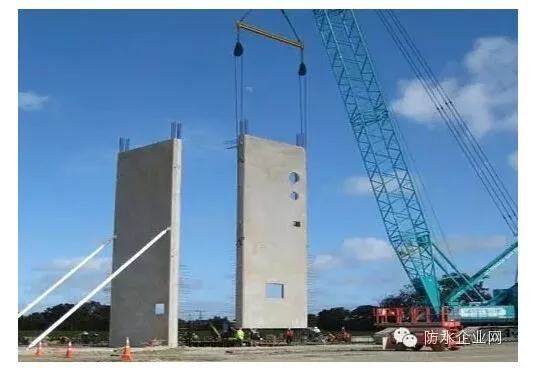
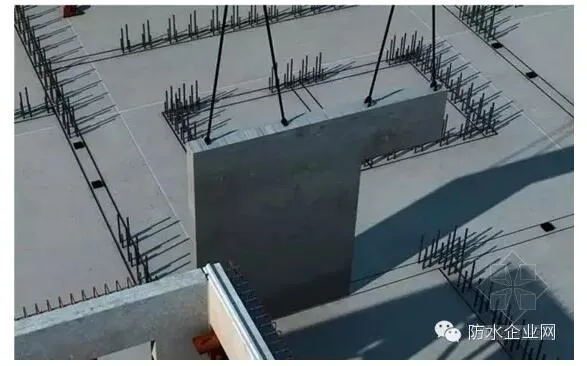
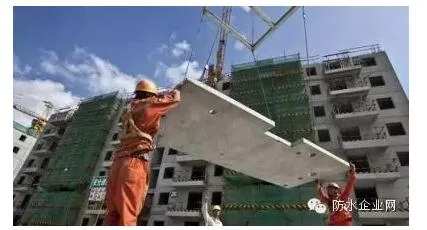
Prefabricated modular construction involves manufacturing structural components such as wall panels, columns, beams, floor slabs, and stairs in a factory, then assembling them on site. This assembly creates numerous joints that can serve as potential water infiltration paths. Additionally, some prefabricated buildings incorporate exterior wall panels designed to move slightly to resist seismic forces, which further complicates waterproofing efforts.
Given these factors, the waterproofing design approach for prefabricated buildings needs adjustment. Rather than simply blocking water, the design should emphasize water diversion and drainage. The concept accepts that some water may penetrate the outer waterproof layer, so it incorporates drainage paths to channel this water safely outside, preventing interior infiltration.
Leveraging gravity-driven natural vertical water flow, wall panel joints are designed with grooves that slope outward and include pressure-reducing cavities to prevent water from creeping back inside via capillary action. Alongside waterproofing the concrete structure, the use of rubber waterstops and multi-component weather-resistant waterproof adhesives enhances the overall waterproof system of the prefabricated wall panel, effectively preventing leaks.
2. Common Waterproofing Methods for Prefabricated Exterior Wall Panel Joints
In practice, the following waterproofing methods are commonly applied to prefabricated exterior wall panel joints:
1. Internal pouring and external hanging (PCF panels): These panels use outer drainage cavities combined with waterproof glue and rely on the self-waterproofing properties of cast-in-place concrete on the inner side of the joint.
This method is currently the most common due to its relatively simple and fast construction process. However, controlling waterproofing quality can be challenging, and cavity blockages are frequent. Cracks in the inner concrete can directly compromise the waterproofing.
2. Closed-line waterproofing for external prefabricated panels: This technique employs three layers of waterproofing:
- The outermost layer is a highly elastic, weather-resistant silicone.
- The middle layer is a pressure-reducing cavity.
- The innermost layer uses pre-embedded waterproof rubber strips in the concrete, pressed tightly together to form a seal.
Additionally, a polyurethane waterproof layer is added outside the rubber waterstop at wall cross joints to seal small gaps caused by rubber strip movement. For buildings with high waterproofing demands, polyurethane can be applied fully inside the rubber waterstop to enhance reliability. Drainage pipes are installed on the silicone layer at intervals of about three layers to direct water away effectively.
This combined internal-external waterproofing approach offers comprehensive protection and excellent waterproofing performance. However, it requires high construction precision, with wall panel displacement limited to under 5mm to maintain the rubber strip’s seal. The weather-resistant adhesive must be elastic, aging-resistant, and durable for at least 20 years. The method is relatively costly and demands skilled, professional installers.
3. Open-line waterproofing for external prefabricated panels: Similar to the inner two layers of the closed-line method, this technique uses a tongue-and-groove pressure-reducing cavity and internal waterproof rubber strips. However, the outer layer replaces glue with curtain-like rubber strips pre-embedded at one end and overlapping vertically at the other. Stainless steel air ducts are installed along the outer rubber strip to balance air pressure and facilitate drainage.
The open-line method offers easier quality control and inspection since workers do not need to apply glue externally, eliminating the need for scaffolding or baskets and improving safety and convenience. However, it requires stringent protection of the pre-embedded rubber strips, which are difficult to replace once damaged. The weather-resistant rubber waterstops are costly. This advanced waterproofing technology is patented by foreign companies, limiting its application in China due to patent fees.
3. Key Construction Considerations for Waterproofing Prefabricated Exterior Wall Panel Joints
The waterproofing process for prefabricated exterior wall joints remains complex and challenging. Construction teams must develop customized plans based on specific joint designs. Important considerations include:
1. Product quality inspection before wall panel installation:
- Verify the dimensional accuracy and flatness of the wall panels.
- Inspect concrete density around the surface and embedded window frames for cracks or defects.
- Reject any panels with substandard concrete quality.
- Examine pre-embedded rubber strips for firm embedding, corner damage, and contamination by concrete slurry that could harden and reduce elasticity.
- Replace defective rubber strips before installation.
2. Strict control of installation accuracy:
- Conduct precise measurements and layout before lifting wall panels.
- Set baseline and positional lines to ensure accurate placement.
- Adjust wall panels in two steps: coarse positioning according to control lines and fine tuning of axis and verticality within a maximum deviation of 5mm.
3. Follow waterproofing procedures rigorously during joint construction:
- Clean base layers and cavities with high-pressure air before applying glue.
- Check backing depth and ensure glue thickness meets design standards.
- Treat wall panel surfaces with primer to enhance adhesion.
- Leave construction joints when glue application is interrupted, with inside edges higher than outside and overlaps of at least 5cm.
- Seal iron parts and cross joints on the inner wall with polyurethane, ensuring rust prevention and gap-free sealing.
- Perform water splashing tests after construction to verify no leaks before covering joints.
4. Conduct waterproofing effectiveness tests after construction:
- Perform a timely water spray test focusing on cross joints, connections between prefabricated panels and cast-in-place structures, and window frames.
- Use fire hoses for thorough testing.
- Inspect for delamination around glued areas, smooth drainage, and water stains inside.
- Document and promptly address any leaks, applying additional polyurethane waterproof layers if necessary.
4. Conclusion
Prefabricated modular construction is a rapidly advancing technology in the building industry. By implementing targeted improvements, the waterproofing performance of exterior walls can be effectively ensured. On-site personnel must be well-trained in waterproofing requirements, strictly adhere to standards and procedures, and maintain high-quality workmanship.
Only through these measures can the waterproofing of prefabricated walls be guaranteed, enabling prefabricated modular residential projects to earn trust and acceptance from users and the market.
















Must log in before commenting!
Sign Up