
Both innovative technologies have rapidly advanced intelligent management, significantly enhancing installation accuracy. Their integration into building informatization and industrialization marks the pinnacle of construction technology in China.
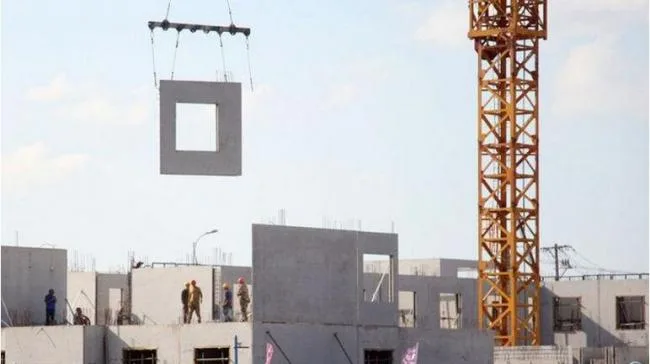
With strong support in Shanghai, prefabricated technology has taken the lead nationwide. Recently, two groundbreaking technologies have been introduced to Shanghai’s prefabricated construction, accelerating development and enabling precise application on construction sites.
During the intense summer heat, the COFCO No.1 Mansion construction site in Qiantan, Pudong, stands out. Bright red “mechanical arms” support the building walls, and each wall panel and beam features an exclusive “ID card”. When scanned by a smart device, detailed information from production to installation appears on screen, showcasing a high level of technological integration.
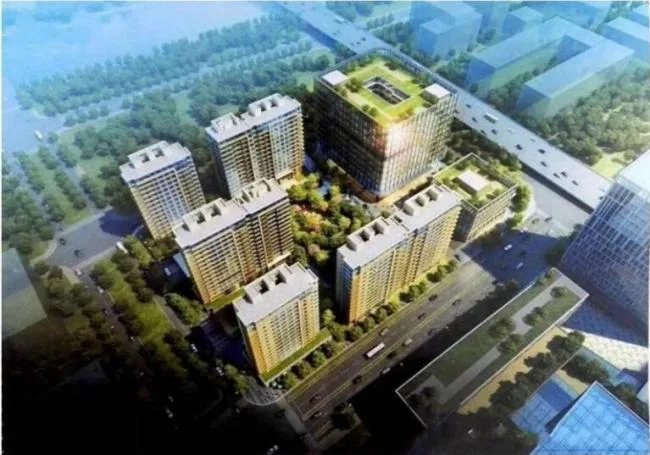
Rendering of Qiantan Residential Project
These innovative sites incorporate cutting-edge building informatization and industrialization, representing China’s highest standards. The Xinghewan Middle School construction site, promoted in the same year, was shortlisted for both the “Ministry of Housing and Urban-Rural Development Prefabricated Building Technology Demonstration Project” and the “Shanghai Prefabricated Building Demonstration Project” using a similarly advanced approach.
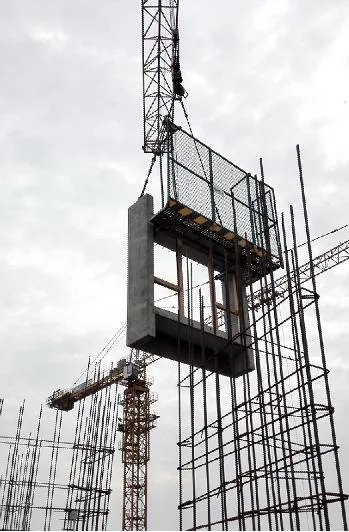
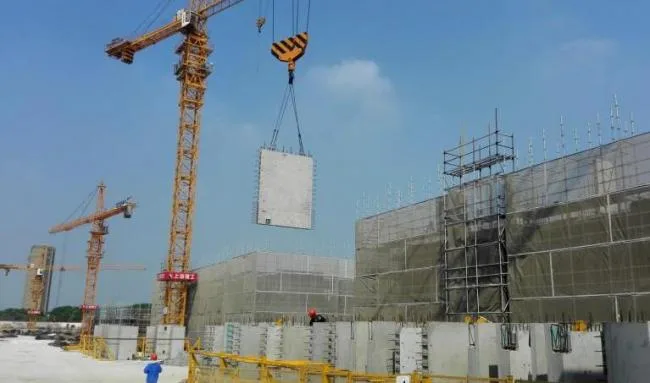
Prefabricated technology at the construction site
The ‘Robotic Arm’ Achieves Millimeter Precision in Just 30 Seconds
Implementing prefabricated construction in architecture is more complex than it seems. Factory-produced prefabricated components undergo standardized production and inspections, ensuring quality far superior to traditional cast-in-place parts. These prefabricated elements require exceptional flatness and straightness. Previously, wall installation relied on plumb bobs and visual checks, which were prone to human error and time-consuming, failing to meet prefabrication assembly standards.
“Why not replace visual observation with laser measurement and control?” Inspired by automated production lines in the automotive industry, engineers at Shanghai Construction Engineering Fifth Construction Group developed a high-precision adaptive slant support bracing system. The red “robotic arms” on site are hydraulic mechanical rods from this system. When laser measuring equipment is placed on a pole, wall angle data is sent to the robotic arm, which automatically adjusts accordingly. It takes only 15 to 30 seconds to achieve perfect horizontal and vertical alignment.
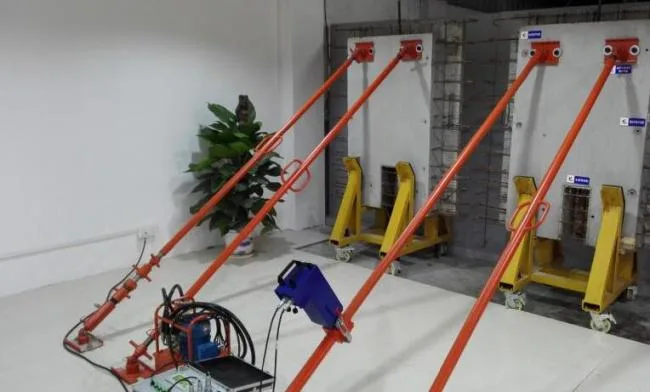
High-precision adaptive support system
This robotic arm technology overcomes previous limitations and opens new possibilities for prefabricated building design. Li Yan, Chief Engineer of Fifth Construction, notes that future prefabricated buildings will become taller—potentially exceeding 100 meters—with stricter accuracy requirements for wall angles. Current standards allow a tolerance of 1/100L, suitable for buildings 20 to 30 meters tall. The new adaptive slant support system achieves a theoretical accuracy of 1/1000L, which could enable higher buildings once mass production is established.
Additionally, as buildings become more personalized, exterior walls won’t always be perfectly vertical. Manual methods only allow for 90° vertical measurements, whereas laser measurement and control can precisely set angles like 89° or 89.5°, adapting to varied building shapes.
Though the robotic arms currently cost more than manual labor, Fifth Construction engineers are confident that automated measurement and control will reduce labor needs by two to three workers, cutting overall costs. Large-scale adoption will further drive down expenses.
Exclusive ‘ID Cards’ Provide Full Traceability of Components
After a prefabricated building is erected, effective management remains crucial. The COFCO No.1 Mansion project features 6,000 prefabricated components, each with an exclusive “ID card”. Embedded RFID chips can be scanned with smart devices to access detailed information on production, storage, installation, and inspection—from raw materials like stone and concrete to the final wall assembly. This creates a transparent, visualized management platform that acts like an invisible assembly line, enabling quick accountability if issues arise.
Fifth Construction began exploring advanced BIM technology applications two years ago. They linked construction codes in the BIM architectural design model to RFID chips and used 13 different colors in the BIM model to represent various component statuses—such as ordered, transported, or installed—similar to tracking logistics in e-commerce apps. This allows engineers to monitor construction progress clearly through BIM models.
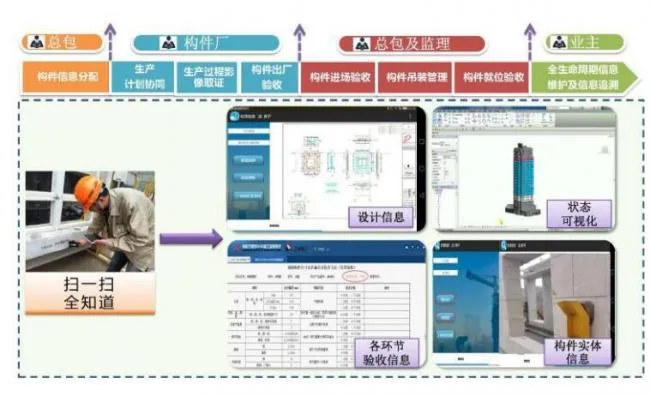
Lean construction visualization management platform tailored for PC projects
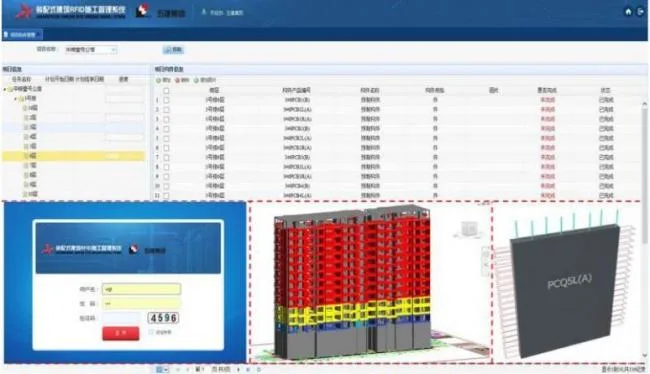
The visualization platform enables tracing of component information and allows construction progress to be monitored through color-coded status indicators.
Prefabricated components with unique “ID cards” enable refined management. While many components appear identical, their exact assembly locations are predetermined and cannot be interchanged, which challenges visual identification. With RFID chips, workers can easily identify and place these “identical twins” correctly by scanning their devices.
Advancing technology has led to continuous optimization of these “ID cards”. For example, in this year’s Unit 06-01 of N12-1101 project at Baoshan Gu Village, a 30-yuan RFID chip was replaced with a cost-effective QR code, priced at only 1 to 2 yuan each, significantly reducing expenses.
Prefabricated Technology Progresses Toward Greater Refinement
In recent years, Shanghai has seen a significant rise in the prefabrication rate and the number of related enterprises. In 2016, Shanghai implemented 13.85 million square meters of prefabricated buildings, doubling production for two consecutive years. Forty-one prefabricated component manufacturers achieved a combined capacity exceeding 12 million square meters. The quality of these components is first-class, with some enterprises meeting world-class standards and exporting to countries like Japan, where they have received widespread acclaim. This year, the city’s prefabrication rate is expected to surpass 40%, while the Xinghewan Middle School project has reached 47%, leading the Shanghai area.
With ongoing refinement of prefabricated building technology, Shanghai—and China as a whole—is reaching new heights. The integration of industrialization and informatization fosters healthy and sustainable industry development. It also transforms management philosophy, shifting from labor-intensive methods to intelligent, refined management. Liu Xunquan, Chairman of Shanghai Construction Fifth Construction Group, explained that Wujian plans to apply VR and AR technology to safety briefings for prefabricated projects. Workers can view safety alerts and technical instructions on-site through VR glasses, enabling faster, more effective understanding of safety protocols and improving construction safety.
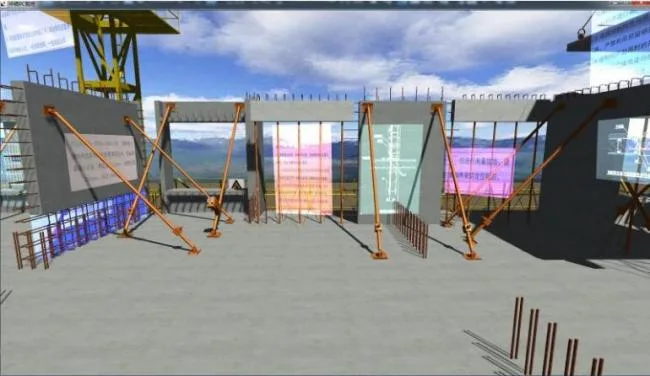
Visual technical safety briefing
While increasing the prefabrication rate, economic considerations remain vital. Li Yan noted that ten years ago, Wujian collaborated with real estate developers to experiment with 100% prefabricated buildings, but costs were high. Higher prefabrication rates involve more assembly nodes, raising concerns about structural stability and earthquake resistance.
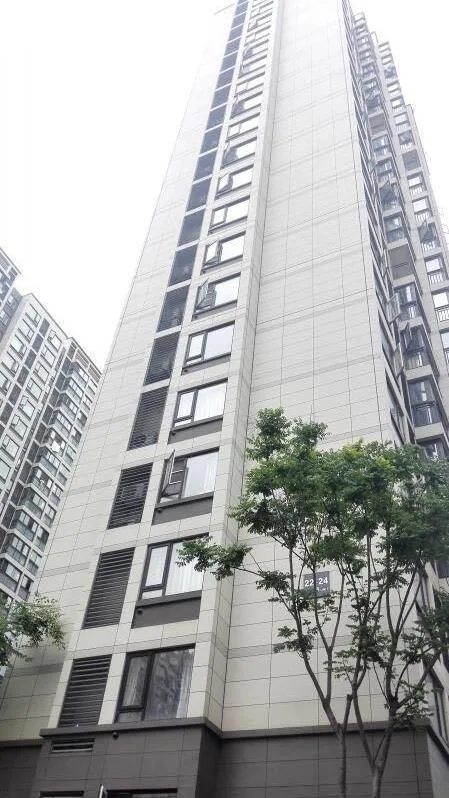
Completed prefabricated buildings
The reporter discovered that the prefabrication rate at the Pudong Qiantan residential project is 30%, using the same prefabricated technology. Li Yan explained that prefabricated technology is better suited for frame-type public buildings, such as schools, which have regular designs and high standardization. Residential buildings tend to have personalized designs with decorative facades and fewer prefabricated components. Research is ongoing to better adapt prefabricated technology to customized residential projects.
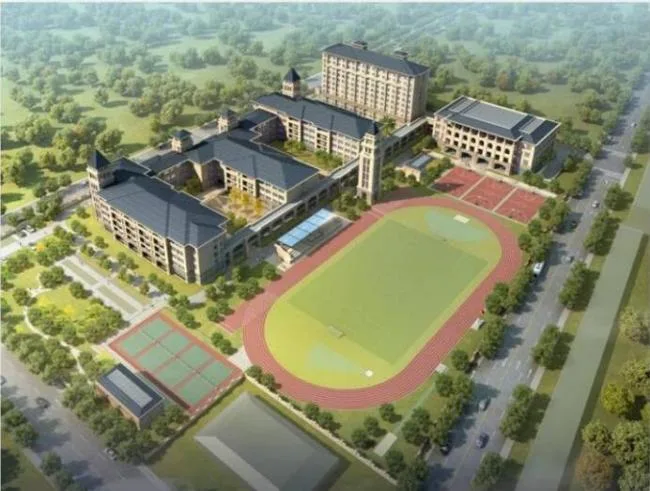
Rendering of Xinghewan Middle School
















Must log in before commenting!
Sign Up