
The key advantage of BIM technology lies in its ability to assist decision-making and strategic planning through realistic pre-analysis and simulation prior to actual construction. This approach helps reduce or even eliminate misunderstandings, conflicts, errors, waste, and risks that might arise during the project.
Simulation of Environmental Static Effects
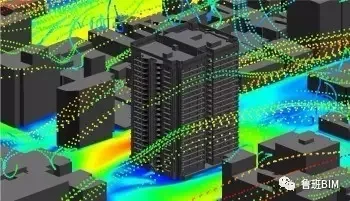
Simulation tools in this area typically require a BIM geometric model with LOD 200. Surrounding buildings can be modeled using either a BIM geometric model of LOD 200 or a simpler LOD 100 volumetric model, combined with digital topographic maps. These tools analyze the interaction between sunlight and building shadows throughout the year. Some advanced tools also perform fluid dynamics analysis to simulate wind fields around the building.
Analysis of Energy Saving and Carbon Reduction Design
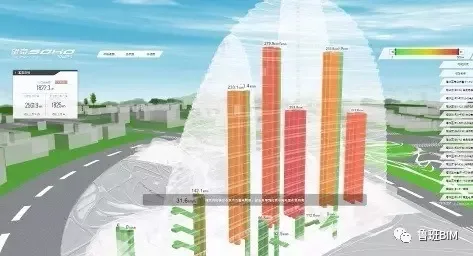
With growing demand for energy conservation and carbon reduction, as well as evolving green building standards, the tools applied in this domain have received increasing attention and have become more sophisticated. Typically, these tools allow users to input local climate data provided by meteorological agencies throughout the year. Based on simulations of solar radiation, indoor lighting, ventilation, and air conditioning, they help design energy-efficient and carbon-reducing solutions that maintain human comfort and indoor lighting needs.
Examples include housing insulation, shading, and natural ventilation strategies that reduce reliance on artificial lighting and air conditioning, achieving energy-saving and carbon reduction objectives. For detailed analyses of indoor ventilation and heat flow, BIM models with LOD 200 or higher, sometimes up to LOD 300, are usually required. Detailed information about openings, glass, partitions, and their materials—including translucency and thermal conductivity—is incorporated into illuminance simulations, fluid dynamics calculations, and thermal analyses.
Due to the complexity, these analyses often require extensive computation. Currently, most tools employ simplified and faster methods, which suffice in preliminary design and planning stages for comparing design schemes and roughly estimating energy-saving and carbon reduction benefits.
There is significant potential for further development of these analysis and simulation tools. This includes improving analysis accuracy, visualization, and simulation efficiency. Additionally, as buildings become increasingly intelligent—integrating automatic sensing and control devices to meet energy-saving goals—incorporating these control mechanisms into simulations (such as windows that automatically open or close based on indoor temperature) remains an ongoing research and application challenge.
Sound Field Simulation
This application is primarily used in designing spaces with high acoustic quality requirements, such as concert halls, theaters, and cinemas. It is also employed to evaluate the impact of sound or noise from sources like outdoor performance venues, airports, trains, and highways on the surrounding environment. BIM models with LOD 200 or 300 are typically required. Professional software analyzes the geometry and sound-absorbing properties of partitions, interior finishes, and major furnishings.
Structural Analysis
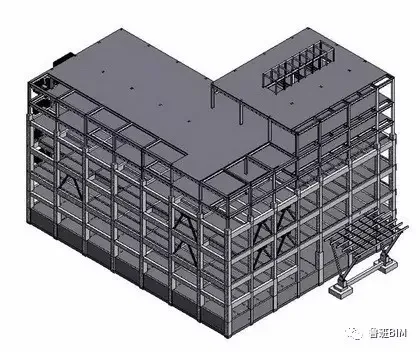
Structural analysis tools have been developed over many years and are now quite mature. Historically, structural engineers created 3D models for analysis based on 2D architectural drawings. Today, the necessary geometric and material property information can be automatically extracted from LOD 300 BIM models. This automation simplifies and streamlines the process, especially for prefabricated structures, reducing errors that often occur during manual modeling—particularly for irregularly shaped structures.
A current challenge is that information exchange between BIM modeling tools and structural analysis software is not yet standardized or seamless, especially when it comes to feeding analysis results back into the BIM model for subsequent use.
Analysis of Electromechanical Pipeline Systems
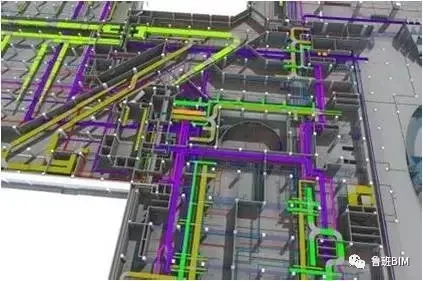
Traditionally, mechanical and electrical pipeline system designs relied mainly on floor plans, with many annotations serving only as illustrations. Final decisions often had to be made by construction workers during the build phase. With BIM technology, design results must be clear and precise in geometry and spatial location to build BIM models. Consequently, some design and construction decisions have to be finalized earlier.
BIM models clearly display each system, enabling early review and conflict coordination among systems. This clarity also supports design simulation analyses of individual systems, such as pipe flow, power load, and water cycle analyses. These analyses require close integration with BIM modeling and design tools, usually involving BIM models at LOD 300.
Space Collision Analysis
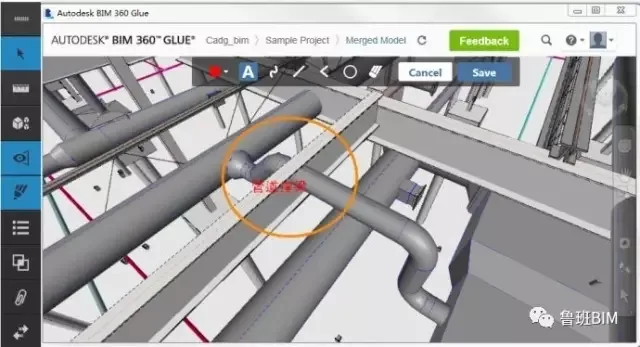
During design or construction, spatial collisions can occur due to the collaboration of different professionals working on buildings, structures, and electromechanical pipeline systems. BIM model integration is essential for detecting and coordinating these conflicts, ultimately improving overall design quality.
The demand and benefits of this application are significant, with many software tools available. BIM models at LOD 300 or 400 are typically required. Spatial conflicts are generally classified into two types:
– **Hard Collision:** When two objects physically overlap in space.
– **Soft Collision:** When two objects do not overlap but must maintain a certain spatial clearance due to maintenance or other design and construction considerations, which is not met.
Both types are important, and most software tools support them to varying degrees. The main challenge lies in filtering and presenting these conflicts effectively, helping engineers quickly, accurately, and efficiently resolve issues. There remains ample room for improvement in this functionality.















Must log in before commenting!
Sign Up