
Today, let’s explore the current development status of prefabricated buildings in ten countries worldwide: China, the United States, the United Kingdom, Germany, France, Japan, Canada, Singapore, Denmark, and Sweden.
United States
Prefabricated housing was widespread in the United States during the 1970s. In 1976, the US Congress enacted the National Industrial Housing Construction and Safety Act, which introduced stringent industry standards that remain in place today. While quality remains a priority, modern prefabricated housing also emphasizes aesthetics, comfort, and personalization.
According to the Industrial Housing Association of America, by 2001, there were approximately 10 million prefabricated homes in the US, constituting 7% of the nation’s total housing stock. In major cities across the United States and Canada, residential structures mainly utilize concrete and steel prefabrication, whereas smaller towns primarily employ light steel and wooden systems.
Residential components and parts in the US are highly standardized, serialized, specialized, commercialized, and socialized—approaching 100% standardization. Customers can select desired products directly from catalogs. These components offer excellent structural performance, versatility, and ease of mechanical production.

Examples include steel-wood structure villas and steel structure apartments. The variety of building products and components is comprehensive, with a high degree of component generalization and commercial supply. The BL Quality Certification System ensures quality assurance for parts and components.
United Kingdom
The British government actively supports the development of prefabricated buildings. It has set ambitious targets within the construction sector: reducing costs and construction time by 10%, lowering defect and accident rates by 20%, increasing labor productivity by 10%, and ultimately boosting profit margins by 10%. These goals are pursued through new product development, efficient organization, and industrialized production.
To foster this growth, the UK government has introduced policies promoting green, energy-efficient buildings and supporting the industry’s transition to new construction models with strict quality and performance standards.
Successful development relies on close collaboration between government regulatory bodies and industry associations to enhance technical standards and promote prefabricated building projects. Establishing a professional skill recognition system supports talent development across the entire industry chain. Beyond design, production, and construction, emphasis is also placed on strengthening material supply and logistics.

Steel structure buildings and modular construction represent over 70% of new builds. The UK boasts complete design, manufacturing, and supply technologies, alongside effective supply chain management. The British Steel Union plays a pivotal role in this sector.
Germany
Germany’s prefabricated residential buildings primarily utilize composite panels, concrete, and shear wall structural systems through component assembly and concrete construction, resulting in durable buildings. Known for the fastest global reduction in building energy consumption, Germany has recently embraced zero-energy passive buildings, fully integrating energy-saving standards with prefabricated housing.
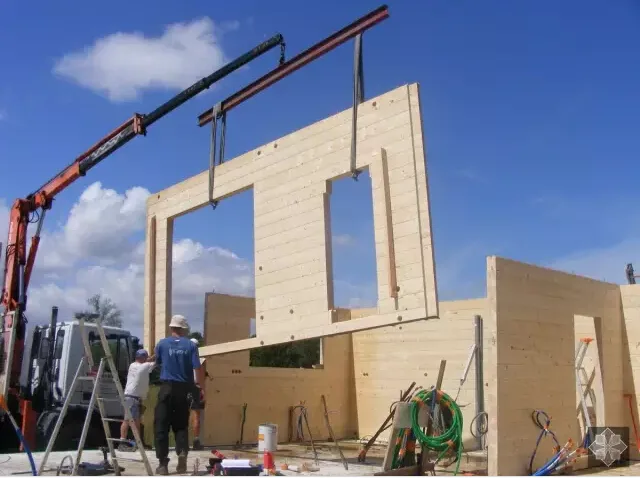
Post-World War II, East Germany developed multi-story prefabricated residential buildings with industrialization levels reaching 90% in the 1970s. Newly built villas and other structures mostly feature fully assembled steel or wood frameworks. Germany has established a robust prefabricated building industry chain, supported by universities, research institutions, and enterprises providing R&D and technical backing. Architecture, structural engineering, and utilities such as water, heating, and electricity are collaboratively integrated. Construction firms work closely with mechanical equipment suppliers, utilizing advanced machinery, materials, and logistics that overcome fixed module size constraints.
Japan
Japan introduced the concept of prefabricated housing in 1968. By 1990, it had developed a mid- to high-rise residential production system characterized by component-based, industrialized processes with high production efficiency and adaptable internal layouts to meet diverse resident needs. The industry has evolved continuously through phases of standardization, diversification, industrialization, intensification, and informatization.
The government issues a five-year residential construction plan that outlines policies and measures to support housing development and improve quality. Government intervention has been crucial, legislating quality standards for prefabricated concrete structures and promoting technological innovation. Unified modular standards reconcile the tension between standardization, mass production, and residential diversity.

Wooden structures constitute over 40% of housing. Multi-story high-rise residences typically use reinforced concrete frames with PCA technology. Japan maintains a high level of industrialization, including integrated decoration and insulated doors and windows. Legislation ensures concrete component quality, and advanced seismic isolation technologies address the country’s high earthquake intensity.
China
Prefabricated building development in China stalled abruptly in the late 1980s but has reemerged after more than 30 years of dormancy—an encouraging and much-anticipated revival. However, the industry currently faces significant challenges due to scarce technology and skilled personnel, making rapid resolution of issues related to workforce, technology, management, and engineering experience difficult.
China’s prefabricated construction market remains in its infancy, largely concentrated in residential industrialization, especially affordable housing. Initial investment costs are high, production scales remain small, and the sector currently cannot compete with traditional cast-in-place concrete markets in the short term.
Nonetheless, national and industry policies promoting modernization and upgrading of the construction industry have spurred over 20 provinces and cities to introduce supportive measures, including industrial base development and pilot projects. With ongoing technological improvements and management advancements, the prefabricated building market in China is poised for significant growth.
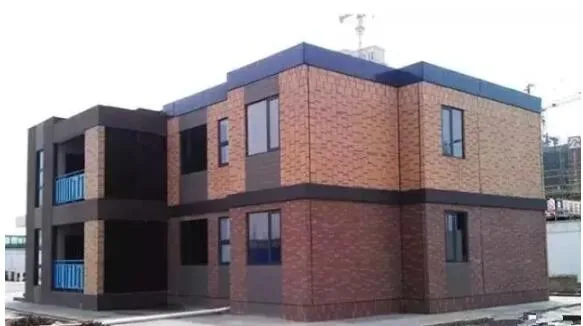
After a long hiatus, prefabrication has reemerged in China but remains early-stage. Key national, industry, and local standards have been formulated and implemented to meet the construction industry’s modernization, transformation, and upgrading needs.
France
France was among the pioneers in promoting prefabricated buildings. Prefabrication in France mainly involves precast concrete structures, supplemented by steel and wood. Residential buildings often use frame or slab-column systems, employing dry processes such as welding and bolted connections. Structural components are separated from equipment and decoration tasks to minimize pre-embedding and ensure high production and construction quality. The prestressed concrete prefabricated frame system widely used in France achieves assembly rates up to 80%.

France’s prefabrication system began between 1959 and 1970 and was fully developed in the 1980s. The majority of structures use precast concrete, with modularized dimensions and standardized components. Steel and wooden structures are less common. Connections typically rely on welding and bolted joints.
Canada
Canada’s prefabricated concrete development mirrors that of the United States. Exploration and application of precast concrete began in the 1920s, becoming widespread by the 1960s and 1970s. Prefabrication is now officially used in residential buildings, public facilities like schools, hospitals, offices, parking garages, and single-story industrial plants. Large-scale prestressed precast concrete technology is extensively applied to maximize the benefits of prefabrication.

Similar to the US, components in Canada are highly universal. Big cities predominantly feature prefabricated concrete and steel structures, while smaller towns use steel or steel-wood structures. Fully precast concrete construction, including high-rises, is common in regions with temperatures below 6 degrees Celsius.
Singapore
Singapore is widely regarded as a model for addressing housing challenges, with most housing constructed using industrialized building technologies. Housing policies and the promotion of prefabricated housing have driven widespread adoption of industrialized construction methods.
The country has developed modular residential units ranging from 15 to 30 stories, accounting for over 80% of its residential population. Standardization is achieved through consistent floor plans, repeatable component dimensions and installation nodes, and a design-centric industrialized design and construction process. These elements are integrated and coordinated to achieve an assembly rate of 70%.

Approximately 80% of residential buildings are government-built, completed within a rapid 20-year timeframe. The HDB housing program mandates assembly, with a 70% assembly rate. Most buildings are tower or slab concrete high-rises, with prefabricated construction primarily applied to HDB flats.
Denmark
In 1960, Denmark established a unified industrialization standard, known as the Danish Open System Approach, requiring all government-funded residential construction projects to follow this method. This transformed construction into an industrialized manufacturing process.

Prefabrication in Denmark mainly involves concrete structures influenced by French methods. Modular design is mandatory, supported by a well-developed prefabricated component industry. Standardization extends to structures, doors and windows, and kitchen and bathroom modules. Common systems include large panel structures and box-type module structures.
Sweden
Sweden employs a prefabricated technology system centered on large concrete slabs. The standardization of prefabricated building components has been incorporated into national industrial standards. To promote the development of universal and specialized prefabricated systems, the government encourages manufacturers to comply with National Standards Association building codes, offering funding support for compliant products.

Sweden’s prefabricated timber structure industry is well-established, boasting a complete development chain with over a century of history. It covers everything from low-rise to multi-story and even high-rise buildings, with 90% of houses constructed using wooden structures.
The above provides an overview of the current state of prefabricated buildings in the top ten countries globally. What are your thoughts or insights?














Must log in before commenting!
Sign Up