
Introduction
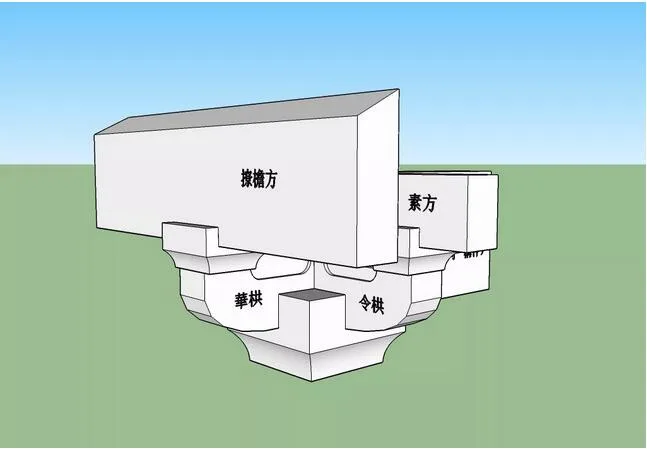
Prefabricated architecture has a long history, dating back to ancient times when Greek classical columns—capitals, shafts, and foundations—were assembled on site. Prefabrication is not a modern import; traditional Chinese architecture also utilized assembly techniques such as mortise and tenon joints and brackets. Entire structures could be built without nails or glue, relying solely on these dry connections.
In 1962, Mr. Liang Sicheng, a pioneering figure in construction, introduced the “Three Modernizations Theory,” advocating for the standardization of design, factory prefabrication of components, and mechanized construction. Since the late 1980s, prefabricated buildings in China experienced a period of decline but have seen a resurgence in the 21st century.
With technological advances and evolving needs, the industry has expanded on Liang’s original theory by proposing a “five-in-one” concept, integrating electromechanical interior systems and management informatization alongside the original three pillars. In 2016, Ye Haowen, representing the China Architecture Society, delivered a keynote titled “Development Thinking of the ‘Three Integrations’ of Construction Industrialization,” further promoting industrialized, green, and information-integrated construction.
The “Three Transformations Theory” of Prefabricated Buildings
On September 9, 1962, Mr. Liang Sicheng published an article in the People’s Daily titled “From Dragging to Being Clean and Efficient.” He emphasized that construction must adapt to China’s conditions and gradually industrialize, moving away from labor-intensive handicraft methods to build socialism quickly, efficiently, and economically.
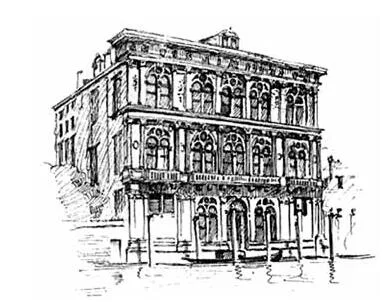
Since the mid-19th century, some advanced countries adopted mechanized production, except for house construction, which remained largely handcrafted. Despite mechanization in earthworks and material transport, house design and construction still relied on manual labor, involving wet mortar and on-site carpentry. This method struggled to keep up with rapidly evolving production and living requirements.

After World War I, many European cities faced urgent reconstruction needs but lacked adequate labor and resources. Architects and engineers sought economical construction methods, moving away from traditional ornate European classical styles toward simplified designs that showcased new materials and structures.
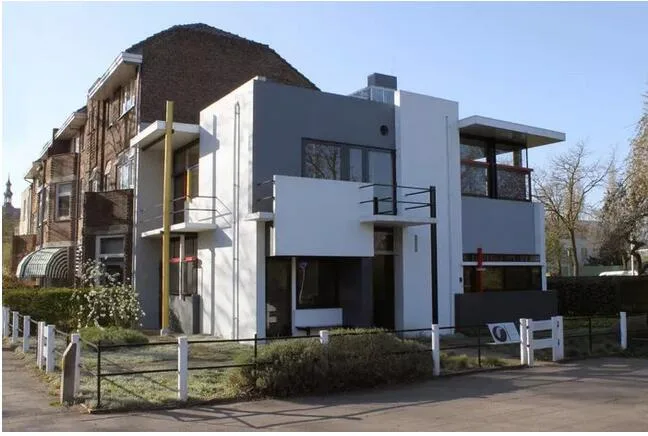
During World War II, the shipbuilding industry revolutionized construction by applying automotive assembly line techniques to build transport ships, dramatically increasing efficiency. Inspired by this, architects explored assembly line methods for housing, focusing on materials, structural design, and construction techniques. Prefabricated homes became a major research focus, with experimental models developed.
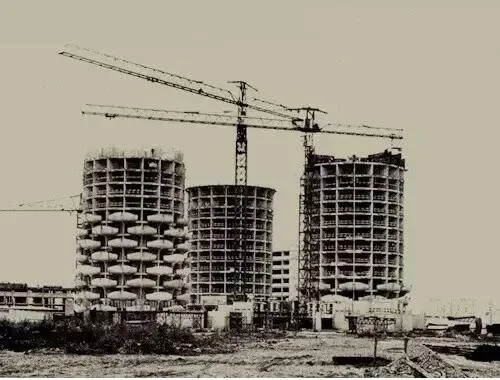
Through ongoing experimentation, experts concluded that mechanized construction is essential for large-scale, rapid building. Mechanization requires assembly, which in turn demands factory prefabrication. Prefabrication calls for minimizing component types and standardizing specifications to enable mass production and ease of assembly.
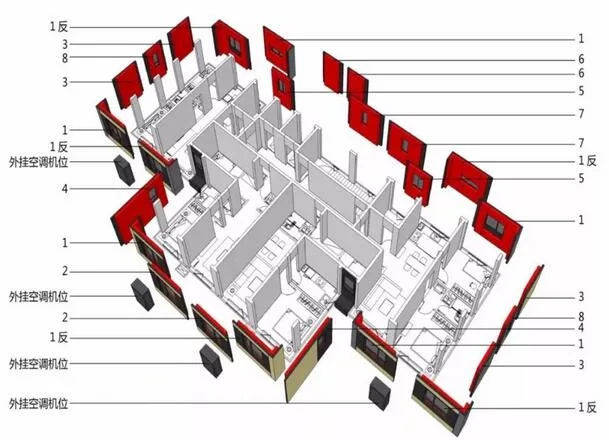
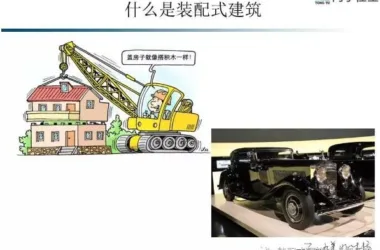
Standardization facilitates factory or on-site prefabrication and mechanical assembly while ensuring ease of transportation. Prefabricated components should be as complete as possible to minimize post-assembly processing. The goal is to construct buildings like assembling blocks, combining individual standardized components.
Thus, “how to formulate standards” has been a key research focus for architects and engineers over the past two decades.
Standards must consider not only structural and construction factors but also adaptability to production and lifestyle needs. A key challenge is establishing optimal standard dimensions. Diverse living and production needs require different spatial sizes, so how can a limited set of standard sizes suffice?
Aside from categorizing components by size, the concept of a module is critical. A module is the greatest common divisor of length, width, and height of building parts and components. Each dimension is a multiple of this module, allowing components to fit together horizontally, vertically, or inversely, creating rooms of varying sizes—much like arranging tangram pieces.
The module must accommodate production and living needs, material properties, prefabrication, mechanized construction, and aesthetic proportions. Although ancient China employed modular systems, such as “wood,” “division,” and “bucket mouth,” these were suited for handcrafted woodwork and simple structures and are inadequate for modern industrial production.
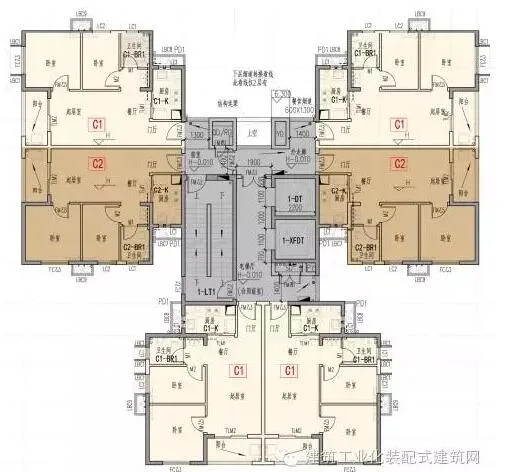
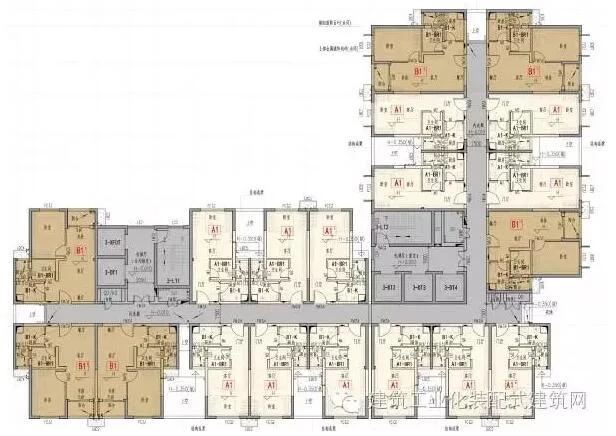
Architects recognized that standardizing components alone was insufficient. They expanded standardization to include:
- Standard Units: Combining standard components to form modular living spaces, ranging from single rooms to multi-room residential units.
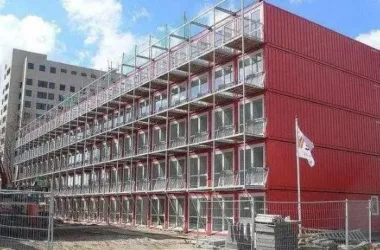
- Prefabricated Rooms: Factory-built, fully equipped rooms such as kitchens and bathrooms—complete with plumbing and electrical systems—transported as “boxes” and assembled on site, stacking multiple units to form complete buildings.
From the perspectives of factory prefabrication and assembly, standardization is essential. However, transportation and crane lifting impose size and weight limits, creating a need for components that are both large and lightweight.
Research has produced many lightweight materials—including mineral wool, ceramsite, foam silicate, lightweight concrete, and high-strength composites—and developed methods for large prefabricated panels and modules that integrate doors, windows, wiring, insulation, and finishes.
Joining these large, lightweight components effectively is another critical issue.
Mechanized construction also impacts urban planning. Staggered or irregular building layouts hinder the operation of rail-mounted tower cranes, which are still the norm despite the development of trackless cranes. Achieving artistic variety within the constraints of standardized design, factory prefabrication, and mechanized assembly remains a challenging task requiring significant effort.

While ancient Chinese modular methods offer valuable insights, they cannot fully address modern industrial challenges. Successful approaches have emerged from the Soviet Union and other technologically advanced nations.
The “Three Modernizations” remain the key to accelerating socialist construction efficiently and economically. However, these tasks are complex and require collaboration across planning, design, materials science, structural engineering, construction, and machinery disciplines.
For thousands of years, construction involved transporting raw materials to sites for manual processing, bricklaying, and finishing. The “Three Modernizations” aim to transition construction to a “dry” assembly process.
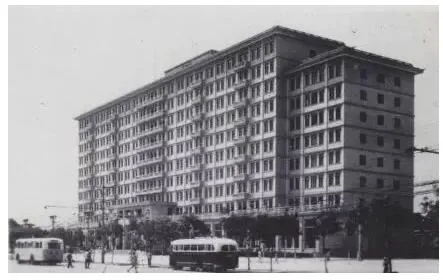
Recently, Chinese builders have conducted key experiments, such as at the Ethnic Hotel and Civil Aviation Building in Beijing, along with pilot residential projects. While progress has been made on main structures, many finishing processes still rely on manual labor, indicating that the “Three Modernizations” are not yet fully realized.
We must leverage current favorable conditions to prioritize the “Three Modernizations” in upcoming research, aiming for large-scale architectural industrialization to eliminate construction delays.
Mr. Liang introduced many key concepts—such as “module,” “grid,” “standardized unit,” “box,” and “three transformations”—that remain relevant today. Some have advanced, others stagnated or regressed. Currently, we bear the responsibility to continue this legacy with the vision of a “prefabrication dream, assembled future,” focusing on the “five-in-one” industrial development model, embracing the core ideas of “three integrations,” and upholding the principles of “two improvements and two reductions” in prefabricated building development.
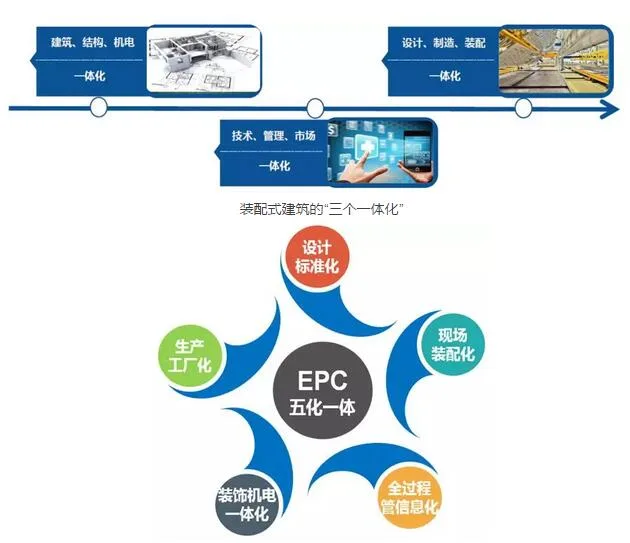
The integration of five modernizations in prefabricated buildings.













Must log in before commenting!
Sign Up