
In 2018, various regions across China announced their development goals for prefabricated buildings, marking a significant trend toward widespread growth in this sector. Lingye Technology aims to provide a fresh perspective and comprehensive insights into prefabricated buildings, addressing common questions, highlighting process characteristics, and explaining construction procedures.
Q&A
1. Is construction quality and safety guaranteed?
Some media describe prefabricated buildings as follows: “These buildings, produced in factories and assembled on-site, not only save time, labor, and costs but also eliminate sewage, noise, and dust. They meet green, low-carbon, energy-saving, and environmental protection standards, fully satisfying the seismic, safety, and durability requirements of traditional buildings.” But is this an accurate assessment or an exaggeration? This question deserves consideration, especially regarding the quality and safety that concern people the most.
A key feature of prefabricated buildings is the use of PC (Precast Concrete) components. In the industry, ‘PC’ generally refers to concrete structures primarily composed of precast concrete elements, which are assembled, connected, and partially cast-in-place. This prefabricated structural system has a long history in China. Experts note that as early as the 1950s, China began promoting prefabricated housing, particularly developing the large slab structural system rapidly. However, these prefabricated large slab residential buildings had insufficient quality and seismic performance, and their architectural styles were relatively simple. After the 1980s, they gradually phased out. Today, China is actively promoting the prefabricated concrete structural system.
2. Is the quality and safety of houses built with prefabricated concrete structural systems reliable?
Experts explain that this structural system relies mainly on cast-in-place nodes to connect components. Steel bars from precast PC elements are embedded into cast-in-place components for anchorage, ensuring the building’s structural integrity. Compared with prefabricated large slab structures, the quality of prefabricated residential buildings has improved significantly. However, despite advances in connection methods, the risk of quality issues at connection points remains. Once the structure is topped out, inspecting these connections becomes difficult. Furthermore, the current skill level of China’s construction teams does not fully guarantee the quality and consistency of these connections.
3. Are prefabricated buildings cost-effective compared to traditional construction?
Prefabricated construction offers clear advantages over traditional methods, including shorter construction periods, reduced noise and dust, and environmental benefits. In theory, the prefabricated construction market should thrive. However, high costs have hindered its growth. Fortunately, government incentives have been introduced to offset expenses. For example, Shanghai’s “Implementation Opinions on Promoting the Development of Prefabricated Buildings” (effective January 1, 2015) mandates that from 2016, all new civil buildings within the Outer Ring Road must adopt prefabricated methods, and over 50% outside the ring must do so. Buildings with a prefabrication rate of 40% or higher receive a subsidy of 100 yuan per square meter, and projects voluntarily adopting prefabrication can gain additional plot ratio bonuses of up to 3%.
4. Is prefabrication synonymous with the modernization of the construction industry?
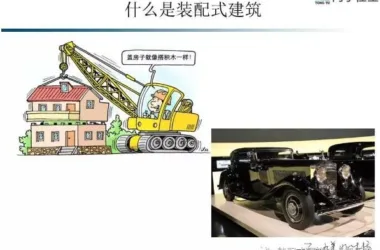
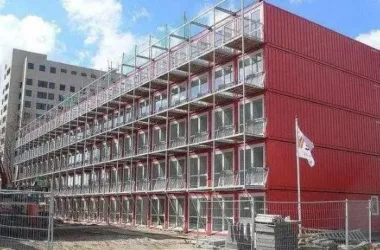
Some believe that building assembly represents modernization or a new form of construction industrialization, but these concepts, while related, are distinct. Currently, prefabricated buildings are understood as structures assembled on-site from factory-made components, including exterior and interior wall panels, composite panels, balconies, air-conditioning panels, stairs, beams, columns, and more. This approach reduces traditional cast-in-place work in favor of extensive on-site assembly.
The new building industrialization model integrates the entire industry chain—from design and production to construction—applying prefabricated production and assembly methods alongside design standardization, component customization, and mechanized construction. It aims for sustainable development in terms of energy conservation, environmental protection, and maximizing the building life cycle value.
5. What defines the modernization of the construction industry?
According to Ye Ming, Deputy Chief Engineer at the Ministry of Housing and Urban-Rural Development’s Science and Technology and Industrialization Development Center, modernization focuses on green development, prioritizes residential construction, and centers on new construction industrialization. It extensively uses information technology and modern management to integrate the entire housing construction process into a unified industrial chain, transforming traditional production into modern industrial manufacturing. This shift enhances efficiency, benefits, and construction quality. Ye Ming emphasizes that “assembly” is merely one aspect of modernization—an effective production method and technical path—not the ultimate goal.
6. Are the relevant technologies and standards in place?
Assembly as a technological method should be encouraged and promoted. However, the technical standards and incentive policies still require improvement. The current industry focus is on prefabricated concrete shear wall residential buildings, while the development of prefabricated frame structures and other types remains uneven, hindering balanced growth in the prefabricated concrete sector. Outdated technical standards also pose significant obstacles to large-scale adoption.
Fortunately, in January this year, the Ministry of Housing and Urban-Rural Development released national standards titled “Technical Standards for Prefabricated Concrete/Steel/Wooden Structure Buildings,” which support engineering design and acceptance. However, ongoing research and updates to these standards are needed.
The industry’s long-term sustainability depends on the sustained profitability of its enterprises. Currently, the cost of prefabricated shear wall structures remains higher than cast-in-place alternatives without subsidies, making development challenging. Reducing costs, nurturing upstream and downstream enterprises, and establishing a complete industrial chain are crucial. At present, China lacks a unified integration platform across planning, design, manufacturing, construction, and management, resulting in fragmented expertise and products.
7. Should the focus be on PC rate or social benefits when promoting prefabricated products?
By 2018, many provinces and cities had introduced policies promoting residential industrialization and prefabricated construction, often specifying targets for the proportion of PC building area. The “PC rate” has become a key metric for local governments to assess prefabricated building development. However, some experts warn that the PC rate is becoming overemphasized, with both government agencies and enterprises focusing narrowly on this figure. While PC is essential for residential industrialization, it should not be equated with the entire industrialization process.
Moreover, a lack of specialized divisions of labor makes it difficult to find design and review agencies capable of handling large numbers of PC projects. Rushing into expansion without proper planning is unwise.
What truly matters for the development of prefabricated buildings is whether they deliver social benefits—not just increasing the PC rate. Some projects, despite using prefabricated structural components, fail to achieve overall energy savings. Others meet green building standards but still cause considerable waste and pollution during construction and use. These challenges deserve careful reflection within the industry.
Production and Construction
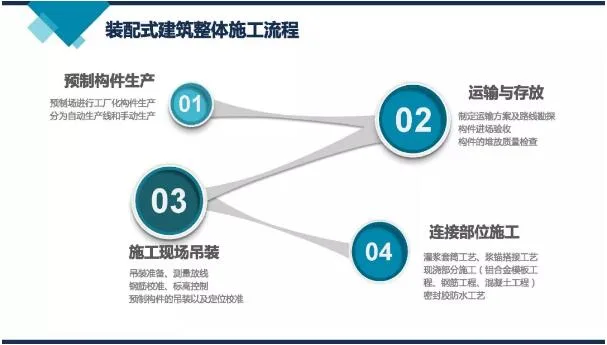
1. Production of Prefabricated Components
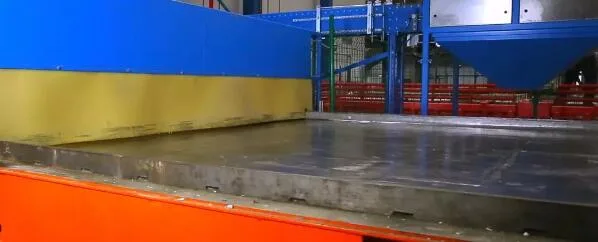
▲ Cleaning the mold table
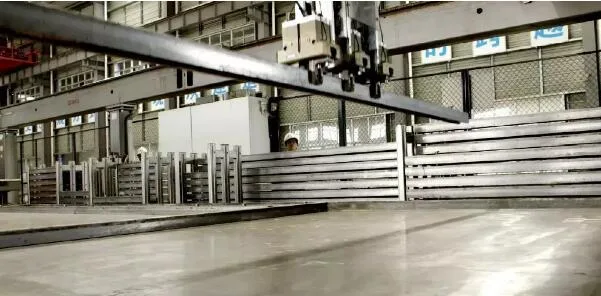
▲ Marking and supporting the mold
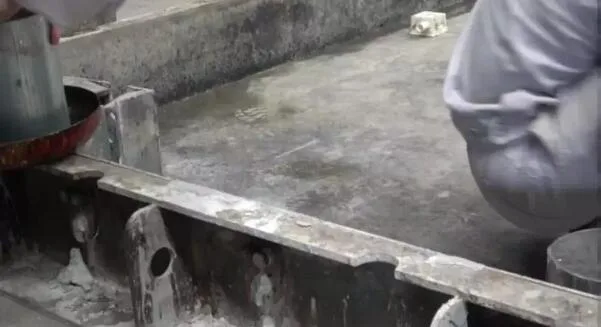
▲ Placement of embedded parts
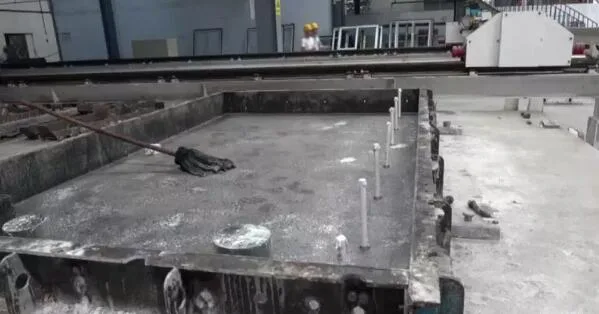
▲ Applying release agent
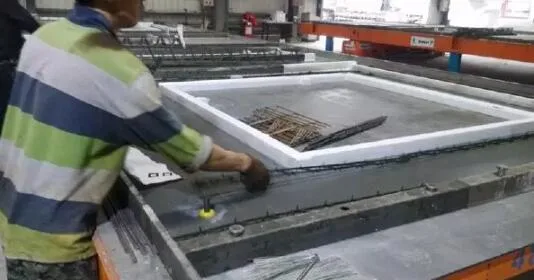
▲ Laying and binding reinforcement
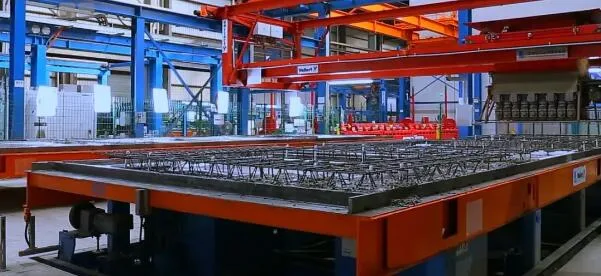
▲ Concrete pouring and vibration
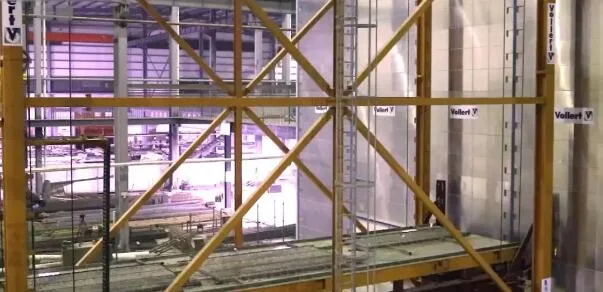
▲ Kiln maintenance
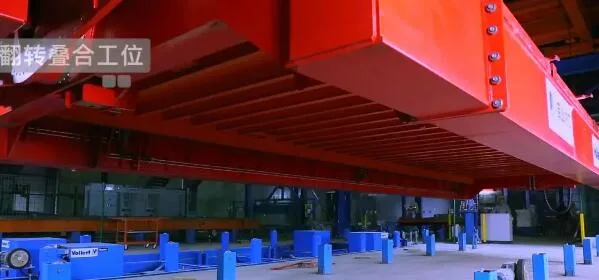
▲ Flip machine operation
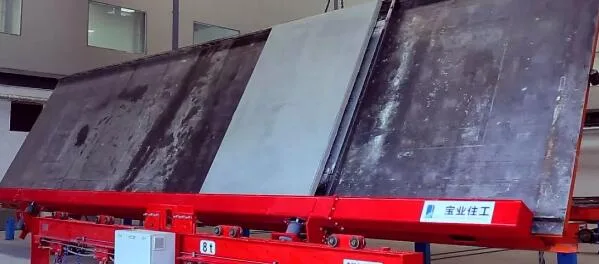
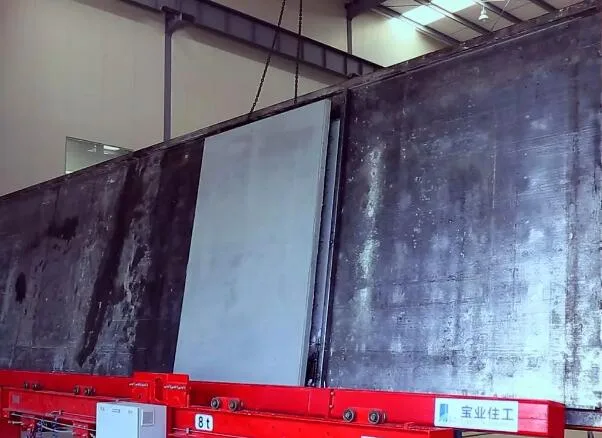
▲ Flip lifting
2. Transportation and Storage of Prefabricated Components
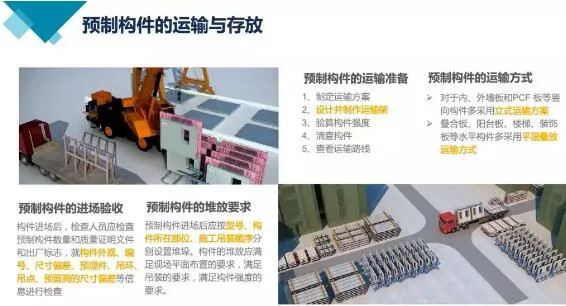
3. On-site Hoisting
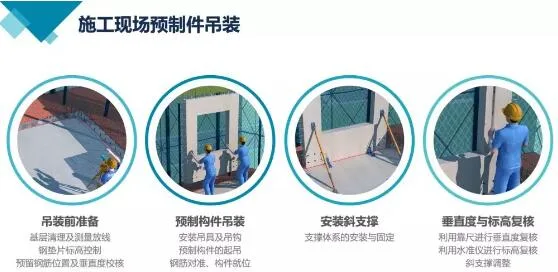
4. Construction of Connection Parts
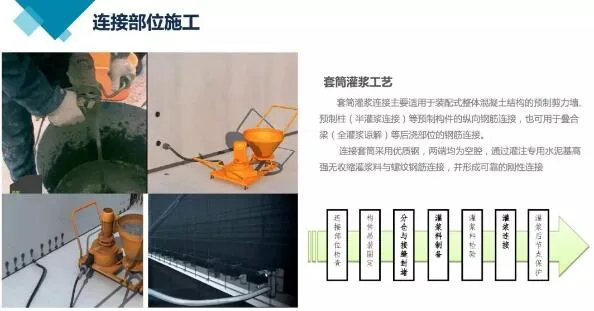
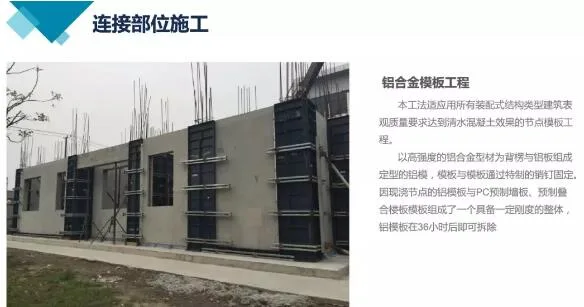
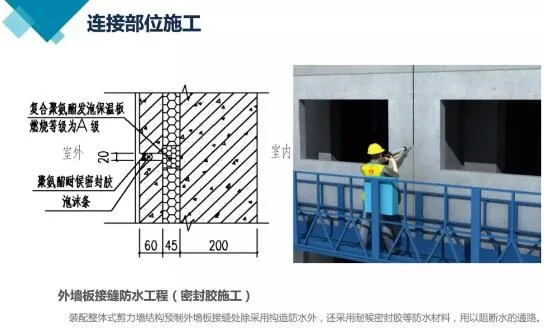














Must log in before commenting!
Sign Up