
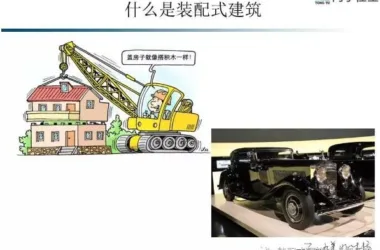
With advancements in modern industrial technology, buildings can now be mass-produced similarly to machine manufacturing. Prefabricated components are transported to the construction site for assembly. Interest in prefabricated construction began in the early 20th century and became widely realized by the 1960s. Countries such as Britain, France, and the Soviet Union initially experimented with integrated decoration techniques, which quickly gained global traction.
Key Features of Prefabricated Buildings
1. A variety of building components—including exterior and interior wall panels, composite panels, balconies, air conditioning panels, stairs, prefabricated beams, and columns—are manufactured and processed extensively in workshops.
2. On-site assembly operations are significantly reduced compared to traditional cast-in-place construction methods.
3. The design and construction processes for architecture and decoration are integrated, ideally allowing decoration to proceed simultaneously with the main construction.
4. Prefabricated buildings align with green building standards.
Is the Quality of Prefabricated Buildings Reliable?
Because most components are factory-produced, prefabricated buildings offer much better quality control than traditional on-site cast-in-place wet construction. The precision of prefabricated components has improved from centimeter-level accuracy to millimeter-level, which, coupled with careful installation, enhances overall project quality.
Does Prefabrication Shorten Construction Time?
Traditional building processes—such as exterior wall decoration, insulation installation, and application of crack-resistant mortar—can take 2 to 3 months. Prefabricated construction, however, integrates insulation and decorative layers during the prefabrication of exterior walls and bay windows, cutting exterior finishing time by up to three months.
Additionally, prefabricated staircases come with pre-embedded holes for railing installation, bay windows have embedded parts for railings, and walls are pre-designed with pipe slots for water and electricity installation. These features save approximately one month by reducing the need for on-site openings, embedded part installation, and wall slotting during decoration.
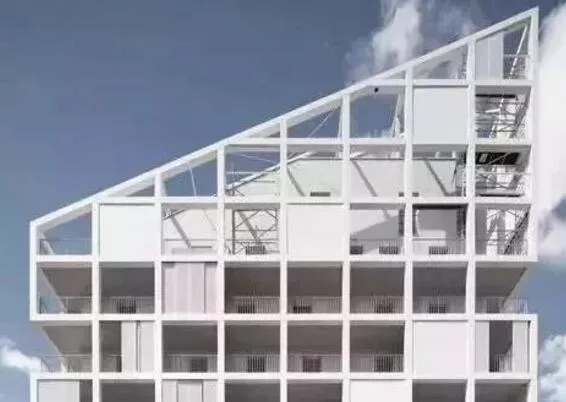
Application of BIM Technology
The nature of prefabricated buildings means that any issues with components are often discovered only during on-site assembly, potentially causing significant losses. Therefore, detailed, in-depth, and collaborative design efforts are essential.
BIM (Building Information Modeling) technology is the preferred tool for efficient management of prefabricated construction. It enables collaborative coordination among disciplines such as architecture, structural engineering, plumbing, and electrical work, preventing design conflicts. Furthermore, BIM integrates design, construction, management, and operation on a single platform, enhancing overall project efficiency.
By using BIM to create prefabricated layout and component libraries, standardization of layouts and specifications is achieved. This reduces design errors and greatly improves efficiency, especially in the production and installation of prefabricated components.
Quality Control in Prefabricated Construction
Prefabricated buildings require component production and installation tolerances within millimeter precision. While this improves building quality and accuracy, it also demands higher technical proficiency and organizational management from workers. Addressing key technologies, improving installation accuracy, fostering responsibility among technical staff, strengthening on-site technical briefings, and enhancing quality supervision systems are critical; otherwise, the benefits may turn into drawbacks.
Collaborative Management in Implementation
The prefabricated construction industry involves multiple units and specialties, often resulting in fragmented information and isolated “information silos,” which hinder integration and sharing. Adopting an EPC (Engineering, Procurement, and Construction) general contracting model supports comprehensive planning and collaborative project execution. This approach effectively bridges design and construction phases, reduces intermediate procurement steps, and aligns all participants toward unified project goals.













Must log in before commenting!
Sign Up