
Just as the “Internet Plus” movement has transformed how people approach production and daily life, Yujun envisions industrialized construction technology gradually breaking into the traditional building sector.
As the CEO of Zhongmin Zhuyou, a subsidiary of Zhongmin Investment, Yujun confidently asserts that the industrialization of construction will surely accelerate the evolution of the traditional construction industry—an enormous and untapped market.
Before joining Zhongmin Investment, Yujun had spent 18 years immersed in the construction and real estate industries. In 2005, after visiting Japan and witnessing their industrialized construction methods, he was deeply inspired and committed to bringing this advanced, high-tech approach back to China.
At that time, Yujun was Deputy General Manager at China Construction Fifth Engineering Bureau Third Construction Co., Ltd. He proposed introducing industrialized building within the bureau. However, due to high upfront costs and institutional constraints, the project was shelved early on.
In October 2014, a new opportunity arose. Zhongmin Jiaye, a subsidiary of Zhongmin Investment, invested 1 billion yuan to establish Zhongmin Zhuyou Co., Ltd. Later in May, Zhongmin Jiaye invested in Southeast Group, a Hong Kong-listed company, which was renamed Zhongmin Zhuyou Technology Group in October. This marked the first listed company in mainland China focusing on construction industrialization.
With Zhongmin’s strong financial backing, Zhongmin Zhuyou secured early capital investment. Yujun stated, “Our goal is to become the leading company in construction industrialization both domestically and globally.”
The Need for Upgrading China’s Construction Industry
Building industrialization is a production model that integrates multiple business stages—research and design, manufacturing, logistics, and on-site assembly—centered around prefabricated components.
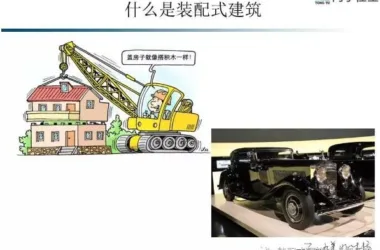
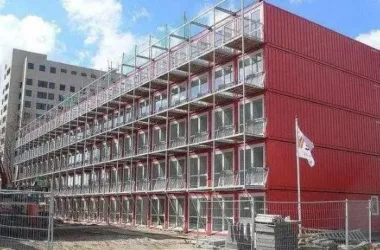
Simply put, components like walls, slabs, beams, columns, platforms, stairs, and windows are manufactured in a standardized factory process, then assembled on-site much like building blocks.
Although construction industrialization is not a new concept internationally, with Japan leading at an 80% residential industrialization rate, the industry remains largely untapped in China.
By the end of 2013, China had 79,528 construction enterprises employing nearly 45 million people. This industry is characterized by low entry barriers, minimal concentration, low profitability, and limited technological content—making it highly competitive.
Historically, construction industrialization was not widely embraced in China, partly because labor costs were low and workers plentiful. Now, with labor shortages and rising wages, the advantages of mechanization and industrial production have become more apparent, Yujun told reporters from Daily Economic News.
Because many modules are prefabricated in factories, the construction period using industrial methods is only about two-thirds that of traditional approaches. Labor requirements drop by 70%, while building quality improves, energy consumption decreases, and pollution—such as dust and noise—at construction sites is minimized.
In May of this year, the government released the “Made in China 2025” strategic plan, which aligns perfectly with upgrading the construction industry through industrialization.
Early Attempts and Industry Progress
Two decades ago, Wang Shi attempted to industrialize residential construction within Vanke, coining the slogan “building houses like cars.” Other companies, such as Jiangsu-based Zhongnan Construction and Stock Bar Group, are also accelerating industrialization efforts.
In 2014, Zhongnan Construction and Vanke successfully topped out an industrial prefabricated residential building in Haimen, Jiangsu—the first fully prefabricated assembly building over 100 meters tall in China.
Construction industrialization is a technology-intensive industry requiring significant expertise in production line design, manufacturing, information management, and on-site assembly. Currently, Zhongmin Zhuyou has applied for over 420 patents in this field, investing nearly 100 million yuan in R&D in 2015 alone.
The Silver Age: Sharing the Developer’s Market
In 2013, the total output value of China’s construction industry reached 15.93 trillion yuan, rising to 17.67 trillion yuan in 2014. The market continues to hold enormous potential.
Despite structural adjustments in real estate, the sector remains massive. Yujun estimates this year’s real estate market size at 9 to 10 trillion yuan, possibly declining to around 5 trillion yuan in the future. Capturing even 10% of this market would represent 500 billion yuan, while 1% still equates to 50 billion yuan.
Zhongmin Zhuyou has also expanded into new urbanization. Yujun points out the significant housing gap between urban and rural areas as the greatest challenge. Zhongmin Zhuyou plans to launch standardized rural housing priced around 500,000 yuan per unit. Structural components will be factory-produced and installed on-site, allowing a fully decorated “small Western-style house” to be completed in roughly 15 days.
Given China’s rural population of 600 to 700 million, this initiative targets a vast market of 300 million housing units worth 15 trillion yuan.
Yu Weiwei, Secretary General of the E-house China Housing Industrialization and Green Development Alliance, told Daily Economic News that the biggest bottleneck for developers adopting construction industrialization is the technological threshold and scale limitations.
An industry insider noted that within Vanke’s business system, construction industrialization is merely a small part of their operations. During the “golden decade” of real estate, residential development was a cash cow, making the relatively modest 3–5% profit margins from industrialized construction less attractive. This explains why developers haven’t widely embraced industrialization.
As the real estate industry enters its “Silver Age,” new opportunities for construction industrialization are emerging. Yu Weiwei emphasizes that real estate companies don’t need to invest heavily in R&D themselves but should adopt third-party EPC (Engineering, Procurement, and Construction) models. This specialized contracting approach suits the current light-asset operational needs of developers while reducing construction costs.
The EPC model covers the entire process—design, procurement, construction, and commissioning. Yujun revealed that Zhongmin Zhuyou plans to capture a share of the developer market through EPC general contracting.
“In China, we invest and focus on construction management,” Yujun explained. “In the future, developers will handle sales only, while we manage all construction aspects. This internationally recognized model is unprecedented in China.”
Currently, the adoption rate of construction industrialization in commercial housing development remains low. The industry is still in its infancy, relying heavily on government guidance and support.
Yu Weiwei highlighted that high costs and the lack of scale among domestic prefabricated construction manufacturers hinder adoption. Mature industry growth requires collaborative efforts across the entire value chain, not just promotion by a few enterprises.
Backing from Industry Leaders
Yujun stresses that construction industrialization is manufacturing, not traditional construction. Only by achieving significant scale can it return to its manufacturing essence.
Each industrial production base requires an investment of 300 to 500 million yuan. Zhongmin Zhuyou aims to establish factories in 10 cities nationwide by the end of 2016, necessitating capital of 3 to 5 billion yuan.
This year marks Zhongmin Zhuyou’s inaugural operational year. To date, it has secured contracts worth over 10 billion yuan, with ambitions to reach 100 billion yuan in orders within five years.
“We are racing against the market and time,” said Yujun. “Manufacturing must quickly enter the market. Once we reach scale, costs can be spread, and profits realized. Our plan is to roll out prefabricated housing in 20 cities, build 10 factories with a combined production capacity of 30 billion yuan by next year. This scale will be the largest in China.”
Currently, factories are established in Changsha and Shanghai. Zhongmin Zhuyou aims to rapidly expand production and franchise bases nationwide. The first three years will focus on heavy asset ownership, building around 20 production bases in southeastern coastal and key inland provincial cities by 2018. Afterwards, the company plans to expand through franchising and light-asset operations.
Yu Weiwei cautions that Shenyang was China’s earliest city to focus on industrialized construction. However, recent years have seen an oversupply of commercial housing and weak market demand, causing many prefabrication factories to sharply reduce orders or face bankruptcy.
“Each factory’s effective service radius is only 100 to 200 kilometers. Business development depends heavily on local demand. Only by establishing a multi-region layout can risks be balanced,” Yu explained.
Zhongmin Zhuyou’s bold strategy and confidence likely stem from its wealthy shareholders at Zhongmin Investment. Among the 62 shareholders of China Minsheng Investment Corporation, over 20 have real estate backgrounds. Zhongmin Zhuyou will leverage synergies with these enterprises to deepen cooperation.
The ambition of Zhongmin Zhuyou is part of Zhongmin Investment’s global strategy, riding the “grandmother’s” car to “go out” and explore vast overseas markets.













Must log in before commenting!
Sign Up