
On February 21st, the State Council released several recommendations to further enhance urban planning and construction management. These proposals emphasize the vigorous promotion of prefabricated construction, aiming to reduce construction waste and dust pollution, shorten project timelines, and improve overall engineering quality. Key initiatives include developing design, construction, and acceptance standards for prefabricated buildings, improving component standards to enable factory production of building parts, encouraging construction companies to adopt prefabricated construction and on-site assembly, and establishing a national-level production base for prefabricated buildings. The goal is to achieve a 30% share of prefabricated buildings in new constructions within approximately ten years, driving the industrialization of residential production and supply.
In February of last year, Yuanda completed a 57-story super high-rise building in Changsha in just 19 days. Later, in June, Zhuoda Group demonstrated the rapid construction of a two-story villa in only three hours. These milestones helped industry professionals and homebuyers alike understand the potential of residential industrialization. This housing industrialization involves mass production of components through machinery, standardized product specifications, and precise control over the entire construction process. It has become a focal point of research among Chinese real estate companies.
What Is Residential Industrialization and Why Is It Promoted?
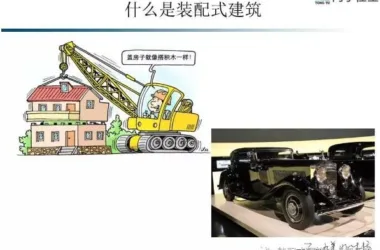
Residential industrialization is defined as the construction of residential buildings using industrial production methods. This approach is essential to upgrading traditional, low-mechanization, and labor-intensive building modes. Its objectives include increasing labor productivity, enhancing building quality, reducing costs, and minimizing material and energy consumption. Simply put, it means shifting construction from on-site building to factory assembly, much like automobile manufacturing, with components produced in factories and then assembled on-site. This method represents a significant breakthrough from traditional construction techniques and concepts.
Why promote residential industrialization? First, it aims to reduce construction waste, sewage discharge, noise pollution, and emissions of harmful gases and dust, thereby supporting energy conservation, water preservation, land protection, material savings, and a more environmentally friendly building process. The environmental pollution caused by construction waste and dust is a visible problem in urban areas. For example, during major events like APEC in Beijing and the Shanghai Cooperation Conference in Zhengzhou, citywide construction shutdowns were enforced to ensure clean air, demonstrating the severity of construction-related pollution.
Second, industrialized housing can shorten construction timelines and improve project quality. This approach integrates modern industrial techniques and organizational methods across various production stages, standardizing buildings, industrializing component production, serializing residential parts, facilitating on-site assembly, and combining civil engineering with decoration. The result is an efficient factory-style workflow that enhances quality, lifespan, efficiency, and cost-effectiveness, while reducing energy consumption. Prefabricating materials and modularizing parts for on-site assembly significantly boosts construction efficiency. This explains feats like the 57-story high-rise built in 19 days and the two-story villa completed in three hours.
19 Days, 57 Floors: The Grand Changsha “Small Sky City” Project
How Is Housing Industrialization Developing in China?
So, what is the current status of housing industrialization in China? Although the concept was proposed many years ago, many homebuyers and even some industry professionals still lack a clear understanding of it.
Research shows that China has been exploring housing industrialization since 1992. In 1999, the concept was officially introduced when the General Office of the State Council issued the “Several Opinions on Promoting the Modernization of the Housing Industry and Improving the Quality of Housing,” which served as a guiding document for this transformation. In the same year, the Ministry of Construction released the “Management Measures for Performance Certification of Commercial Residential Buildings,” effective from July 1st.
In 2005, the Ministry of Construction and the State Administration of Quality Supervision issued the “Technical Standards for Residential Performance Evaluation,” which came into force on March 1, 2006. These standards encouraged enterprises to pursue residential industrialization from the perspective of performance certification.
On June 21, 2006, the Ministry of Construction published the “Implementation Outline for National Residential Industrialization Bases,” emphasizing that residential products should develop towards standardization, serialization, scale, industrialization, modularity, and universality. This would improve product performance and quality, ease design and construction processes, and lay a solid foundation for industrialized residential building systems.
Since 2006, cities such as Shenzhen, Beijing, Shanghai, Shenyang, Jinan, and Hefei have piloted residential industrialization projects. In an environment of regulated markets, where relying solely on land appreciation and rising housing prices is no longer sustainable, the residential industrialization model offers a new profit approach by accelerating project turnover and alleviating declines in industry profits. From this perspective, residential industrialization is poised to become a key profit model for the real estate sector after the era of rapid gains.
Chinese Real Estate Companies Embracing Residential Industrialization
Given its potential as a new profit model, which companies have begun adopting residential industrialization? Japan’s pioneering role in this field cannot be overlooked. Since introducing the concept in 1968, Japan has extensively popularized residential industrialization over nearly five decades. In China, only a handful of cities have initiated pilot programs, often drawing inspiration from Japanese practices. Vanke is a prime example.
Here are some examples of prefabrication techniques used by companies like Vanke:
- Upper steel bars of beams are tied with prefabricated components in the factory. After installing the floor slab on-site, additional steel bars are anchored and embedded in concrete.
- Prefabricated columns and embedded parts for on-site installation are preassembled in the factory.
- Nodes of prefabricated beam and column components are assembled in prefabricated houses and concreted on-site.
- Holes for mechanical and electrical wiring are reserved during factory prefabrication.
- Embedded parts connected to tower cranes are preinstalled with standardized screw holes.
- Corridor walls are reinforced with concrete and include embedded installation holes and connecting fittings.
- Wall panels are transported to floors for installation, including balcony walls.
- Hooks for hanging electrical conduits are directly attached to prefabricated floors without sleeves or trays, with color-coded wires for different functions.
- Bathrooms are integrated industrial products, with interiors, tiles, and decorations completed in the factory.
- Ground pipelines are fixed using galvanized brackets, with transition pads preventing deformation from gravity over time.
As a leading real estate company, Vanke has played a major role in promoting residential industrialization since 1999, when the Ministry of Construction issued relevant guidelines. That year, Vanke established its Architecture Research Center, marking the start of its industrialization efforts. Later, the “Vanke Customer Experience Center” and the “Vanke Residential Industrialization Enterprise Alliance” were founded to support this initiative.
Key milestones include:
- 2002: Completion of the Vanke Architecture Research Center building.
- 2004: Establishment of a factory center to research factory housing.
- 2005: Construction of the No.1 Industrial Production Test Building at the Shenzhen Construction Research Center Experimental Base, testing various industrial building systems such as precast concrete structures, exterior walls, integrated kitchens and bathrooms, light steel components, and ALC walls.
- 2006: Government-approved start of the Vanke Residential Industrialization Research Base project.
- 2007: Completion of the research base and commencement of the Shanghai Pudong Vanke New Mileage residential industrialization project.
Despite these efforts, Vanke’s progress has been gradual. By 2014, over 7 million square meters of buildings had adopted residential industrialization technologies, while Vanke’s sales area that year exceeded 18 million square meters.
Besides Vanke, Yuanda Group is another notable company advancing residential industrialization. Since 1996, Yuanda has developed a comprehensive R&D, manufacturing, construction, material, and product system, holding over 50 technical patents. Their mature production of precast concrete components (PC) and use of BIM design and construction technology underpin their approach.
Yuanda employs an EPC (Integrated Design, Construction, and Equipment Procurement) model with a prefabricated assembly reinforced concrete structural system. Components like walls and floors are factory-produced and transported to construction sites for assembly, transforming traditional building sites into “final assembly workshops.” Projects such as Huayang Nianhua (Changsha), Lishui New City Public Rental Housing (Shenyang), and Blue Harbor (Zhangjiajie) showcase this technology, including the aforementioned 57-story building completed in 19 days in Changsha.
As an emerging architectural model, attitudes toward residential industrialization are shifting. Many developers and construction firms are exploring prefabricated and assembled construction methods.
In Zhengzhou, the government has actively promoted housing industrialization. In January, the Provincial Department of Housing and Urban-Rural Development issued a notice to accelerate the development of finished residential properties, which will help modernize the housing industry. Vanke applies its residential industrialization technologies in projects like Vanke City, utilizing factory prefabrication and on-site installation of indoor partitions and stairs. Some Zhengzhou real estate companies have also visited Vanke and Yuanda to learn from their experiences.
Finally, it’s important to note that China’s transition from traditional to industrialized architecture still faces challenges. The foundation remains relatively weak, with issues such as improving construction technology, reducing costs, preparing supporting standards and drawings, establishing quotas, inspecting residential buildings and factory production, training technical teams, and coordinating manufacturers, design institutes, and developers. These challenges require urgent research and exploration, and the journey toward full industrialization of residential buildings is far from complete.














Must log in before commenting!
Sign Up