
✎ Introduction
Since the 1960s, Computer-Aided Design (CAD) has revolutionized the design field by significantly boosting designers’ efficiency. Today, software like Tianzheng Architecture and Xiangyuan Control Planning, built on CAD foundations, offer even more convenience and speed. However, these programs operate in two-dimensional space, which limits their capabilities. Similar to hand-drawn plans, 2D designs often suffer from errors and coordination issues. When converting 2D drawings into 3D models—especially for equipment professionals—the complexity of intricate pipelines across disciplines emphasizes the critical role of 3D modeling in architectural design.
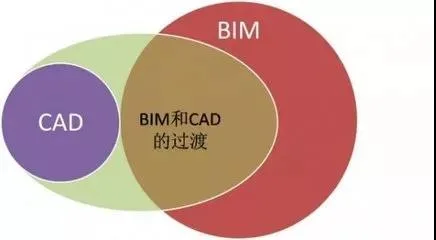
BIM (Building Information Modeling) technology is a data-driven tool used in engineering design and construction management. It transforms design deliverables and enhances efficiency. The development of BIM 3D design marks a major breakthrough, enabling more comprehensive and efficient design and documentation. BIM is characterized by five key features: visualization, coordination, optimization, simulation, and graphing. By creating building models, BIM reflects the true information buildings embody.
Currently, numerous BIM software options exist. The primary modeling tools include: (1) Autodesk Revit, widely used for civil building design; (2) Bentley, commonly applied in factory and infrastructure projects; (3) Digital Project or CATIA, selected for highly complex projects with substantial budgets; and (4) Autodesk Revit, specifically for building plumbing and drainage design.

Application of BIM in Water Supply, Drainage, and Fire Protection Engineering
1. Visual Design
The greatest advantage of BIM’s 3D visualization in designing water supply, drainage, and fire protection systems is its ability to present designs from multiple angles. Traditional 2D drawings require breaking down a building into plans, elevations, and sections, resulting in repetitive information and inefficiency. Comparing design schemes and checking for pipeline conflicts becomes complex and abstract.
BIM’s 3D visualization allows designers to move beyond flat floor plans and sectional views. They can observe, create, and modify models from any viewpoint, making the design process clearer and more intuitive. This reduces information loss during communication and ensures data accuracy. Since equipment design depends heavily on architectural and structural changes, BIM simplifies modifications and enhances operability.
Many large-scale projects in China have adopted BIM technology, including the 2008 Beijing Olympic Village Space Planning and Material Management Information System, the South-to-North Water Diversion Project, Hong Kong’s metro system, and the Shanghai Disneyland Fantasy Fairy Tale Castle.
Shanghai Disneyland’s Fantasy Fairy Tale Castle (Figure 1) is an iconic structure located centrally within the park. Despite its modest size, its mechanical and electrical systems are highly complex. Traditional 2D methods cannot accommodate the additional systems, such as water feature pipelines, compressed air for HVAC, and power distribution bridges for entertainment equipment. Hence, BIM technology based on the Revit platform is being utilized to streamline drawing, pipeline integration, clash detection, and construction guidance. BIM reduces engineering and construction costs, supports operation management, and helps maintain the park’s unique charm.
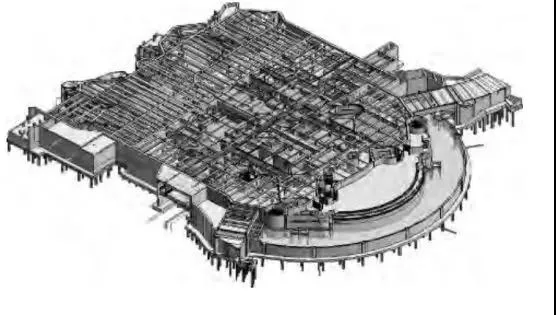
Figure 1: Basement model of the Fantasy Fairy Tale Castle
2. Parametric Design
In BIM, all equipment components and fittings can be precisely designed. Designers determine equipment layout, pipeline direction, diameter, materials, and connection methods. Parameterization enhances drawing efficiency by linking elements such as detailed tables, 3D views, and 2D views within the building model. When parameters change, BIM automatically updates all related drawings and views, ensuring consistency.
Traditionally, material lists for water supply and drainage projects are manually measured from drawings, which is inefficient and error-prone. Modifications require tedious recounting. BIM, acting as a database, enables instant, accurate material takeoffs for budgeting and project management.
Parametric design involves project-specific parameters and shared parameters. These include internal mechanical and electrical parameters, equipment family attributes for water supply and drainage, project parameters for standard drawing annotations, and shared parameters for consistent annotation across disciplines. Shared parameters are set once, providing permanent solutions. This coordination is managed by responsible specialists to ensure uniformity.
Building parameterization offers an open graphical system fostering design creativity. Complex equipment and pipeline systems can be modeled without programming knowledge. For example, a commercial logistics project in Chongqing uses BIM and parametric design to verify construction drawings. Figure 2 illustrates the spatial structure and geometric details of water supply, drainage, and fire protection systems.
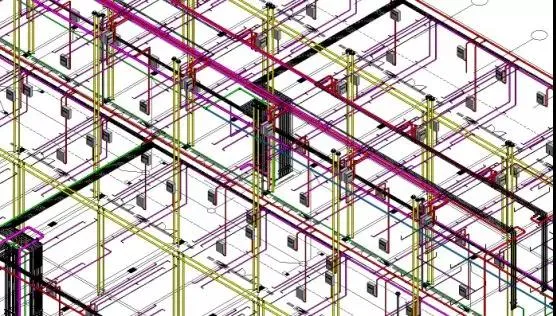
Figure 2: BIM model of water supply, drainage, and fire protection system in a commercial complex
3. Collaborative Design
Collaborative design involves coordinated efforts across various disciplines to complete a project. Architectural, structural, plumbing, HVAC, and electrical data are stored on a shared platform accessible to all team members from the outset. This fosters resource sharing and improves coordination throughout the design process.
On traditional CAD platforms, integrating data from different disciplines—especially for water supply and drainage, which rely heavily on structural data—is difficult and inefficient. This hampers collaboration, reduces efficiency, and adds unnecessary workload. BIM centralizes all data within a building information model, allowing any discipline to make changes and notify others immediately. For instance, electrical engineers can access updated specifications of water pumps from the plumbing team, and updates propagate automatically across disciplines. This integrated approach simplifies workflows and enhances teamwork by providing a 3D information-sharing platform.
Traditional design methods make it hard for non-experts to fully grasp design concepts, leading to information gaps. BIM’s 3D visualizations are intuitive and easy to understand, linking fragmented traditional results and improving collaboration and accuracy among diverse project participants.
4. Pipeline Integration
In 2D CAD drafting, different disciplines create independent drawings without sufficient communication, causing pipeline clashes and beam penetrations during construction. Resolving these issues is time-consuming, compromises quality, and leads to costly rework and delays. The larger and more complex the project, the higher the risk of conflicts.
BIM’s 3D pipeline models clearly show spatial arrangements and net clearance heights after pipeline synthesis. Designers can detect clashes during design and use software tools for later-stage conflict detection. Issues are promptly communicated to relevant designers for correction. This comprehensive pipeline coordination greatly facilitates construction and reduces errors common in 2D methods.
BIM not only delivers efficient tools for construction firms but also introduces a new construction concept. It provides precise component details and installation coordinates, supporting construction guidance, inspections, and cost reduction. Figures 3 and 4 compare collision detection results from a plastic factory model, demonstrating BIM’s intelligent clash detection capabilities that simplify revisions and improve construction quality.
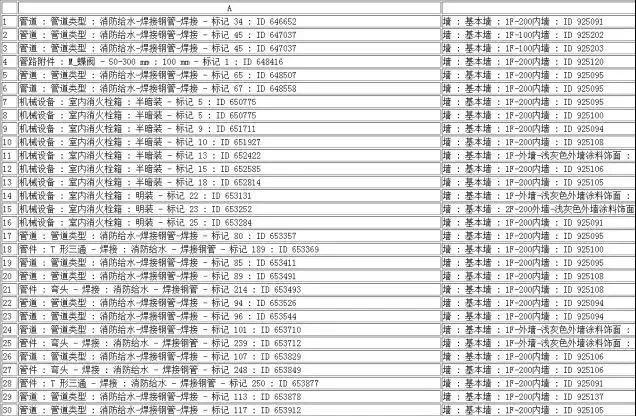
Figure 3: Conflict report and detection details
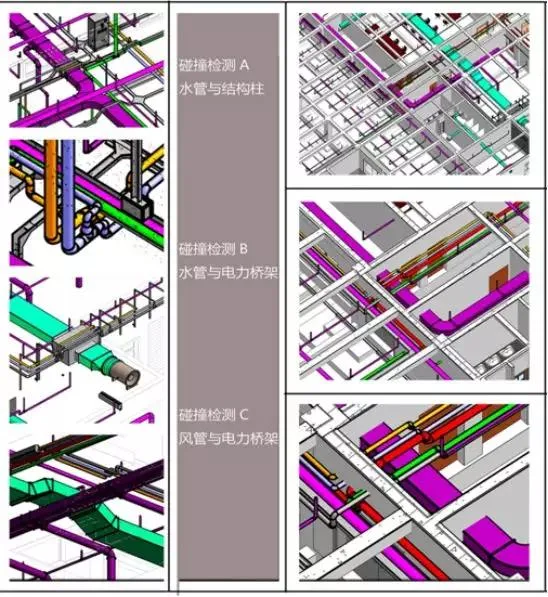
Figure 4: Comprehensive pipeline collision diagram
Challenges and Solutions in BIM Implementation
BIM plays an increasingly vital role in engineering design, yet challenges remain in water supply, drainage, and fire protection design:
1) Currently, there is no unified BIM design standard for water supply and drainage, causing significant variation among designers and negatively impacting the industry. Governments and industry bodies should promote BIM adoption, actively develop standards, and improve construction regulations.
2) Revit relies on “families” and parameter settings for drawing. However, many water supply and drainage components are not yet included in BIM family libraries, especially those meeting Chinese architectural standards. Engineers often resort to foreign manufacturers’ families found on forums and websites to meet requirements.
3) Revit’s 2D capabilities are limited, with low image output resolution and weak drawing production. Currently, BIM covers only about 30% of water supply and drainage design, limiting its ability to clearly convey design intent or guide construction. This is challenging for construction teams less familiar with computers. Enhancing technology and increasing BIM’s drawing coverage is necessary.
4) Before pipeline and system calculations, logical and physical connections between pipelines, instruments, and equipment must be established. Improper connections prevent system calculations and complicate accounting. Designers must exercise caution and ensure completeness at every step.














Must log in before commenting!
Sign Up