
BIM technology should be integrated into various aspects of steel structural component processing, including technical process management, material management, production management, quality control, document management, cost management, and finished product management.
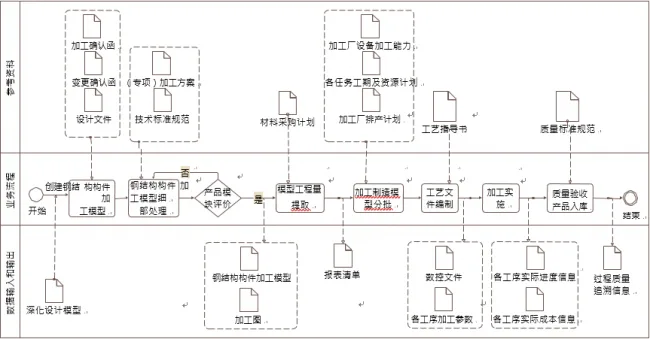
In applying BIM to the processing of steel structure components, models can be created based on detailed design models, processing confirmation letters, change confirmation letters, and design documents. These models can be refined according to specific processing plans and technical standards. Quantities can be extracted from the models to support material procurement plans. Batch production of prefabricated processing models can be scheduled according to factory equipment capabilities, production timelines, and resource plans. Process documentation can be generated from instructions and other relevant materials. During production and quality acceptance stages, progress tracking, cost data, and quality traceability information are collected and maintained, as illustrated in the image below.
When design changes occur, the processing model should be promptly updated to reflect the revised detailed design drawings or models.
Based on design drawings, change orders, processing drawings, and other documents, relevant information should be extracted from the prefabricated processing models to support layout planning and nesting, which in turn helps form accurate material procurement plans.
If material substitutions are necessary, the steel structure component processing model should clearly indicate the substitute material’s quantity and specifications. This includes details about raw materials, quality inspection results, logistics, usage, and any design changes.
All information related to the product processing workflow should be linked or attached to the steel structure component processing model to enable full traceability throughout the manufacturing process.













Must log in before commenting!
Sign Up