
This article explores the application of Building Information Modeling (BIM) technology in complex construction projects characterized by multiple specialties, intricate shapes, and high-quality requirements. It offers a comprehensive overview of BIM research and its practical use throughout the project lifecycle—from design through construction to completion—including BIM-assisted technology, design management, and construction management techniques.
【Project Overview】
The Kunshan Wanda Plaza project is situated at the intersection of Qingyang Road and Zhonghuan (339 Provincial Road), conveniently connected to the Zhonghuan Expressway. It covers a total site area of 93,800 square meters, with a total building area of 443,200 square meters—328,200 square meters above ground and 115,000 square meters underground. The project is divided into three construction zones: A, B, and C. Construction began on July 2, 2014, with a planned completion date of June 22, 2017, spanning a total of 1,087 days.
1. Application of BIM Technology
1.1 Basic Applications
(1) Collision Detection to Minimize Rework.
One of BIM’s most intuitive features is its three-dimensional visualization (see Figure 1). This 3D technology allows for early detection of clashes, reducing errors and rework, optimizing clearances, and improving pipeline layouts. After collision optimization of the 3D pipeline model, construction disclosure and simulation enhance construction quality and improve communication between contractors and the owner.
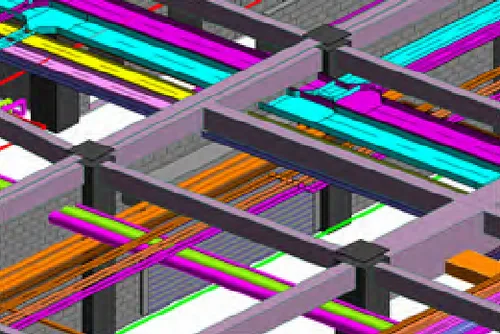
Figure 1: Three-dimensional Visualization
Comprehensive pipeline coordination is at the core of collision detection. BIM technology enables intuitive pipeline adjustments, meeting the owner’s spatial requirements while ensuring construction quality and minimizing coordination errors between mechanical and electrical systems. This data-driven modeling optimizes building equipment and plumbing (MEP) engineering. During detailed design, automatic collision resolution and rational pipeline arrangement are performed (see Figure 2).
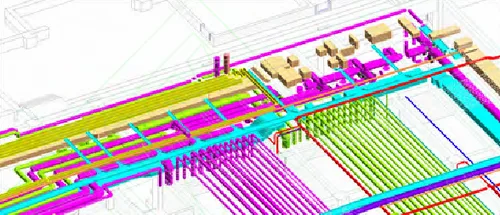
Figure 2: Comprehensive Pipeline Coordination
(2) Virtual Construction for Effective Collaboration.
By integrating 3D visualization with the time dimension, BIM enables virtual construction. Designers, managers, and construction personnel can conveniently compare planned schedules with actual progress anytime, anywhere, facilitating real-time monitoring and issue resolution. Combining BIM with construction scheduling, simulations, and on-site video monitoring significantly reduces quality and safety risks, minimizing rework and corrections (see Figure 3).
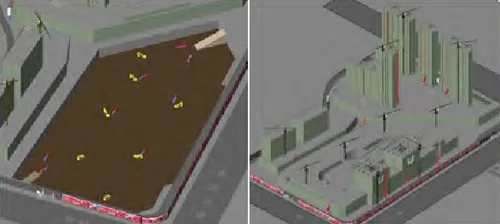
Figure 3: Virtual Construction
(3) 3D Rendering and Promotional Displays.
3D renderings and animations deliver a realistic and visually impactful experience. Once the BIM model is complete, it forms the foundation for refined 3D rendering development, boosting accuracy and efficiency. This provides intuitive promotional materials for owners and enhances bidding success (see Figure 4).
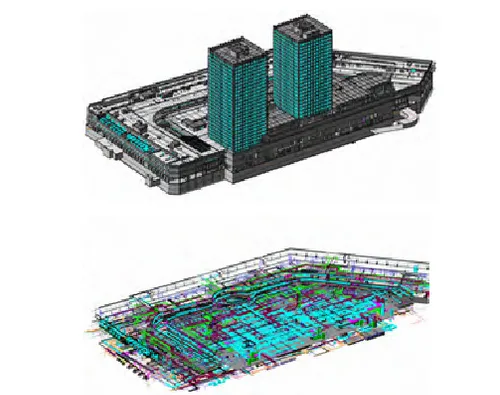
Figure 4: BIM 3D Model
(4) Operation and Maintenance Management.
During operation, the Wanda Huiyun system supports efficient commercial management:
① All weak current systems are centralized on one console for easy monitoring, allowing operation and management staff to remotely control various mechanical and electrical systems via a central control room;
② Real-time monitoring of key subsystem operational data;
③ Remote multi-location monitoring capabilities via network access.
Security monitoring meets property owner requirements:
① Timely alerts for critical subsystem alarms;
② Long-term records and comparisons of operational data and alarm logs facilitate regular diagnostics of electromechanical systems.
For green operations, the platform offers:
① Unified management of integrated subsystems, enabling automatic energy-saving operations based on preset control logic and corporate standards;
② Long-term operational data recording, editable operation modes, and adjustable equipment parameters;
③ Comprehensive data analysis by technical and senior management staff to identify energy consumption inefficiencies, optimize operating parameters, and enhance energy savings.
1.2 Expanded Applications
(1) Preliminary Planning.
In early construction stages, BIM simulates construction progress by visualizing model volumes and scheduling staged work intuitively on a 3D model. This approach facilitates project planning and construction deployment, improves on-site layout rationality, boosts efficiency, and supports safety and site cleanliness. Temporary on-site structures are arranged according to company CI standards, with visualization and walkthrough features helping finalize layouts more intuitively than traditional 2D plans (see Figure 5).
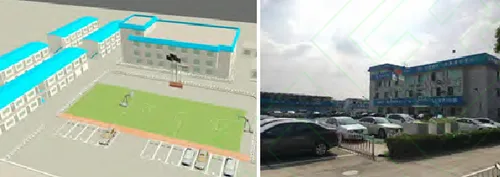
Figure 5: Preliminary Planning vs. Actual Results Using BIM
Site-specific plans include tower cranes, elevators, processing sheds, utilities access, soil excavation and transport, scaffolding, and secondary masonry, all visualized through 3D models.
(2) Detailed Design Development.
Buildings and structures are parameterically modeled with precise accuracy. MEP pipeline models are linked for detailed design and collision detection. Feedback is provided to design institutes to reduce rework (see Figure 6).
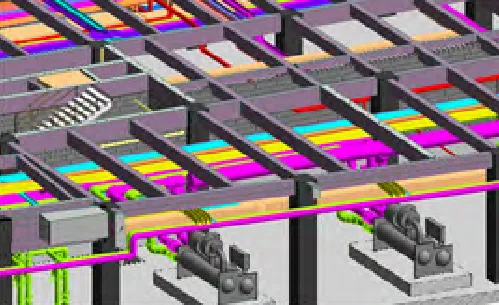
Figure 6: MEP Pipeline Model Integration
Hierarchical partitioning enables efficient and precise quantity takeoffs by floor and component, providing strong data support for cost management. Temporary facilities—such as construction site gates (including access control), signage trusses, model areas, site layouts, and sidewalk brick arrangements—are designed and directly generated from models, ensuring standardized drawings (see Figure 7).
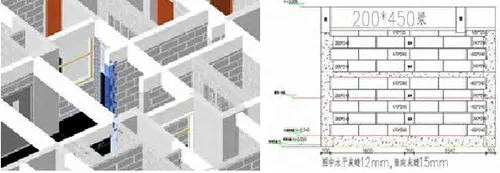
Figure 7: Floor Component Design
Climate-specific measures are developed, such as simulating escape routes and times during heavy rain, identifying optimal paths and marking warnings accordingly.
(3) Curtain Wall Detailing.
Following curtain wall design drawings, 3D modeling is completed through team collaboration and task division. Families for fasteners, panels, and embedded components are refined, producing a complete overall model. Numbering of each panel assists in composite drawings and structural modeling, significantly shortening processing cycles and supporting layout, measurement, and keel positioning (see Figures 8 and 9).
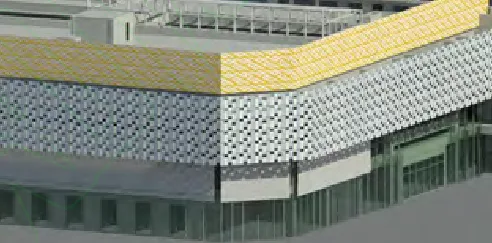
Figure 8: Curtain Wall Detailing I
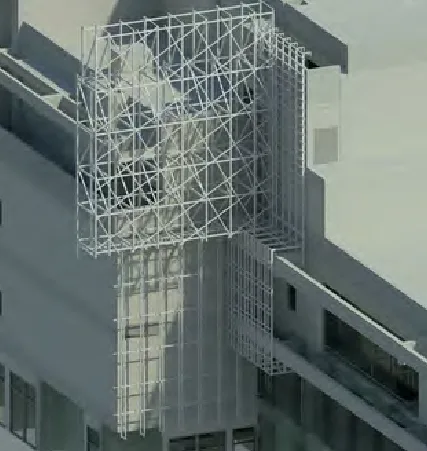
Figure 9: Curtain Wall Detailing II
(4) Skylight Detailing.
A steel structure model for the skylight is created based on the structural model, including family files for prefabricated embedded parts and anchor plates. Beam elevations are controlled spatially, and a 3D model is disclosed (see Figure 10).

Figure 10: Skylight Roof Detailing
(5) Construction Drawing Review.
During BIM deepening, after completing each floor, an executable file of the model is exported. Technical staff and workers can roam the 3D model on mobile devices without installing software, facilitating intuitive access to project information and design intent (see Figure 11).
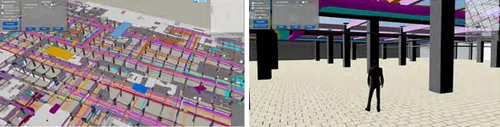
Figure 11: Construction Drawing Review
2. Benefits of BIM Application
Quality Assurance:
By using BIM for comprehensive pipeline planning, reserving openings, and collision detection, pipeline installation rework rates dropped by 95%, and wall opening rates were controlled at 5%. Pre-construction on-site model disclosures allow management to compare on-site conditions via mobile models and promptly address issues.
Management Efficiency:
BIM simulations for bricklaying in secondary masonry walls reduce losses from on-site block processing. Detailed masonry drawings are generated and distributed by floor, controlling mortar joint sizes and layout, promoting green construction.
Economic Gains:
Optimized pipeline layouts saved 1,000 meters of piping material; collision detection and design improvements saved 500 cubic meters of concrete and 50 tons of steel. Simulated CI planning reduced the need for 80 square meters of advertising fabric and 3,000 square meters of paint.
Schedule Advancement:
Pre-modeling optimization enabled main structure completion 15 days ahead of schedule. Masonry and exterior facade work were completed 10 and 5 days early, respectively, through BIM scheduling simulations.
Deepening Design Improvements:
BIM enhances the deepening design of electromechanical pipelines by:
① Resolving pipeline collisions;
② Achieving rational, efficient, and aesthetically pleasing layouts;
③ Reducing costs and increasing efficiency;
④ Raising pipeline installation elevations and increasing corridor clearances;
⑤ Improving design accuracy to 98%.
Simulating construction and installation in 3D provides intuitive pipeline positioning, facilitating routing optimization. This approach shortens detailed design time by 7–10 days compared to traditional methods with the same workload (see Figure 12).
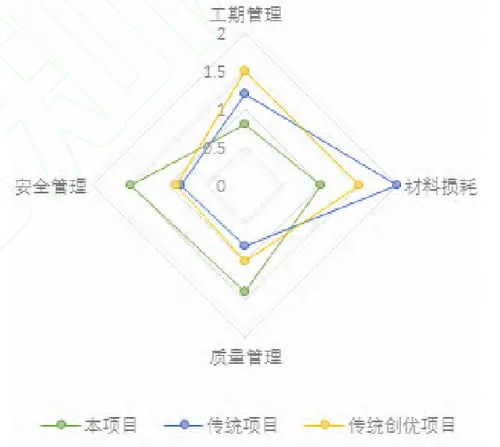
Figure 12: Progress System Comparison
Conclusion
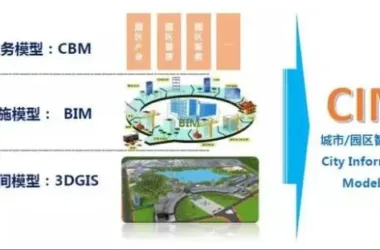
BIM represents a significant innovation in construction project informatization. Its application in construction management enables refined, data-driven oversight. By comparing BIM models with actual projects, accurate engineering data supports improved project information, schedule, safety, and quality management. Establishing a centralized database promotes transparency, data sharing, and intelligent use of engineering information, advancing project performance and collaboration.














Not bad, it’s just a bit expensive