
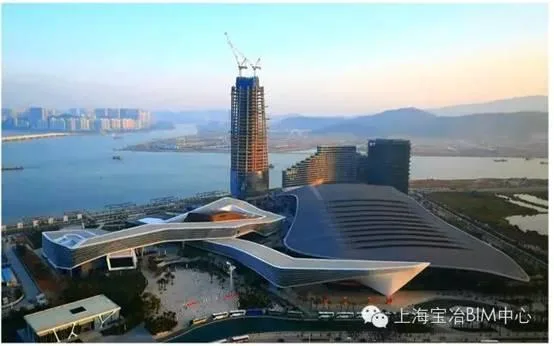
Project Overview
The Zhuhai Cross Gate Central Business District project is located in Xiangzhou District, Zhuhai City, close to the three major ports of Wan Chai, Hengqin, and Gongbei, and separated from Macau by a river to the east. It stands as a landmark and classic example of large-scale, high-end building clusters.
This project represents Baoye Construction’s most concentrated, comprehensive, and iconic high-end commercial cluster. It also showcases Baoye’s capabilities in management, technology, BIM application, and teamwork.
The total construction area spans 660,000 square meters and includes six separate buildings: the International Exhibition Center, International Convention Center, the five-star Sheraton Hotel, an apartment-style hotel, the iconic tower, and commercial facilities (urban ribbon). The iconic tower, named the “Zhuhai Center,” features international standard Grade A office buildings and a platinum five-star St. Regis hotel. At 328.8 meters tall, it is recognized as the tallest building in Zhuhai and Macau.
By leveraging BIM technology, multiple technical challenges encountered during the construction of this super high-rise have been overcome, ensuring smooth project progress.
Application Examples
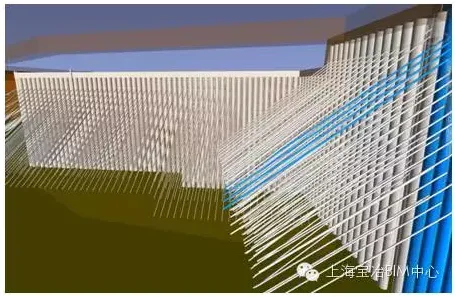
A detailed BIM model was created for the foundation pit support, including crown beams, tension beams, support piles, and anchor cables. During model development, various issues in the drawings were identified and coordinated with stakeholders for early resolution. This enabled the optimization of the foundation pit construction plan, achieving precision, safety, and cost-effectiveness.
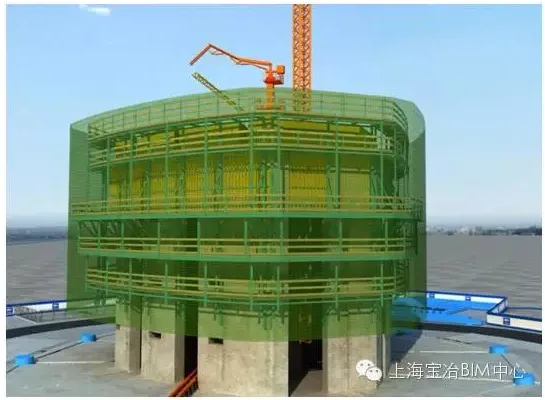
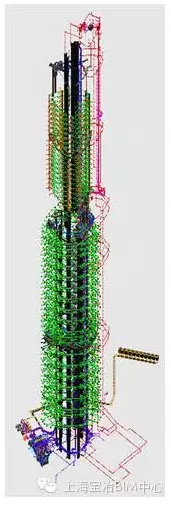
BIM technology was used to build structural models, tower crane models, and climbing formwork system models. Simulations of construction conditions and force analysis helped resolve conflicts between climbing formwork and pre-embedded steel beam plates, tower crane embedded parts, and openings. This ensured climbing formwork stability and safety while optimizing construction schedules by adjusting process timing.
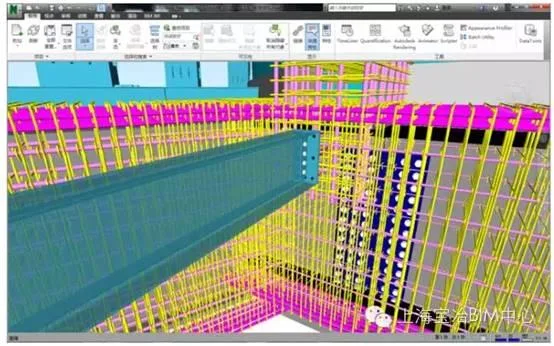
The BIM model facilitated design optimization and installation simulation of reinforced concrete nodes. This ensured smooth binding of frame column steel bars despite dense steel column bolts and maintained shear resistance at the column ends when main reinforcement of frame beams passes through steel columns.
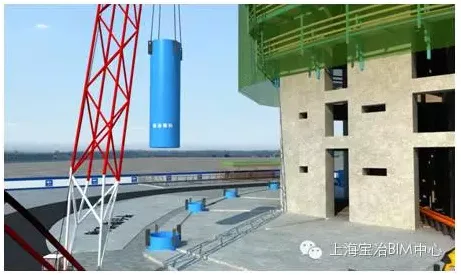
The tower’s steel structure weighs 15,000 tons and includes D1800 steel pipe columns, 600×2400 rectangular columns, conversion trusses, and floor platform steel beams. Using BIM, the steel structure was segmented for design, and component lifting plans were developed and simulated through animations to clearly communicate with the construction team.
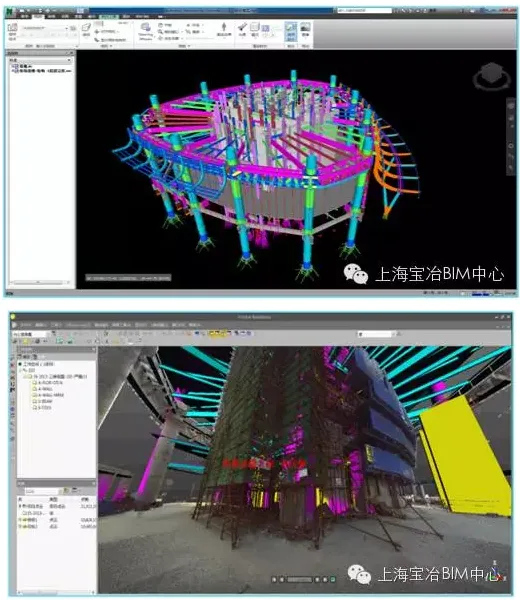
3D scanning of the onsite steel structure created a solid 3D model reflecting actual conditions. By comparing this scanned model with the BIM design model, installation accuracy was reviewed, providing data support for subsequent processes. This improved quality inspection efficiency and accuracy, effectively controlled risks, and ensured project quality and safety.
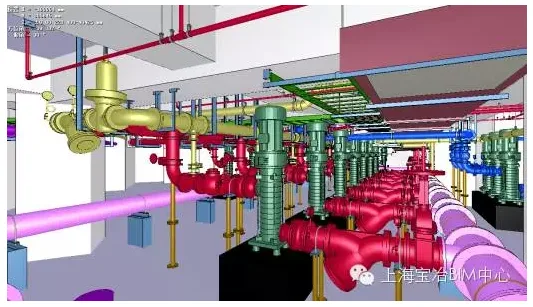
Early in mechanical and electrical construction, relevant data was collected from all project parties to create a BIM model. This helped detect collisions, design flaws, and insufficient ceiling clearance between different specialties. The design was optimized accordingly, and detailed mechanical and electrical construction drawings— including plans, sections, nodes, and support diagrams—were generated.















Must log in before commenting!
Sign Up