
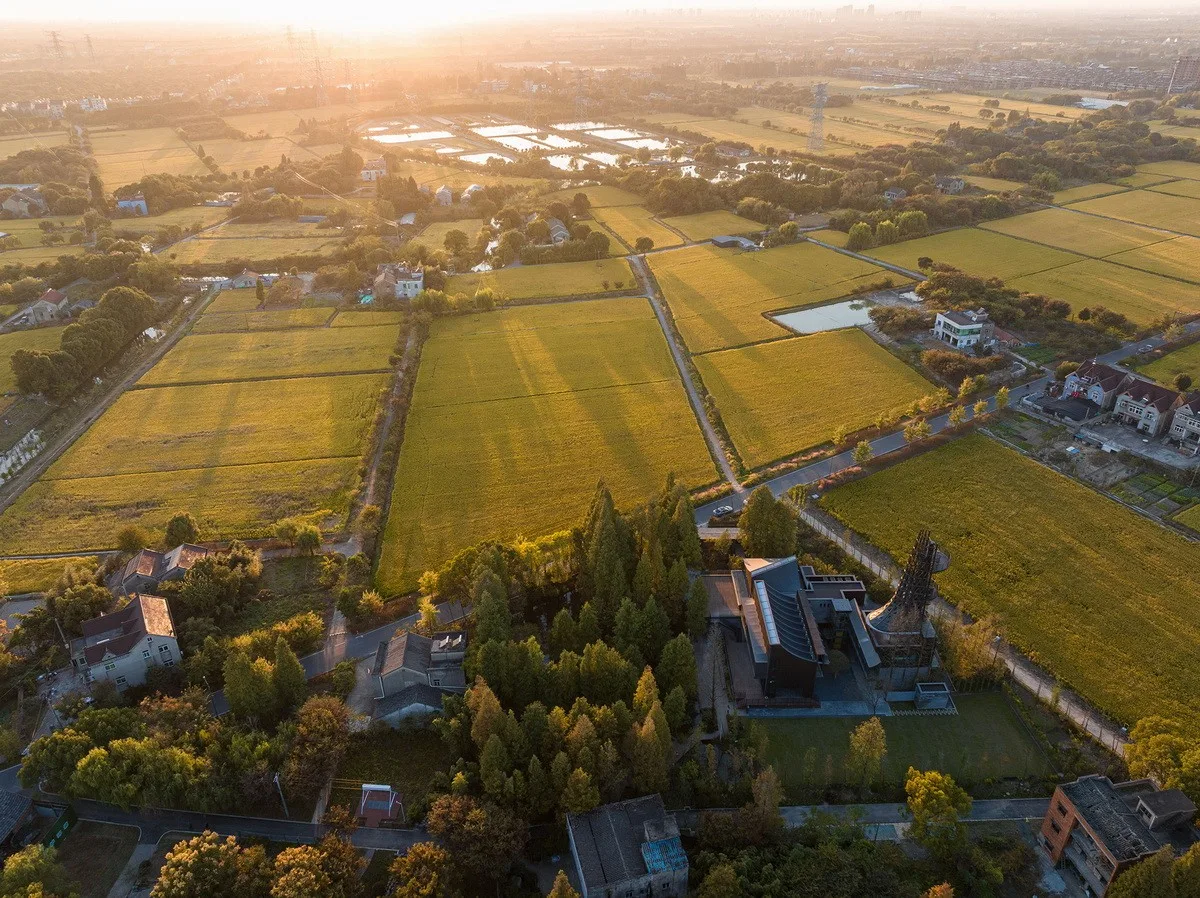
▲ Aerial view of the project © Su Shengliang
This project is situated in Hongqiyang Village, Tongxiang City, Zhejiang Province. The site was originally home to local residents. To the north lies an expansive rice field, while to the south, a pond houses a thriving water fir forest. The location offers stunning natural views. Each autumn, the water fir leaves turn vibrant red, drawing many visitors to admire the scenery. Although the architect arrived after the leaves had fallen, he was still captivated by the site’s unique beauty.
The architect’s initial impression emphasized fully embracing the existing ecological environment. As a result, integrating the building seamlessly with its surroundings became a central focus of the design process.
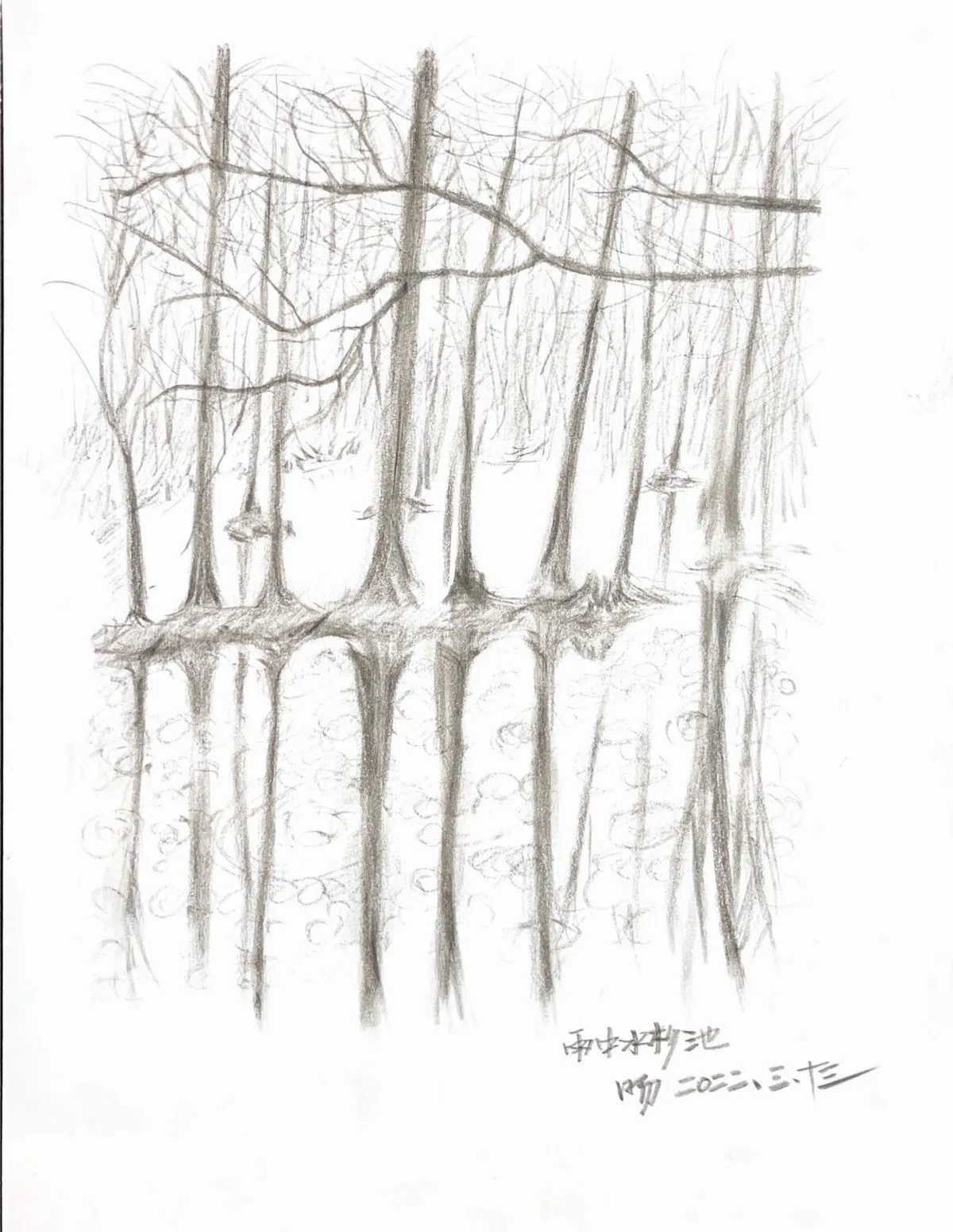
▲ Impressions of the venue © y.ad studio
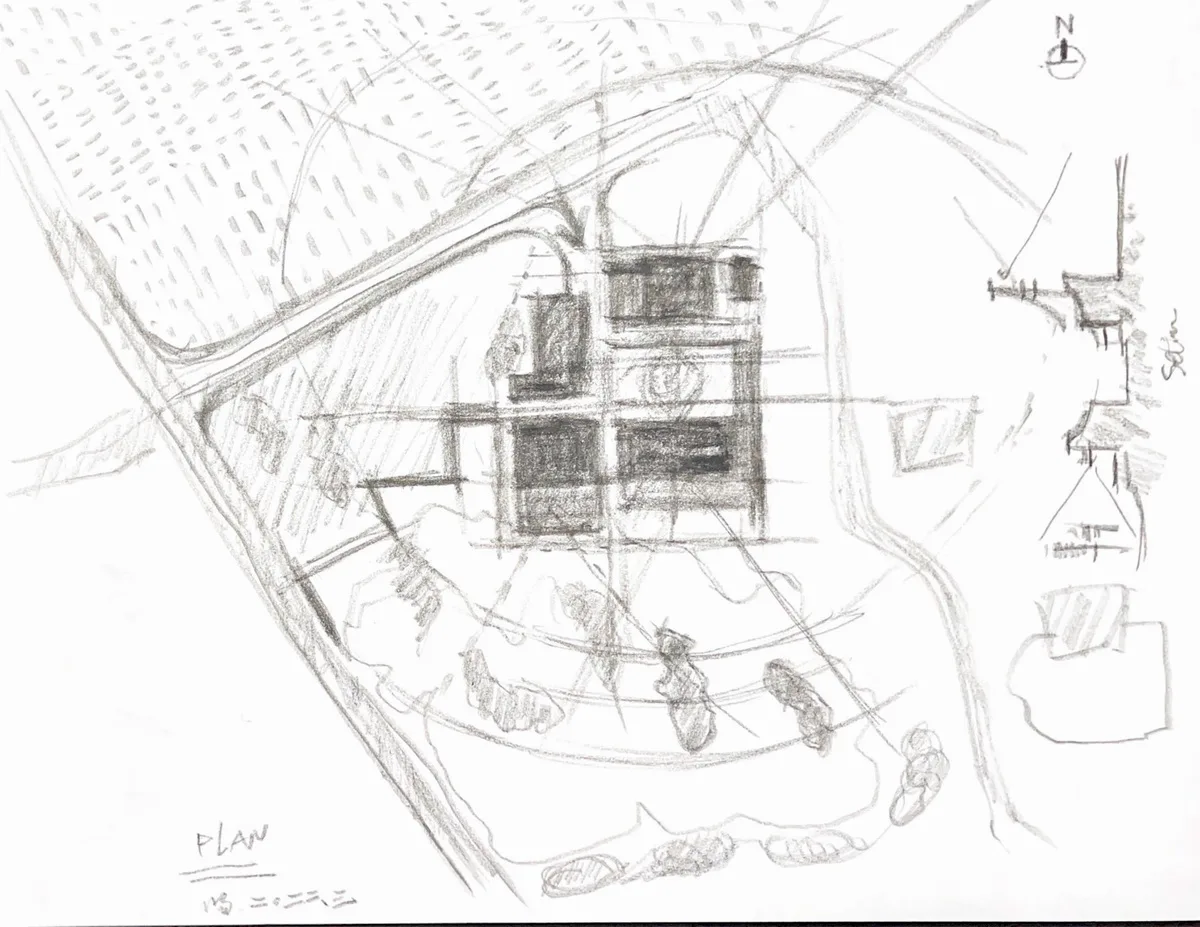
▲ Concept sketch © y.ad studio
The project primarily functions as a restaurant, combining the roles of a public post station and an observation tower. After establishing the main entrance and access routes, the architect organized the functions into four separate blocks that enclose an inward-facing courtyard. The blocks are interconnected horizontally and vertically through corridors and staircases.
The dining area is strategically placed adjacent to the pond and water fir forest. Certain sections are elevated and layered to offer enhanced views of the landscape and create intimate waterfront spaces. The outdoor area has been thoughtfully enclosed with a porch, winding pathways, a scenic boardwalk, and open lawns for activities.
By carefully planning the roads and visitor routes, the design fosters a close interaction between the site, buildings, visitors, pond, and water fir forest. The views from the building, the carefully designed play of light and shadow, and the curated walking experience all serve to deepen the connection between architecture and nature, inviting visitors to engage with the surrounding environment.
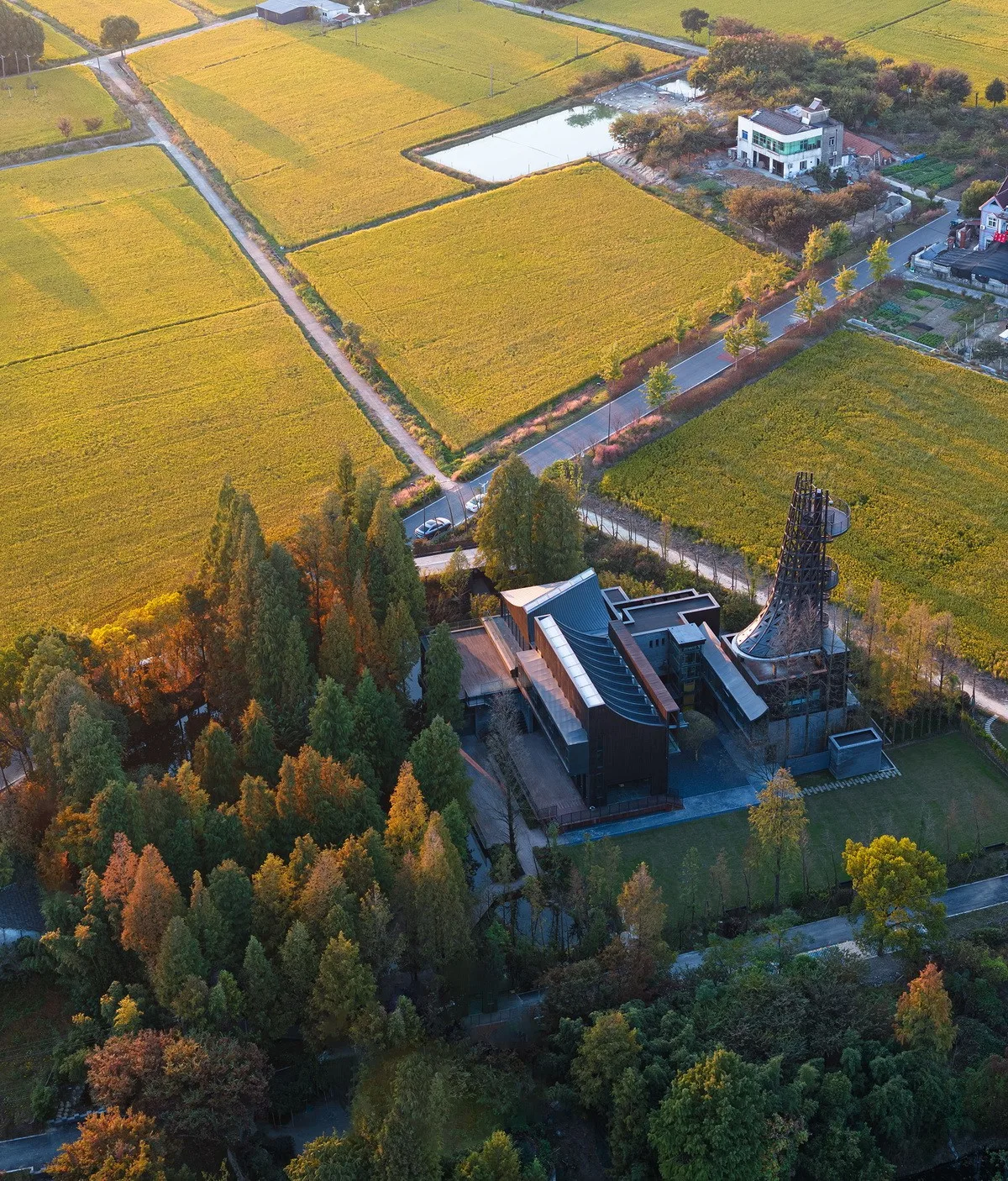
▲ Aerial view of buildings © Su Shengliang
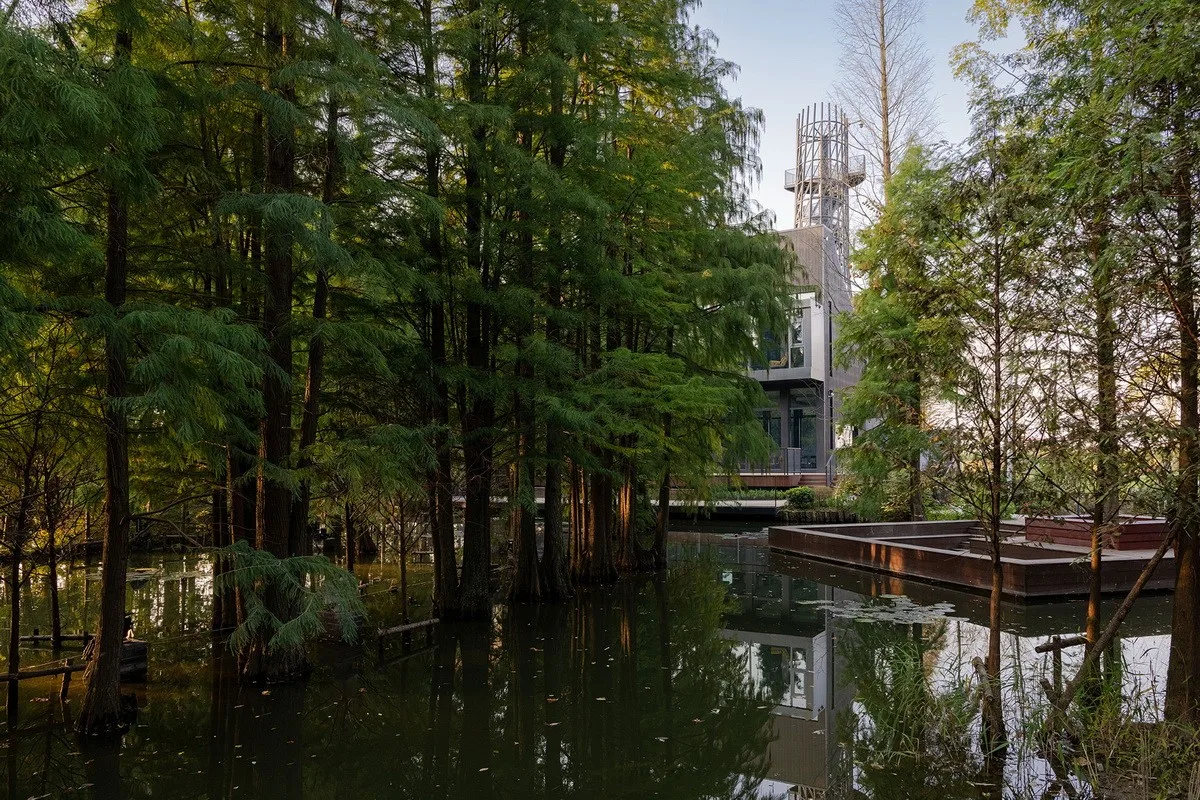
▲ Restaurant nestled within the cypress forest © Su Shengliang
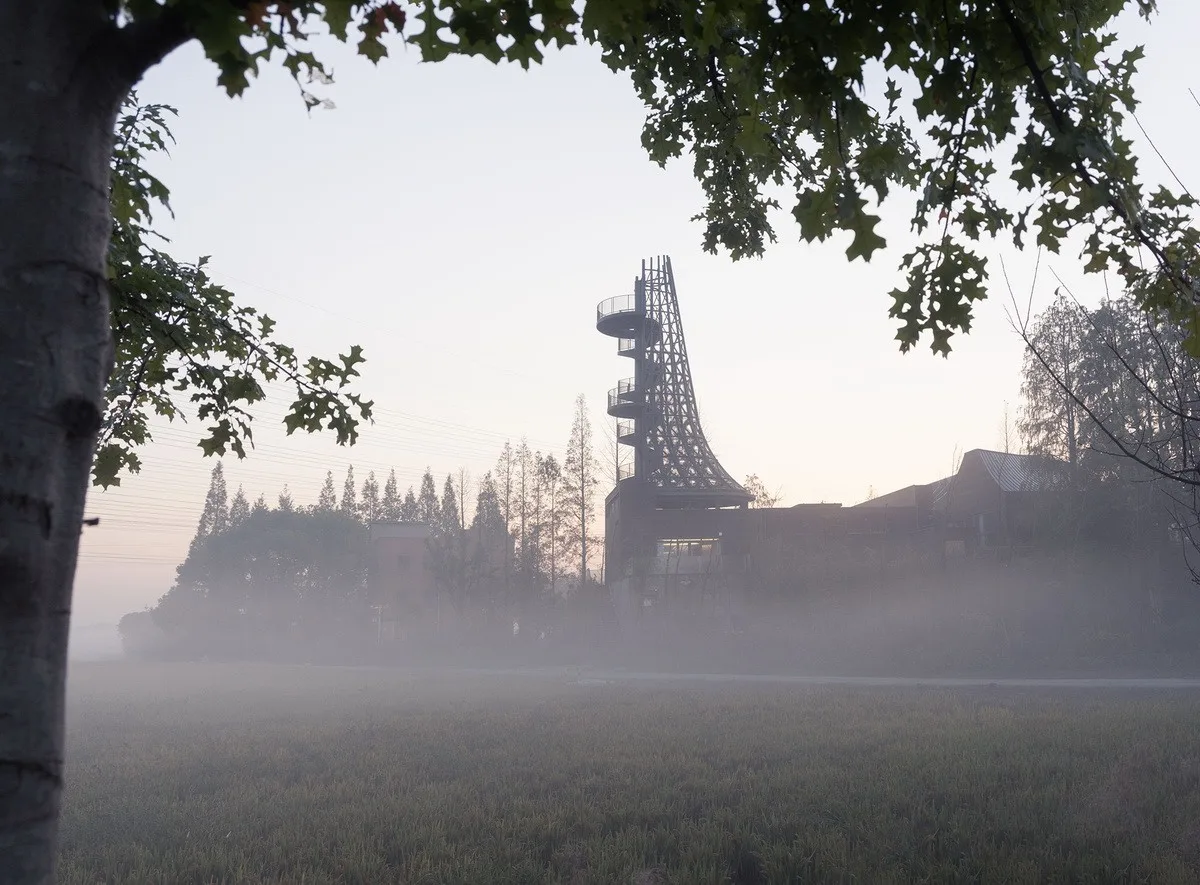
▲ Morning mist enveloping the restaurant © Su Shengliang
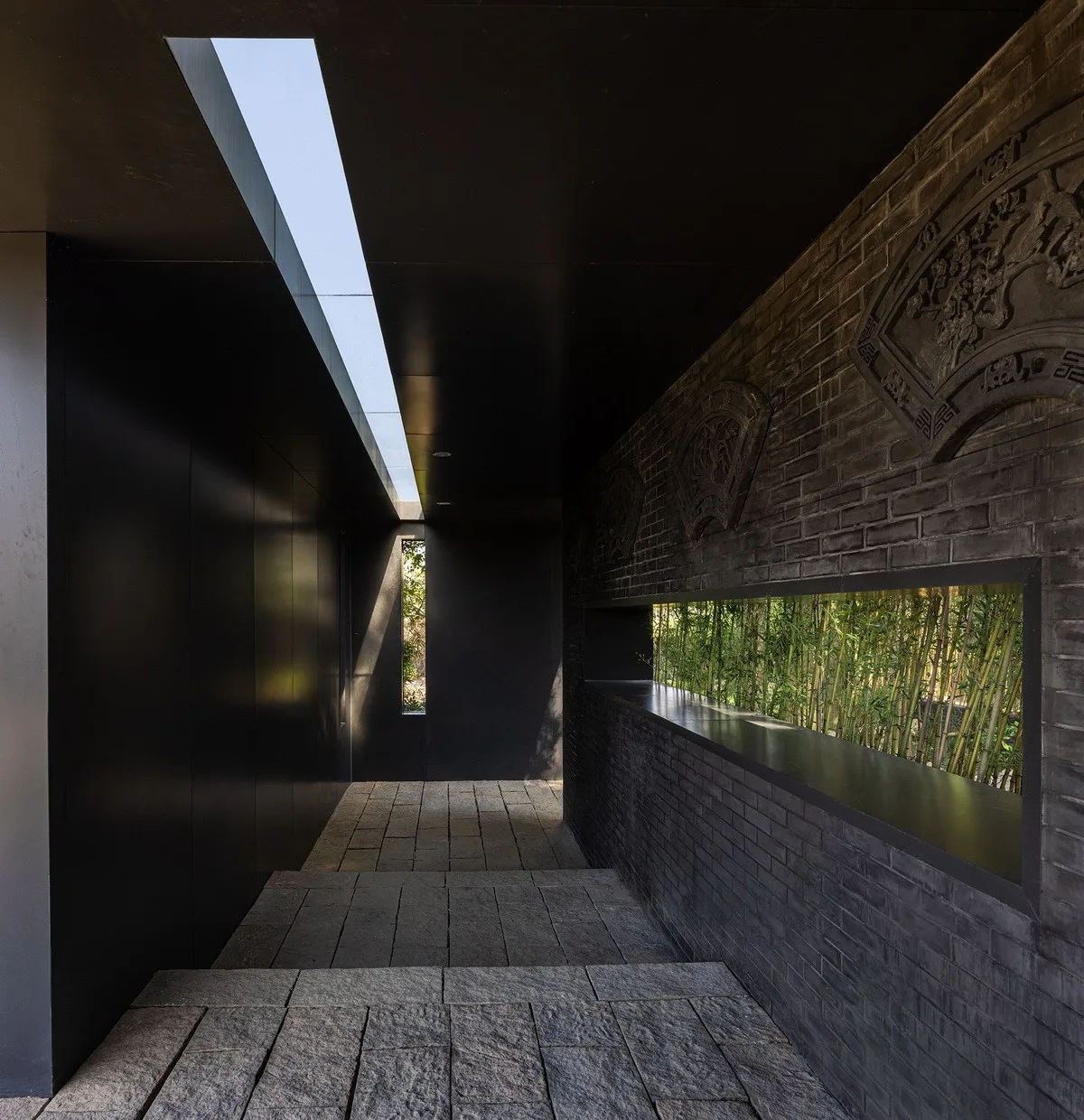
▲ Entrance porch descending along the stairs © Su Shengliang
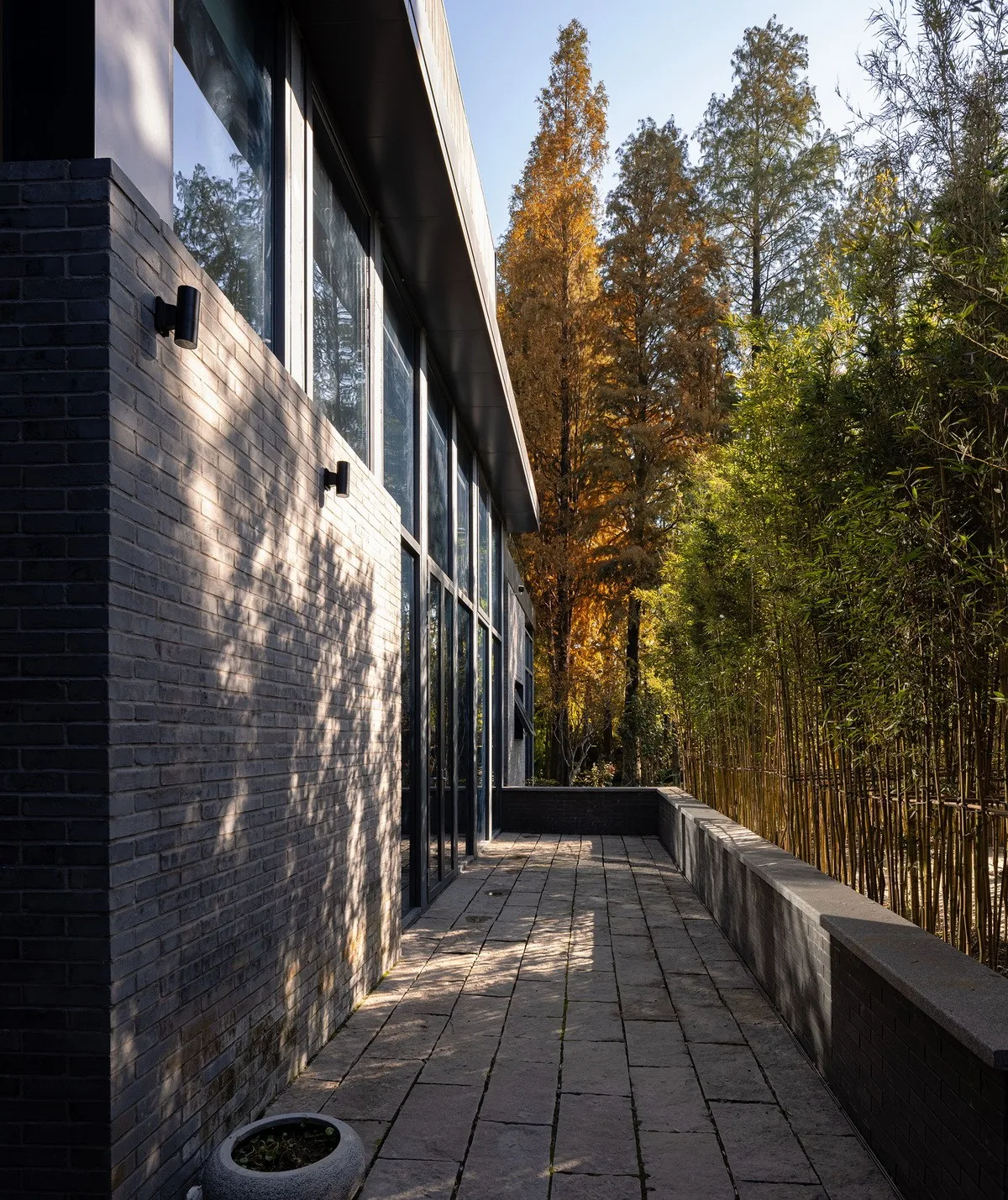
▲ Restaurant entrance seamlessly integrated with the environment © Su Shengliang
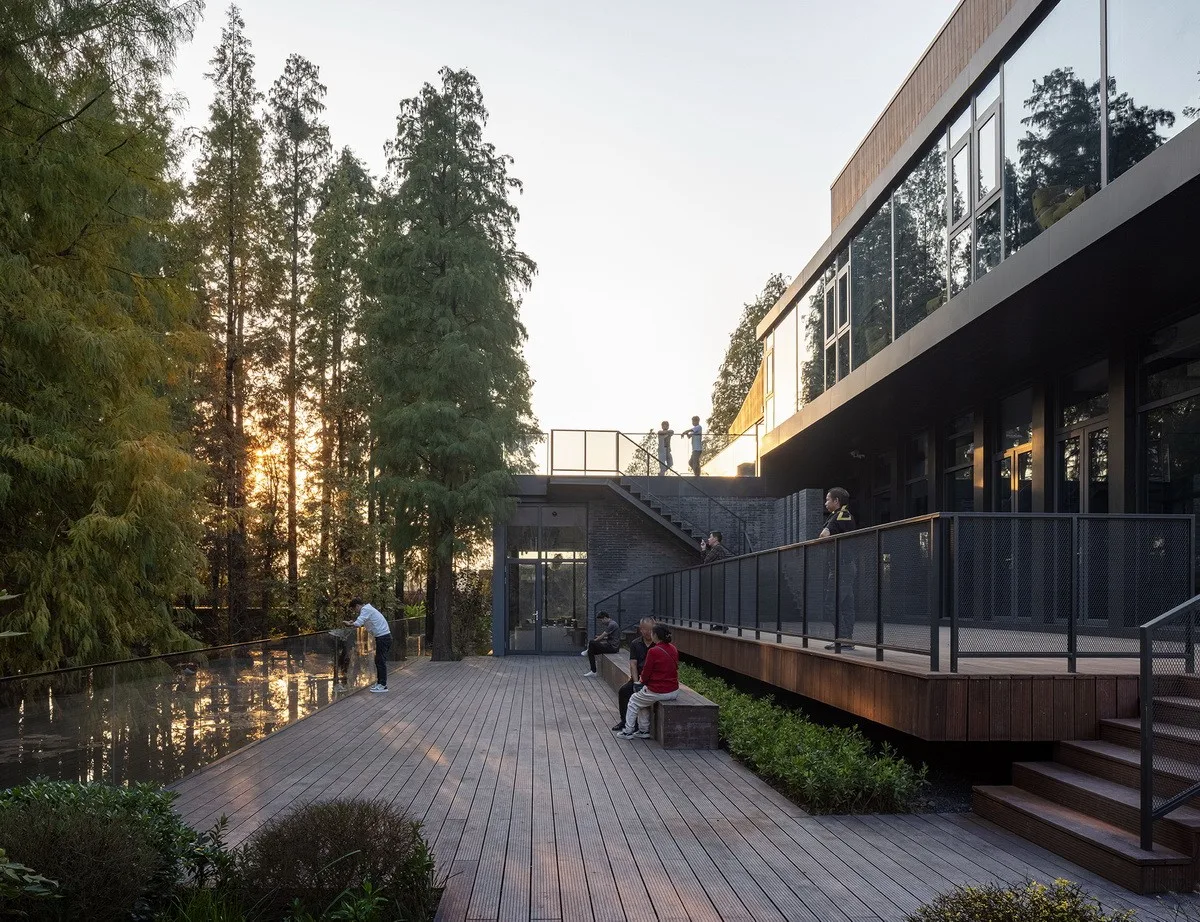
▲ Layered outdoor waterfront and viewing platforms © Su Shengliang
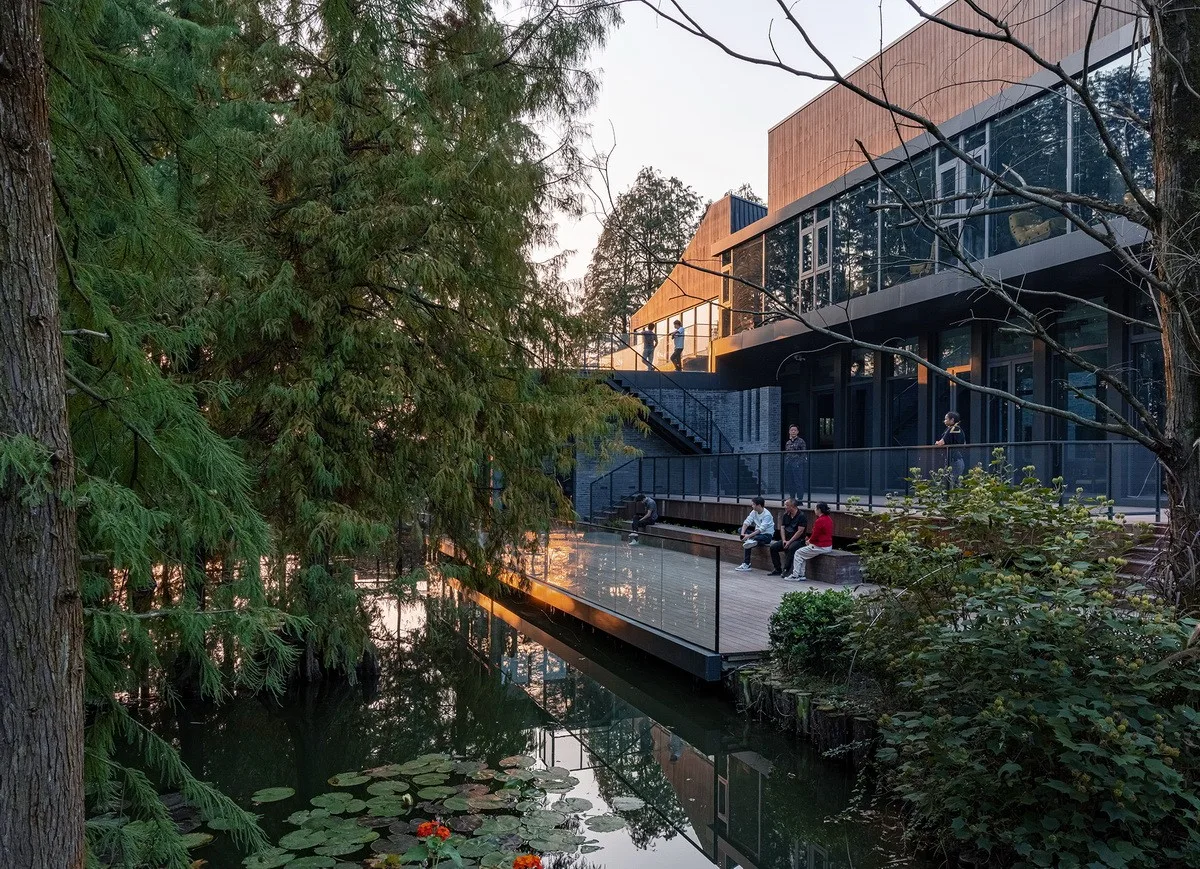
▲ Hydrophilic platform interwoven with ponds and Metasequoia forests © Su Shengliang
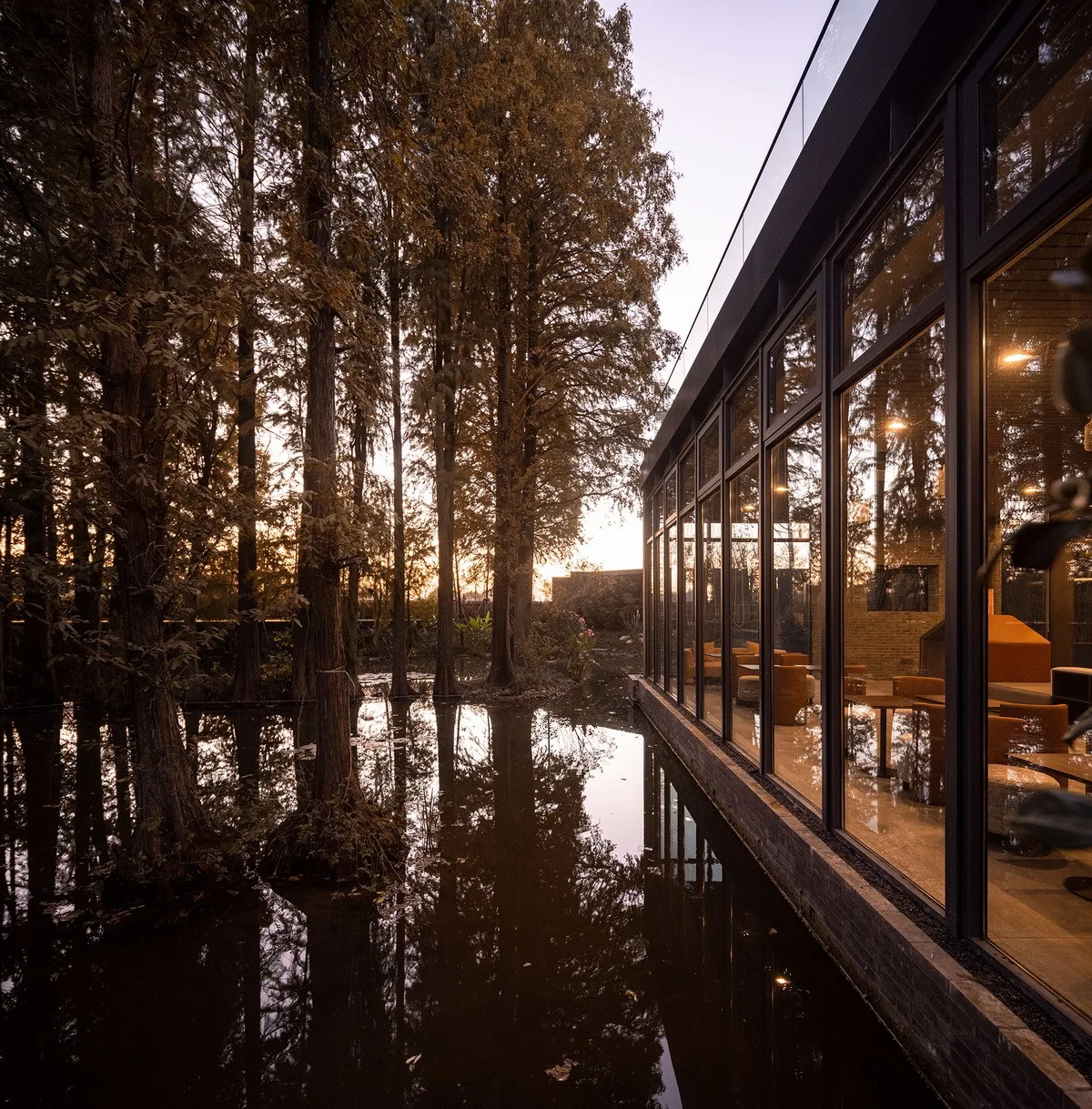
▲ Architecture harmoniously blended with the environment © Su Shengliang
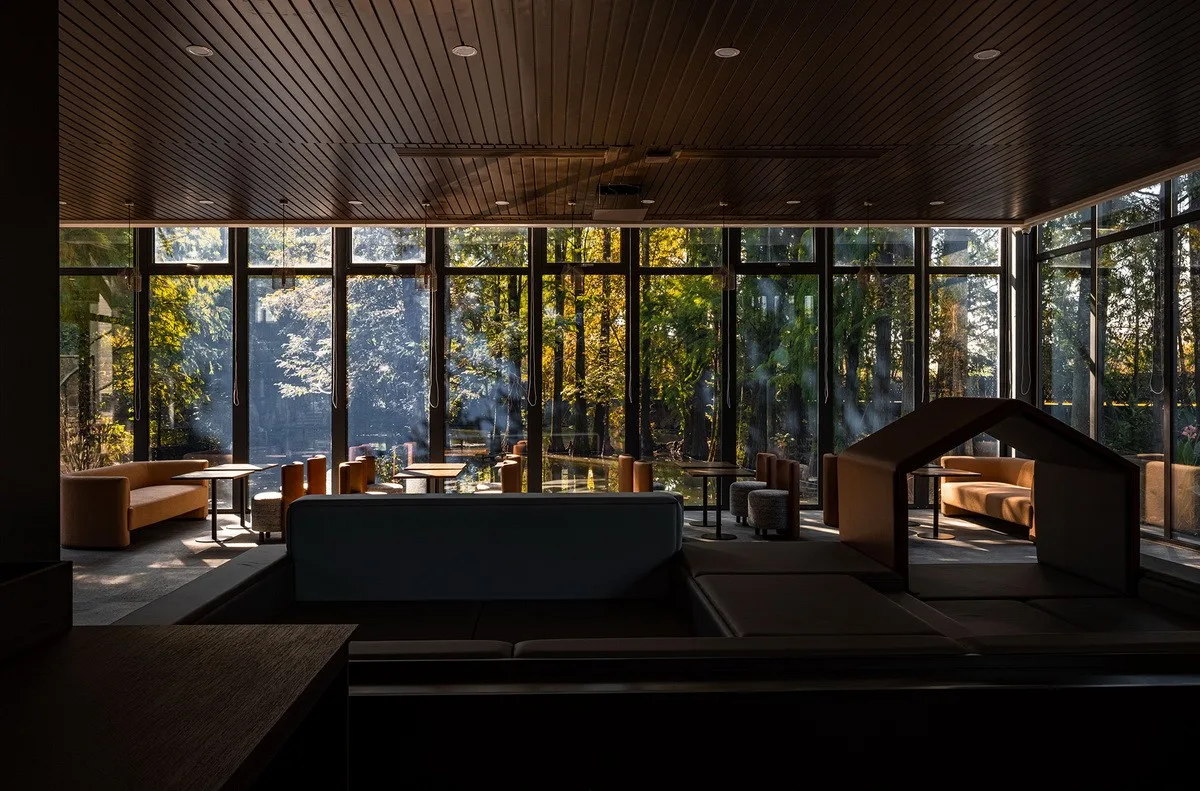
▲ The view from the restaurant establishes a strong connection between the building and nature © Su Shengliang
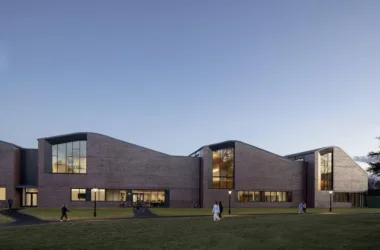
To adapt to the Jiangnan architectural style and the region’s rainy climate, the architect incorporated sloping roofs. The observation tower is designed to resemble a tree, blending into the towering cedar canopy and mirroring the roof’s curved lines.
The roof departs from the conventional single-slope design by featuring twisting and curved hyperbolic surfaces. The curved roof ridge allows natural light to penetrate, casting dynamic patterns of light and shadow that change with the weather and sunlight, enriching the spatial atmosphere inside.
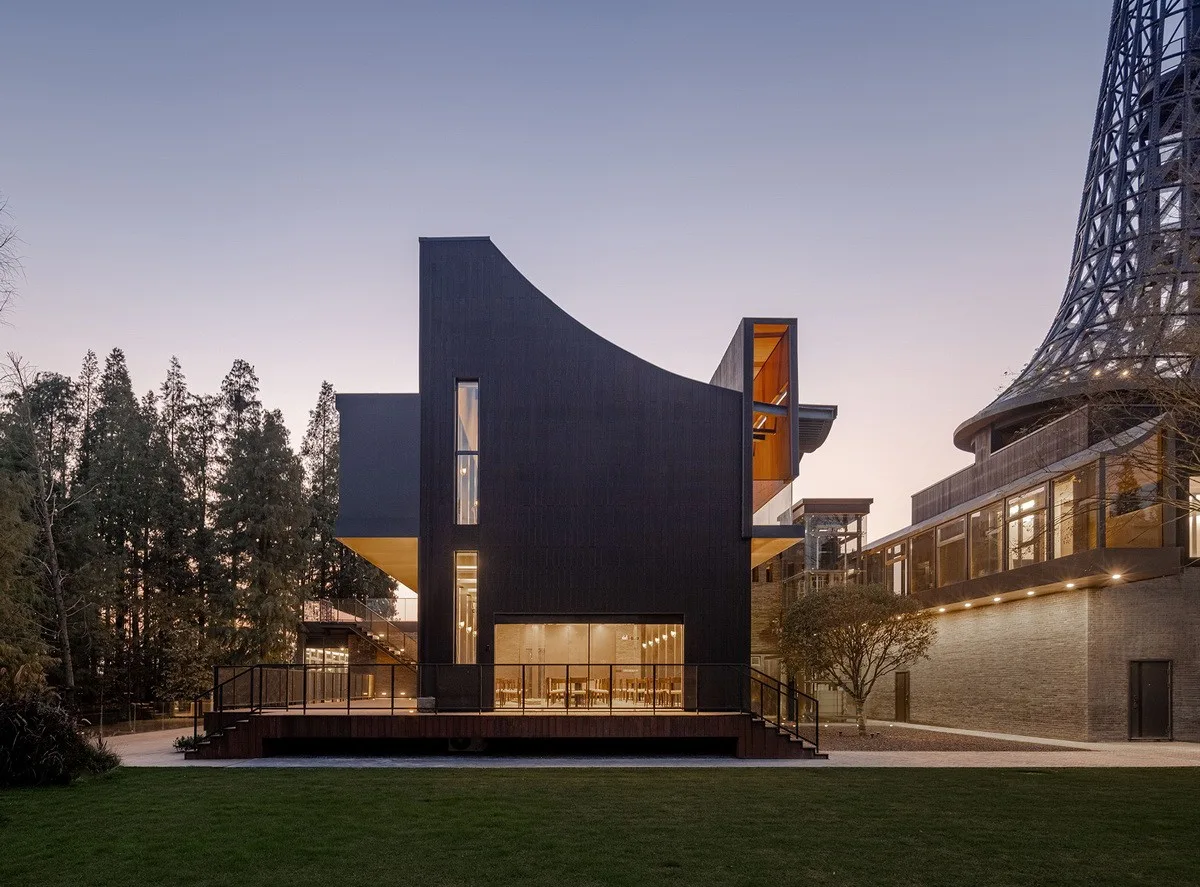
▲ East facade of the restaurant echoing the roof and observation tower shapes © Su Shengliang
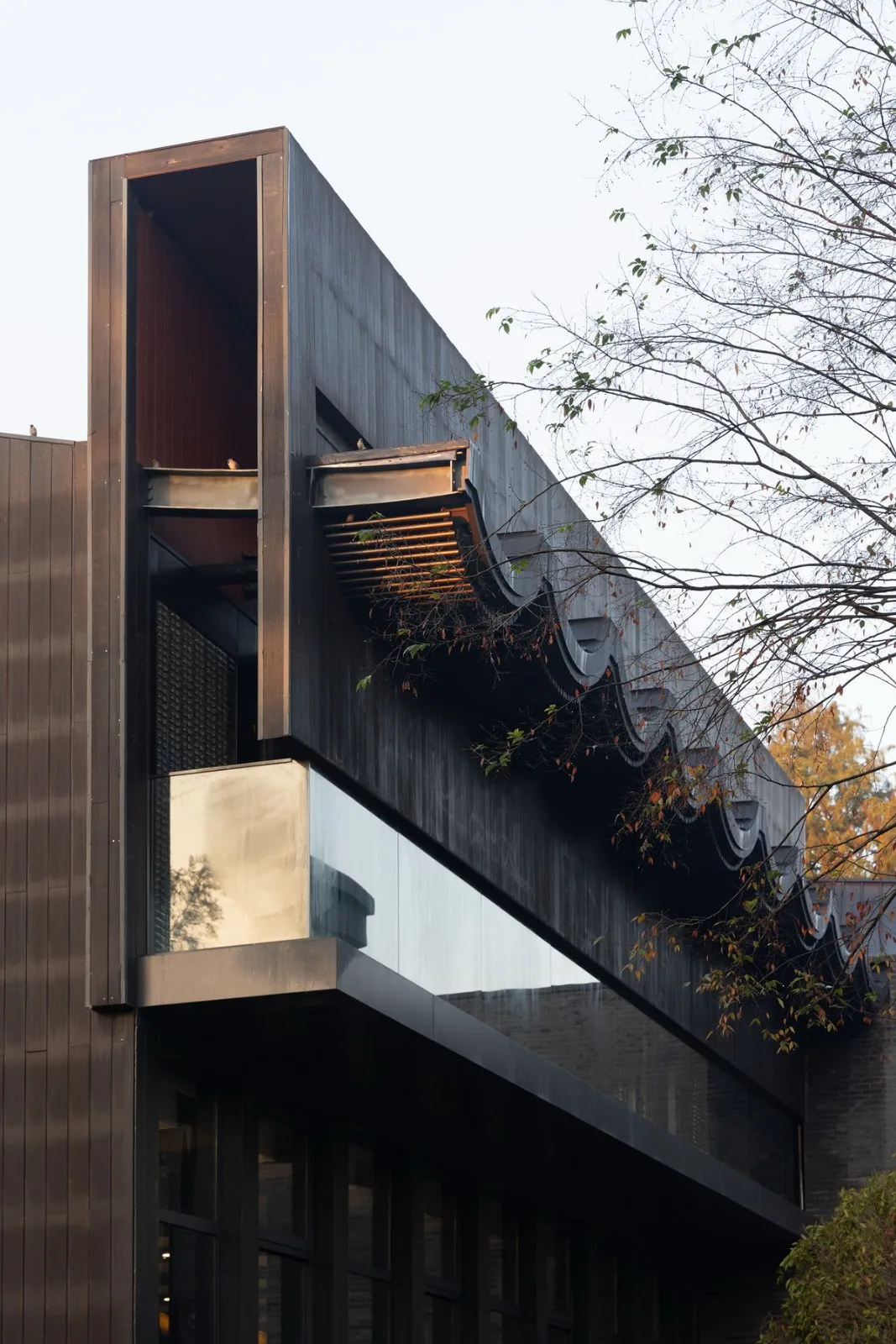
▲ Partial view of the roof and corridor © Su Shengliang
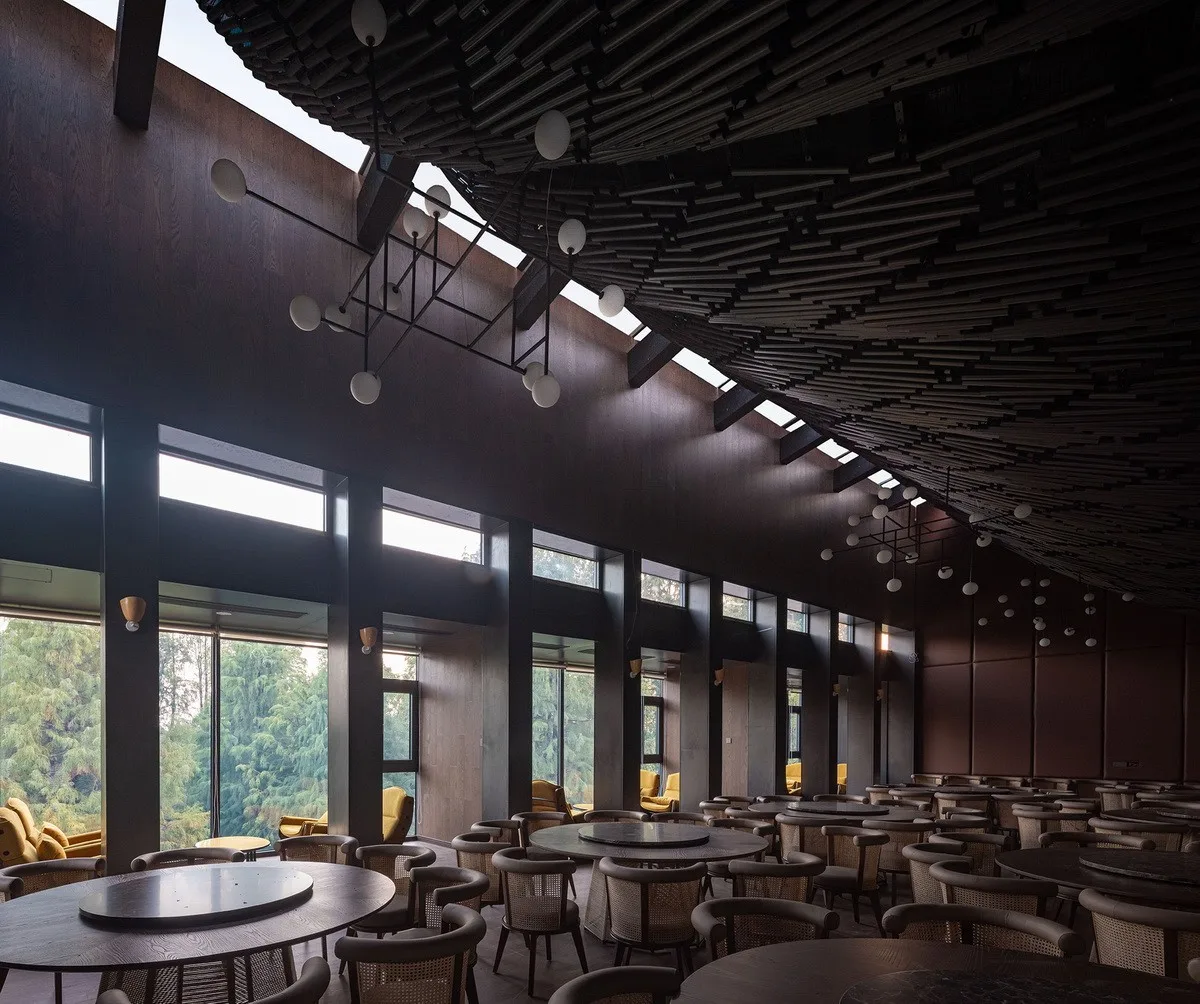
▲ Roof light and shadow introduction © Su Shengliang
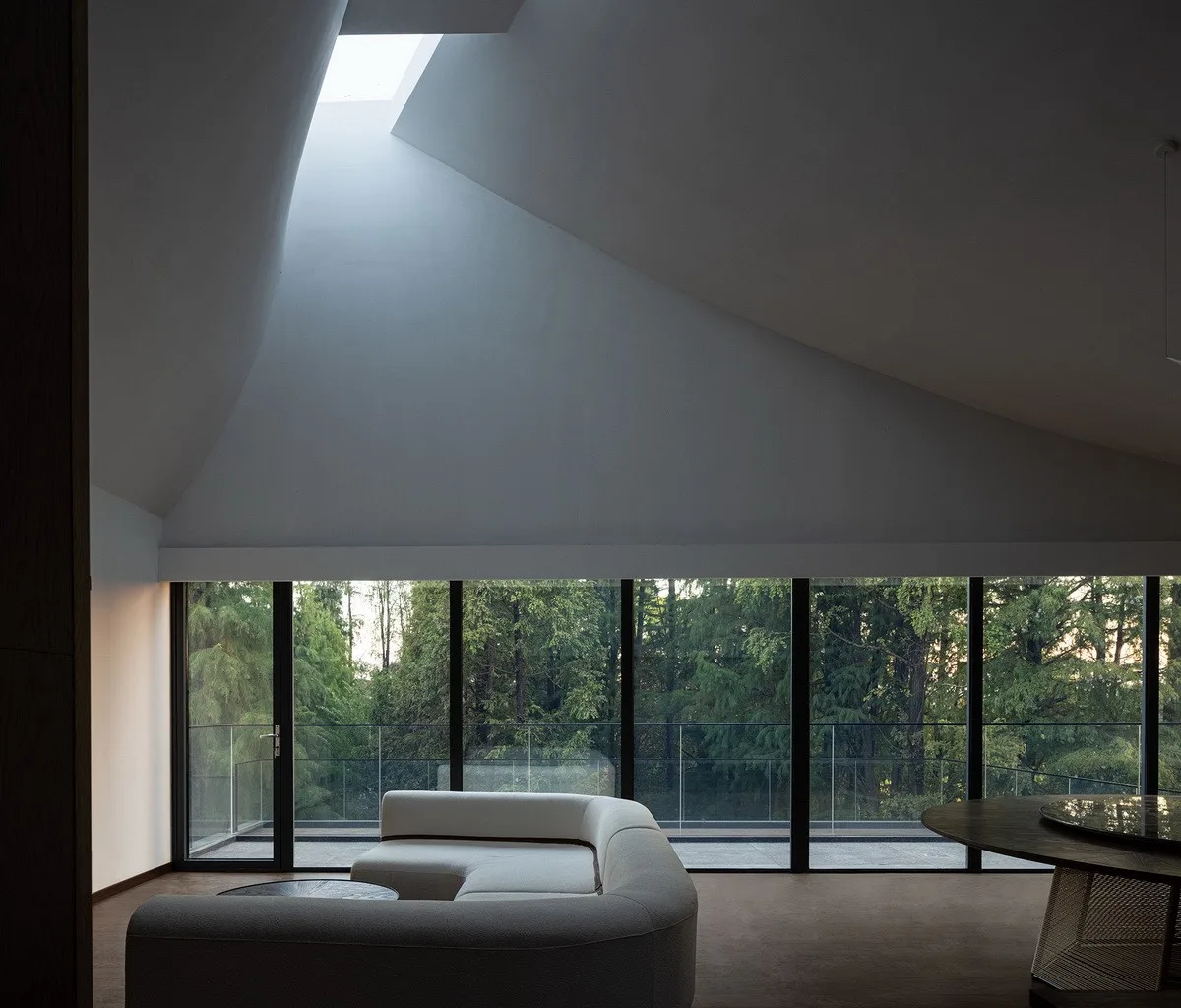
The roof’s design channels light and shadow along its curves, enhancing the interior atmosphere © Su Shengliang
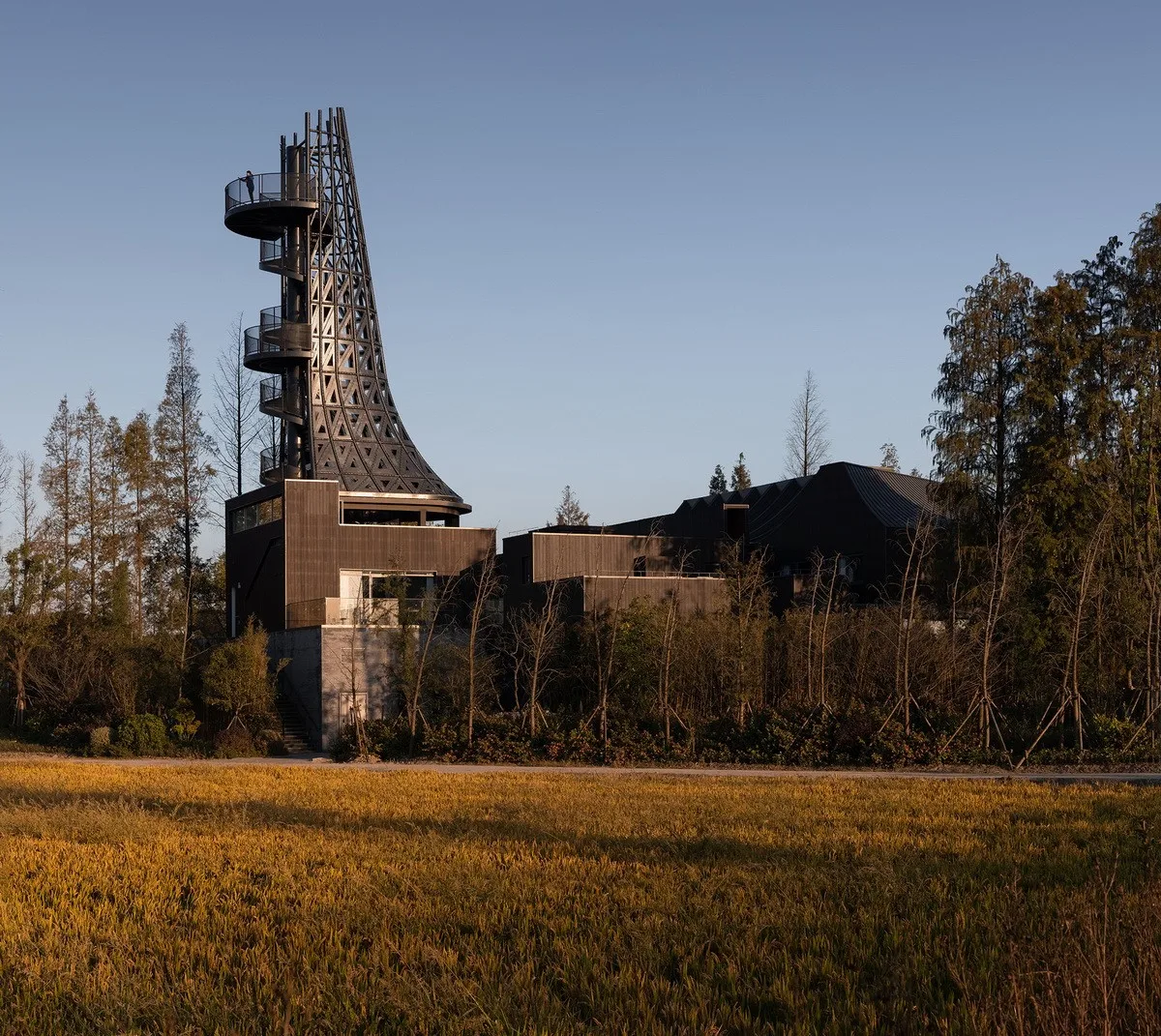
▲ Overview of the observation tower © Su Shengliang
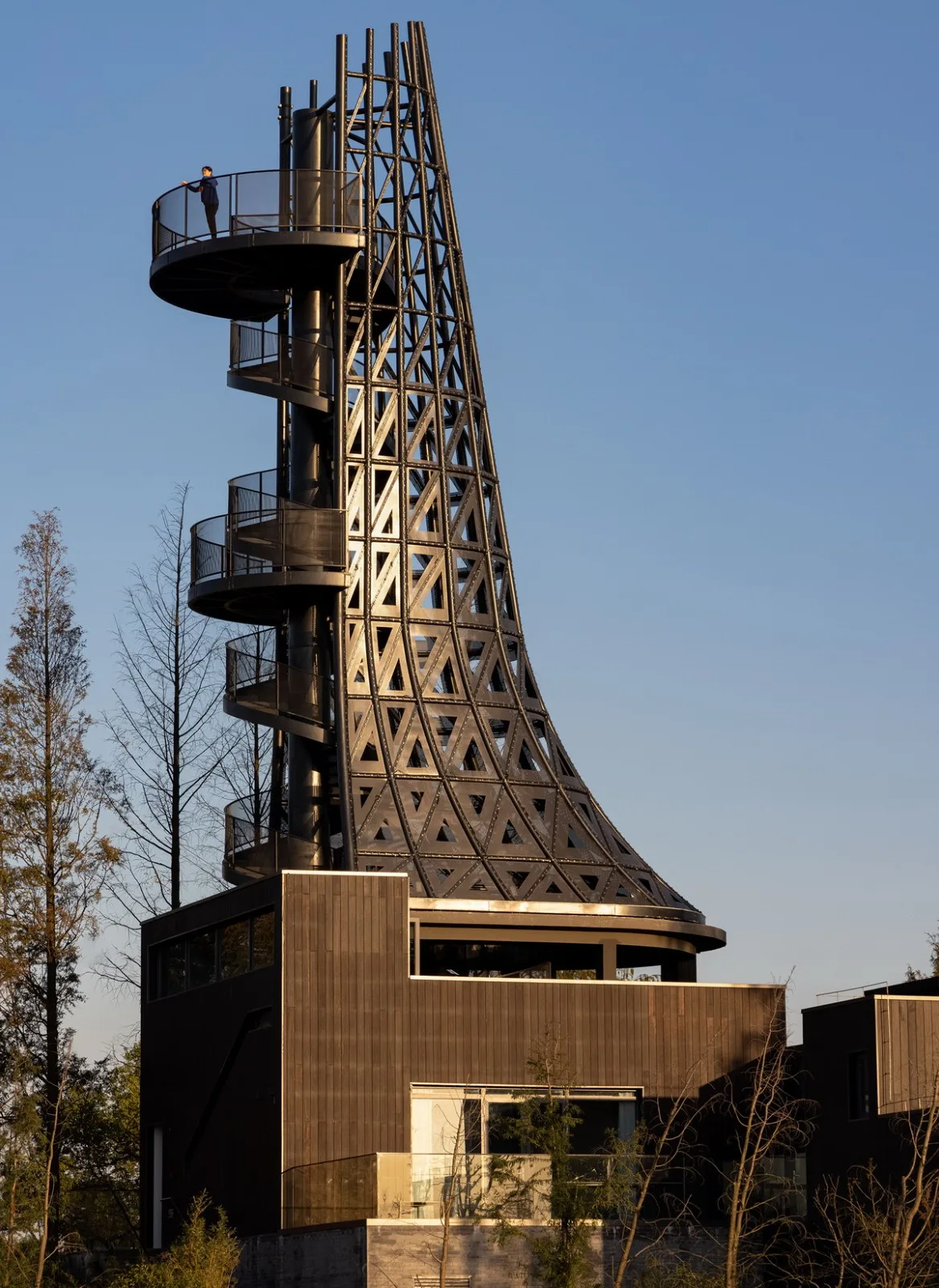
▲ Close-up of the observation tower © Su Shengliang
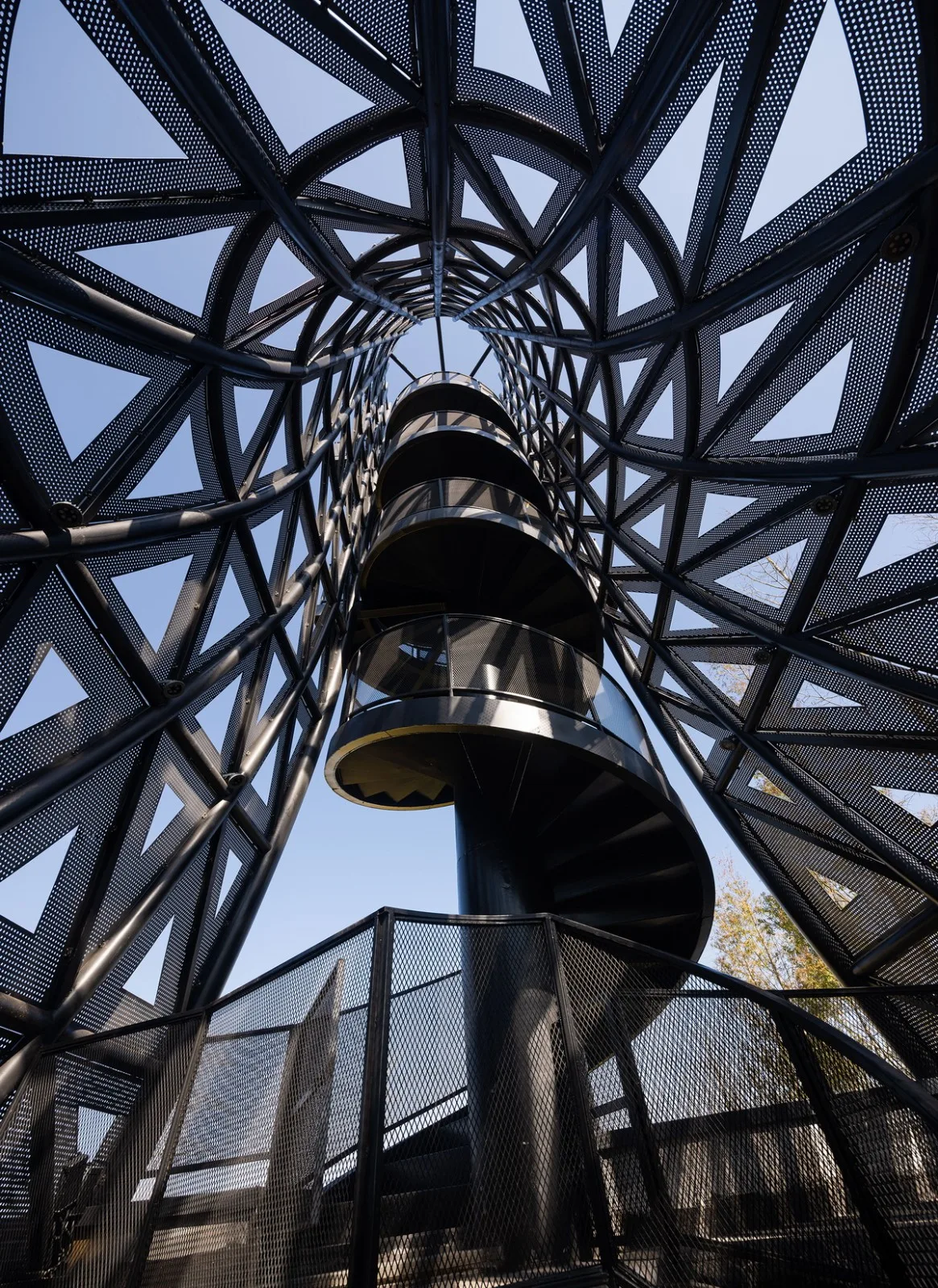
▲ Looking upwards from inside the observation tower © Su Shengliang
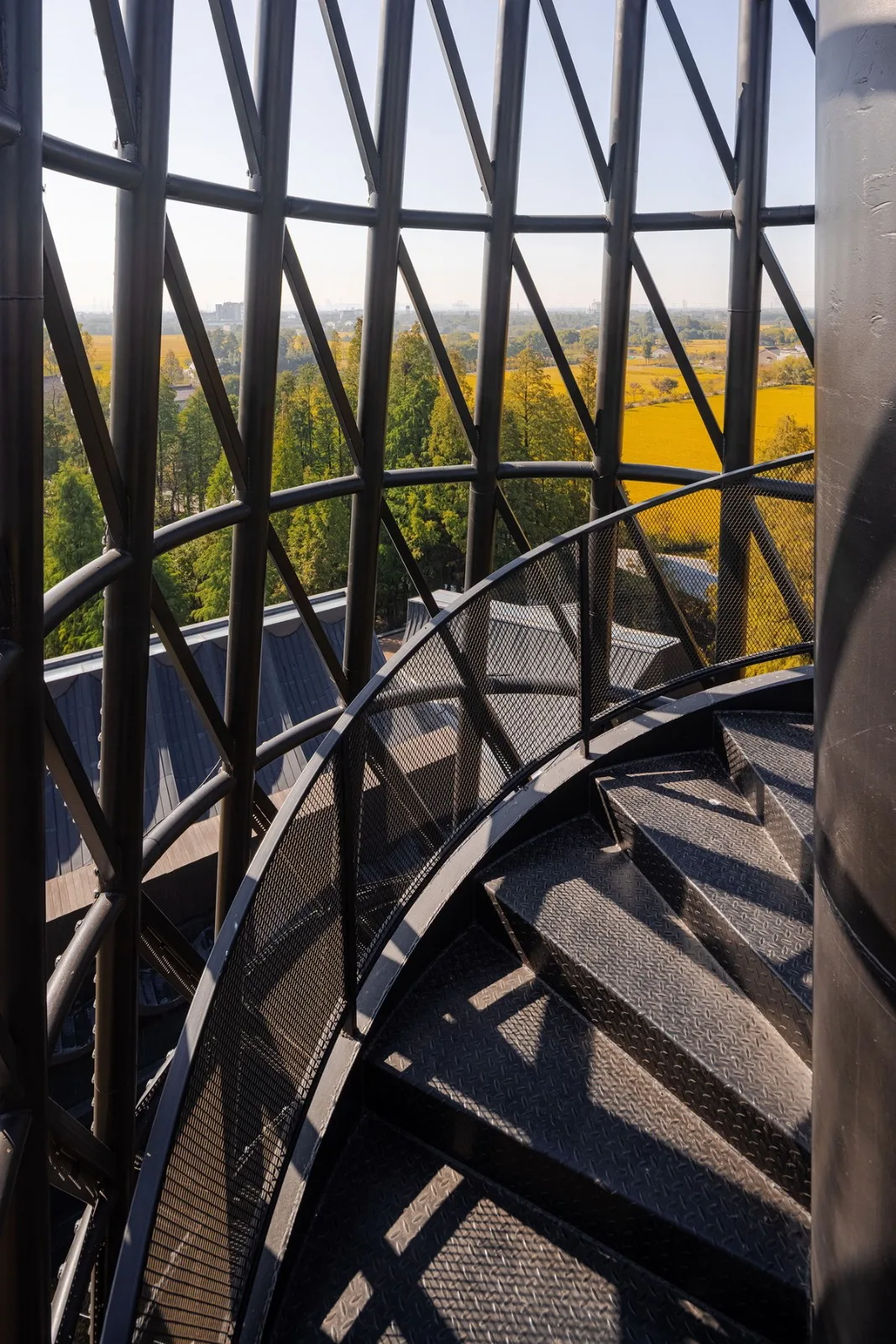
▲ View from inside the observation tower © Su Shengliang
Key facade materials include bamboo, steel, and wood, all selected for their dark tones that blend harmoniously with the natural surroundings. These materials help the building disappear unobtrusively into the landscape, creating a peaceful atmosphere that immerses visitors in a forest-like setting.
The observation tower is treated with a black finish, enabling visitors standing atop to overlook the fields and forests from above the tree canopy, fostering an intimate connection with nature.
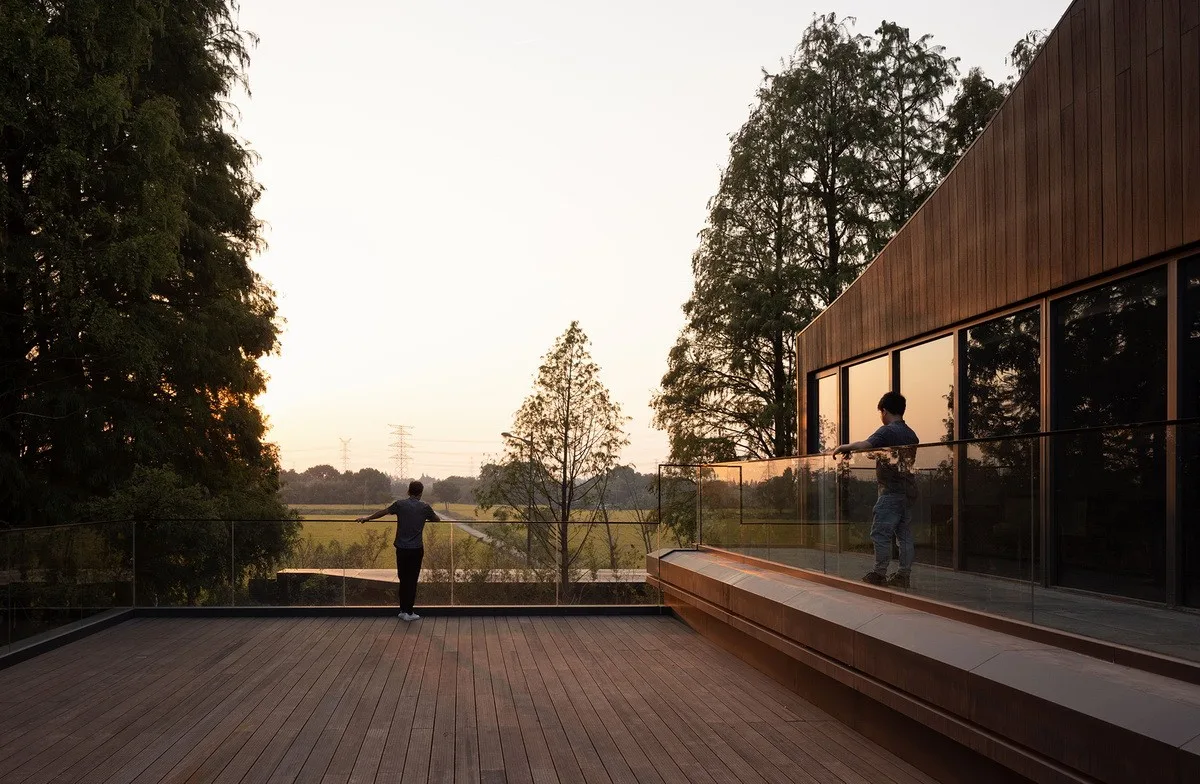
▲ Second-floor landscape terrace offering a connection to the cedar forest © Su Shengliang
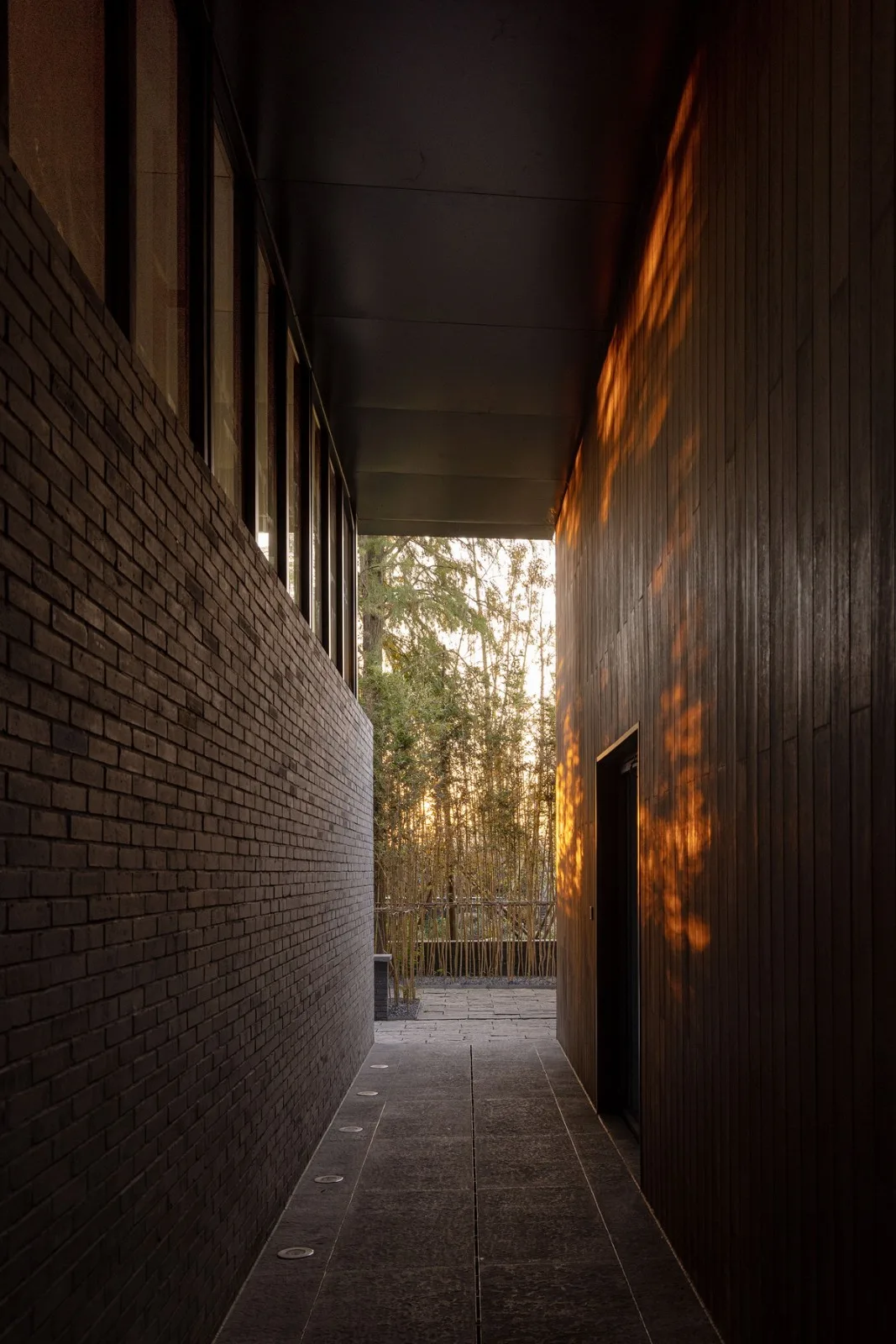
▲ Grey space in the first-floor corridor © Su Shengliang
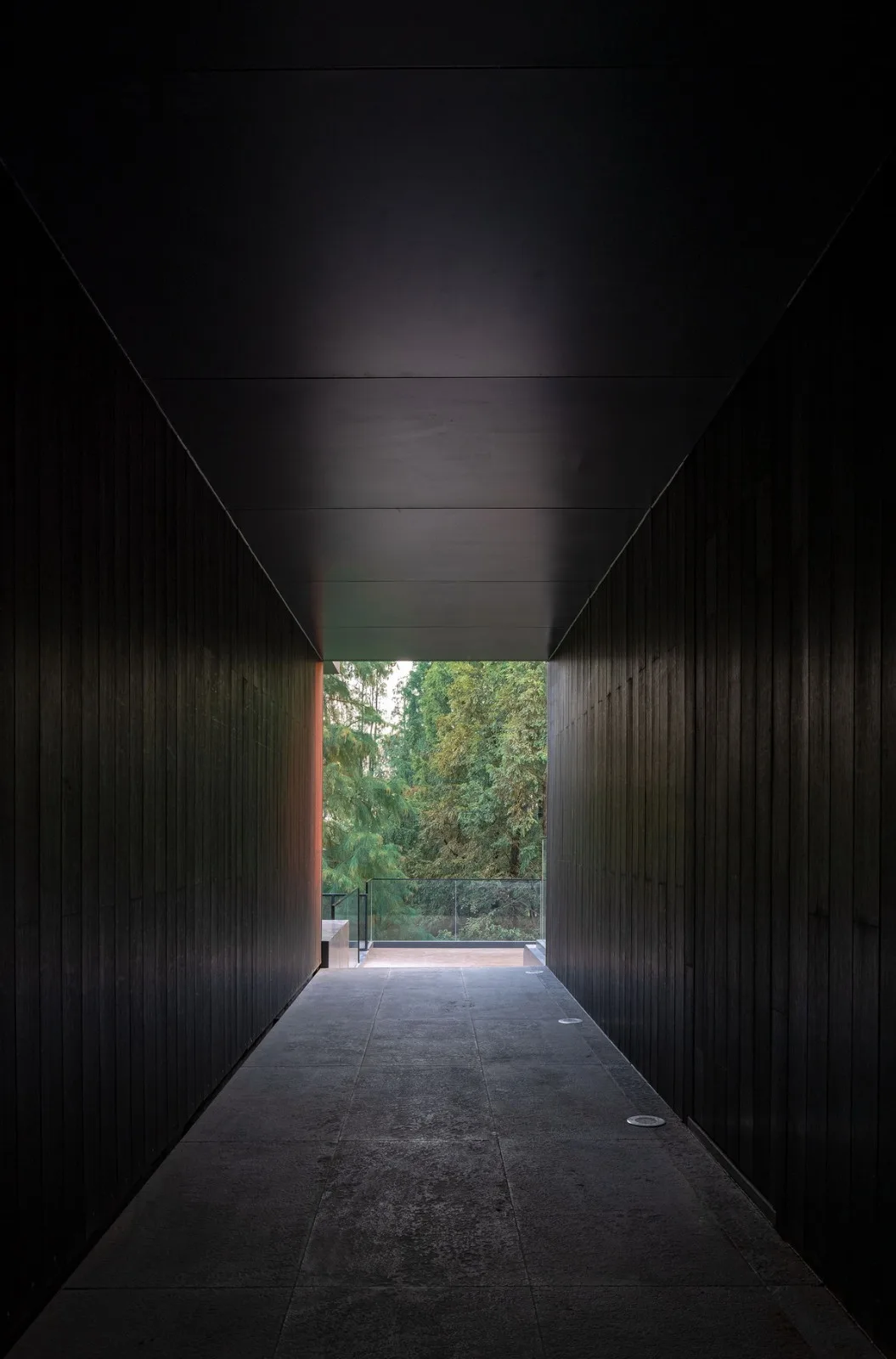
▲ Grey space in the second-floor corridor, featuring natural framing views © Su Shengliang
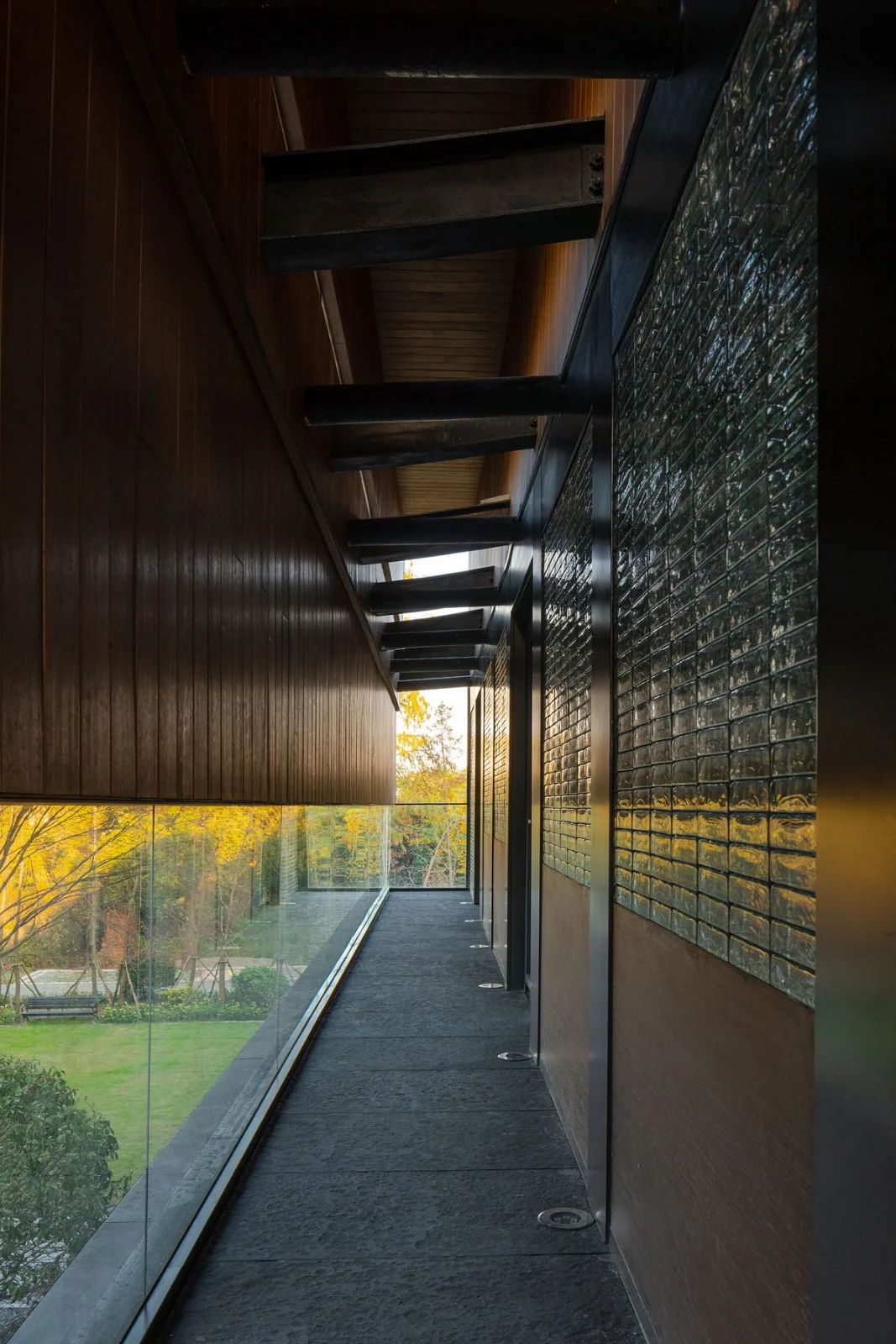
▲ Another view of the grey space corridor with natural framing © Su Shengliang
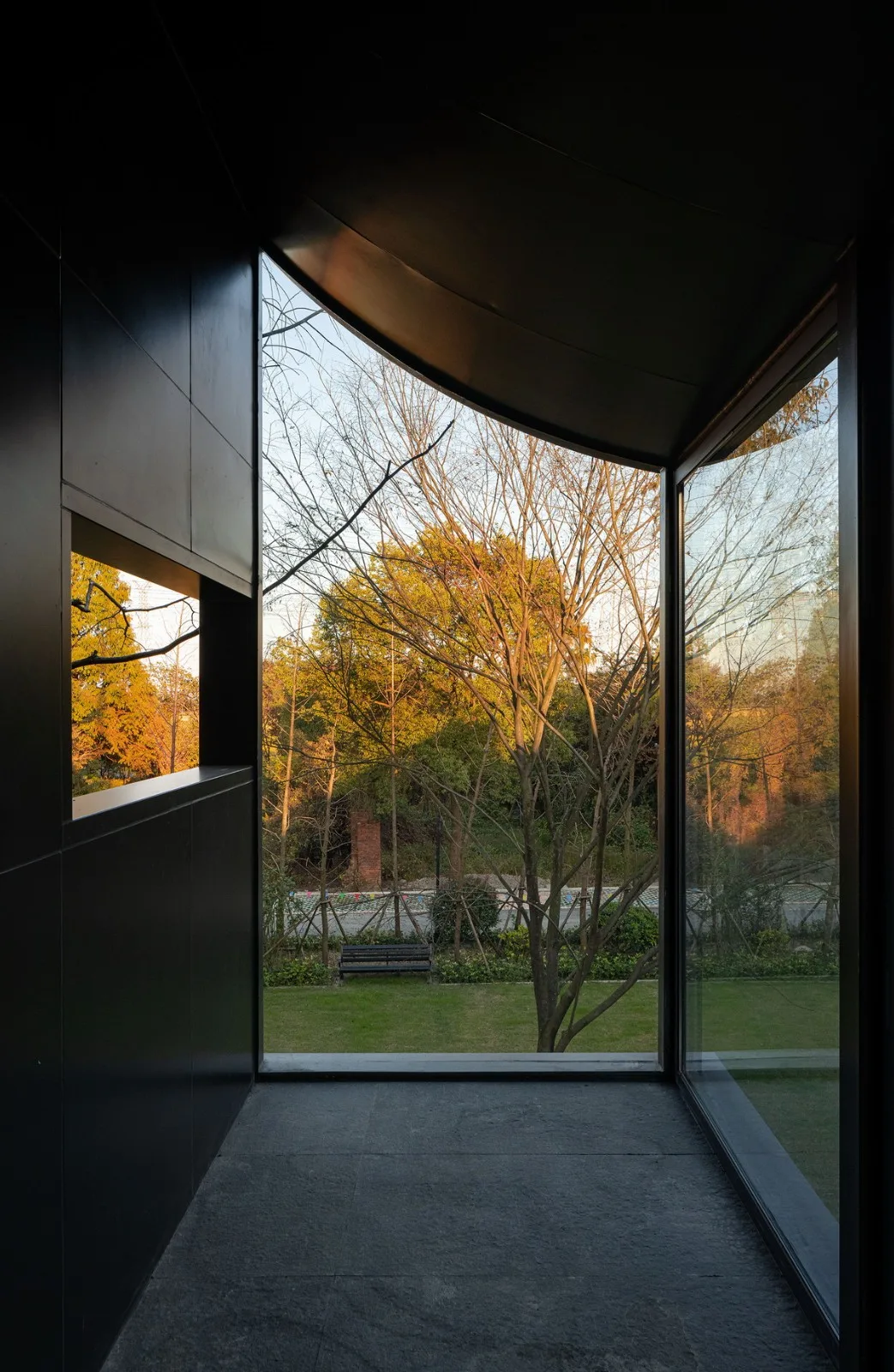
▲ Additional perspective of the grey space corridor with natural framing © Su Shengliang
Project Drawings
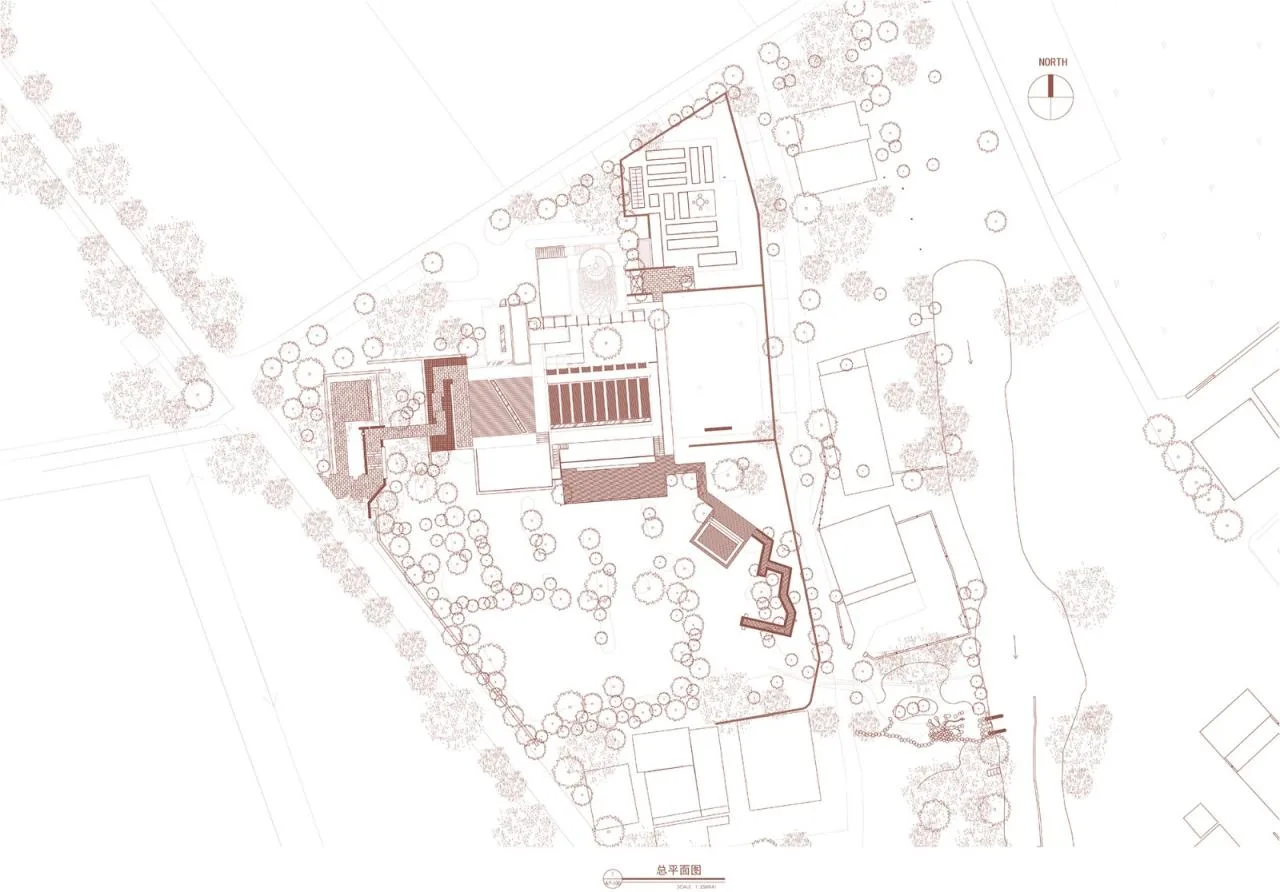
▲ General layout plan © y.ad studio
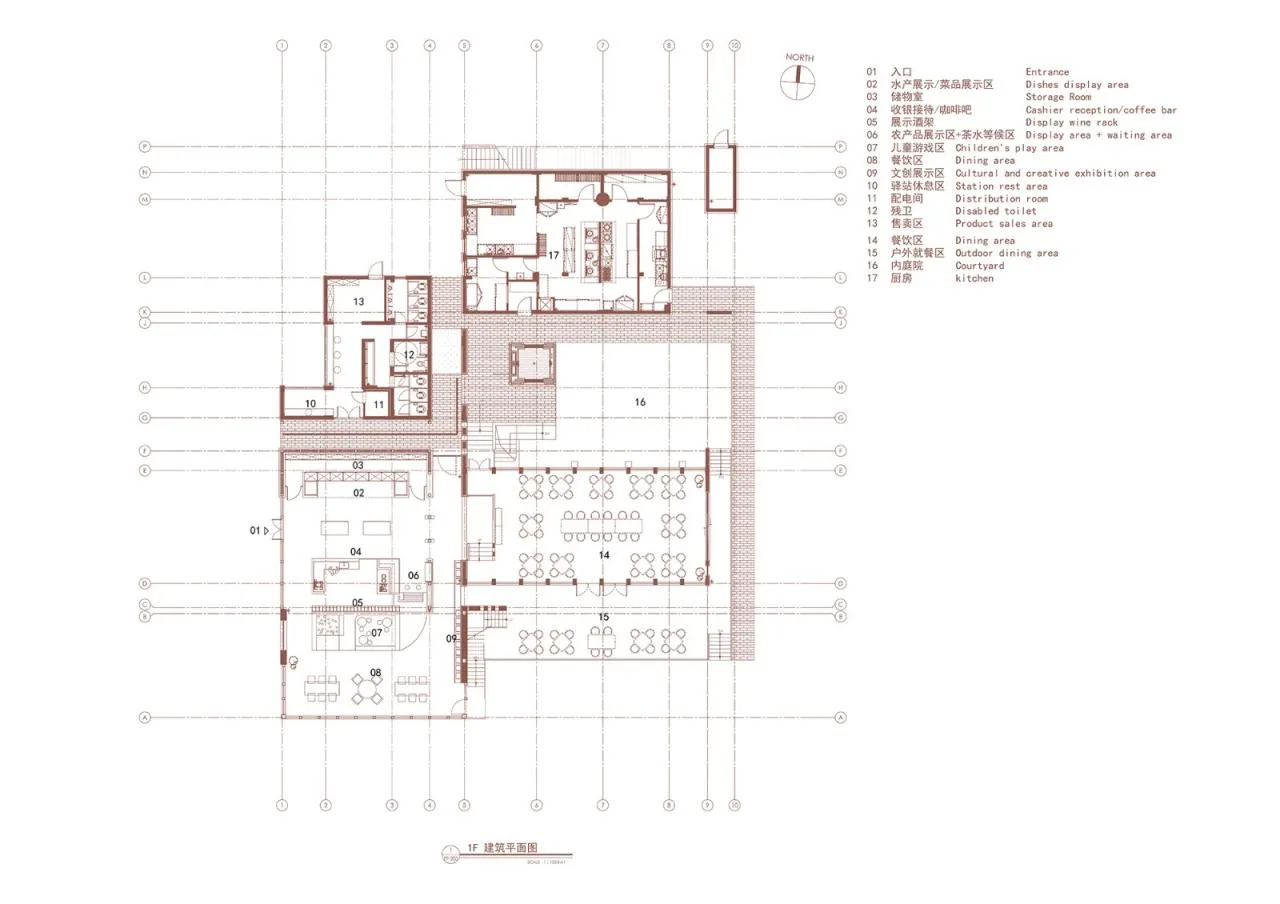
▲ First-floor building plan © y.ad studio
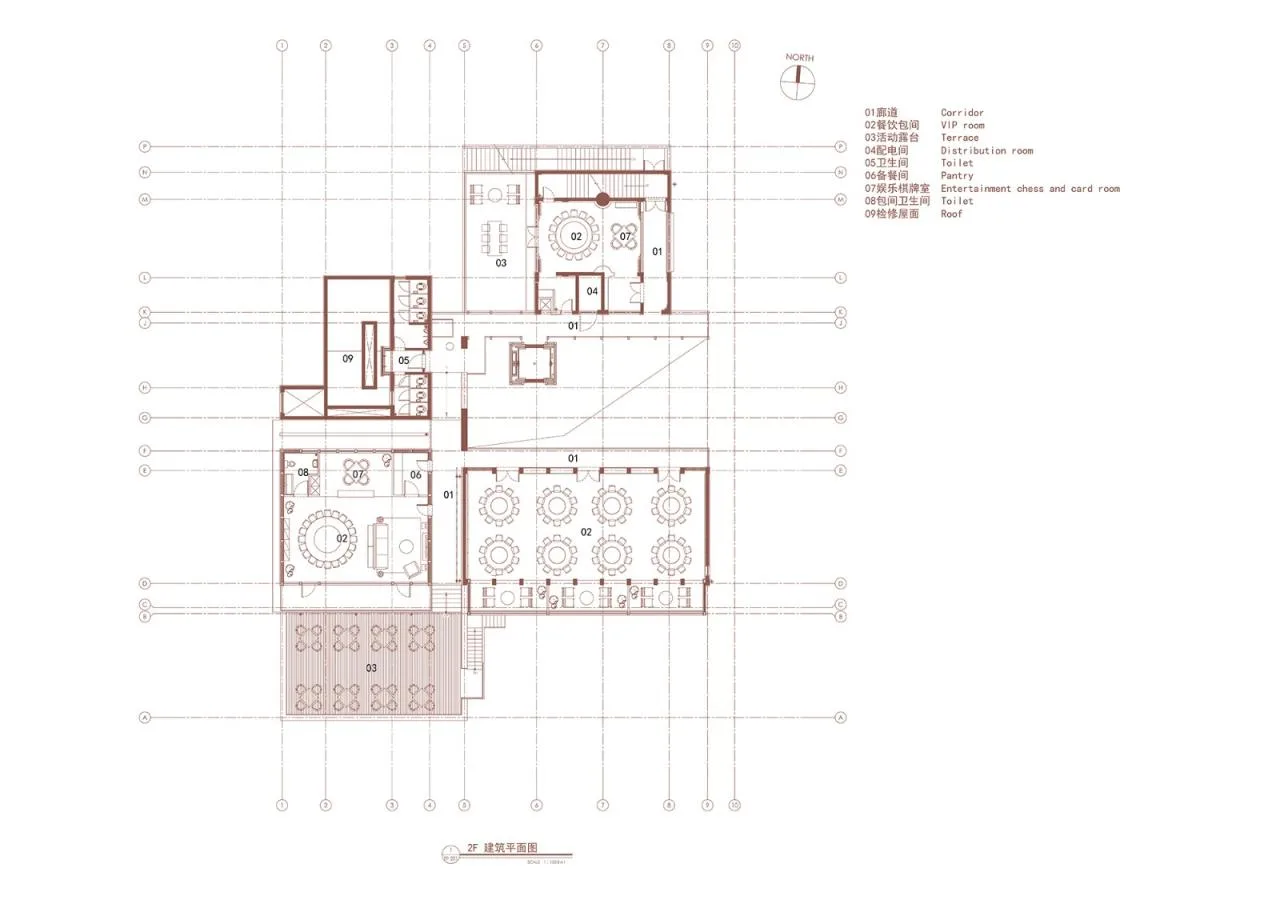
▲ Second-floor building plan © y.ad studio
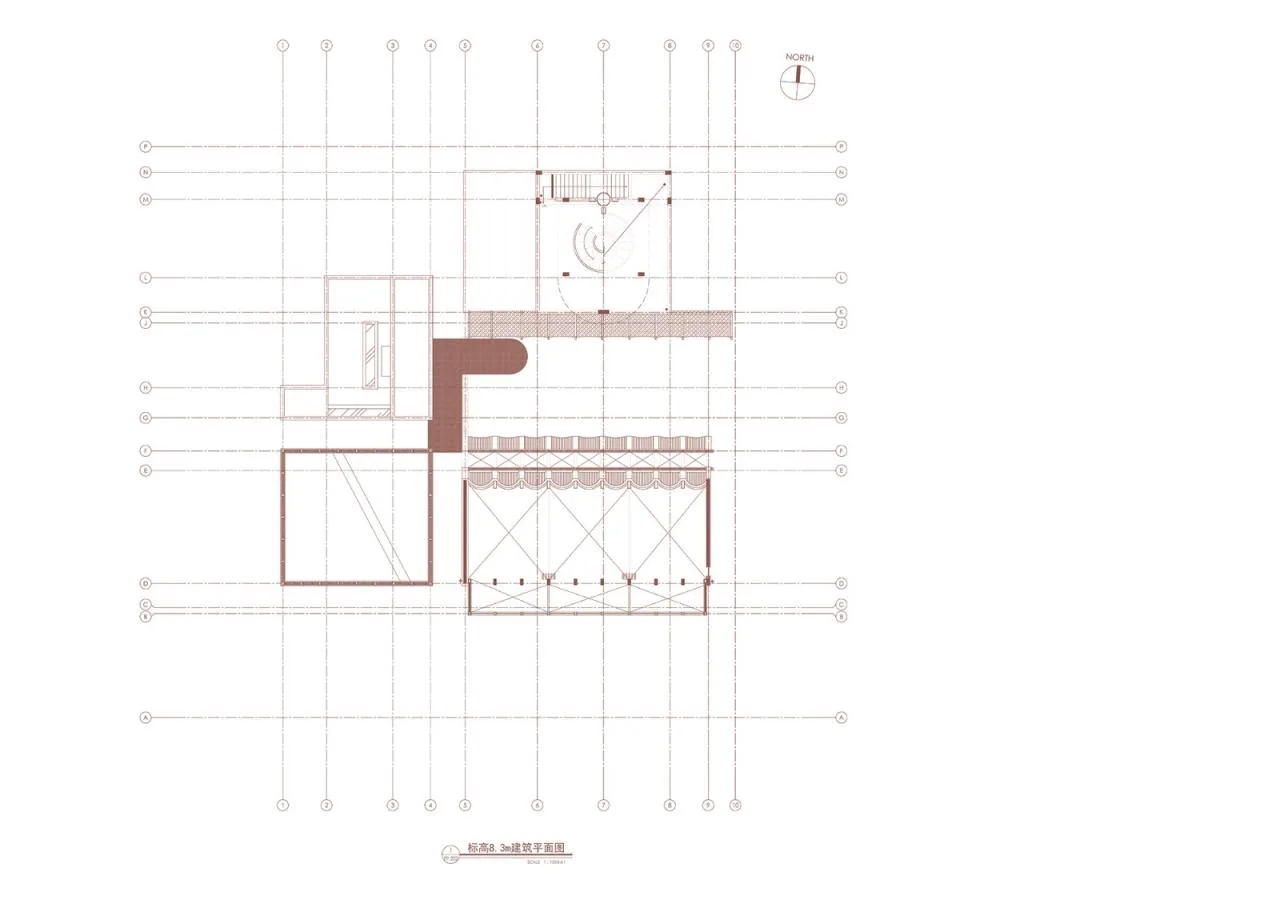
▲ 8.3m building floor plan © y.ad studio
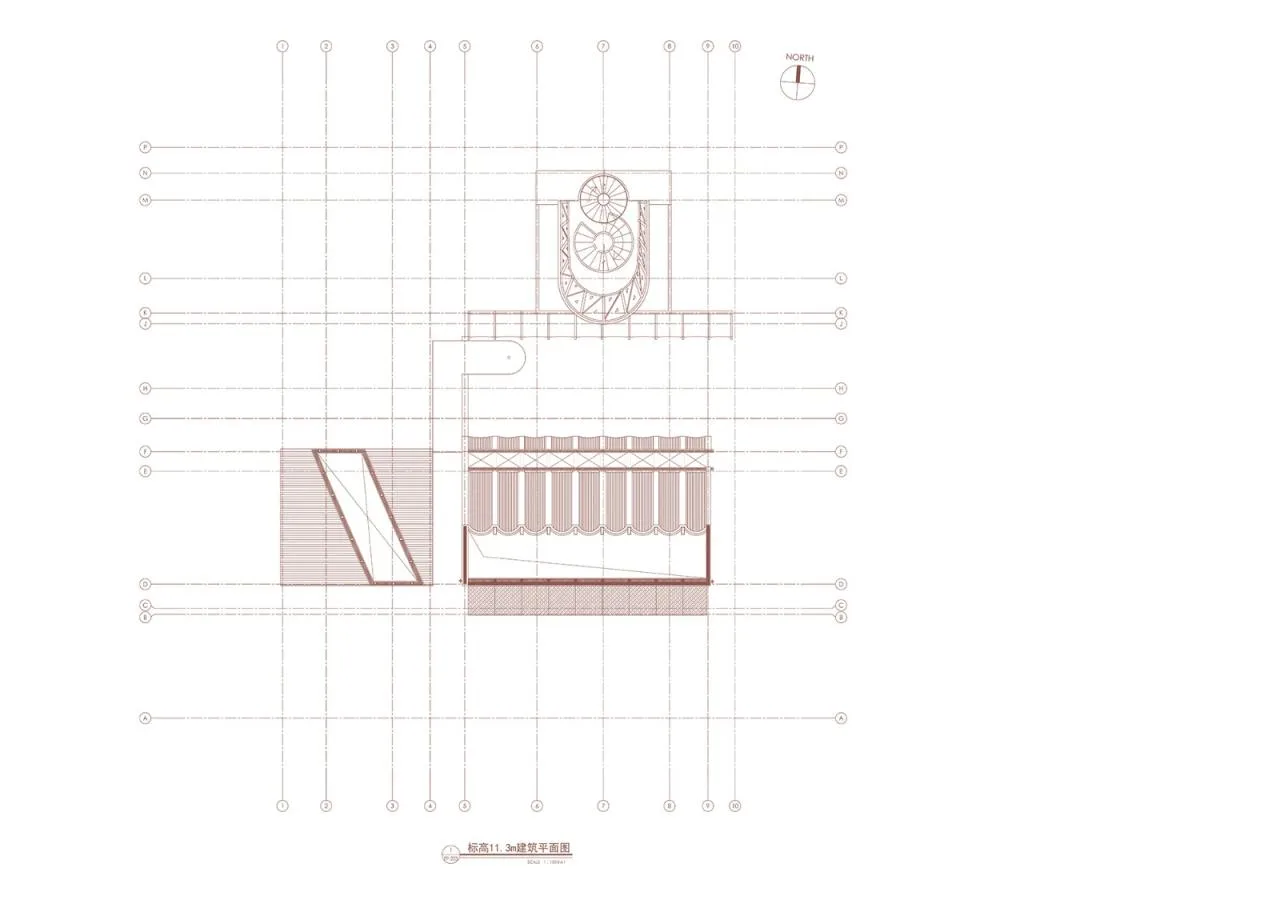
▲ 11.3m building floor plan © y.ad studio
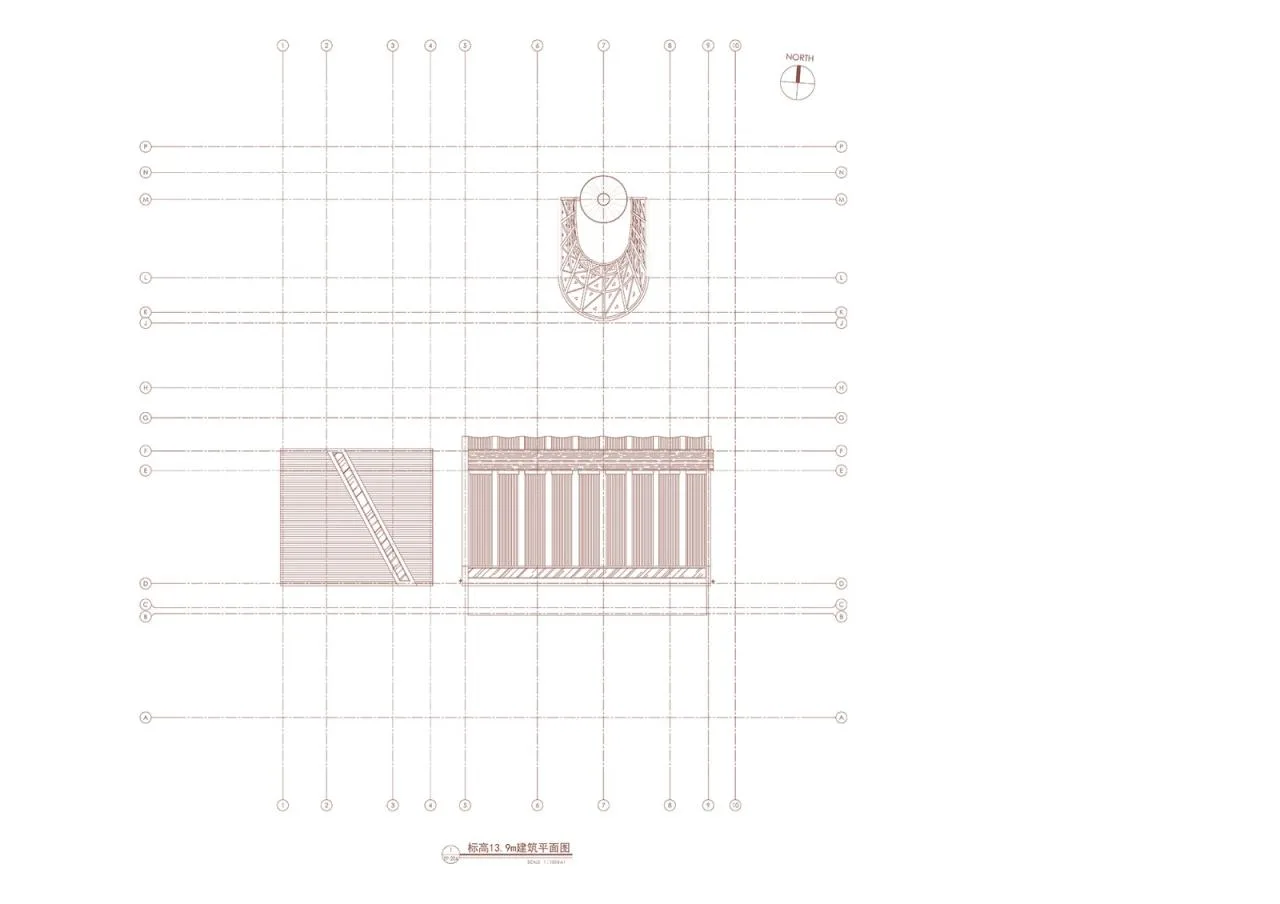
▲ 13.9m building floor plan © y.ad studio
Project Details
Project Name: Tongxiang Puyuan Hongqiyang Shanlin Tribe Shared Restaurant
Location: Hongqiyang Village, Puyuan Town, Tongxiang City, Jiaxing City, Zhejiang Province
Developer: Puyuan Town New Rural Construction and Development Co., Ltd., Tongxiang City
EPC General Contractor: Xiangban Group
Design Studio: y.ad studio | Shanghai Yan Yang Architectural Design Studio
Design Institute: Shanghai Times Architecture Design Institute
Lead Architect: Yan Yang
Design Team: Wu Kejia, Zhao Siyuan, Yan Yu, Huo Da (structure)
Control Team: Qiu Yinhao, Zhen Xiaolong, Zhao Juan, Wang Mengran, Tan Defen, Fan Ying, Chen Yidong, Zhang Jinyu
Building Area: 1,318.38 square meters
Construction Company: Shanghai Jingyu Landscape Construction Development Co., Ltd
Construction Management: Yan Zhonghua
Main Materials: Bamboo, steel, wood, wood decorative panels, artistic texture paint, manganese magnesium aluminum metal tiles, aluminum plates, blue brick
Design Period: December 2021 – July 2022
Construction Period: July 2022 – August 2023
Photography Credit: Su Shengliang














Must log in before commenting!
Sign Up