
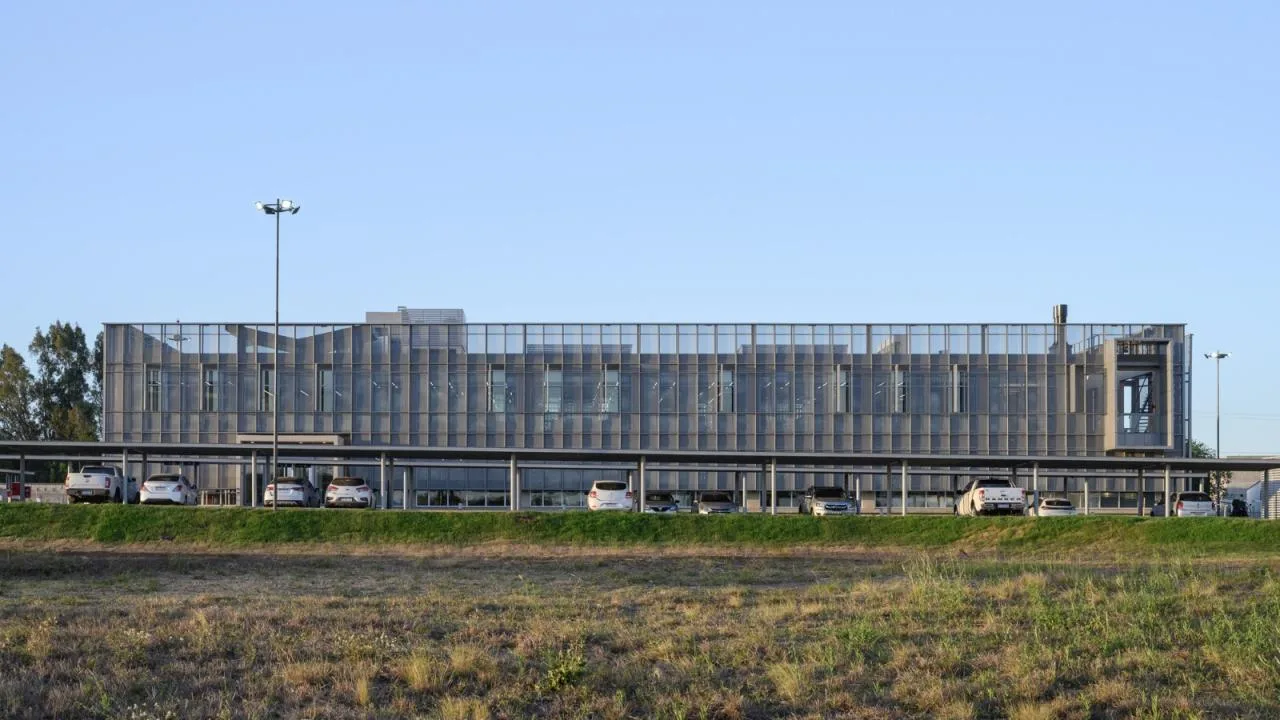
Biofarma is a company specializing in the production and sale of animal feed for poultry, pigs, and cattle. This project originated from a private competition that called for the design master plan of an industrial plant, encompassing administrative offices and supporting facilities on a 39,870 square meter site. After securing first prize, our responsibility was to develop the detailed execution project for the office building.
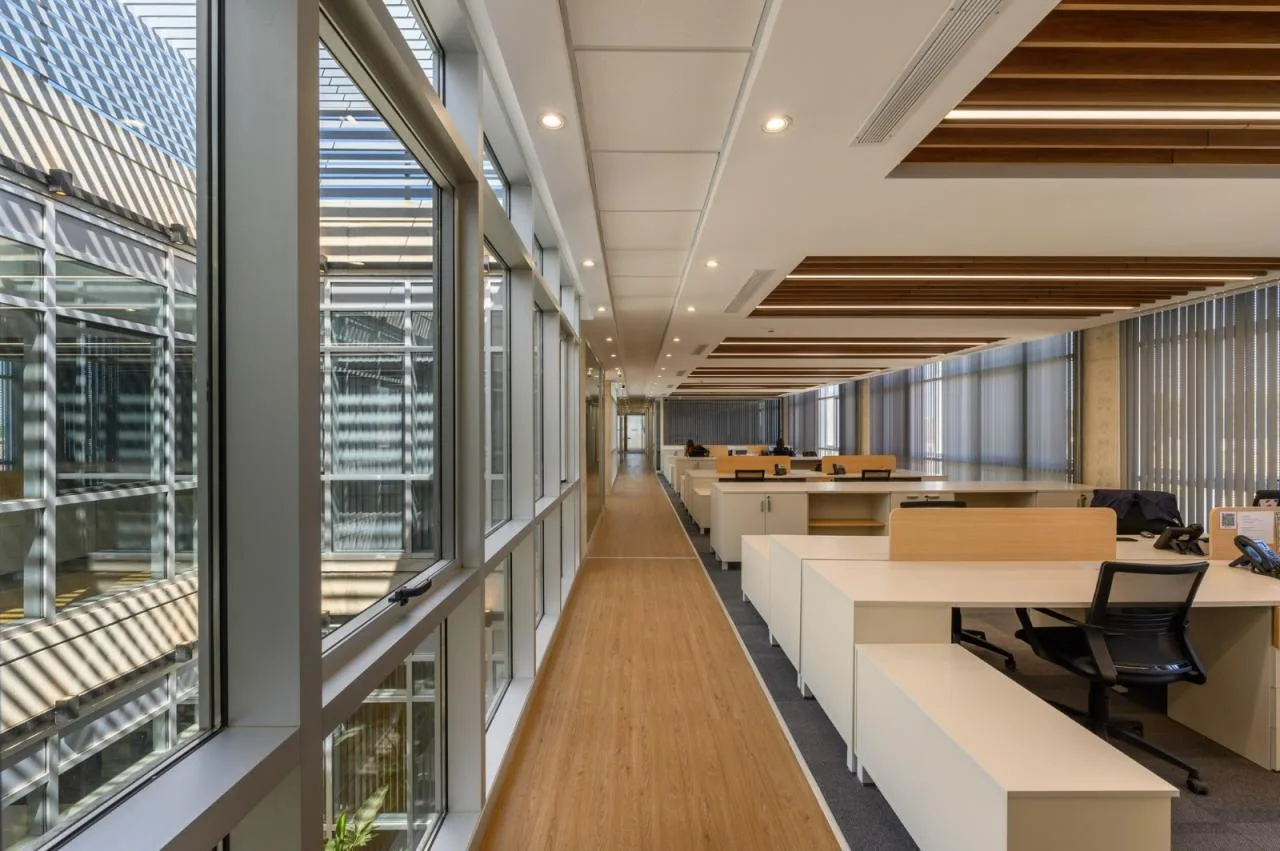
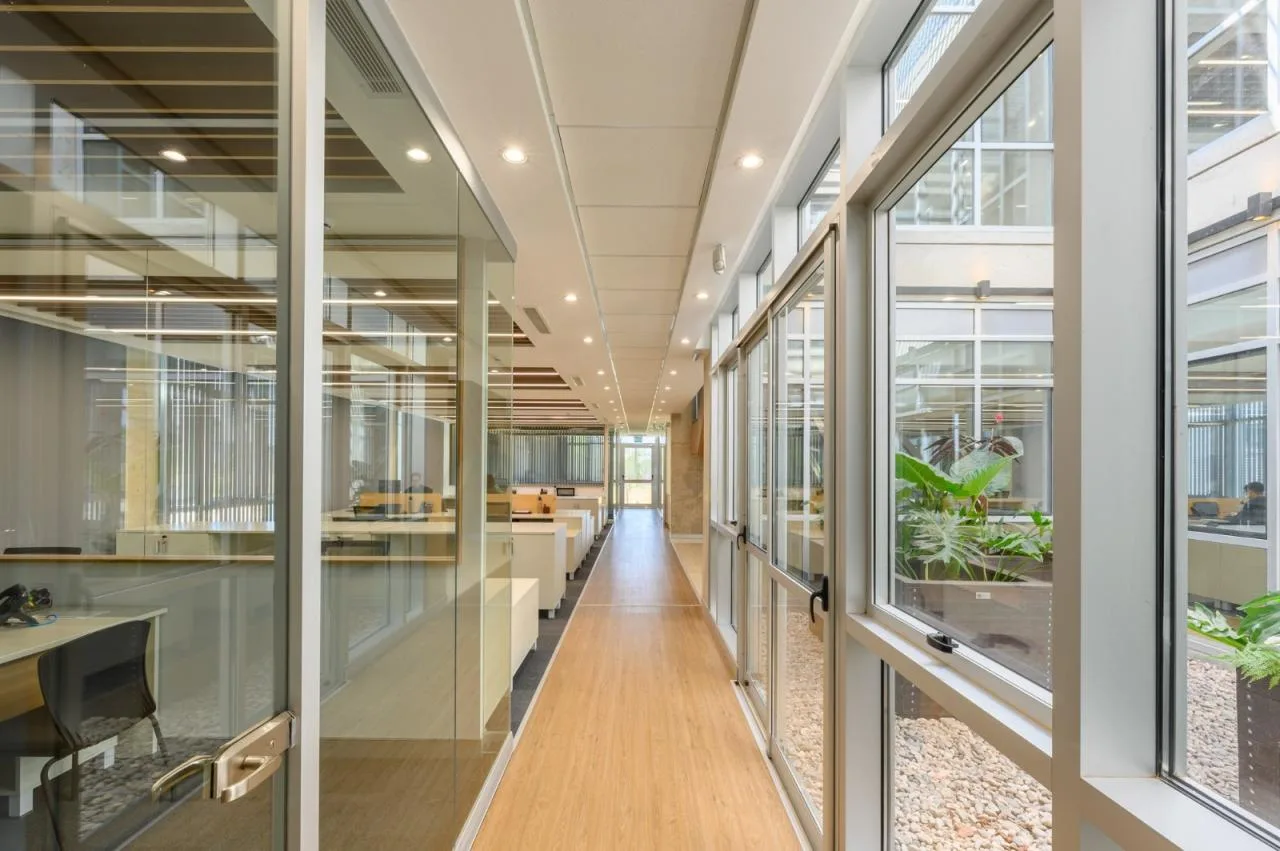
In designing the building, we prioritized an open surrounding environment and a strategic location within the overall site plan. We proposed a two-story rectangular structure with office spaces oriented towards the exterior walls. These are connected by two internal courtyards centrally located, fostering collaborative work areas. Vertical circulation cores are positioned at both ends of the building, enhancing interaction between employees across floors.
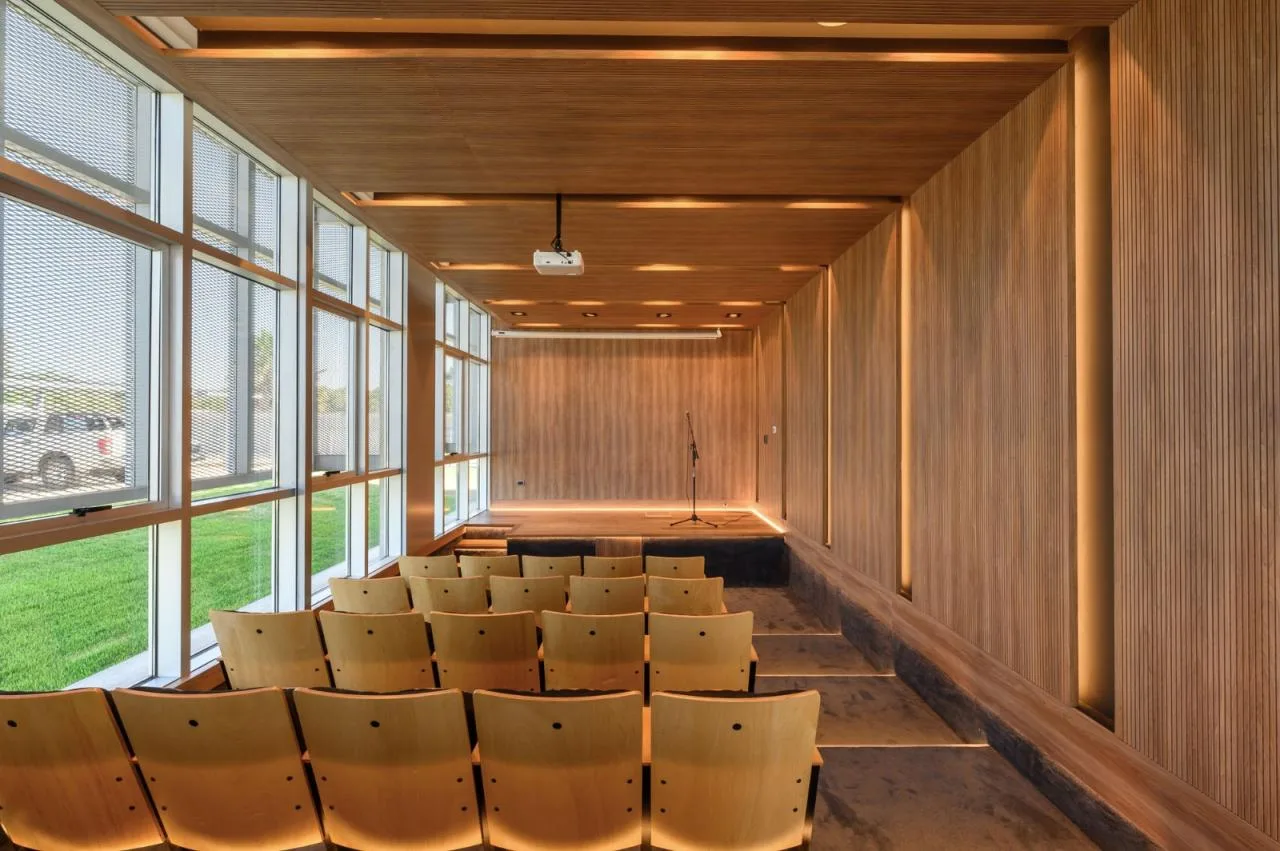
The upper level houses not only offices but also conference rooms, printing stations, and coffee break areas. The company manager’s office is set within a double-height space that connects to a tiered entrance on the ground floor, emphasizing the organization’s identity. Adjacent to the entrance are a small auditorium and a training room.
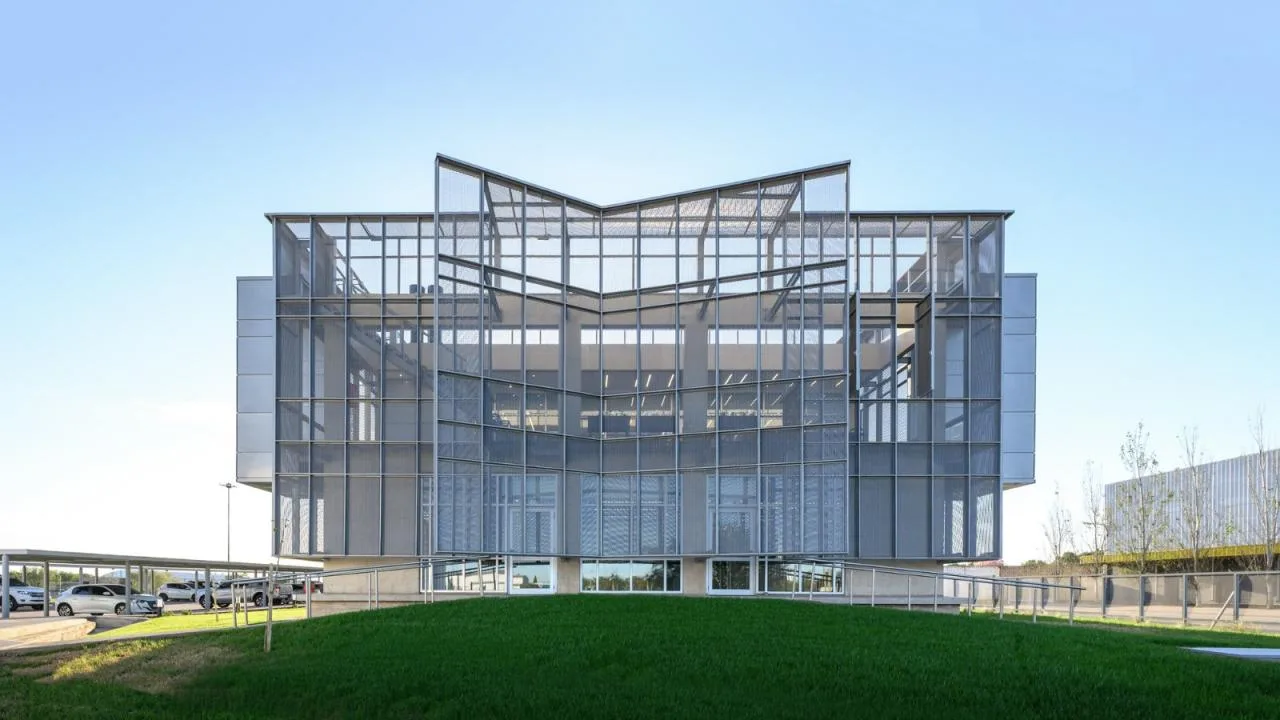
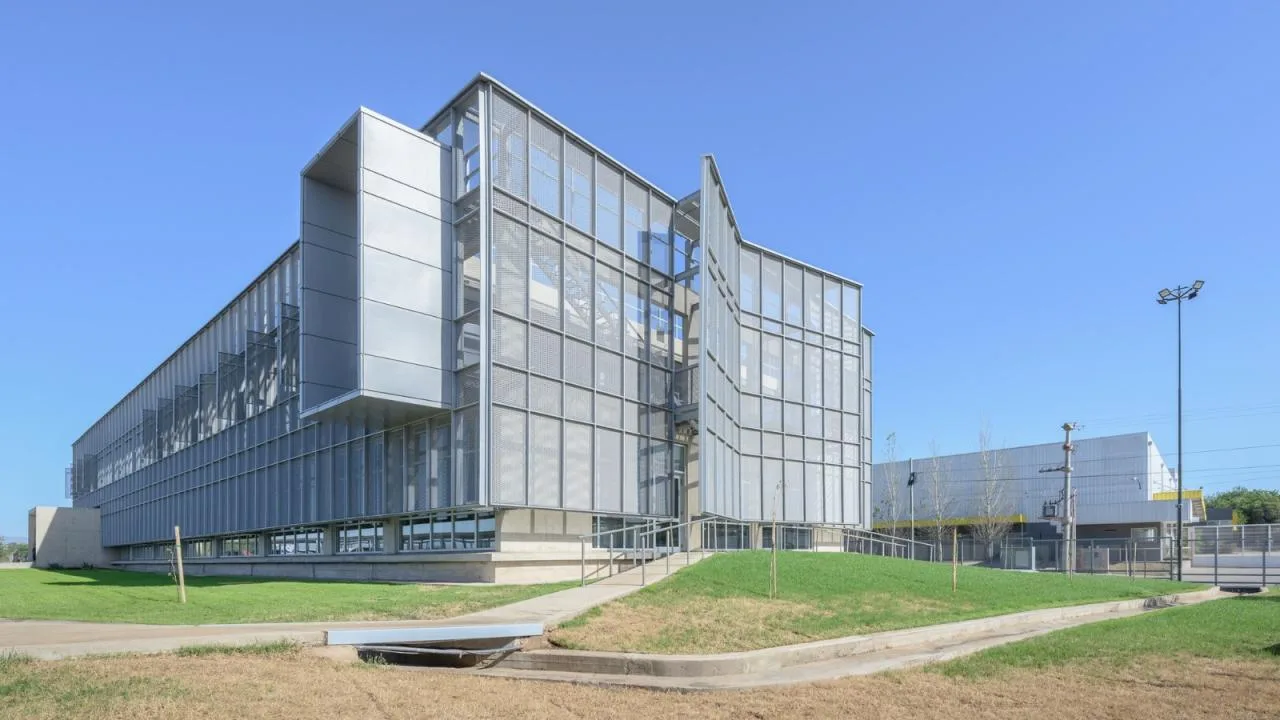
The building features an independent reinforced concrete structure with lightweight floor slabs and flat beams. Its enclosure system consists of multiple simple layers, serving as a passive sustainable element that enhances thermal insulation performance.
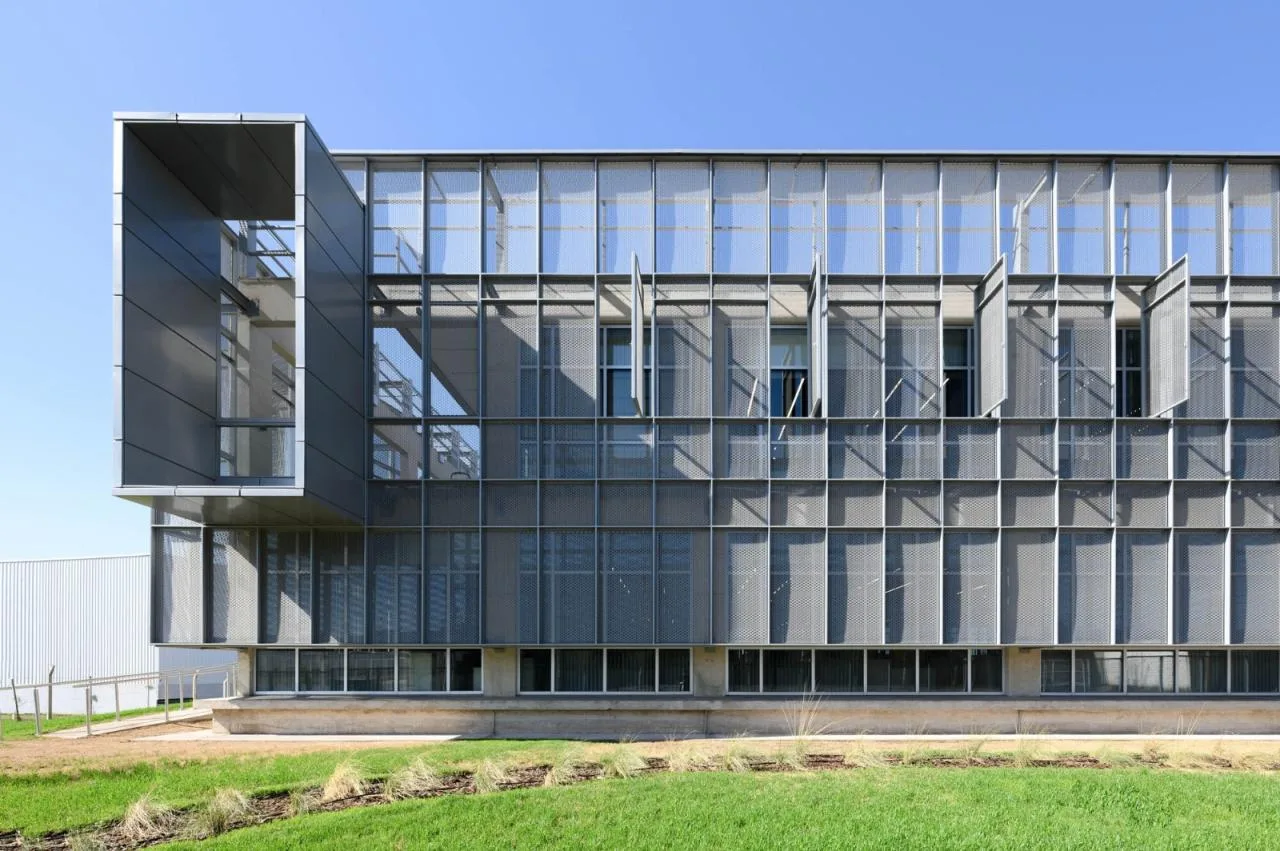
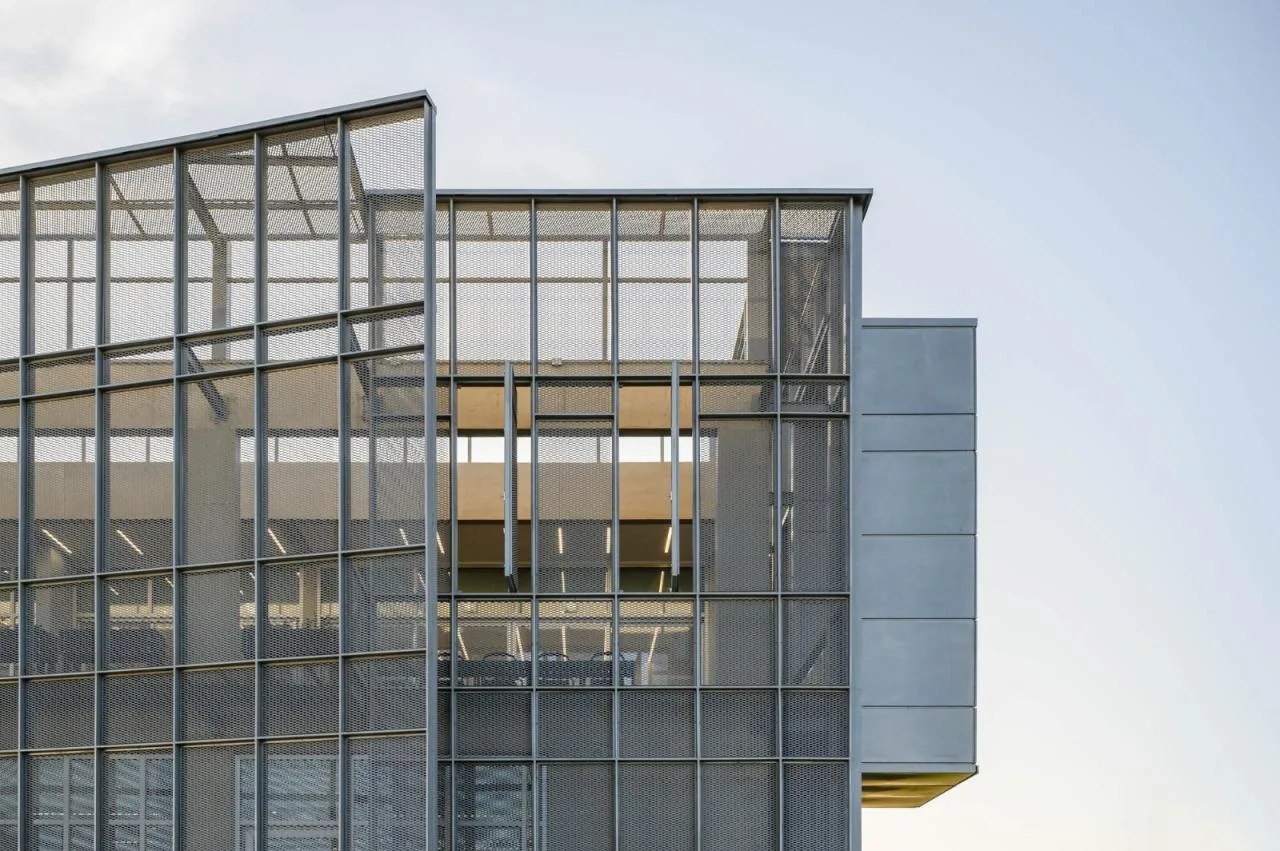
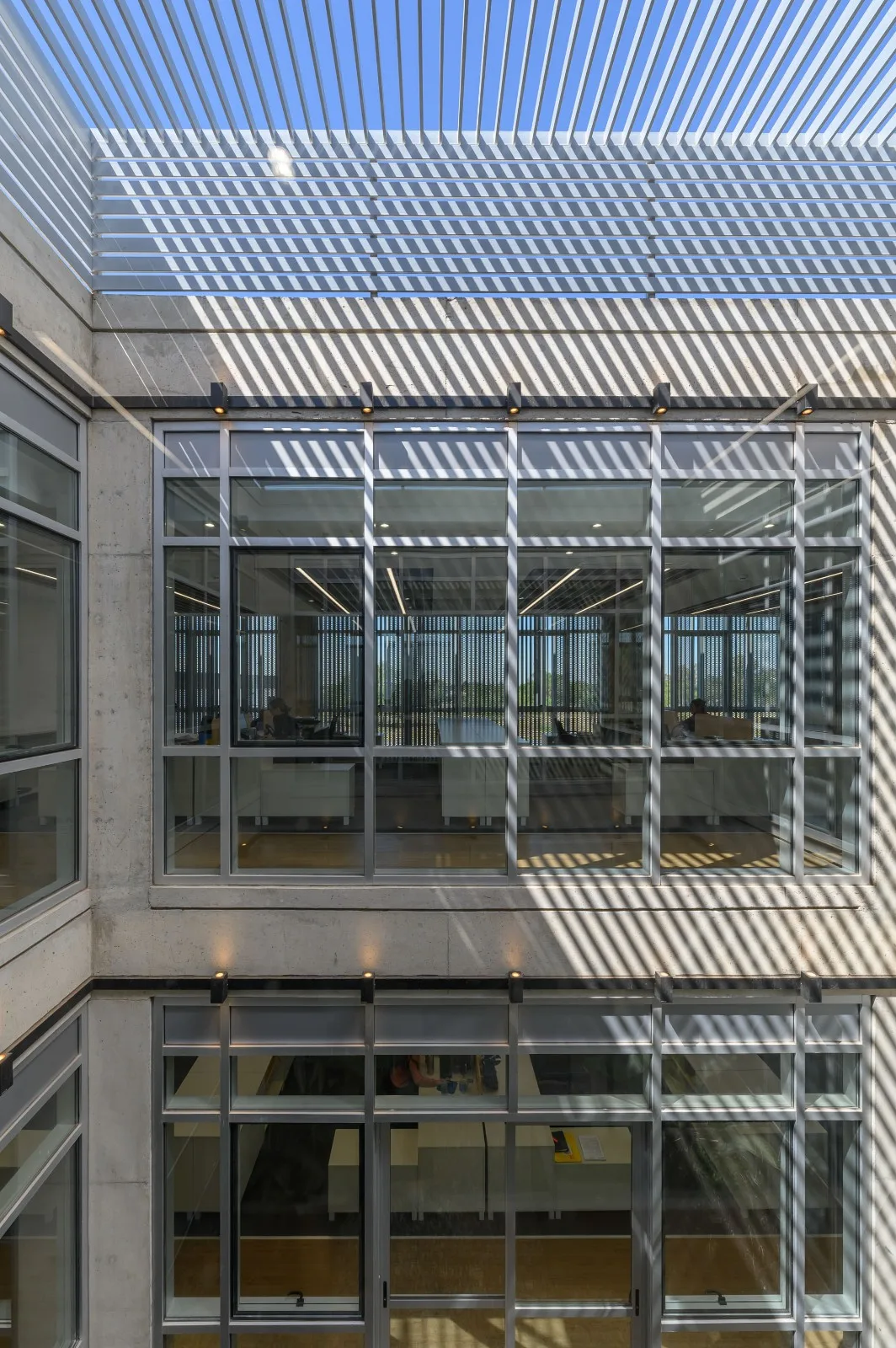
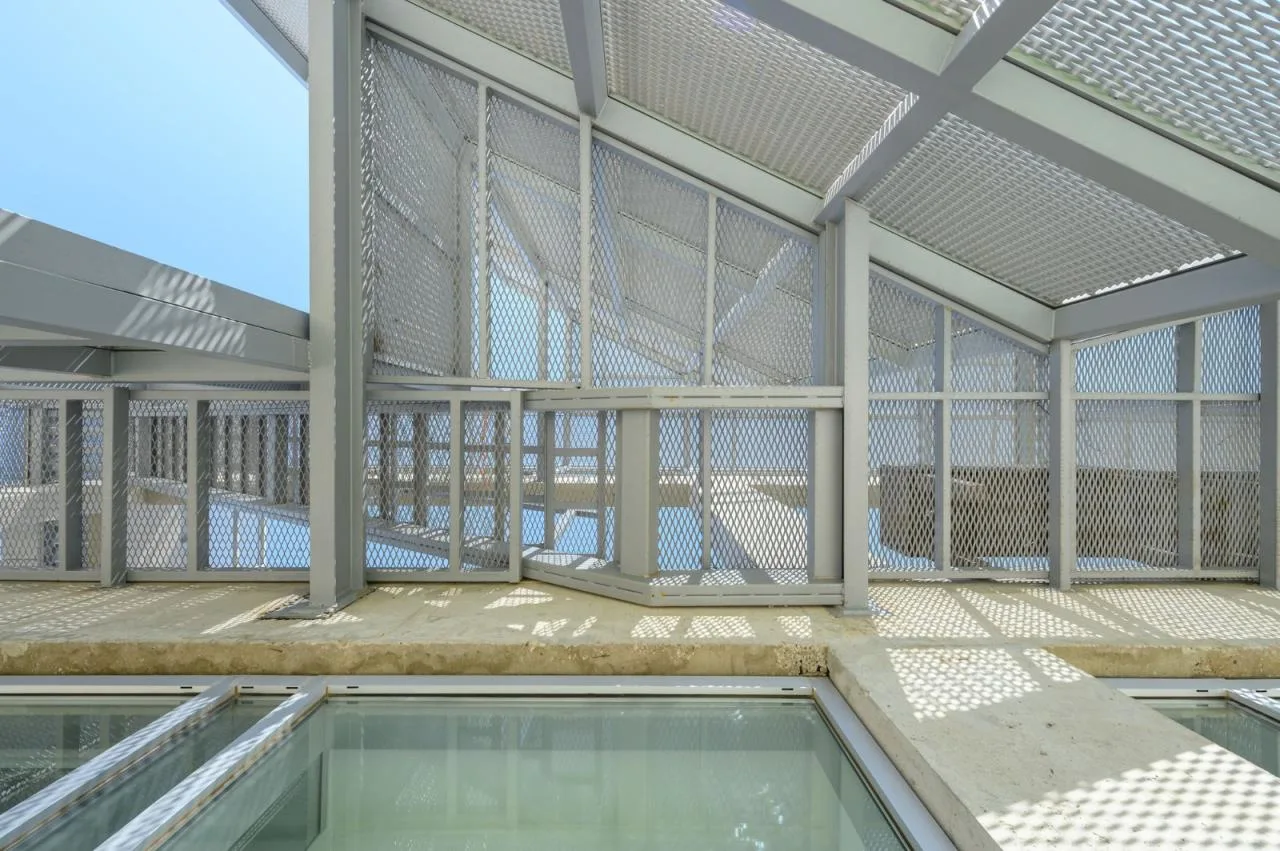
A closed facade with integral front aluminum particleboard is installed on the perimeter columns and beams, paired with double-layer sealed glass fixed to the concrete columns. The standard profile brackets are mounted on top, supporting a lower framework made of metal pipes. On top of this, a layer of pre-painted gray galvanized expanded metal plate is installed, separated from the aluminum particleboard by 70 centimeters to provide effective sun shading.
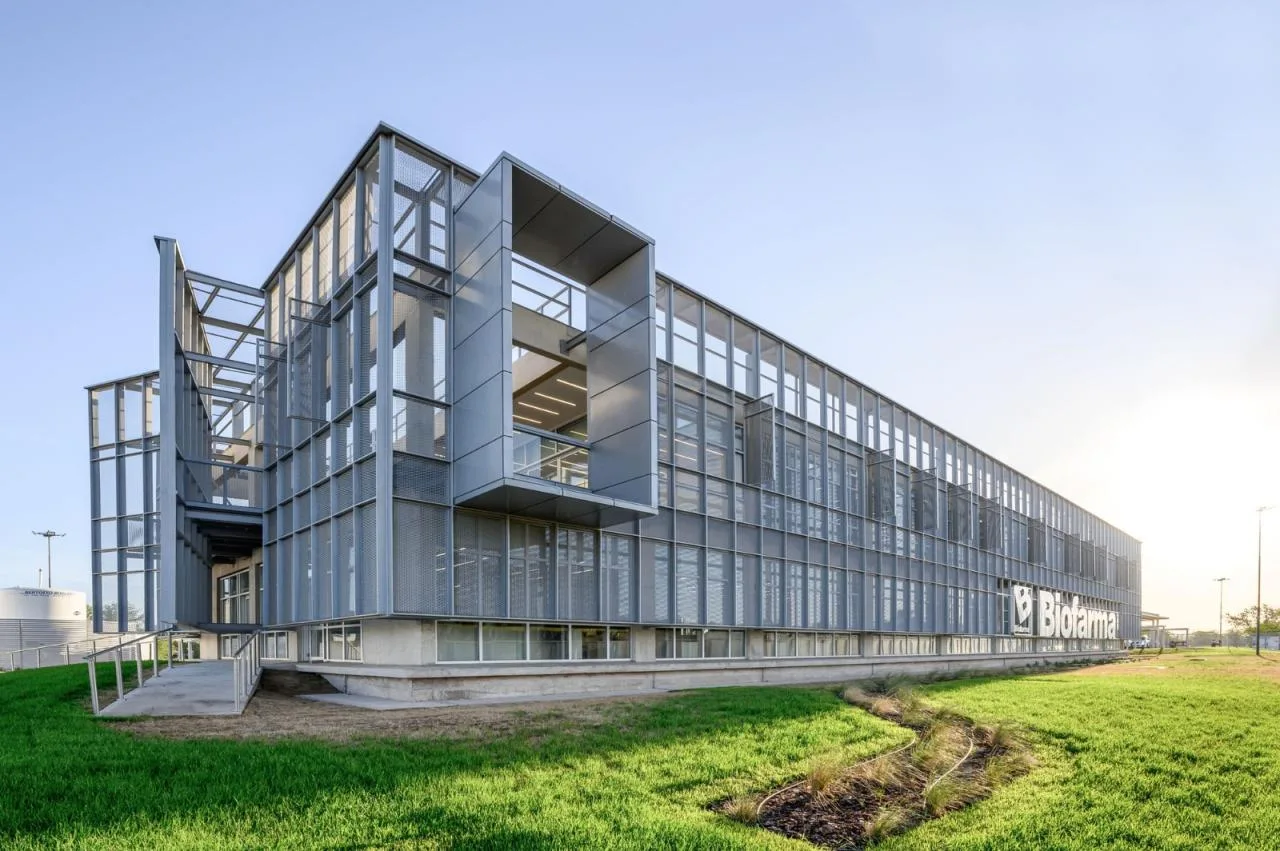
Elevated from the ground, this facade imparts a sense of lightness, further emphasized by shadows cast on the glass. This “skin” plays a vital role by creating an intermediate shaded zone between the glass enclosure and the exterior, reducing direct solar exposure and lowering the building’s energy consumption.
To prevent the facade from becoming a visual barrier between interior and exterior spaces, operable activity panels are recommended to be opened or closed depending on the time of day. Indoors, vertical blinds allow occupants to adjust brightness levels according to their preferences, while also lending the building a distinctive institutional character.
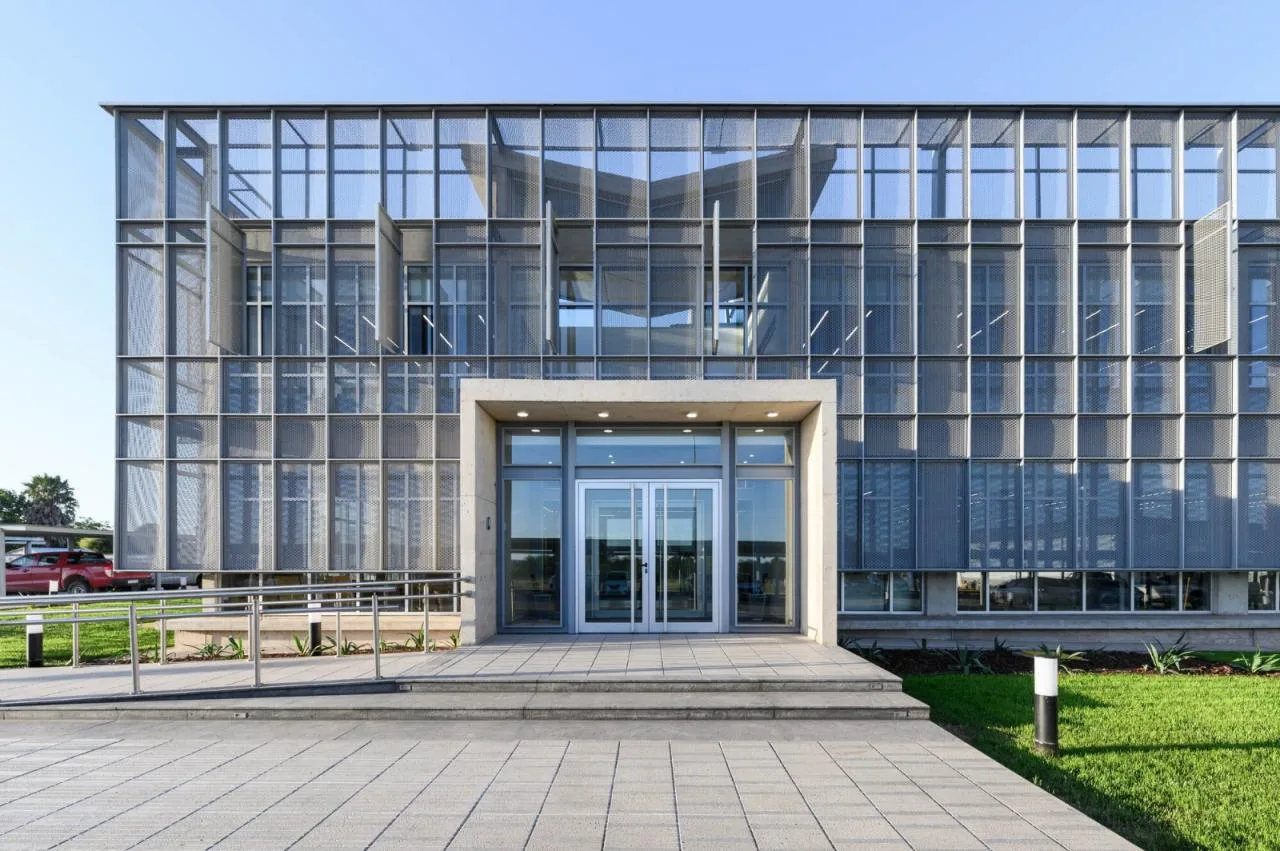
The main facade showcases various architectural elements, including a prominent sign scaled to fit the building, which stands out by interrupting the large metal cladding. Positioned in front of the sign is opaque laminated glass, serving as a backdrop and enclosing the perimeter wall of the service area.
Additionally, a large window equipped with a metal sunshade highlights a functional transition, revealing an employee dining area and a terrace with leisure space that extends the office environment.
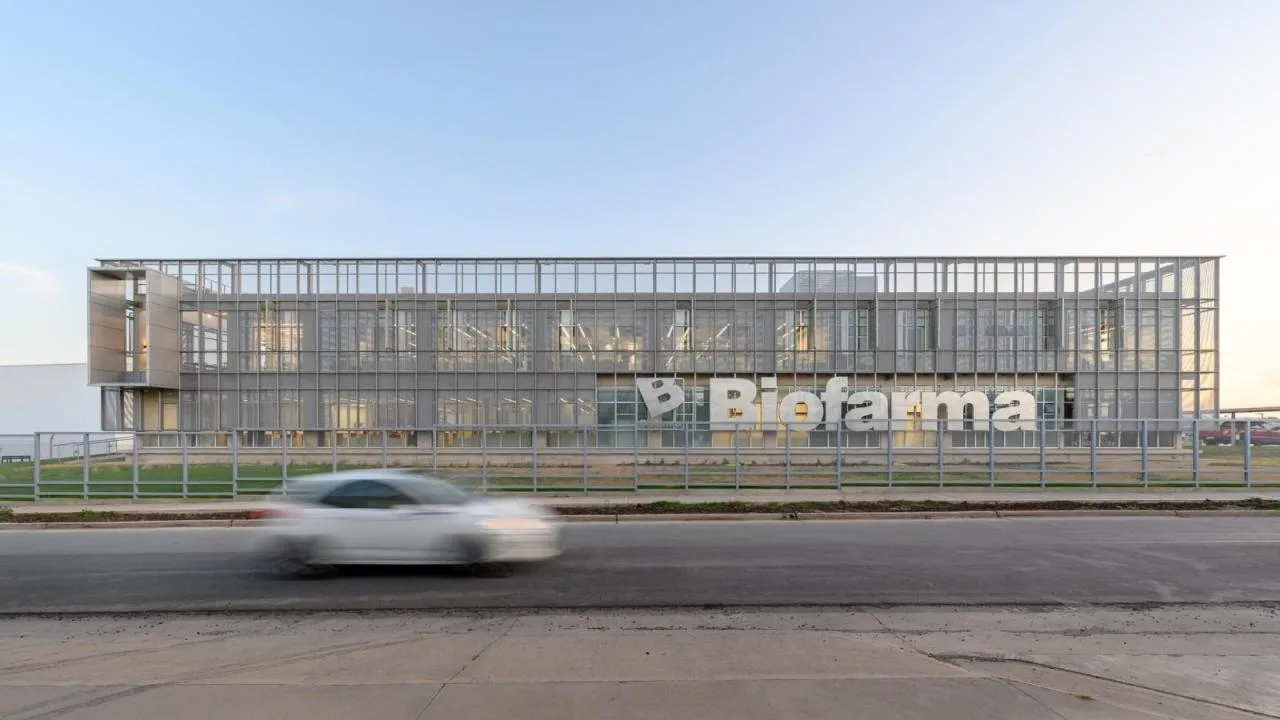
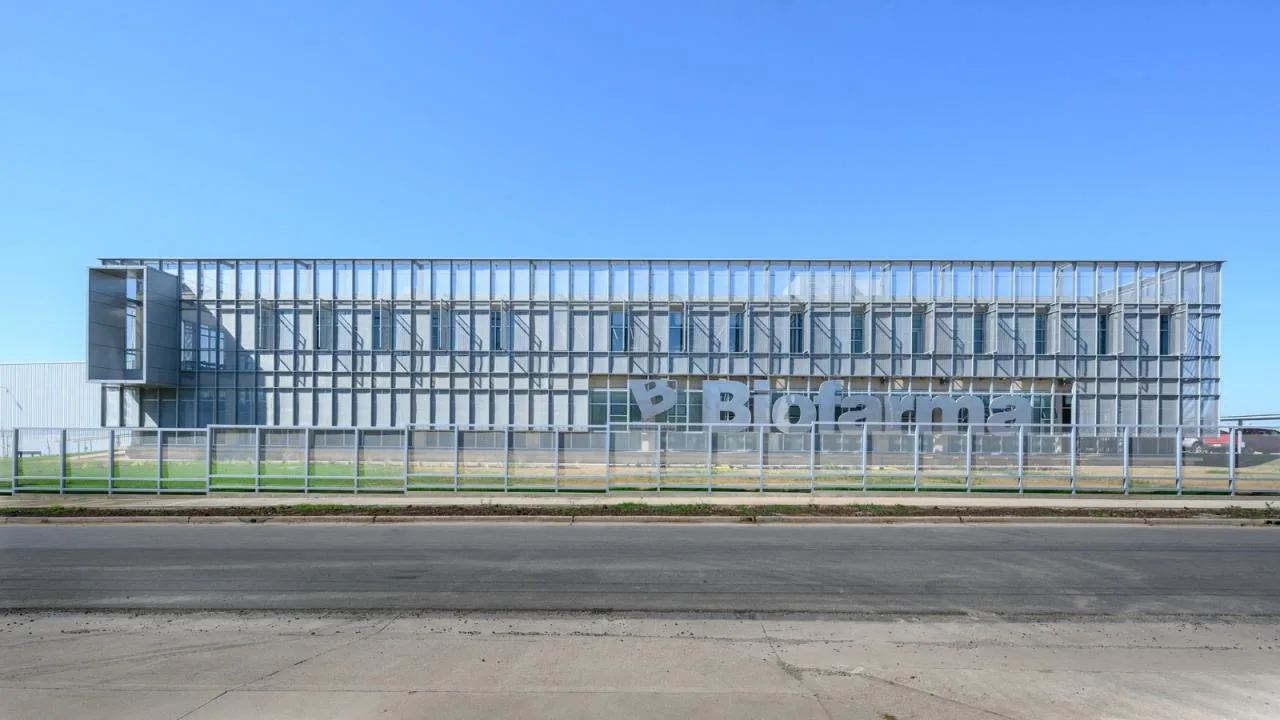
The building’s reinforced concrete structure is independent, featuring sloped floors and beams. The enclosure is composed of multiple simple layers, designed as a passive sustainable system to improve thermal insulation.
The surrounding columns and beams are clad with an integral front wooden structure made of aluminum, paired with sealed double-layer glass fixed to the concrete columns.
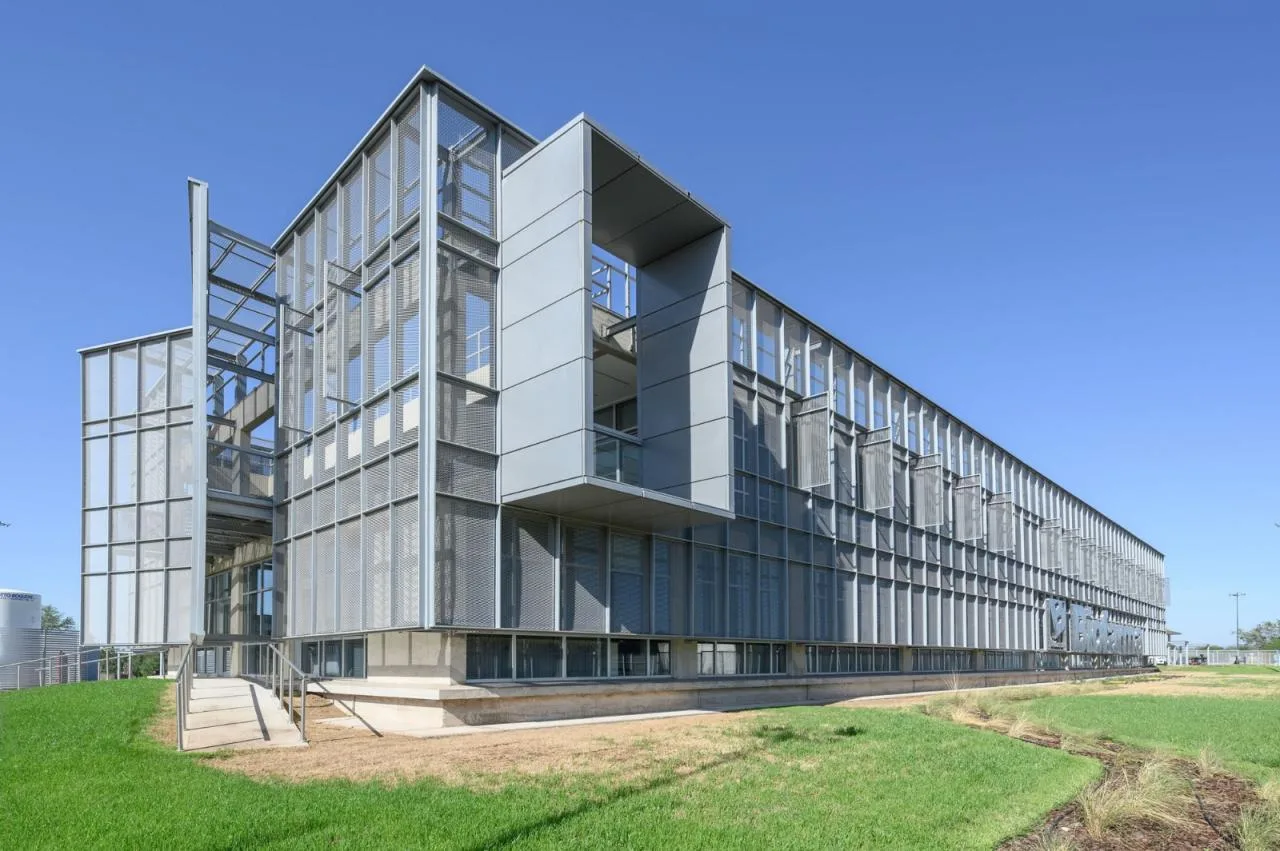
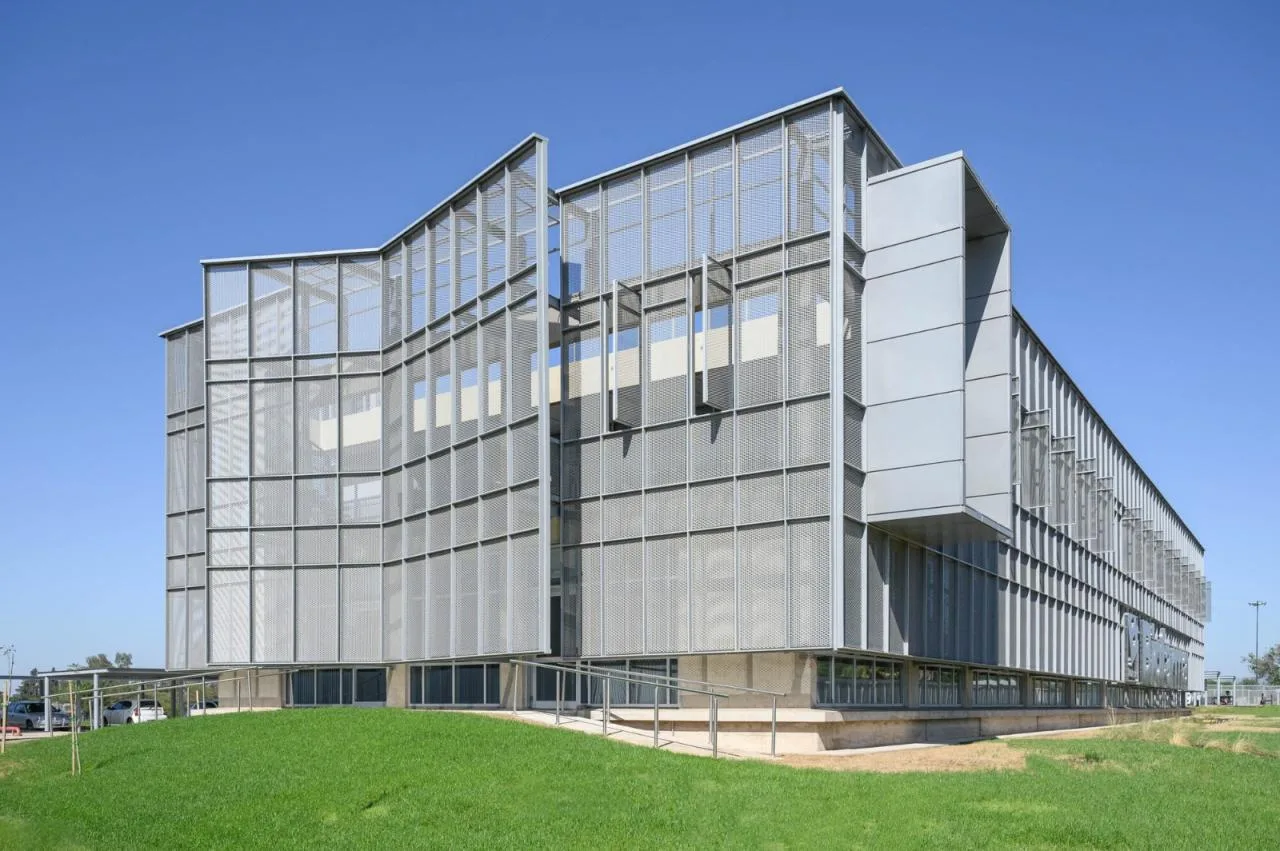
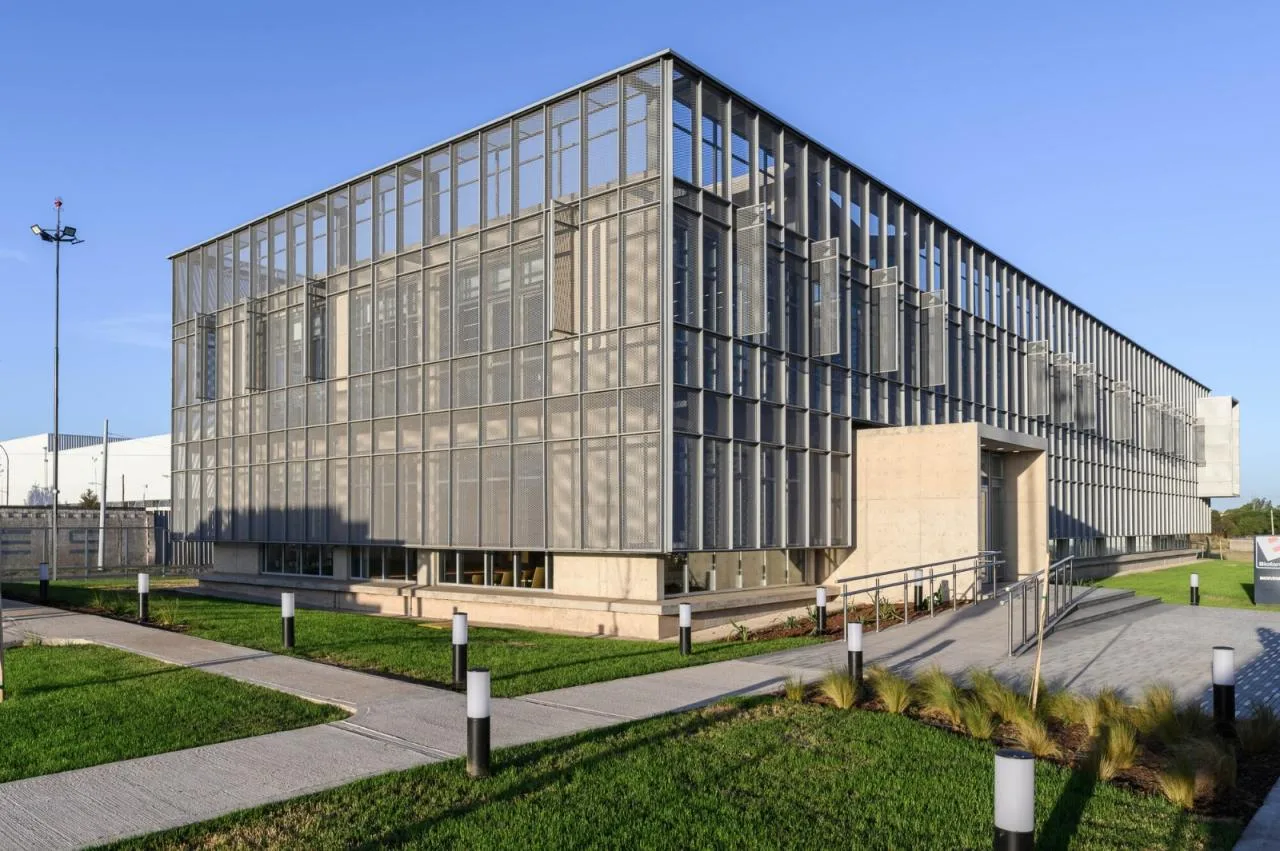
The standard profile brackets are fixed on top, supporting a lower metal pipe framework. A layer of gray pre-coated galvanized expanded metal plate is installed above, separated by 70 centimeters from the aluminum particleboard to provide effective sun protection.
Elevated above ground level, the facade creates a sense of lightness enhanced by the shadows cast on the glass.
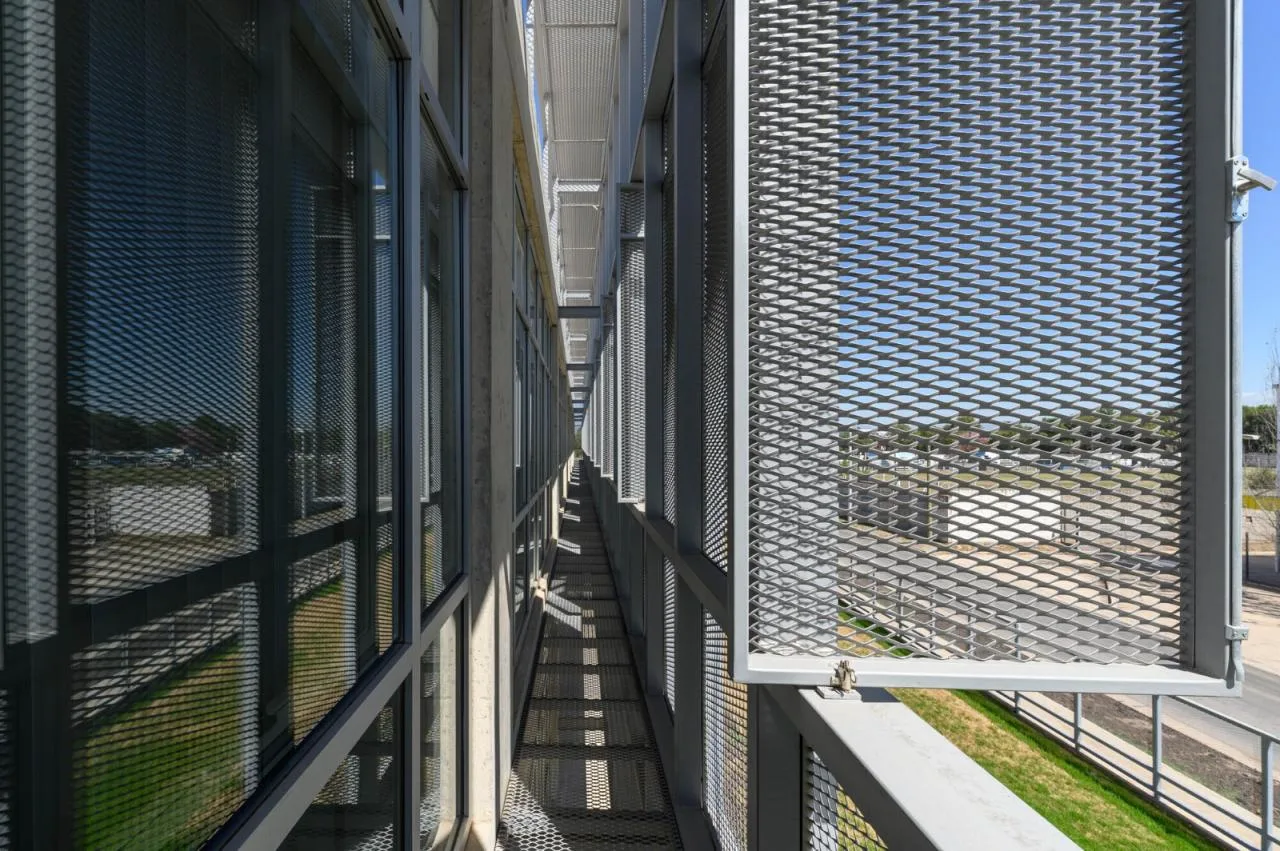
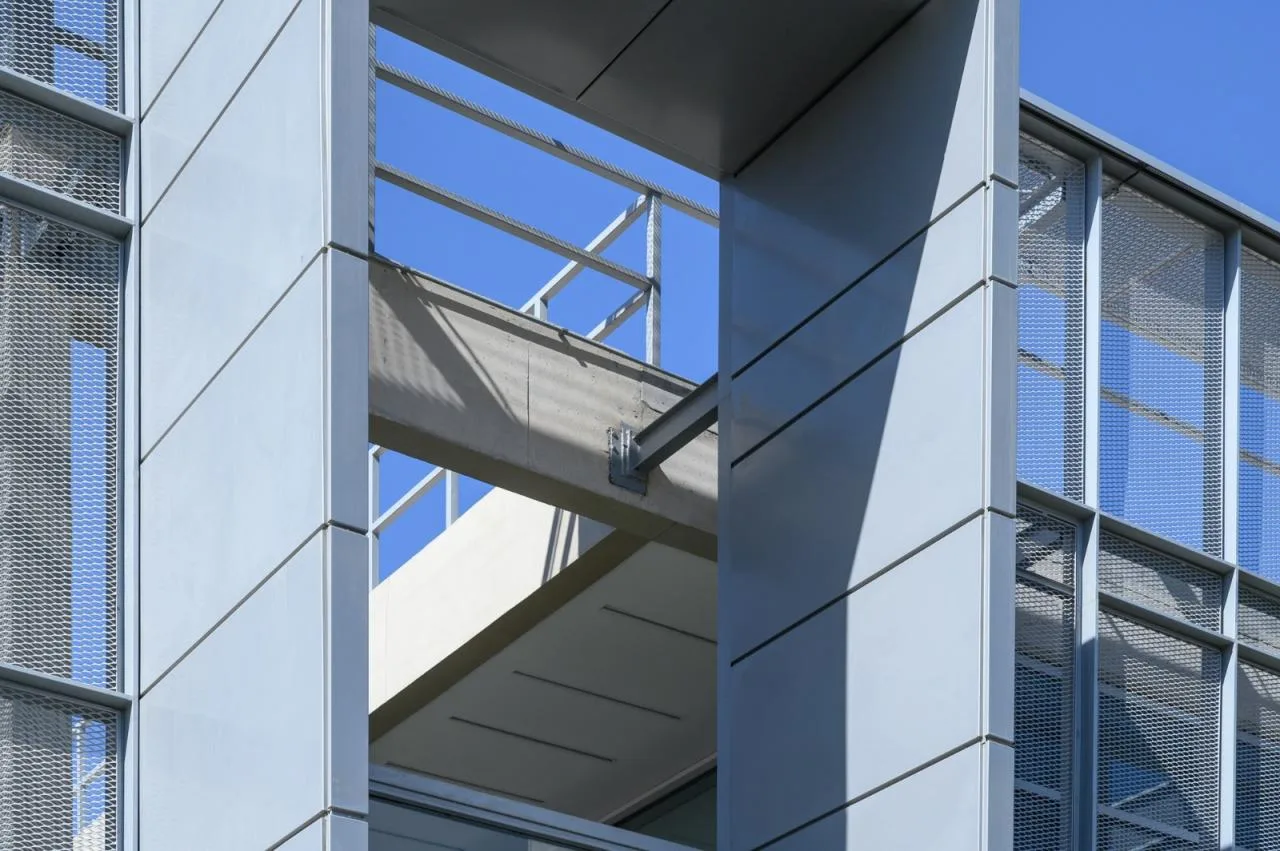
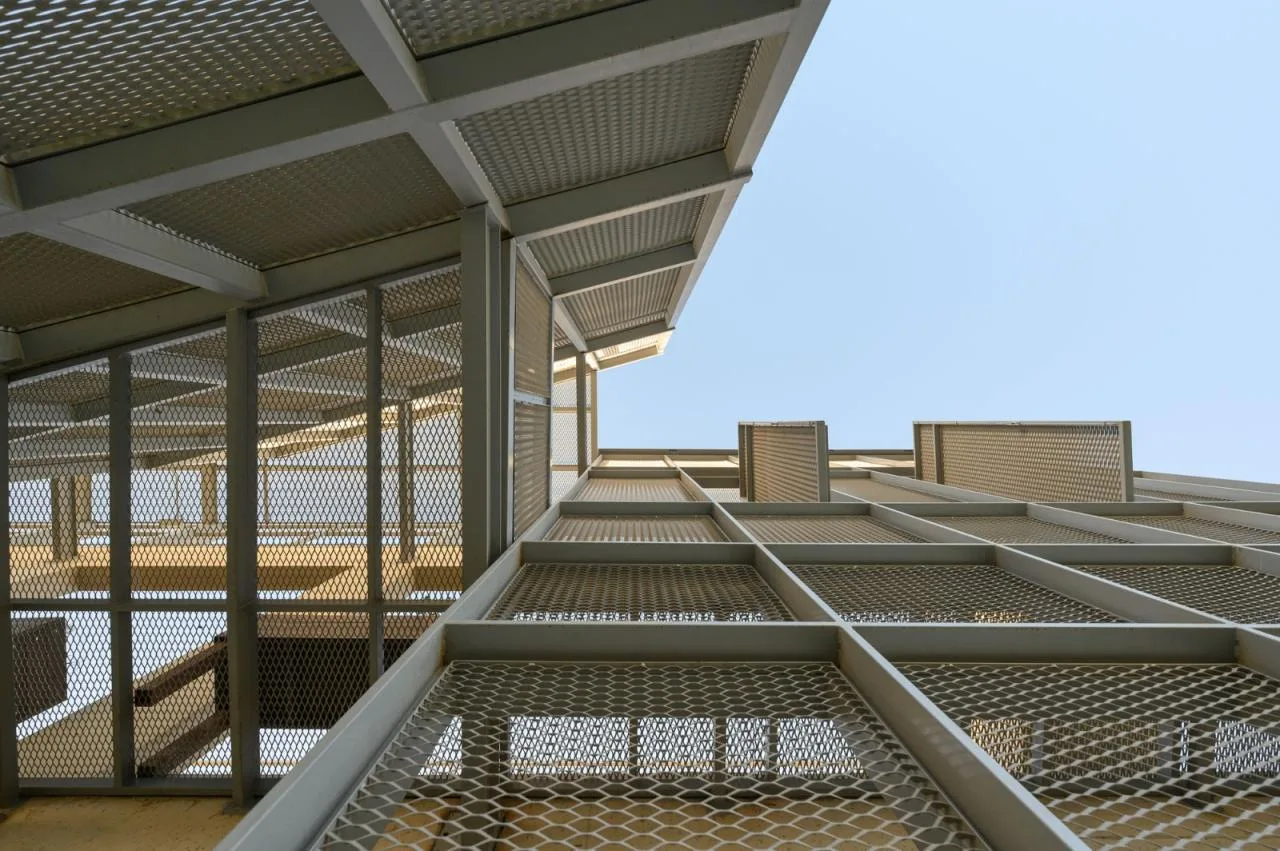
This facade “skin” plays a crucial role by creating an intermediate shading zone between the glass enclosure and the exterior, significantly reducing direct solar radiation and lowering the building’s energy consumption.
To maintain visual transparency between interior and exterior spaces, operable panels allow adjustment according to time schedules.
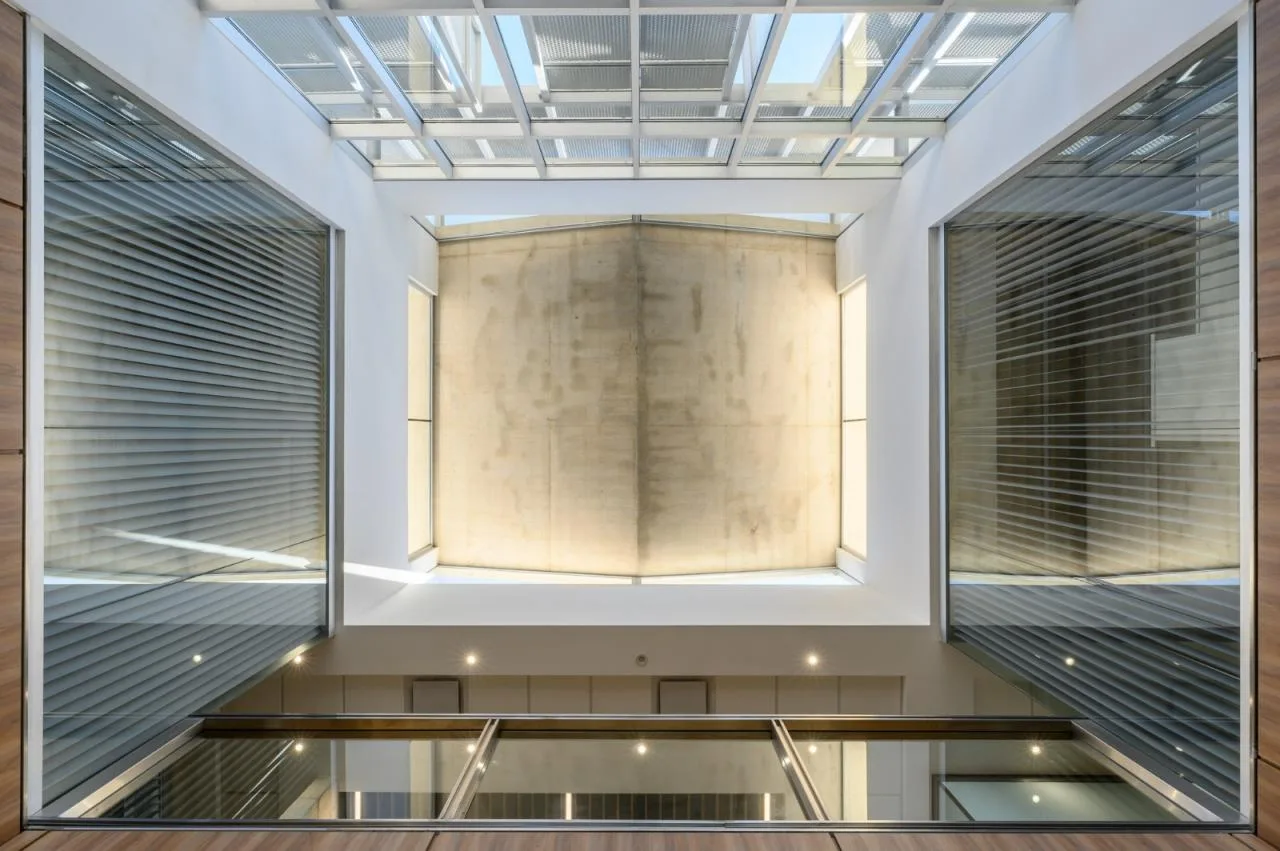
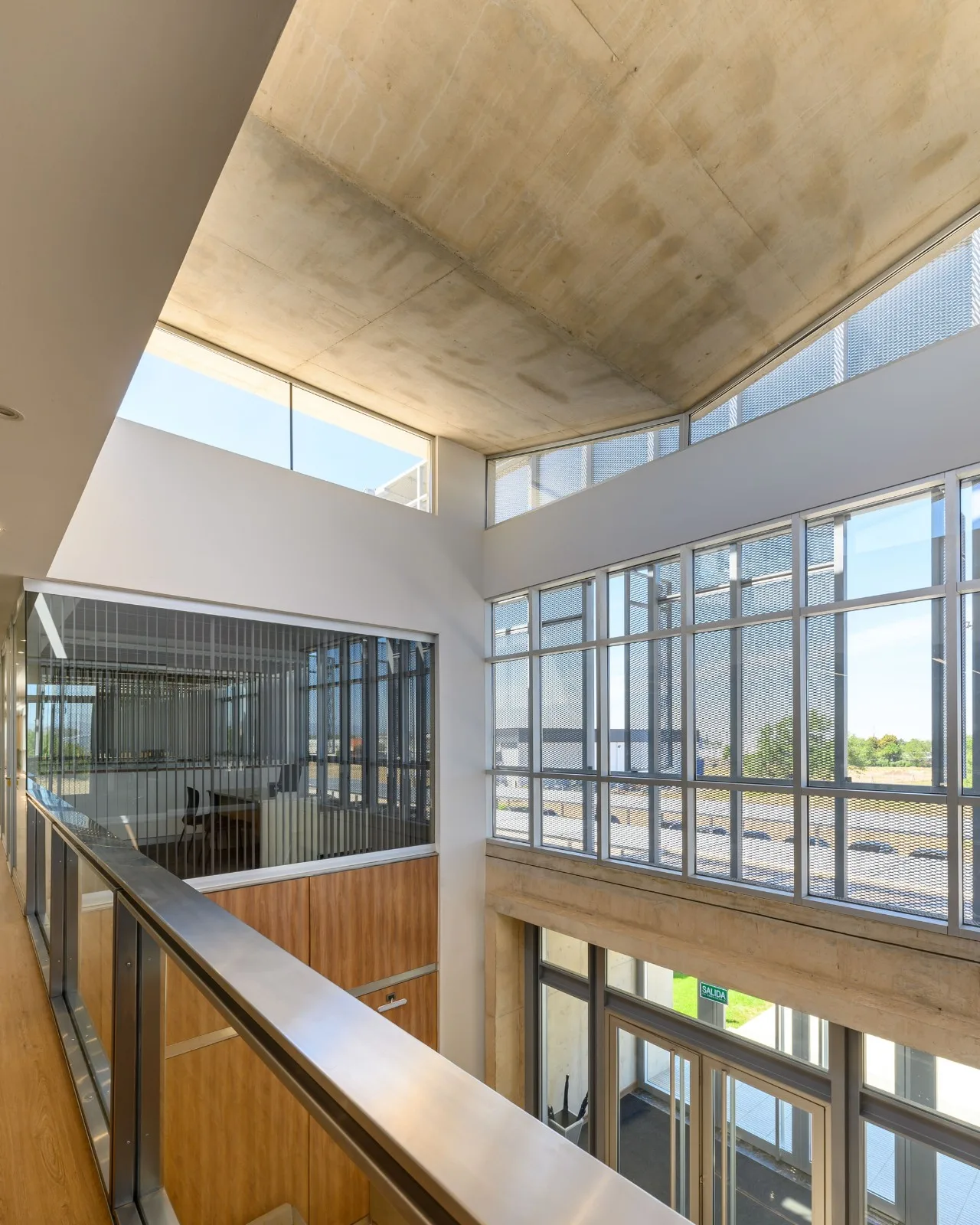
Additionally, vertical strip curtains are installed inside, enabling users to customize brightness levels to suit their needs. This also reinforces the company’s institutional identity and architectural language.
On the main facade, various architectural features emerge, including a large-scale sign that draws attention by interrupting the expansive metal cladding. Opaque laminated glass forms the backdrop for the sign and the service area’s enclosing wall.
Also featured is a large window with a metal sunshade, marking a change of function—this area houses an employee cafeteria and a terrace with a leisure zone, extending the office space.
Project Drawings
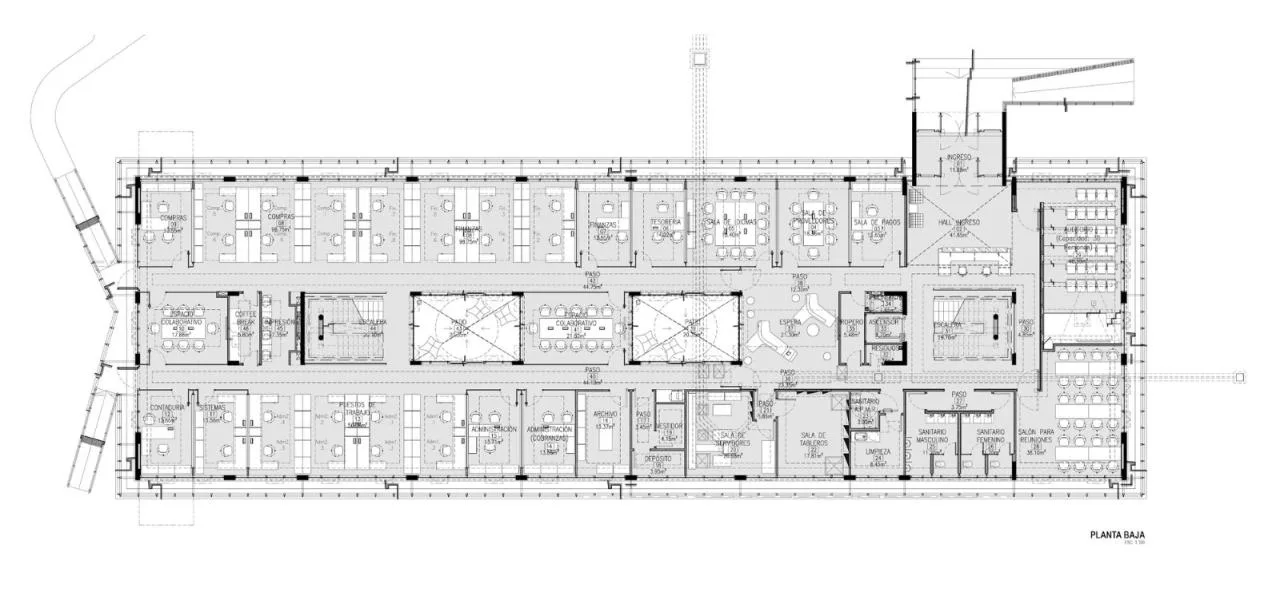
△ First Floor Plan
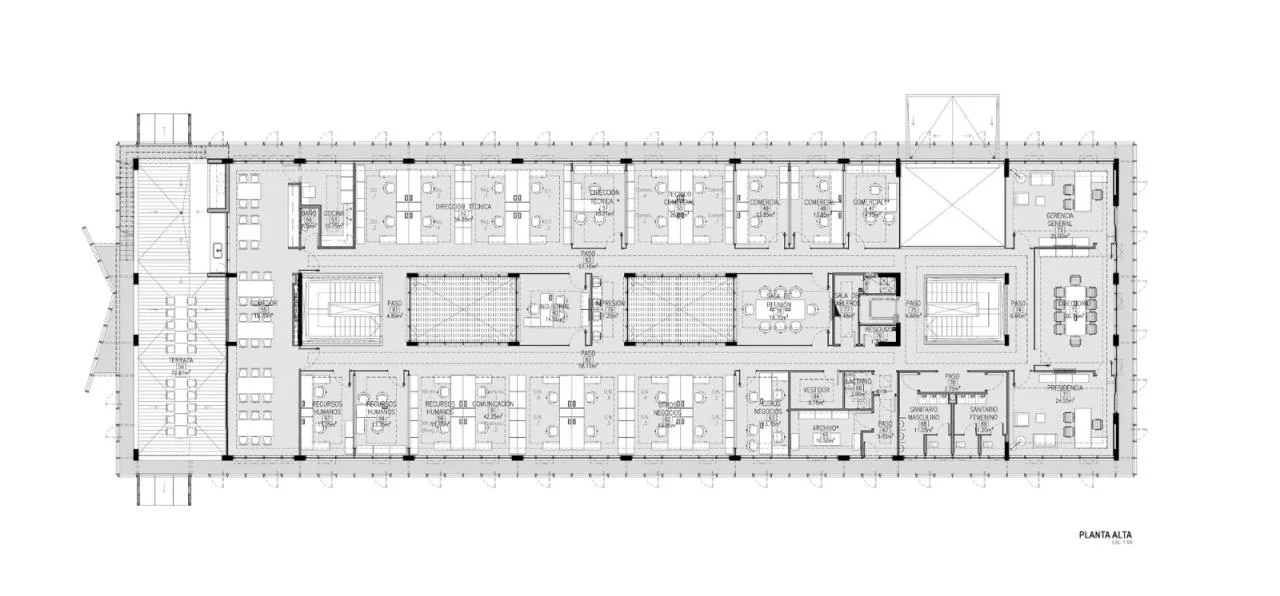
△ Second Floor Plan
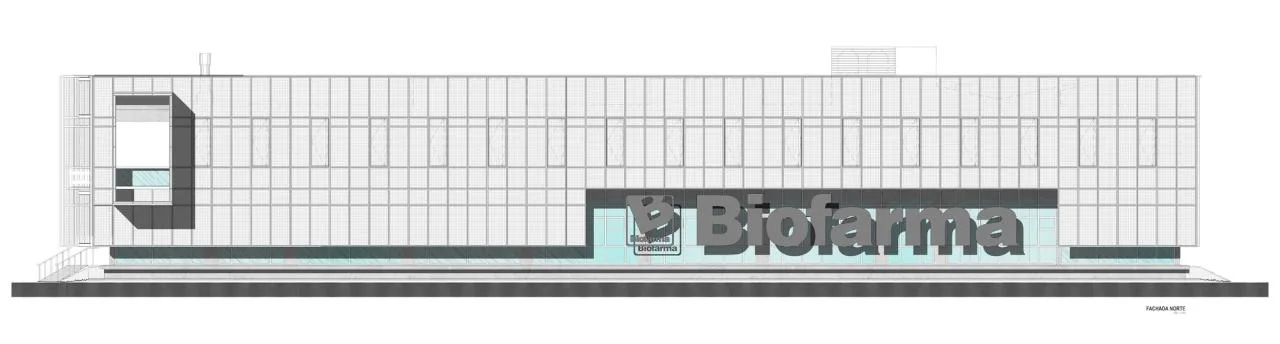
△ Elevation Drawing
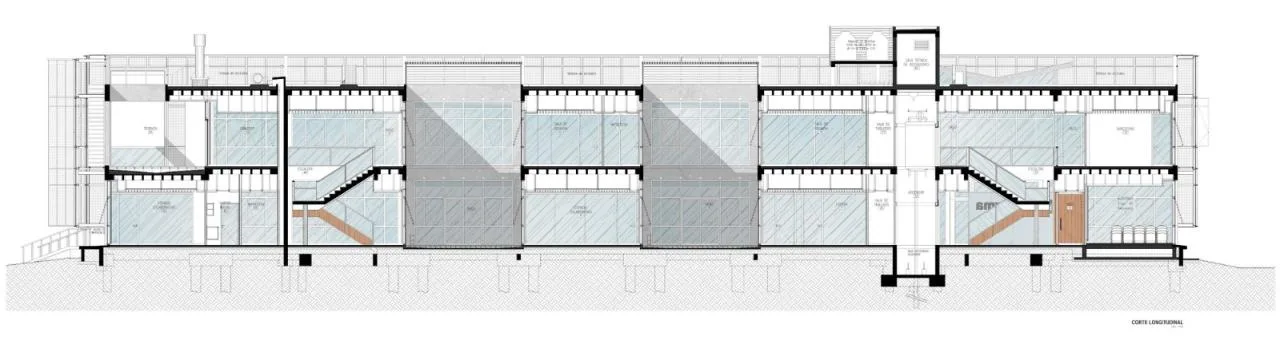
△ Section Diagram
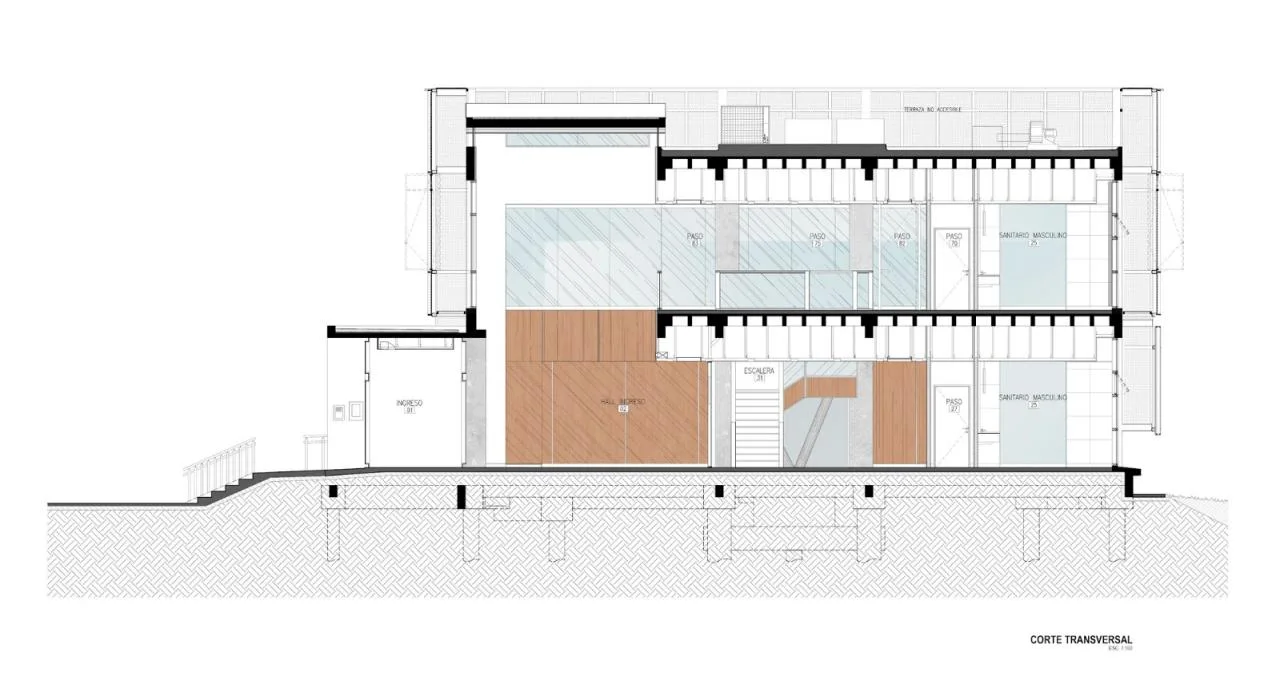
△ Section Diagram
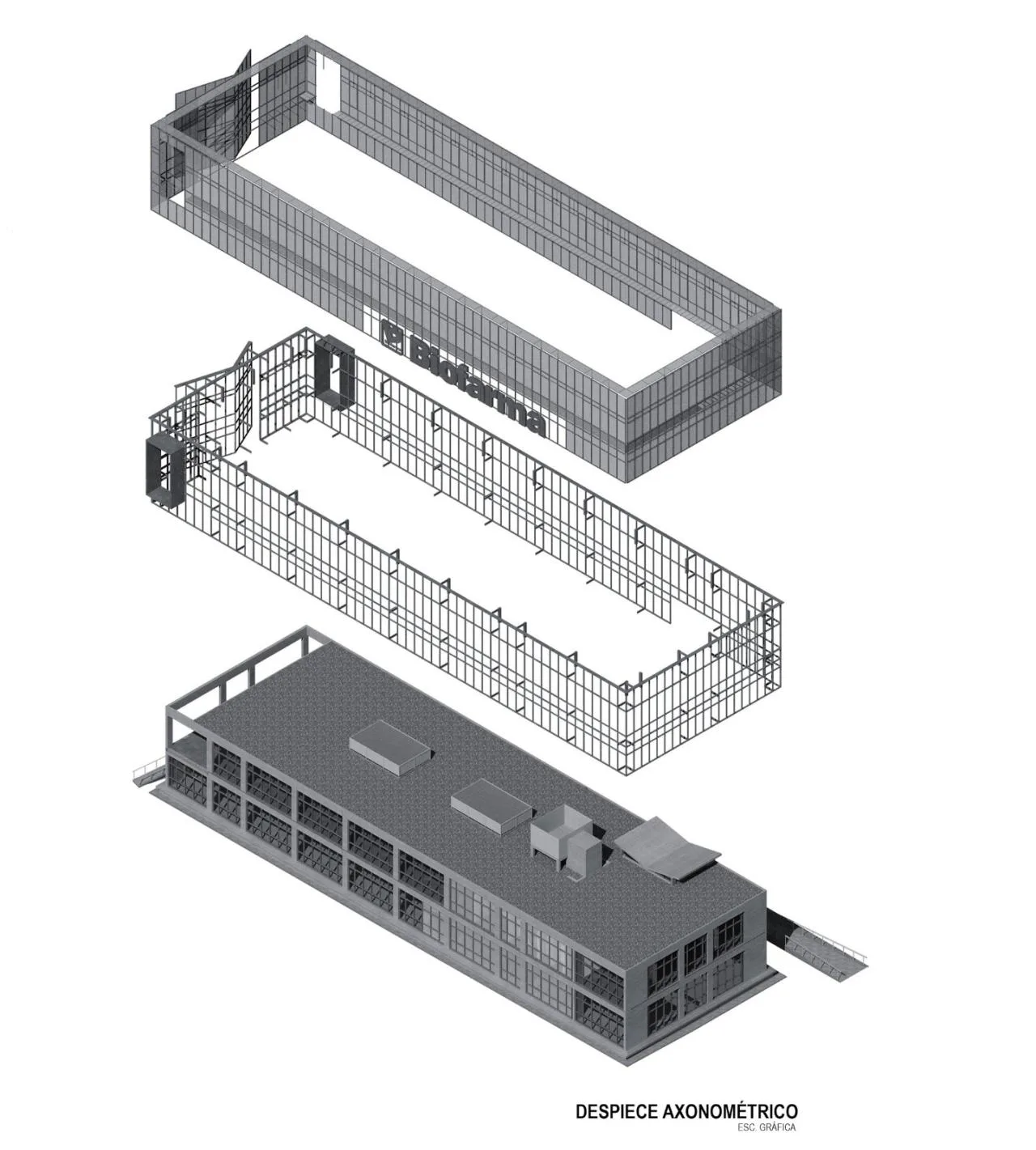
△ Exploded Axonometric Diagram
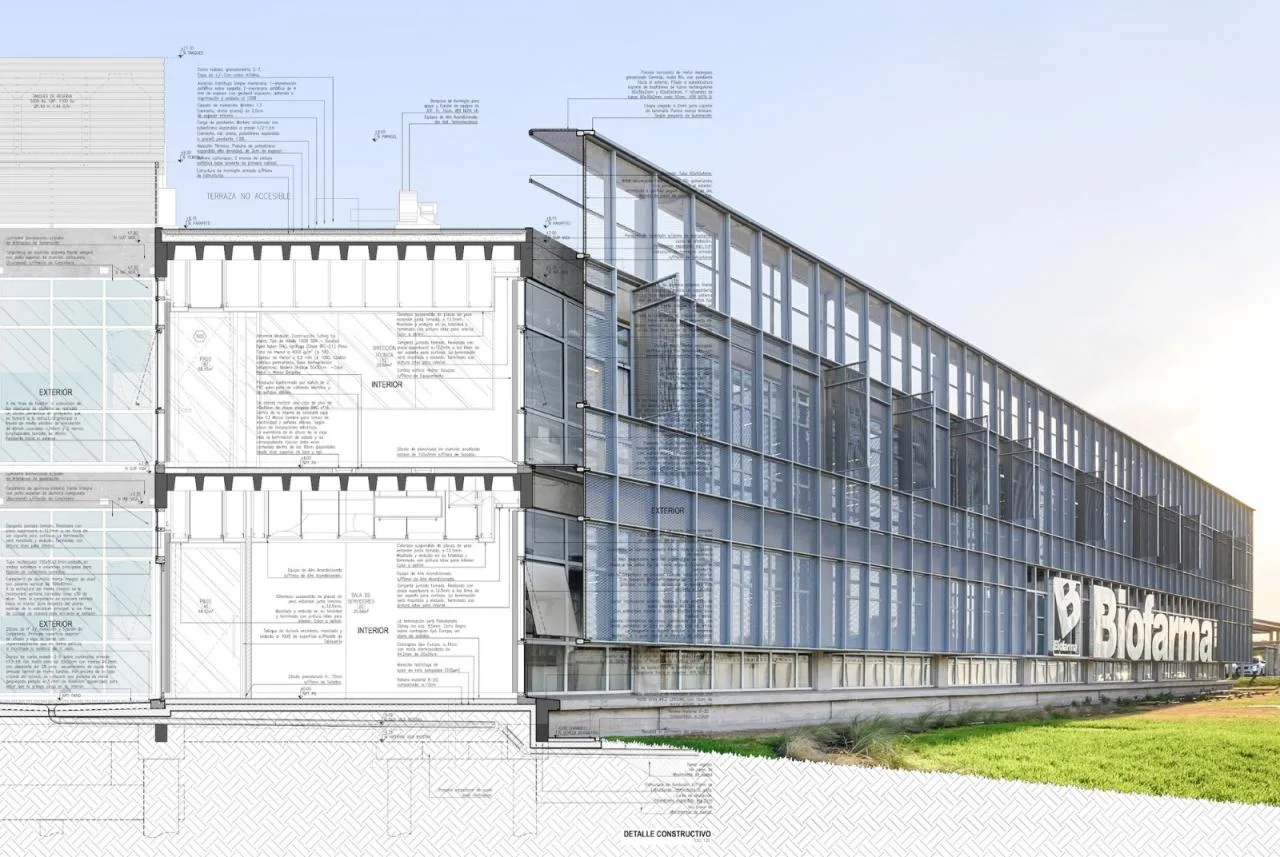
△ Sectional Perspective
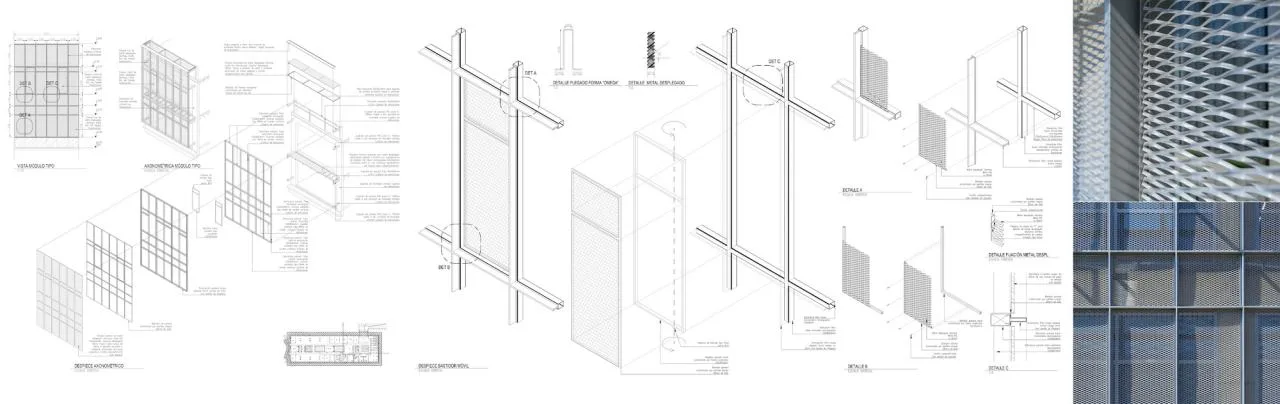
Schematic Diagram of the Facade Structure
Project Information
Architects: Santiago Viale Lescano & Juan Manuel Juárez
Photographer: Gonzalo Viramonte
Manufacturers: Abest, Curtains Suquía, ETC, Julia Sol, RASSEGNA
Collaborators: Salvador Viale, Tito Maximiliano Gonza, Francisco Gavilan, Nicolás Macasso, Santiago Viale Beviglia, Rocío Cornacchione, Emiliano Pino, Nicolás Borra, Lourdes Bruno, Fiama Ríos, Ricardo Cortesse, Eduardo Storaccio, Sonja Czeranski, Juan Macías
Location: Córdoba, Argentina












Must log in before commenting!
Sign Up