
“No one is an island; every book is a world.” – Island Bookstore
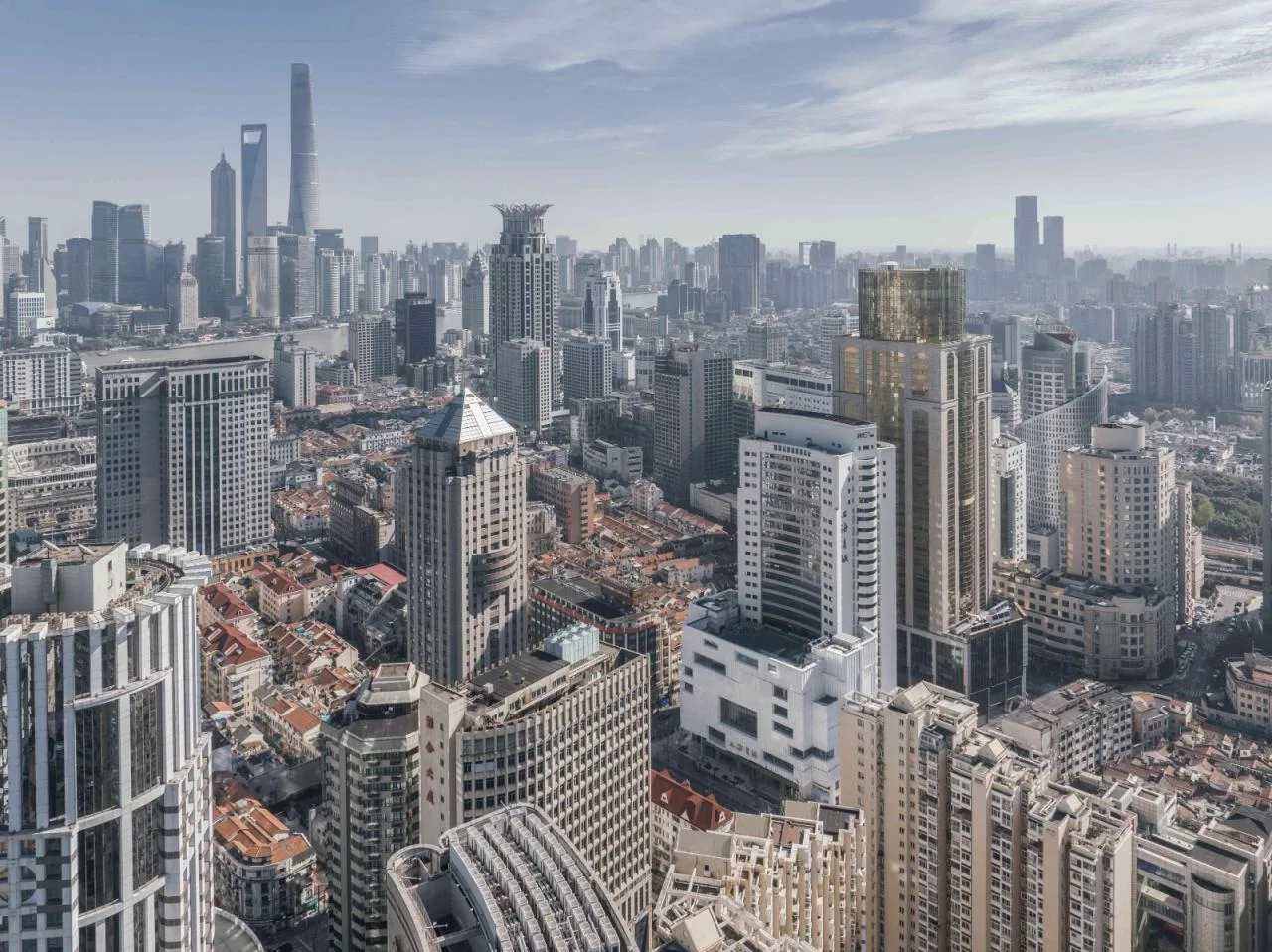
Aerial view of Huangpu District and Pudong © CreatAR Images
After two years of closure and renovation, Shanghai Book City, affectionately nicknamed the “Crystal Palace” by netizens, reopened to the public on October 28, 2023, unveiling a refreshed new look.
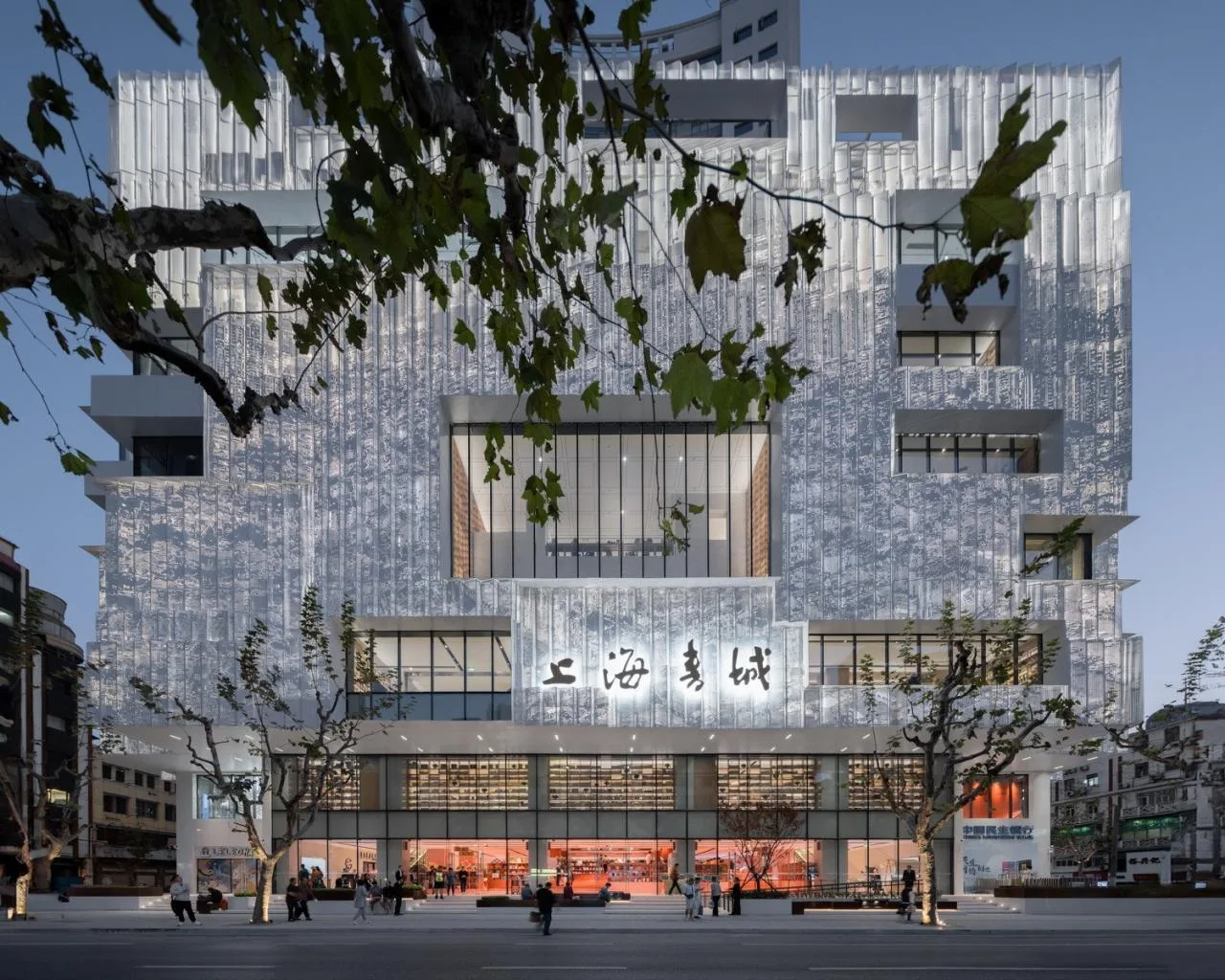
△ Night view of the main facade from Fuzhou Road © CreatAR Images
Challenge
Loyalty in art is as elusive as in emotions.
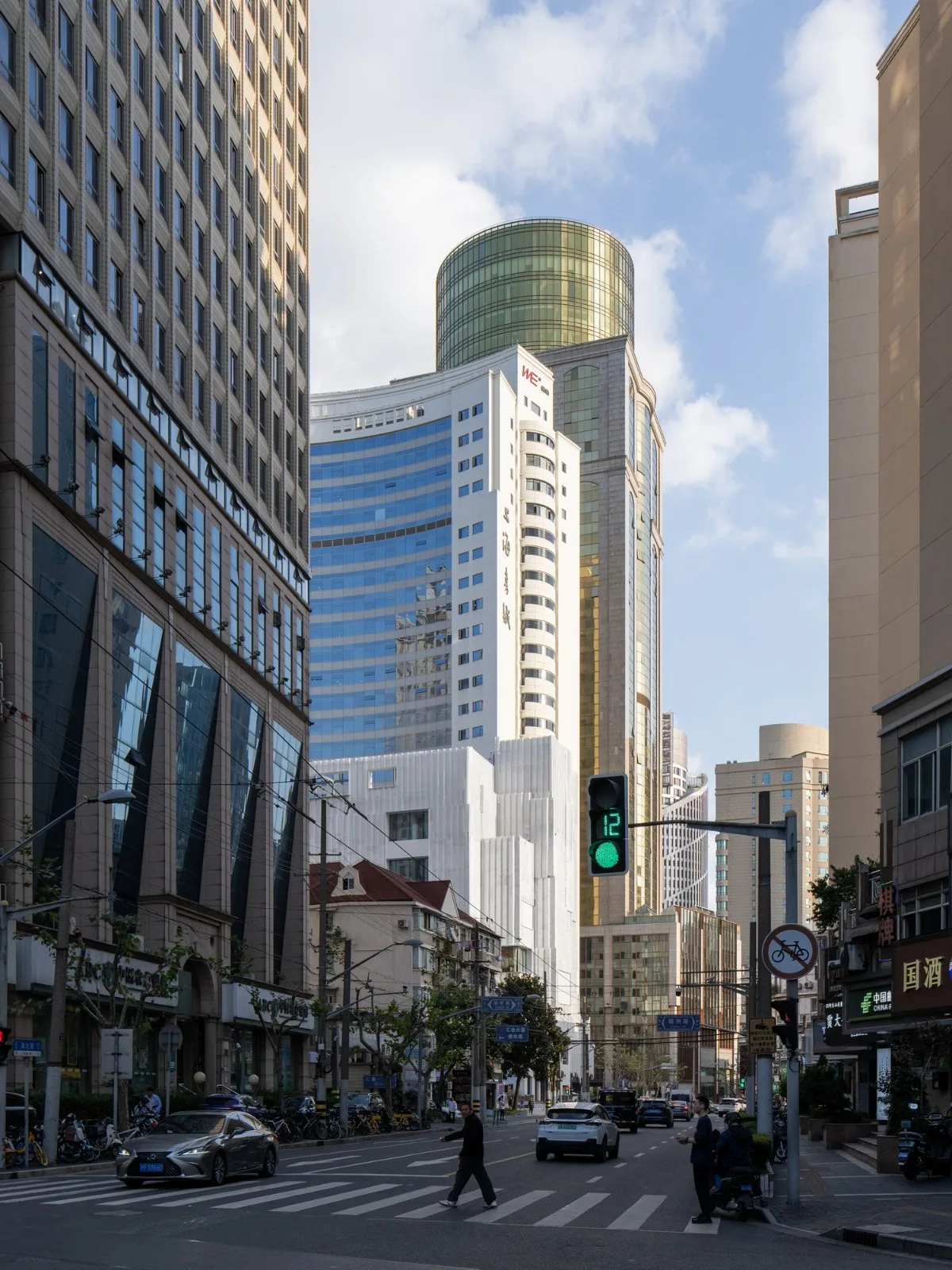
△ Street view of Shanghai Book City from Hubei Road and Hankou Road during daytime © CreatAR Images
Bookstores Are For Those Who Don’t Read
In China, the population that regularly reads books is significantly smaller than those who do not. A bookstore cannot survive on the support of a limited group of readers alone. Therefore, bookstores must be designed to attract people who do not usually read books, inviting them inside and enabling them to save these spaces.
With mobile phone usage dominating online users’ daily time—often surpassing time spent offline—and the lower prices found online compared to physical stores, bookstores have lost many readers. The goal is to encourage some of these online users to spend even an hour of their daily 8 to 10 hours on their phones walking into physical bookstores. Through an experience they cannot find online, these users can help sustain bookstores.
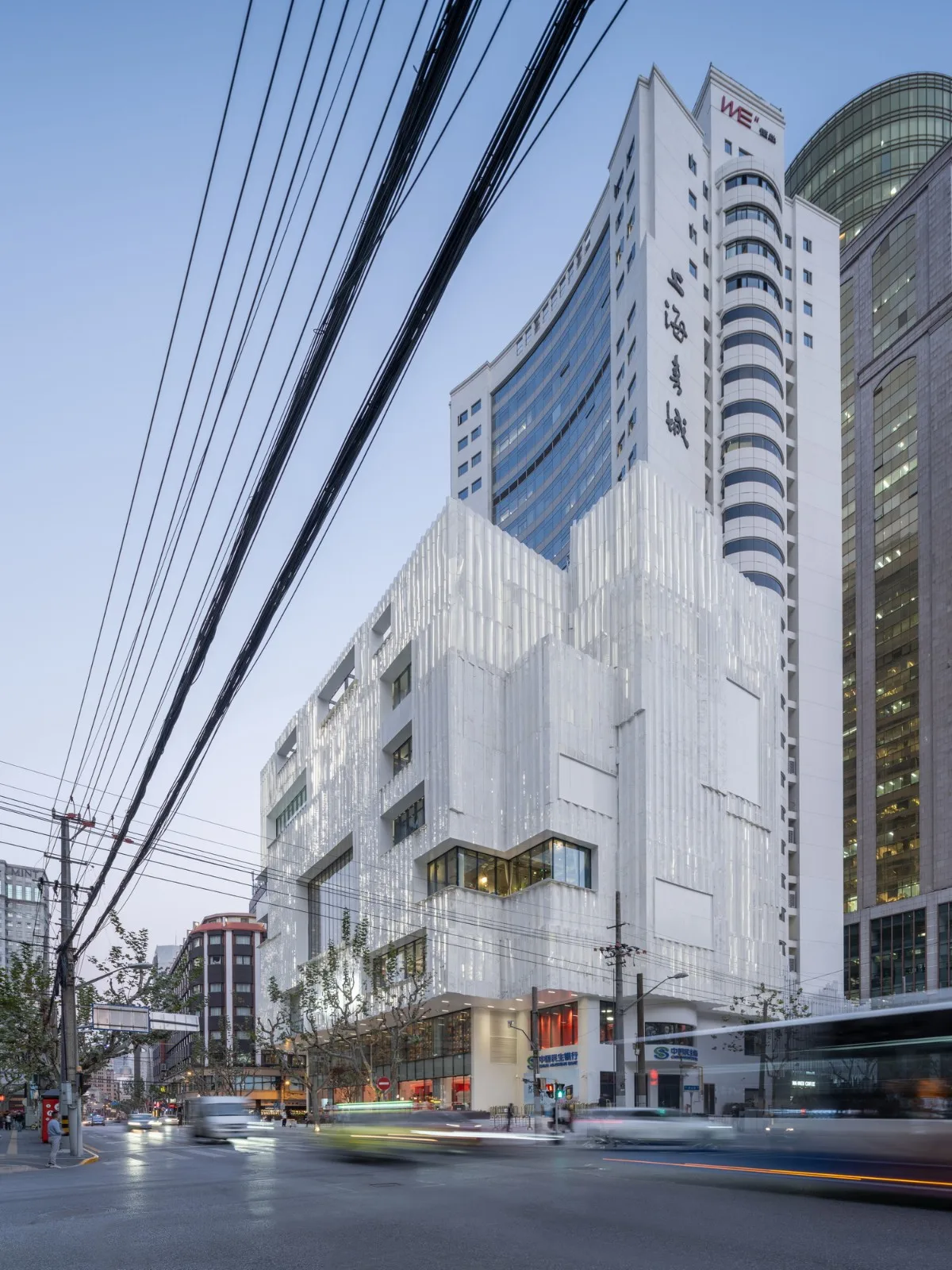
△ Street view of Shanghai Book City from Fuzhou Road © CreatAR Images
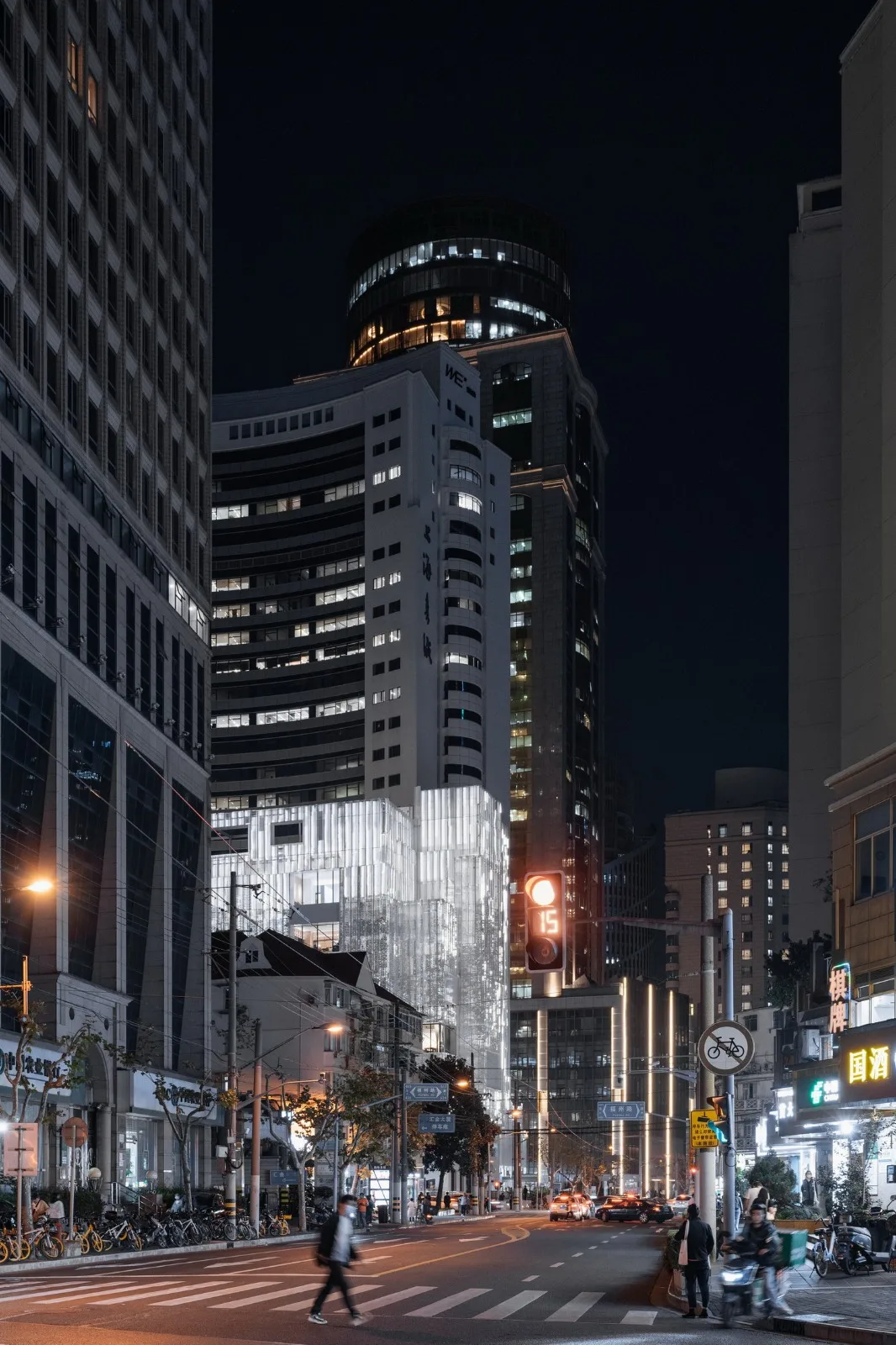
△ Night street view of Shanghai Book City from Hubei Road and Hankou Road © CreatAR Images
The Greatest Challenge: Overcoming Romanticized Memories
At the end of 2021, Shanghai Book City announced its temporary closure for renovation, which some misunderstood as a permanent shutdown. This led a large number of readers to visit and pay their respects. In their nostalgia, they overlooked the real challenges faced by China’s first one-stop book sales complex, which declined under the impact of the Internet. Instead, a collective memory emerged—beautified, elevated, and idealized—which can distort the true nature of the project and foster distrust toward future changes. The architect’s biggest challenge was to honor and refine this collective memory.
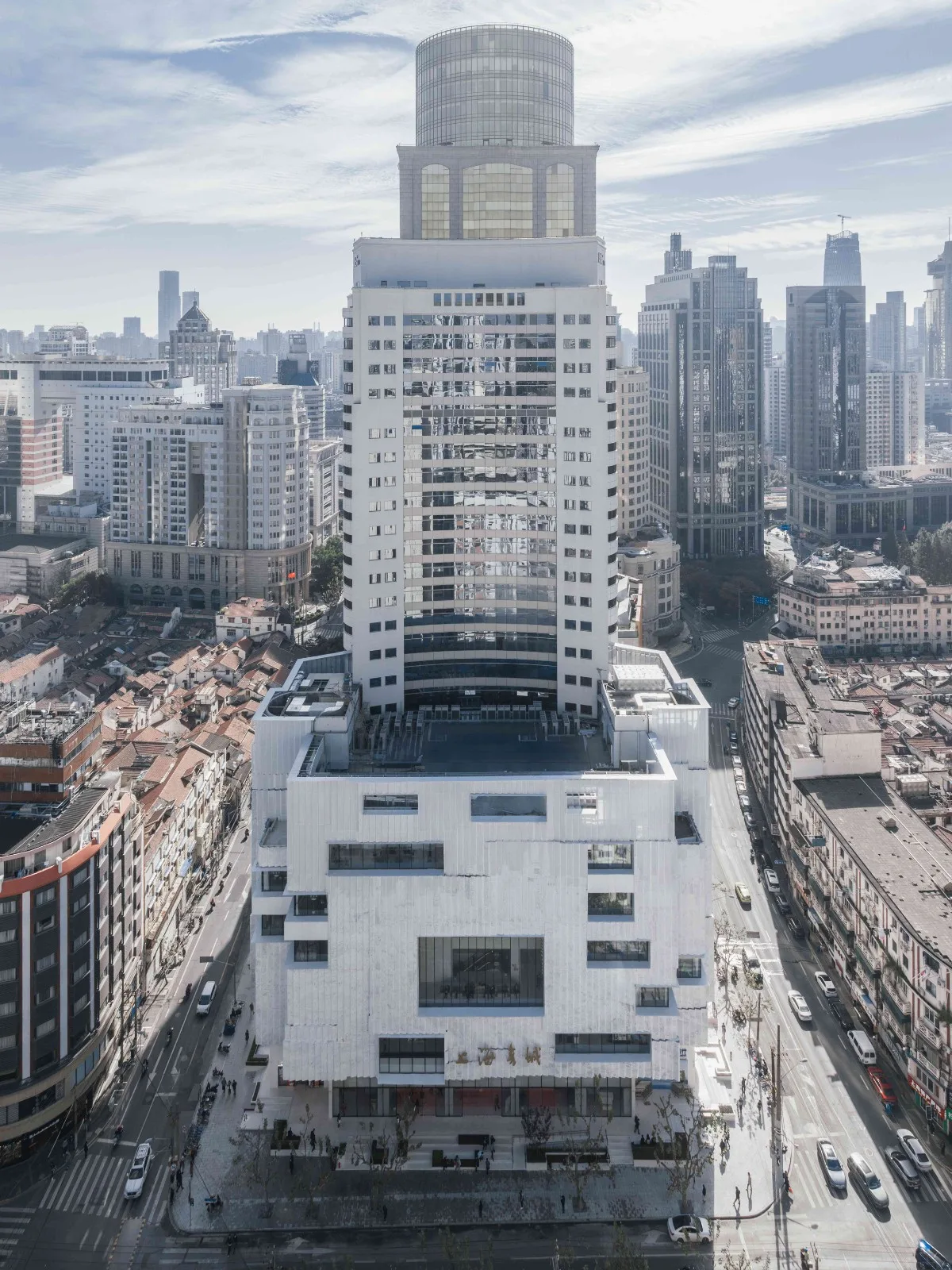
Aerial view of Shanghai Book City © CreatAR Images
After the closing event, Zhu Xudong asked me how I would renovate the bookstore. I smiled quietly, understanding the deeper meaning behind the question. While collective memory is beautiful, from a professional standpoint, the existing spatial layout and architectural facade lack commemorative architectural significance. I felt no burden in redesigning. I decided Shanghai Book City should transform from a bookstore into a cultural complex offering diverse commercial and social functions, rooted in knowledge-sharing platforms.
This cultural complex is both a tangible and conceptual vertical city—an idealistic vision of Shanghai. It is a new chapter in the urban epic, growing from the old book city, deeply connected to history, with books as its foundation.
Building a New City with Books
“Memory is also a burden; it turns various markers to affirm the city’s existence. The invisible scenery shapes the visible.” – Invisible City
Conditions for Rebuilding the City
During this renovation, the 1998-built bookstore had to meet the latest fire safety codes. This required increasing and repositioning evacuation staircases, upgrading sprinkler systems, and adding fire shutters.
Structural modifications were limited to less than 10% of the total structure. The bookstore’s original footprint of 12,000 square meters could not be altered—no expansion or reduction allowed. Additionally, the original basement no longer belonged to the bookstore.
To balance operational costs without compromising atmosphere, compatible commercial formats were introduced alongside the bookstore.
The goal was to preserve Shanghai Book City’s status as a cultural landmark and to revitalize Fuzhou Road as a vibrant “cultural street,” ensuring operational efficiency through this upgrade.
Building the City from “Shushan” (Book Mountain)
Having often walked from Conggong Road to the Bund via Xinkai River and then to Fuzhou Road, I value Fuzhou Road more than Nanjing Road. However, when Fuzhou Road became a one-way street with two lanes, its narrow sidewalks lost their charm for pedestrians.
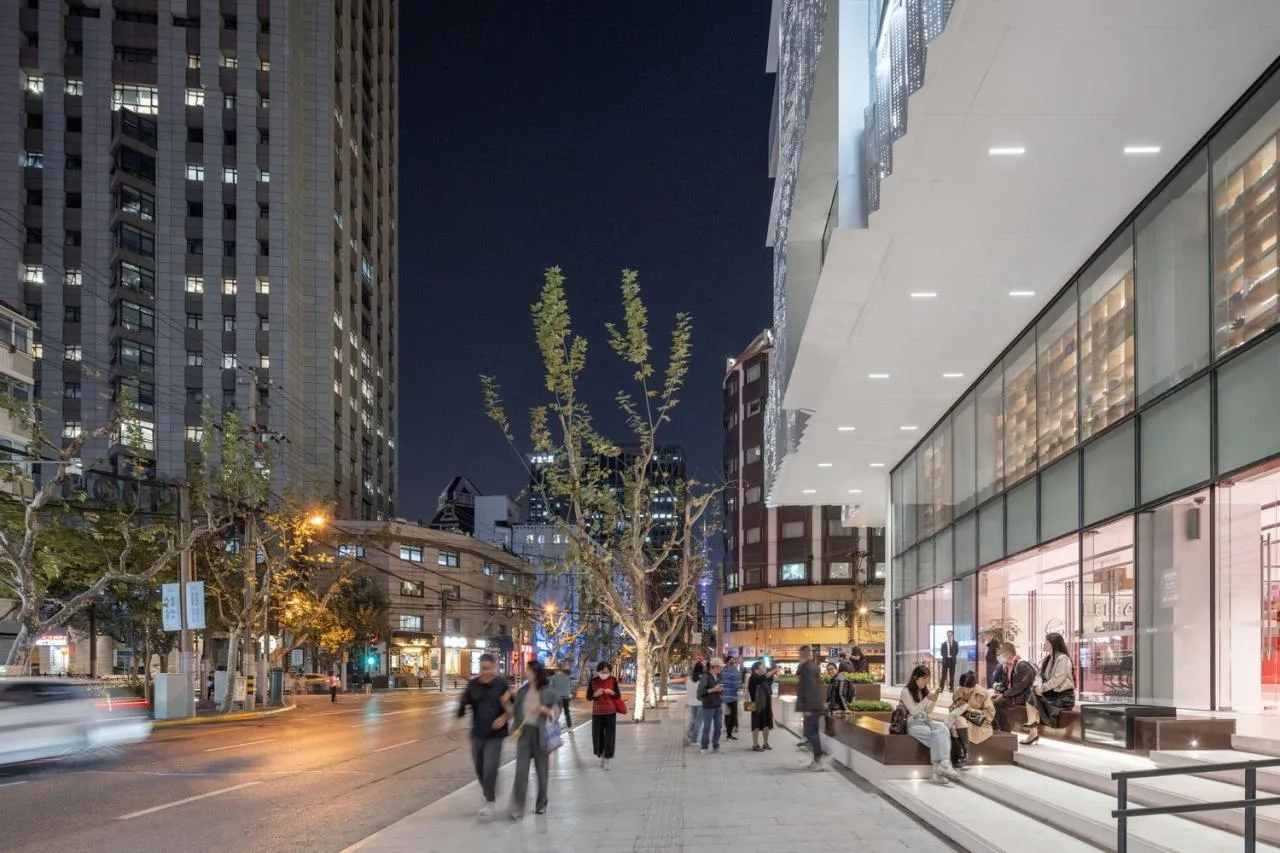
Main entrance of Shanghai Book City on Fuzhou Road © CreatAR Images
Taking advantage of this renovation, I aimed to free up first-floor space to create a manageable, semi-open public cultural square linked to the pedestrian walkway. This provides citizens a gathering space on Fuzhou Road, which had lost its walkability.
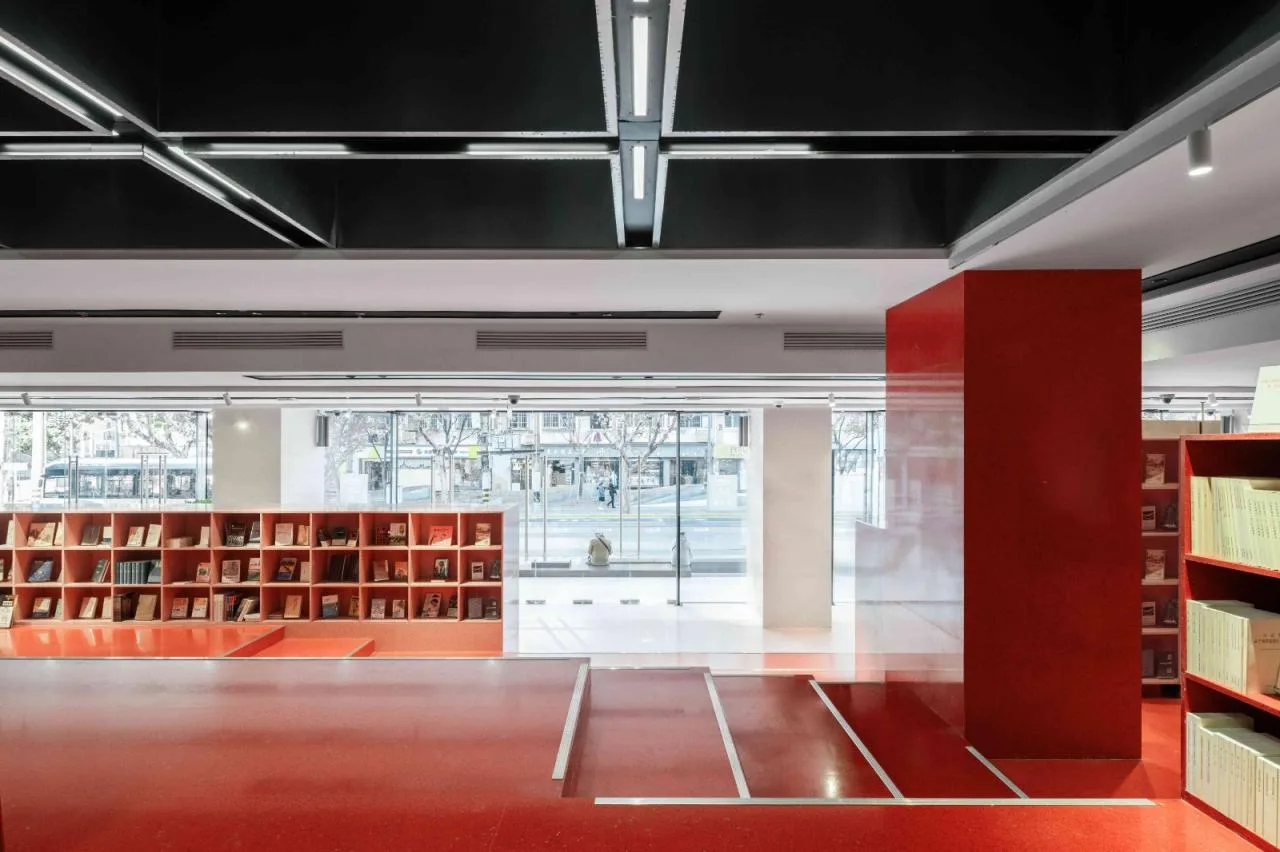
Using the original building’s height differences and sidewalk levels, I designed an indoor terrace-like square called “Shushan” (Book Mountain). This three-dimensional square deep inside the building acts as a venue for book promotions, exhibitions, events, and cultural activities. Visitors can sit, browse, wander freely, improvise, or even perform. From its highest point, one can overlook bustling Fuzhou Road and enjoy moments of contemplation.
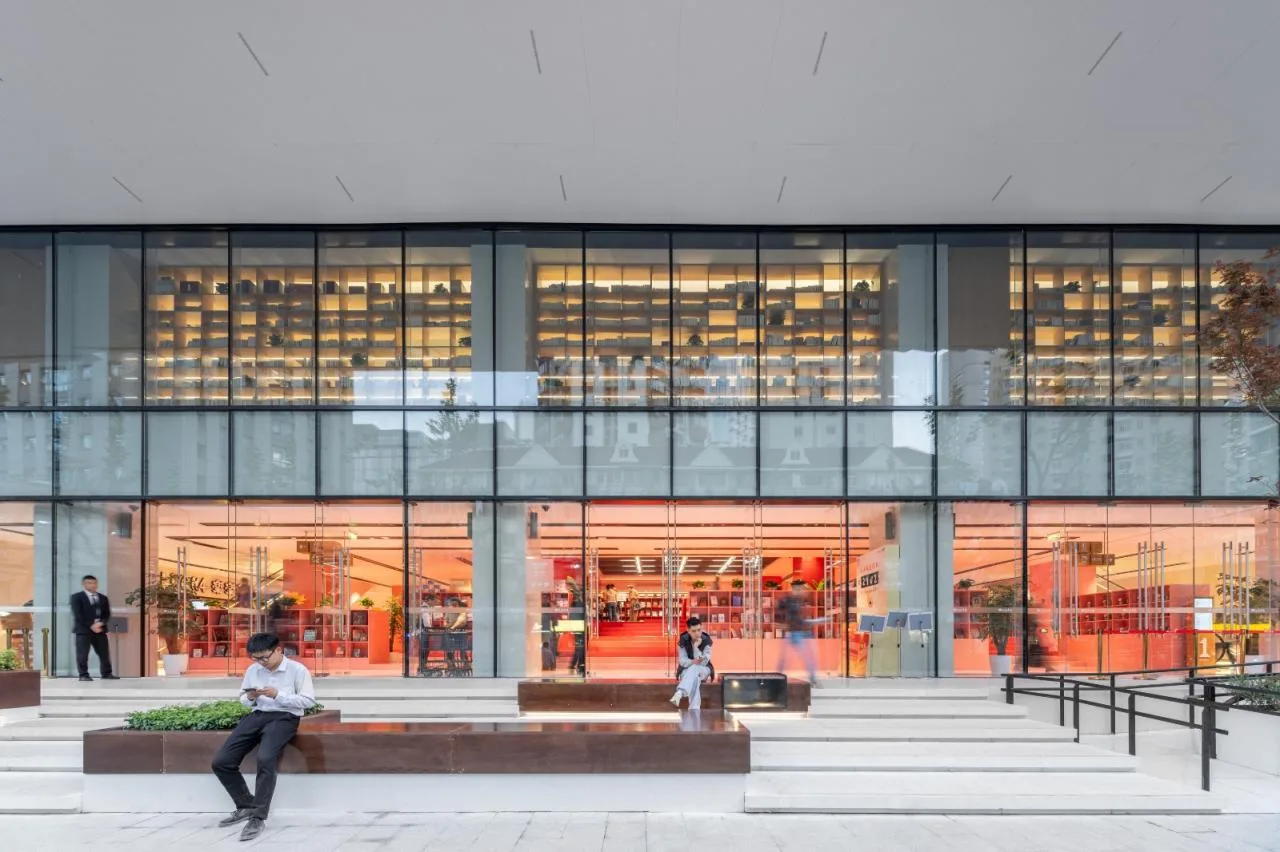
Main entrance and landscape of Shanghai Book City on Fuzhou Road © CreatAR Images
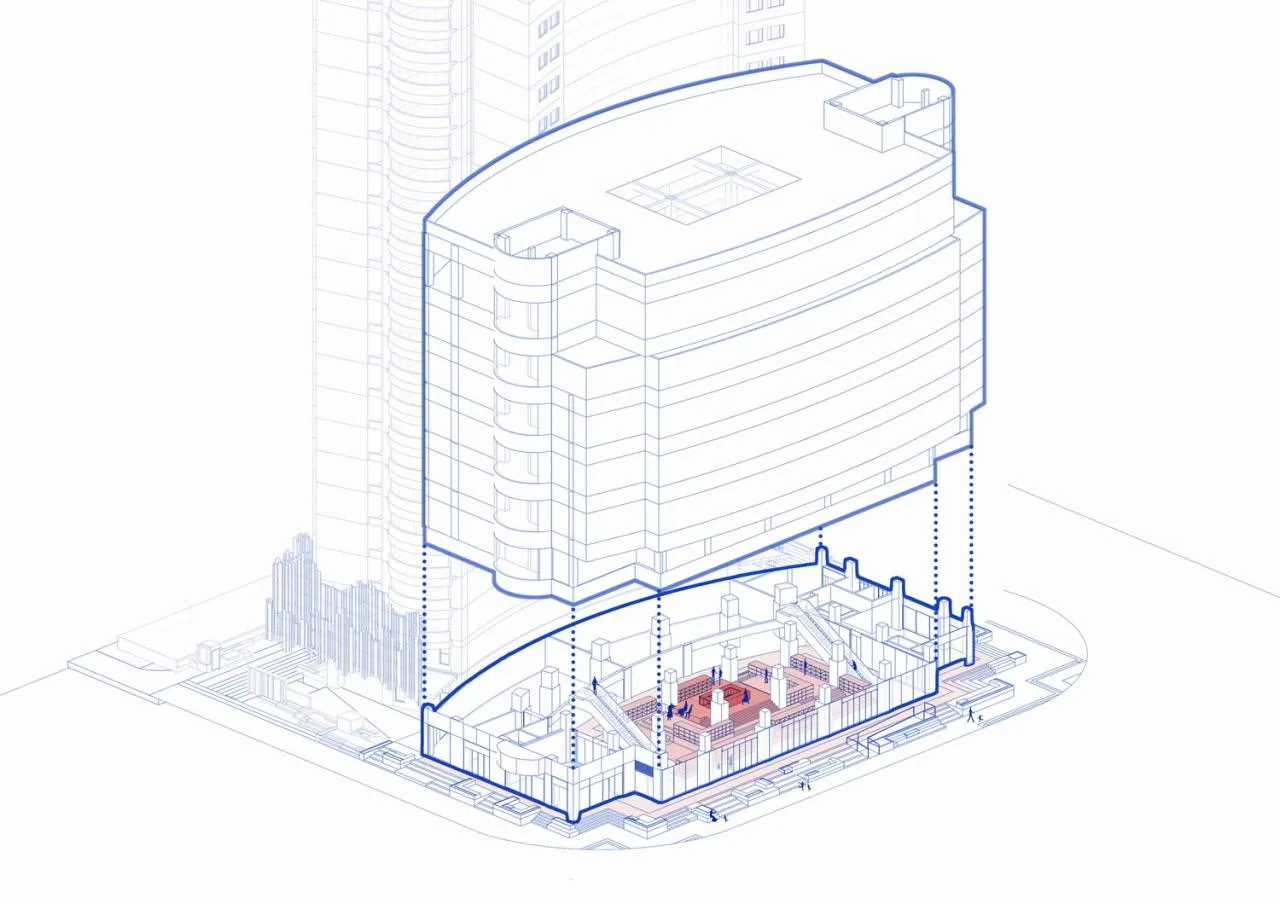
△ Shushan © Wutopia Lab
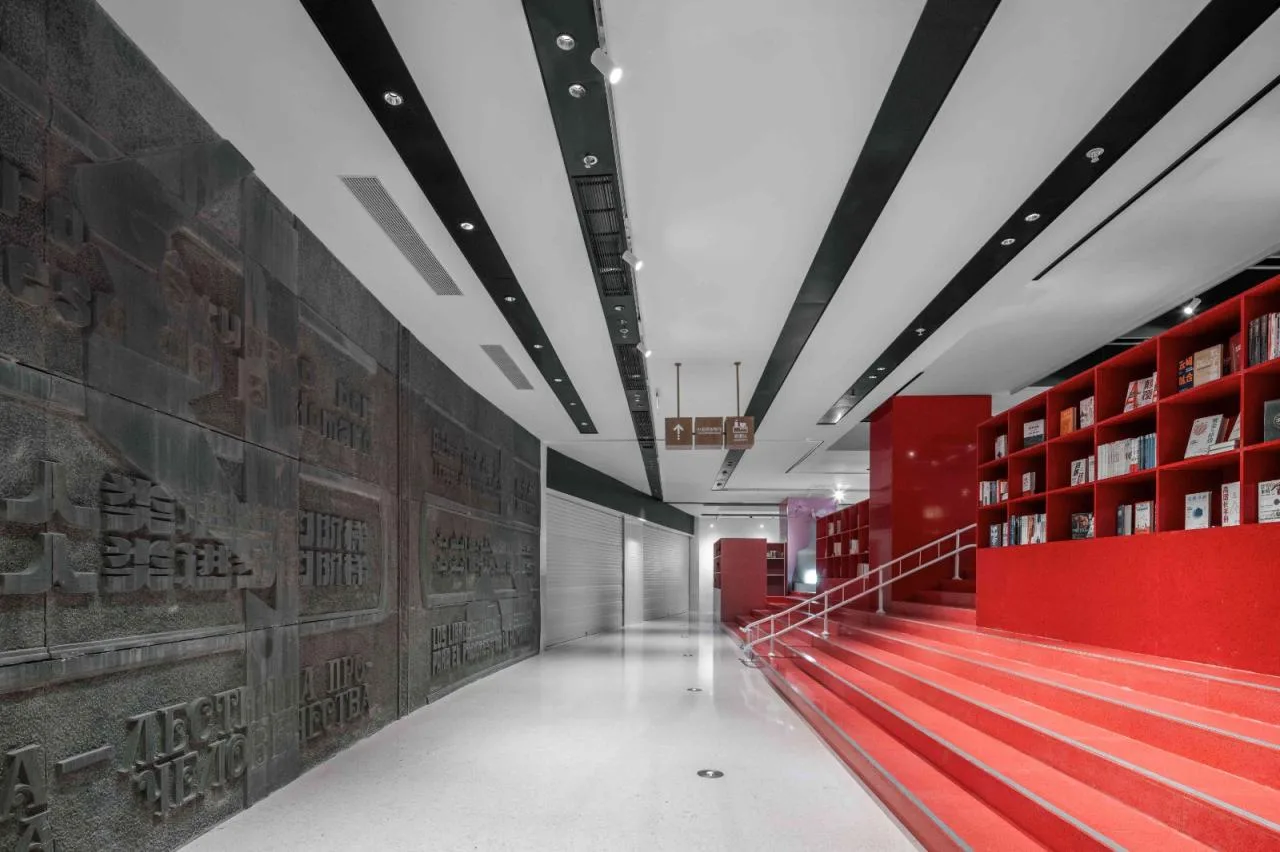
Fuzhou Road features a predominantly gray tone. To highlight Shushan, I chose a bold red color. Discovering that the site once housed an underground party intelligence station inspired this choice. The red Book Mountain acts as the first visual node for pedestrians, inviting them to enter the vertical book city via escalators.
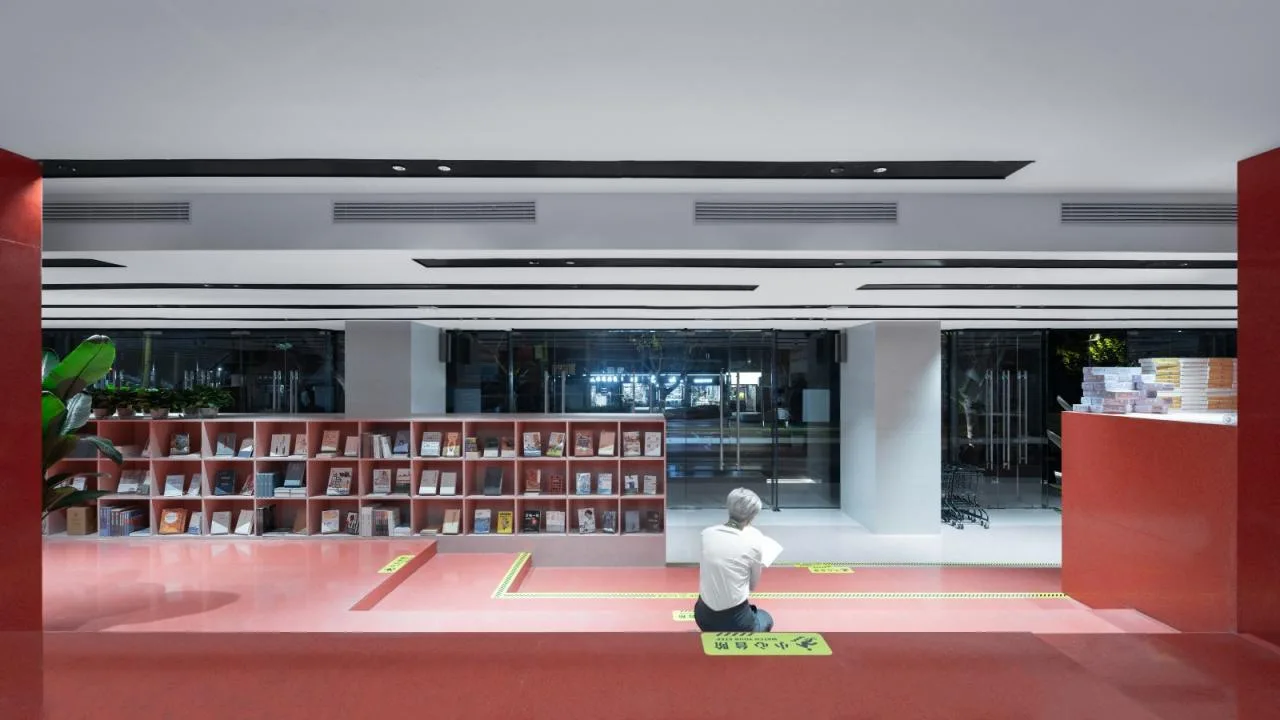
Reading in Shushan © CreatAR Images
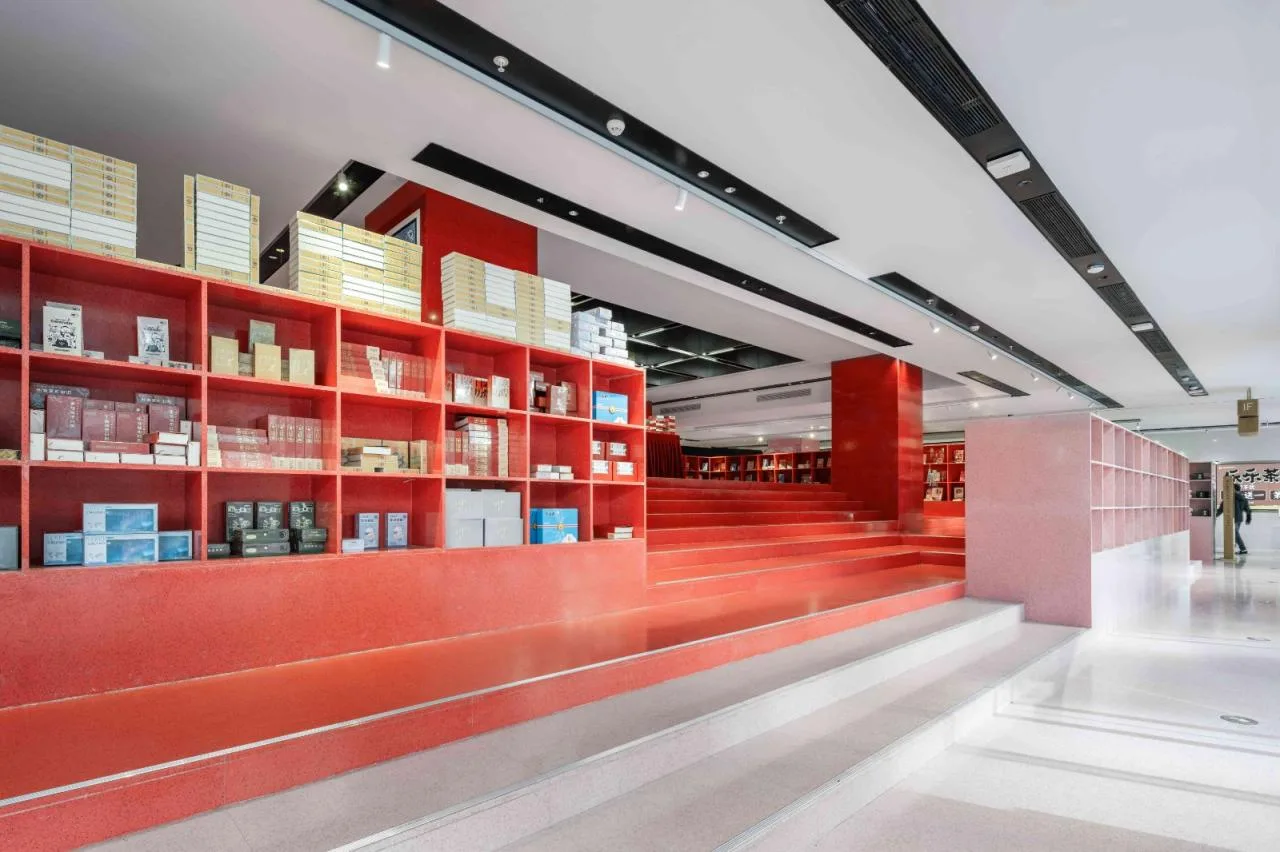
The Steps of the Book Mountain © CreatAR Images
Bringing Light Into the Space
During my first site visit, I noticed the building grew darker on higher floors, with the only natural light on the sixth floor blocked by an escape route. To address this, I designed three stacked two-story courtyards, channeling sunlight through skylights and glass flooring to the center of the red Book Mountain on the first floor.
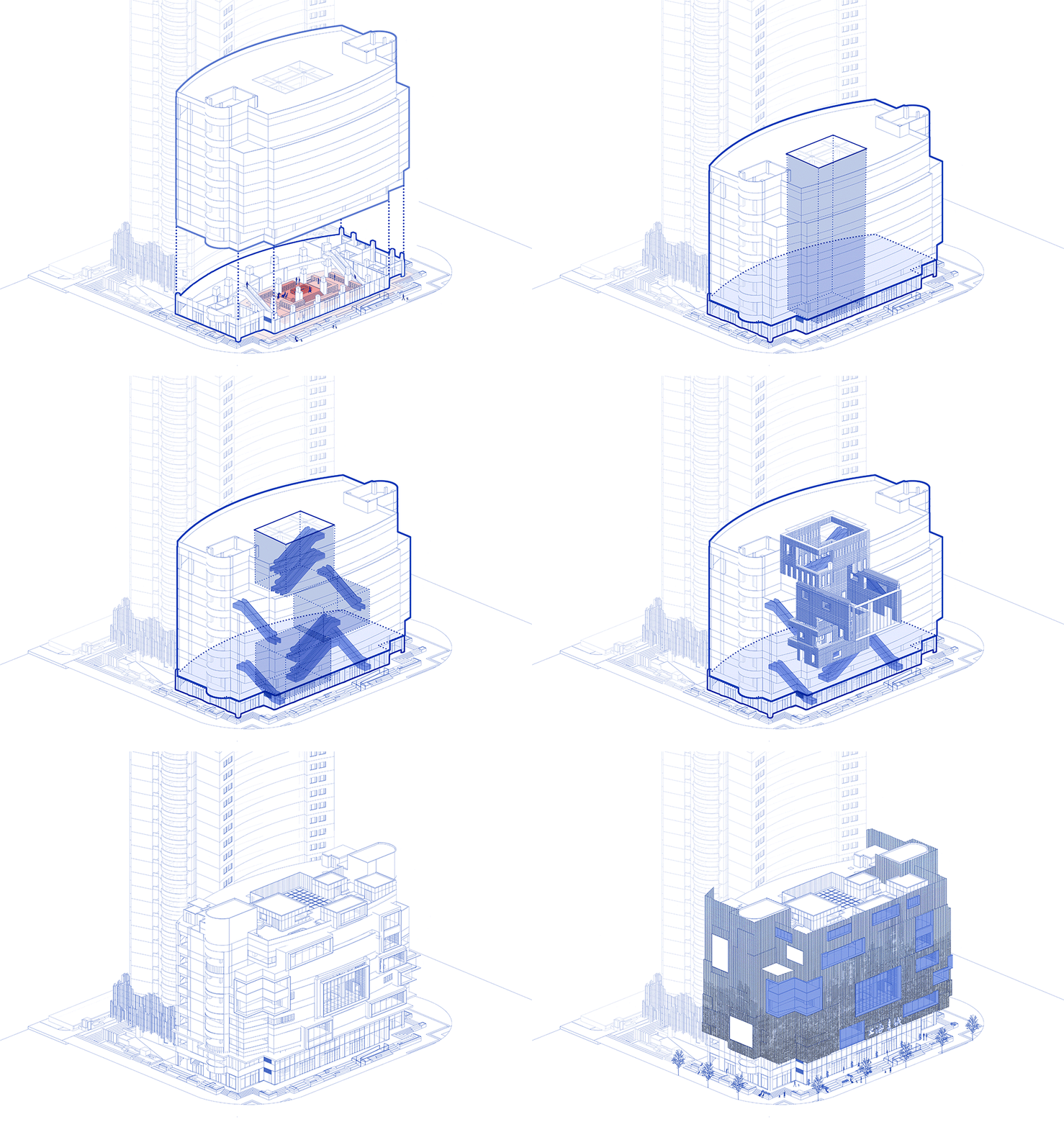
△ Animated graphics illustrating Book City © Wutopia Lab
The three courtyards—square, auditorium, and theater—serve as central nodes around which the city unfolds vertically from the 2nd to 7th floors. Escalators extend along these floors, forming streets, gardens, courtyards, and buildings. Staggered every two floors, they reach deep into the building’s interior, converging at atriums every two levels.
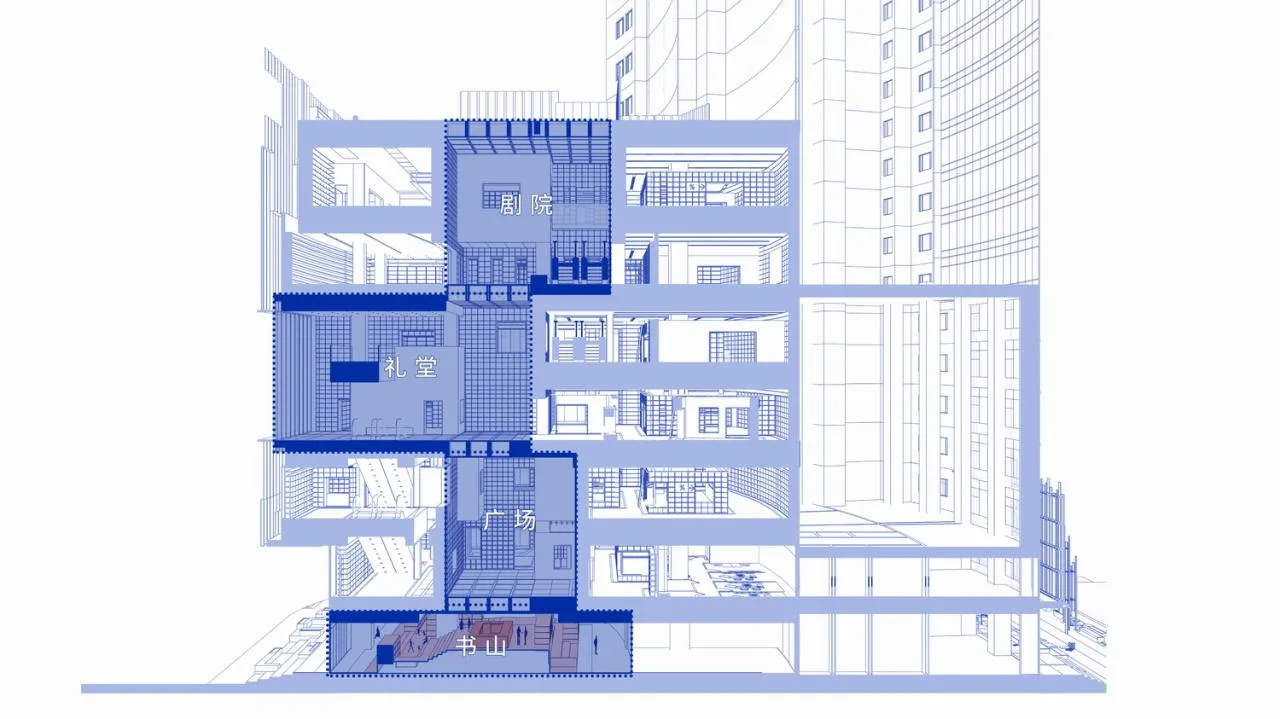
△ Side profile and three courtyards © Wutopia Lab
The city resembles a maze to be explored. The concept of “strolling” here represents a relaxed, carefree attitude toward life, where one may wander without strict purpose but find joy, surprises, and happiness along the way. Visitors are encouraged to stroll through the bookstore as they would on the street—slowly and unhurried.
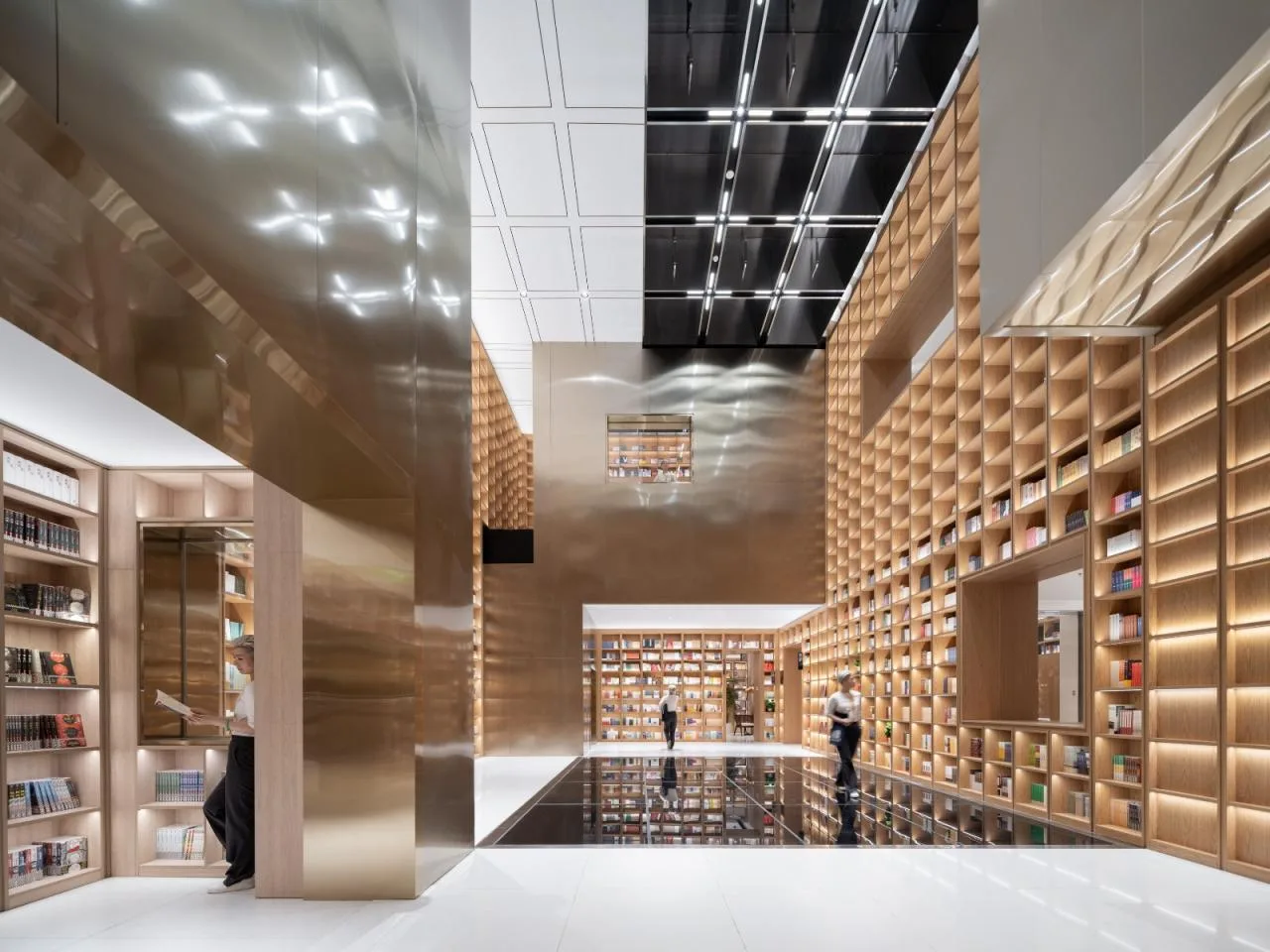
△ 2nd & 3rd Floor Square Courtyard © CreatAR Images
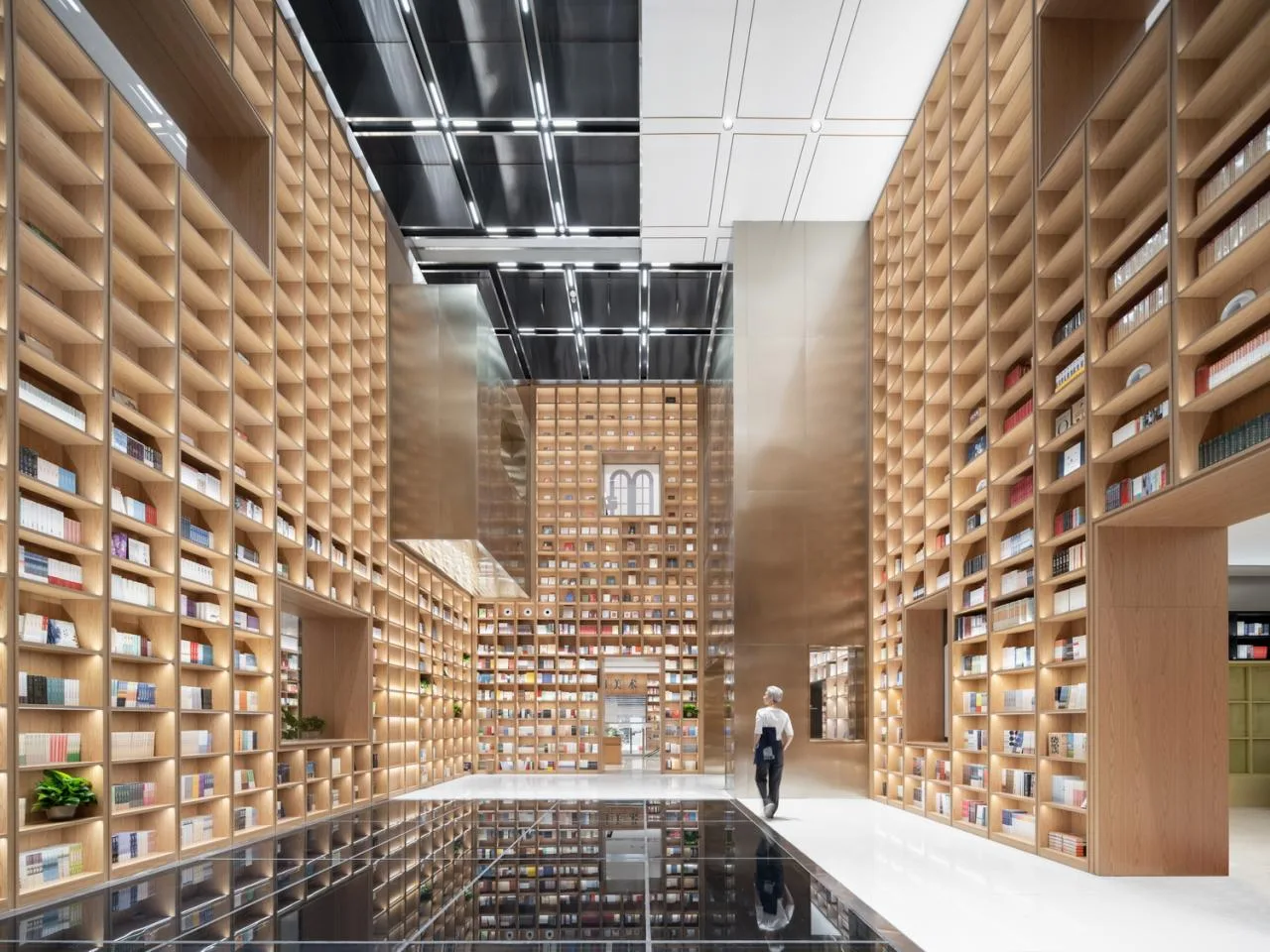
△ 2nd & 3rd Floor Square Courtyard © CreatAR Images
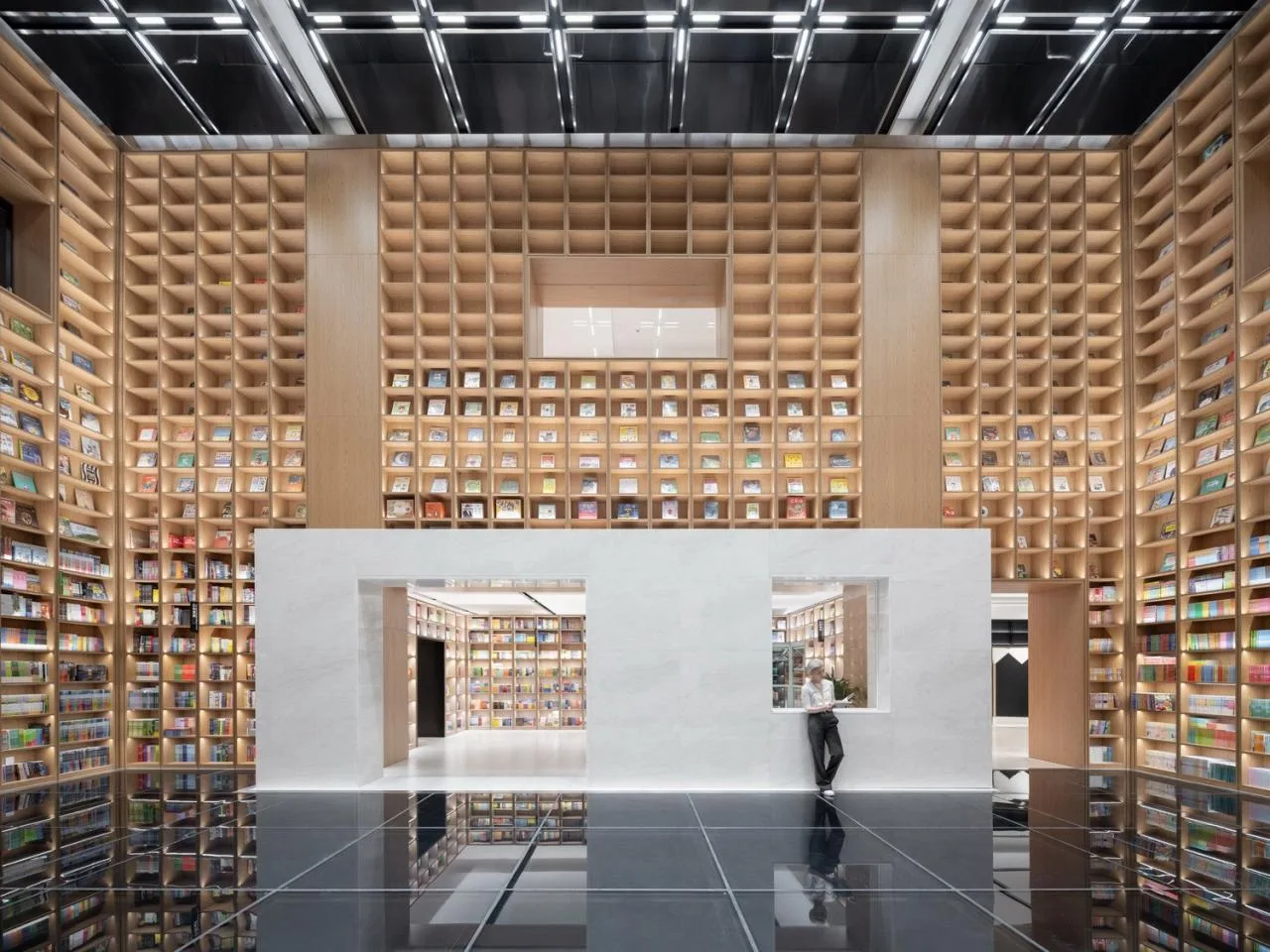
△ 4th & 5th Floor Auditorium Courtyard © CreatAR Images
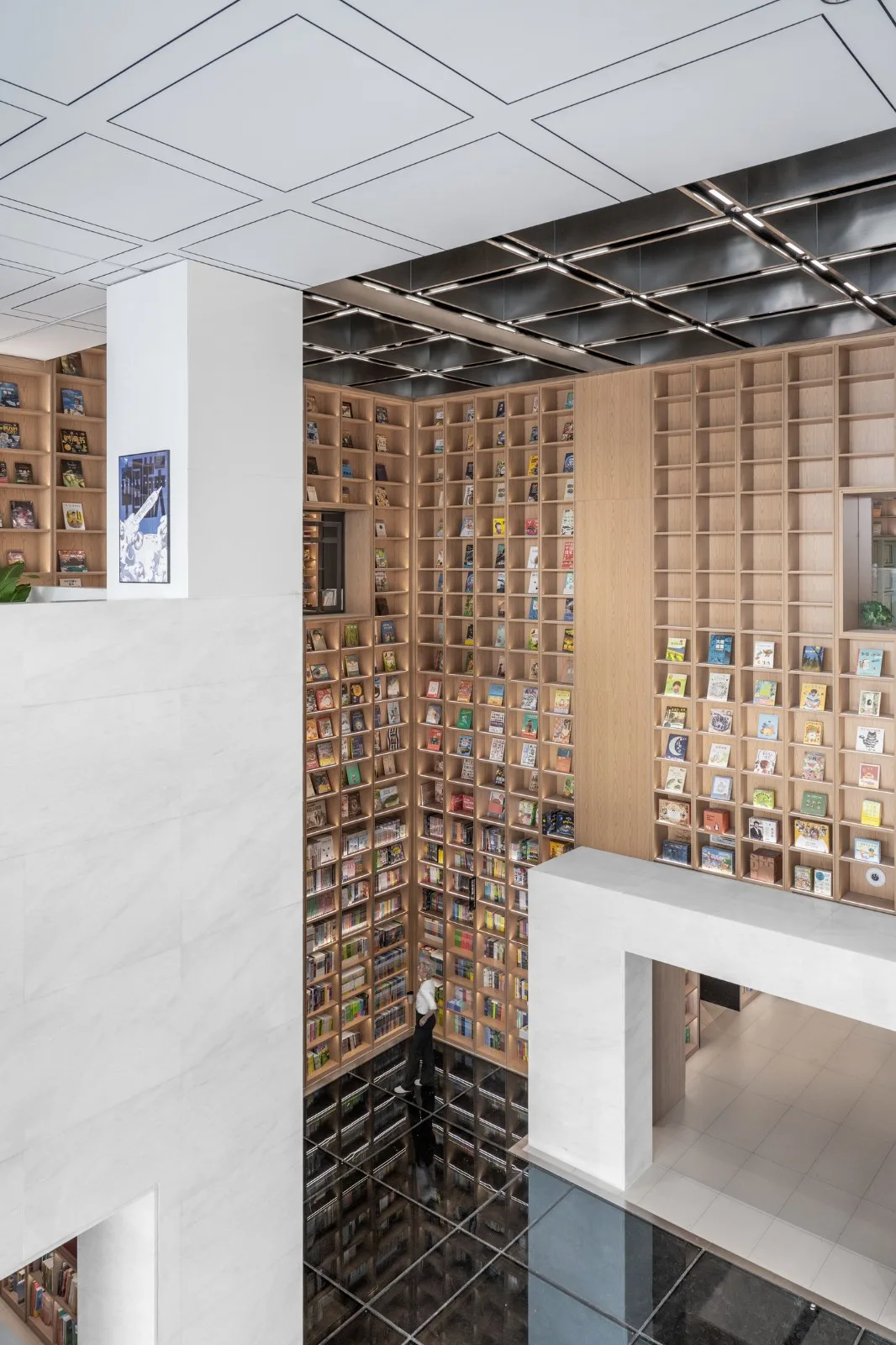
△ 4th & 5th Floor Auditorium Courtyard © CreatAR Images
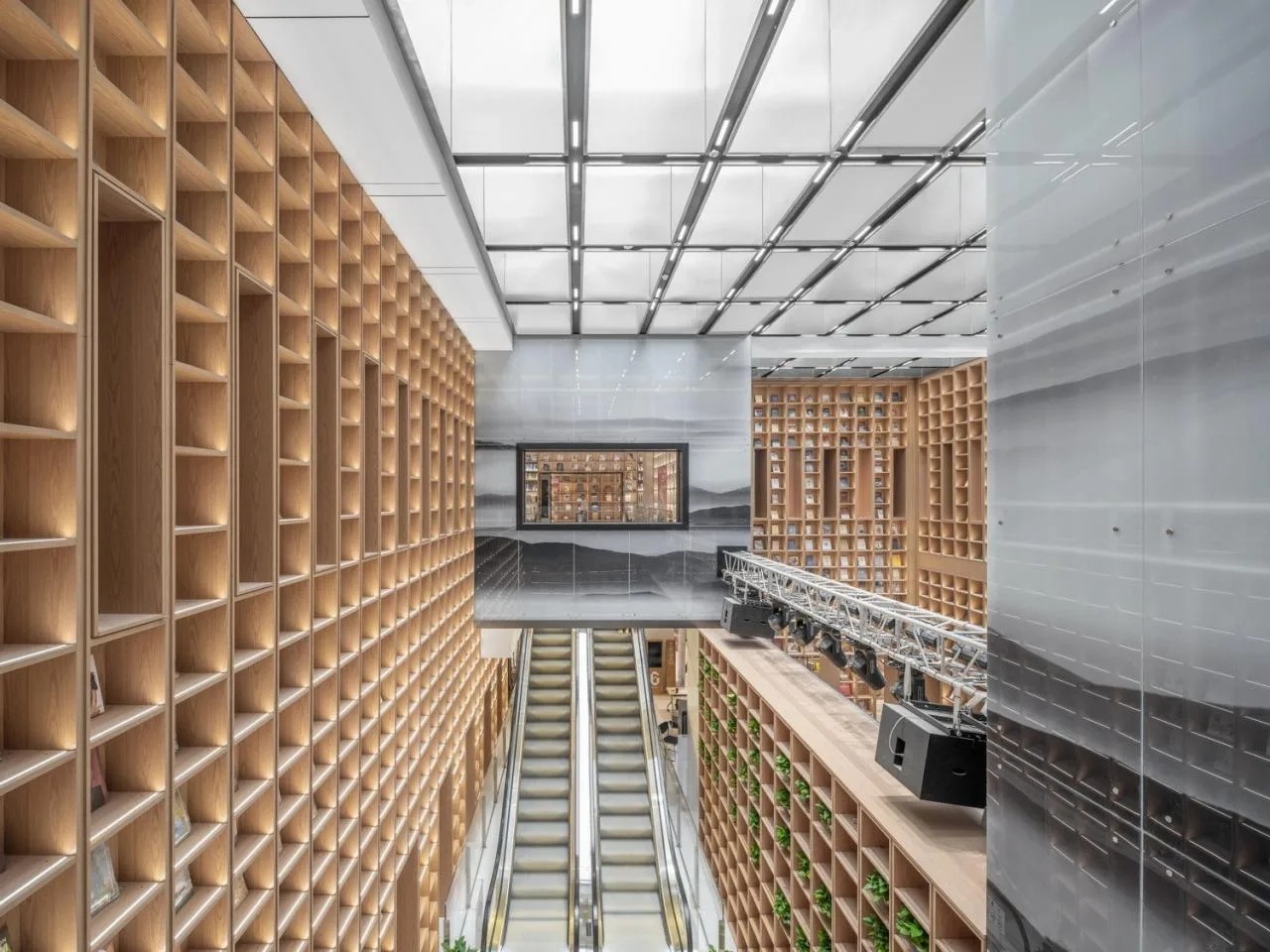
△ 6th & 7th Floor Theater Courtyard © CreatAR Images
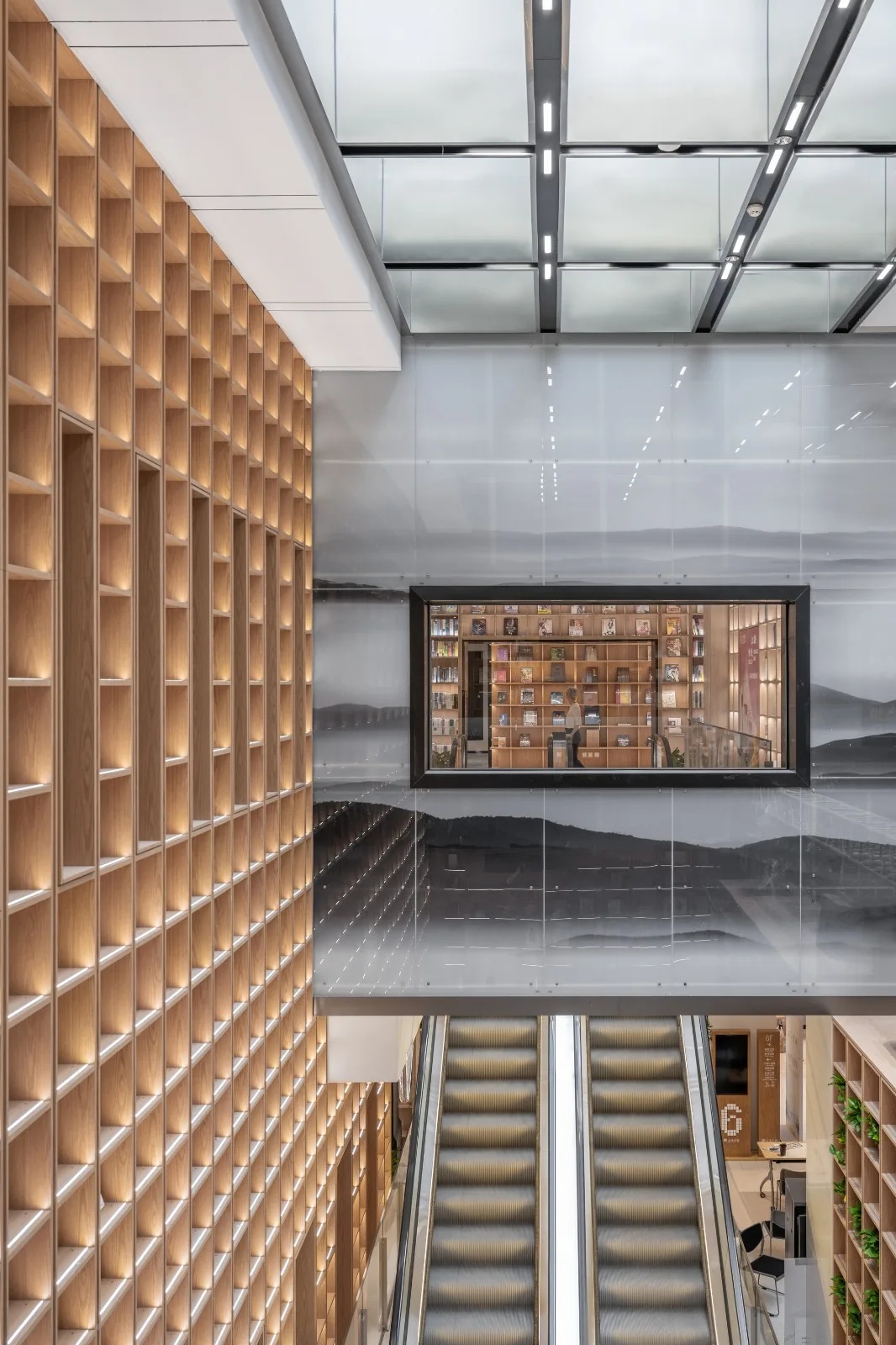
△ 6th & 7th Floor Theater Courtyard © CreatAR Images
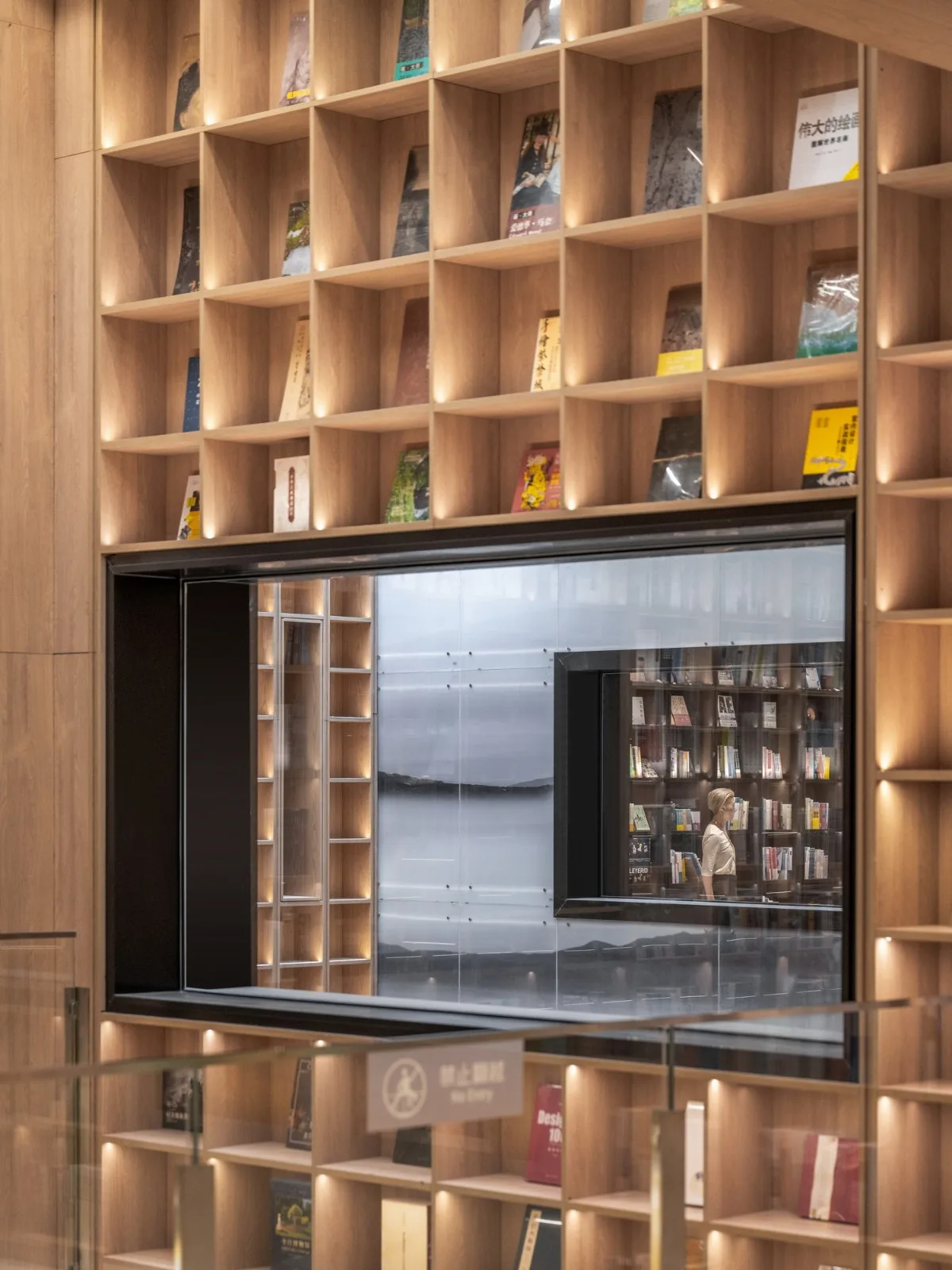
△ Window openings in the atrium of 7th Floor Theater © CreatAR Images
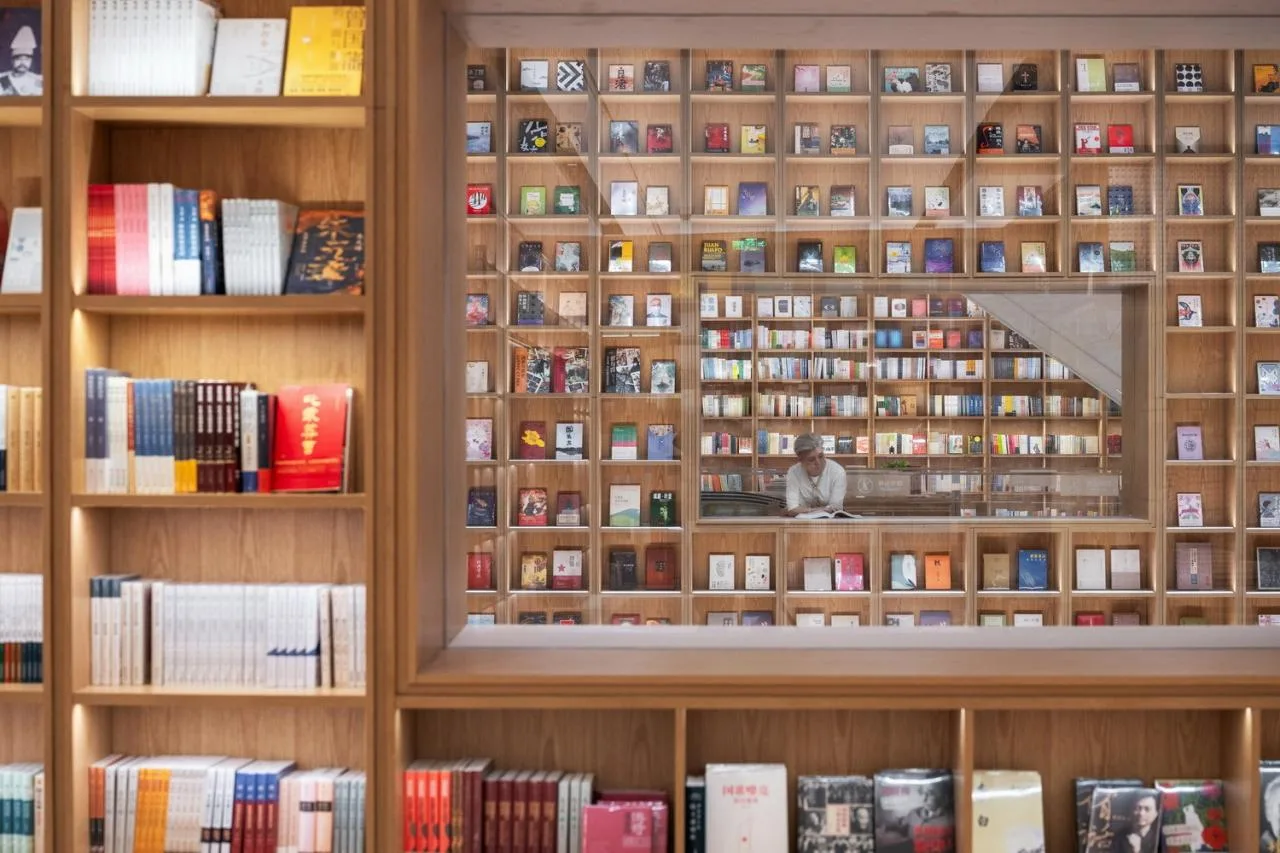
△ Bookshelf and window openings in the atrium of 7th Floor Theater © CreatAR Images
Bookshelves as the Facade
I designed a 10,000-meter-long bookshelf to form the facade of this city. Since the bookstore lost its basement and original library, and needed to add evacuation stairs, bathrooms, and equipment rooms while preserving the bookstore and commercial areas, I decided to display all books on these shelves.
The 2nd to 6th floors serve as reading areas, the 1st and 7th floors house book storage, and the 8th floor is for storage and cover displays. The two-story atrium high bookshelf serves as a display centerpiece. This continuous bookshelf design accommodates 470,000 books, surpassing the library’s original capacity of 400,000, and creates a striking street facade of uninterrupted books. On the media preview day, a journalist remarked that the flowing books felt like a fish swimming in the ocean.
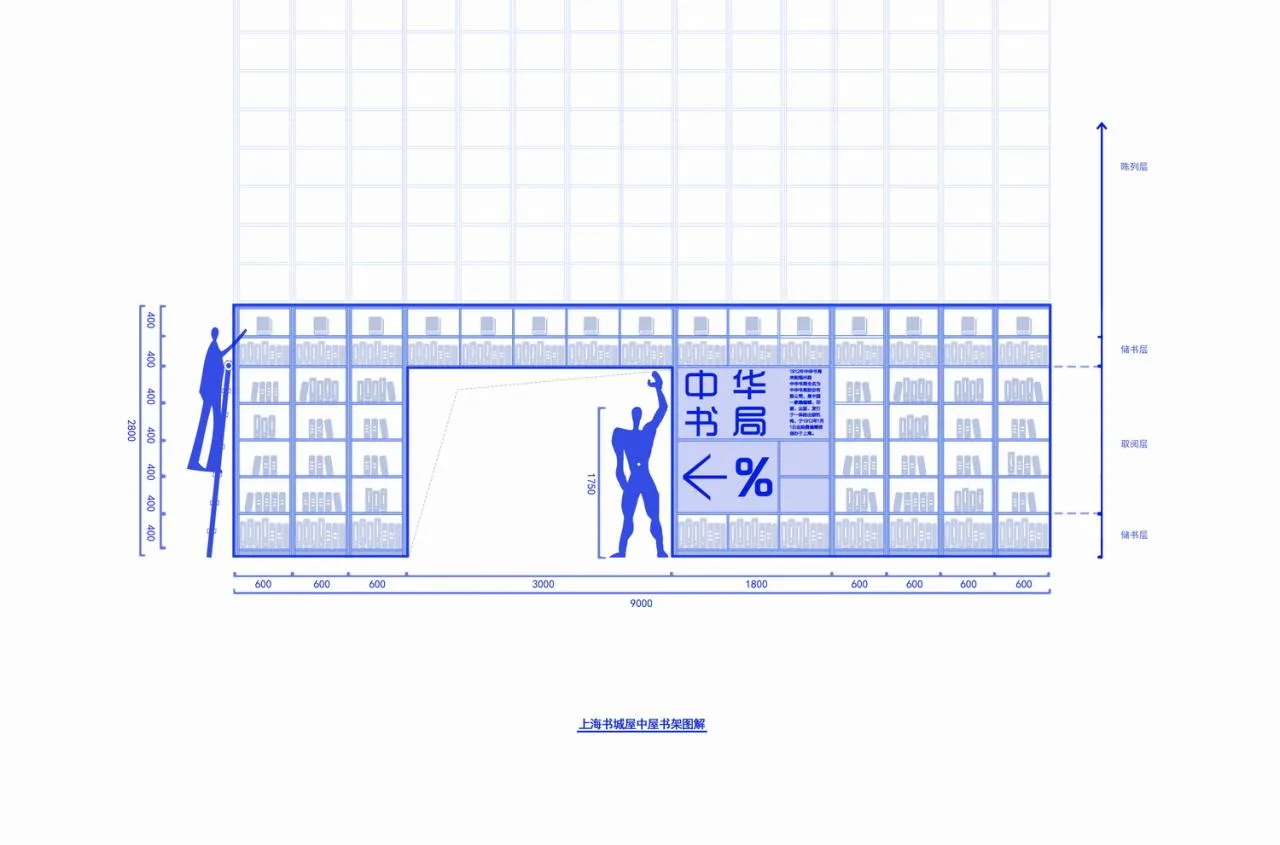
△ Bookshelf Design © Wutopia Lab
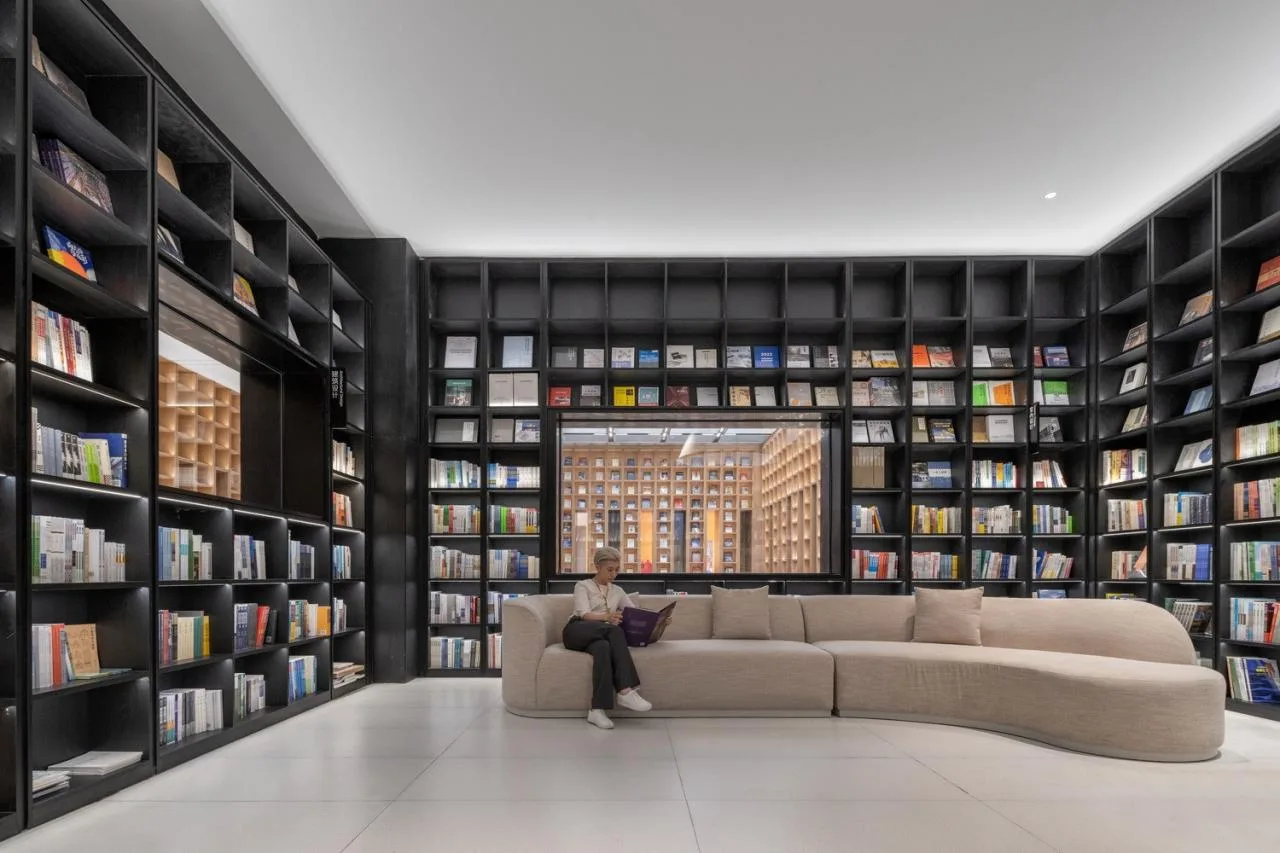
Bookshelf in the library (black) © CreatAR Images
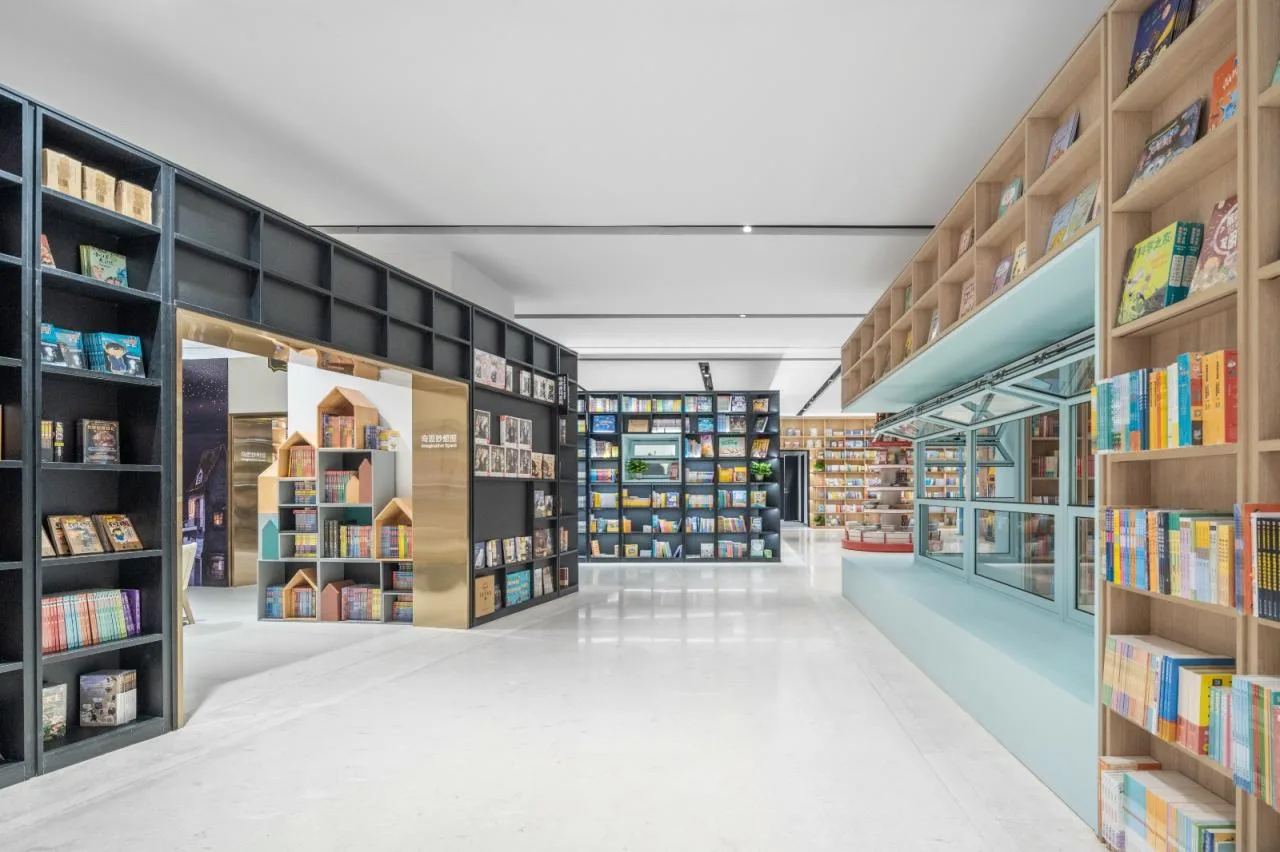
Library doors and windows © CreatAR Images
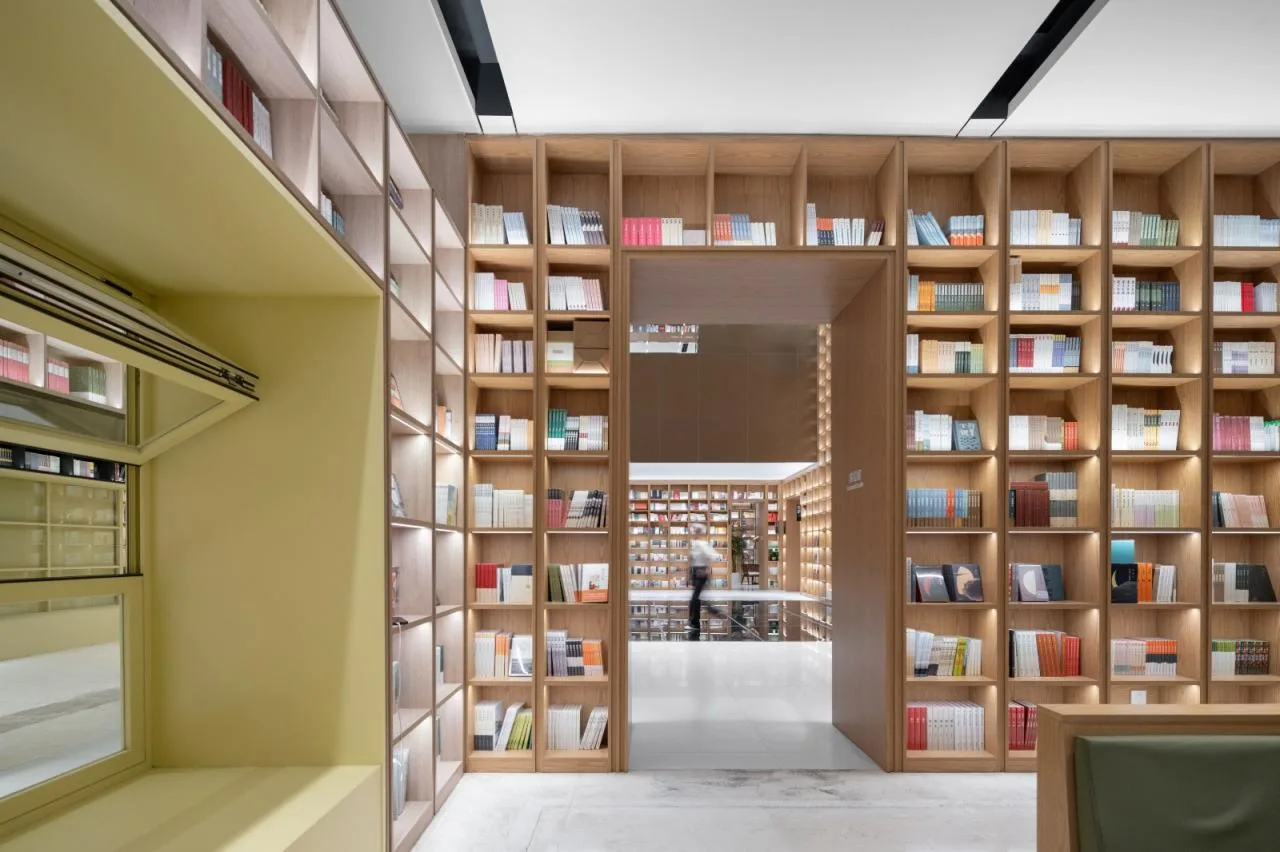
△ View of the bookstore courtyard © CreatAR Images
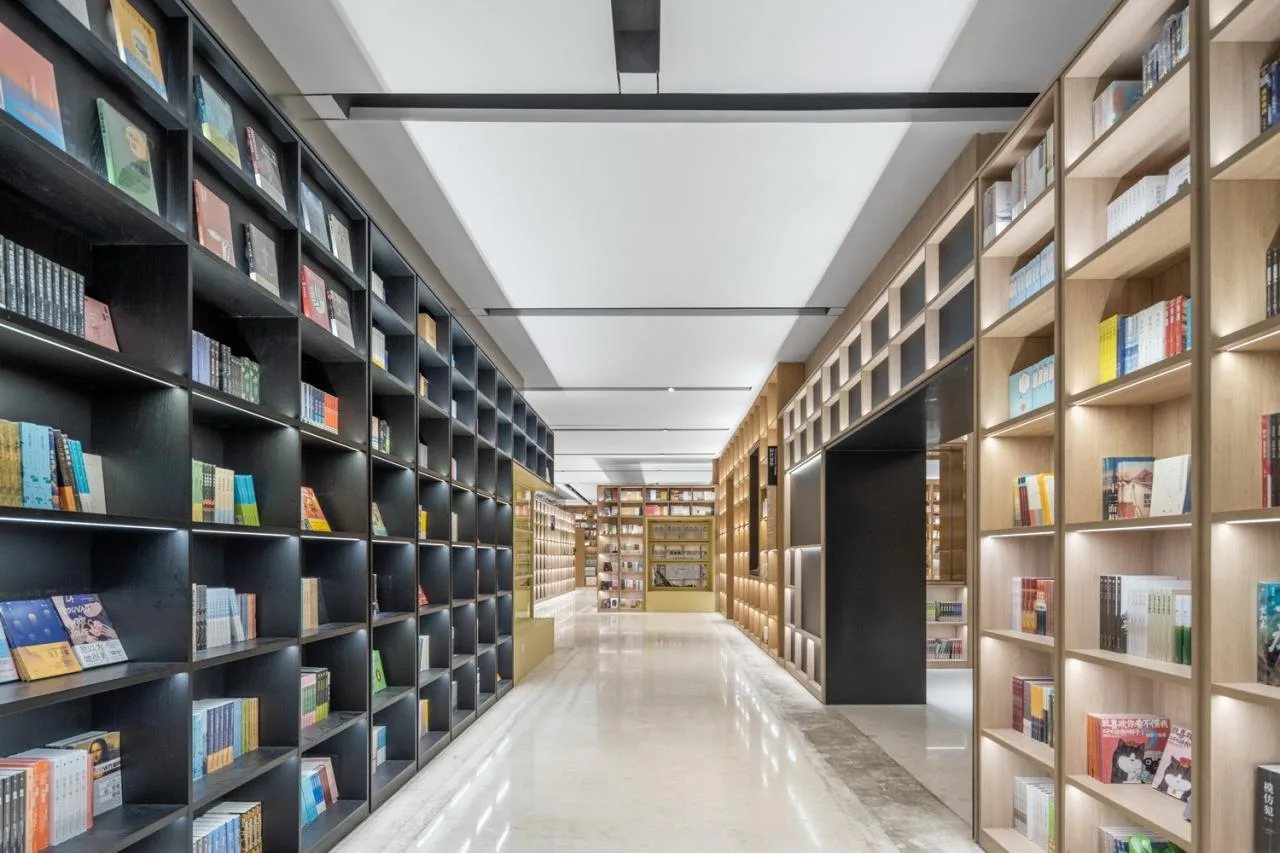
Aisle between bookstores © CreatAR Images
I had initially planned a continuous copper pole on the 6th bookshelf to support a ladder for reaching higher shelves, but it was omitted during rushed construction—a small regret.
Within the bookstore, 16 enclosed spaces are hidden behind bookshelves, housing offices, talk show theaters, writers’ study rooms, health classes, galleries, and cafés. Beyond the bookshelves are light meal spots, tea houses, art furniture stores, gift shops, stationery stores, elevators, restrooms, and evacuation stairs.
I welcome business but require shop owners to respect the continuous book facade, ensuring a harmonious integration of various businesses within the city.
Guiding a reporter through Shushan, across buildings, courtyards, and overpasses, they remarked, “This is a cultural city walk.” This is truly a city built of books.
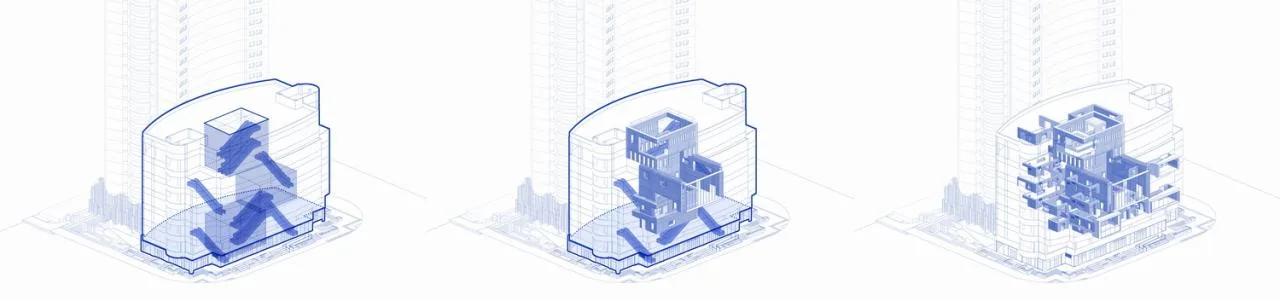
Vertical traffic in the atrium, bookshelves, and houses within houses © Wutopia Lab
Using Books as Shanghai
“You stand on the bridge and enjoy the scenery, while the person watching the scenery looks at you upstairs.” – Bian Zhilin, Breaking Chapters
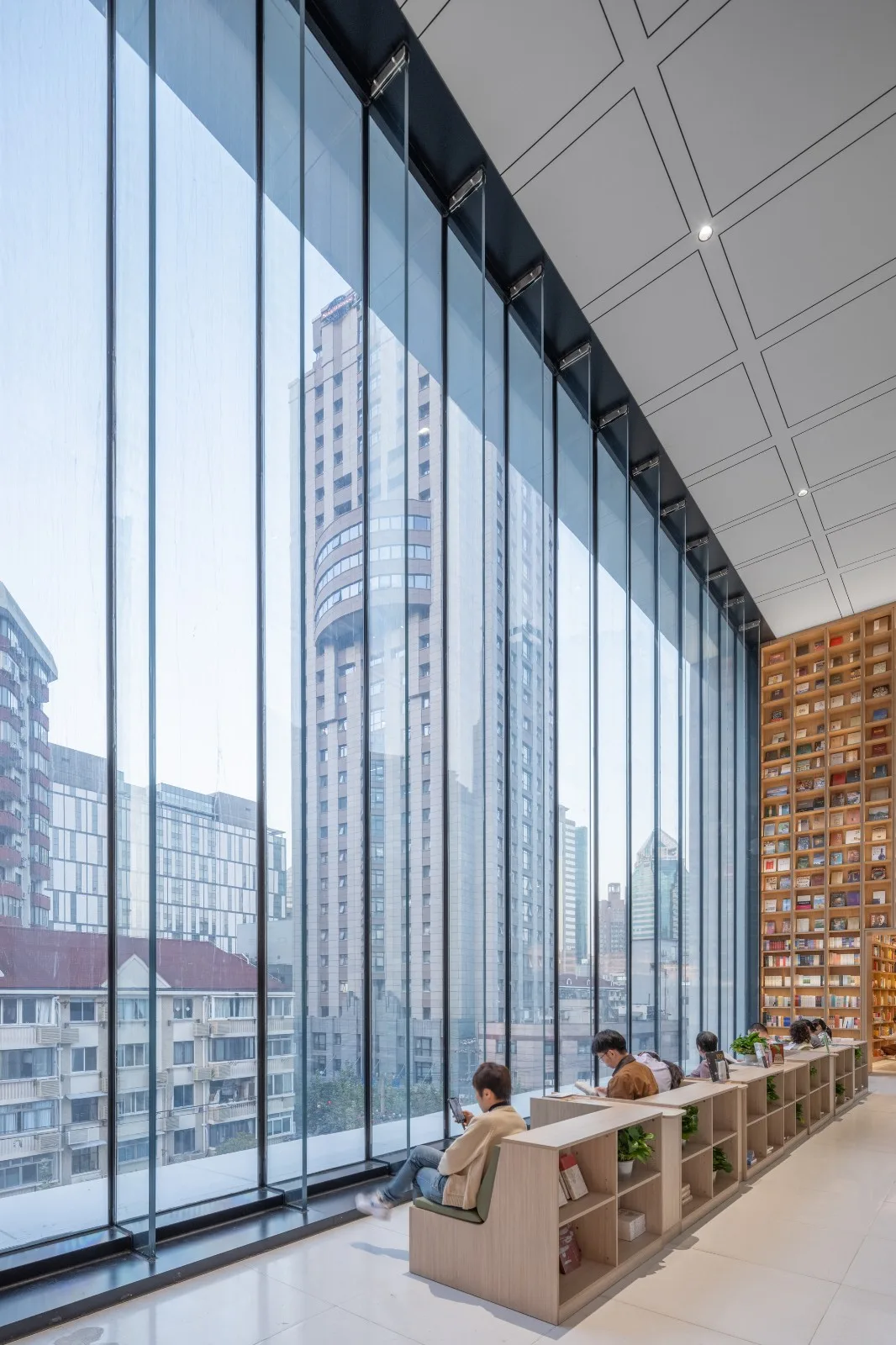
△ 4m & 9m high glass in the atrium of the 5th floor auditorium © CreatAR Images
Everyone Deserves Respect
Because of its diversity, I describe the renovated bookstore as a miniature Shanghai, but its most important feature is inclusivity. When the project architect suggested locating the disabled ramp at the side to preserve the facade’s completeness, I refused.
I insisted that the ramp’s endpoint be the main entrance, allowing disabled visitors to enter with the same dignity as others and access every corner of the bookstore. Drawing from my own experience with a waist injury, I designed armrests that are 4cm long, easy to grip and apply force.
Behind Shushan, we installed an escalator accessible to disabled visitors, enabling them to climb and enjoy views of Fuzhou Road from the Book Mountain. Here, anyone can be the protagonist.
Disabled ramp on Fuzhou Road © CreatAR Images
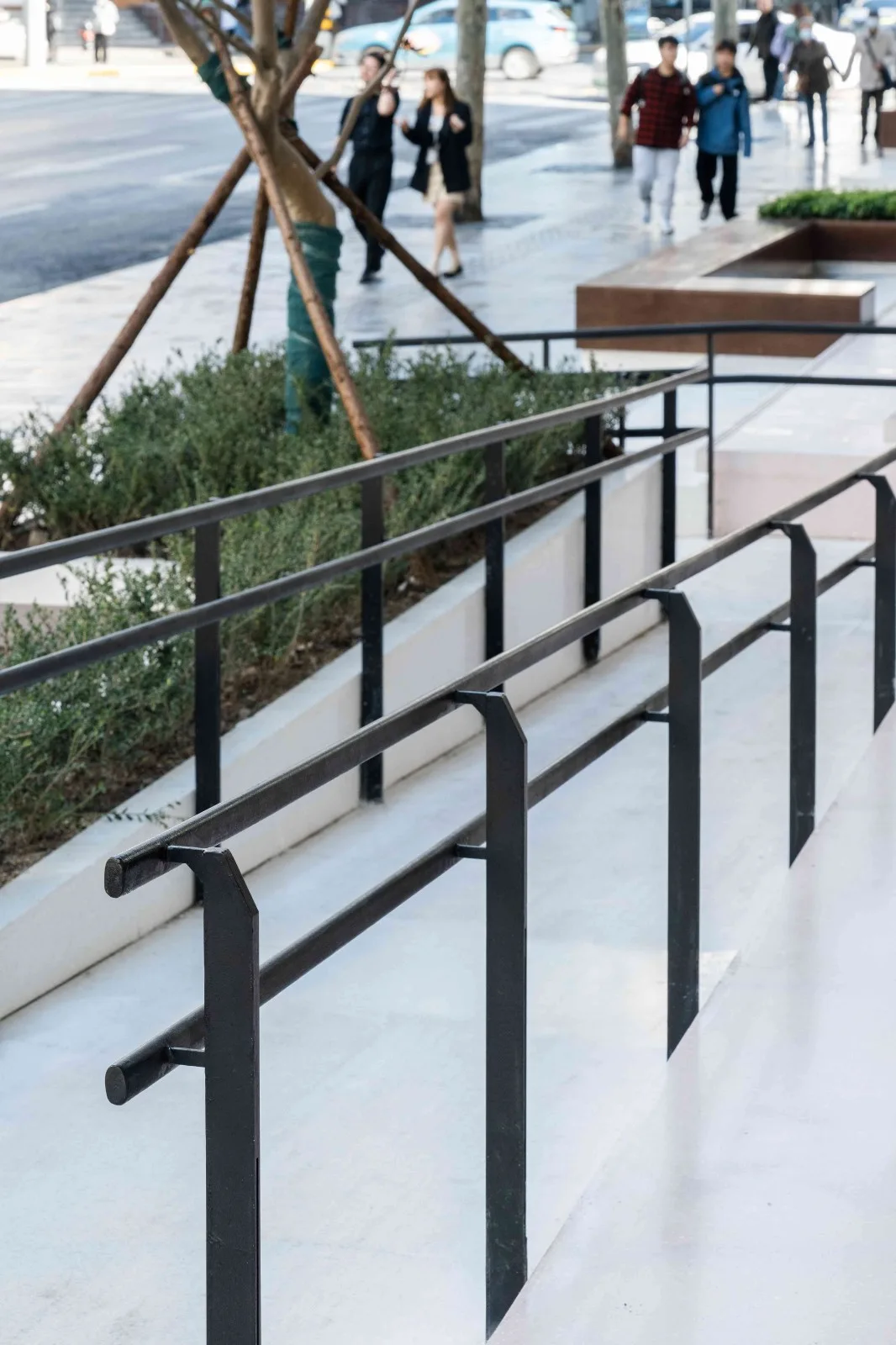
Customized handrails for accessible ramps © CreatAR Images
Disabled escalator behind Book Mountain © CreatAR Images
View from the Book Mountain overlooking Fuzhou Road © CreatAR Images
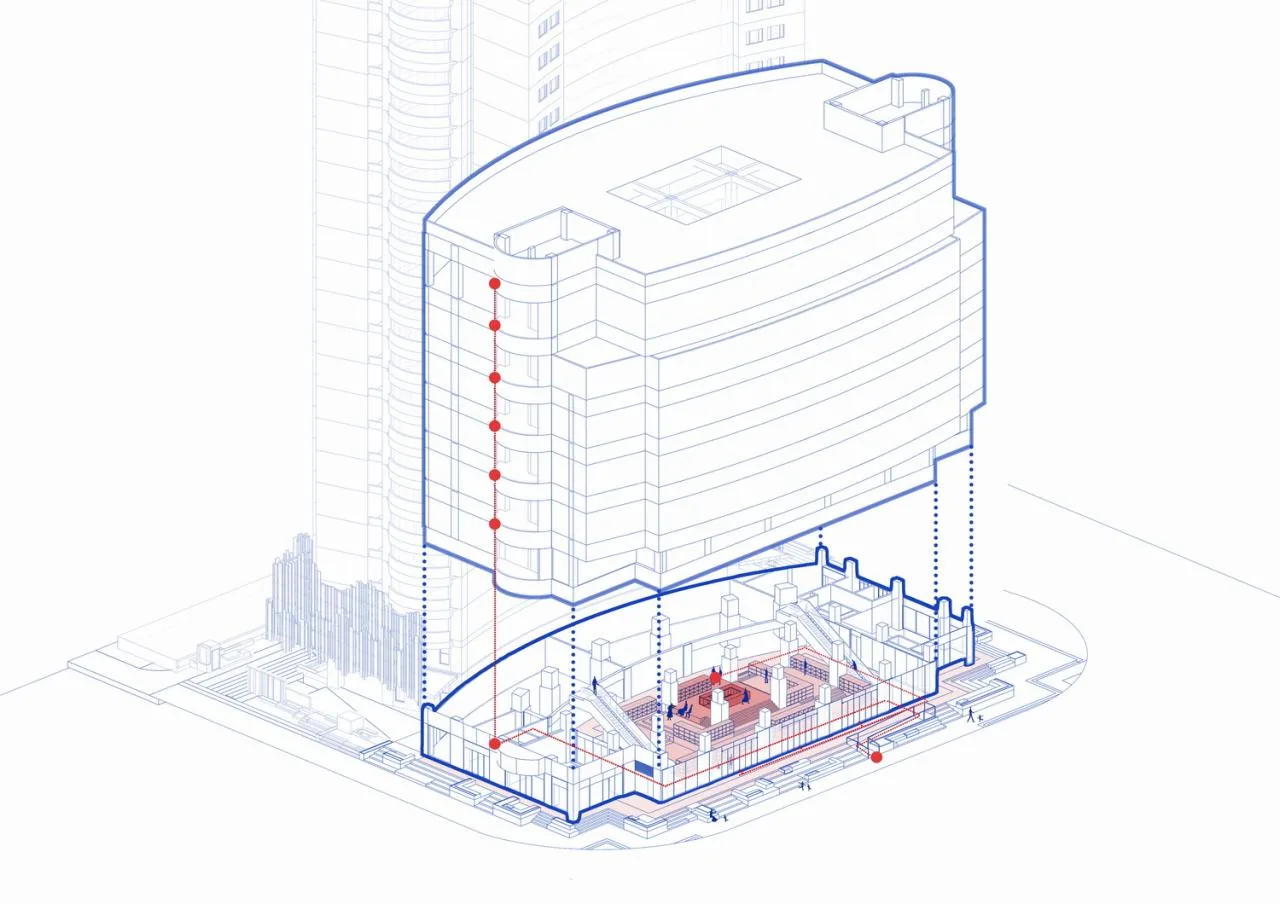
△ Disabled mobility © Wutopia Lab
Christopher-like Package
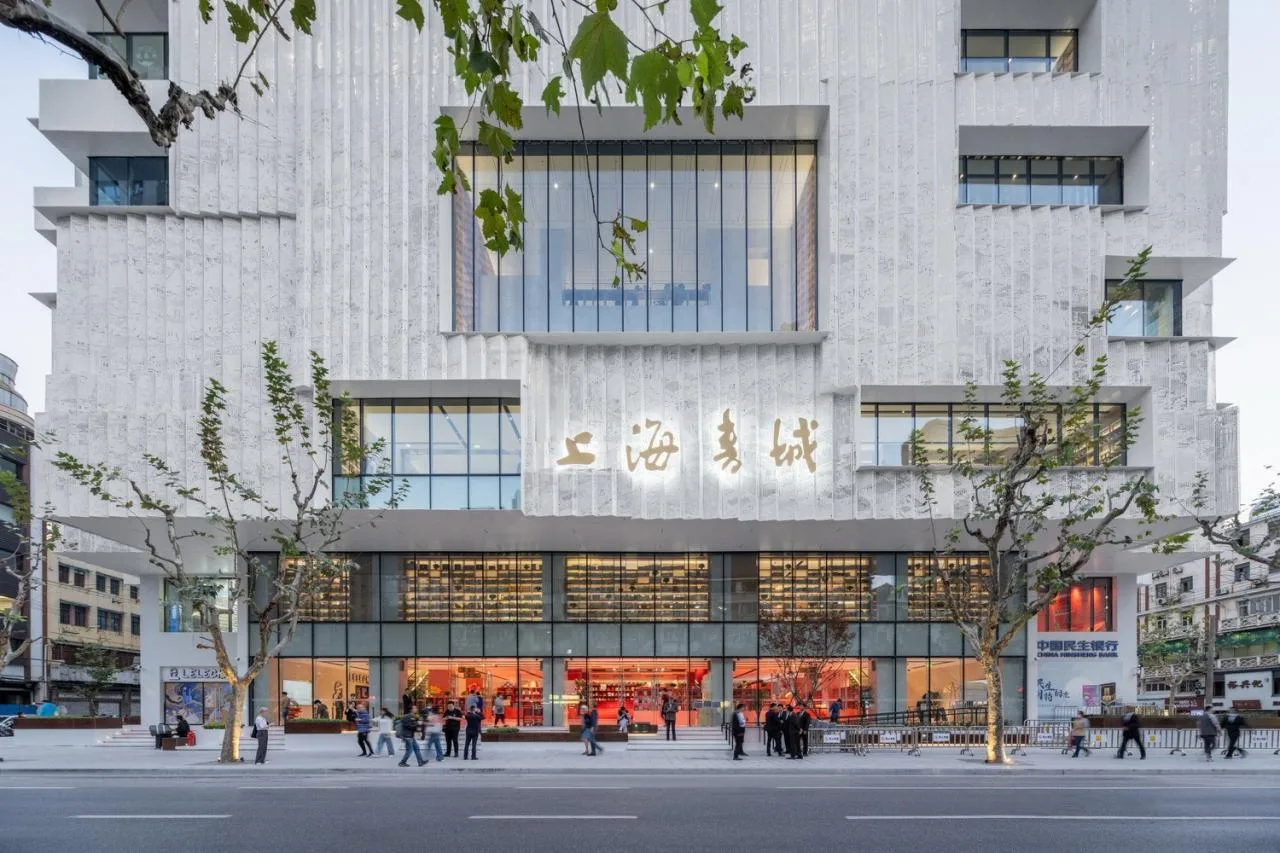
I preserved the bookstore’s original boundary and wrapped the facade with perforated aluminum panels, concealing pipes relocated outside due to structural changes exceeding 10%. This abstract facade acts as a threshold, setting a challenge for those indifferent to reading.
To encourage reading, I used symbolism in the facade design, stacking countless book spines to form patterns representing Shanghai’s iconic “Ten Thousand Home Lights.” These patterns subtly depict the city’s historical evolution—from the Bund, through its modern landmarks like the “Shanghai Three Piece Set” and the Oriental Pearl Tower, to future imaginings.
In the Internet era, “architectural readability” demands metaphors and symbols that are clear yet not overwhelming. The facade provides multiple interpretations and sparks imagination for readers.
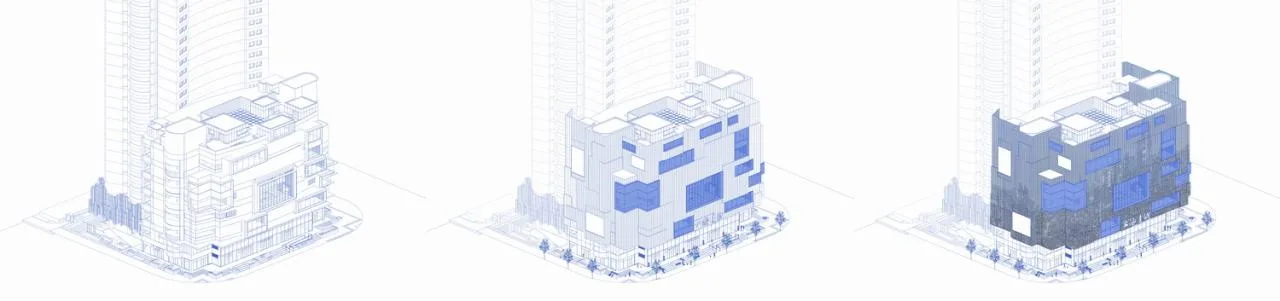
Generation process of perforated aluminum panel curtain wall © Wutopia Lab
Landscape as Interior Design
The bookstore’s French windows serve multiple purposes: they bring in light, showcase internal activities, and create a stage-like setting. Reading books through these street-facing windows resembles watching a movie, while those inside enjoy a dramatic urban scene. Bian Zhilin’s poetry transforms into “visible reading,” reaching every visitor.
On the 4th floor auditorium atrium, a two-story glass window reveals the cityscape like a crystal at night. Visitors often sigh in awe, recognizing Shanghai’s endless surprises.
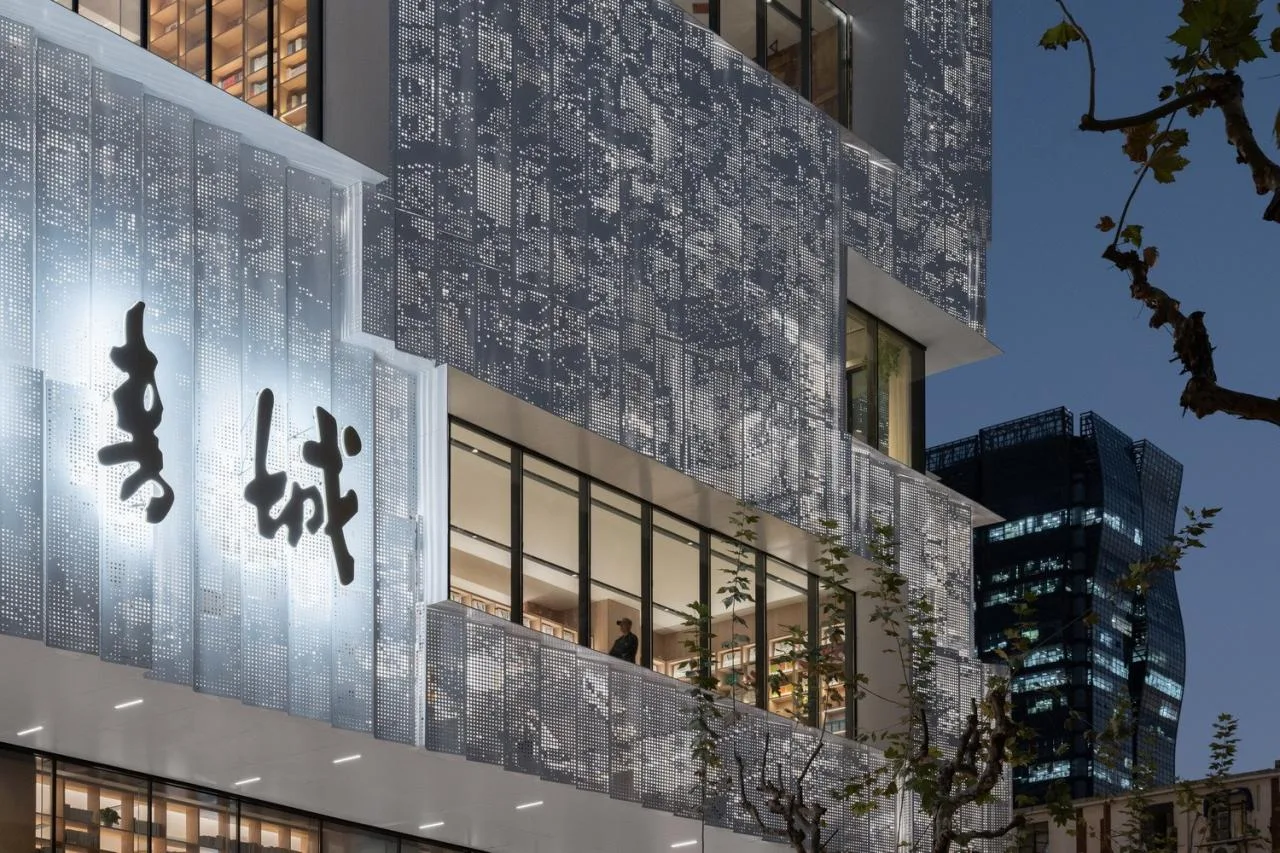
Partial main facade with perforated aluminum plate © CreatAR Images
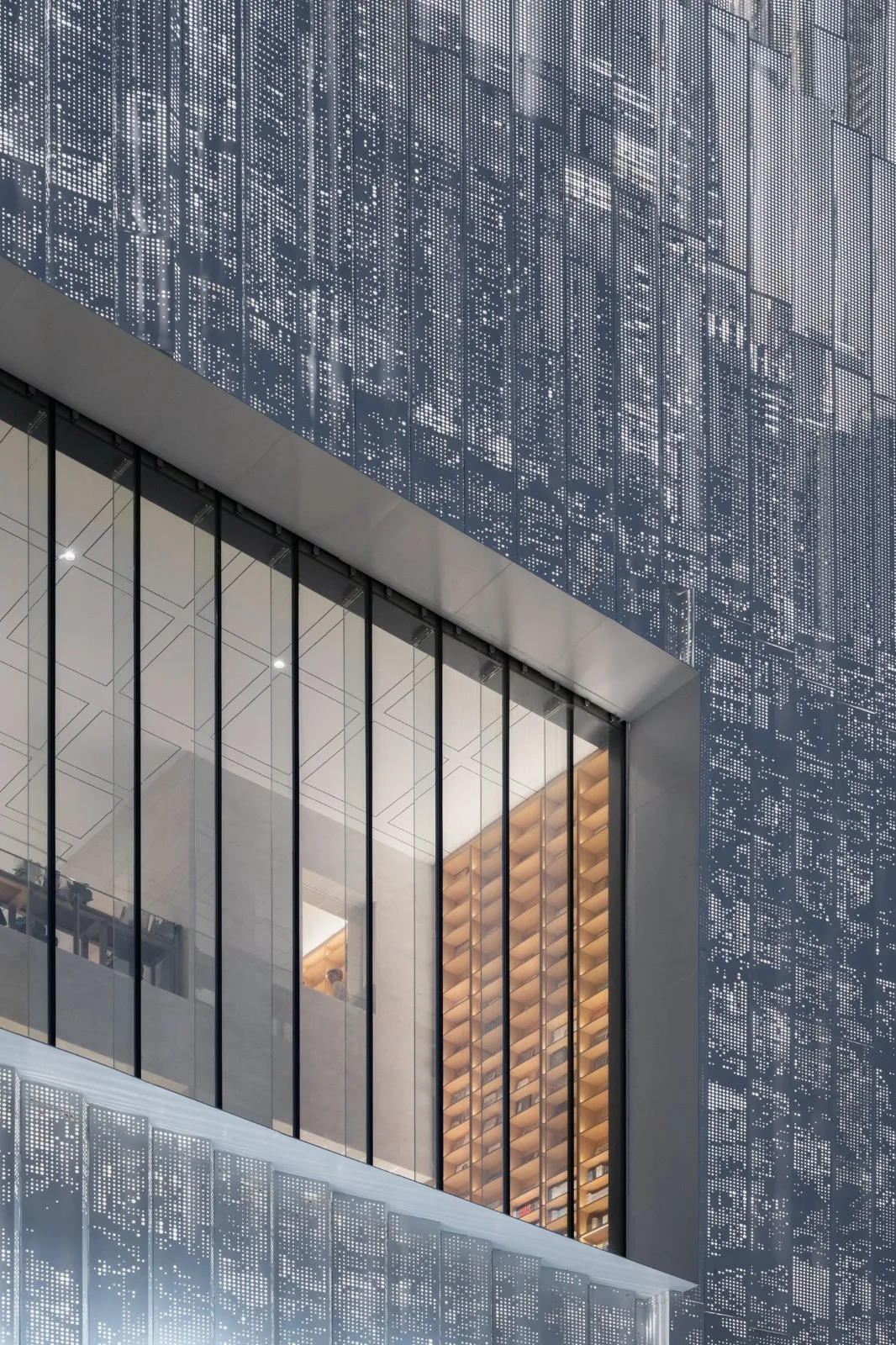
Partial main facade with perforated aluminum plate © CreatAR Images
Still 10%
A beam in the 5th floor atrium could not be removed without exceeding 10% structural changes, so I transformed it into a pedestrian bridge. Standing on it, I gaze at layered city buildings and recall my design for Chunshen Haoshi on Nanjing East Road.
I remember my youth carrying many books, enjoying a bowl of wonton at Shen Dacheng, then heading home. Adjacent to the bridge is a bookstore, and through large glass windows, I envision reading by the window—an unforgettable scene from my childhood visits.
Memories are always beautiful. I use personal recollections to counterbalance collective memories.
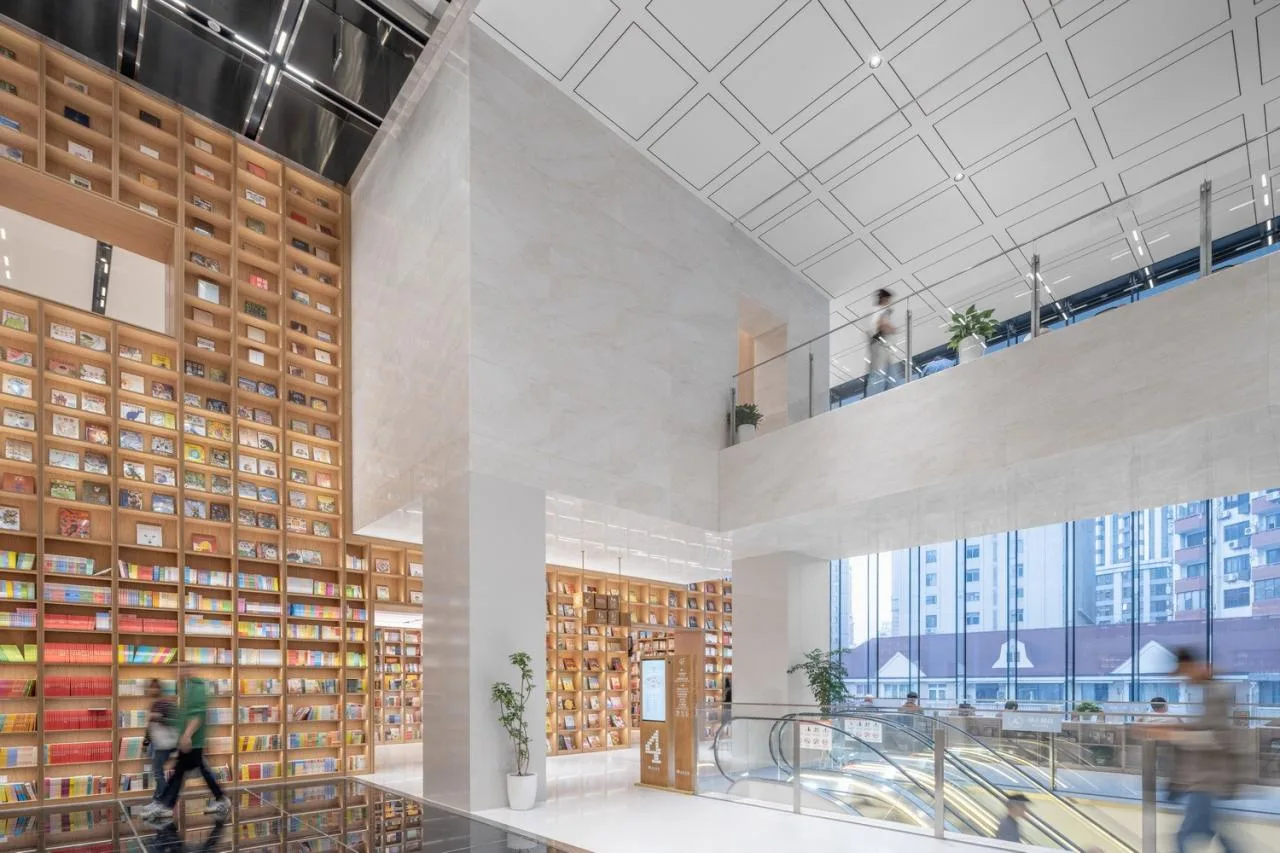
△ Pedestrian bridge in the 5th floor auditorium atrium © CreatAR Images
When I Face the Bookstore
“He saw a shadow of her in the audience and thought, ‘The future is just hope for the present, and the past is just memories of the present.’” – Yu Ting
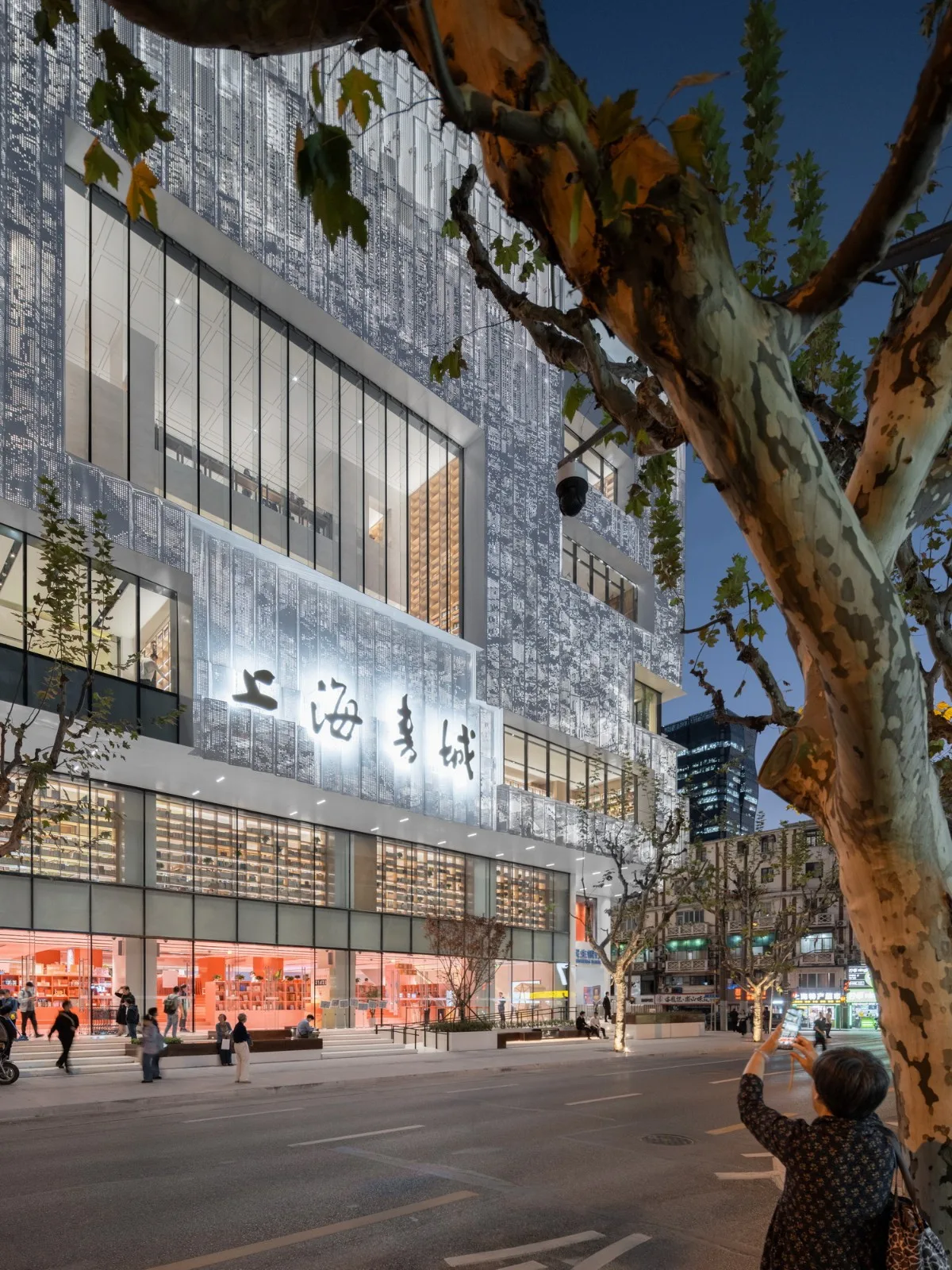
△ Night view of the main facade from Fuzhou Road © CreatAR Images
Crystal Palace
The installation of interview lighting outside the bookstore caused concern among the media and public. The perforated aluminum panel facade, known as the “Crystal Palace,” actually has no crystal or glass elements.
After a complaint, the Huangpu District lighting department tested the brightness on site, confirming it met standards. Adjusting lighting fixtures according to the designer’s plans eliminated glare. The bookstore’s brilliance is due only to Fuzhou Road’s dim lighting.
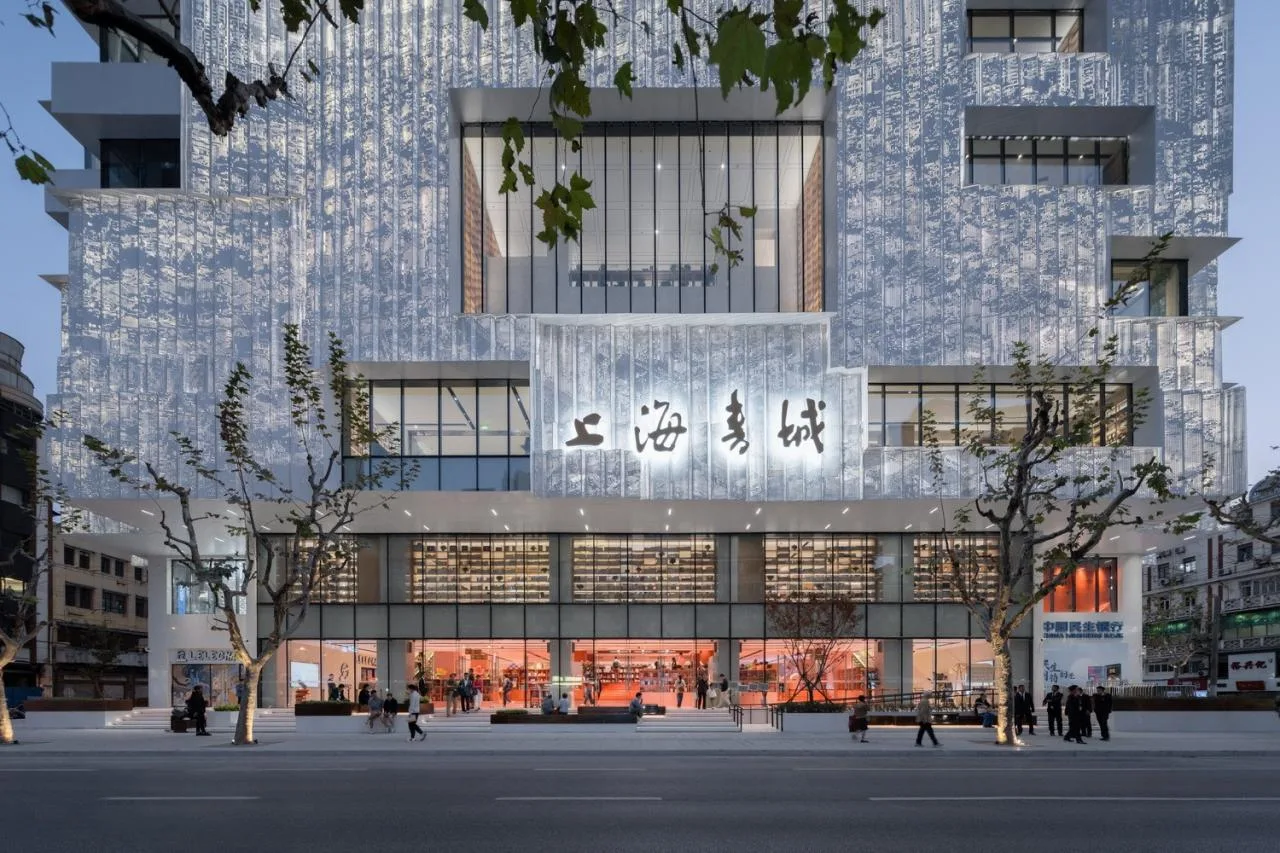
△ Night view of the main facade from Fuzhou Road © CreatAR Images
Standing on the rooftop of the soon-to-be-completed Chunshen Haoshi project on Nanjing East Road, I admired the most beautiful bookstore. Some called it a luxury store, but its facade cost a quarter of that of a luxury shop and yet captured the bookstore’s essence. Consumerist luxury is a false illusion; the true luxury lies in the knowledge within books.
Mosaic Epic
The upgraded Shanghai Book City preserves the original facade’s stone reliefs behind the Book Mountain. A marble pillar from 1998, framed for protection, remains in the evacuation stairwell—a legend born when workers accidentally formed natural patterns resembling a portrait, giving rise to the bookstore.
Memories of many people are preserved or reassembled here. The past is never ignored but continues to influence the present and future.
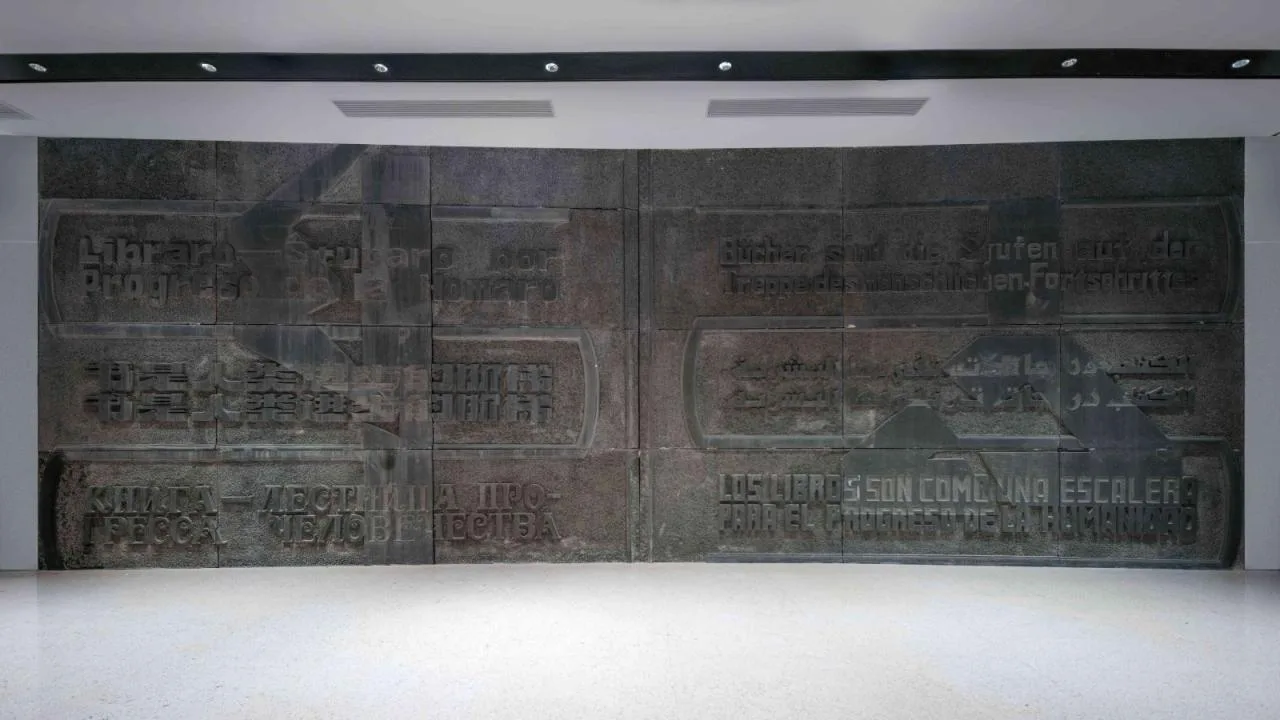
△ Stone relief preserved on the original facade © CreatAR Images
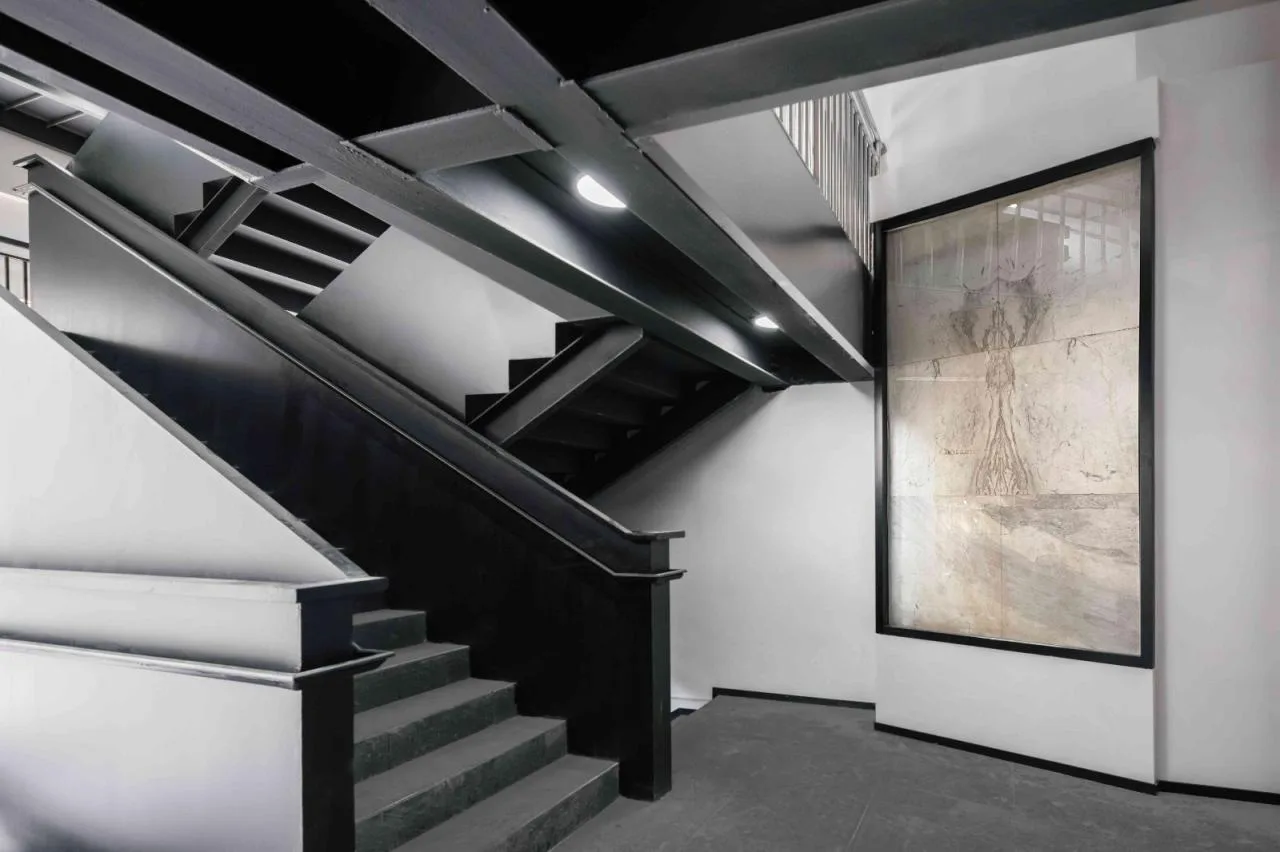
Preserved marble columns in fire stairwells © CreatAR Images
On December 24th, we held a review event at a furniture store within the bookstore. There are many ways to open a bookstore—just as there are many ways to open it in Shanghai—and now is the time to create new memories.
Every day, 10,000 visitors come to the bookstore, a milestone 80% of Shanghai’s shopping malls aspire to. In today’s world, not reading means falling behind. Many so-called “non-readers” already consume fragmented content on TikTok and Xiaohongshu via their phones. The book city offers a dramatic, socially and culturally rich knowledge-sharing space to compete for their attention, helping them transition to more accurate, meaningful reading—and find joy in it.
These readers, both new and old, create a continuous miniature mosaic epic filled with histories, memories, literature, legends, myths, riddles, prophecies, gossip, controversies, reflections, heroes, mortals, incomplete souls, humble deities, and fractured love—this is Shanghai’s epic.
“In everyone’s life, there is always the hardest year, making life beautiful and vast.” – The Island Bookstore
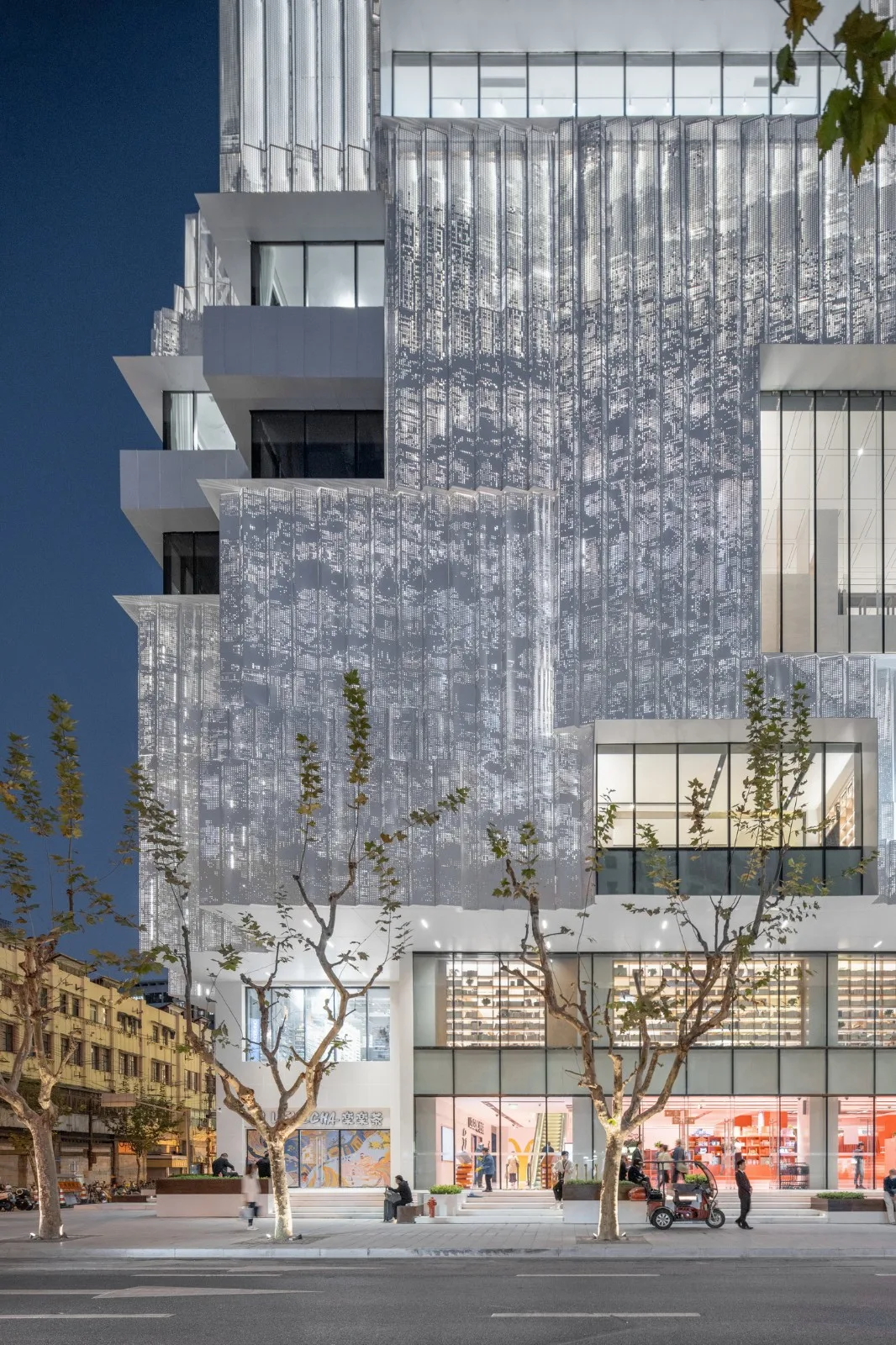
△ Partial night view of the main facade © CreatAR Images
Silent Strength
My friend’s 12-year-old daughter visited the bookstore and said, “Uncle, the design is great.” I smiled happily. She also remarked, “Those malicious comments are unfair.” I smiled silently.
In 2023, my parents faced multiple emergencies and hospitalizations, and my wife temporarily lost mobility after a fall. Yet, this year was not harder than previous years. I have grown accustomed to handling unexpected challenges calmly. There is no easy path in adulthood. When faced with difficulties, we may complain or vent, but a steadfast person endures without noise.
I pay no mind to vicious comments—they are meaningless venting. I have love, family, friends, dedicated employees, fulfilling designs, and a satisfied daughter. I choose silence.
In 2024, the studio will release 6-8 new projects, much like Shanghai Book City: defying prejudice, taming inner anxiety, and serving as architectural experiments and expressions of attitude. Say what you will—I will remain silent.
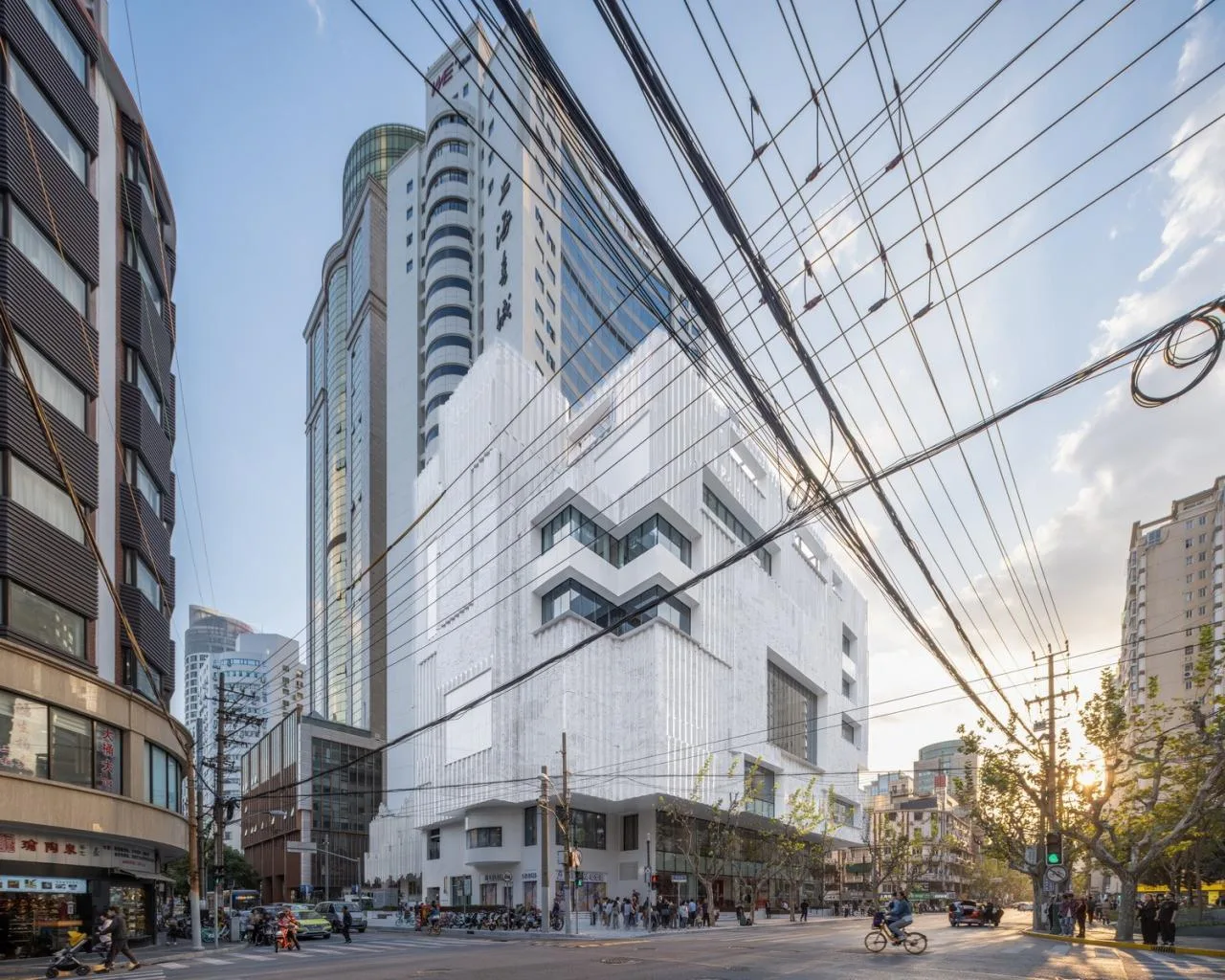
△ Street view of Shanghai Book City from Fuzhou Road (near Fujian Middle Road) © CreatAR Images
“The existence of the world is to become a book.” – Malam
Notes:
① Zhu Xudong: Co-founder of the FA Young Architect Award.
② On May 8, 2017, the 11th Shanghai Municipal Congress of the Communist Party of China opened. Han Zheng, Secretary of the Shanghai Municipal Party Committee, delivered a report emphasizing Shanghai’s future vision as a “desirable and outstanding global city,” focusing on innovation, humanity, and ecology. The description of the “City of Humanities” highlights readable buildings, walkable streets, restful parks, law-abiding and civilized citizens, and a city filled with warmth—a poetic passage often praised as the most touching by many representatives.
Project Drawings
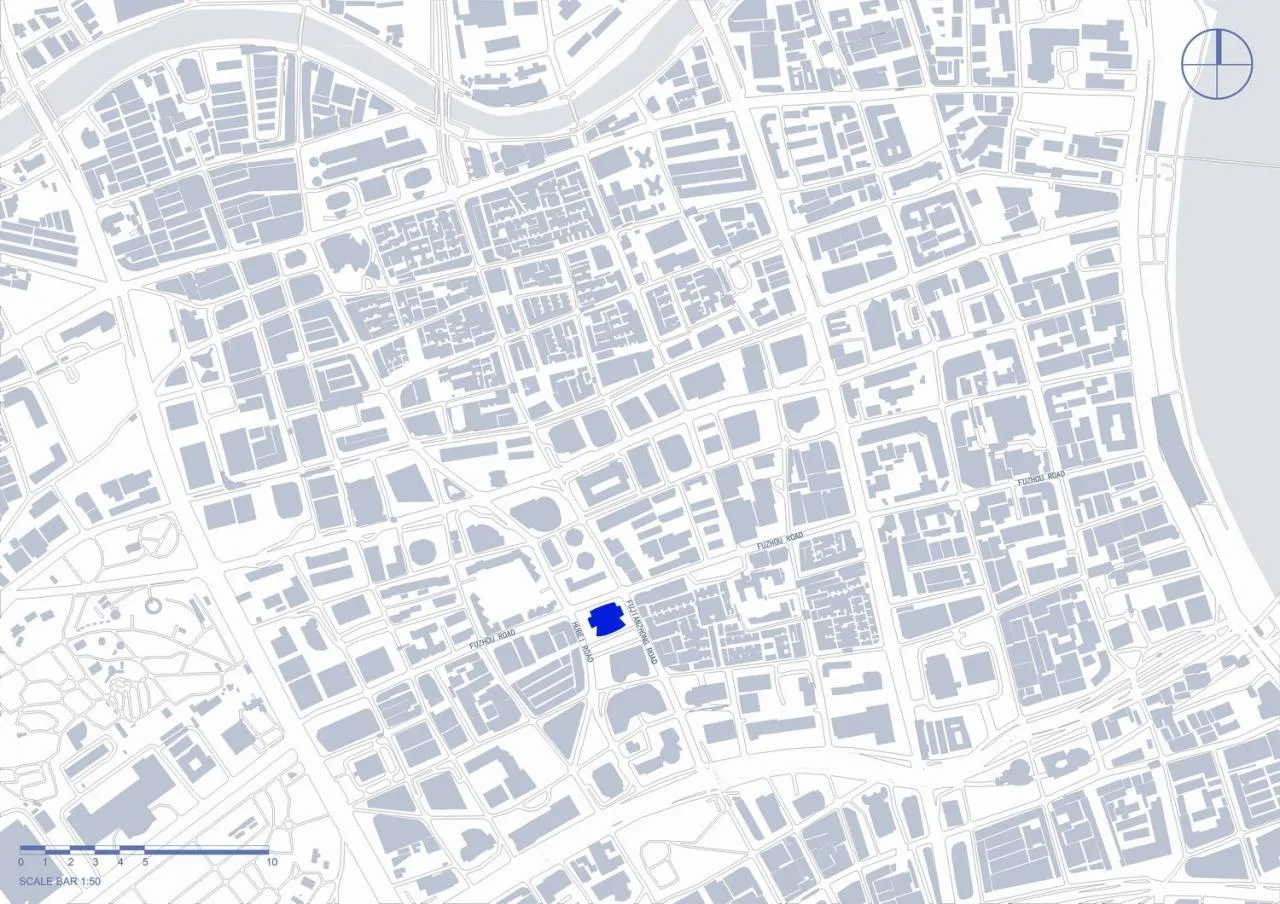
Project Location
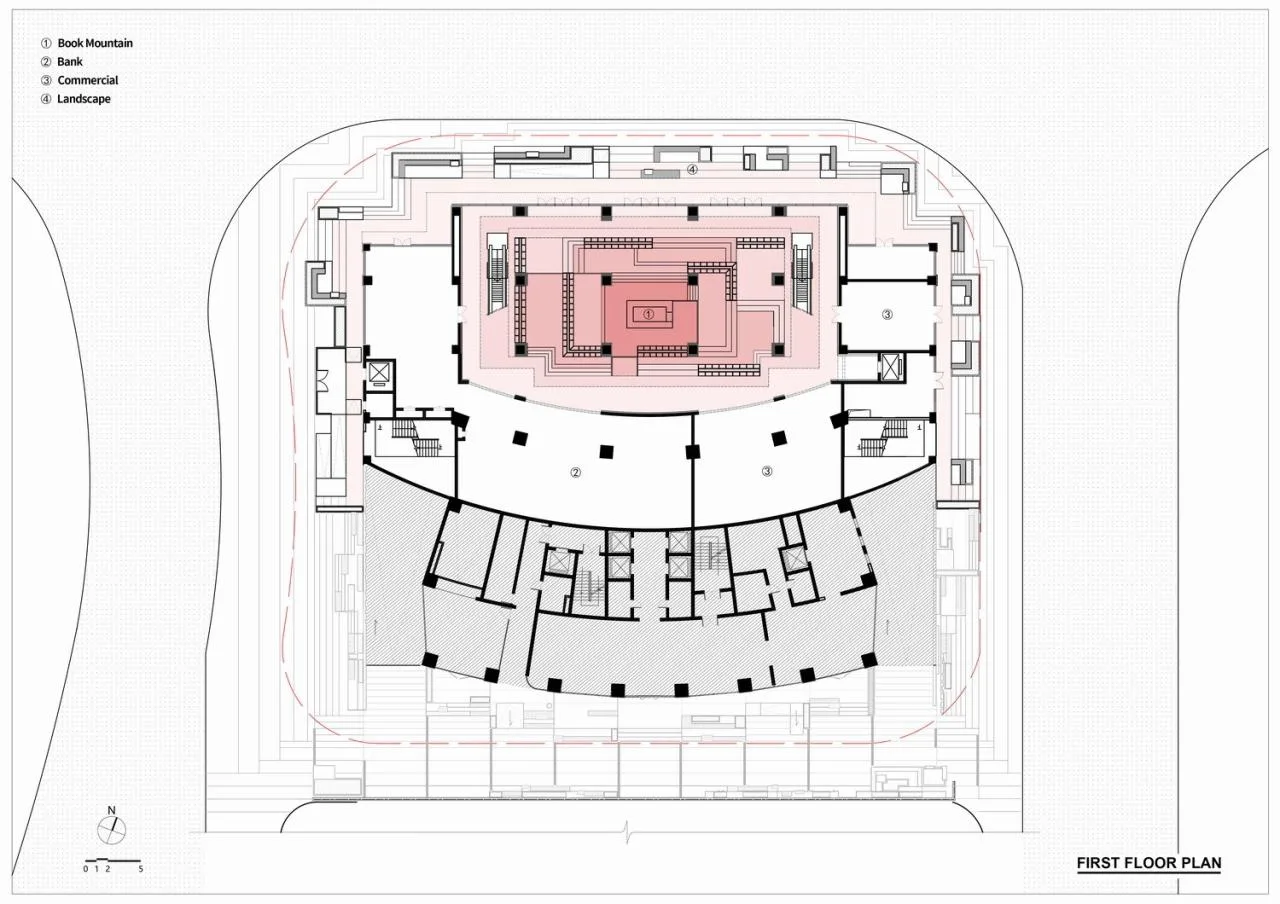
△ First floor plan
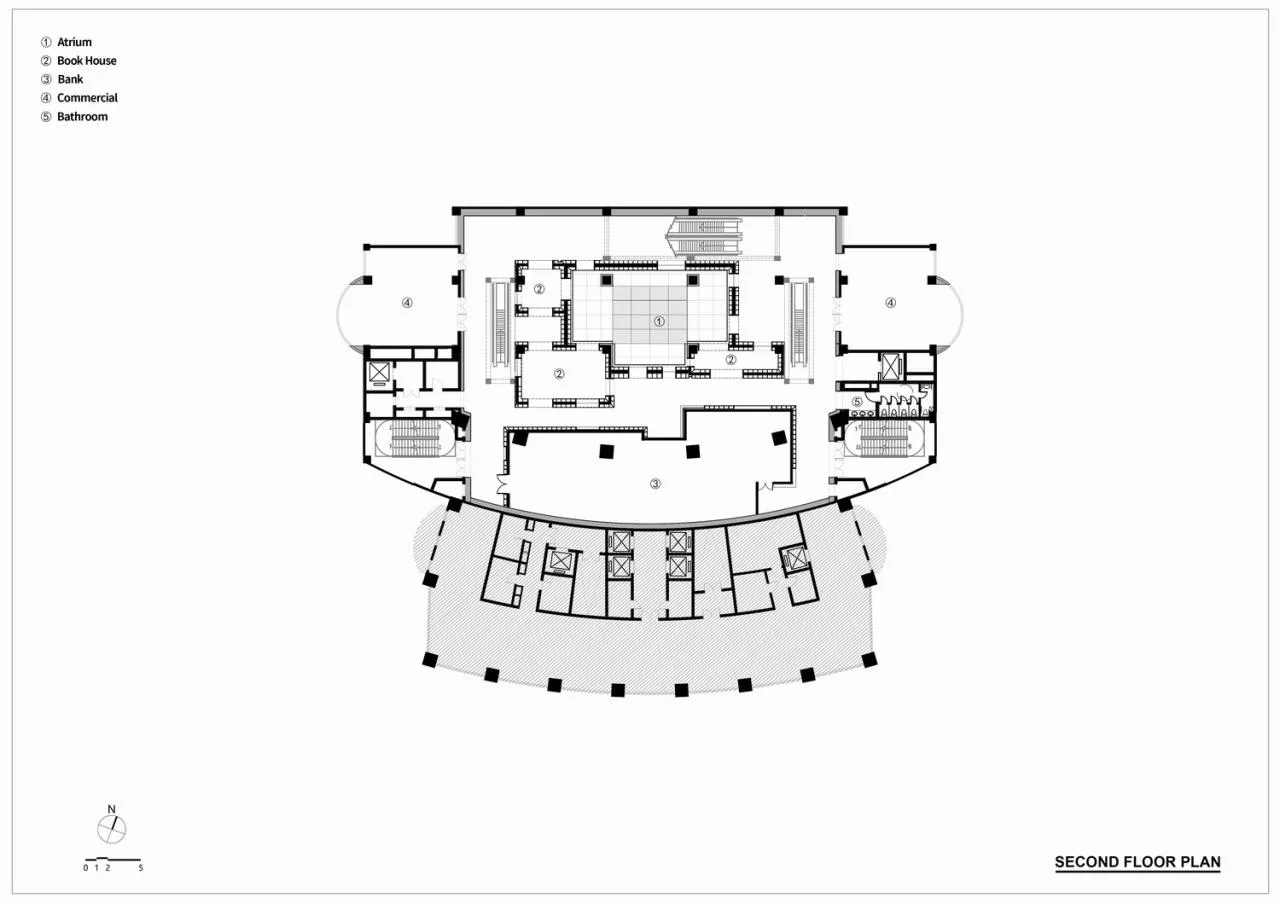
△ Second floor plan
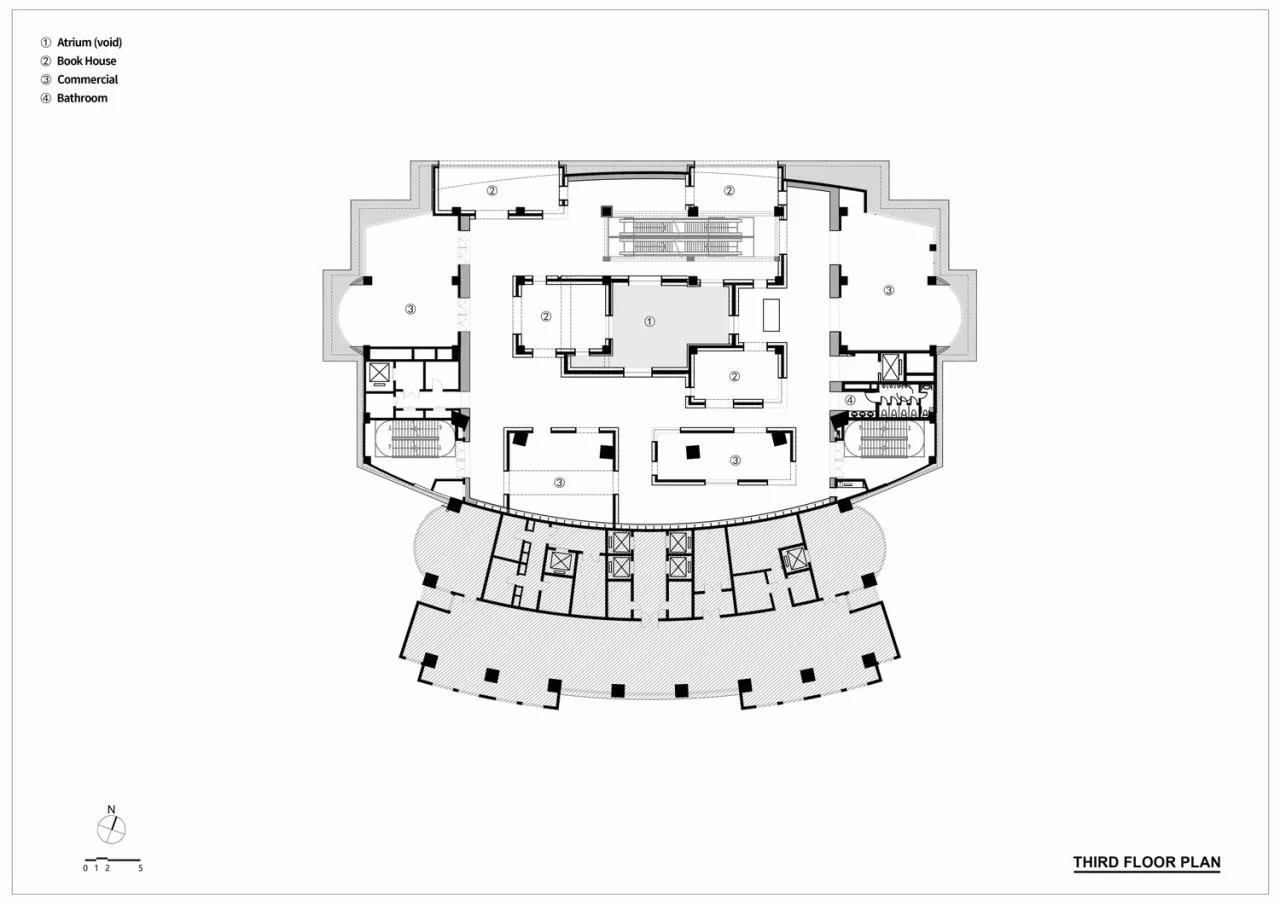
△ Third floor plan
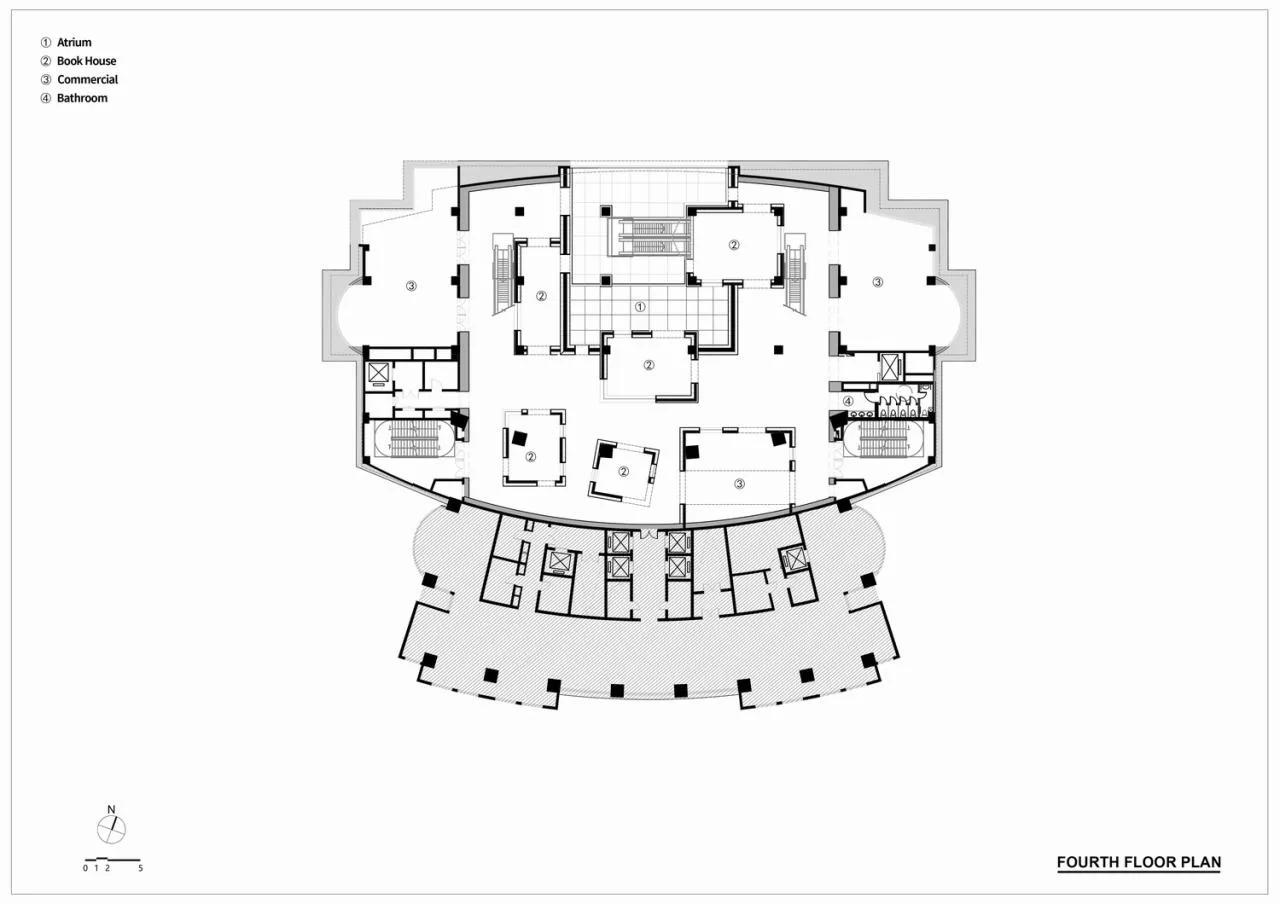
△ Fourth floor plan
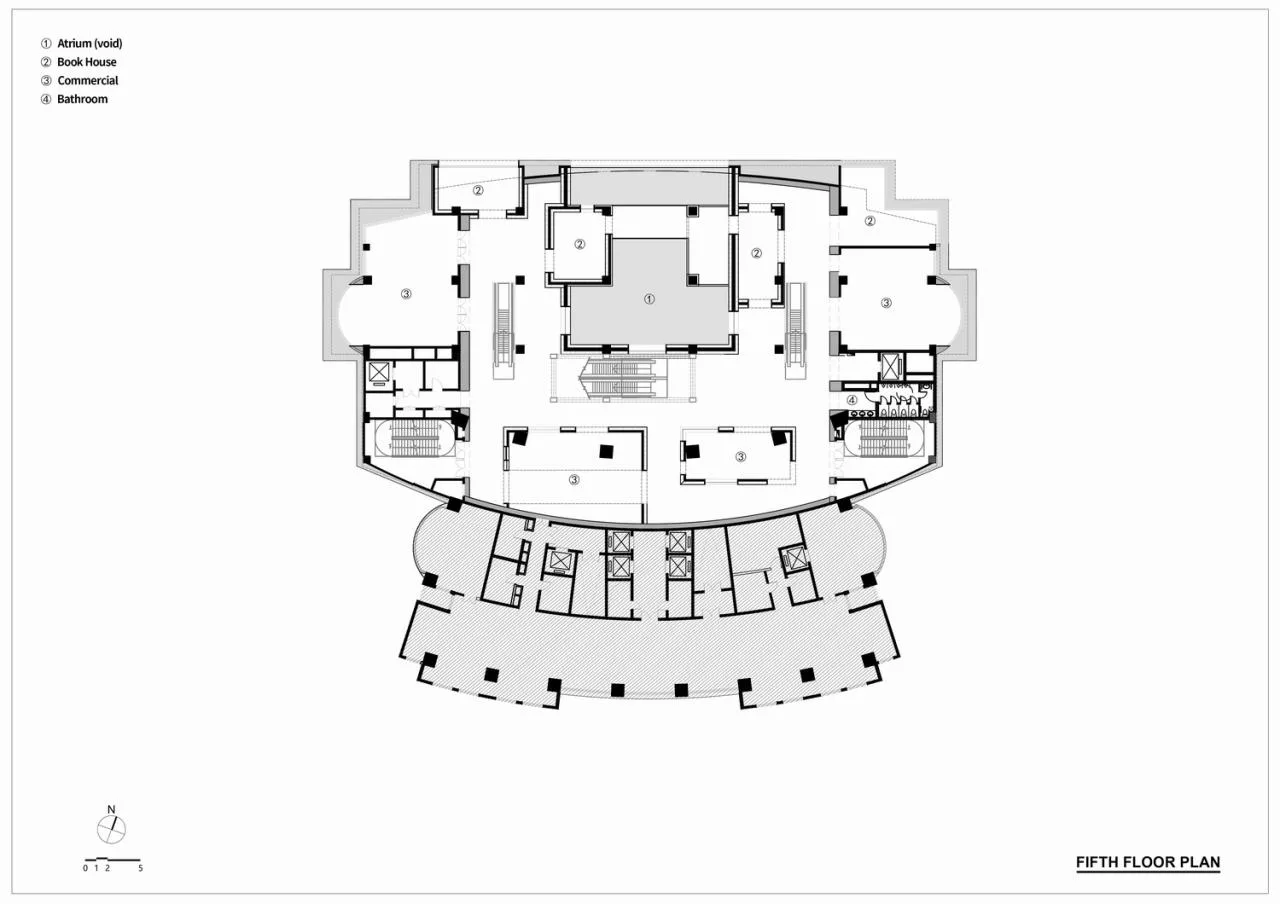
△ Fifth floor plan
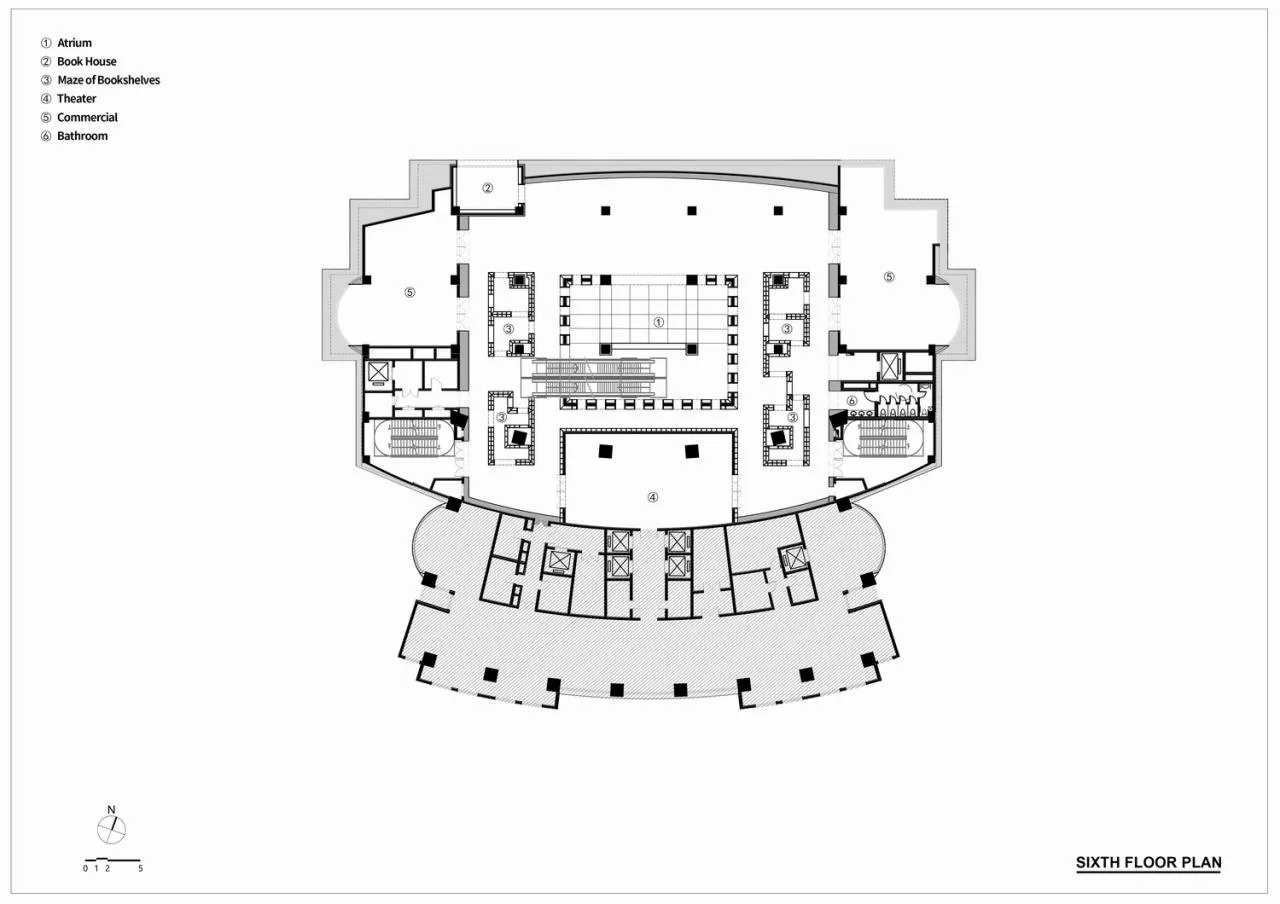
△ Sixth floor plan
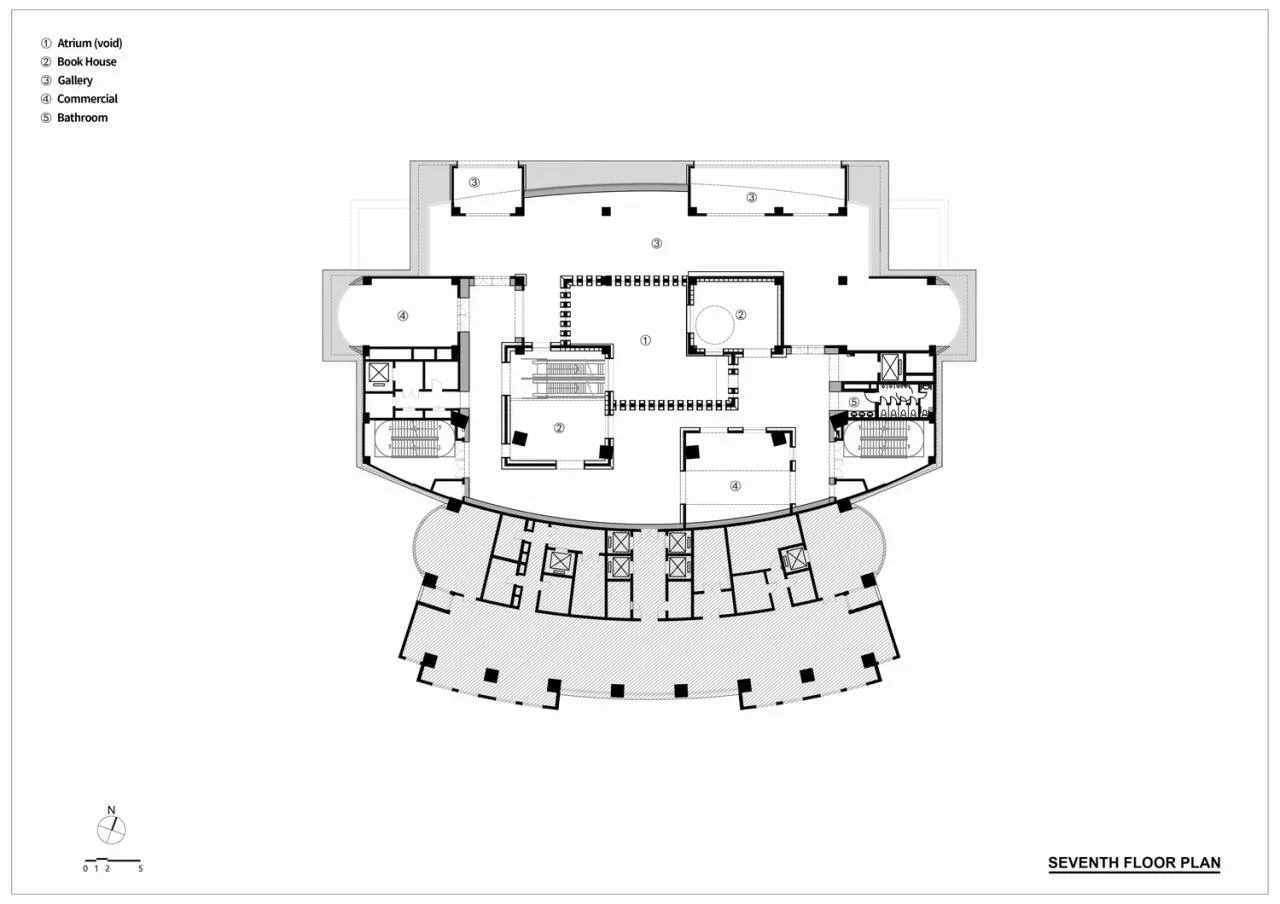
△ Seventh floor plan
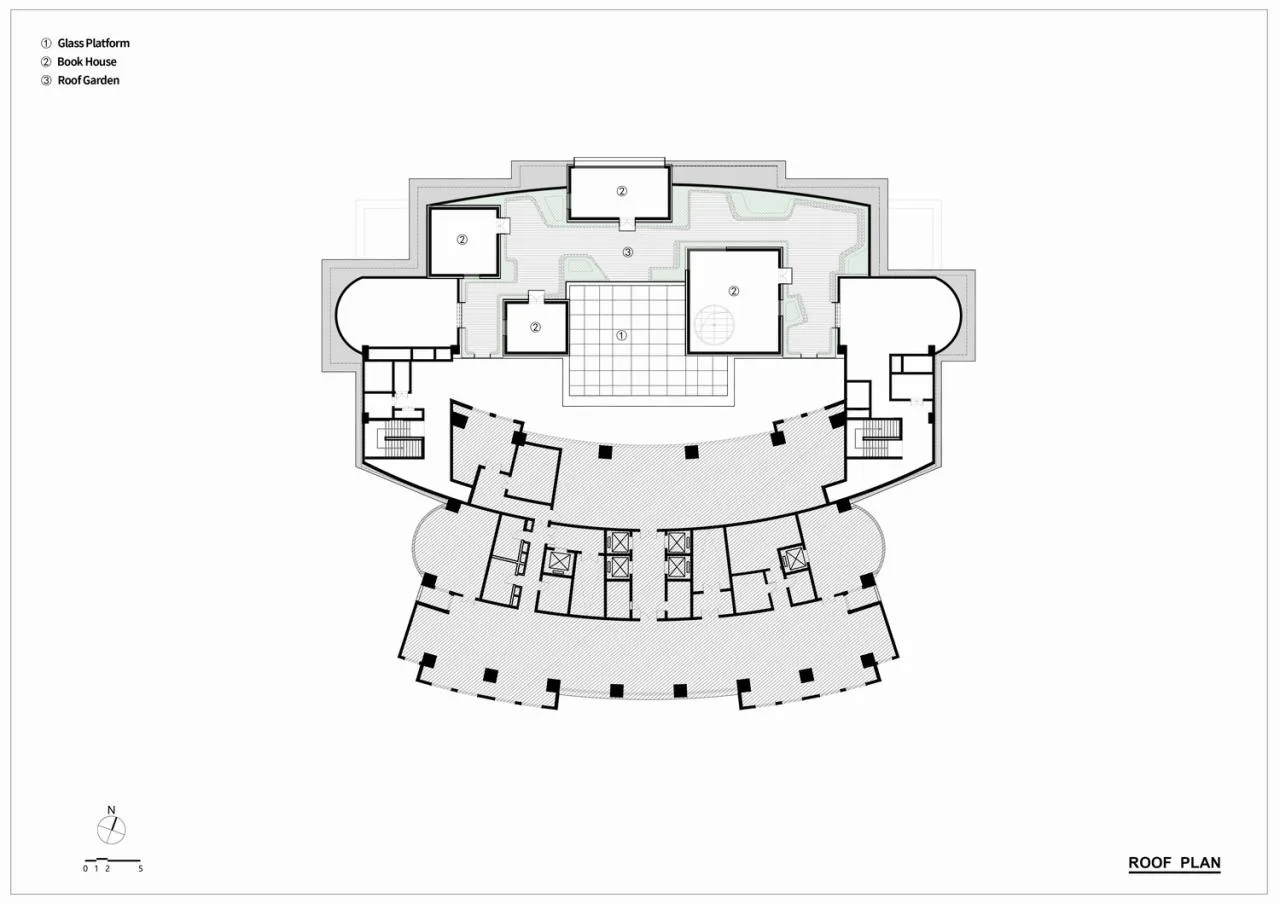
△ Roof plan
Project Information
Project Name: Shanghai Book City Renovation Design
Construction Unit: Shanghai Xinhua Media Co., Ltd
Owner Team: Li Pengcheng, Yin Yixin, Xu Saigang, Zhu Qi, Dong Jie
Design Company: Wutopia Lab
Lead Architect: Yu Ting
Pre-Project Manager: Pu Shengrui
Post-Project Manager: Li Hao
Project Architects: Lv Jie, Lin Chen
Design Team: Li Peng, Feng Zixiang, Zhang Haoran, Wang Qiuyan, Feng Yanyan, Zhang Danman, Wang Lei, Xu Zijie
Design Consultation: MEEM HOUSE
Lighting Consultants: Zhang Chenlu, Wei Shiyu
Landscape Consultant: Yuan Yuan
Material Consultants: Ding Ding, Sun Jing
Construction Drawing Design: Shanghai Sanyi Architectural Design Co., Ltd
Project Manager: Gao Dong
Architecture Major: Zhu Yumei, Ye Xia, Zhang Yu
Structural Major: Hu Wenxiao
Mechanical and Electrical Majors: Mao Yaqian, Wang Yiqin, Xu Zhifeng, Liu Ning, Ye Lin, Shi Jiaying
Indoor Design: Yu Bing, Shen Rui, Zhang Fang, Yang Yang
Landscape Design: Zheng Zhicheng, Wang Can, Guo Yuqi, Zhang Jin
Curtain Wall Deepening Unit: Shanghai Jieyu Architectural Design Co., Ltd
Curtain Wall Design: Su Li, Ye Kun
Soft Decoration Design: Jiarui Architectural Design (Shanghai) Co., Ltd
Soft Decoration Production: Suzhou Comfort Furniture Co., Ltd
Identification Unit: Shanghai Saichi Identification Design Engineering Co., Ltd
Logo Production: Tanwai (Shanghai) Cultural Communication Co., Ltd
Construction Unit: Shanghai Construction Fifth Construction Group Co., Ltd
Photography: CreatAR Images
Video: CreatAR Images
On-Camera Appearance: Lu Yan
Project Address: Huangpu District, Shanghai, China
Building Area: 11,936 square meters
Design Period: July 2021 – July 2022
Construction Period: July 2022 – October 2023
Main Materials: Perforated aluminum panels with fluorocarbon paint, prefabricated organic and inorganic grinding stone, gold marble, jade, copper-plated stainless steel, laminated glass, acrylic, fireproof board, micro cement, black titanium stainless steel, customized wood-grain printed bookshelves














Must log in before commenting!
Sign Up