
▲ Project video © Architecture Photography
Hidden within an ancient village that has stood for thousands of years, quietly fading away amidst the bustling human world.
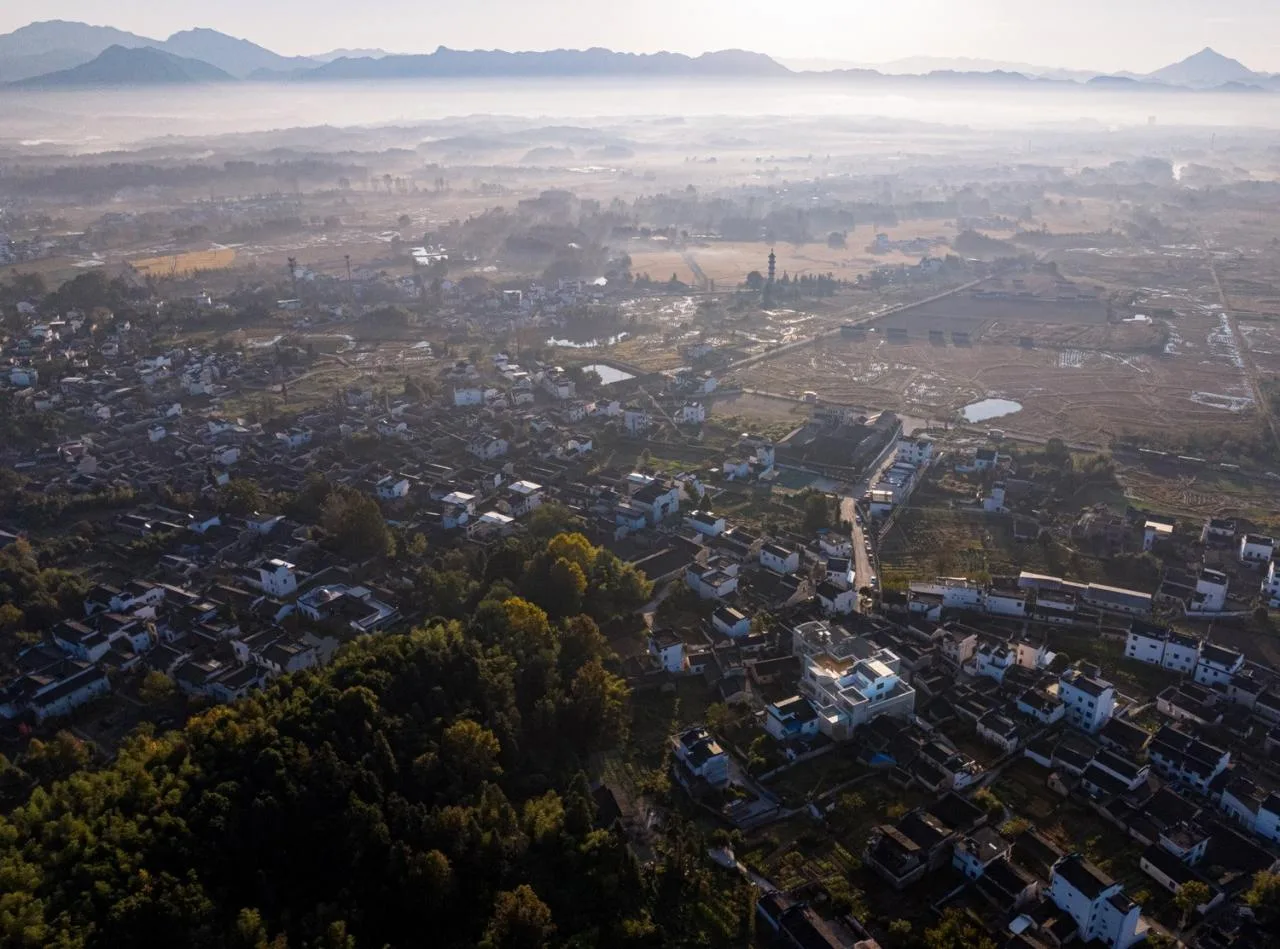
▲ Aerial view of the entire area © Architecture Photography
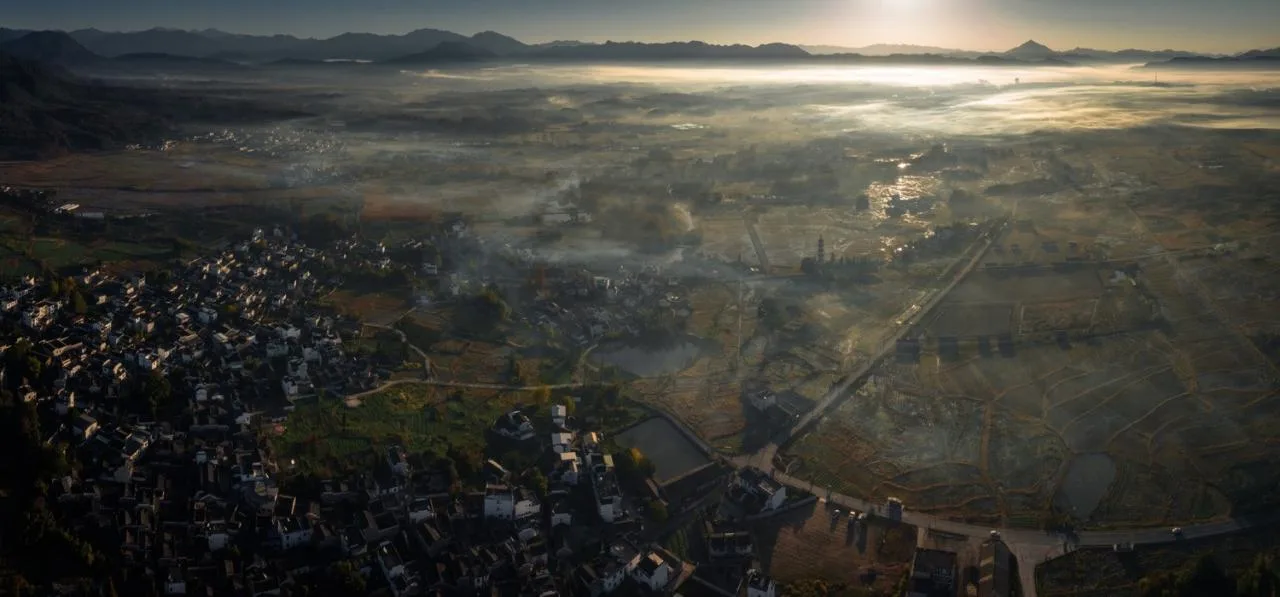
▲ Traditional Chinese ancient village, Bishan Village © Ni Nan
The project is situated in a historic village, surrounded by traditional homes featuring emblematic architectural elements. The area includes buildings dating back to the Ming and Qing Dynasties alongside newly constructed houses that blend modern and contemporary styles. Our site lies deep within the village, accessible only by navigating through a series of wide and narrow, winding alleyways.
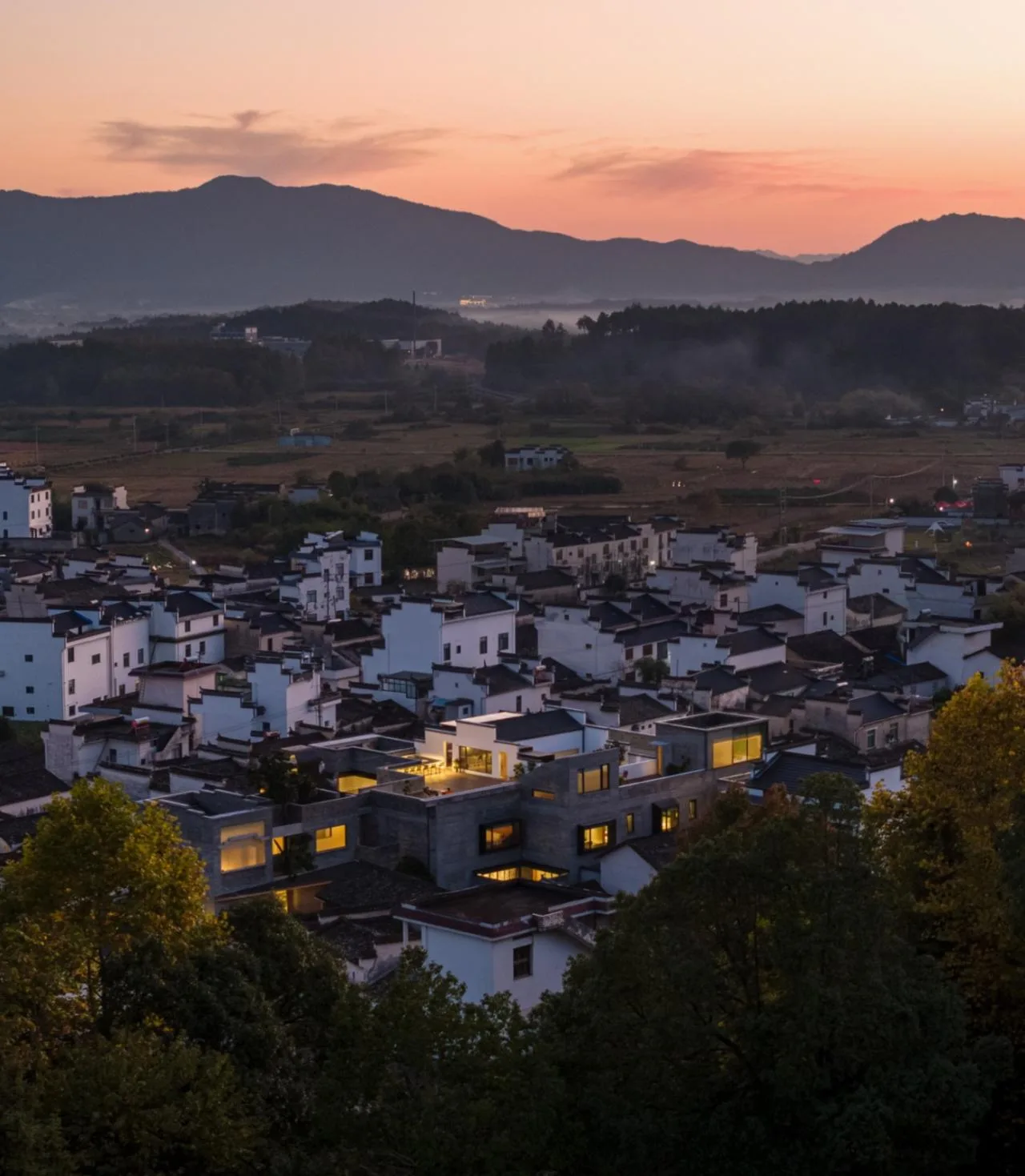
▲ Aerial view of buildings © Architecture Photography
During my initial site visit, I felt uncertain. Vehicles cannot reach the location directly, the village buildings are unevenly scattered, the available space is limited, and the surrounding views are unremarkable.
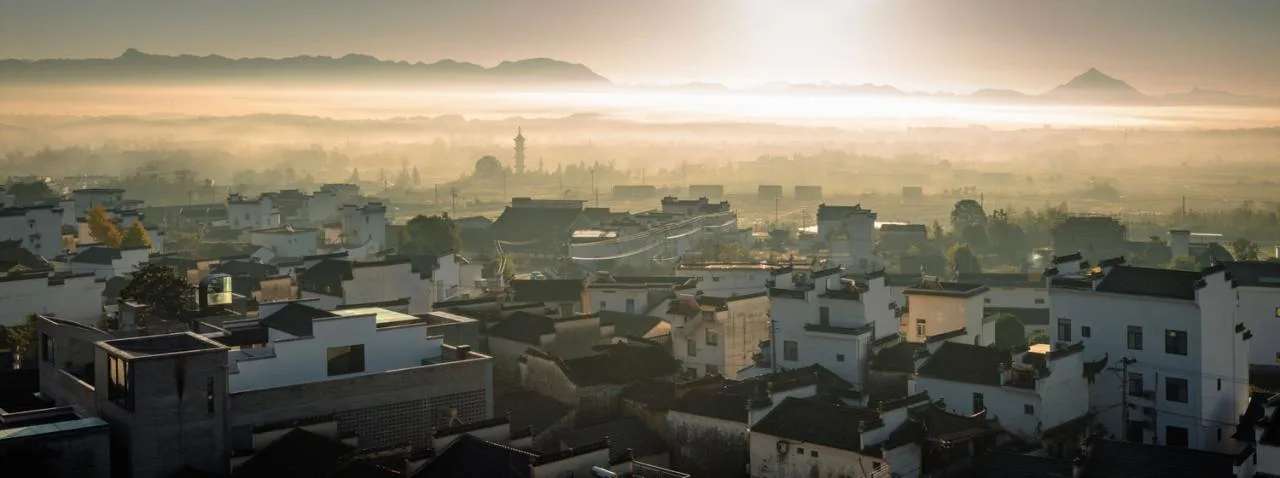
▲ Seamlessly integrated into the architecture of Bishan Village © Ni Nan
However, while surveying the site, I stood amidst the blue tiles and white walls, observing the layered, staggered horsehead walls. In the distance, smoke rose from cooking fires, carrying aromas of wood smoke and food through the alleys. These sensory details made me reconsider preconceived notions. I realized it was possible to set aside stereotypes, respond to the actual site conditions, and design architecture that blends into the village while creating an introspective, tranquil world. A space that harmonizes with its complex, intricate surroundings yet offers a stark contrast through its quiet solitude.
01. Finding Order Within Disorder
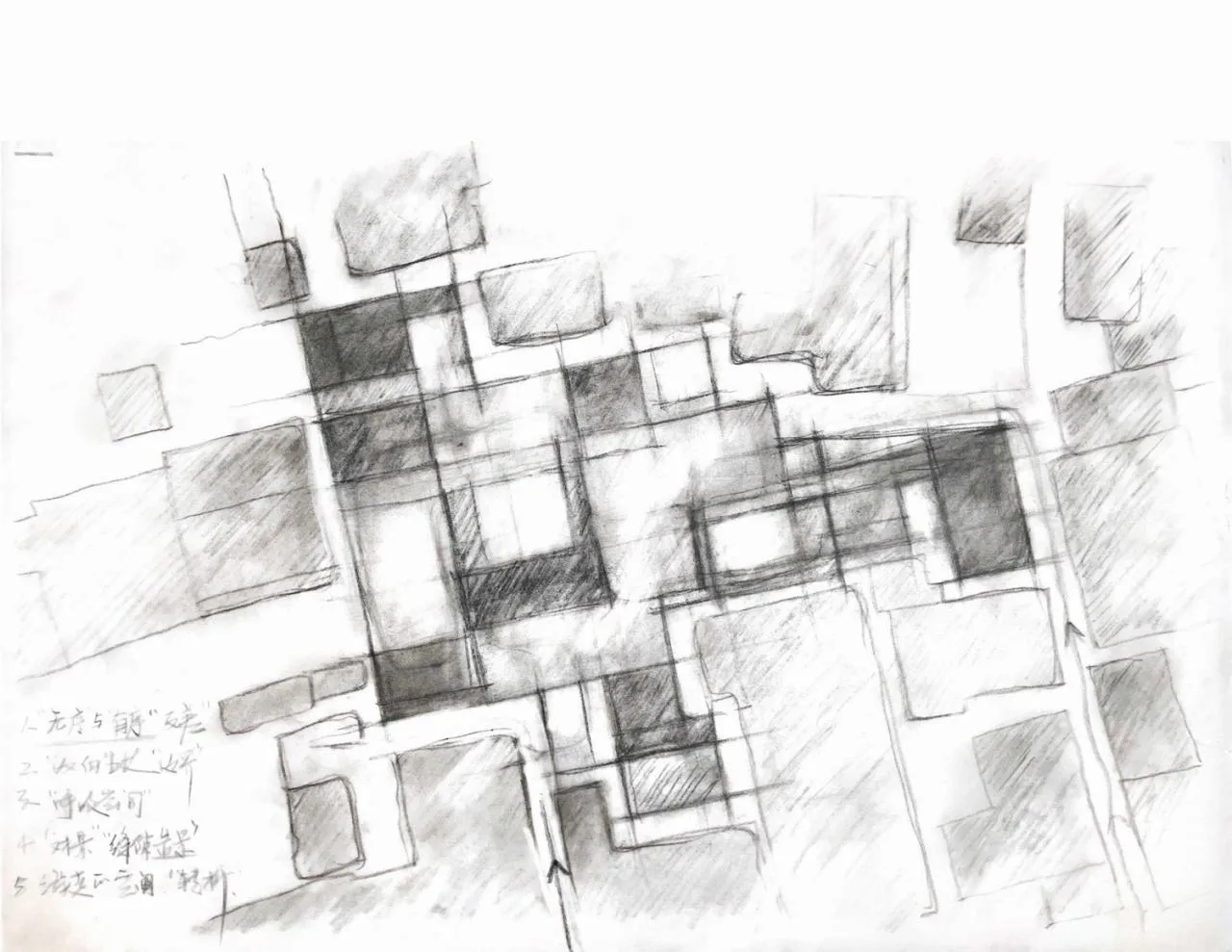
▲ Concept sketch © y.ad studio
The architectural fabric of traditional Chinese villages grows naturally over time, resulting in a scattered, seemingly disorderly yet vibrant environment. The surrounding buildings of our project share this irregular, non-linear layout full of twists and turns.
Initially, this posed challenges. It felt like trying to fit a building block into a tight space lacking “scenery” or “openness,” leading to inefficient use of space. After careful reflection, I considered adopting principles from traditional Chinese gardens: creating an inner world completely isolated from the outside environment—an extremely pure, quiet, and contemplative space enclosed within complexity.
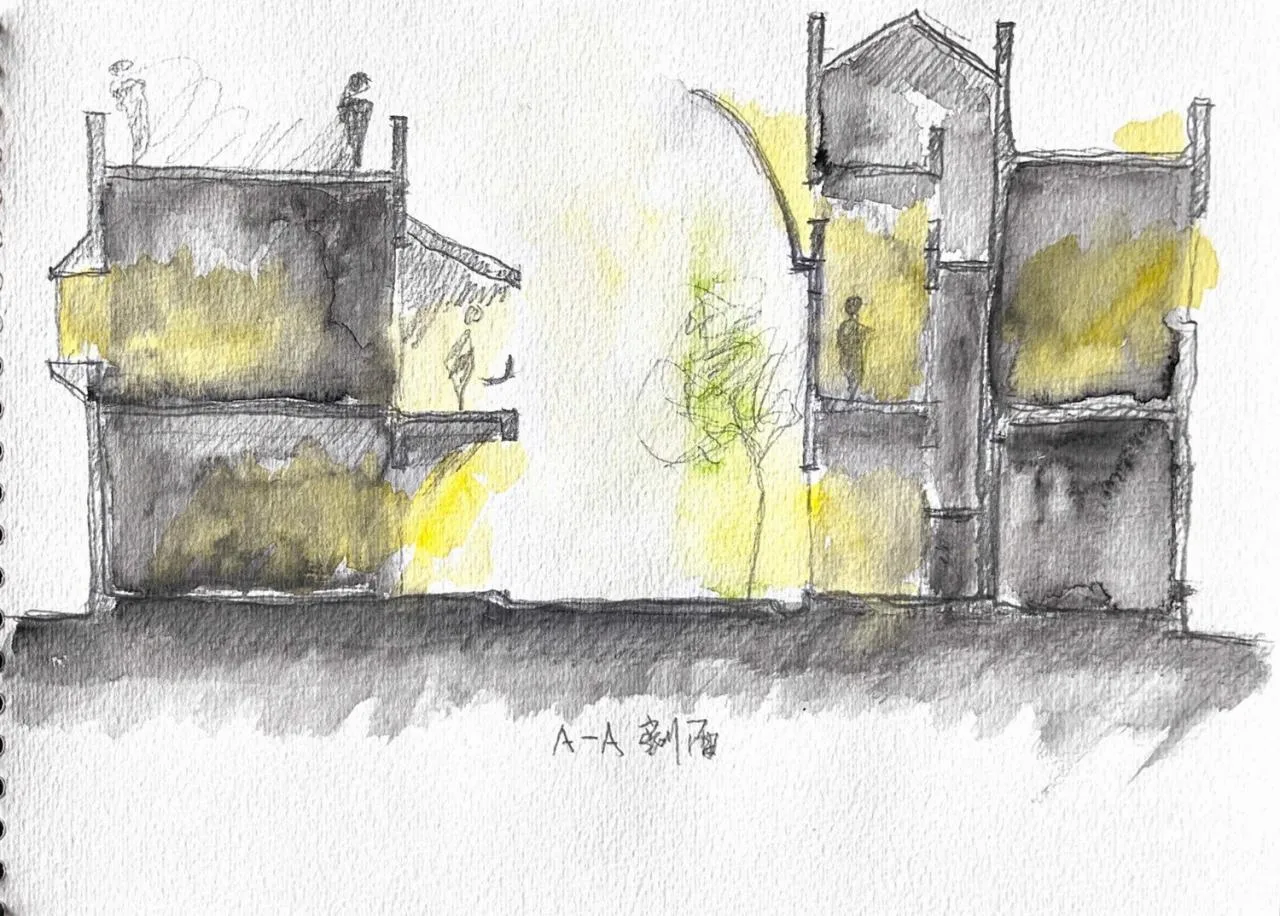
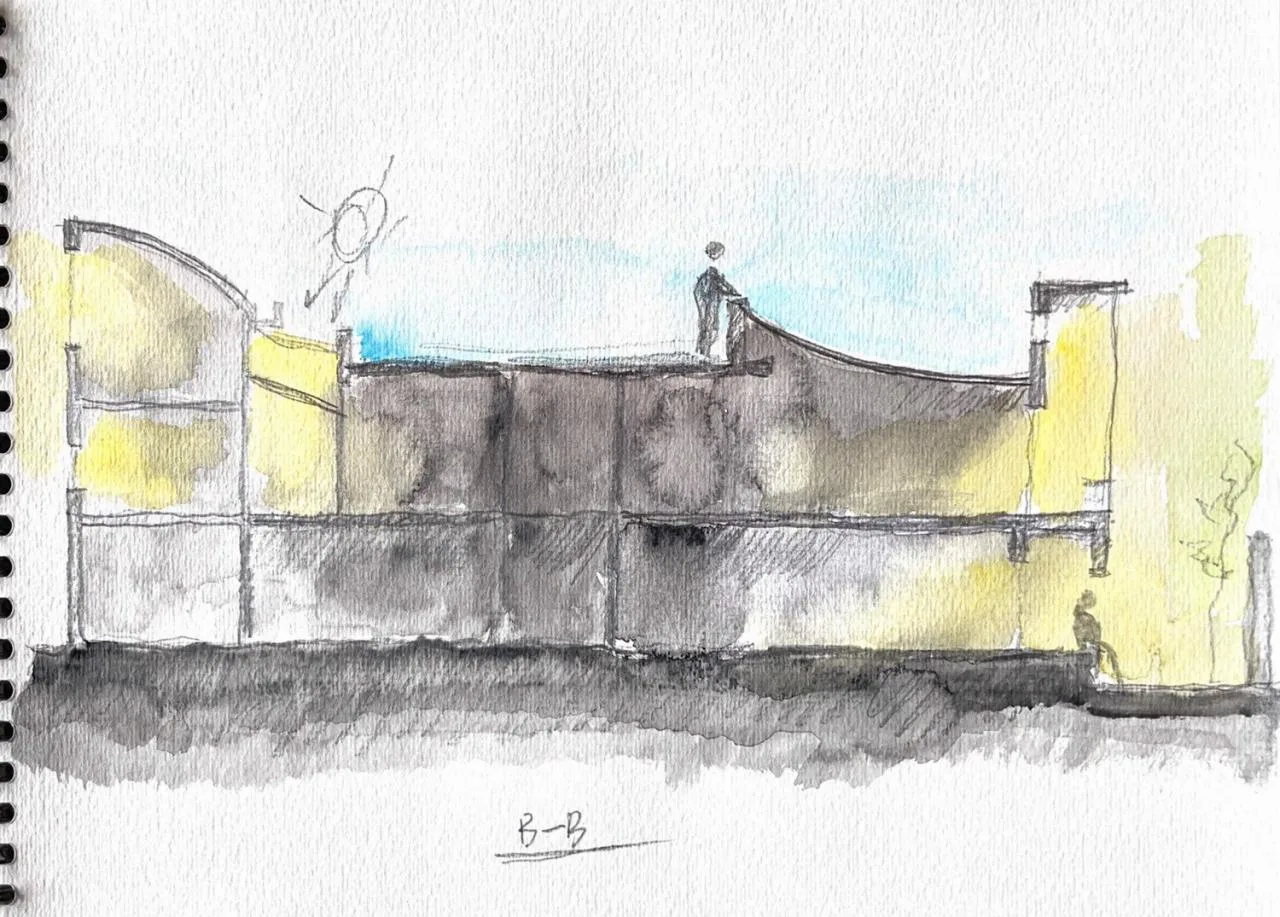
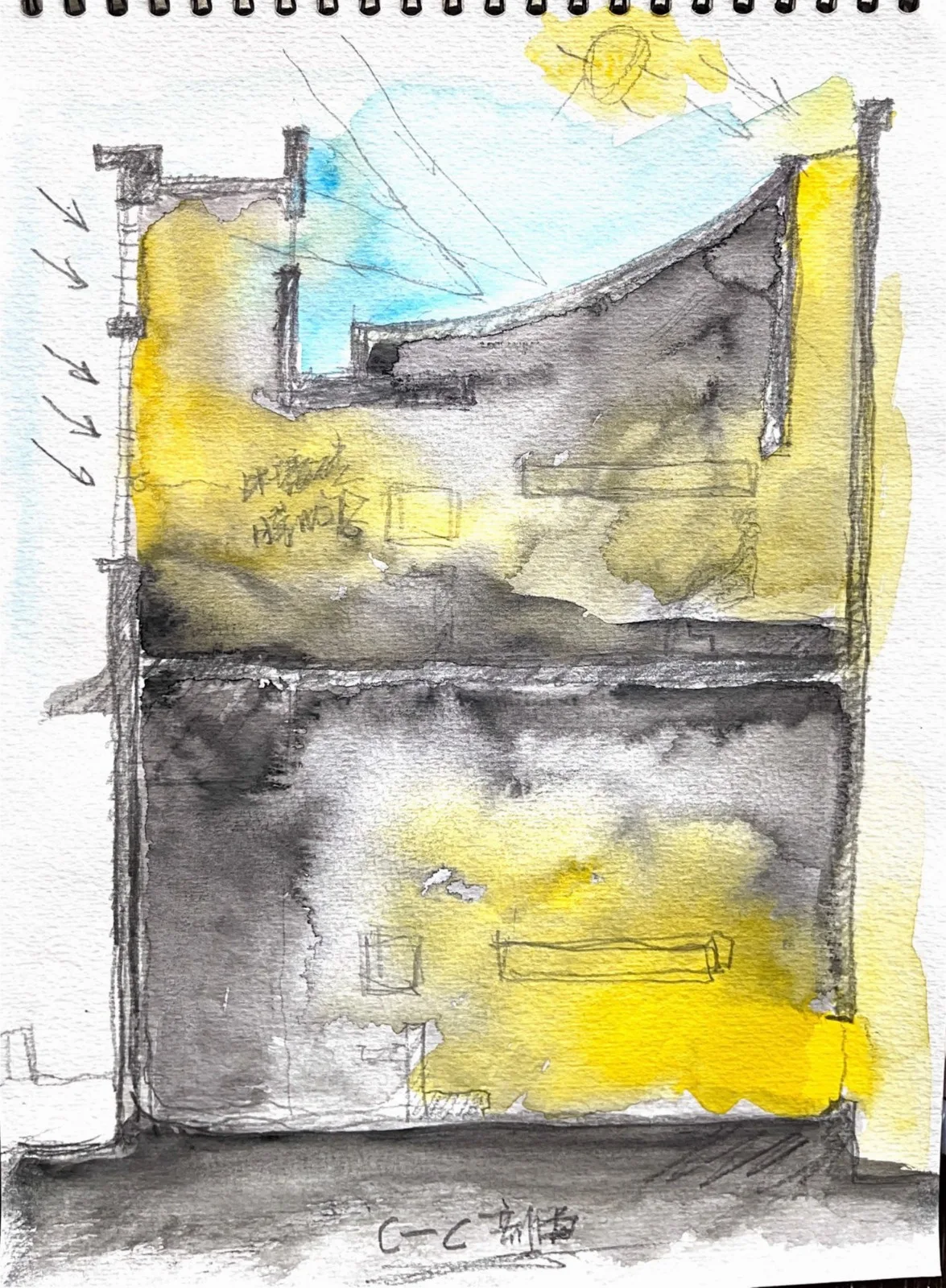
▲ Concept sketches © y.ad studio
After establishing these principles, I initially aimed to design a modern building that would sharply contrast with the surrounding traditional structures. However, local government regulations require preservation of the village’s traditional architectural appearance, including emblematic elements.
We did not want to simply replicate traditional forms, which would lack innovation and fail to meet contemporary living needs. Instead, our goal was to inherit the spiritual essence of traditional architecture while reinterpreting it to fit modern lifestyles. The key challenge has been: how to blend traditional architectural elements with modern design and everyday life?
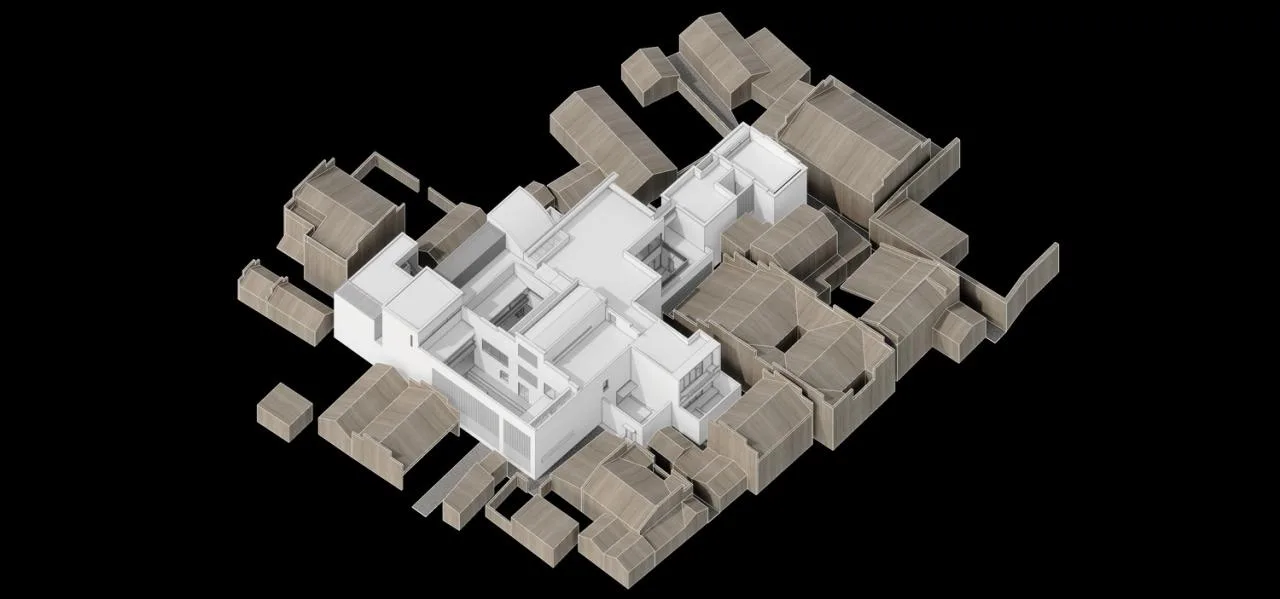
▲ Analysis diagram © y.ad studio
Our design strategy remained consistent. After assigning various functions, we preserved the century-old trees and ancient wells on site, integrating courtyards throughout the building complex. These inner courtyards provide transitional spaces between reality and imagination, serving as visual anchors. They enrich the internal spatial experience and create seamless connections between interior and exterior, as well as between architecture and nature.
02. Dynamic Visual Experience
We designed the spatial flow with many twists and transitions to create rhythm and changing scenery. Movement through the space—whether pausing, ascending, or descending—offers varied sensory experiences tied to space, time, and emotion, revealing the richness and diversity of the environment.
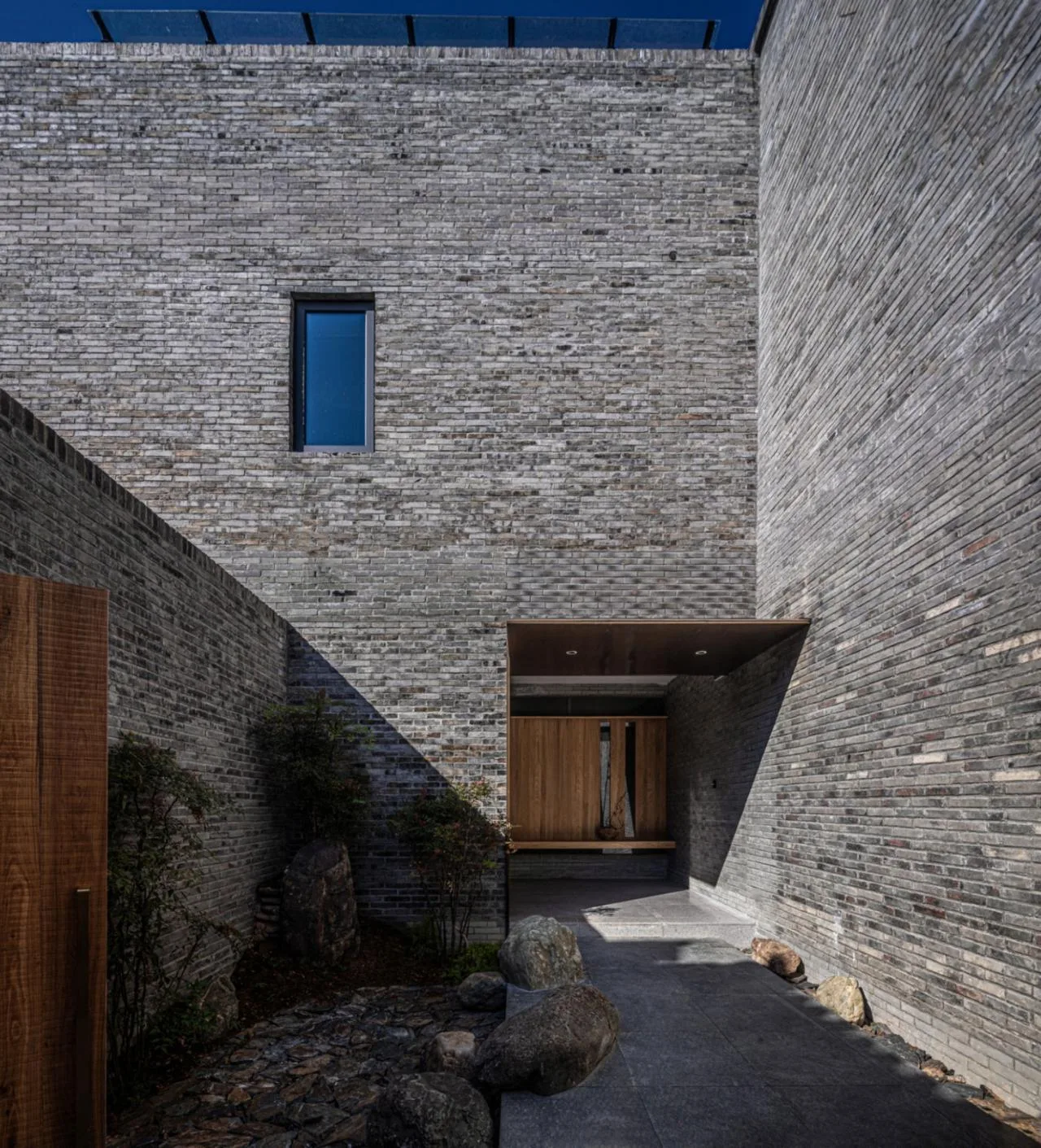
▲ Courtyard at the entrance © Architecture Photography
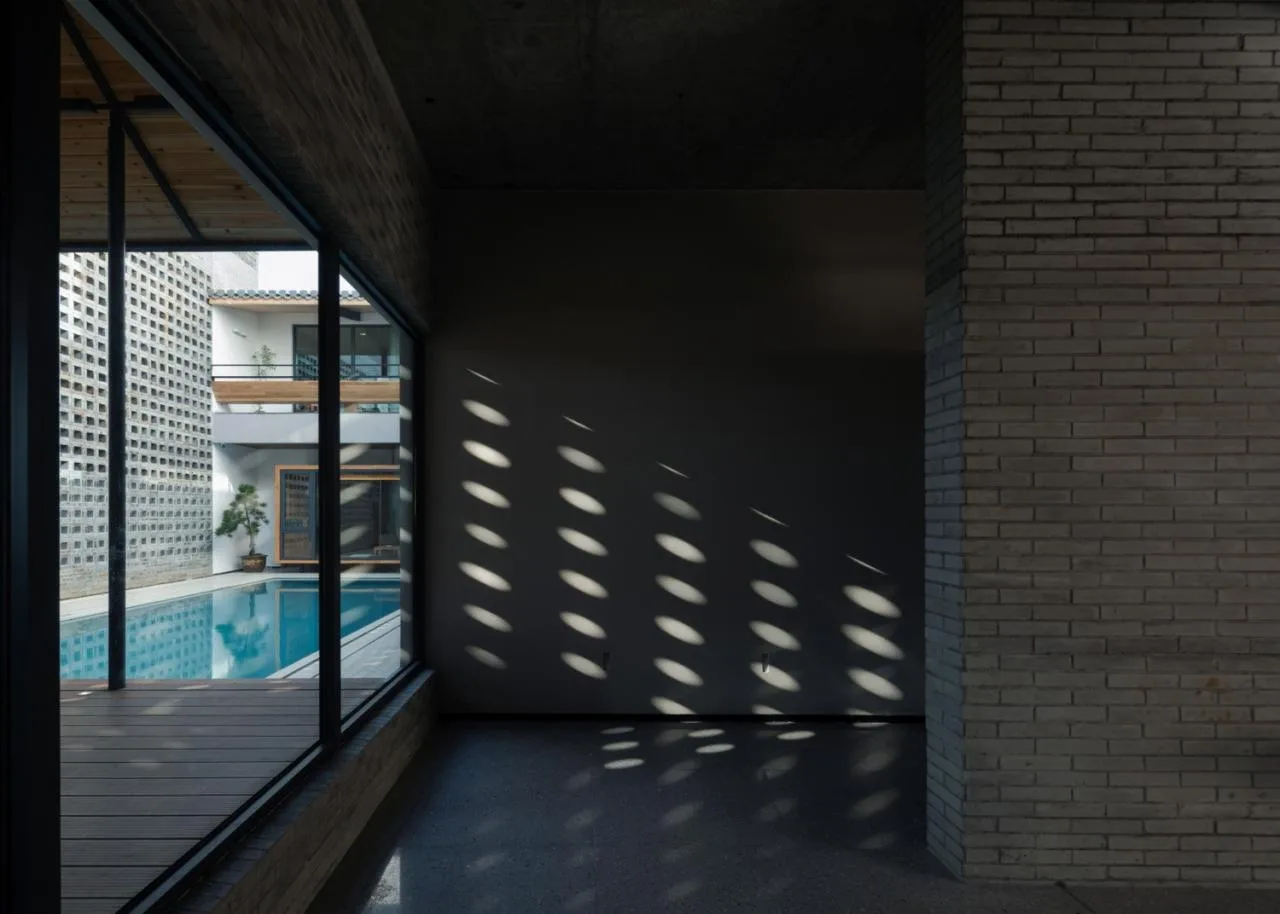
▲ Inner corridor © Architecture Photography
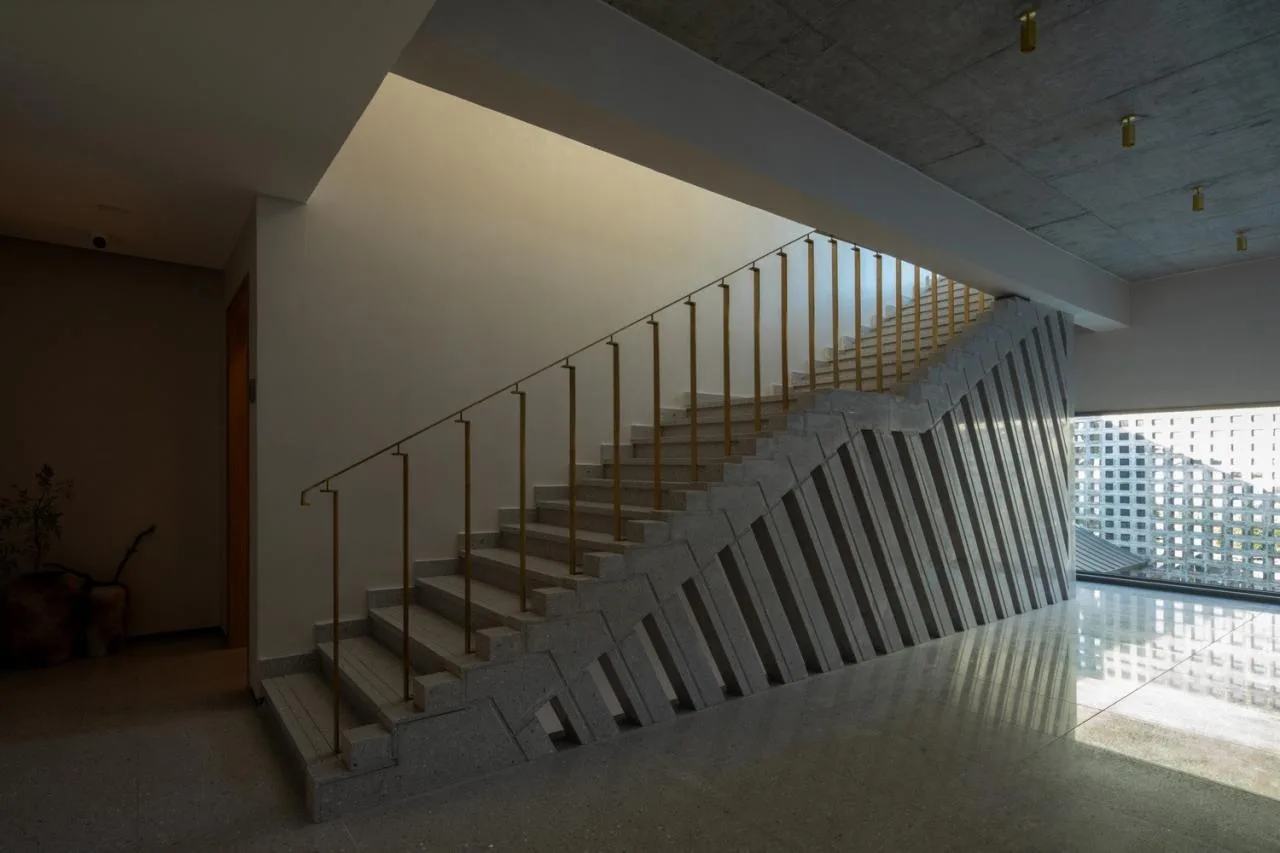
▲ Staircase ascent © Architecture Photography
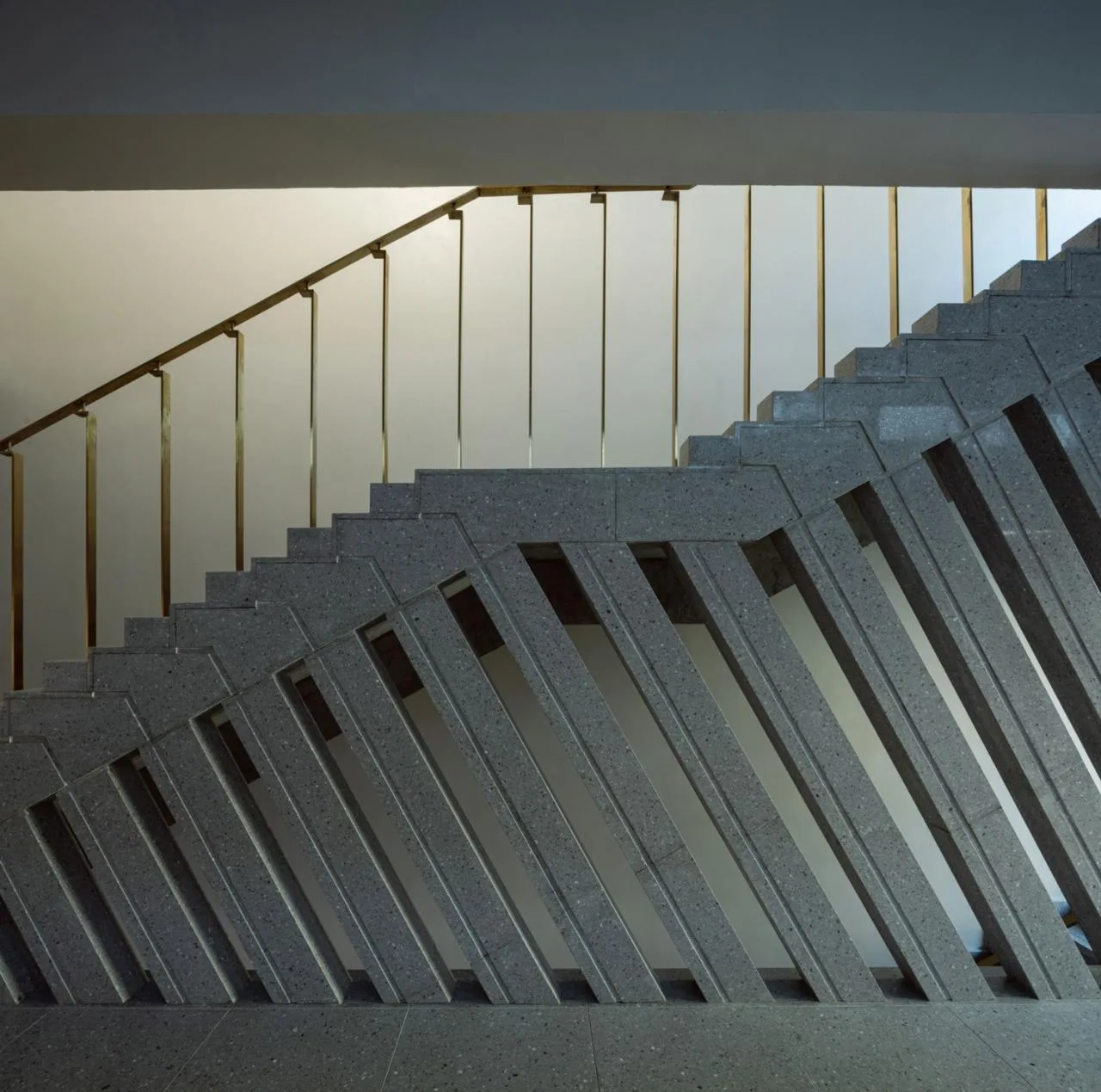
▲ Section of staircase © Architecture Photography
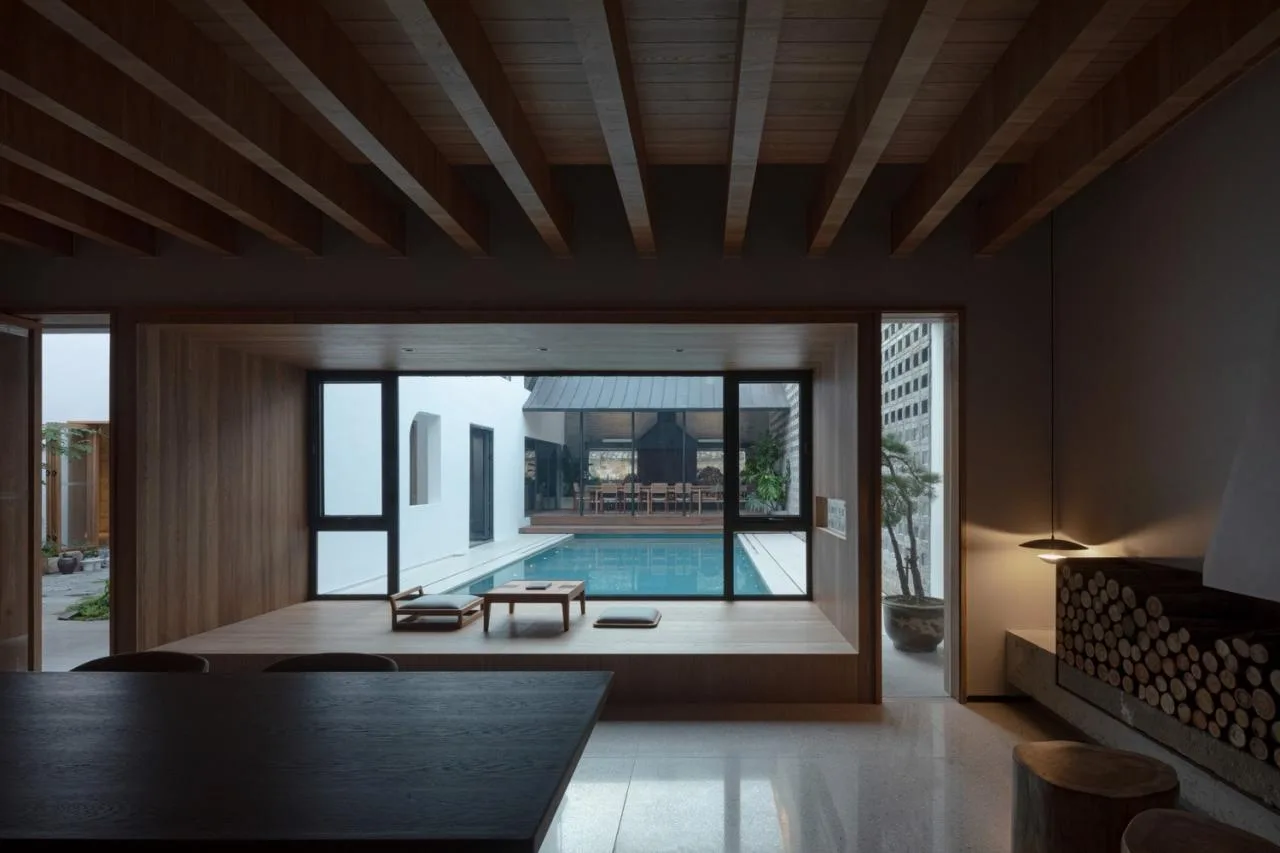
▲ Indoor view towards courtyard pool © Architecture Photography
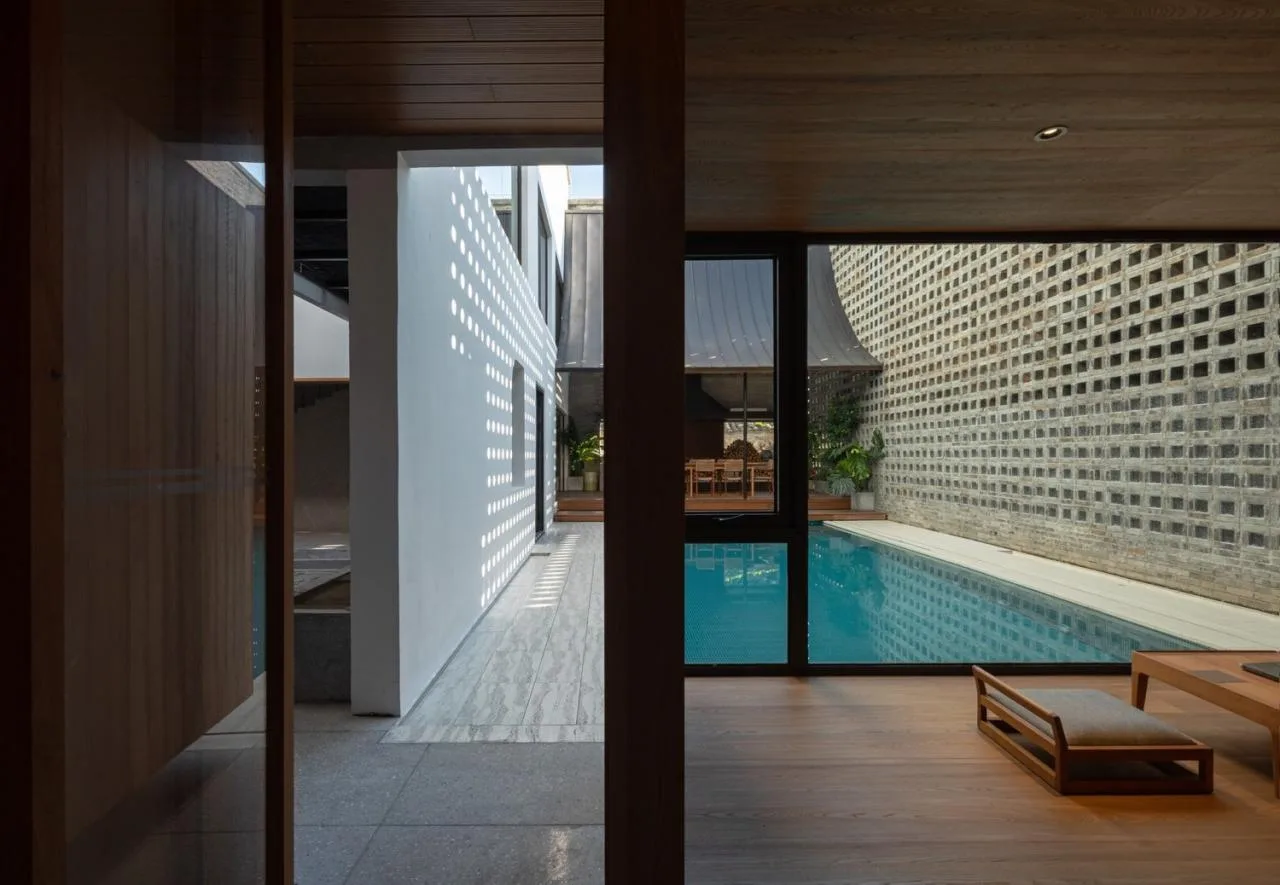
▲ From indoors to courtyard pool © Architecture Photography
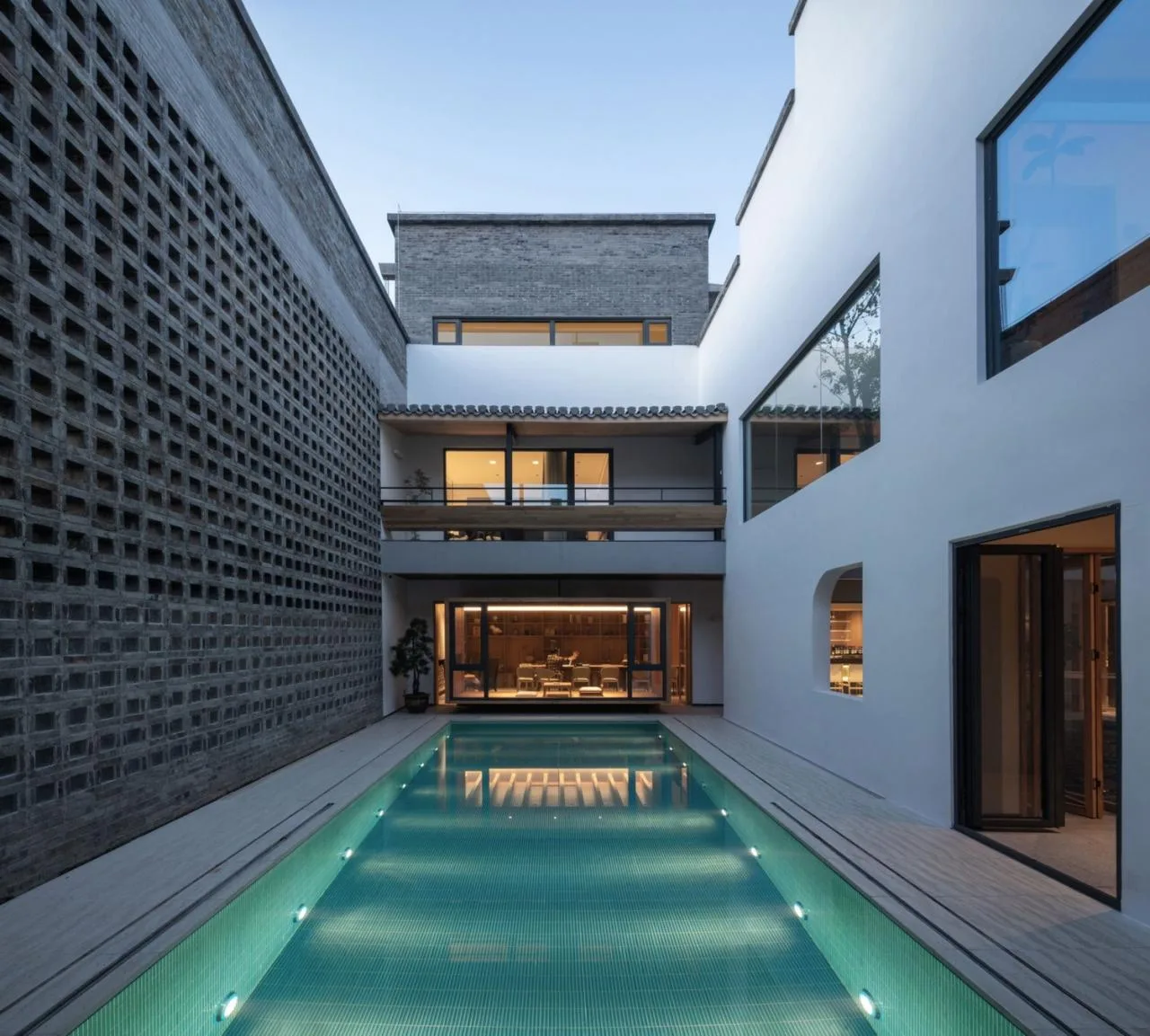
▲ Inner courtyard swimming pool © Architecture Photography
We intentionally placed the public living and reception areas at the building’s core, radiating outward. Visitors enter through the front courtyard, focus on the entrance wall, then proceed past the swimming pool, stairs, and inner courtyard before reaching the reception. This journey encourages visitors to collect their thoughts and shift their mindset. Though brief, this spatial progression evokes curiosity and novelty within an uncertain environment.
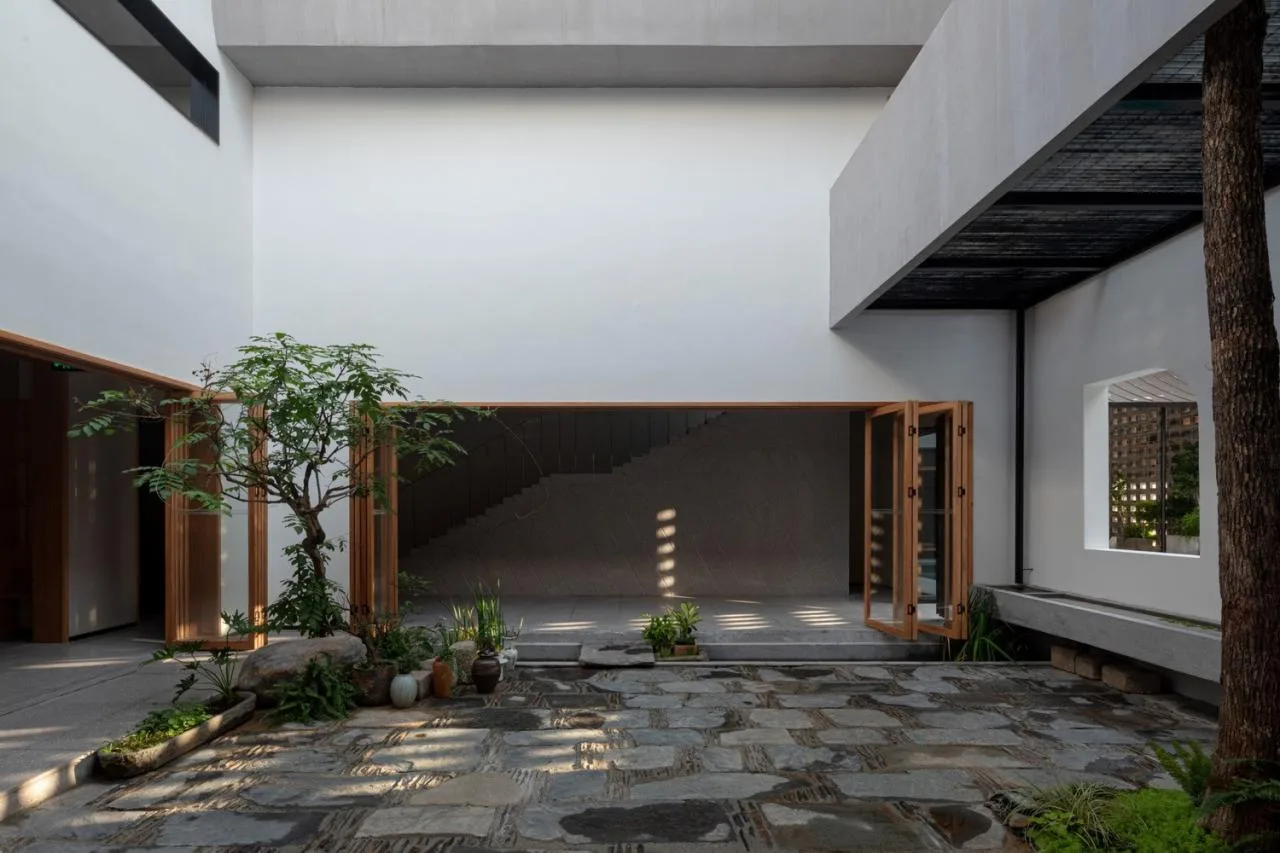
▲ Interior view facing the inner courtyard © Architecture Photography
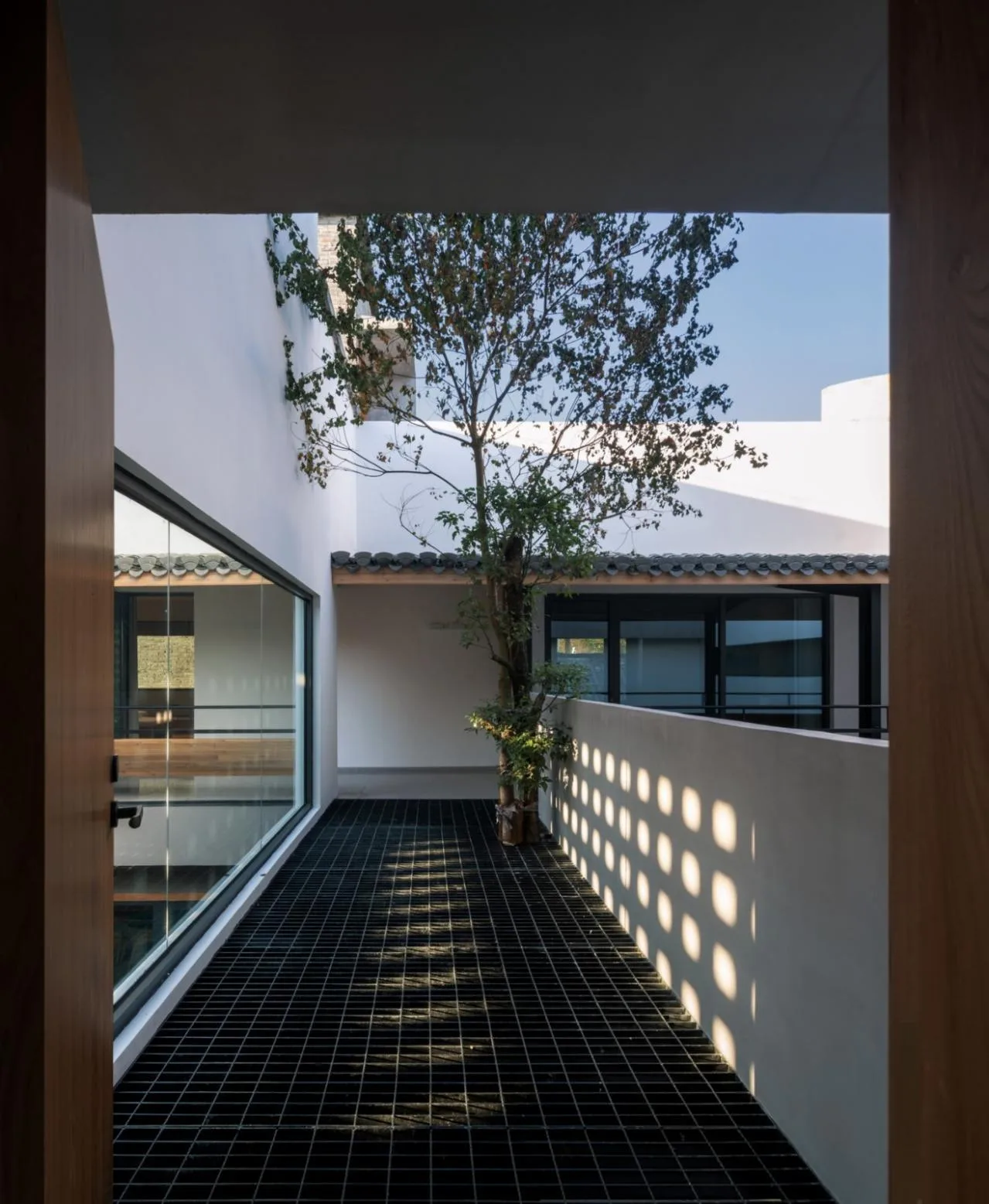
▲ Aerial corridor above the atrium © Architecture Photography
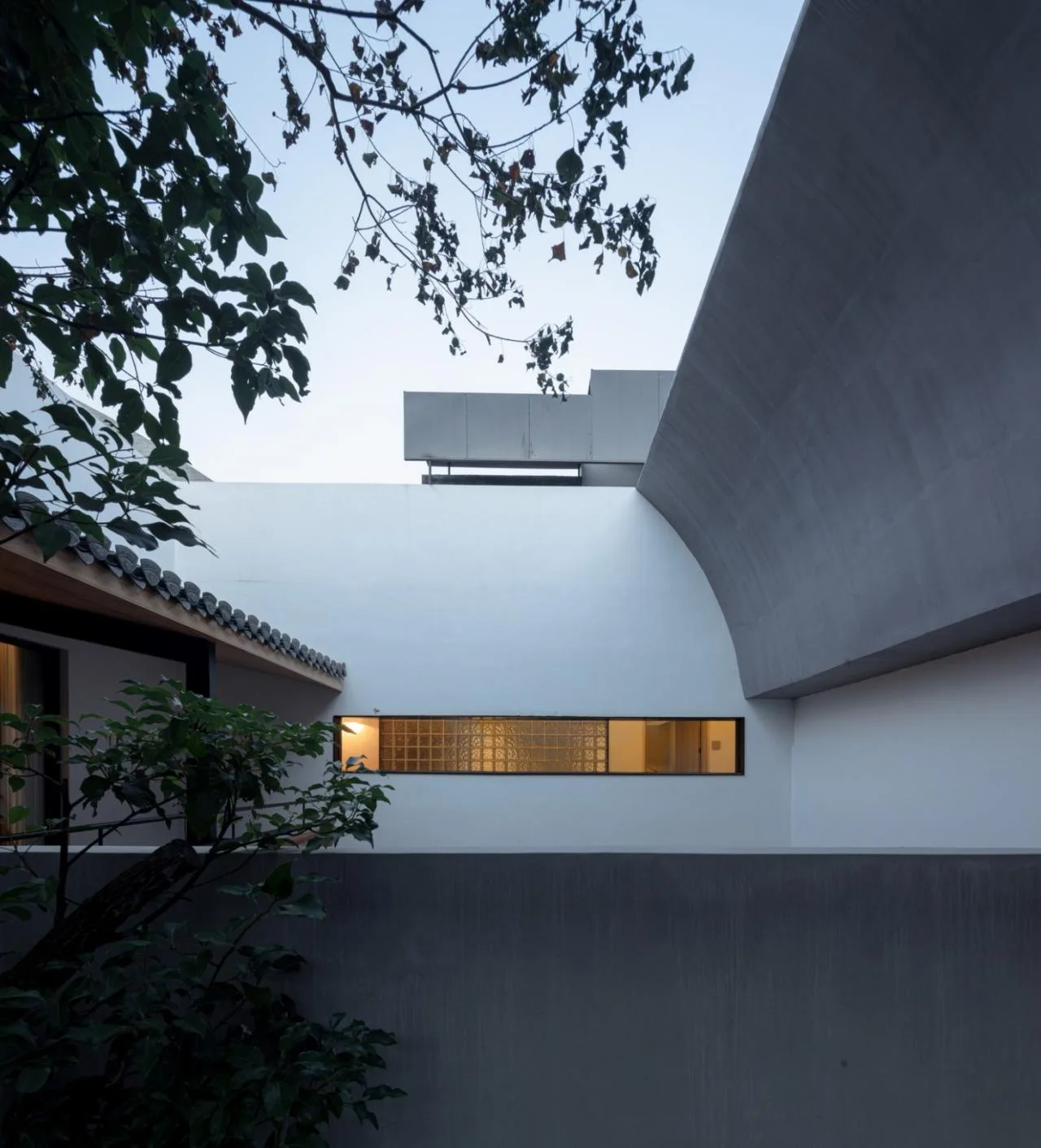
▲ View above the courtyard © Architecture Photography
Stepping through the complex village alleys into this meaningful space evokes a unique sense of reflection and inner joy. The experience culminates at the rooftop terrace and observation tower, transitioning from a secluded, profound area to an expansive, enlightening vista. From here, one can admire distant mountains, the inner courtyard, and the village roofs. By layering spatial dimensions and expanding visual ranges, the design offers dynamic and immersive visual experiences.
03. Creating Scenery Within, Borrowing Scenery Without
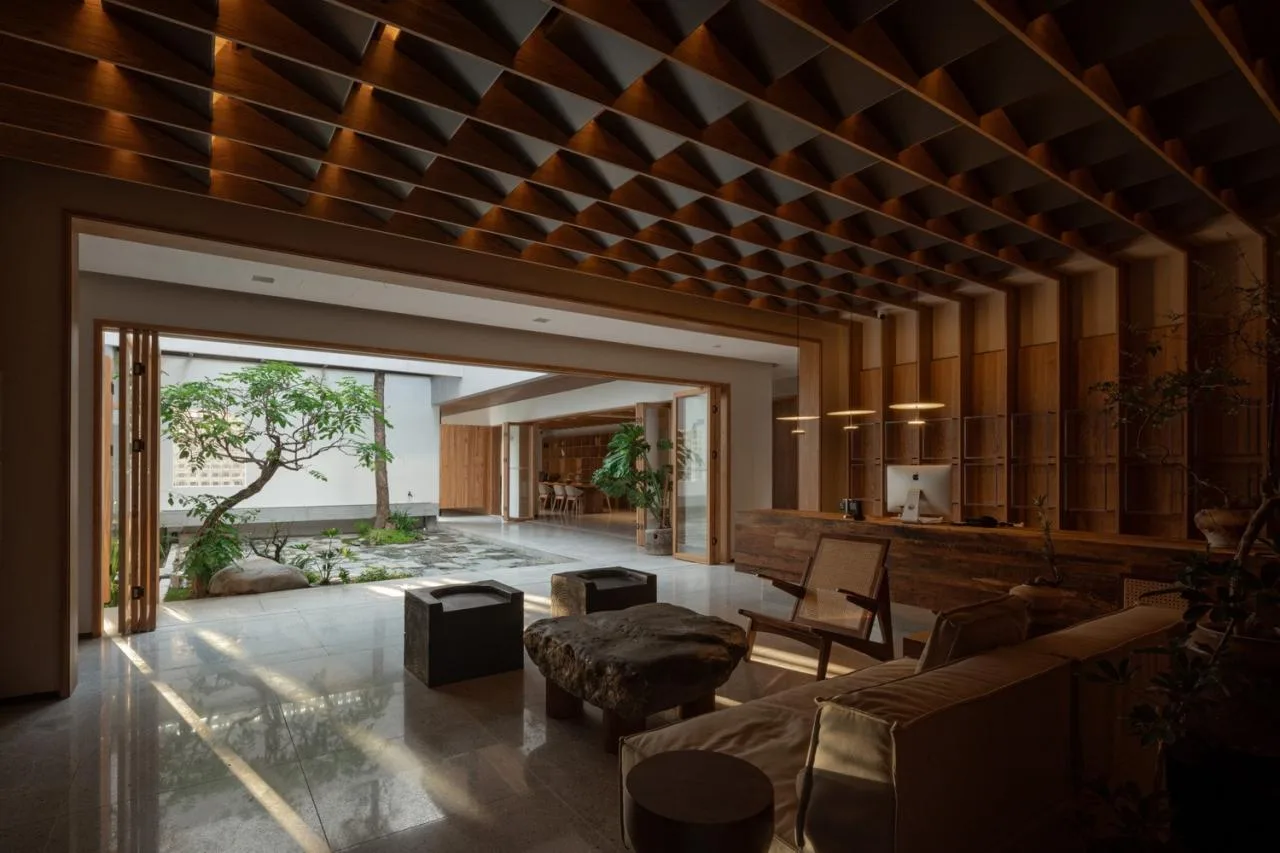
▲ Reception hall facing the inner courtyard © Architecture Photography
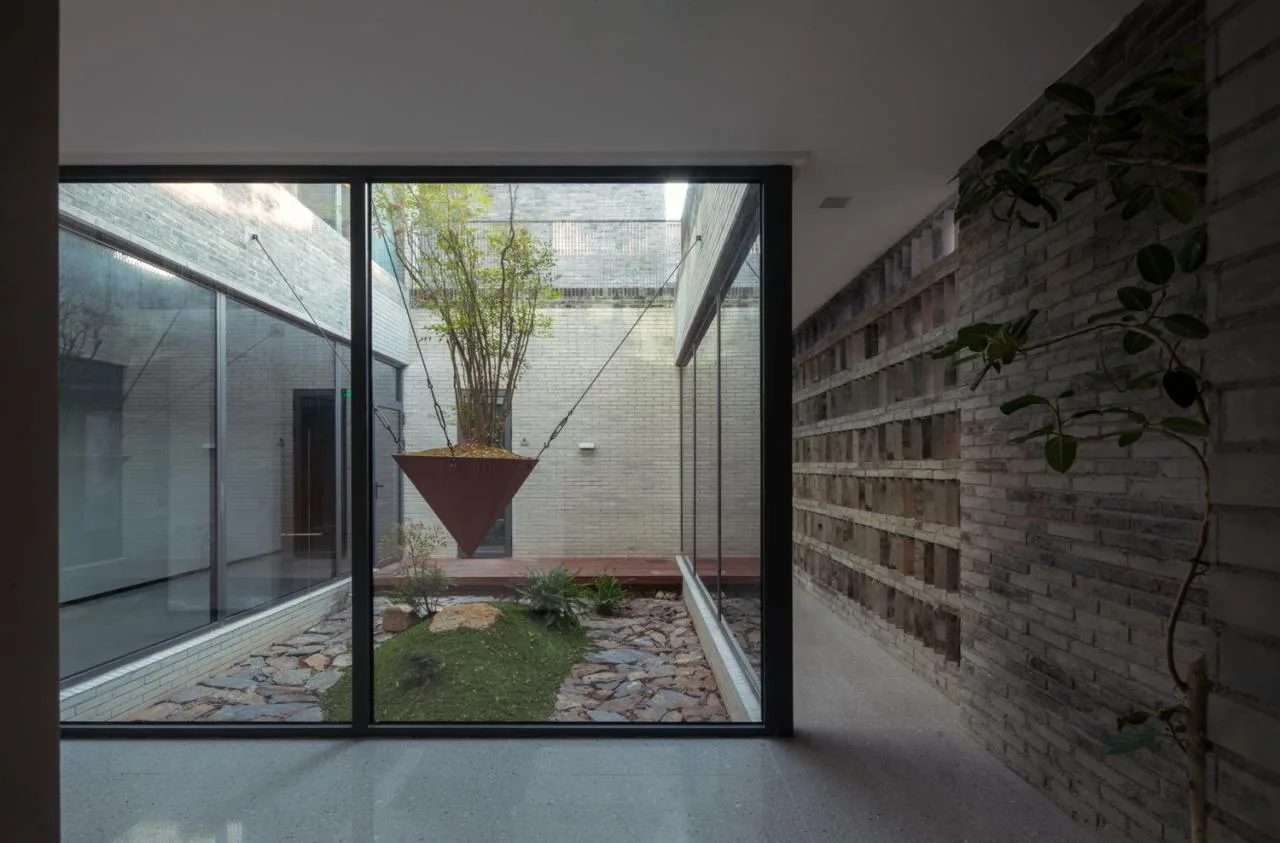
▲ View of inner courtyard with suspended trees from hallway © Architecture Photography
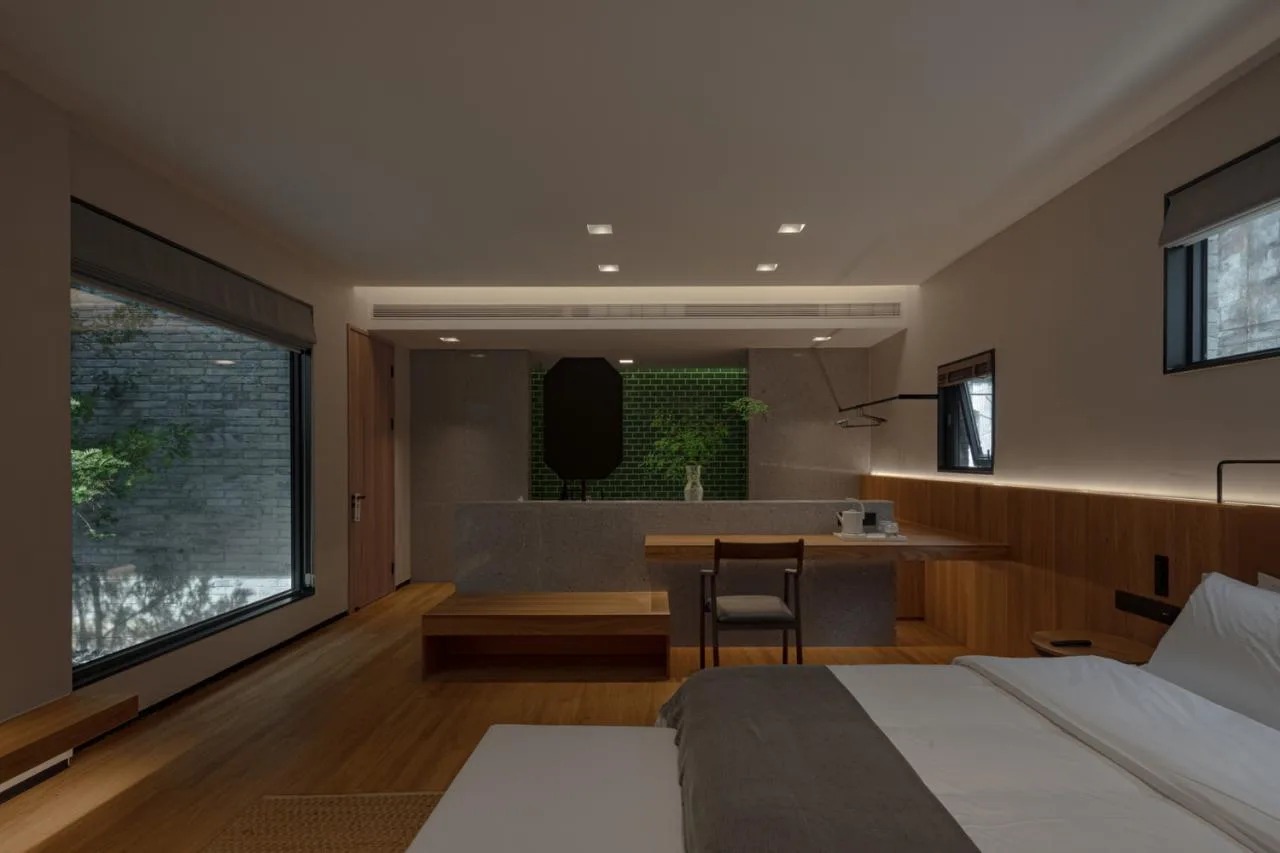
▲ Guest room space and narrow courtyard style © Architecture Photography
We aimed to avoid any conflict or disturbance between building occupants and surrounding villagers. To achieve harmony, the design embraces a fully enclosed, inward-facing layout, ensuring privacy for residents and minimizing impact on neighbors.
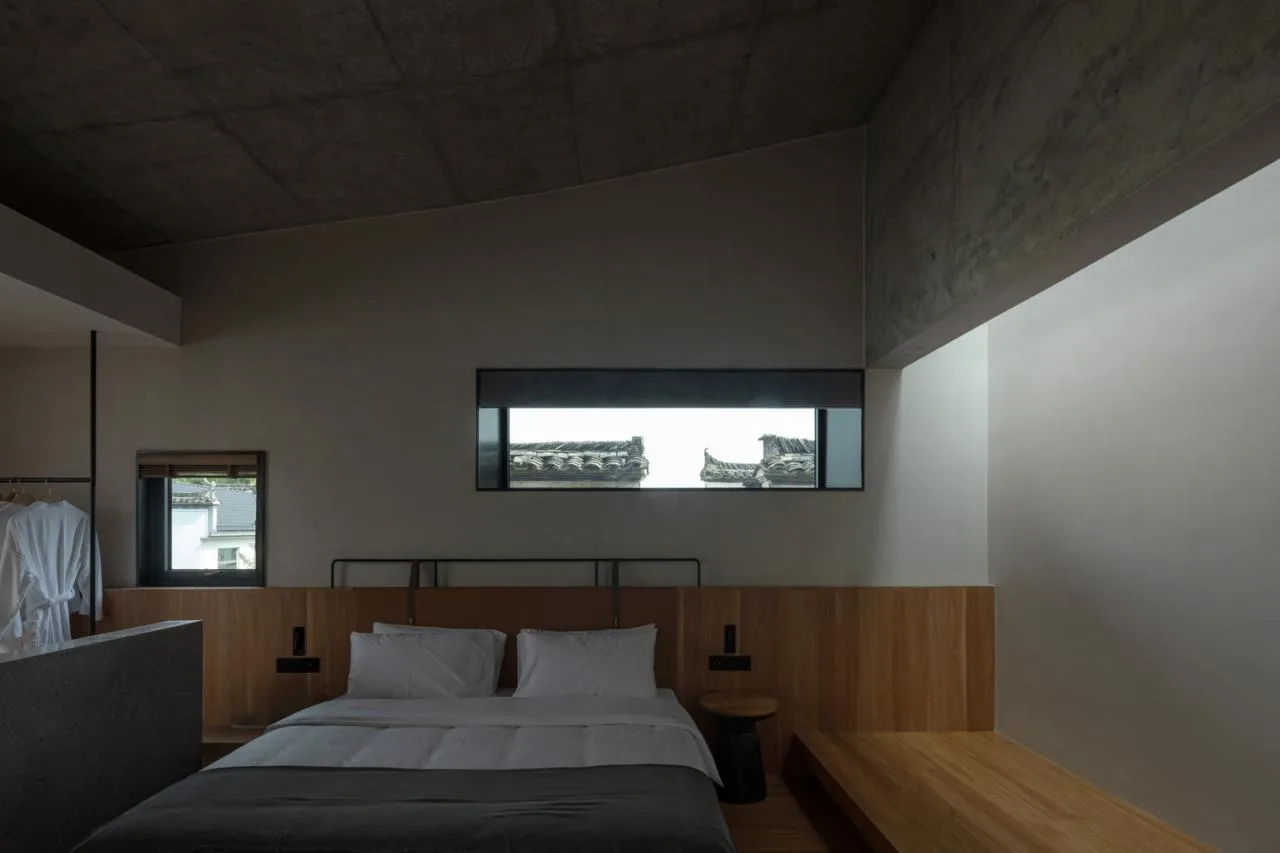
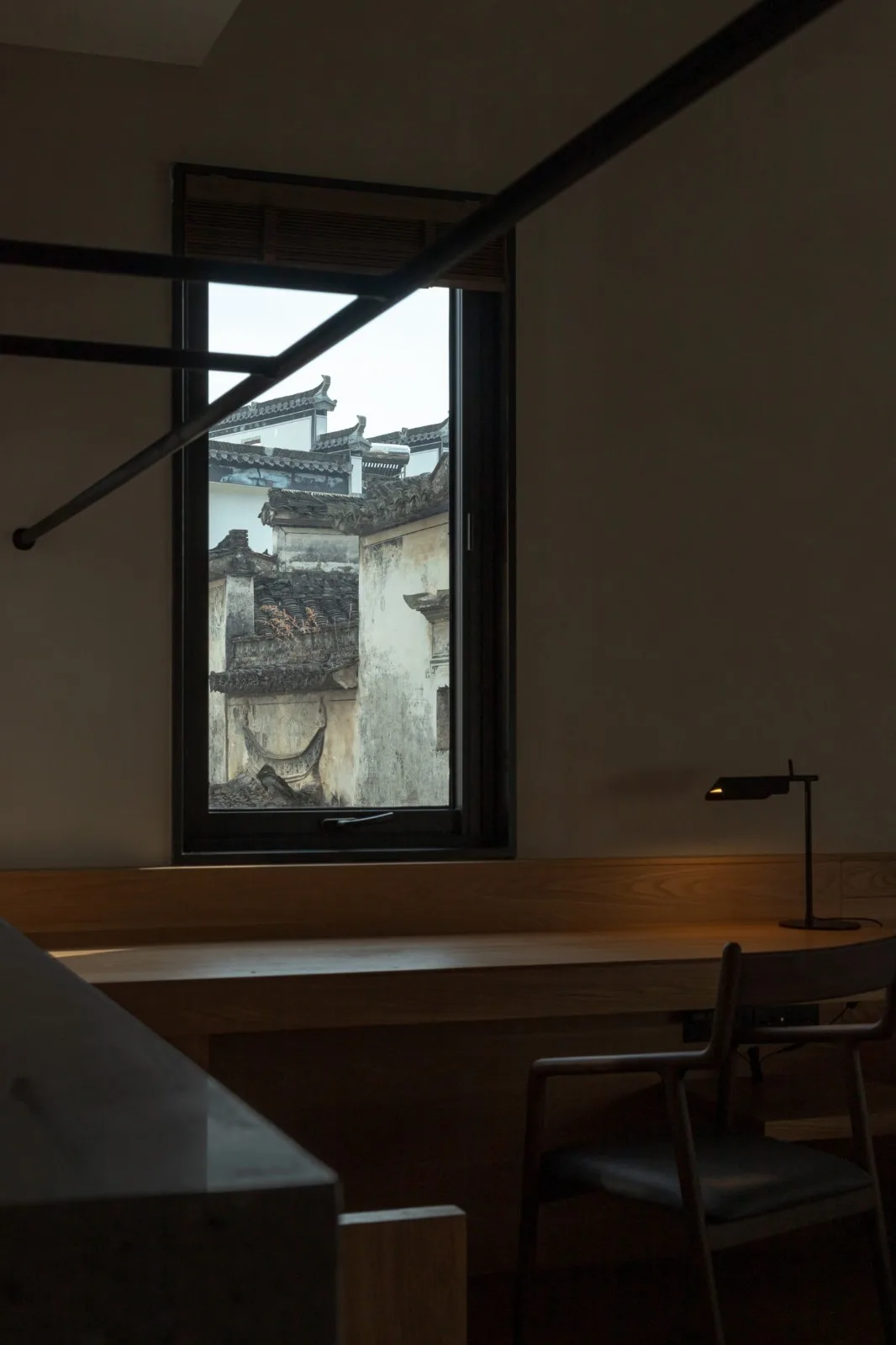
▲ Opening windows to borrow views, framing mottled horsehead walls © Architecture Photography
Walls and courtyards adjacent to neighboring residences have minimal windows to maintain privacy. Instead, views are created through internal courtyards and patios, fostering interaction with nature through spatial gaps. Where windows are necessary but neighbors are close, we use visual misalignment and unconventional window heights to balance light, ventilation, and privacy.
Windows are designed as frames that capture scenes: mottled ancient brick walls as art, lush interior plants as showcases, or distant green mountains. Each room offers unique views by “borrowing” scenery from afar, neighbors, above, below, or at specific moments, infusing the space with serenity, elegance, and relaxation.
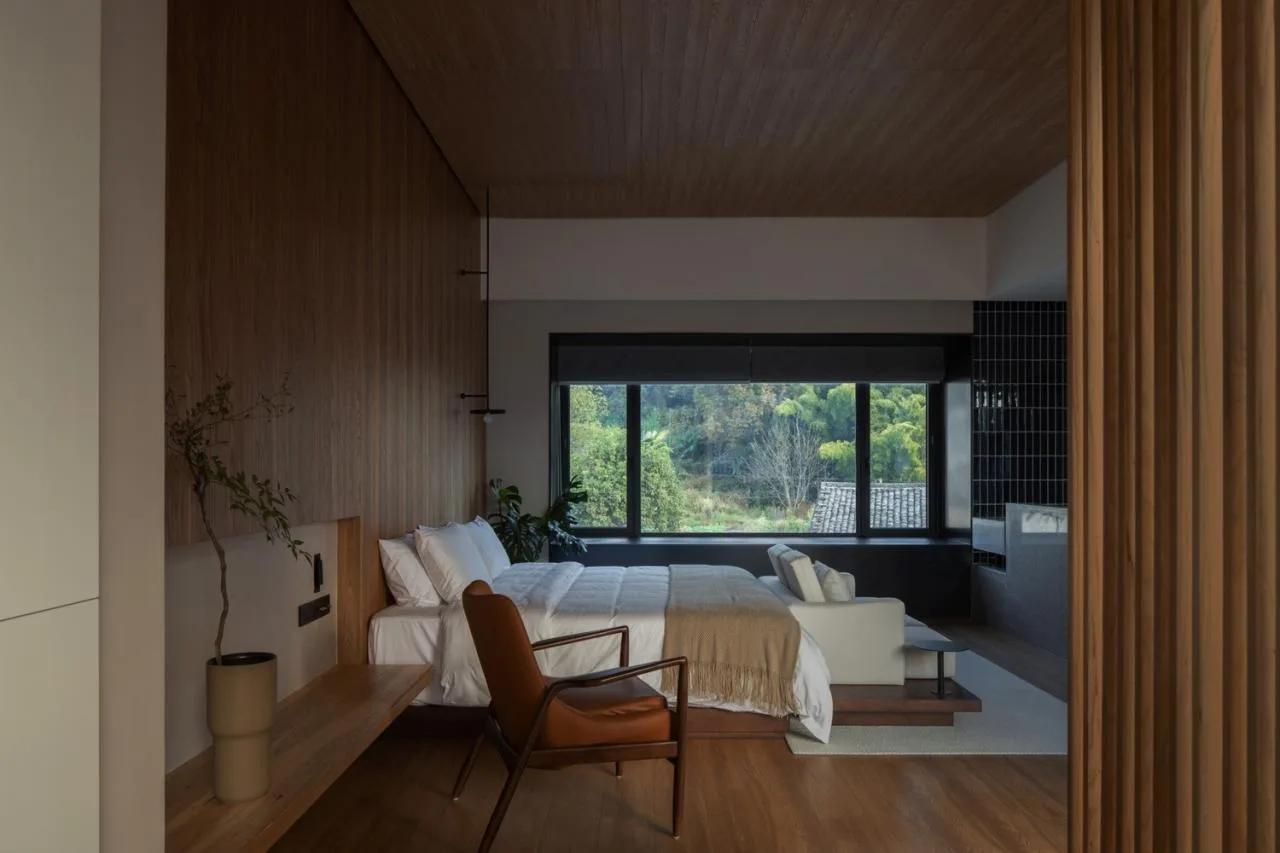
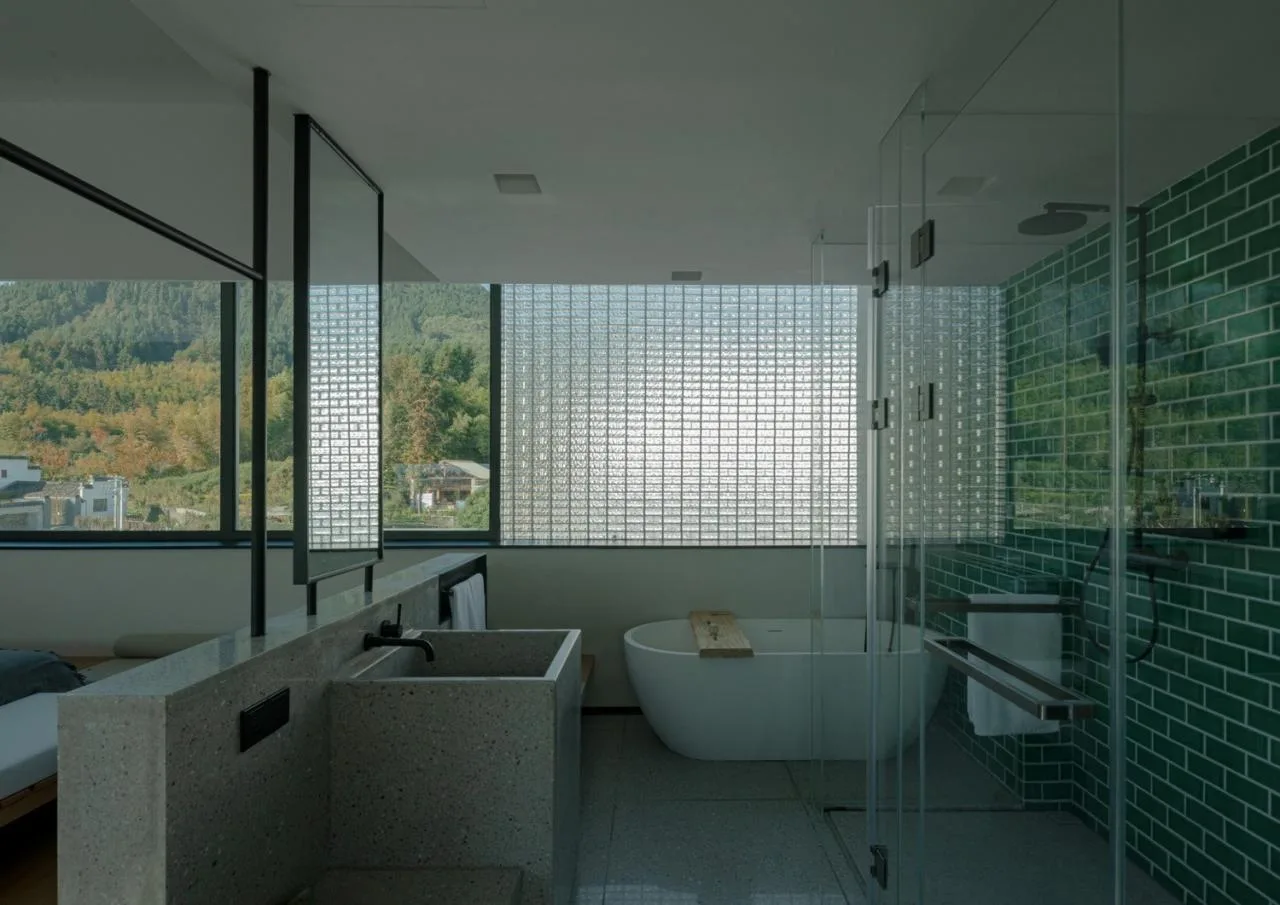
▲ Opening windows to borrow views, framing the mountain backdrop © Architecture Photography
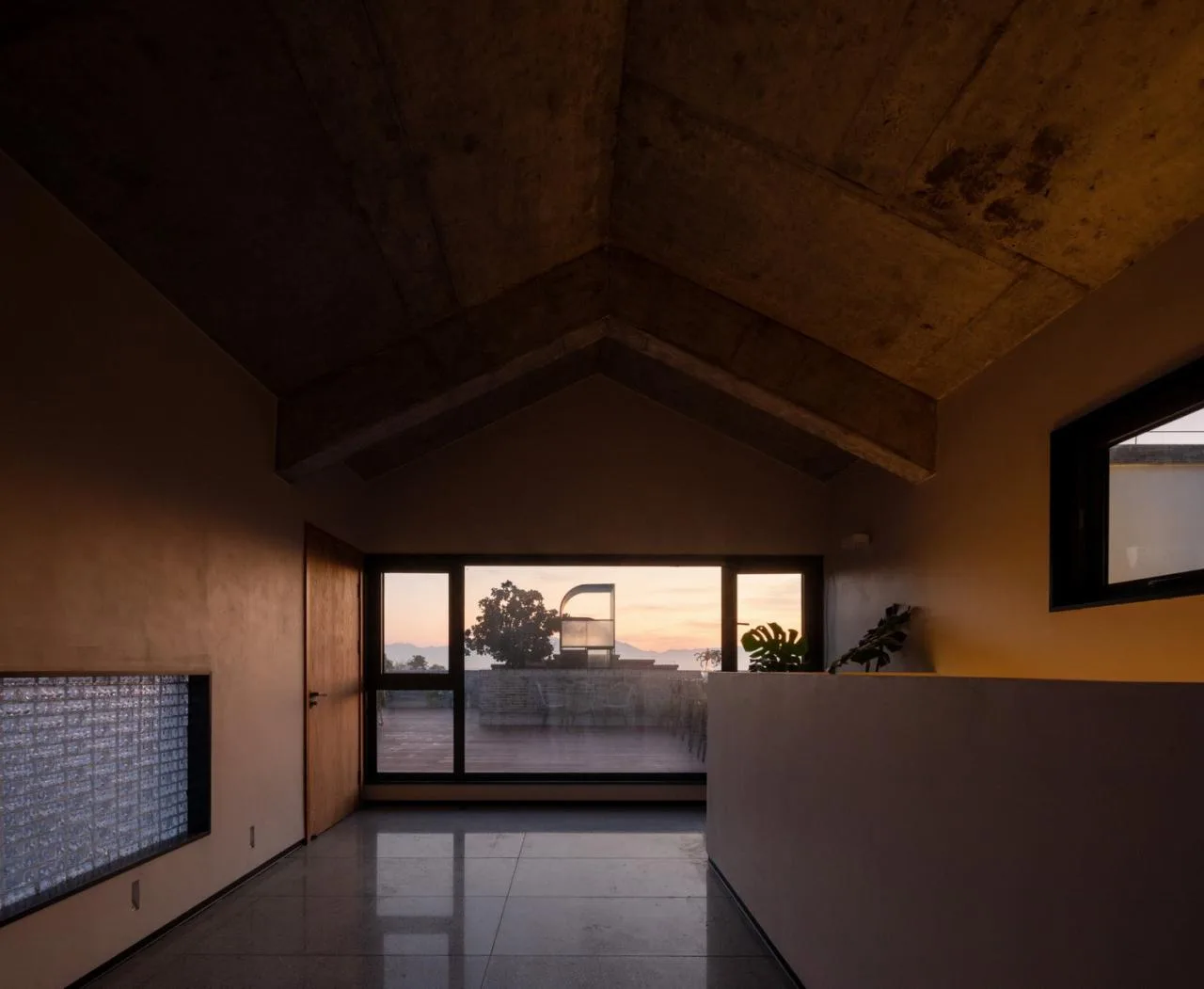
▲ View from staircase towards rooftop © Architecture Photography
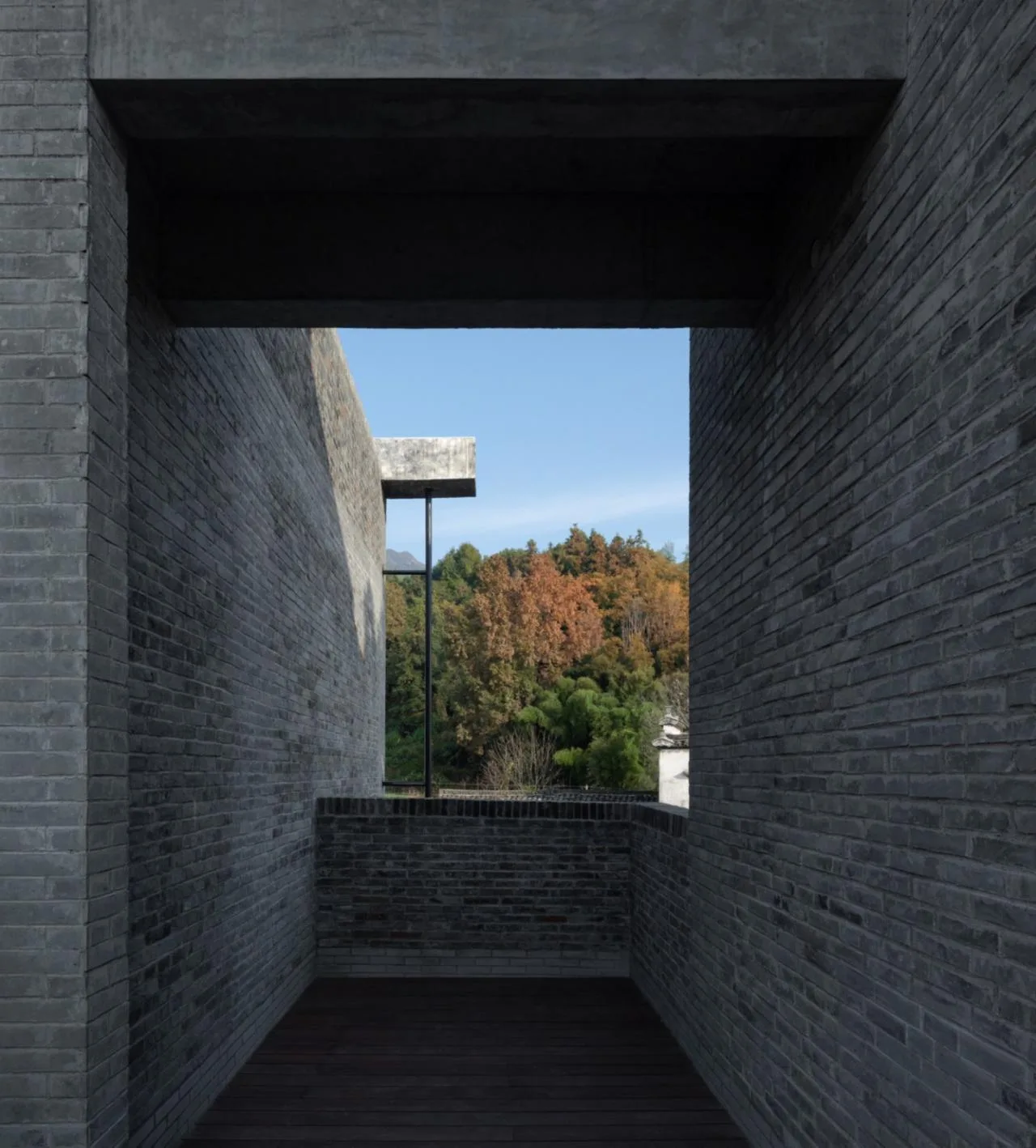
▲ Experiencing seasonal changes through framed mountain views © Architecture Photography
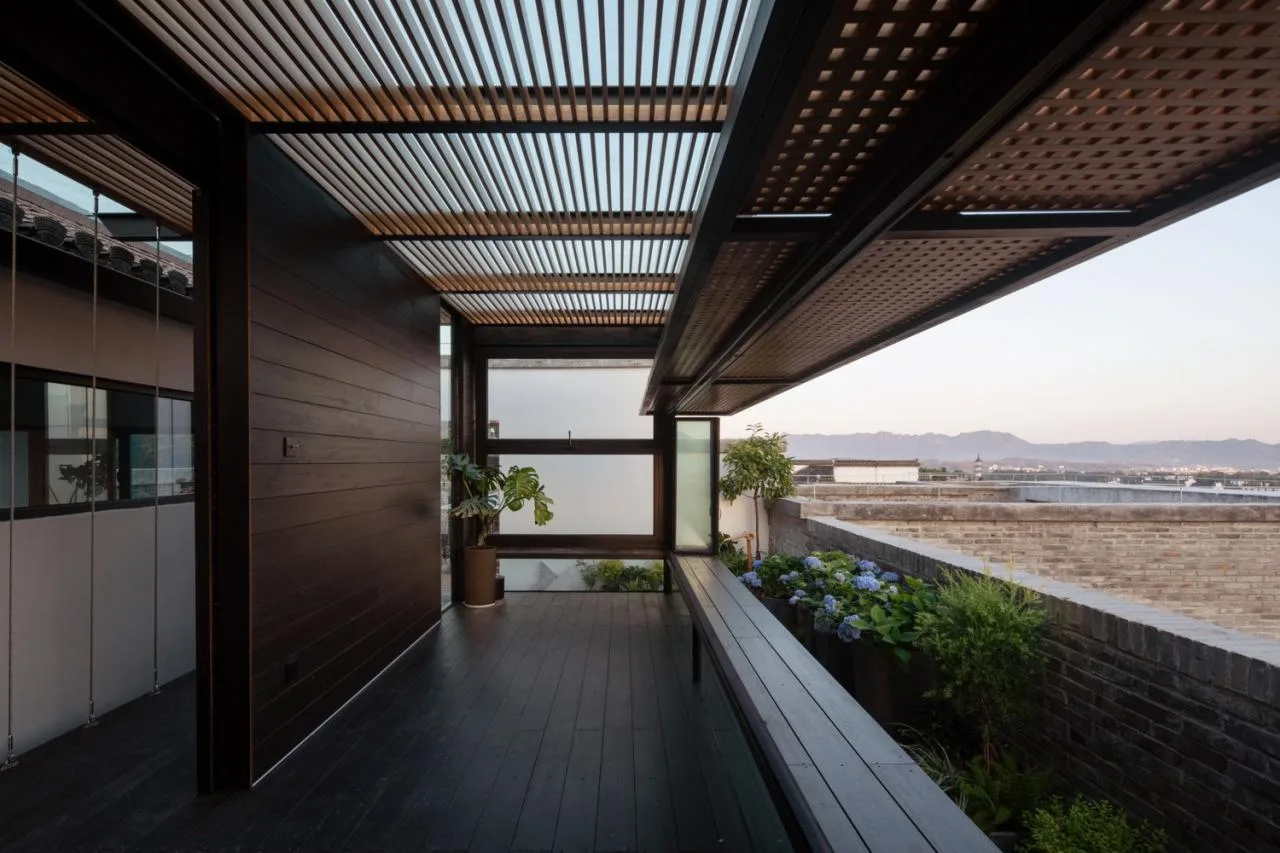
▲ Distant village rooftops with undulating forms © Architecture Photography
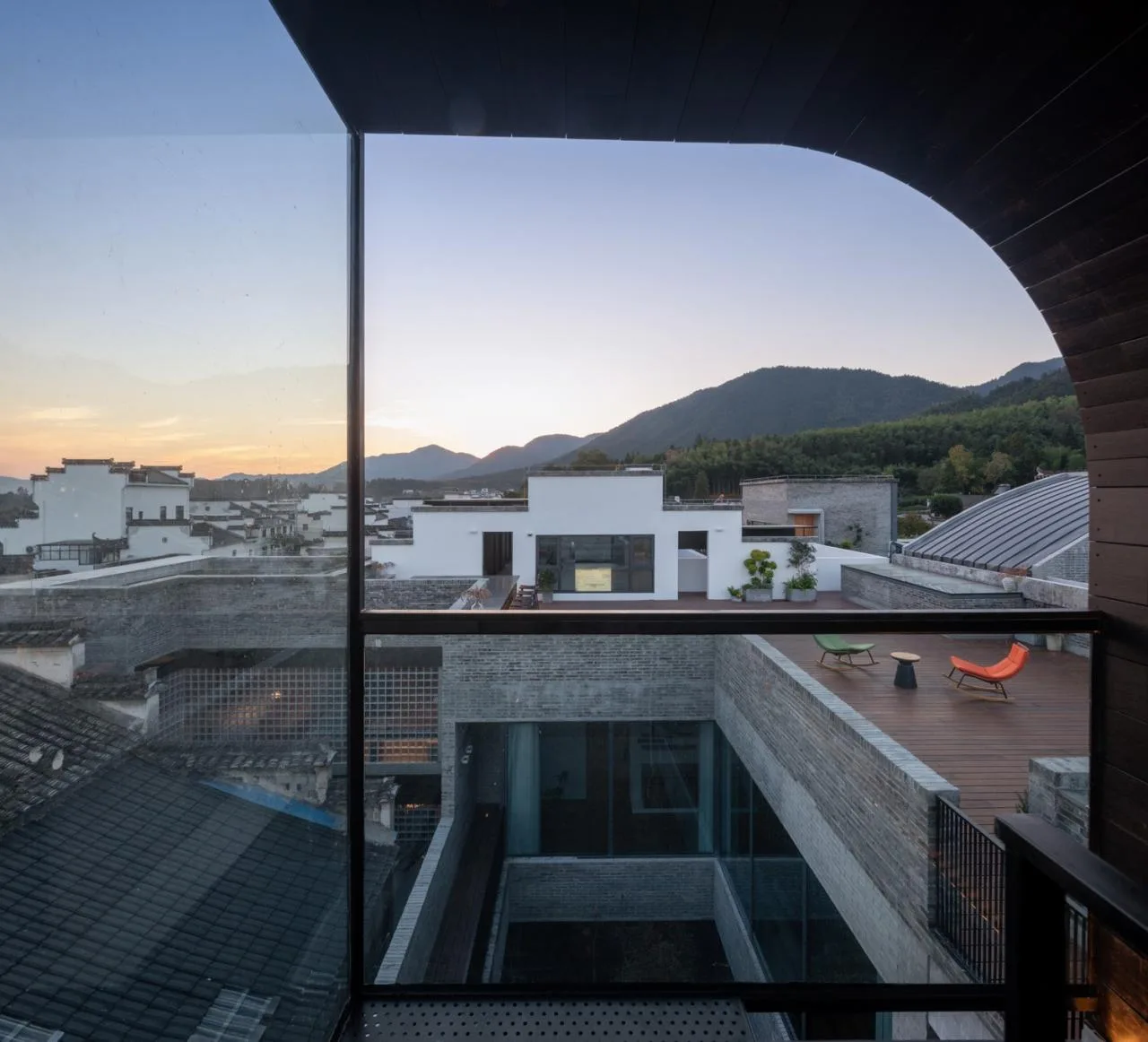
▲ View of village rooftops from observation tower © Architecture Photography
Through these design approaches, we aim to offer a new living experience that transcends mere residential functionality. We want to create an engaging place full of surprises, life, spatial storytelling, and emotional connection. Our goal is to allow people to find purity amid complexity, feel tradition within modernity, escape from chaos into tranquility, and experience time and serenity—welcoming uncertainty and delight.
04. Integration and Renewal
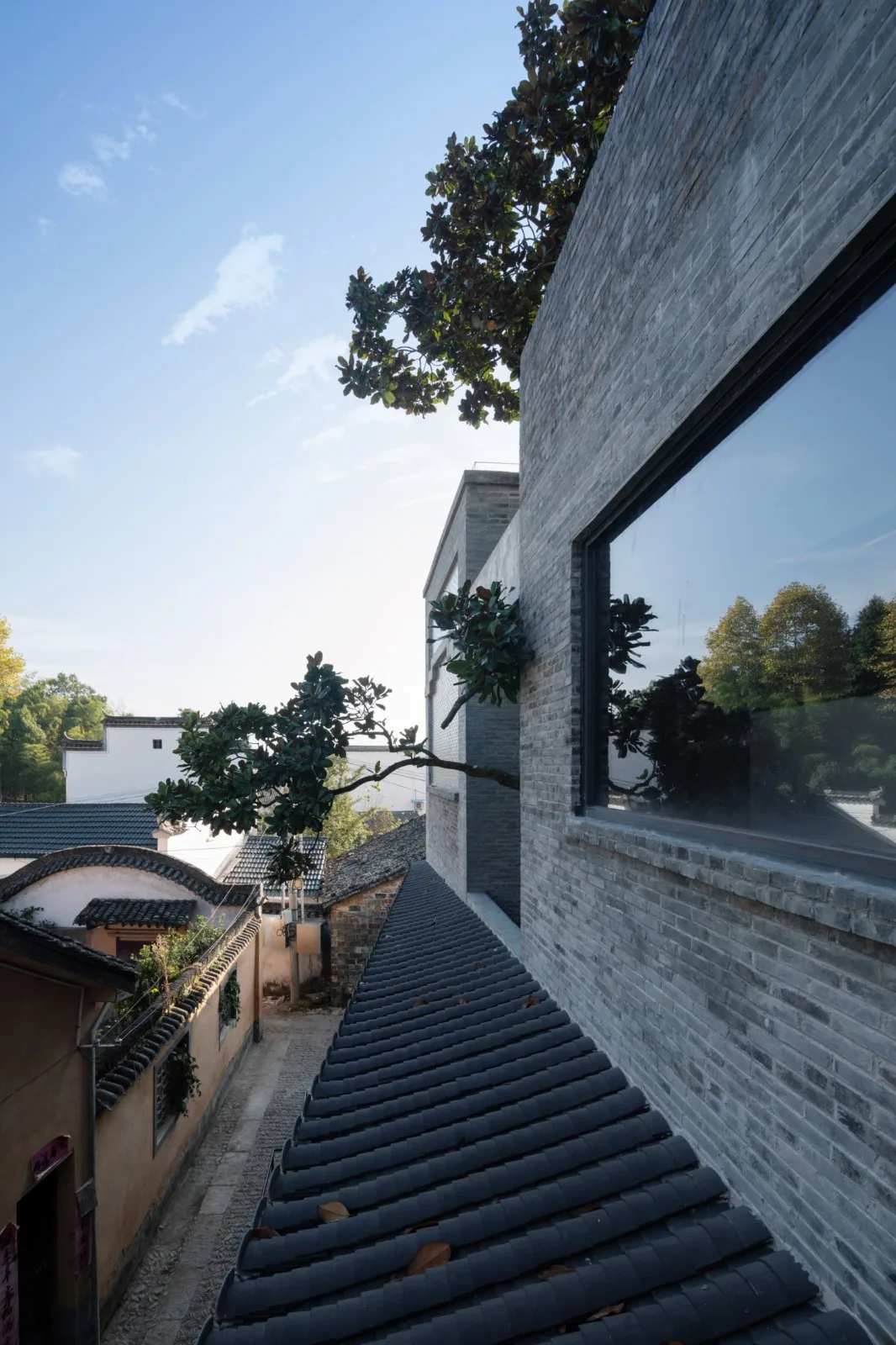
▲ The magnolia tree blending harmoniously with the architecture © Architecture Photography
The nearly 200-year-old magnolia tree on site, an exotic species brought from Shanghai by a prominent businessman, has become an integral part of the landscape. We preserved the ancient water well on site, incorporating it into the building to maintain a connection to the past while fostering growth in the present.
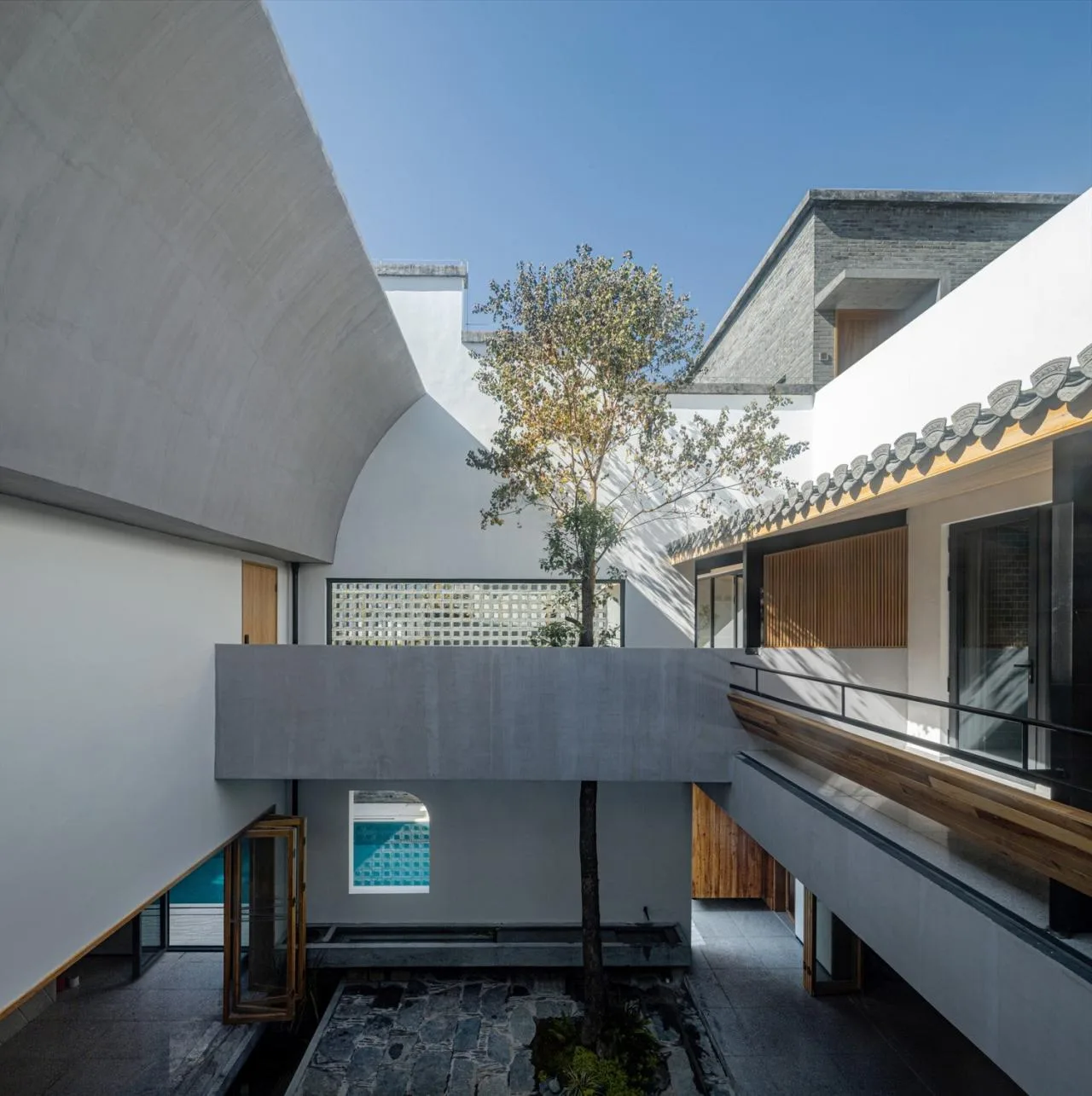
▲ Continuity and renewal of traditional elements © Architecture Photography
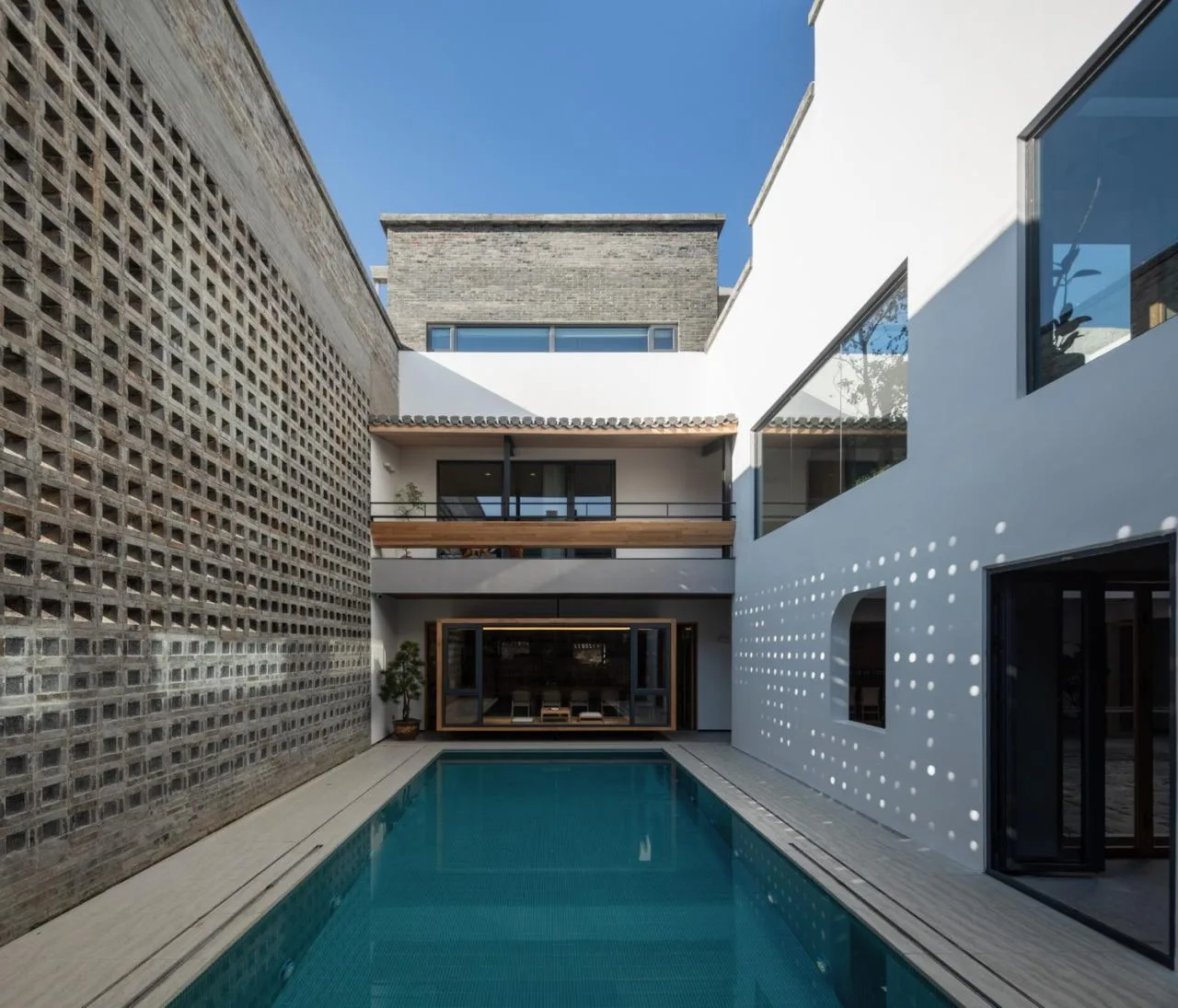
▲ Continuity and renewal of traditional elements © Architecture Photography
In the Mount Huangshan region, horsehead walls are not just common architectural features but symbols of Anhui architecture. While some architects resist incorporating historical elements into new buildings, preferring contemporary expressions, we sought a balance.
Our design weaves together time and space, blending modernity with tradition in a way that respects contemporary lifestyles and aesthetics without mere replication. Beyond architectural form, we emphasize humane spatial design that aligns with modern living, using contemporary language to connect and inherit the past’s charm in a fresh, symbiotic manner—neither clashing nor standing apart.
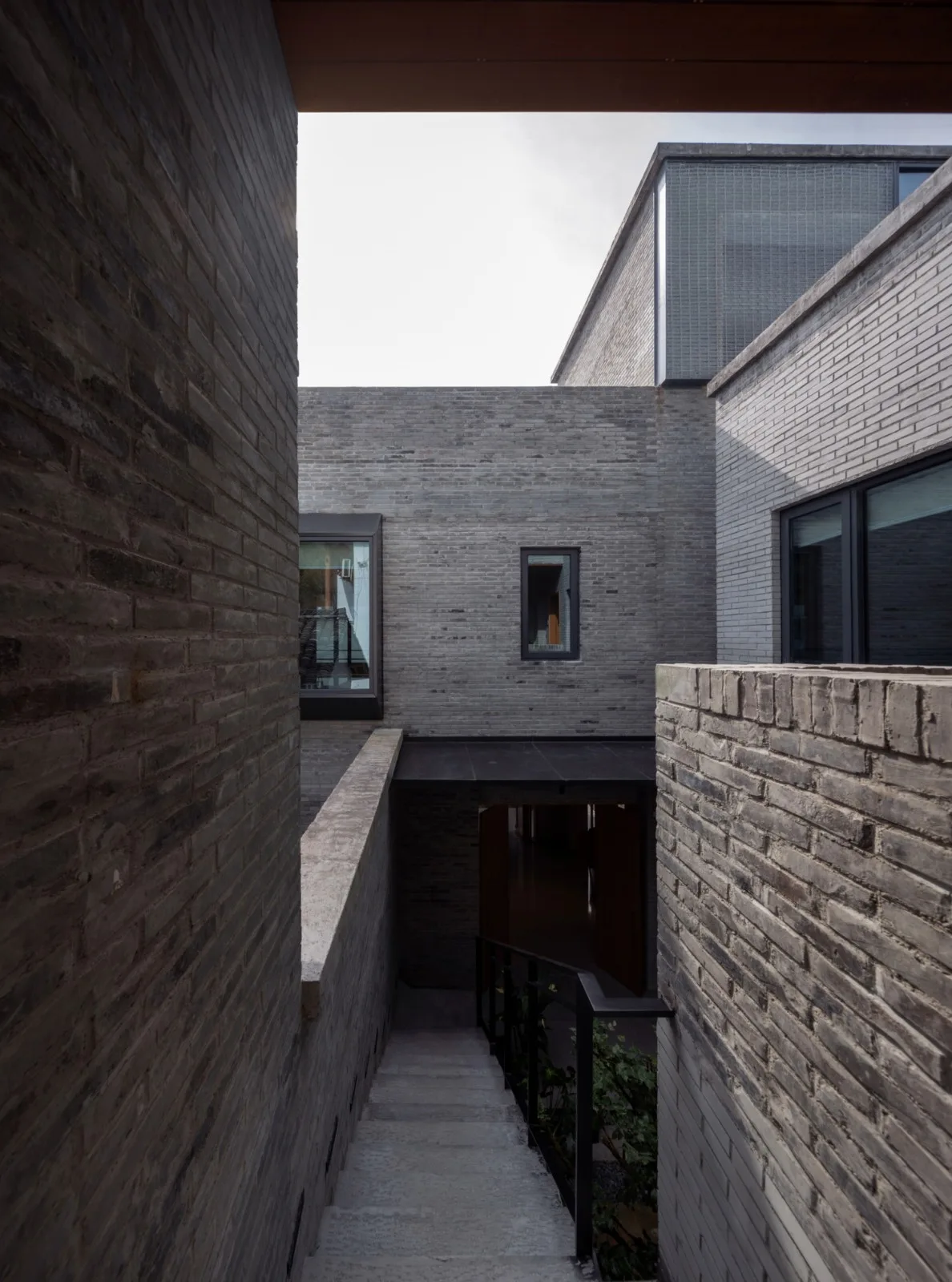
▲ Fusion of ancient green bricks and modern glass bricks in architecture © Architecture Photography
Green bricks were chosen as the primary building material for their compatibility with the traditional surroundings and their expressive versatility. We contrast green bricks with glass bricks to soften the visual weight, creating a light, contemporary aesthetic. This juxtaposition produces a unique visual experience.
05. Letting Space Tell Stories
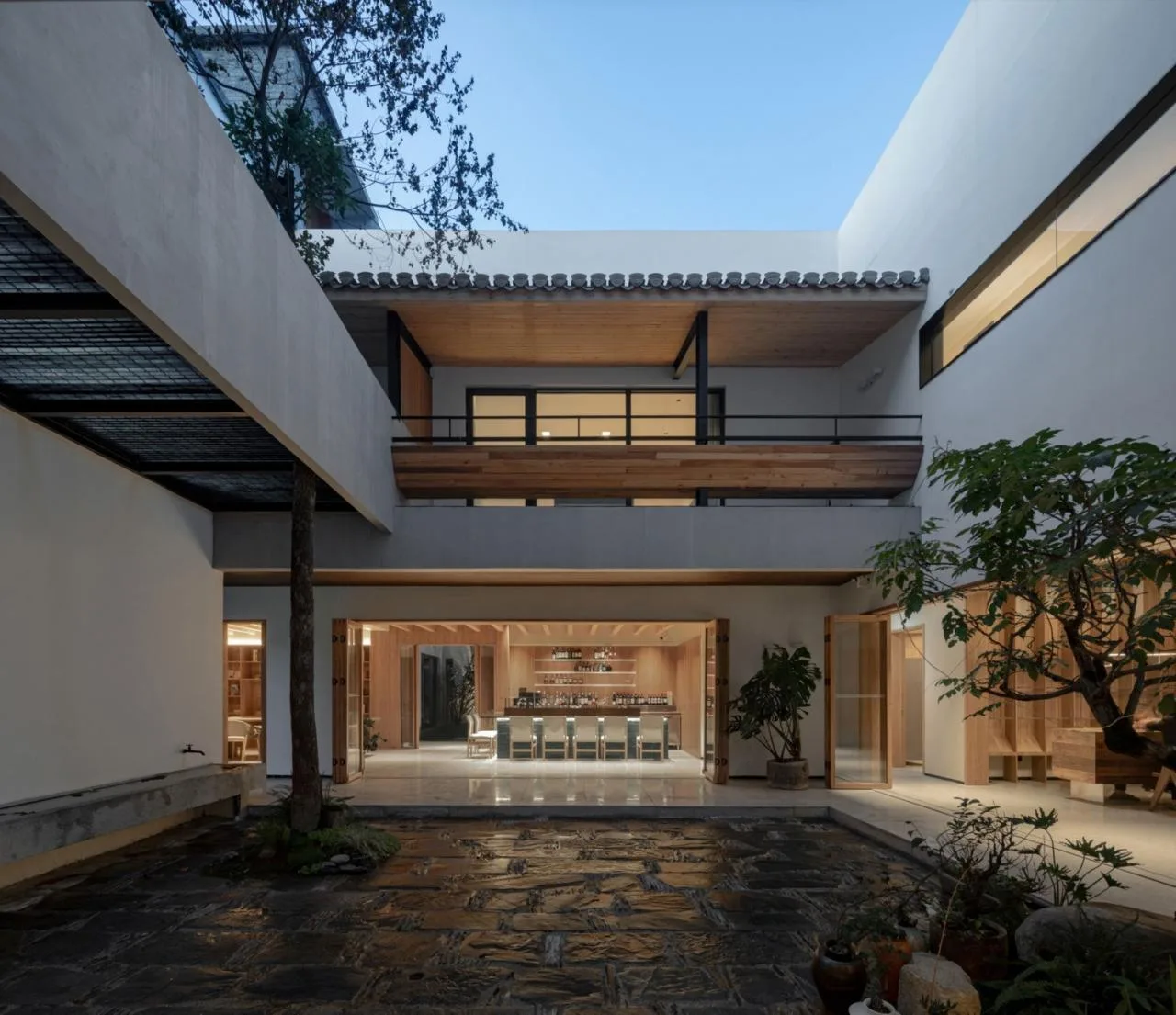
▲ Multifunctional use of inner courtyard space © Architecture Photography
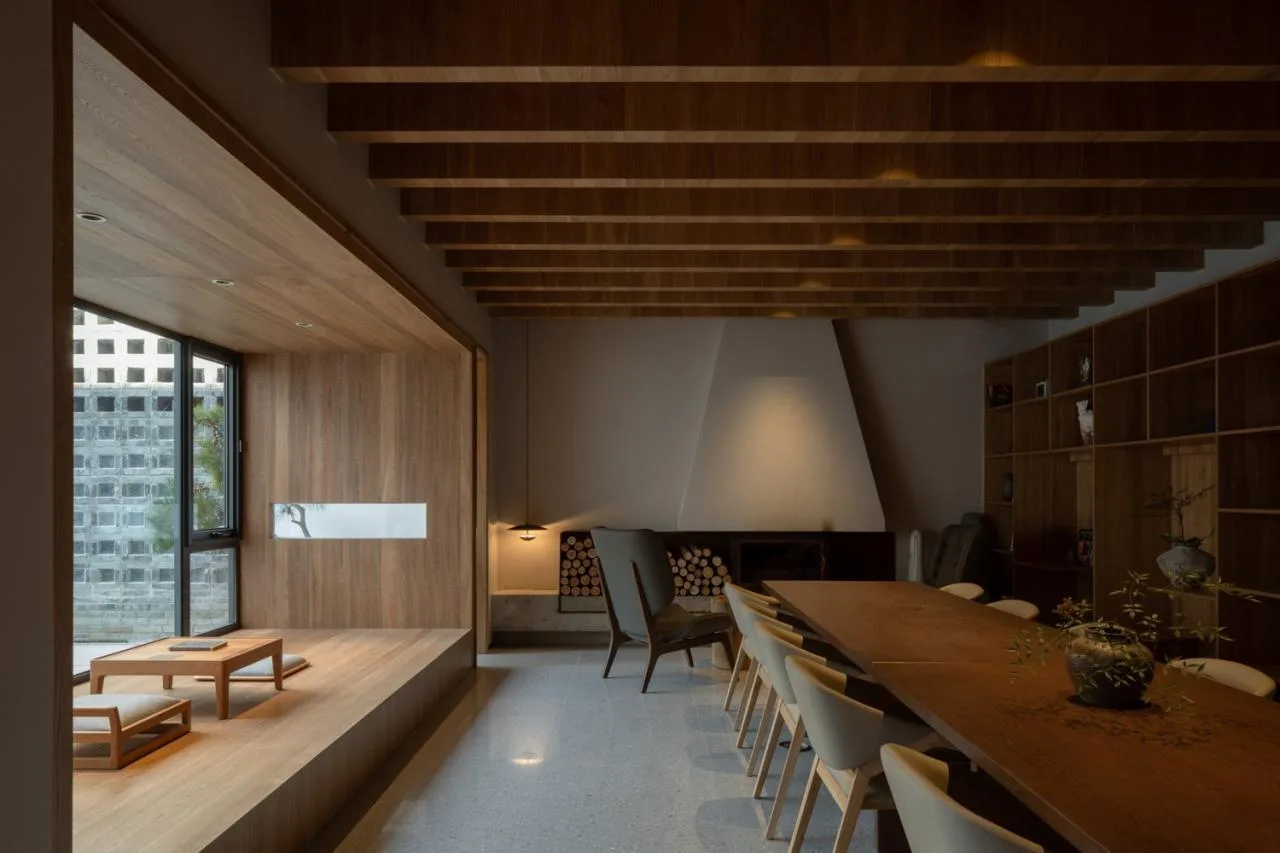
▲ Ambiguous public communication space © Architecture Photography
Our goal extends beyond creating functional living spaces to fostering spiritual relaxation and narrative depth. We aim for spaces that tell stories through human activity and settings, enhancing social interaction and communication.
Tea rooms, book bars, and restaurants are designed to be open and flexible, serving as “communication and reception rooms.” To encourage social engagement, not every room contains a TV; instead, communal viewing spaces guide guests from solitude toward shared experiences.
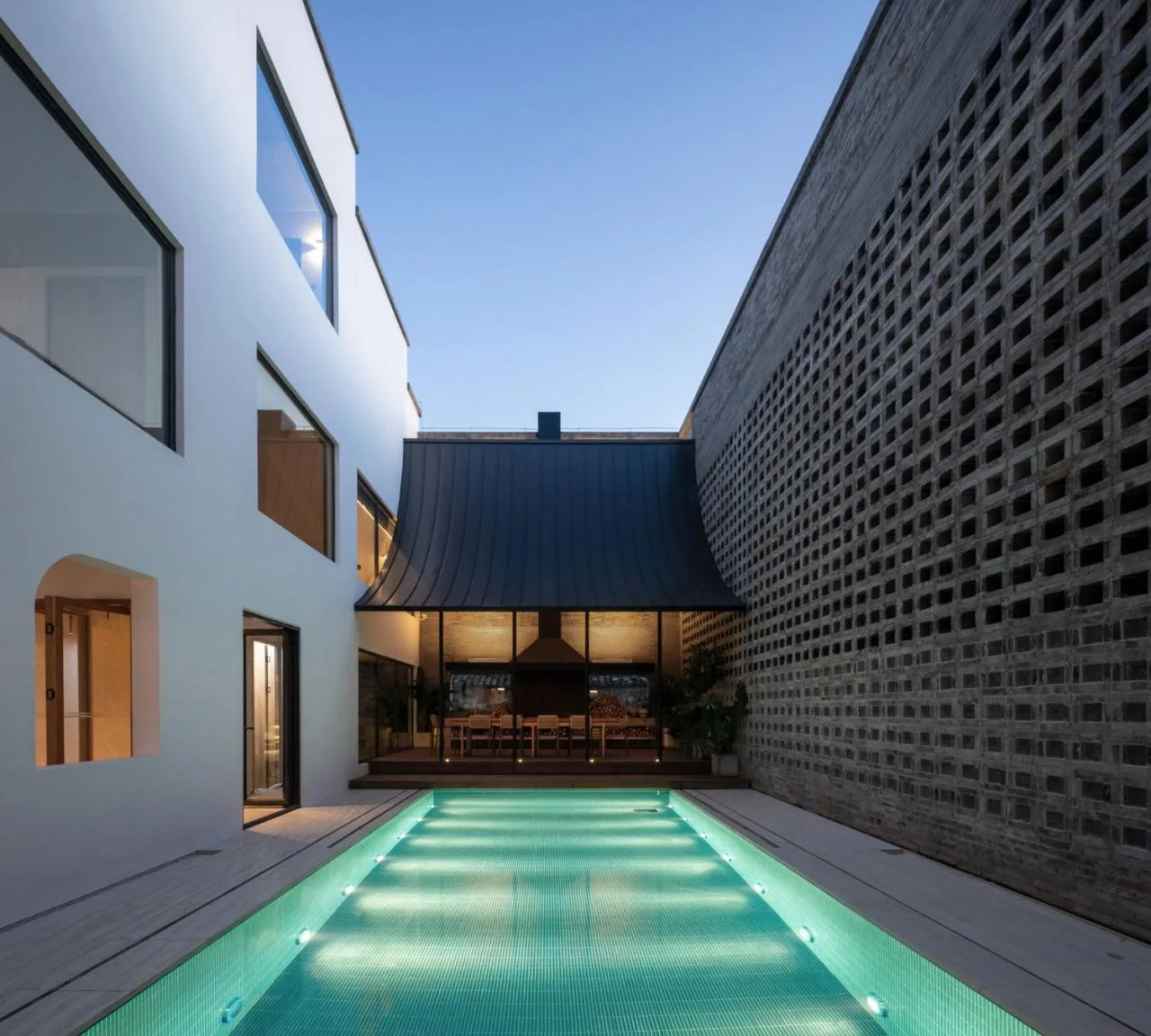
▲ BBQ area promoting gathering and communication © Architecture Photography
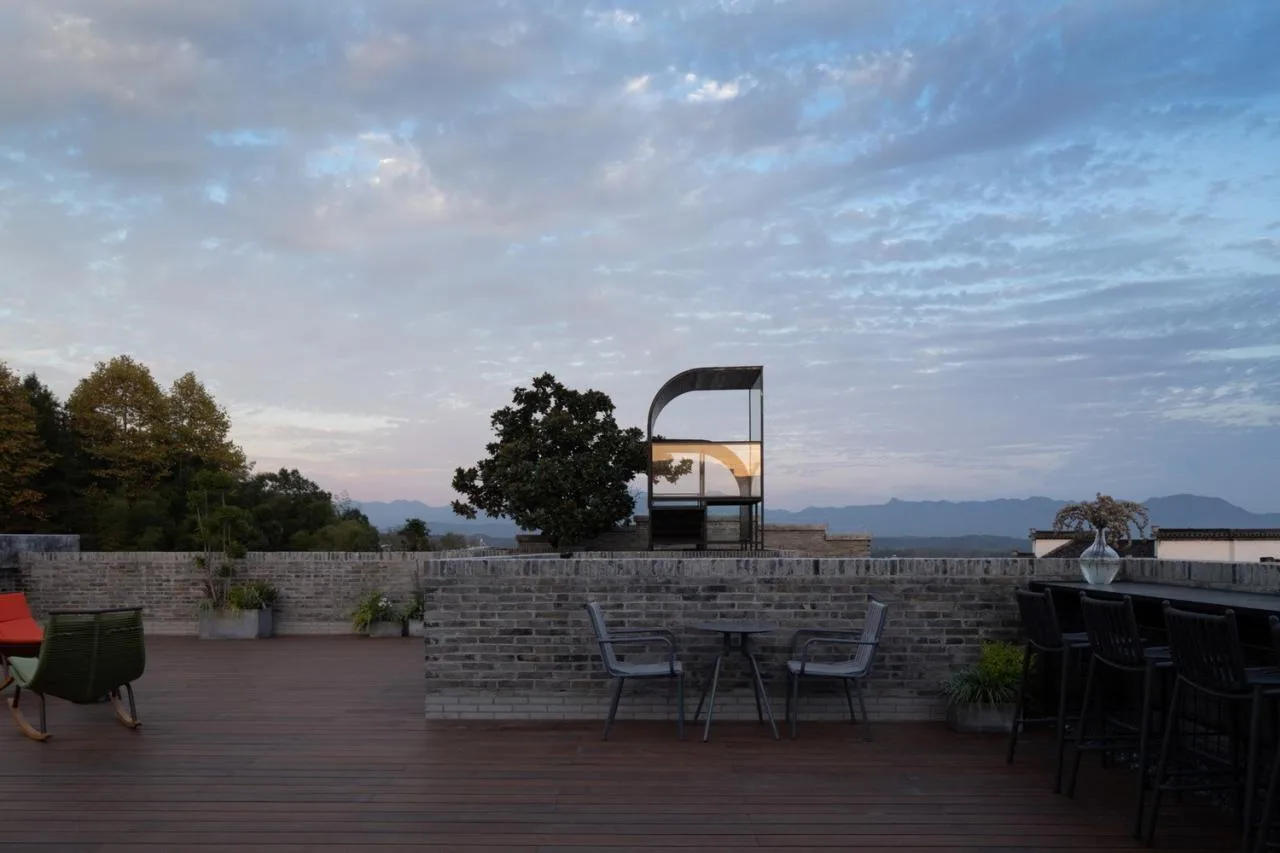
▲ Terrace space © Architecture Photography
Features like the swimming pool BBQ area, terraces, and observation towers encourage diverse social interactions while still allowing for solitude. The rooftop greenhouse flower room offers a quiet, private retreat, balancing communal and private experiences within the complex.
06. Weaving Light and Space into Poetry
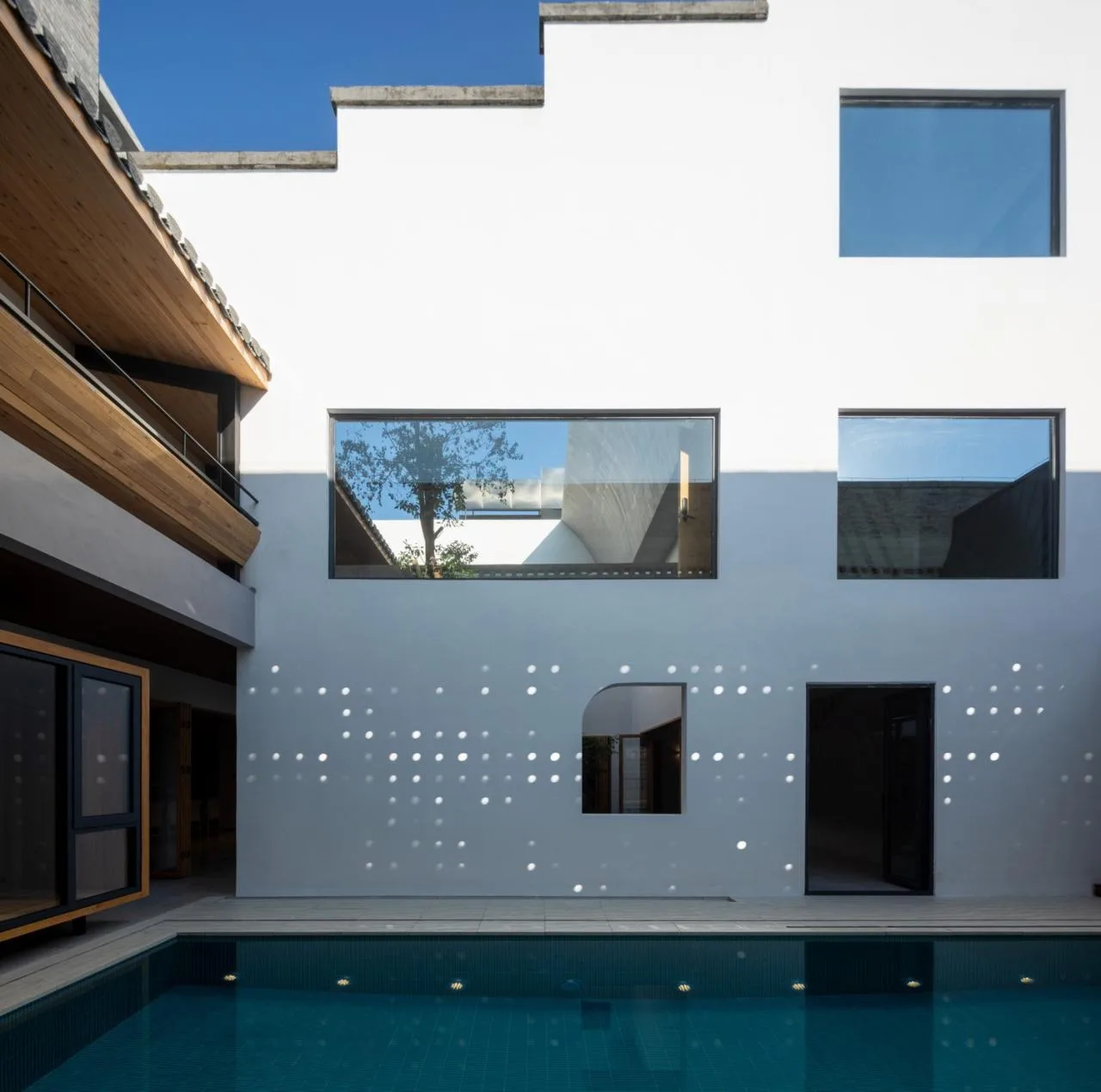
▲ Light spots transition on white walls from circular to square © Architecture Photography
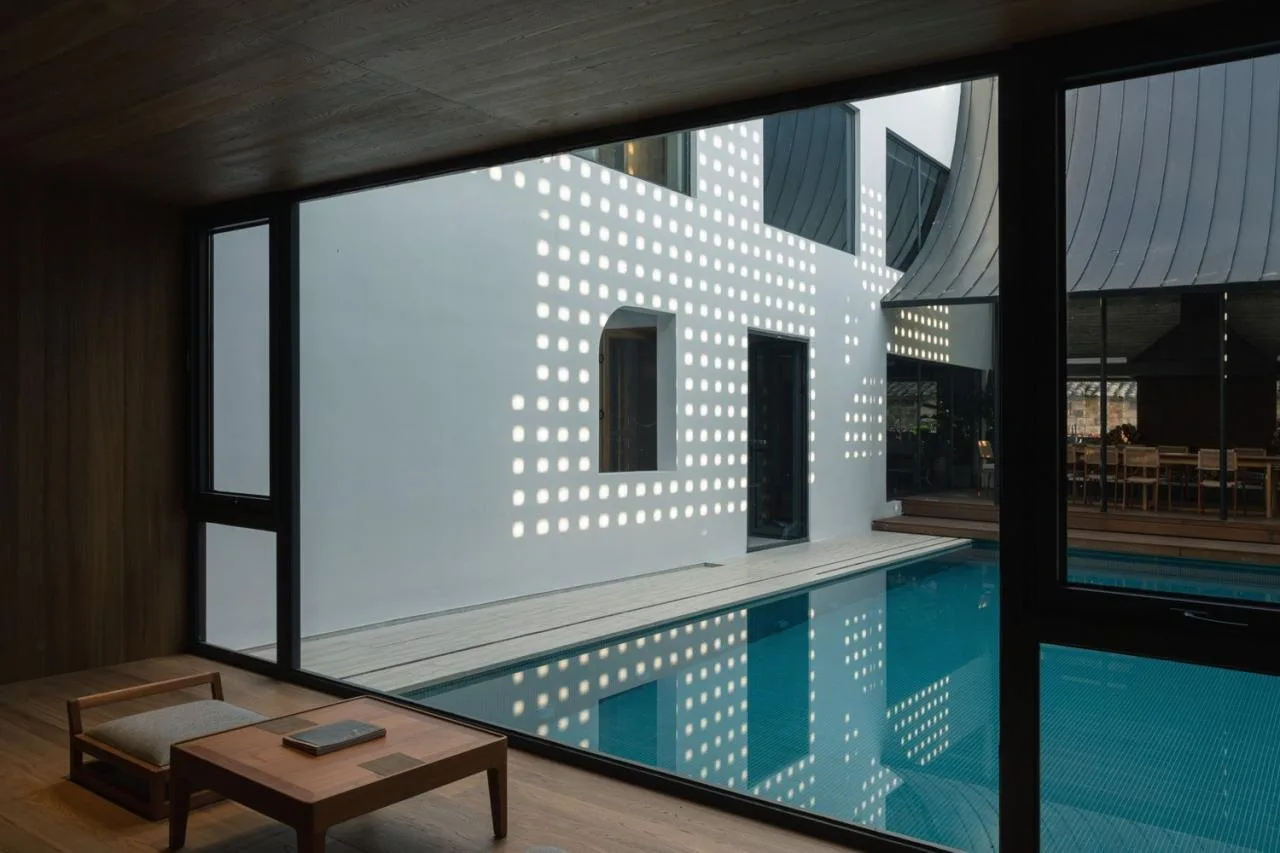
▲ Light spots transition on white walls from circular to square © Architecture Photography
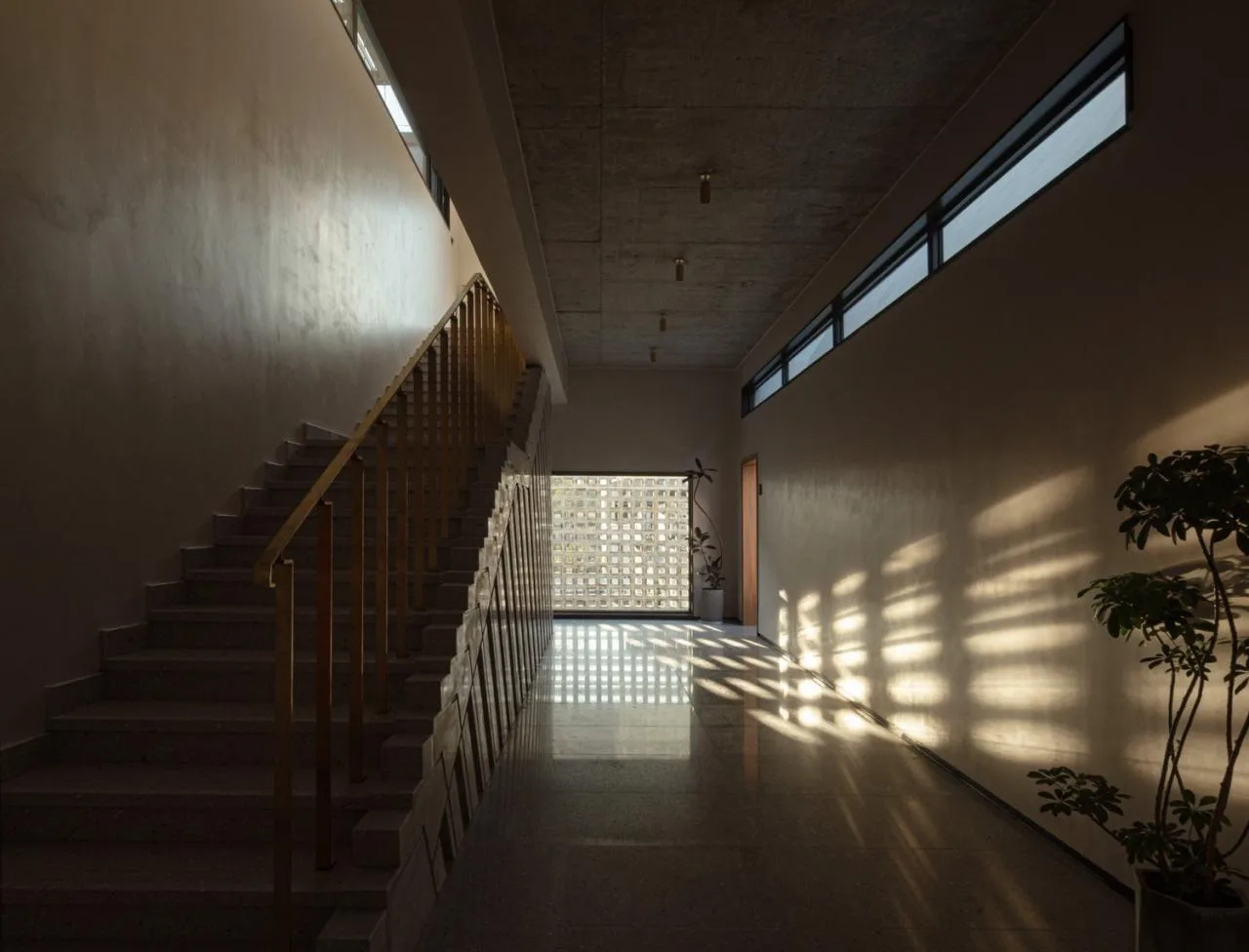
▲ Poetic interplay of light and shadow, capturing the passage of time © Architecture Photography
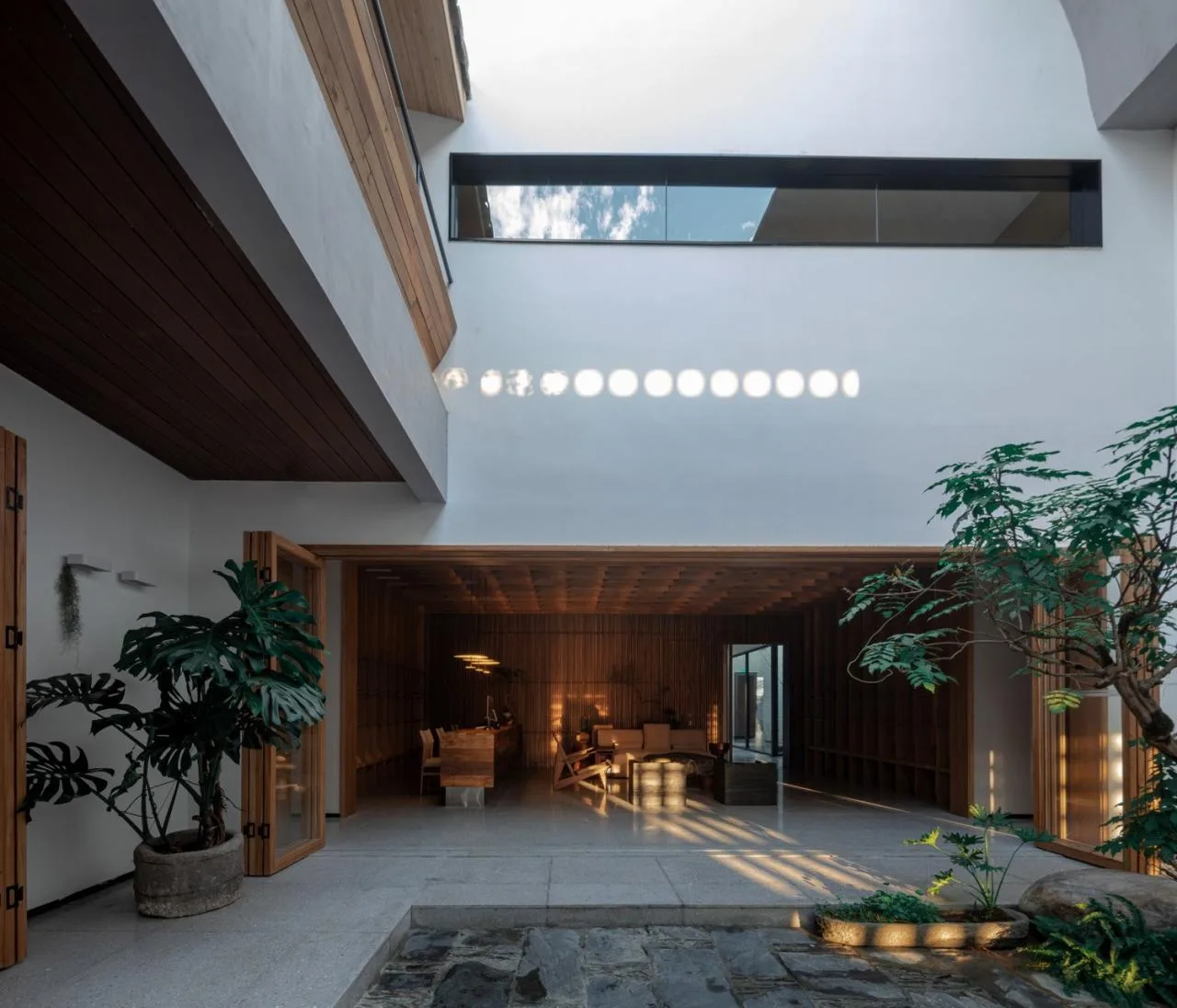
▲ Poetic light and shadow © Architecture Photography
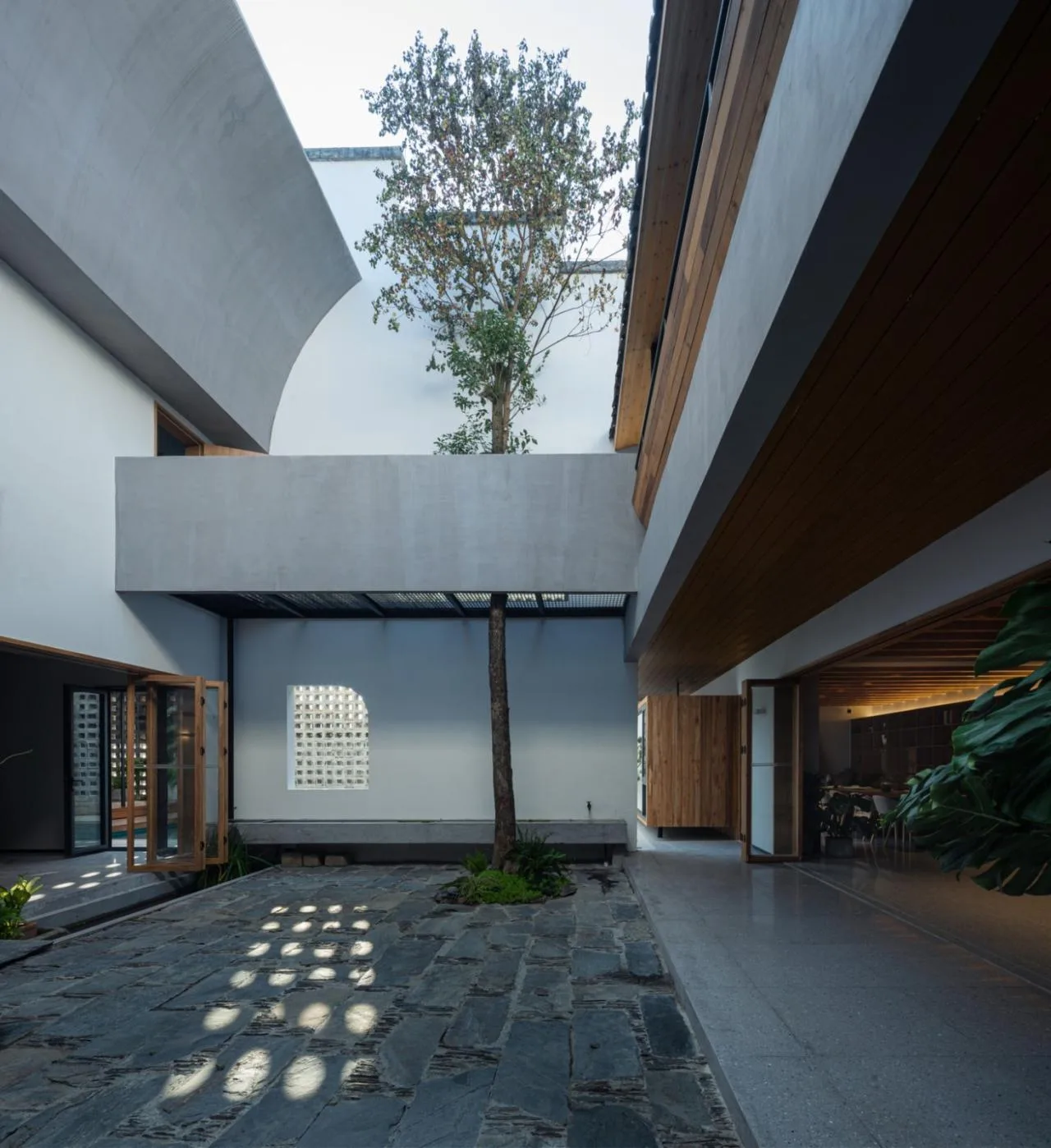
▲ Light and shadow filtering through brick walls © Architecture Photography
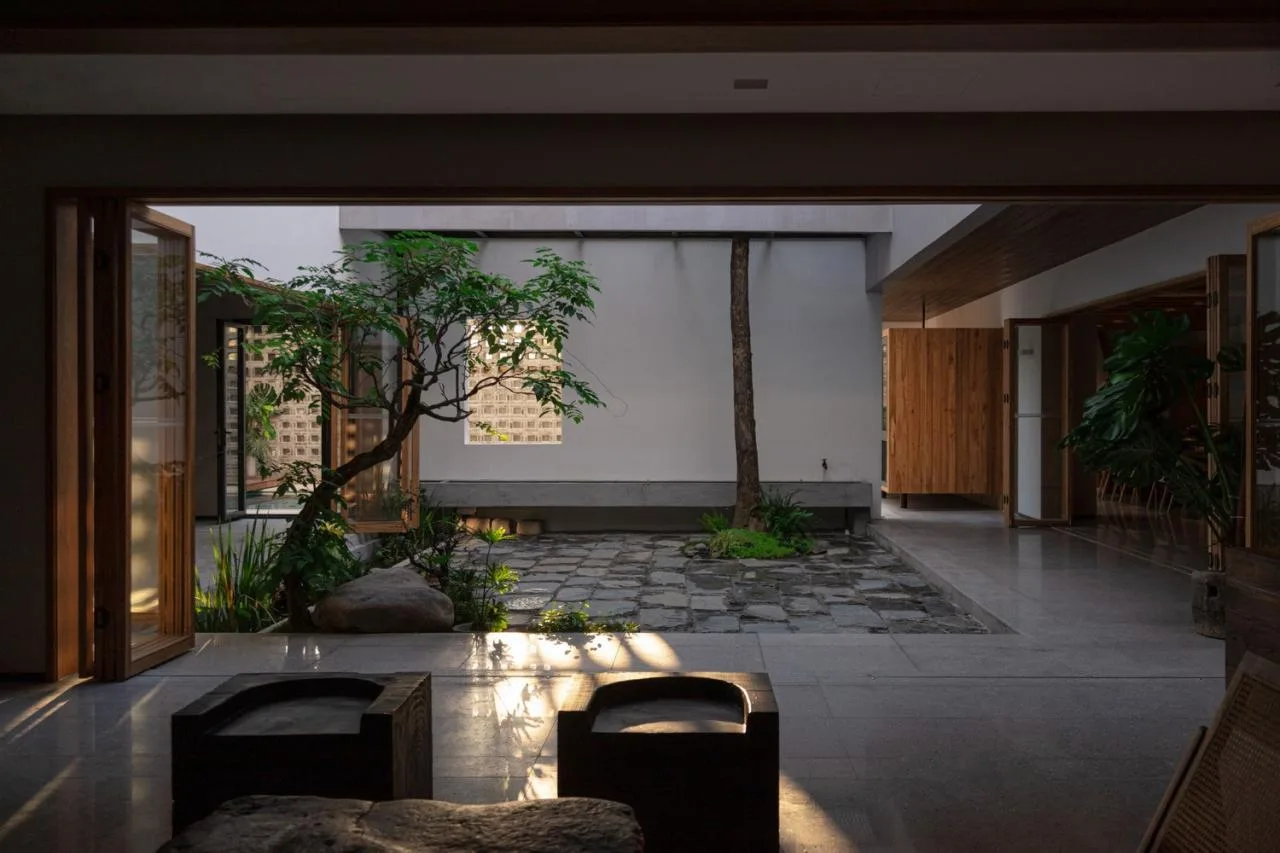
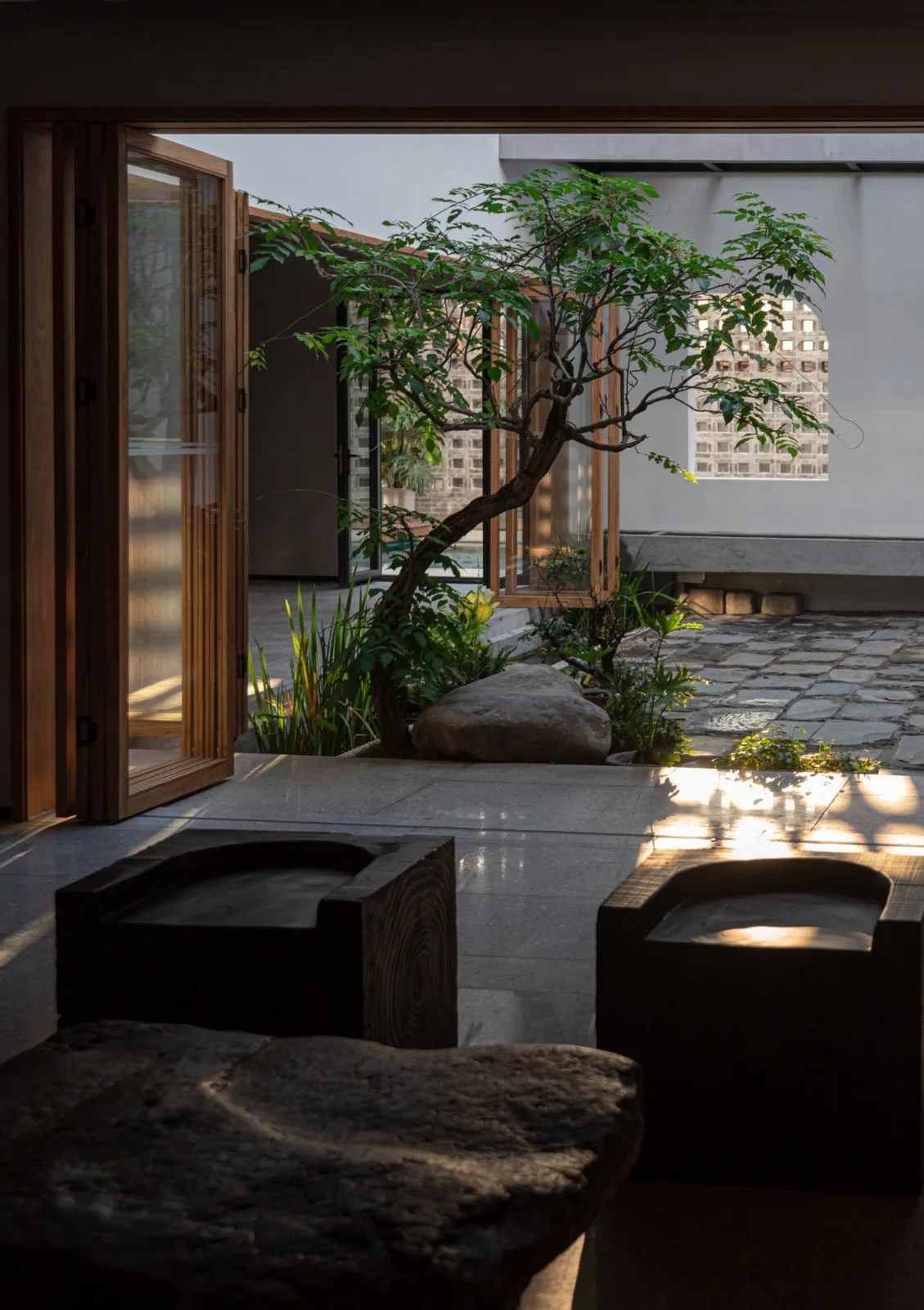
▲ Poetic light and shadow expressing the passage of time © Architecture Photography
Light plays a vital role in shaping architectural space, with the interplay of light and shadow creating unique visual effects. Polishing surfaces also alters material characteristics, enhancing this interaction. In our practice, we focus on guiding and shaping light to enrich space with poetic meaning, making it emotional, artistic, and engaging. Through changing light and shadow, occupants can sense the flow of time and space.
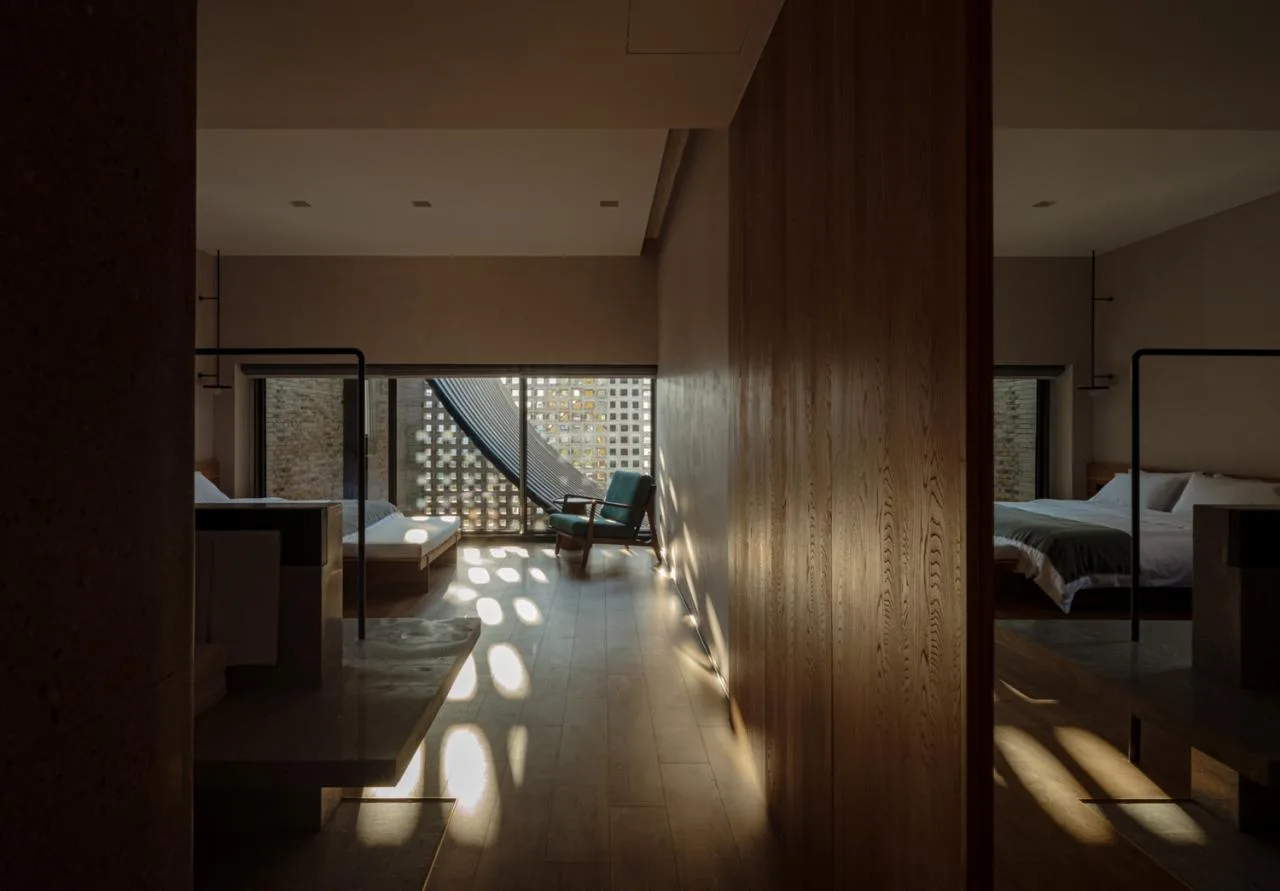
▲ Feeling the passage of time © Architecture Photography
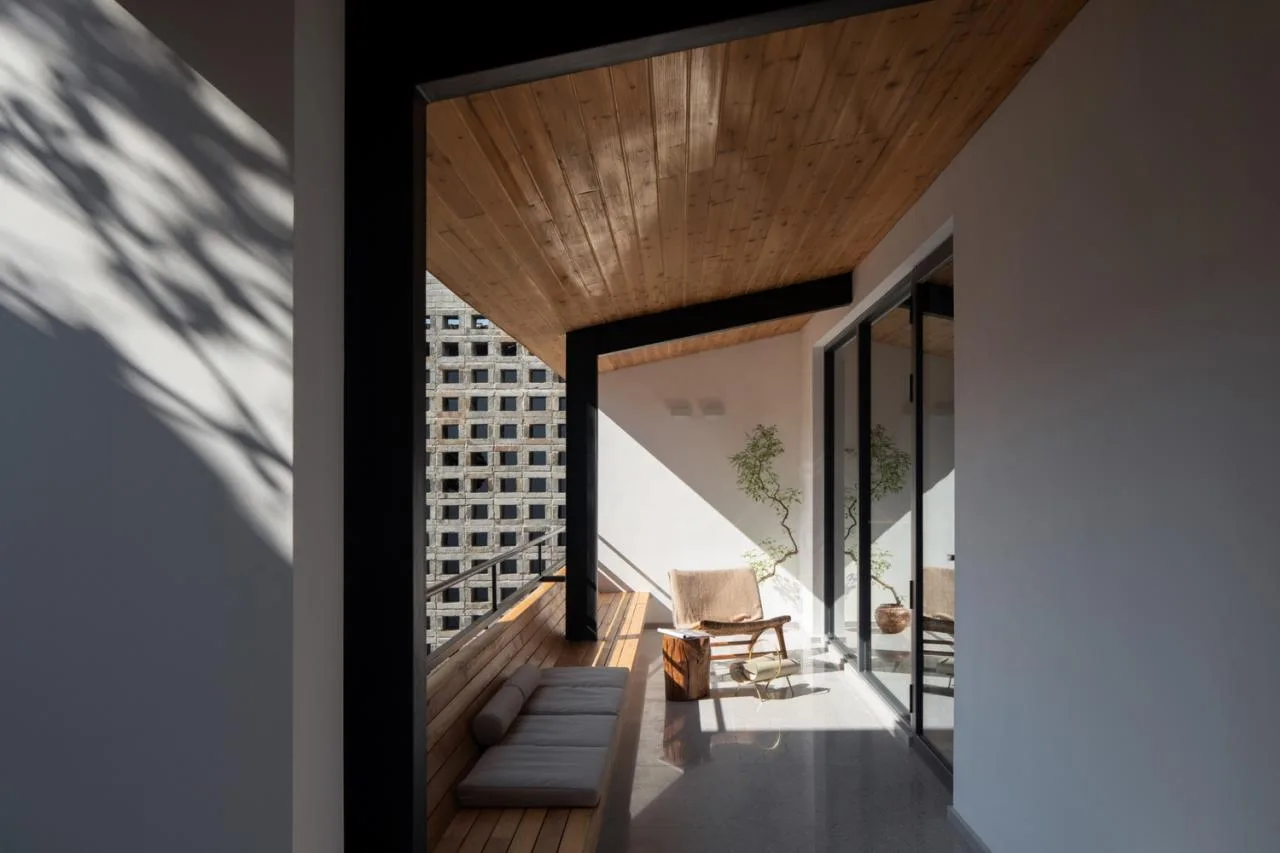
▲ Relaxed atmosphere created by light and shadow © Architecture Photography
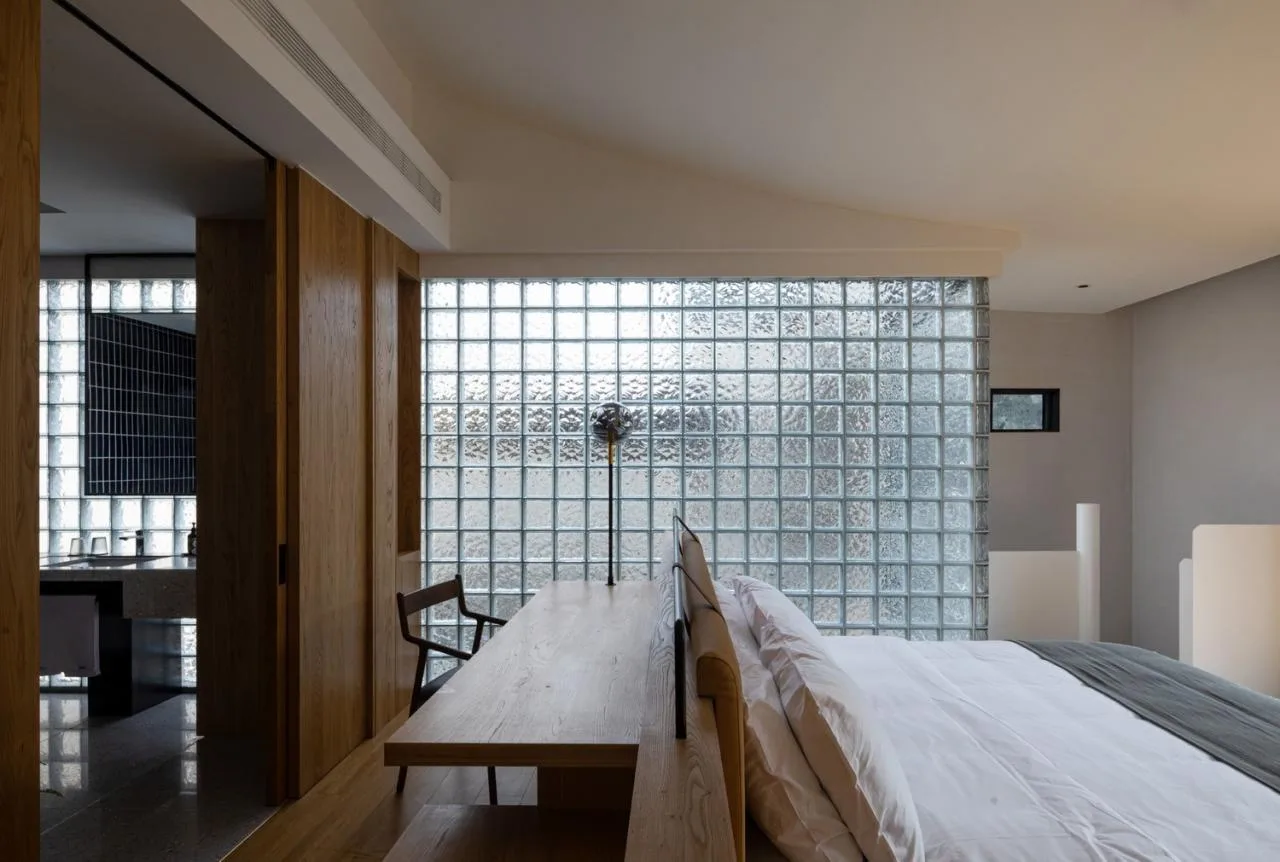
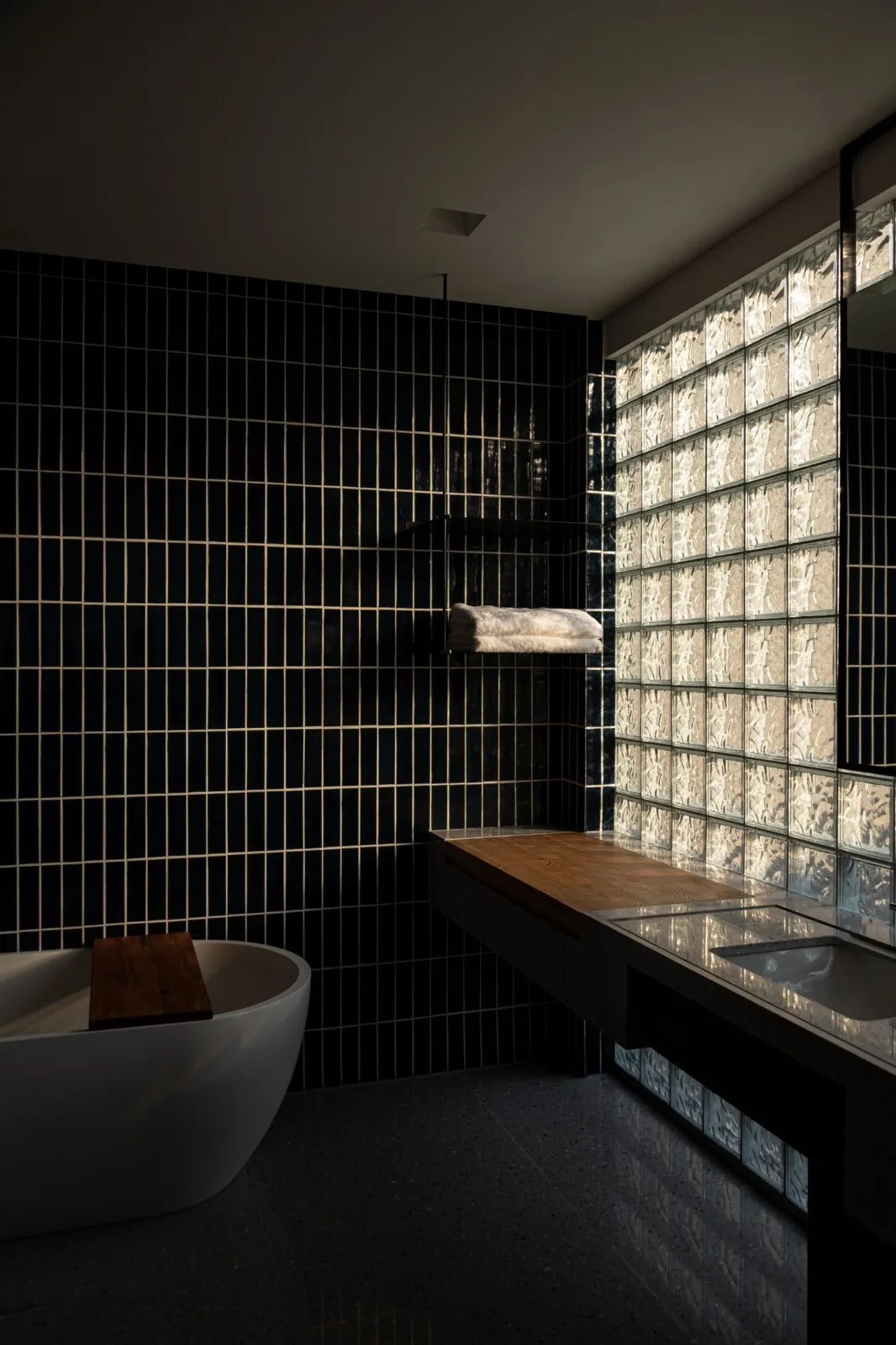
▲ Subtle light sensation © Architecture Photography
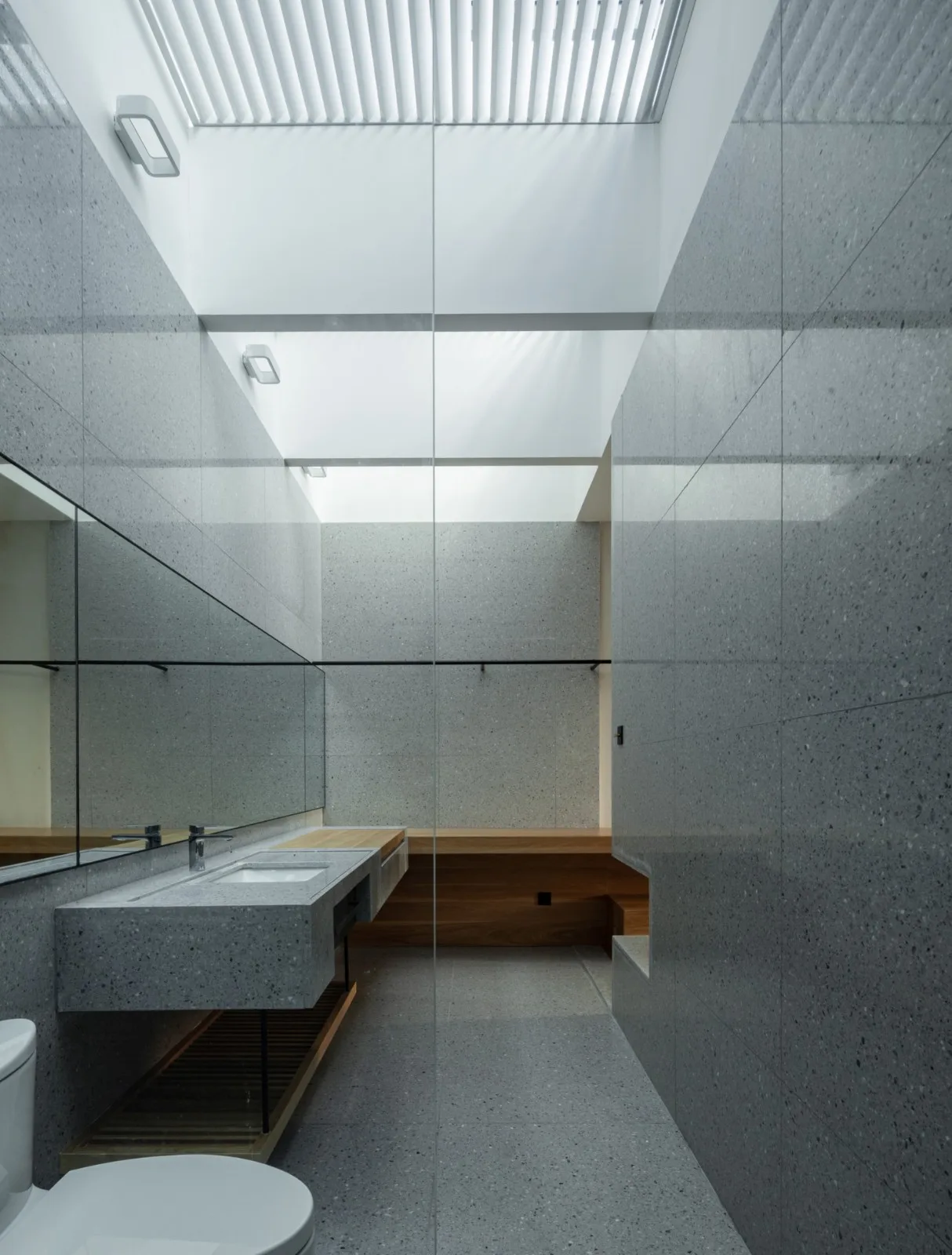
▲ Light and shadow with rich texture © Architecture Photography
To ensure ample natural light indoors, courtyards remain central to our design, separating building blocks to allow sunlight penetration. We incorporate glass brick walls, skylights, and various grilles to introduce light, creating diverse spatial atmospheres. Through the play of light and shadow, occupants can perceive time, encouraging reflection and contemplation.
Project Drawings
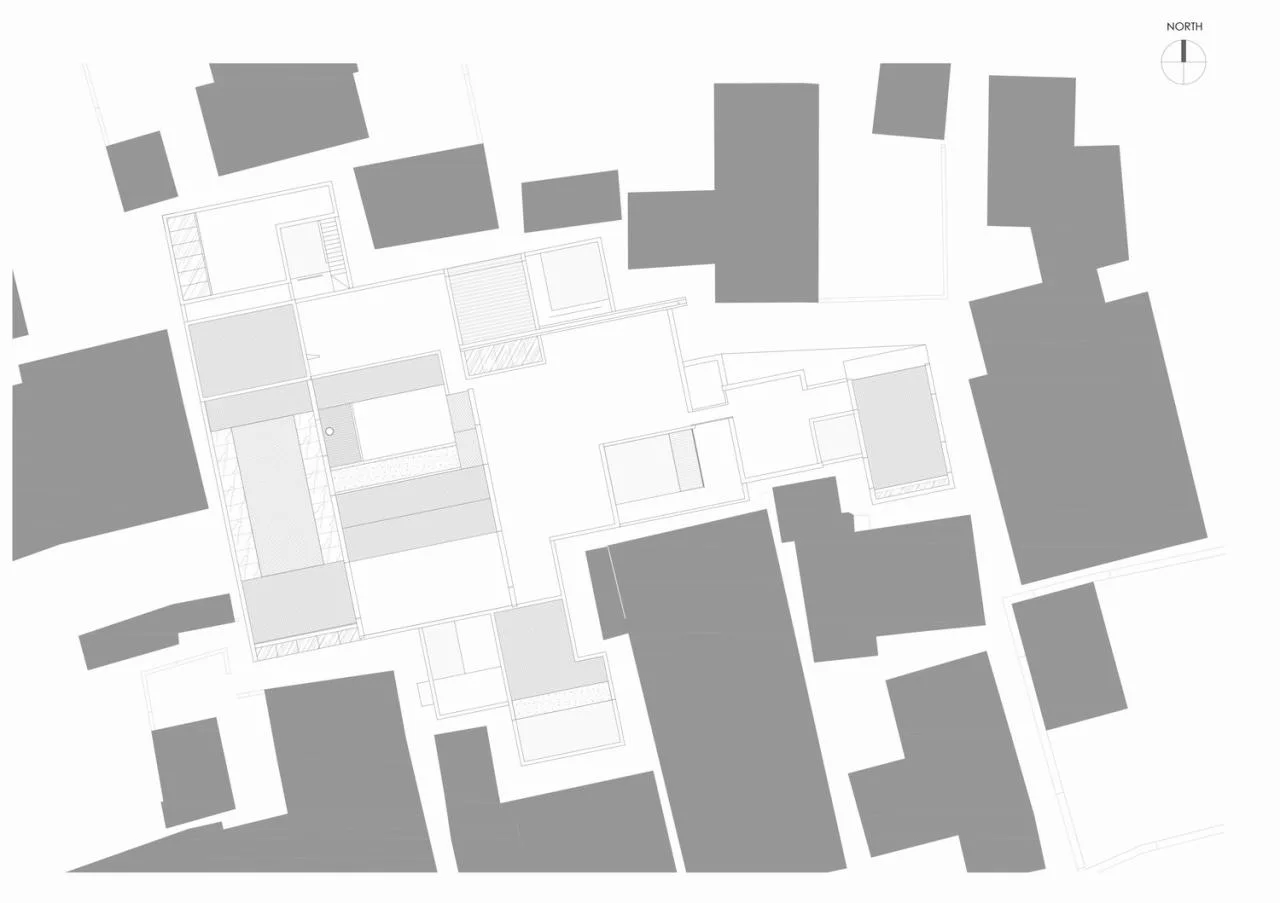
▲ General layout plan © y.ad studio
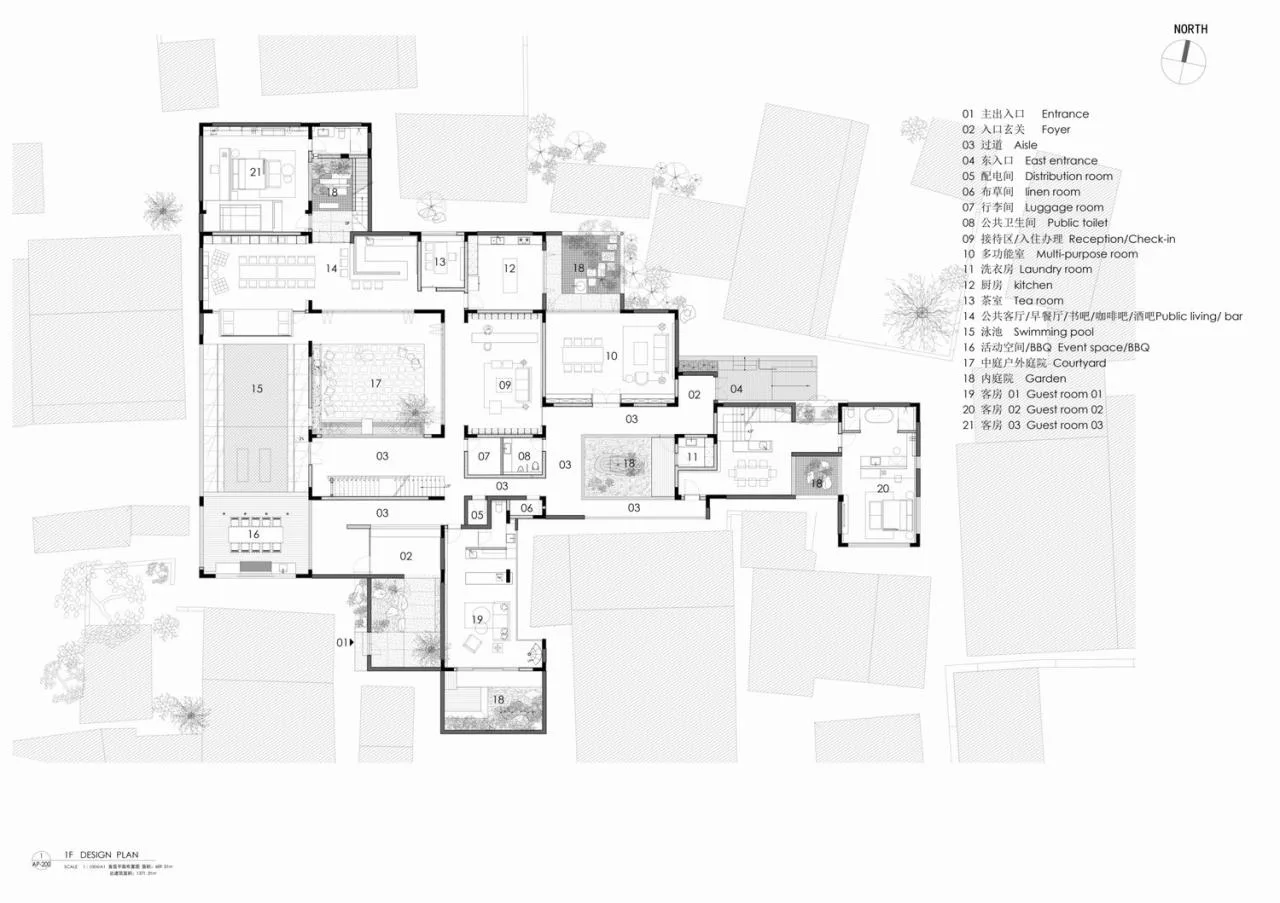
▲ First floor plan © y.ad studio
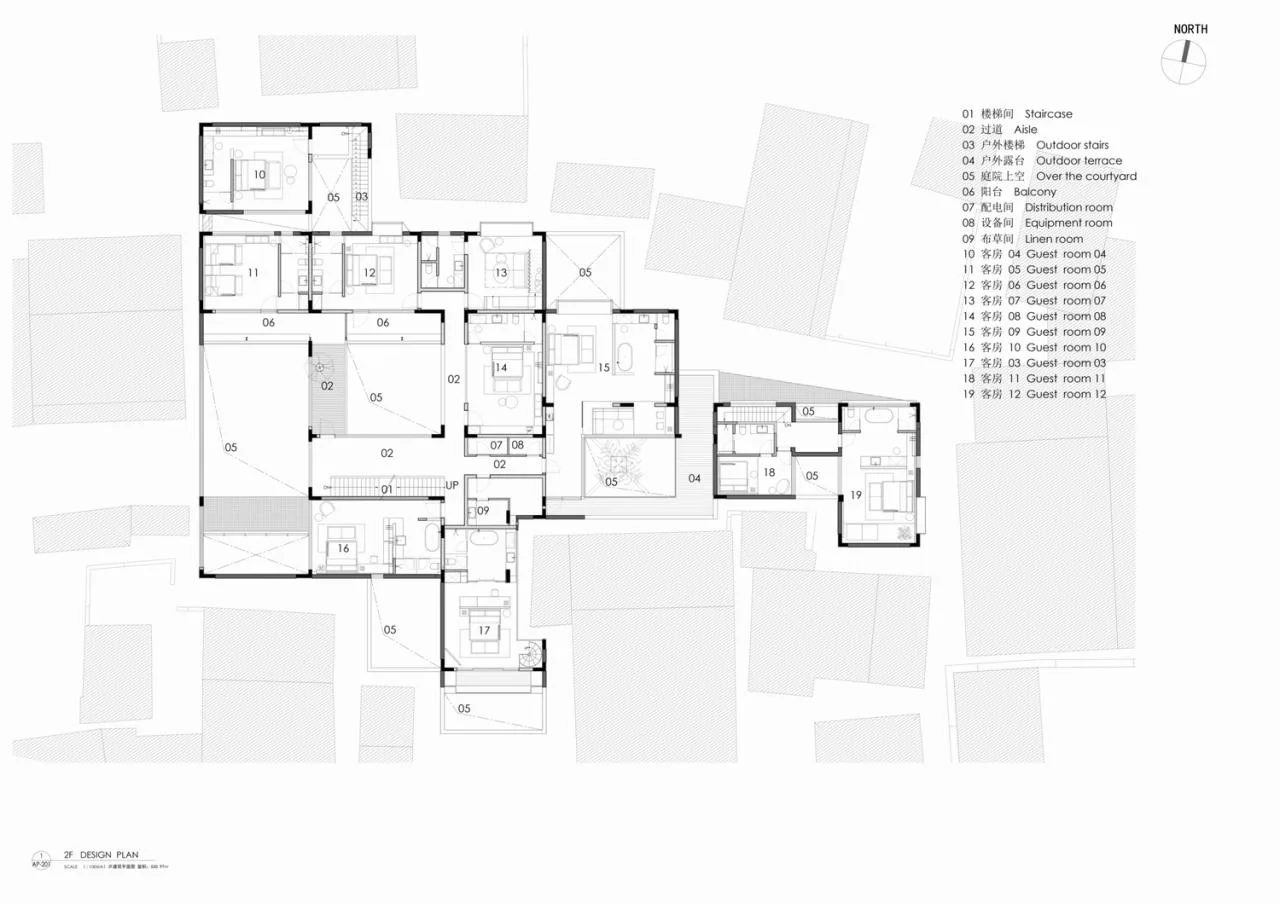
▲ Second floor plan © y.ad studio
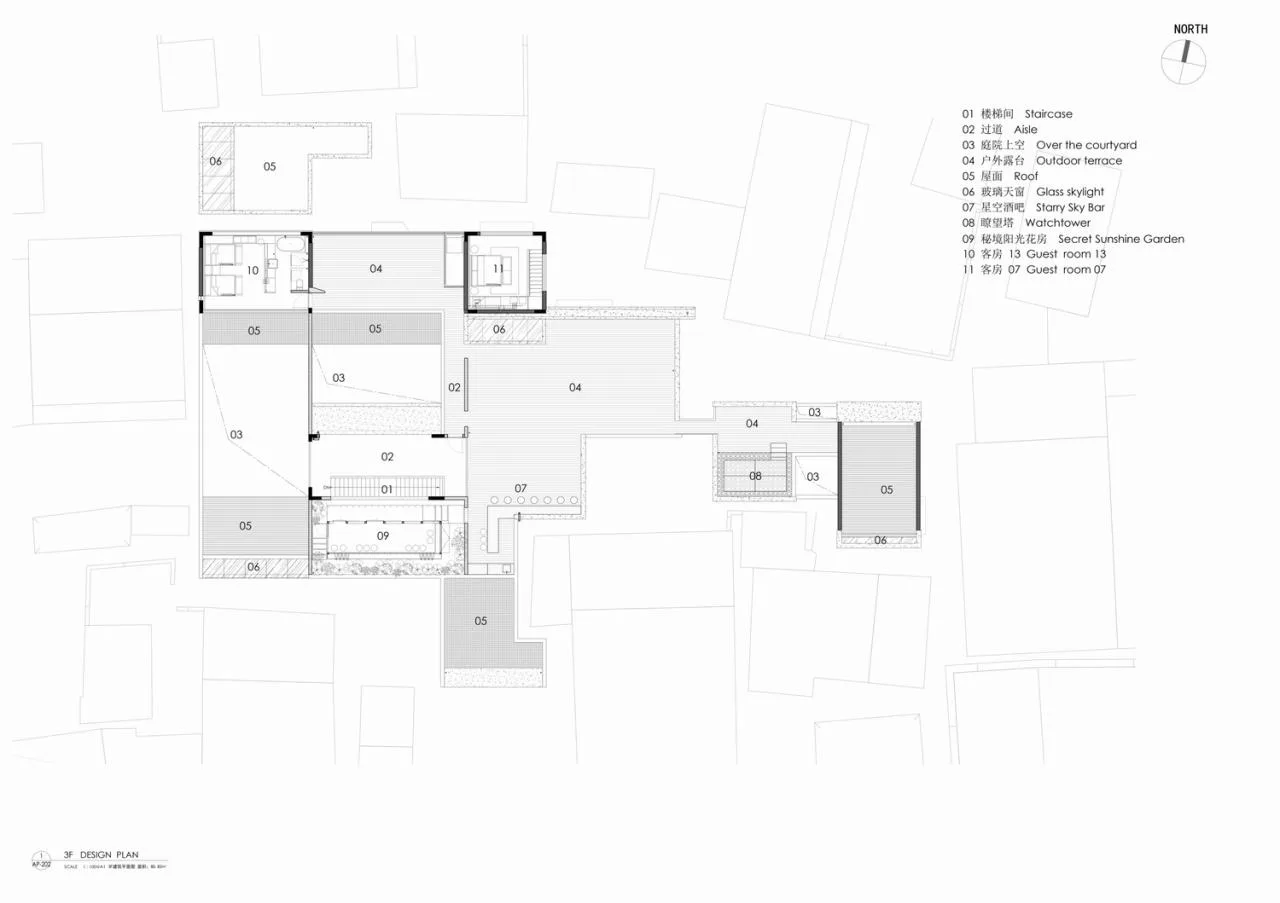
▲ Third floor plan © y.ad studio
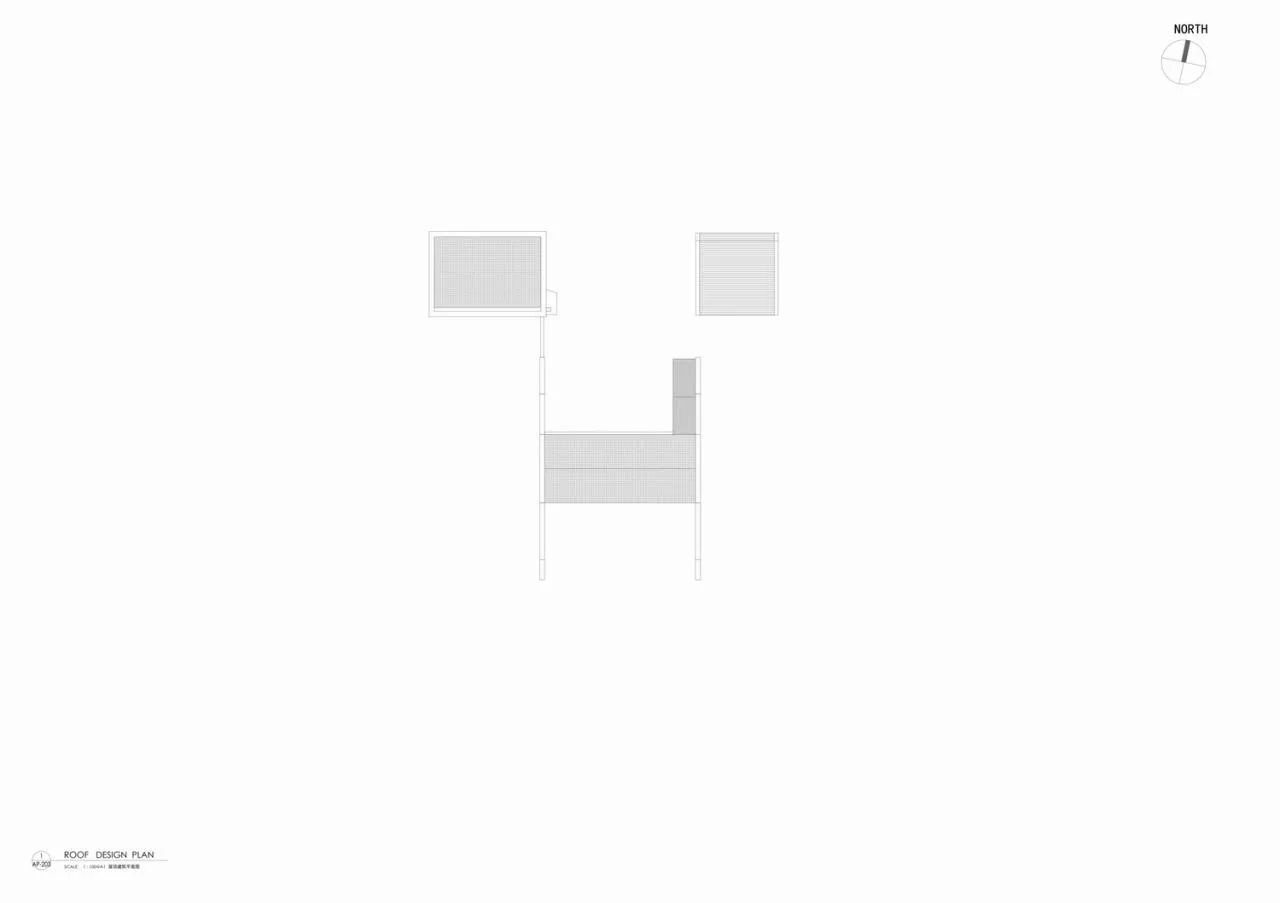
▲ Roof plan © y.ad studio
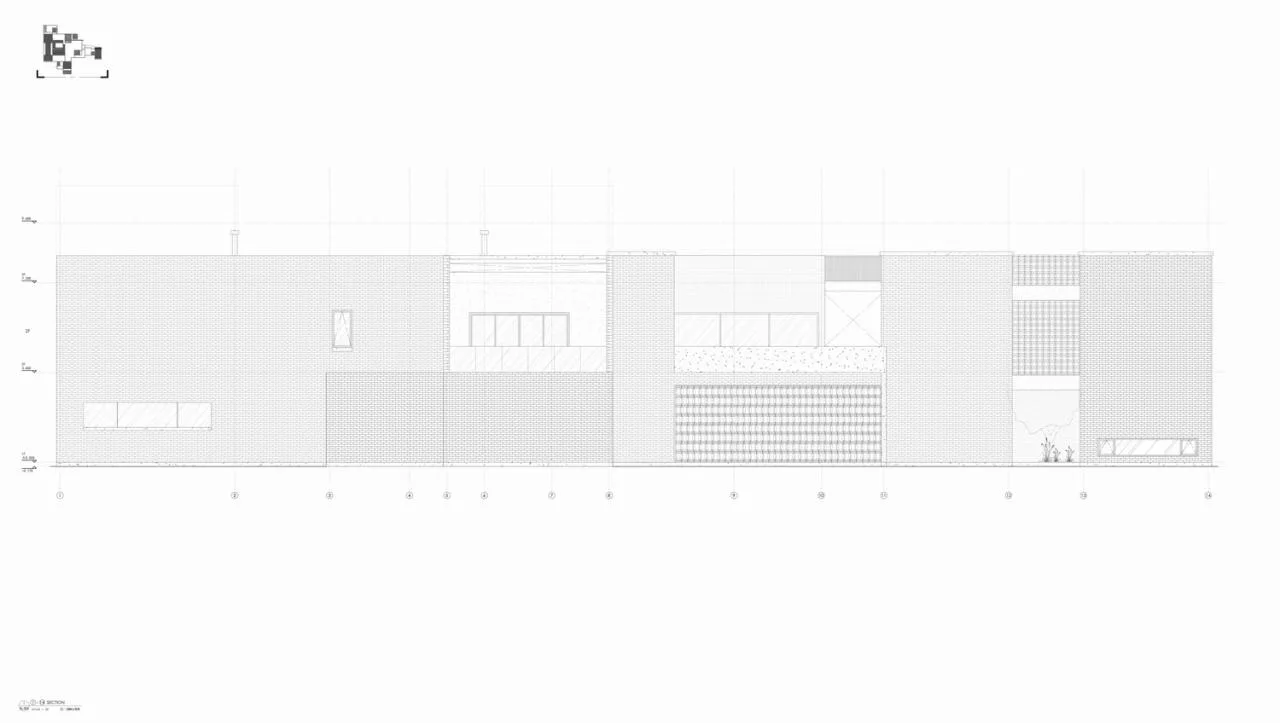
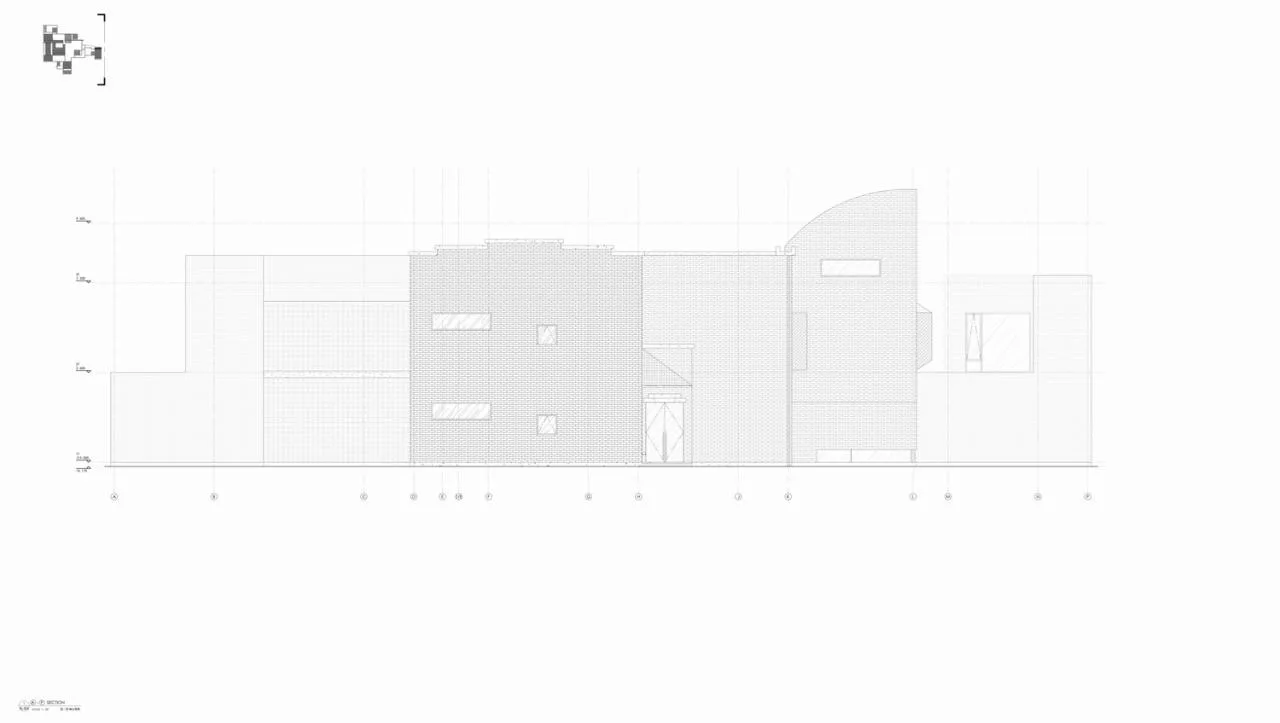
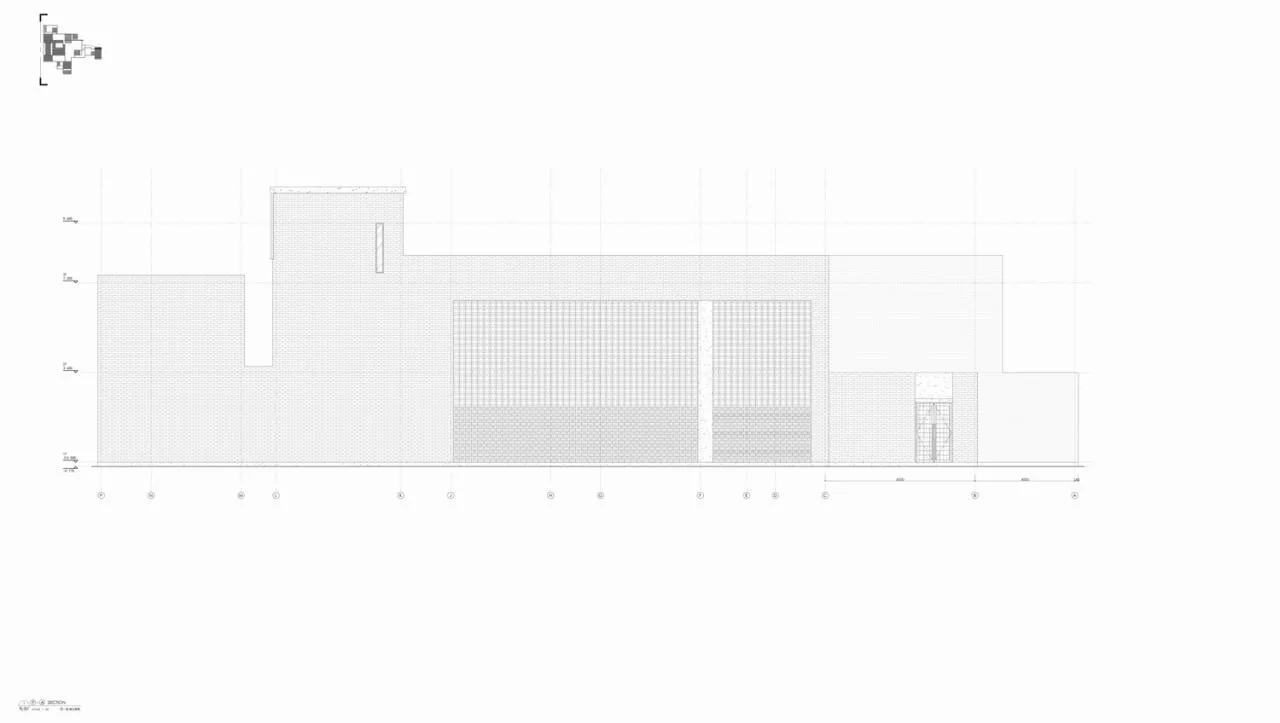
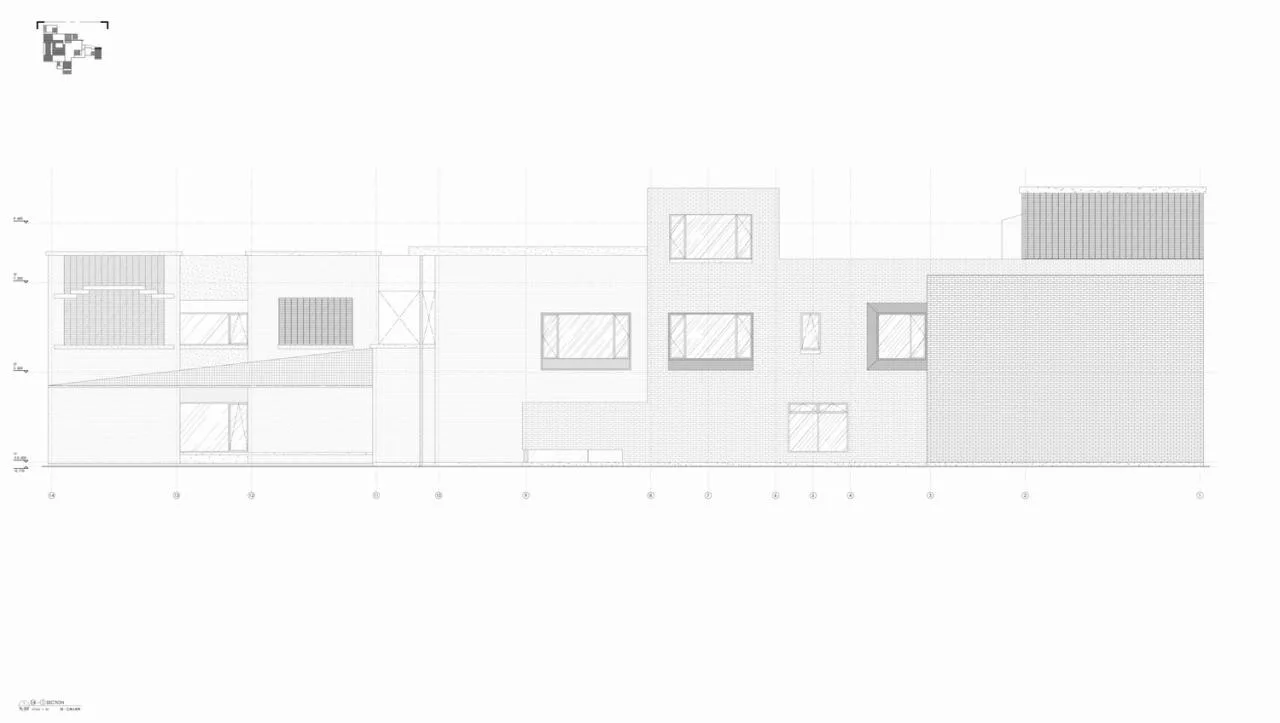
▲ Building elevation drawings © y.ad studio
Project Information
Project Name: Yiyun Bishan Hotel
Location: No.8, Oucun Road, Bishan Village, Yi County, Mount Huangshan City, Anhui Province
Design Team: y.ad studio | Shanghai Yan Yang Architectural Design Studio
Lead Architect: Yan Yang
Project Architect: Wu Kejia
Interior and Landscape Designers: Wu Kejia, Zhao Siyuan
Design Team Members: Yan Yu, Huo Zhenzhong (Structural)
VI Indicator System: Yan Yang, Wu Kejia
Construction Units: Mount Huangshan Chaohua Decoration Design Co., Ltd; Mount Huangshan Yiyang Cultural Tourism Development Co., Ltd
Main Materials: Blue brick, water-milled stone slab, bamboo steel plate, manganese magnesium aluminum metal roof, glass brick, micro-cement coating, wood veneer
Building Area: 1,286.25 square meters
Design Period: December 2020 – June 2021
Construction Period: September 2021 – October 2023
Photography ©: Ziran Architecture Photography















Must log in before commenting!
Sign Up