
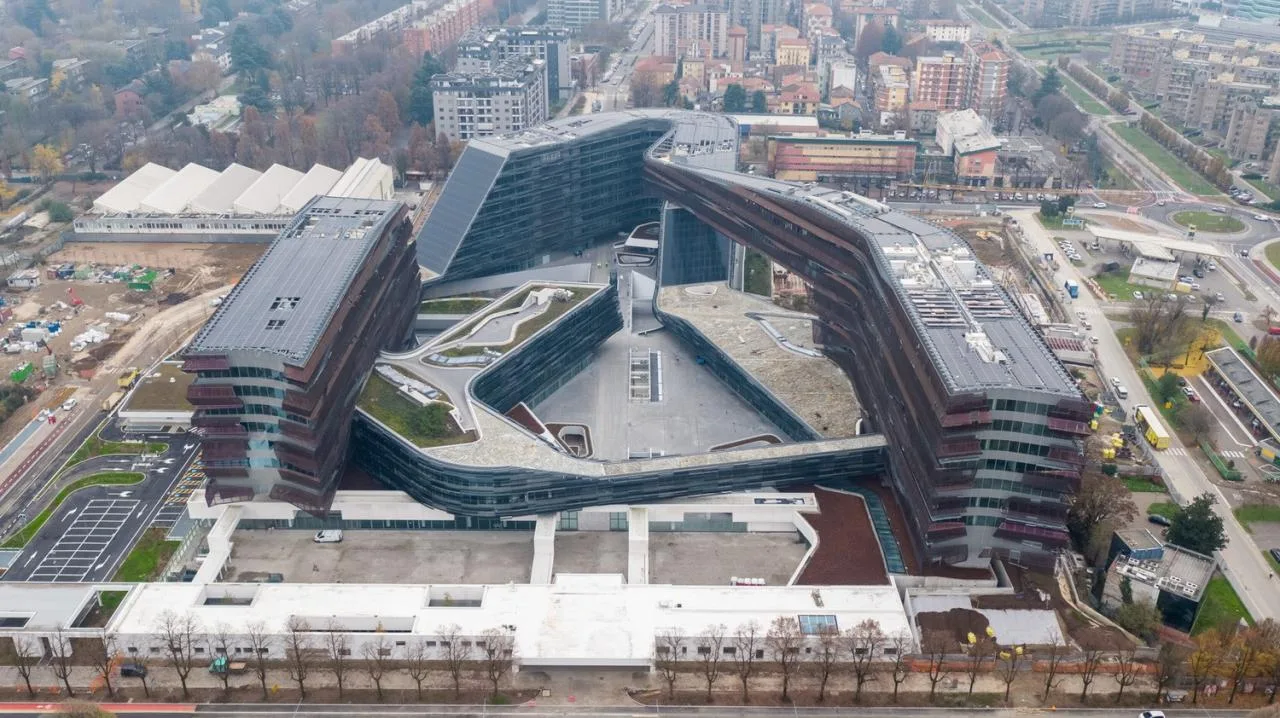
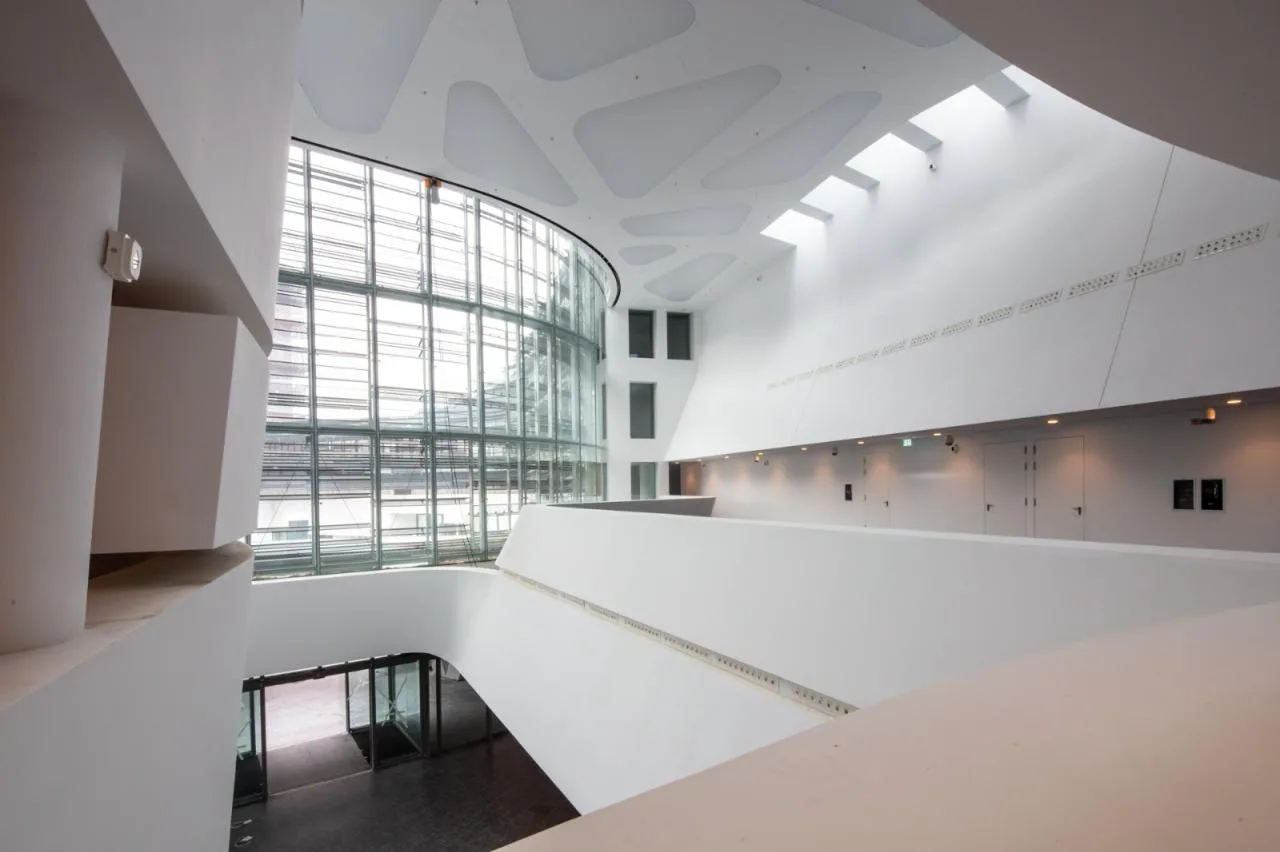
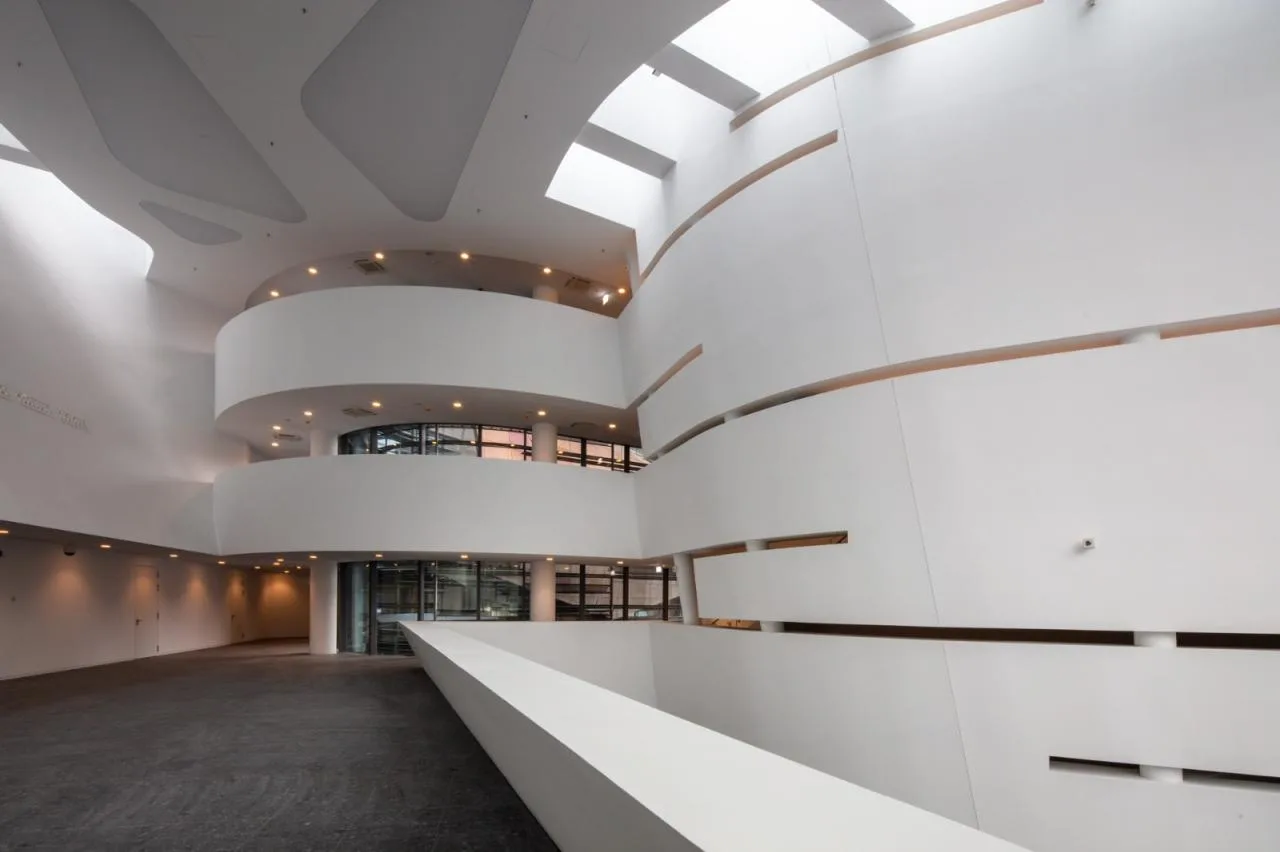
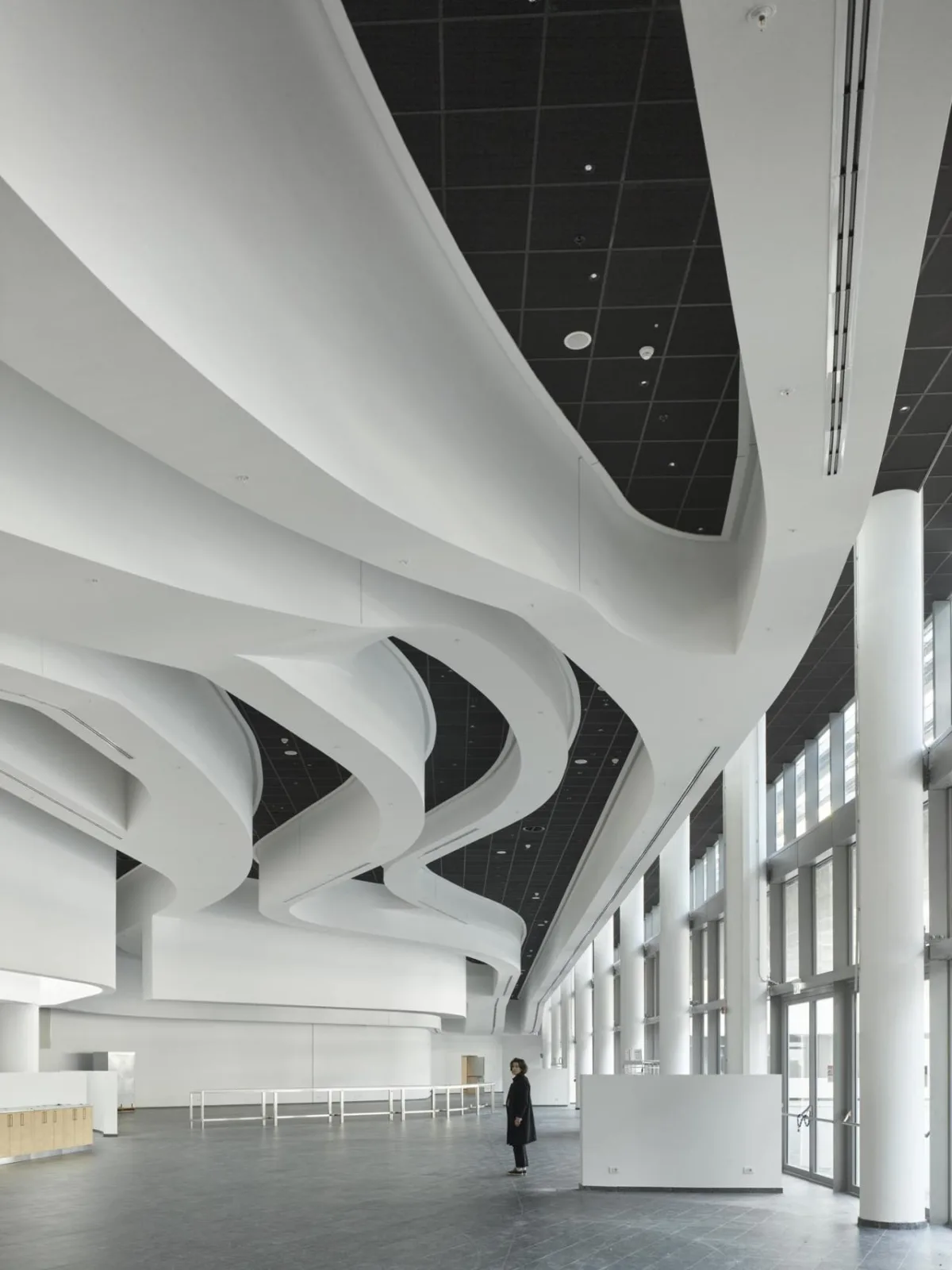
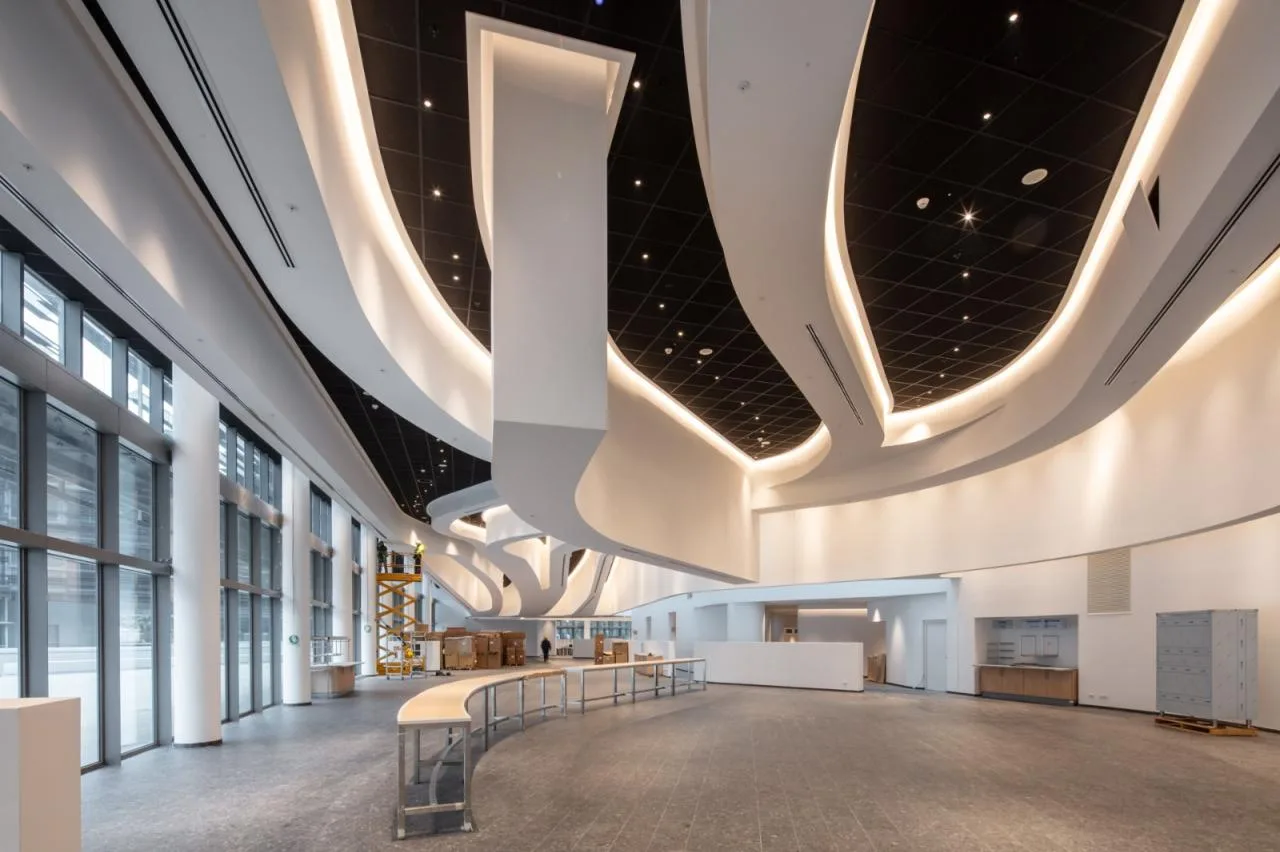
The new headquarters in Milan, designed by Morphosis Architects for the Italian energy giant Eni, has been completed. This building serves as the exploration and production business center for the Eni Group, spanning 65,000 square meters and housing 4,600 office units. Currently managed by DeA Capital Real Estate, the design emphasizes natural light, green spaces, and communal areas to foster an office environment that promotes employee health and well-being. As Thom Mayne, founder of Morphosis, explains, “We see this project as a fragment of the city organized around its own ‘public space’—a park designed to encourage communication, enhance interaction, and build a strong sense of identity.”
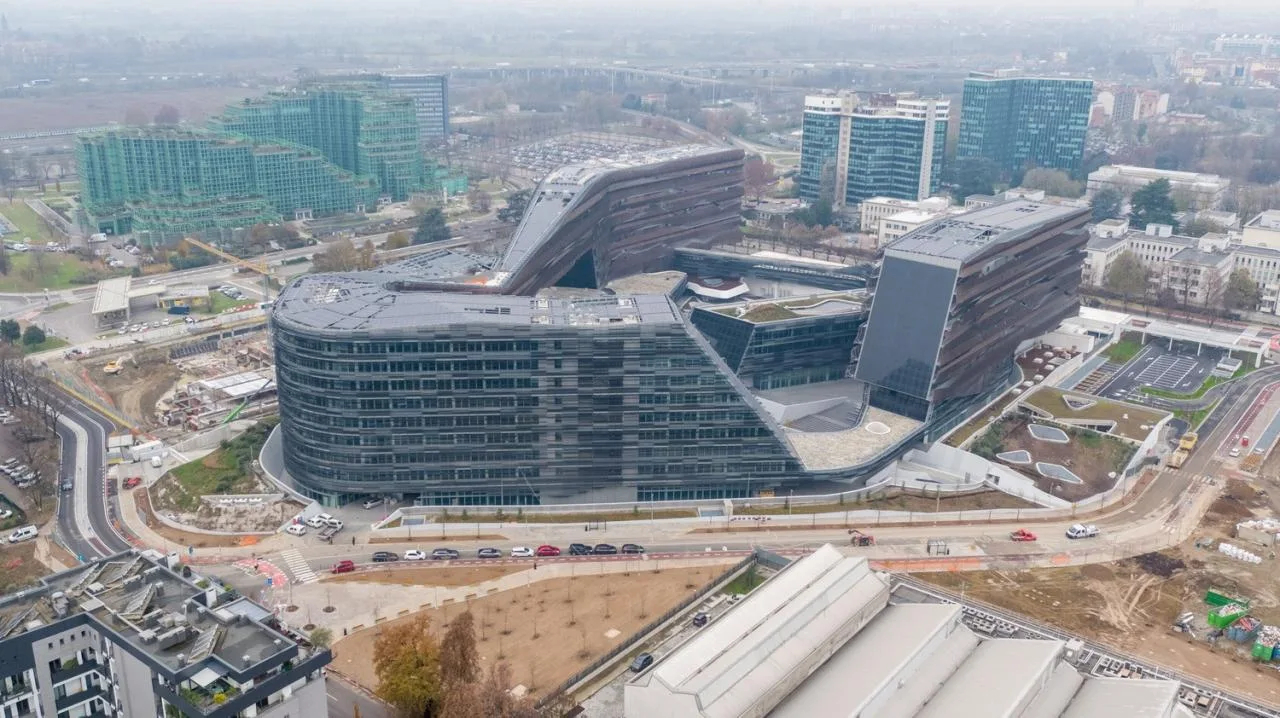
Located in the Metanopoli district of San Donato Milanese, a southeastern suburb of Milan, Italy, the new Eni Group headquarters honors the company’s history in the area since 1952. Some of the group’s historic buildings have been preserved and transformed into a new park entrance, commemorating Eni’s significant role in Italy’s post-World War II economic recovery. This project also continues the founder’s vision of creating a utopian community, marking a new chapter for the group in the era of energy transition.
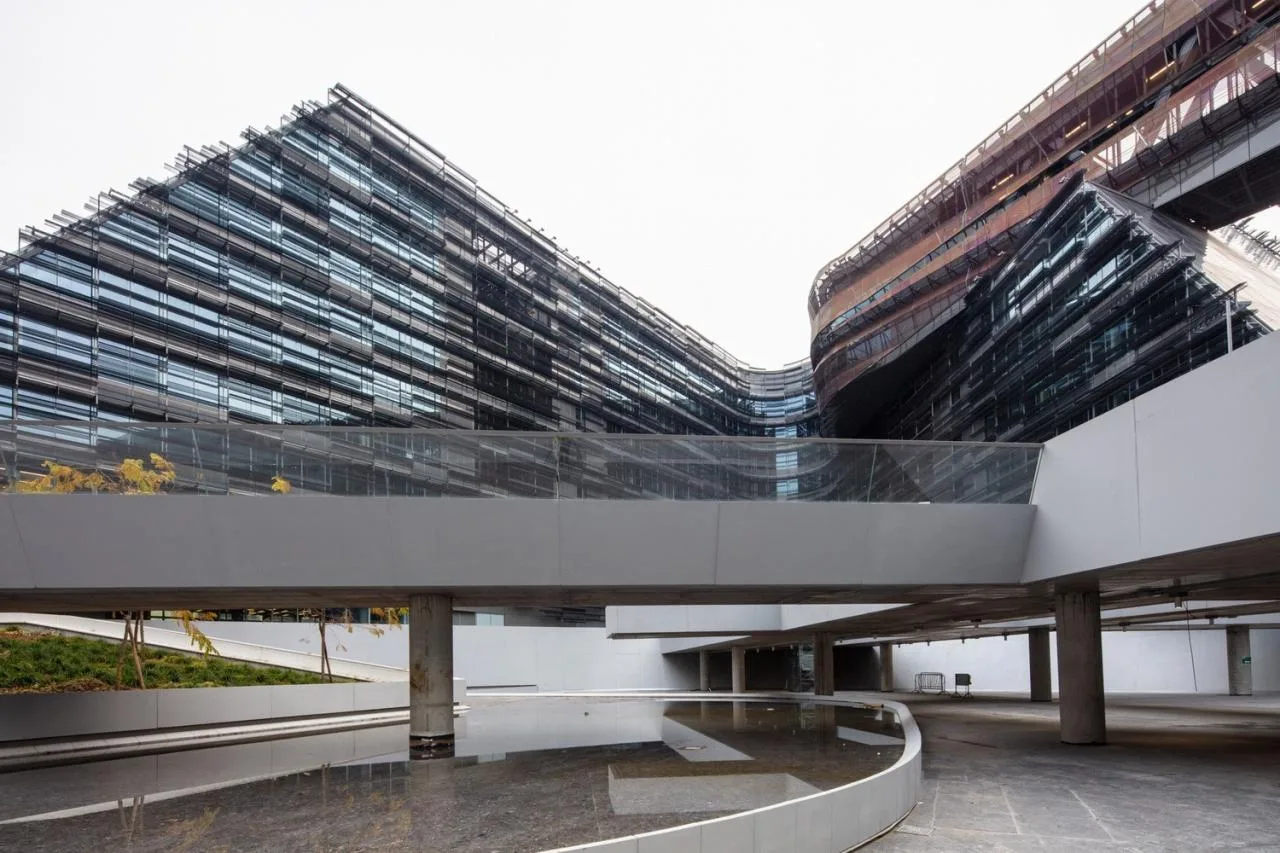
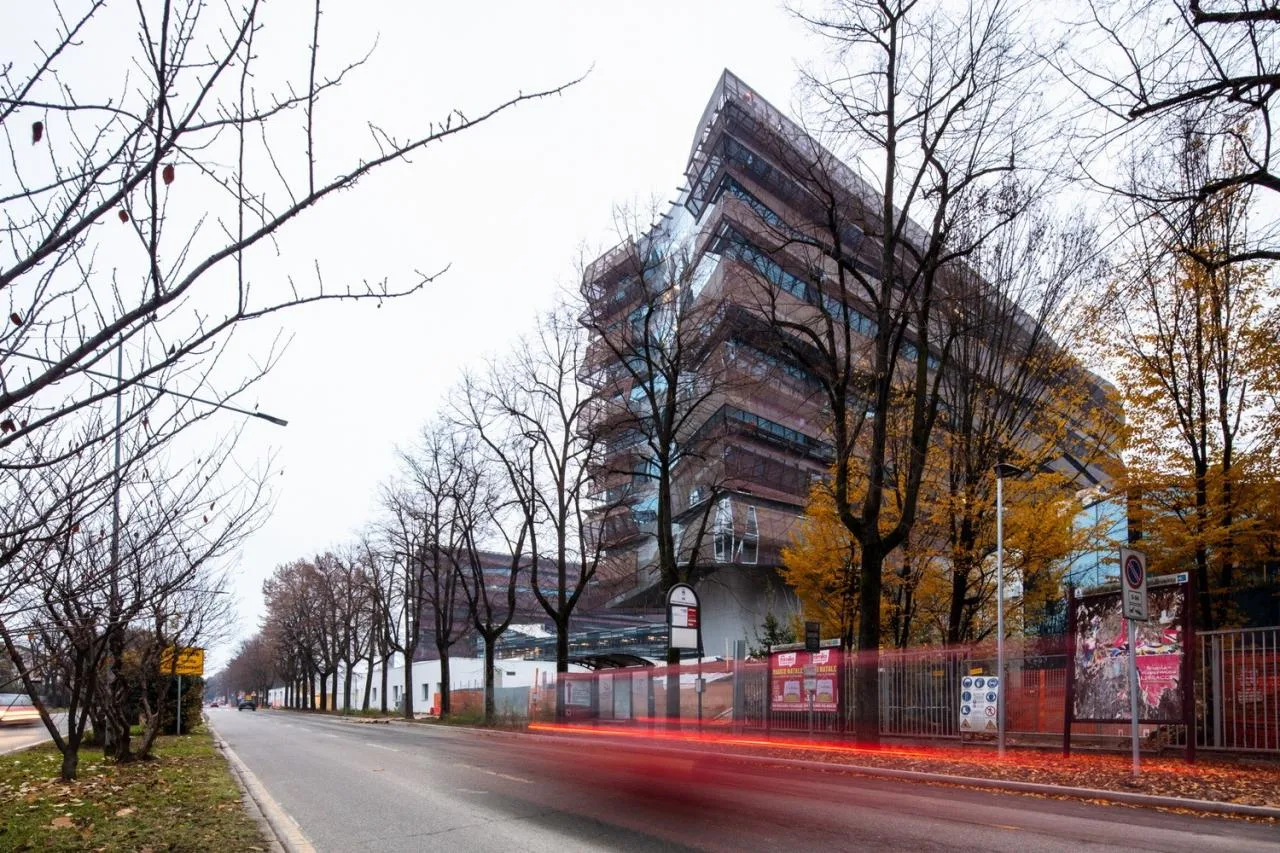
Eni Emerson, partner at Morphosis and project lead for the Milan headquarters, states, “We have collaborated closely with Eni Group to create a corporate park that promotes health, enhances well-being, and fosters a strong sense of community. Features such as hanging gardens, abundant natural light, flexible workstations, and a central plaza are designed to encourage employees to connect with colleagues and nature at any moment. Our focus on the employee experience has become even more vital in the wake of the COVID-19 pandemic.”
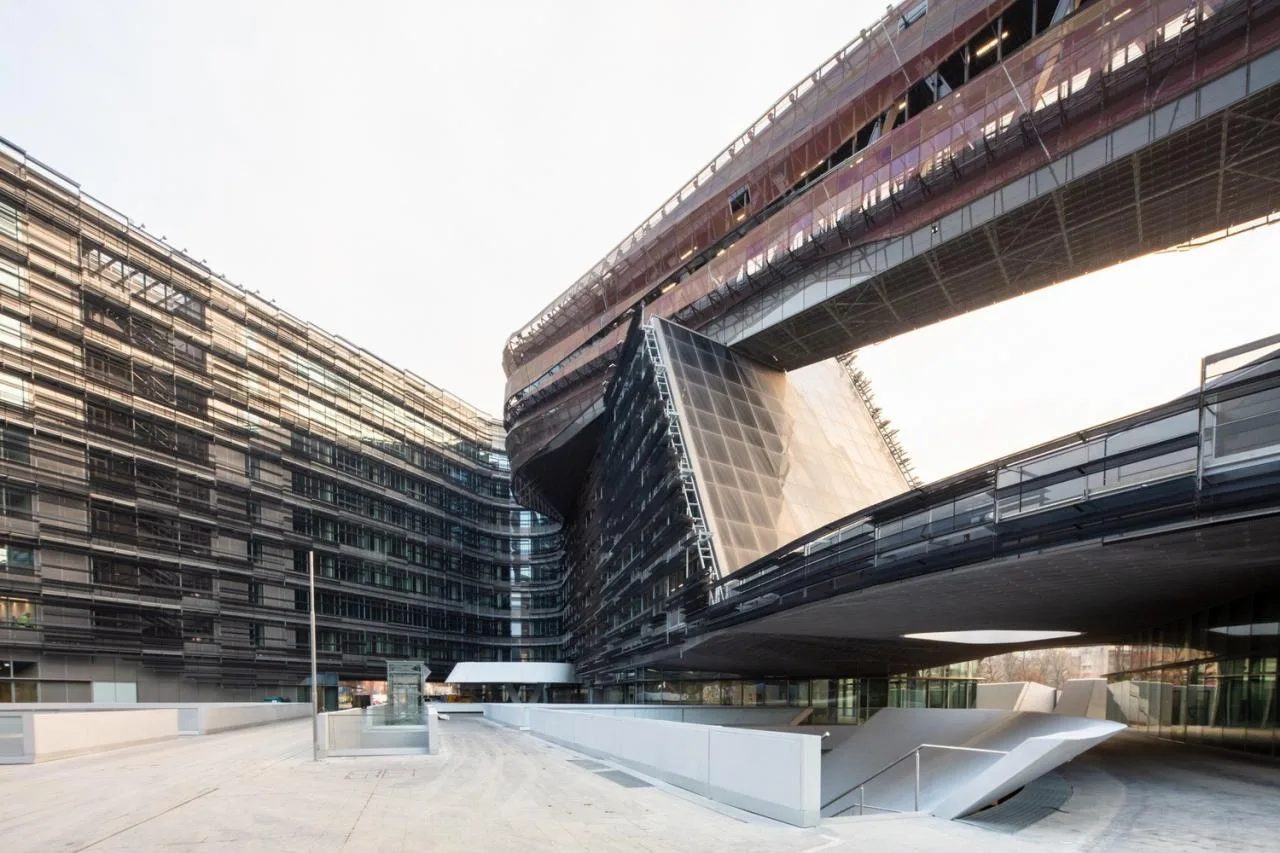
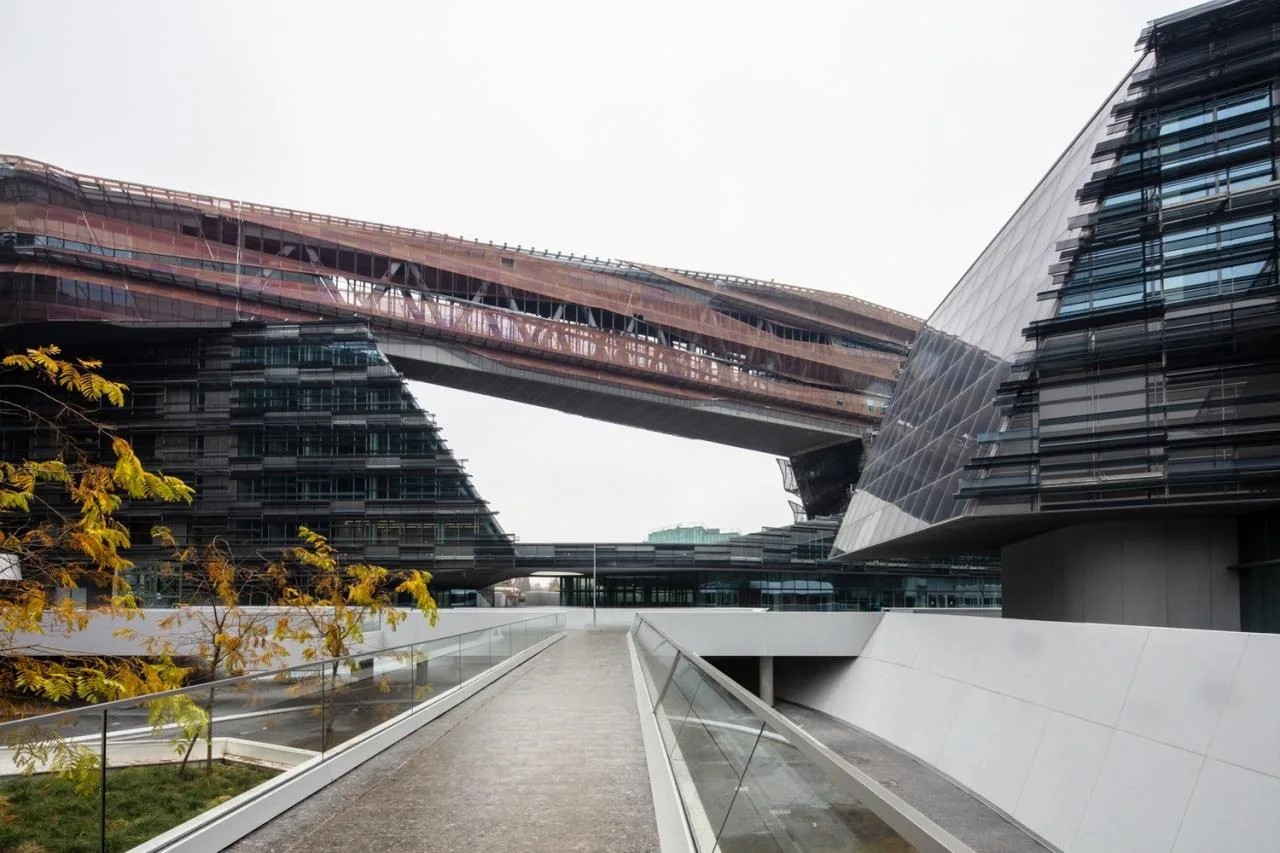
The post-pandemic workplace remains fragmented for many companies, whether transitioning back from remote work or adopting hybrid models. Increasingly, businesses prioritize workplace quality to build employee trust through superior environments. Morphosis has responded to this demand with the Milan headquarters of Eni Group, offering what might be an ideal working environment for its employees.
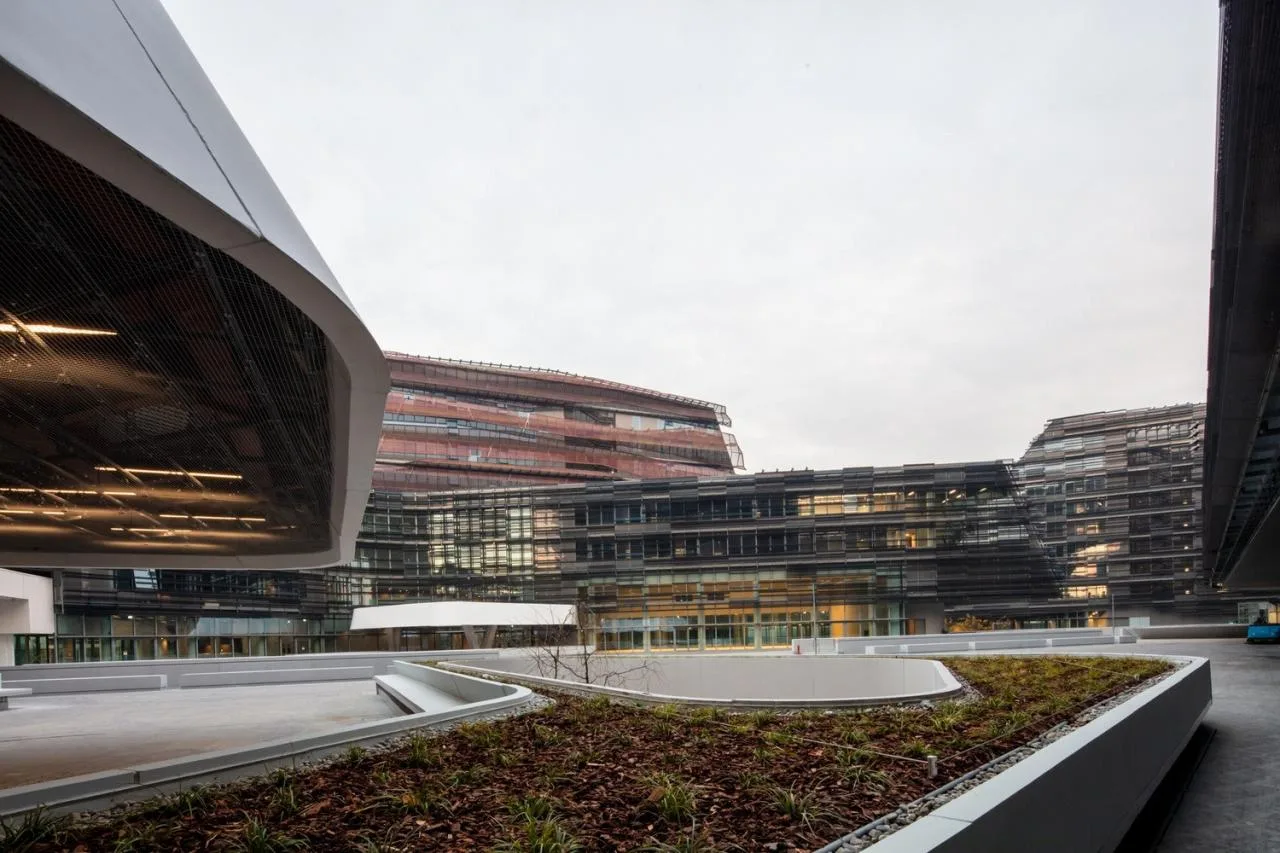
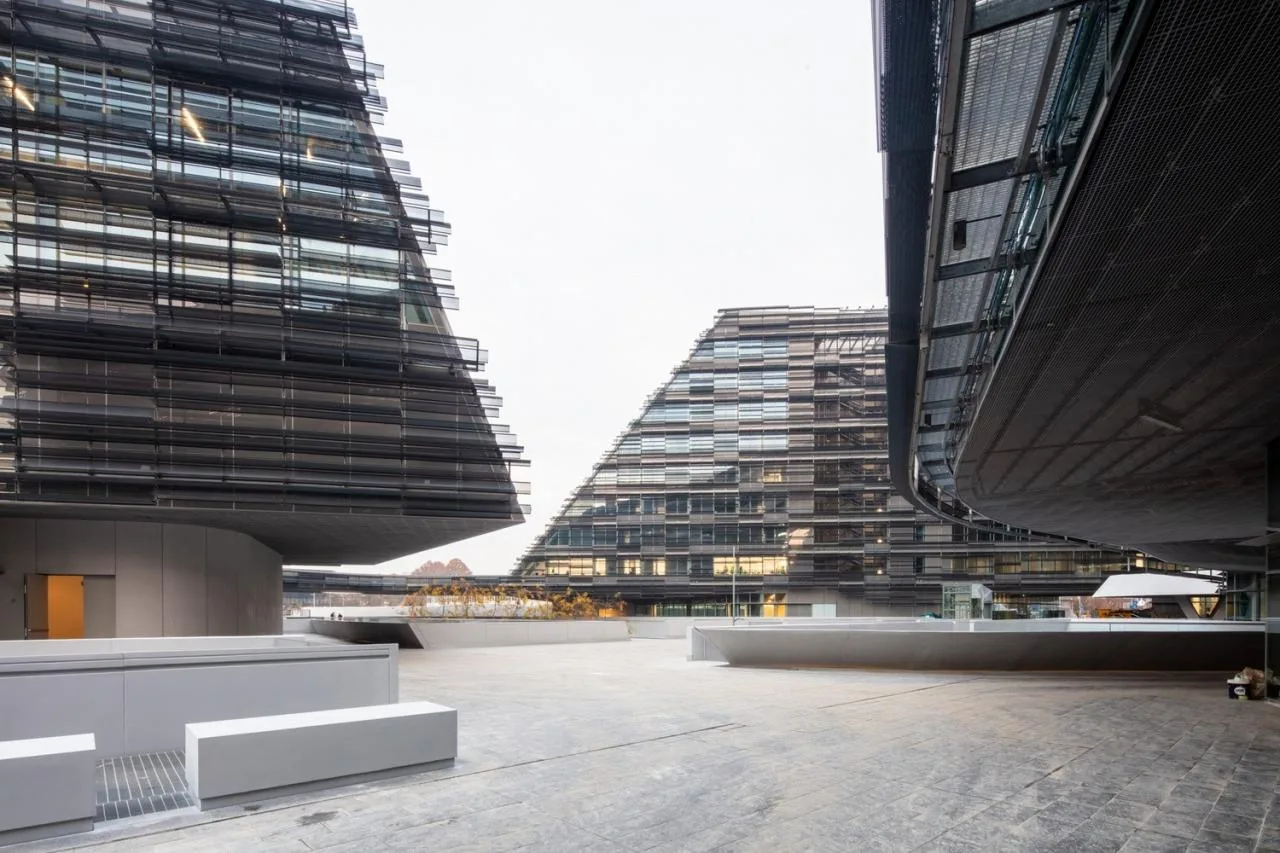
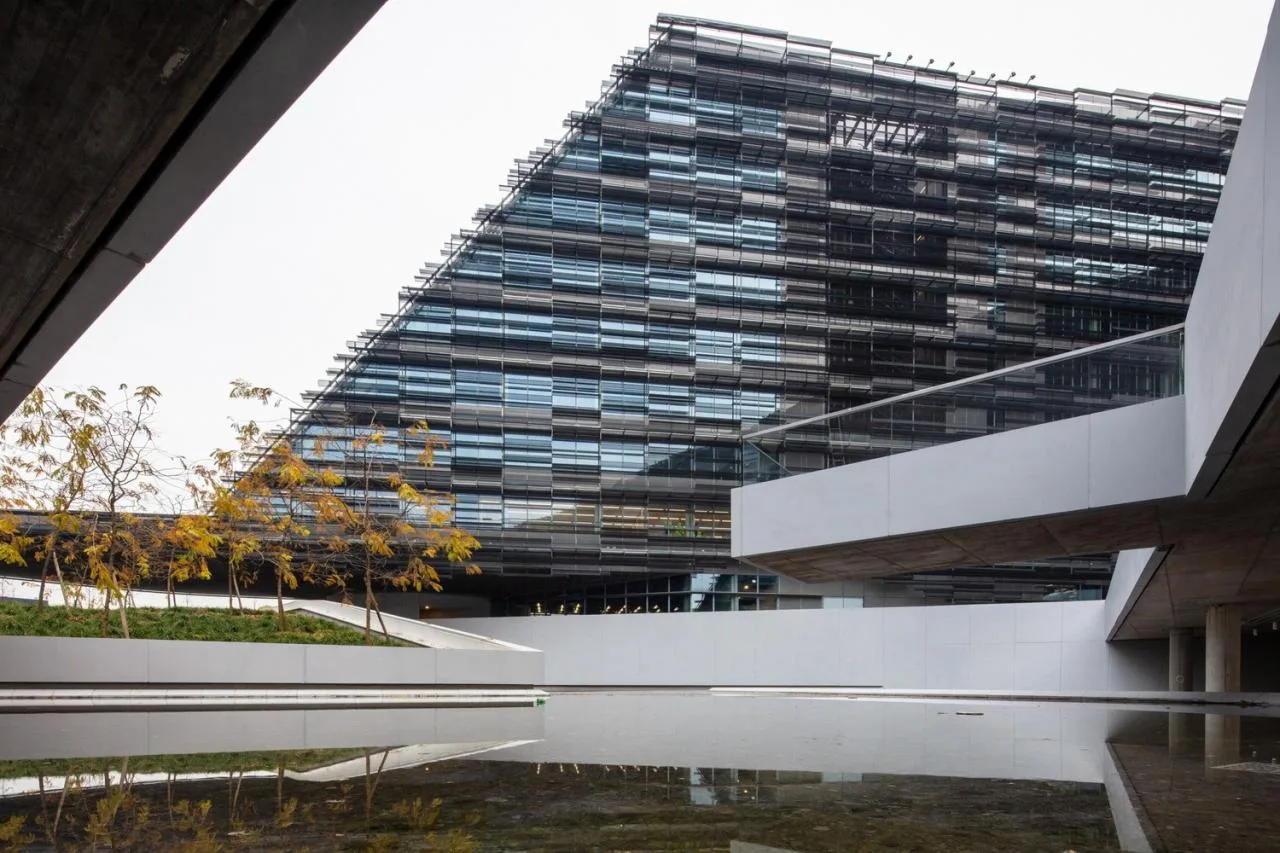
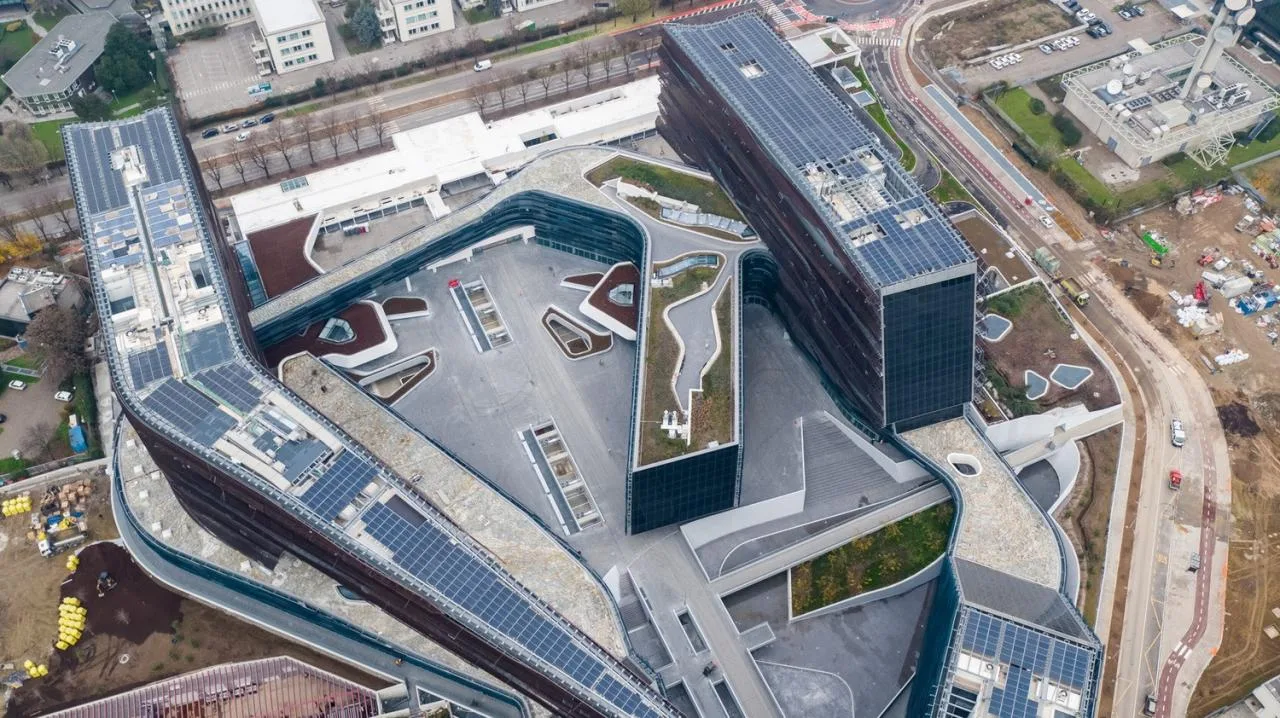
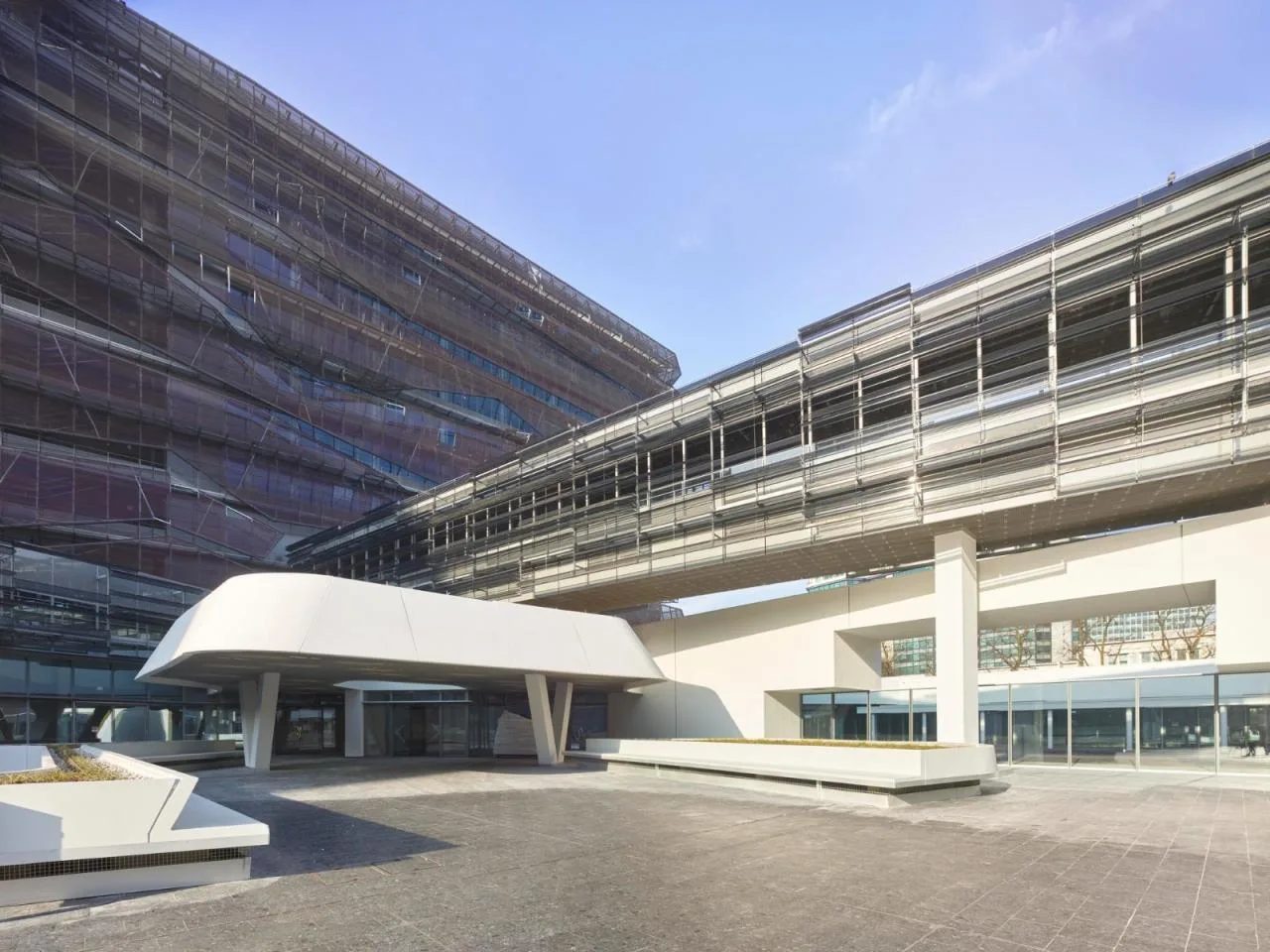
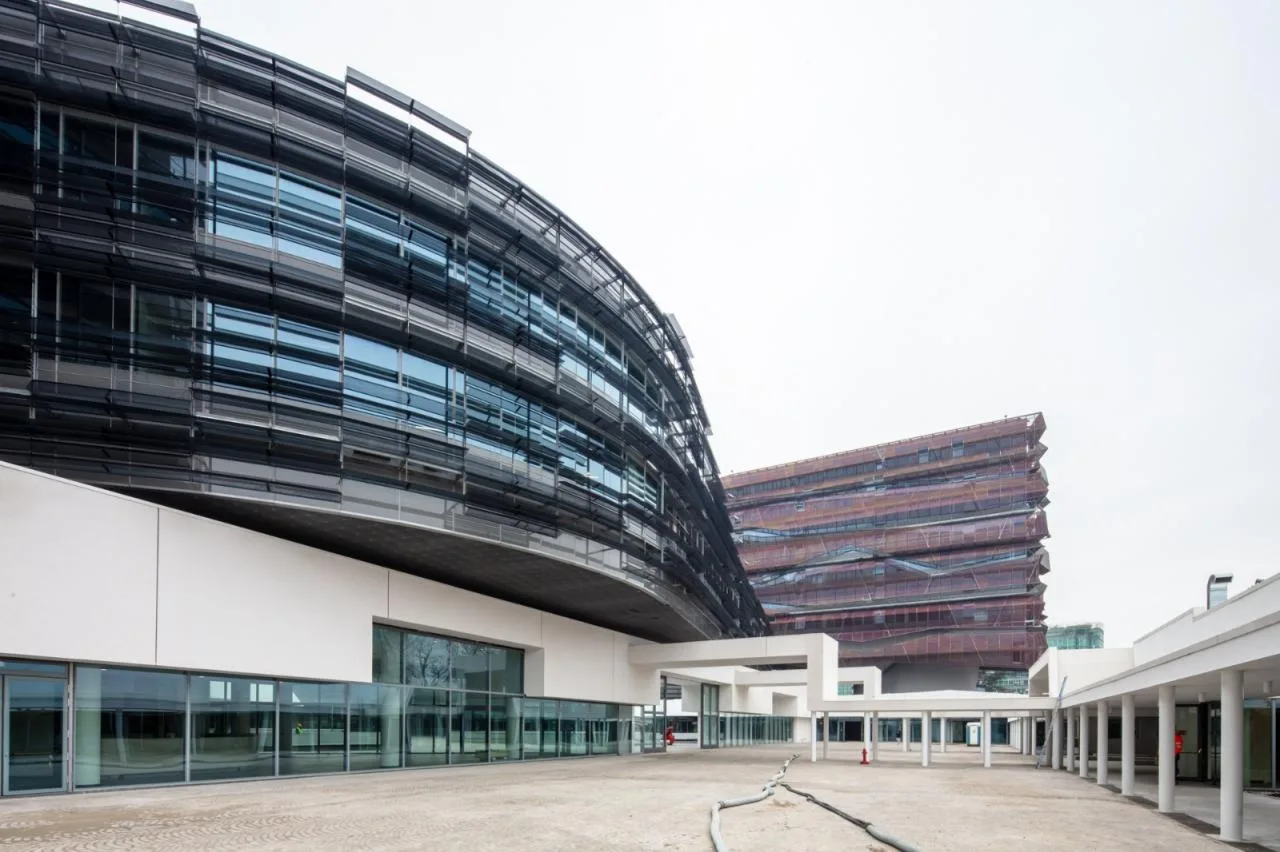
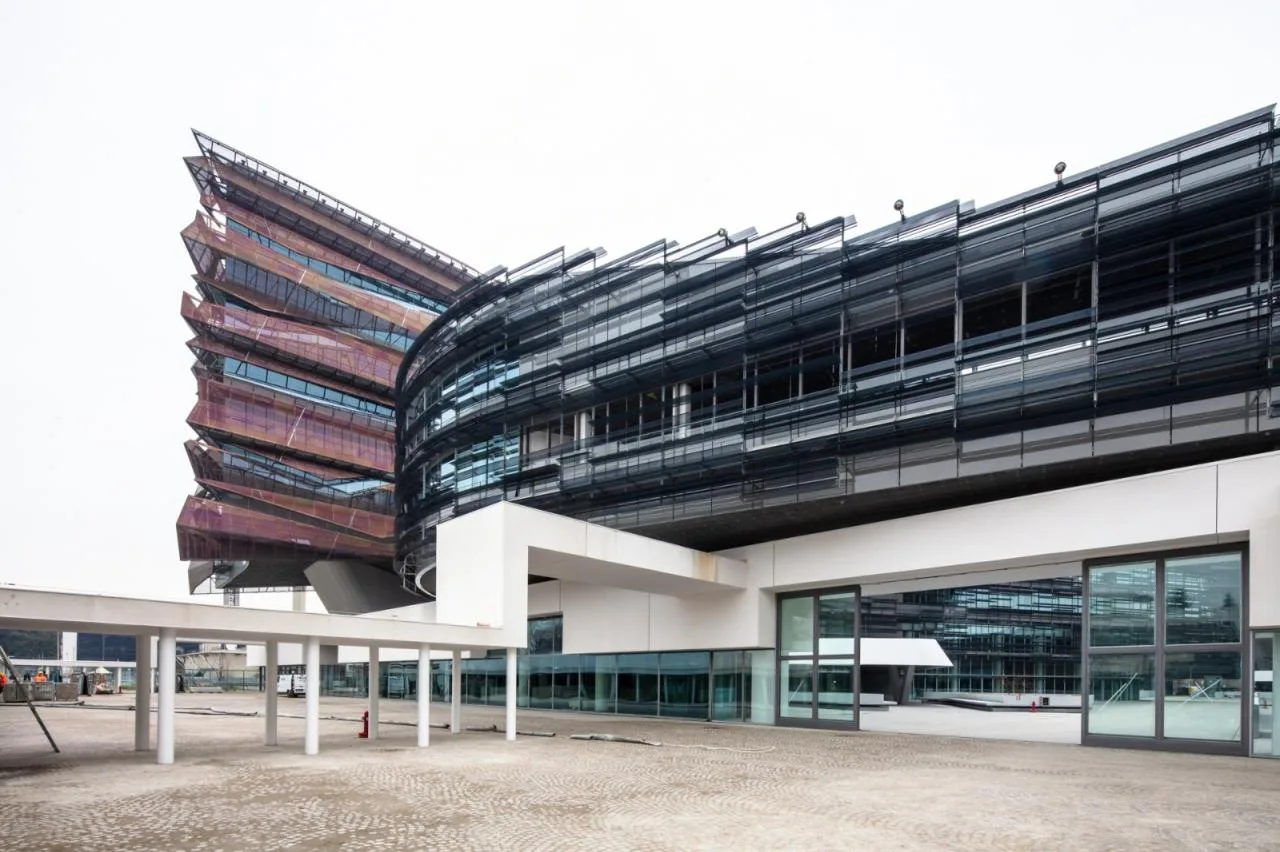
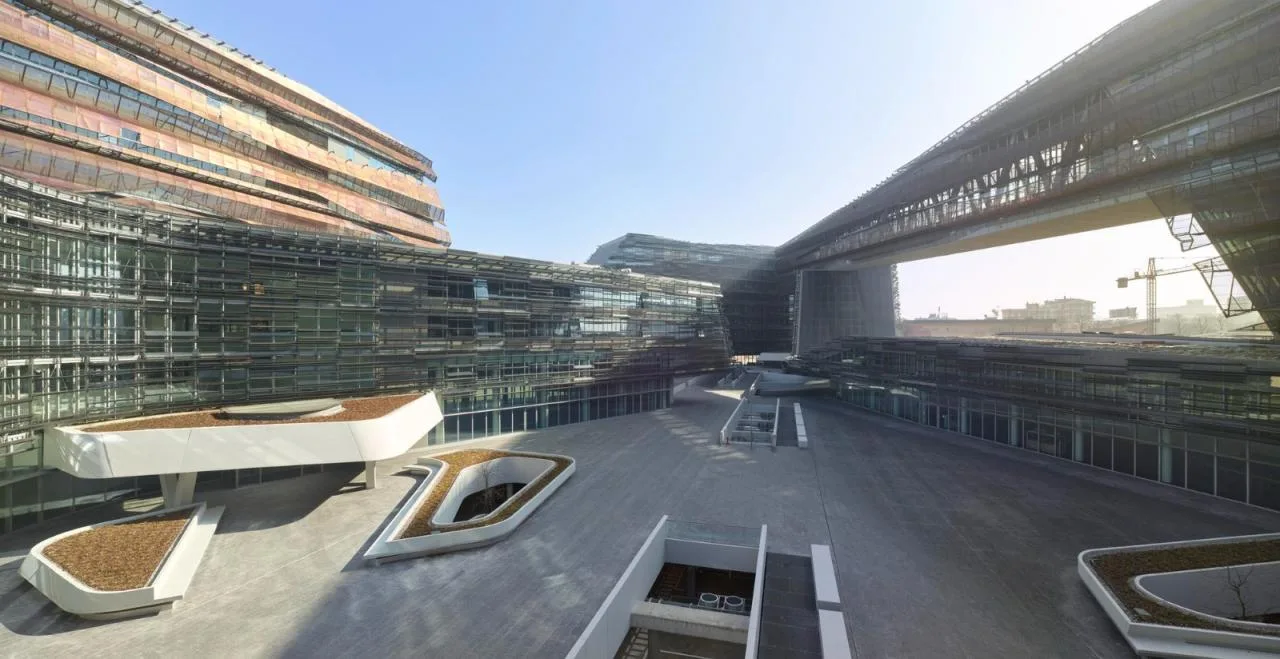
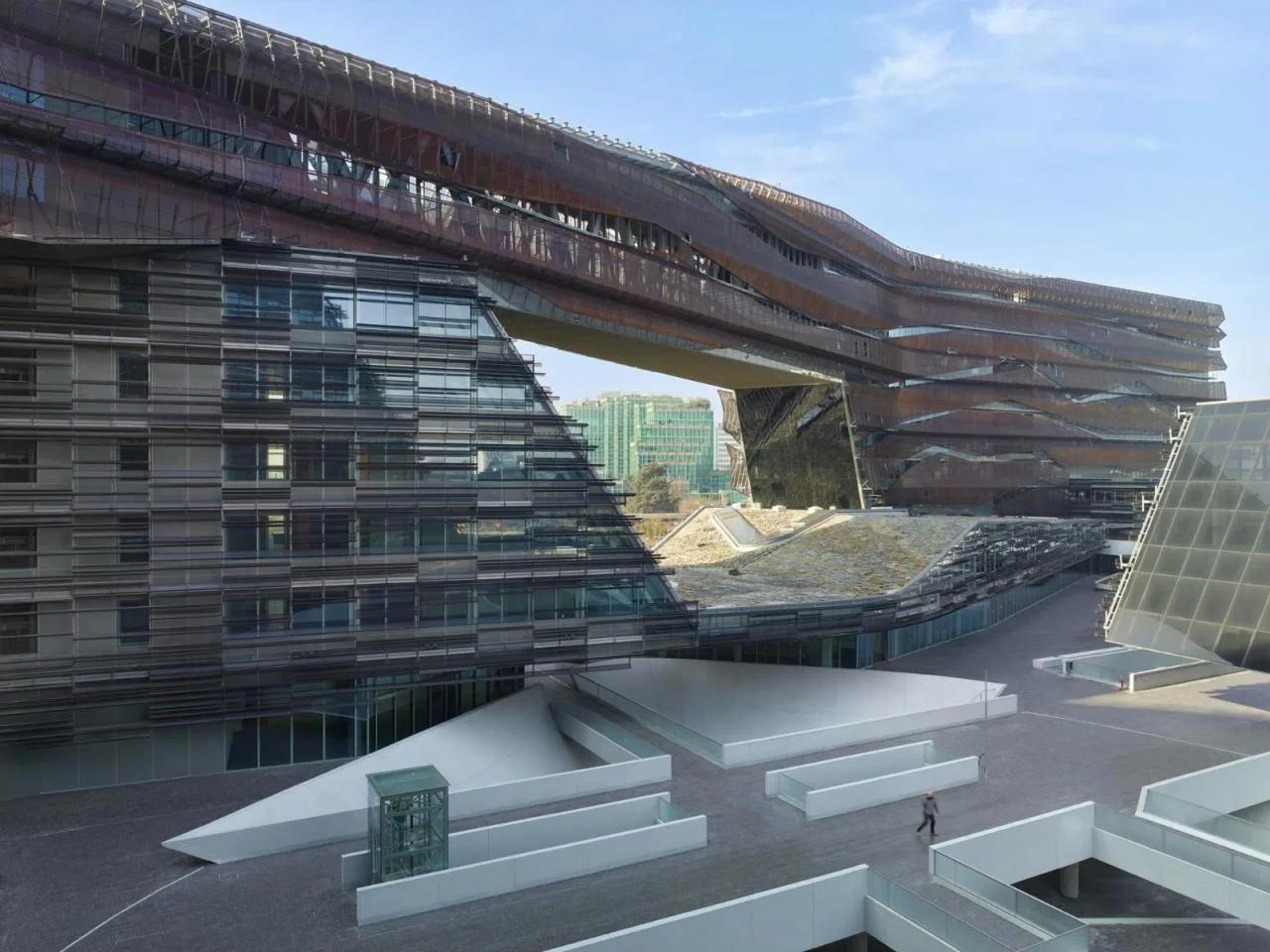
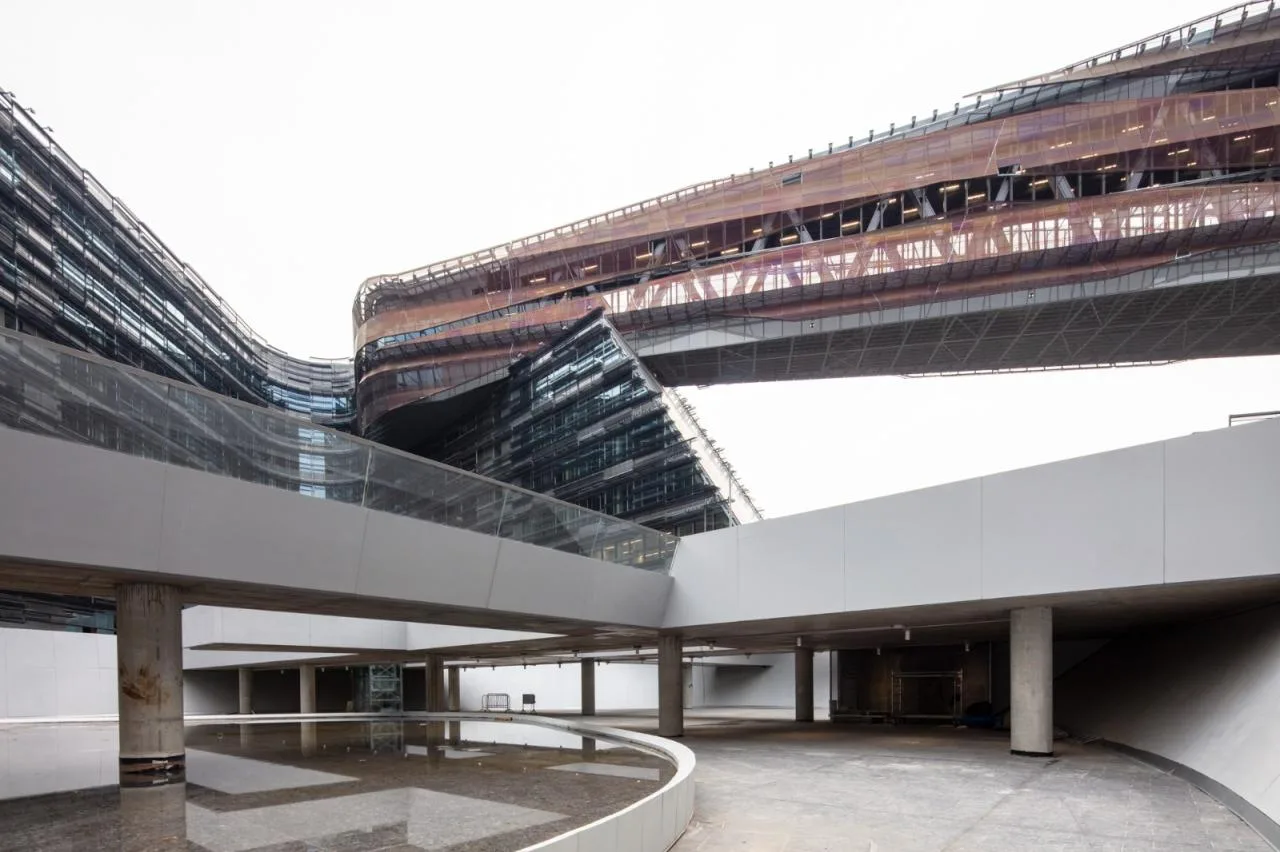
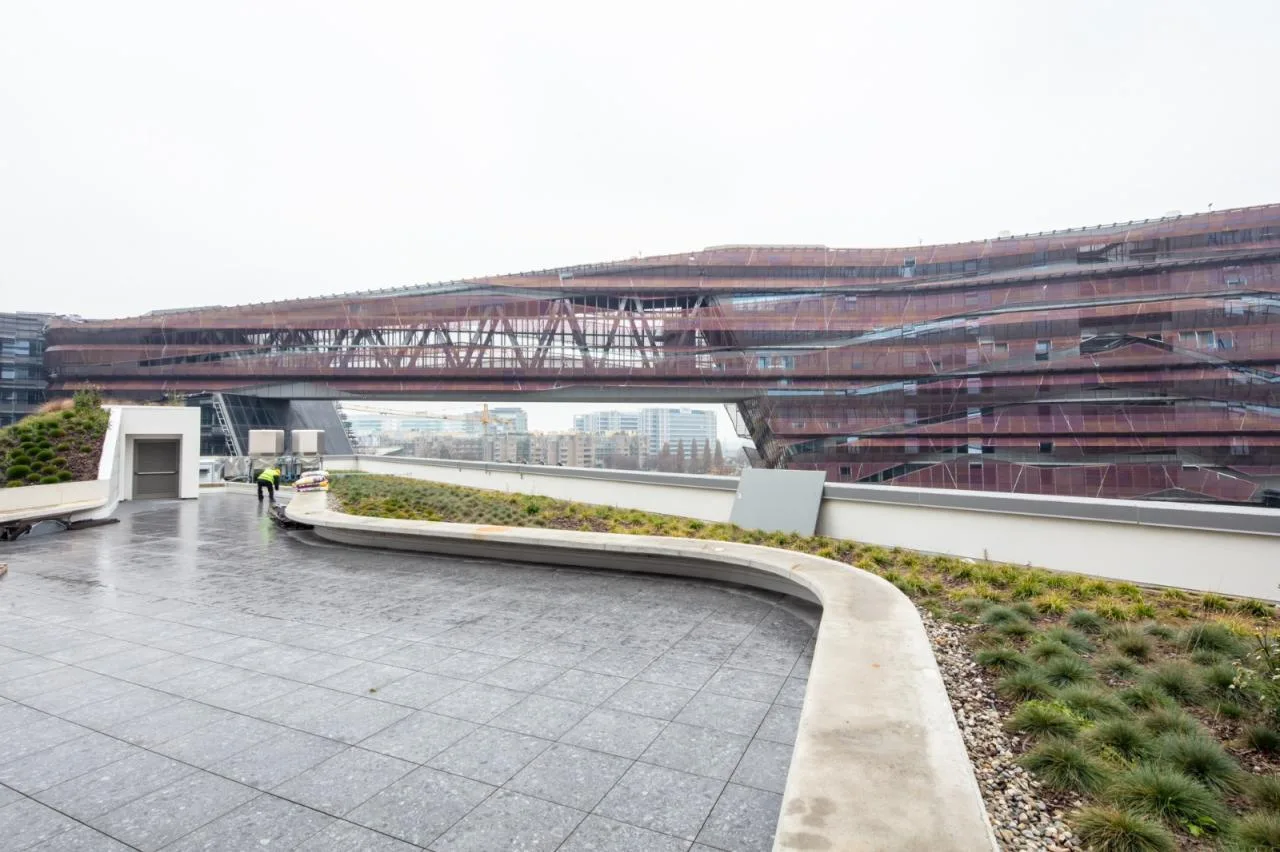
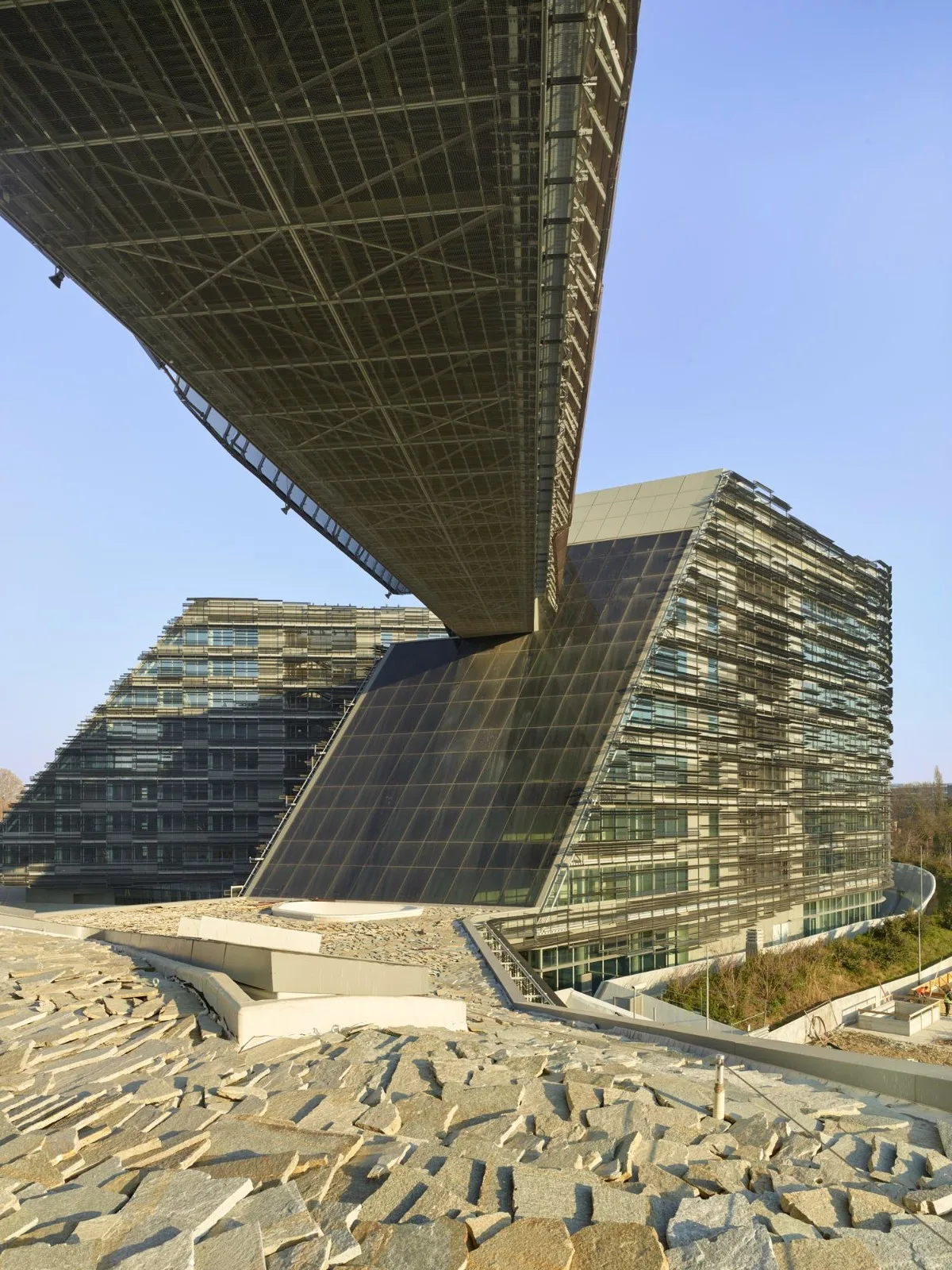
The campus consists of three main office buildings connected by pedestrian bridges and centered around a central plaza. The Icon Building is the tallest with 11 floors; the Landmark Building is the largest by area, covering 23,700 square meters over 9 floors; and the Sky Garden Building, a 10-story structure, extends into the heart of the site, featuring a conference center and restaurant. An 85-meter-long pedestrian bridge connects the Icon and Landmark Buildings, serving as both a physical link and an elevated activity space. Another bridge links the Icon Building to the Sky Garden Building. These interconnected structures encircle the central plaza, which features multi-level gardens and shared spaces combining dining and social functions to encourage interaction and promote a healthy work environment.
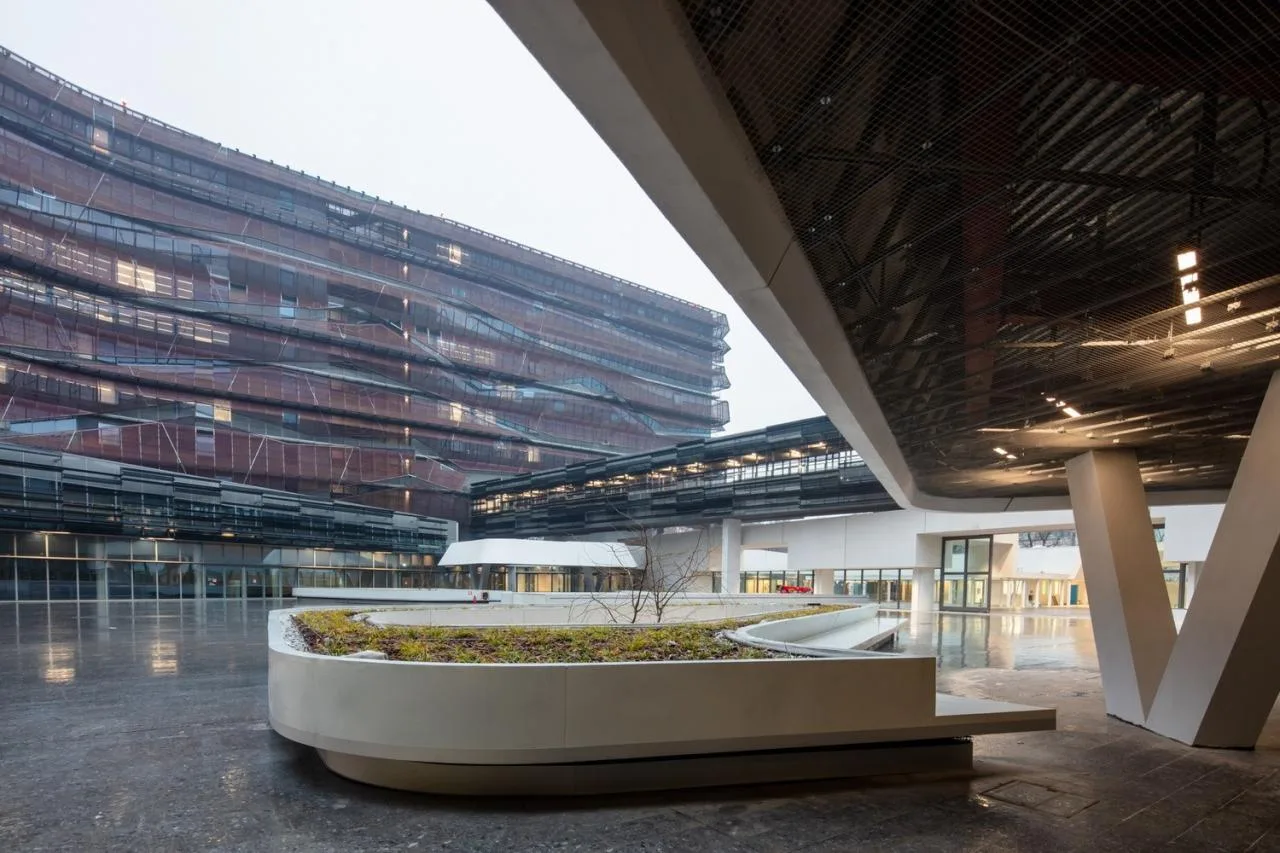
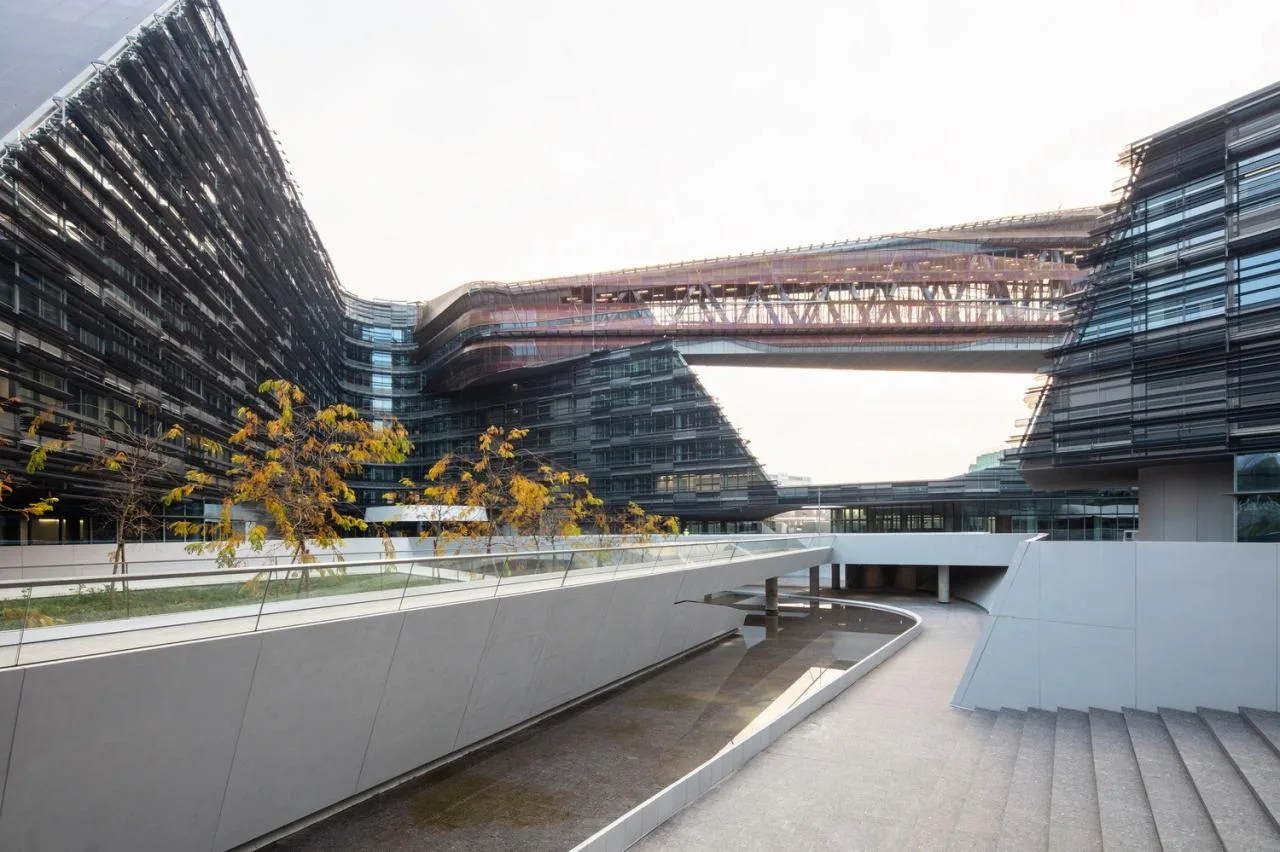
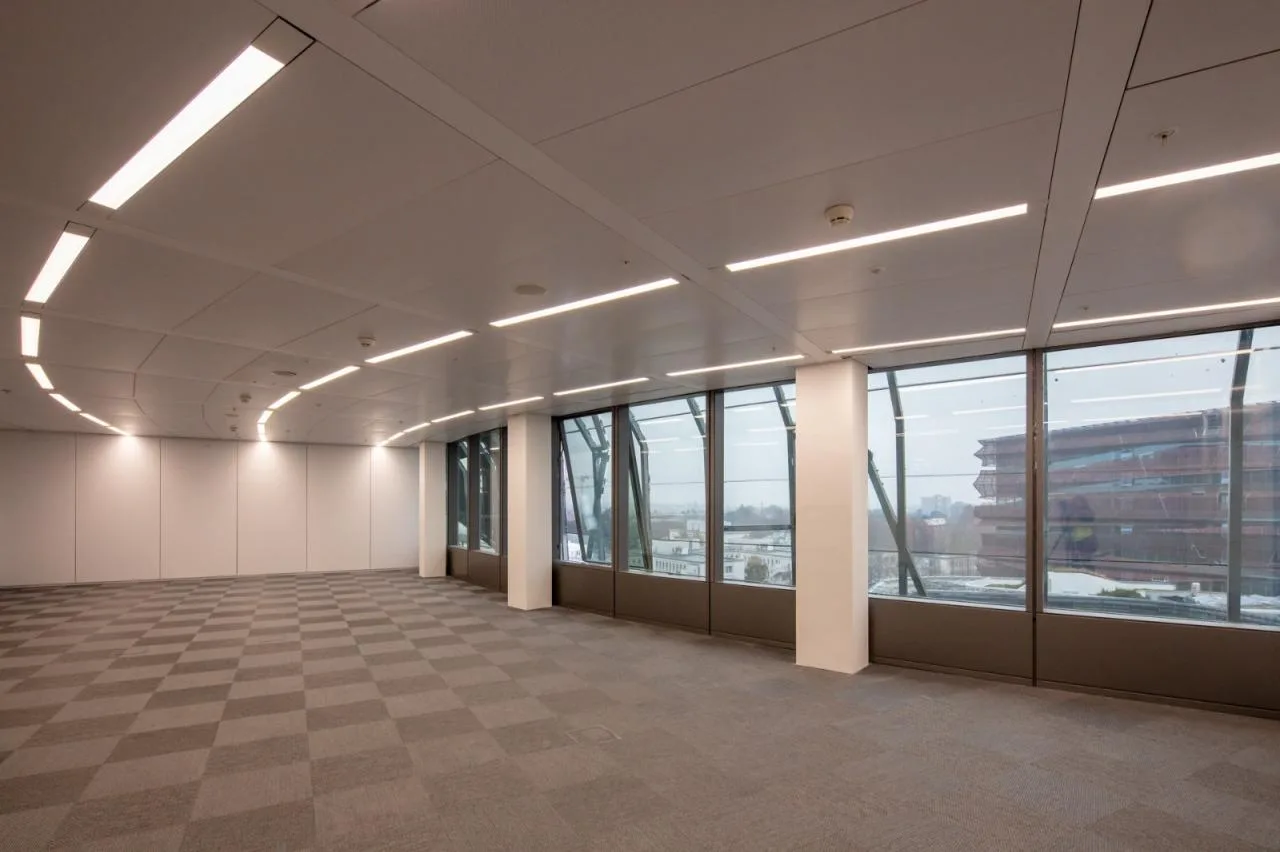
All buildings feature efficient, flexible floor plans designed to create modern open-office layouts. Employee workspaces are positioned along the floor perimeter to maximize access to natural light and views, while private offices and meeting rooms are centrally located along the building’s axis. This design maximizes daylight and fosters an engaging work atmosphere.
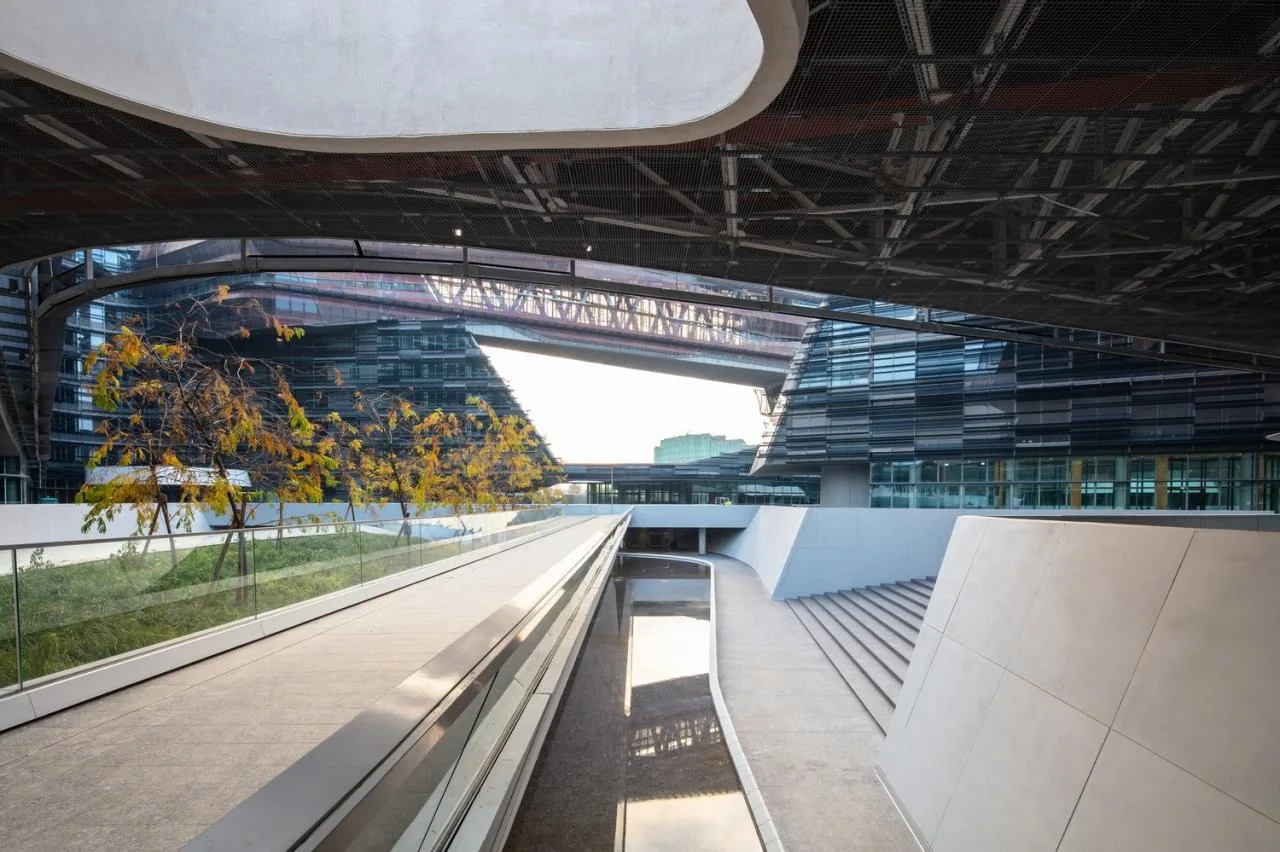
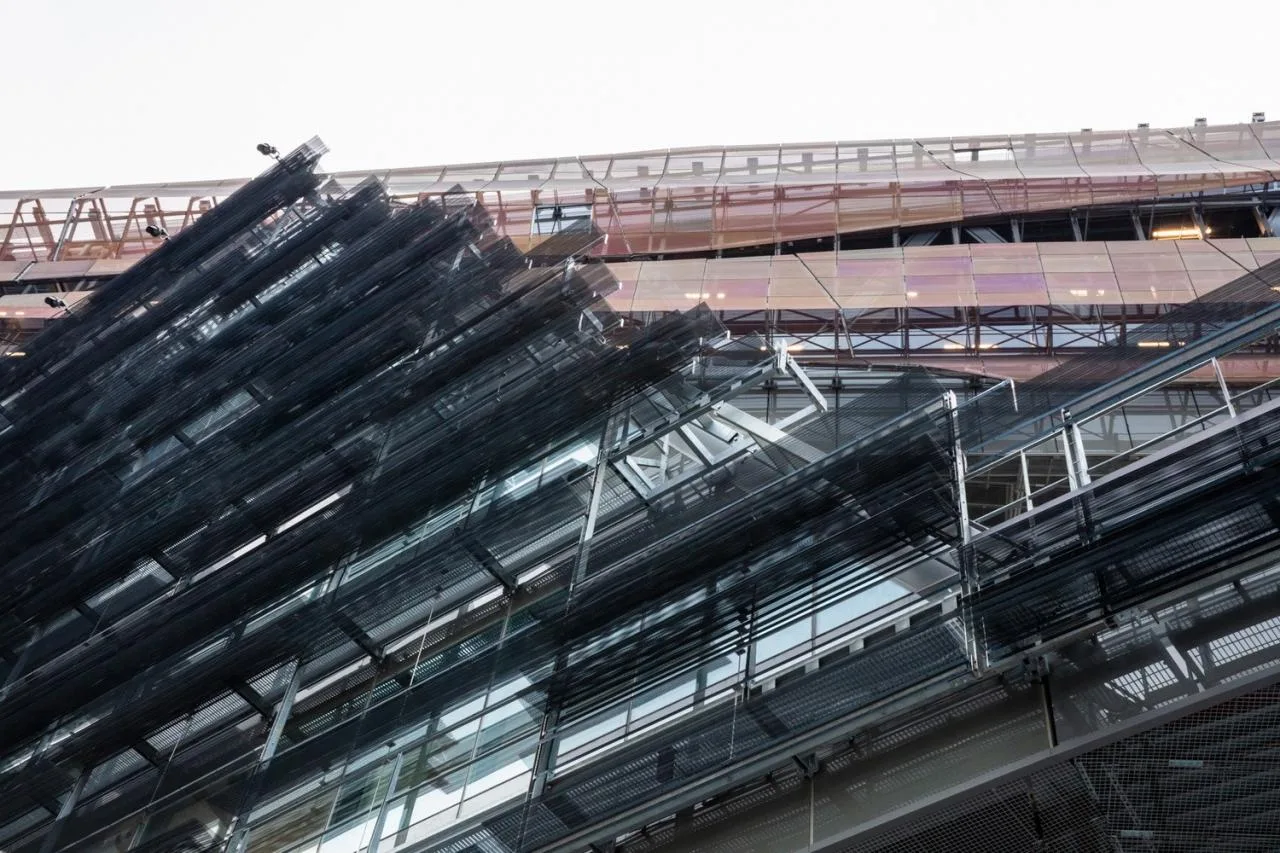
Sustainability is a key element of the enterprise park’s design, alongside employee health and well-being. Strategies focusing on high-performance buildings and sustainable development reflect Eni Group’s vision as a global leader in energy. The entire campus incorporates measures to reduce energy consumption, protect natural resources, meet Italy’s A-level energy standards, and achieve LEED Gold certification. These include optimized building orientation for passive shading; landscape design supporting local biodiversity; green roofs, sunshade facades, and photovoltaic systems for energy efficiency; wastewater and rainwater recycling systems; and maximizing natural light and ventilation in work and social spaces, combined with low-energy radiation heating and cooling systems.
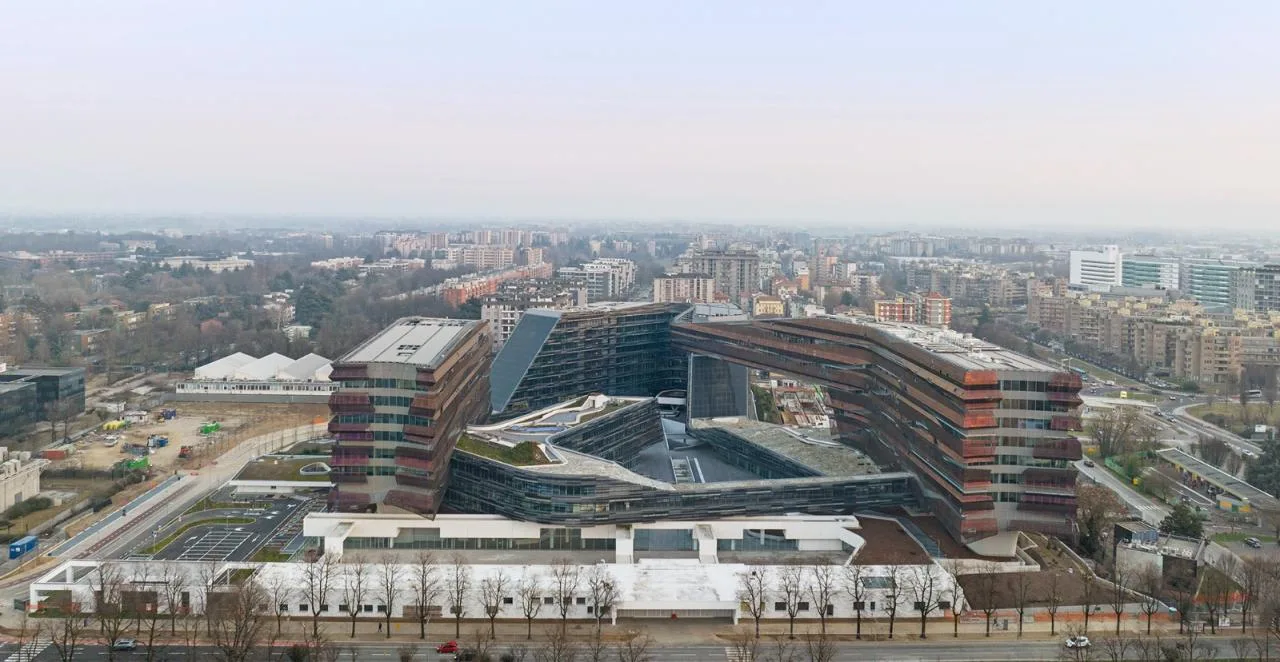
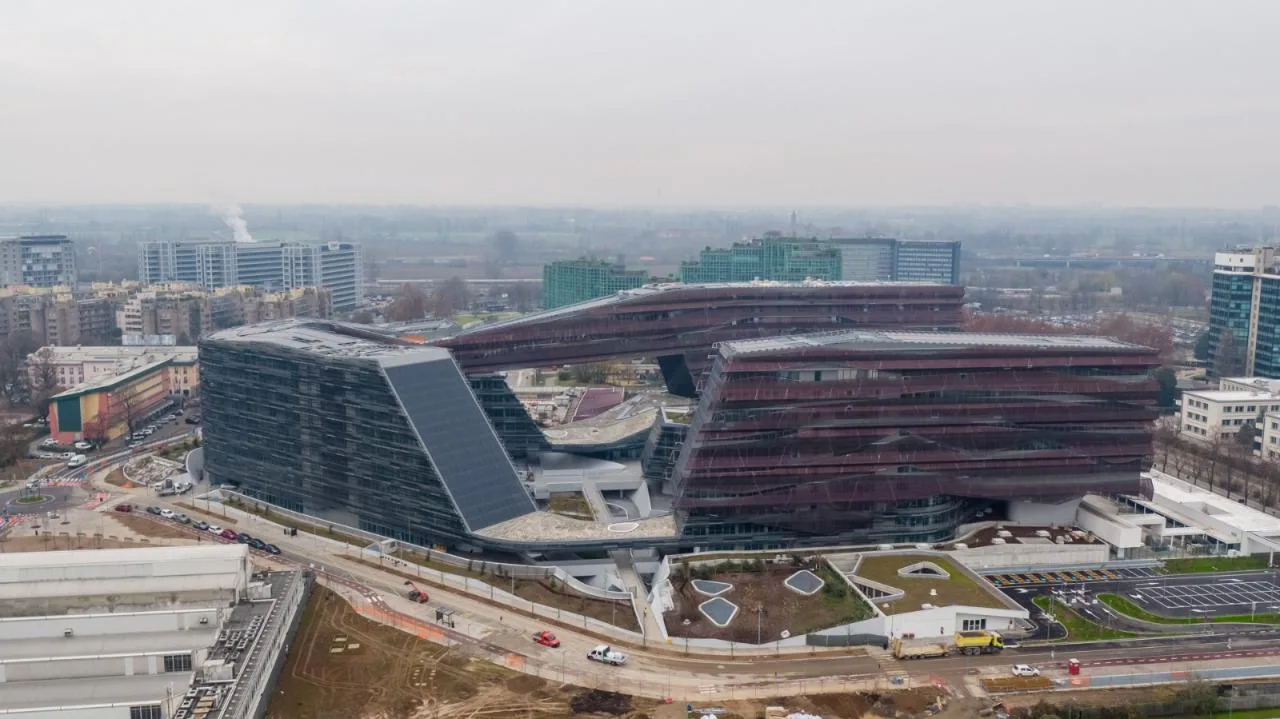
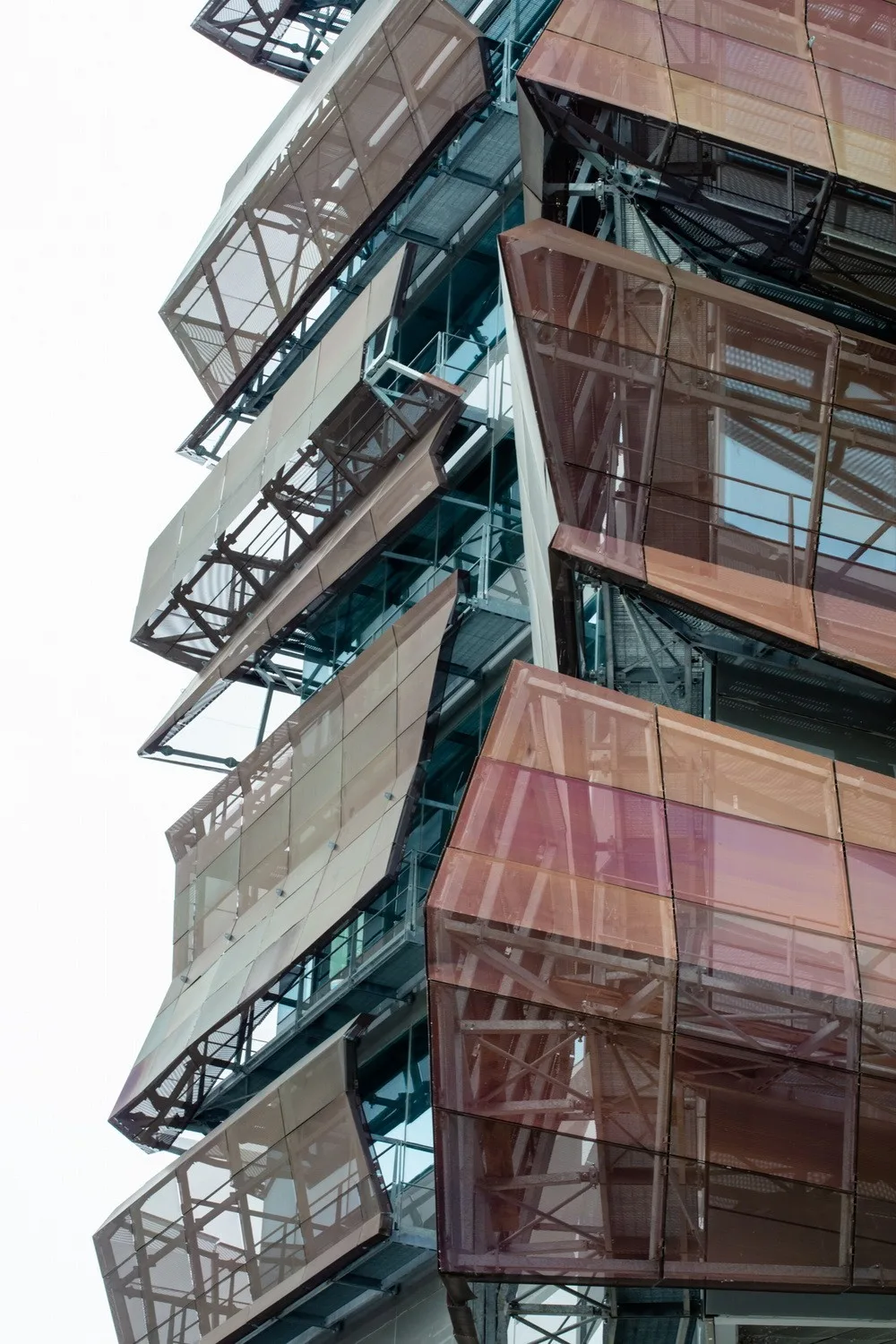
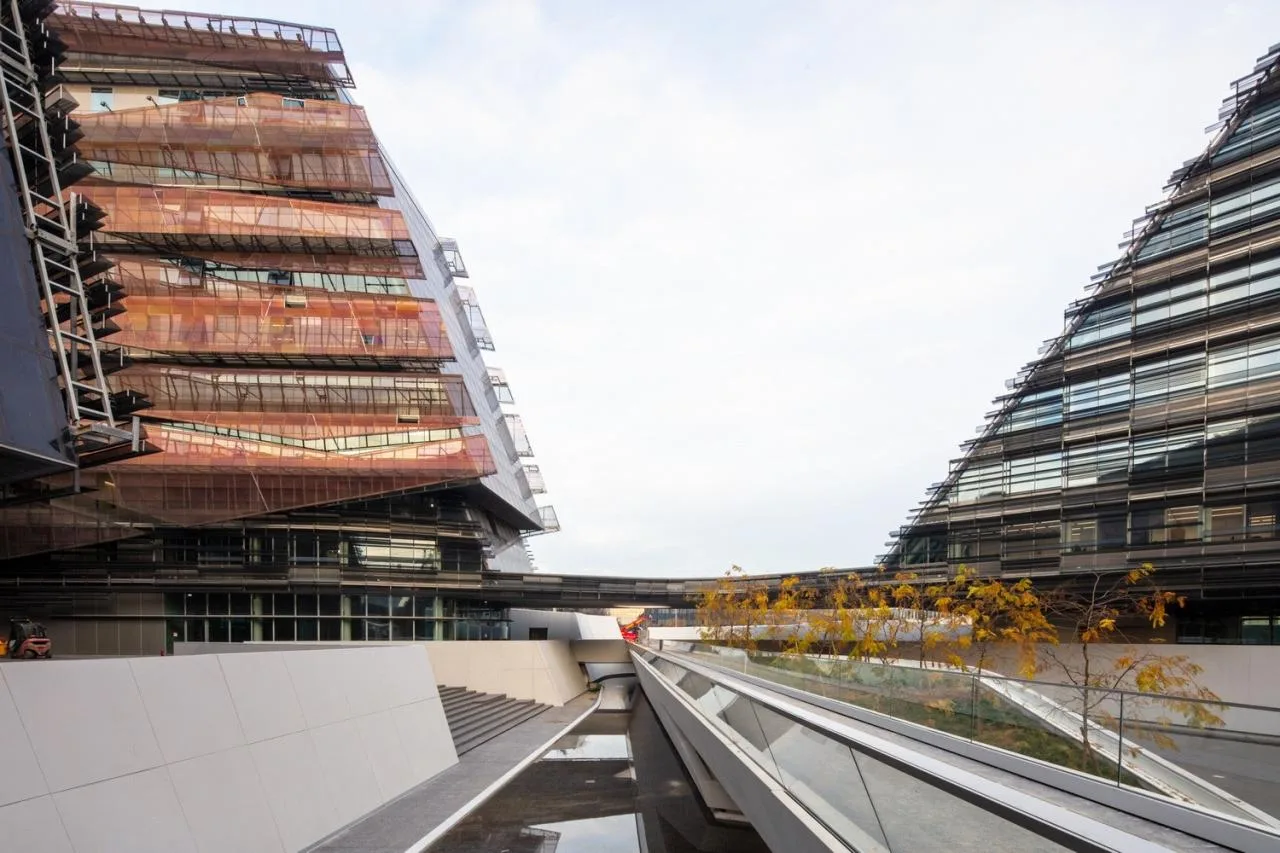
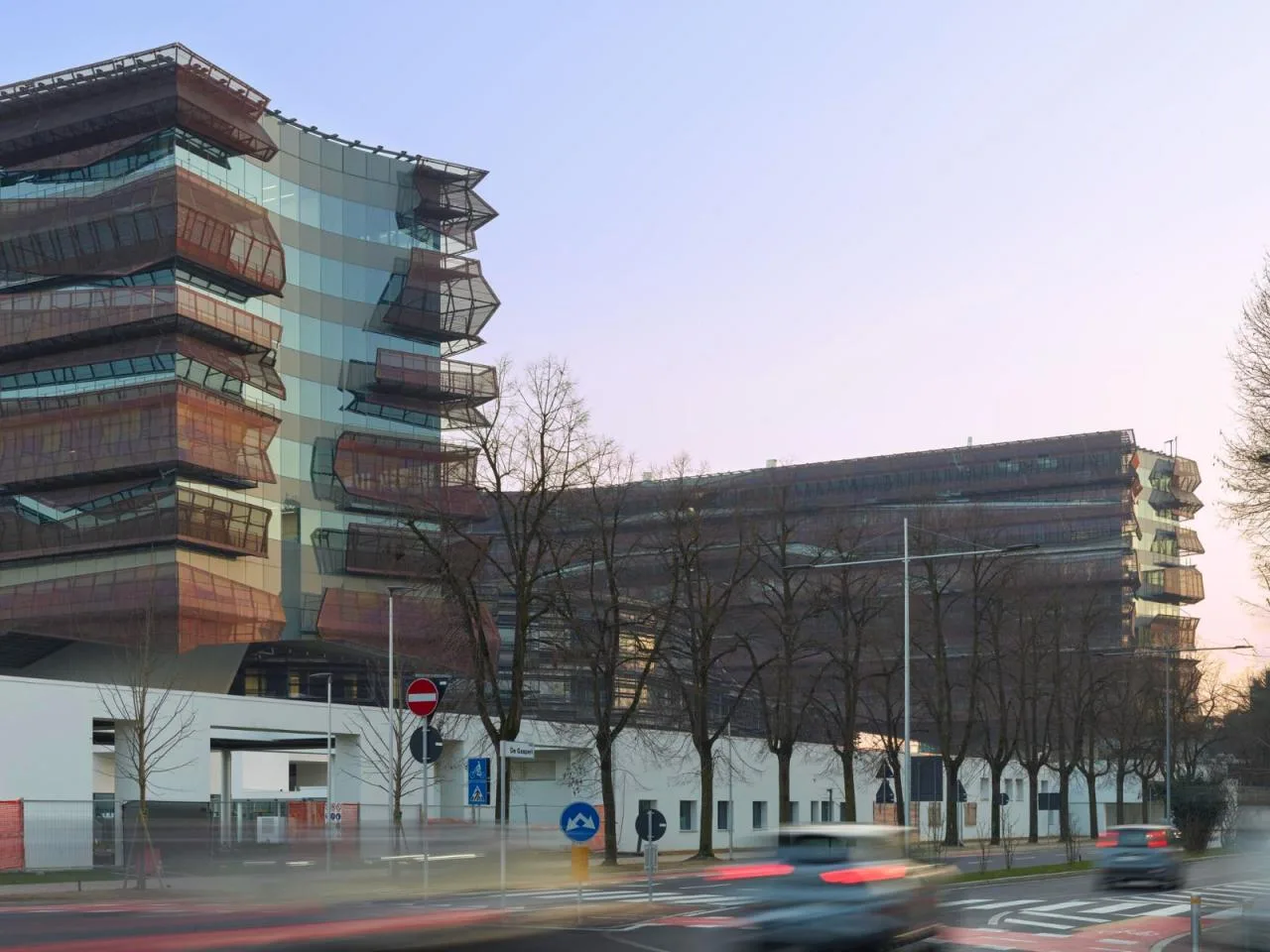
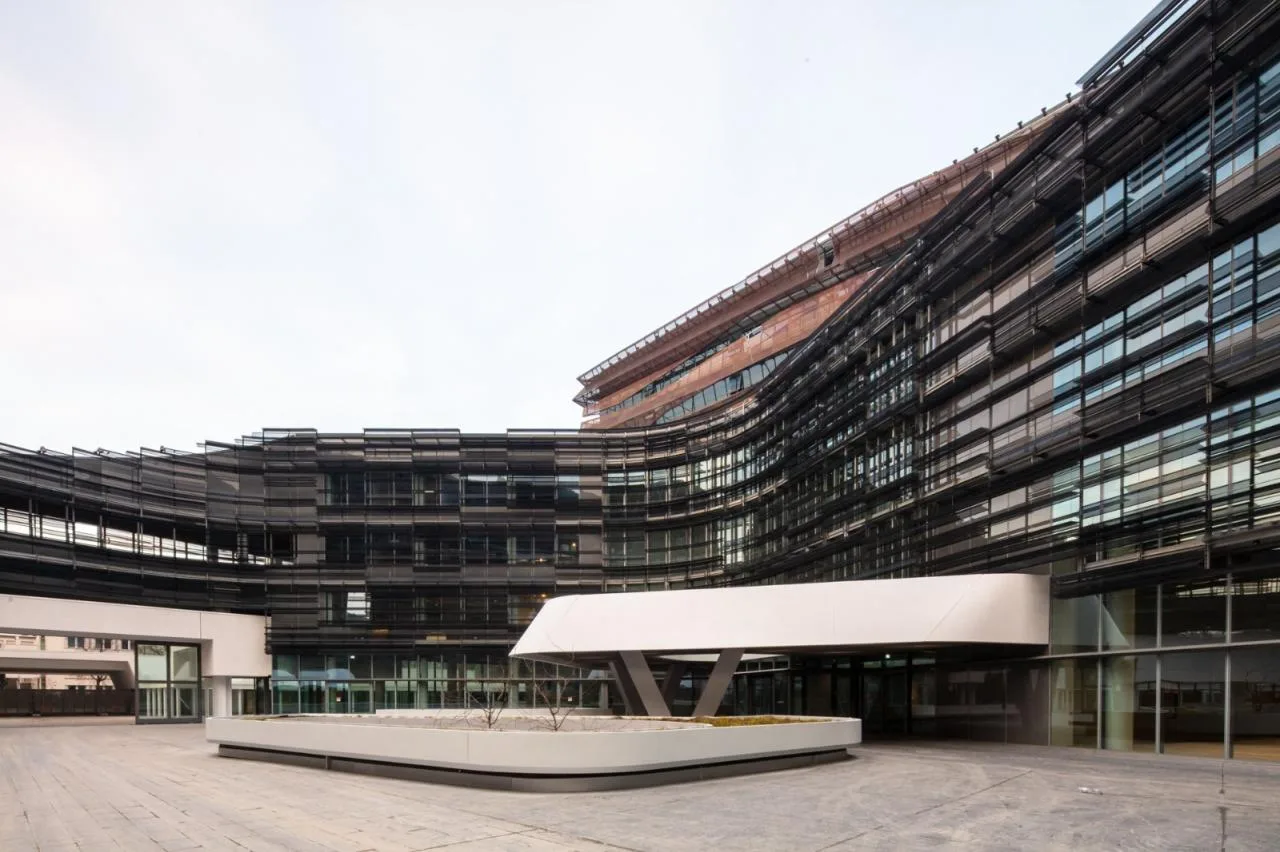
The building façades take inspiration from geological formations, reflecting the energy industry Eni operates in. Perforated metal panels in shades of blue and orange create a layered visual effect that symbolizes geological strata, enhancing the building’s dynamic form. This design element makes the three buildings appear as if they are emerging from shifting layers beneath the earth.
Project Drawings
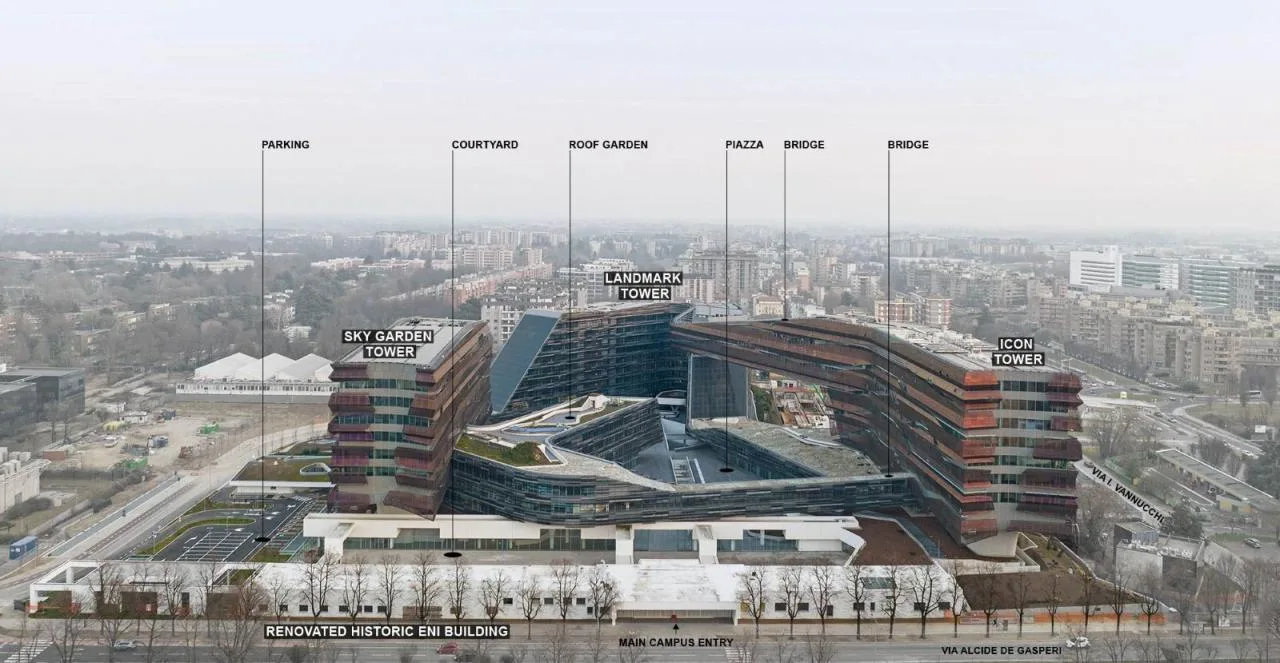
△ Functional Zoning Diagram
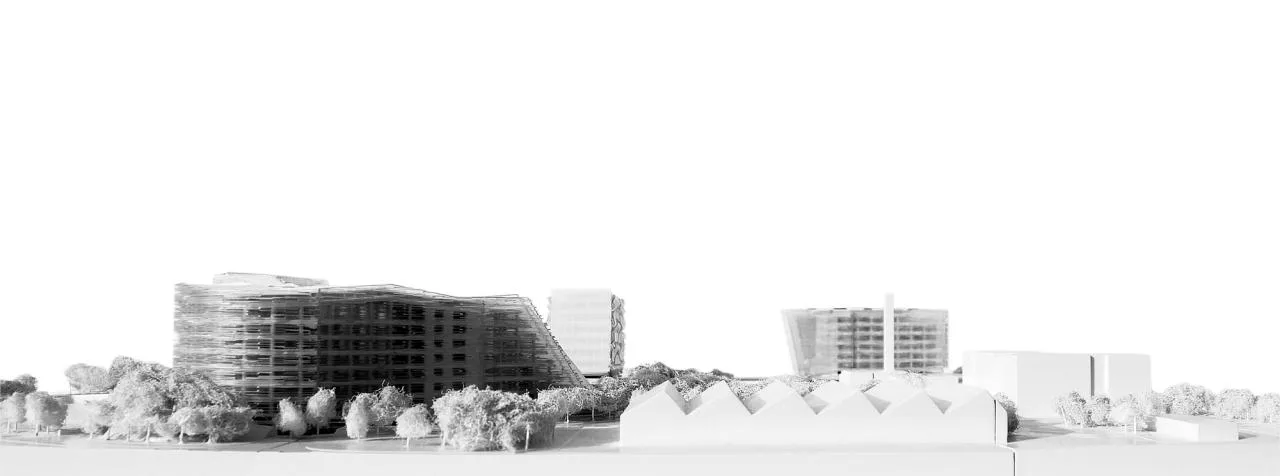
△ Model Diagram
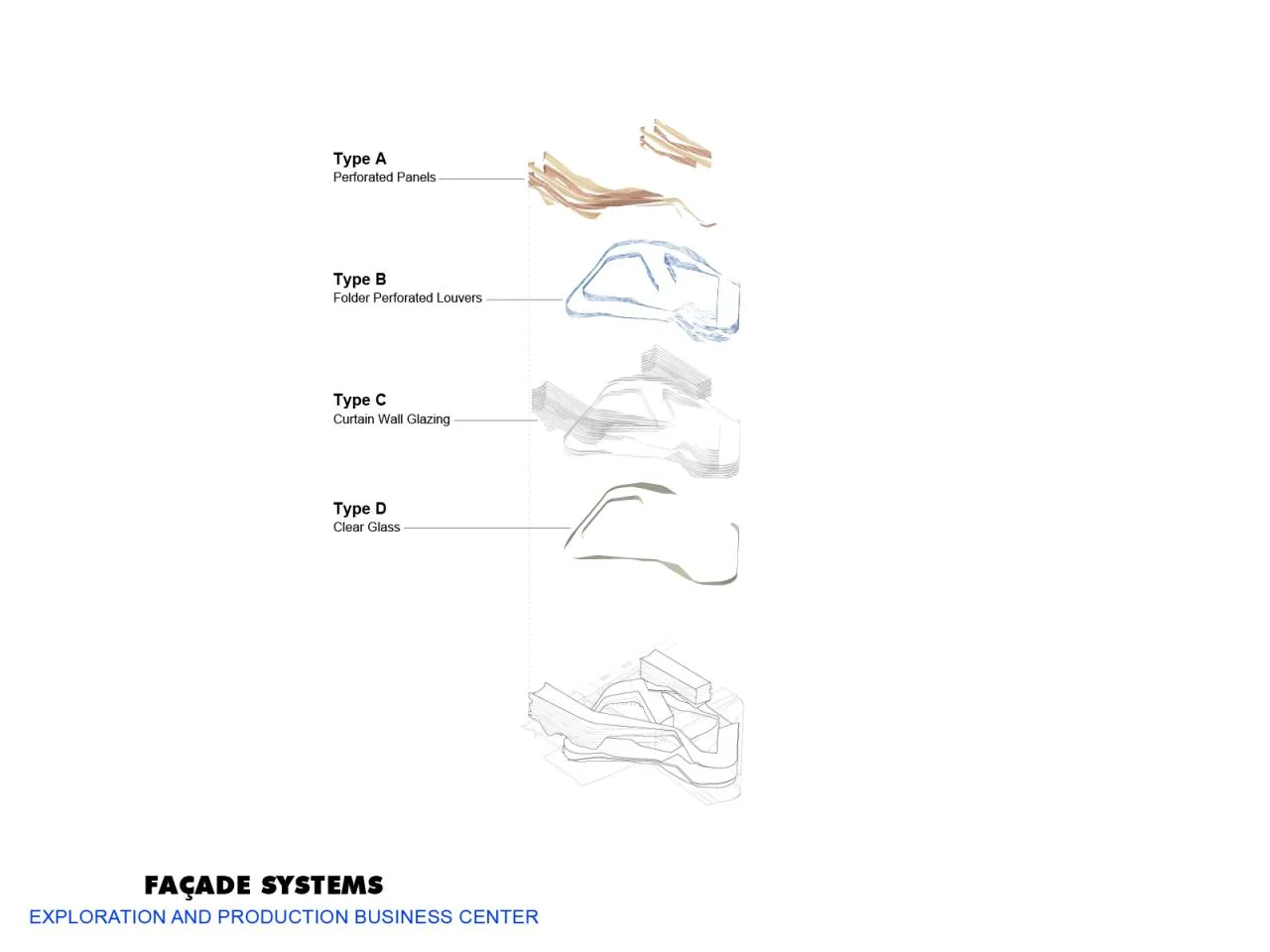
△ Exploded View Diagram
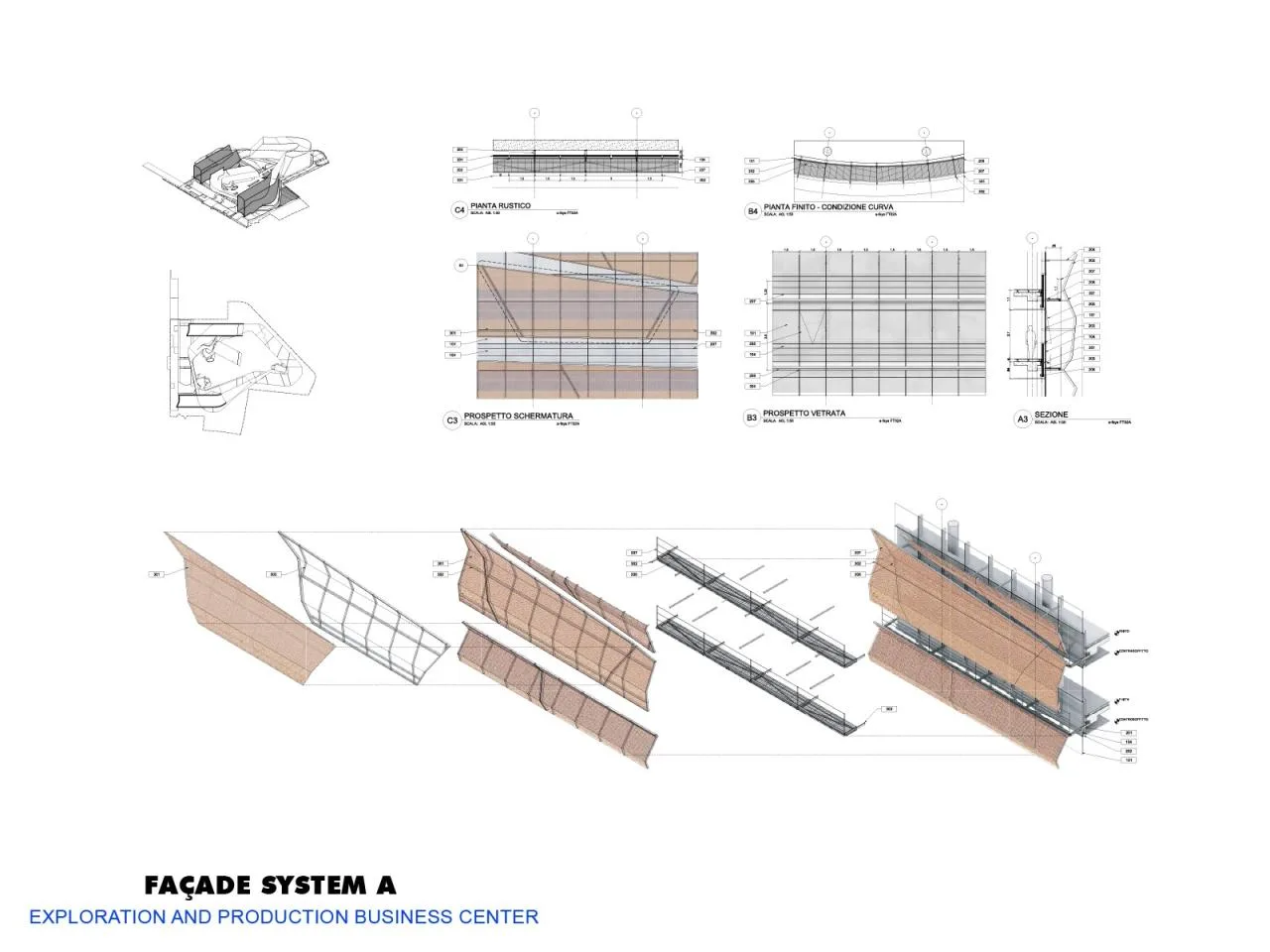
△ Analysis Chart
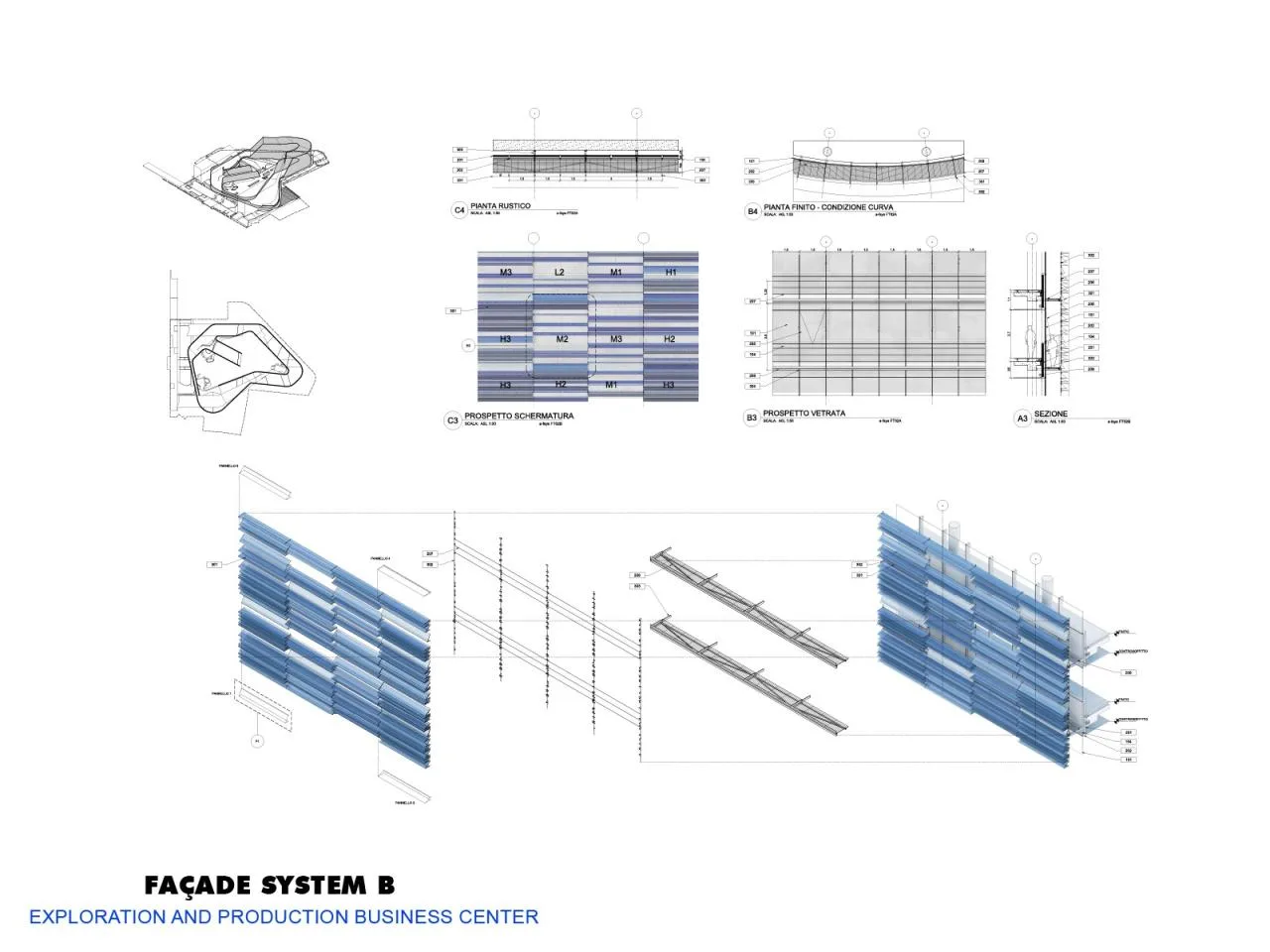
△ Analysis Chart
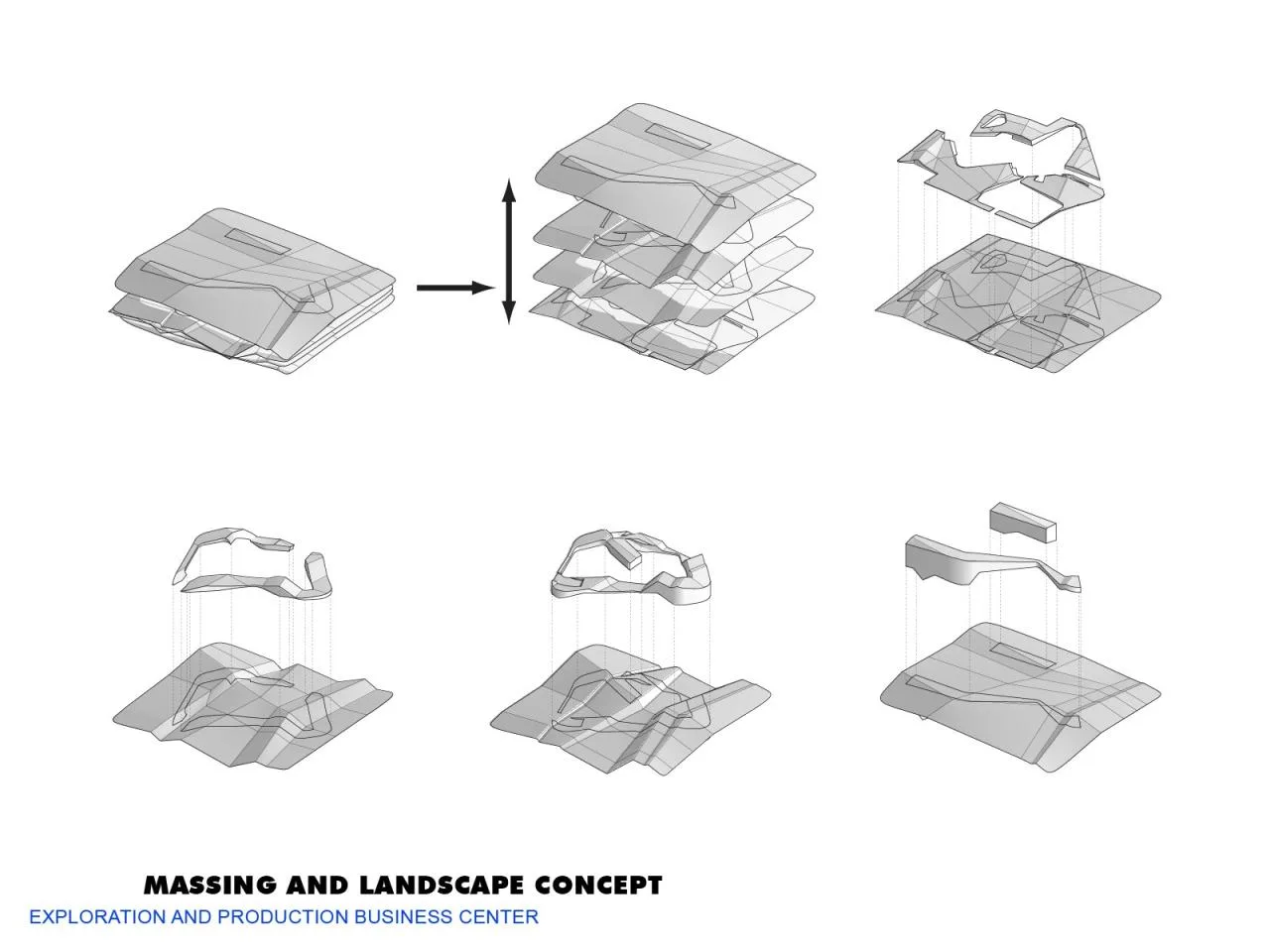
△ Analysis Chart
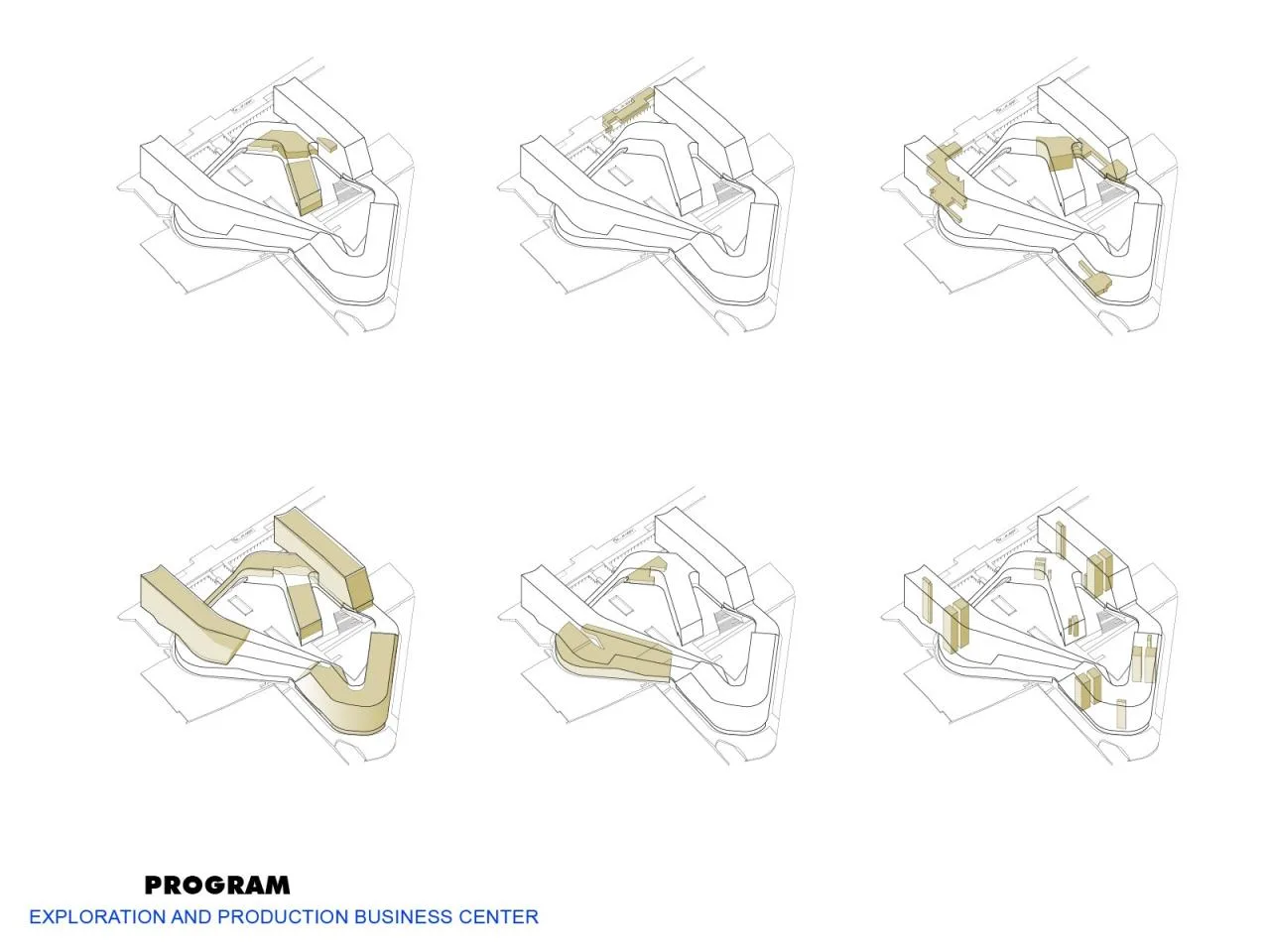
△ Analysis Chart
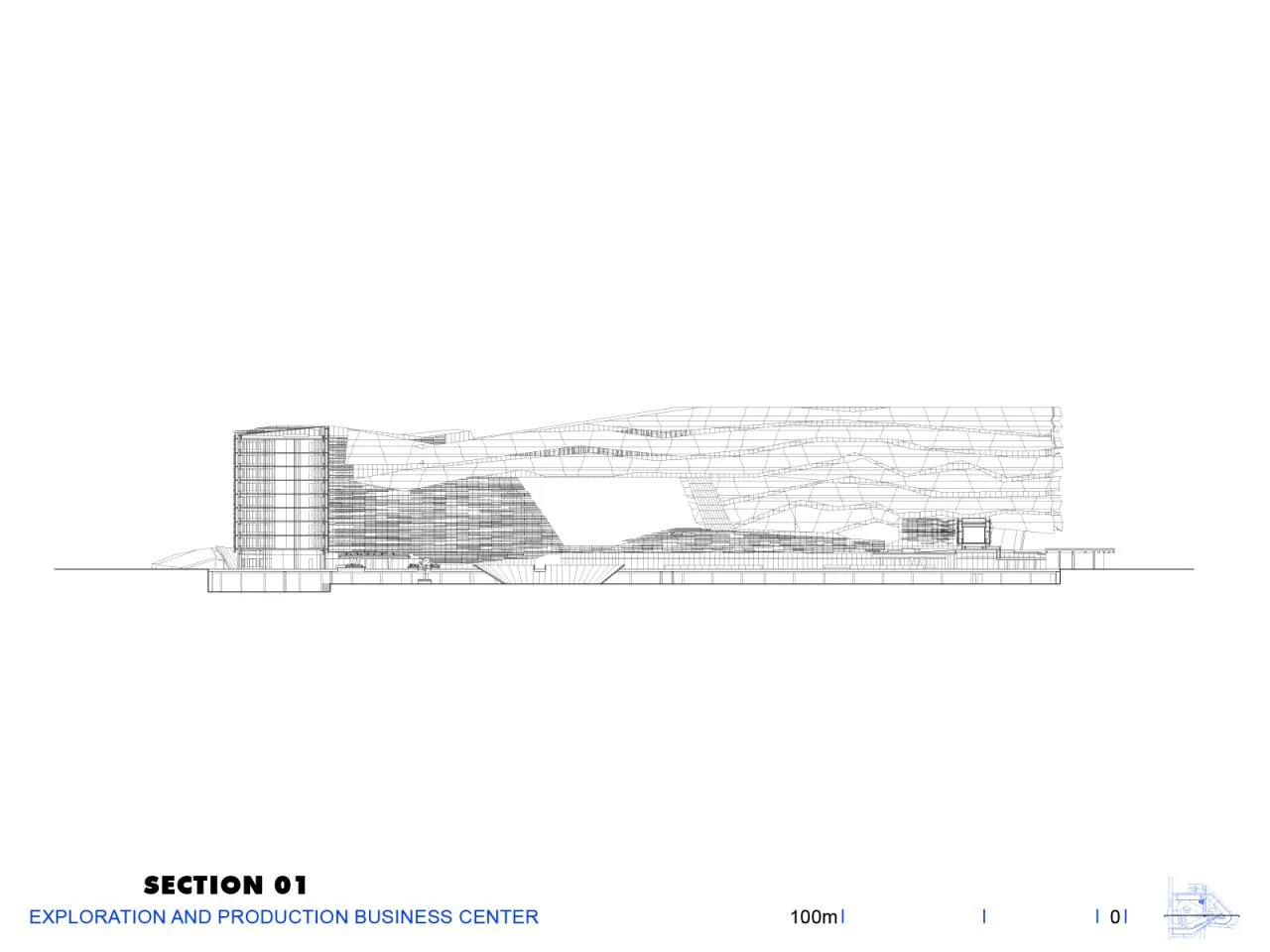
△ Section Diagram
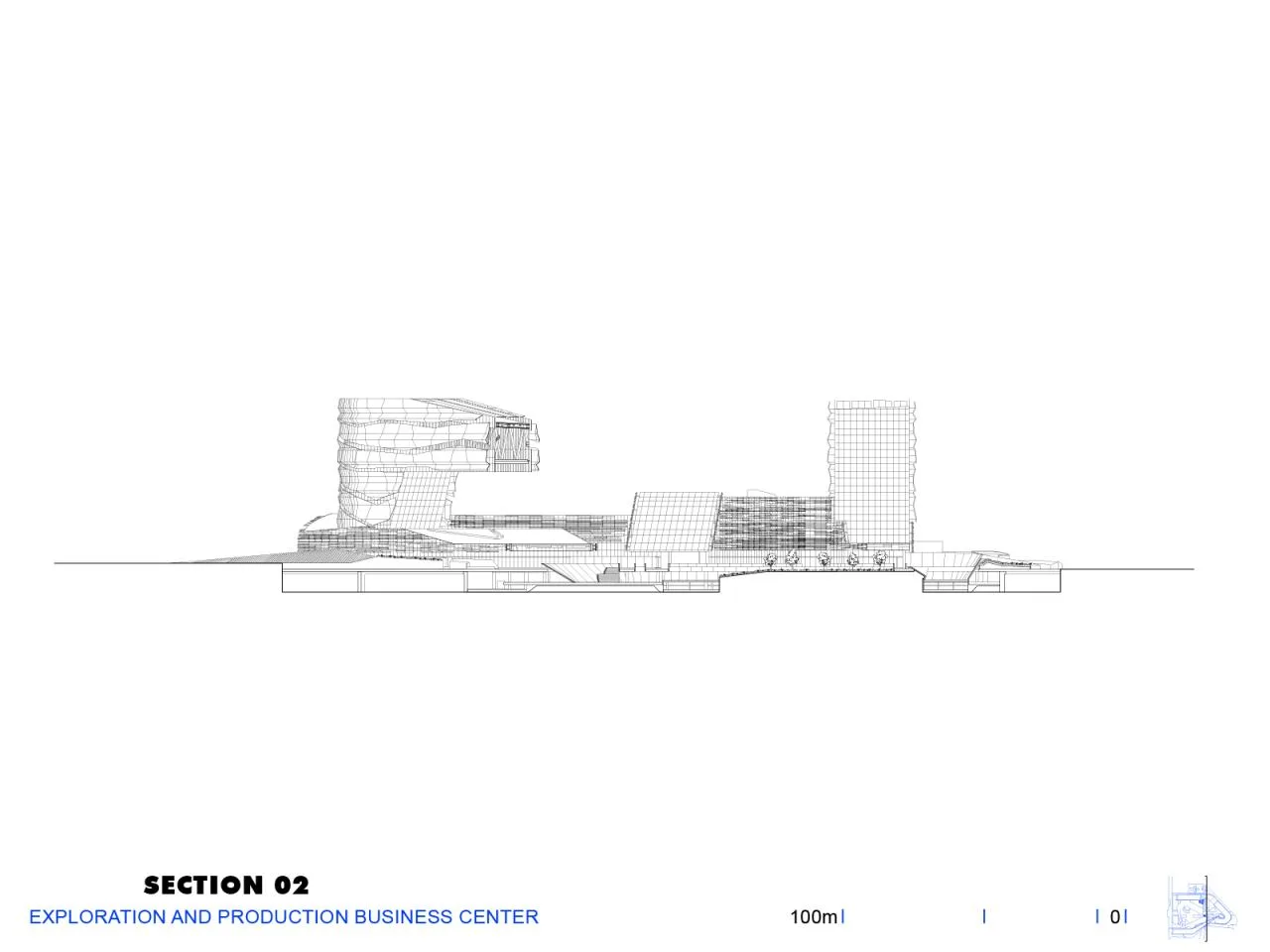
△ Section Diagram
Project Information
Architect: Morphosis
Area: 73,826 m²
Project Year: 2023
Photographer: Roland Halbe
Creative Director: Thom Mayne
Project Lead Partner: Arne Emerson
Project Manager: Kim Groves
Competition Designer: Chandler Ahrens
Project Designers: Paul Choi, Natalia Traverso Caruana
Project Team Members: Ilaria Campi, Ed Kim, Jason Minor, David Rindlaub, Satoru Sugihara, Atsushi Sugiuchi
Digital Technology Team: Cory Brugger, Kerenza Harris
Project Assistants: Marco Becucci, Laura Cella, Sabrina Chou, Sam Clovis, Tom Day, Alex Deutschman, Chris Eskew, Alex Fritz, Bart Gillespie, Penny Herscovitch, Mahan Javadi, Jonathan Kaminsky, Katie MacDonald, Jon McAllister, Nicholas Paradowski, Kateryna Rogynska, Brandon Sampson, Derrick Whitmire, Pablo Zunzunegui
Visual Production: Jasmine Park, Nathan Skrrepcinski, Josh Sprinkling, Sam Tannenbaum
Owner: DeA Capital Real Estate SGR
Structural Engineer: SETEC TPI
MEP Engineers: Manens Tifs Ingegneria, Setec Batiment
Landscape Design: Pasodoble
Curtain Wall Consultant: Oyana
Technical Specification: Global Assistance Development
Cost Estimator: DAVIS LANGDON
Engineering General Contractor: Webuild
Location: Mezzate, Italy












Must log in before commenting!
Sign Up