
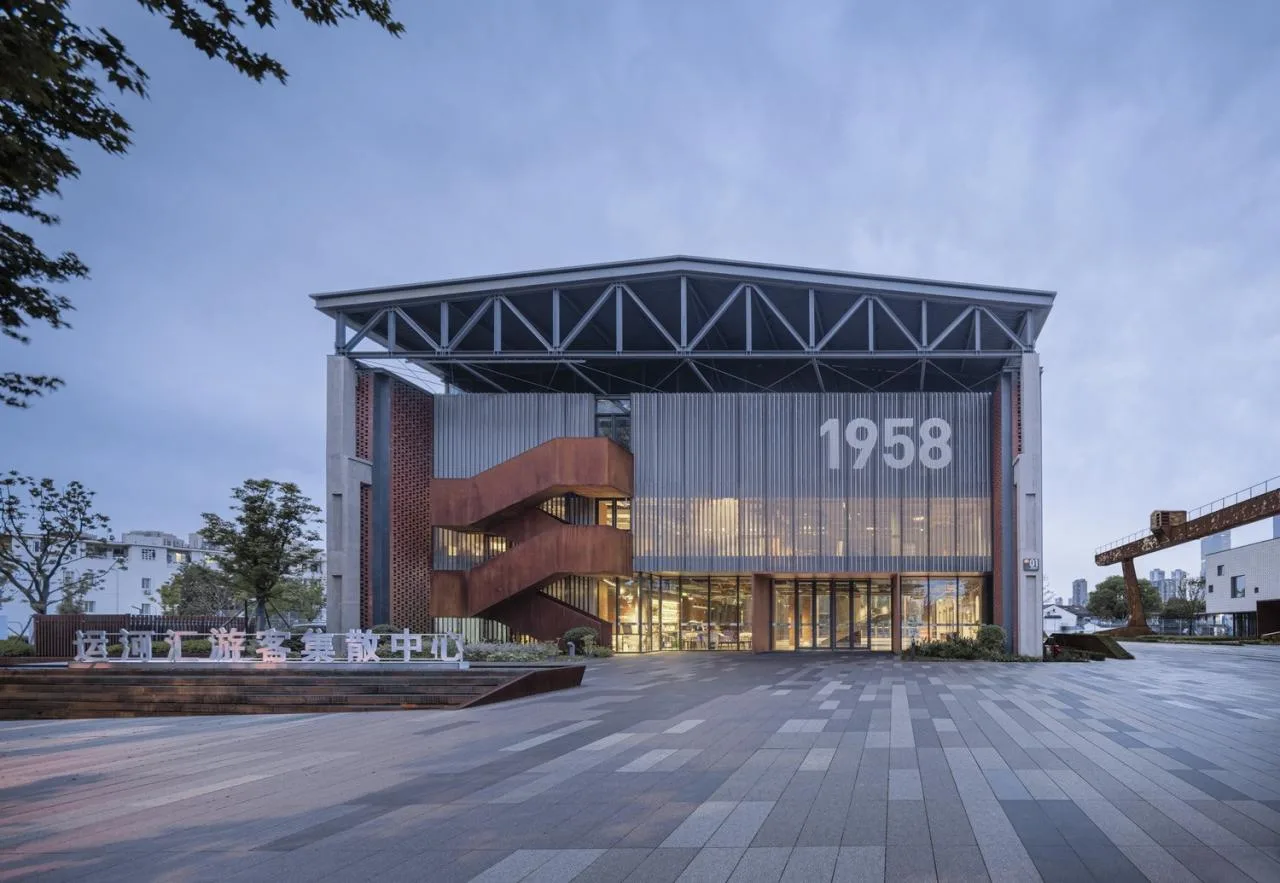
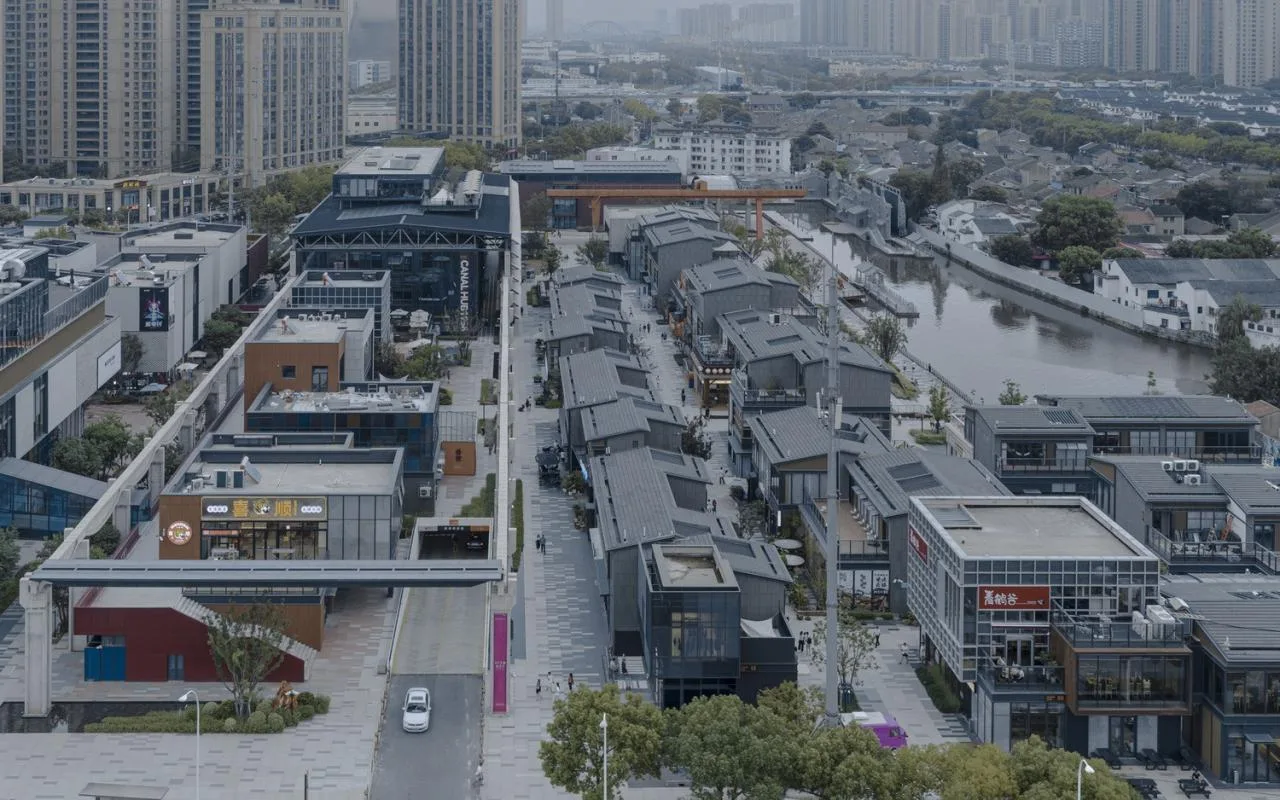
The Canal Collection 1958 project is deeply rooted in history, situated on the former site of the Wuxi Iron and Steel Plant next to the ancient canal. This historic canal city has a rich legacy, reflecting the lives of Wuxi’s ancestors who built their city along the river and thrived by its waters. It has fostered the unique Jiangnan water town culture, evident in landmarks like Guibei City and Qingming Bridge Water Lane along the canal’s edge.
Founded in 1958 as the Wuxi State-owned Steel Joint Company, the steel plant has long been a key industrial landmark in Wuxi. The site carries the collective memories of the city’s growth and the hopes and struggles of generations. While bustling activity has faded, the remaining factory structures stand quietly, contrasting sharply with the old canal-side houses and the new high-rise urban communities across the city road.
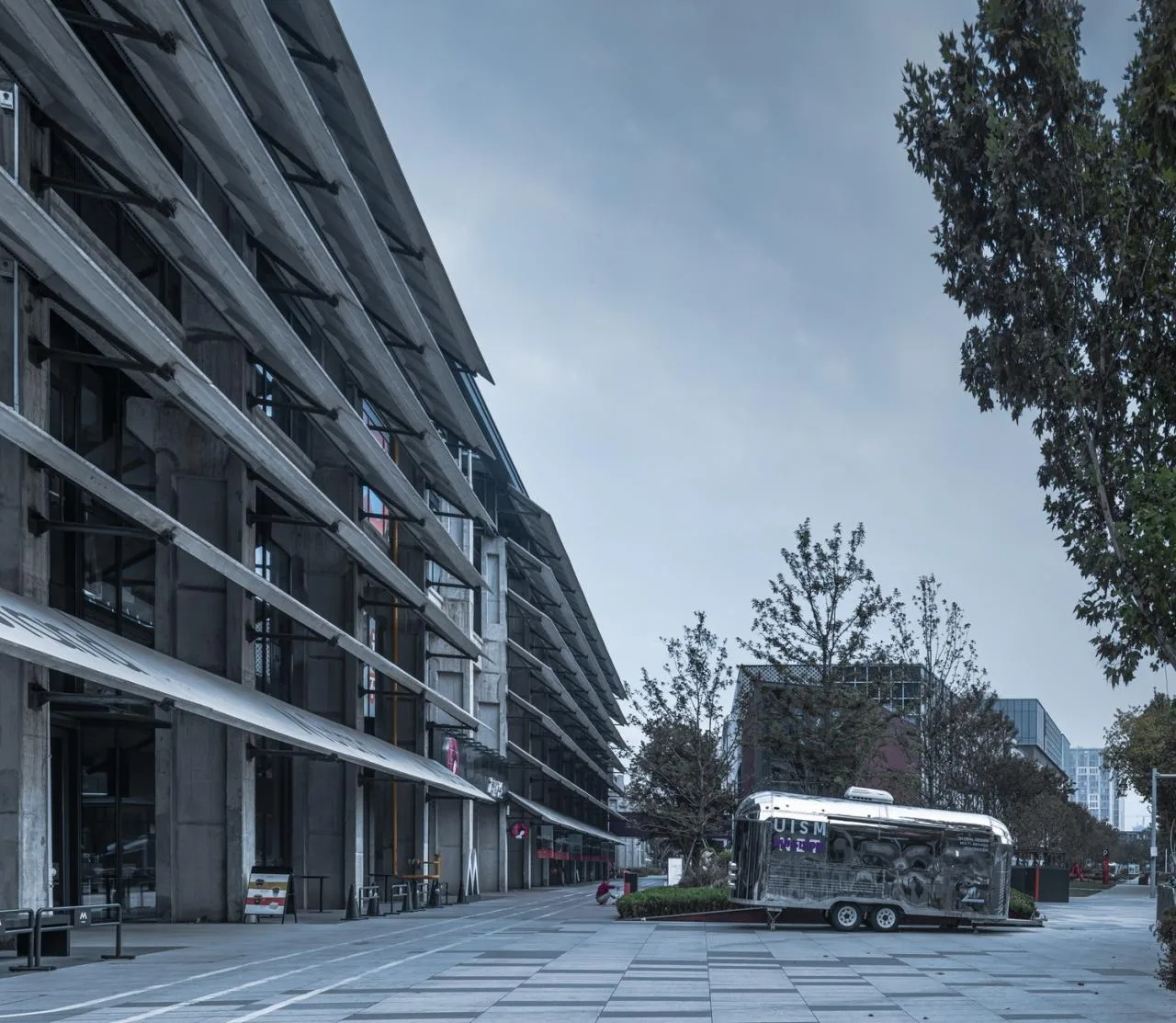
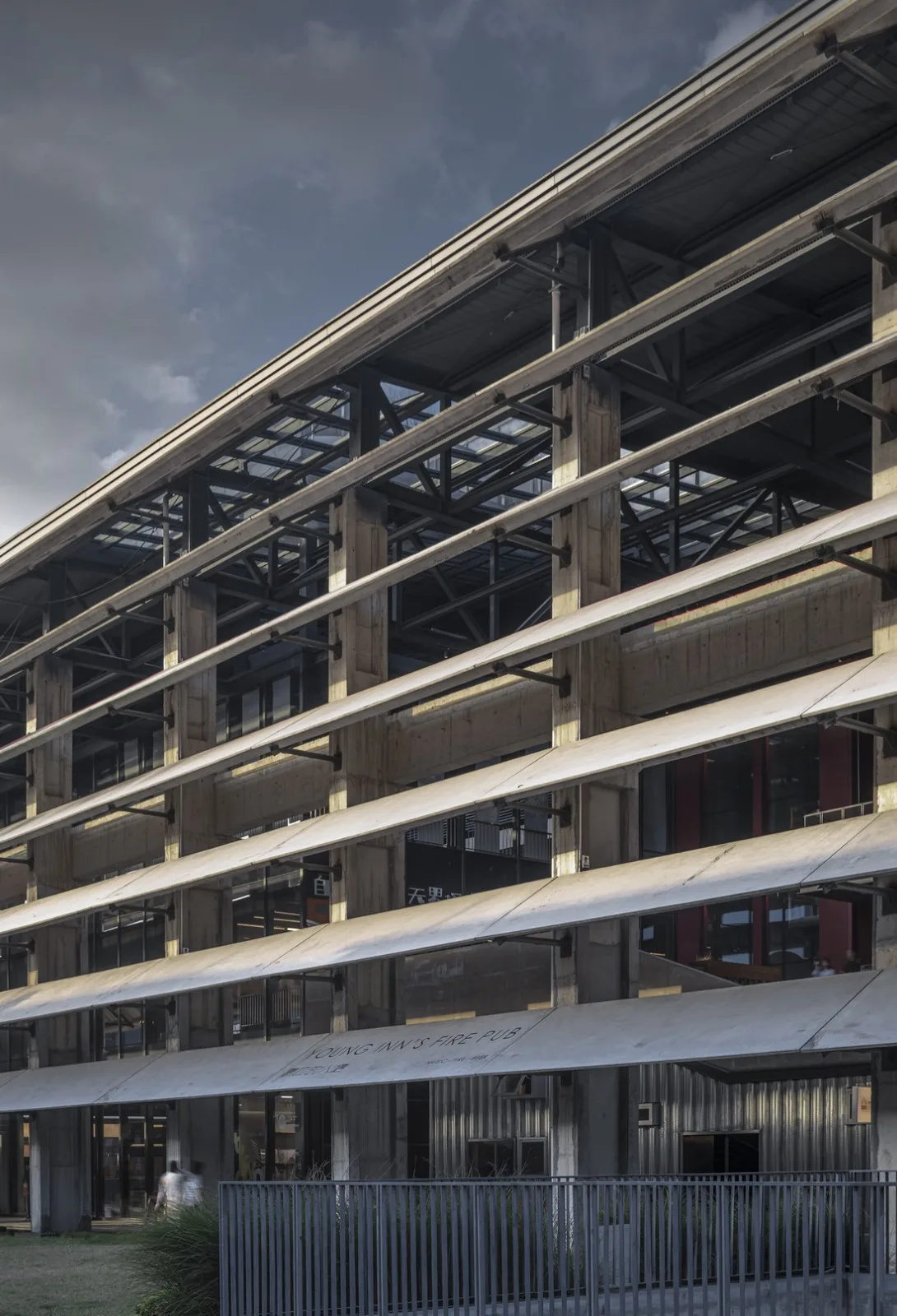
This multifaceted site, where diverse scales and cultures intersect, presents the challenge of revitalizing industrial heritage into a vibrant urban hub, emphasizing cultural, commercial, and tourist functions. After careful evaluation, two factory buildings within the protected red line remain largely intact and valuable. Building 1’s red brick exterior with distinctive hollowed-out tiling stands out, while Building 3, stretching over 200 meters and spanning nearly half the site, dominates the landscape. Its continuous columns, roof trusses, and horizontal precast concrete sunshades exude industrial aesthetics, showcasing the design and construction expertise of the era.
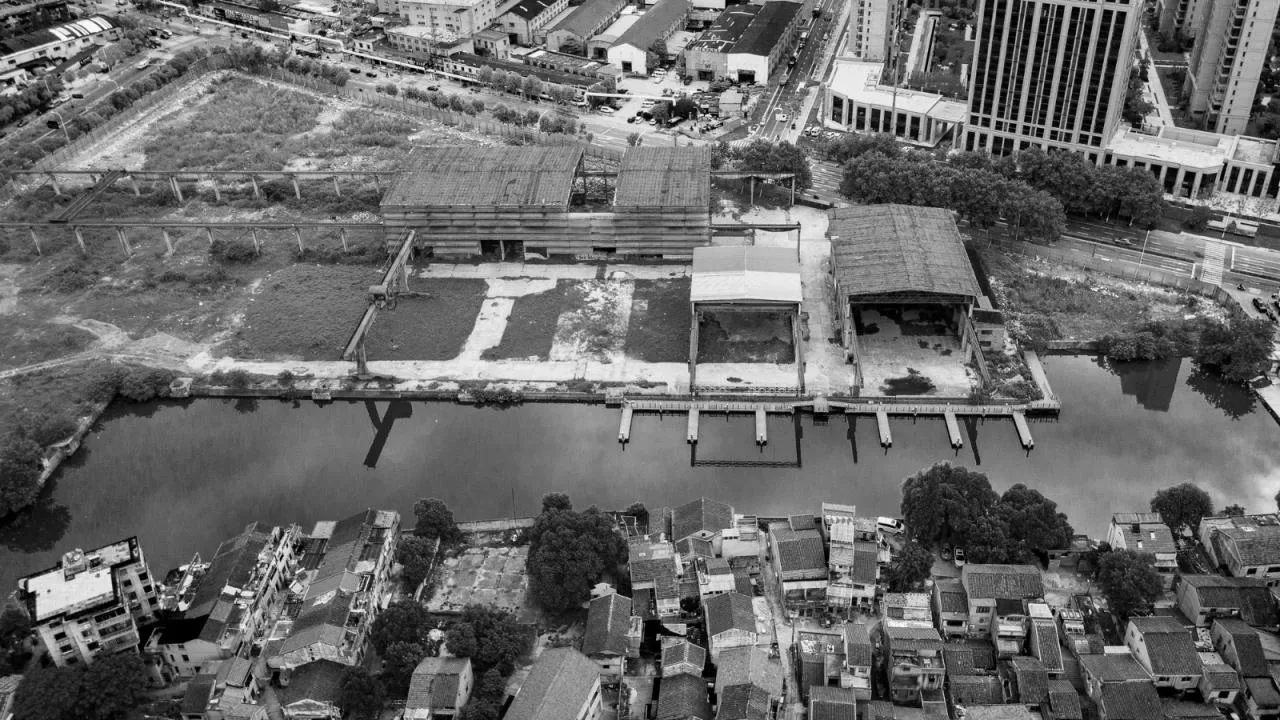
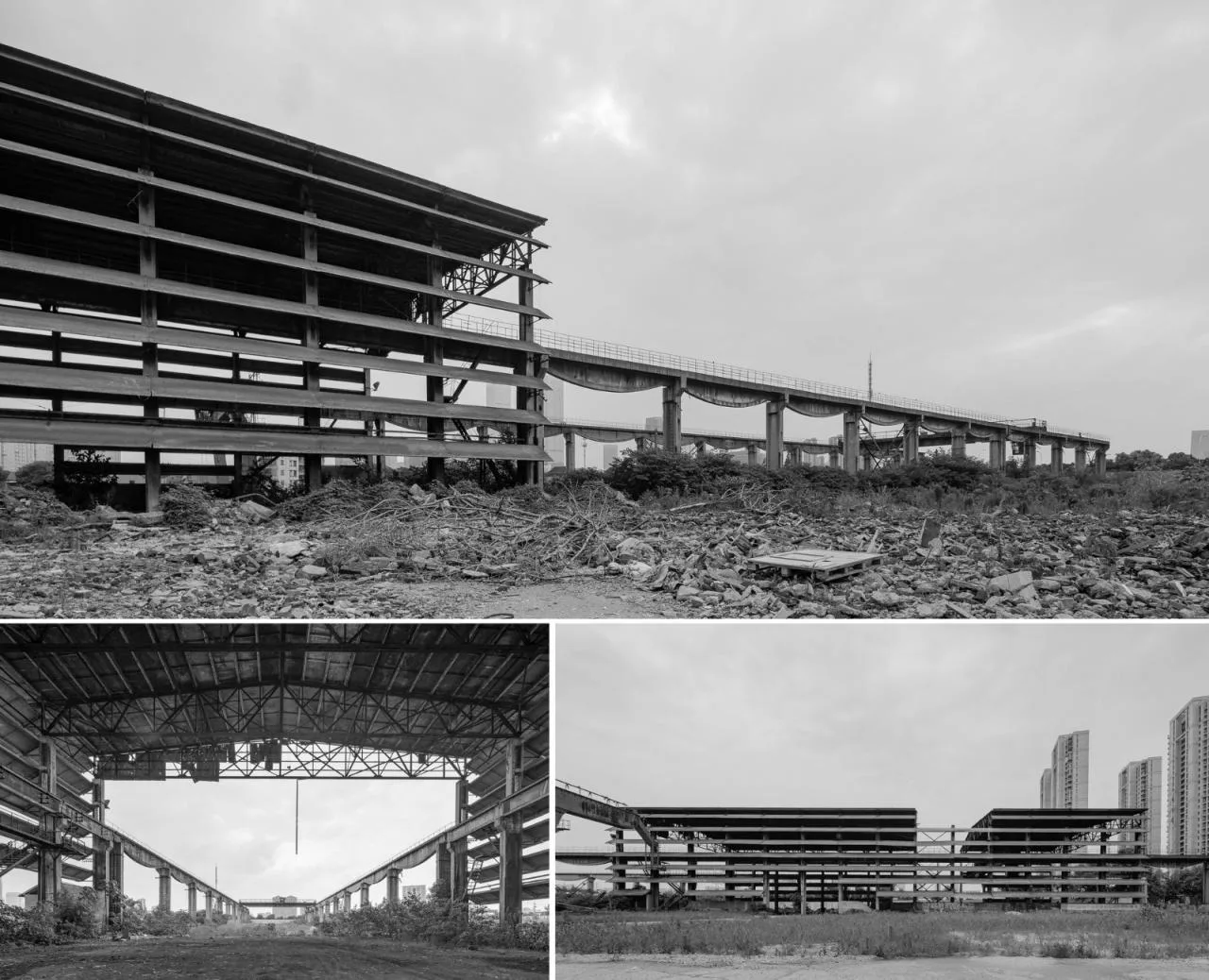
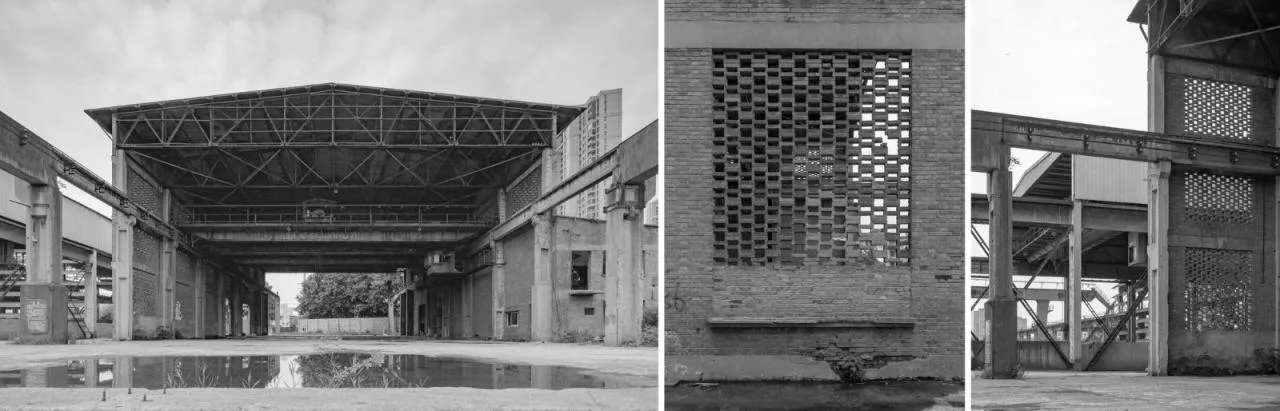
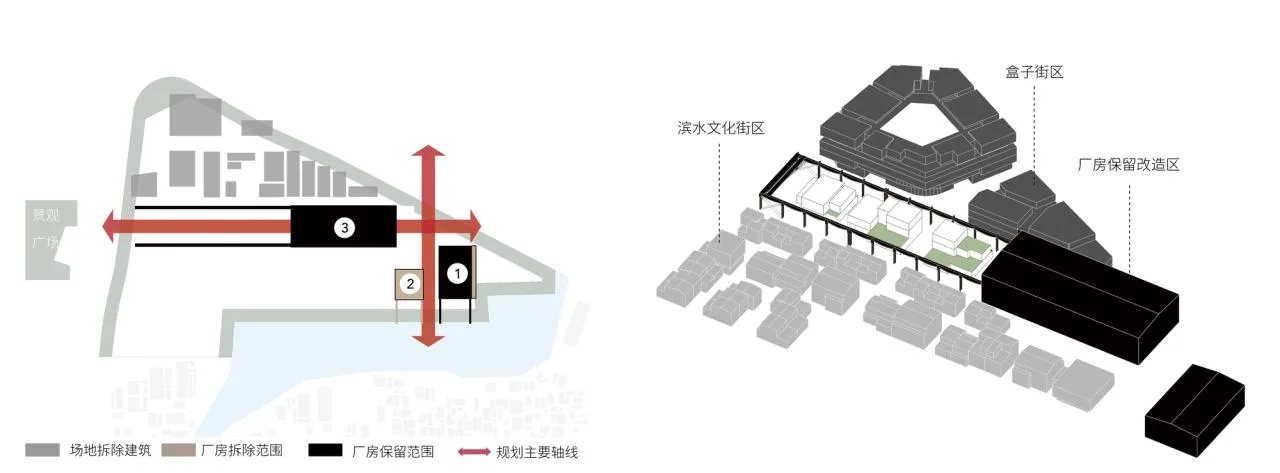
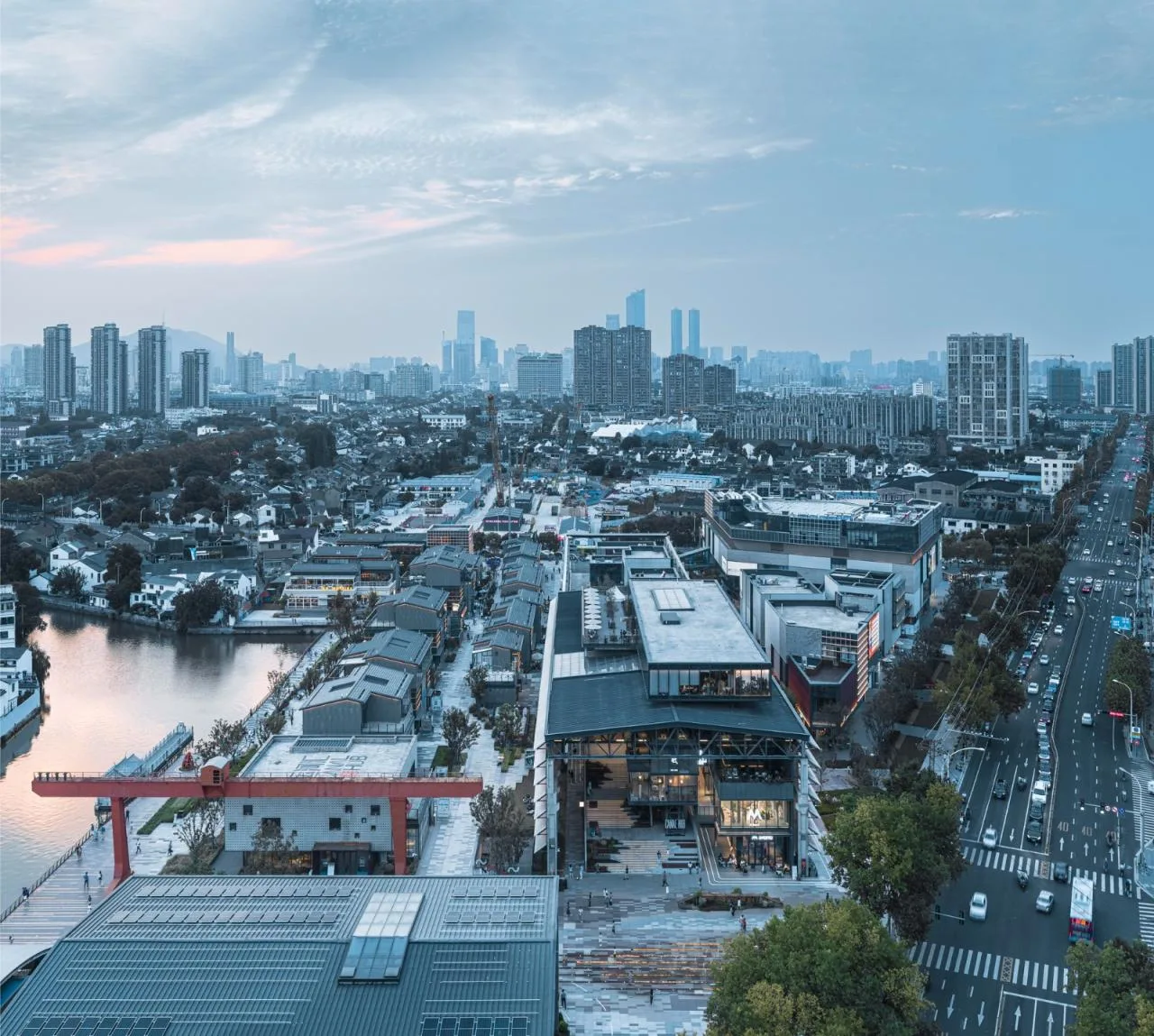
At the project’s design outset, it became clear that the dilapidated Buildings 1 and 3, which retained only their structures, formed the fundamental spatial framework, positioned perpendicularly. By preserving their original locations, the design integrates diverse functions and spaces, achieving a harmonious blend of old and new.
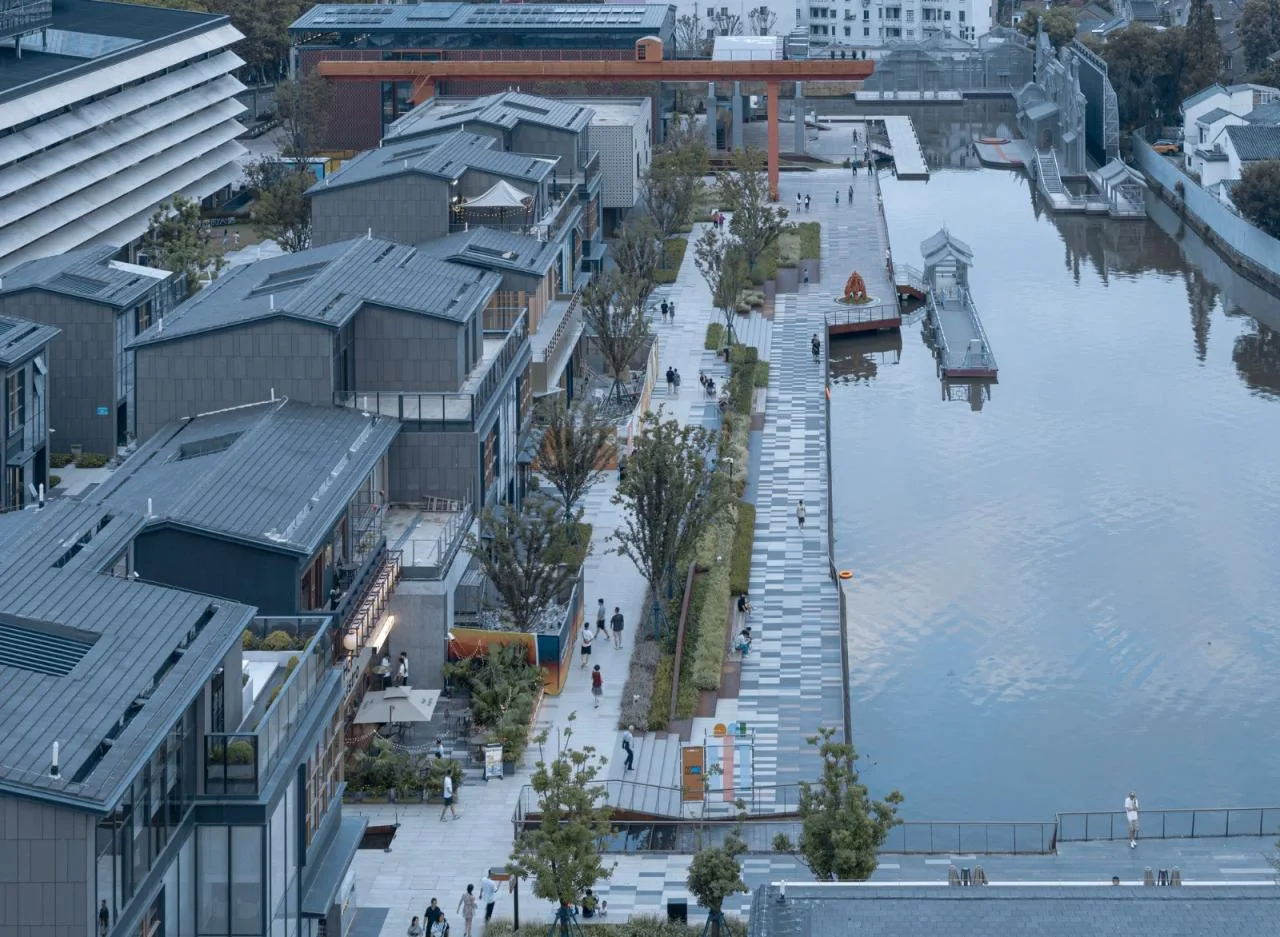
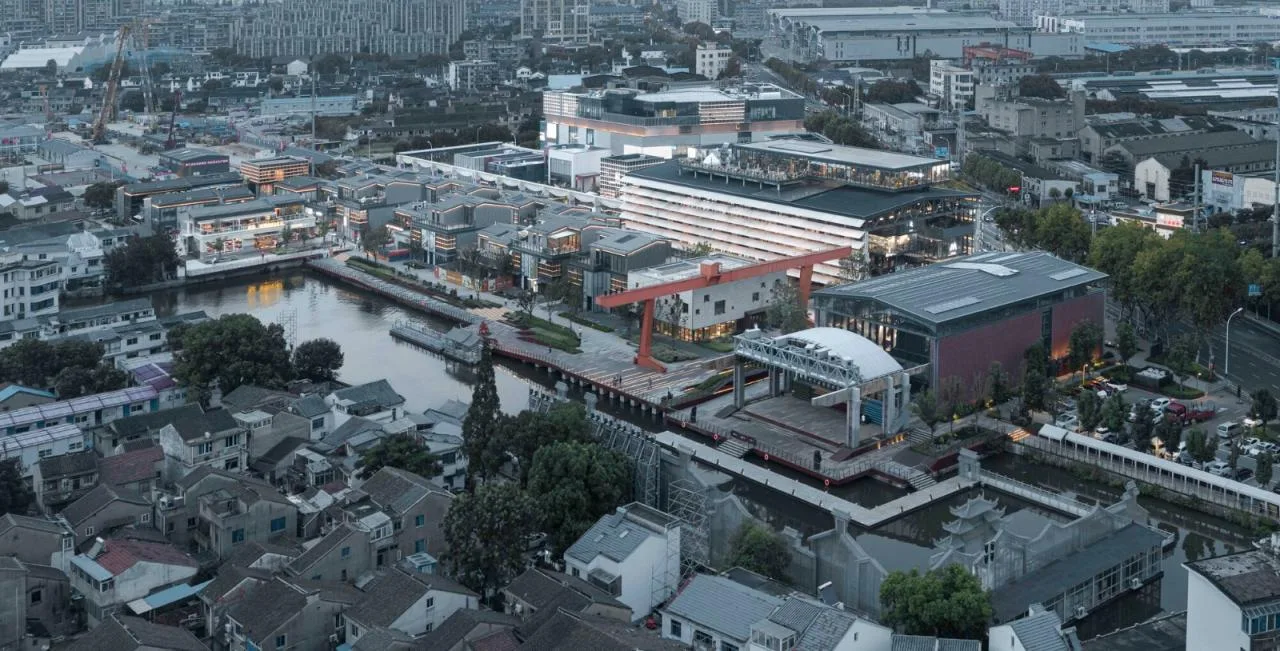
Along the canal, a waterfront cultural district with staggered forms and inviting scales has been created. Adjacent to the city road, a cluster of landmark buildings with concentrated volumes establishes a striking presence. This cross-axis spatial planning results in a rich and varied experience, dividing the site into three distinct zones defined by the intersecting factories, each receiving tailored design strategies based on land use.
Building 1: Space Cross, Light and Shadow Box
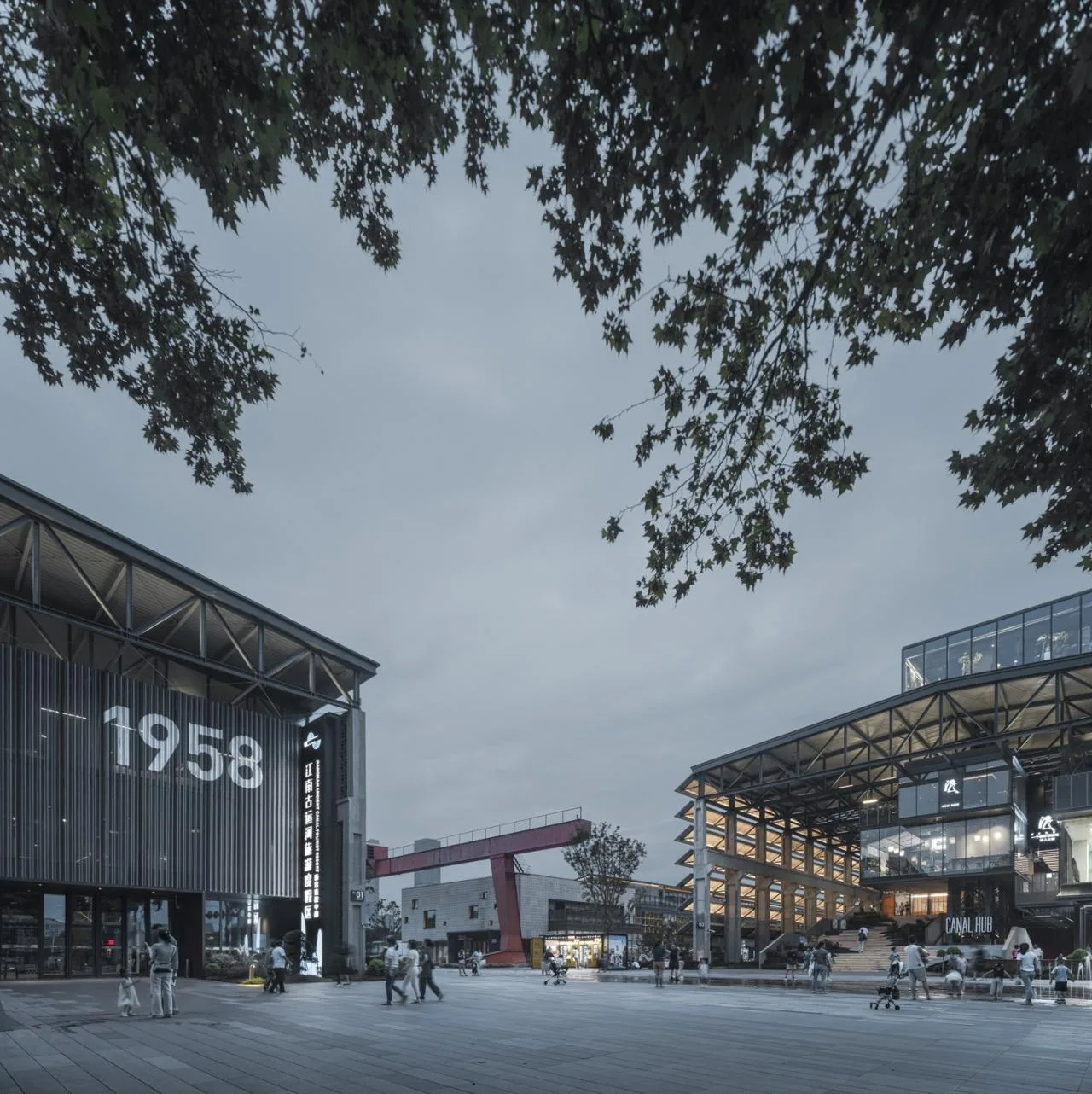
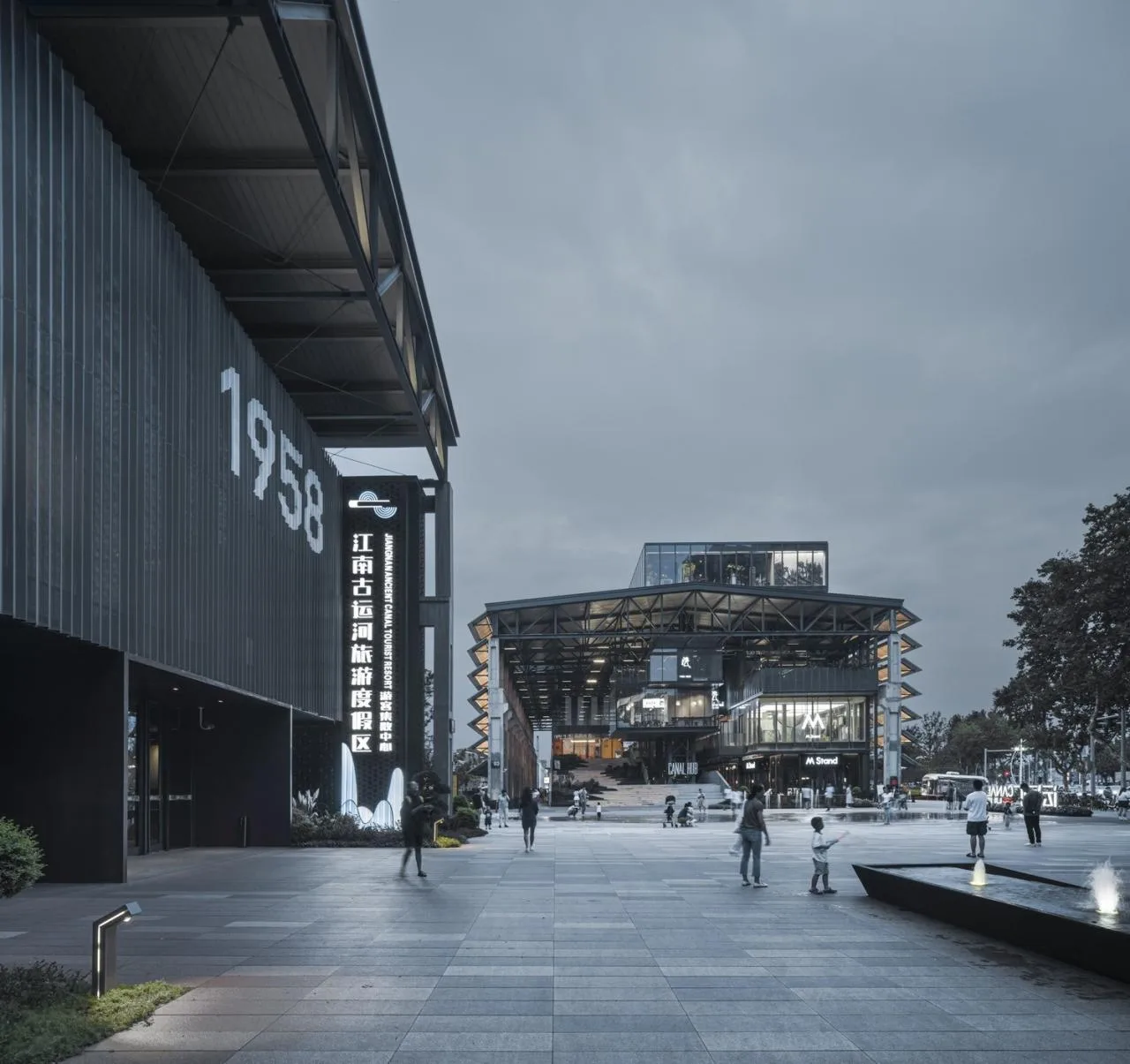
During the renovation of the original two buildings, a differentiated approach was applied. Building 1 was transformed into a tourist distribution center, with the design intent to preserve and develop the original architectural language. To maintain the building’s spatial character while integrating new functions, a detailed survey and assessment of its main structures and components were undertaken.
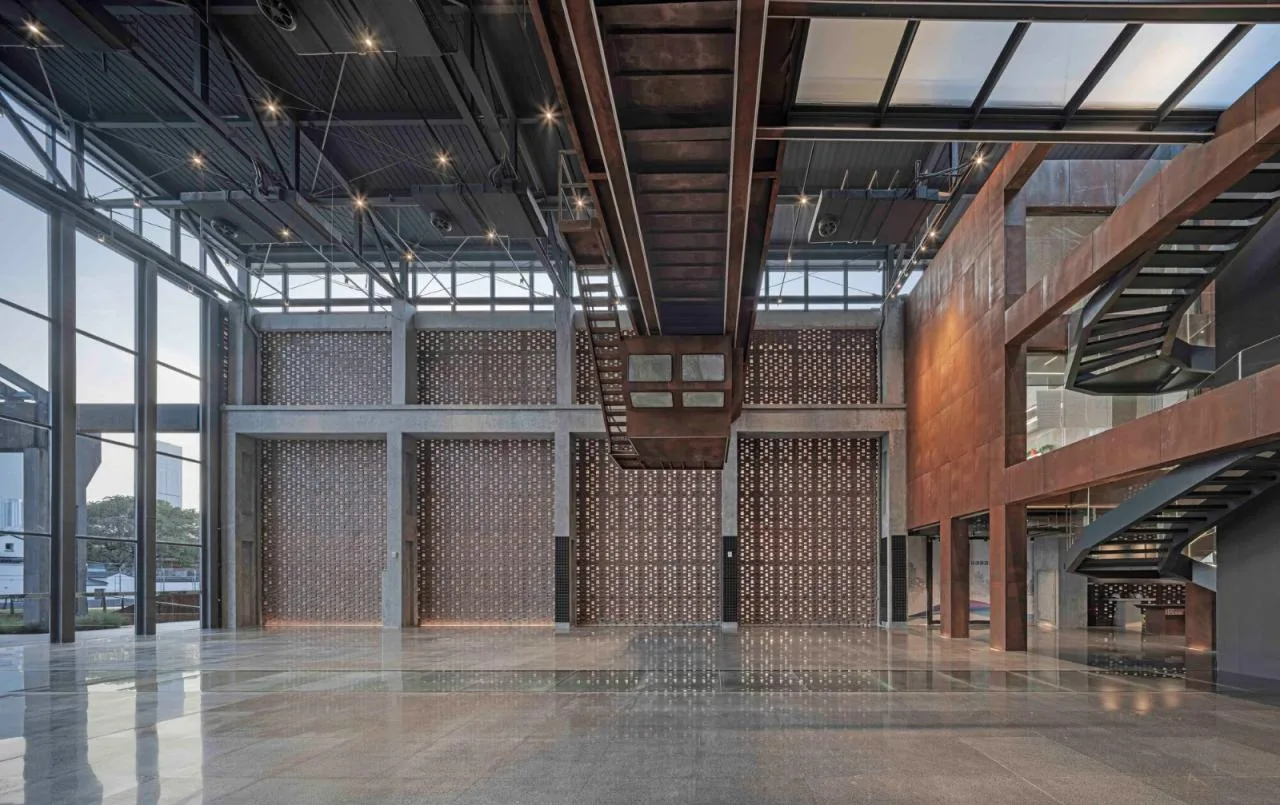
Where possible, elements meeting current standards were preserved and reinforced; damaged parts were removed and rebuilt following the original relationships and scale. A cross-axis spatial system was embedded within, clearly separating public and functional spaces, and extending the project’s overall cross-shaped spatial axis into the interior.
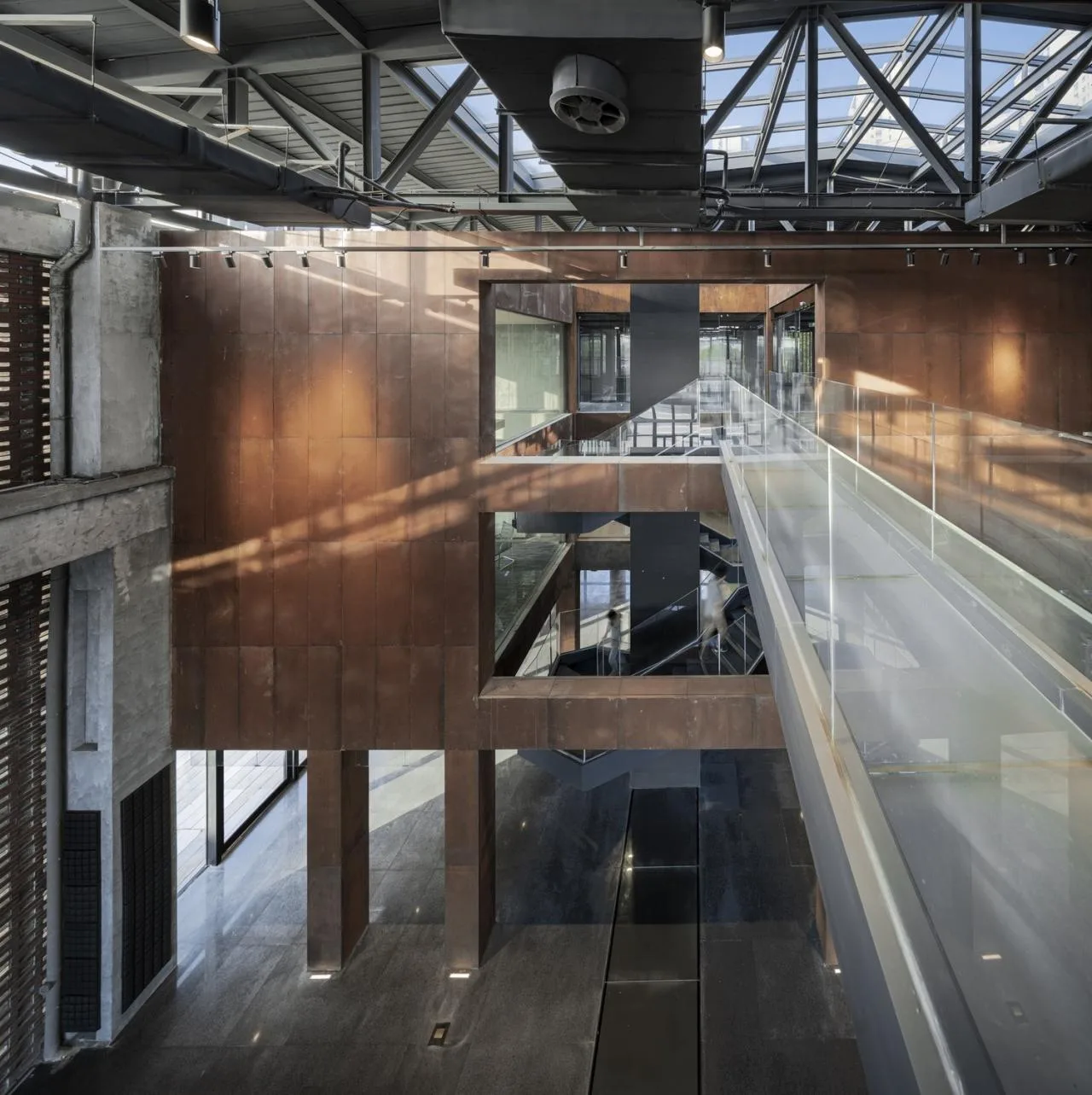
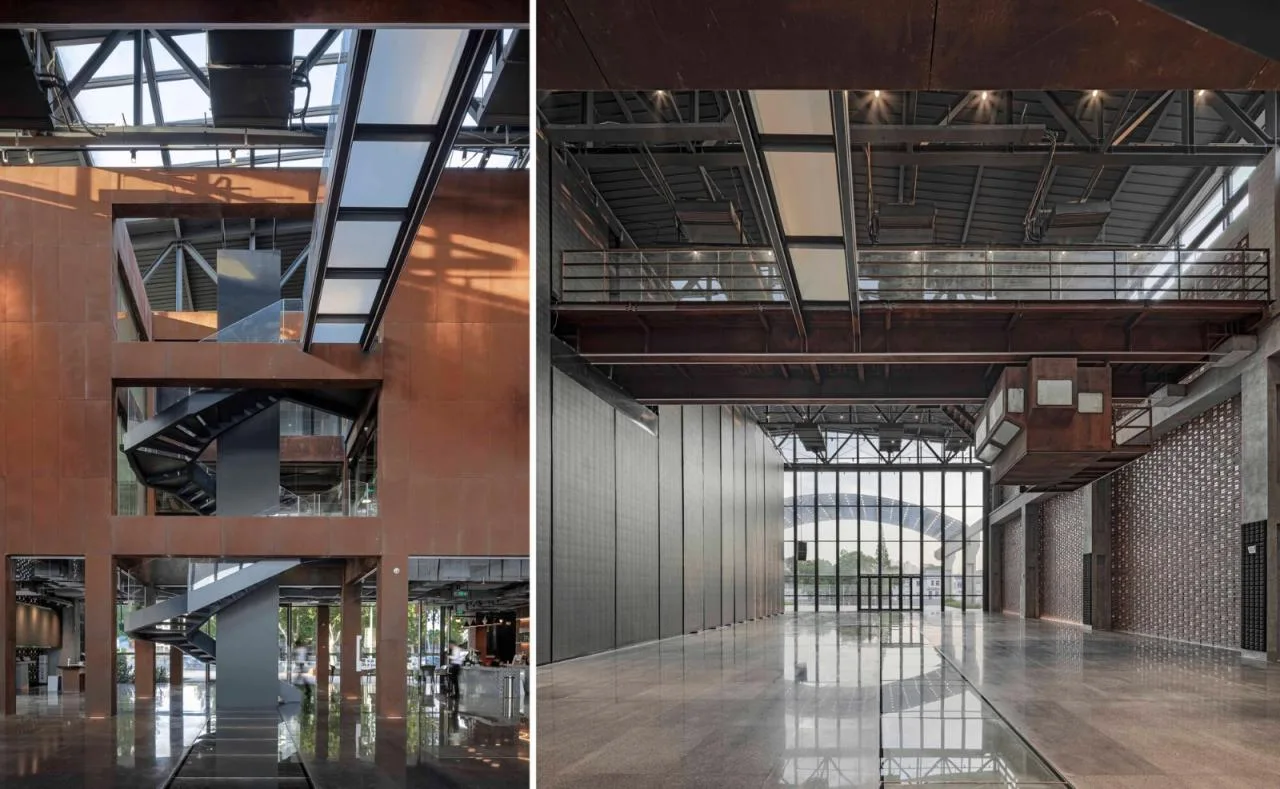
The public area features a three-story high hall, where exposed concrete frame columns, weather-resistant steel plates, and roof trusses showcase the raw beauty of structural materials.
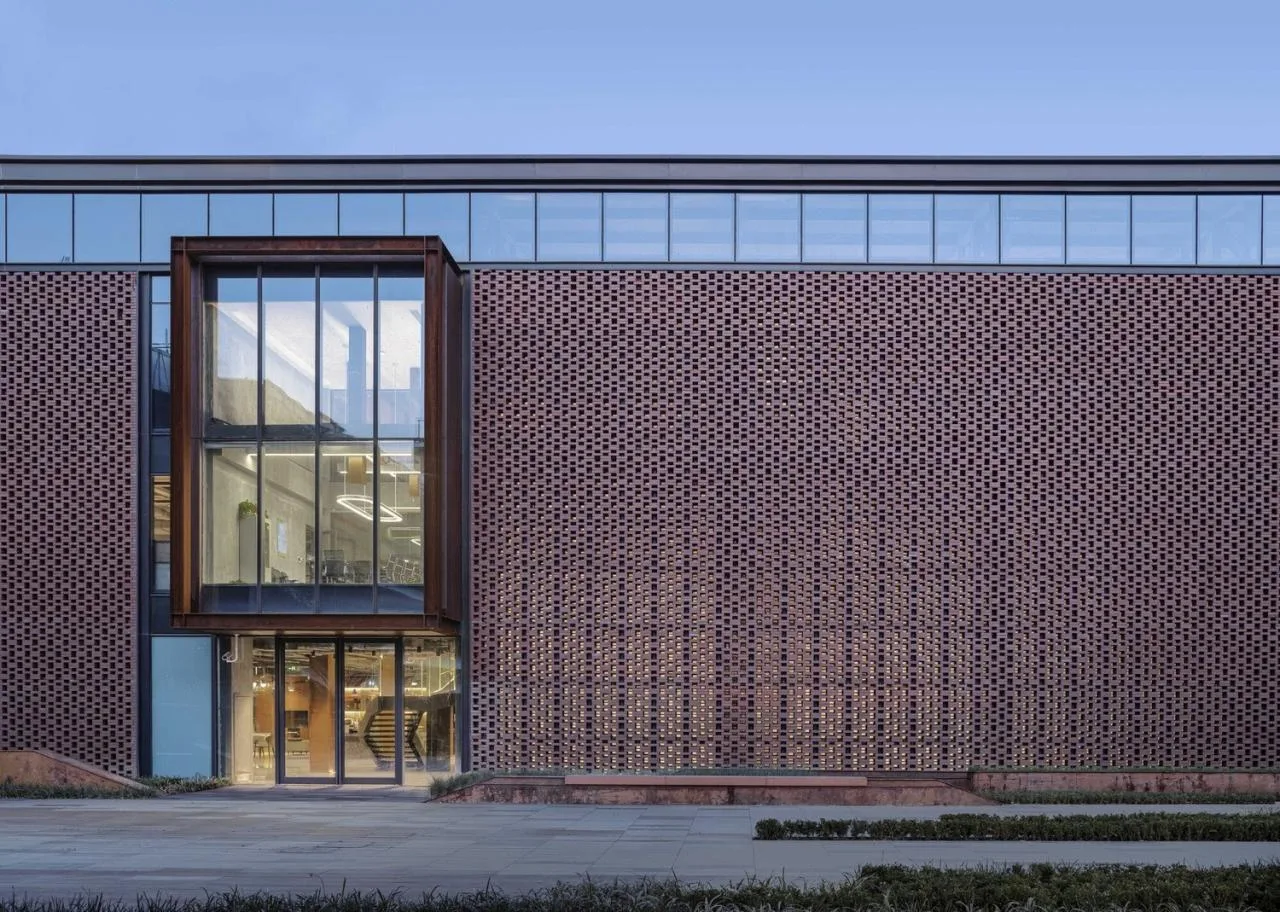
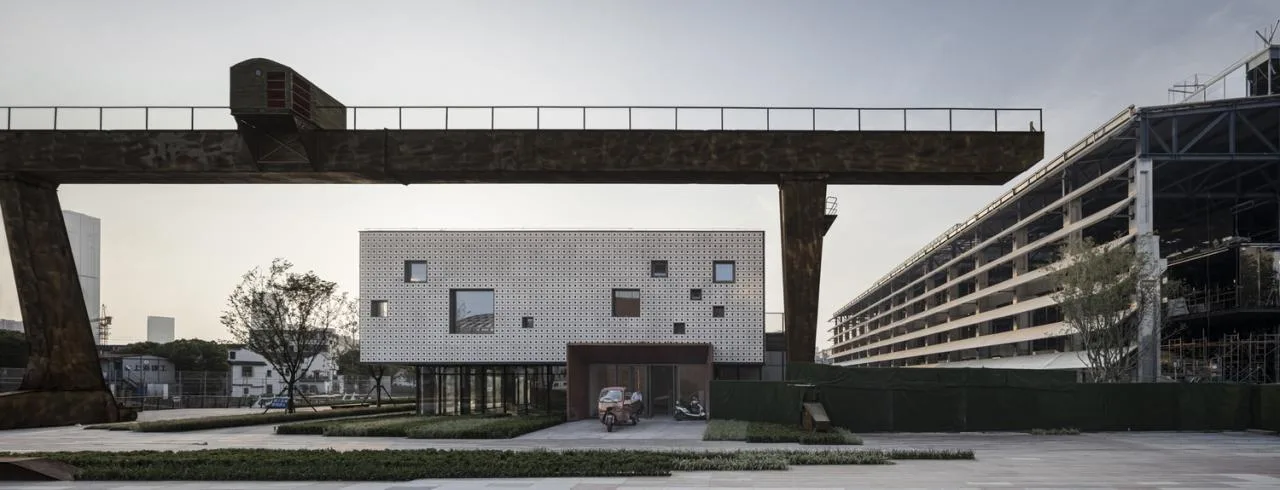
For the building’s exterior, the approach was to preserve and enhance the original red brick texture. Hollow flower bricks from the old factory were repurposed to define the facade’s vocabulary. Glass bricks and red bricks were combined to create a visual interplay of transparency and solidity, symbolizing both continuity and renewal.
The main entrance faces the city road, while along the canal side, a covered outdoor dock provides an extension for the main venue of the tourist center and serves as a grandstand for events across the canal.
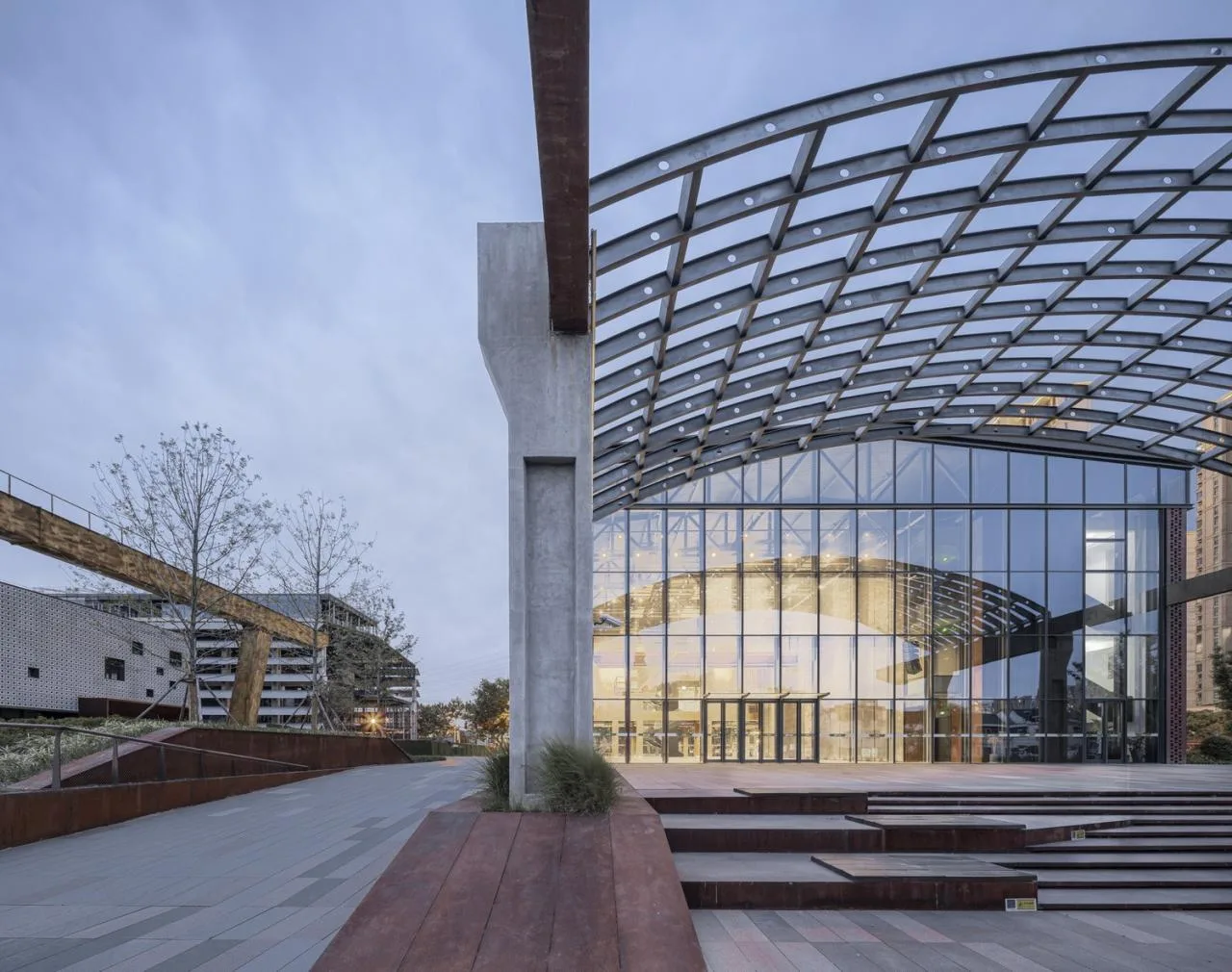
Building 3: A Miniature City within a Giant Structure
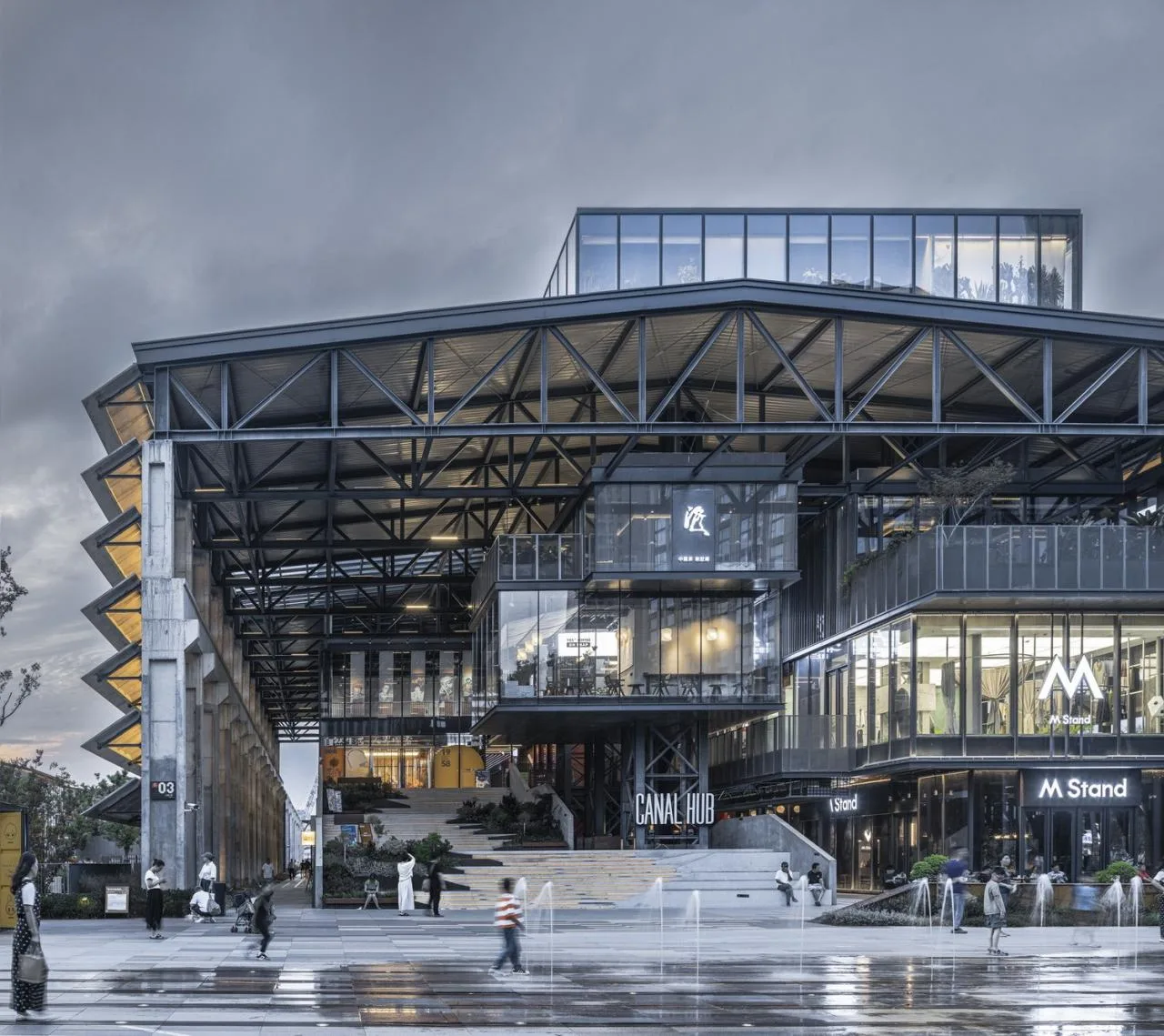
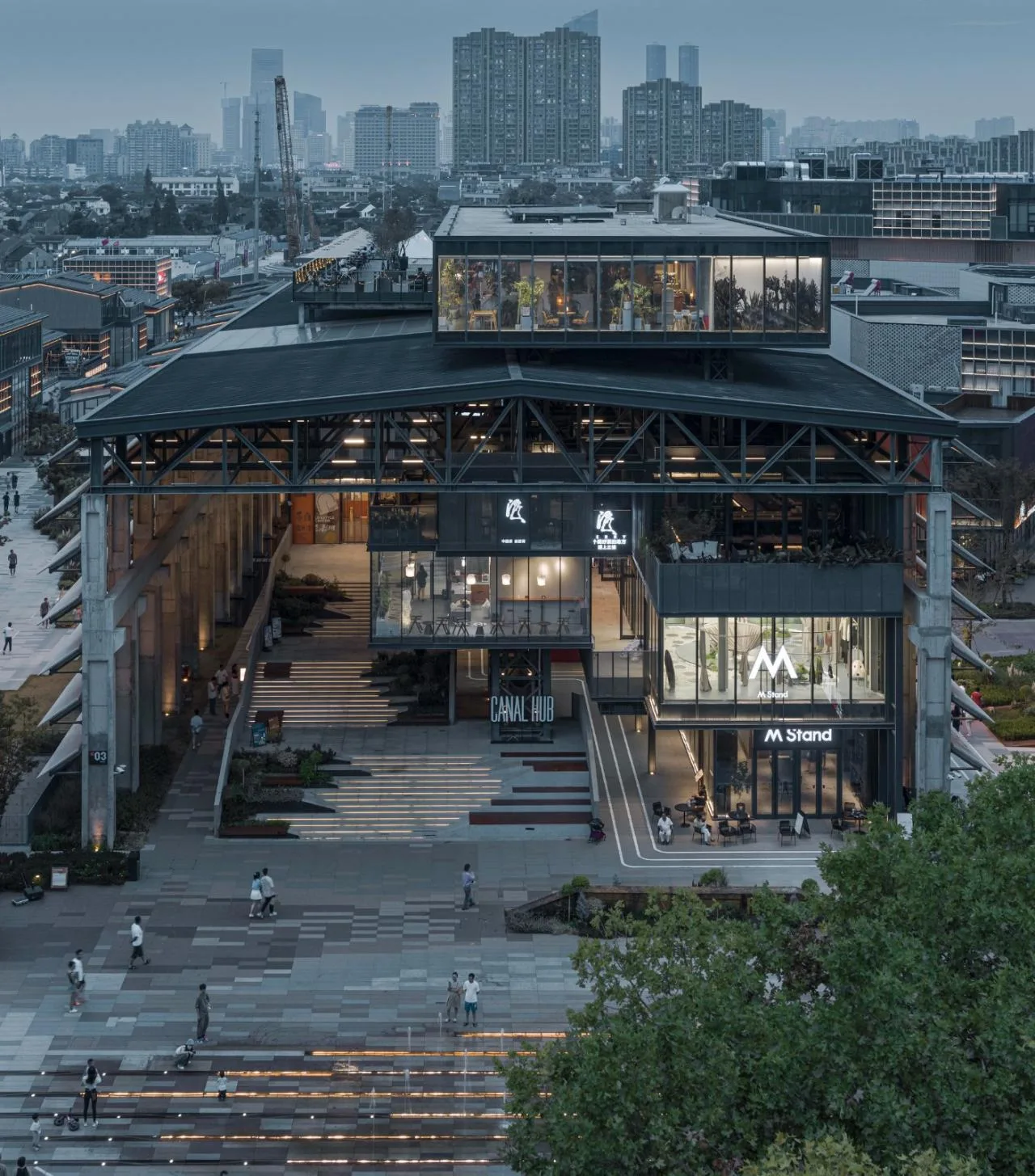
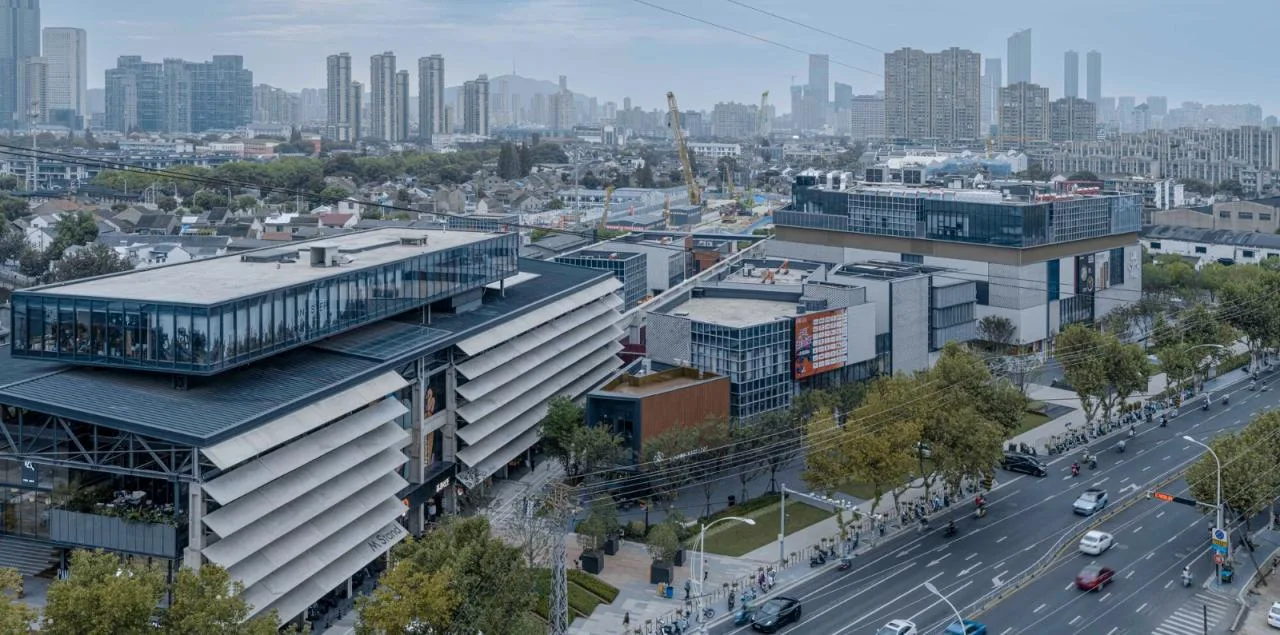
As the largest building in the project, Building 3 was envisioned as a “miniature city within a giant structure.” Spanning over 200 meters with a striking horizontal sunshade on its facade, this industrial building is rare in its scale and presence.
The design preserved the structure fully, integrating diverse scales, materials, and functions across indoor, semi-indoor, and outdoor spaces. This transformation shifted the building’s identity from factory to commercial hub, large scale to small scale, and a serious industrial space to a lively urban environment.
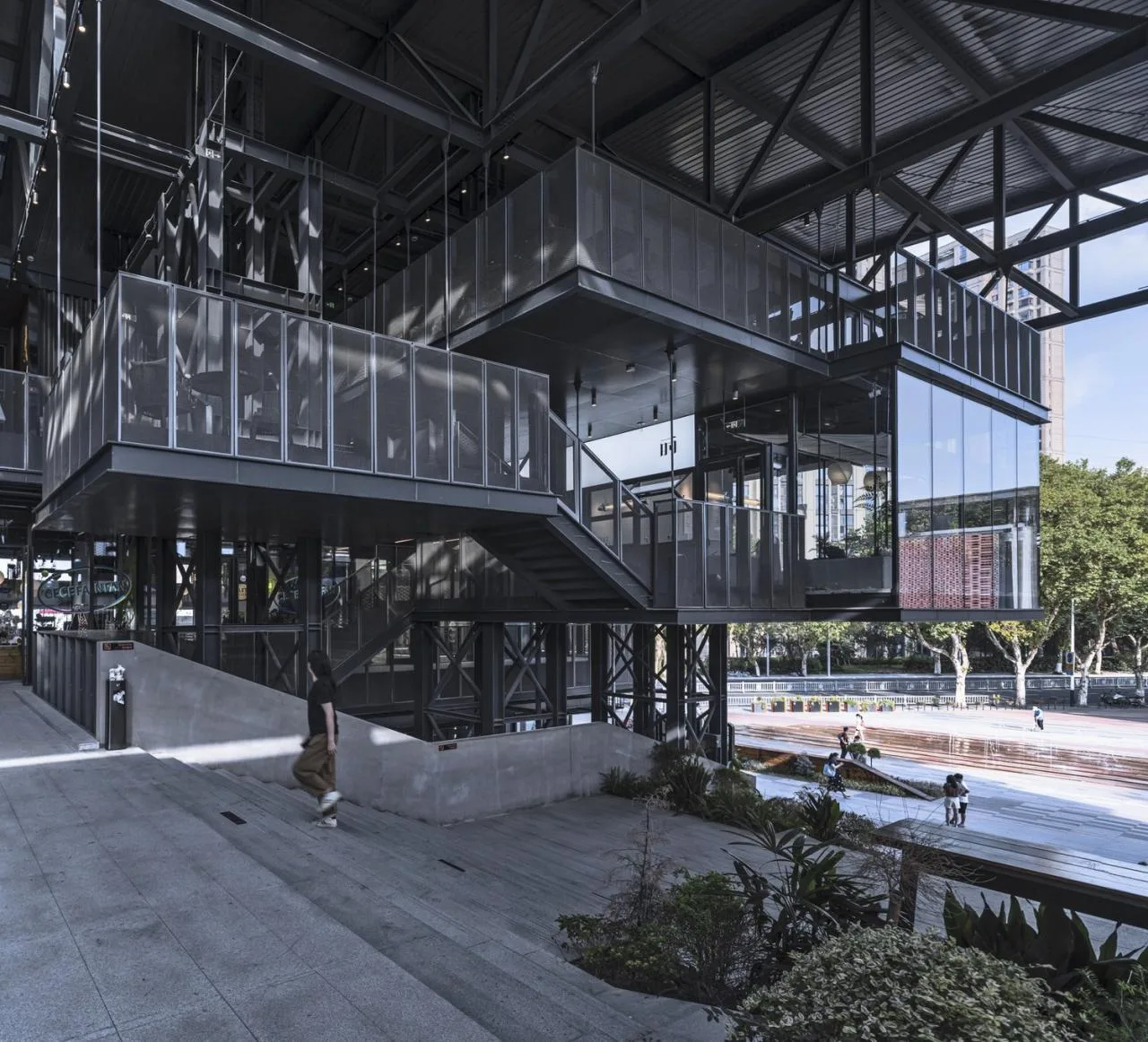
Structural renovation included adding an internal steel framework that works in tandem with the original concrete columns, providing support and enabling space reuse. A full steel suspension system was installed to support the Skyrim Art Museum atop, clearly distinguishing new from old structures.
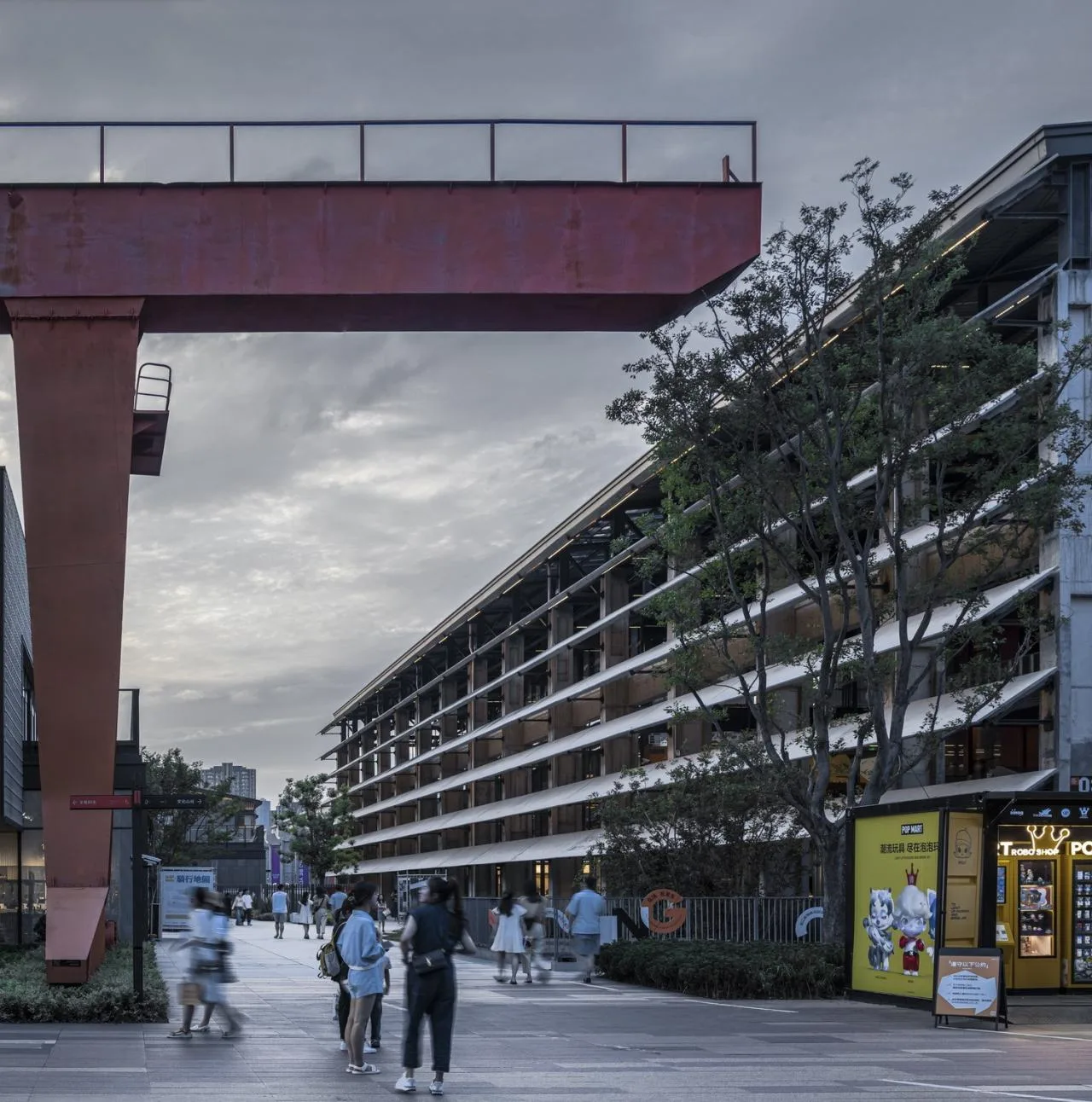
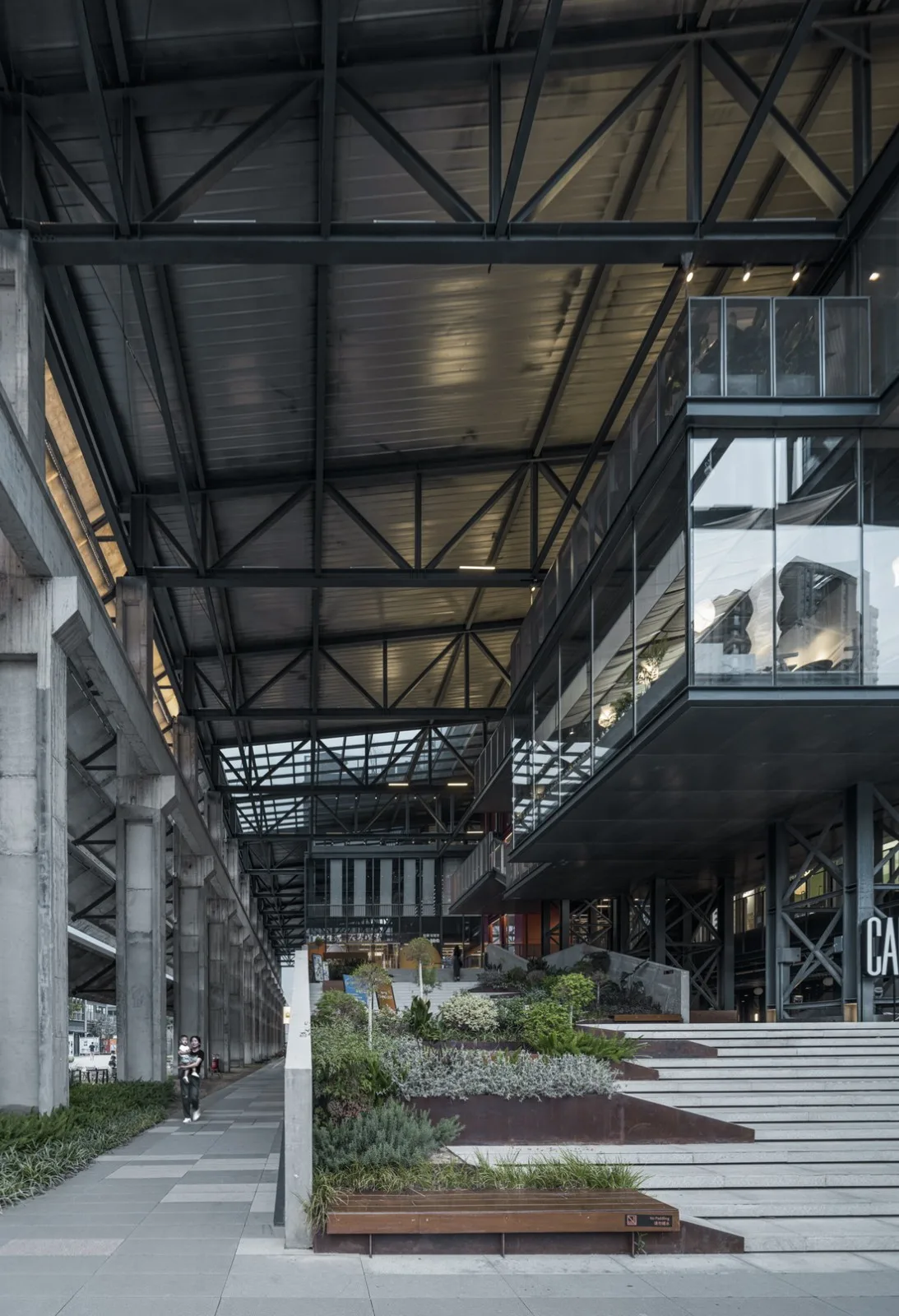
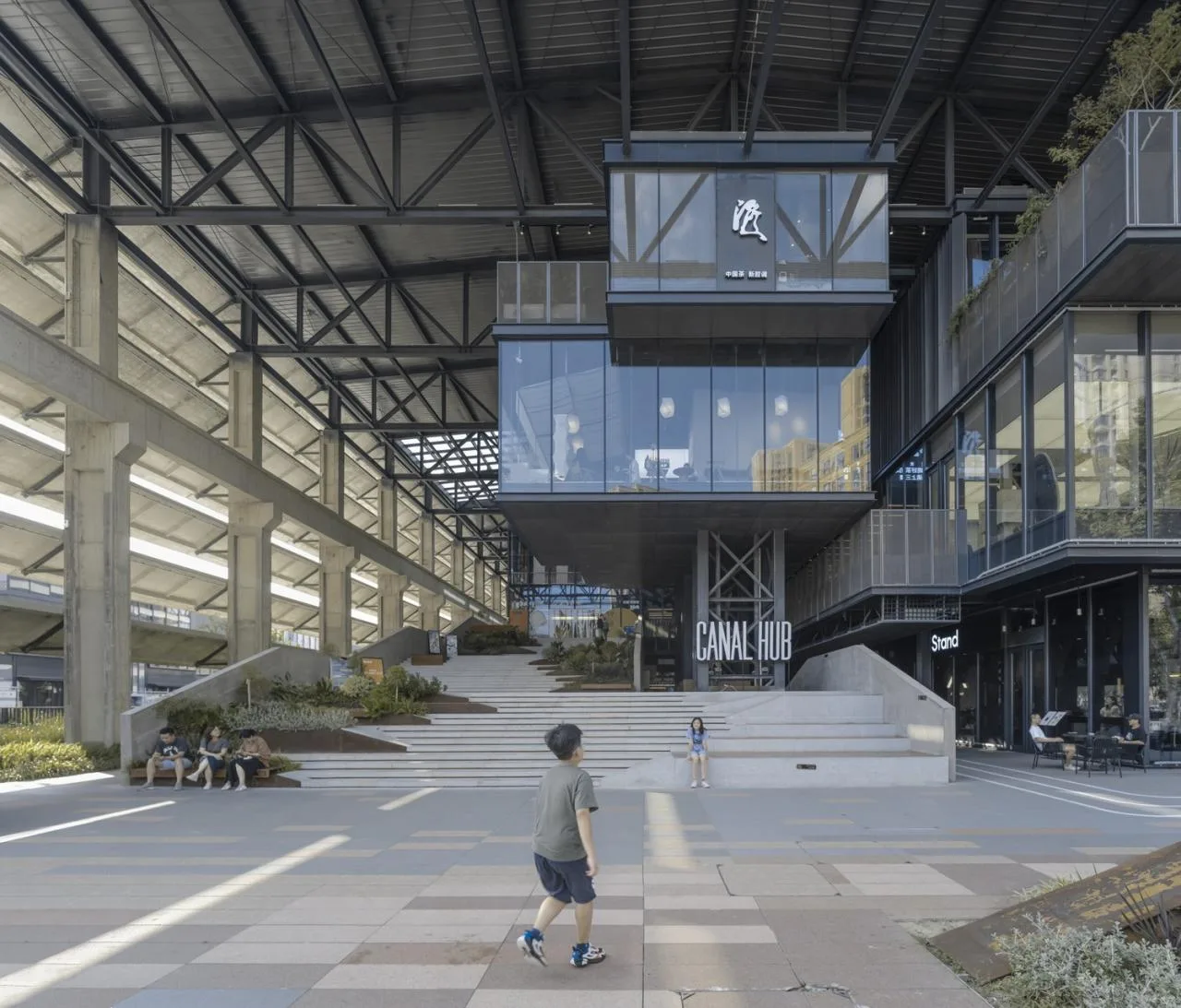
At the city road entrance, a hollowed-out gray space with stepped terraces extends the square, accommodating various public events. The “treehouse,” suspended around steel beam columns and stacked in layers, adds a distinctive feature to the renovated building.
Atop Building 3, the horizontally expansive Skyrim Art Museum features a floating glass volume that contrasts dramatically with the thick concrete slab facade below.
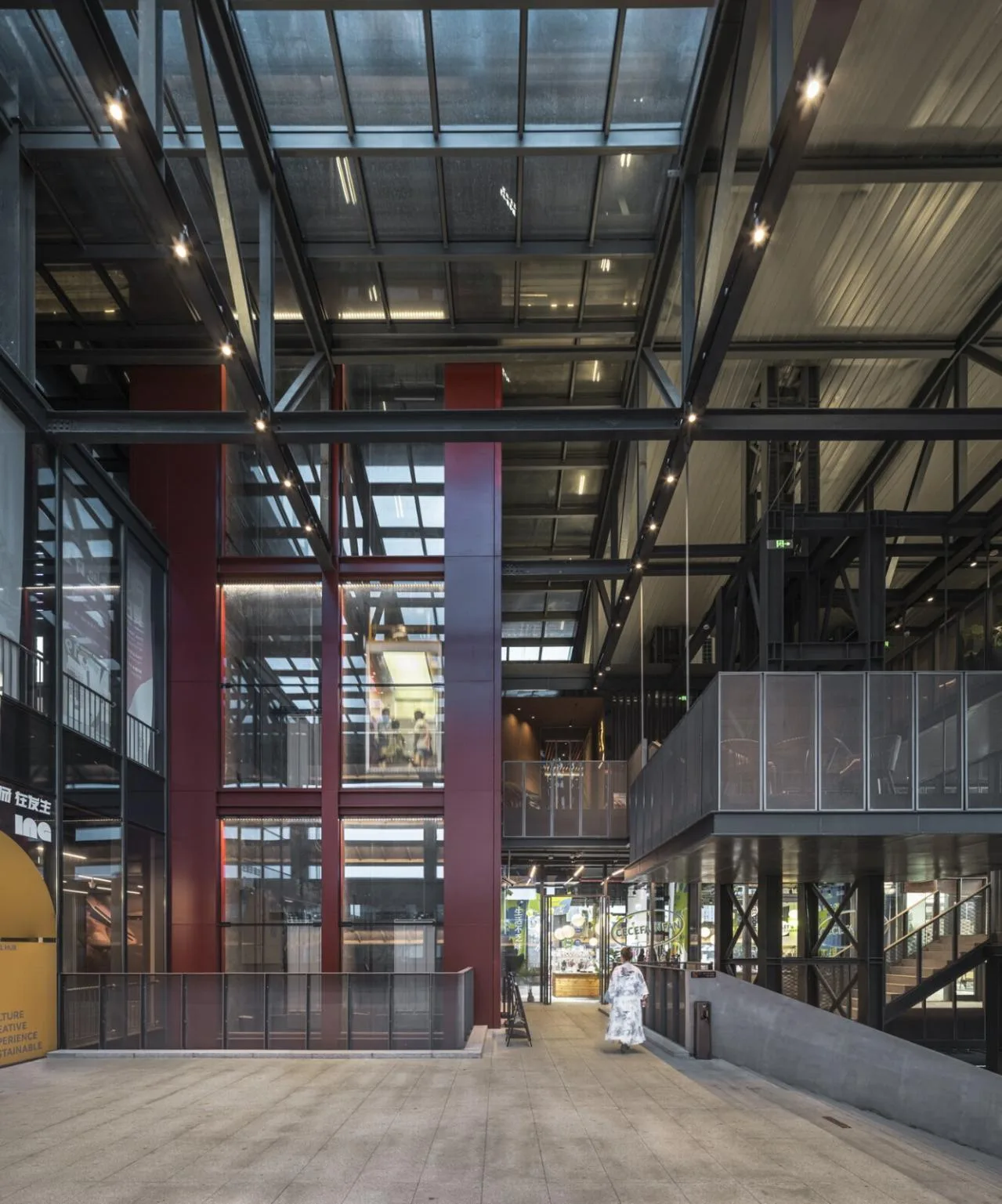
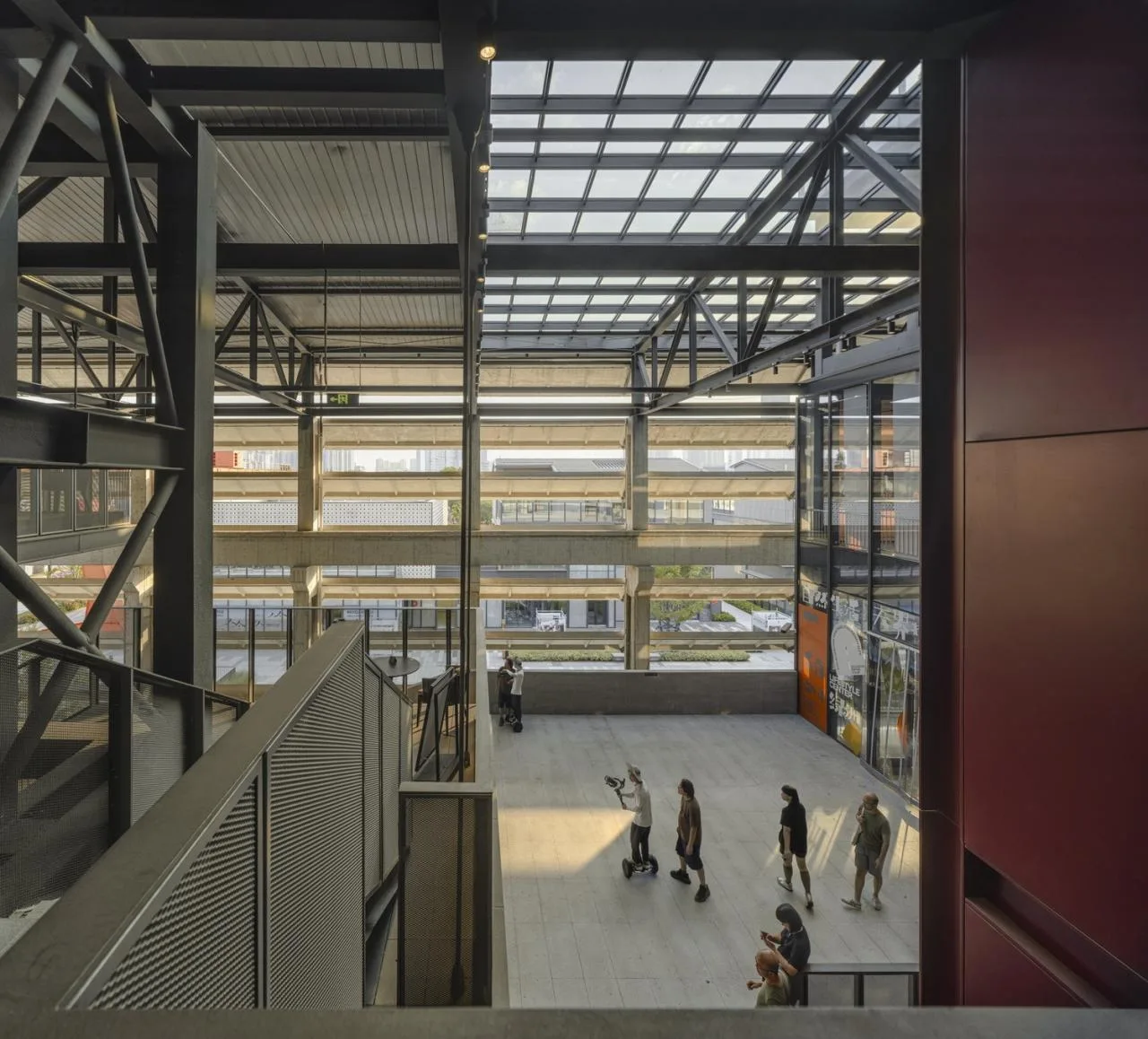
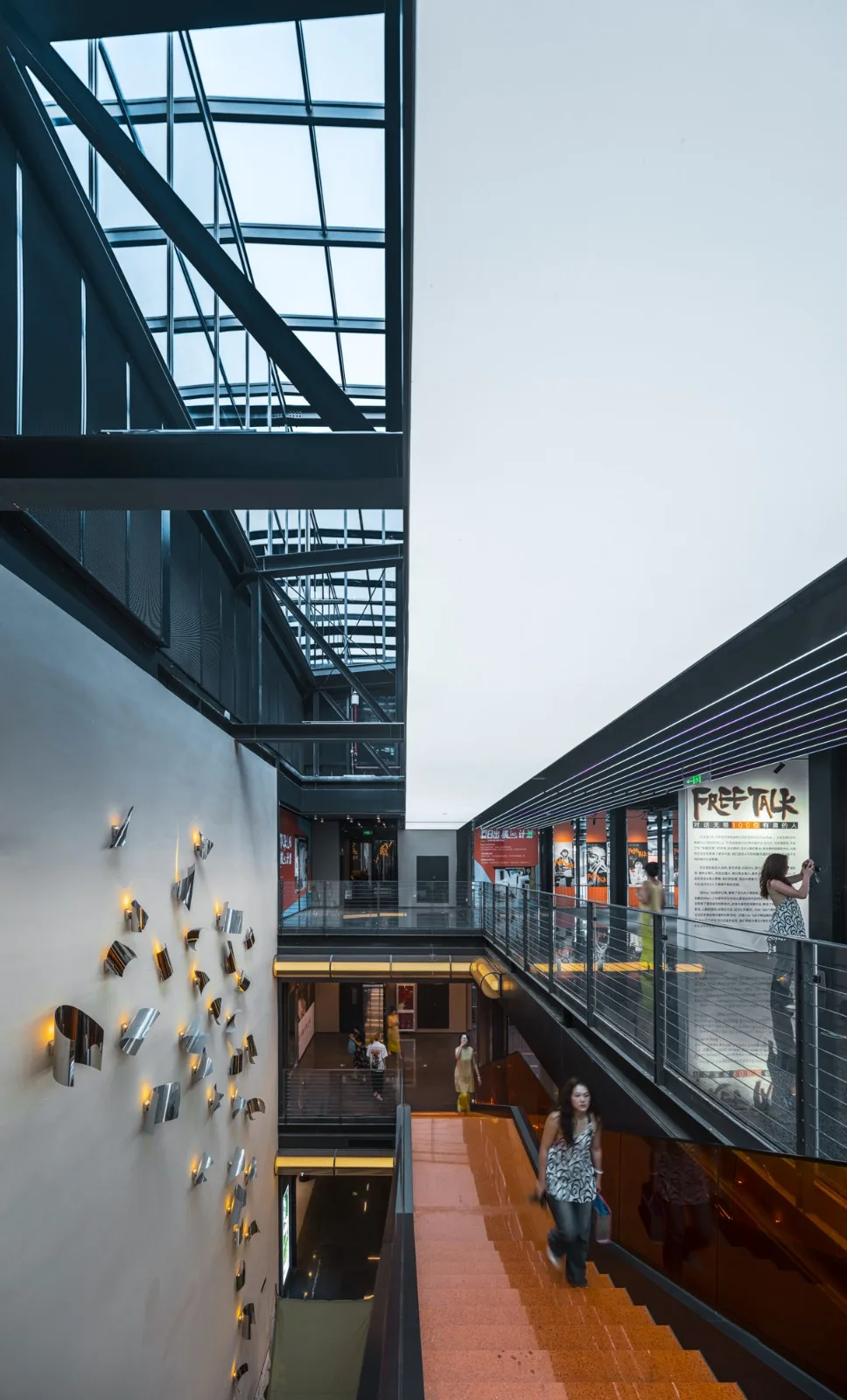
The interior integrates courtyards of various sizes and functions, illuminated naturally by skylights. Large semi-outdoor steps guide visitors to the second-floor platform, where circulation revolves around a sunlit courtyard. This courtyard-centered layout unfolds multiple spatial narratives, offering visitors a clear and immersive experience of the building’s unique character.
Box Block: A Landmark Collection of Stacked Volumes
Located at the intersection of two urban roads, the Box Block shapes the city’s interface and serves as a key project showcase. To avoid overwhelming the street frontage with scale, a contemporary and minimalist design approach was adopted.
A large mall anchors the street corner, while surrounding volumes are divided into smaller boxes that gradually decrease in size and height from the intersection toward the factory buildings. This approach preserves the visibility of Building 3 and creates a dynamic scale transition.
Waterfront Cultural Block: Echoes of Jiangnan’s Poetry
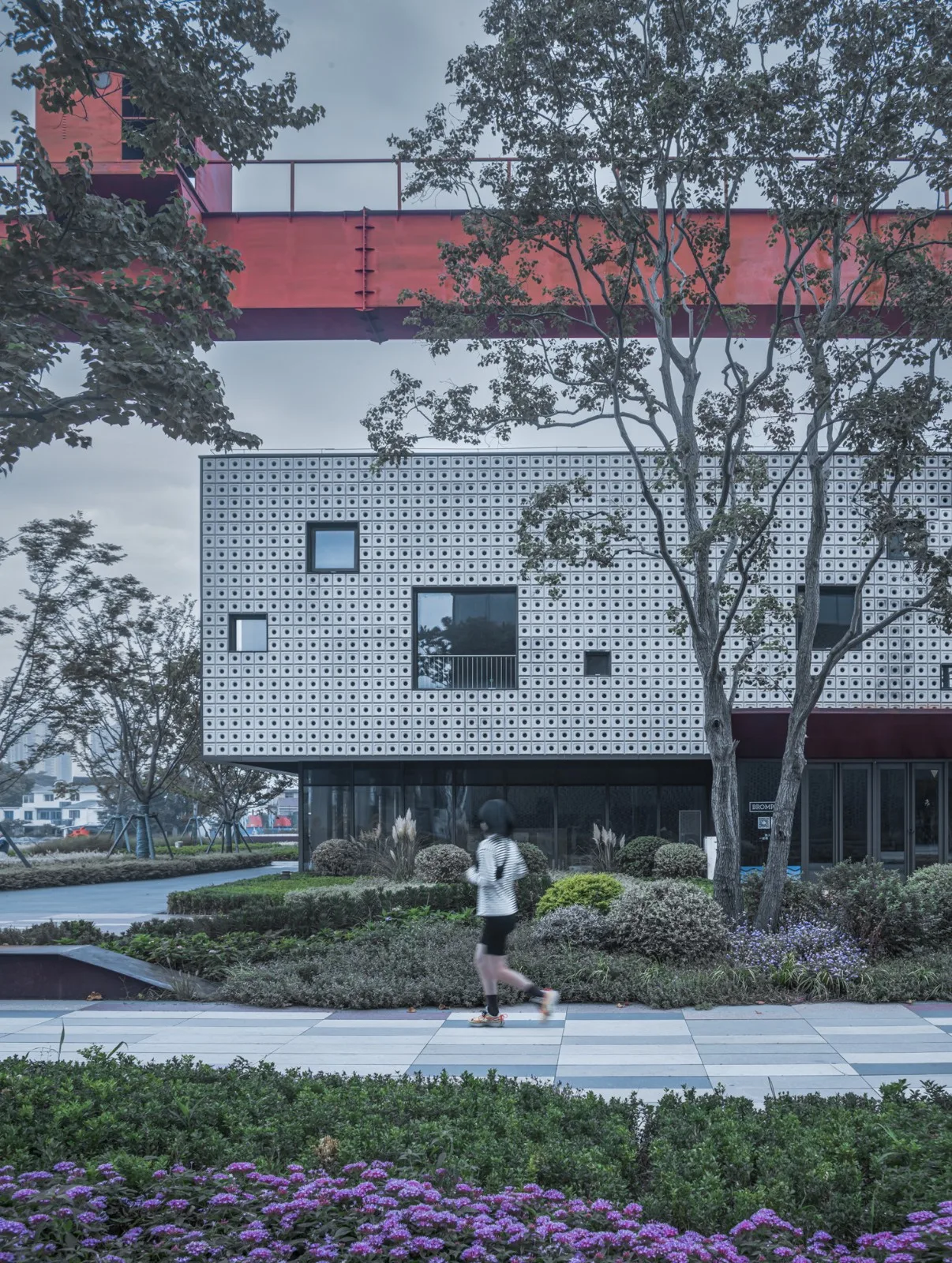
Inspired by the textures of Nan Chang Street, the waterfront cultural block features staggered forms and harmonious scales, recreating the historic street memory. At the triangular intersection of two axes, the cultural and commercial building C14, with its distinctive skin, forms a horn-like shape alongside Factory 13, bridging the scale from canal to urban interface.
Facade elements draw from the Wuxi kiln tradition, using GRC modules to imbue the skin with dynamic textures that evoke a living, breathing presence.
This development integrates architecture, spatial planning, business strategy, and event programming to craft a unique urban fabric blending old and new. It fosters a vibrant public life through the organized convergence of people, businesses, and activities.
Building 1’s opening marked the project’s activation, awakening the site’s long-dormant spirit. Since then, nearly a hundred events have taken place, including book clubs, press conferences, creative contests, TED talks, live performances, art exhibitions, concerts, and theater festivals.
The gray space adjacent to Building 3 adds spatial depth to the entrance square, which serves as a vibrant venue for cultural performances and gatherings, telling the story of modern life and infusing vitality into the park.
Ascending the large steps to the second-floor platform reveals the suspended treehouse. Internal circulation revolves around two courtyards, alternating between old and new, large and small, high and low, offering a rich and immersive experience. The Sky Art Museum structure can be lowered to the first floor and combined with the treehouse to create a three-dimensional art path.
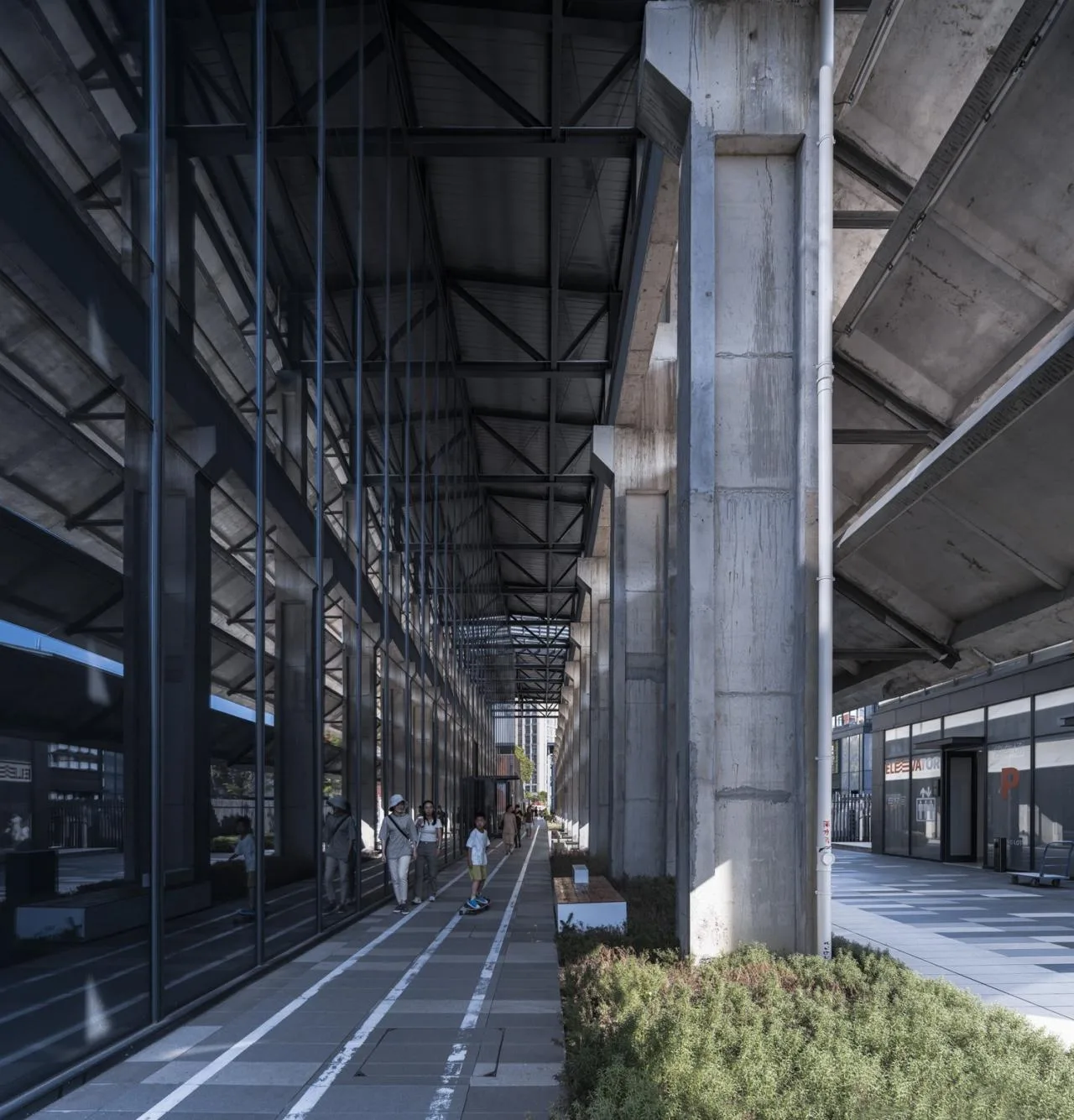
The expanded rooftop terrace offers panoramic views and a spacious social space. Sunlight filters through horizontal floating slabs supported by columns, while a new glass curtain wall reflects shadows of columns and passersby. Walking through the “eaves space” evokes the passage of time.
Transitioning from Factory Building 3’s “eaves space” to the Cultural Valley, the preserved columns fill with various boxes, and street widths shift, creating a journey between history and future. This lifestyle space embraces ambitions and dreams while reflecting local warmth and texture.
The adjacent Box Block’s staggered volumes and rich facades contrast with the preserved columns in the Cultural Valley, highlighting the energetic spirit of the new industrial era. This dynamic interplay creates fresh sparks, illuminating the revitalized land.
Strolling into the waterfront cultural district, born and flourishing alongside the water, one experiences the poetic charm of Jiangnan’s water towns. The street layout is winding and intimate, alternating between open and narrow spaces. Along the lively riverbank, occasional performances of water art, folk songs, and coffee festivals enliven the atmosphere, making it a vibrant hub for the entire district.
This waterfront cultural district not only presents a complete architectural tableau but also envisions the future of riverside urban life.
Project Drawings
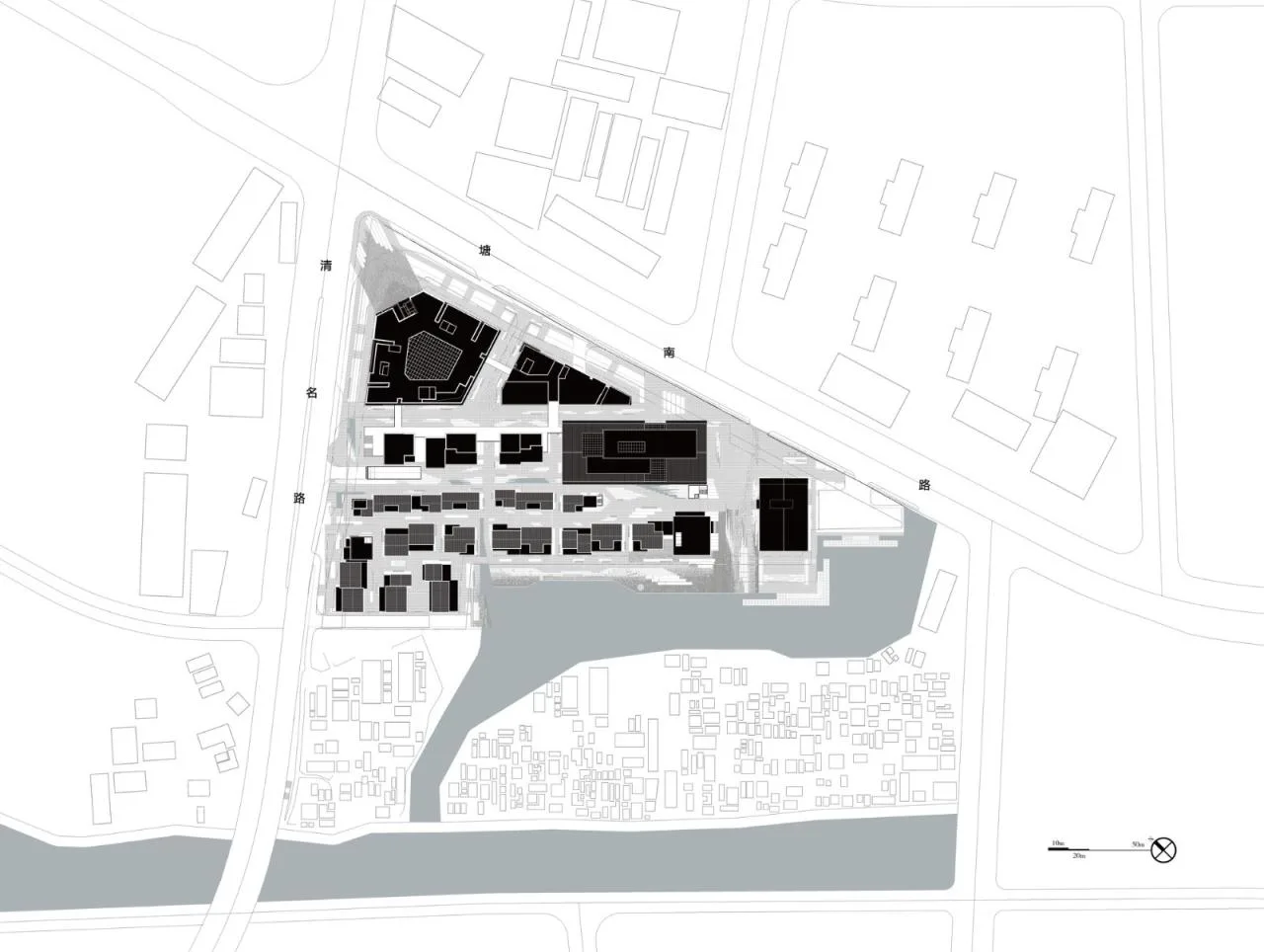
△ General layout plan
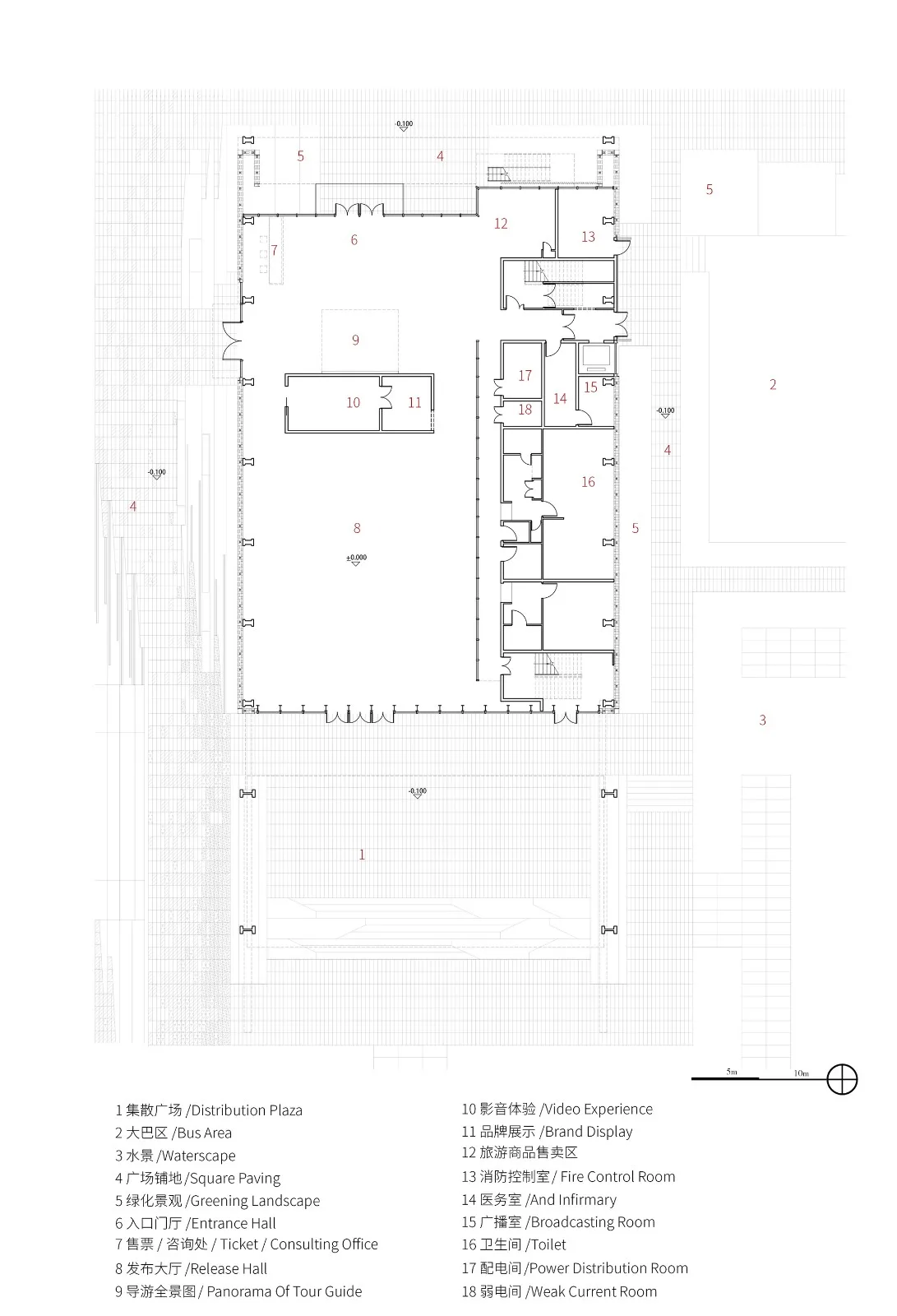
△ First floor plan
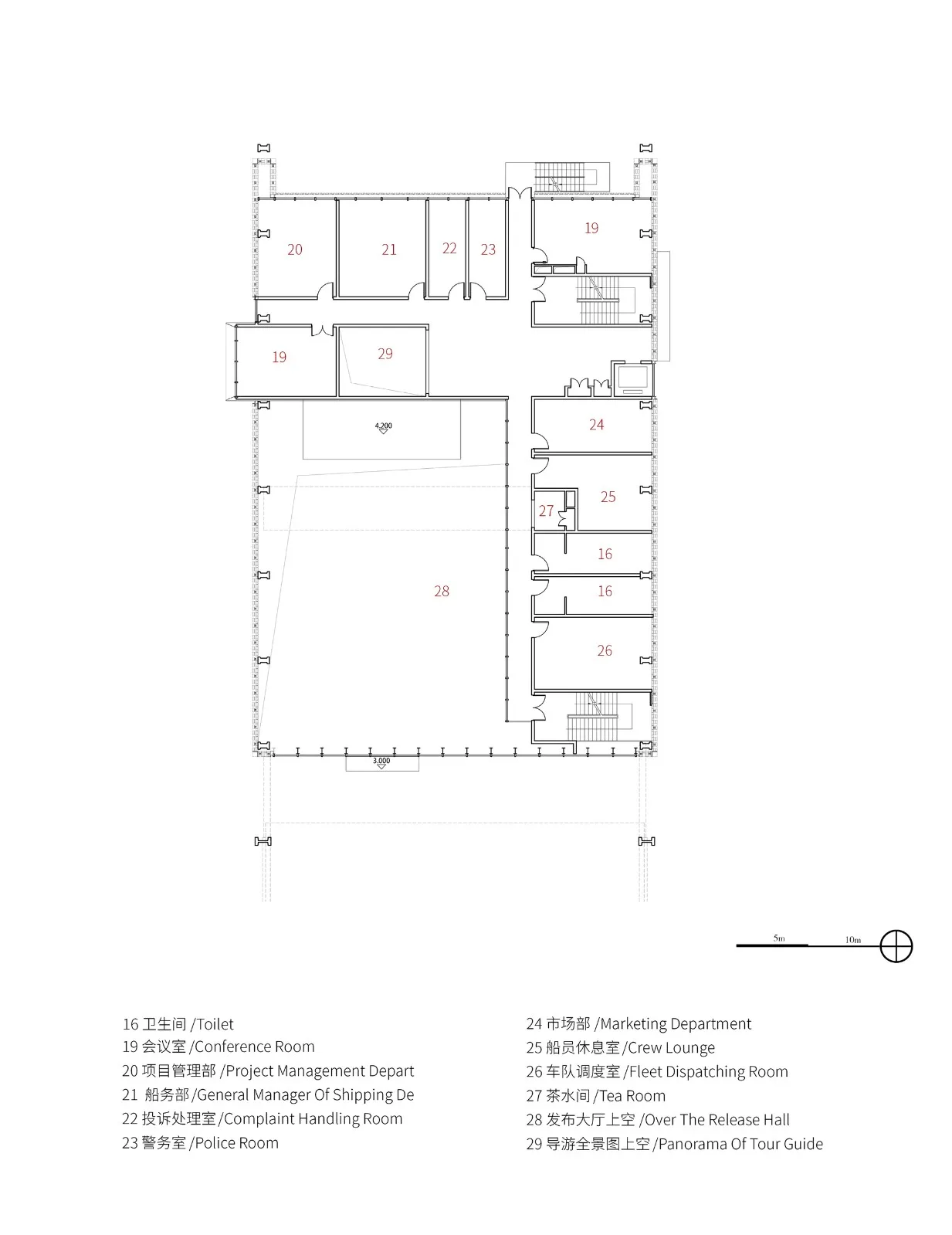
△ Second floor plan
△ Third floor plan
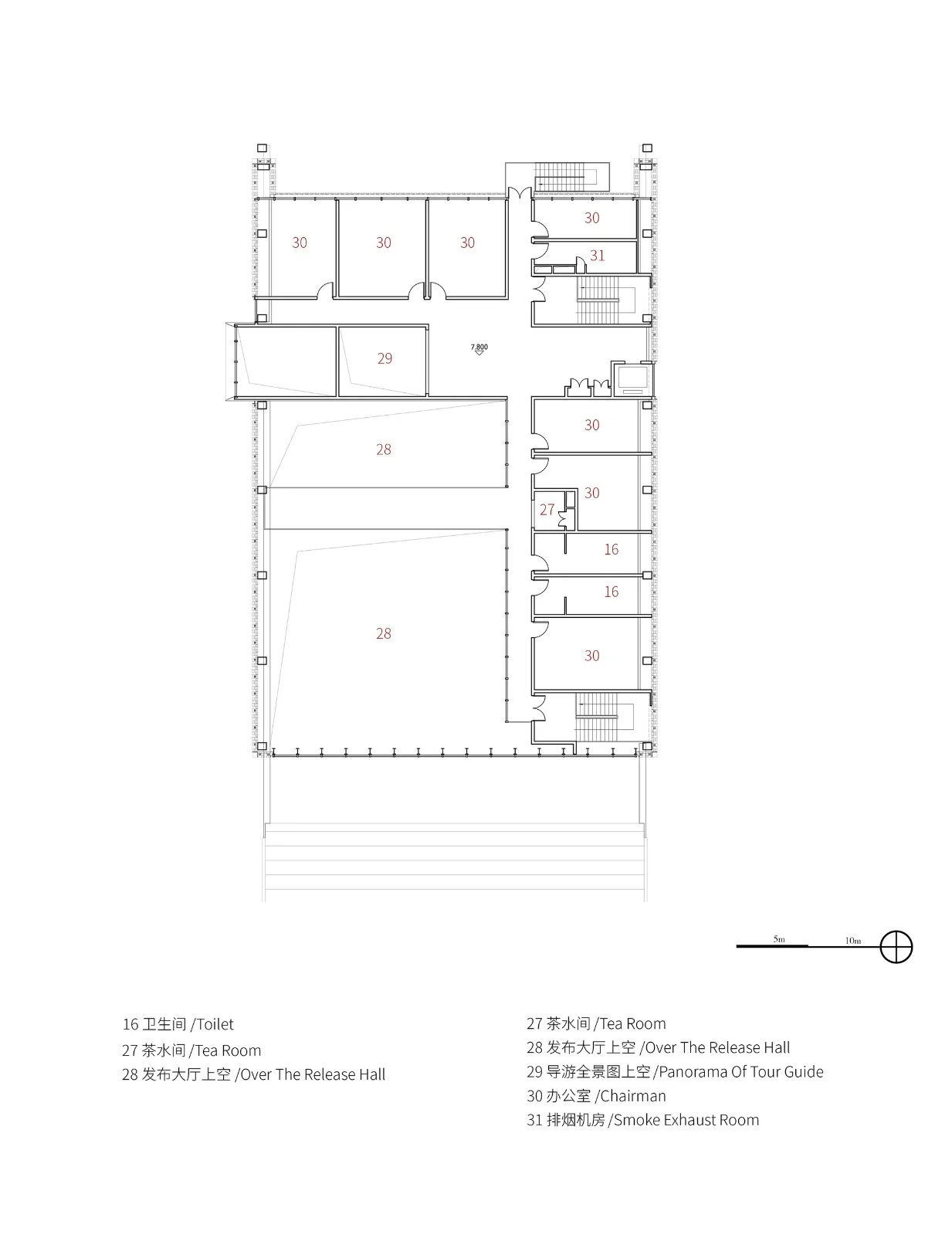
△ Fourth floor plan
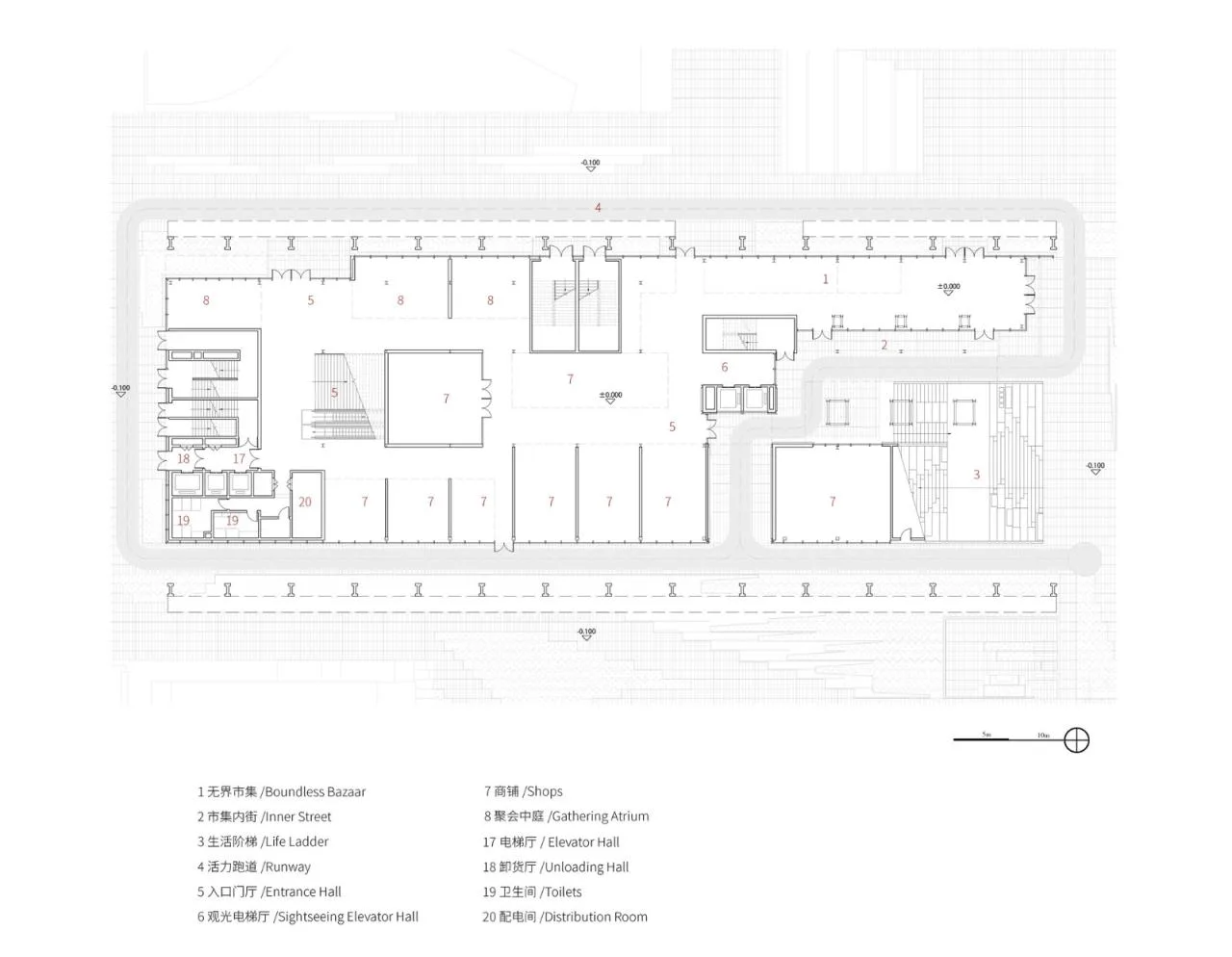
△ First floor plan
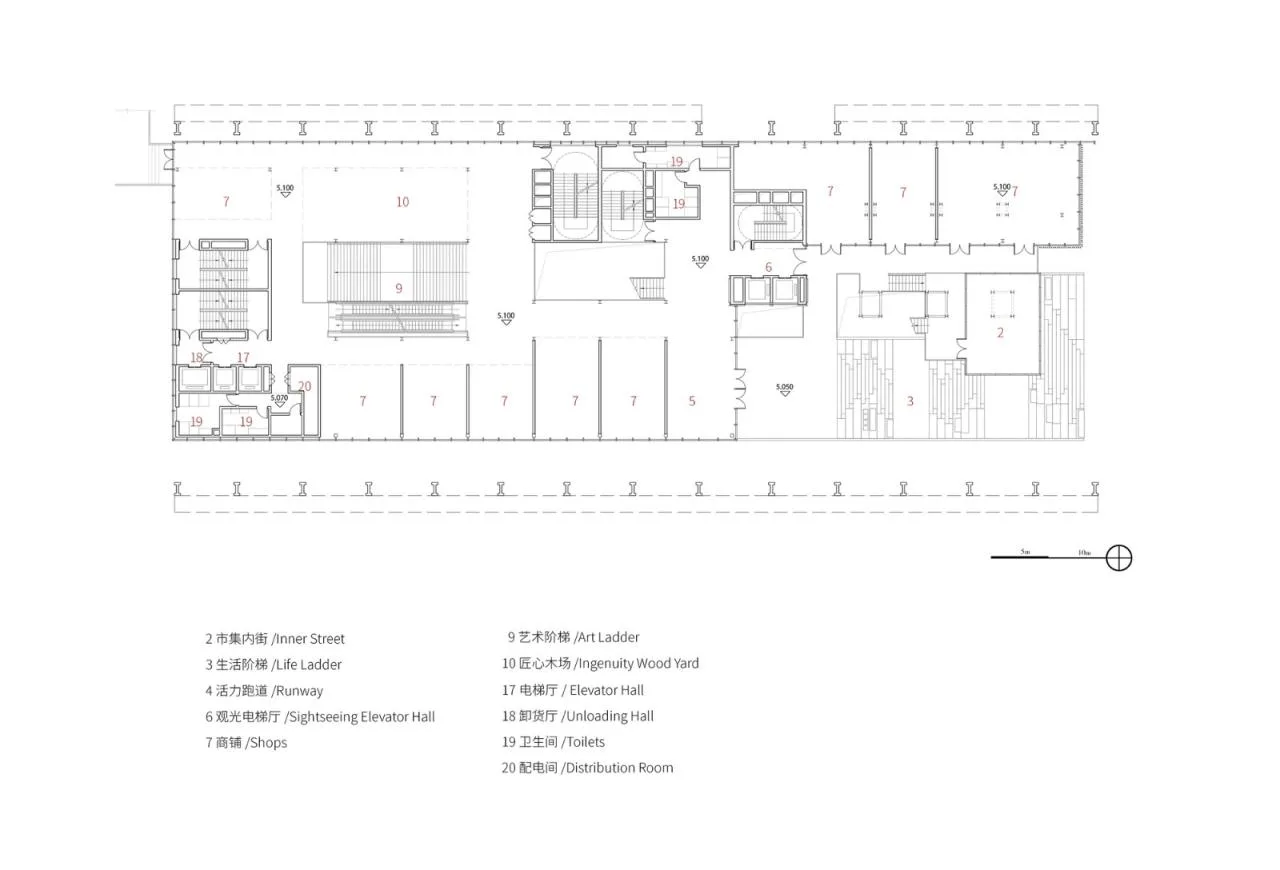
△ Second floor plan
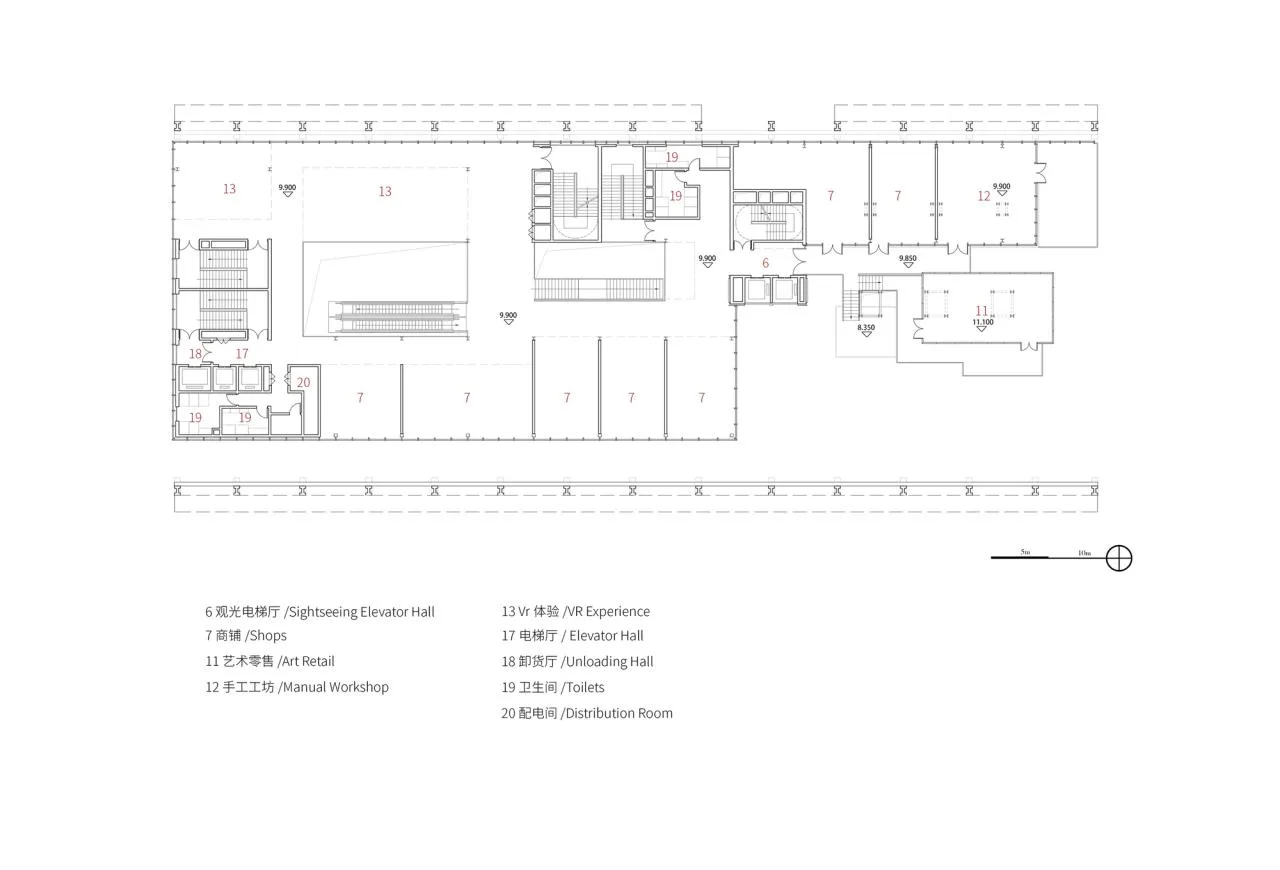
△ Third floor plan
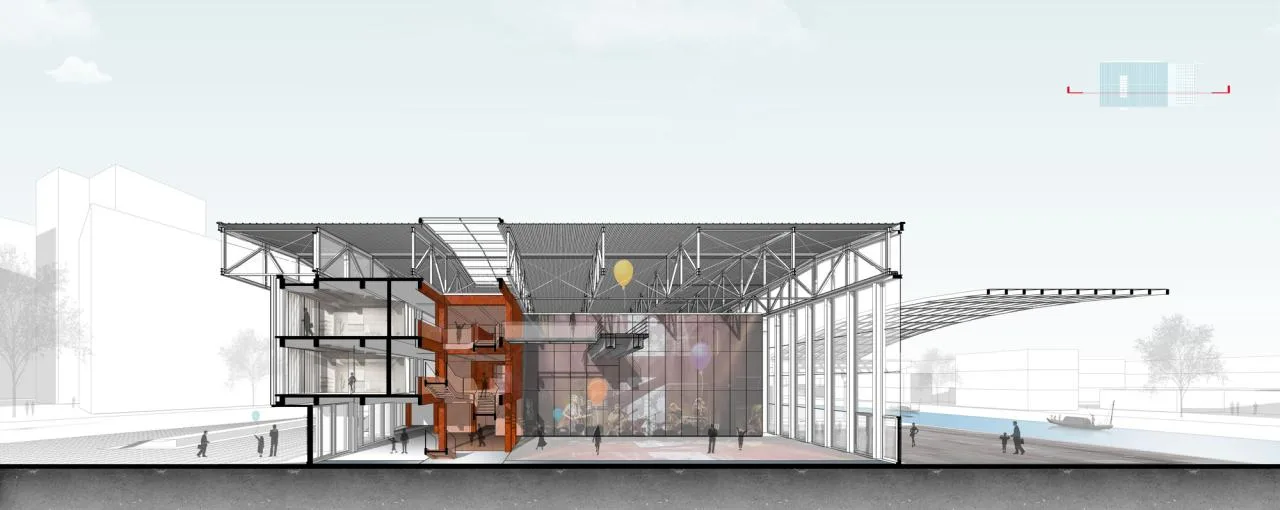
△ Section diagram
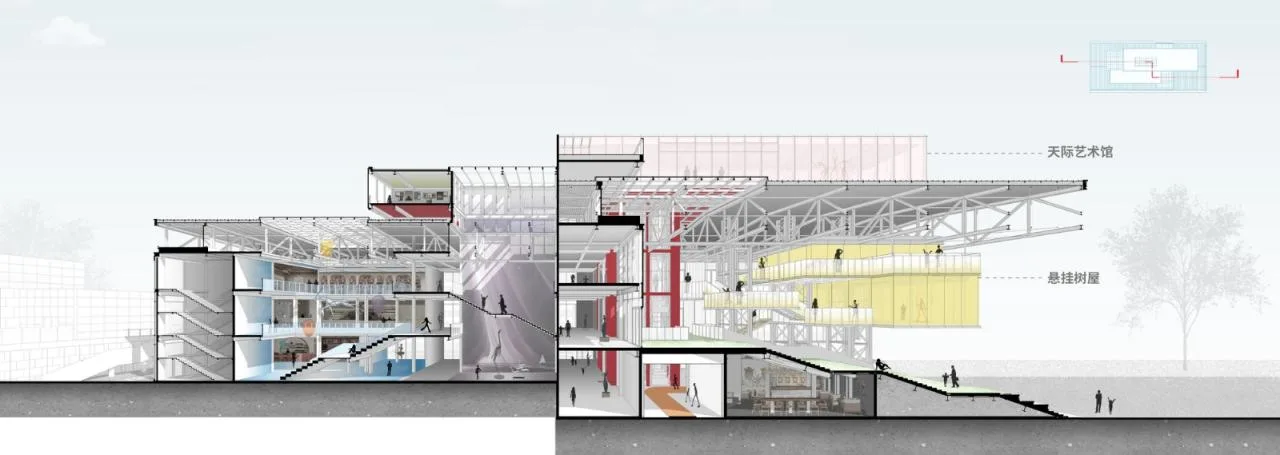
△ Section diagram
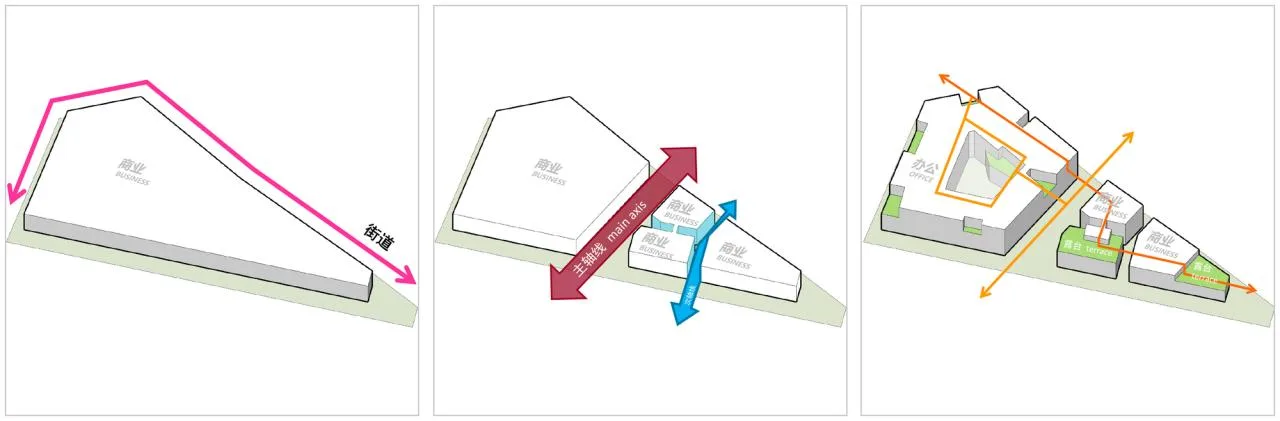
△ Analysis chart
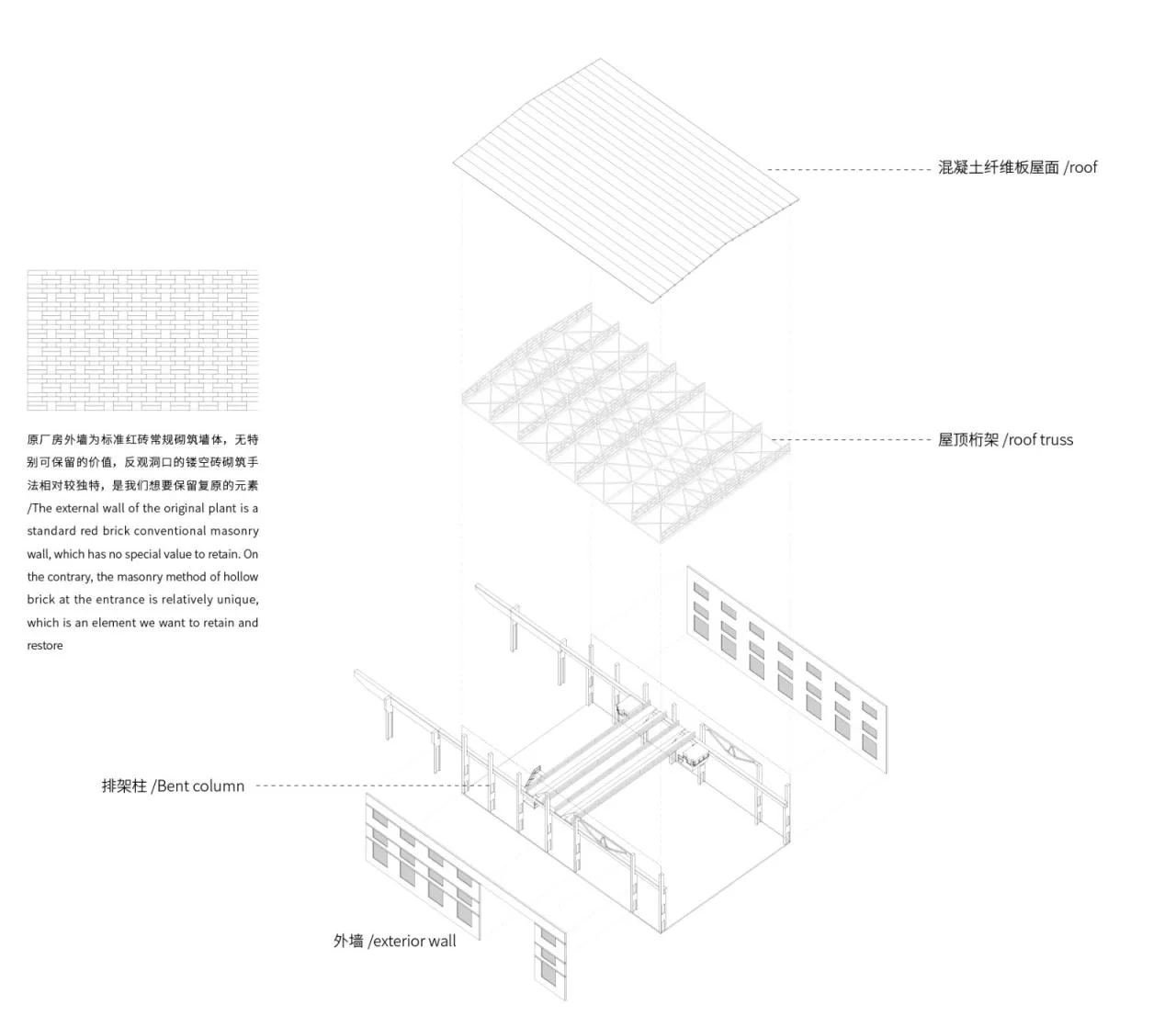
△ Analysis chart
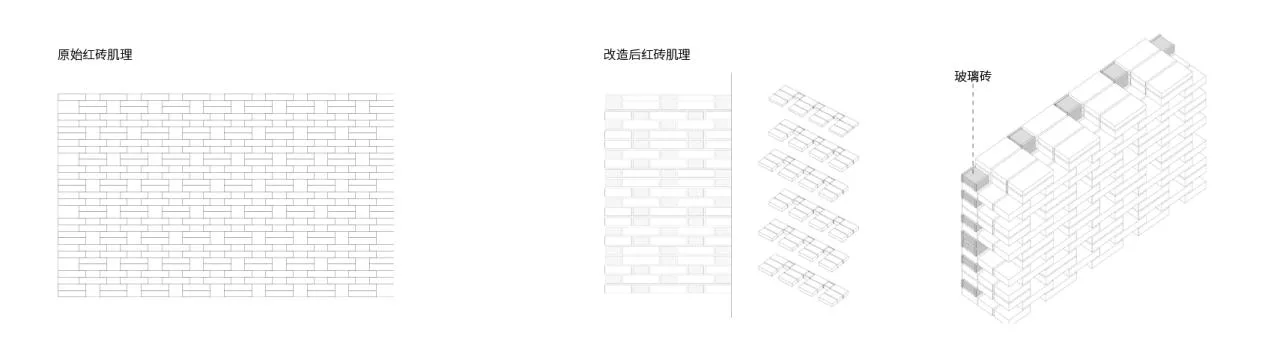
△ Analysis chart
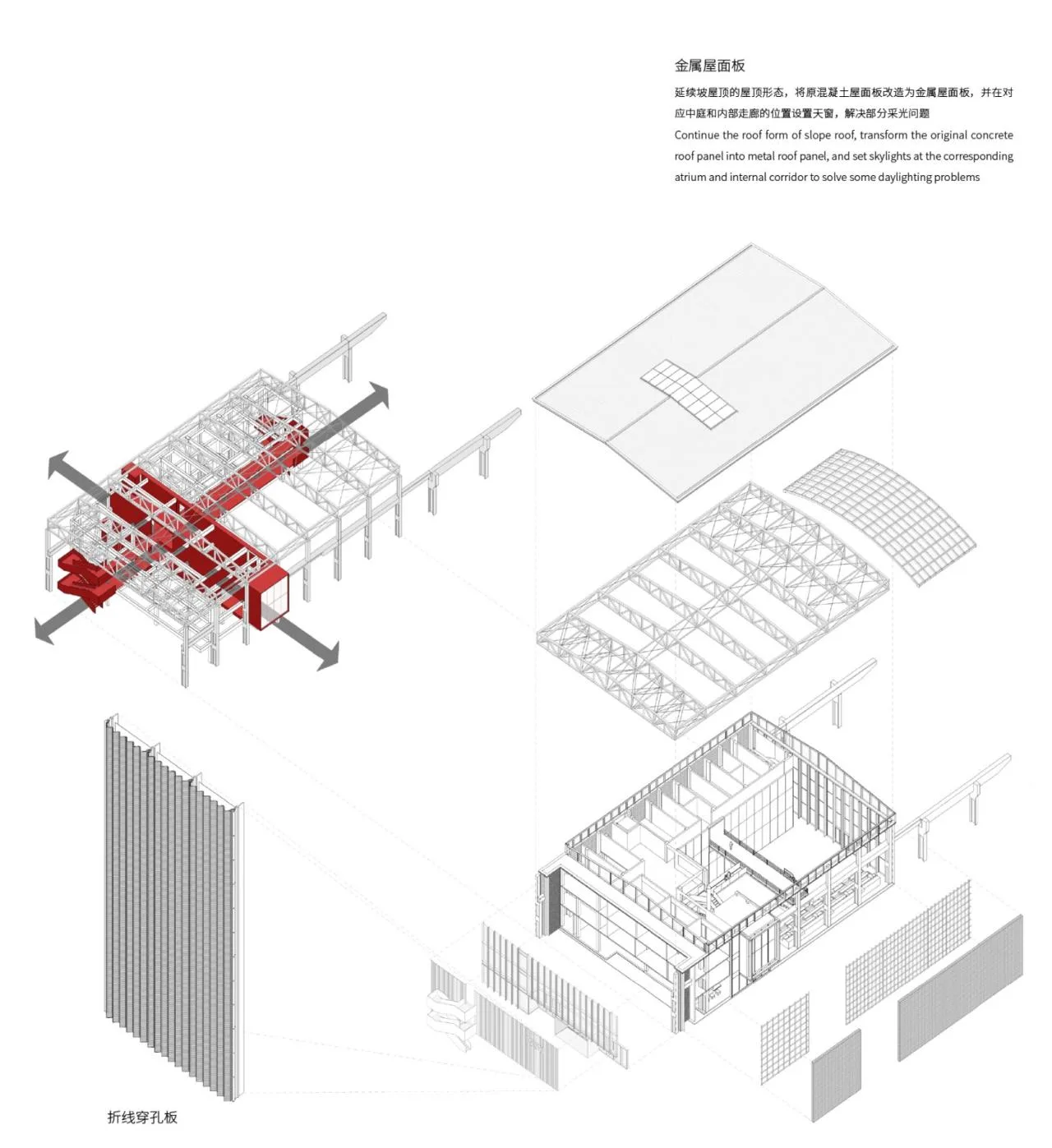
△ Analysis chart
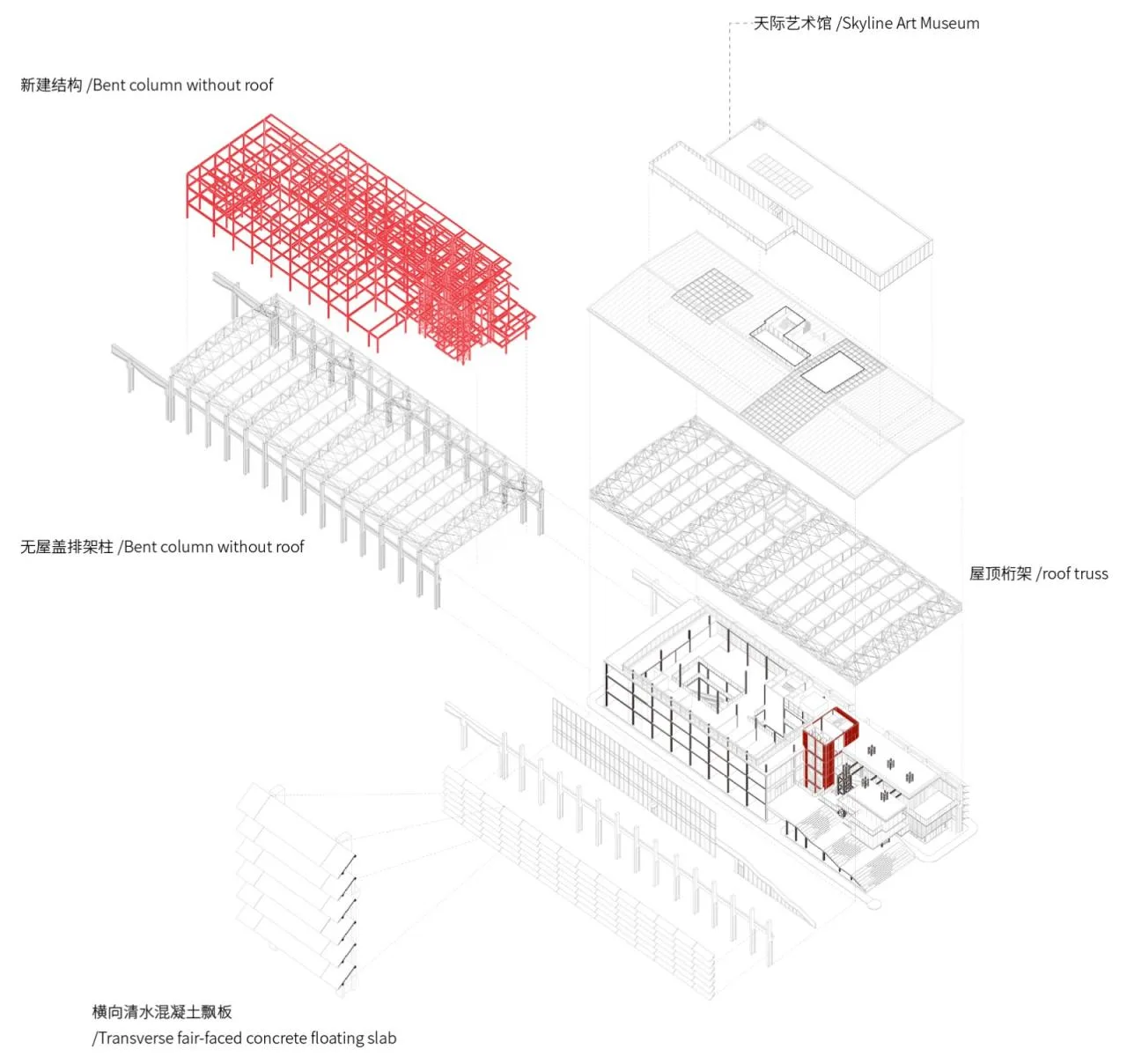
△ Structural schematic diagram
△ Structure schematic diagram
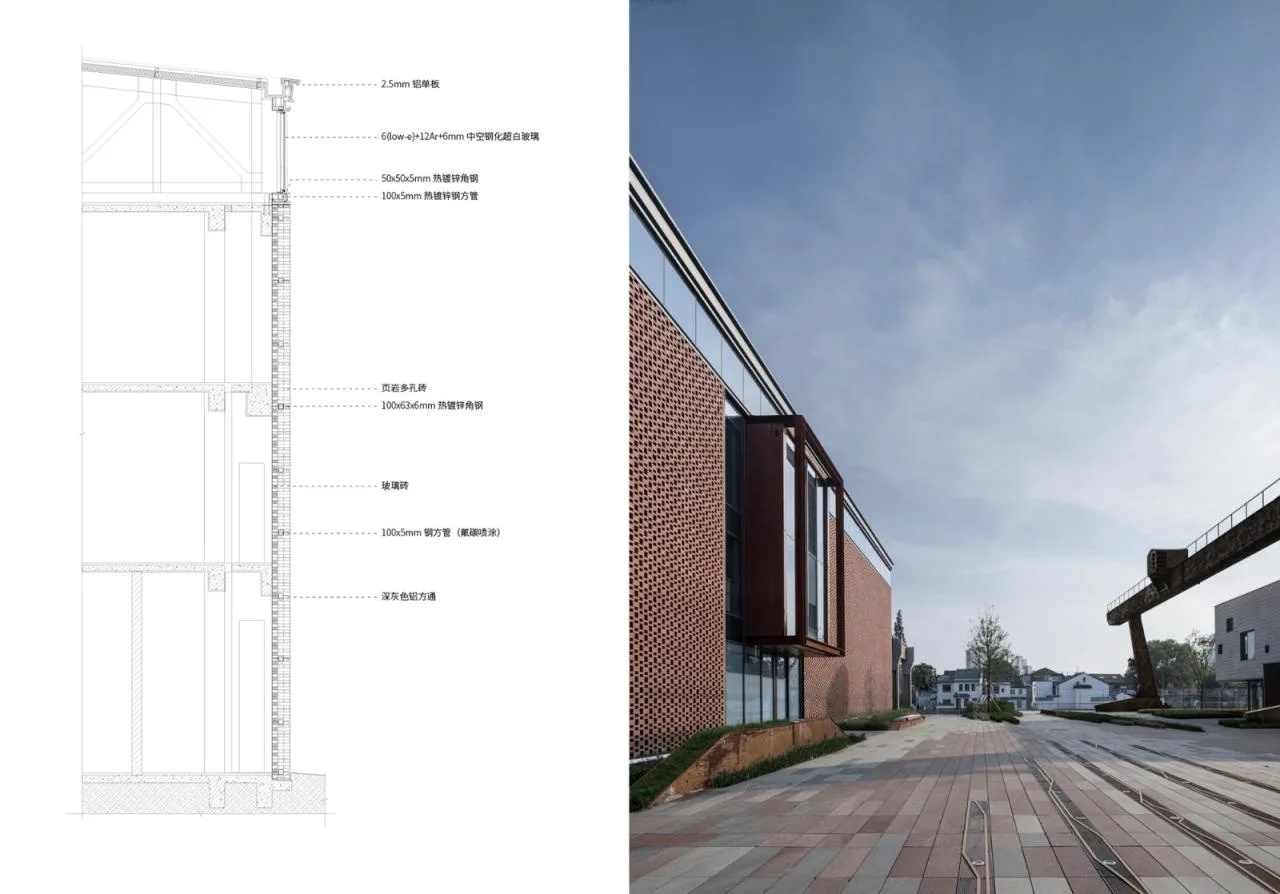
△ Detailed drawing
Project Information
Architect: Shenzhen Huahui Design
Area: 60,505 m²
Project Year: 2023
Photographer: Architectural translator, Zhang Chao
Manufacturers: Yixing Dingcheng Architectural Ceramics Co., Ltd., Hangzhou Weathering Steel Trading Co., Ltd., Jiangsu Xincubical Plate Industry Co., Ltd.
Principal Architect: Xiao Cheng
Project Architect: Liao Guowei
Architectural Design Team: Wu Yixuan, Hong Fenglian, Wang Wenkai, Zhong Shupeng, Zeng Huihai, Zhang Maijie, Zhang Xingyu, Gong Maofeng, Xie Chaohua
Structural Design: Xu Mu, Zhao Tingting, Li Changfa
Landscape Design: Lab D+H Shanghai Office
Interior Design: Moguyun Architectural Design Consulting (Shanghai) Co., Ltd. (Building 1 and Building 3)
Construction Drawing Design: Jiangsu Chenggui Design Co., Ltd.
Curtain Wall Design: Shenzhen Pengge Curtain Wall Design Consulting Co., Ltd.
Floodlight Design: China United Engineering Co., Ltd.
Architectural and Interior Sign Design: Good Appearance Design
Construction Party: Wuxi Zhaohe Cultural Tourism Development Co., Ltd.
Owner: Wuxi Overseas Chinese Town Industrial Development Co., Ltd; Wuxi Metro Real Estate; Jiangsu Ancient Canal Investment Group Co., Ltd.
Location: Wuxi















Must log in before commenting!
Sign Up