
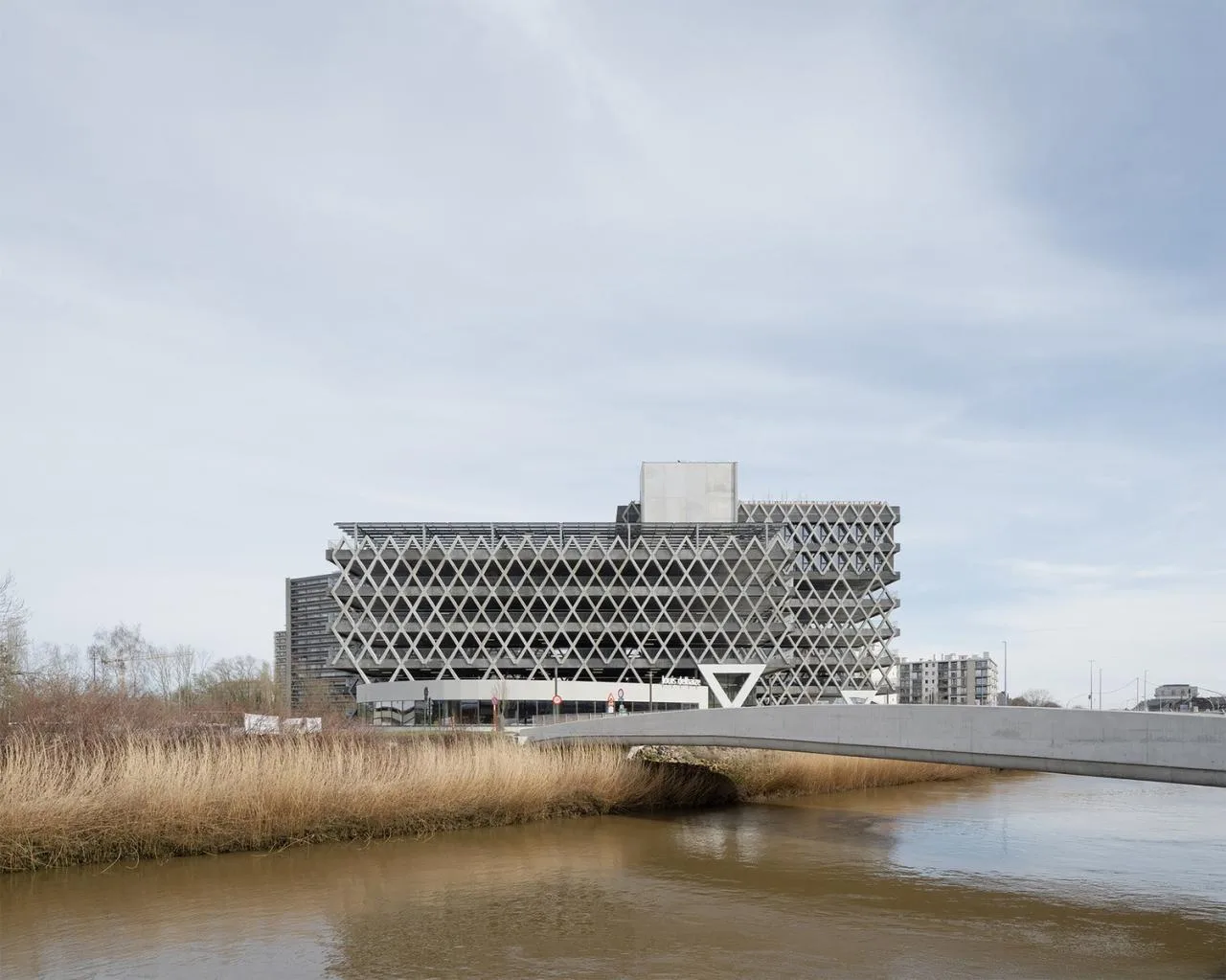
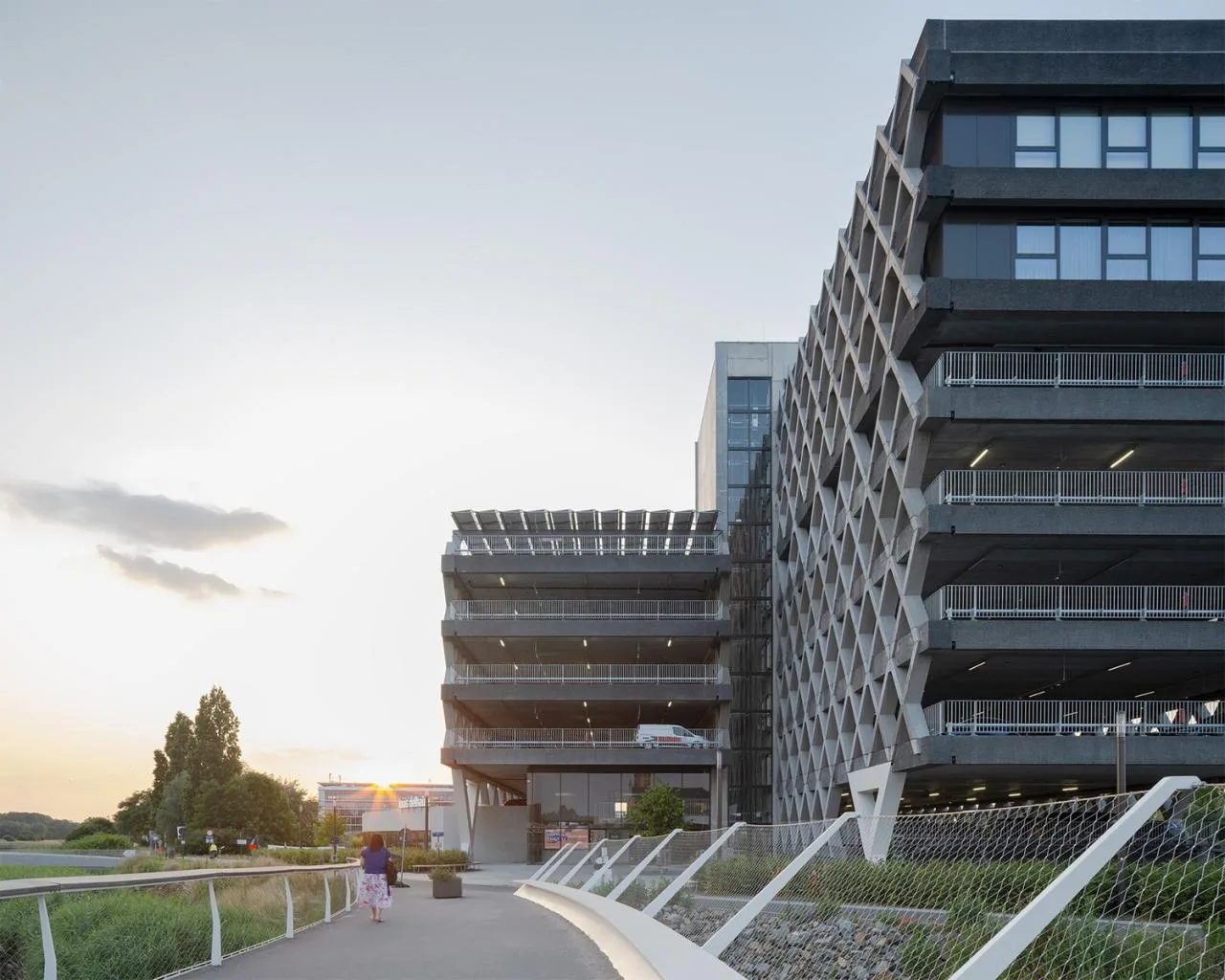
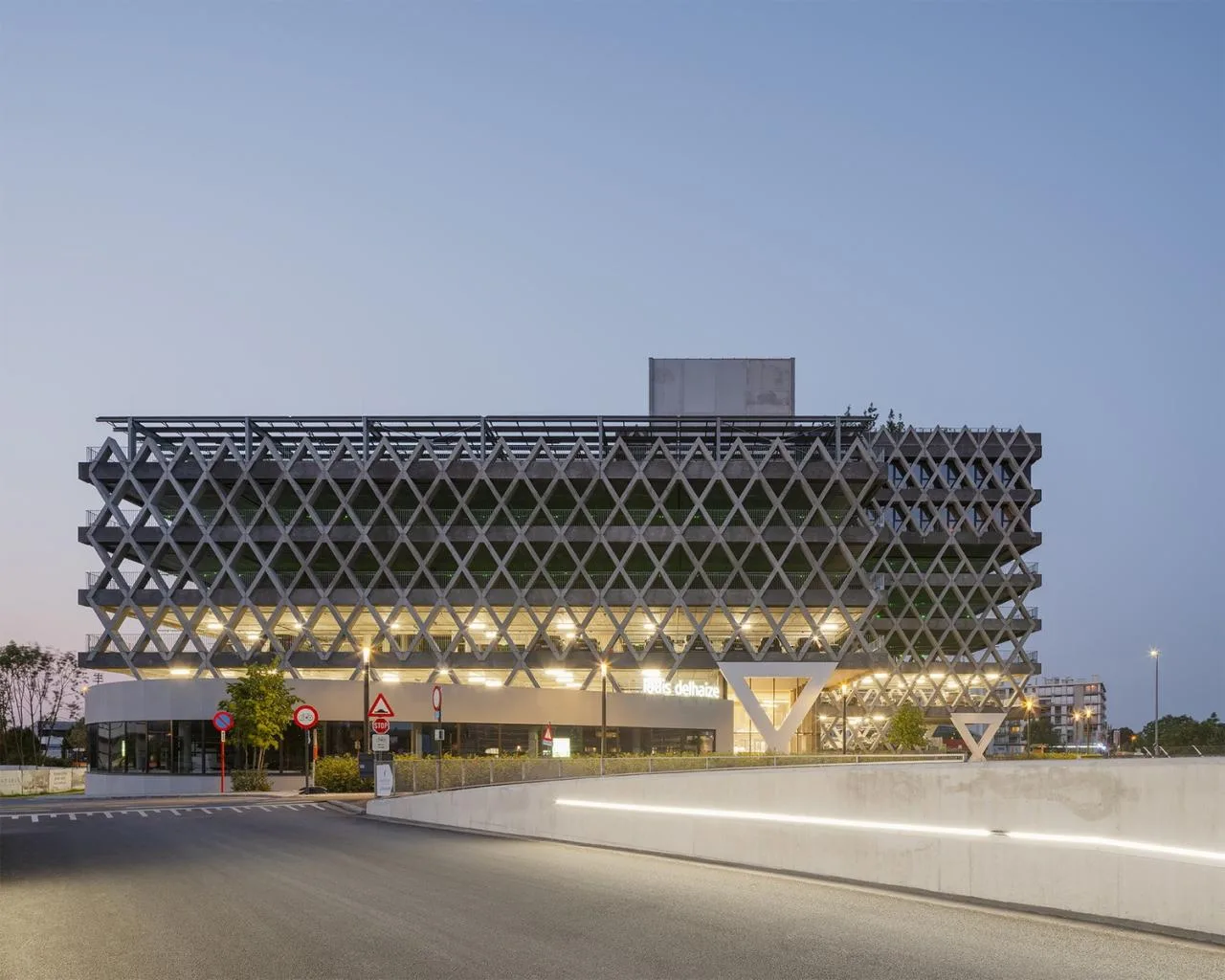
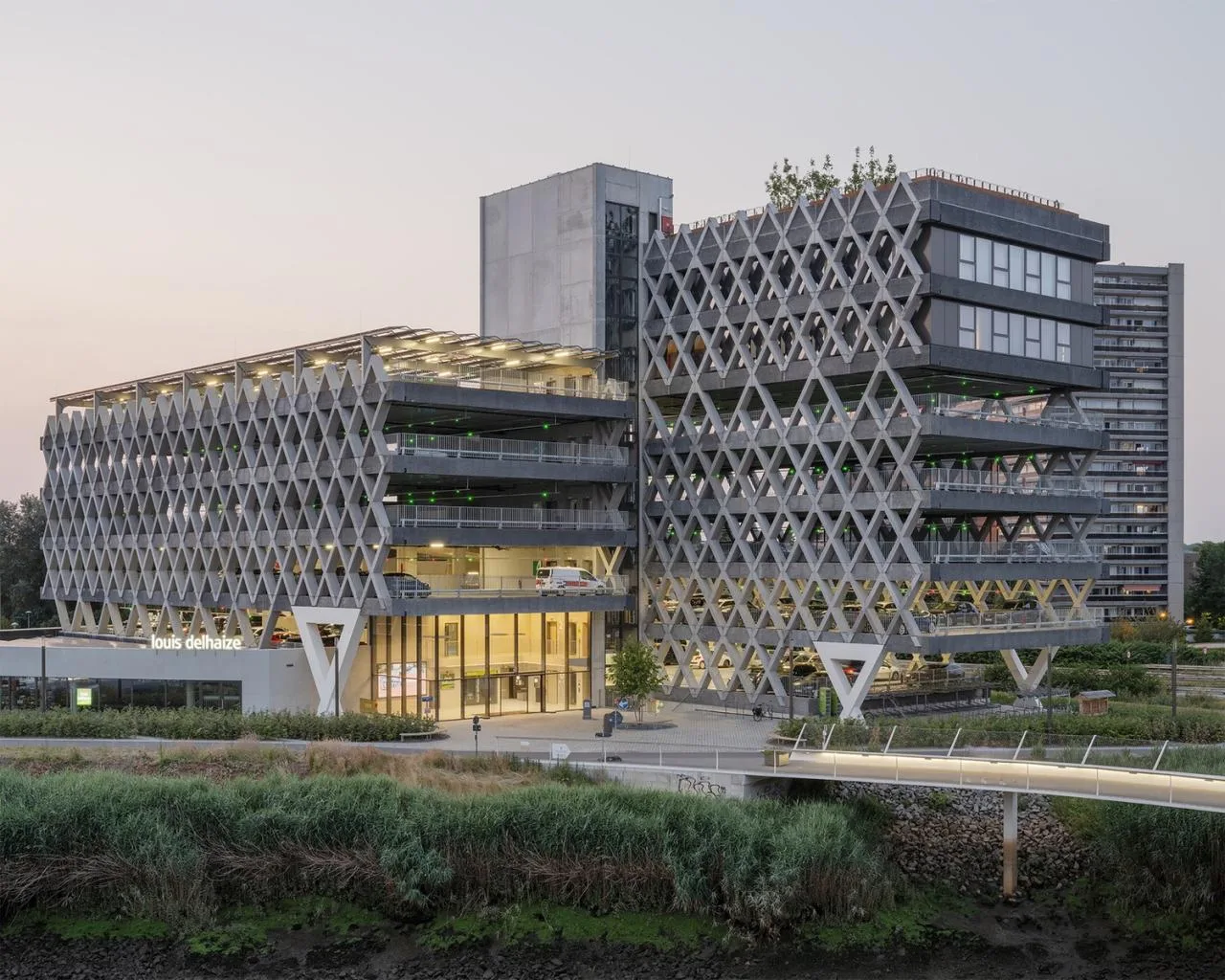
The Easestip Transportation Center in Mechelen presents a fresh approach to parking infrastructure. This circular facility accommodates parking for cars and bicycles, while also featuring a public rooftop terrace, a box-in-box office space, and a local supermarket. Designed with the future in mind, it anticipates a shift towards shared and autonomous vehicles. Its compact parking layout frees up space for additional functions.
As part of a broader urban development initiative, transportation hubs like this aim to become dynamic transition zones, ensuring smooth traffic flow between the city center and its outskirts.
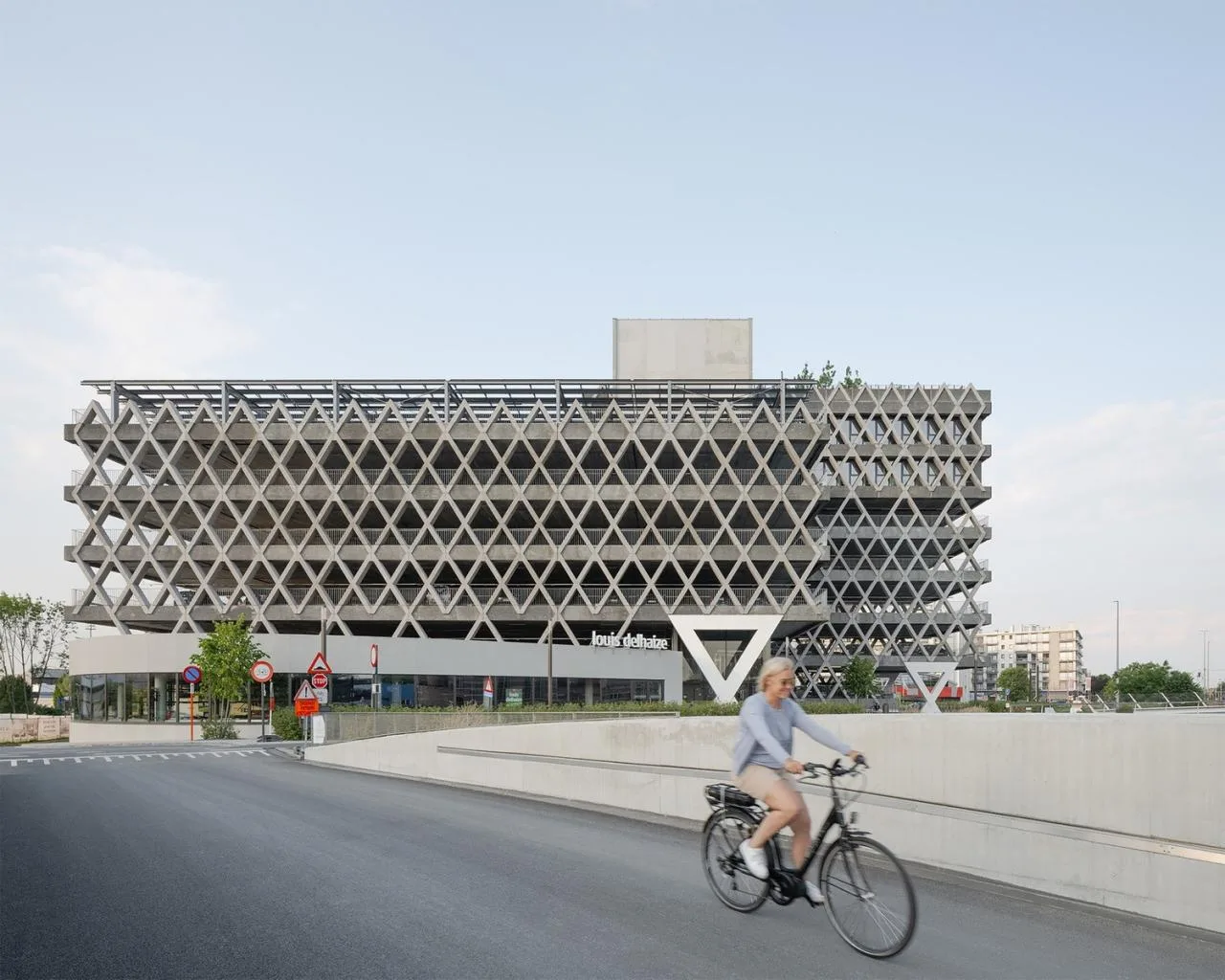
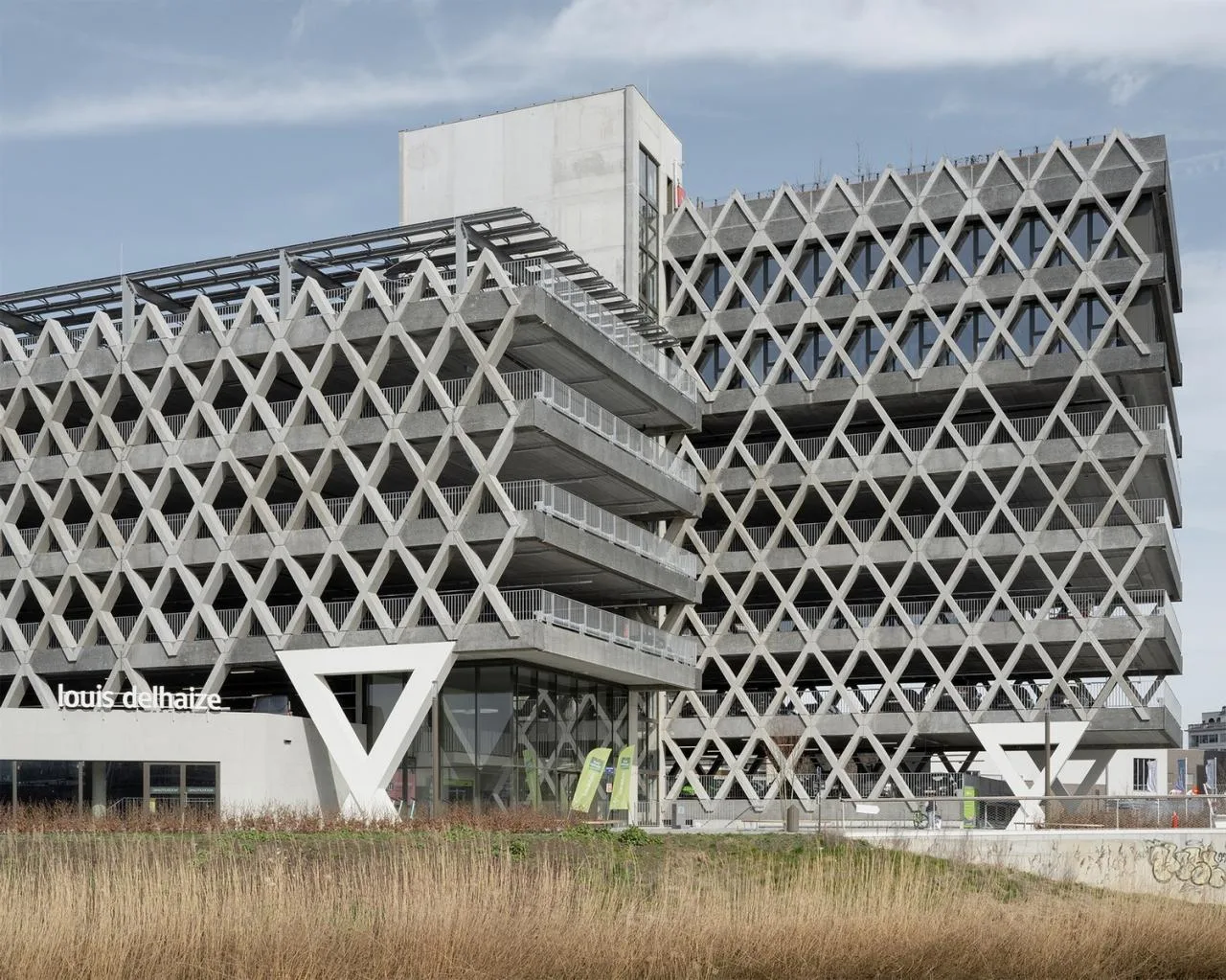
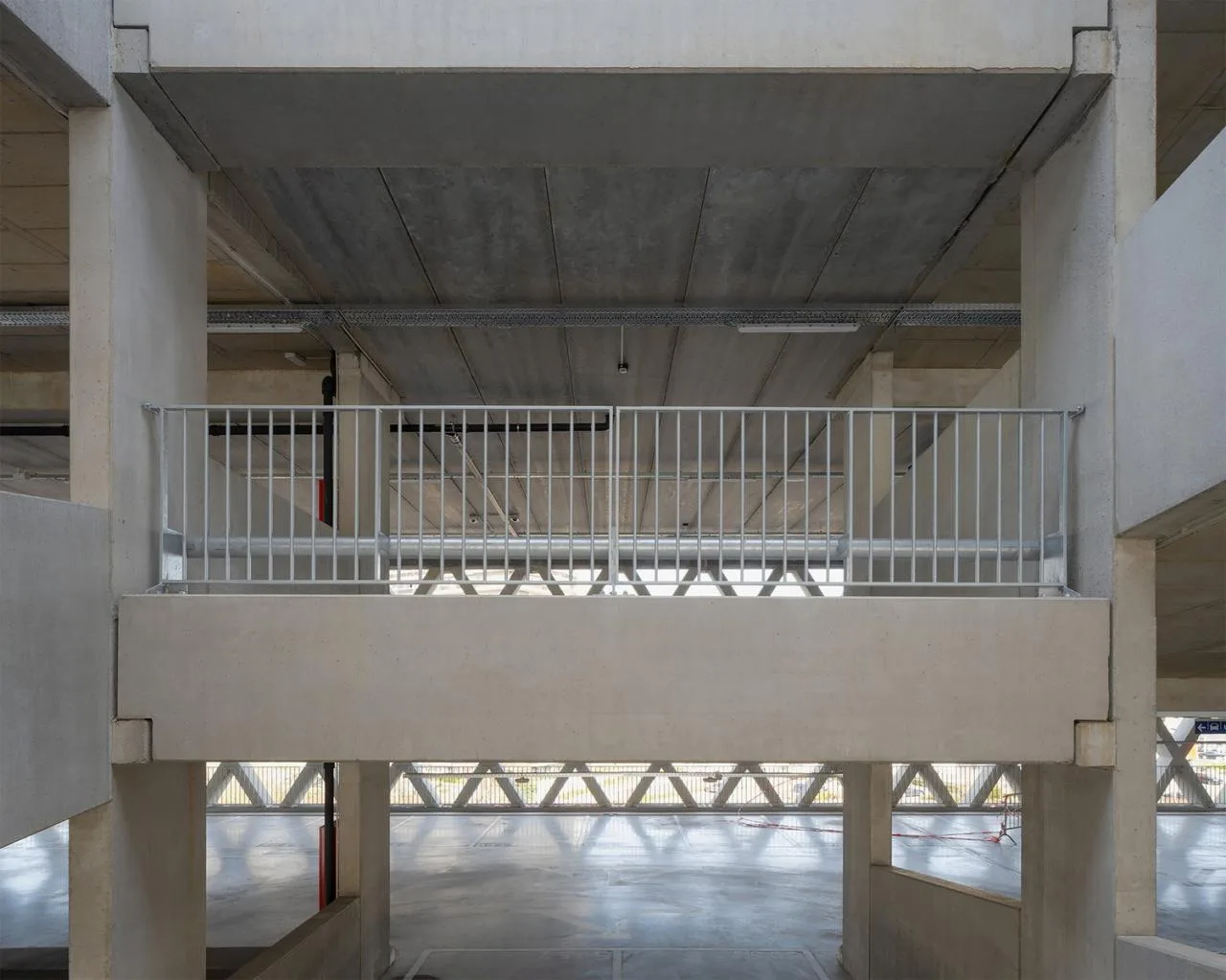
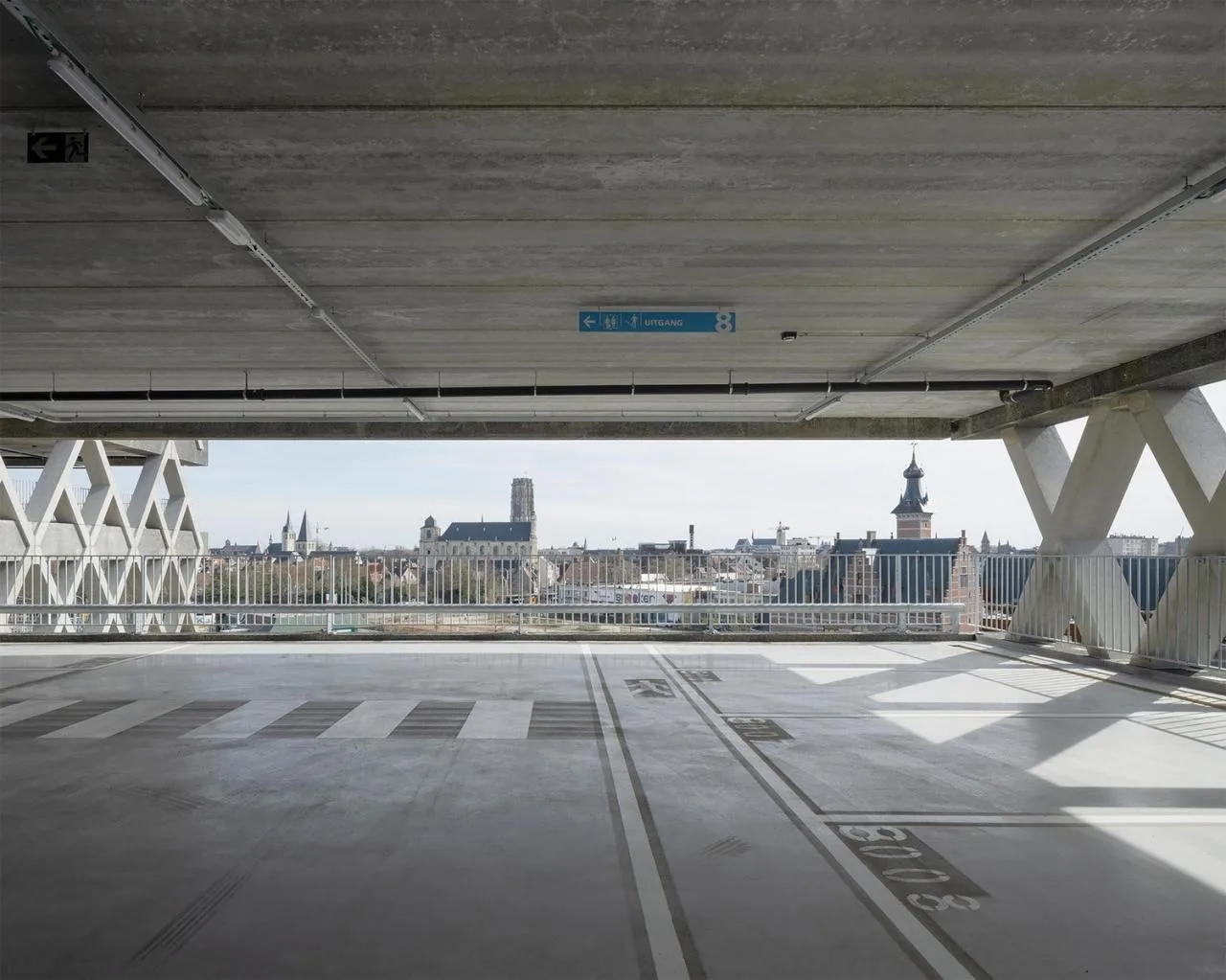
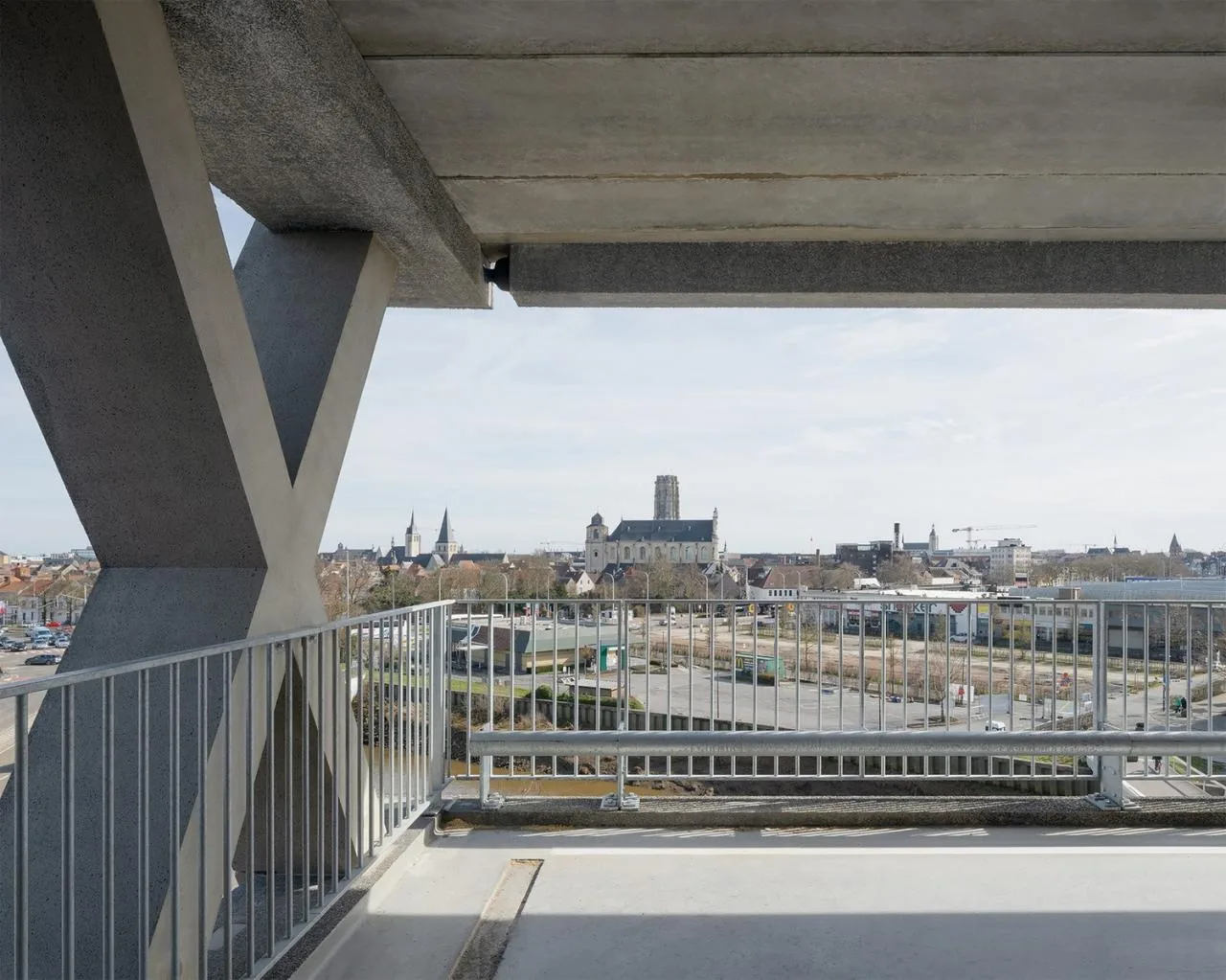
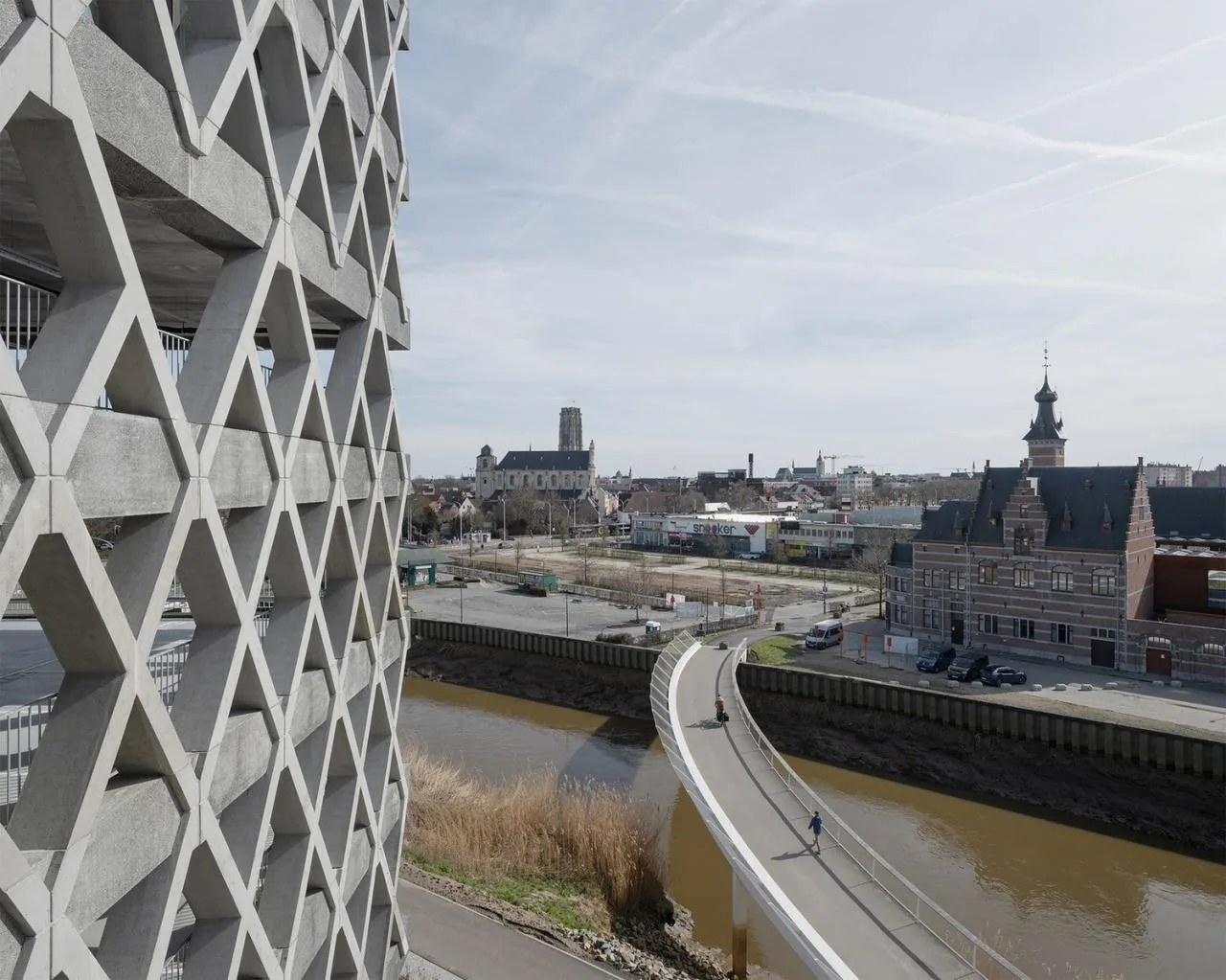
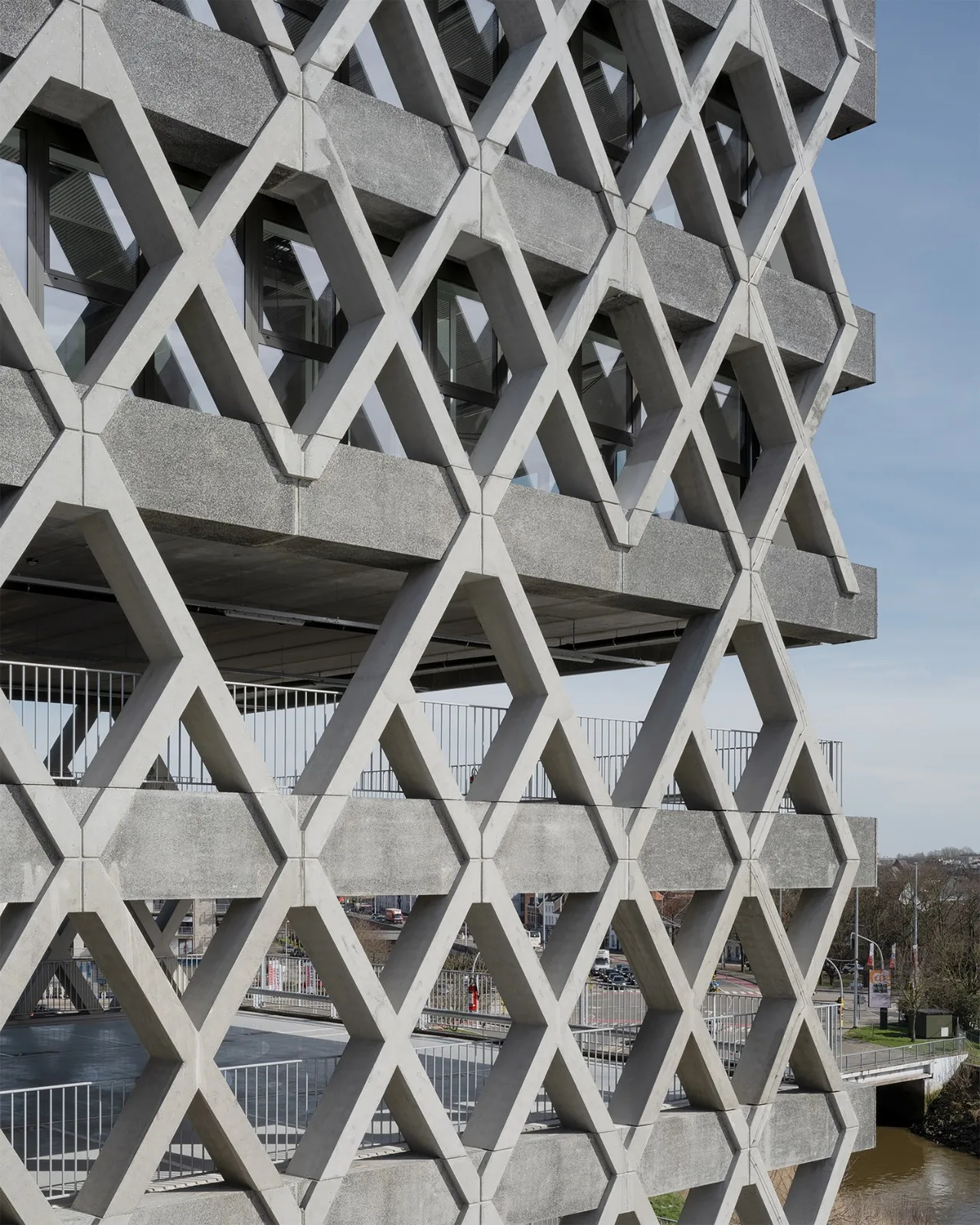
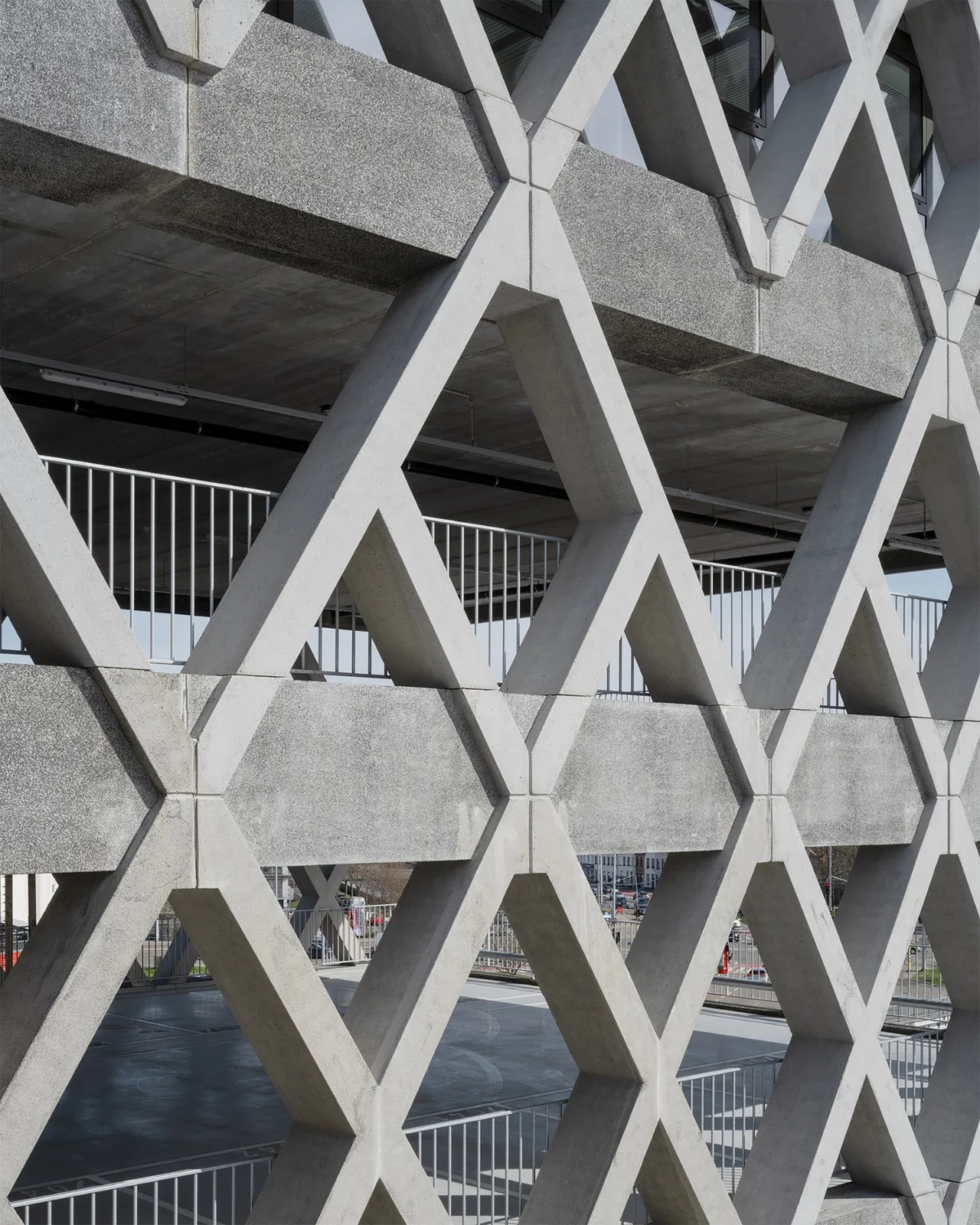
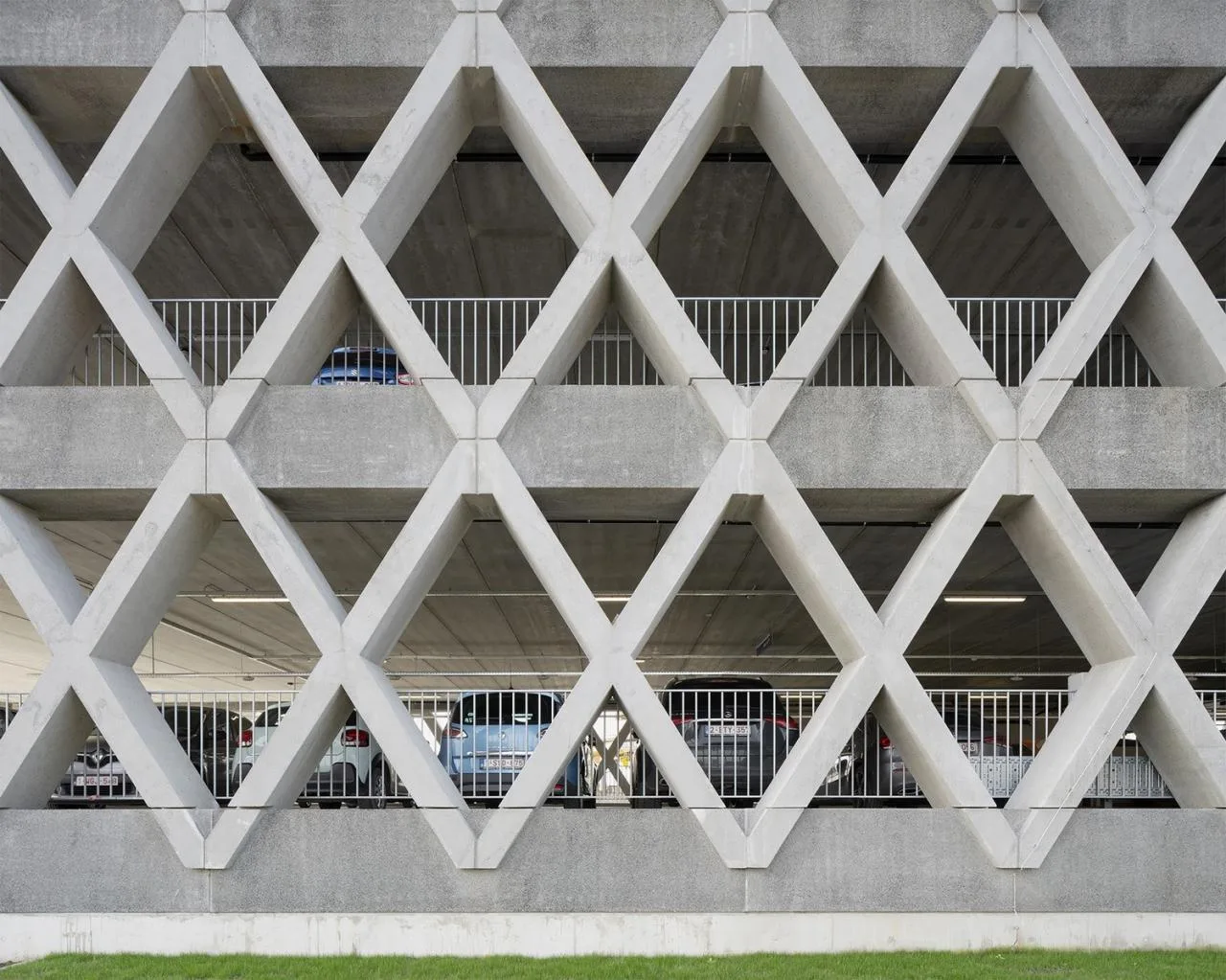
During the initial design phase, adaptability was a key focus. Various solutions were explored to ensure the building could evolve with the needs of the Easestip community and ongoing urban growth. The structure utilizes prefabricated concrete X-shaped load-bearing elements on the exterior facade, allowing for an entirely open floor plan arranged in a parallelogram grid.
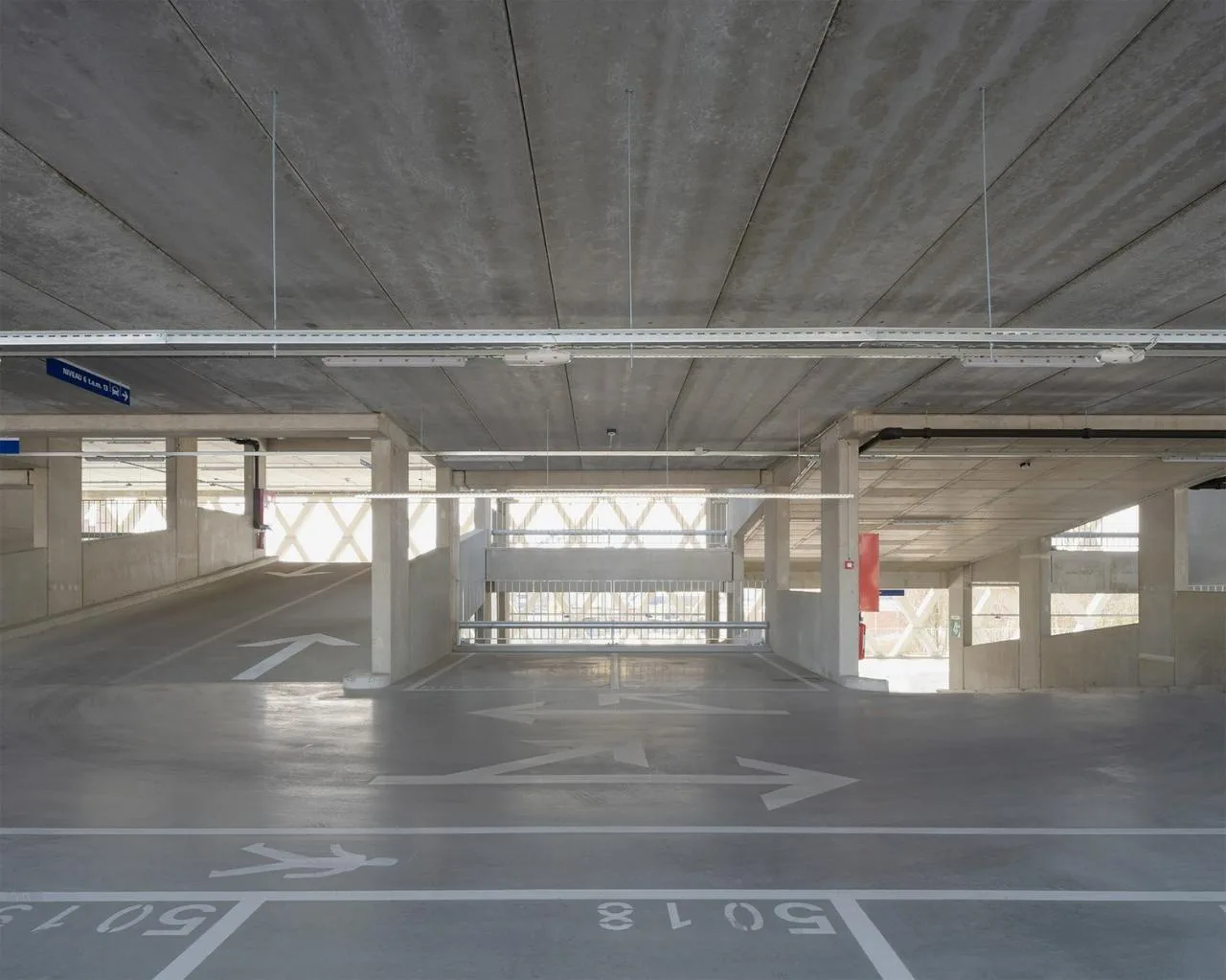
Each floor boasts a generous ceiling height of 336 centimeters with no protruding beams, enhancing spatial flexibility. The box-in-box concept is applied for insulation, particularly in the office spaces on the upper two floors, maximizing design diversity in both function and layout.
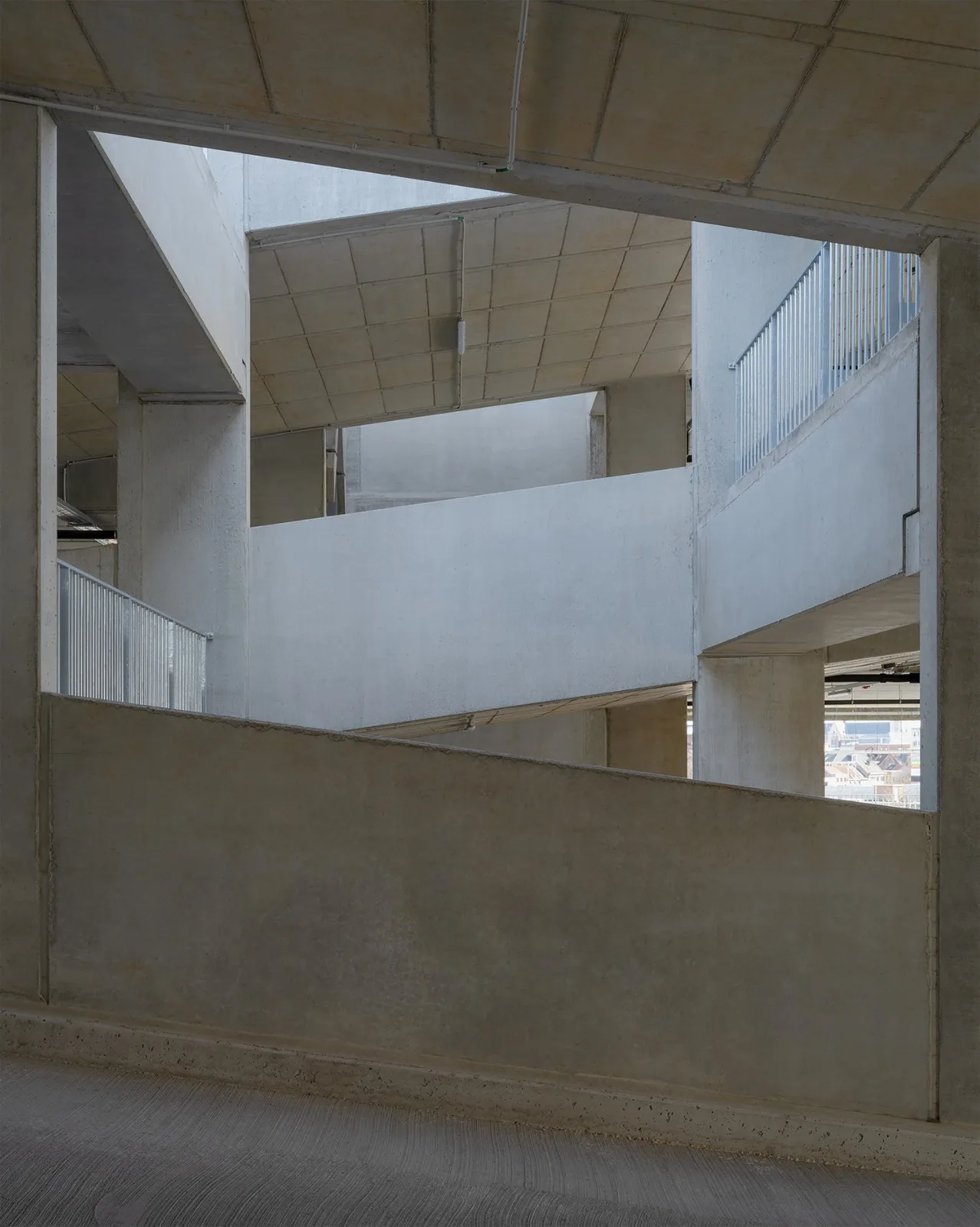
The circulation core is strategically placed between two main volumes to minimize obstructions and facilitate easy access throughout the building. Additionally, a layered landing stair system supports a compact, automated parking design.
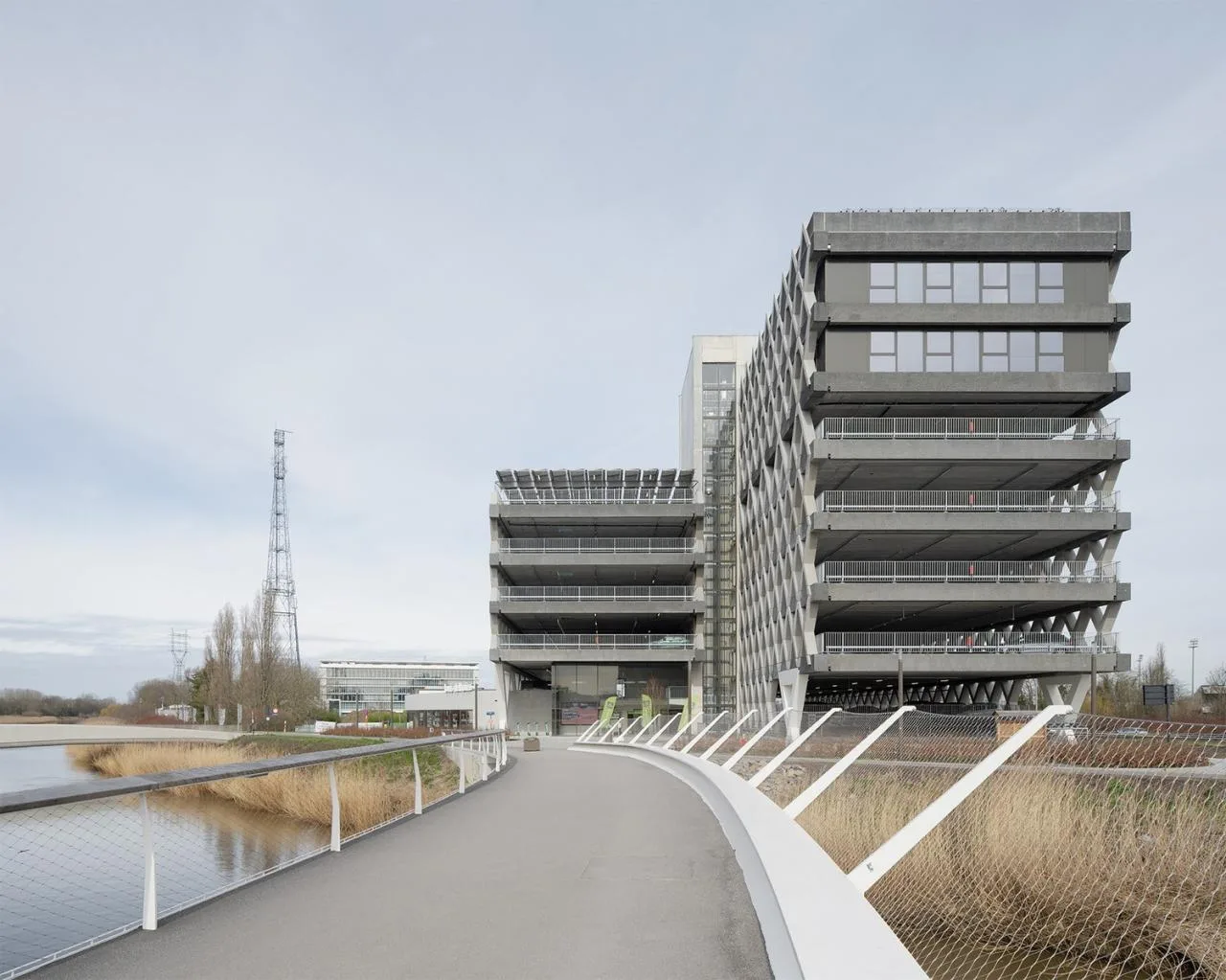
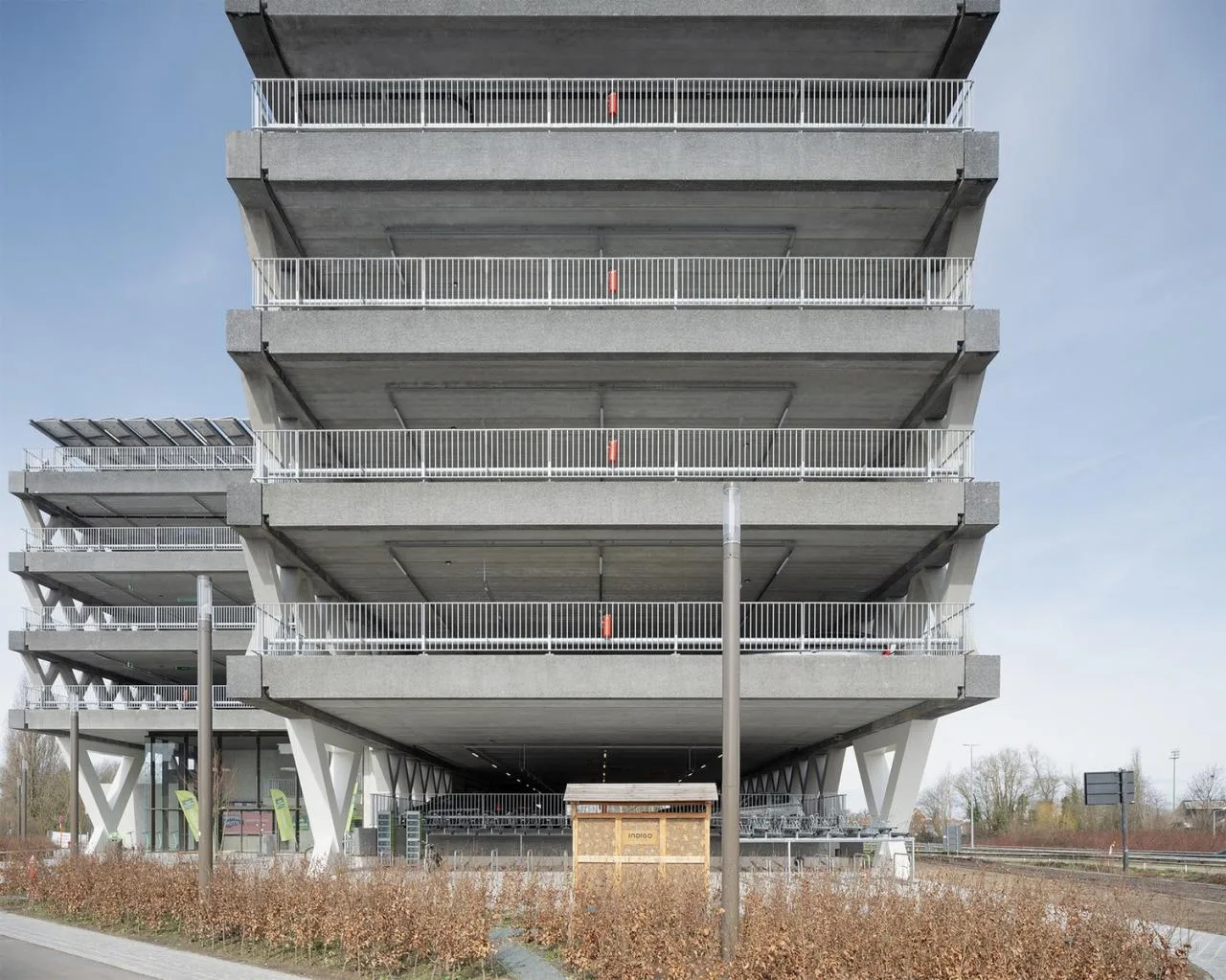
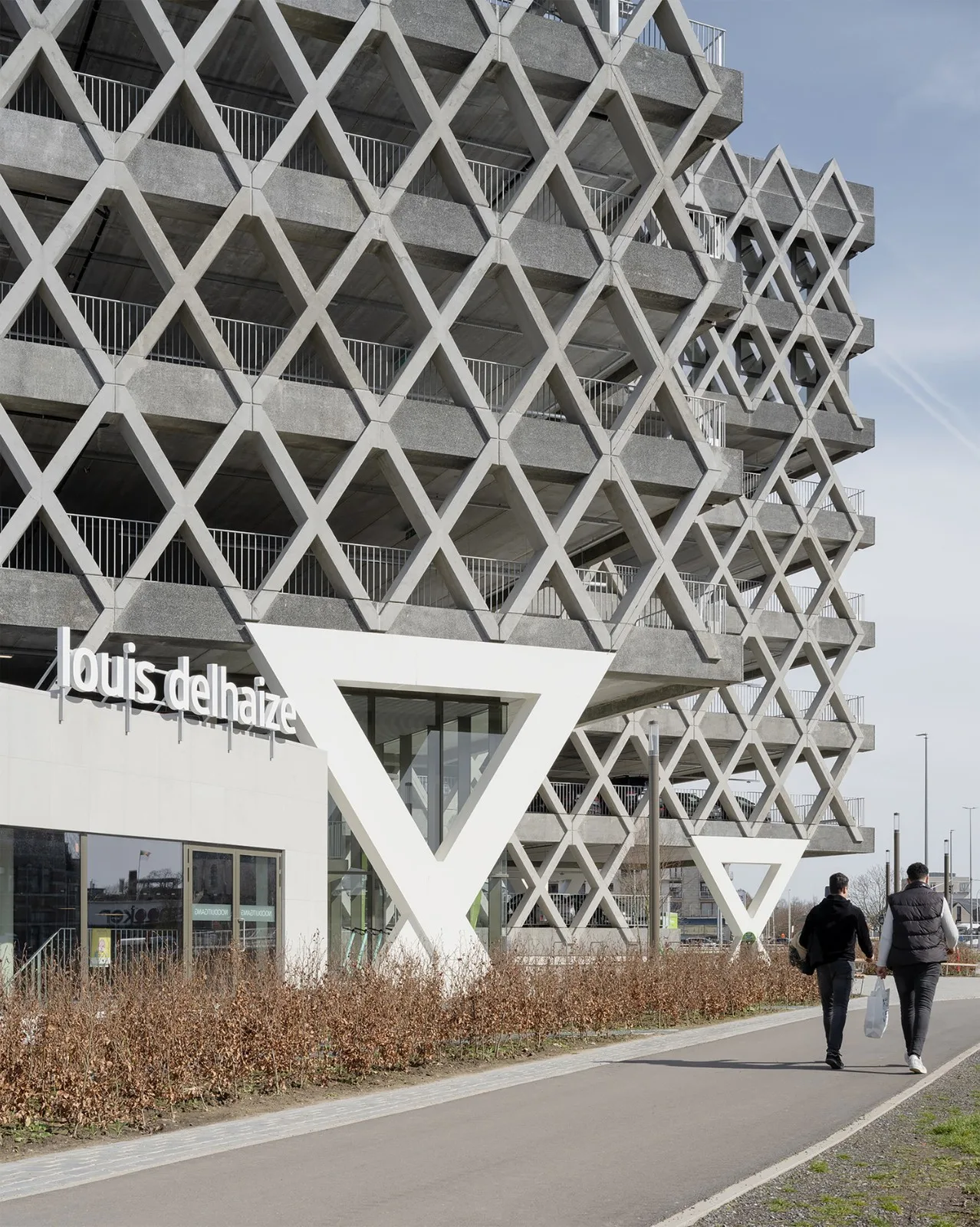
As transportation evolves, parking facilities play an increasingly vital role in urban development. To reduce the number of vehicles in the city center, innovative solutions like mobile transportation centers have emerged. Located on Mechelen’s outskirts, this center allows drivers to park their cars and switch to public transit or more sustainable modes of travel.
The parking design adapts to changing transportation patterns, accommodating expanded bicycle parking as well as autonomous and shared vehicles, which require less space. This flexibility creates room for other building functions.
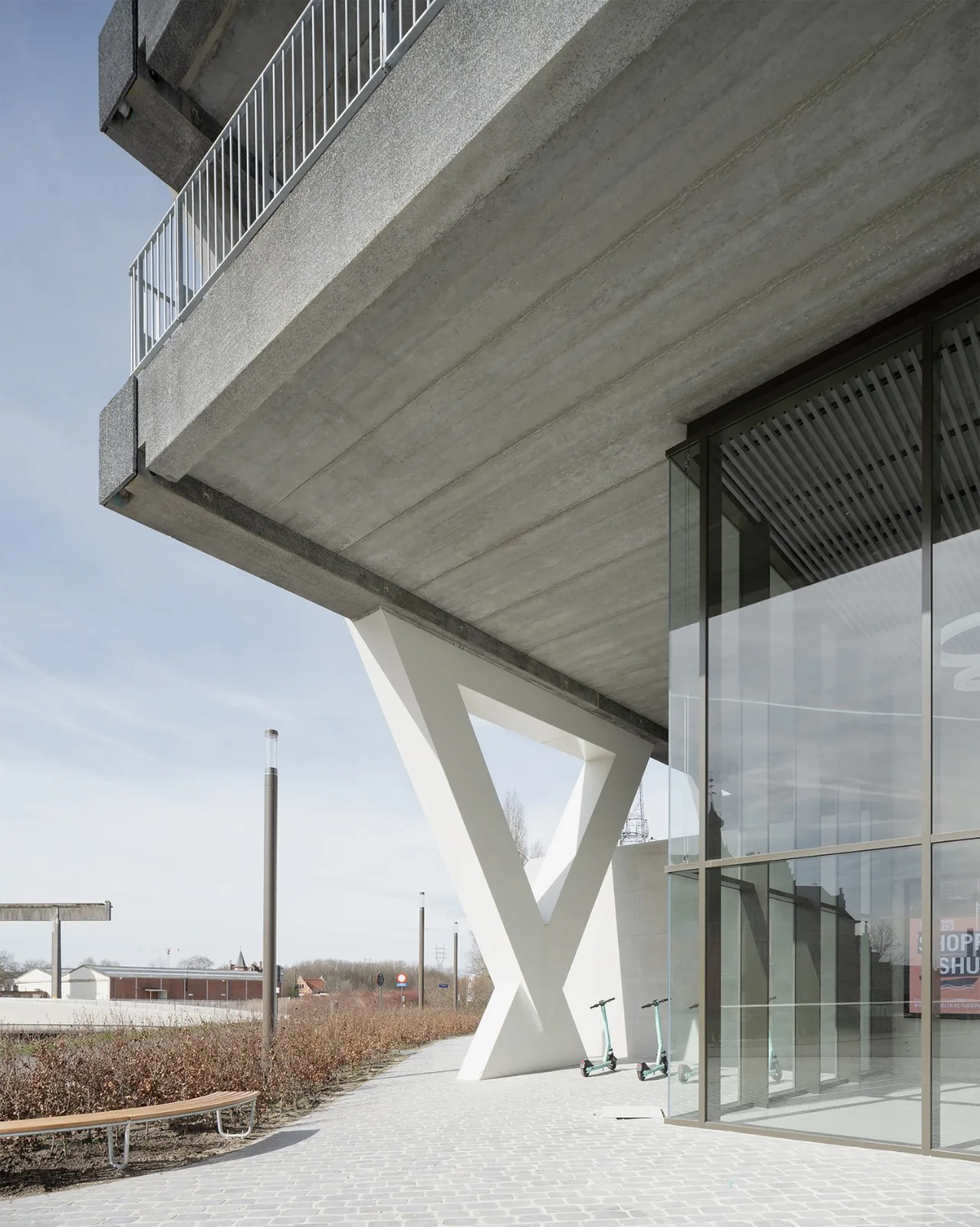
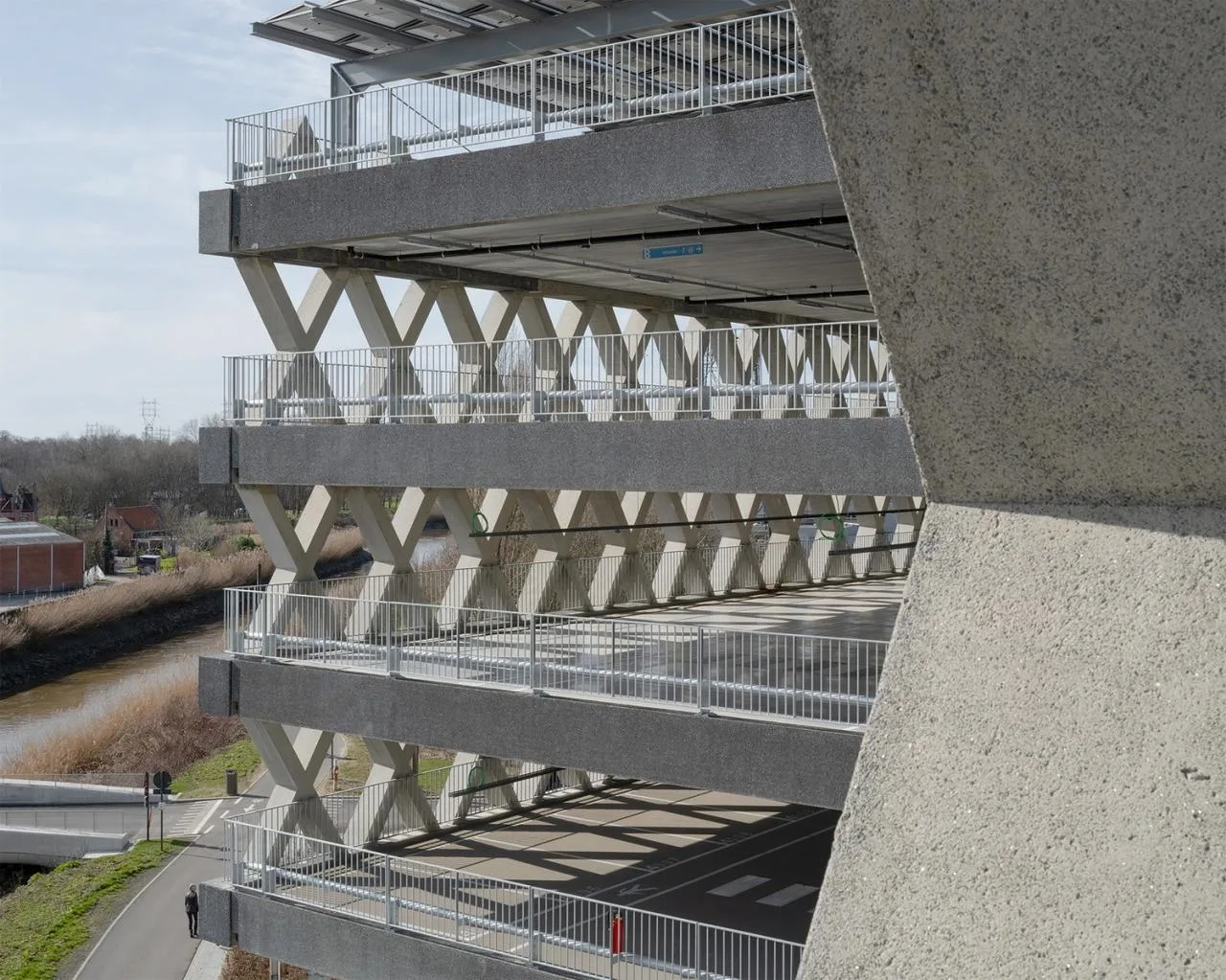
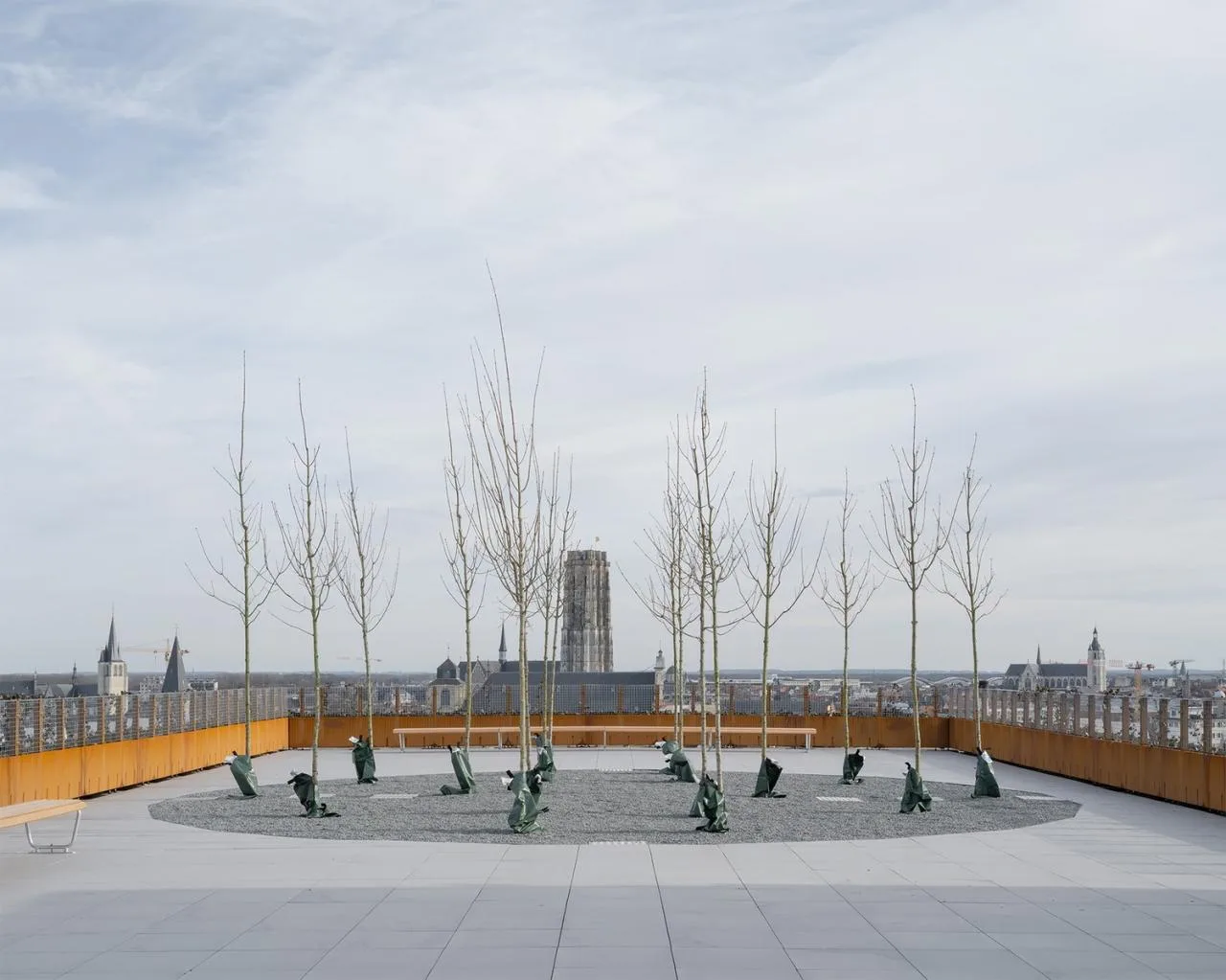
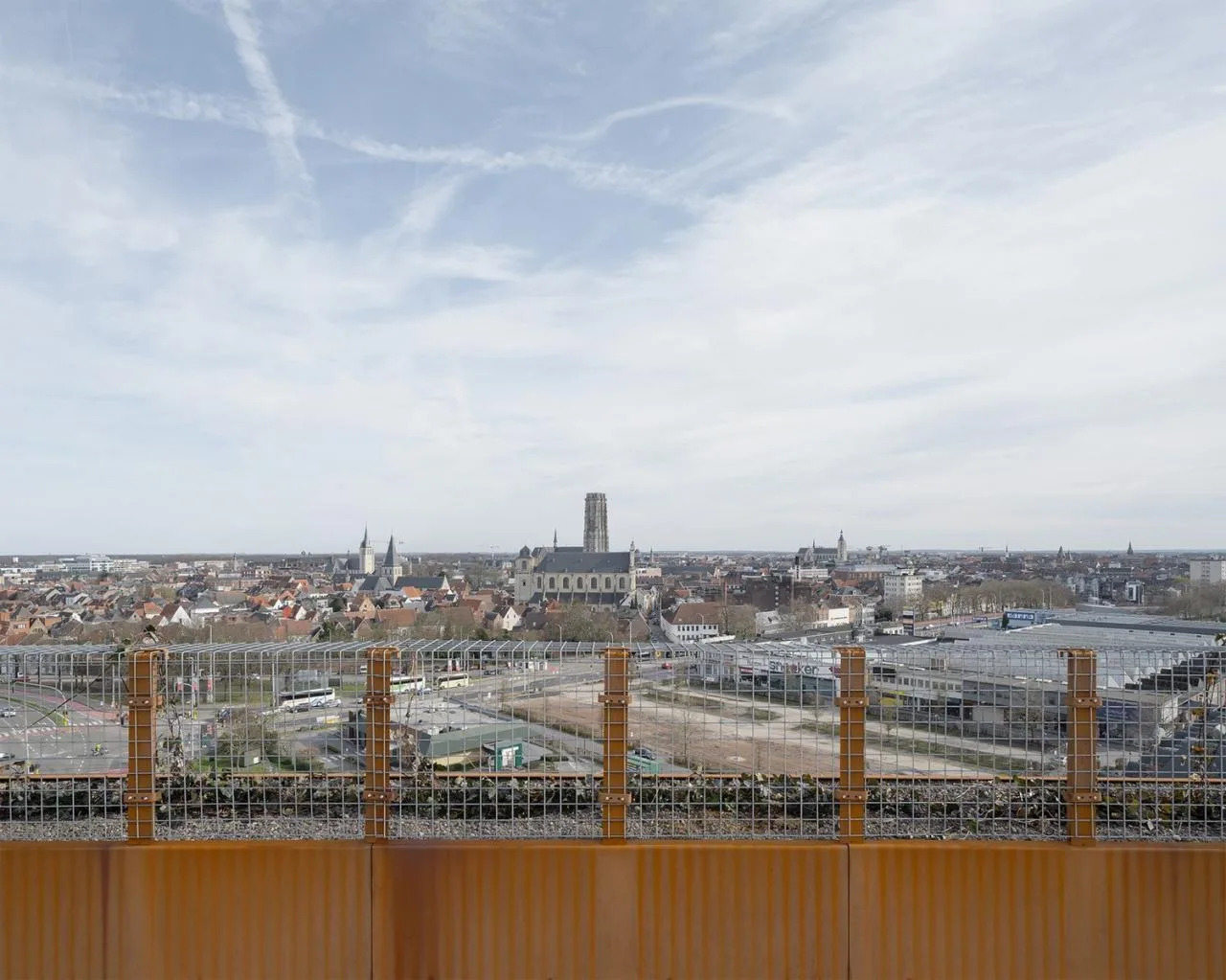
Beyond parking, this public building supports urban connectivity. To engage the emerging residential neighborhood, it offers two expansive city terraces with panoramic views of Mechelen. These terraces serve office staff during the day and host public events in the evenings and on weekends.
Over time, the upper terrace is planned to evolve into a garden terrace as the trees mature. At ground level, the Welkomstplein (Welcome Square) links the parking facility with the daily life of the surrounding community. The building’s curved base symbolizes smooth transitions in and out, reflecting its goal to accommodate and direct various flows within the urban environment.
Project Drawings
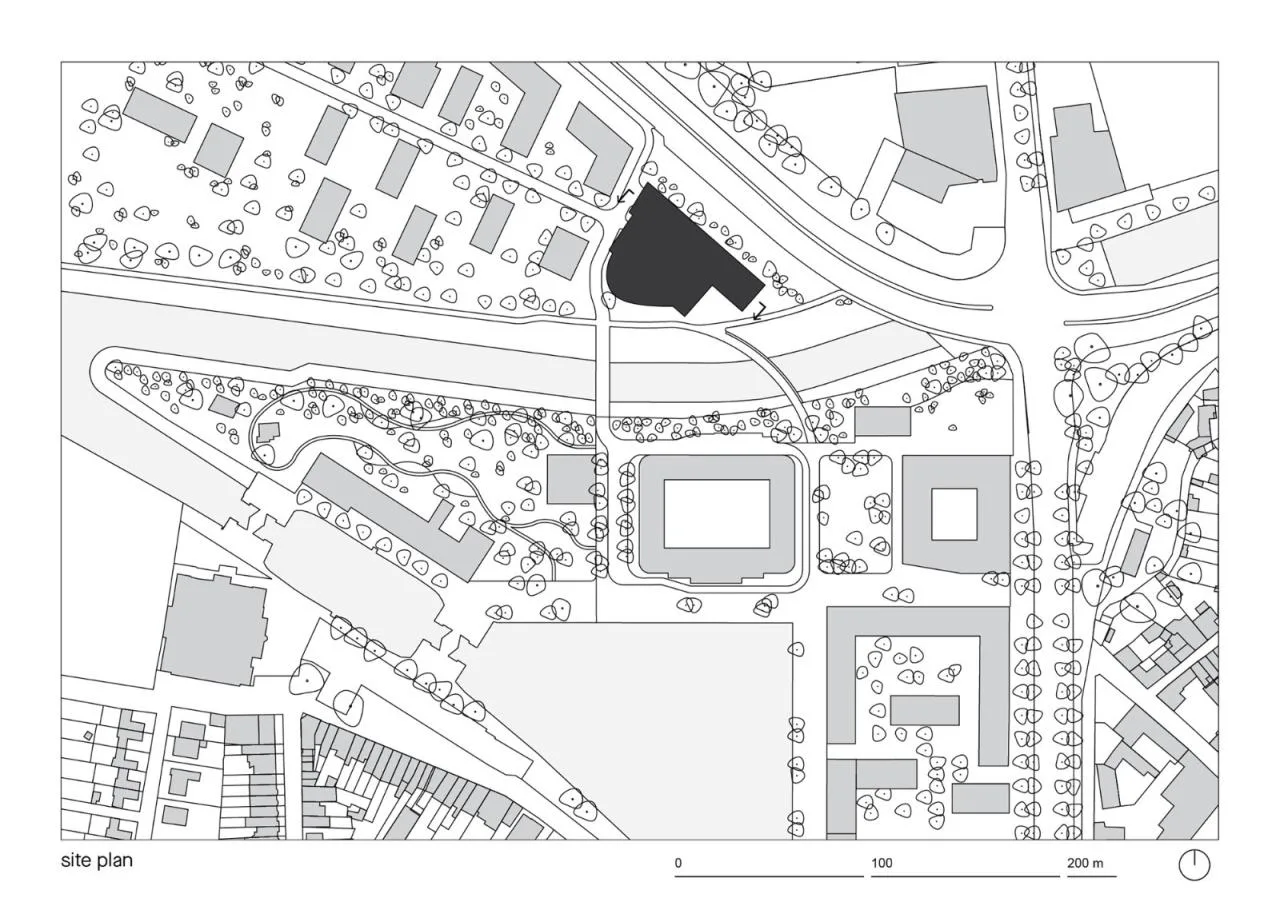
△ Location Analysis Chart
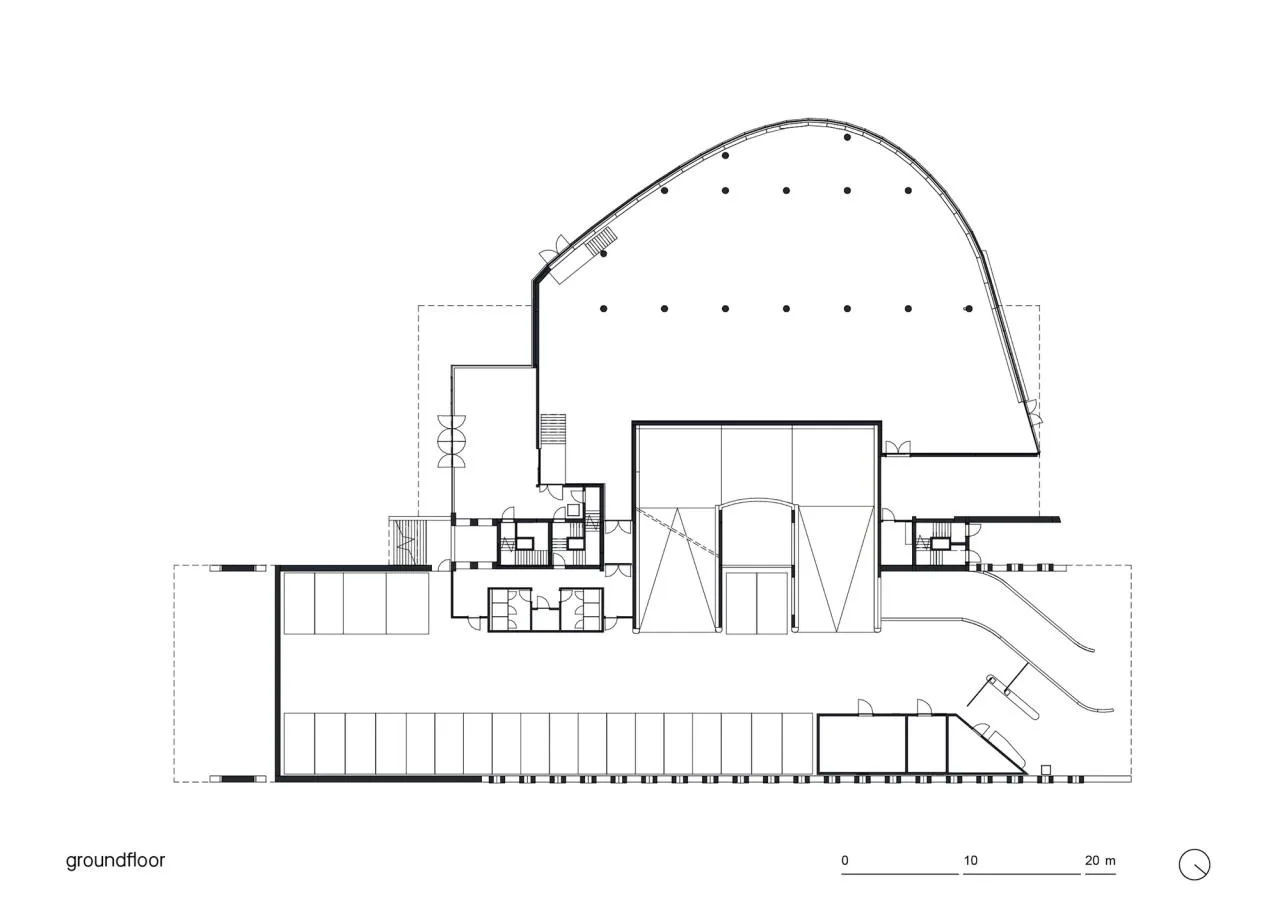
△ First Floor Plan
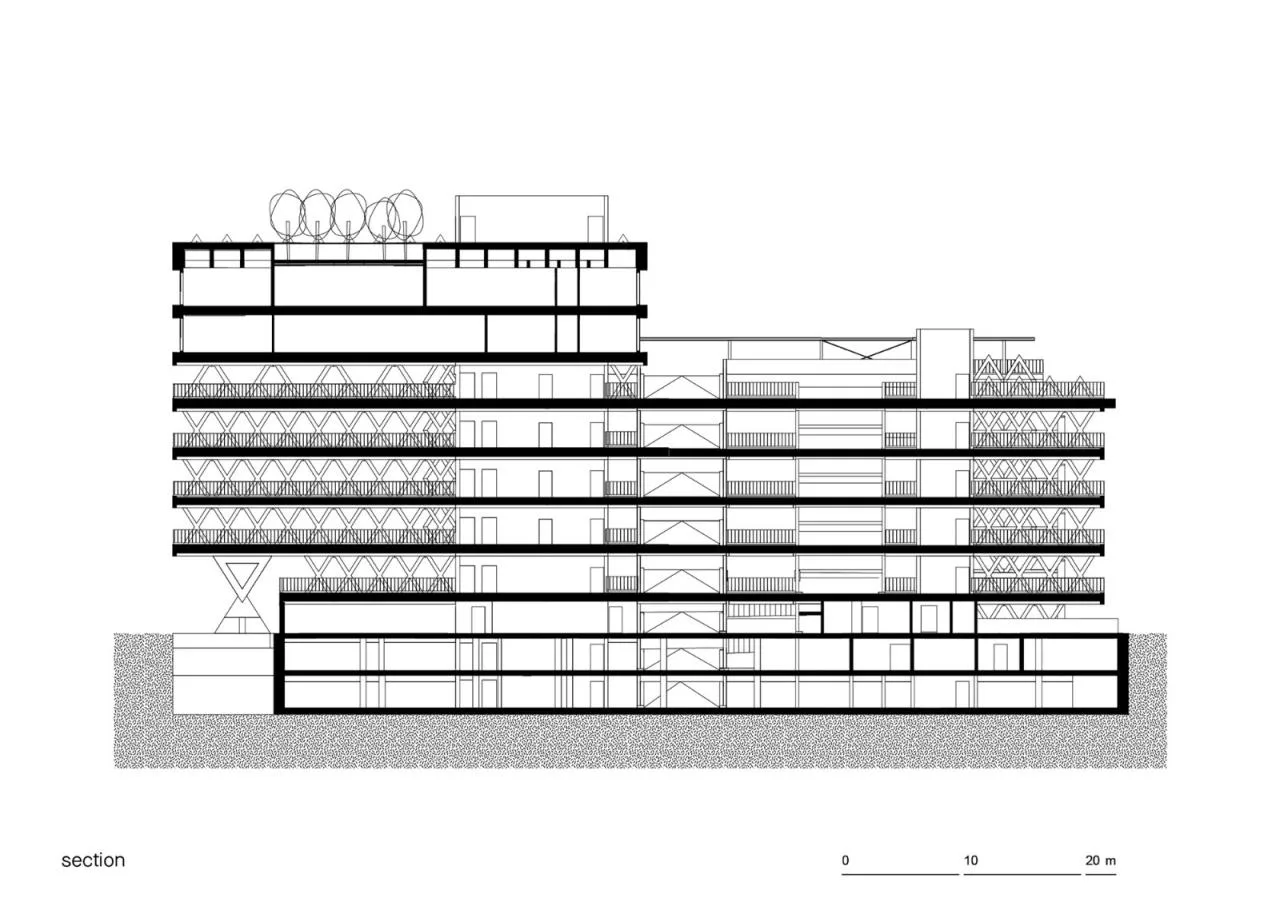
△ Section Diagram
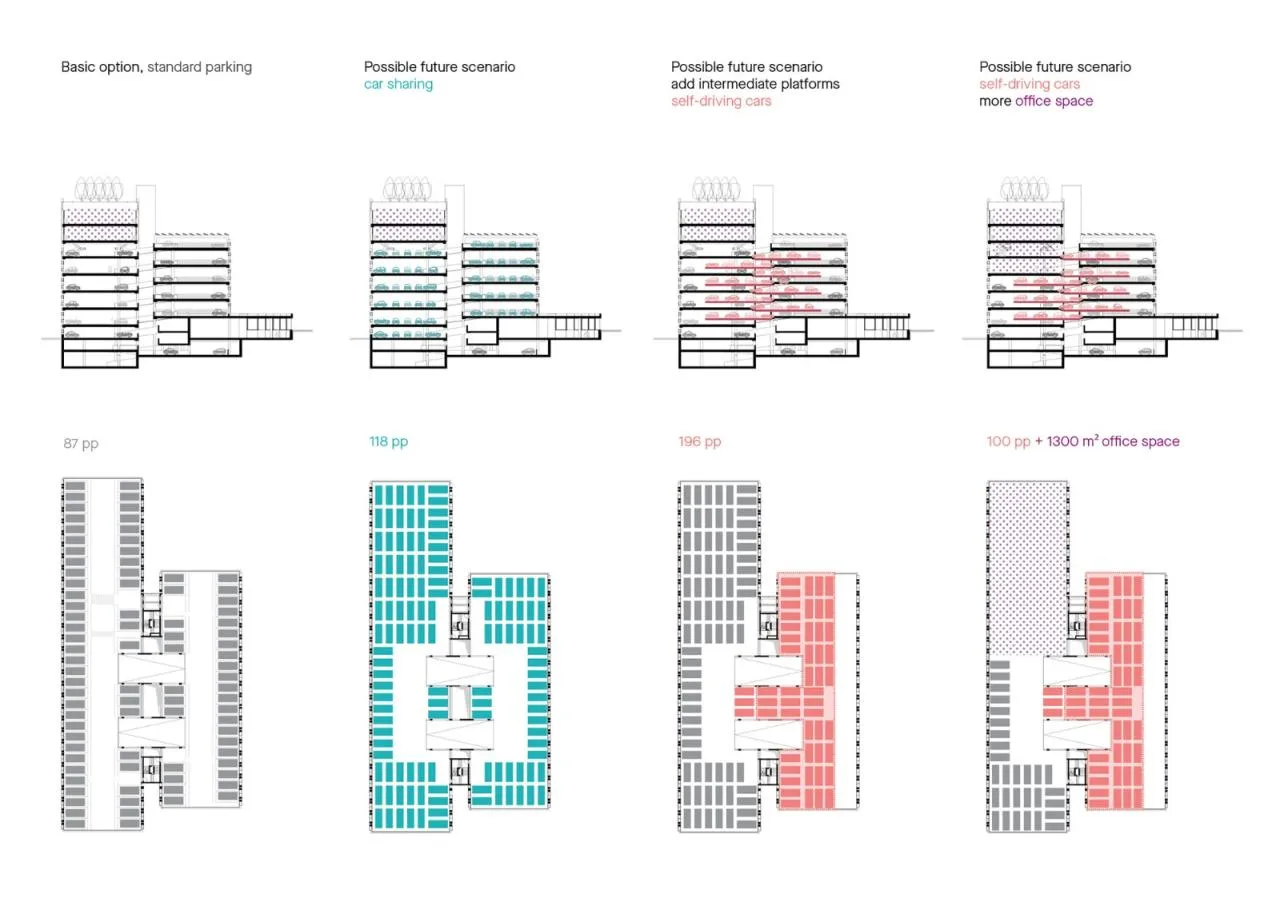
△ Analysis Chart
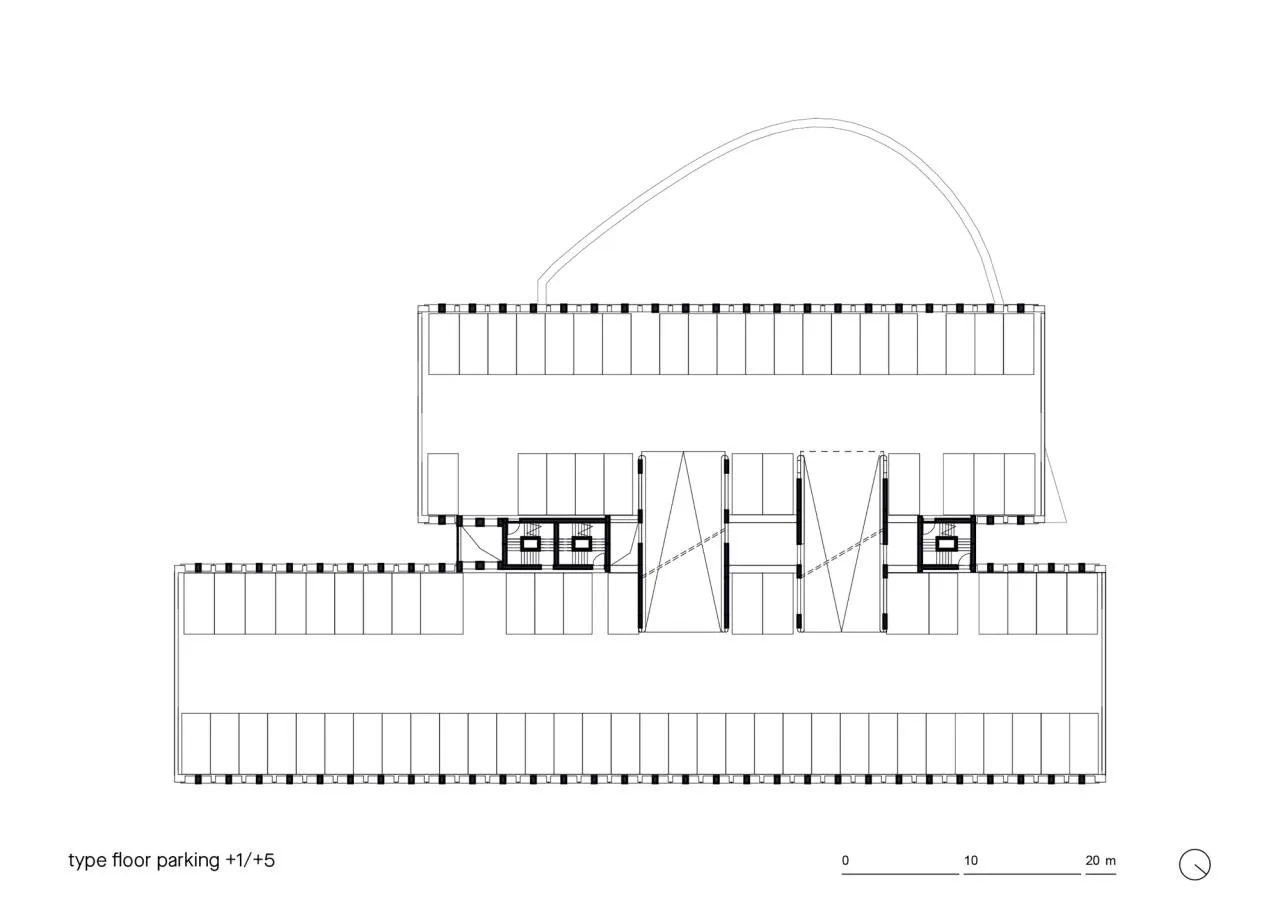
△ Plans from First to Fifth Floor
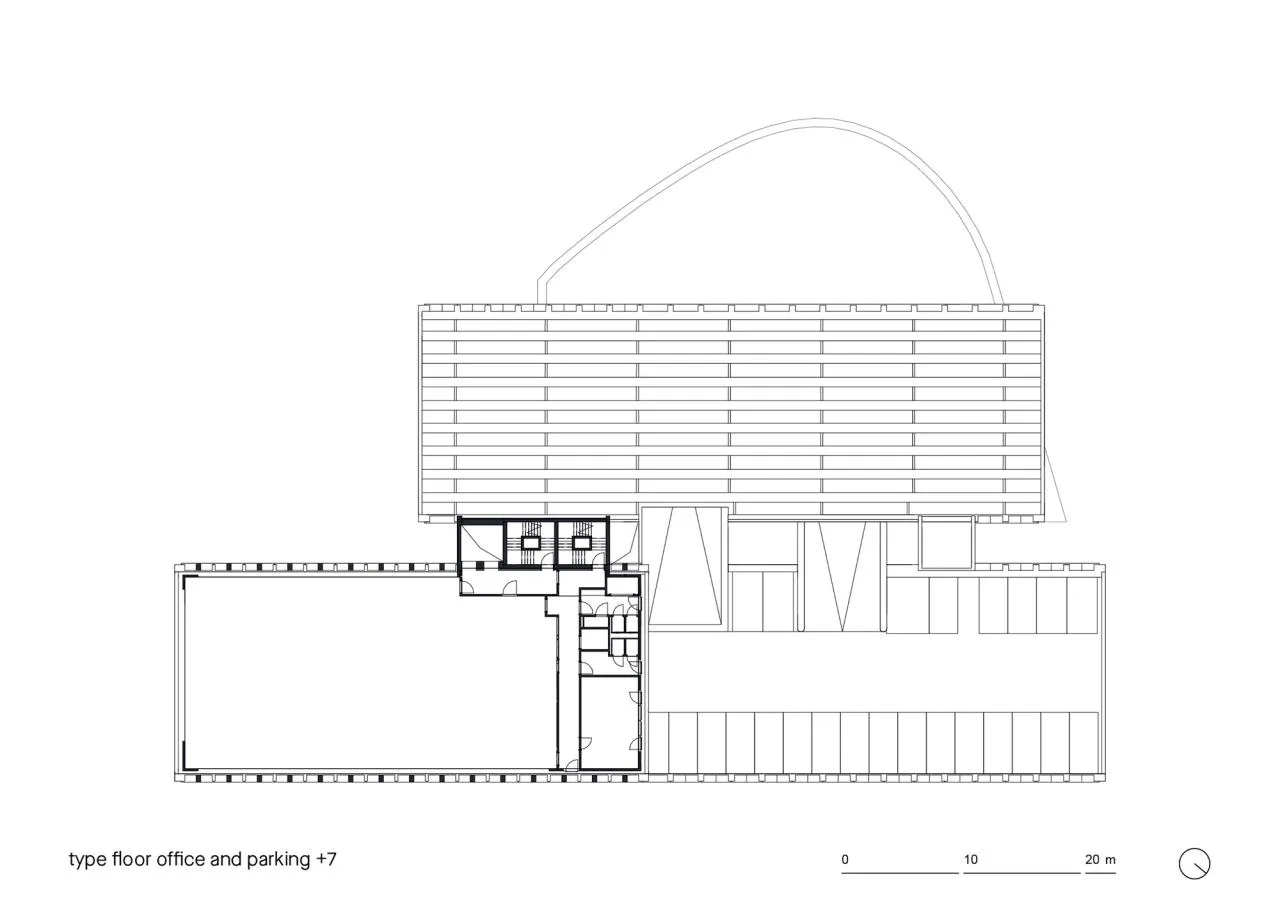
△ Seventh Floor Plan
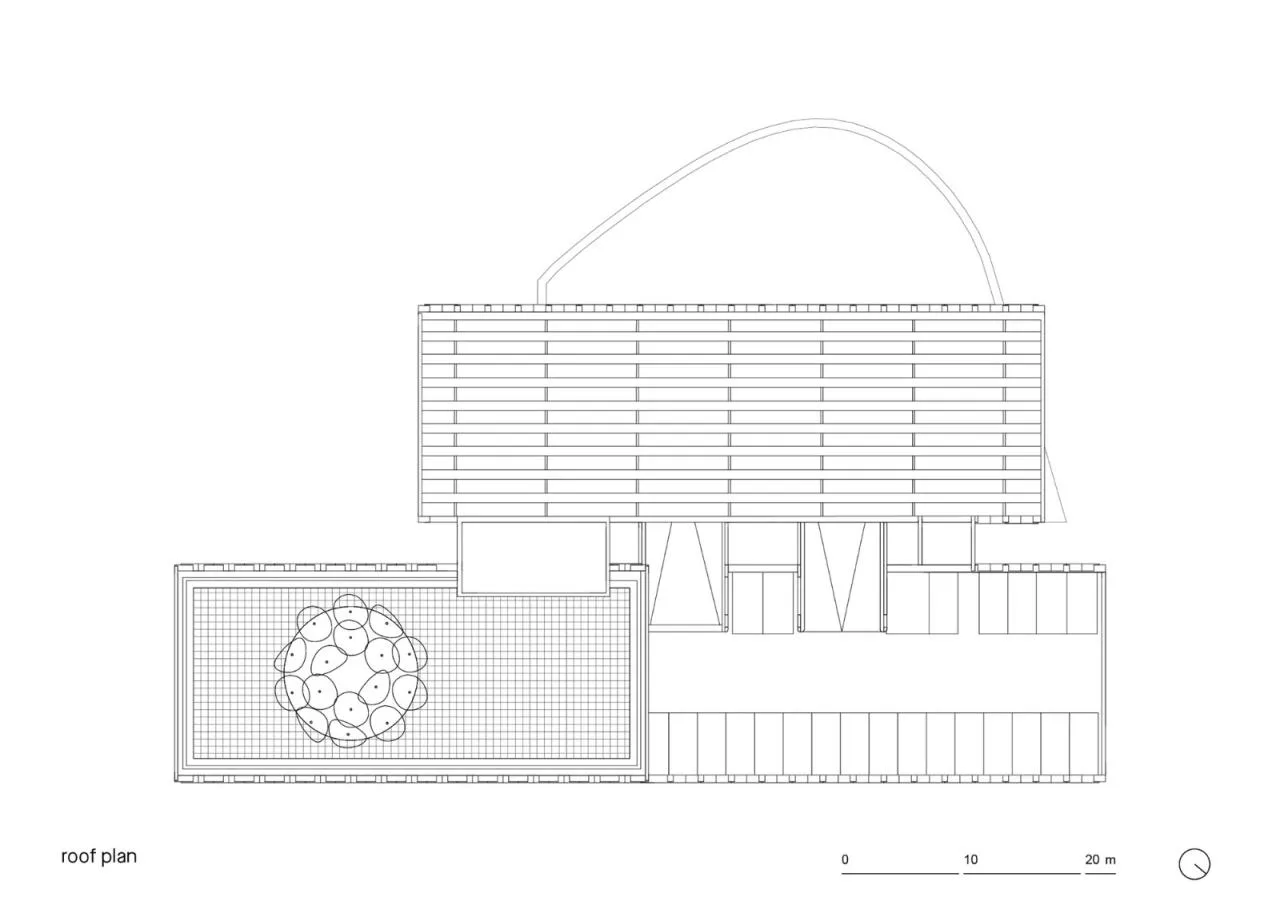
△ Roof Plan
Project Information
Architects: POLO Architects, Archipelago
Area: 19,400 m²
Year: 2023
Photographer: Johnny Umans
Manufacturers: Bateig, Florim, Hunter Douglas Architectural (Europe), Zoontjens
Designers: Archipelago, POLO
MEP & HVAC: B.A.S.
Structural Engineer: Sweco Structures
Landscape Architects: Ara, Vogt Landscape
Sustainability Consultant: DUSS Explorers
Main Contractor: BAM Interbuild
Surveyor: SECO
Security Advisor: EvoPlus
Location: Mechelen, Belgium












Must log in before commenting!
Sign Up