
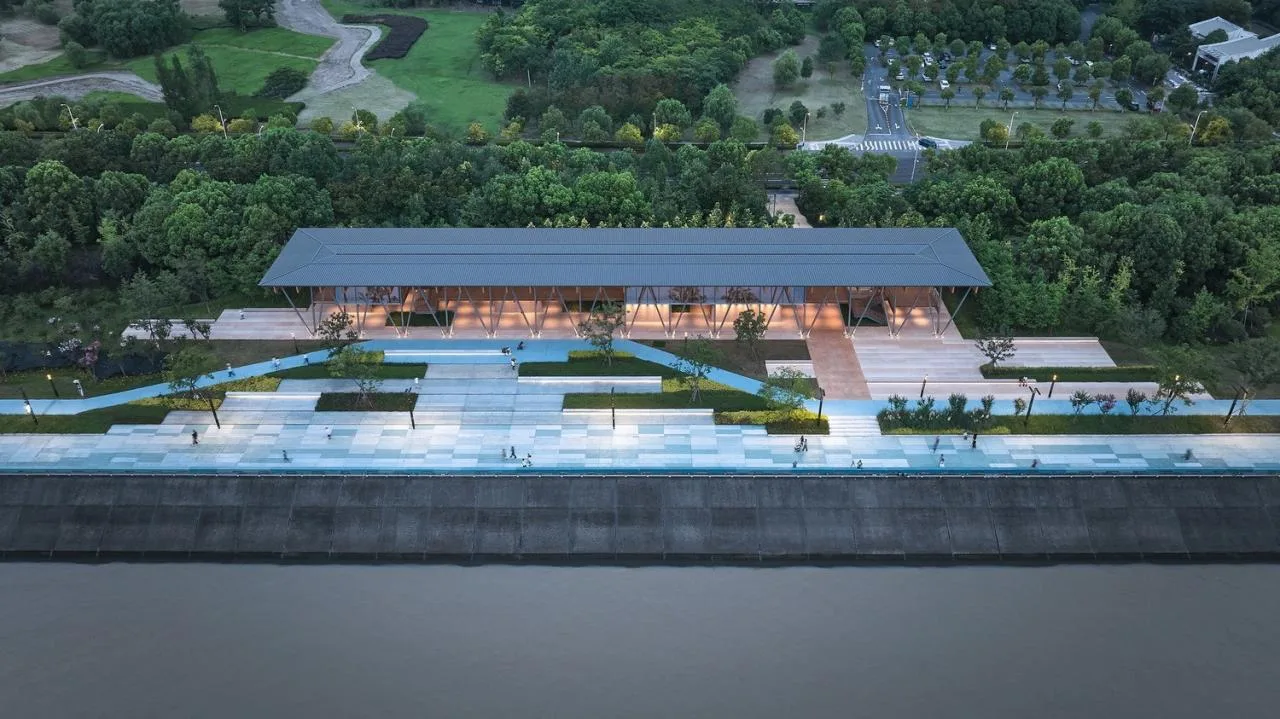
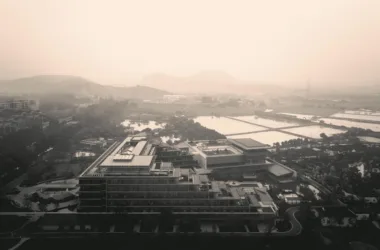
Changting Post is situated on the south bank of the Qiantang River in Hangzhou’s Binjiang District, located southwest of the Qianjiang Third Bridge and north of Wentao Road. This project is part of a 12-kilometer waterfront public space renovation and upgrade led by Tongji University Architectural Design and Research Institute (Group) Co., Ltd.’s Original Design Studio in Binjiang District, Hangzhou.
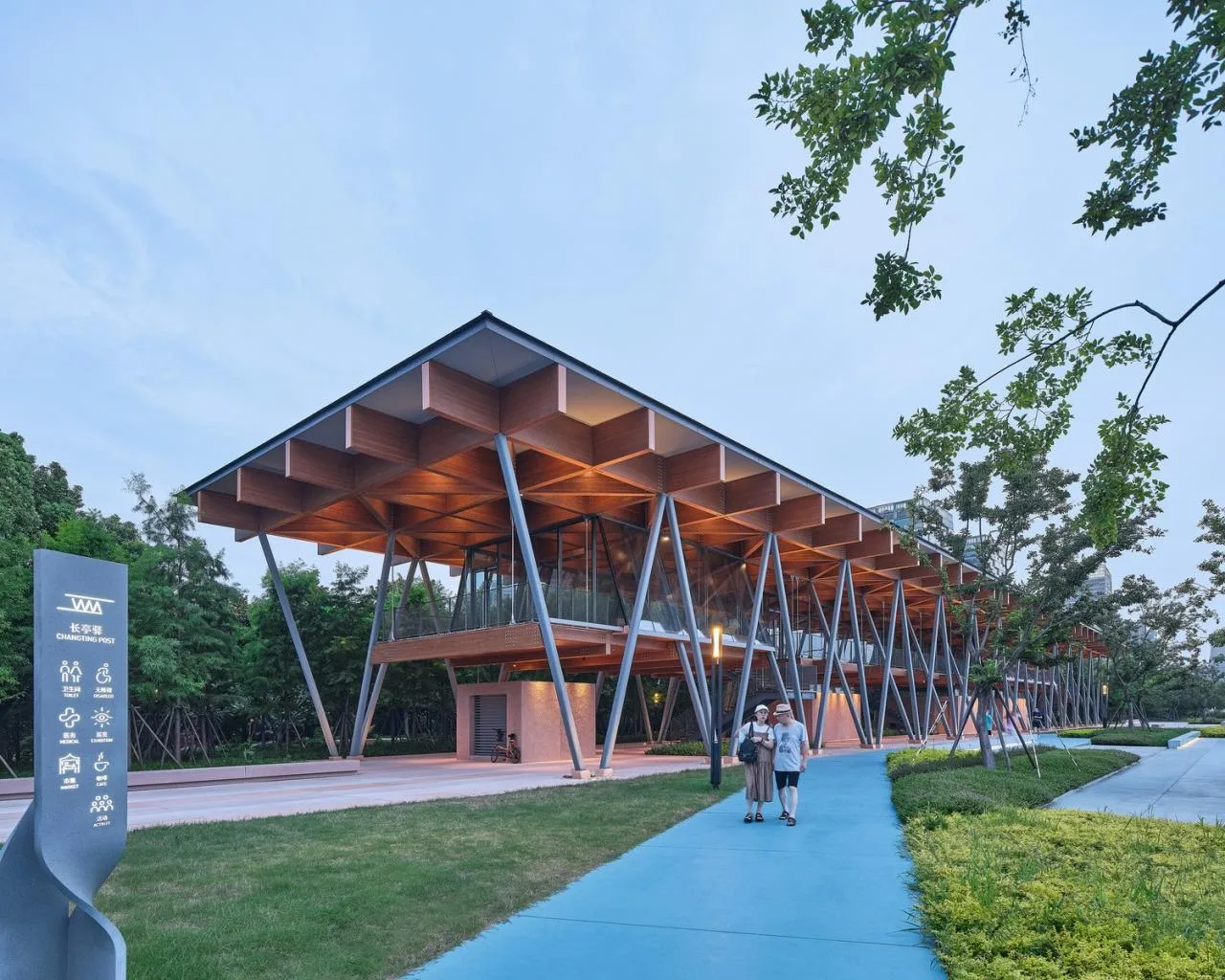
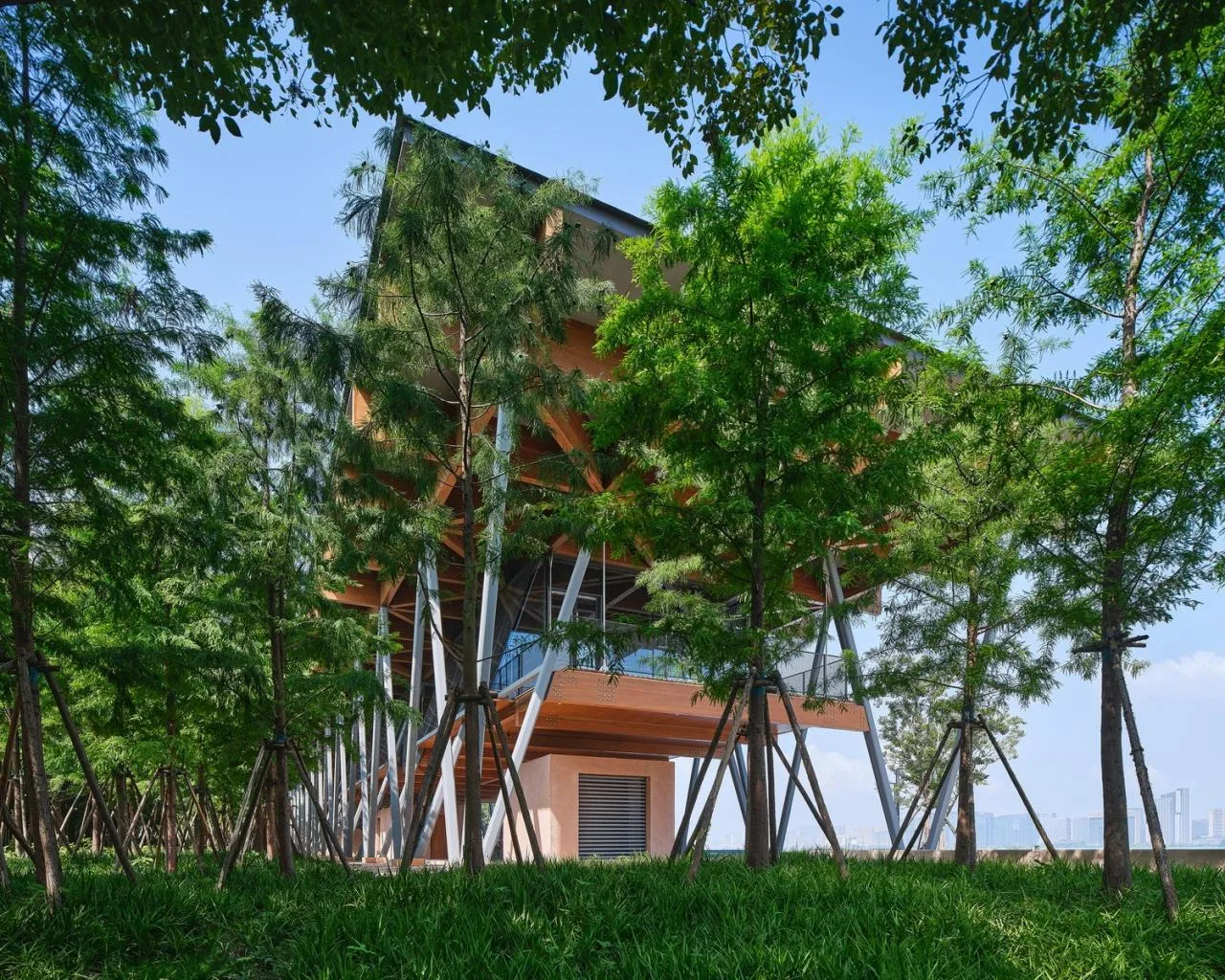
The post station system upgrade follows the concept of “ten miles and five miles, long pavilions and short pavilions.” Historically, long pavilions were placed every ten miles and short pavilions every five miles along roads to offer travelers places to rest. Over time, these “pavilions” also became popular spots for leisure outings. The Hangzhou Binjiang Public Space Project spans 12 kilometers south of the Olympic Sports Center, with a 500-meter service radius. The project includes over ten post stations—both new and renovated—that each feature rest areas, bathrooms, and commercial spaces, effectively providing comprehensive coverage for the riverside public service system.
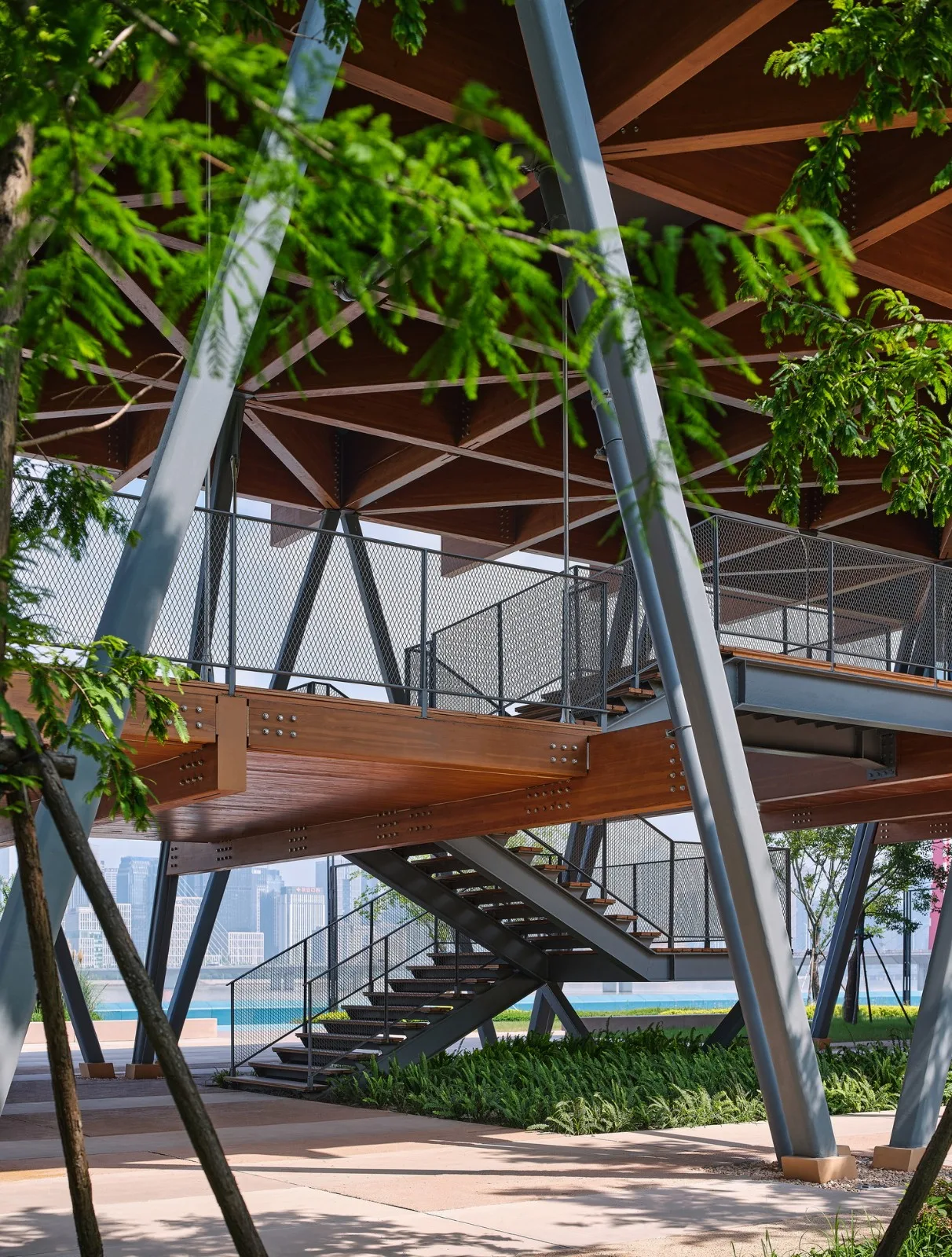
Since 2015, the Original Design Studio has served as the lead design team for waterfront public space projects along major rivers such as the Yangpu Riverside and Huangpu section of the Suzhou River in Shanghai, Jiaojiang River in Taizhou, and Maozhou River in Shenzhen. Unlike previous projects, the Hangzhou Binjiang waterfront features a wide river surface—approximately 1200 meters across at the Hangzhou section of the Qiantang River and about 400 meters near the Huangpu River—resulting in a large spatial scale. This scale challenges the functionality of conventional post stations.
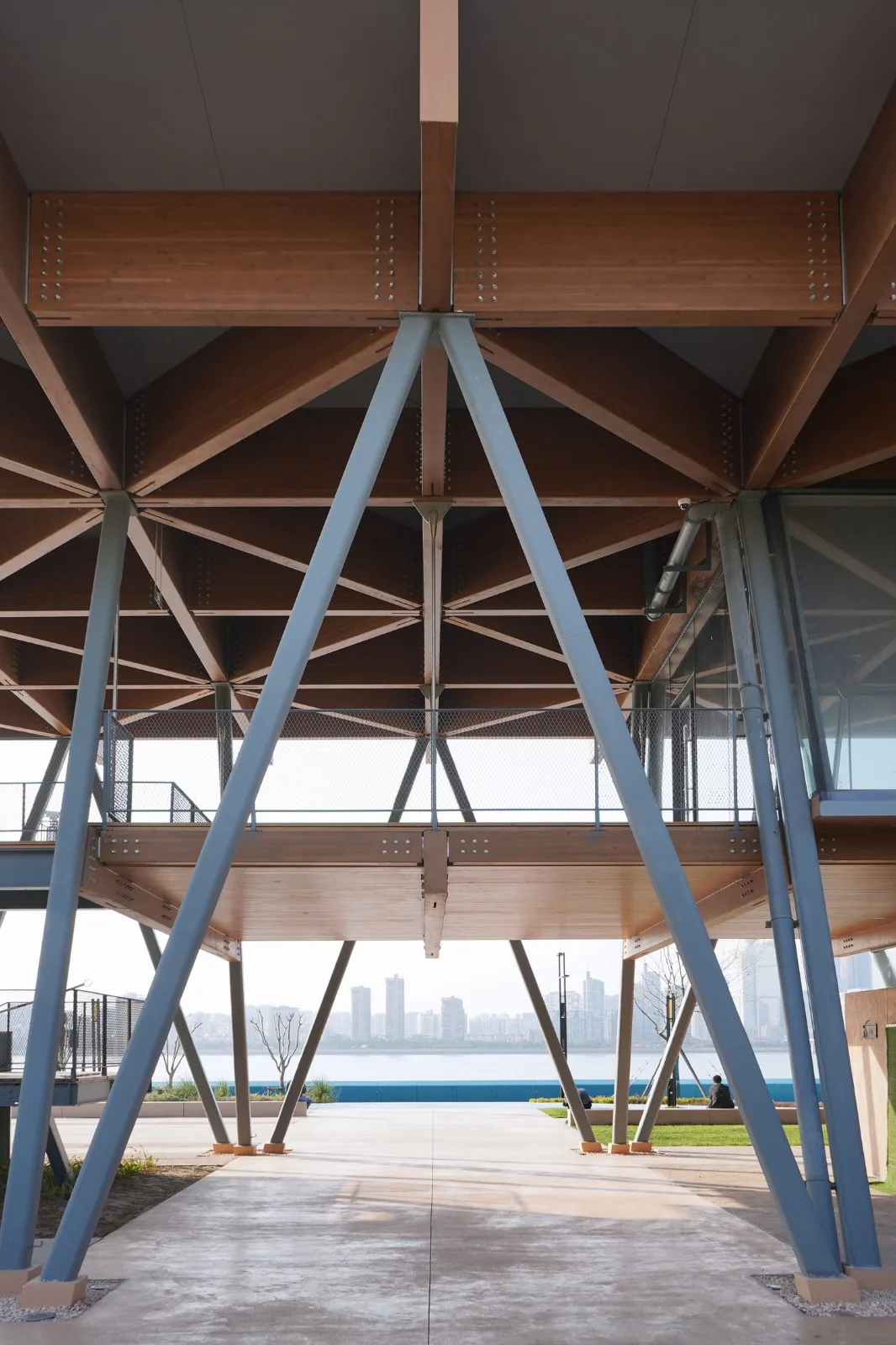
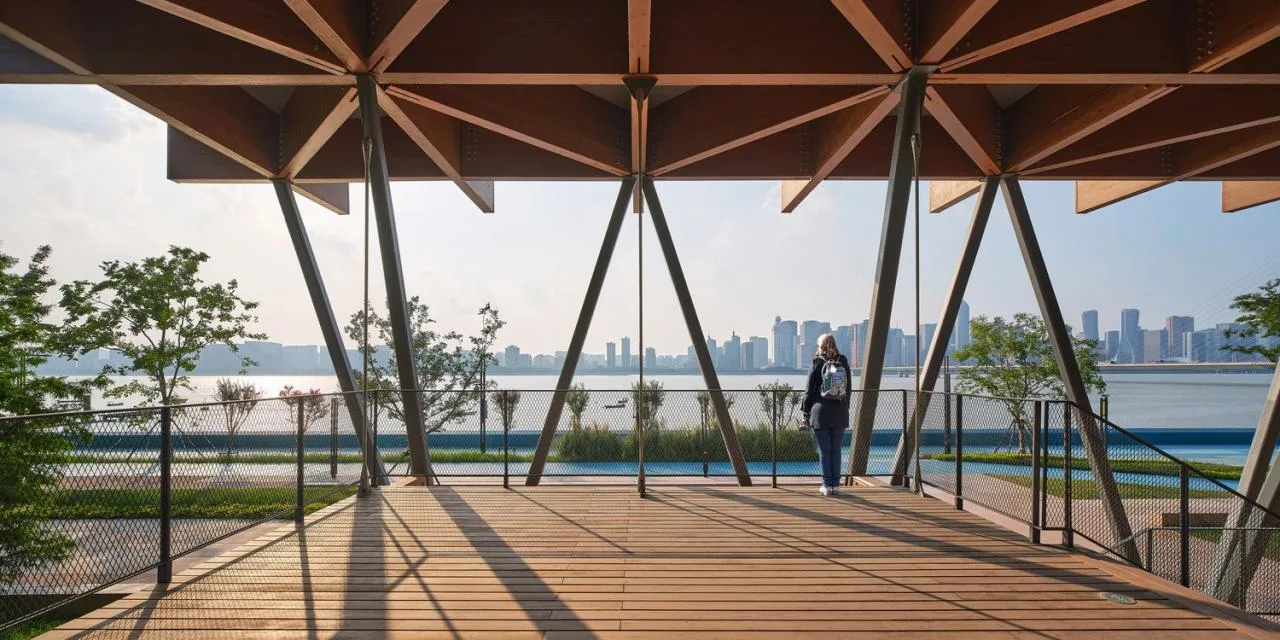
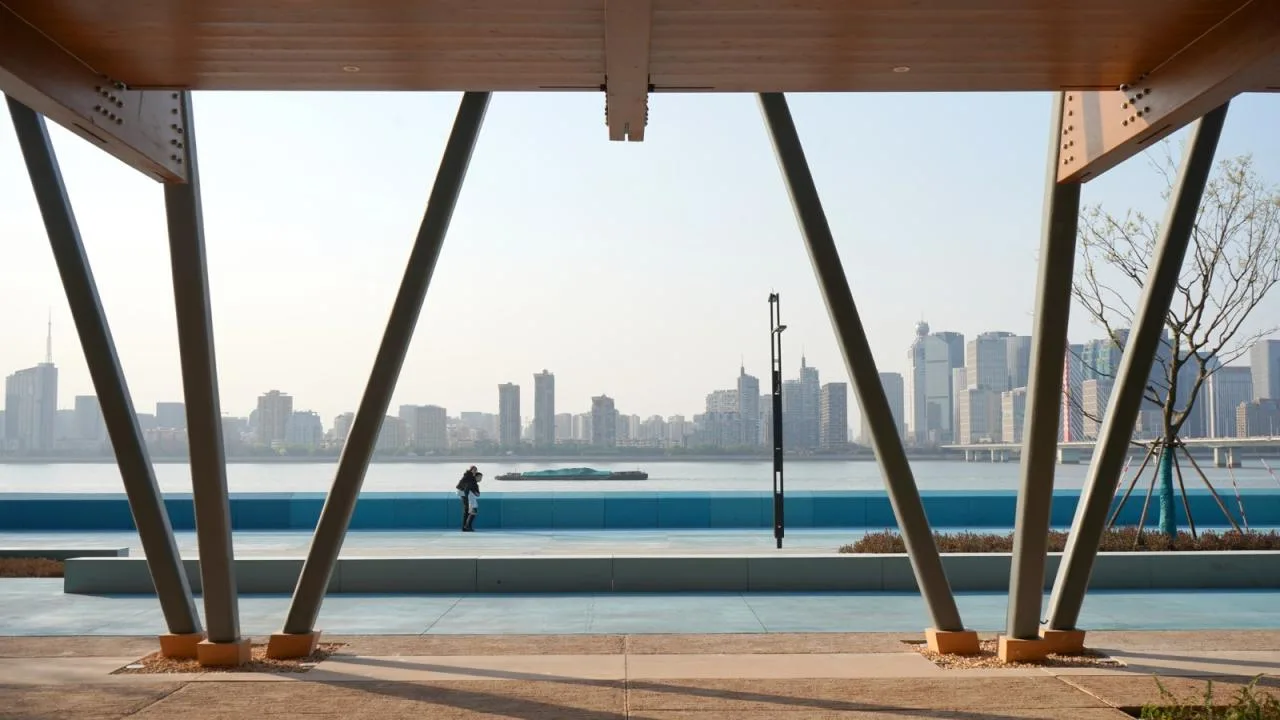
Additionally, flood safety regulations along the river embankment prevent the planting of large trees, creating a shortage of shaded areas. To address this, the design of each post station maximizes the use of the gray space beneath the eaves, creating semi-outdoor urban public activity areas and offering a continuous “scroll-like” river view.
The Echoes of Xixing Culture: Xixing Ancient Town, located in the southern part of Binjiang District, Hangzhou, was historically a hub connecting the Zhejiang East Canal and Qiantang River. The “Crossing the Pond” transfer station is central to Xixing’s cultural heritage—it was both an ancient logistics and cultural center.
Changting Post Station, representing a modernized urban waterfront public space along the Yangtze River, reflects the traditional cultural concept of the “pavilion.” This two-story pavilion-style building combines steel and wood structures, covering a total construction area of 1,717.75 square meters and reaching a height of 9 meters.
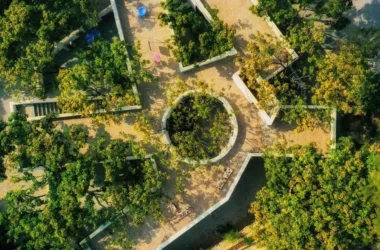
Besides basic amenities like restrooms and drinking water, the station houses spaces to showcase Xixing culture, a river-view tea room, and party-building facilities. The surrounding landscape features golden leaf water spruce and wolf sage, chosen to complement the building’s character.
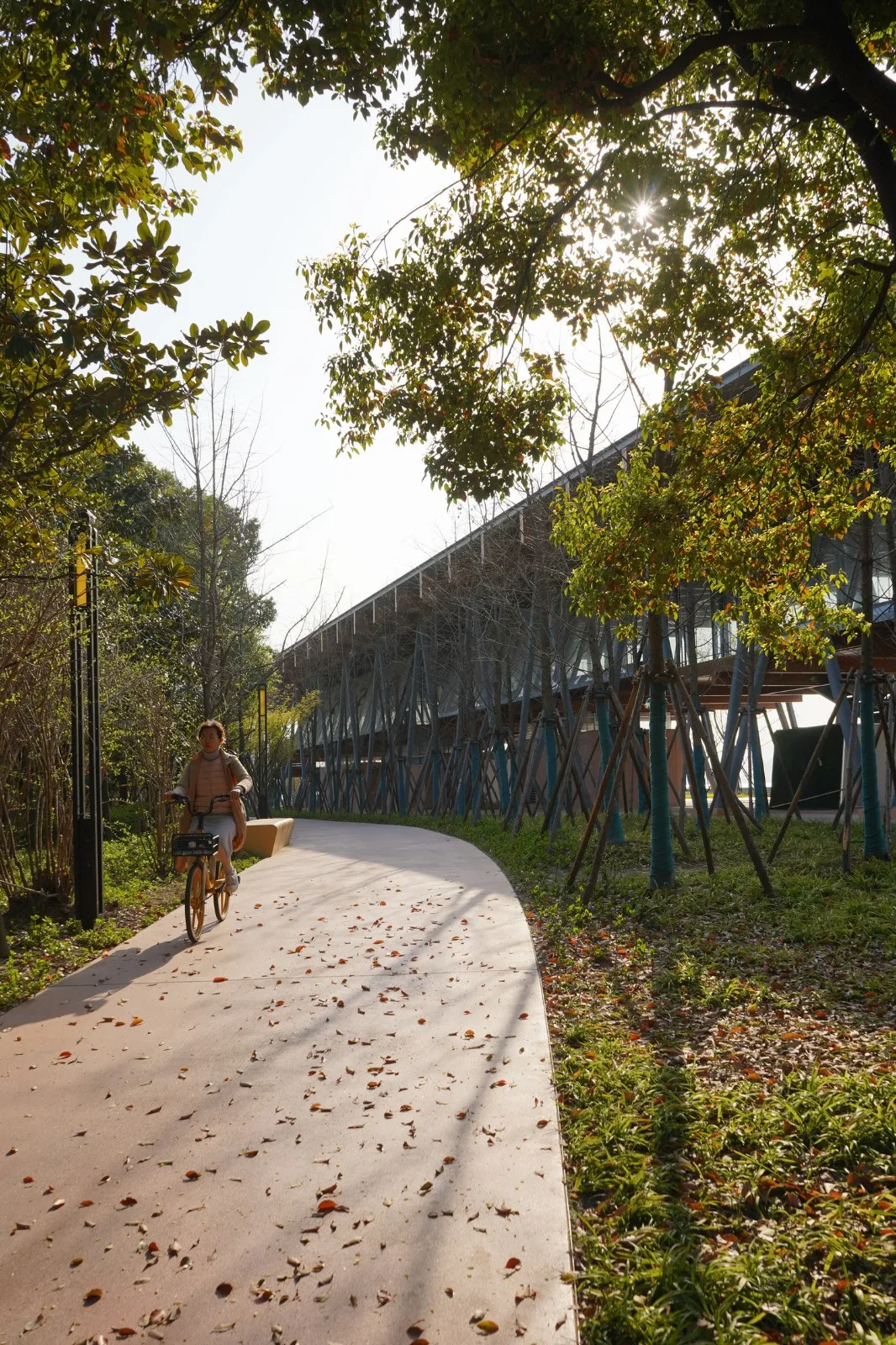
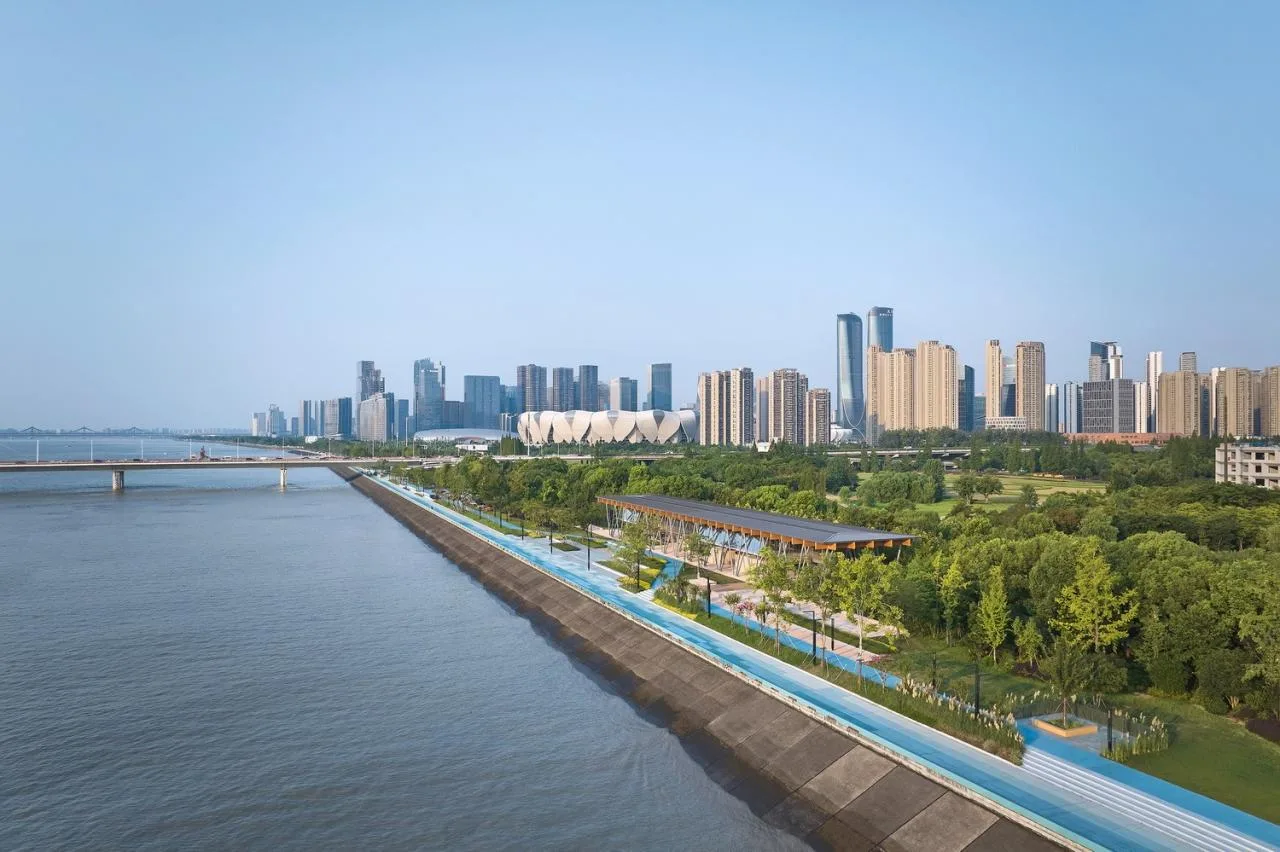
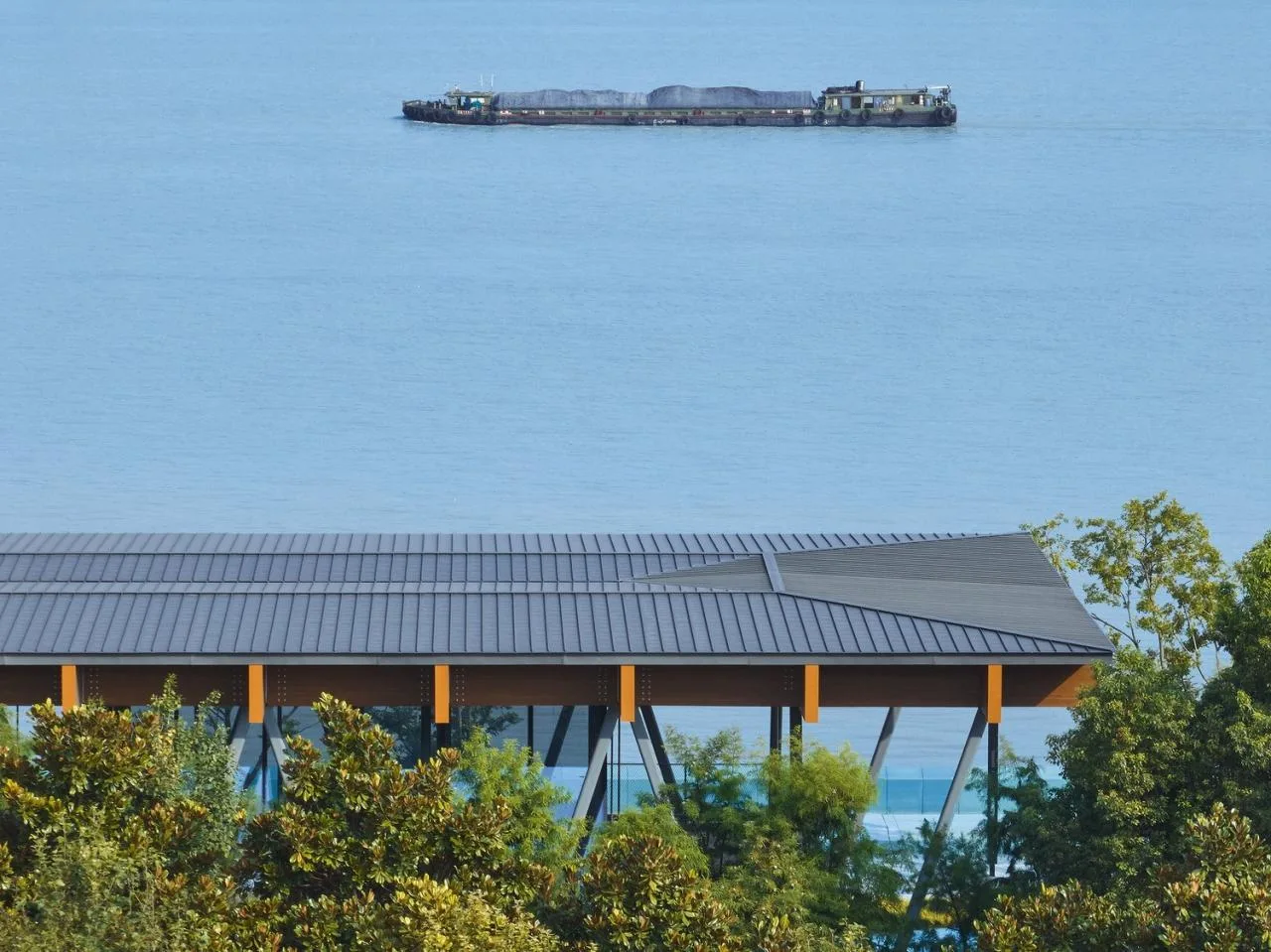
The original dock next to Changting Post was a fish trading market. With its distinctive linear indoor and outdoor scenes, Changting Post aims to revive activities such as “market gatherings” and “river watching.” This brings to life the vibrant scene of the sails departing Xixing Ferry and the hills of Yupu Mountain awaiting dusk.
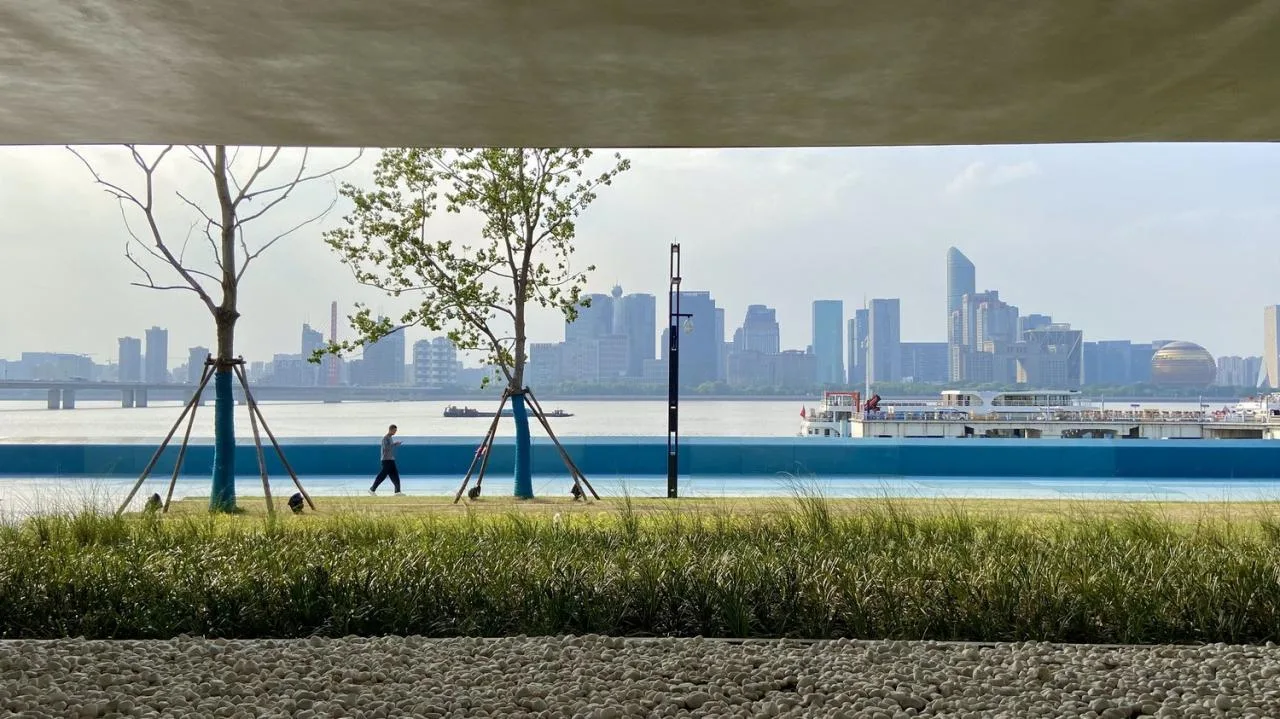
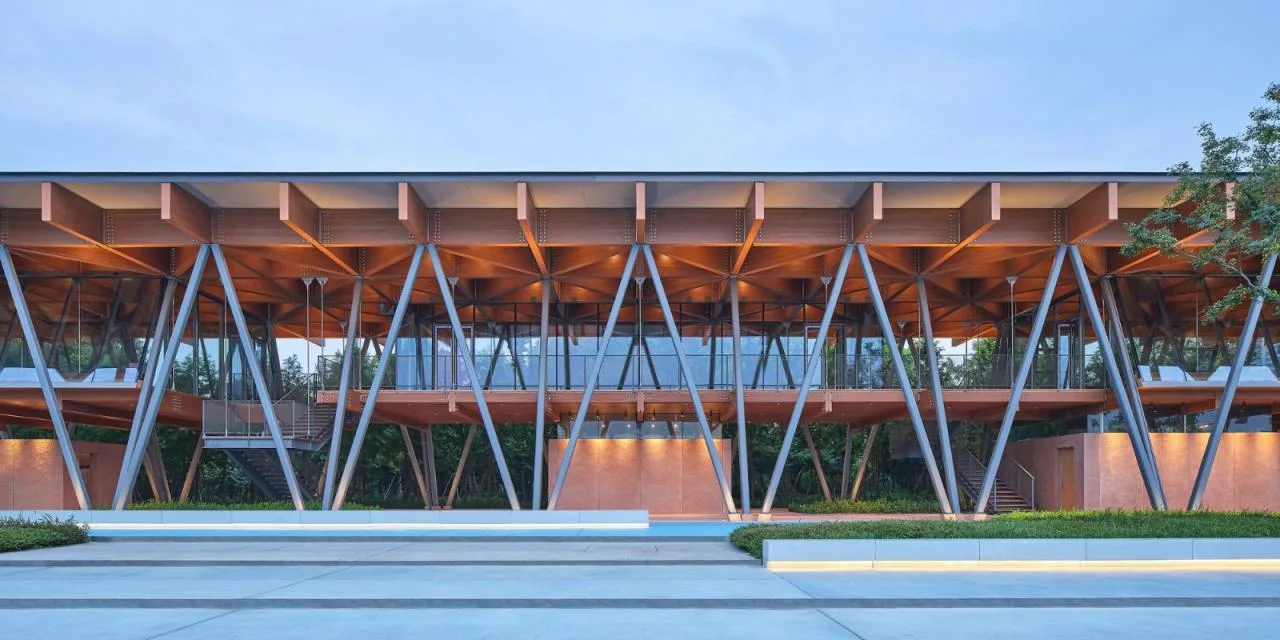
Lightweight and Floating Construction
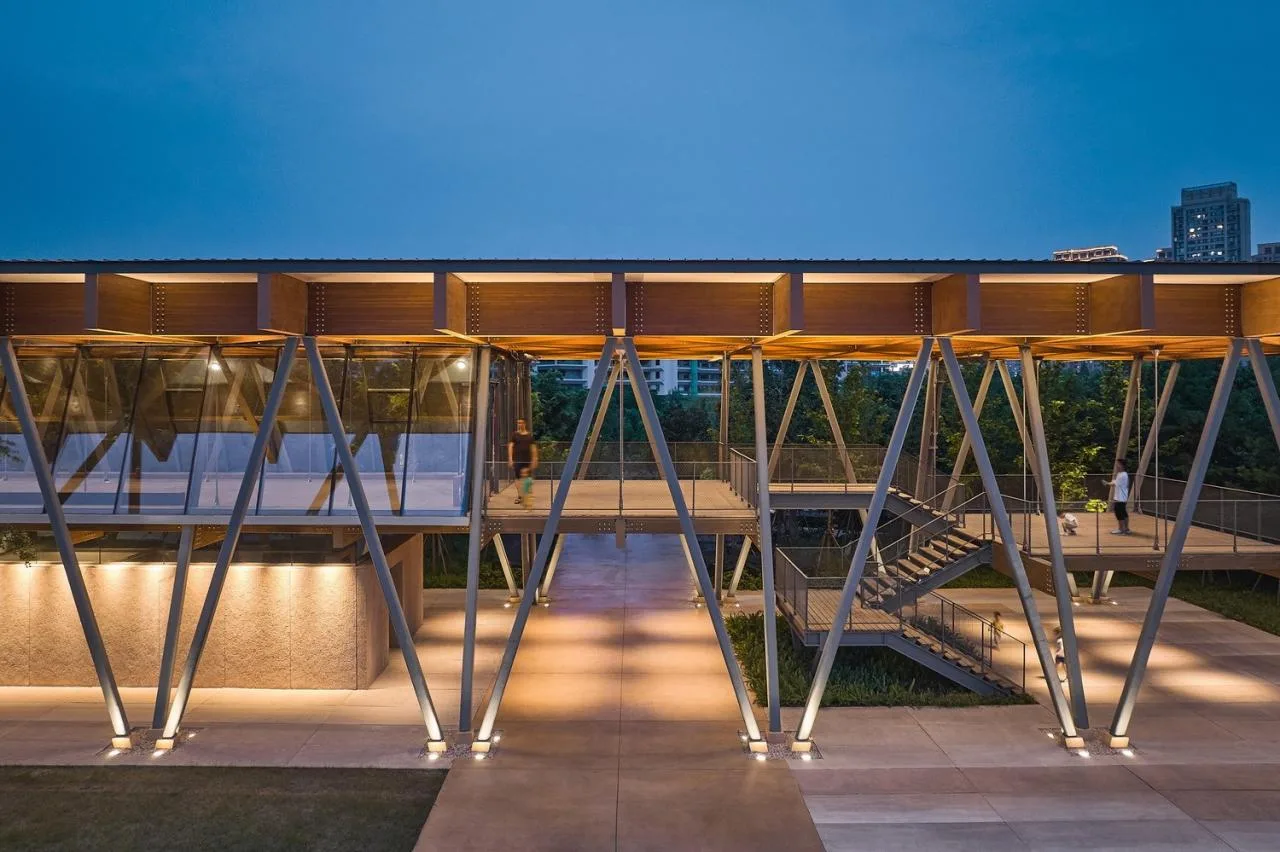
Changting Post measures approximately 100 meters in length and 15 meters in width. The building is split into two sections: the upper part features warm, lightweight wood, while the lower part consists of a solid, sturdy rammed earth box.
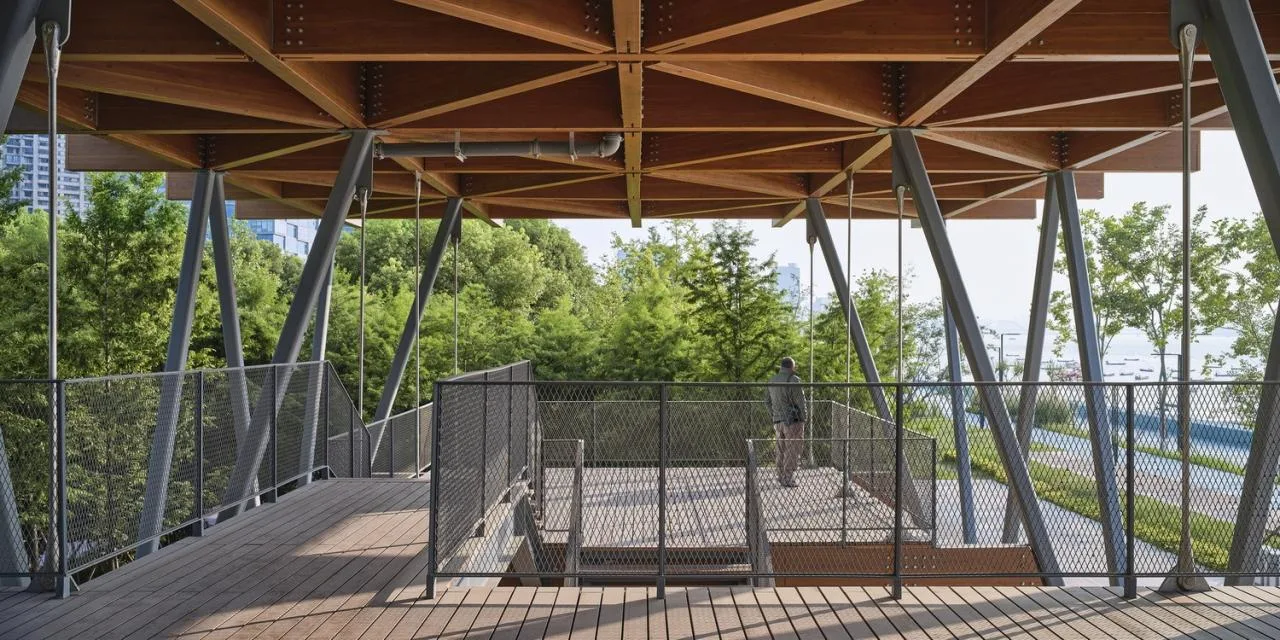
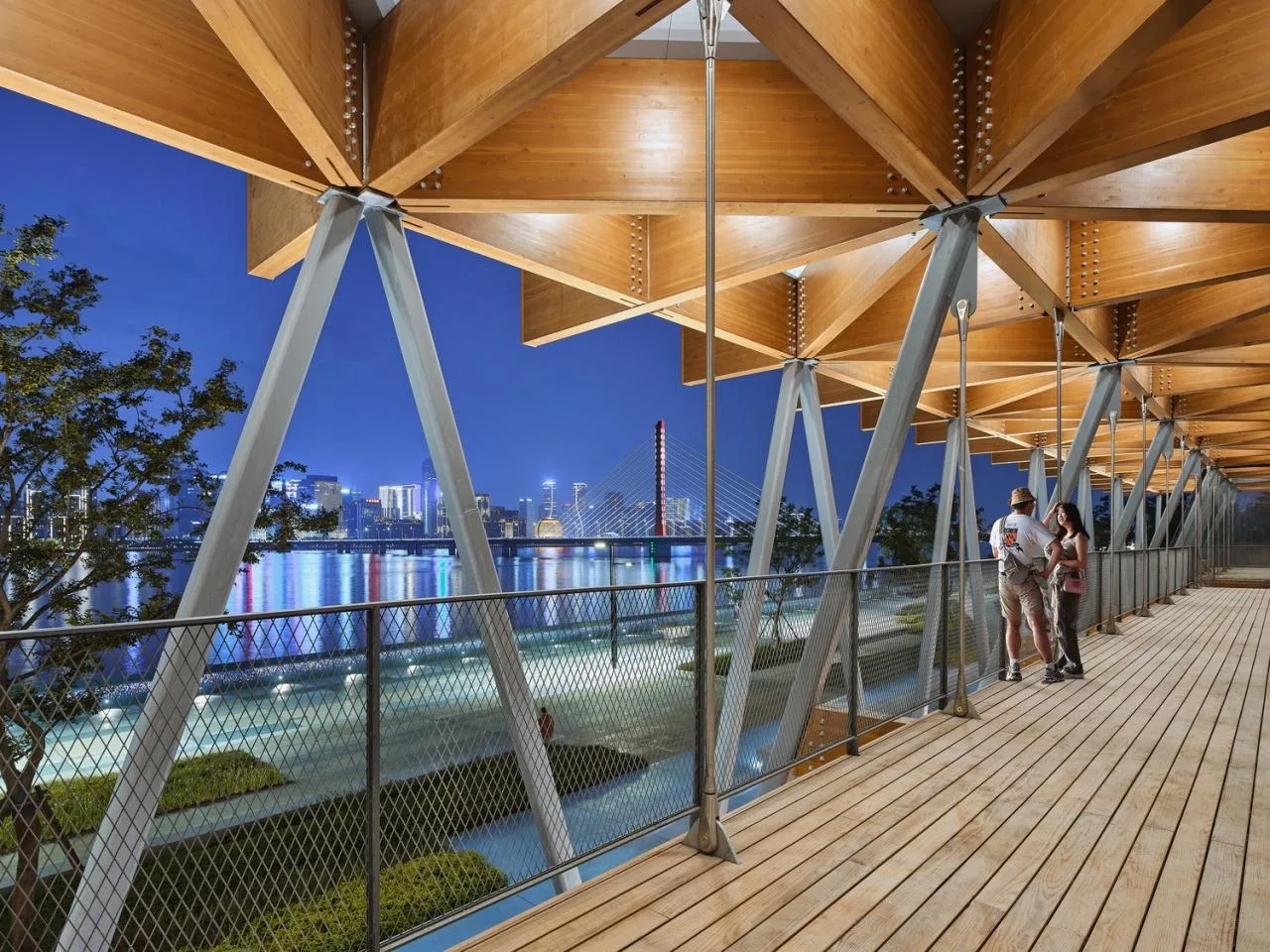
The roof truss is composed of 6m x 6m meter-shaped North American Douglas fir glued laminated timber beams, each with a beam section of 200 x 1000 mm. Supporting the roof truss are three V-shaped steel columns, each measuring 200 x 200 mm.
The second floor is supported by horizontal glued laminated wooden beams connected to both sides of the steel columns. Thanks to steel tie rods with a diameter of only 35mm suspended from the roof, the size of the wooden beams has been significantly reduced. The structure reflects authenticity and efficiency, while the flowing and transparent spaces created by the construction reveal a poetic harmony between the building and its natural surroundings.
Project Drawings
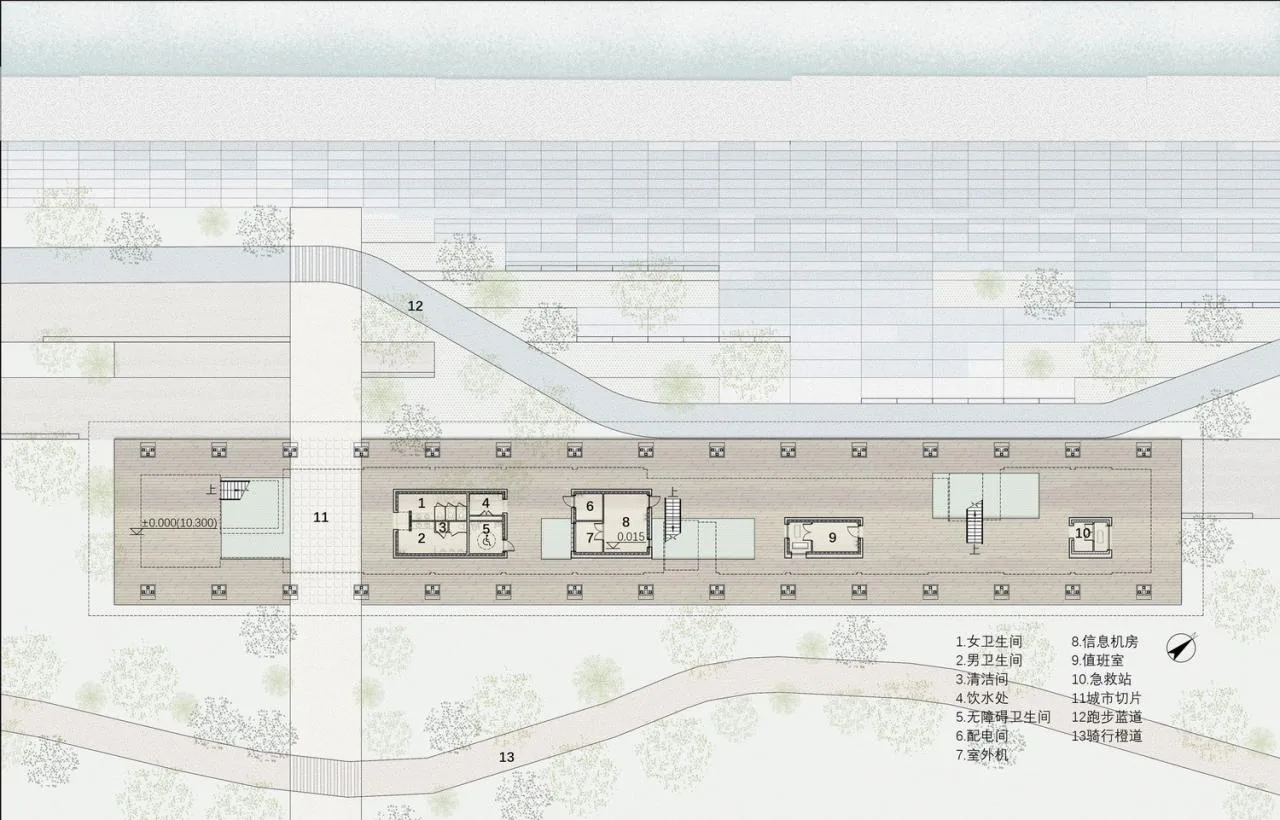
△ First Floor Plan
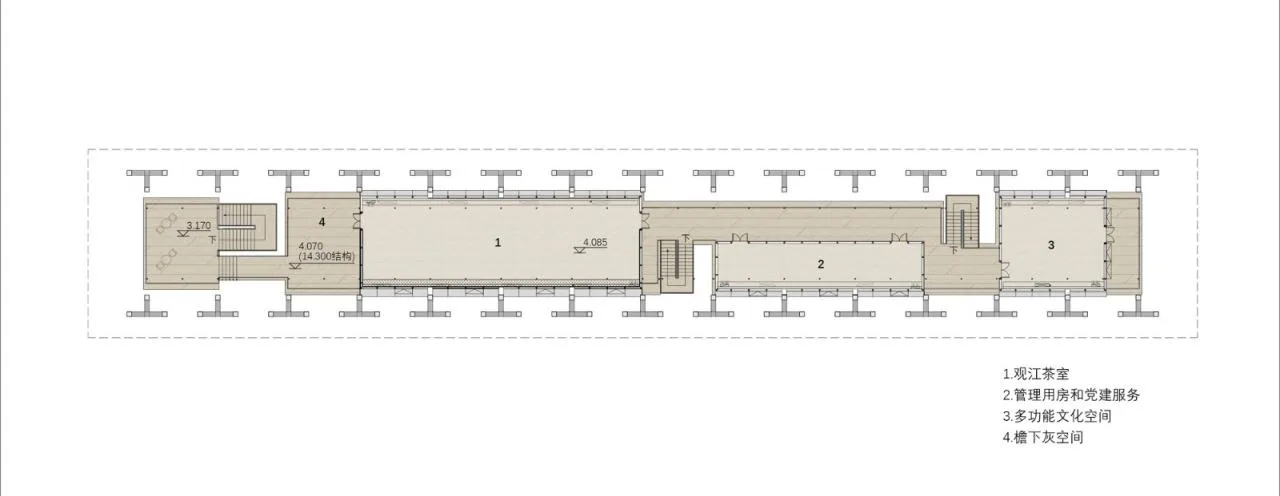
△ Second Floor Plan
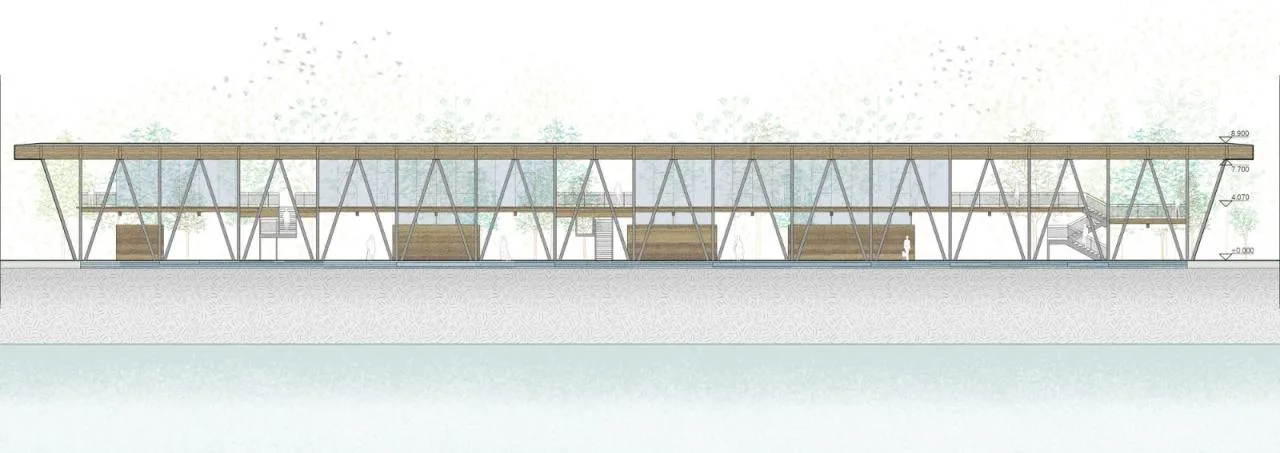
△ Elevation Drawing
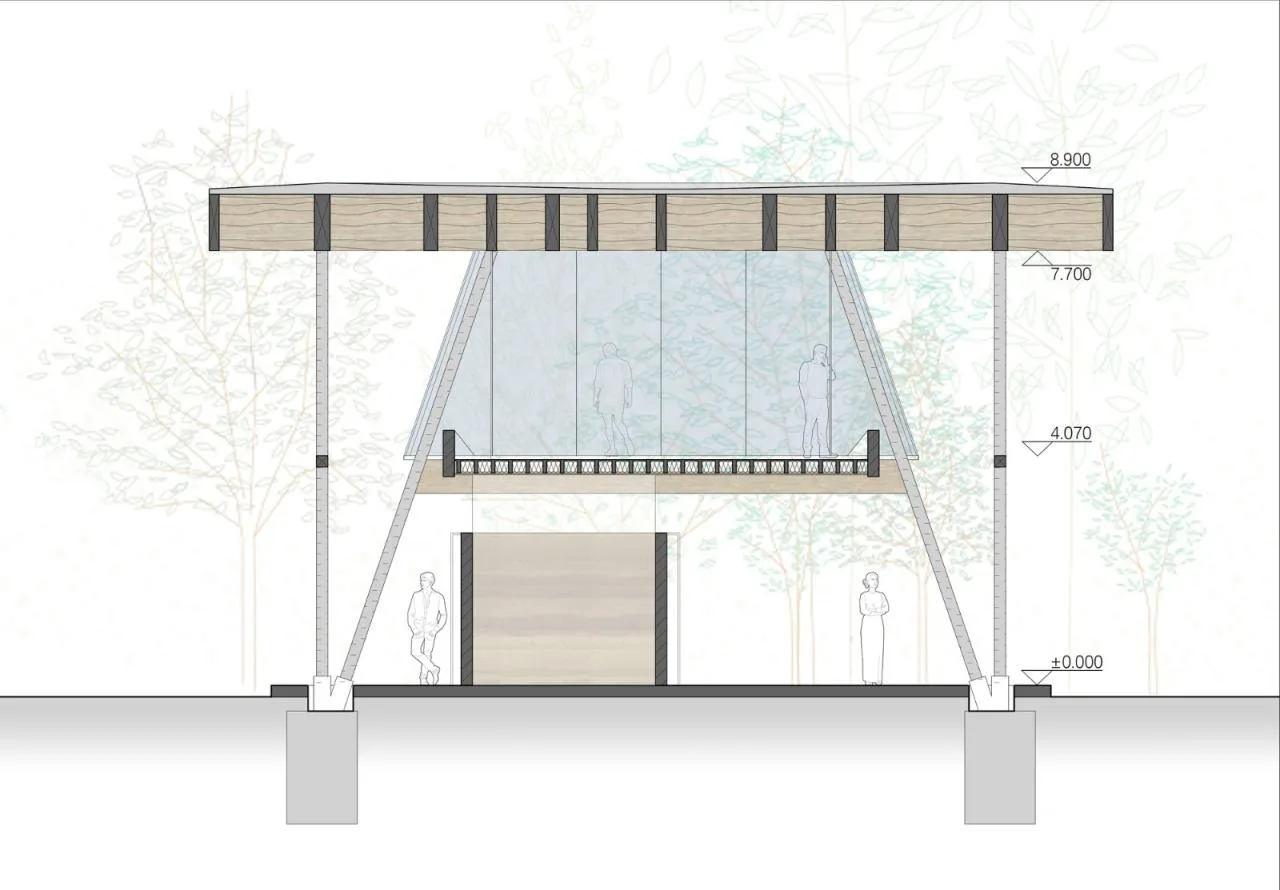
△ Section Diagram
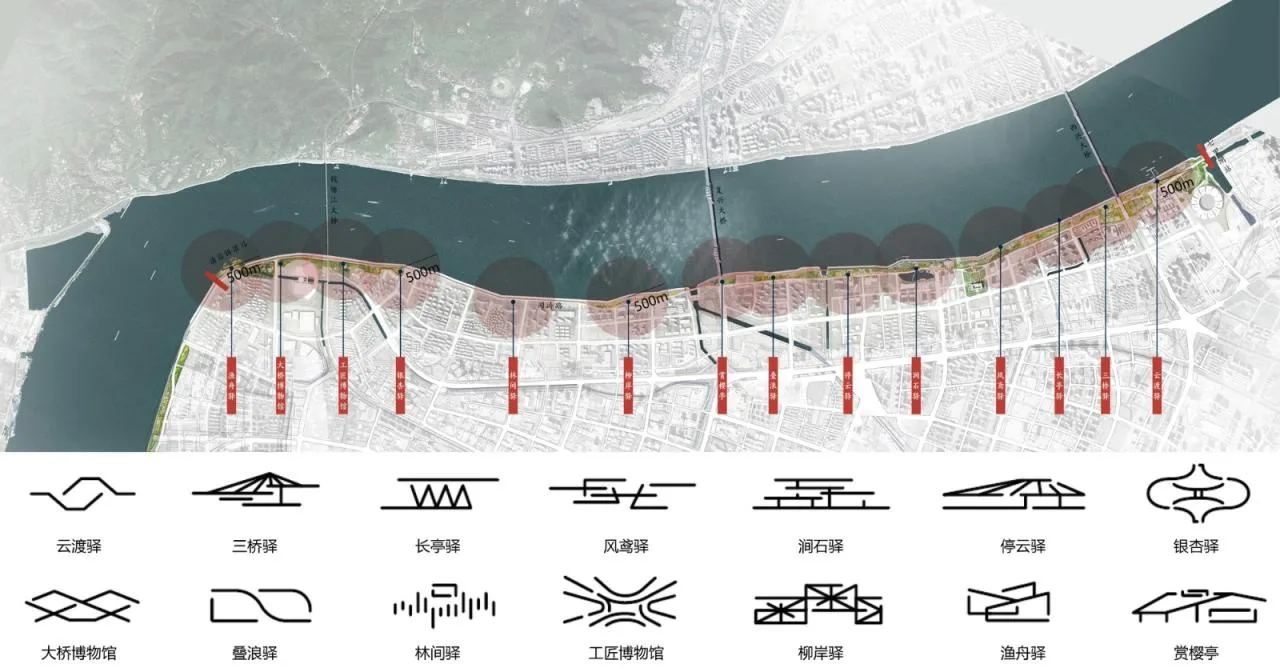
△ Analysis Chart
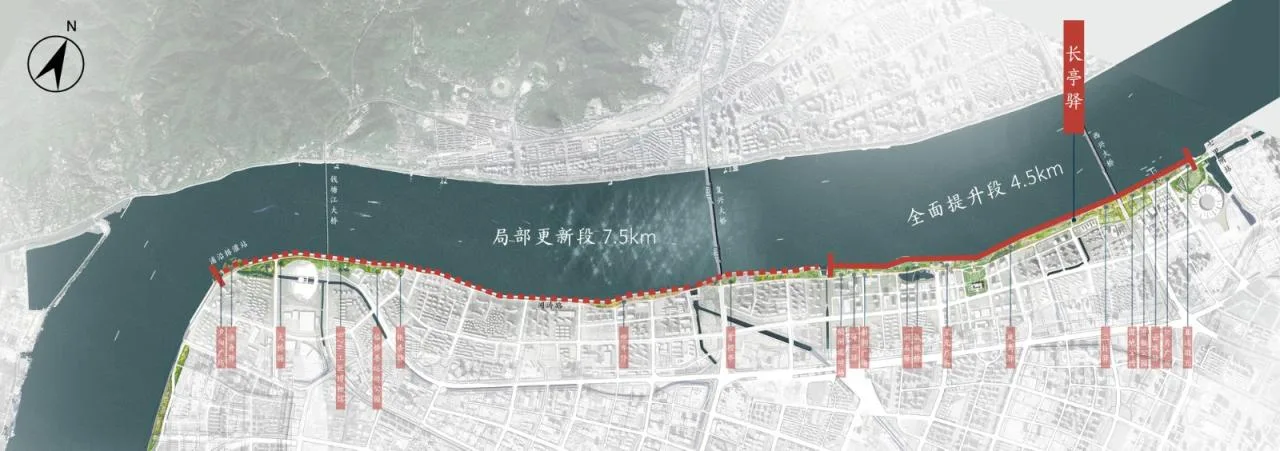
△ Analysis Chart
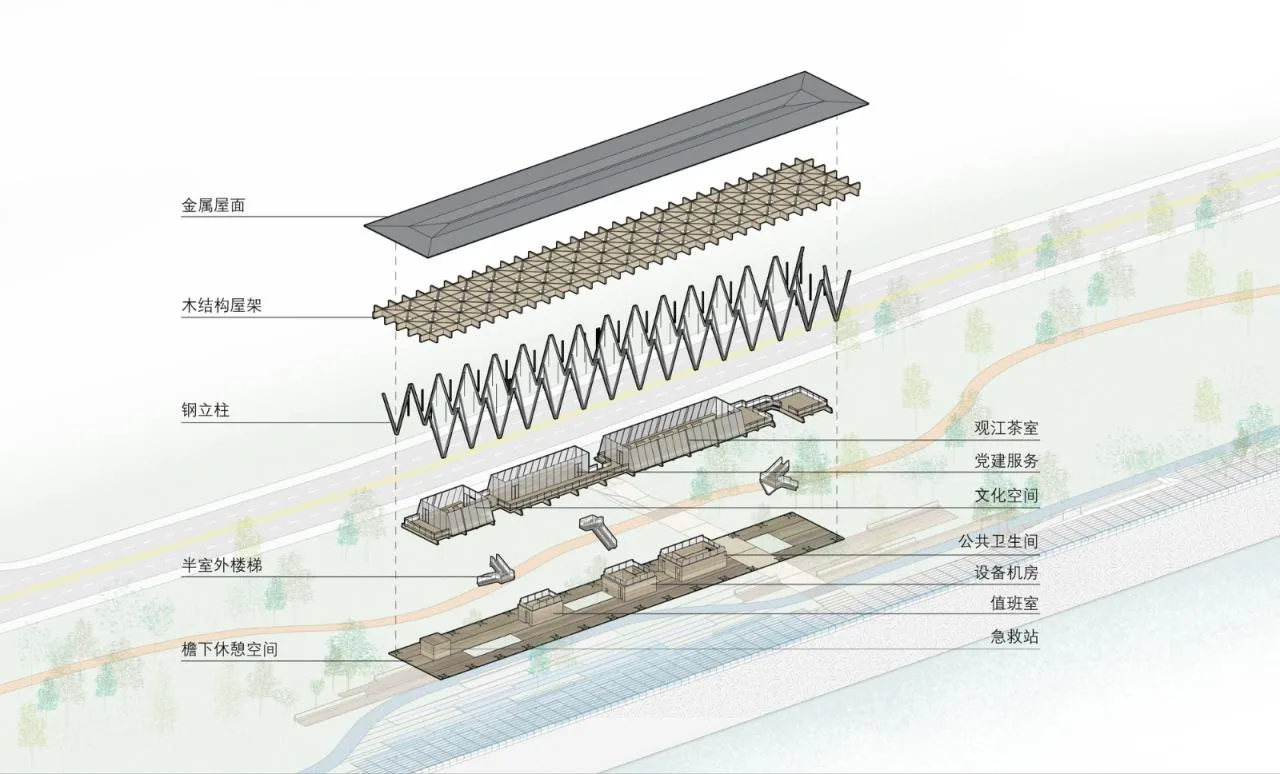
△ Exploded Diagram
Project Information
Architect: Tongji Original Design Studio
Area: 1,718 square meters
Project Year: 2023
Photographer: Zhang Yong, Tongji Original Design Studio
Manufacturer: Jimu Construction Technology Engineering (Shanghai) Co., Ltd.
Lead Architects: Zhang Ming, Zhang Zi, Chen Bo
Design Unit: Tongji Original Design Studio
BIM Design Team: Zhang Dongsheng, Wang Lingyu, Xuan Yi
Structural Design Team: Wu Honglei, Zheng Chaoyi, Huang Dejian, Li Dongyuan
Equipment Design Team: Liu Jian, Jia Min, Zhang Sien, Lv Zonghu, Wang Haidong, Zhang Yujie, Li Yujie, Cai Ting
Landscape Design Team: Li Xiubing, Zou Qian, Luo Jian, Su Jinghua, Liu Yuke
Lighting Design Team: Yang Xiu, Bian Chen, Li Di
Technical and Economic Team: Pang Xiaolin, Zhou Lingjun, Zang Junlong, Chen Xinyun, Tong Zhou, Ge Yuwei, Zhang Chunxia, Cao Yexin
Green Building Team: Ren Guohui, Xue Fanghui, Zheng Xiaowei, Meng Fanlin
Collaboration and Coordination Team: Zhejiang Institute of Technology Architectural Design and Research Co., Ltd.: Qin Anhua, Huang Jiayao, Zhou Kang, Ma Kai
Construction Unit: Hangzhou Xiaohong Construction Environment Group Co., Ltd.
Logo Design Unit: Yike Design
Wood Structure Project: Jimu Construction Technology Engineering (Shanghai) Co., Ltd.
Construction Unit: Hangzhou Binjiang Environmental Development Co., Ltd.
Location: Hangzhou












Must log in before commenting!
Sign Up