
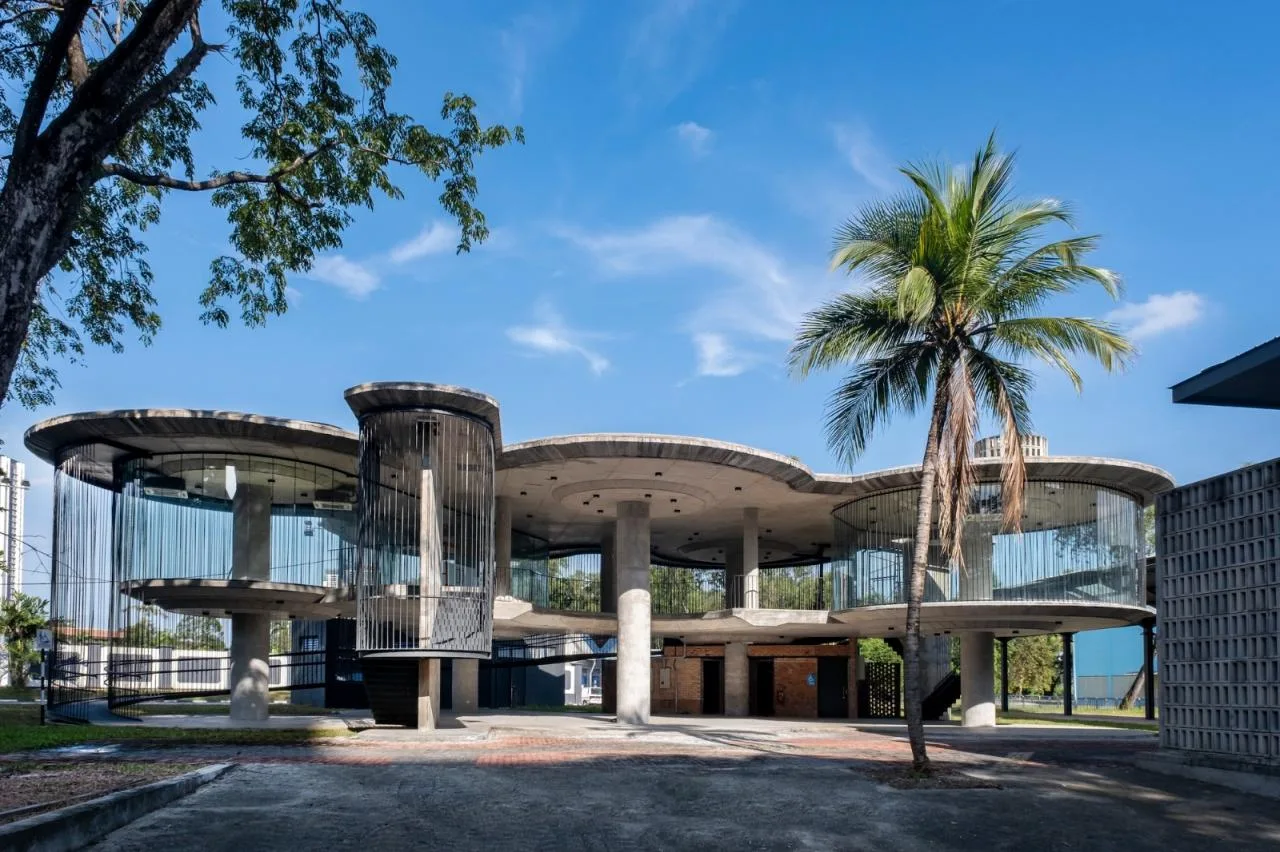
The PJKita Community Center is a vibrant new hub designed specifically for the local community, with a focus on engaging Generation Z. Situated within Kelana Jaya Park and spanning 4.3 acres, this project is part of the PJKita initiative launched by the Petaling Jaya City Council (MBPJ). The center aims to foster youth participation and strengthen community bonds, supporting the vision of a sustainable, creative, and community-oriented city. The building features two floors and offers a total of 310 square meters of constructed space.
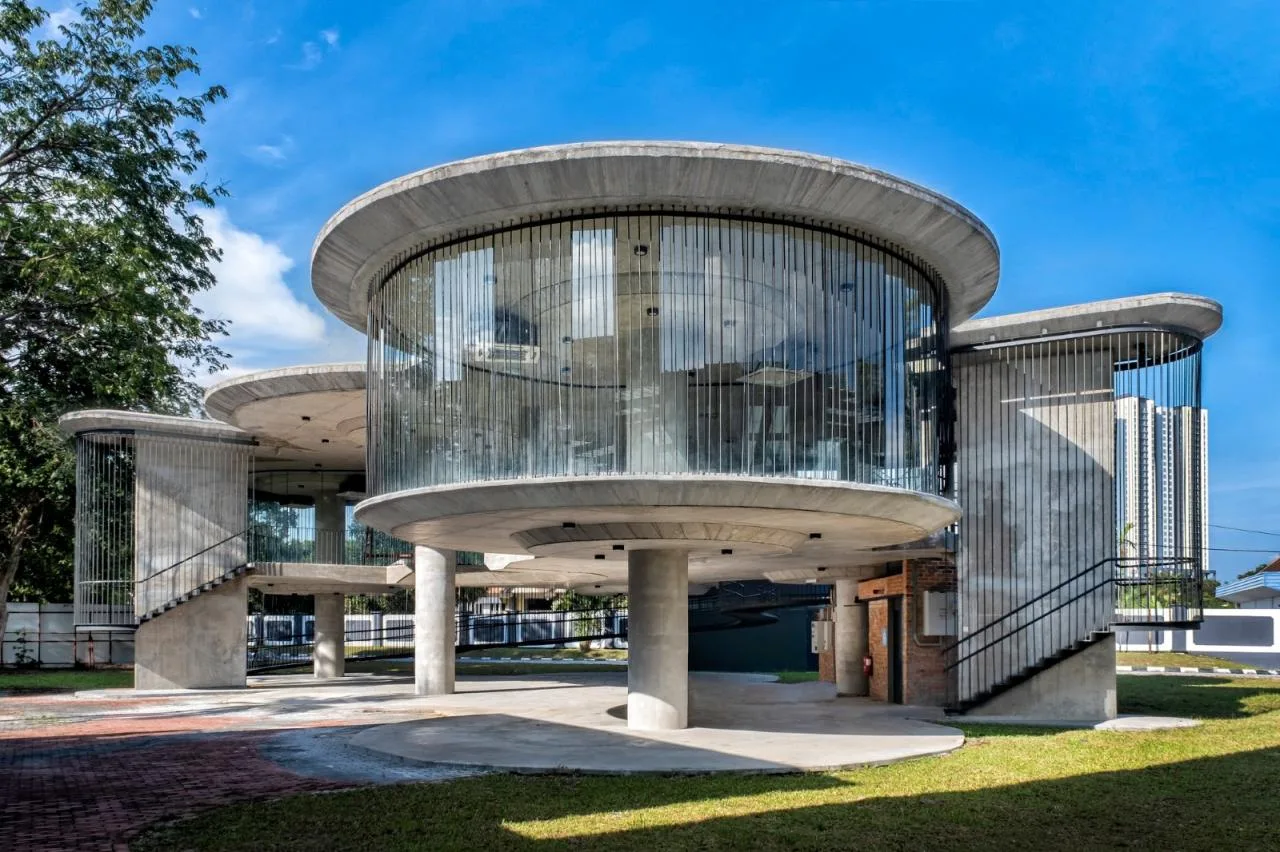
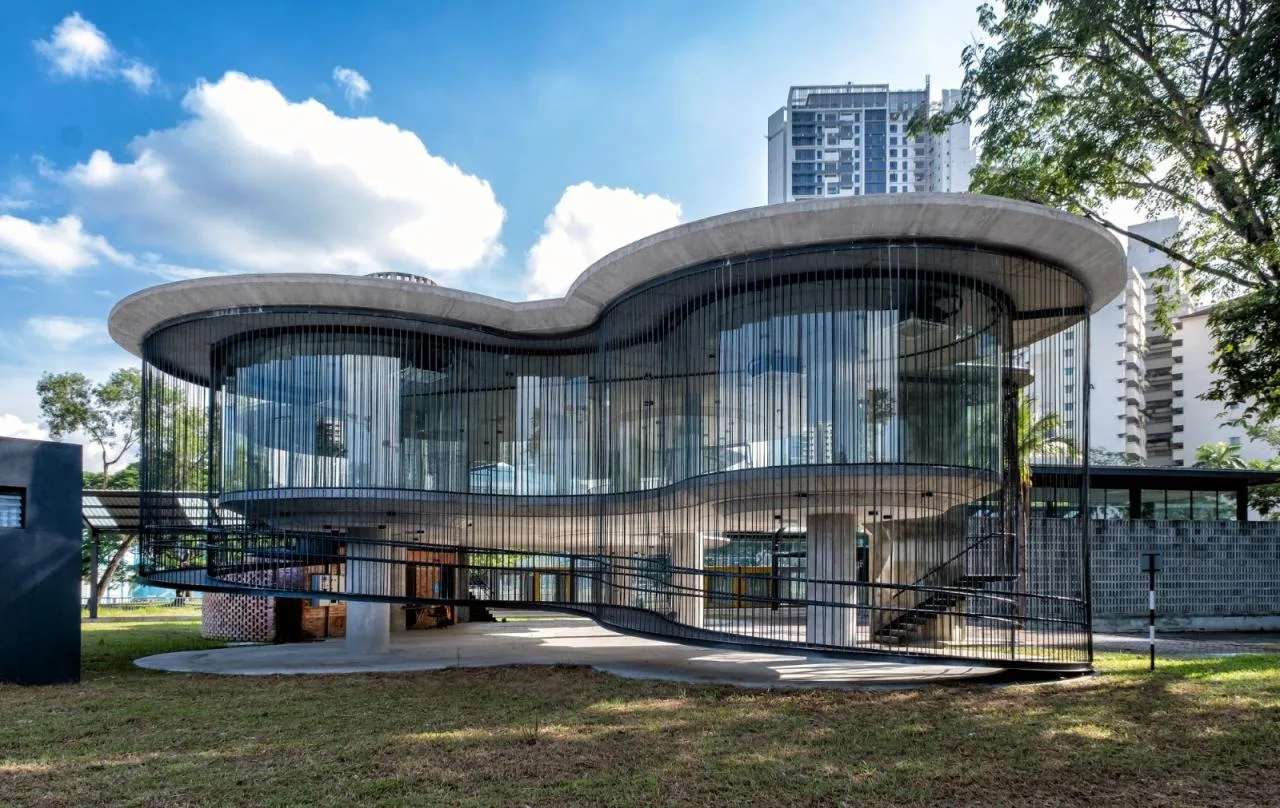
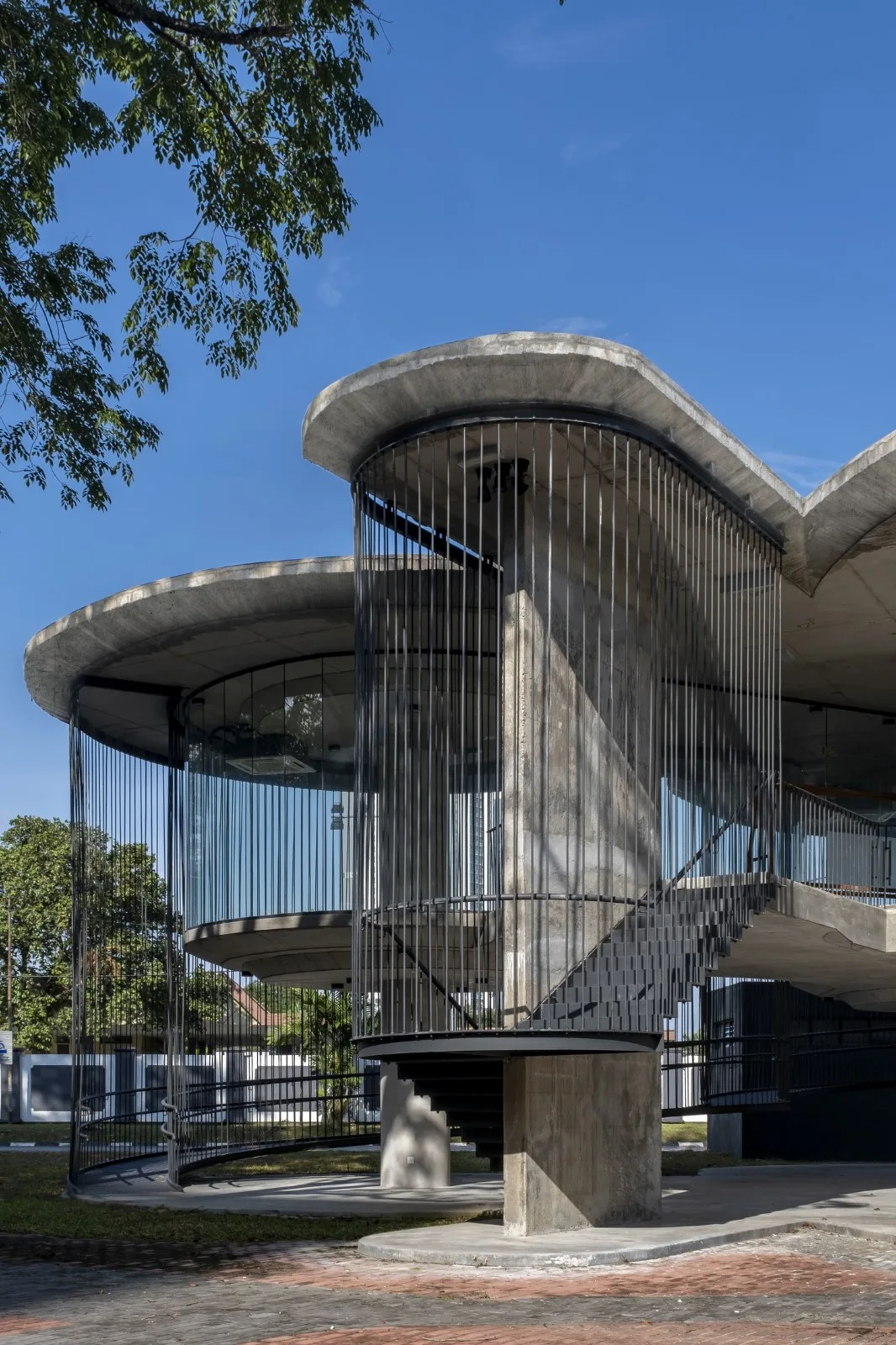
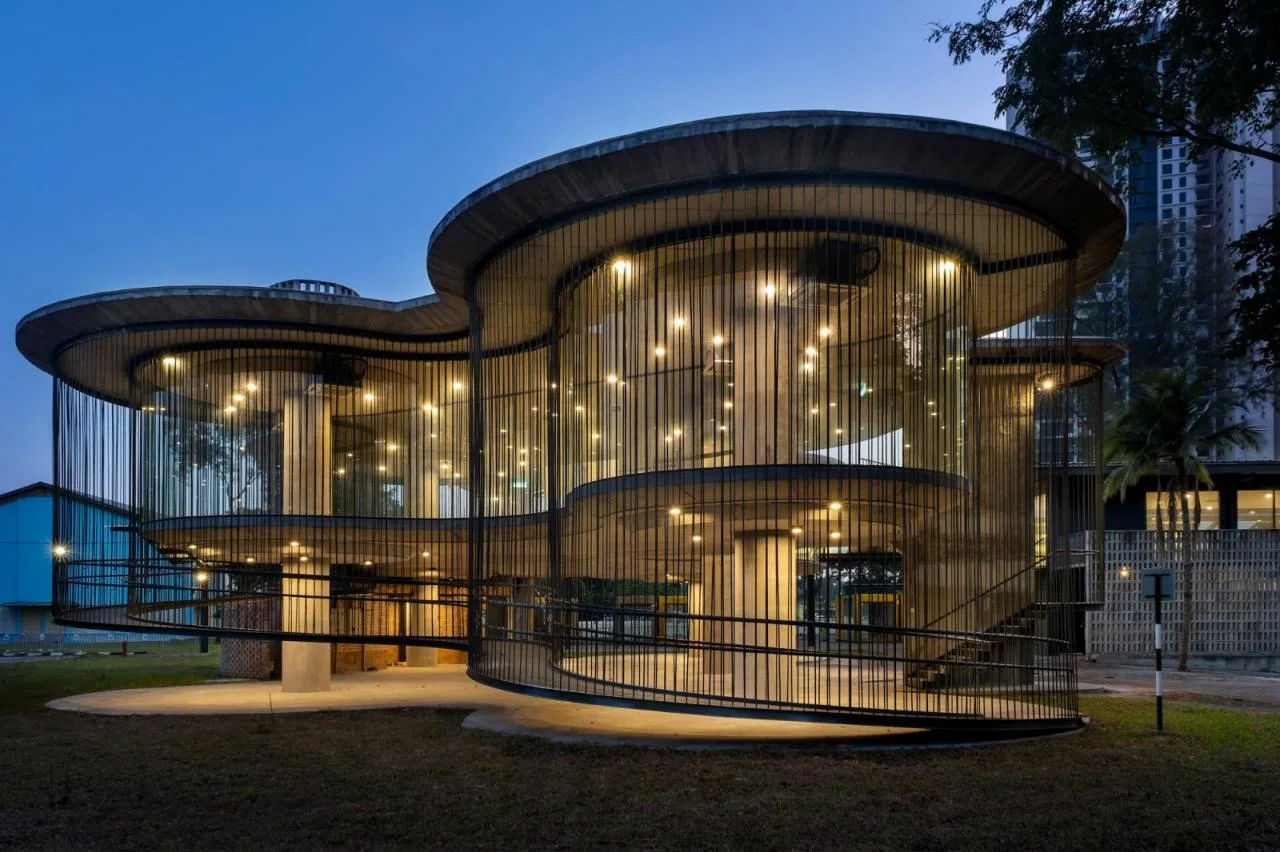
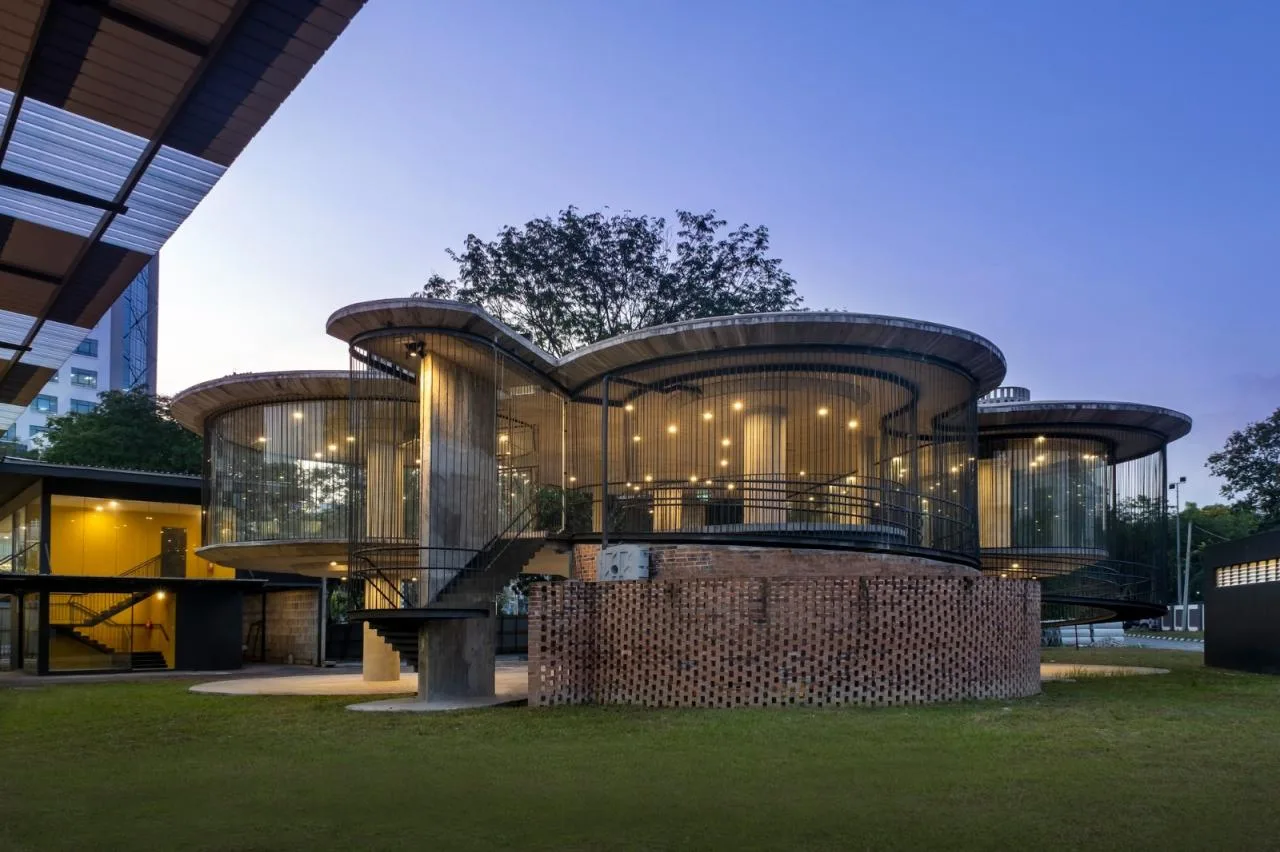
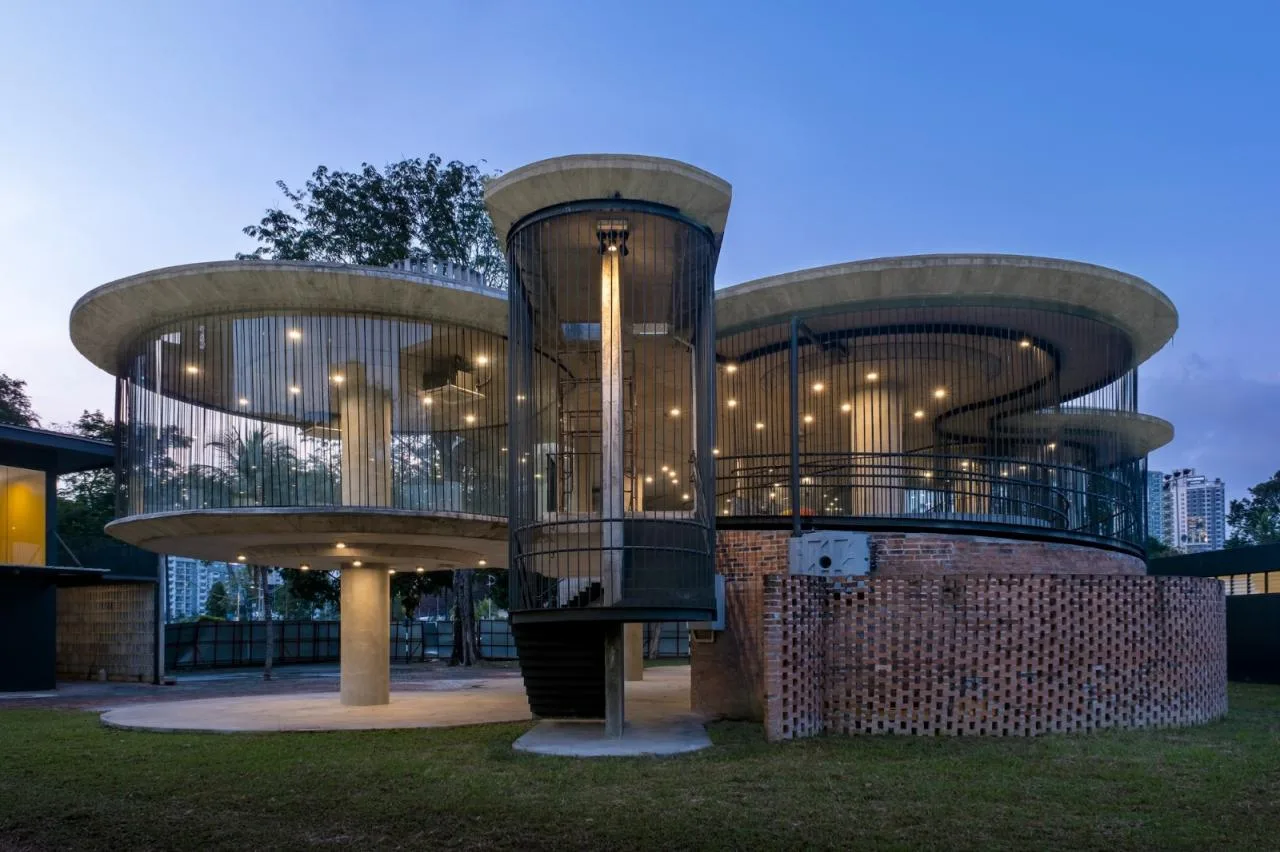
The center’s first floor features an open hall designed to support various community activities. Essential facilities such as restrooms are located on the ground floor, alongside PJKita’s management office and a meeting room. The first floor also houses an activity space composed of four cylindrical glass rooms. Adjacent to the center is a single-story commercial street built from repurposed shipping containers, offering affordable retail spaces for emerging boutique businesses. This area also includes a food hall, market zone, children’s play areas, a skatepark, and sports facilities.
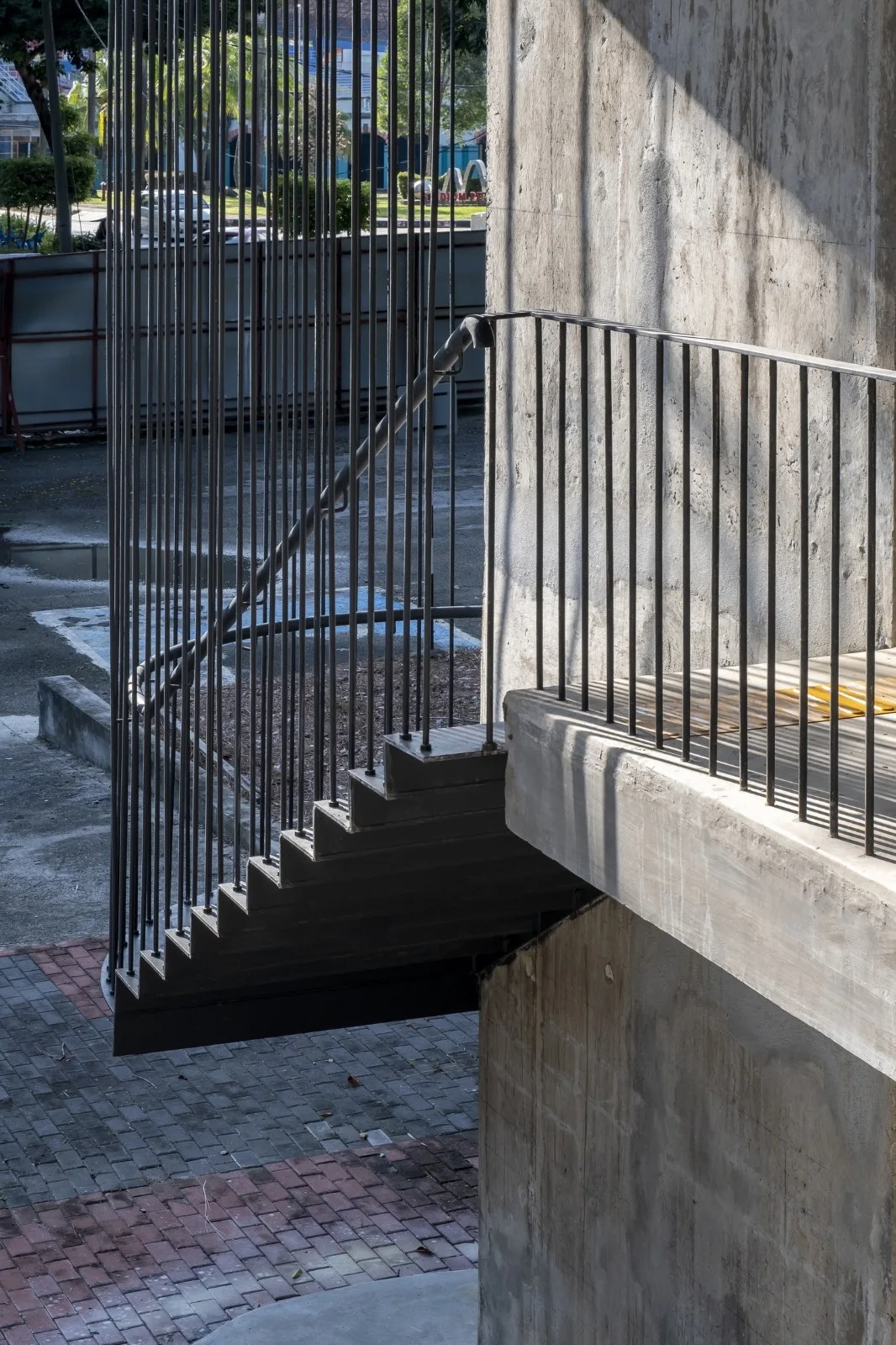
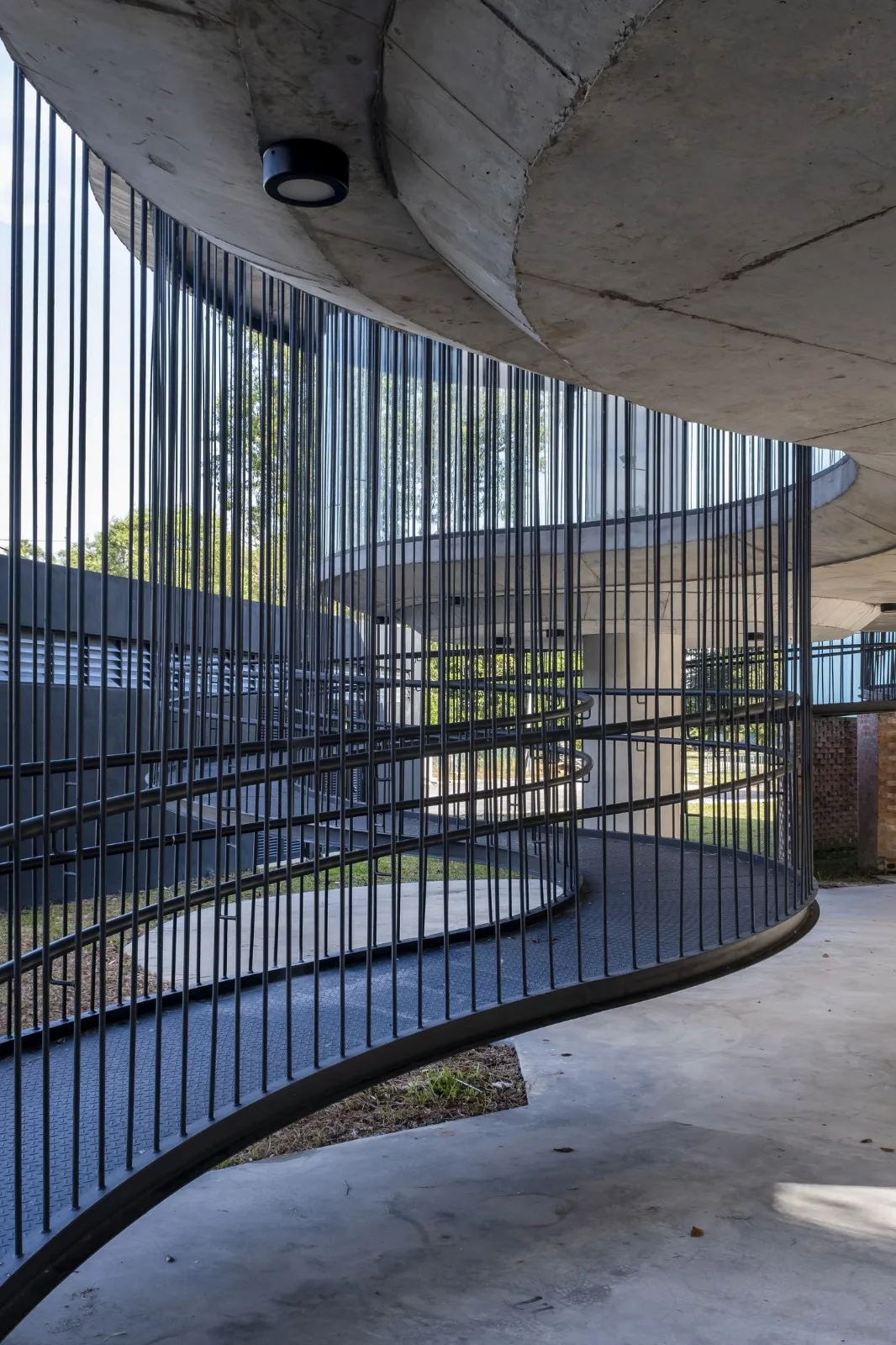
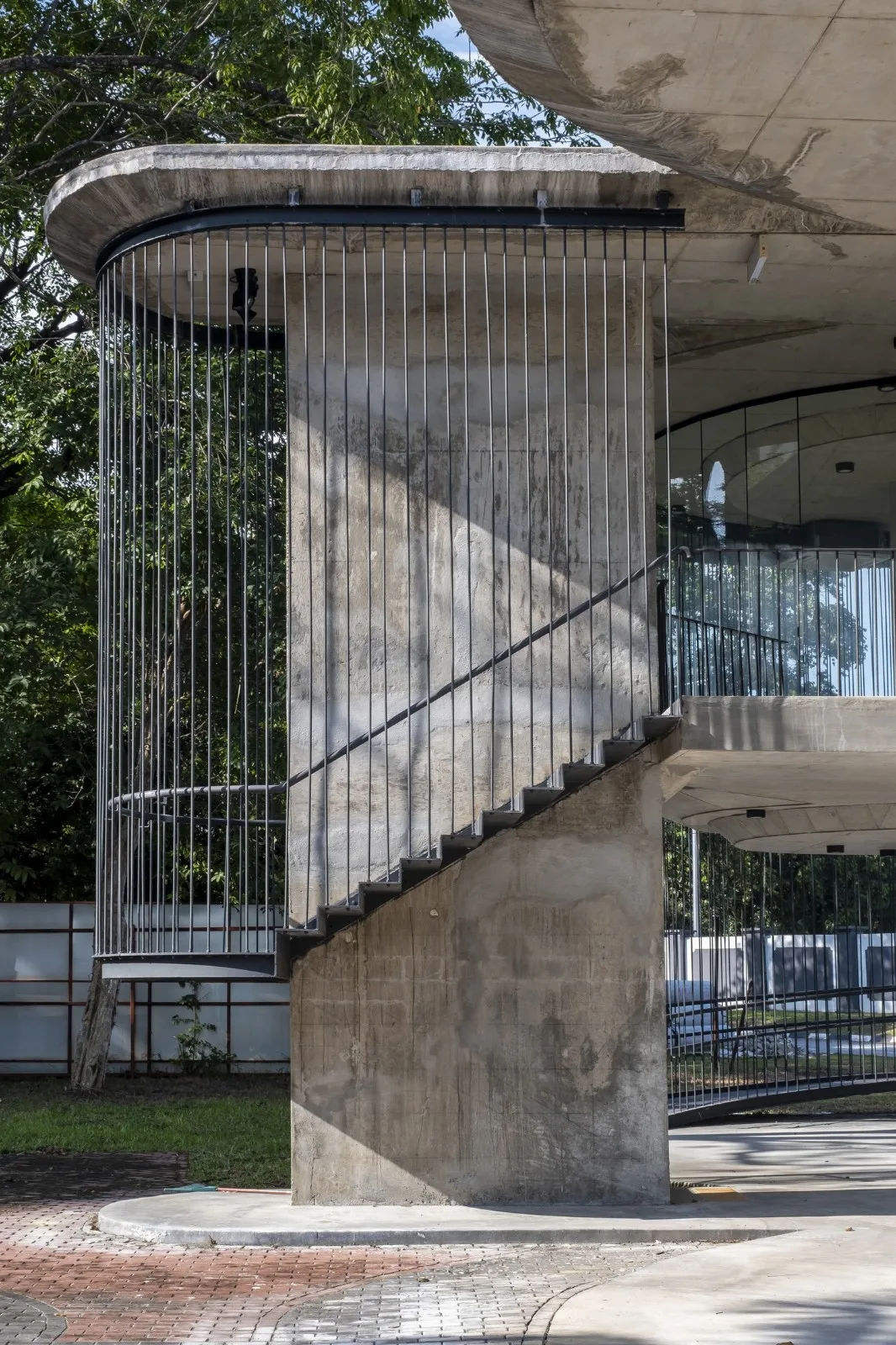
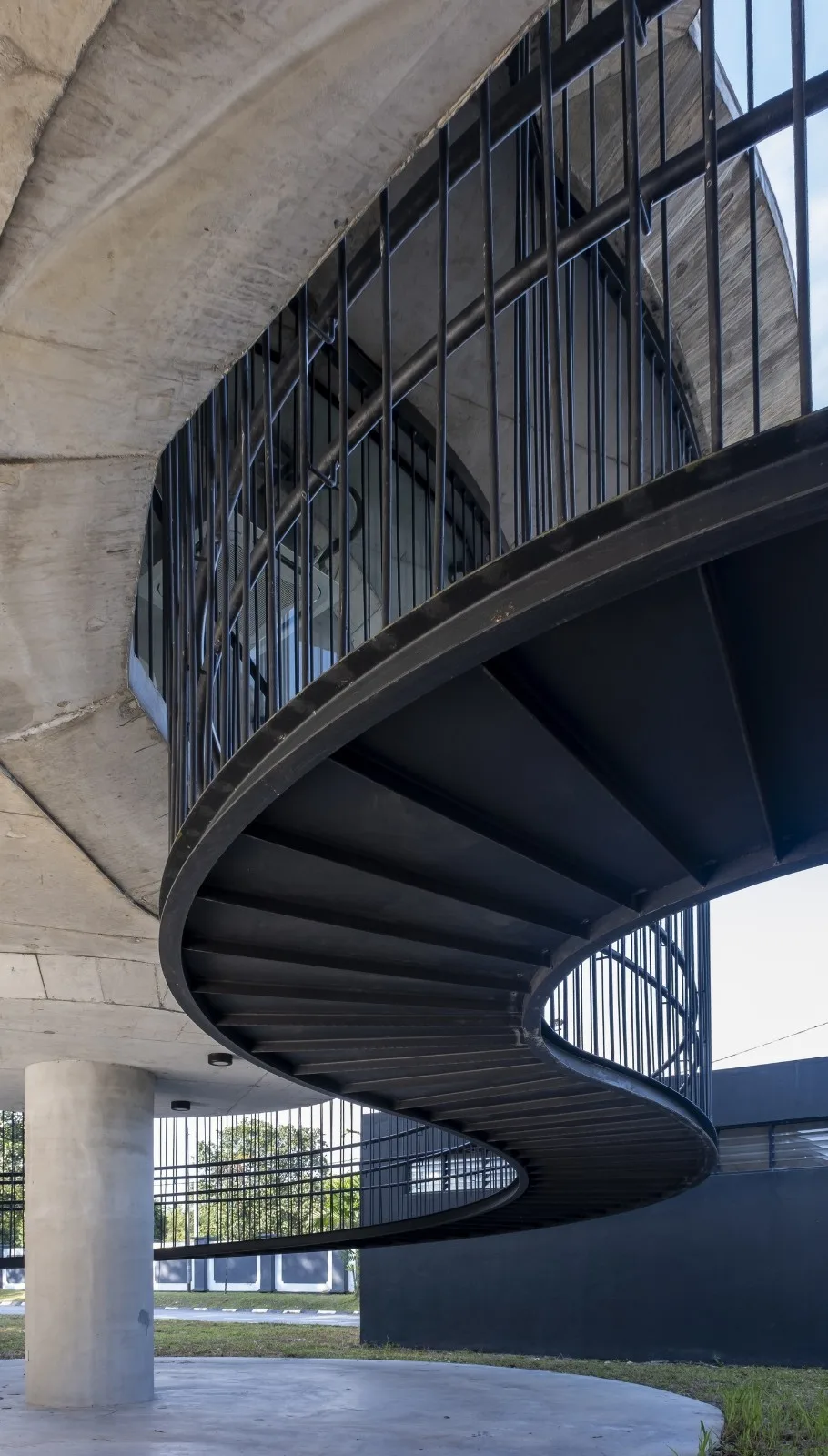
The building’s exterior is inspired by a T-shaped canopy concept, featuring circular glass structures supported by an untreated concrete bridge. Accessibility is a priority, with ramps accommodating disabled visitors. The project also began with the creation of street murals, providing local residents with hands-on experience and strengthening community ties through artistic expression.
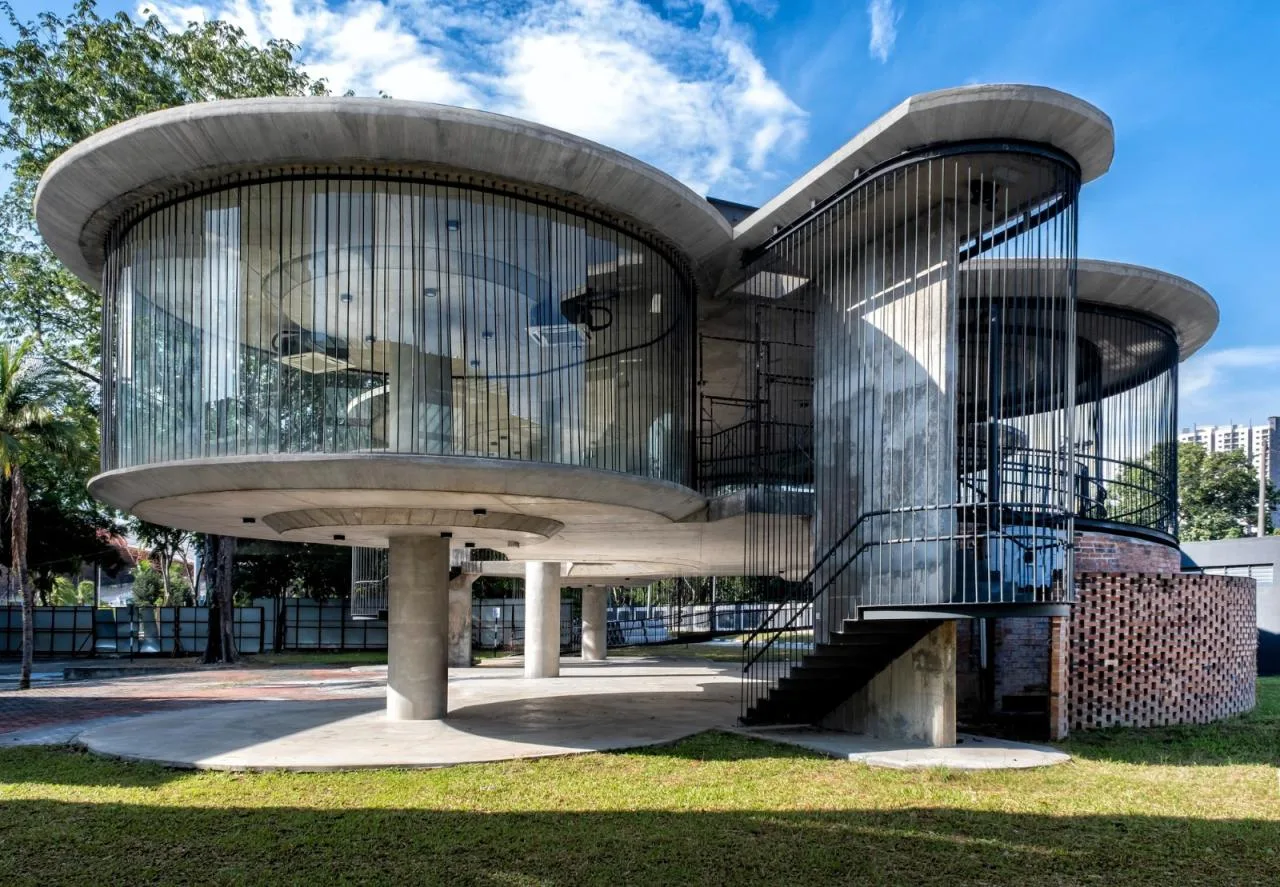
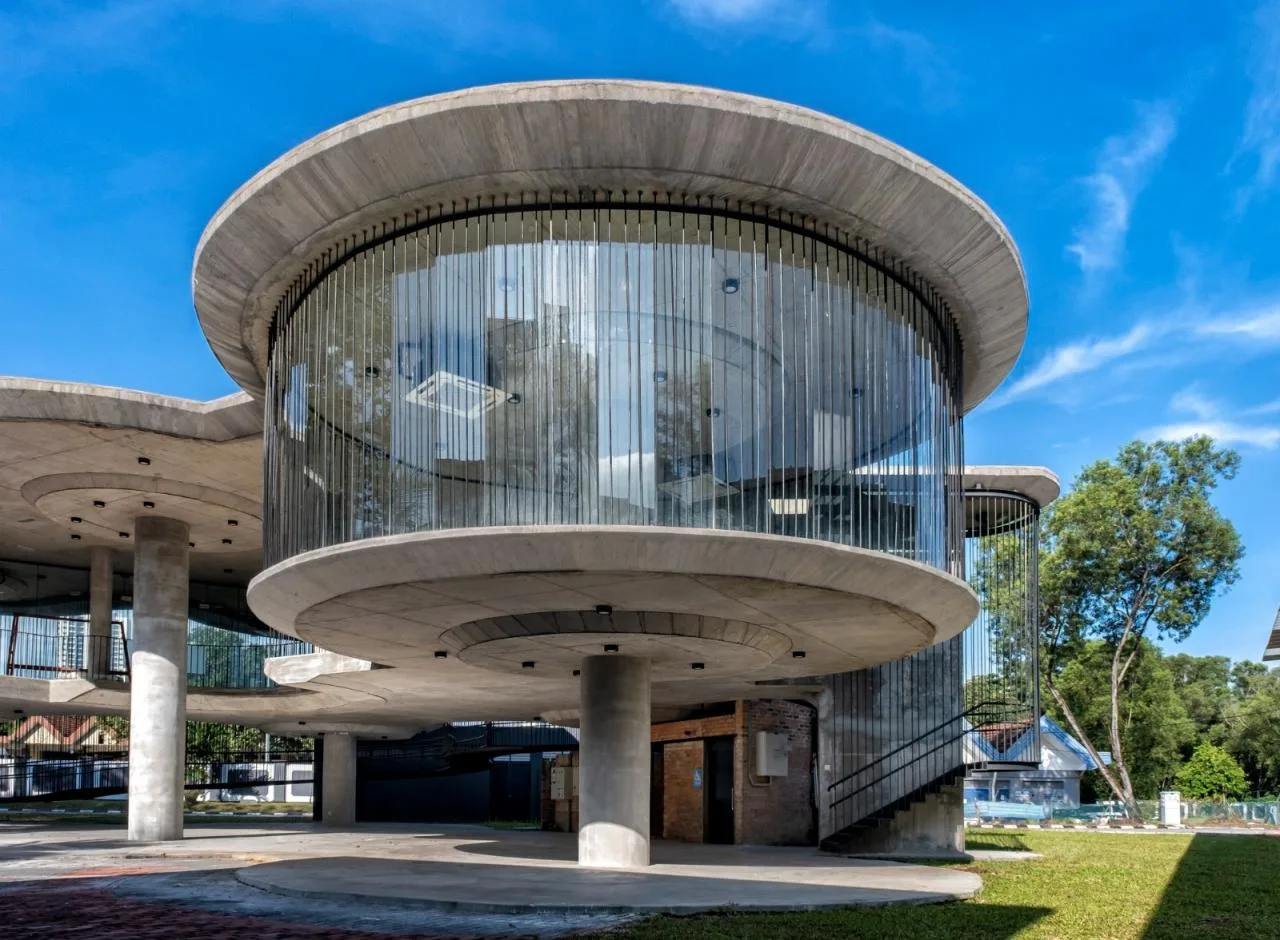
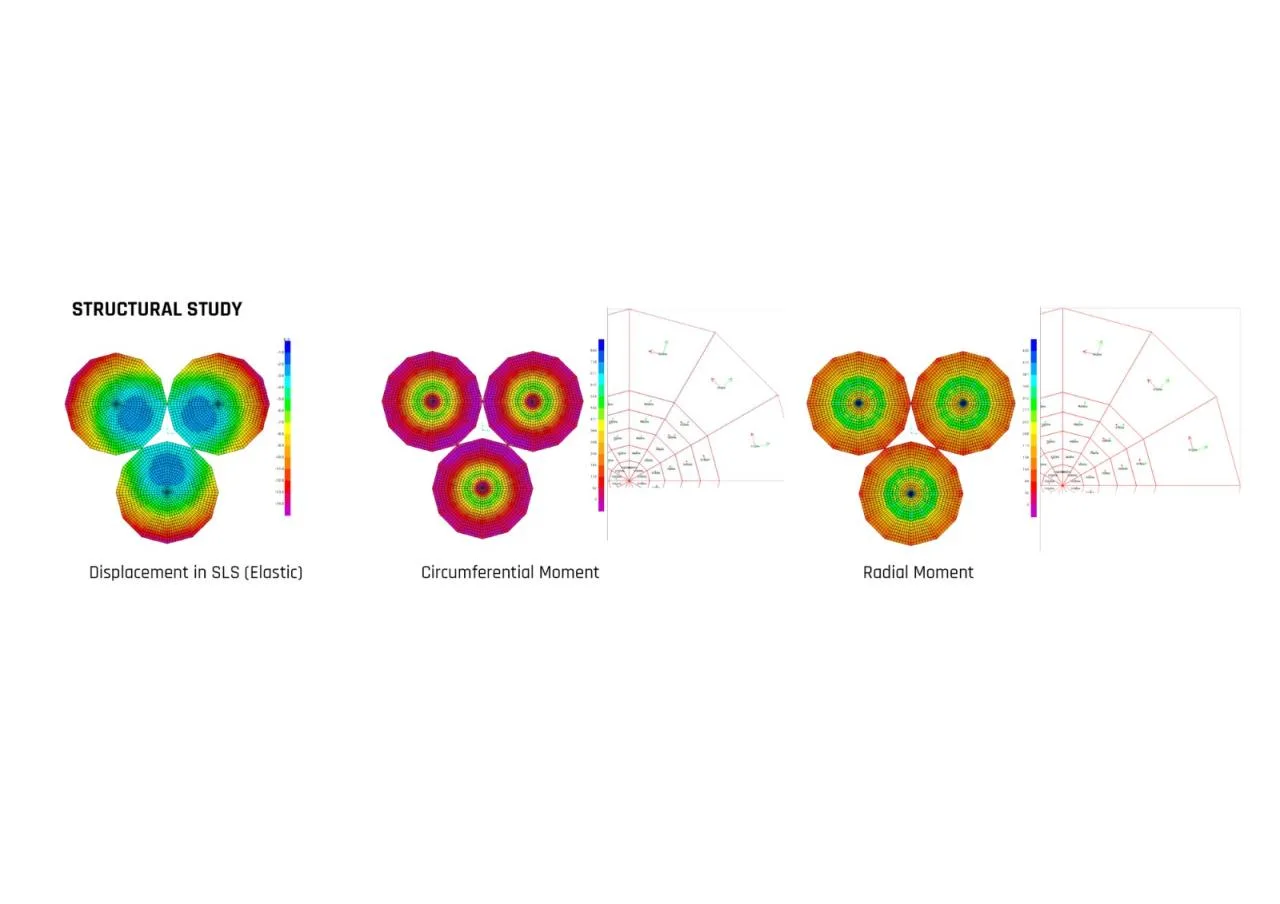
The design concept draws inspiration from a tropical ecosystem, connected through a biophilic framework known as the “spine,” made up of modular T-shaped structures. These T-shaped canopies are easy to integrate, exert minimal impact on the environment, and offer multi-layered connectivity that allows organic growth in all directions. For structural stability and self-support, at least three T-shaped modules are triangulated together.
These dynamic, expressive canopies serve as iconic shelters that provide shade and protection. Biologically, they mimic the form of ancient tropical rainforest trees. Each module is designed with built-in, suspended service facilities, creating continuous, unobstructed ground-level space, as each canopy contacts the ground at only one point. This flexibility allows the space beneath to be fully utilized and adapted as needed.
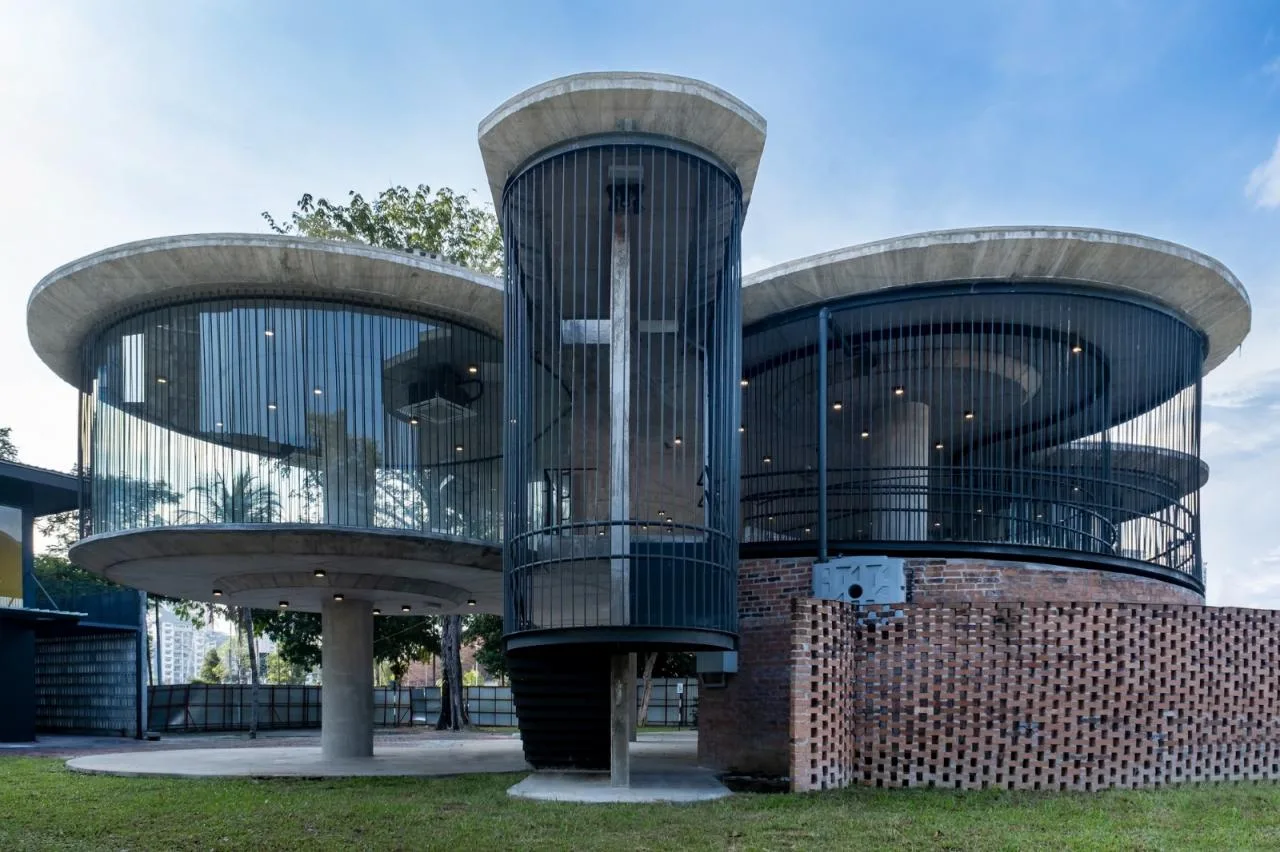
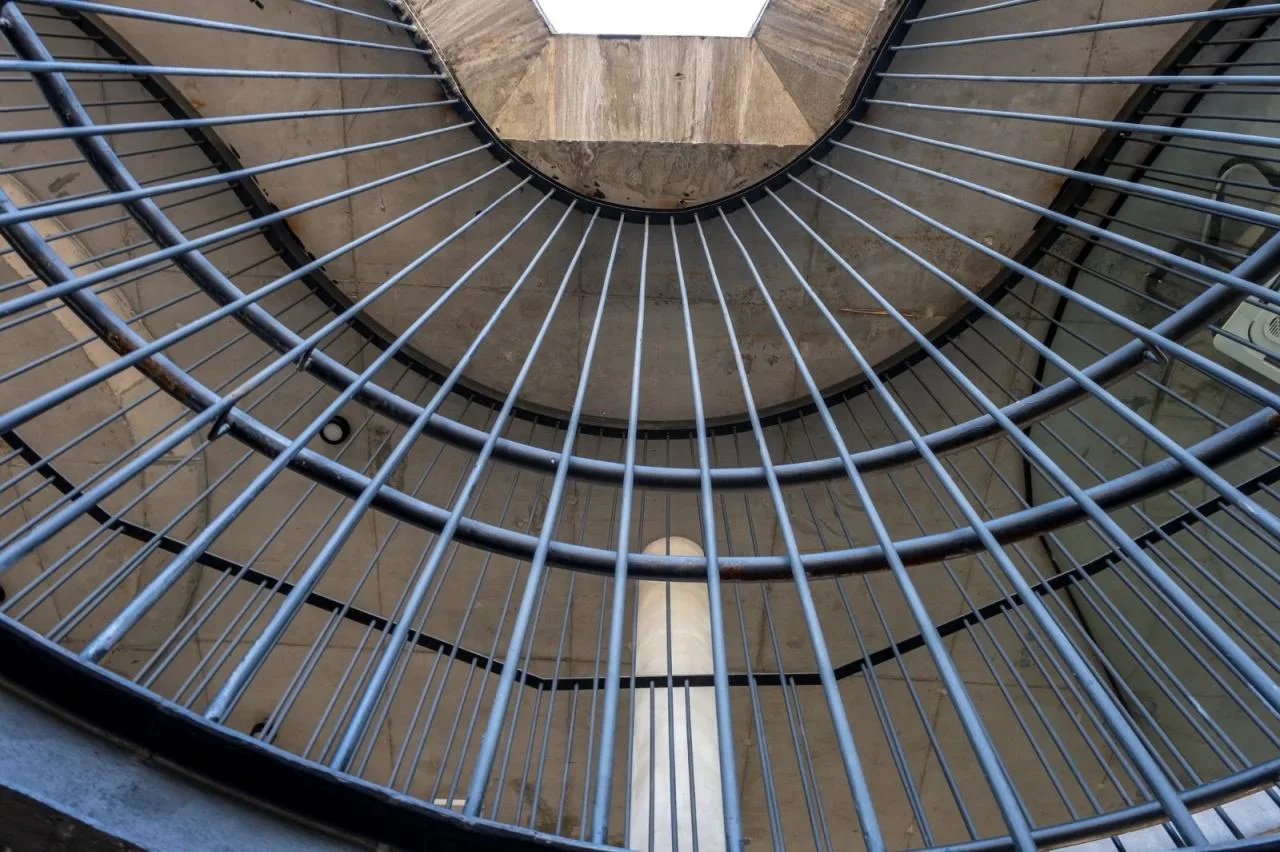
This organic system is capable of growth and adaptation as required. The functional forms and structures of the T-shaped canopies, along with the communities formed along the spine, are interchangeable and interconnected, allowing for replication and expansion akin to biological cells and organisms. Multiple canopy “crowns” blend seamlessly into existing natural surroundings and landscapes.
The spine itself functions as a covered corridor beneath the canopies, extending 60 meters across the commercial street and linking the shops with the youth center. This sheltered street serves as a versatile space for community festivals, food stalls, and retail events. The combination of metal terraces and fiberglass roofing addresses challenges posed by tropical climates, such as controlling sunlight, heat, and rainwater. The orientation of the canopy ensures optimal shading while allowing prevailing winds to circulate freely, enhancing comfort within the space.
Project Drawings
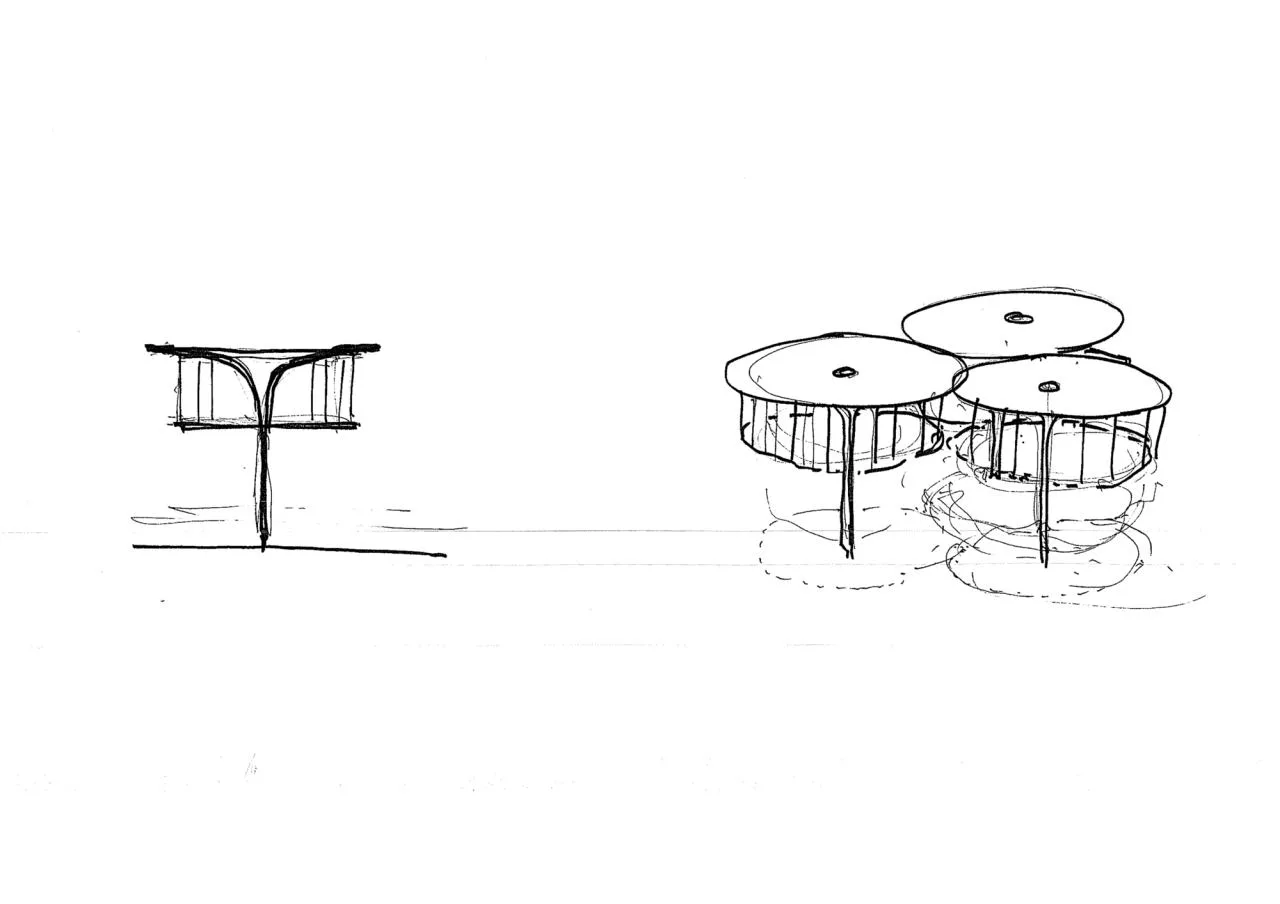
△ Hand-drawn design sketches
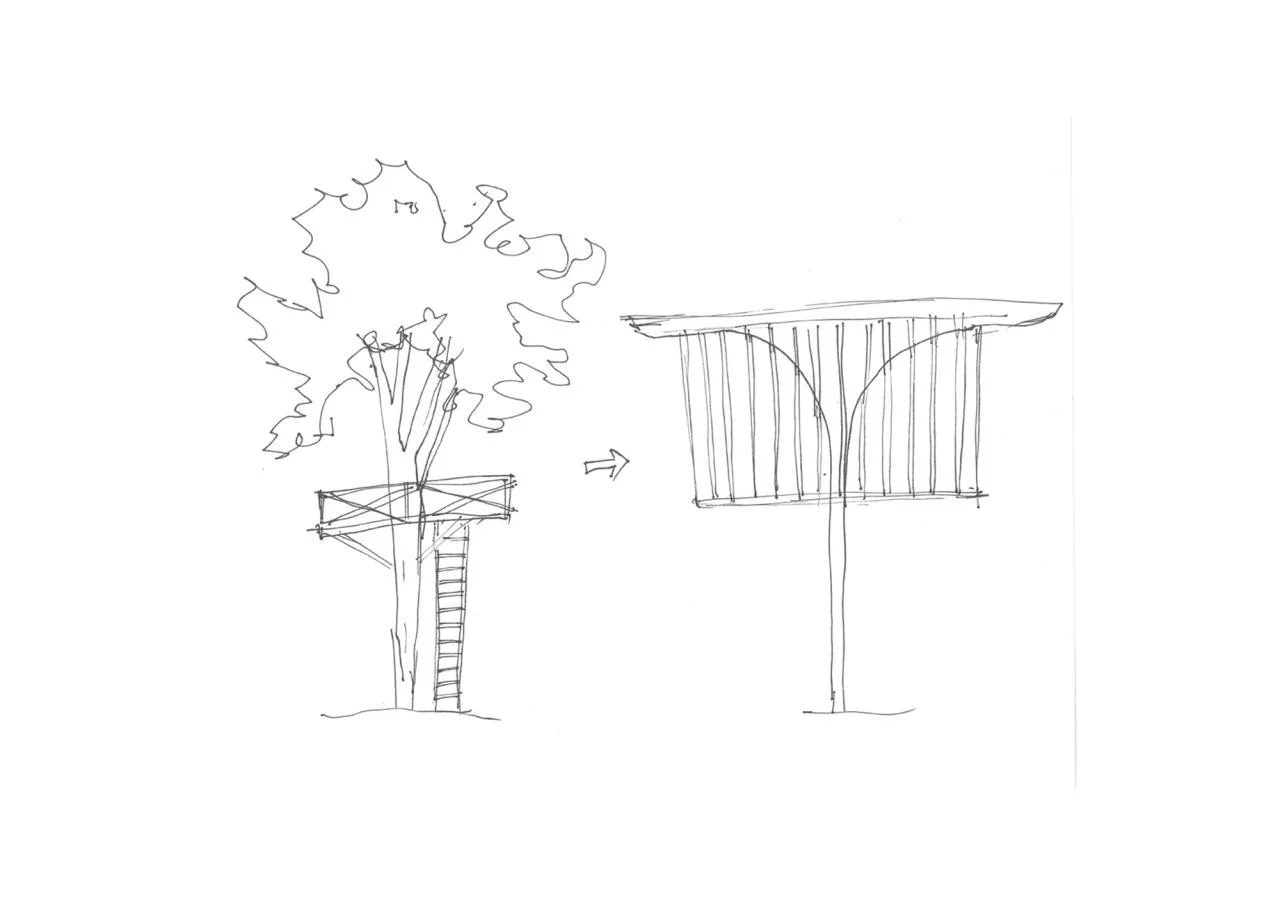
△ Hand-drawn design sketches
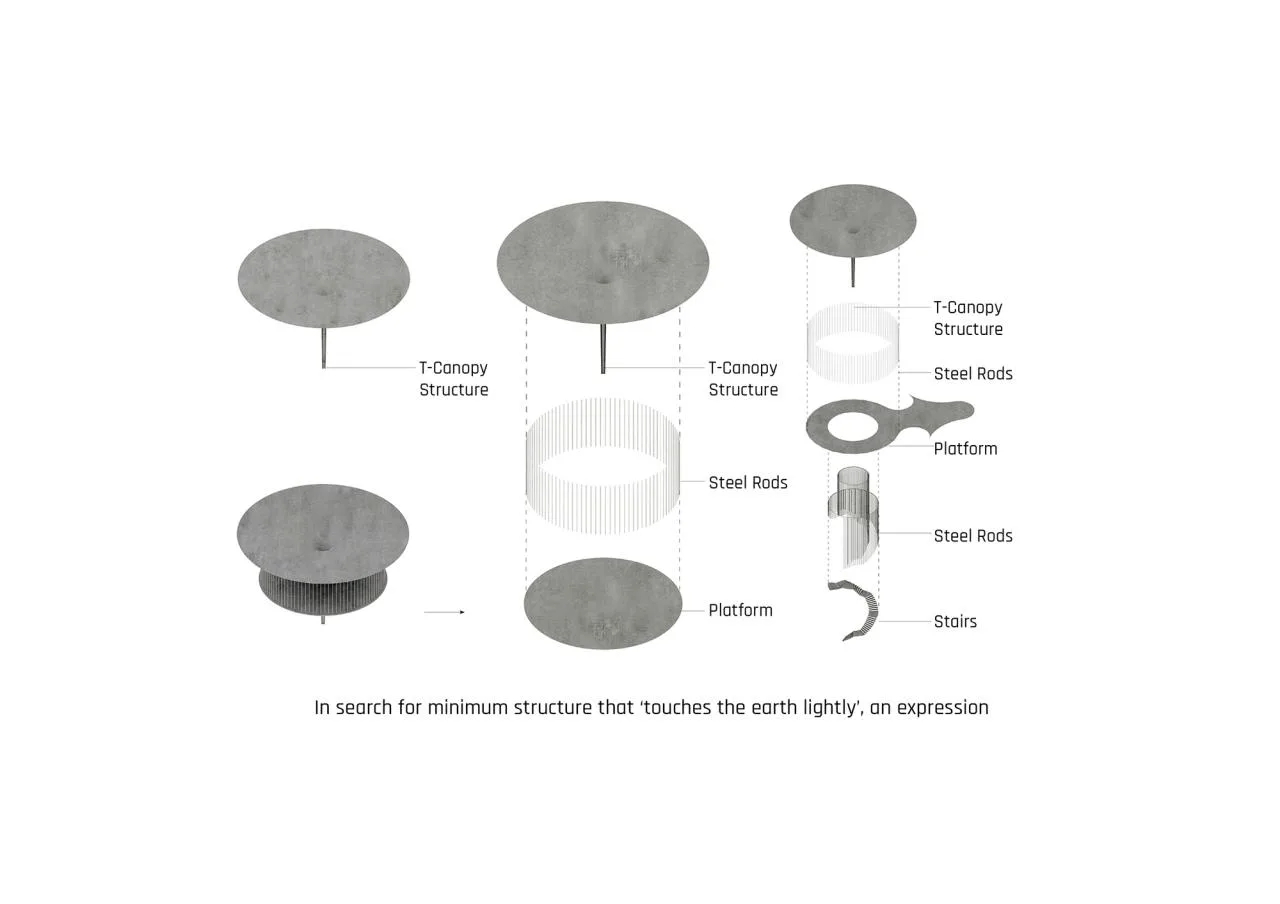
△ Analysis charts
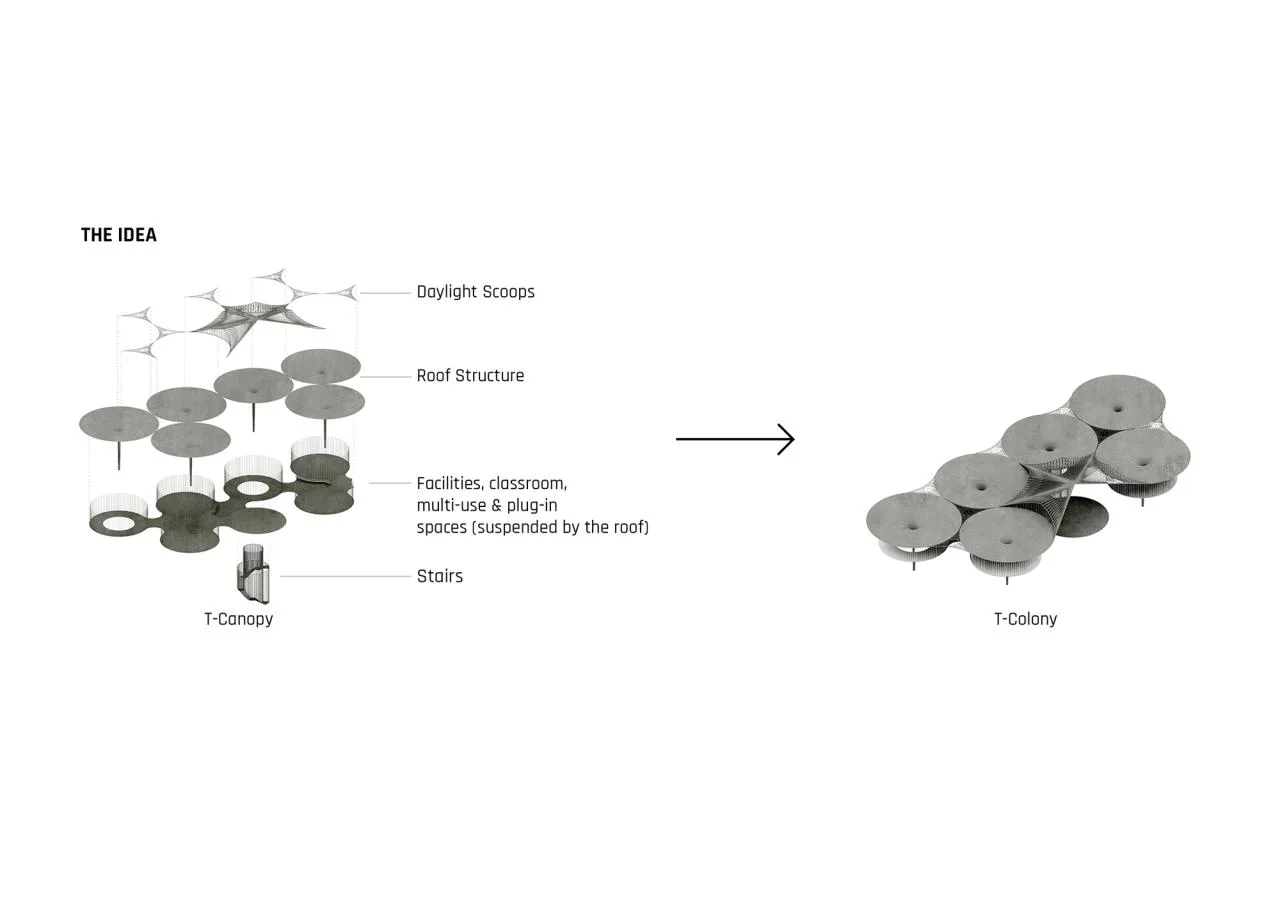
△ Analysis charts
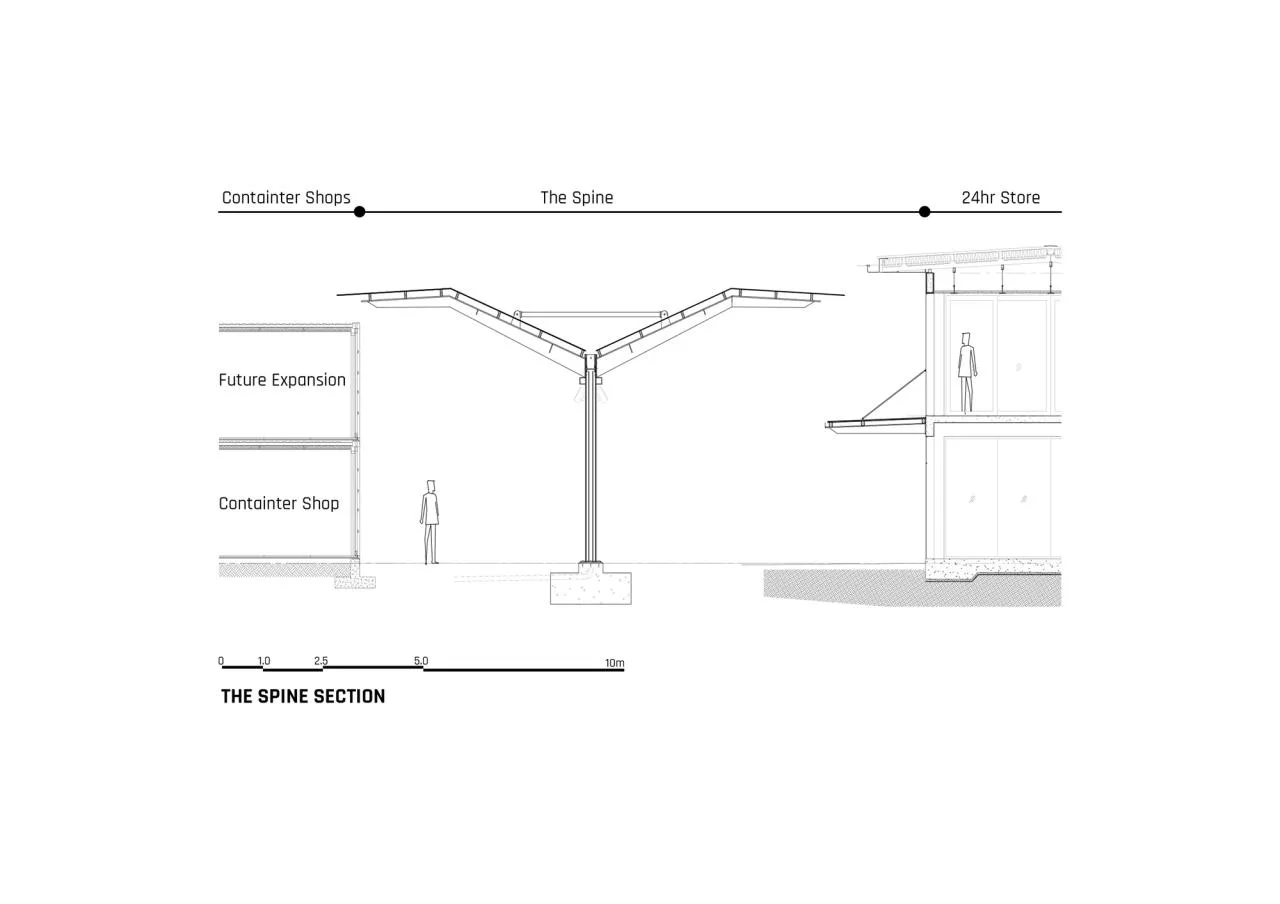
△ Section diagram
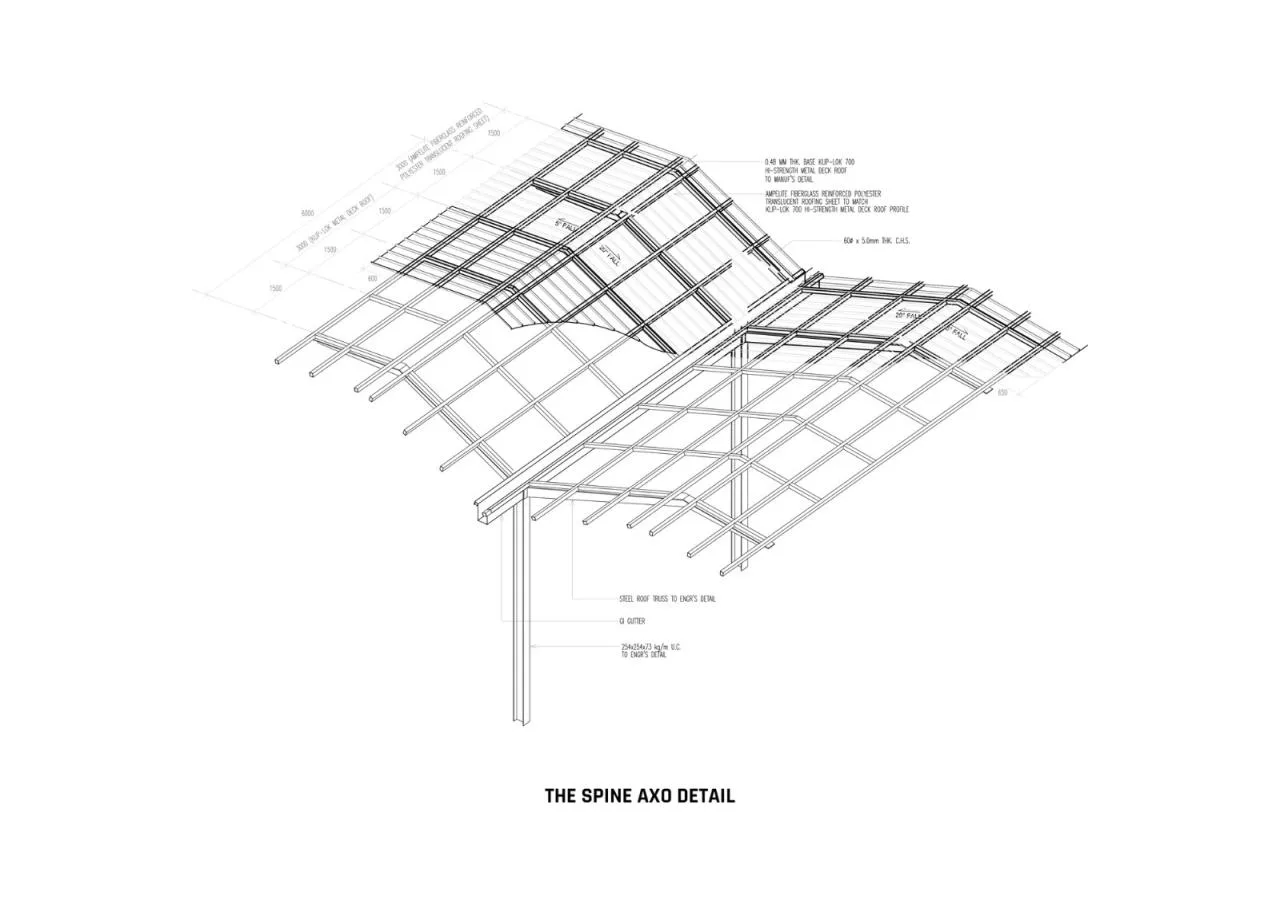
△ Structural schematic diagram
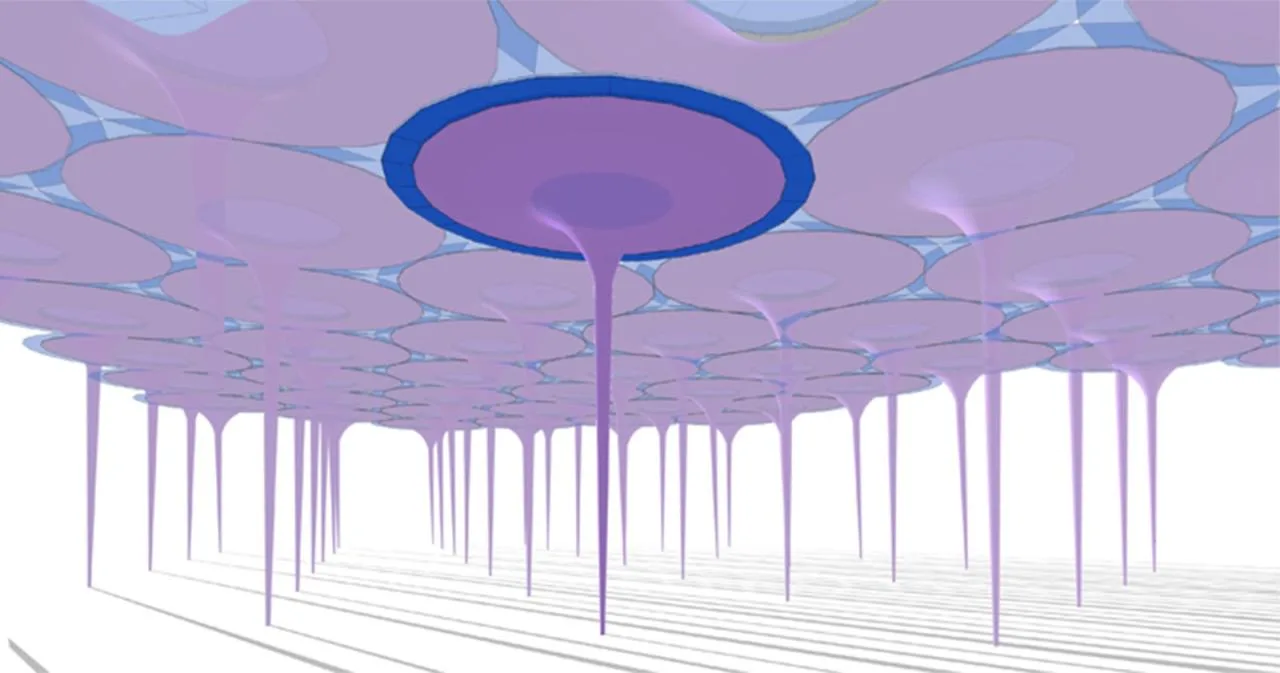
△ Analysis chart
Project Information
Architect: DTLM Design Group
Area: 396 m²
Year: 2021
Photographer: H. Lin Ho
Suppliers: American Standard, Ampelite, Nippon Paint
Lead Architect: Tan Loke Mun
Structural & Civil Engineer: ELP Quantity Surveyors Sdn. Bhd
Mechanical & Electrical Engineer: In Site Design
Landscape Architect: KWA Consult Sdn Bhd
Quantity Surveyor: Jurutera Perunding Primareka Sdn Bhd
Location: Petaling Jaya, Malaysia












Must log in before commenting!
Sign Up