
Since the advent of CAD, the construction industry has transitioned from hand drawing and drafting boards to the digital age. Today, CAD remains the preferred tool for architectural design within the industry. However, with the recent widespread adoption of BIM technology and the increasing complexity and scale of construction projects, the limitations of CAD have become more apparent. In this article, we will explore the key differences between traditional CAD and BIM.
1. Visualization
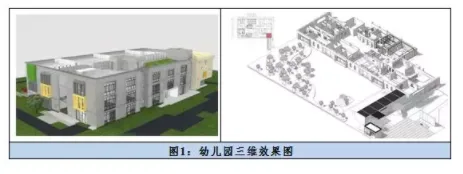
Many people find it challenging to interpret 2D drawings, even those with a solid spatial understanding. In contrast, 3D models provide a clear representation of a project’s form and intricate details, making abstract concepts easier to grasp. If an image is worth a thousand words, then a 3D model—or even a timeline visualization—offers an even clearer understanding of complex ideas.
All information related to a construction project must be accessible to all participants. BIM facilitates this by enabling interconnected, real-time communication of data throughout the project lifecycle. For example, BIM supports multi-dimensional approaches from 2D up to 5D, linking all project information within a central model. This integration minimizes redundancy and helps prevent the use of outdated data by team members.
Effective communication hinges on evaluation and judgment. Visualizing ideas through BIM enhances feasibility assessments and encourages better feedback. Additionally, BIM allows multiple design solutions to be simulated, enabling the selection of the most suitable option for the project.
2. Component Association
A BIM model is the direct result of the design process. It allows for the generation of various views—such as plans, elevations, sections, and 3D perspectives—as well as space simulation animations, all derived from the same model. This flexibility provides designers with convenient access to different angles and operations.
Since these views are all interconnected and describe the same building model, inconsistencies and errors between different drawings are significantly reduced. This ensures that all project documentation remains accurate and consistent throughout the design process.
3. Collaborative Operation
Collaboration in BIM refers to multiple team members working together on the same building model. Each participant, coming from different professional disciplines, can contribute their expertise to the shared file.
Structural, civil, and electromechanical systems can be designed remotely and simultaneously on different computers. A project leader can establish a centralized repository that enables real-time collaboration and model updates.
Architects, structural engineers, mechanical and electrical specialists, lighting designers, project managers, equipment managers, owners, and civil engineers all utilize this central model as a communication hub. This collaborative environment improves efficiency by ensuring everyone has access to the latest information and can provide timely feedback.
That concludes our overview of the differences between traditional CAD and BIM. I hope this article has helped you gain a clearer understanding and appreciation of BIM’s advantages in modern construction projects.














Must log in before commenting!
Sign Up