
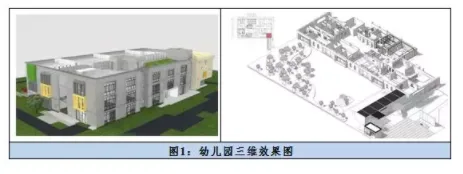
The BIM model serves as a powerful medium for showcasing BIM technology. By integrating, analyzing, and utilizing vast amounts of data, it significantly enhances the value of information in construction projects, fully leveraging the advantages of big data. Today, we will explore how BIM models support construction projects.
1. Traditionally, many two-dimensional drawings are used to represent three-dimensional design entities. This approach limits creativity because graphics and images cannot perfectly correspond. After multiple design iterations and scope changes, issues such as inconsistencies, missing elements, conflicts, or errors in the drawings are almost inevitable. By using BIM technology with 3D object-oriented and database-linked numerical models as design tools, these errors can be effectively eliminated. Leveraging linked databases not only improves planning and design quality but also enhances the flow of information between design and construction teams.
2. Statistical analysis shows that in general engineering projects, the total volume of concrete automatically extracted by BIM models is approximately 9% less than the budgeted amount. Meanwhile, the total volume of steel bars extracted by BIM models is only about 0.03% higher than the budget, indicating high accuracy.
3. BIM software allows the easy integration of machinery, water, and electrical systems for design and construction conflict detection. Although this research case did not provide extensive evidence of its benefits, the completed 3D views can be adjusted from different angles and scales within the software, enabling anyone to clearly understand the layout of these pipelines. This visual clarity is highly persuasive.
4. When scheduling designs with different floor elevations using traditional two-dimensional drawings, identifying improper connections between beams and columns is challenging. However, by combining BIM’s 3D models with construction scheduling and employing relevant BIM software for four-dimensional construction simulations, issues such as suspended beams can be clearly demonstrated. This process serves as an effective communication tool for reviewing construction procedures.
5. In conventional Design-Bid-Build (DBB) contracts, the contractors’ individual interests often overshadow the overall project goals. Additionally, dispute resolution clauses involving arbitration and litigation prevent the full utilization of BIM tools’ collaborative design, integrated analysis, and division of labor modeling functions. The Integrated Project Delivery (IPD) model, promoted by the American Institute of Architects, represents the future direction for institutional and process transformation alongside BIM tool advancements.
6. The BIM software suite covers architecture, structure, and mechanical, electrical, and plumbing (MEP) systems. The integration of BIM models created by different professional software is now quite advanced, allowing users to view the project from any angle and examine the compatibility of components as needed. Not only is this integration suitable for detailed design work, but it also meets construction requirements. However, there is room for improvement in generating detailed material quantity reports based on selected components or partial engineering scopes to facilitate timely output of required data.
7. Importing BIM models during the planning and design phases enhances communication through 3D visualization, aligning the owner’s needs with architectural design concepts. It also promotes greater accuracy in engineering quantity estimation. By simulating and analyzing various design alternatives, the effectiveness of value engineering techniques can be fully realized.
In summary, the benefits of BIM models in construction projects are substantial. Through this discussion, I hope everyone gains a clearer understanding of BIM and its key concepts. Moreover, beyond the construction industry, BIM’s potential to support related fields is becoming increasingly evident.














Must log in before commenting!
Sign Up