
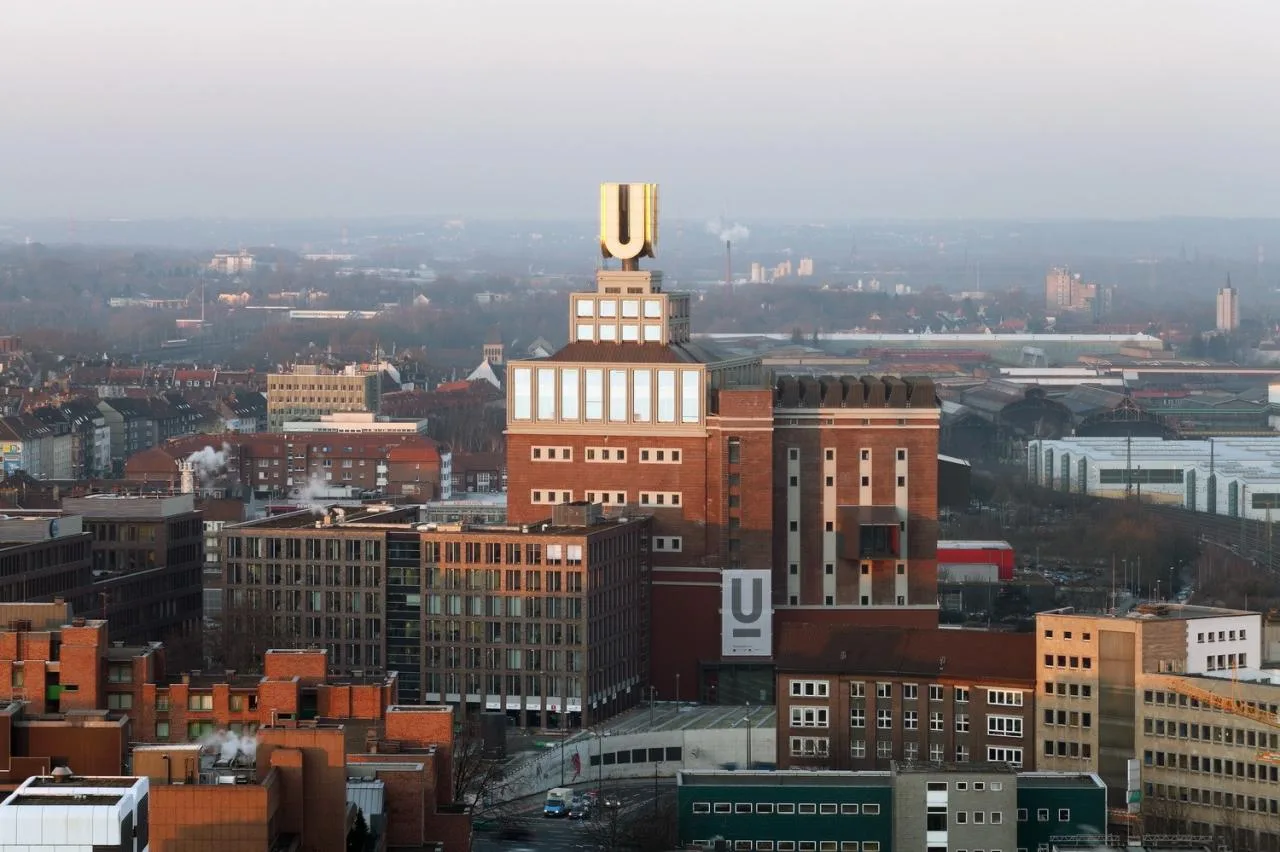
The Dortmund Union Brauerei, situated in the Ruhr industrial region downstream of the Rhine River in western Germany, was once considered the “heart of German industry.” Today, it has been transformed into a vibrant new arts district. The renovation of the entire area is planned to be completed within ten years. The first project to launch was the Dortmund U Art and Creativity Center, followed shortly by the Dortmund U Vocational Education Park.
The U Art and Creativity Center stands as a successful example of industrial building revitalization in the Ruhr area. This former brewery—an emblem of Dortmund’s beer industry history—has been restored and revitalized, becoming once again a city landmark, a hub for art, and a cultural and spiritual sanctuary for its citizens.
Meanwhile, the Dortmund U Vocational Education Academy integrates newly constructed campus buildings with historic structures, emphasizing the U Art and Creativity Center’s role as a landmark and focal point. The design continues the creative center’s architectural language and embraces an open coexistence concept, fostering a cultural and creative space that encourages interaction and communication, breathing new life into the entire district.
*Dortmund U was featured as the Ruhr area exhibition theme at the German Pavilion during the 2010 Shanghai World Expo.
Gerber Architects
01 Protective Restoration
Steel, beer, and football symbolize the city of Dortmund. The Dortmund U Art and Creativity Center was originally the Dortmund United Brewery, constructed in 1927. Despite heavy bombings during World War II, the brewery remarkably survived, bearing witness to the city’s history and future.
As the Ruhr region transitioned from heavy industry to technology, many breweries were abandoned due to the decline of mining. To preserve industrial heritage, the government launched the “Industrial Heritage Road” protection and restoration plan in 1998, covering 54 significant industrial landmarks. This brewery, rich with history and cultural significance, was revitalized under this initiative. In 2008, Gerber Architects were selected from 743 competitors to lead the project.
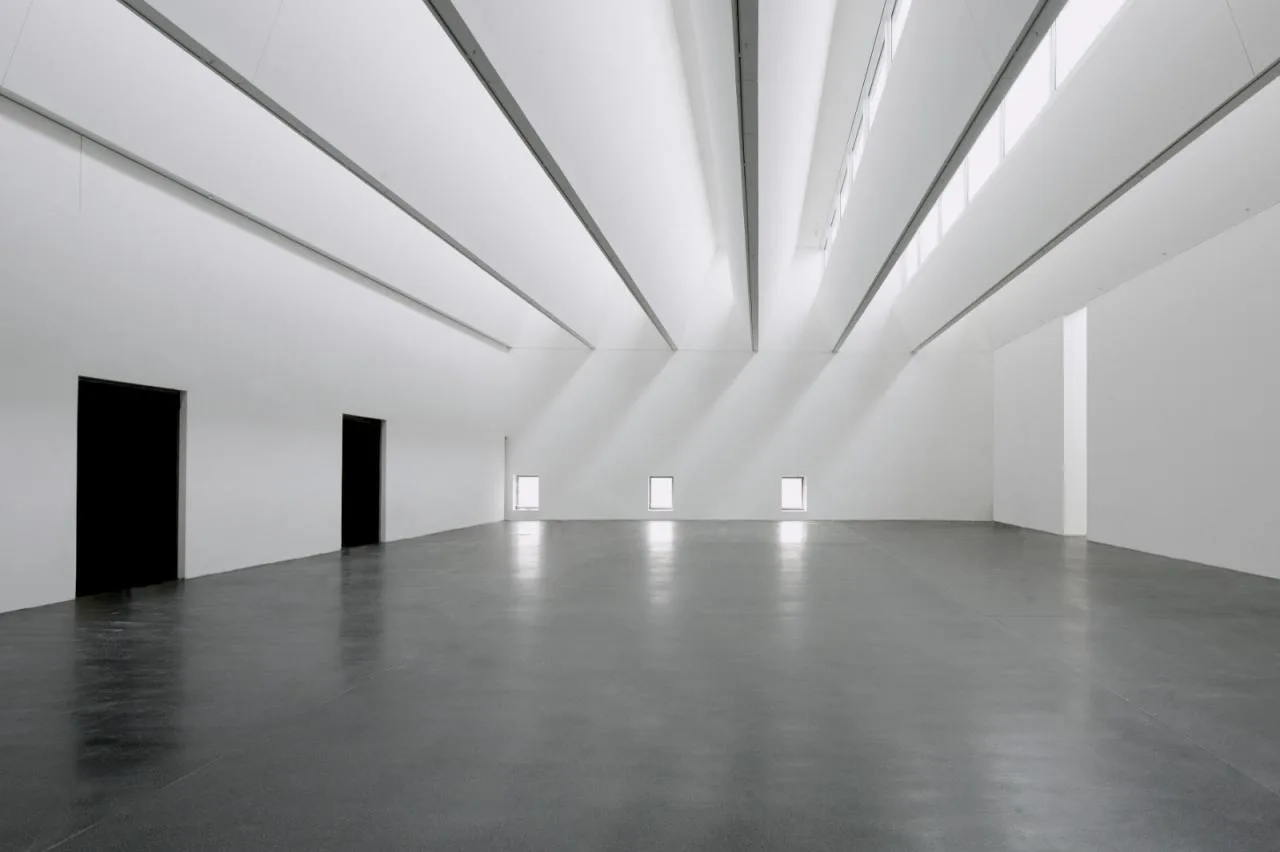
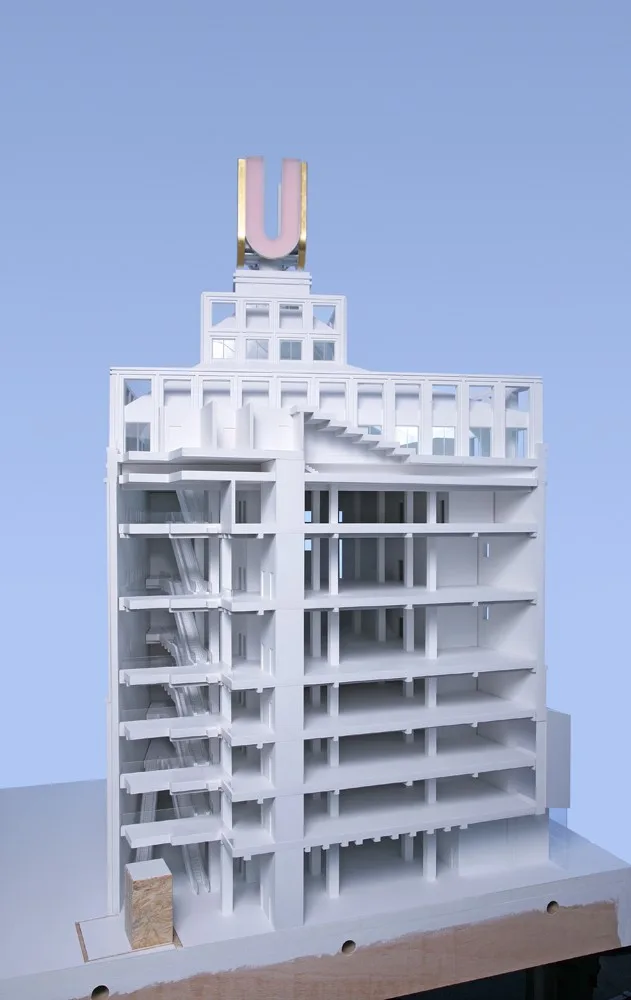
The government imposed strict guidelines requiring protective restoration with upgrades and renovations. The design preserved the entire building’s structure and interior spaces, ingeniously incorporating new functions within the existing framework. The renovated art center now spans 15,000 square meters across eight floors, housing a museum, cultural and educational centers, a cinema, art library, university-affiliated institutions, rooftop observation deck, bar, and event spaces. After expansion, the building has been dubbed the “Pompidou Center of Dortmund,” likening it to a “cultural power plant.”
Gerber Architects
02 Treasures of Industrial Heritage
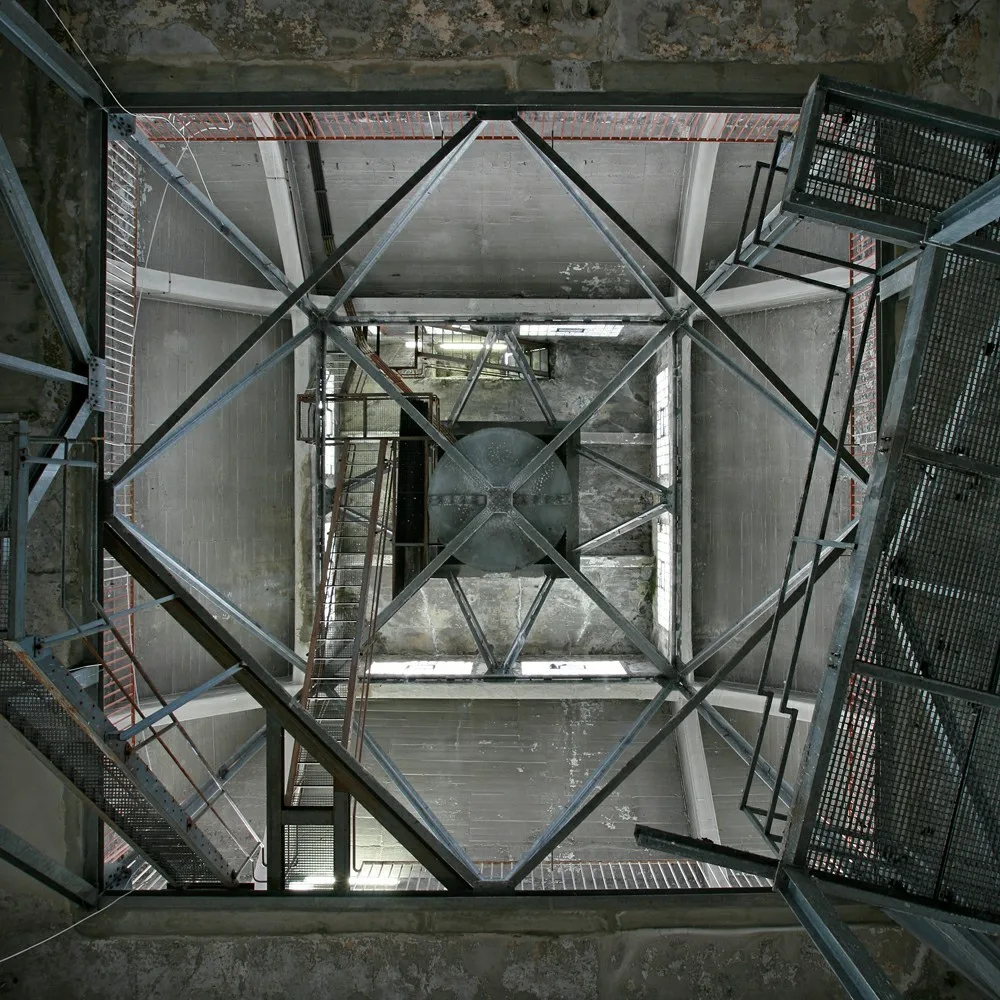
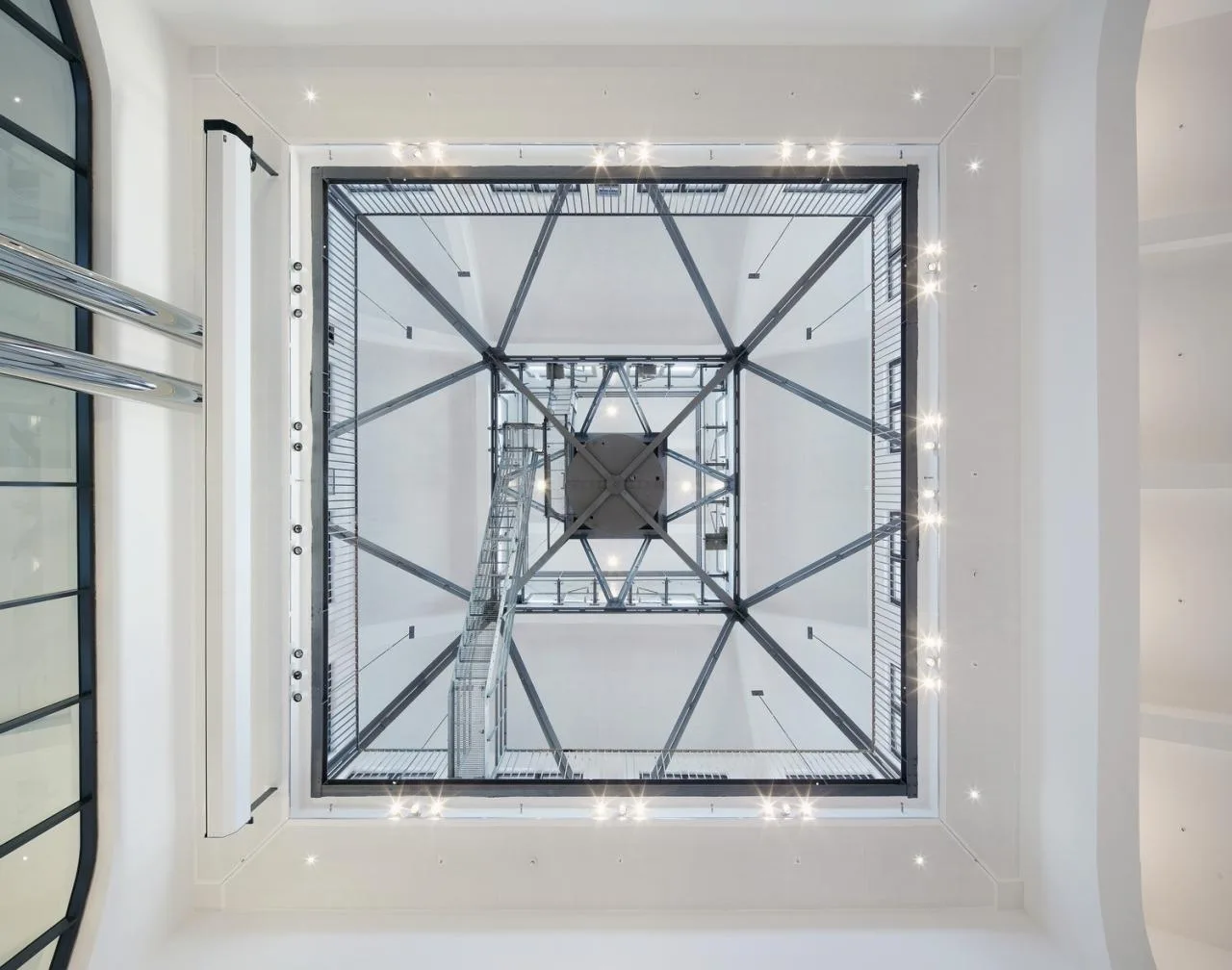
Upon entering the Dortmund U Art and Creativity Center, visitors are greeted by the first-floor lobby. This vertical shaft, originally used for transporting beer, has been cleverly transformed into a grand staircase. Visitors can immediately feel the brewery’s grandeur and history. The design carves the remaining structure layer by layer along the tower’s edge, connecting escalators and corridors to create a narrow ascending space. This redefined space invites modern visitors to fully experience and appreciate the industrial architectural culture that once thrived here.
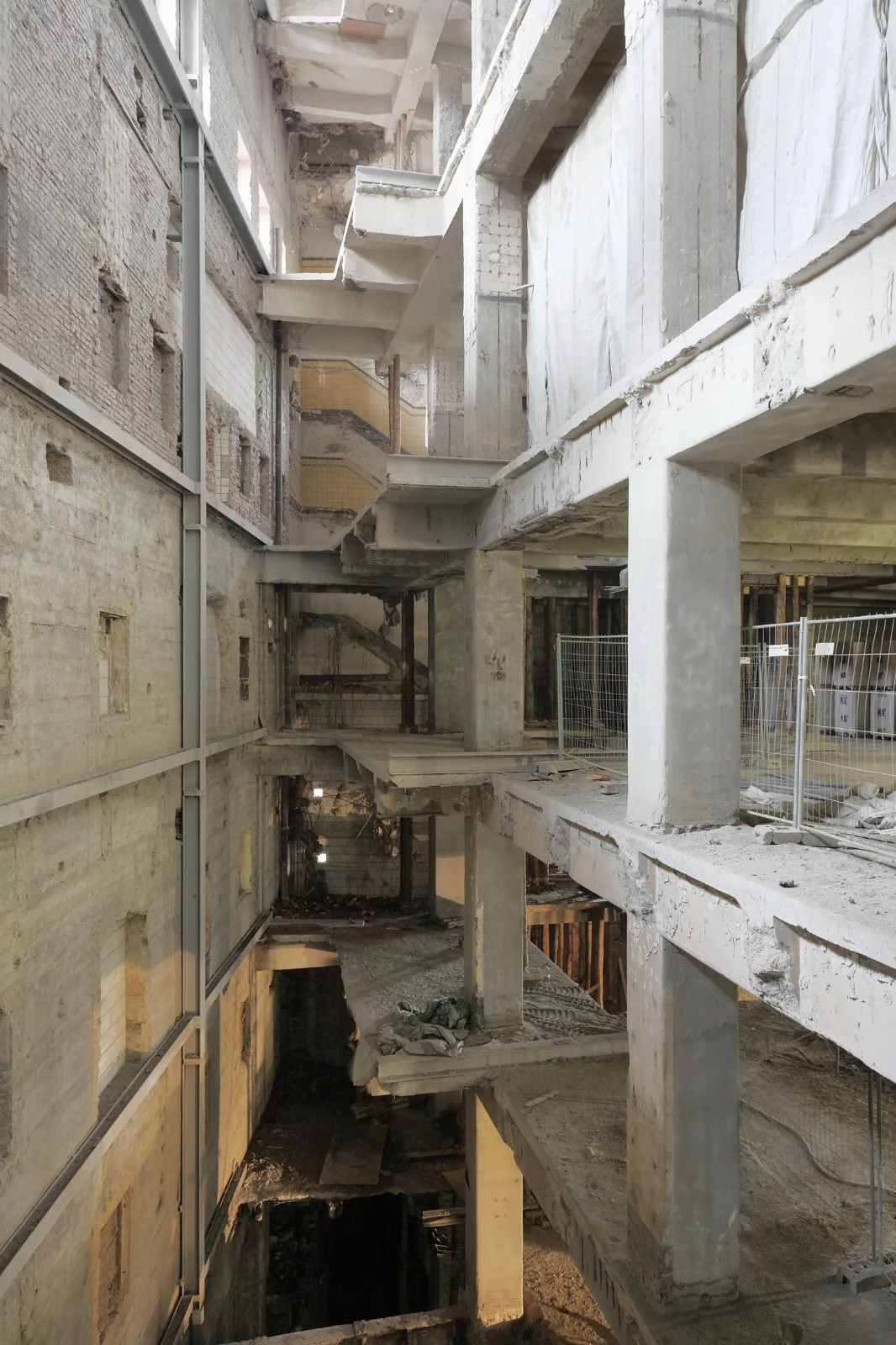
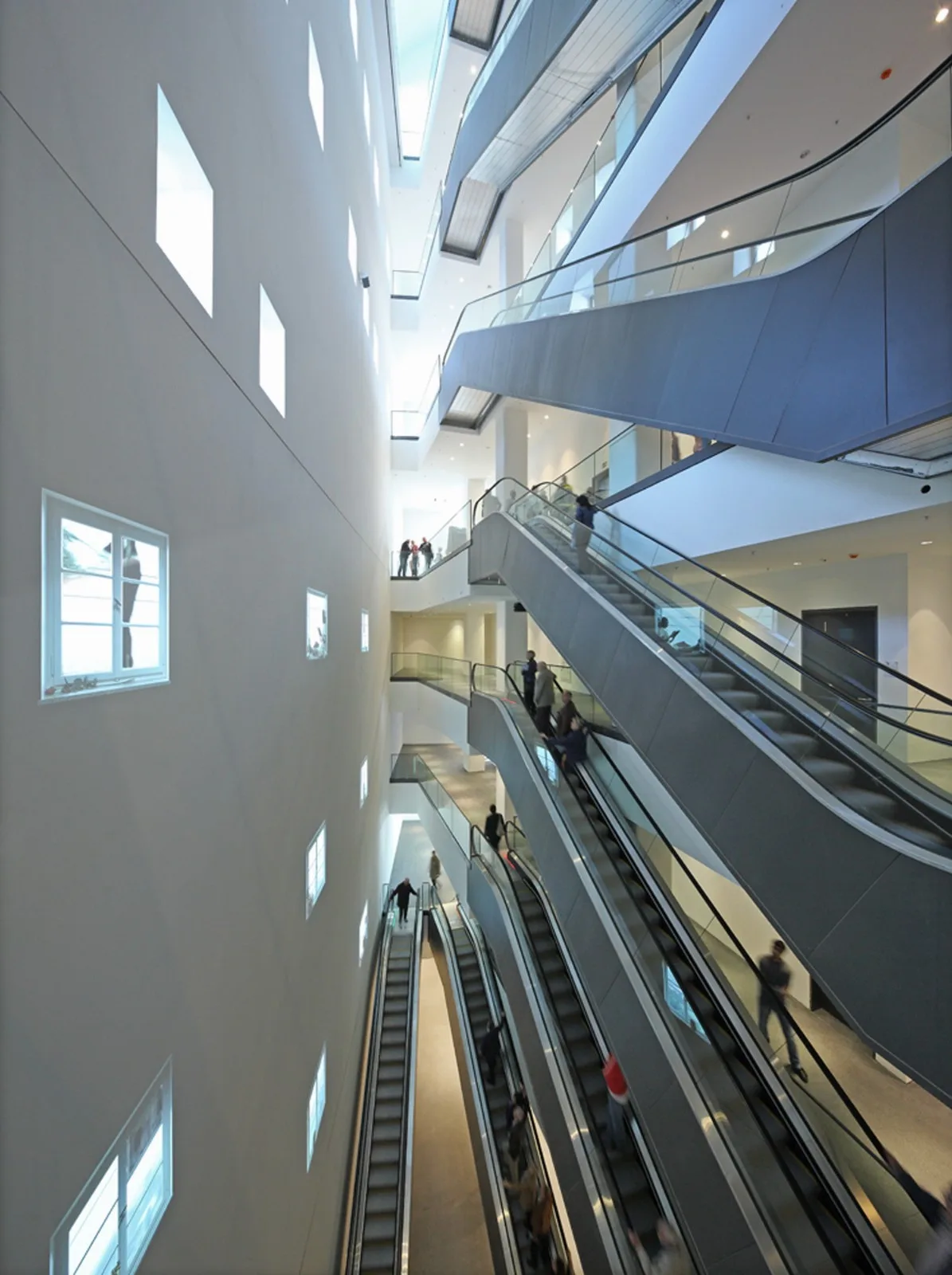
Gerber Architects
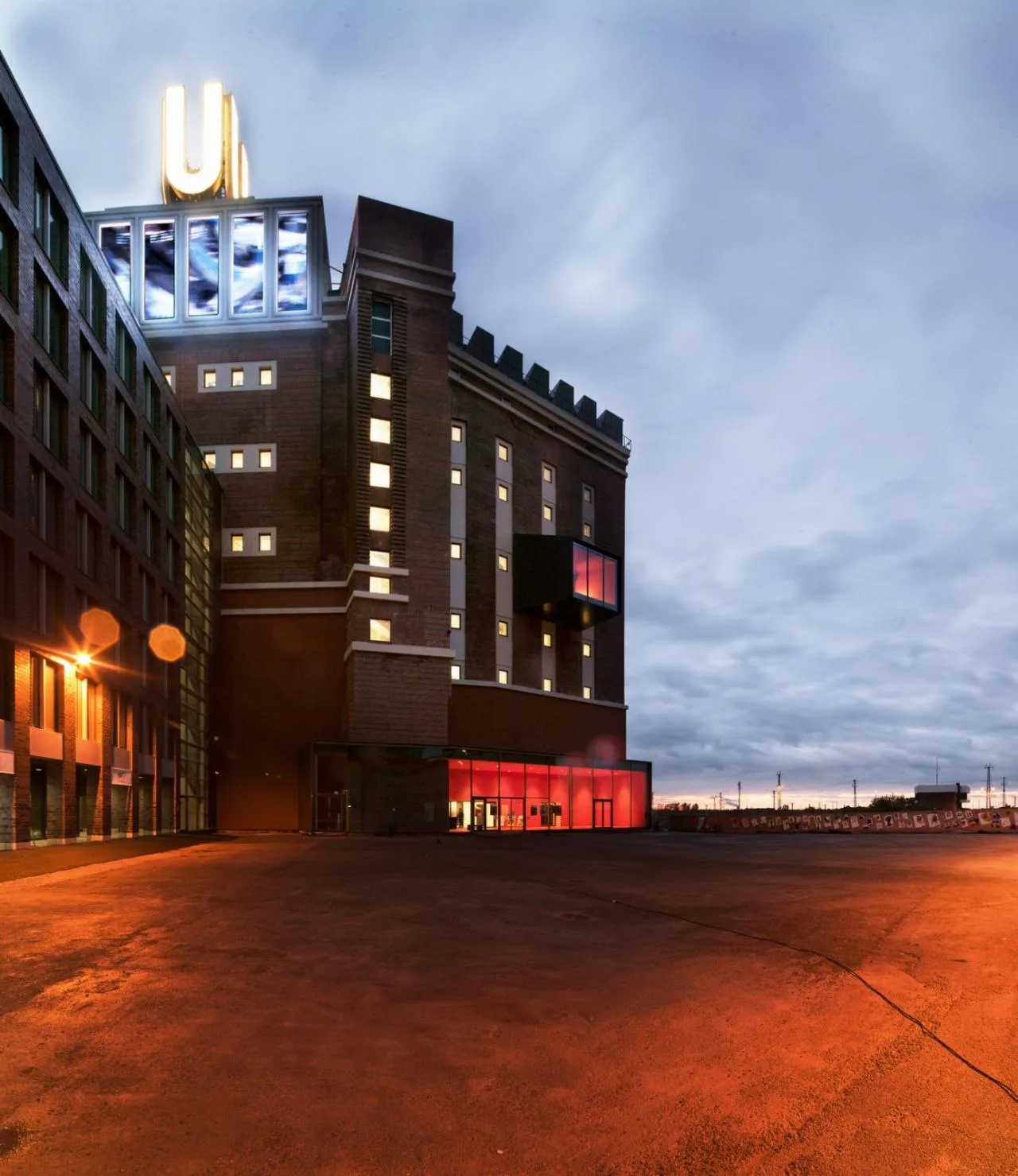
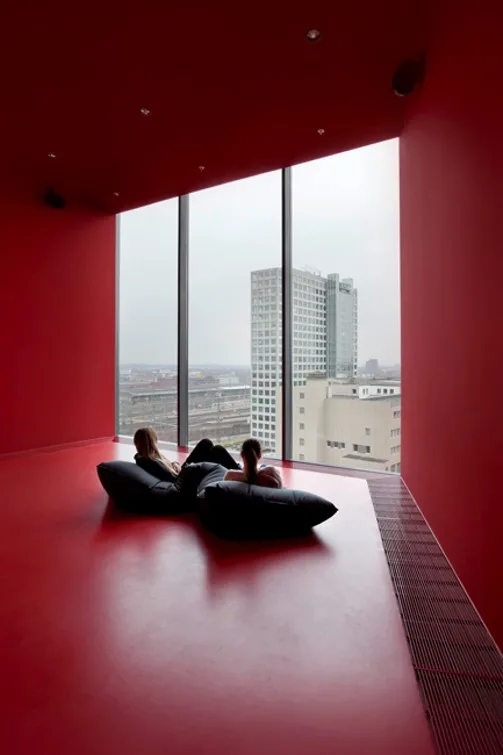
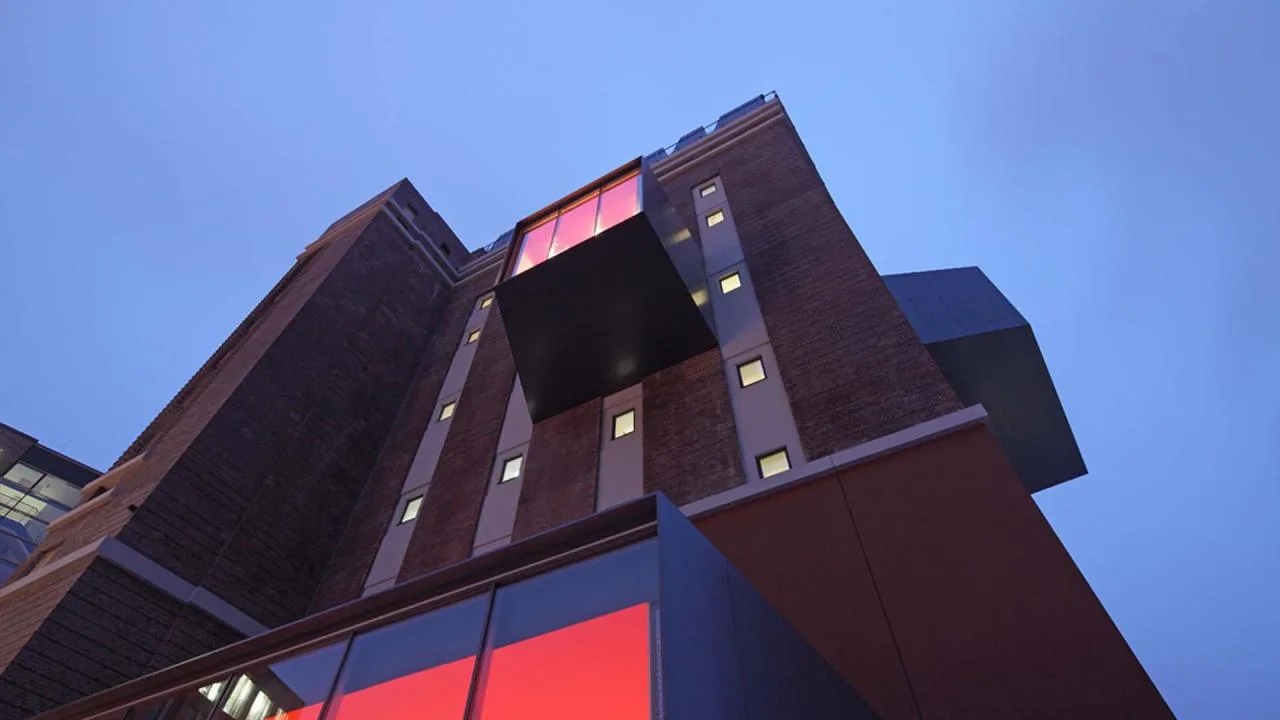
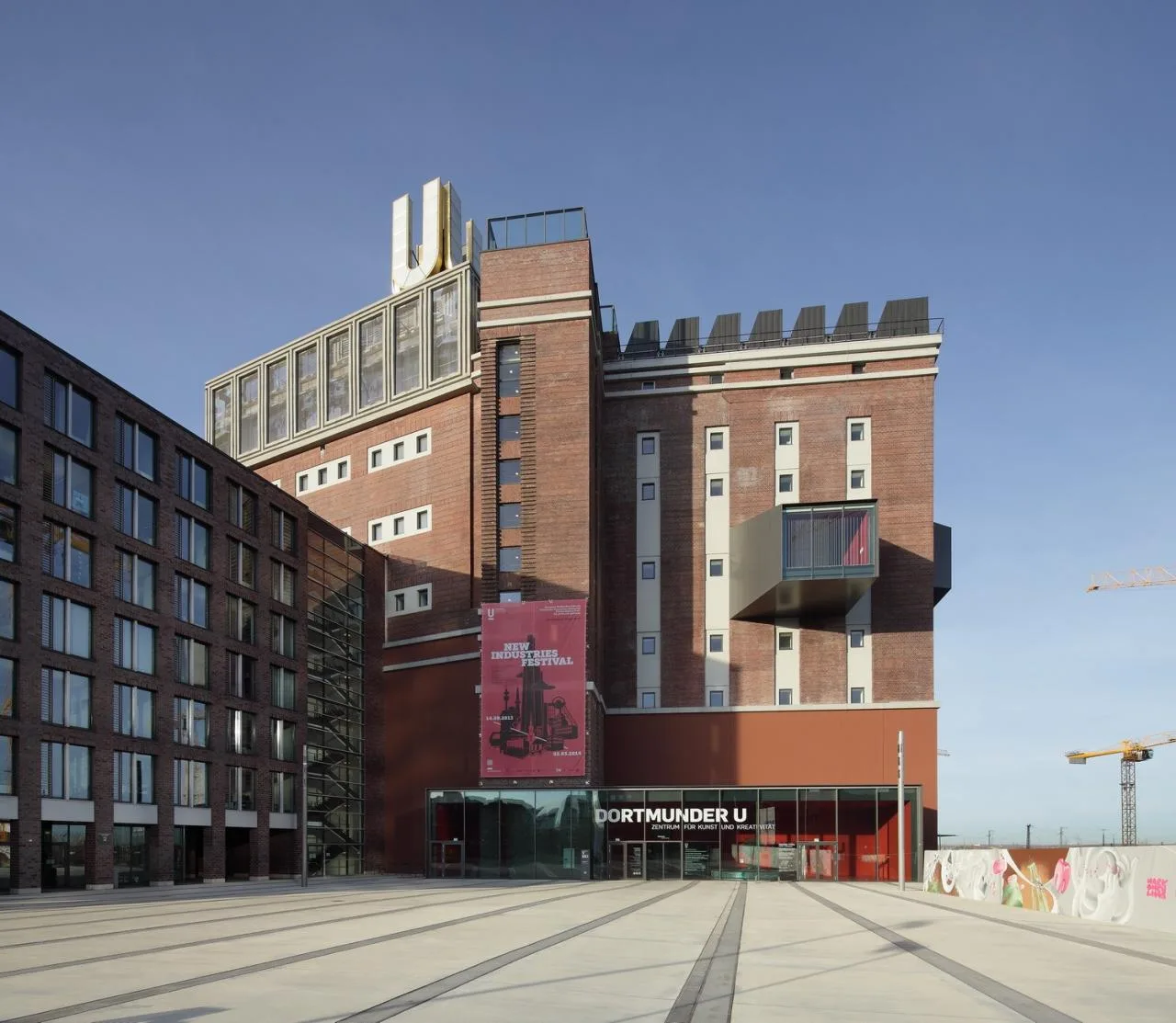
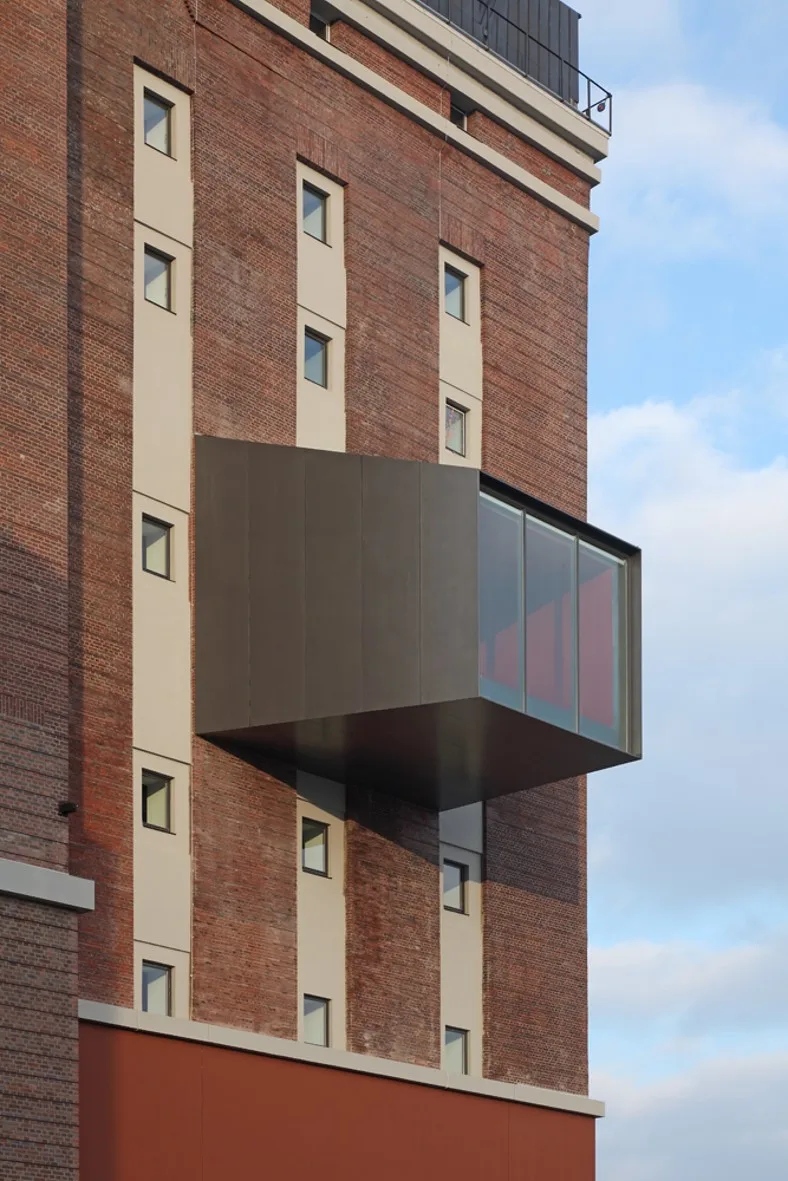
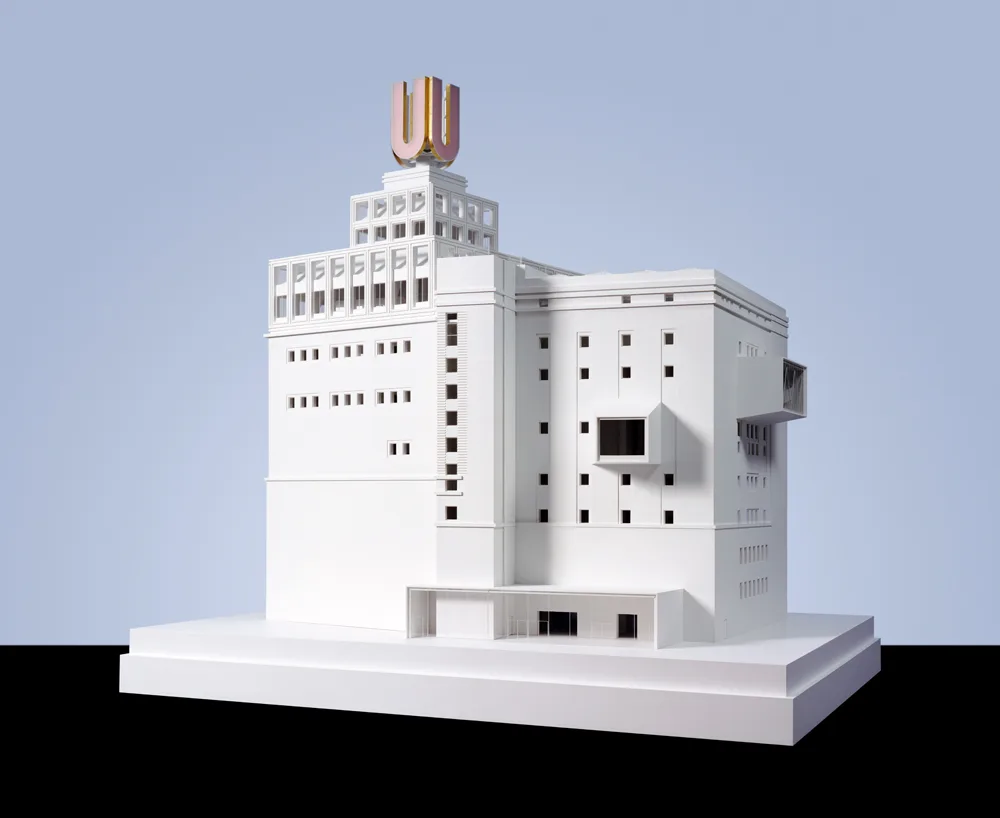
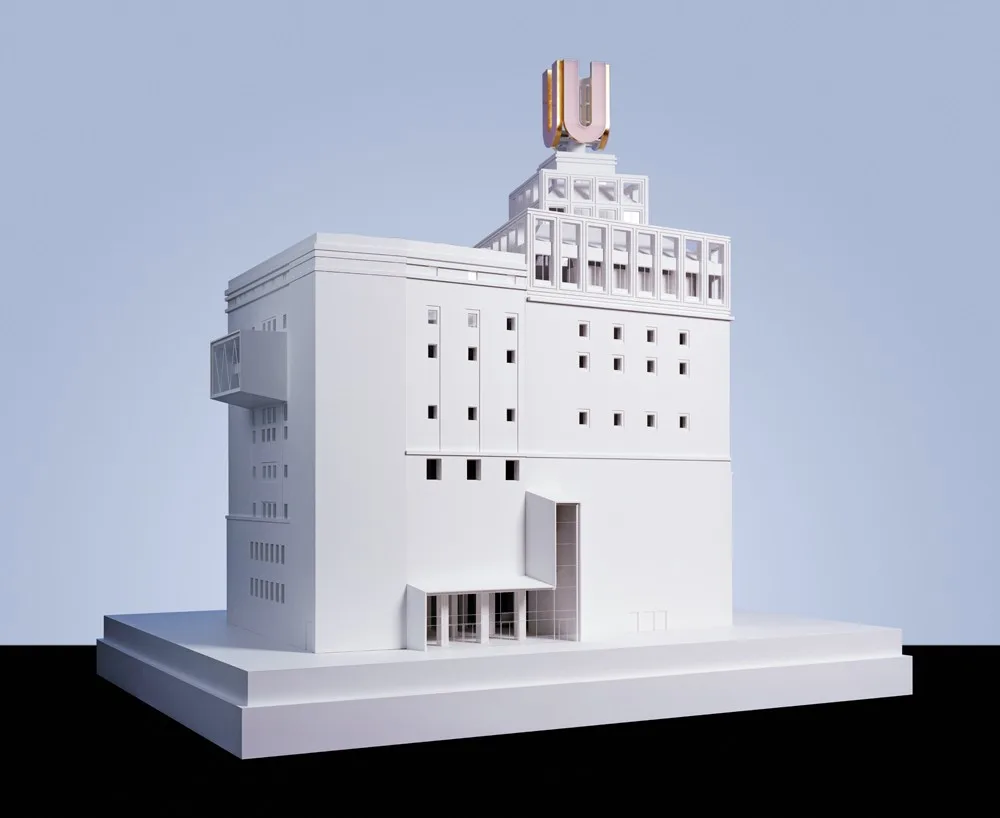
The lobby also features a coffee shop and a lecture hall suitable for meetings, presentations, and various events. The color red is a recurring theme throughout the building, with the lecture hall painted in warm red tones. Red metal conical structures are embedded into the facade, creating a striking contrast with the historic building. These modern elements enrich the building’s exterior and symbolize artistic innovation, infusing the old structure with a contemporary feel.
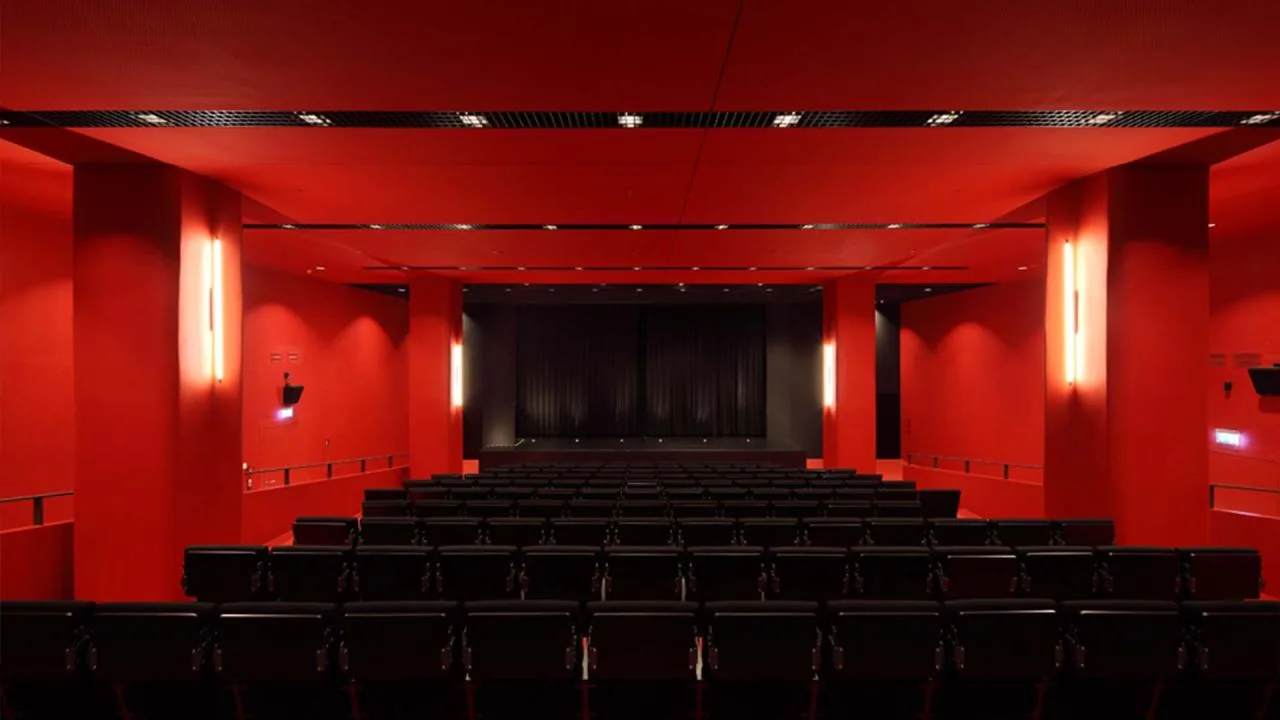
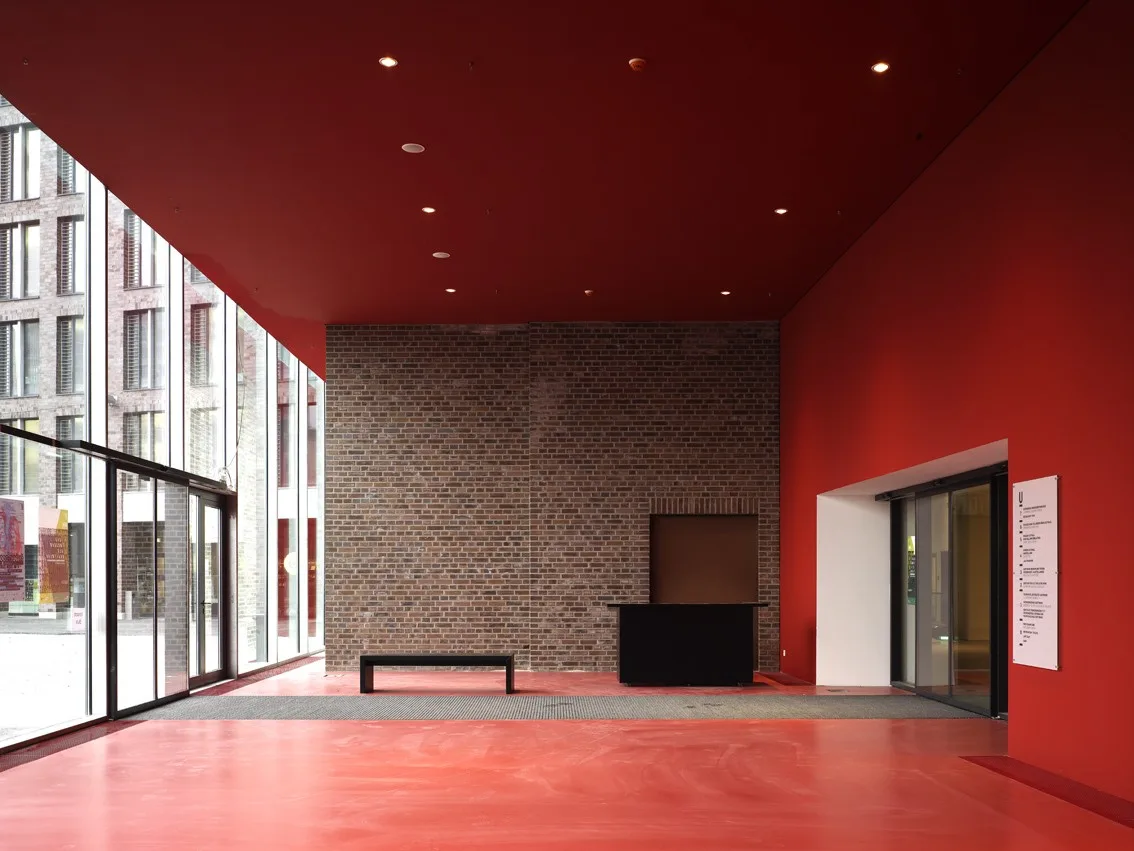
Gerber Architects
Gerber Architects
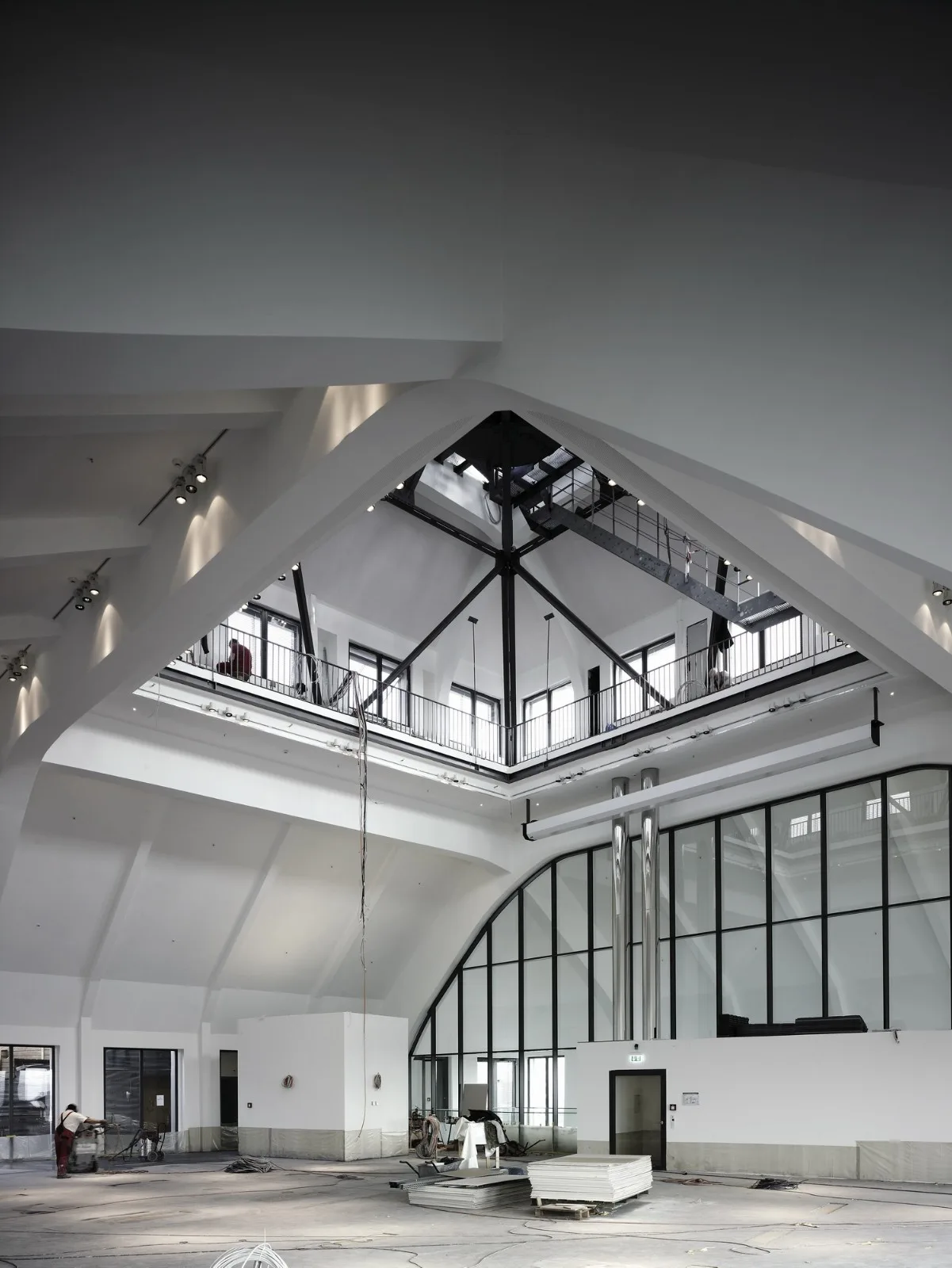
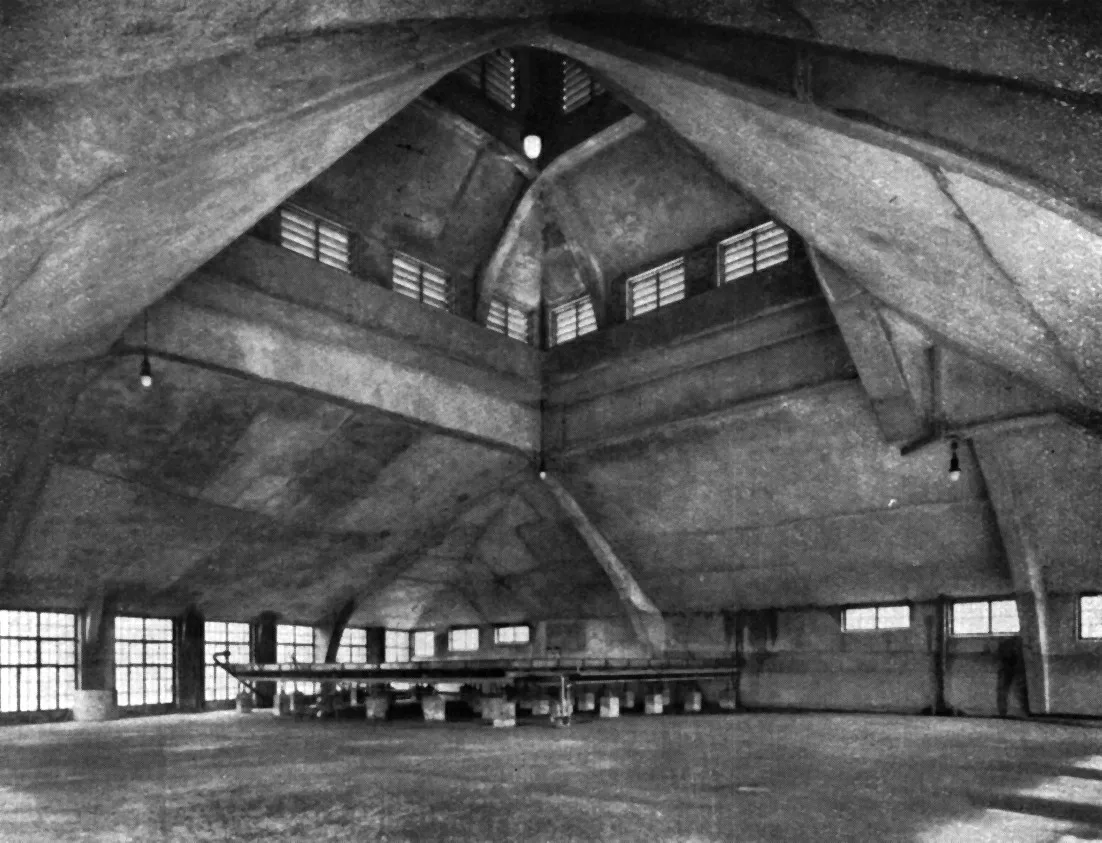
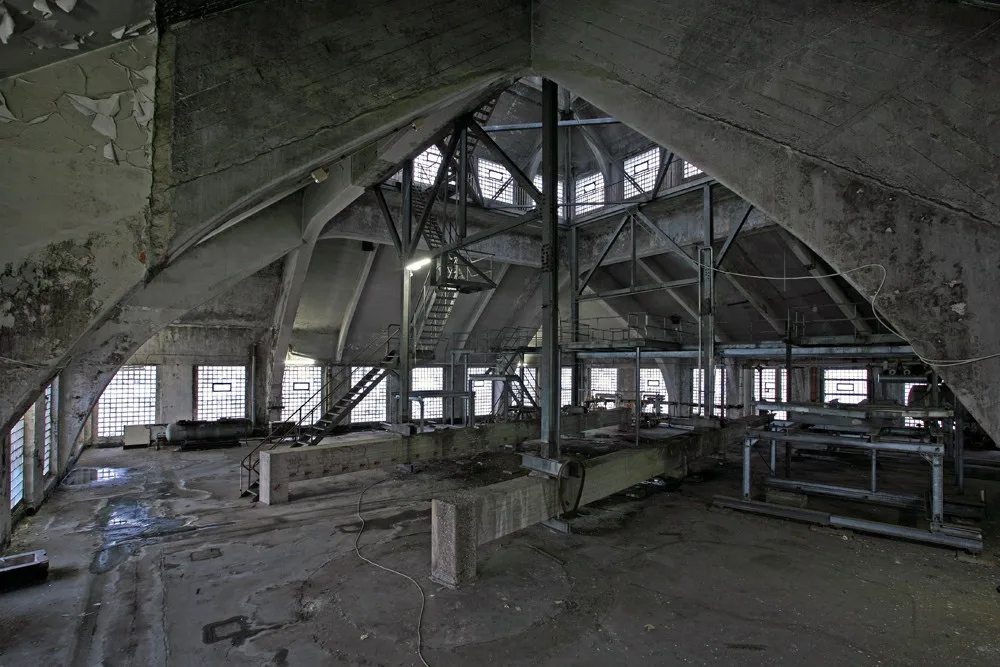
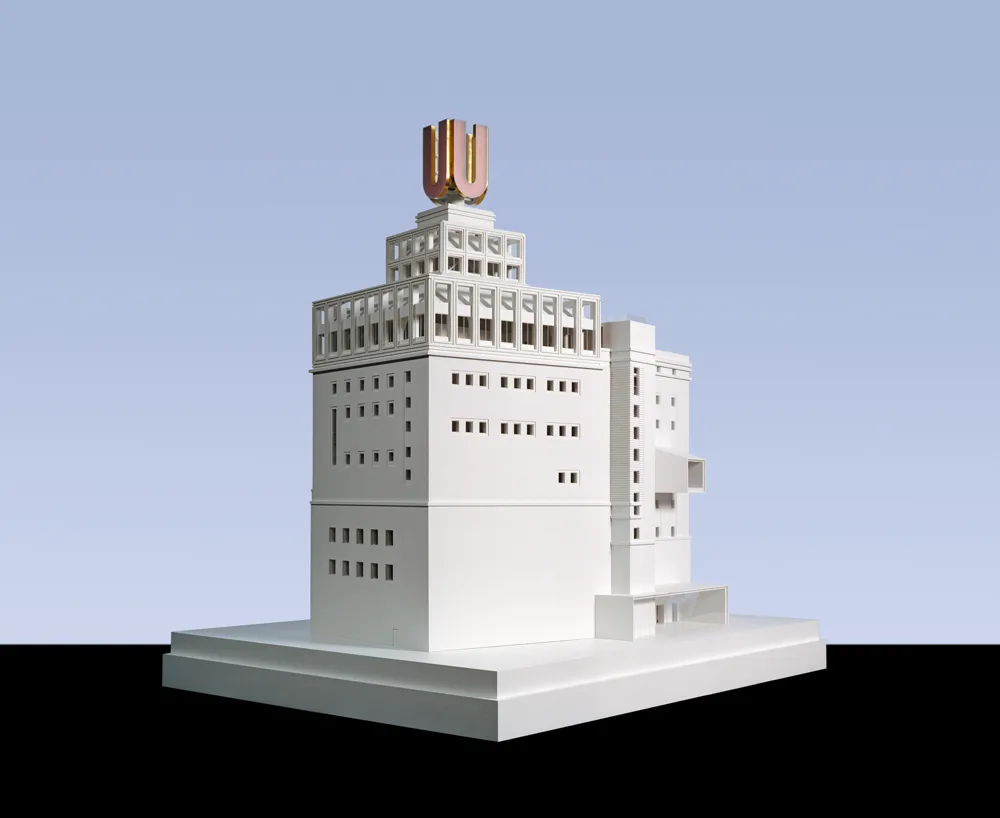
The first through third floors of the U Art and Creativity Center house the university’s art and cultural center, associations, and a creative industries research institute. Above the third floor is the Ostwald Museum. The original roof is preserved but rebuilt structurally, cleverly concealing support elements within the museum, allowing visitors to glimpse traces of history during exhibitions. The original skylight floods the space with natural light and offers stunning views, creating a “cathedral-like” atmosphere and forming the most iconic cubic roof of the center.
The 11-meter-high golden U-shaped emblem embedded on the dome of this “cathedral” has been a significant symbol for Dortmund and the Ruhr area since it was installed atop the brewery in 1968. Gerber Architects aimed for this golden symbol to be visible from all around the city—whether passing through by train or walking into the city center.
Gerber Architects
From a city perspective, the U-shaped logo serves as both a focal point and a high landmark. From the building’s top floor, visitors can overlook the entire city and surrounding neighborhood. The design incorporates LED projections on the roof windows—a patented technology allowing external animation displays while maintaining interior views. These LED screens display patterns themed to various events, enhancing the center’s status as an urban landmark.
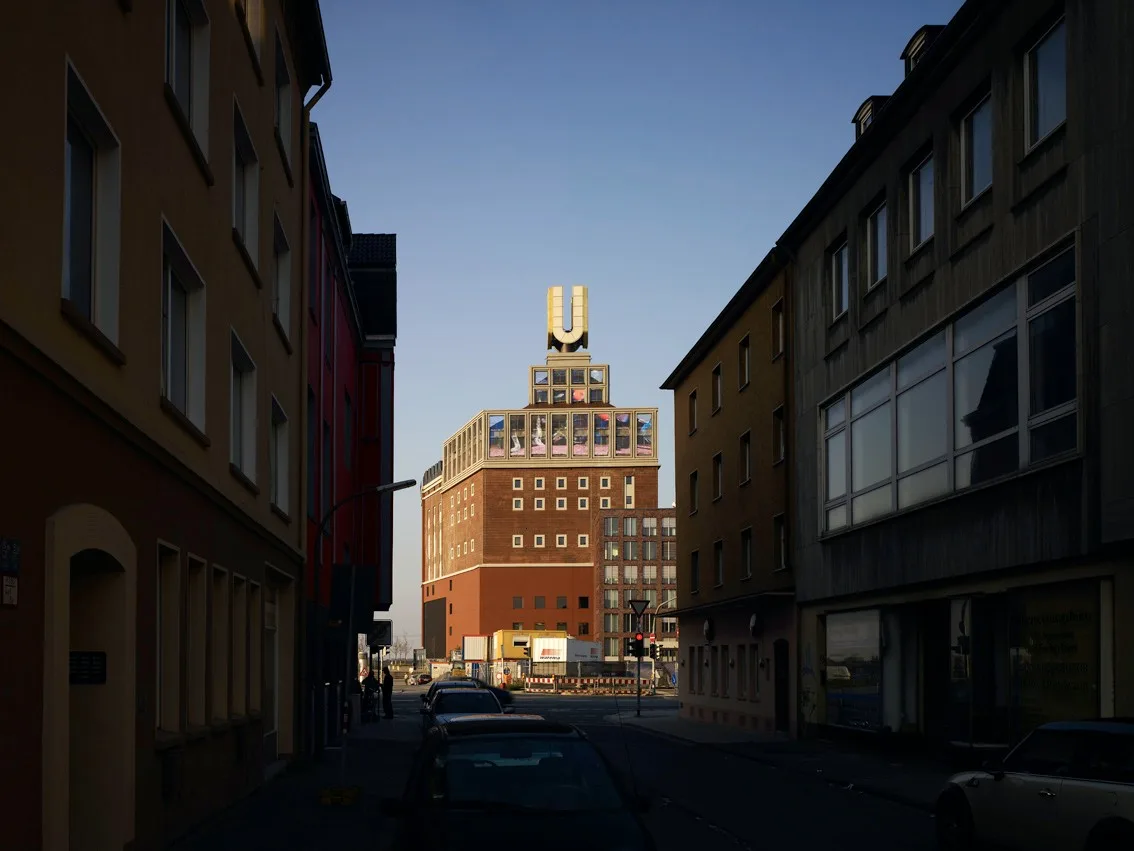
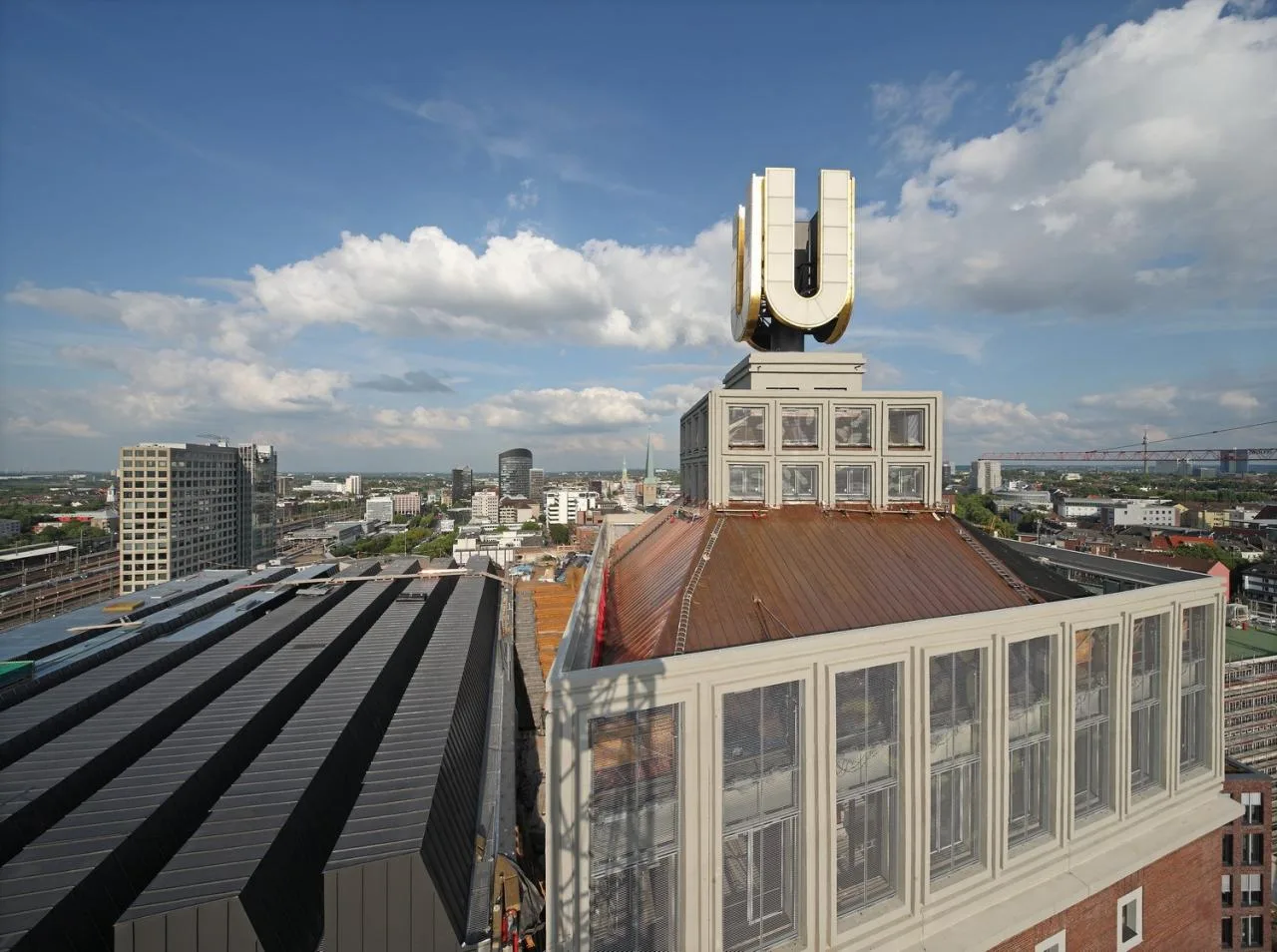
Gerber Architects
The courtyard of the U Art and Creativity Center lies directly beneath the main building, offering another highlight for visitors. The historic brick facade is connected to the courtyard through large circular arches, creating an inviting space. Every detail reflects meticulous craftsmanship and design.
Despite strict spatial limitations, Gerber Architects crafted a harmonious spatial relationship and immersive atmosphere, preserving the original industrial character of the Dortmund U Art Center’s exterior.
Red Brick Sculpture Group under the 03 Gold Label
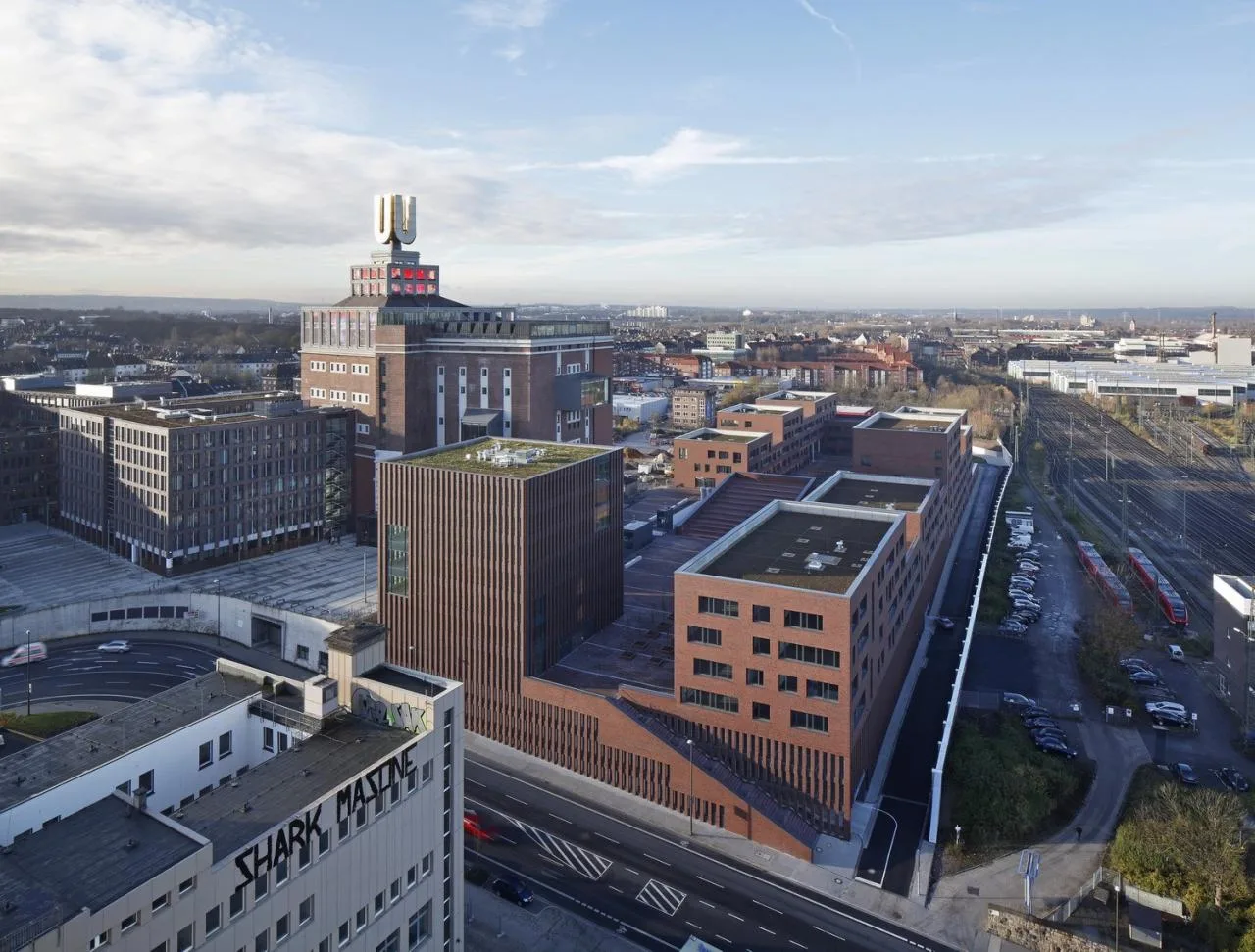
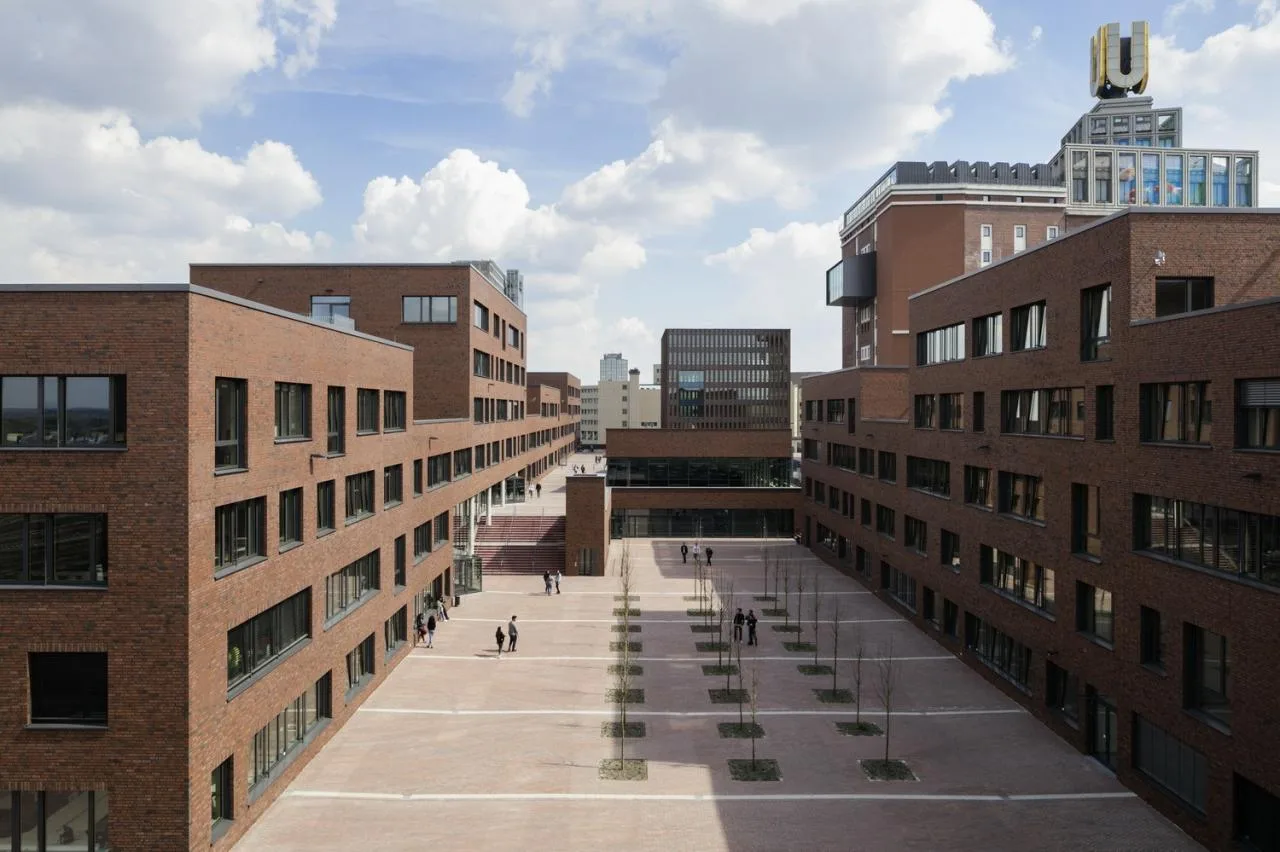
© Gerber Architects
The Dortmund U Vocational Education Institute Park sits between the Central Railway Station and the U Art and Creativity Center. It has grown into one of Germany’s largest vocational education centers, covering 20,000 square meters. In 2014, the Borussia Dortmund municipal government issued a tender for its expansion, which Gerber Architects won.
© Gerber Architects
For Dortmund, the golden emblem atop the U Art and Creativity Center is more than a city symbol—it represents spiritual support during Germany’s industrial transformation and urban renewal. It bridges the past and future.
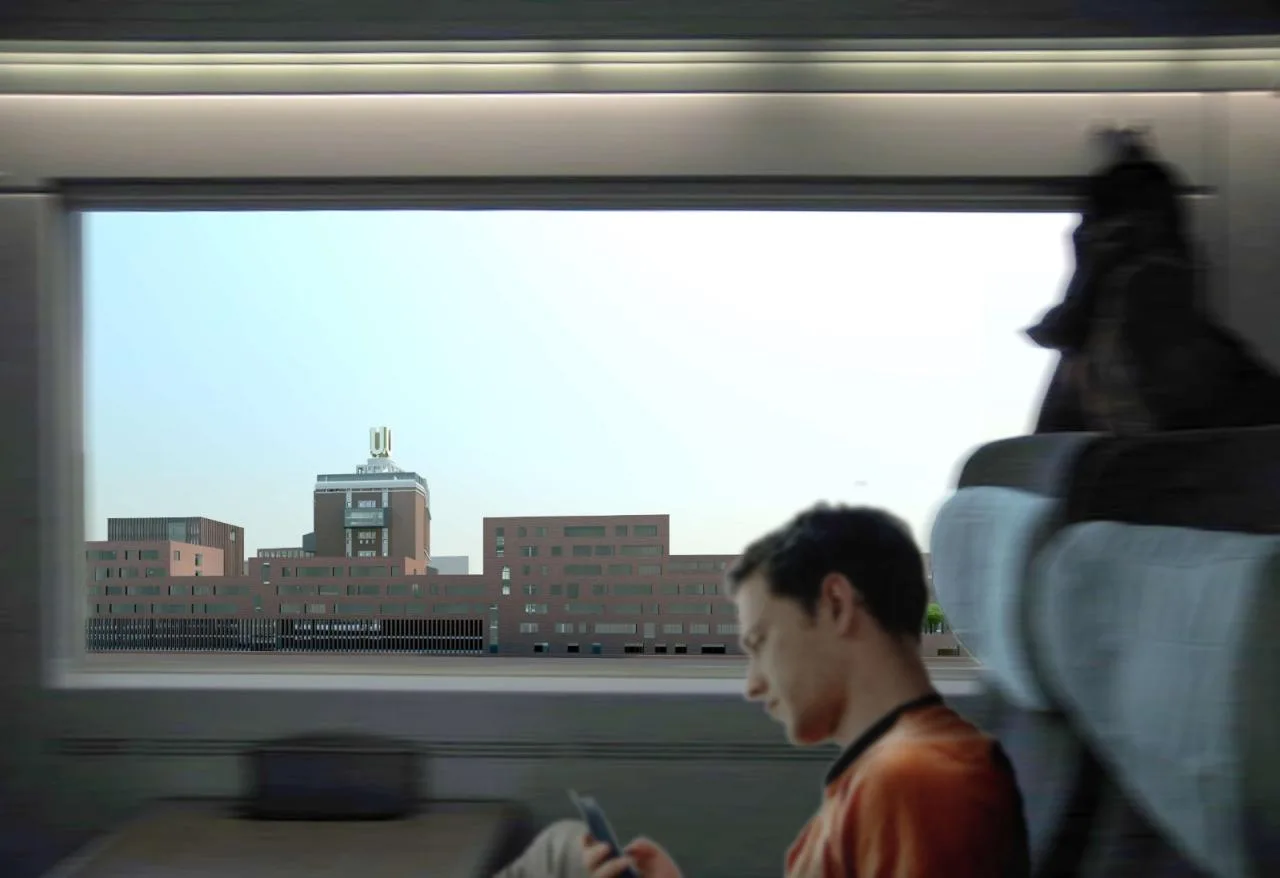
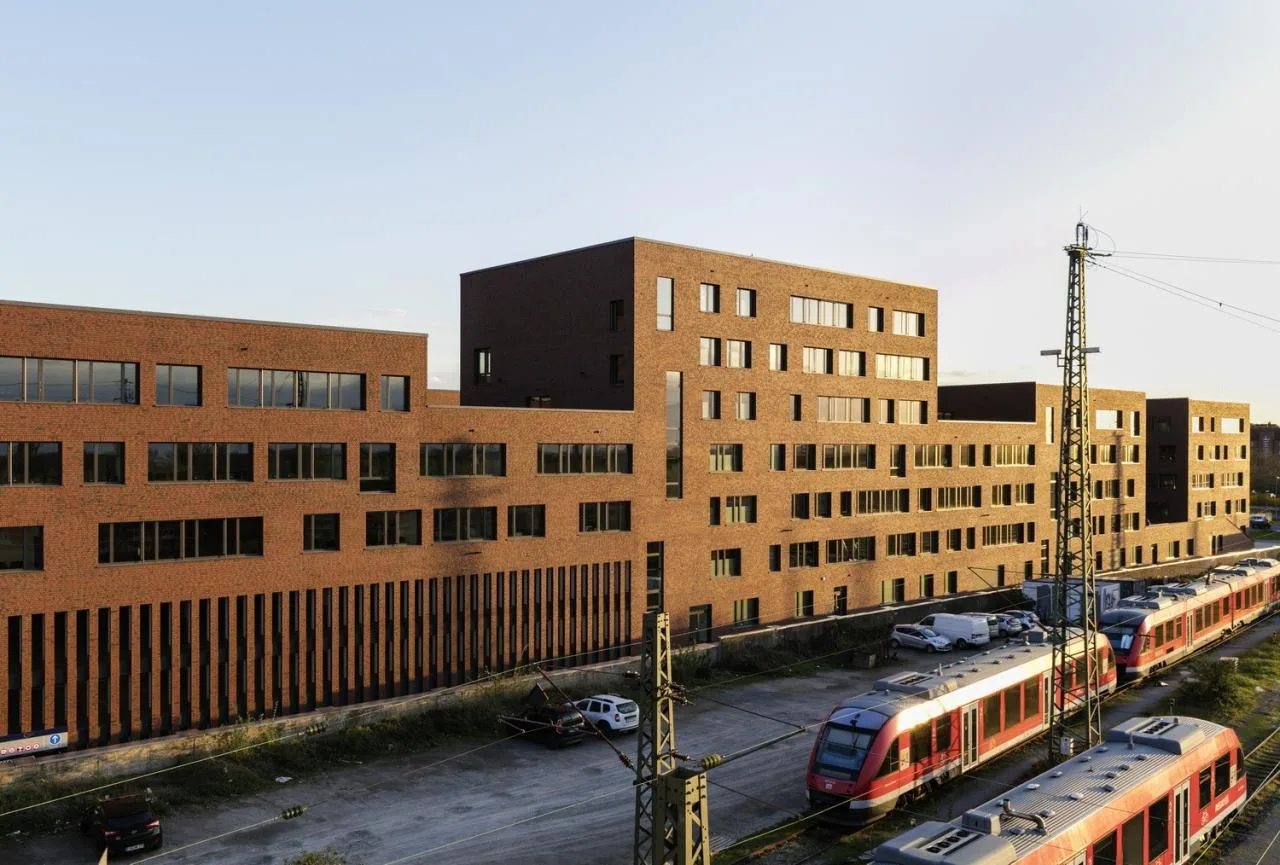
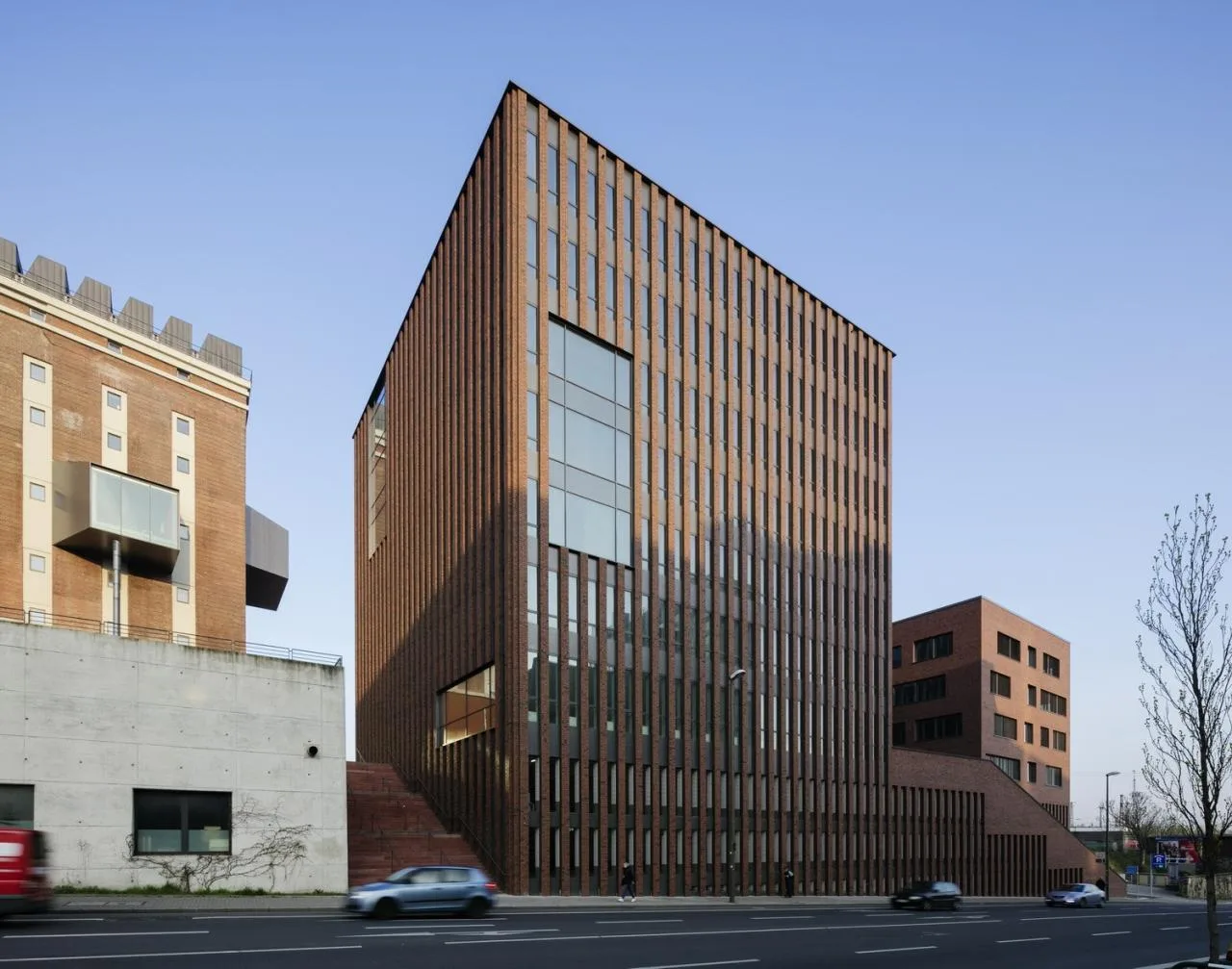
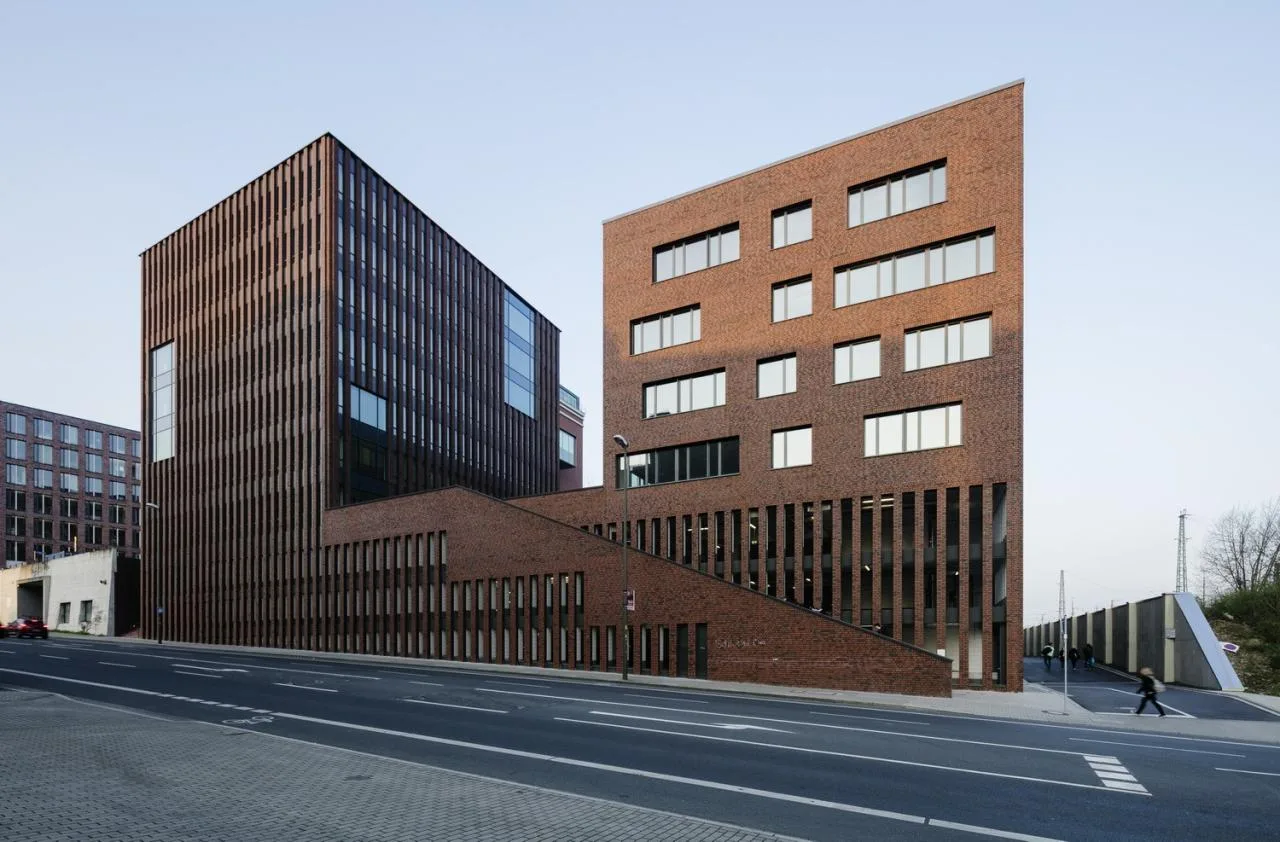
Therefore, when planning the U Vocational Education Park, Gerber Architects emphasized the need for the U-shaped emblem on the tower to be visible from passing trains. To achieve this, the buildings in the park feature flat, elongated volumes with varying concave and convex forms. This approach turns constraints on height and visibility into design strengths, creating a richly layered external space that harmonizes with the location.
The new park integrates seamlessly with historical structures, reinforcing the U Art and Creativity Center’s status as a landmark. It also uses matching building materials to maintain architectural consistency.
© Gerber Architects
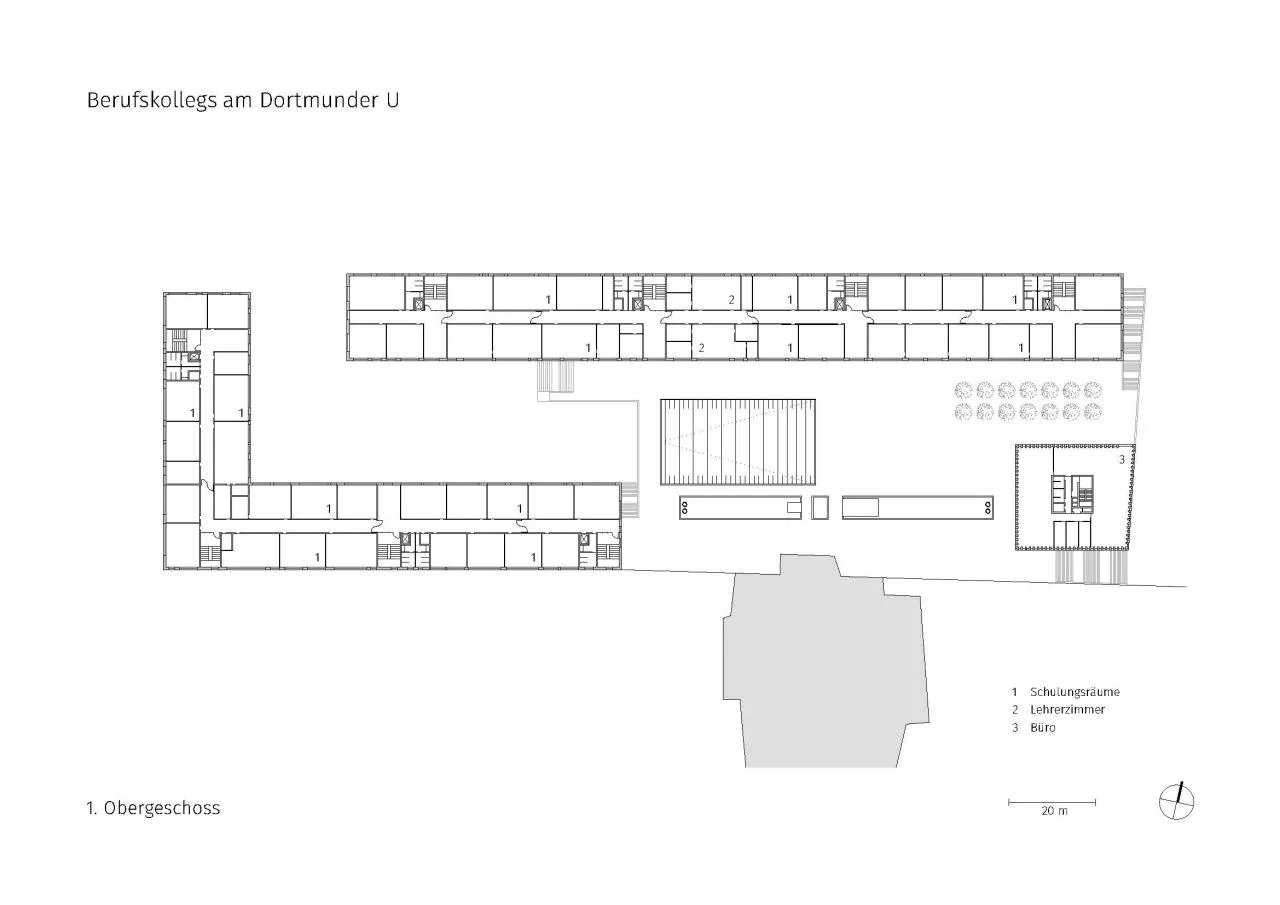
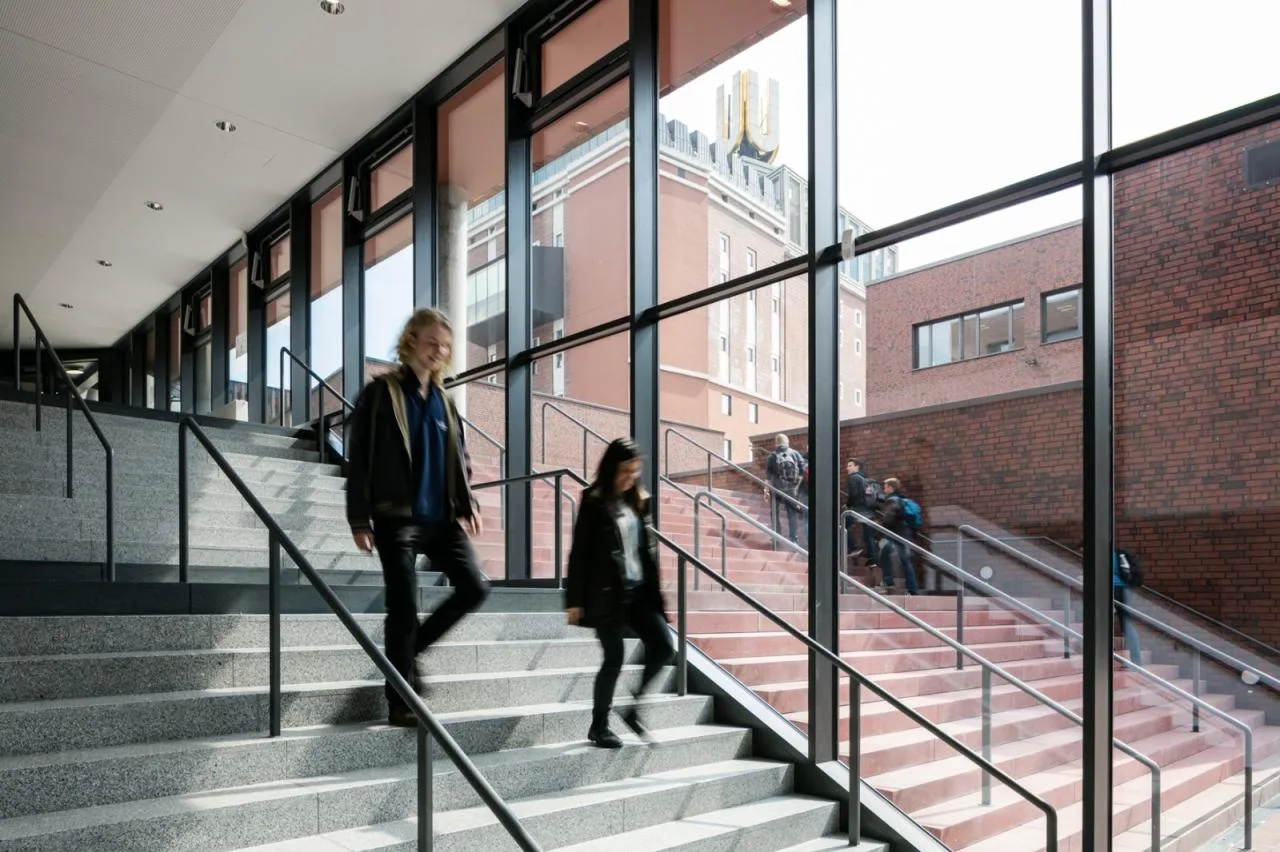
The U Vocational Education Institute campus comprises two main buildings: the “L”-shaped Robert Bosch Vocational Institute and the “I”-shaped Robert Schumann Vocational Institute. The Robert Bosch Vocational College sits between Ritterstraße on the west and the U Art and Creativity Center on the south. The Robert Schumann Vocational College occupies the northern end of the site, parallel to the train station.
Both buildings face the main square, a key design highlight. Each college is independent yet connected: Robert Bosch College can be accessed from Ritterstraße through a sunken courtyard, while Robert Schumann Academy is located in the central courtyard atop the podium, accessible via Brinkhoffstraße. Both have separate courtyard spaces and street entrances, linked by shared lecture halls spanning the two institutions.
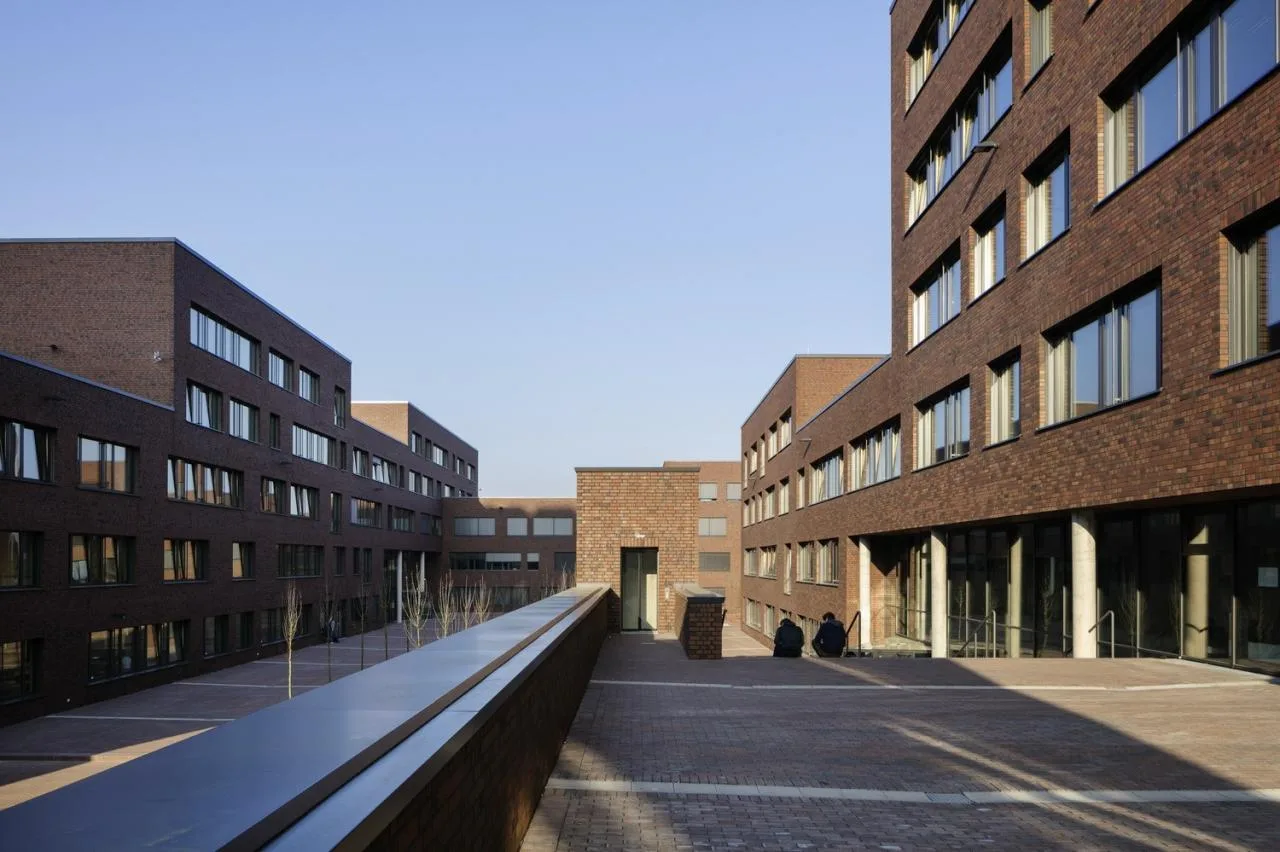
Gerber Architects
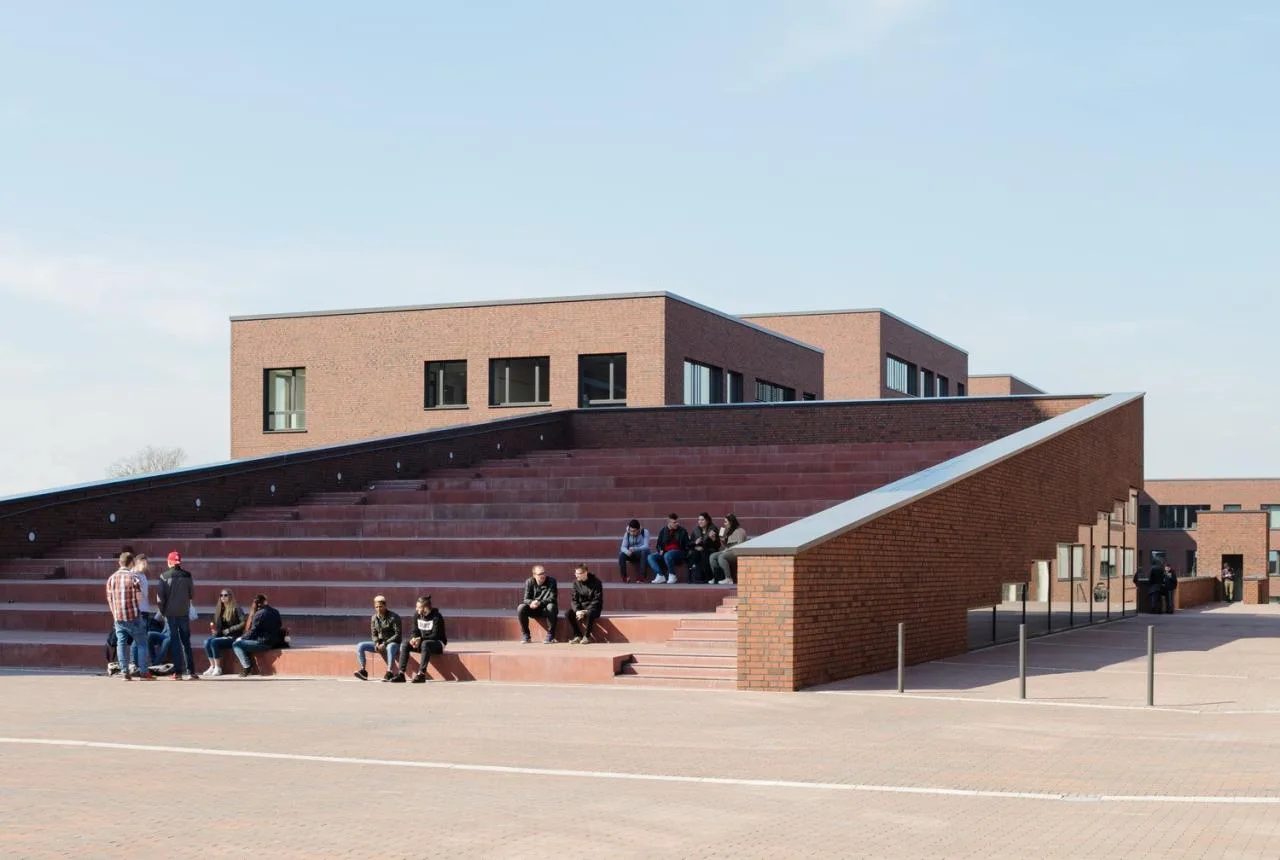
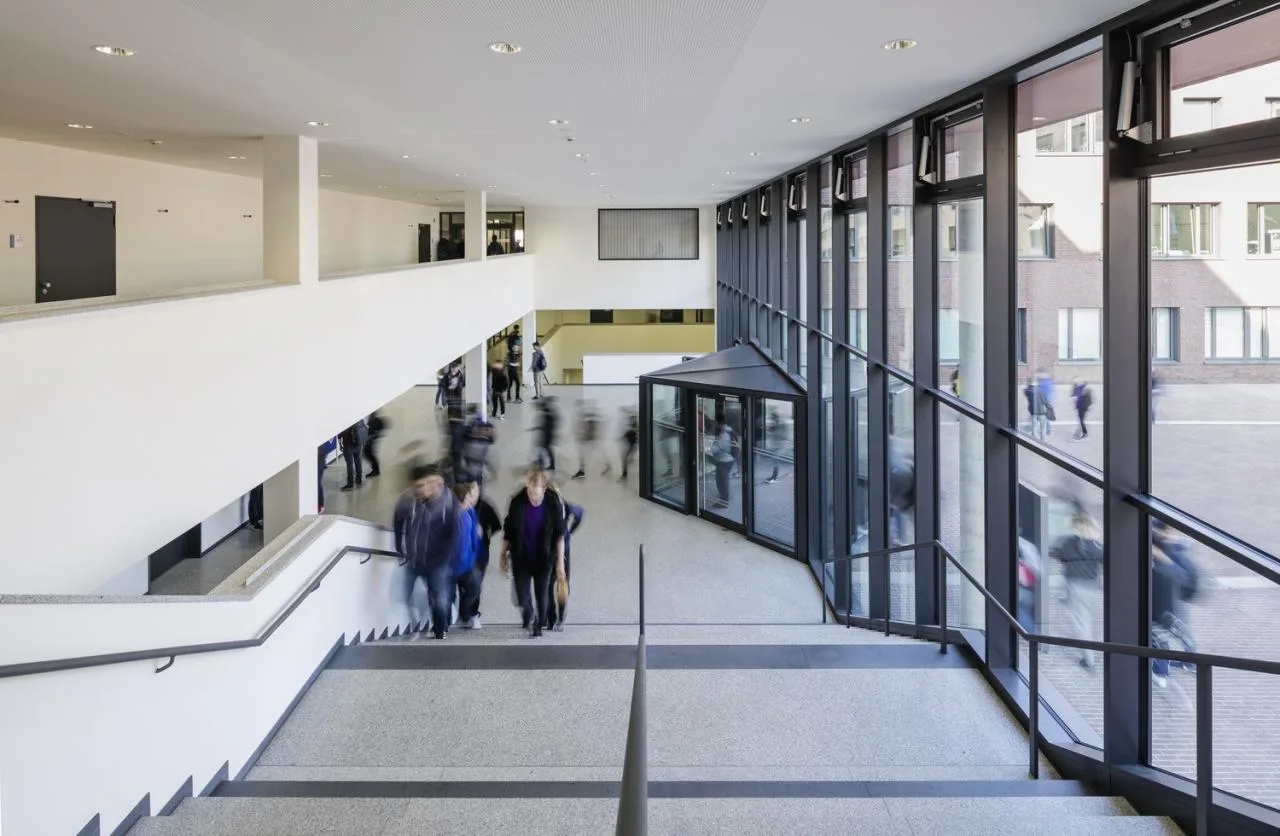
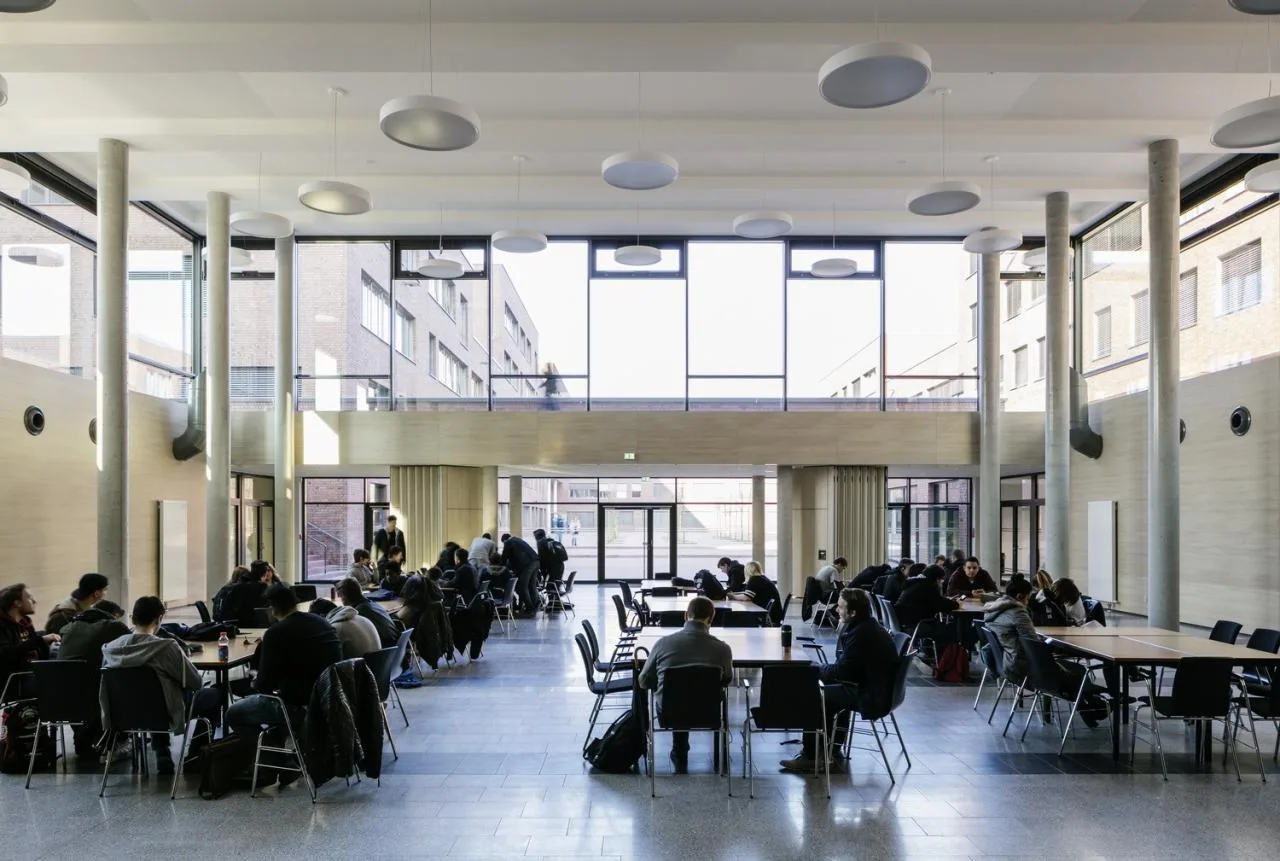
The park’s podium integrates landscape design and employs a semi-underground building form. The lecture hall, connecting the two colleges, benefits from abundant natural light. Its sloping roof naturally forms an outdoor amphitheater, providing students with a space for interaction, communication, and inspiration.
The campus’s height variations cleverly address volume and visibility constraints, creating versatile outdoor spaces and transparent sightlines that allow the golden U-shaped emblem to be visible from anywhere within the park. The dynamic terrain enriches both interior and exterior experiences.
The office building supporting the park is located on Brinkhoffstraße to the southeast, defining the park’s boundary while offering services to the creative industries. Its first floor features a reception area with flexible interior space. Open-plan floors allow for expandable office units. A naturally ventilated parking garage with over 500 spaces is integrated into the podium, with each level connected by passageways to the main entrance.
© Gerber Architects
The unique, open spatial concept of the U Vocational Education College permeates every detail of the design. Visitors entering Dortmund by train or road will immediately notice the red brick walls of the park and the golden U emblem atop the U Art and Creativity Center, perfectly embodying the design team’s vision of cultural creativity revitalizing a once-abandoned area.
© Gerber Architects
Project Drawings
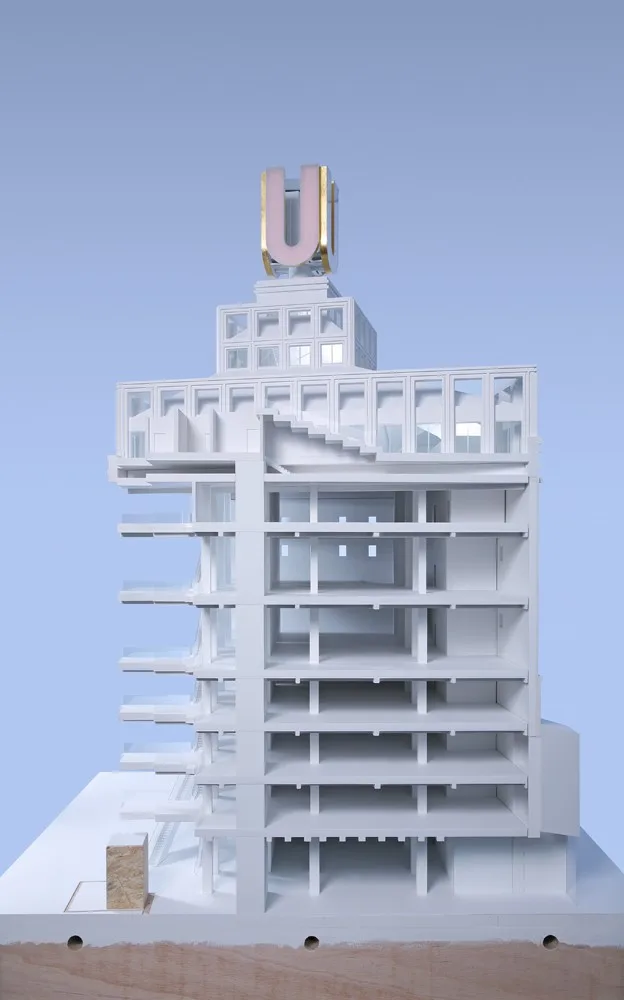
△ Model Diagram
△ Model Diagram
△ Model Diagram
△ Model Diagram
△ Model Diagram
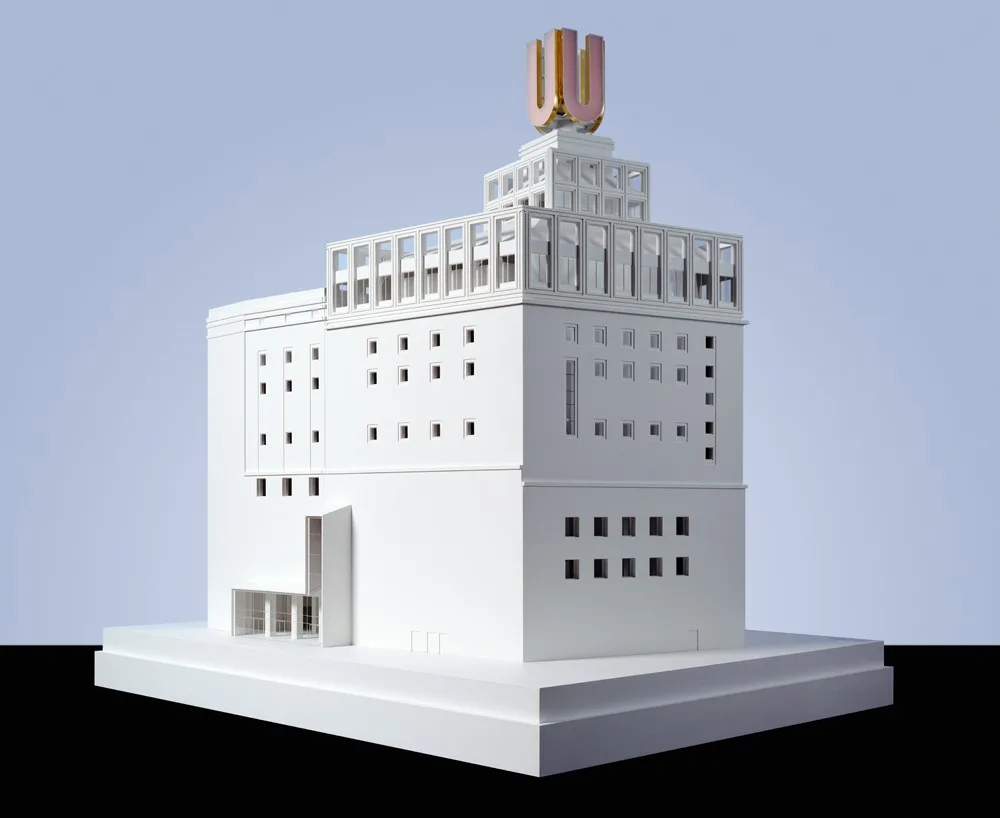
△ Model Diagram
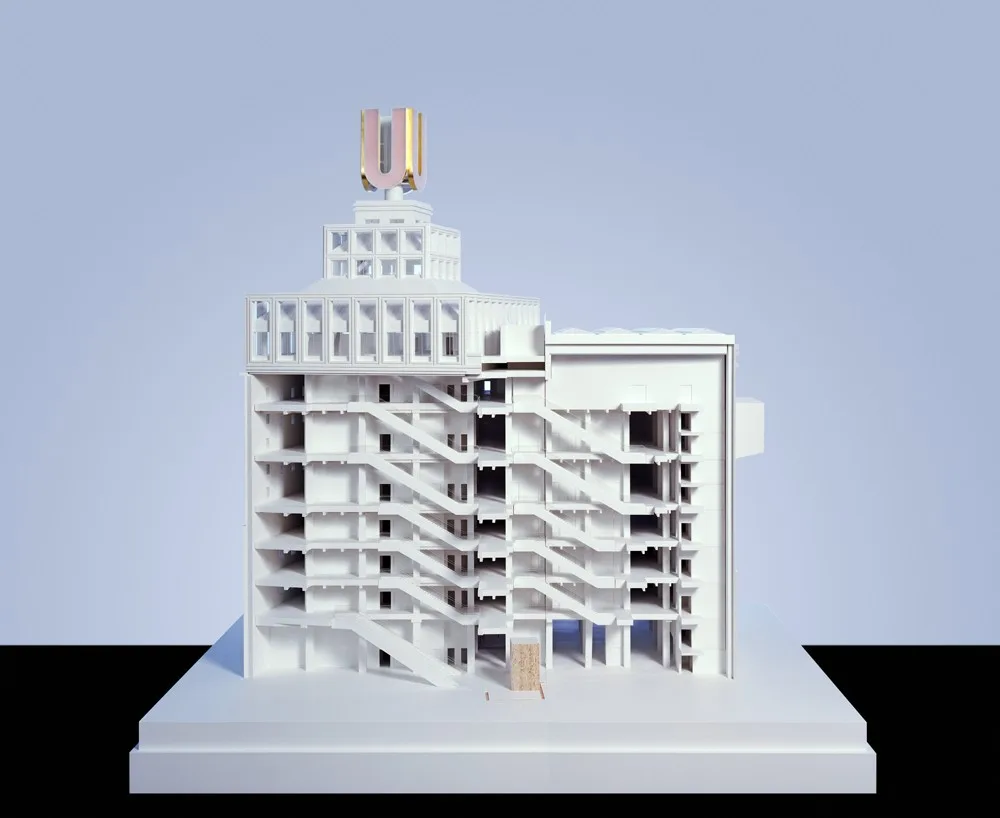
△ Model Diagram
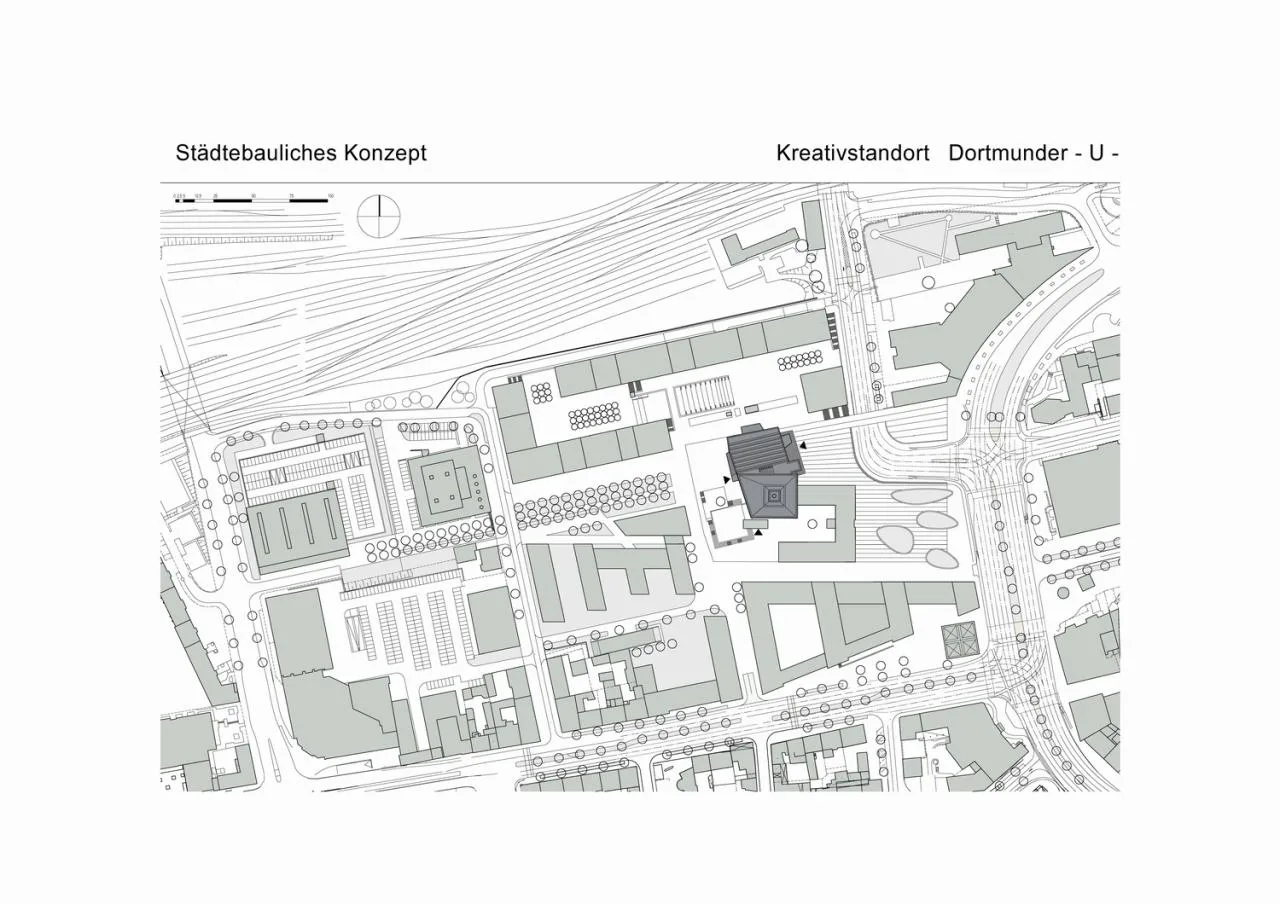
△ Base Schematic Diagram
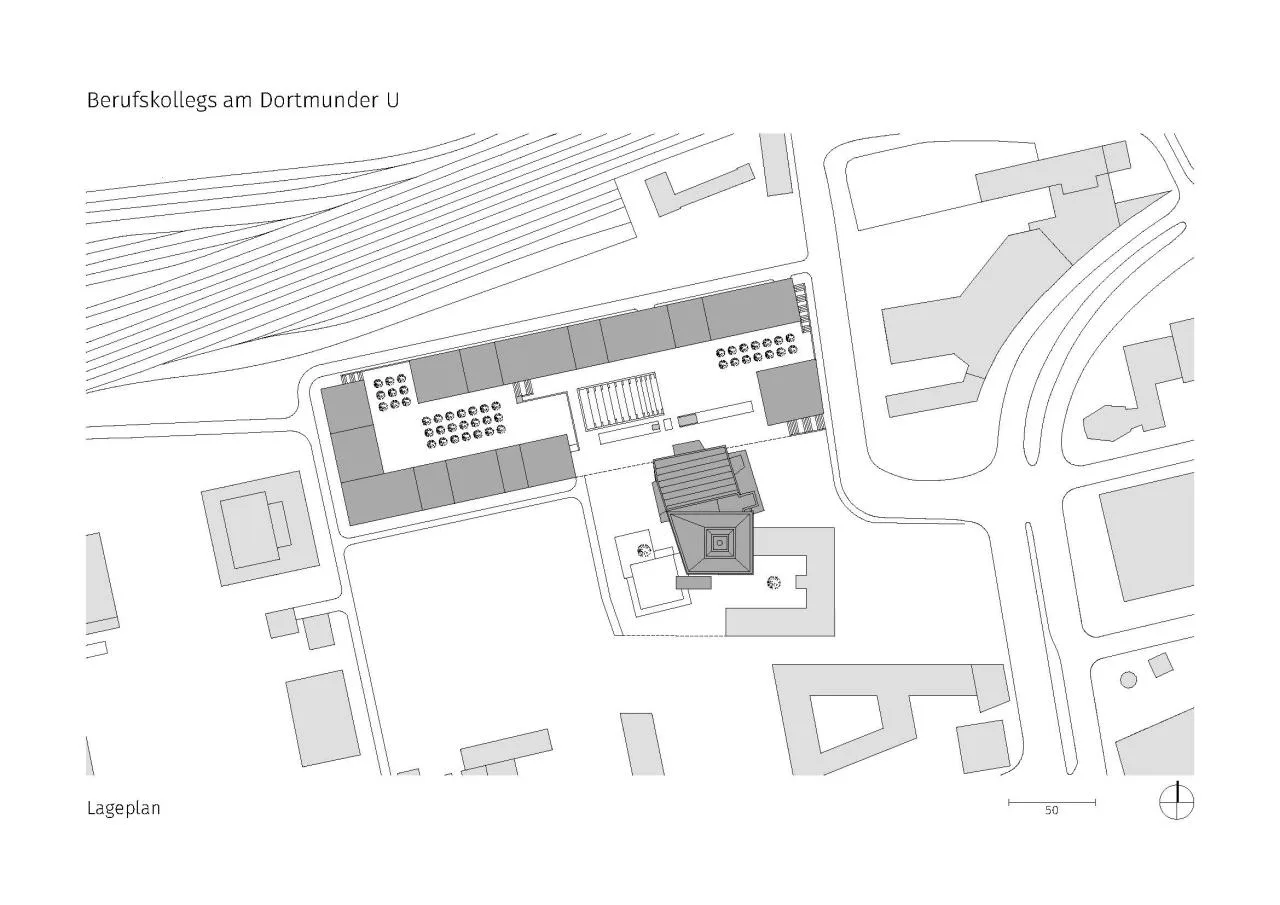
△ General Layout Plan
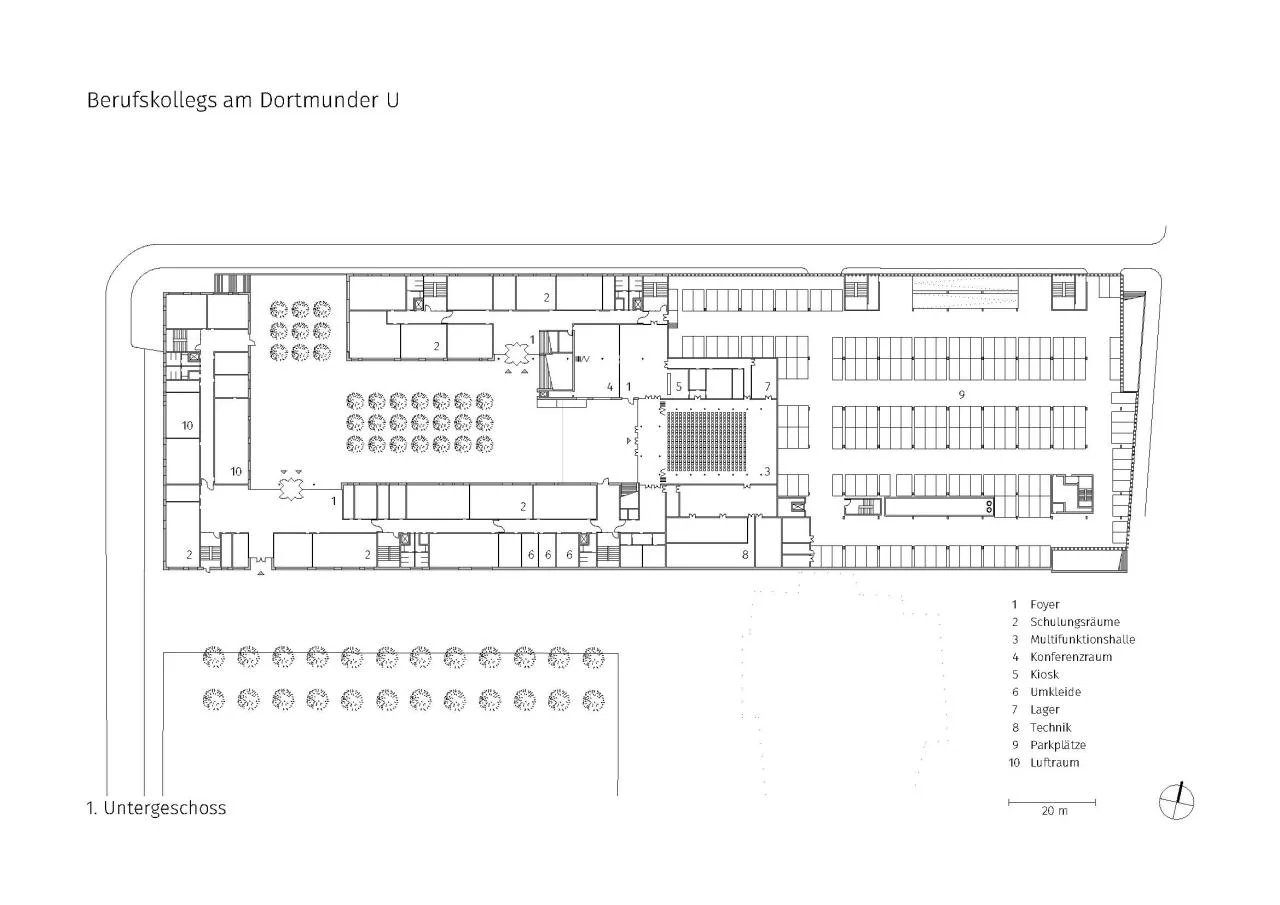
△ Negative First Floor Plan of the Education Academy
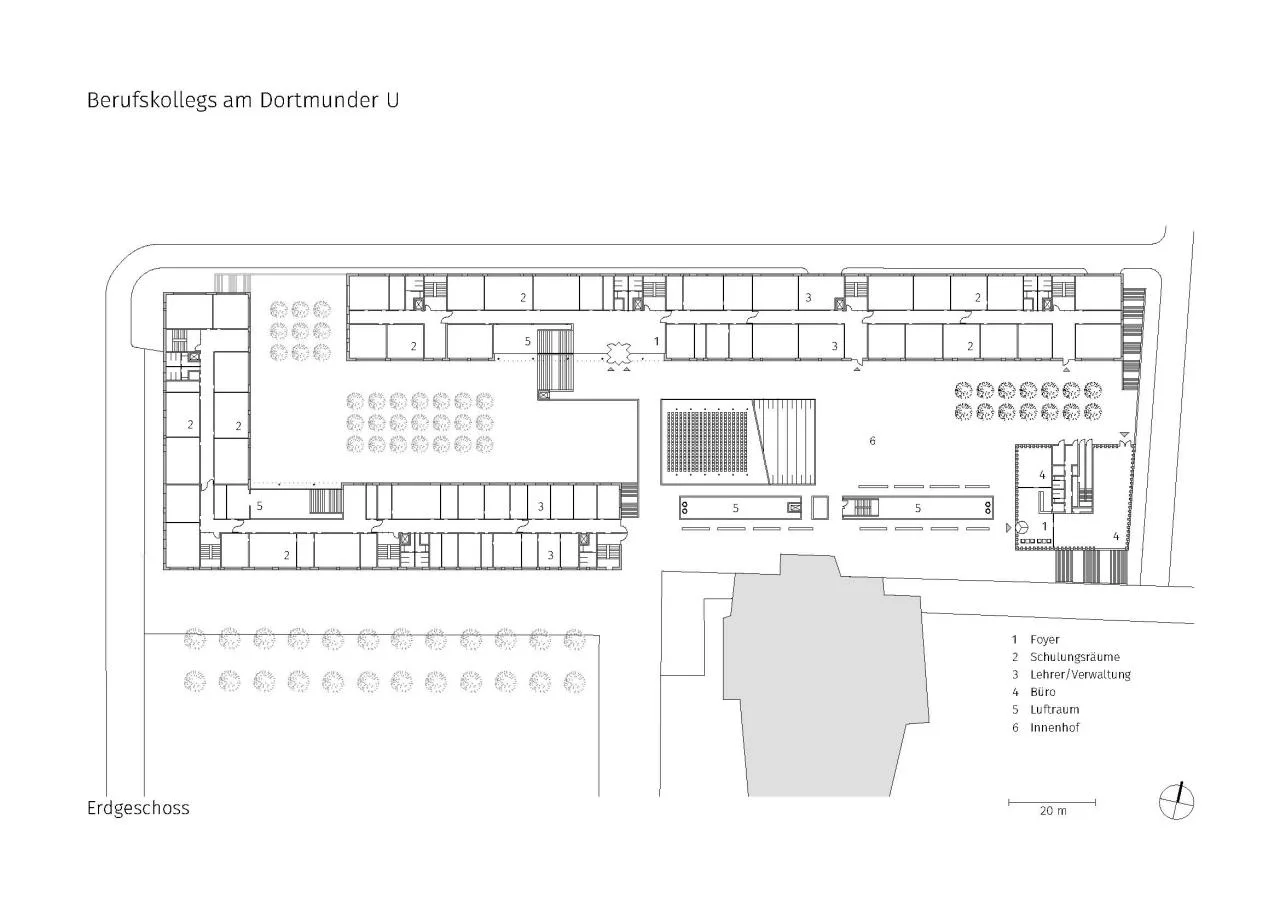
△ First Floor Plan of the Education Academy
△ Second Floor Plan of the Education Academy
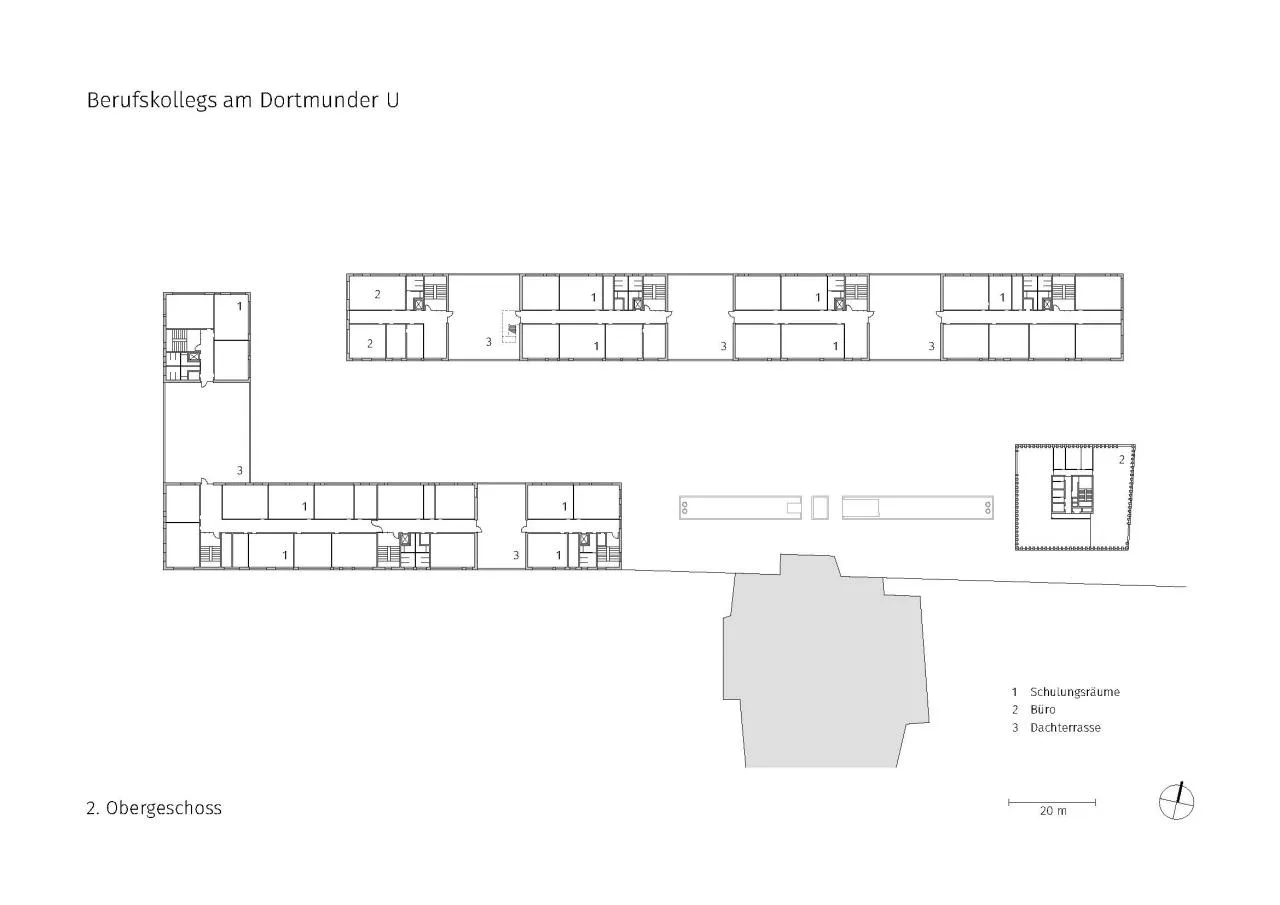
△ Third Floor Plan of the Education Academy
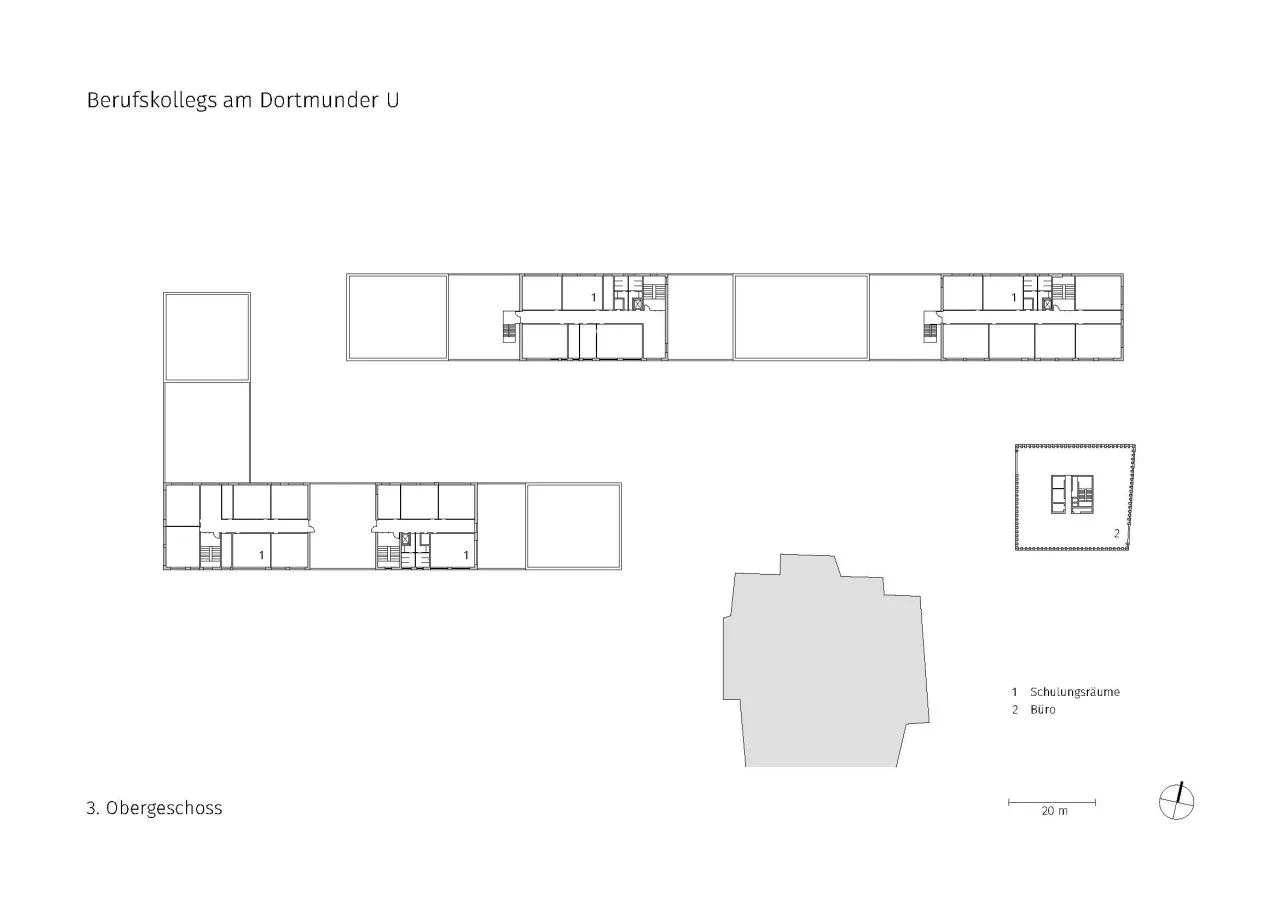
△ Fourth Floor Plan of the Education Academy
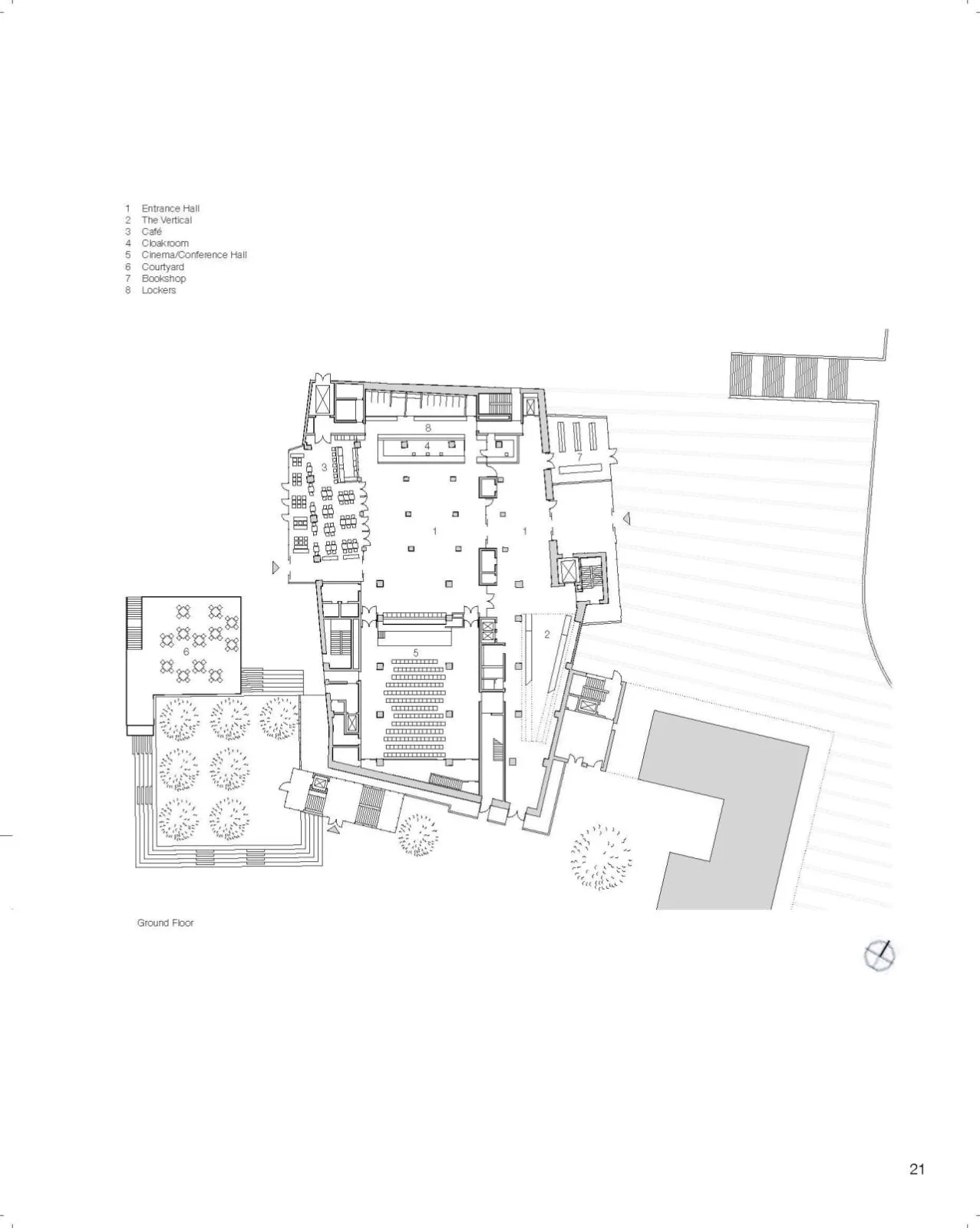
△ Art Center Floor Plan
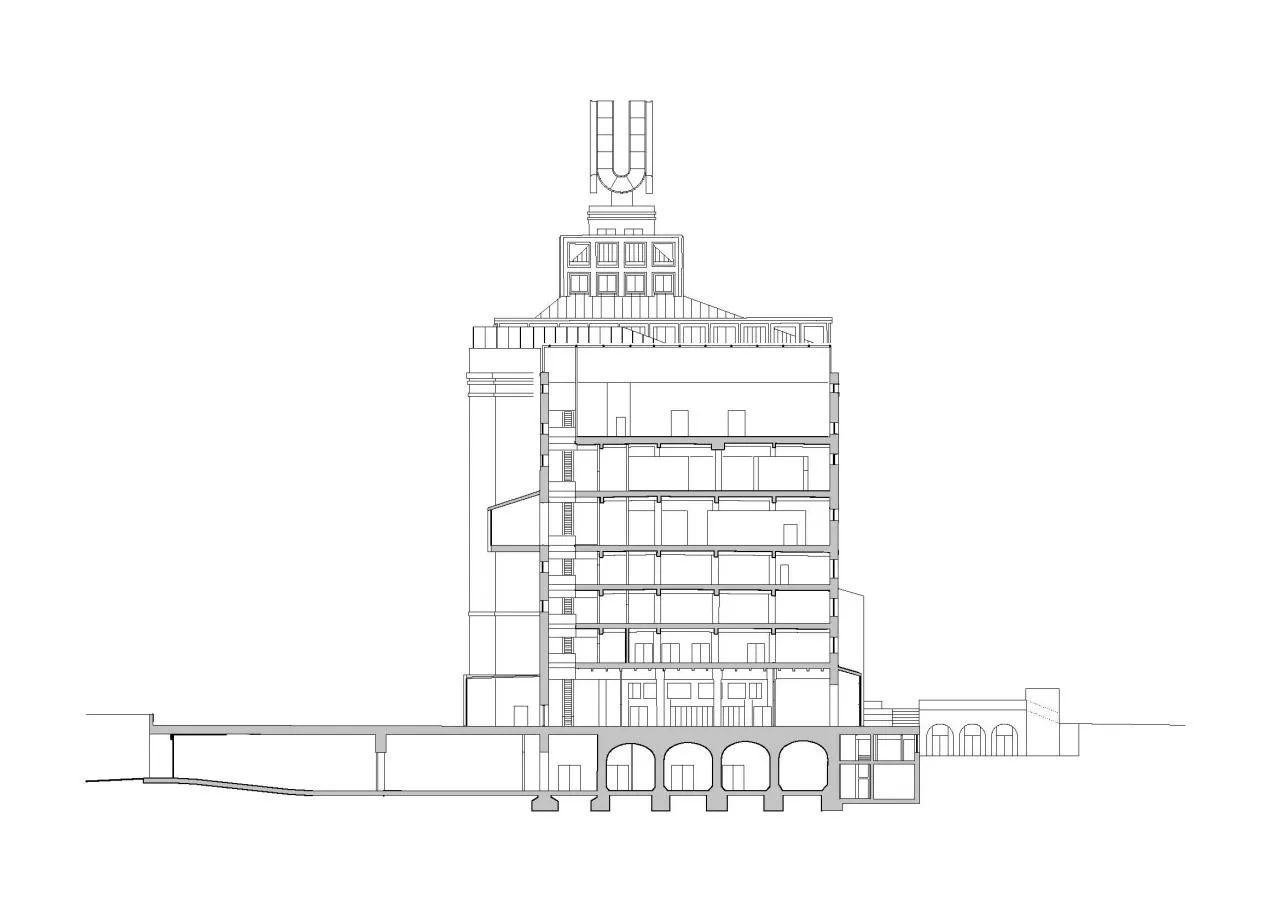
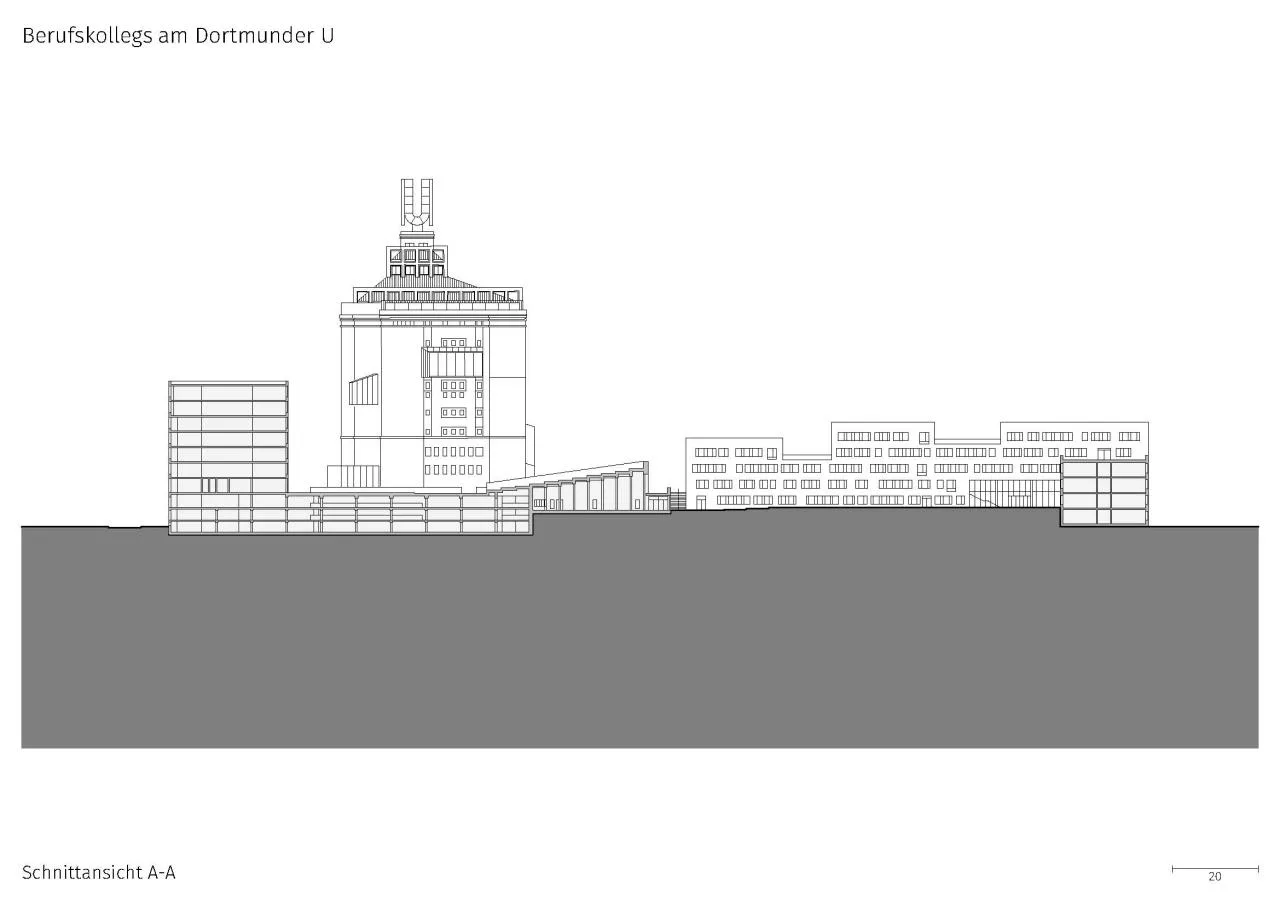
△ Section of Art Center
△ Section of Art Center and Education Academy
Project Information
Project Name: Dortmund U Art and Creativity Center and Vocational Education Academy
Project Type: Culture / Education
Location: Dortmund, Germany
Owner: Dortmund City Government, Dortmund North Construction Center
Scope: Architectural and interior design
Art Center Scheme Design: 2006
Art Center Construction: 2008–2010
Art Center Building Area: 19,969 square meters
Education Academy Scheme Design: 2008
Education Academy Construction: 2013–2015
Education Campus Building Area: 55,915 square meters
Project Team
Chief Designer: Prof. Eckhard Gerber
Project Director: Thomas Lücking
Main Team Members: Hannes Beinhoff, Olaf Schüler, Van-Hai Nguyen, Artur Schiebelbein, Marius Ryrko, Rolf Knie, Benjamin Sieber, Jens Haake, Rosemarie General
Structural Directors: Rüdiger Ameling, Claus Tedt












Must log in before commenting!
Sign Up