
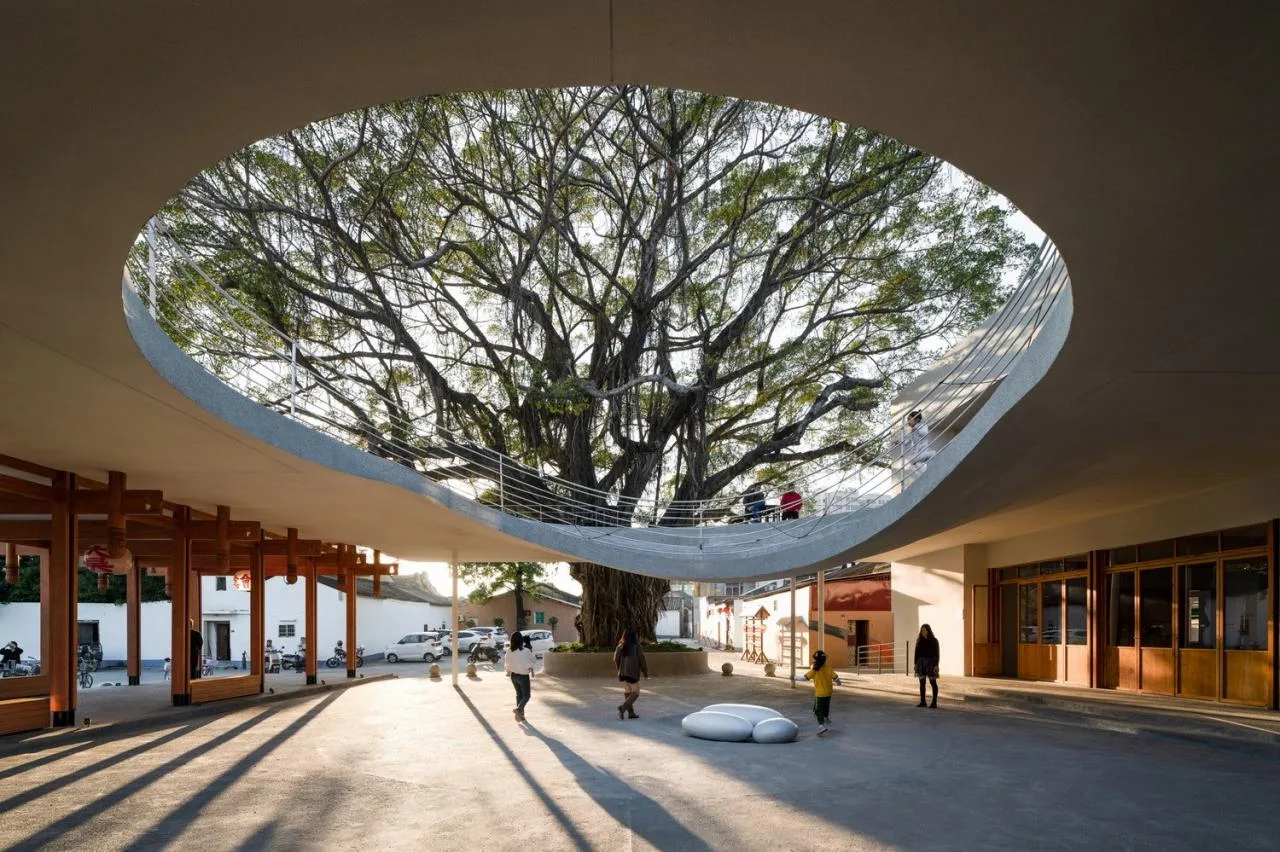
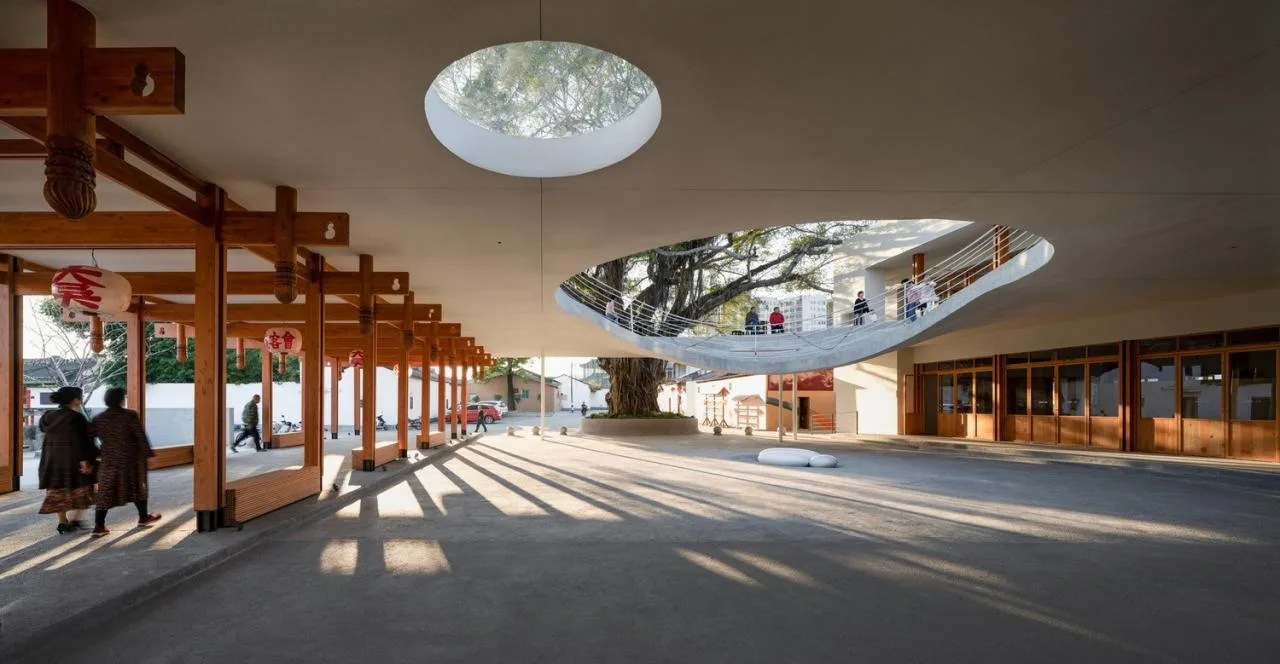
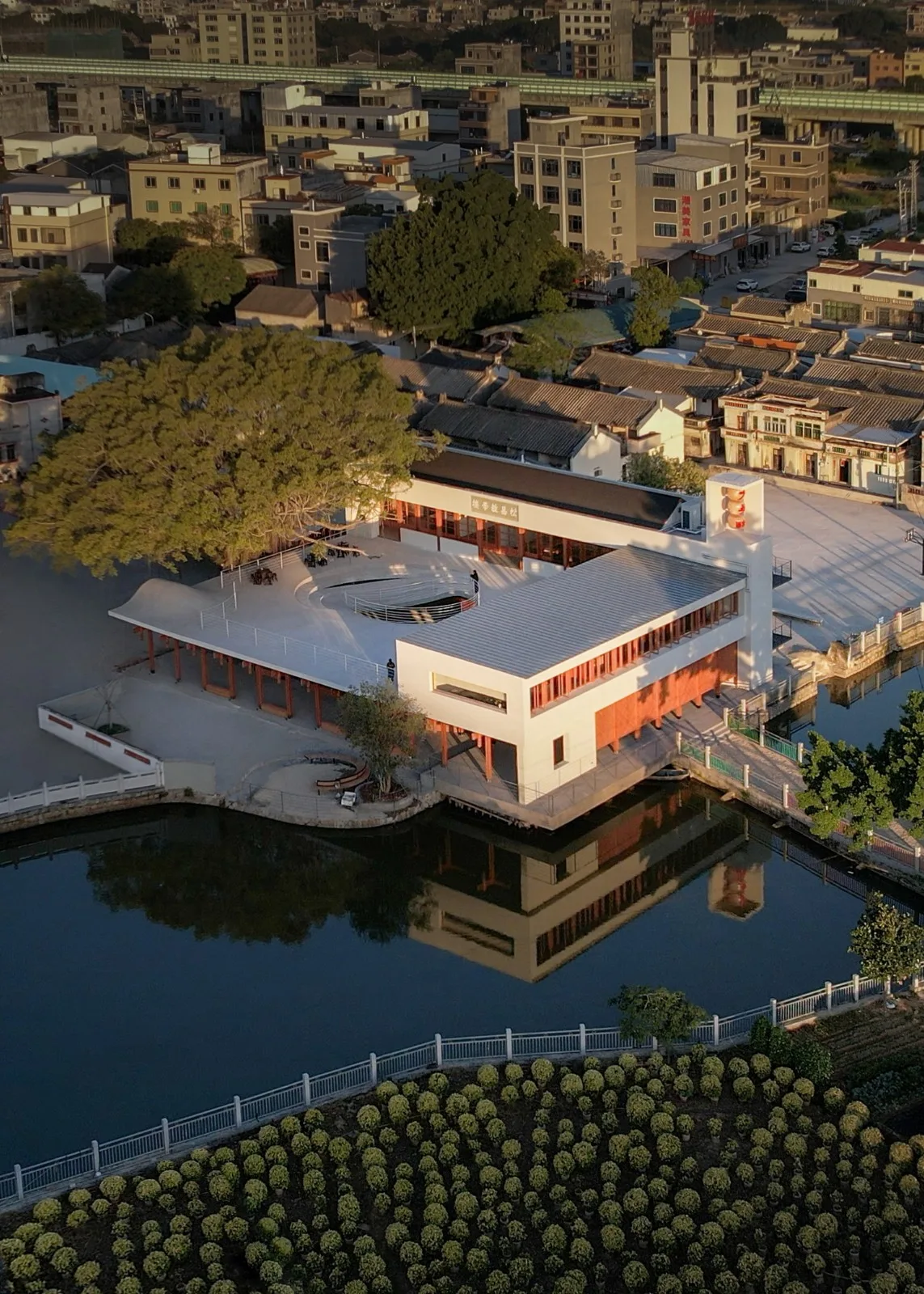
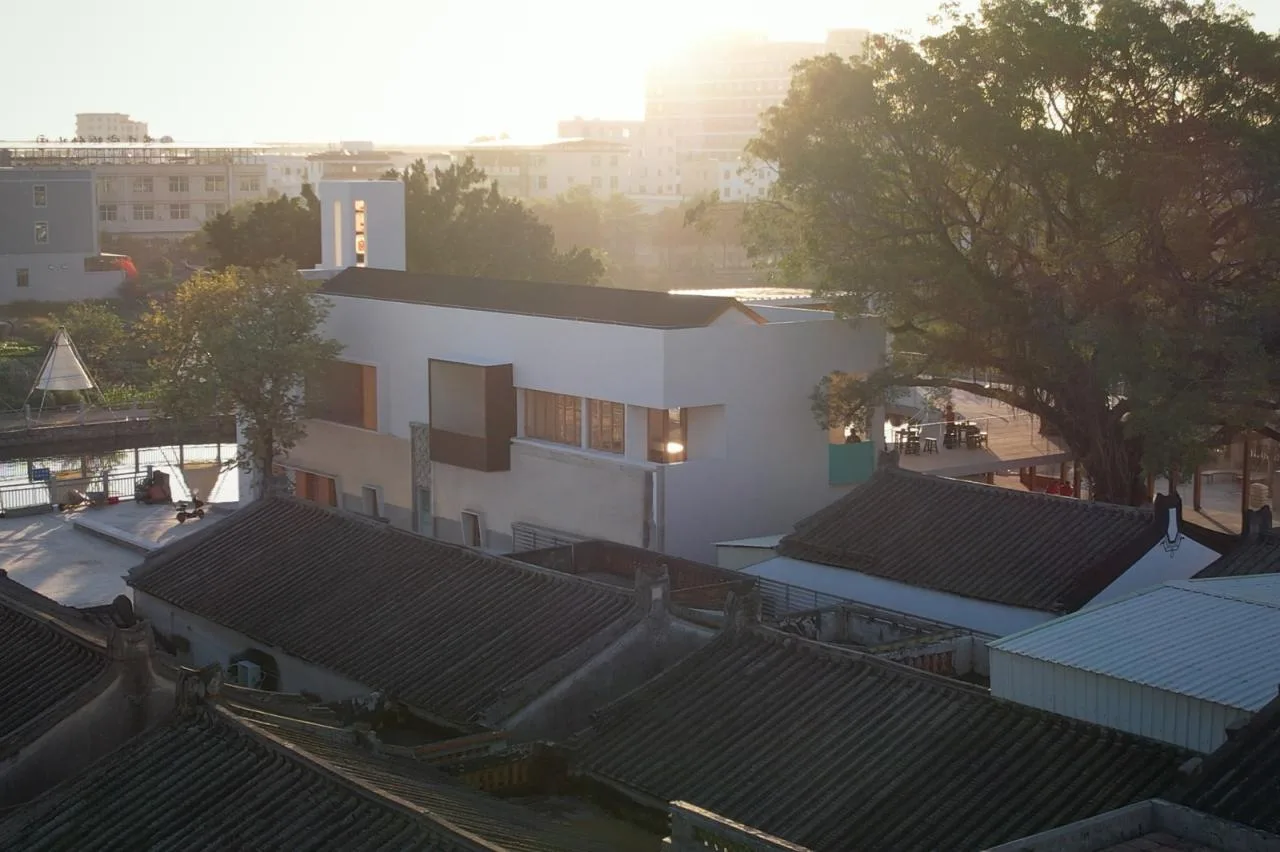
The concept of extending the shade of the ancient banyan tree to shelter the villagers both day and night in the Wu Hui Living Room is inspired by the tree’s natural canopy. The original school building was a courtyard completely enclosed by walls, featuring a two-story teaching building and a teachers’ auxiliary room on the first floor, all under the towering 300-year-old banyan tree.
Upon seeing this majestic tree, the design team found inspiration. Historically, villagers gathered beneath the banyan for social activities—chatting, eating, drinking tea, and enjoying the breeze. The tree has become the heart of community interaction. This spirit guided the renovation, which aimed to open the entire courtyard and create a space resembling an expansive tree canopy. Gu Yi recalls this as the fundamental inspiration behind the architectural transformation.
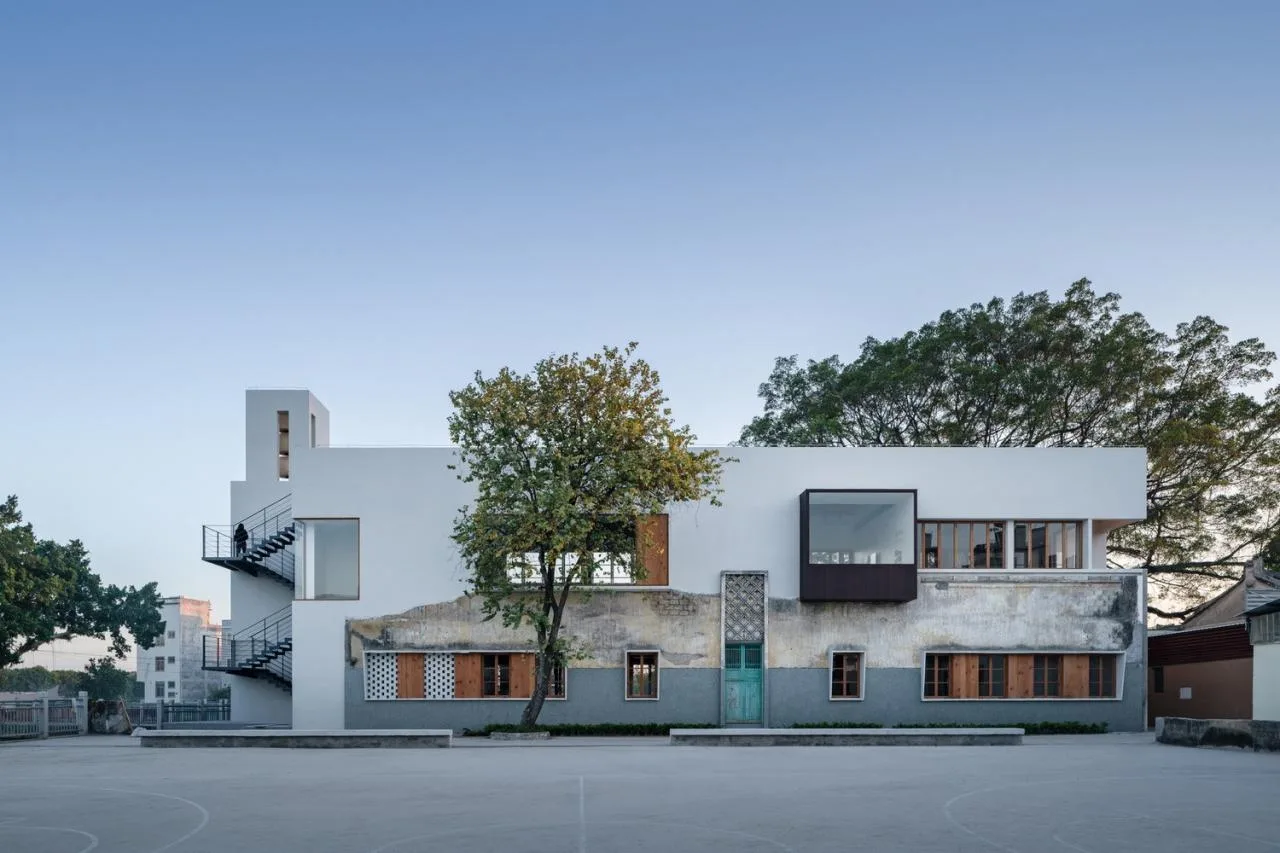
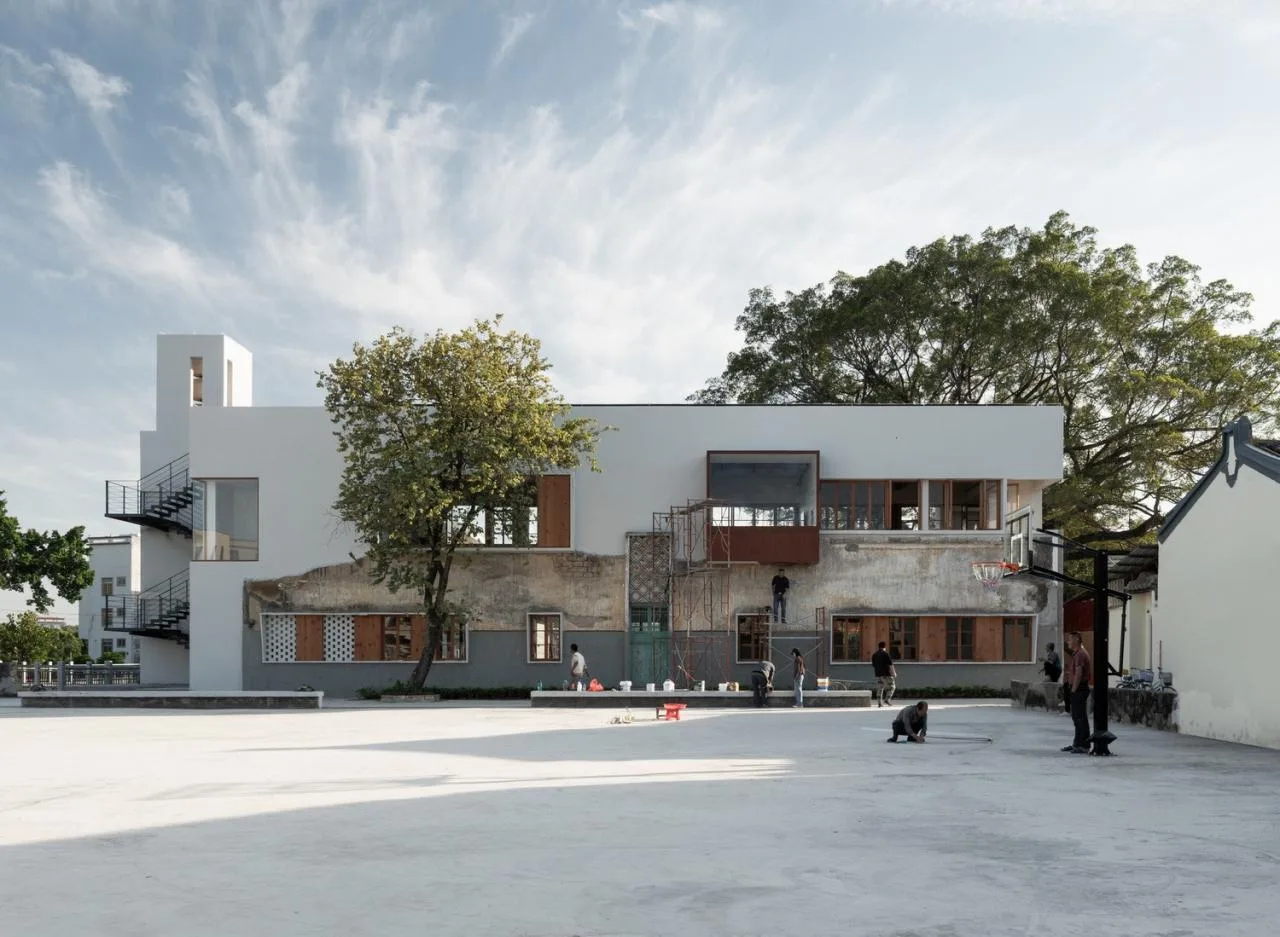
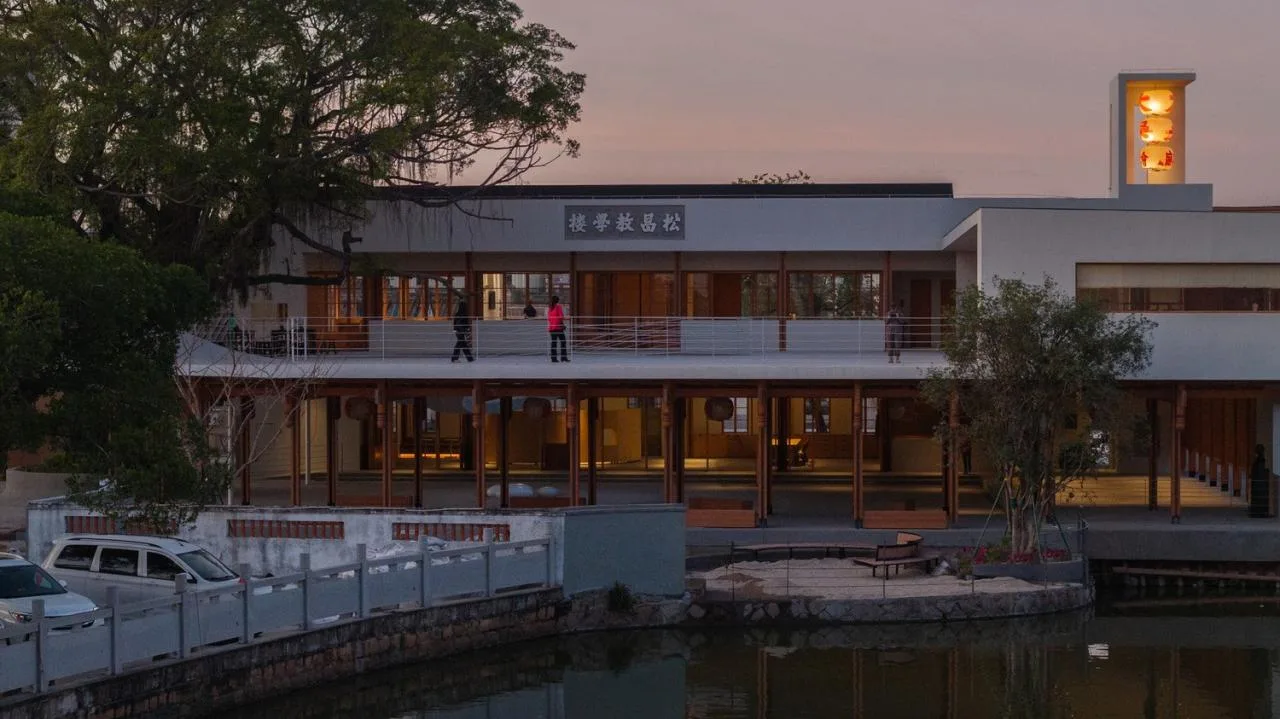
The design begins from the 300-year-old banyan tree and radiates outward. The architectural team removed many walls and incorporated advanced steel and wood structures to create a seamless, borderless community space. Following this vision, the architect reconfigured the original two-story teaching building, demolished the public restrooms near the river, and renovated the area cohesively.
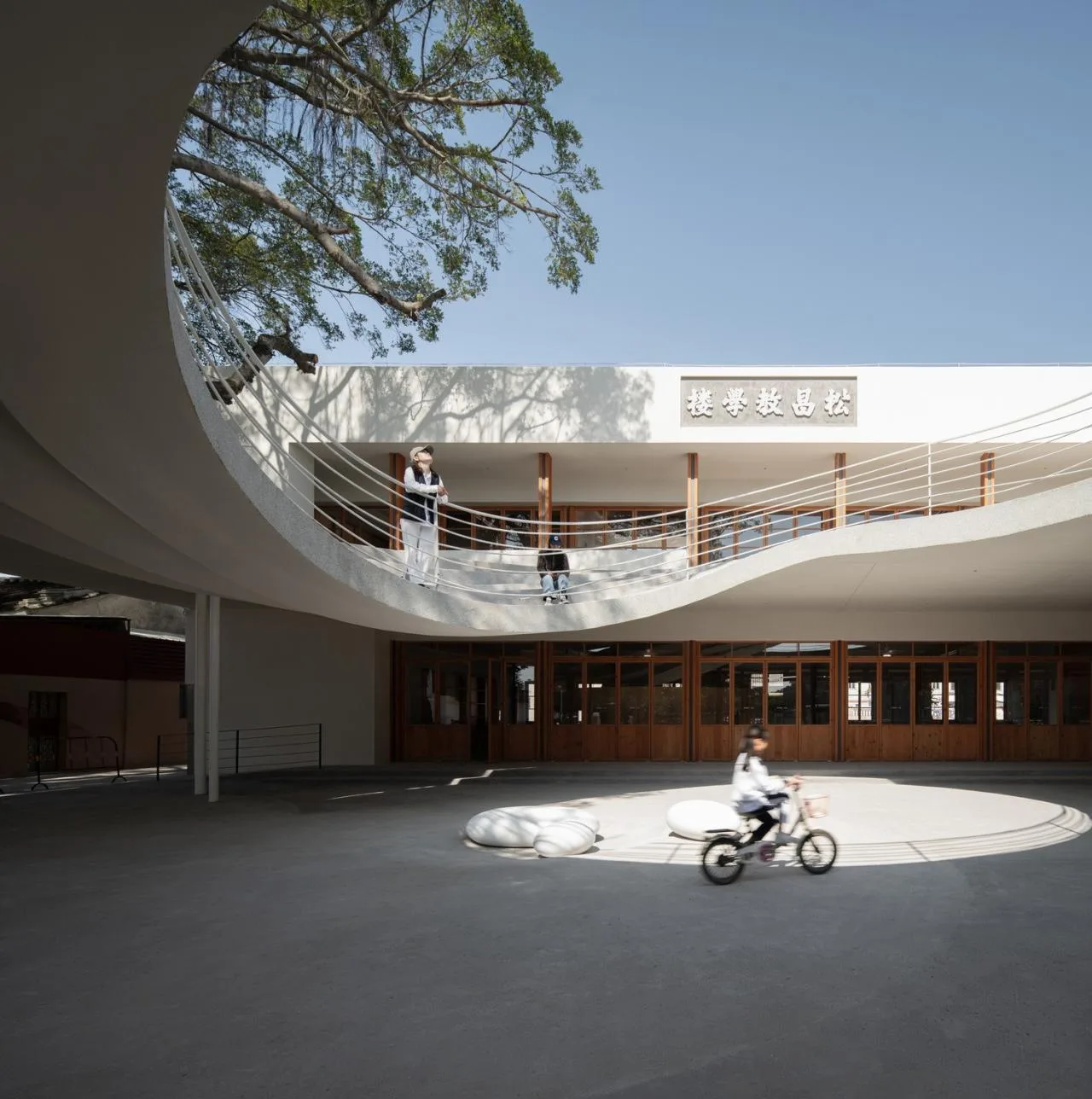
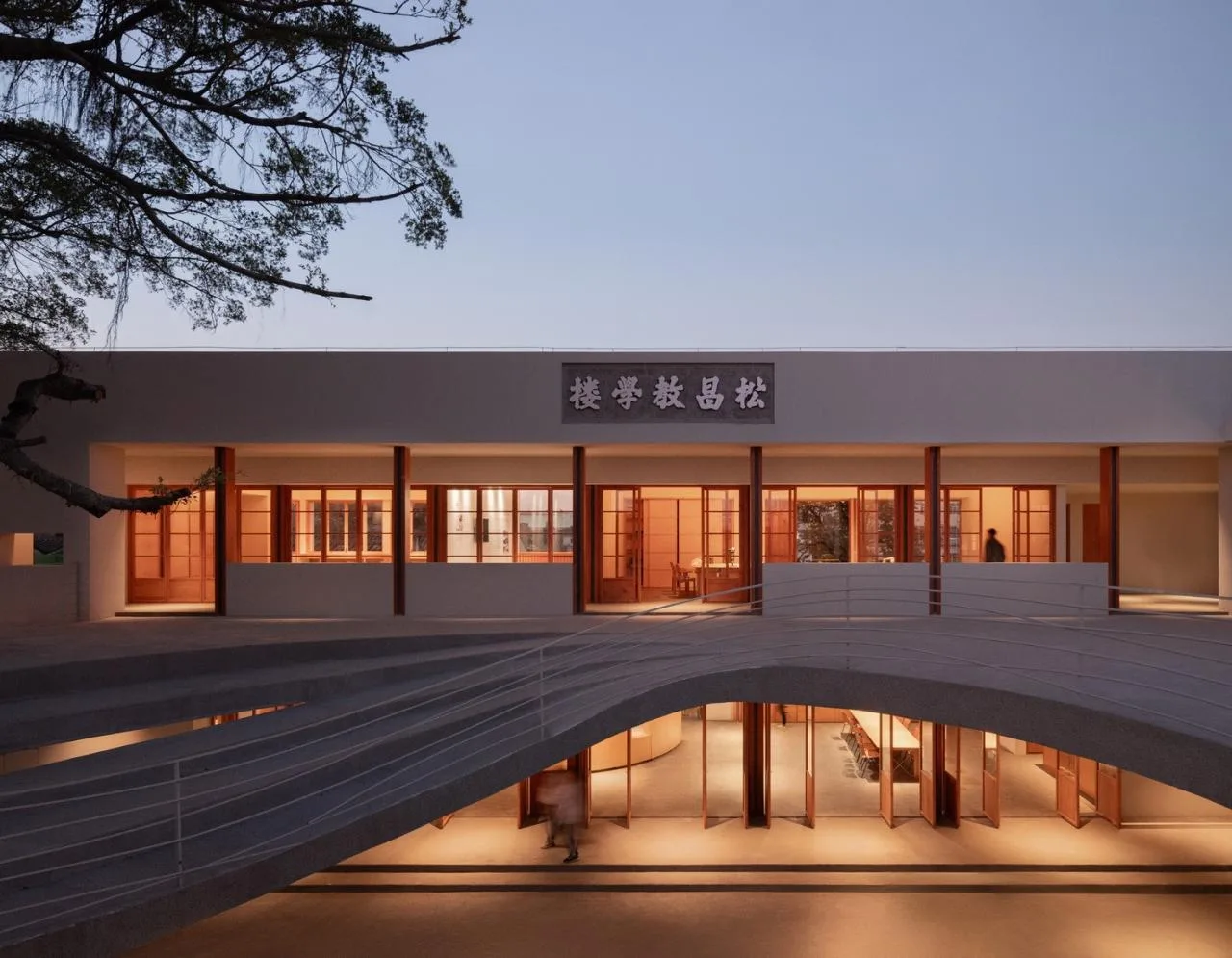
All auxiliary rooms formerly used by teachers were opened up and transformed into corridors. A curved pathway extends from the first-floor platform to the second floor, forming a three-dimensional grandstand-like space. This design enhances the experience of those seated under the banyan tree, offering expansive views and a sense of connection.
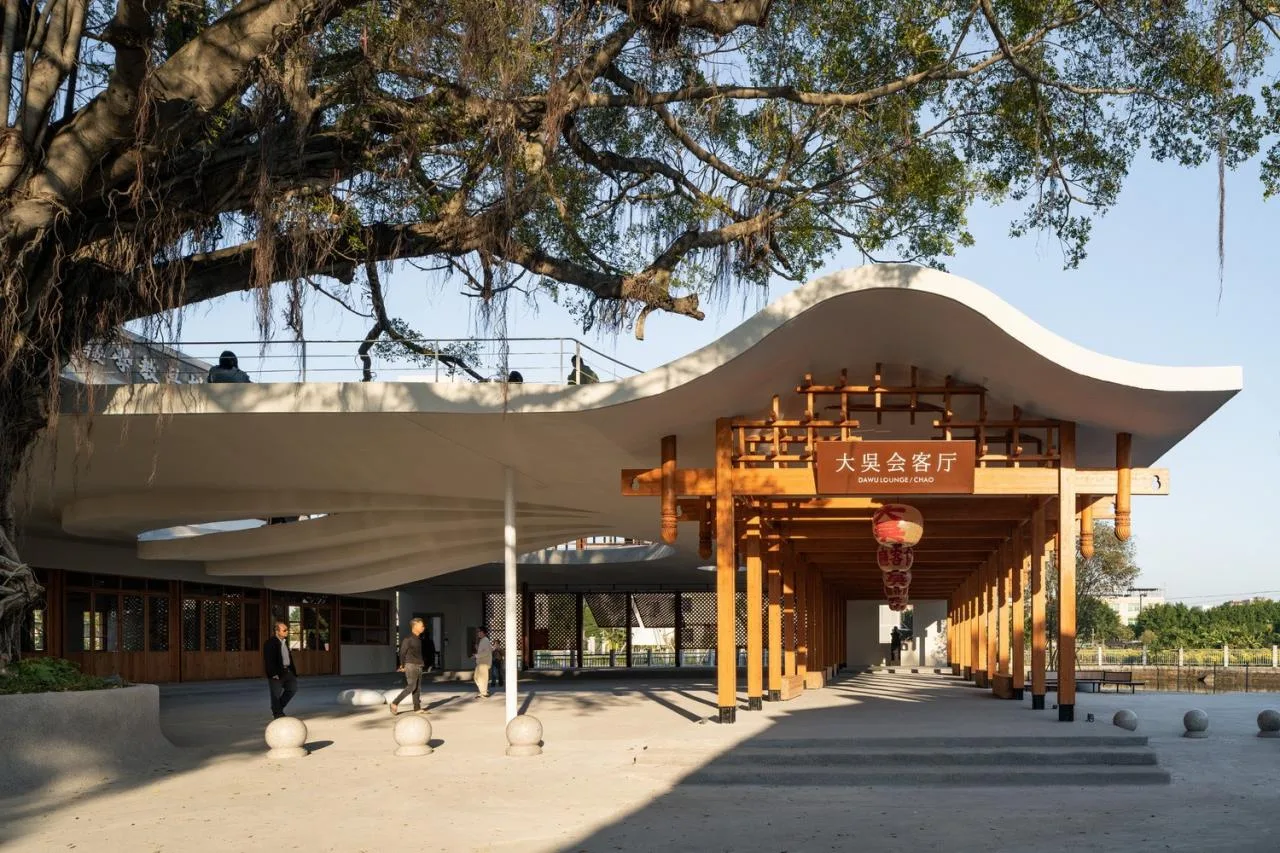
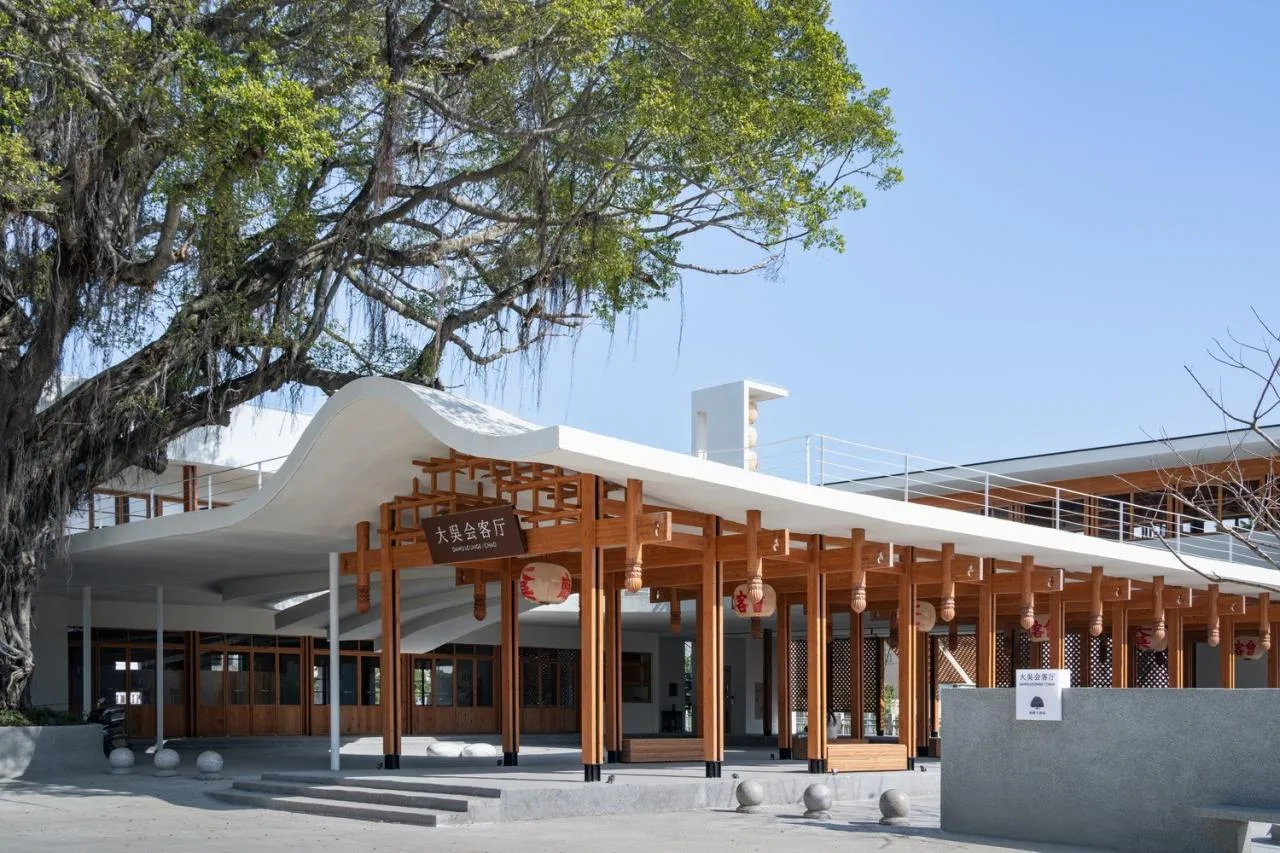
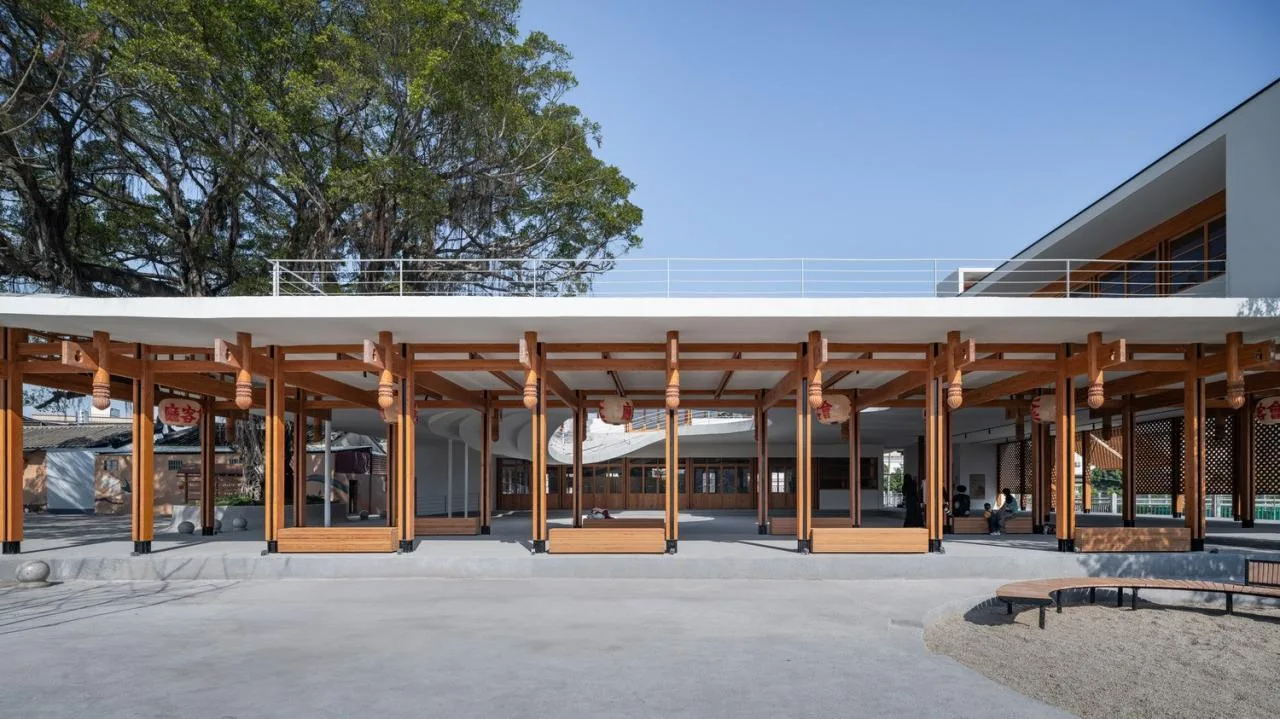
The Dawu Hui Living Room showcases a harmonious coexistence of old and new, capturing the passage of time through its architecture. The architect preserved the weathered plaque of the “Songchang Teaching Building,” which has endured 40 years of exposure, alongside a brick wall adorned with children’s graffiti and a green wooden door.
Situated by the sea, Chaozhou’s traditional building technique involves mixing powdered shells with sand to produce bricks, a unique local method. The new door and window frames, made from washed stone, follow this traditional practice. Additionally, historic elements like stone tablets, nameplates, wood carvings, and stone pillars have been retained, continuing their role as protective symbols in the renewed structure.
This preservation pays homage to Chaozhou’s traditional ritual system, which emphasizes the importance of humanity and clarity in all things.
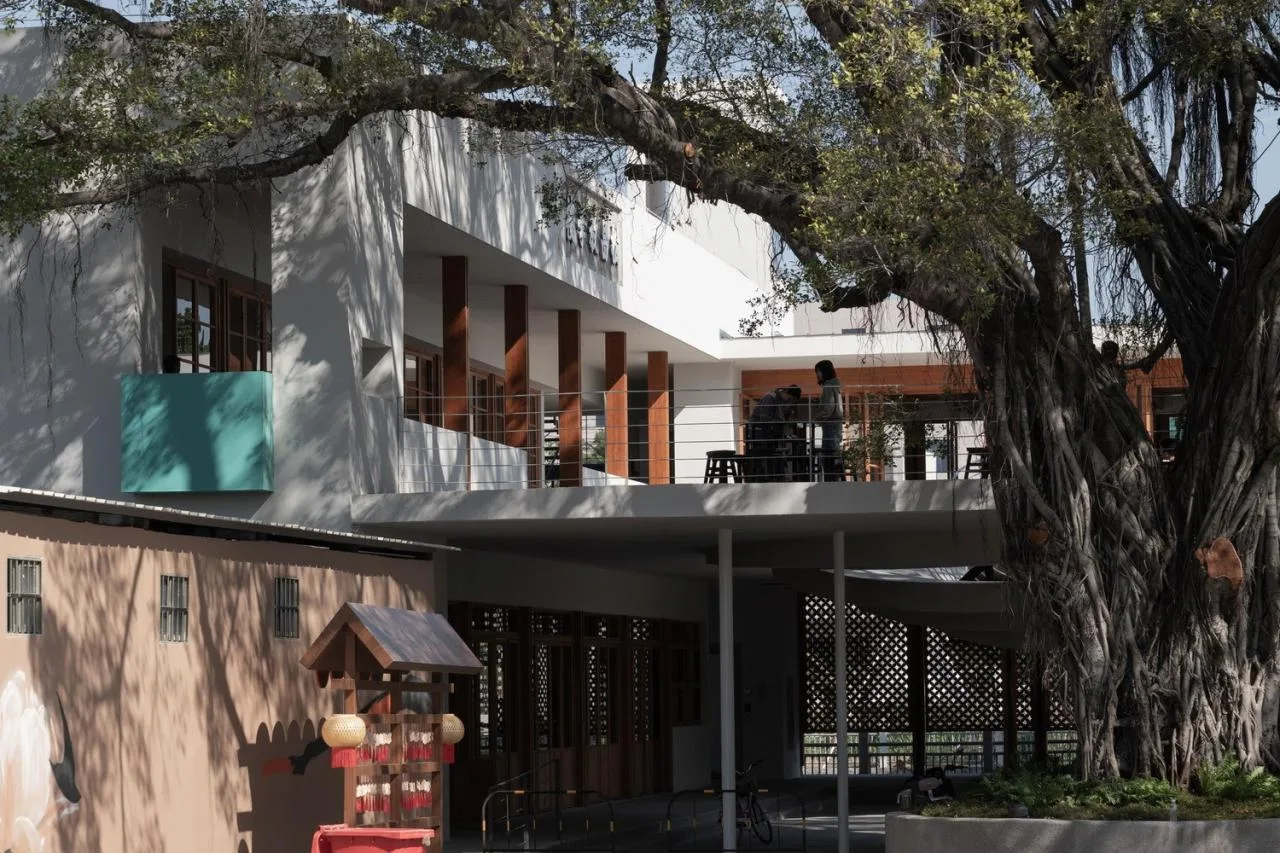
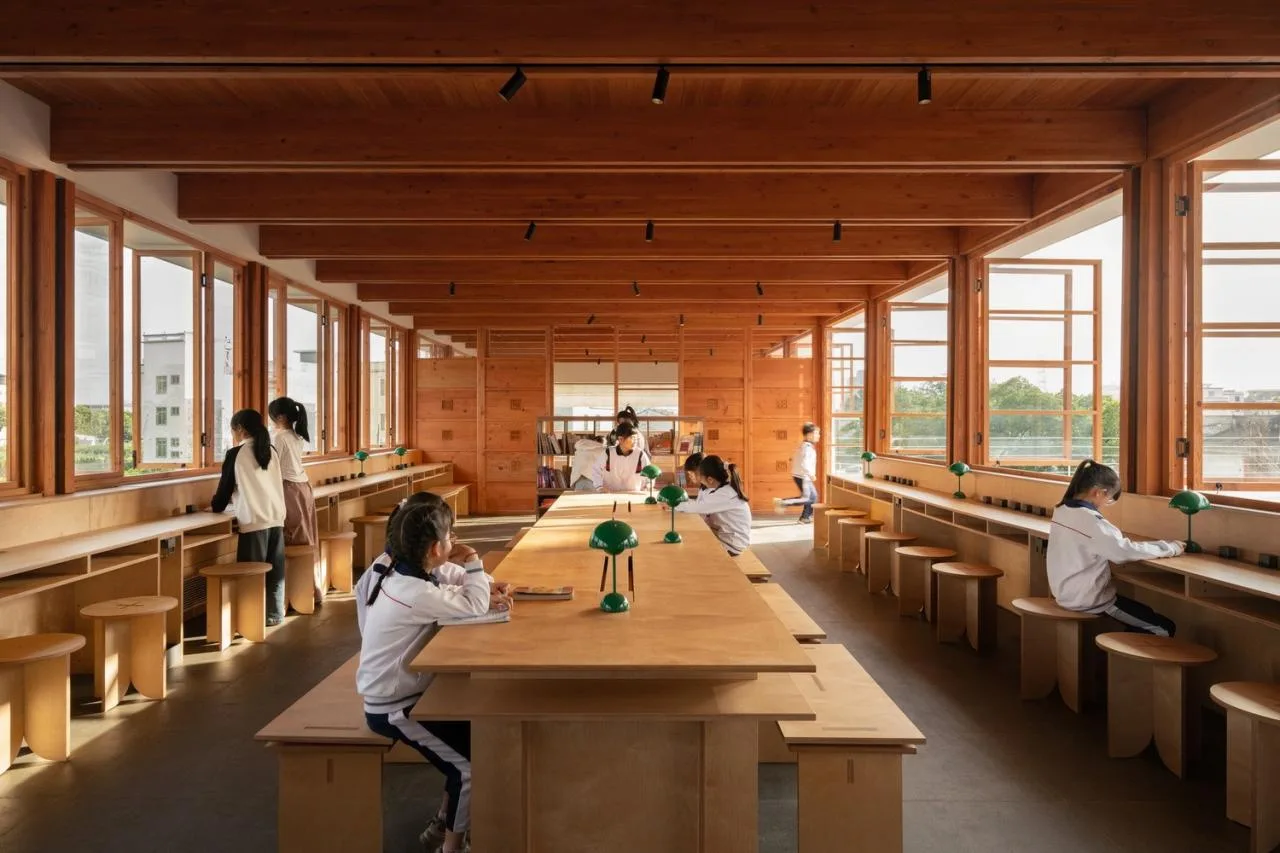
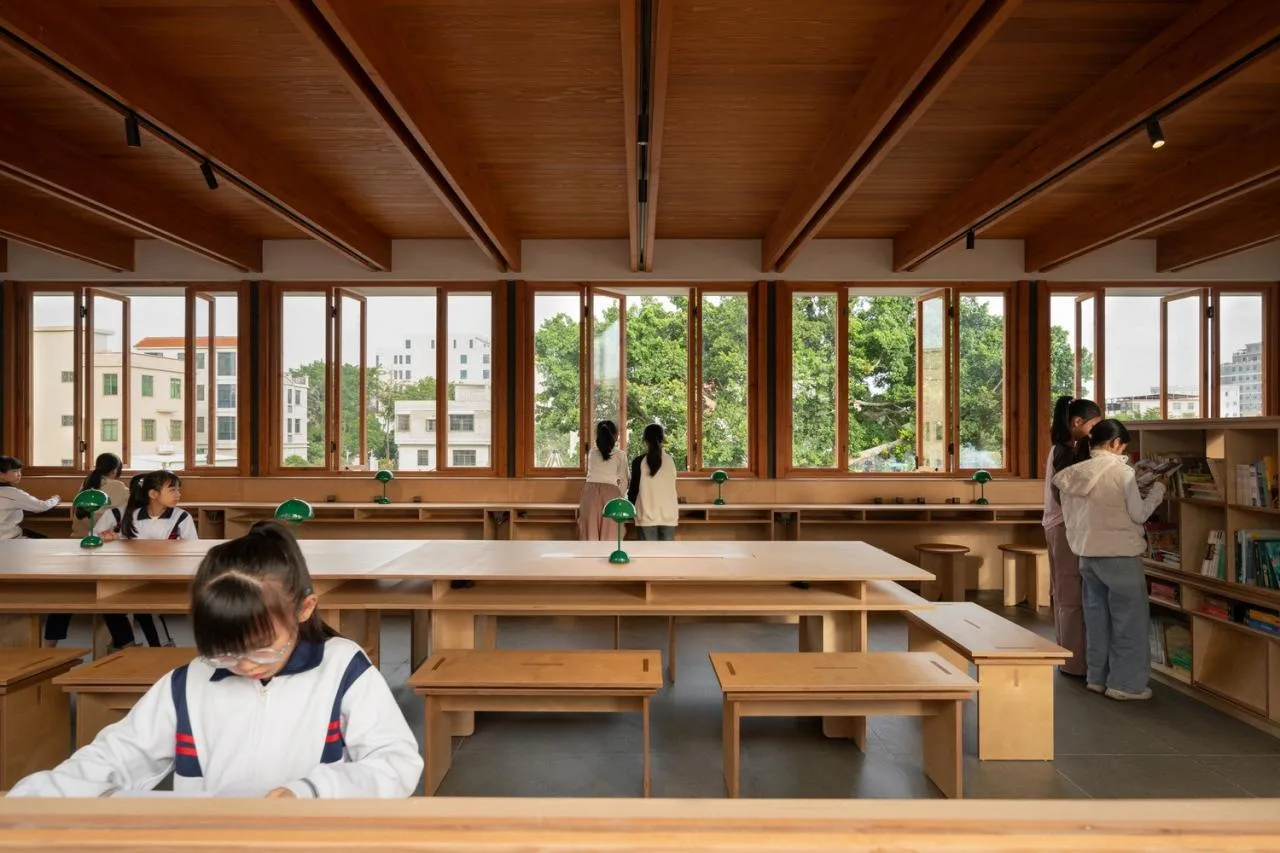
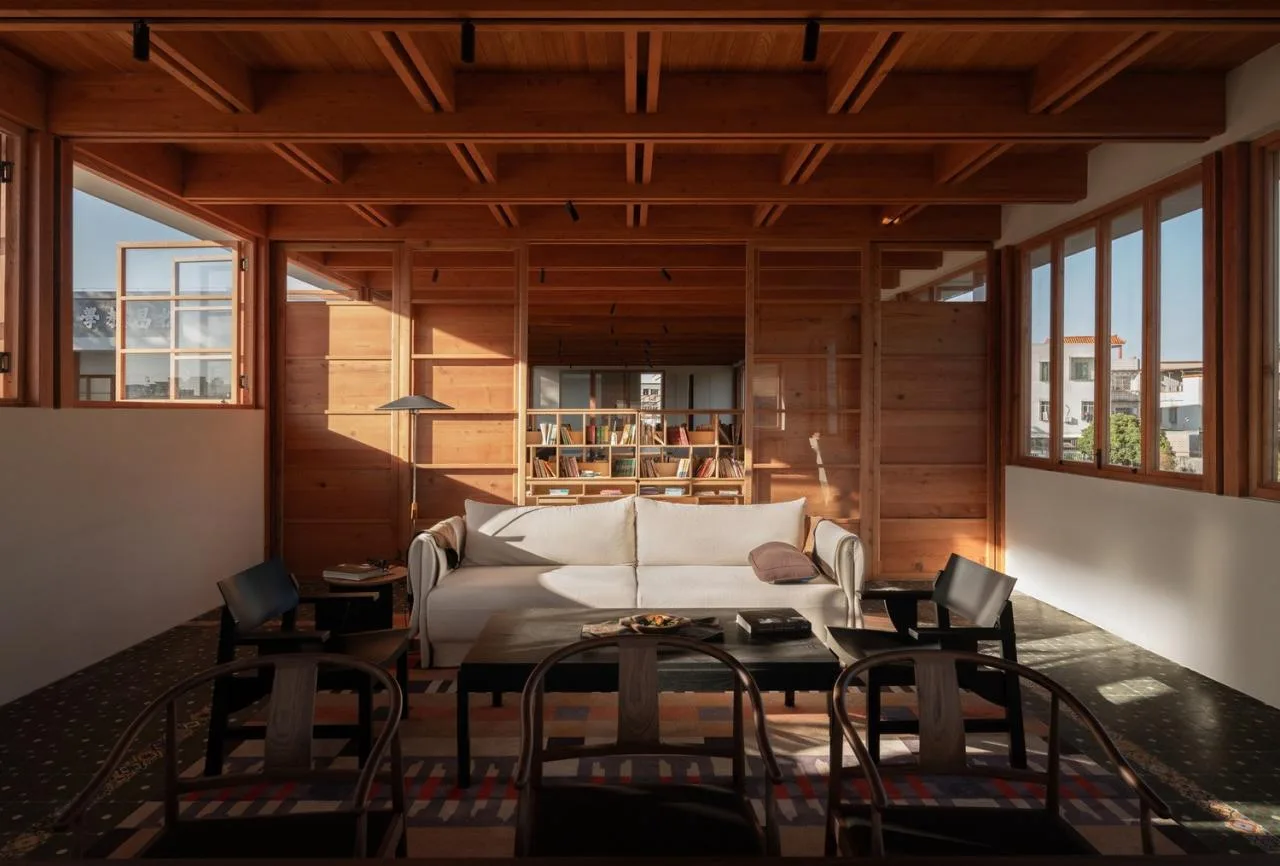
Throughout the building, traditional wooden window frames and abundant wooden furniture were chosen for the interiors. This craftsmanship imparts warmth that many modern materials lack and reflects Chaozhou’s respect for artisanal skills and nature, preserving intangible cultural heritage.
From afar, the building may seem new. Yet, for villagers entering it, familiar traces of time are felt in countless details.
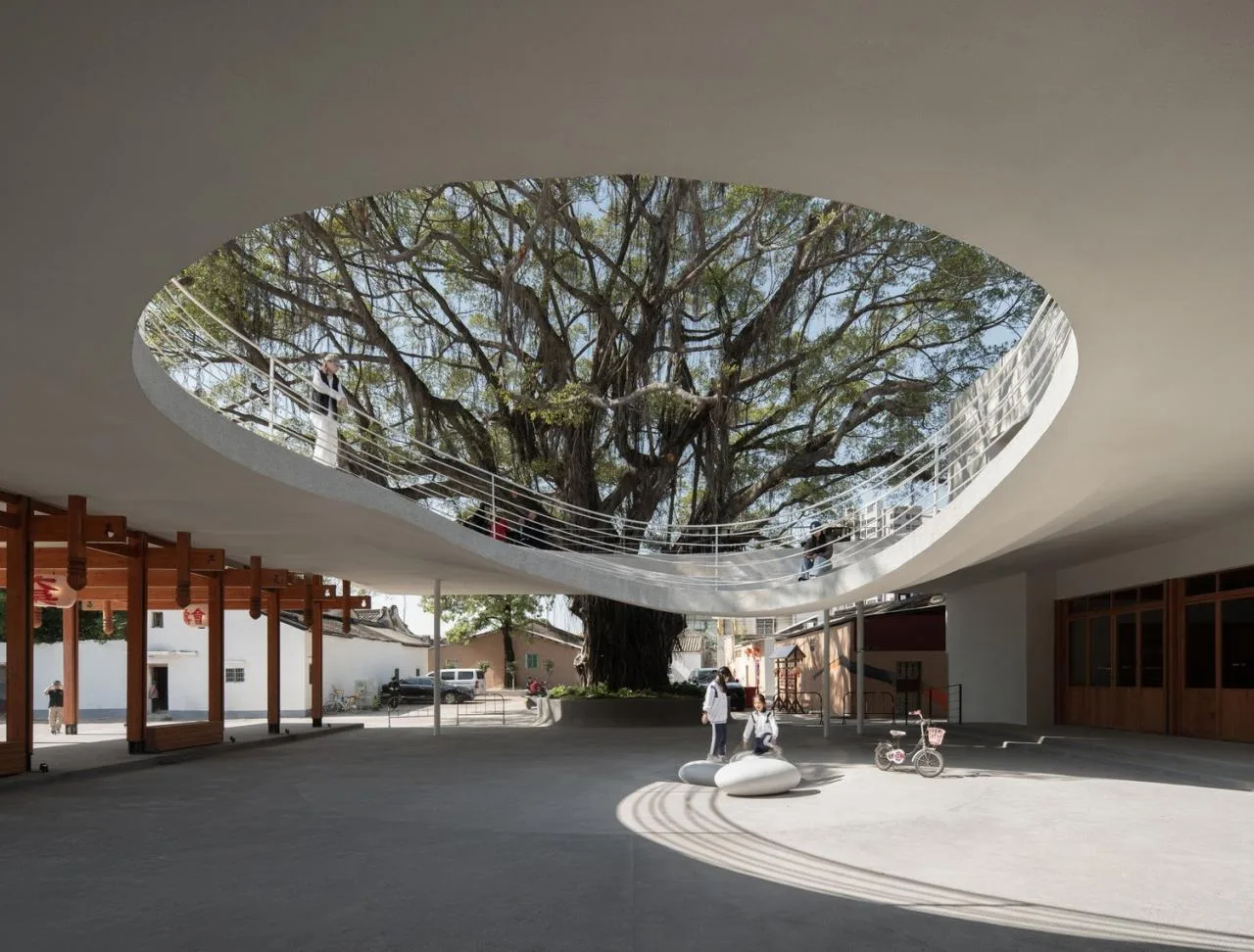
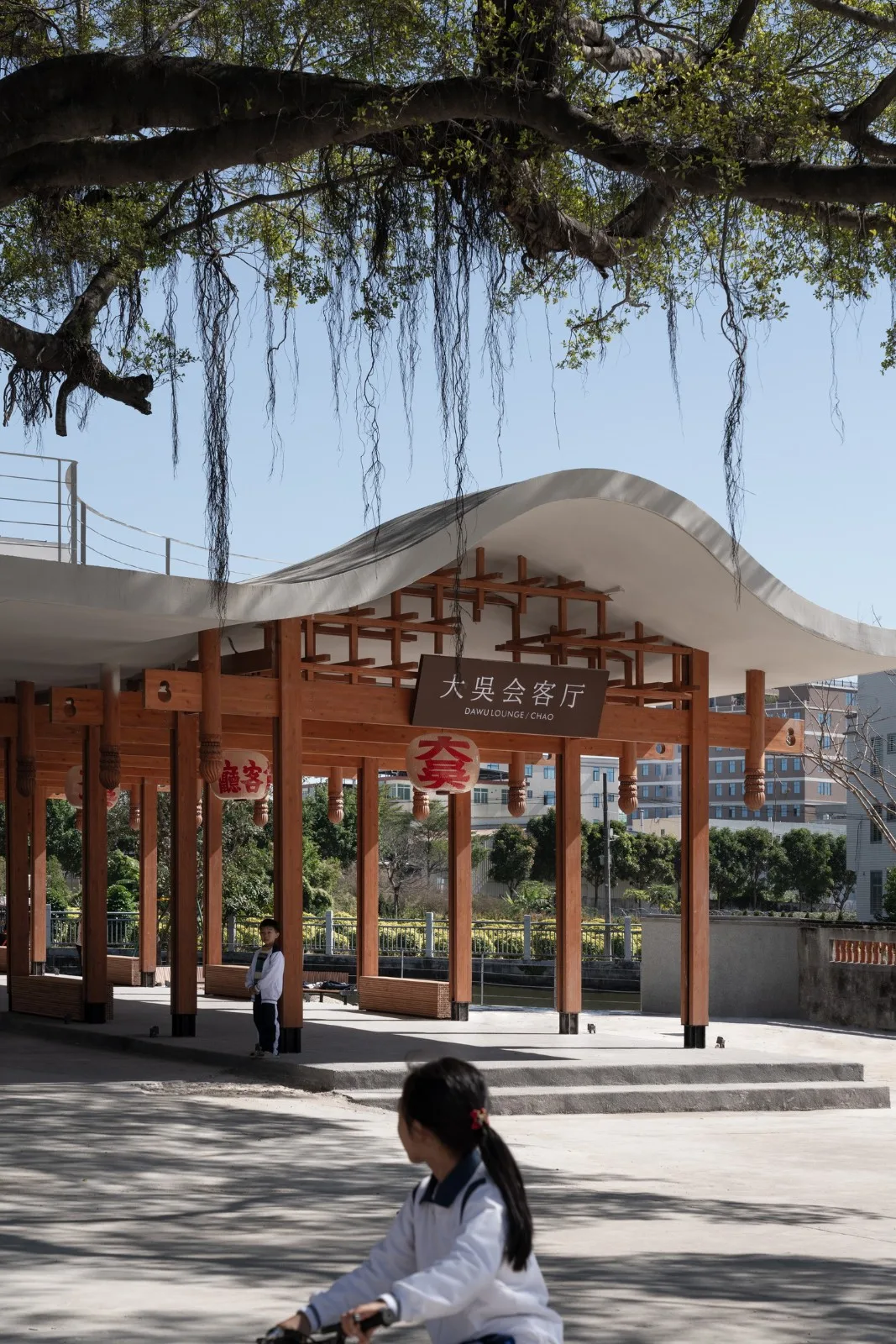
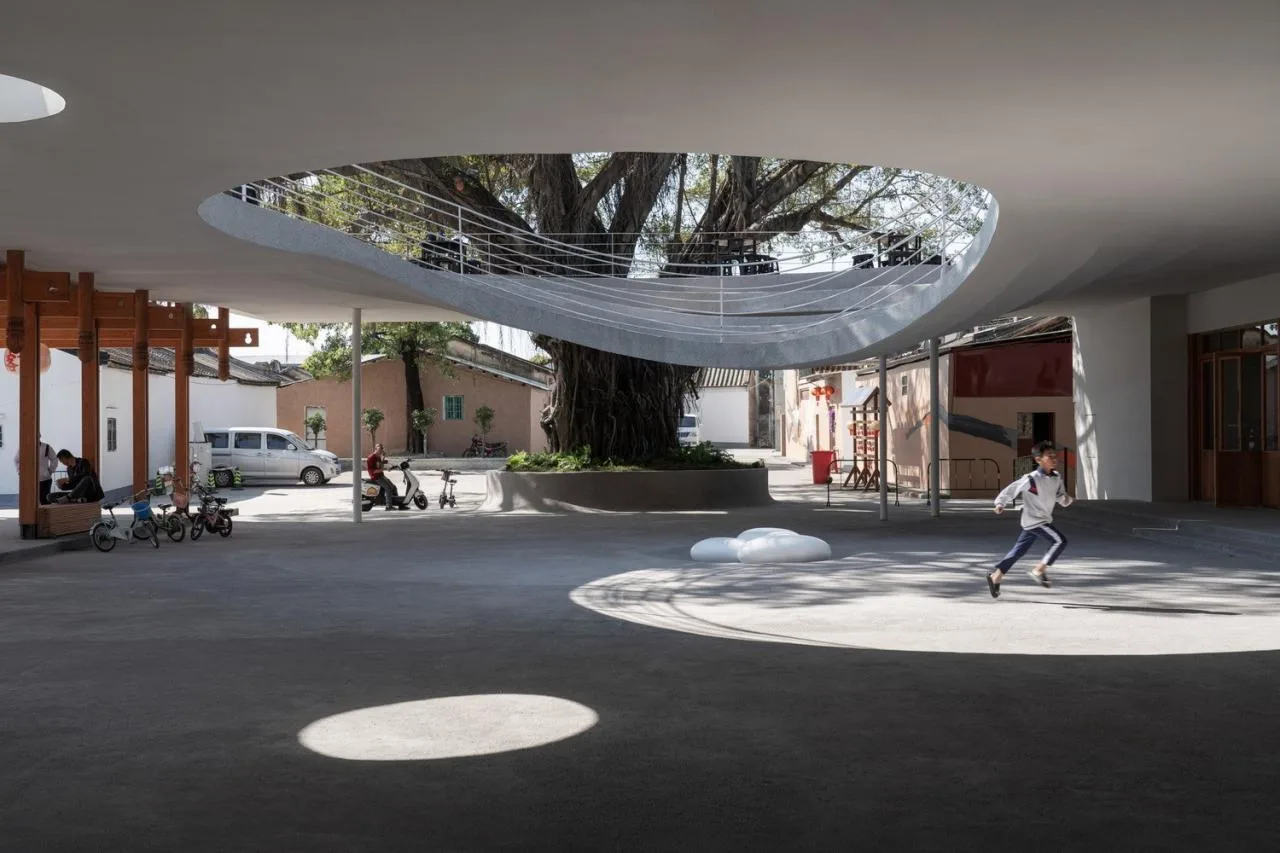
Constructing what appears to be a lightweight yet load-bearing “tree shade” canopy, which allows sunlight to gradually filter into villagers’ daily lives, was a significant challenge. The entire span approaches 20 meters, yet no supporting pillars are visible. Teacher Wang Jin succeeded with a mere 22-centimeter scale, creating a highlight of the project.
“This was undoubtedly the most challenging project I have ever undertaken,” Wang Jin remarked.
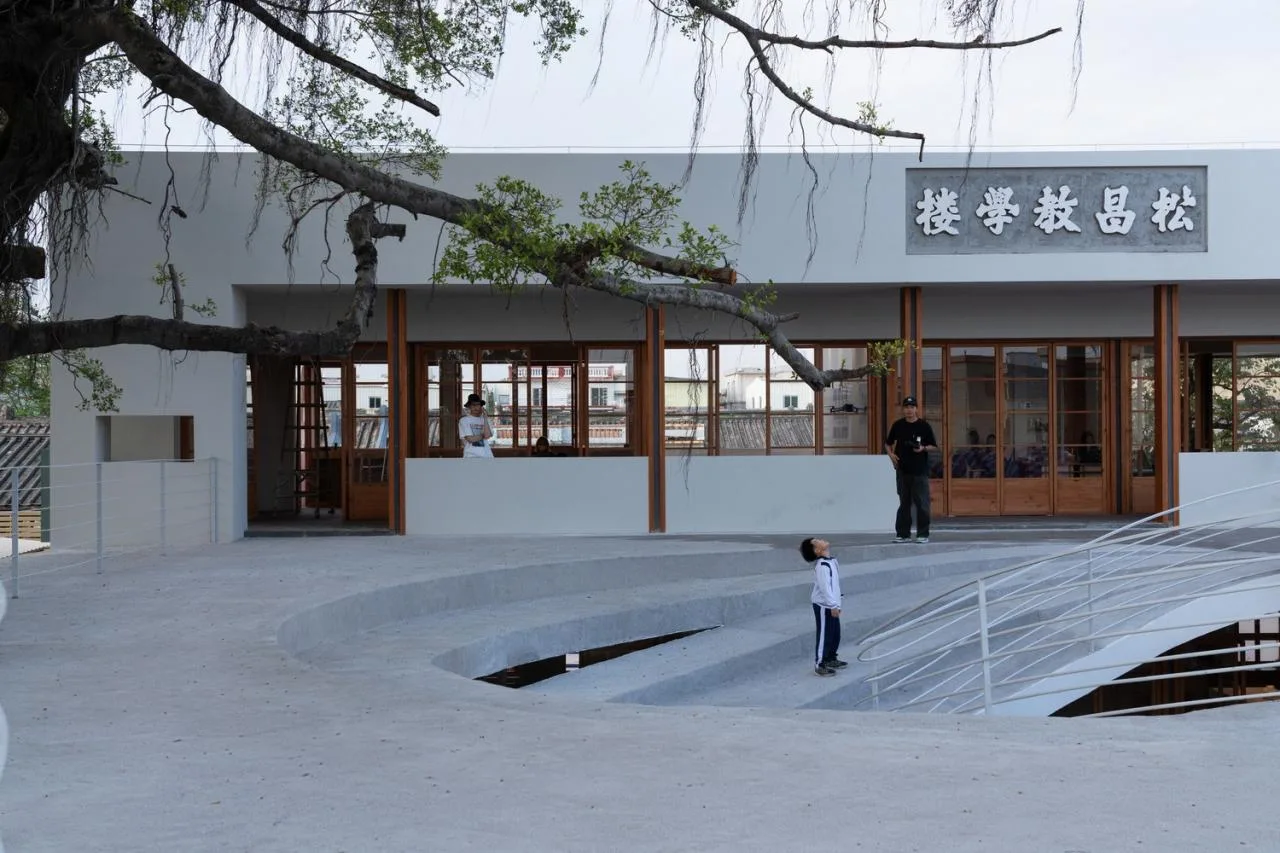
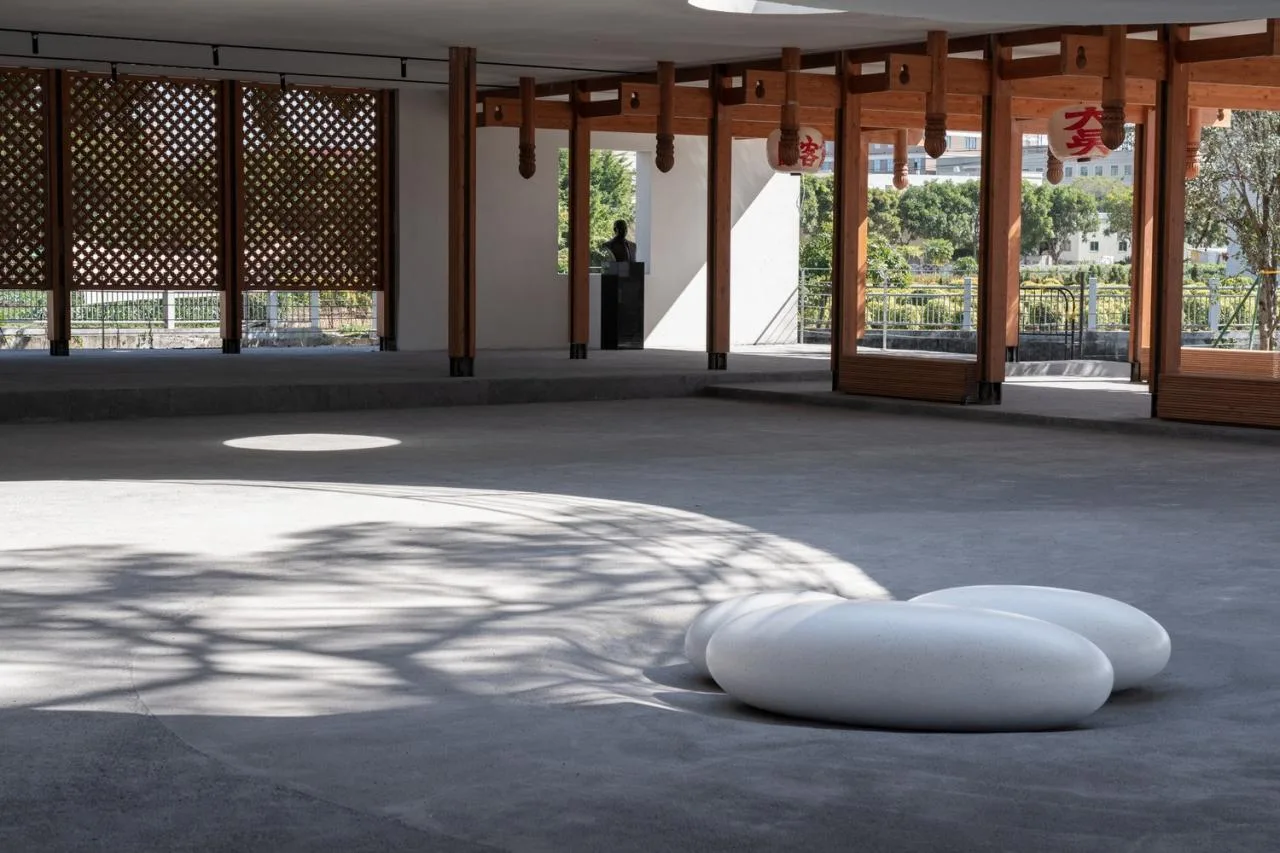
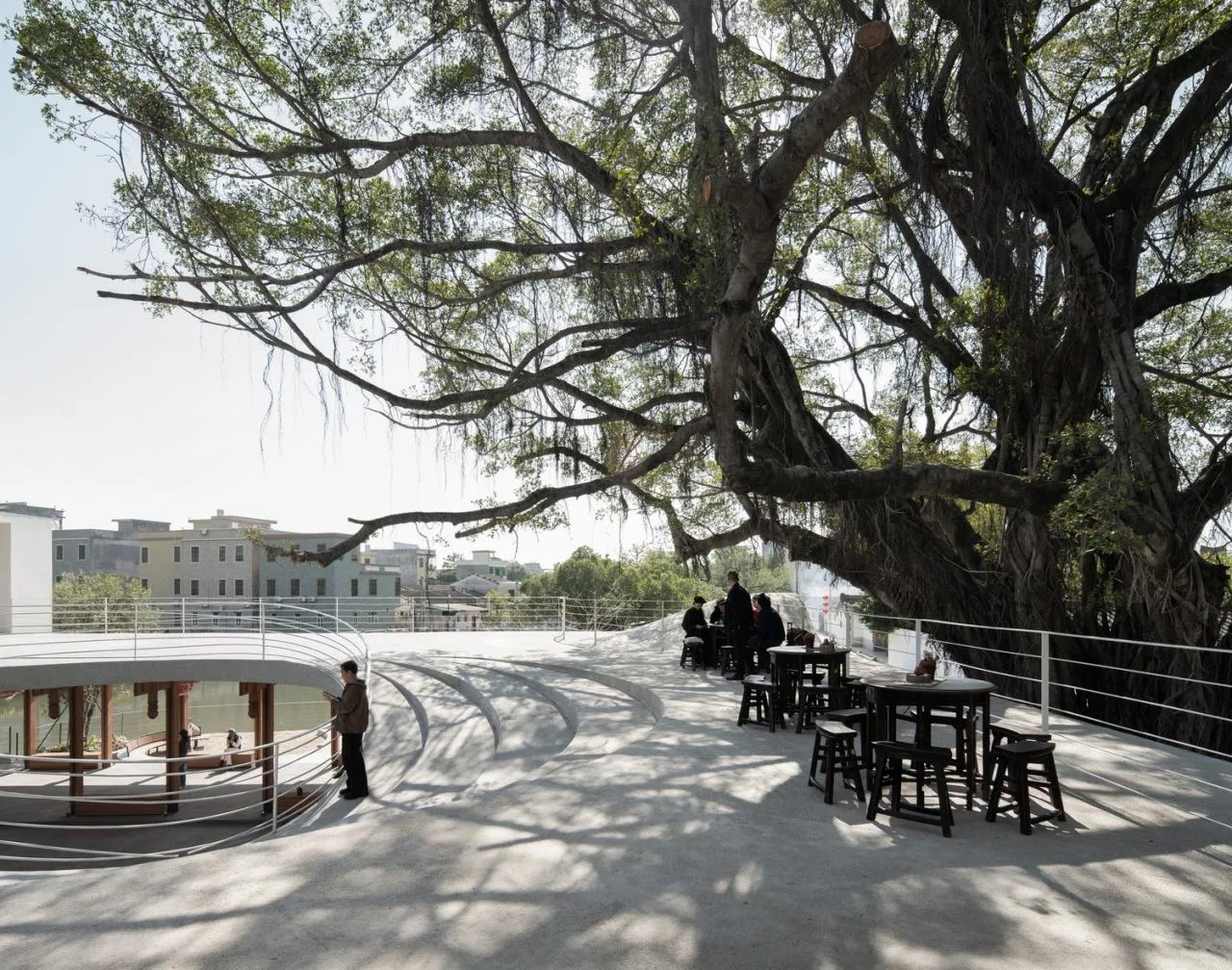
Once sealed off by time, the school building now opens slowly through the vision and ingenuity of architect Gu Yi. Villagers and visitors alike enter from all directions. The first floor includes corridors, a theater, a handicraft workshop, and a shared kitchen. Upstairs are a self-study room, a tea academy, and an intangible cultural heritage experience area.
Paintings reflecting tree shadows and water ripples decorate the space. Children study and play after school; parents gather to chat and enjoy tea; elders pass the time together; local aunties practice and perform informal dramas. During festivals and holidays, the space transforms into a vibrant hub for ancestral worship, lion dances, English song performances, and communal banquets.
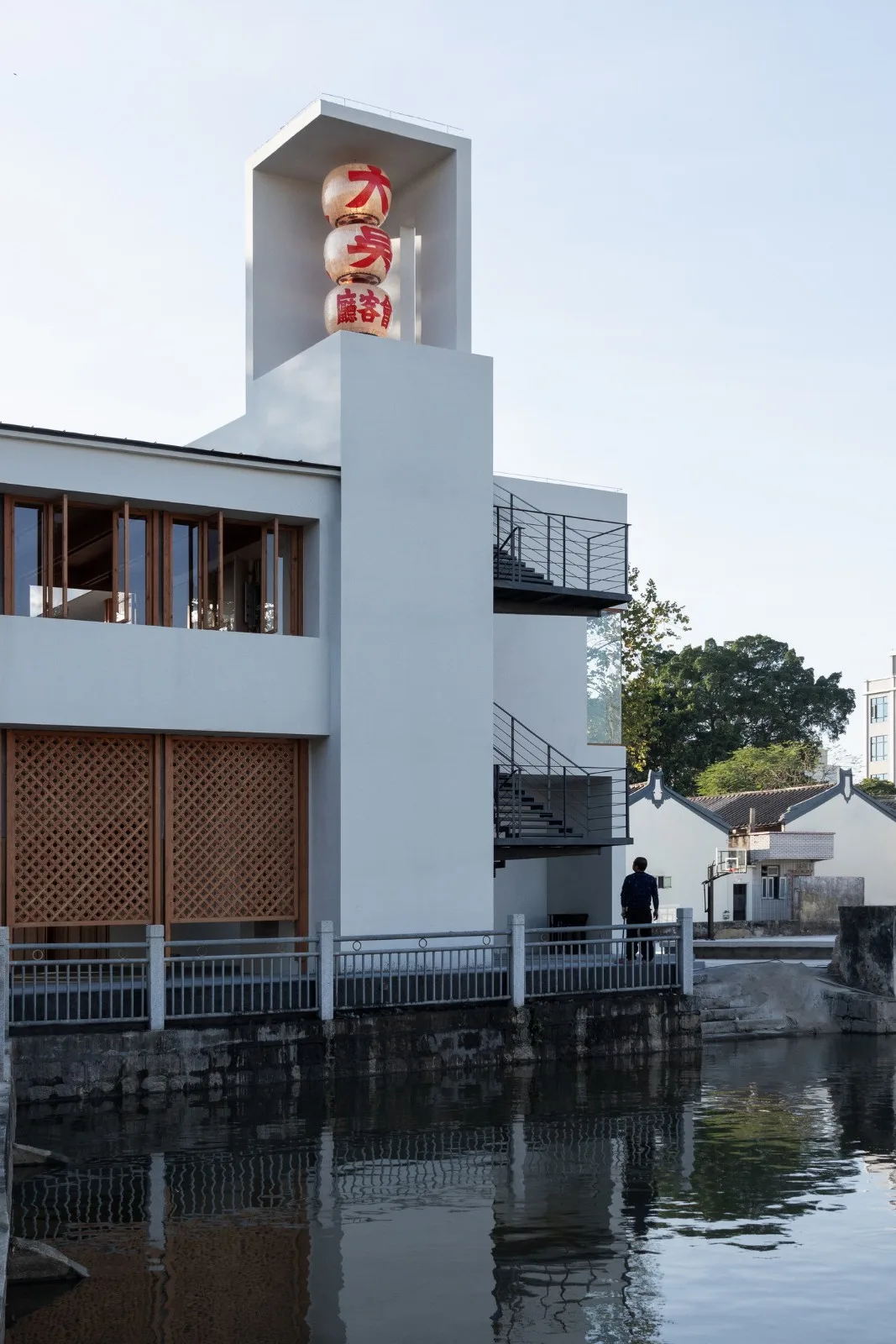
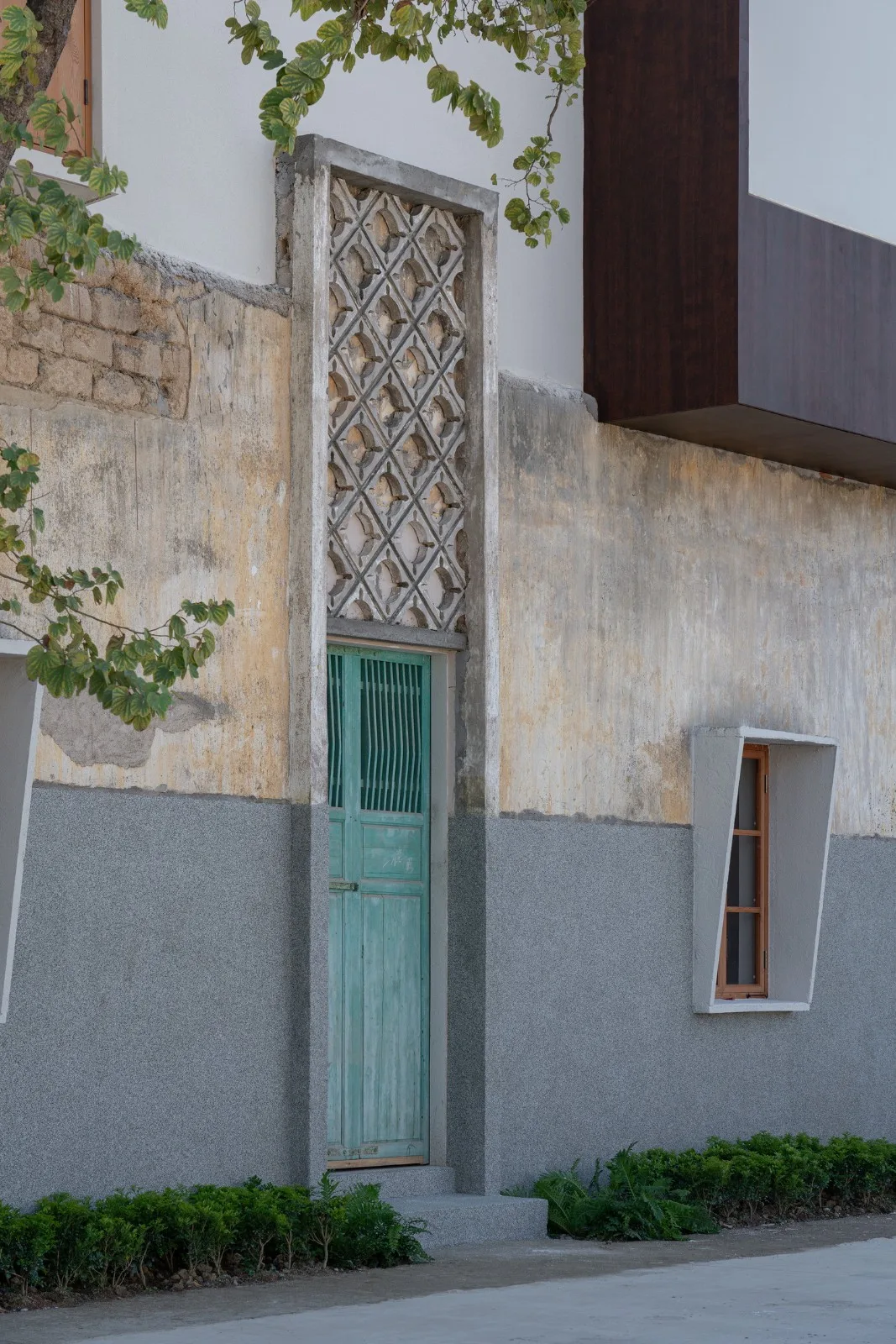
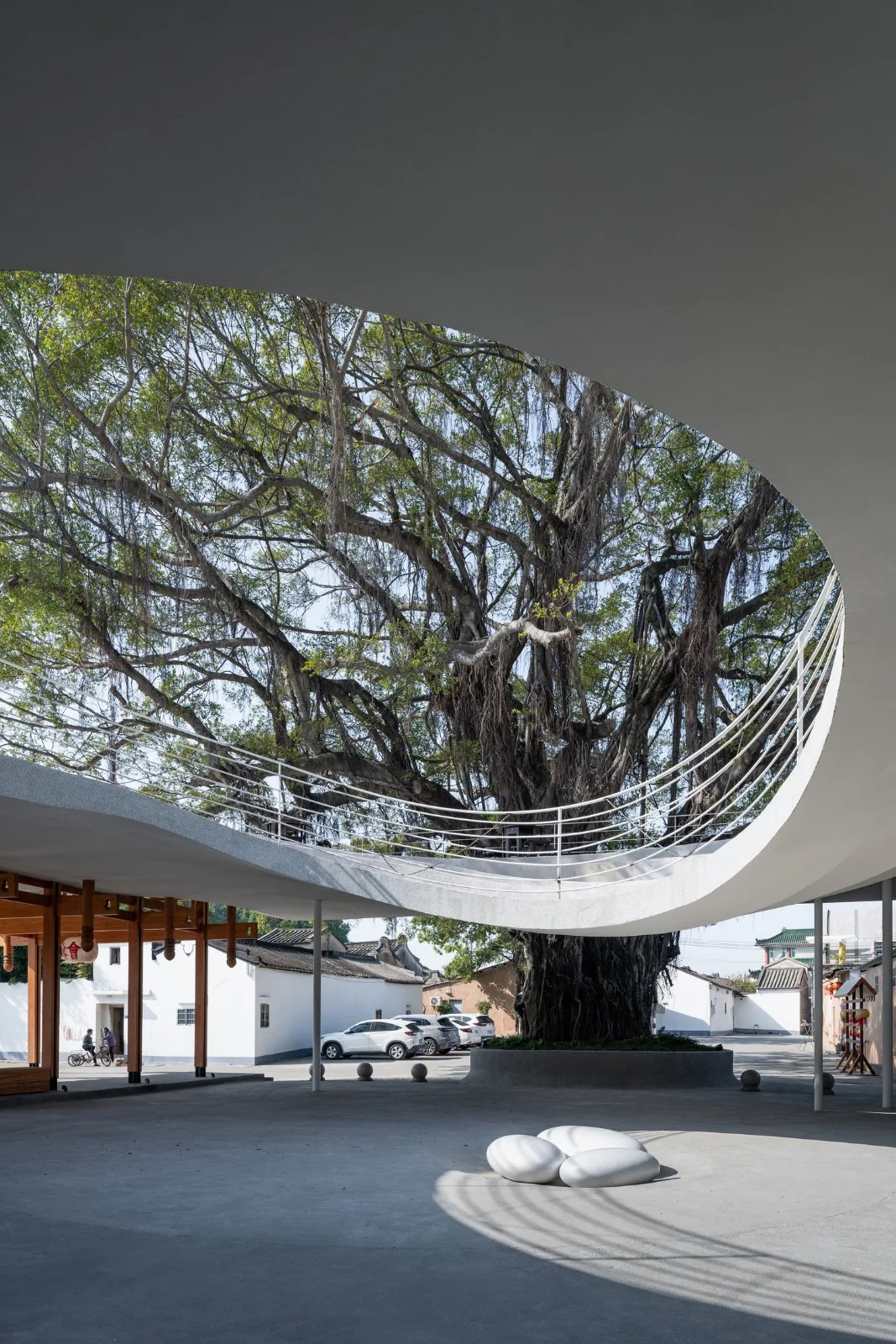
The “Da Wu Hui Living Room” under the banyan tree serves as the reception area for Da Wu Village, where villagers enjoy leisure activities outside their homes. It also functions as the primary ceremonial space for hosting guests.
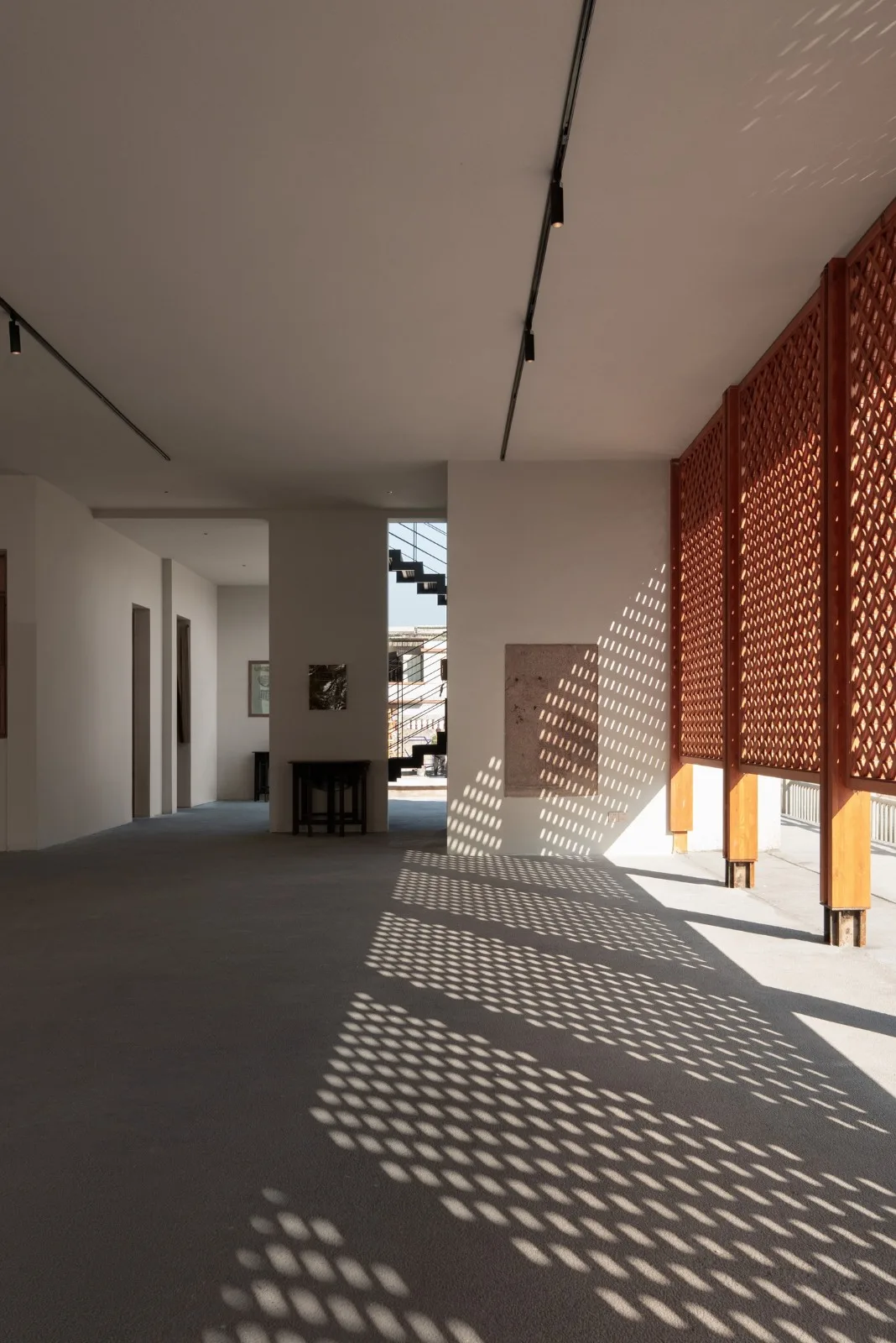
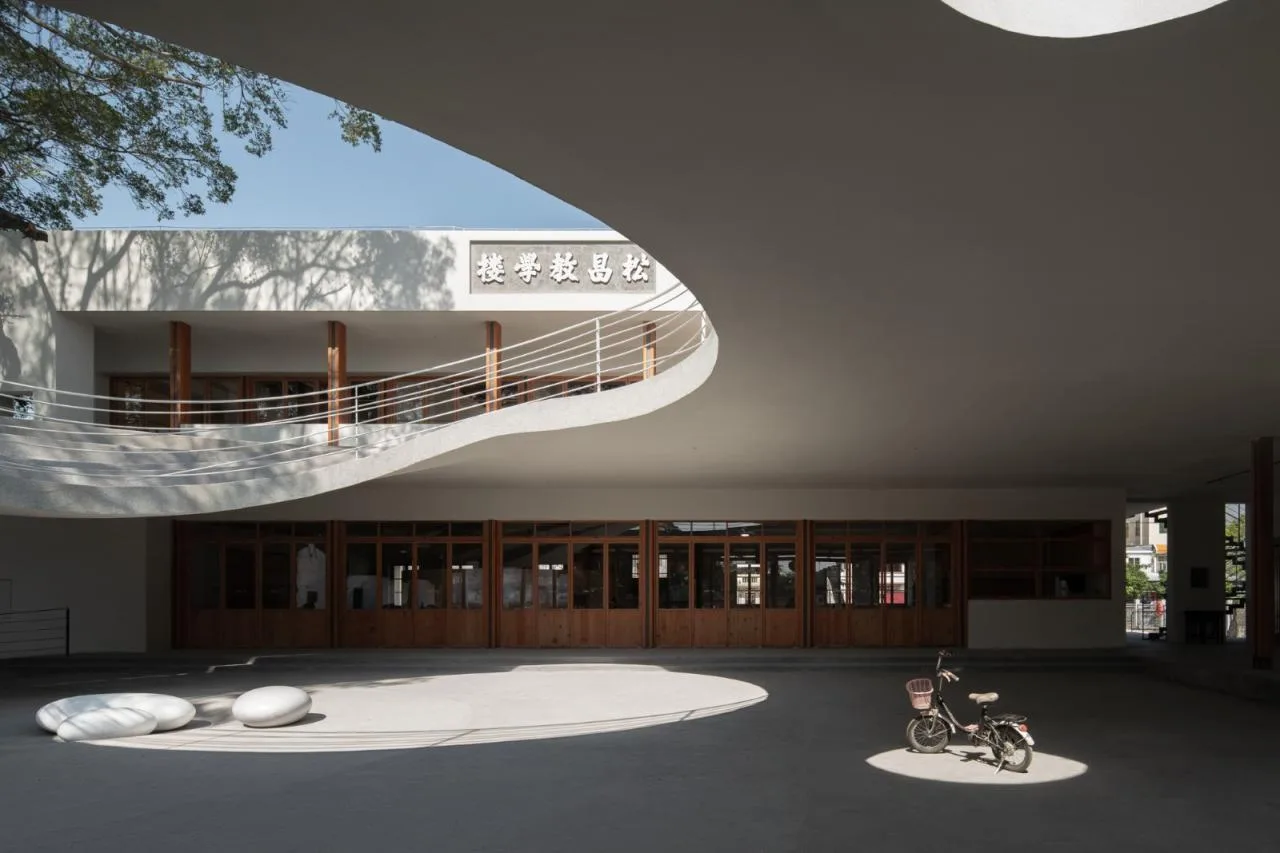
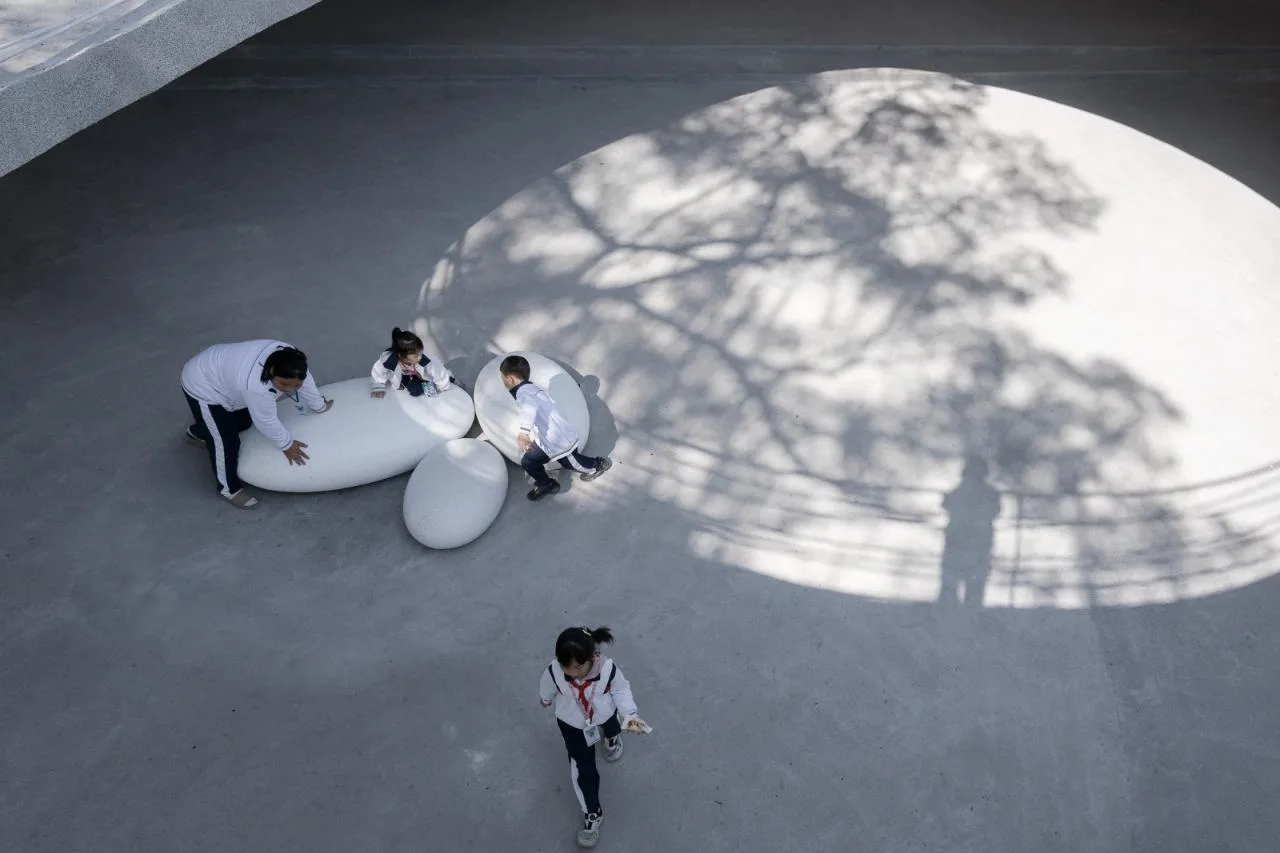
Architect Gu Yi envisions this public space as open, inclusive, and peaceful—free from rigid definitions and adaptable to diverse needs and scenarios. The design intentionally avoids overt complexity, allowing visitors to simply experience the original intention: a place where gentle breezes, sunlight, and even rainwater slowly blend into villagers’ daily lives.
Gu Yi and the ‘Dream Reformer’ team hope the community will cherish this space as much as they cherish the great banyan tree.
Project Drawings
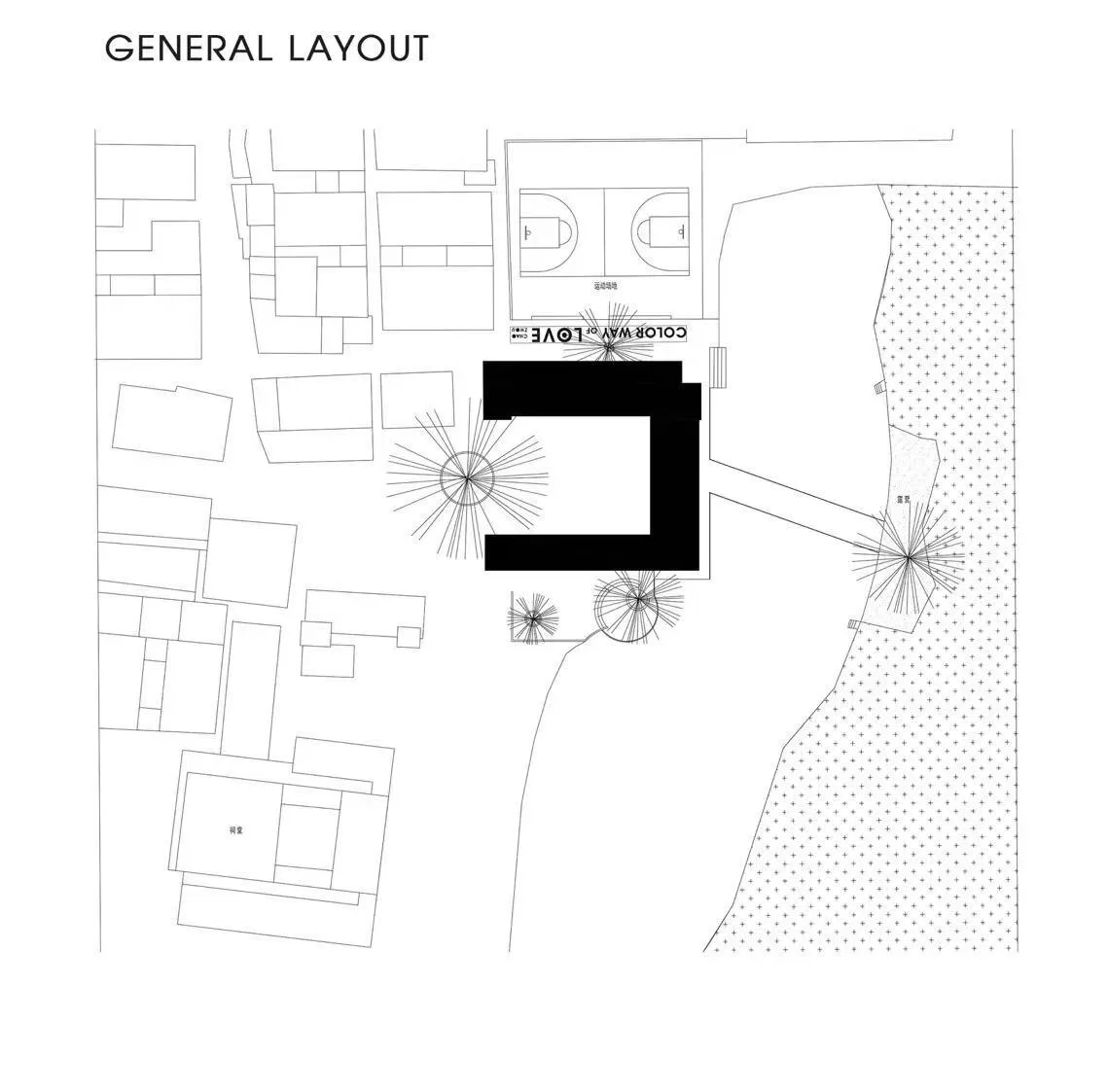
△ Base schematic diagram
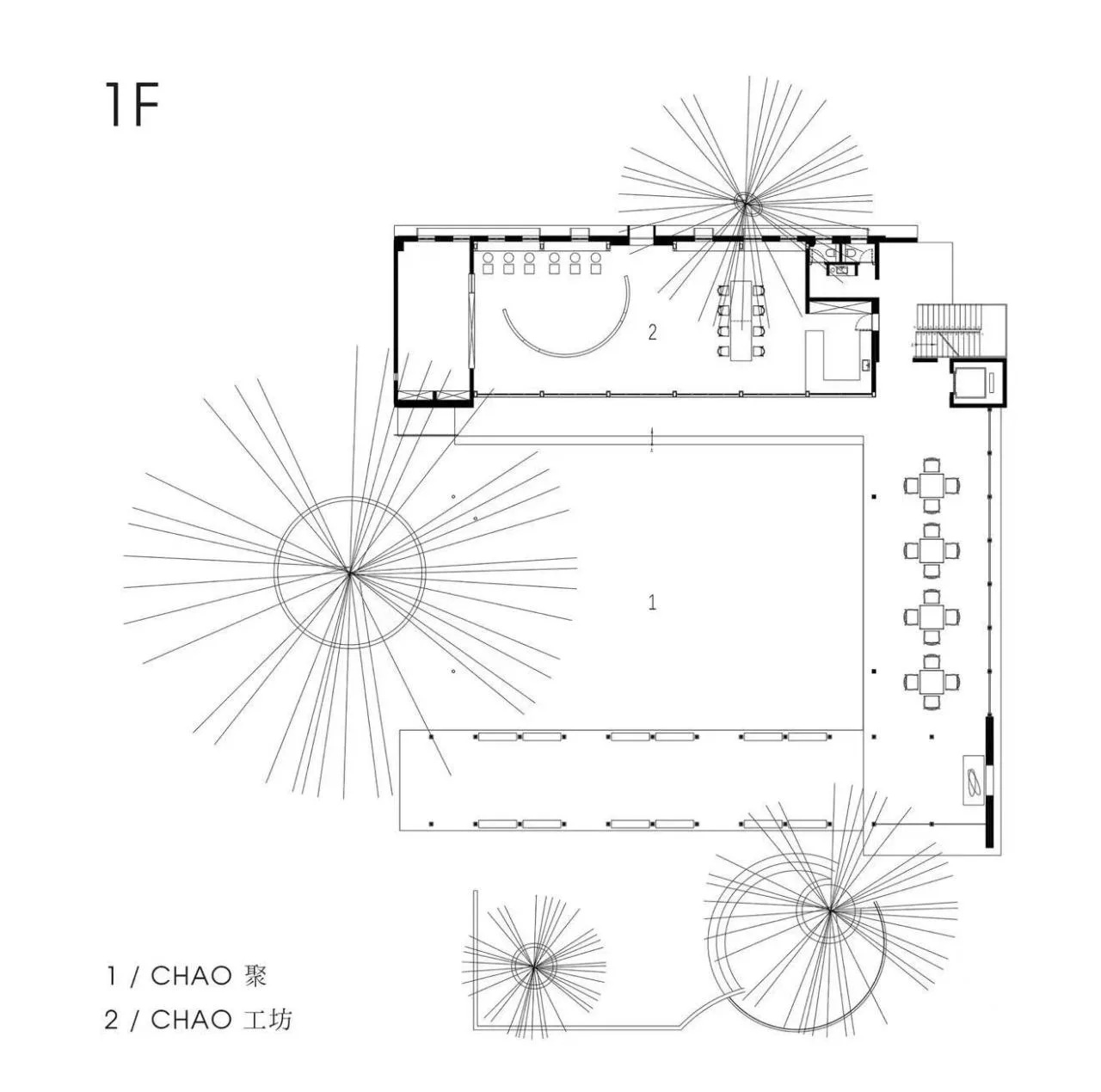
△ First floor plan
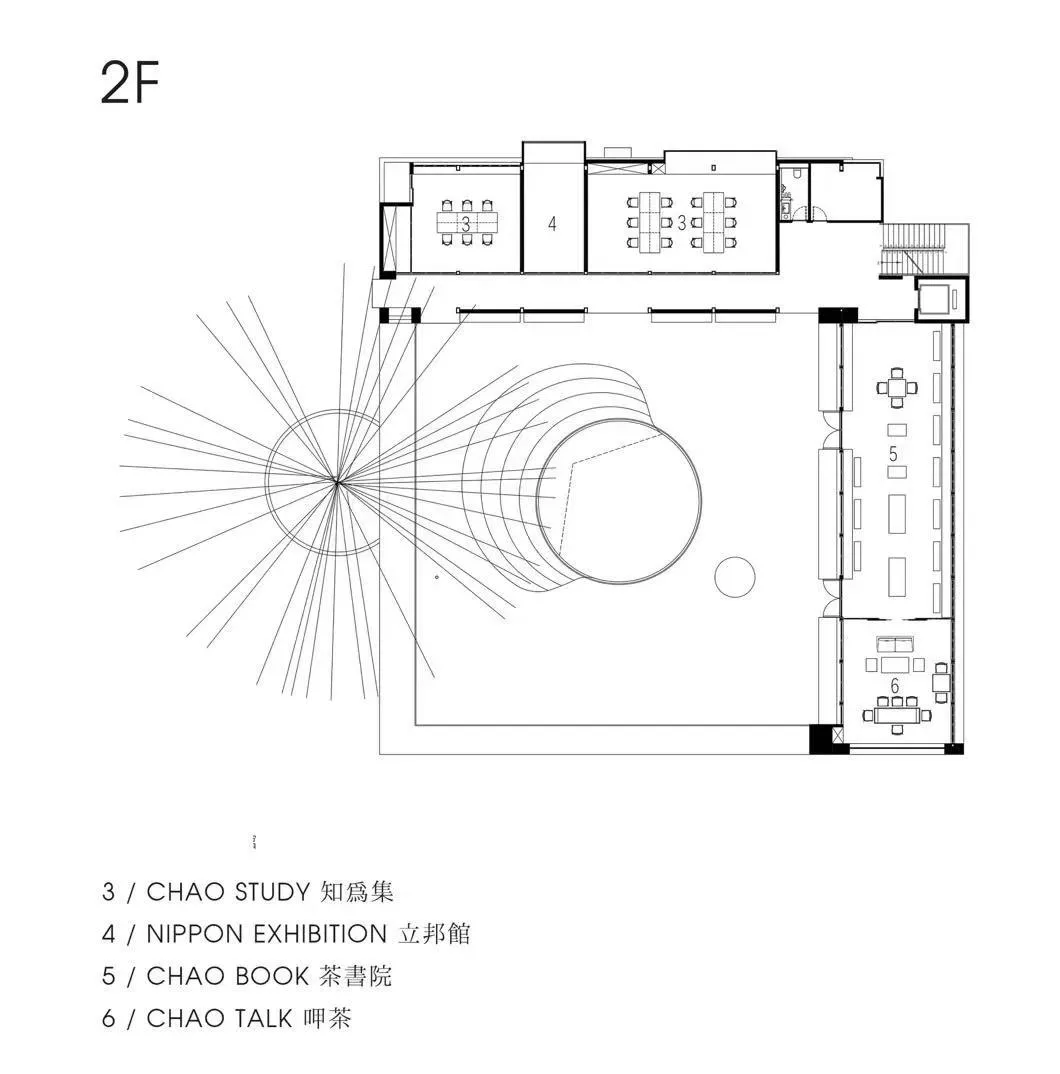
△ Second floor plan
Project Information
Architect: No Building Built
Area: 1500 m²
Project Year: 2024
Photographers: Y³ STUDIO, Liao Qinfang
Manufacturer: Nippon
Lead Designer: Gu Yi
Design Team: Su Meina, Ma Dawei, Ou Shuqin, Shi Lin
Structural Design: Yi Structure Construction
Principal: Nippon Paint, Dawu Village
Location: Chaozhou














Must log in before commenting!
Sign Up