
In the realm of traditional CAD, the emergence of BIM has significantly influenced its role within construction engineering. As BIM adoption grows rapidly across China, an increasing number of companies and individuals are paying attention to this technology. Notably, many college students show a strong interest in BIM, reflecting China’s commitment to advancing and promoting this innovative approach. Today, I will introduce you to the essence of BIM.
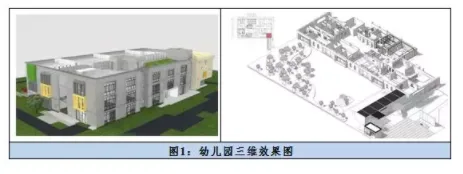
BIM, which stands for Building Information Modeling, is a 3D object-oriented computer-aided design tool. It transforms 2D floor plans into detailed 3D models, incorporating not only the physical attributes of the building but also critical data related to architectural design integration and the entire lifecycle of construction projects. This information can be exchanged and shared throughout the project’s duration, enhancing collaboration and transparency. The 3D models and databases created by BIM improve efficiency and management across design, planning, construction, and operation stages, making BIM a rising trend in the construction industry worldwide.
Essentially, BIM is a computer software model used to simulate both construction processes and facility operations. It involves creating a 3D digital representation that captures both geometric and non-geometric information of engineering entities within a virtual environment. Geometric information includes details like position, size, and shape, while non-geometric data covers quantities, physical properties, and spatial relationships between components.
One of BIM’s key advantages is its ability to overcome the traditional lack of integration between various disciplines. It enhances coordination, communication, and overall consistency across different project interfaces, reducing errors in initial design drawings and ensuring accurate information flow. Effective planning is crucial when integrating all data into a single model. It is advisable to organize the model based on factors such as project type, complexity, or the number of participants involved in collaborative modeling. Defining clear responsibilities for each modeler and establishing separate sessions can prevent conflicts and interference among team members. This approach addresses challenges arising from the use of independent tools for architecture, structural, and mechanical-electrical designs, which often lead to information conflicts and discontinuities.
To conclude, this overview aims to provide a clearer understanding of what BIM entails. For further knowledge and skills related to BIM, be sure to explore our BIM Engineer and Technical Manager courses.














Must log in before commenting!
Sign Up