
China’s highway design has traditionally relied on 2D modeling. However, with rapid economic development, this old approach is increasingly insufficient for meeting modern road design requirements. Many advanced technologies and innovative design concepts cannot be implemented effectively through 2D methods. This is where Building Information Modeling (BIM) comes into play, bringing a new era to highway design. Today, I will discuss the key benefits of using BIM in highway design.
1. Visual Modeling
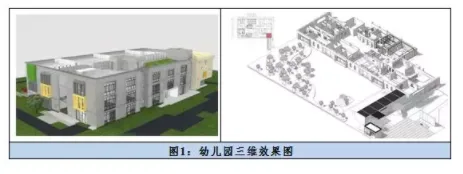
Traditional engineering designs rely on 2D drawings that use points, lines, and surfaces combined with various symbols. These representations are often not intuitive and hinder effective communication. BIM software, on the other hand, integrates various data related to highway design—including road details, pavement information, and surrounding environmental factors—into a comprehensive visual 3D information model.
Moreover, elements that are difficult to depict in 2D drawings, such as lanes, sidewalks, ditches, and complex lane components, can be clearly represented within the model. This provides project participants with a highly intuitive visualization. The entire road model can be easily adjusted through interactive modifications or by changing input parameters that define the road cross-section. Since construction drawings and annotations are always updated automatically, designers can focus more on optimizing their designs rather than manual updates.
2. Accurate Calculation and Analysis of Quantities
BIM models contain detailed data about roads and their surrounding facilities and environments. This allows for faster and more precise calculations of engineering quantities. Using composite volume algorithms or average section algorithms, engineers can accurately calculate earthwork volumes between existing surfaces and design surfaces.
Additionally, BIM can automatically generate earthwork allocation charts, analyze optimal fill and excavation distances, identify locations for soil deficit pits and spoil heaps, and extract quantities of construction materials from the road model. These capabilities enable timely project cost analysis and better resource management.
3. Automatic Generation of Construction Drawings
Once a BIM model is established and annotations for cross-sectional, longitudinal, and earthwork drawings are completed, construction drawings can be generated directly from the model data. These drawings use the same legend system as the BIM model, ensuring consistency.
Any changes made to the BIM model are quickly reflected in updated construction drawings, maintaining accuracy and saving time. The software also automates drawing layout and map line arrangement according to route directions, producing plan and profile drawings efficiently. The map book feature organizes all project drawings and generates key maps and legends for the complete drawing set.
4. Multi-Disciplinary Collaborative Work
Importing BIM into the workflow breaks away from the traditional siloed approach where different parties work independently. Instead, all project participants collaborate on a unified data platform that enables data sharing and information integration. This significantly enhances communication and coordination among teams.
For example, road engineers can directly share profiles, routes, and surface data with structural engineers who are responsible for designing bridges, box culverts, and other traffic structures, streamlining the design process across disciplines.
5. Supporting Sustainable Development
BIM allows designers to simulate, visualize, and analyze design outcomes more effectively. In recent years, China’s emphasis on sustainable development in construction projects has opened up new opportunities for BIM to demonstrate its strengths.
Using BIM, designers can analyze the surrounding environment of road projects, assess construction materials, simulate water drainage in rainy and snowy conditions, and enhance the road’s durability. Green building elements such as solar-powered streetlights and wind-powered piles can also be incorporated into the road model, improving the sustainability of highway projects.
In summary, these are the major advantages of applying BIM in highway design. I hope this overview provides you with a fresh perspective and deeper understanding of BIM’s potential. Although the use of BIM in China is still in its early stages, with time and experience, BIM will undoubtedly become a powerful tool that drives the industrialization of construction across the country.














Must log in before commenting!
Sign Up