
Through my work, I encountered BIM technology for the first time. Initially, I believed BIM was simply about converting traditional CAD drawings into 3D models. However, my experience on actual projects revealed that BIM extends far beyond just modeling. Let me share some key benefits of BIM based on my practical experience.
Benefit 1: Enhanced Design Visualization
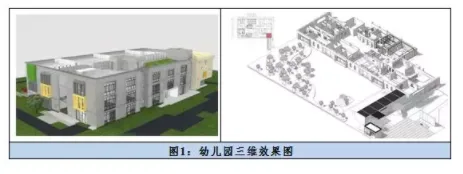
In traditional projects, designers often struggle with large and complex structures due to limited personal capacity and spatial imagination. Exploring the overall project model was time-consuming, labor-intensive, and prone to errors. With BIM, however, 3D visualization models can be created using BIM software, allowing everyone to see the entire building project clearly at a glance.
Users can freely rotate and zoom in on the BIM model to examine the building’s exterior, interior details, and every angle in 360 degrees without blind spots. This is especially valuable for showcasing internal components. Unlike traditional CAD, where such details require multiple drawings like sections and solids, BIM lets you simply move the mouse to inspect them.
For example, in one project, there was a uniquely shaped soft film ceiling. Two-dimensional drawings and renderings failed to capture its authenticity and were difficult to use for construction guidance. The BIM model simplified this process significantly. By selecting this component, one could observe it from every direction—above, below, left, and right—providing clear guidance during construction.
Additionally, owners benefit by directly viewing the project’s final appearance through BIM visualization. This enables them to suggest changes early on for any unreasonable or unsatisfactory areas, reducing costly design revisions later and lowering overall design expenses. BIM also supports effective construction scheduling, minimizes rework, controls costs, and promotes green, environmentally friendly, and low-carbon construction practices.
Benefit 2: Coordination and Consistency
In my opinion, coordination is one of the biggest advantages BIM has over traditional CAD. In CAD workflows, making changes after identifying errors is cumbersome. Designers must manually modify the problematic components across multiple drawings and consider their impact on other disciplines and components, often leading to extensive redrawing.
BIM solves this issue through its interconnected model structure. When an unreasonable component is modified, all related components and drawings update automatically, maintaining consistency throughout the model. This greatly boosts work efficiency and reduces errors.
From a cost estimation perspective, BIM includes all project quantities within the model’s data. As the model evolves, quantities update in real time without the need for recalculation. This not only saves time on rework but also improves budgeting accuracy and reduces costs.
Benefit 3: Clash Detection
Clash detection is arguably the most widely used BIM function in China today. It addresses conflicts between different disciplines caused by insufficient collaboration, hidden clashes due to spatial limitations, and overlooked collisions during drawing reviews.
By integrating various discipline models and running clash detection in BIM software, both soft clashes and hard clashes can be identified and resolved. BIM supports static clash detection and dynamic detection as well. For instance, if two pipes intersect but are never present simultaneously, the system recognizes that no actual conflict exists.
This capability not only improves early design efficiency but also minimizes inter-disciplinary conflicts during construction, significantly shortening project timelines, reducing costs, and increasing profitability.
In summary, these are some of the key benefits of BIM in practical project applications that I’ve experienced. As BIM adoption deepens across China, additional advantages such as schedule management and collaborative workflows are emerging, though they are beyond the scope of this discussion. I hope this overview helps you better appreciate the real-world value of BIM technology.














Must log in before commenting!
Sign Up