
BIM models serve as a platform to showcase BIM theory and technology. They enable all project stakeholders to communicate, collaborate, and make informed decisions efficiently. By creating relevant BIM models, different disciplines within a project can present the overall design, facilitating seamless coordination and construction across various stages and specialties. Today, let’s explore the value of BIM models.
Value 1: More Comprehensive Information
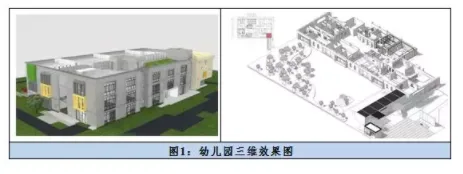
Traditional CAD drawings primarily focus on geometric information such as points, lines, and surfaces, with components represented by symbols. In contrast, BIM models bring building components to life in a 3D space. Thanks to parameterization, BIM incorporates detailed information like size, quantity, and cost directly into the model. Beyond geometry, BIM models also include data on energy consumption, economic costs, and project schedules. This wealth of information allows project teams to make faster and more effective decisions.
Value 2: Reduced Workload and Errors
Working with traditional CAD drawings can be challenging due to limited visual perspectives and dimensions. Hidden details often require strong spatial imagination, increasing the risk of errors and omissions. When design changes occur, two-dimensional drawings lack automatic correlation, forcing designers to update each affected drawing manually—a time-consuming and inefficient process. BIM models, however, offer automatic correlation features, meaning changes in one location automatically update related elements throughout the model. This reduces redundant work, improves verification quality, and allows the project team to focus more on critical issues, enhancing overall project quality.
Value 3: Improved Accuracy of Modifications
Modifying designs in CAD can be tedious and prone to mistakes due to limited spatial awareness and the inability to foresee the full impact of changes. BIM simplifies this process by requiring corrections only to the affected components, while related elements are adjusted automatically. For example, when a beam is repositioned, associated doors and windows update accordingly. This automation saves designers significant time and effort, enabling faster and higher-quality deliverables. The information model’s automatic coordination and update capabilities effectively eliminate coordination errors and enhance the overall quality of the project.














Must log in before commenting!
Sign Up