
As is widely known, Building Information Modeling (BIM) can be applied at various stages of construction engineering and throughout the entire project lifecycle. By integrating, analyzing, and utilizing data from multiple disciplines and processes, BIM significantly reduces waste and delays common in traditional construction models. This fosters effective collaboration among all parties involved. But how exactly does BIM facilitate communication between these stakeholders? Today, we will explore this topic in detail.
1. Establishing a BIM-based system terminal and collaborative platform effectively connects owners, designers, and construction teams, enabling dynamic, real-time communication. Throughout the project’s lifecycle, all parties can engage in timely, efficient exchanges via this platform. Moreover, the rich, accurate data embedded in BIM models (at a 1:1 scale) provides non-architectural professionals—such as owners—with intuitive communication tools and a unified platform, greatly enhancing communication efficiency.
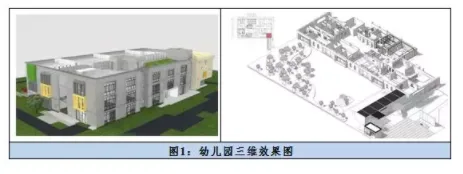
2. Designers can incorporate essential project data into the 3D visualization model, allowing owners to understand not only the project’s external appearance but also internal design details, cost status, and quality. Through features like clash detection, precise budgeting, and energy consumption analysis, owners are better equipped to plan capital investments and assess whether initial requirements are being fulfilled.
3. BIM’s visualization capabilities enable a “what you see is what you get” (WYSIWYG) experience, greatly improving real-time tracking of project progress, costs, and other critical aspects for owners and supervisory units. Additionally, this supports early-stage statistical analysis of physical quantities, which aids in cost control and quality monitoring.
4. By developing a BIM model during the design phase and integrating detailed information about building components, the model can provide comprehensive descriptions of exterior and interior elements. This meets the diverse needs of owners, constructors, and other stakeholders, thereby enhancing communication effectiveness. Owners can examine the model from any angle—viewing the façade, curtain walls, and structural components. Even detailed elements such as the location, specifications, and colors of valves, switches, and sockets are represented. Furthermore, owners and construction personnel can submit modification requests at any time via online or mobile devices.
5. Beyond creating a WYSIWYG model, BIM technology allows designers and owners to develop improved building solutions. These include enhanced structural analysis, energy-saving designs, smart building features, safety improvements, environmental protection, and sustainable practices. Concurrently, construction teams can offer better services related to scheduling, cost management, and on-site safety.
6. During construction, the BIM model’s scalability allows for the integration of additional dimensions such as 4D (time) and 5D (cost). This enables dynamic simulations of construction progress, cost control, site layout, and material ratios for real-time project management. Using a BIM-based collaborative platform, this information can be exported as reports and shared seamlessly. The submission, review, approval, and utilization of documents, drawings, and videos are all managed online, streamlining workflows.
7. In the operation and maintenance phase, a wealth of project-related information—such as technical specifications of components and equipment, supplier details, and status updates—is entered into the information model during design and construction. This data can be continuously updated throughout the project’s lifecycle. Efficient filtering and retrieval of this information provide significant convenience and accuracy for ongoing operations.
Through this explanation, it should now be clear how BIM facilitates communication among all parties involved in a construction project. Essentially, BIM serves as a comprehensive database containing all building information. Both geometric and non-geometric data are integrated through BIM tools to support the project’s needs. Thus, effectively leveraging this data is key to enhancing project quality.














Must log in before commenting!
Sign Up