
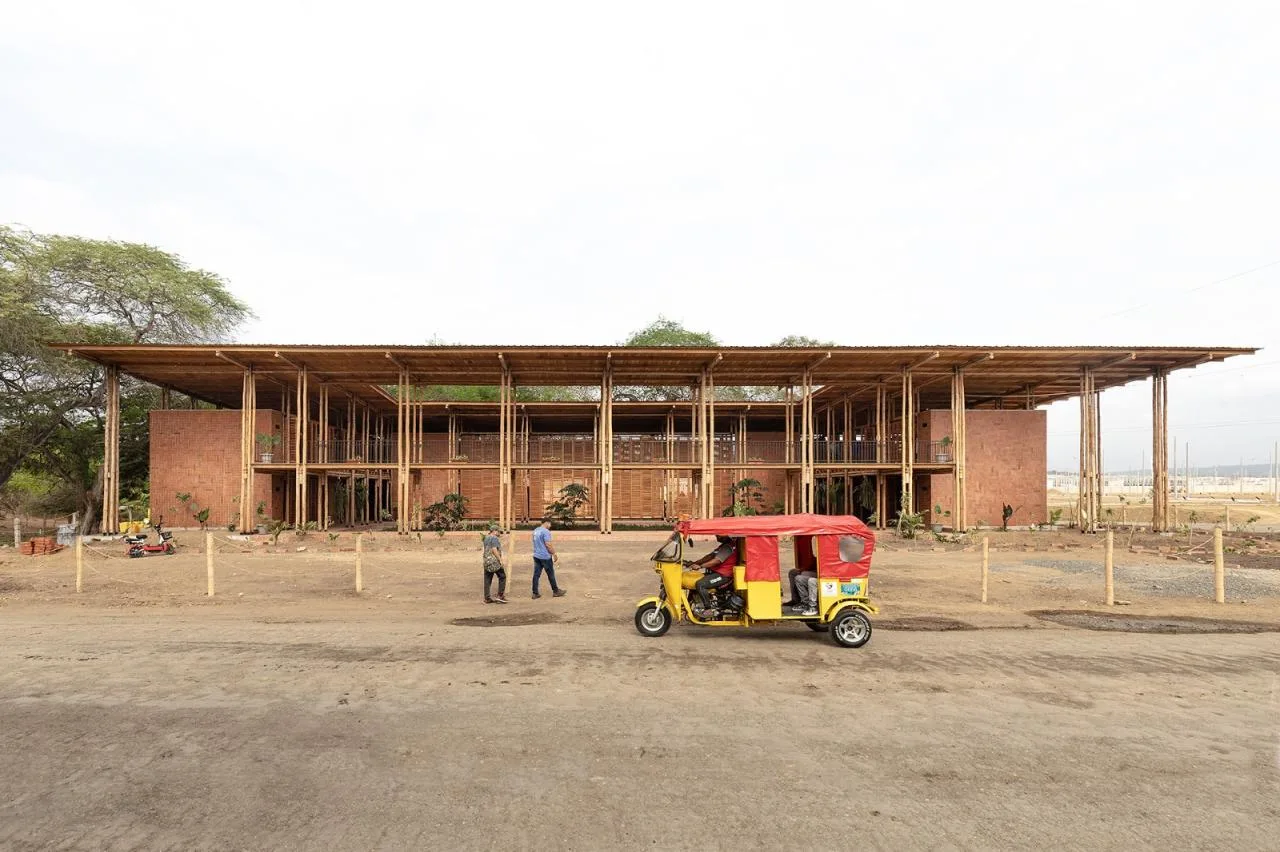
Architecture serves as a powerful tool to unite, connect, and support female textile workers.
The Las Tejedoras district is situated on the outskirts of Chongón, Ecuador, home to nearly 4,900 residents. The majority are women who belong to the economically inactive group, facing limited opportunities to enter the workforce.
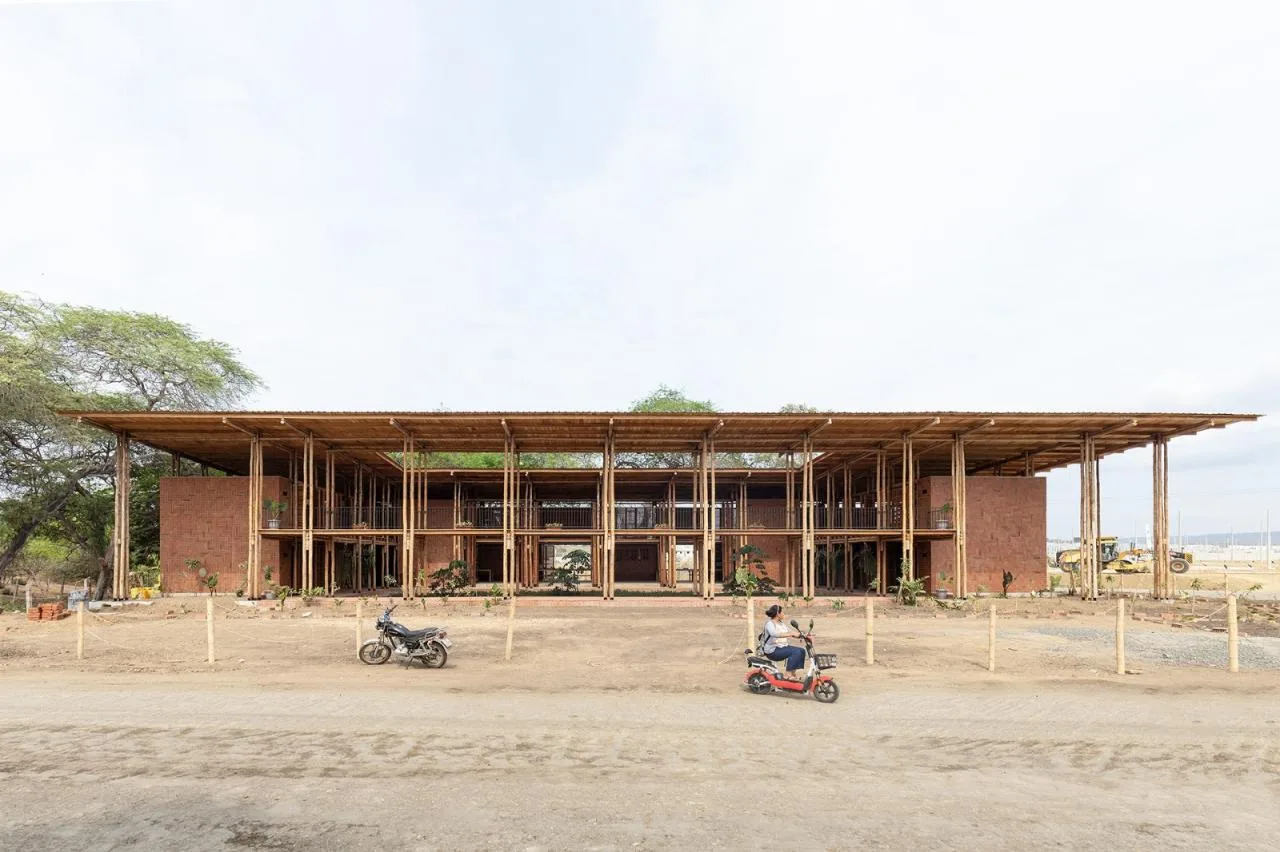
Since 2009, the Young Living Foundation has been dedicated to fostering community potential through education and entrepreneurship. They established the Young Living Academy, which serves approximately 150 low-income children, whose mothers are also participants in the local production workshop.
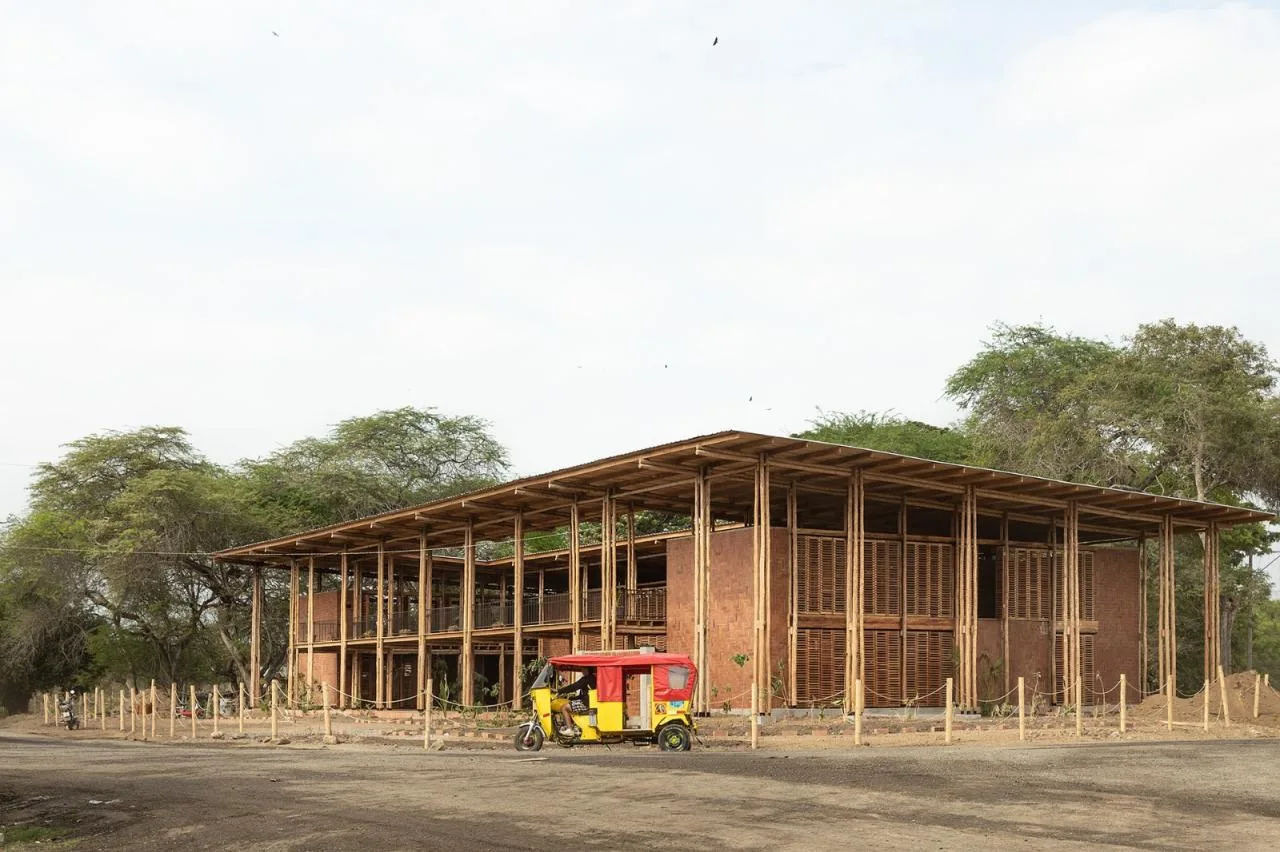
Additionally, the foundation created the Organization of Bromelias Artisan Women, focusing on promoting local development by crafting fabrics from natural materials. As the group grew over time, the need for a new, larger space became evident.
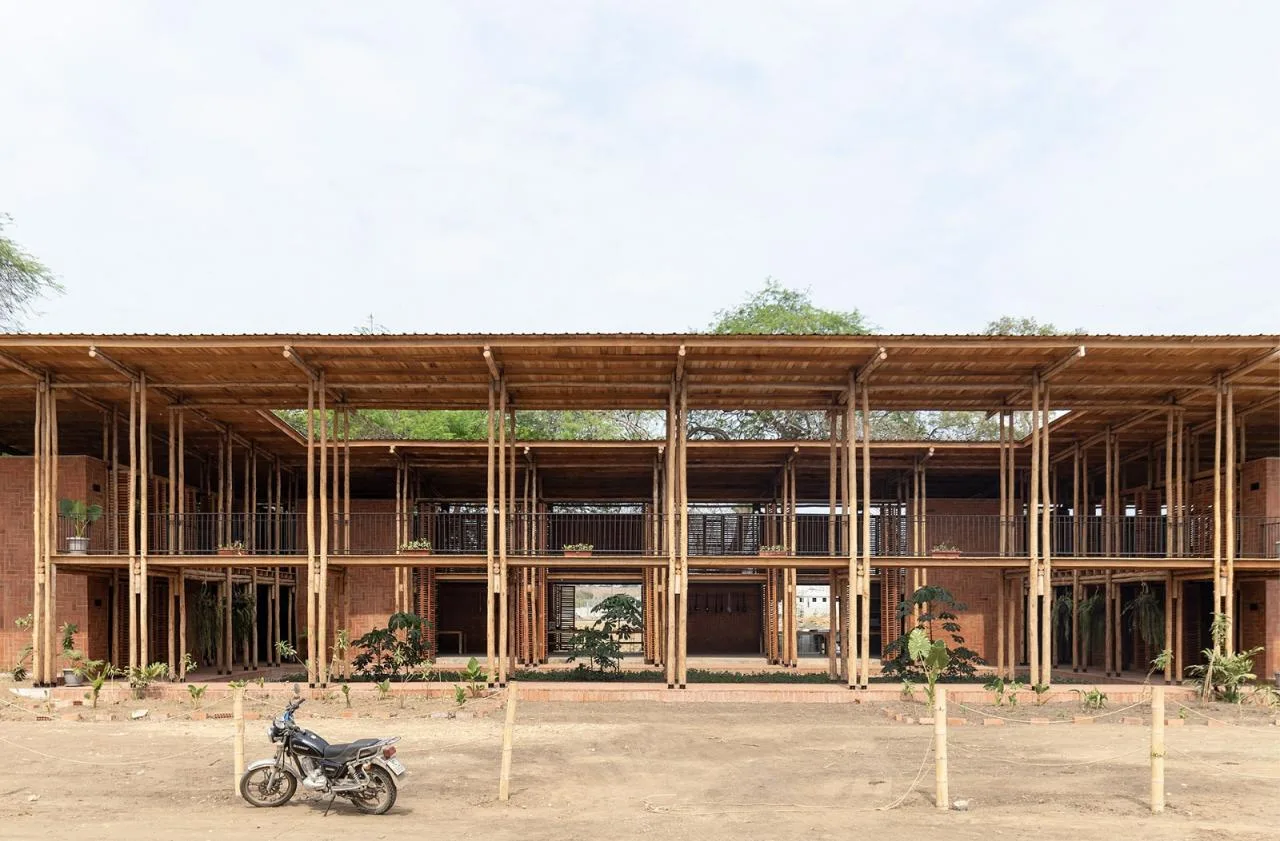
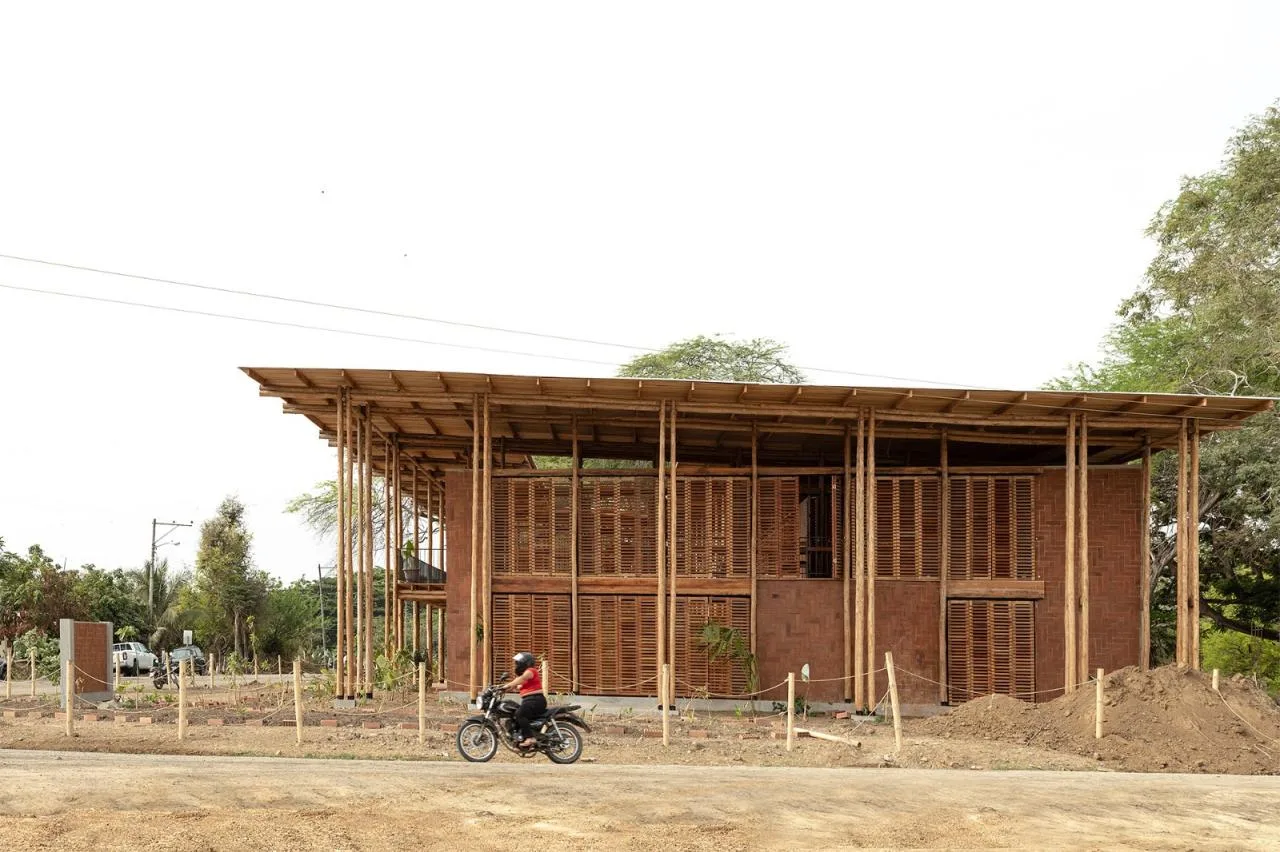
The Weaving Community Productivity Development Center project was developed, designed, and constructed through a collaborative effort involving the Young Living Foundation, Bromelias, Natura Futura, and Juan Carlos Bamba. The goal is to establish a production center that integrates learning, trade, and the sale of artisanal products.
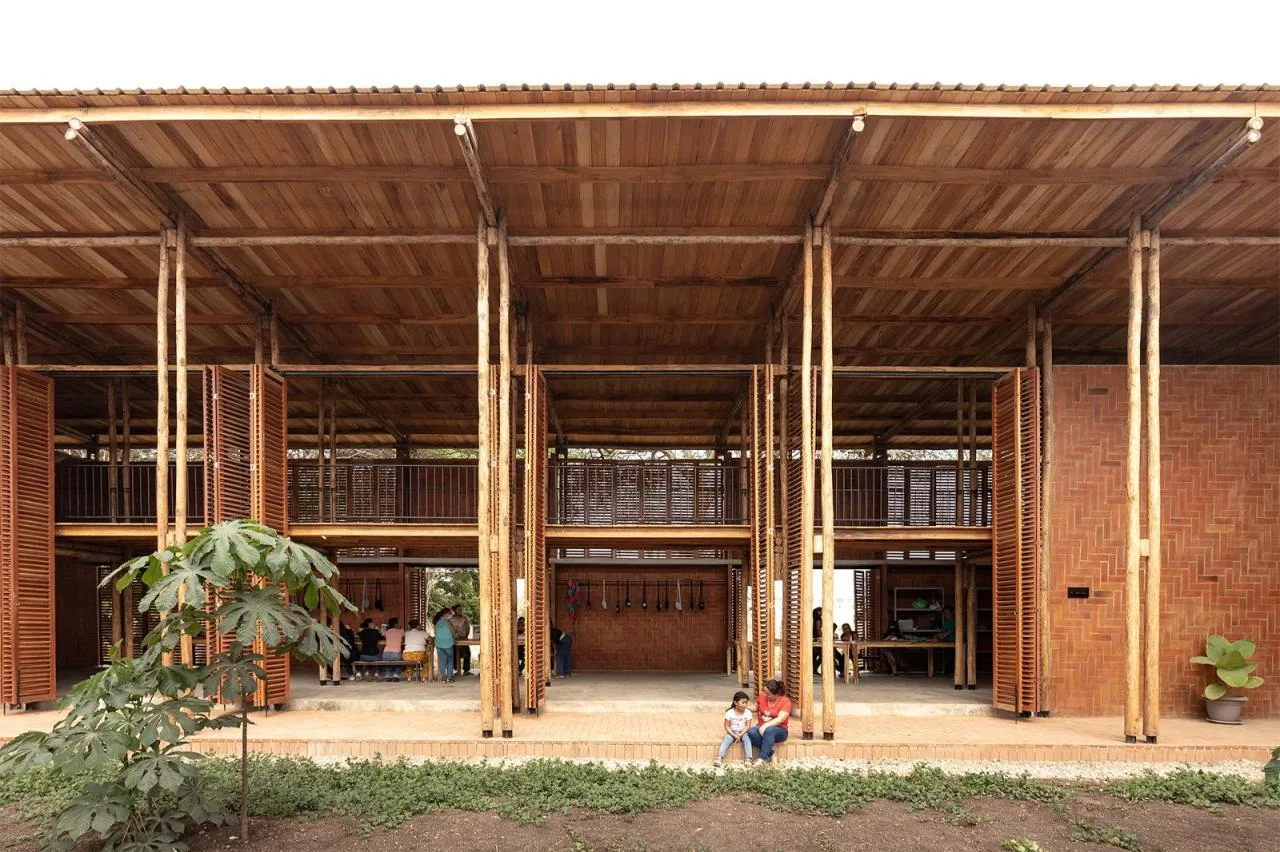
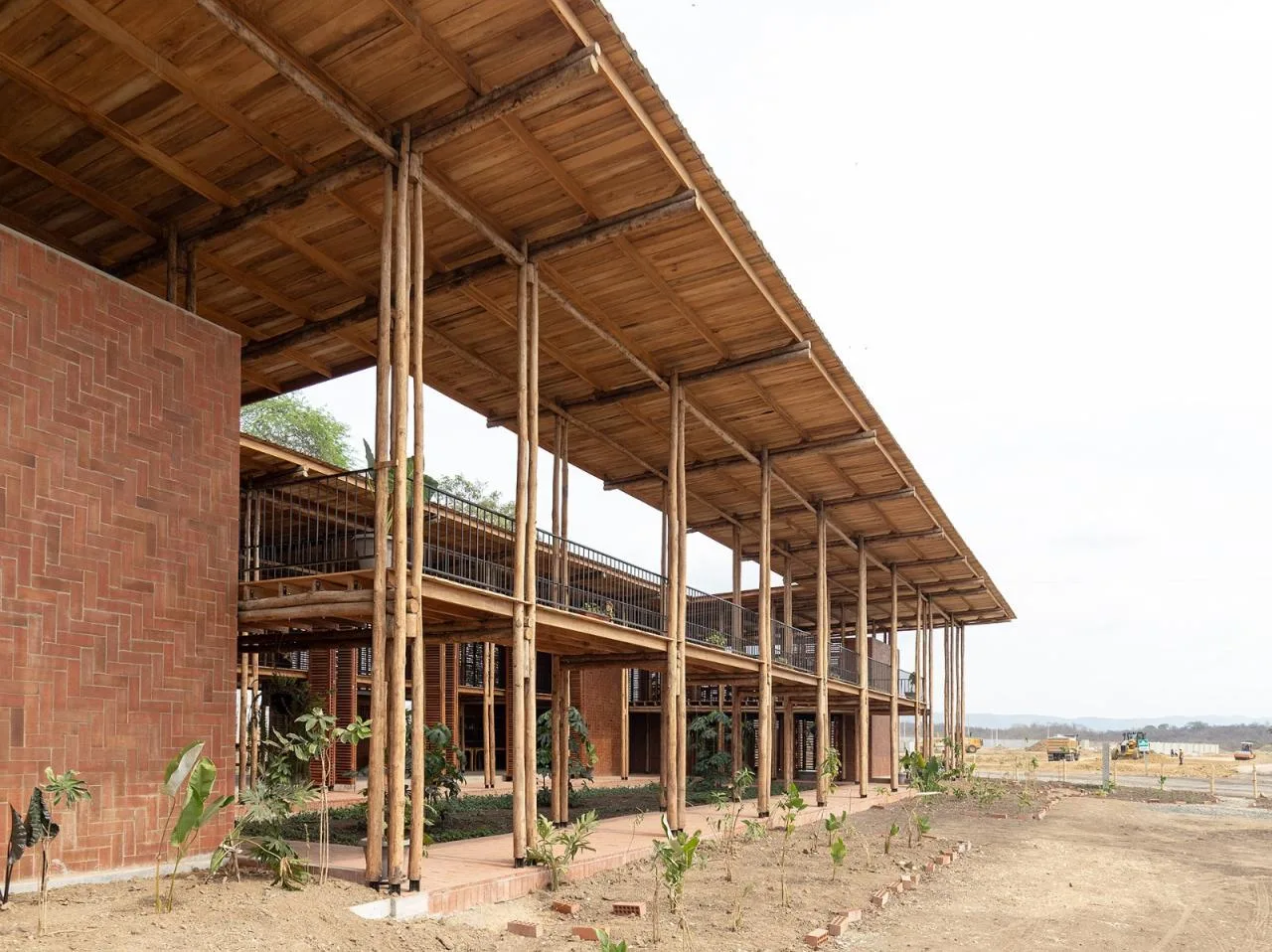
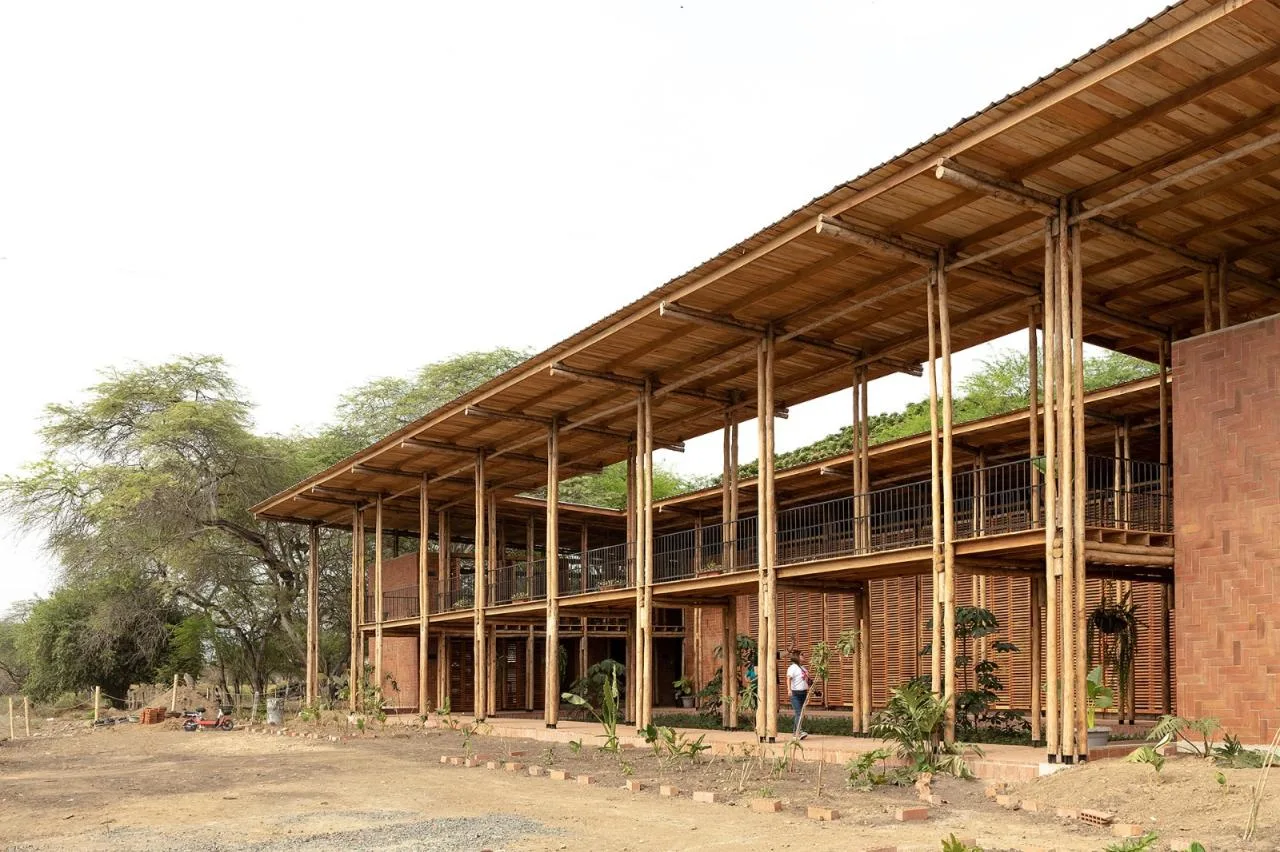
The architectural design aims to establish a workflow that combines training and production. It also hosts various construction workshops for local community members and college families, enhancing their skills and promoting both environmental and regional development.
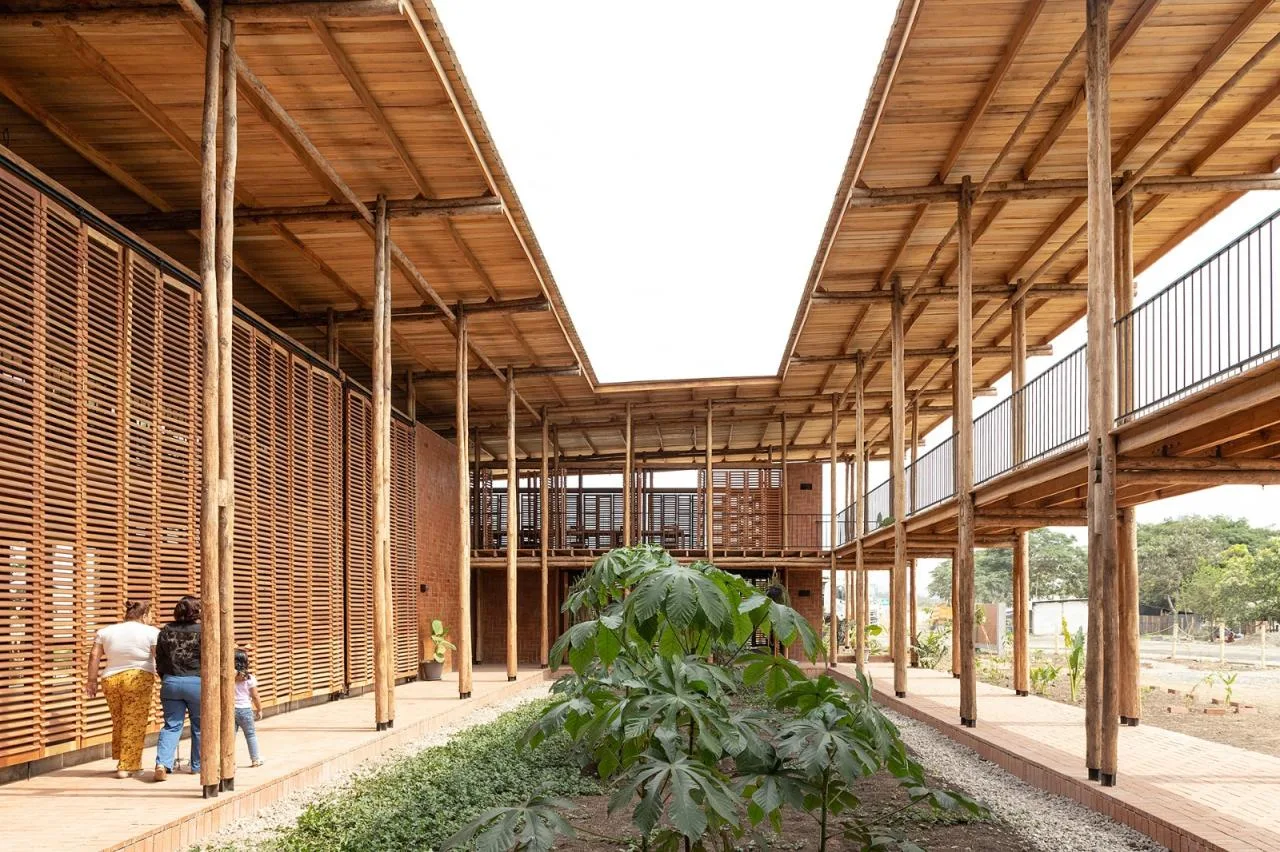
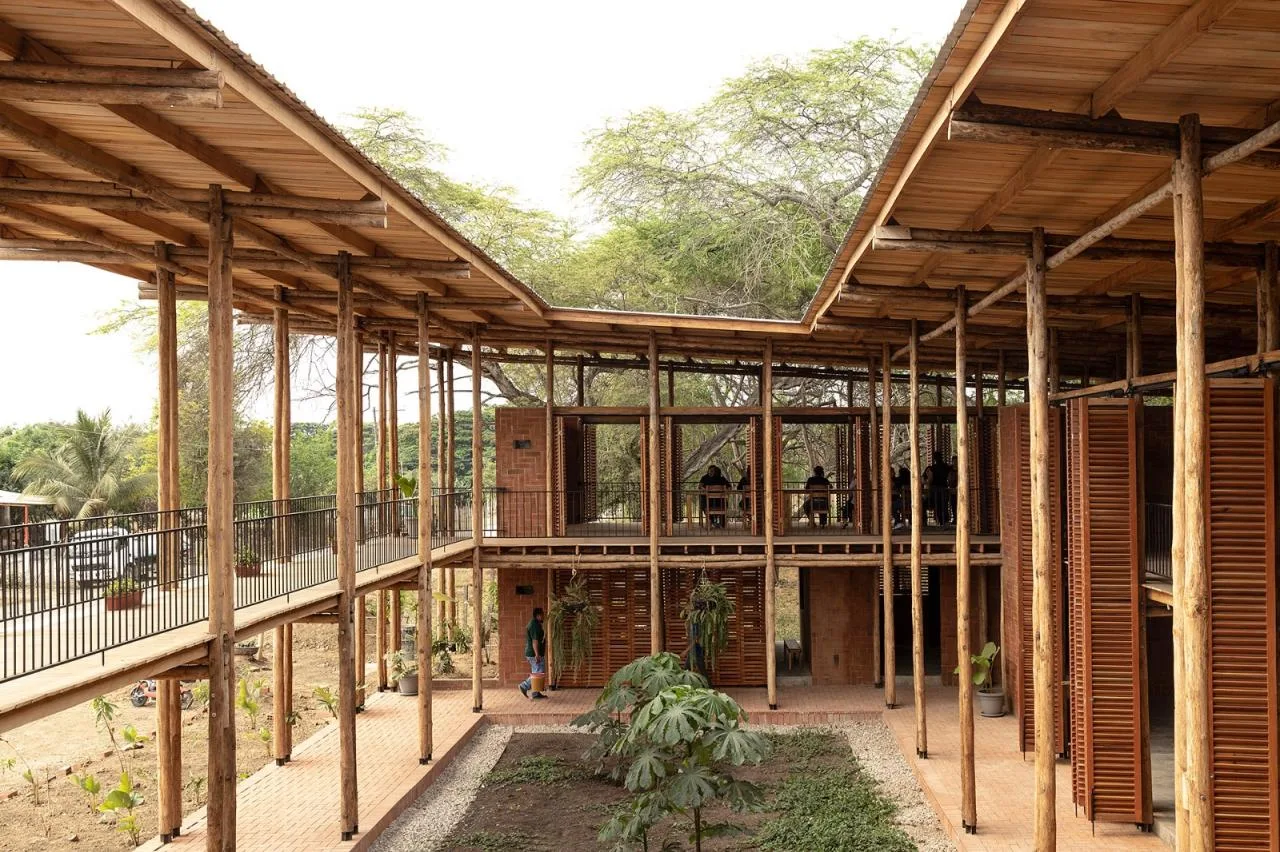
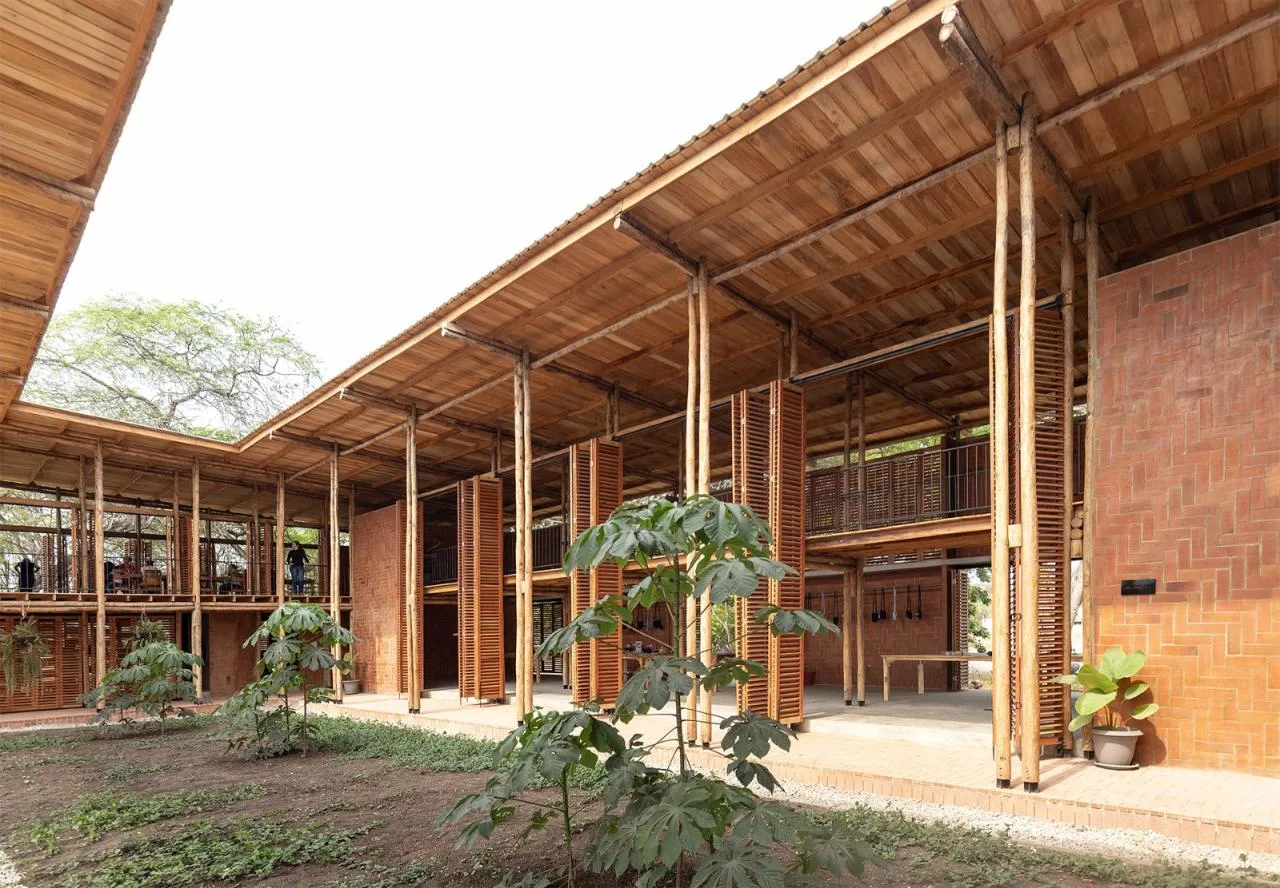
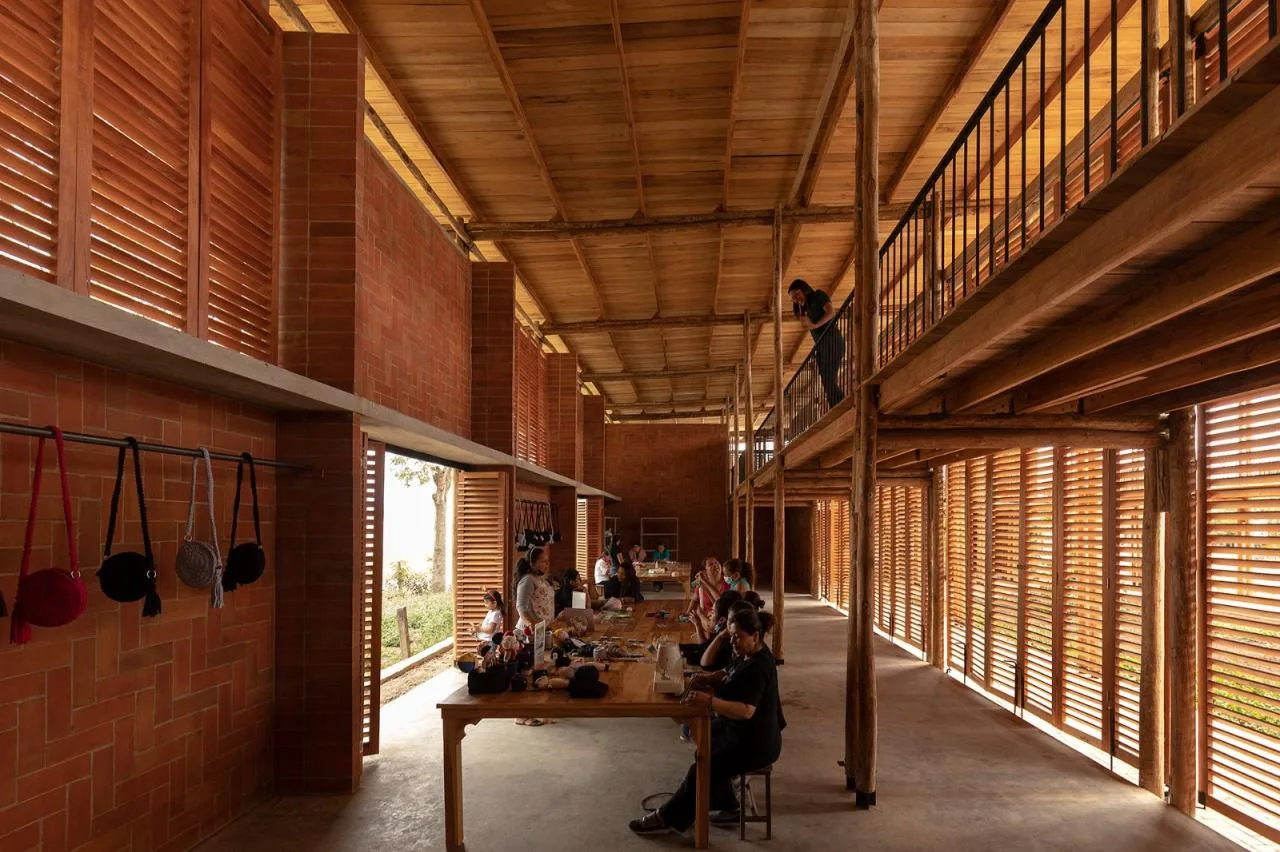
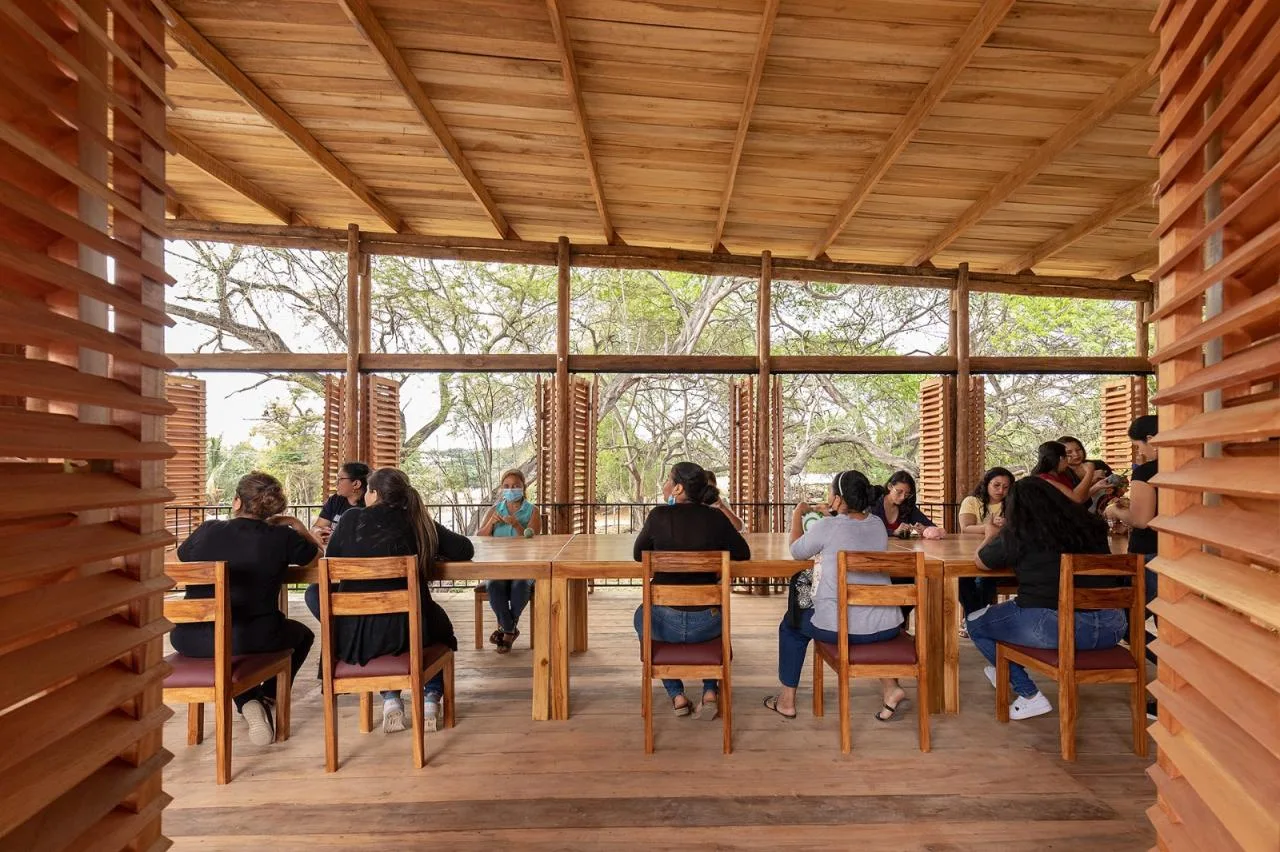
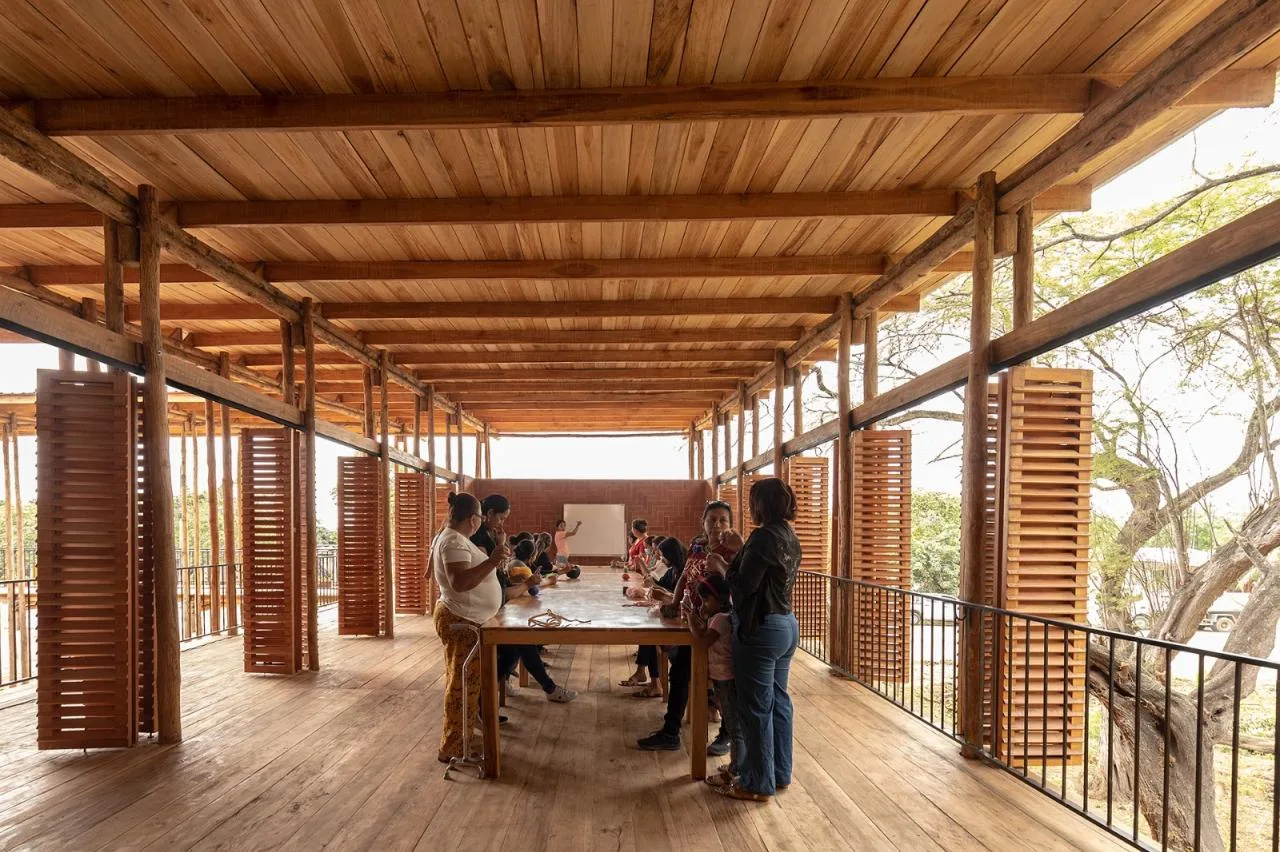
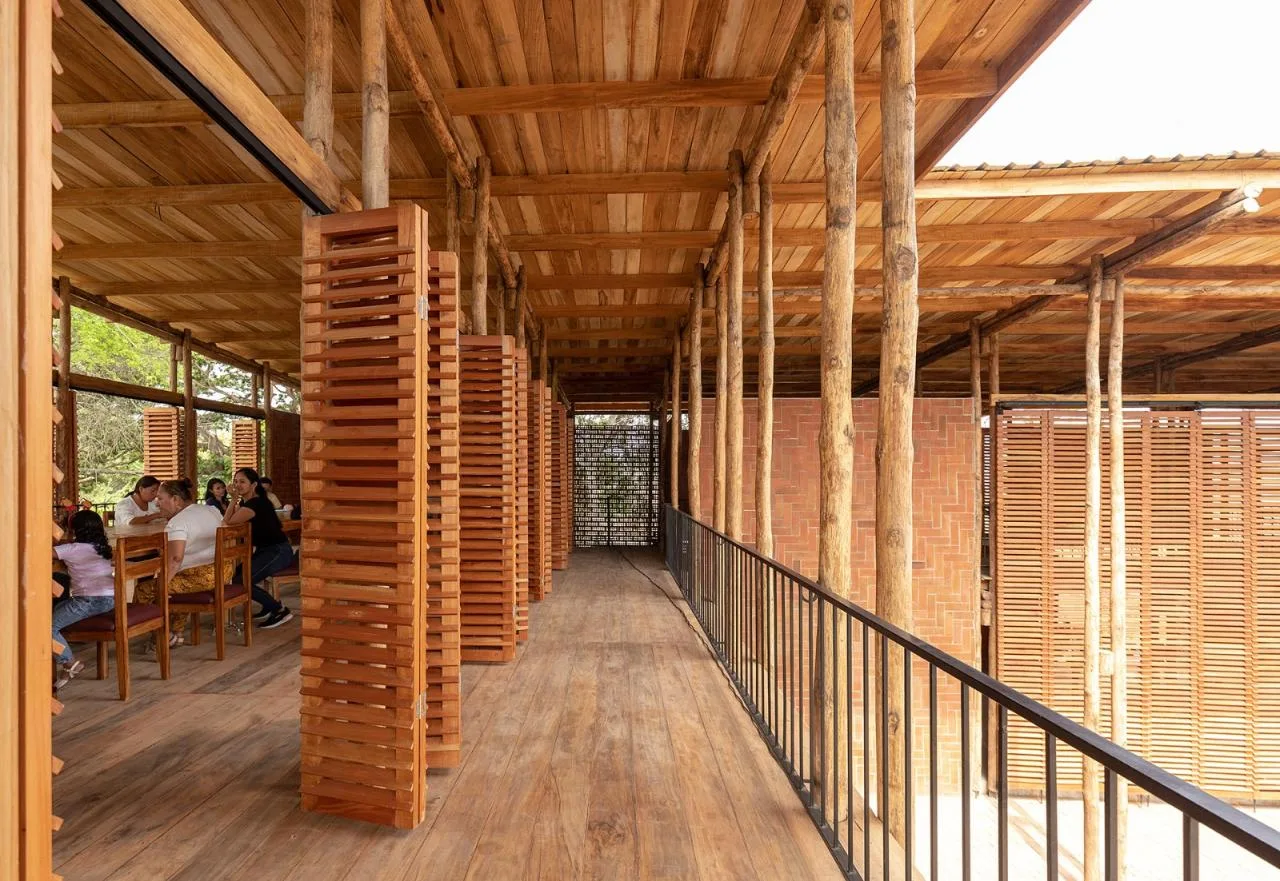
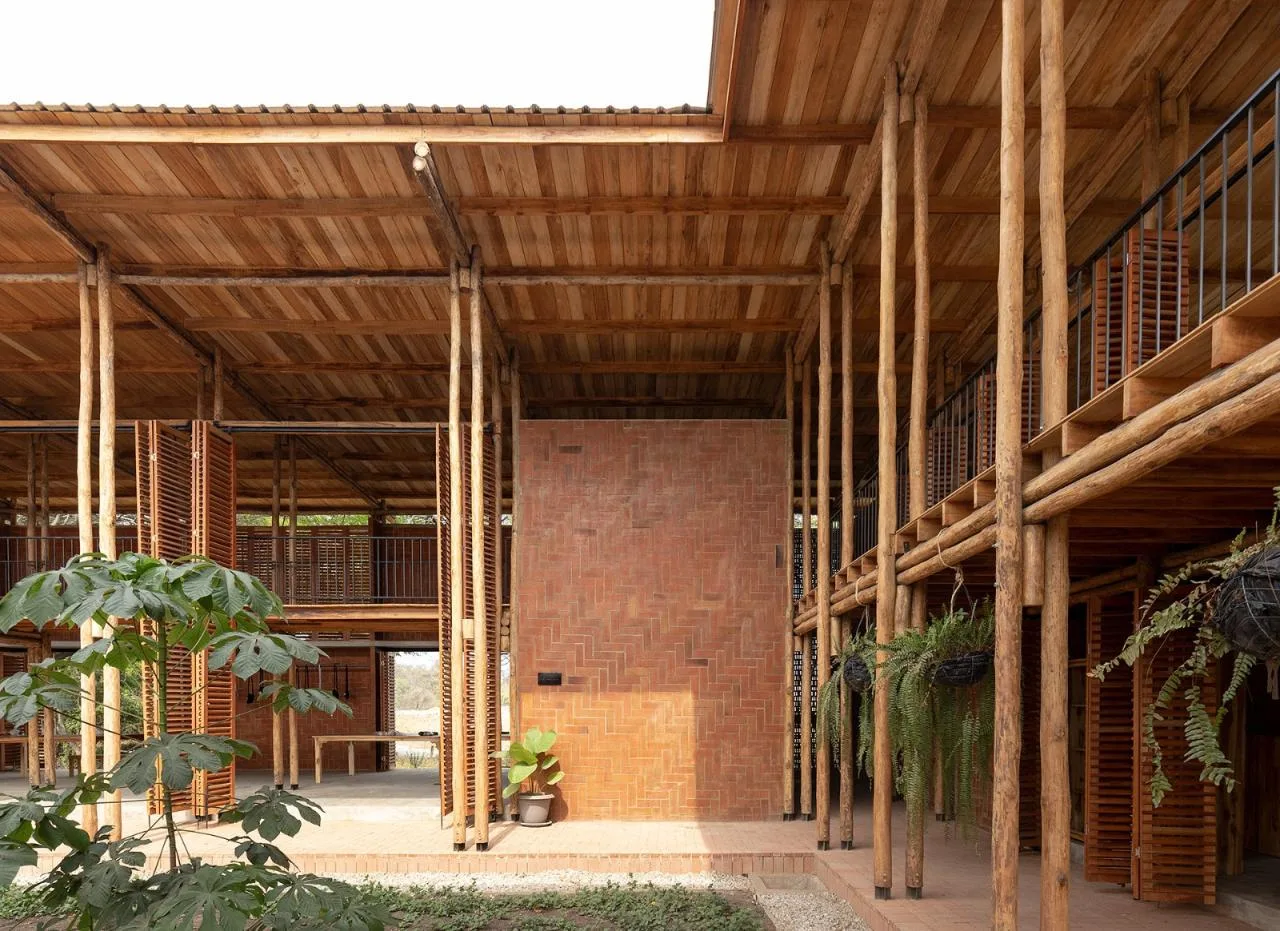
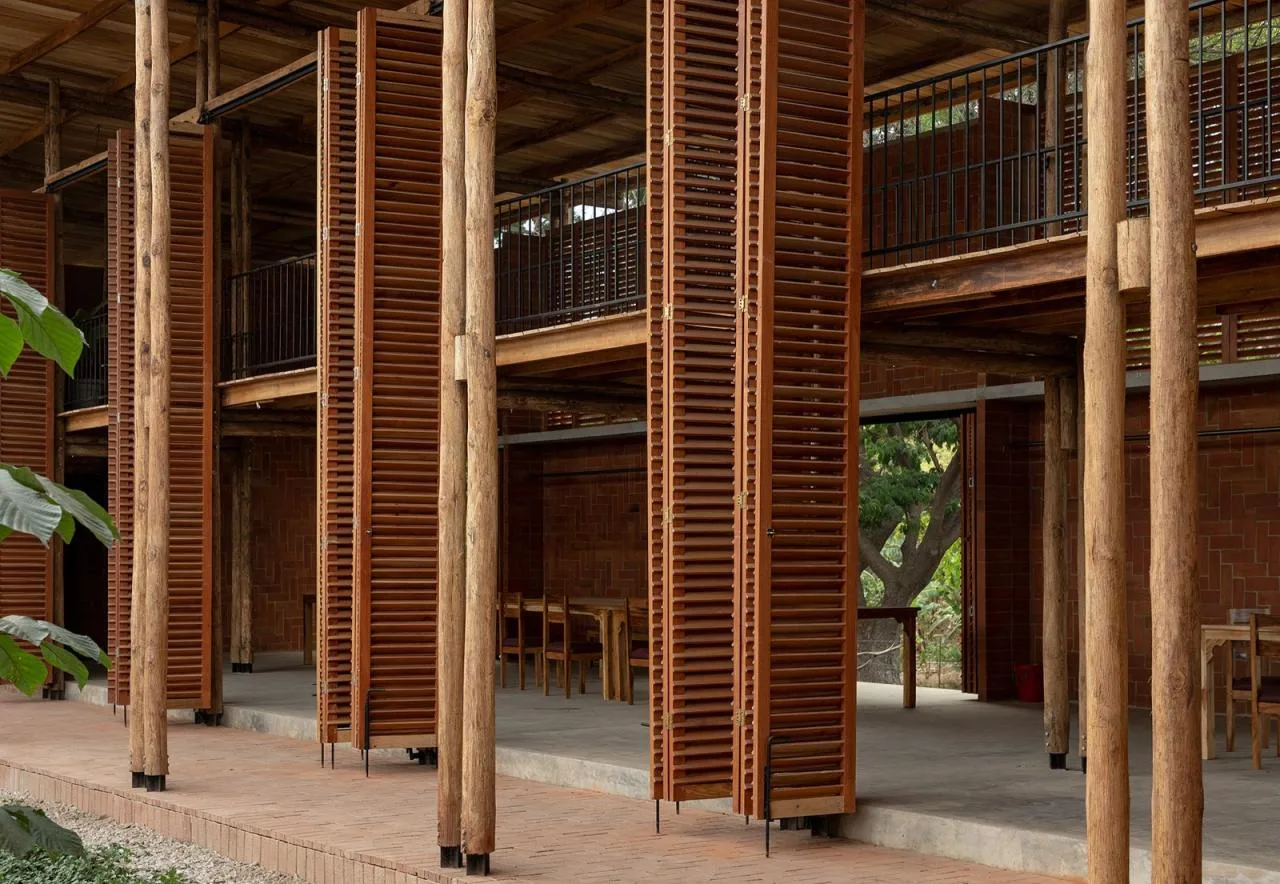
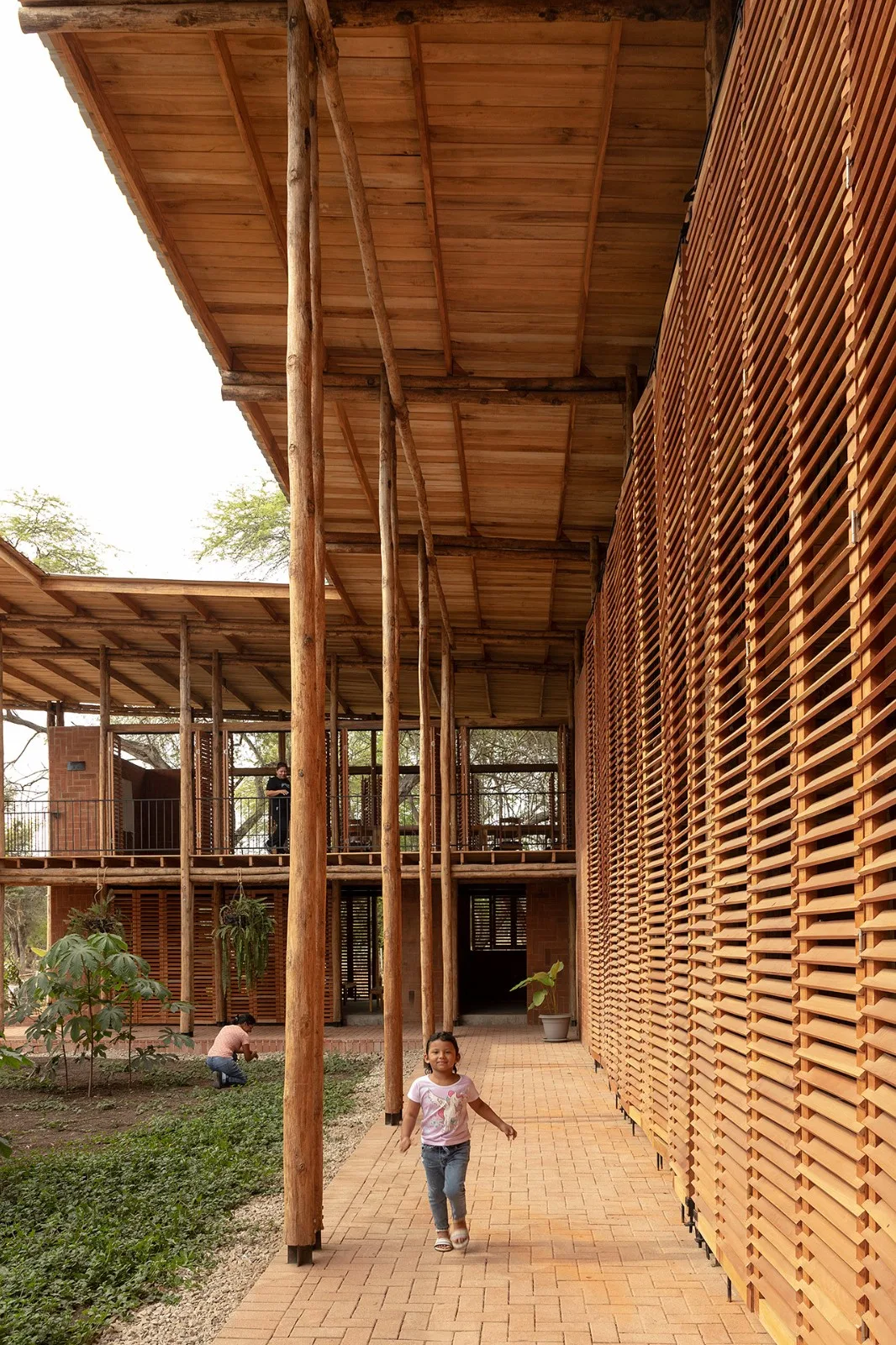
The terrace, adorned with native vegetation, serves as a venue for conferences and exhibitions. It includes two side halls and a central hall. One side hall houses classrooms for theoretical training, a café, and sanitary facilities. The other side hall accommodates practical workshops, sleeping quarters, storage areas, and a shop for selling handmade textiles crafted in the central hall.
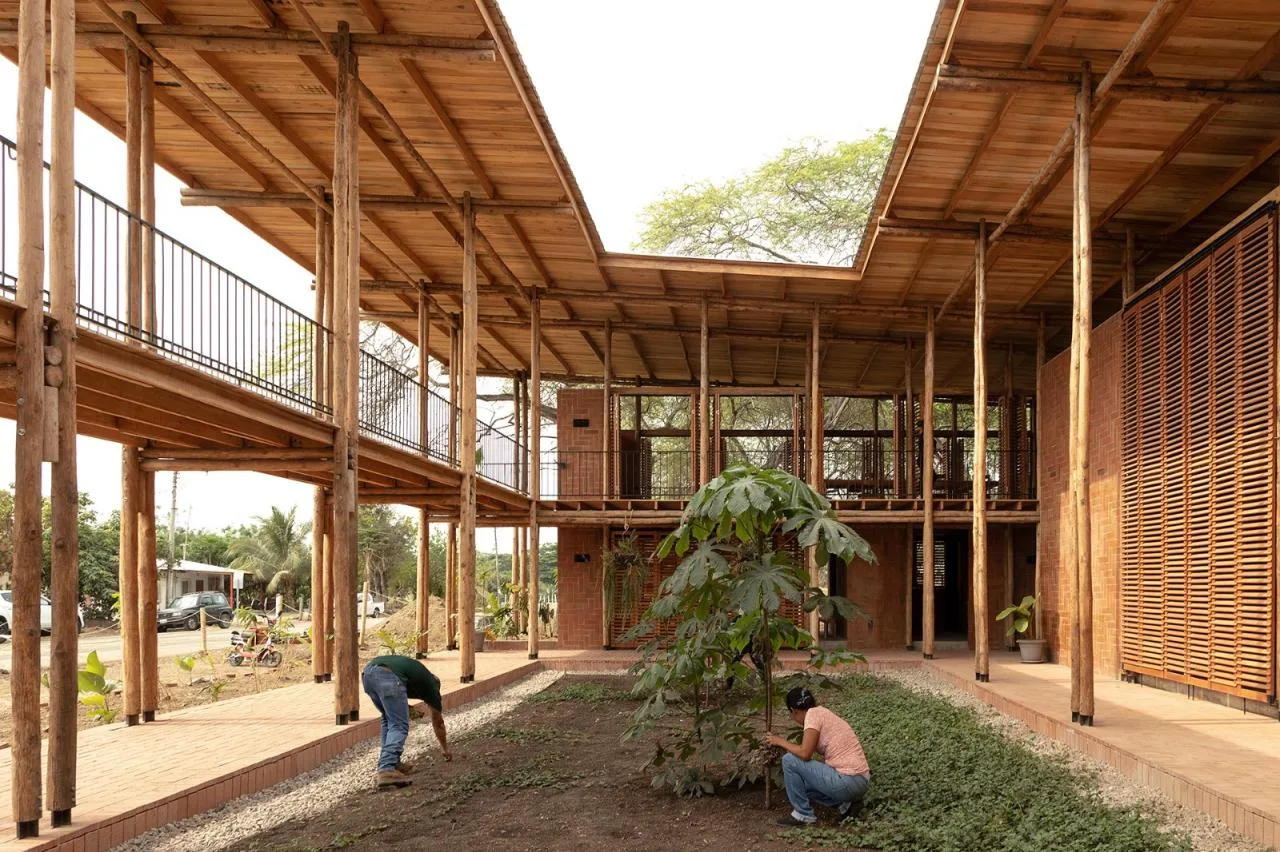
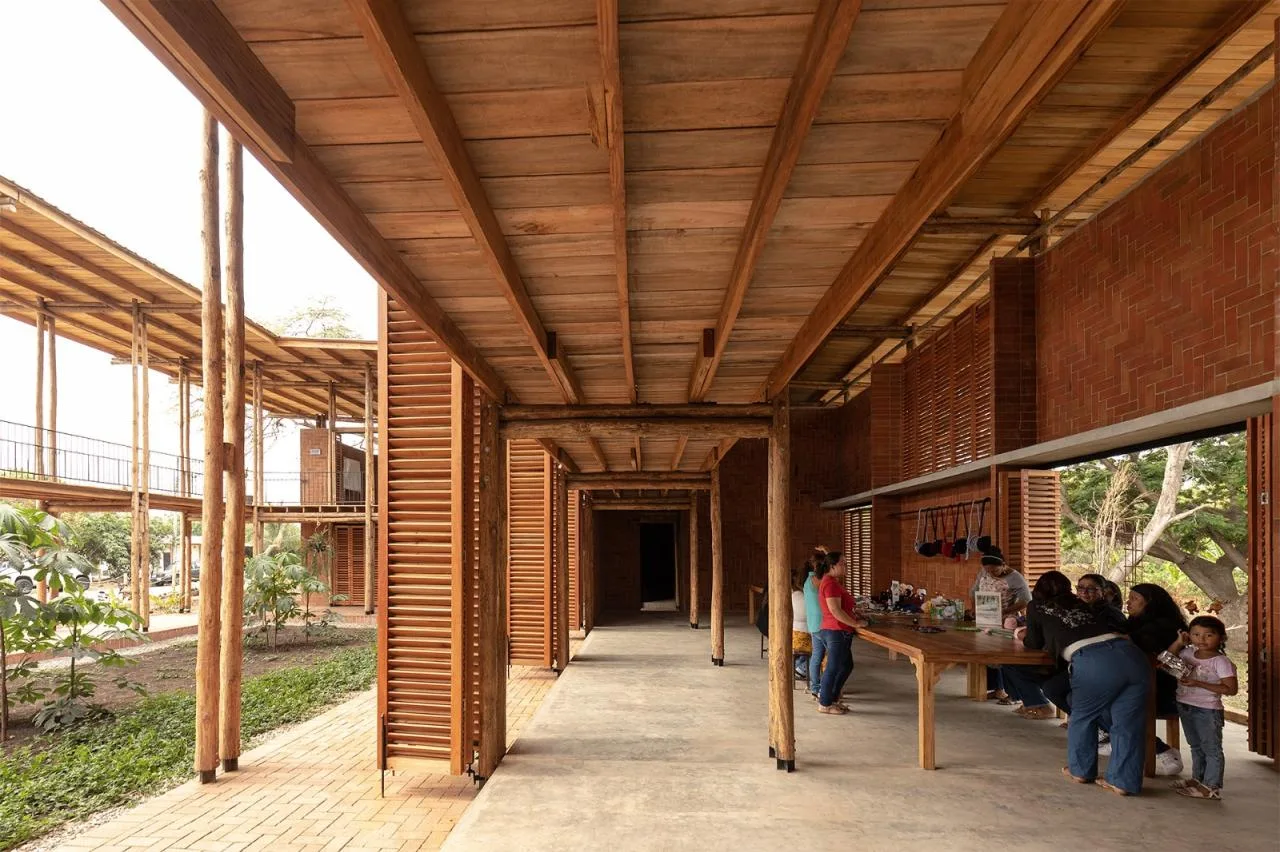
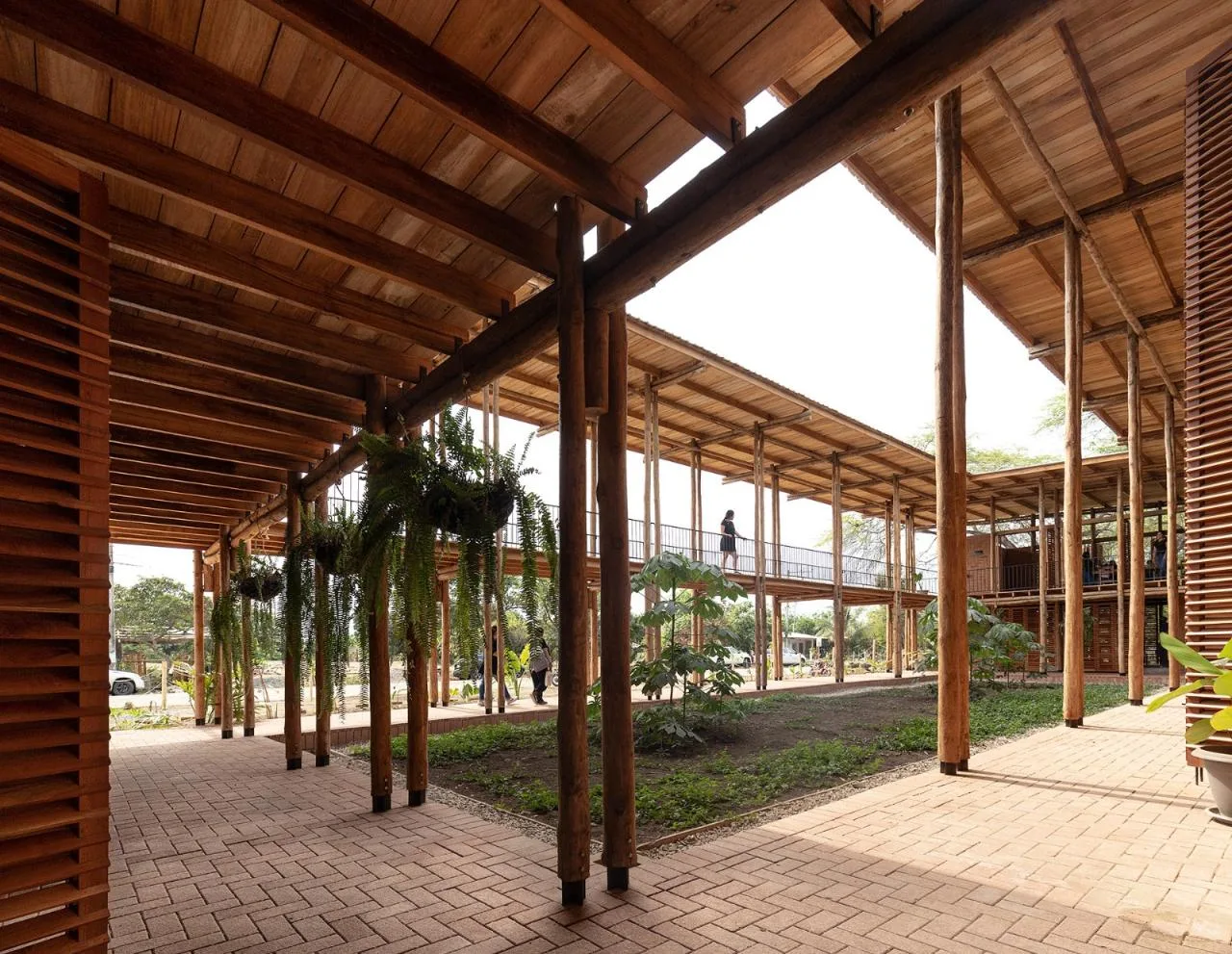
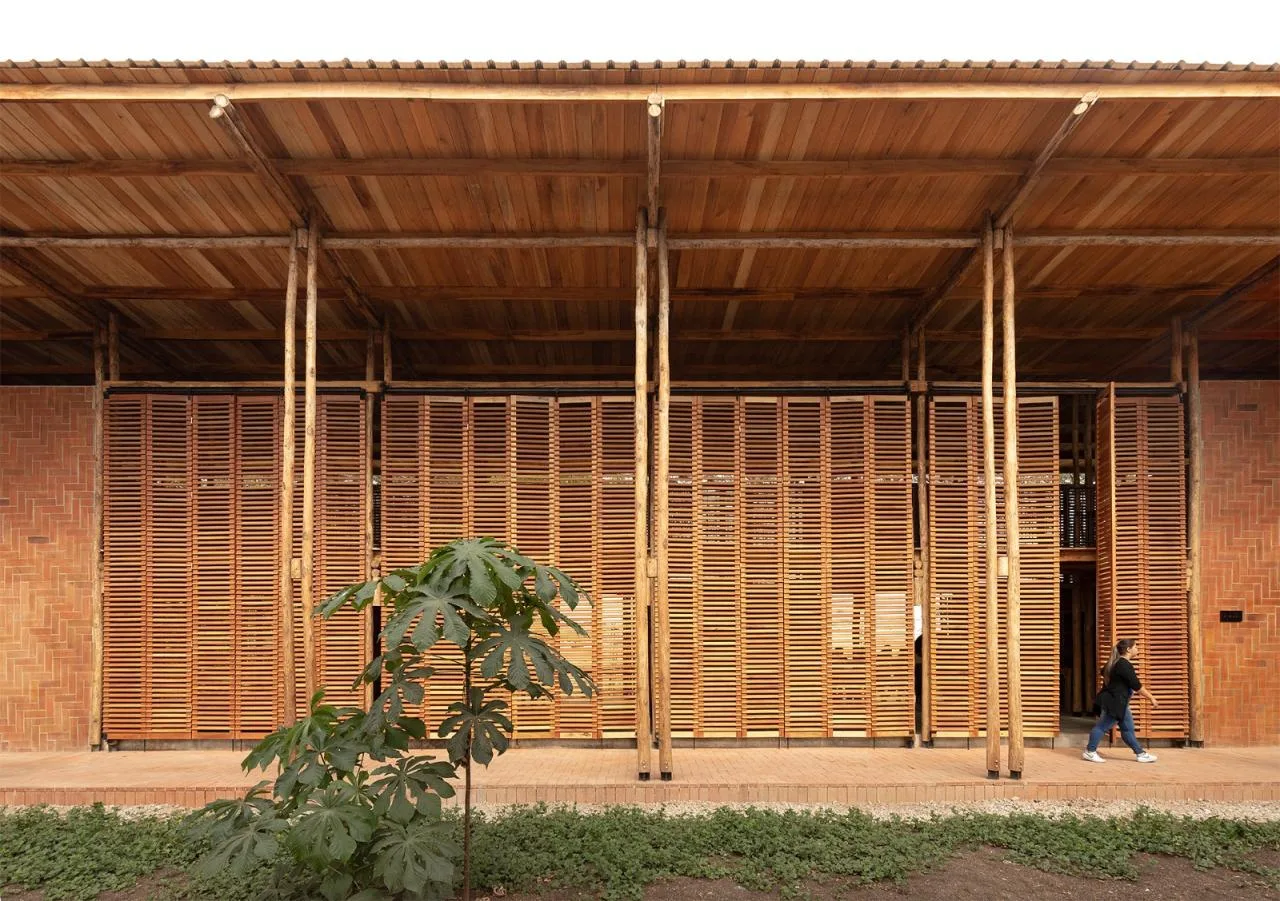
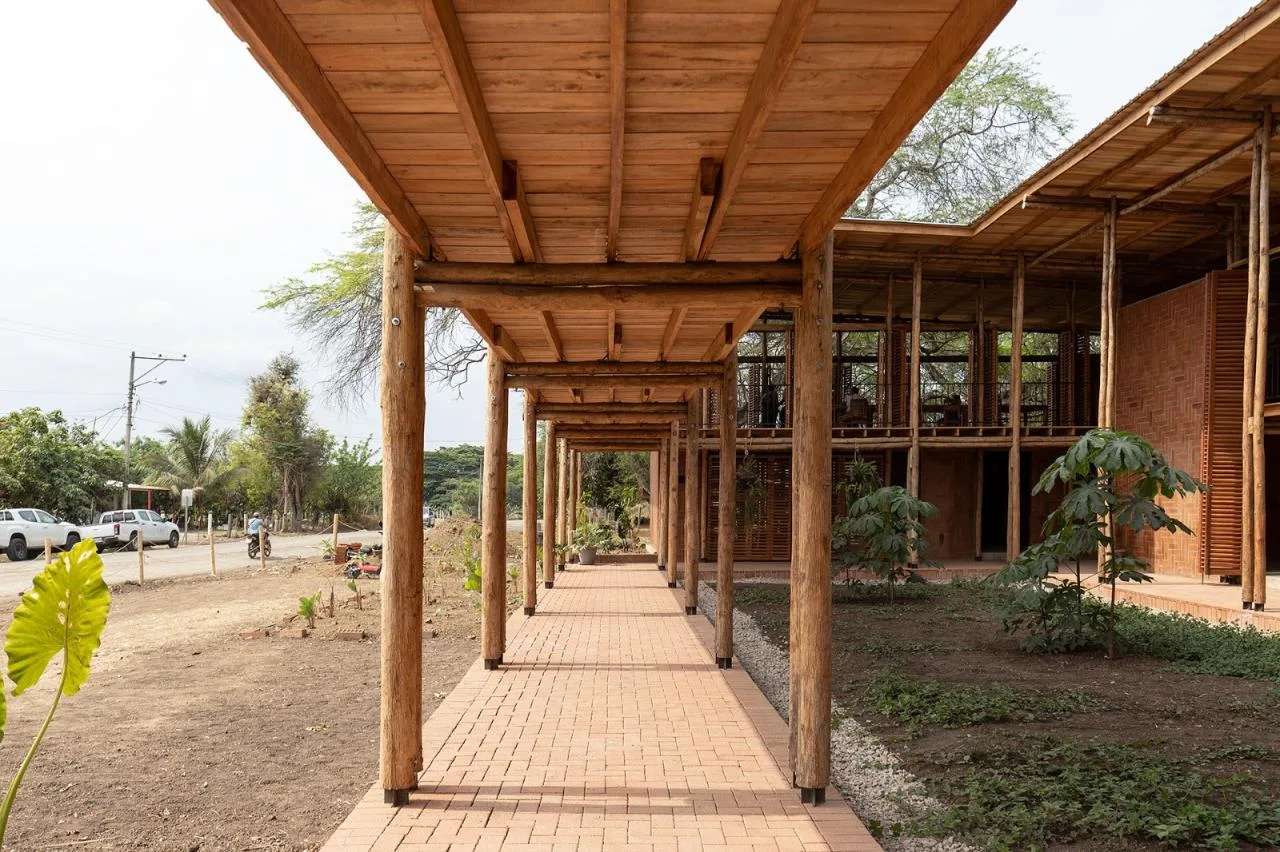
The building’s main facade features a “productivity” exhibition gallery. This acts as a gateway to the terrace area and contributes to the urban atmosphere along the street. The rear of the building is enclosed and faces a separated space to enhance security control.
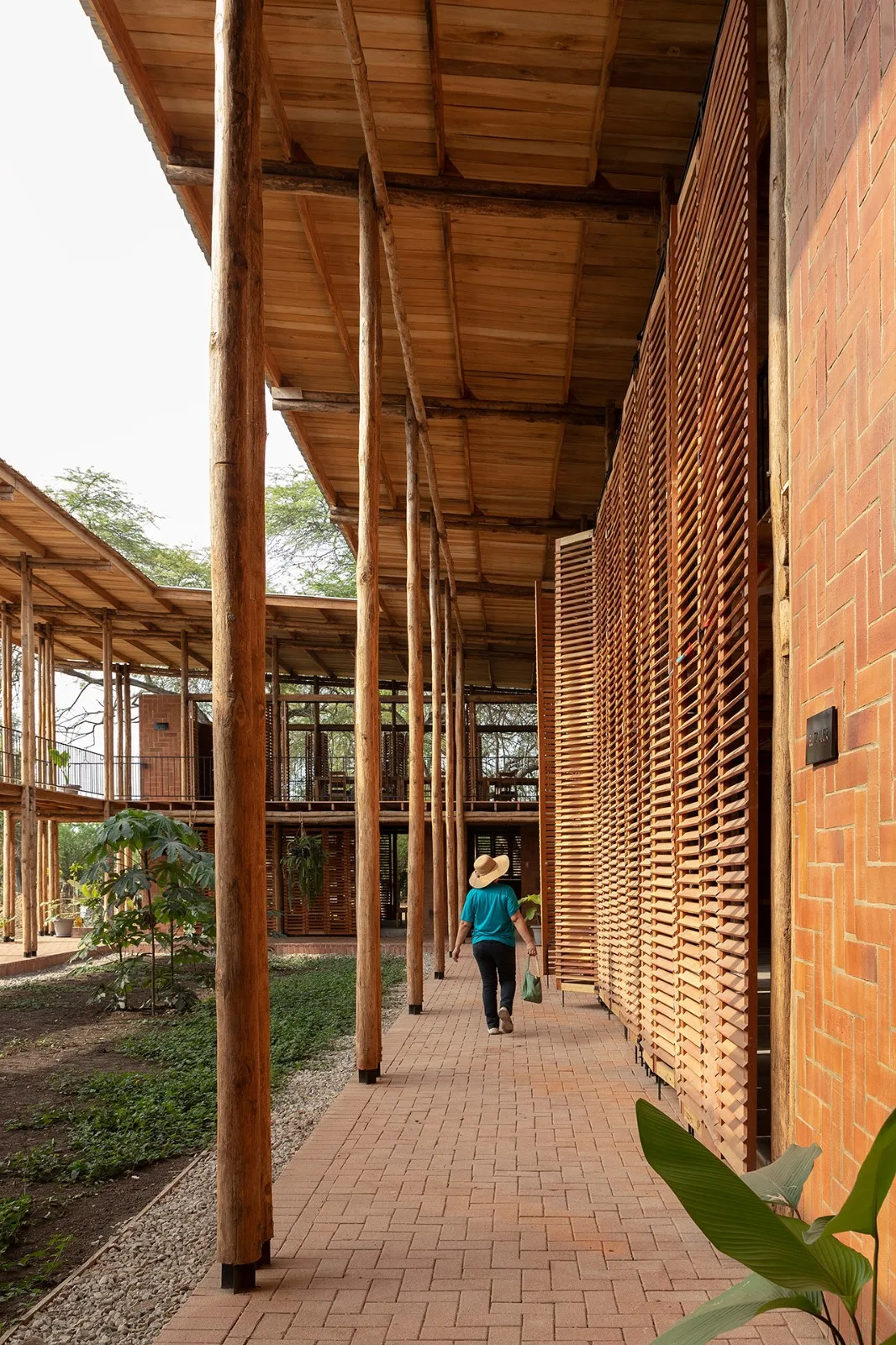
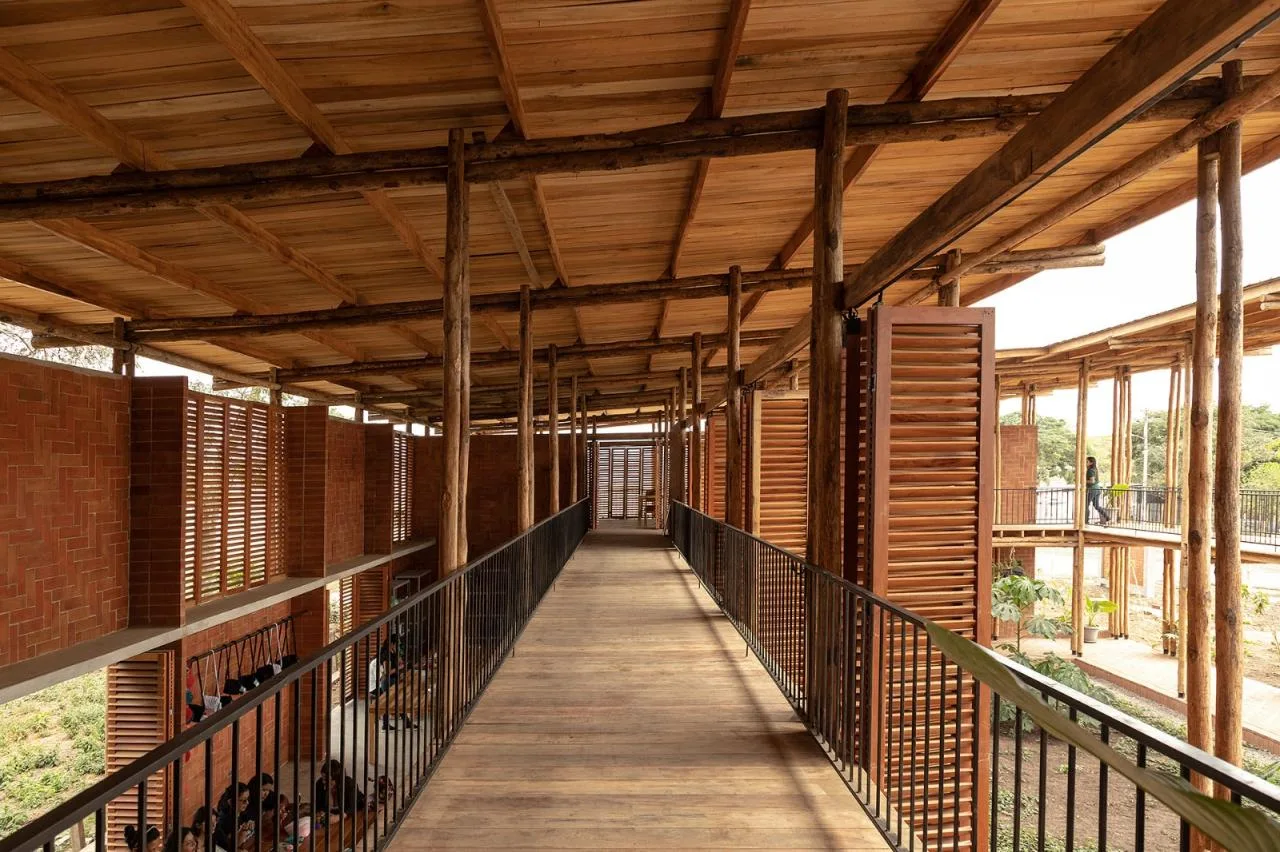
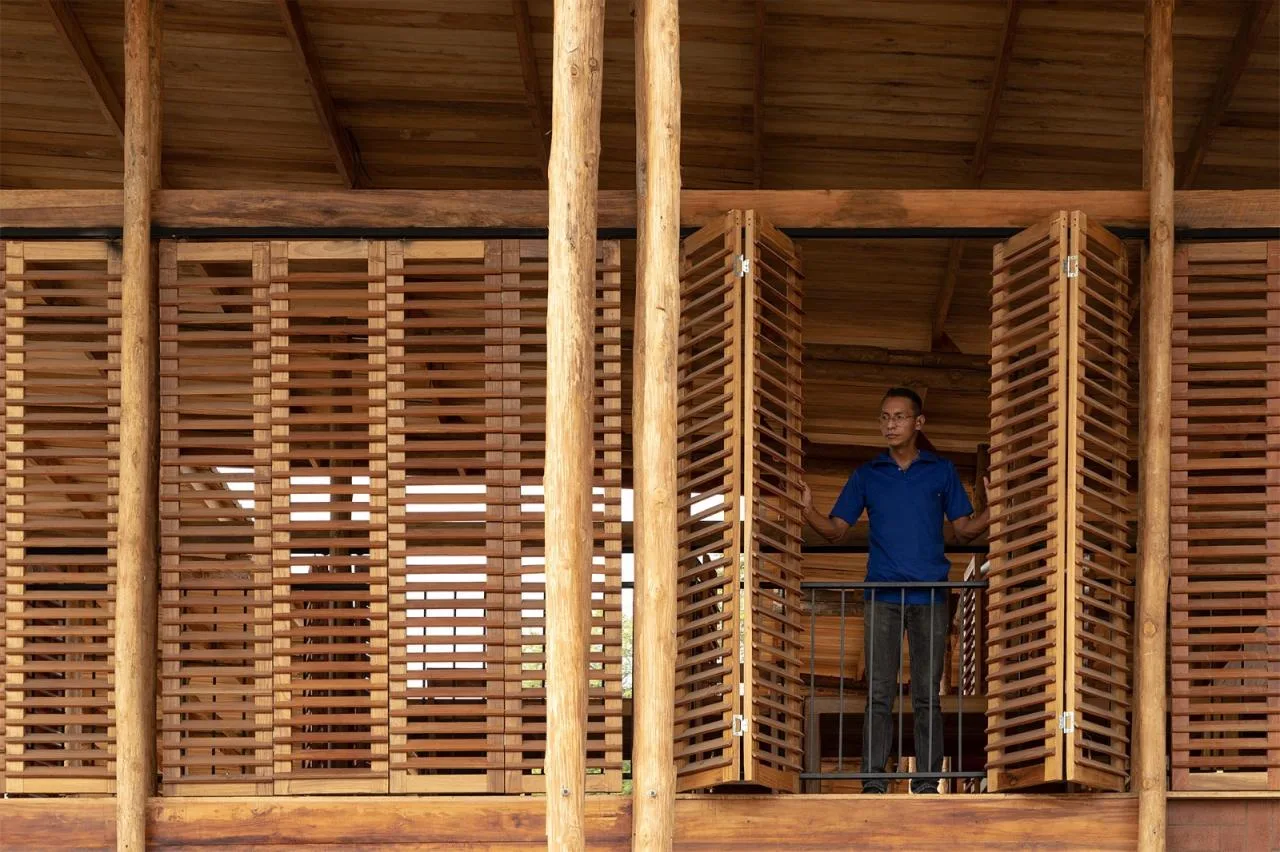
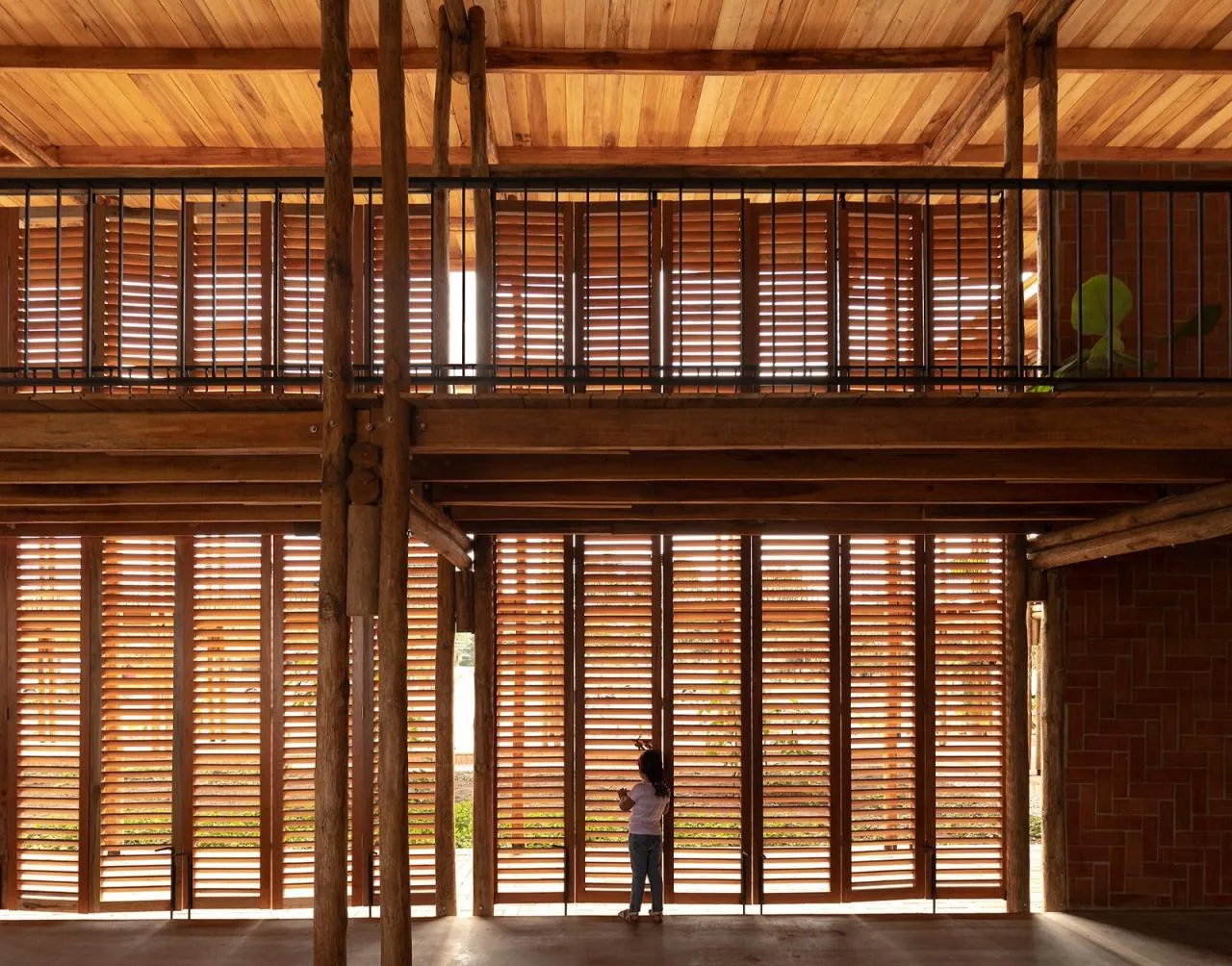
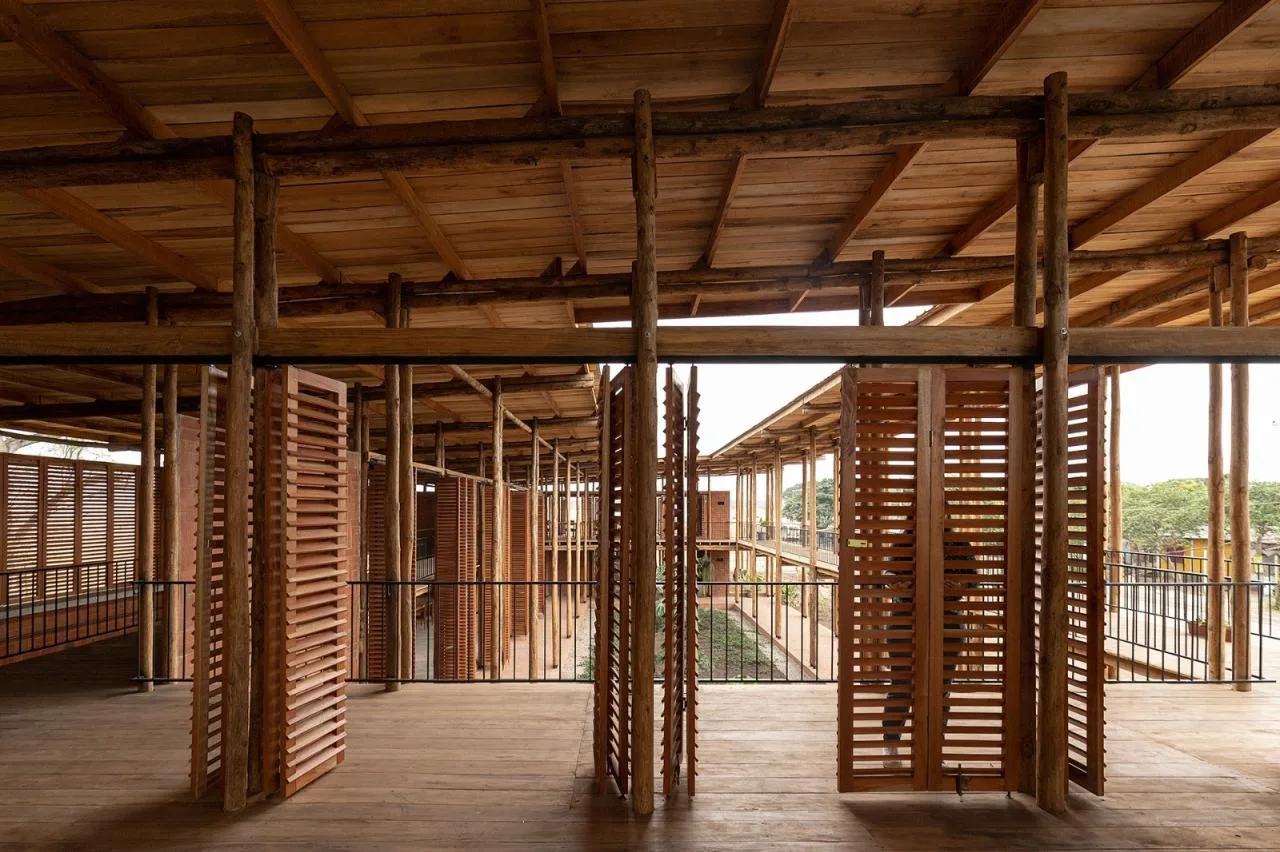
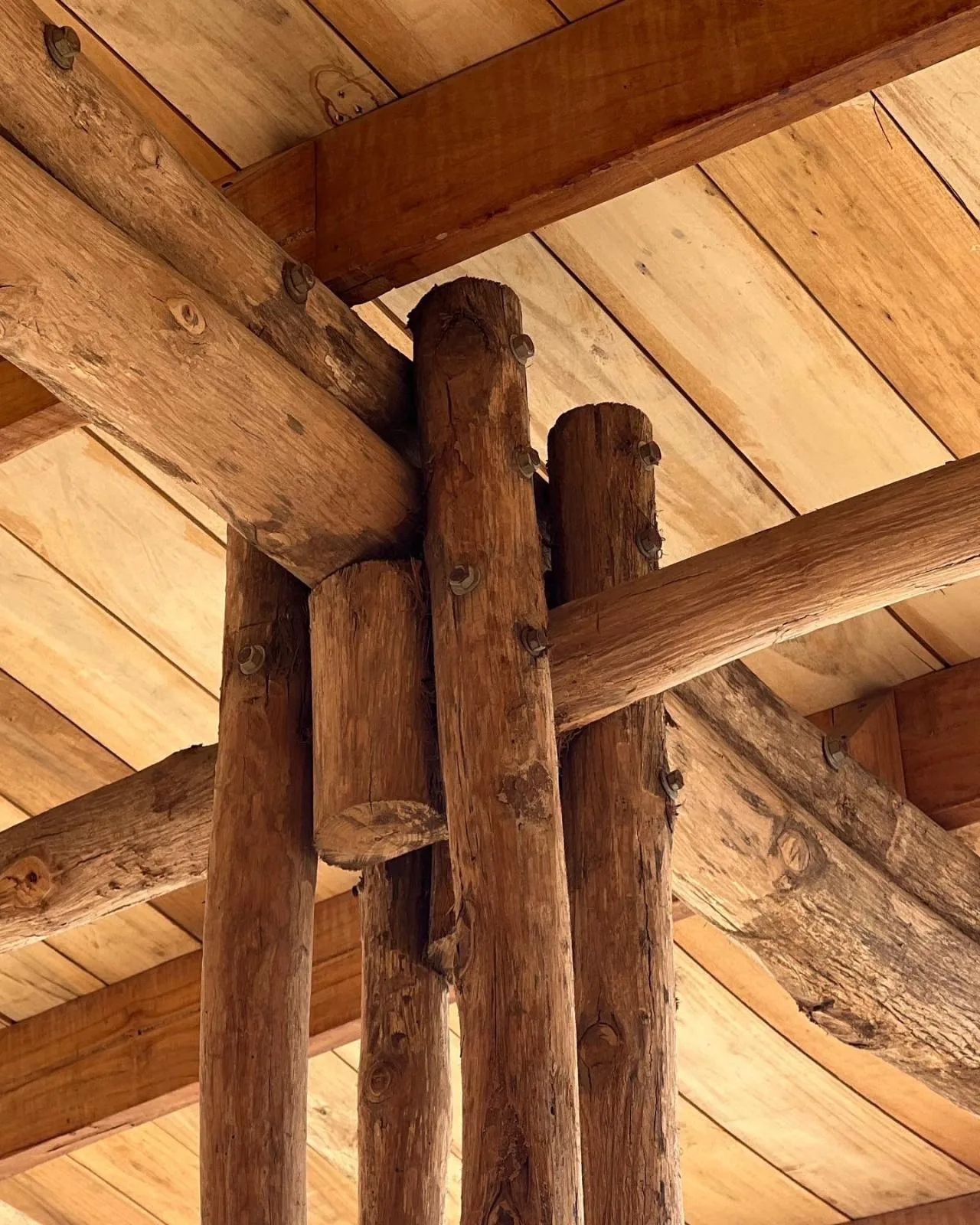
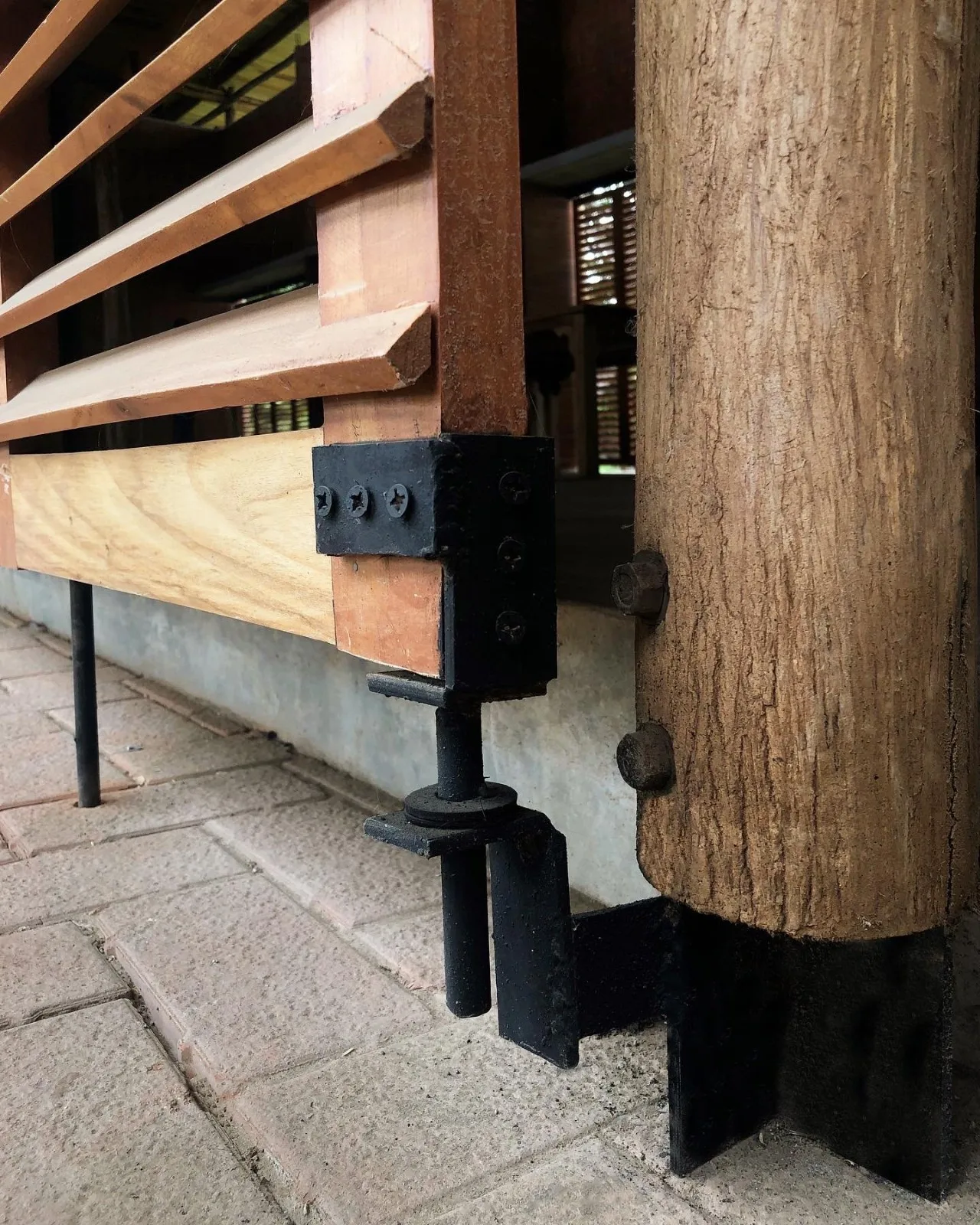
The structure employs circular-section teak wood, valued for its hardness and durability. This material is commonly used for the main support structures beneath local elevated houses, as well as to support roofs and floors. The brick walls are laid in a herringbone diagonal pattern, enhancing their strength through interlocking bricks. Wooden folding grille doors control ventilation and lighting while seamlessly connecting interior and exterior spaces.
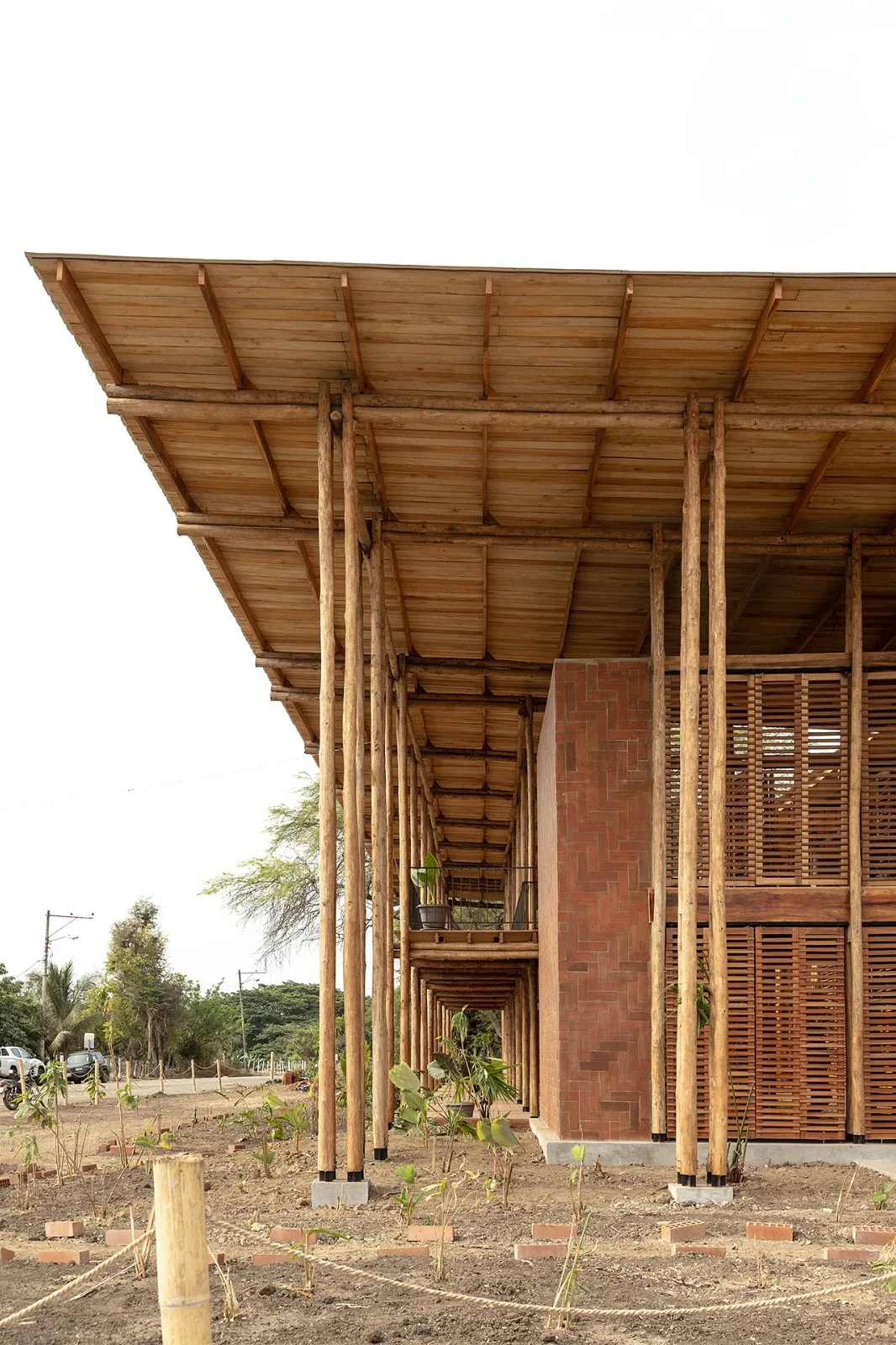
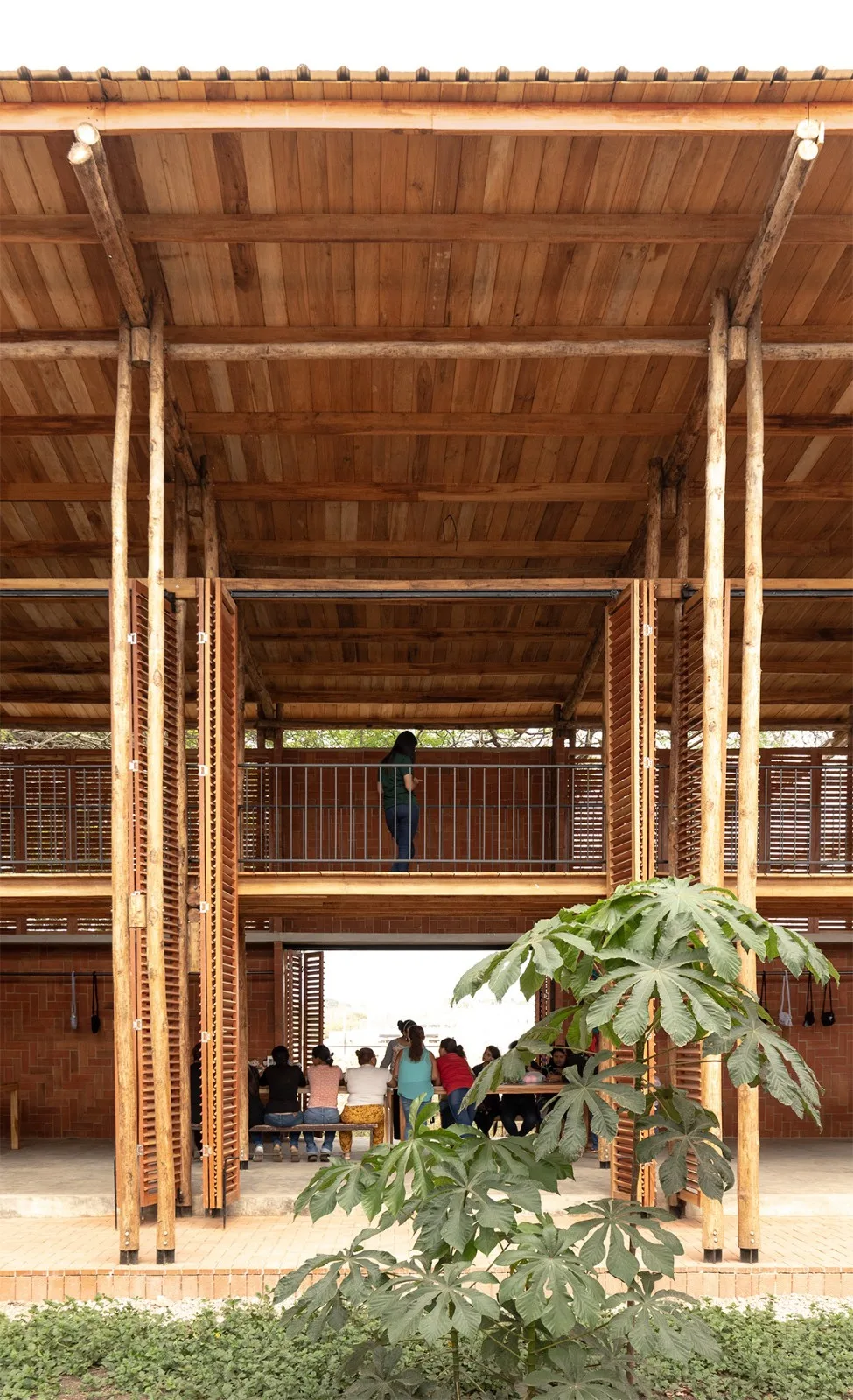
The weaving area is designed to serve as an intermediary space within the production and development process. Its goal is to actively engage the community, enhance the skills of local artisans, revitalize learning as a tool, and unite unemployed women.
Project Drawings
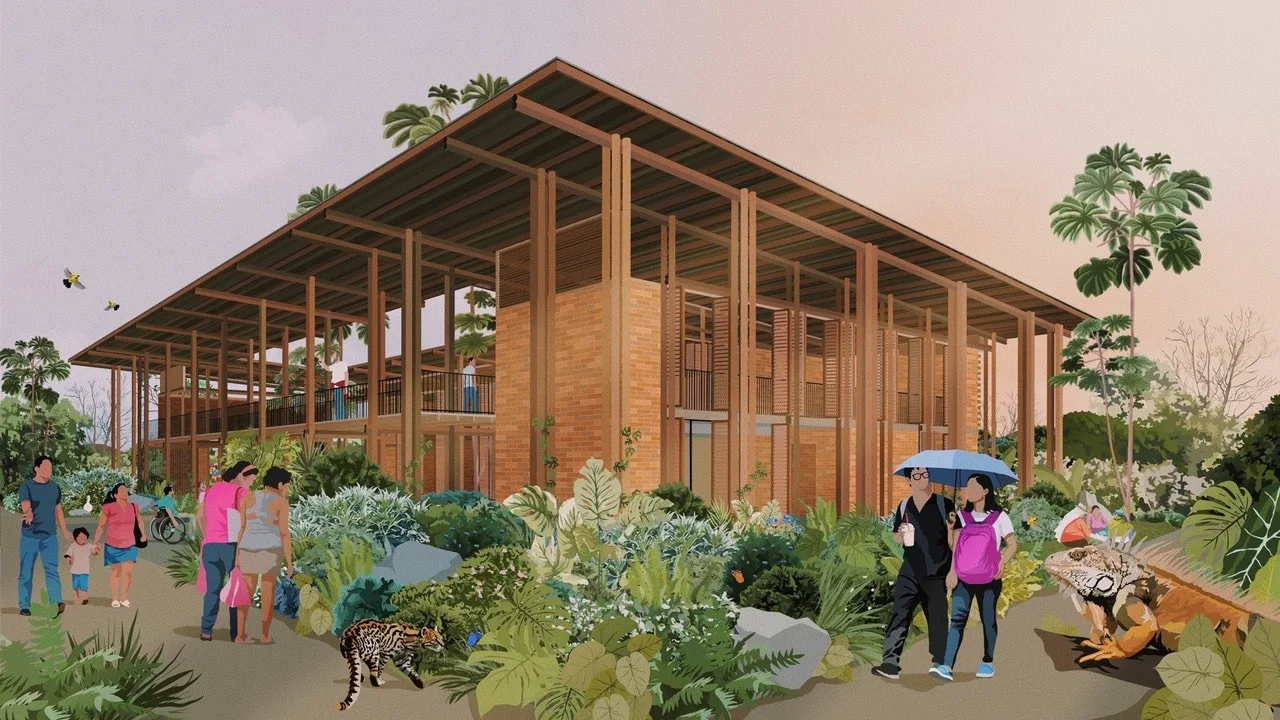
△ Rendering
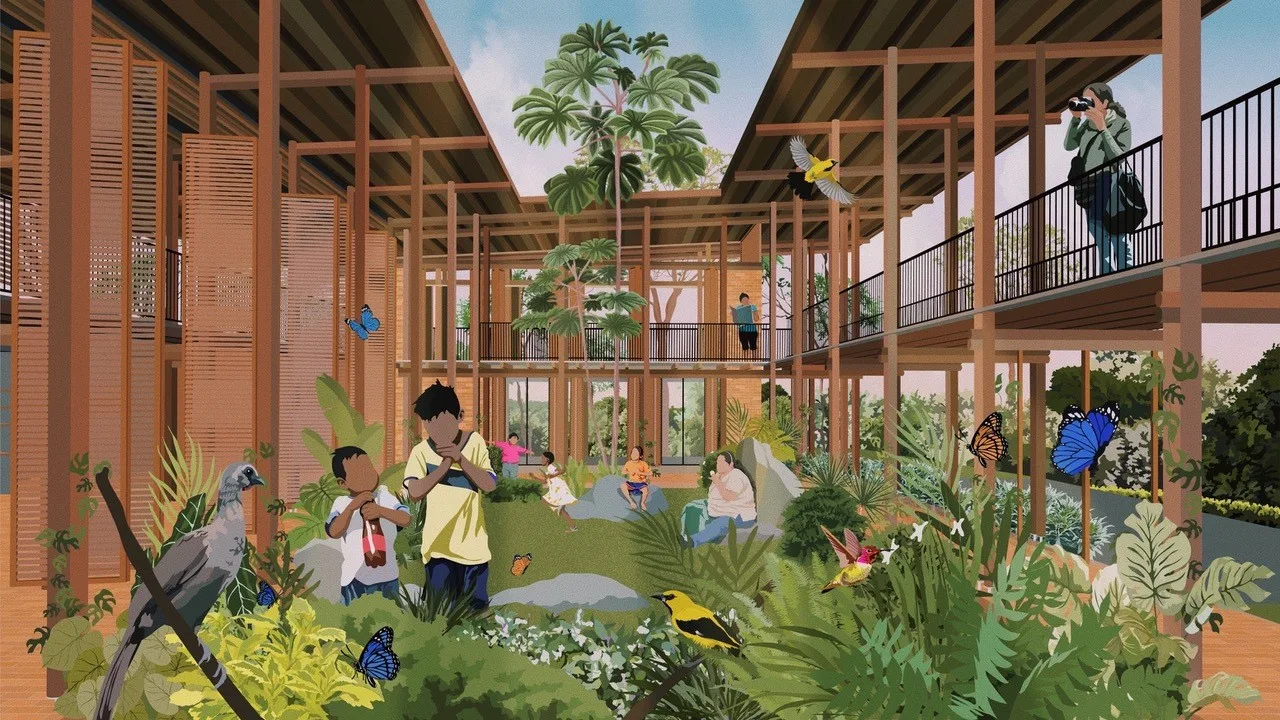
△ Rendering
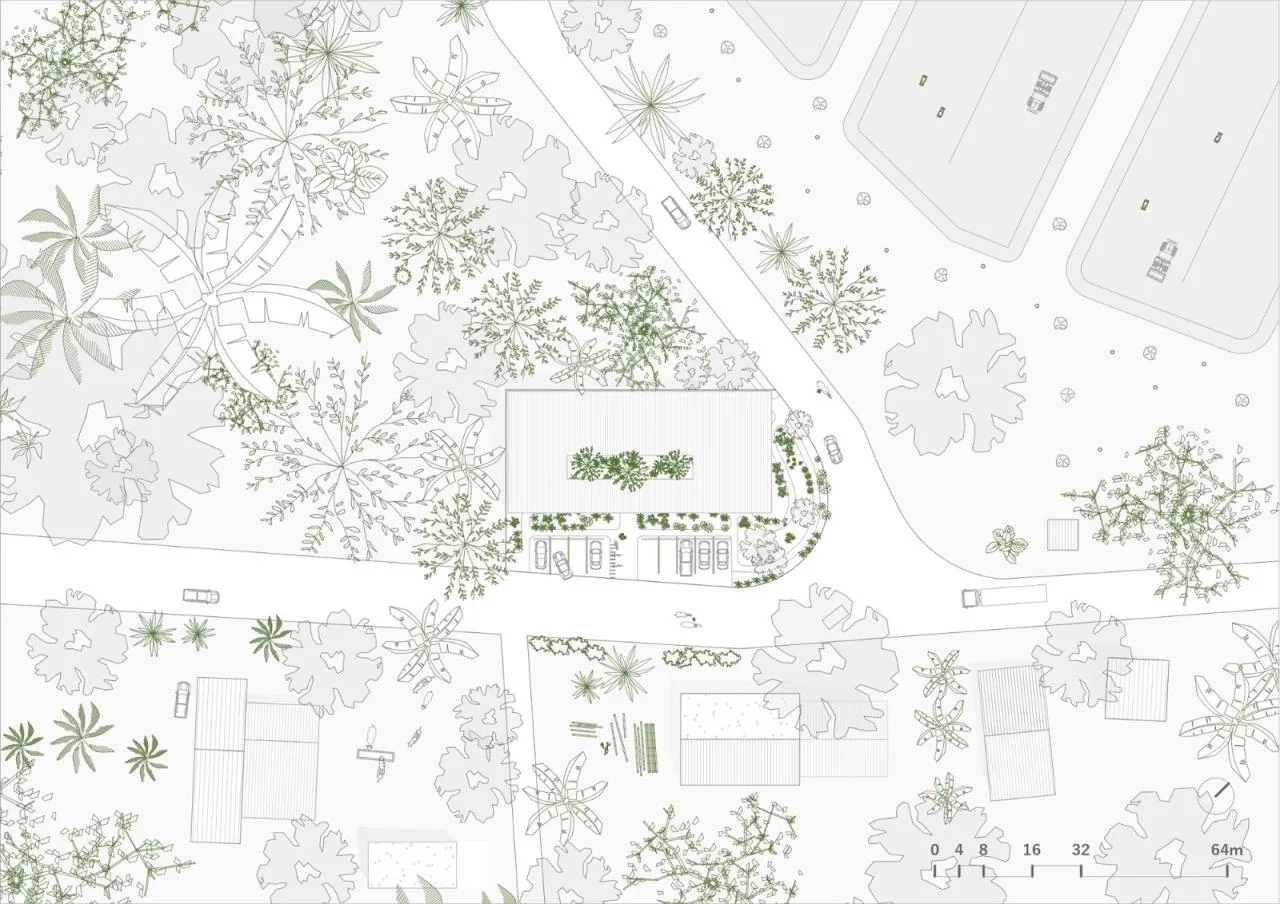
△ General layout plan
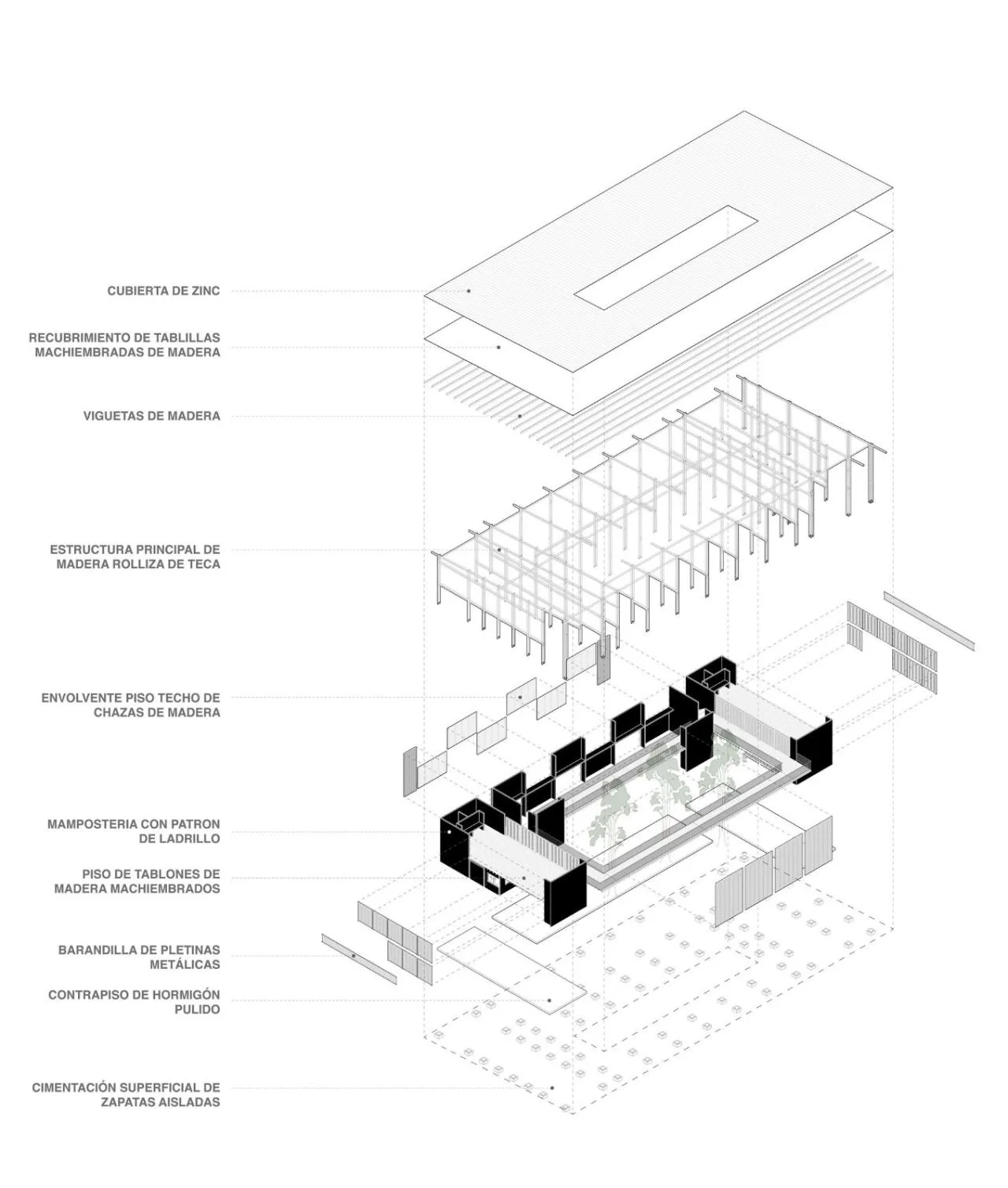
△ Exploded diagram
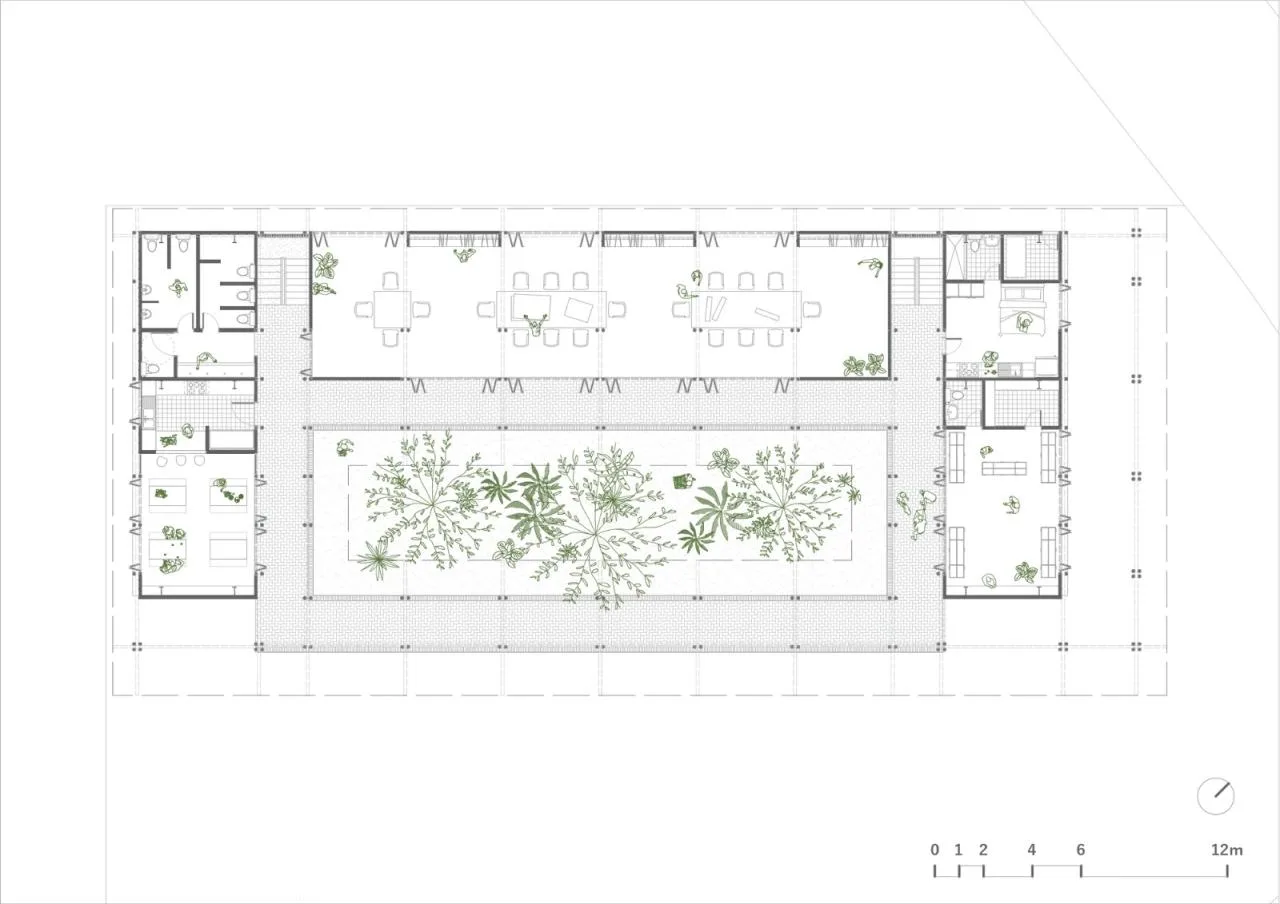
△ First floor plan
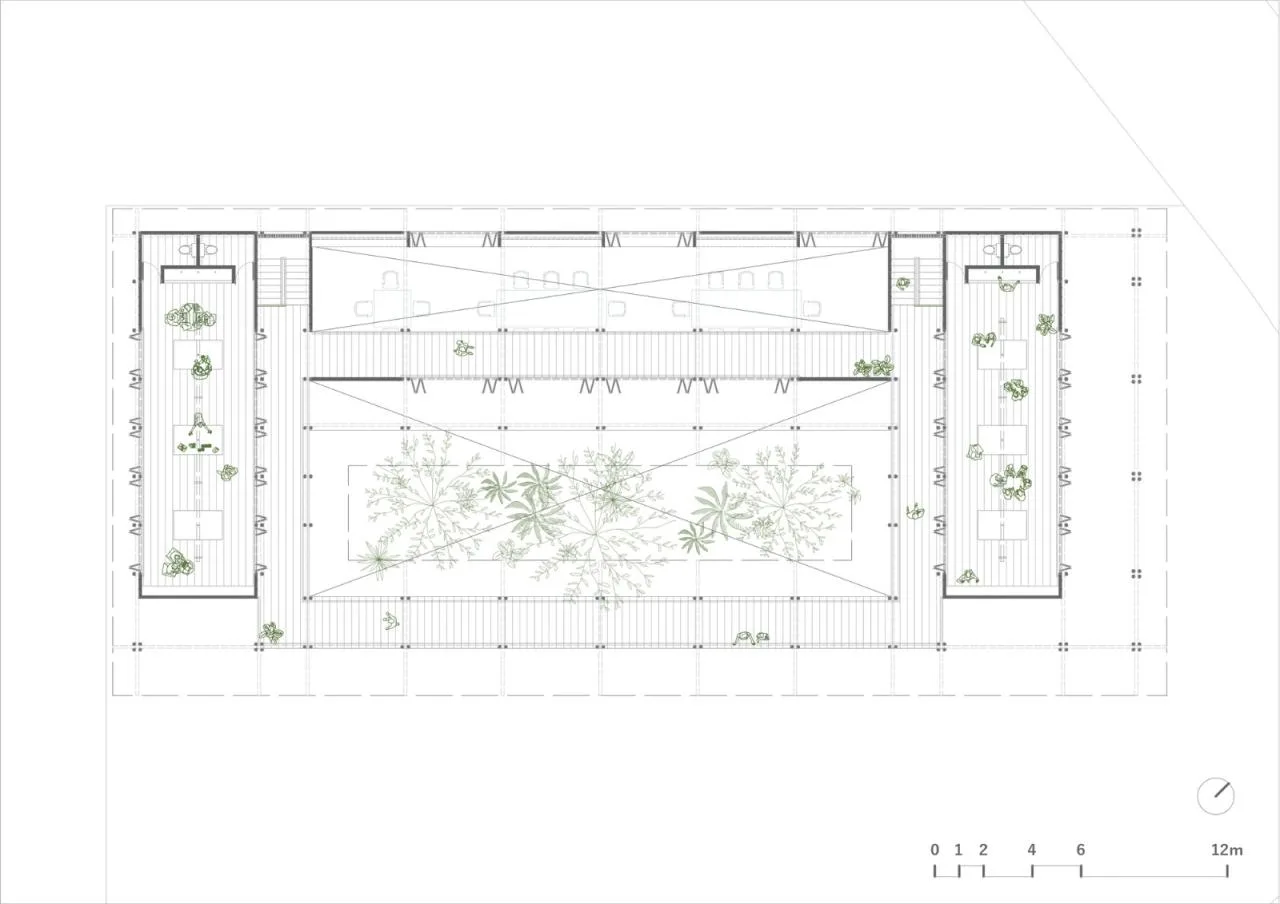
△ Second floor plan
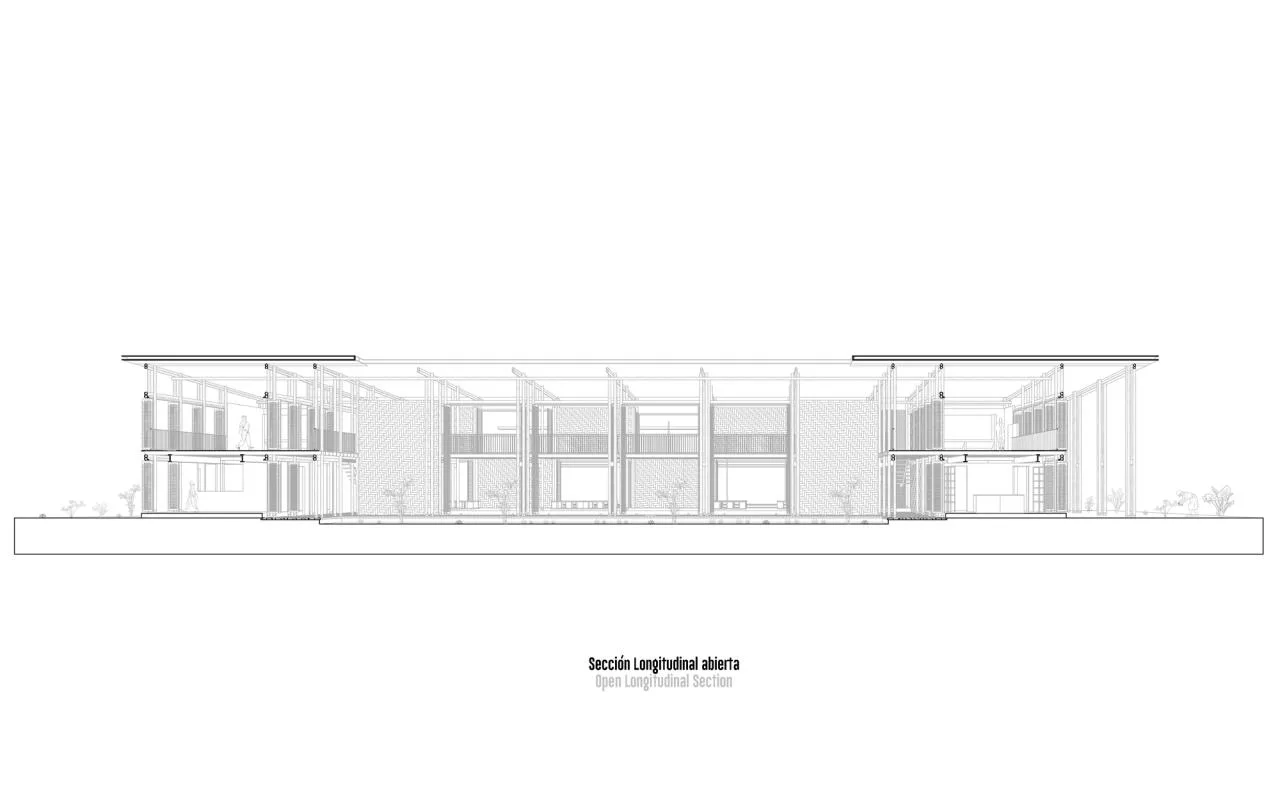
△ Section diagram
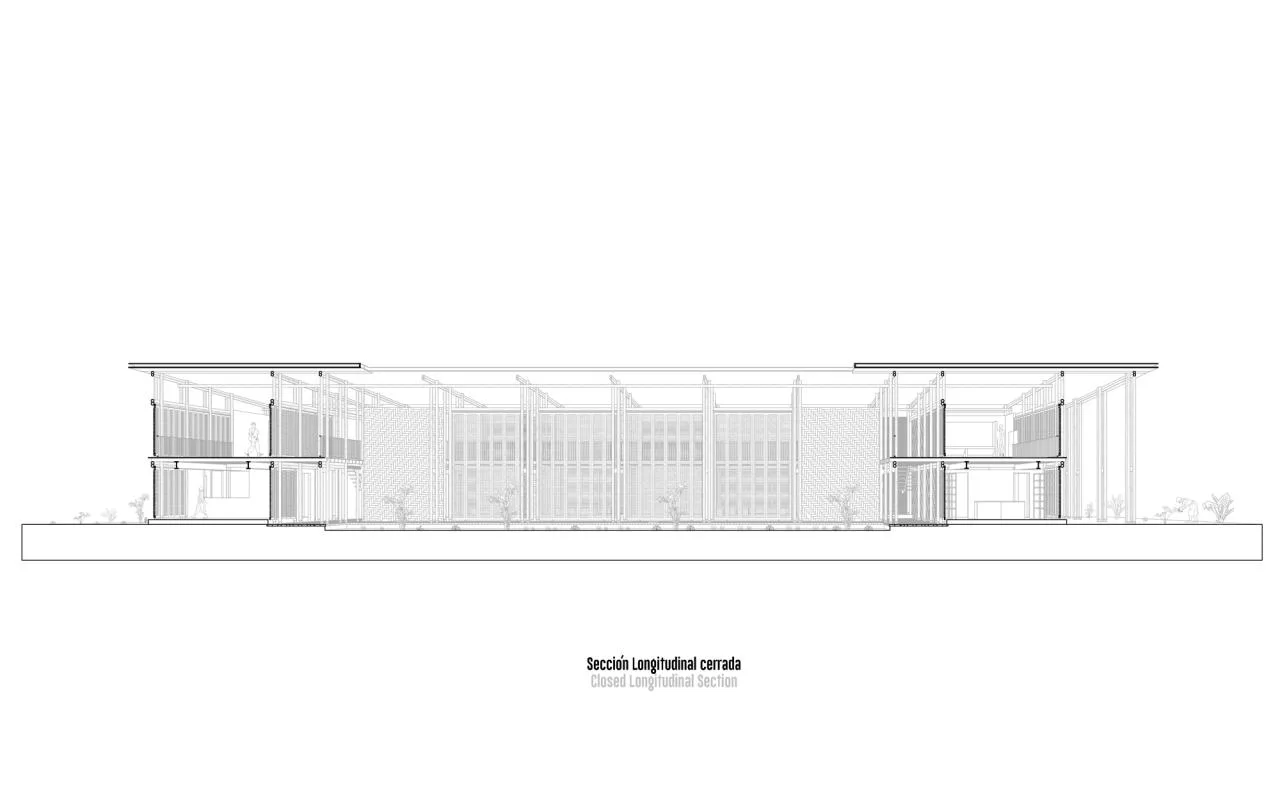
△ Section diagram
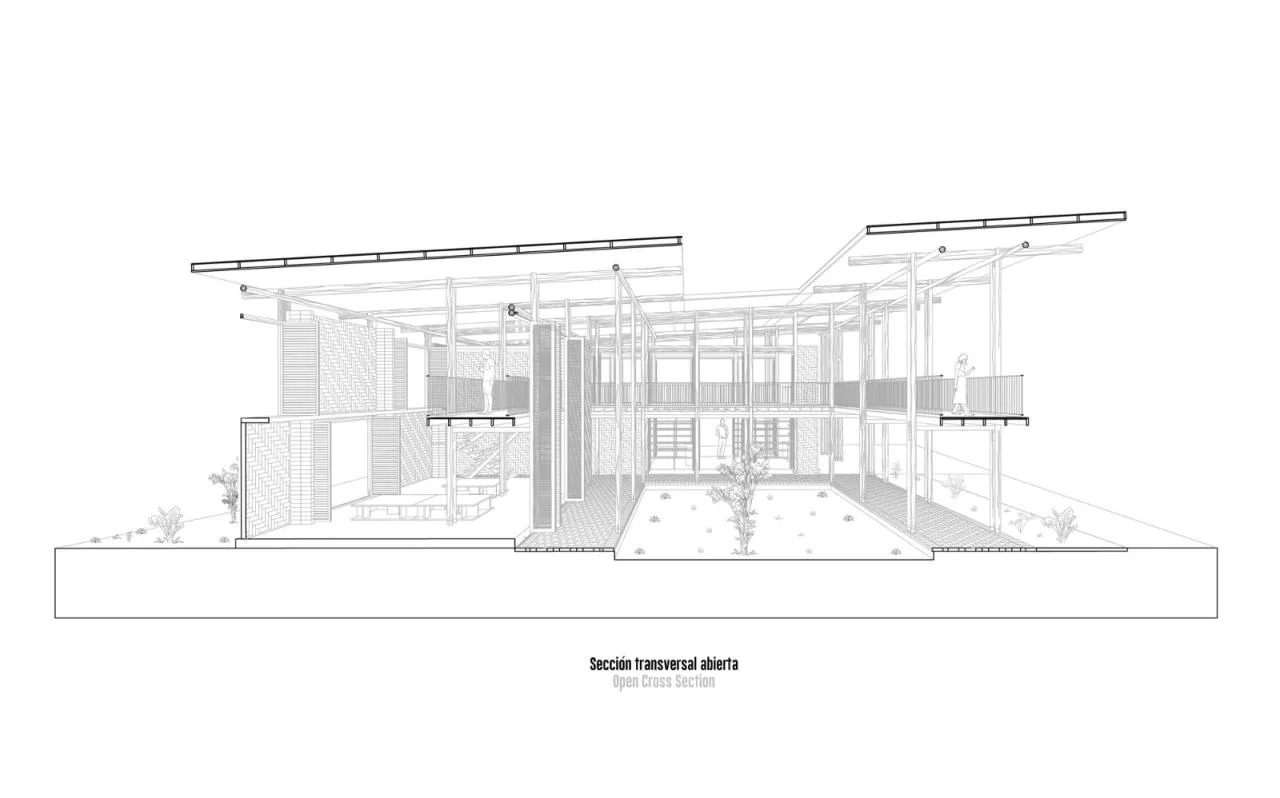
△ Section diagram
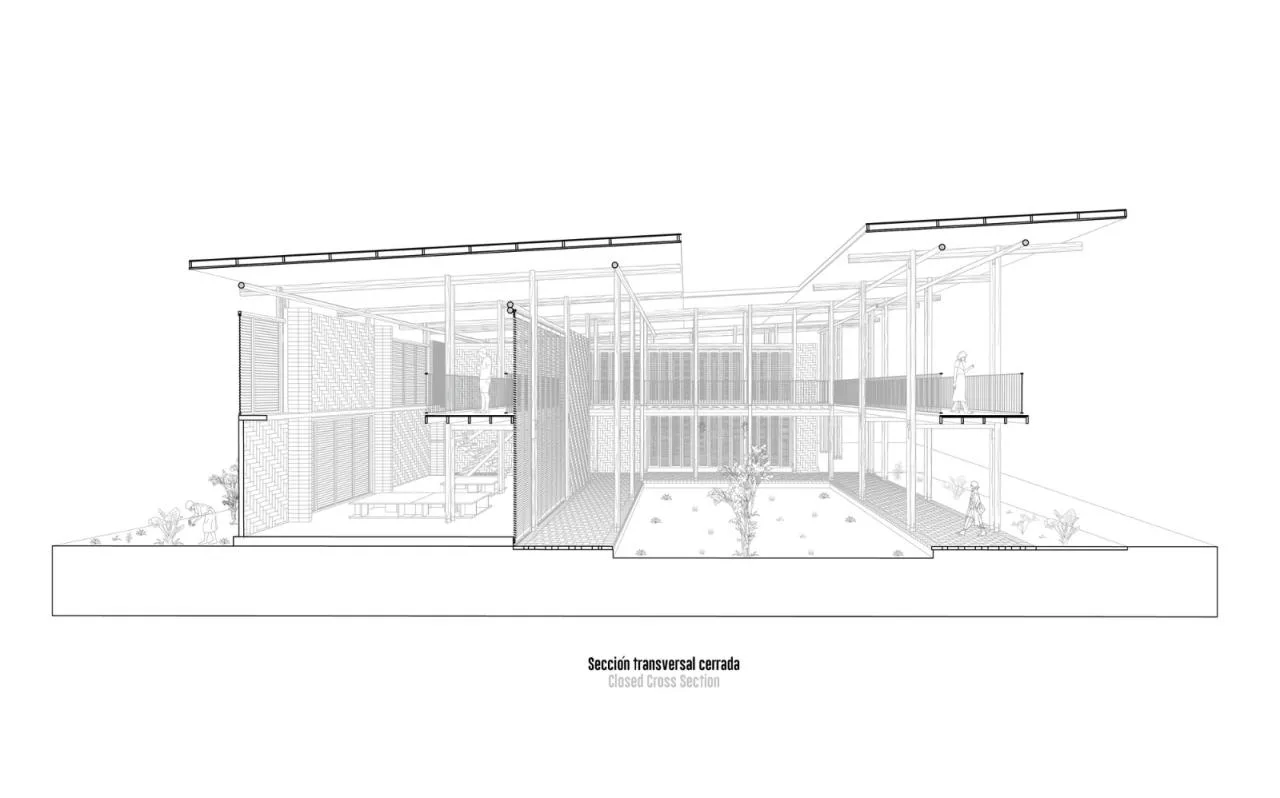
△ Section diagram
Project Information
Architect: Juan Carlos Bamba, Natura Futura Arquitectura
Area: 665 square meters
Year: 2023
Project Management: Fundación Young Living
Partners: Andrea Ollague, Hector Perlaza, La Iguana Foundation, Bromelias
Building Components: Pablo Ponce
Graphic Design: Andres Ortega, Cynthia Rosero
Location: Chongón, Ecuador












Must log in before commenting!
Sign Up