
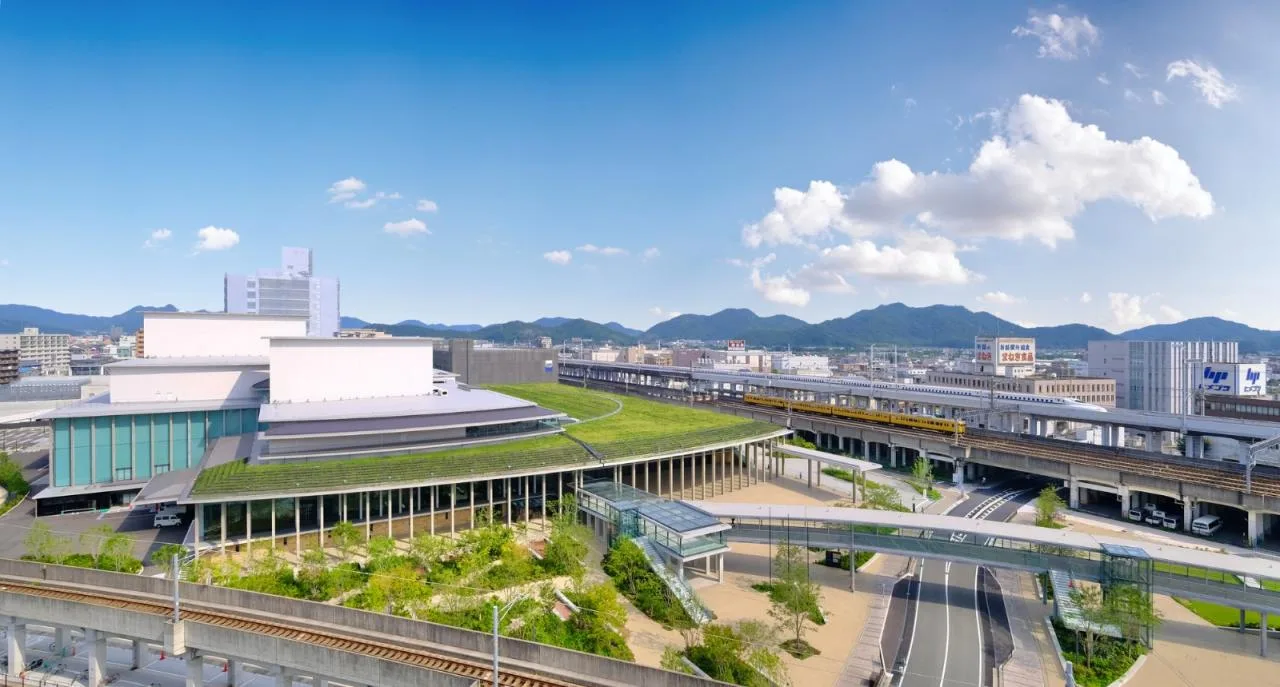
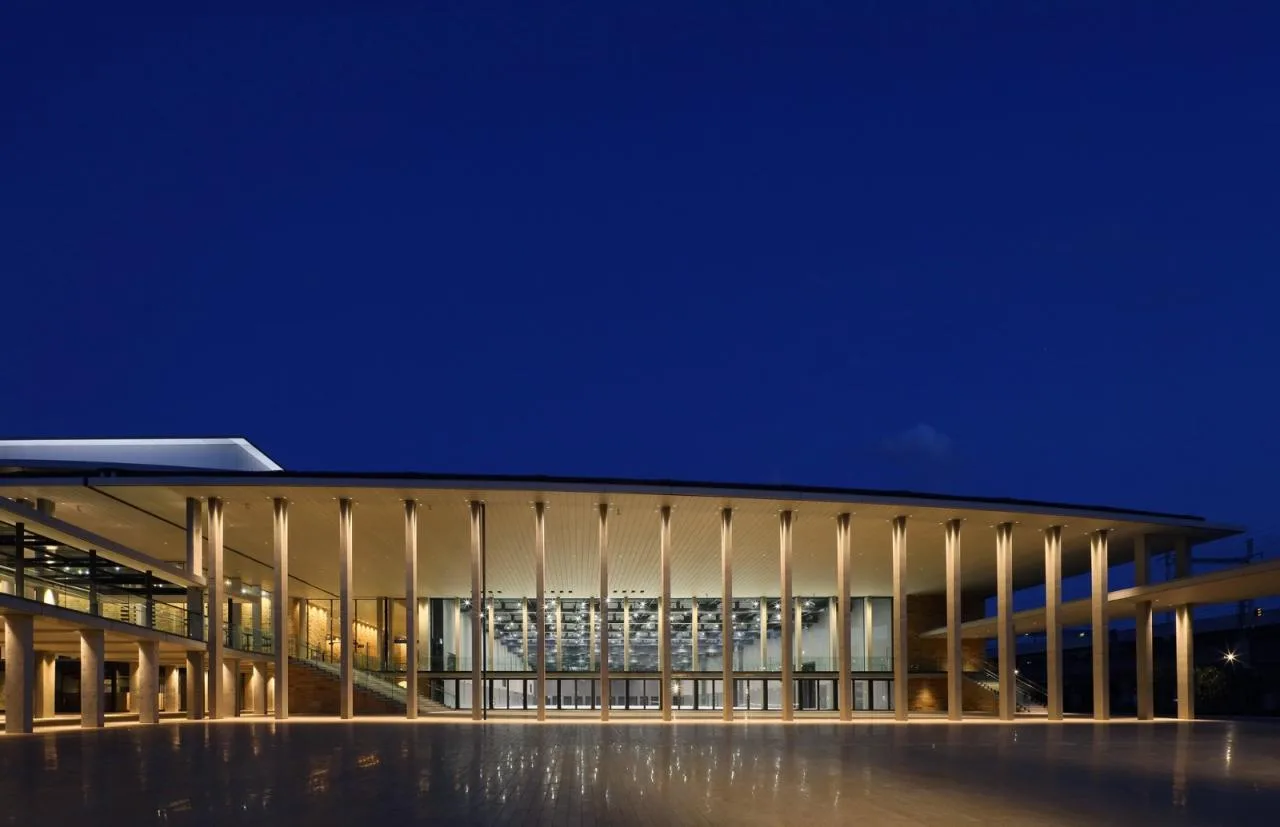
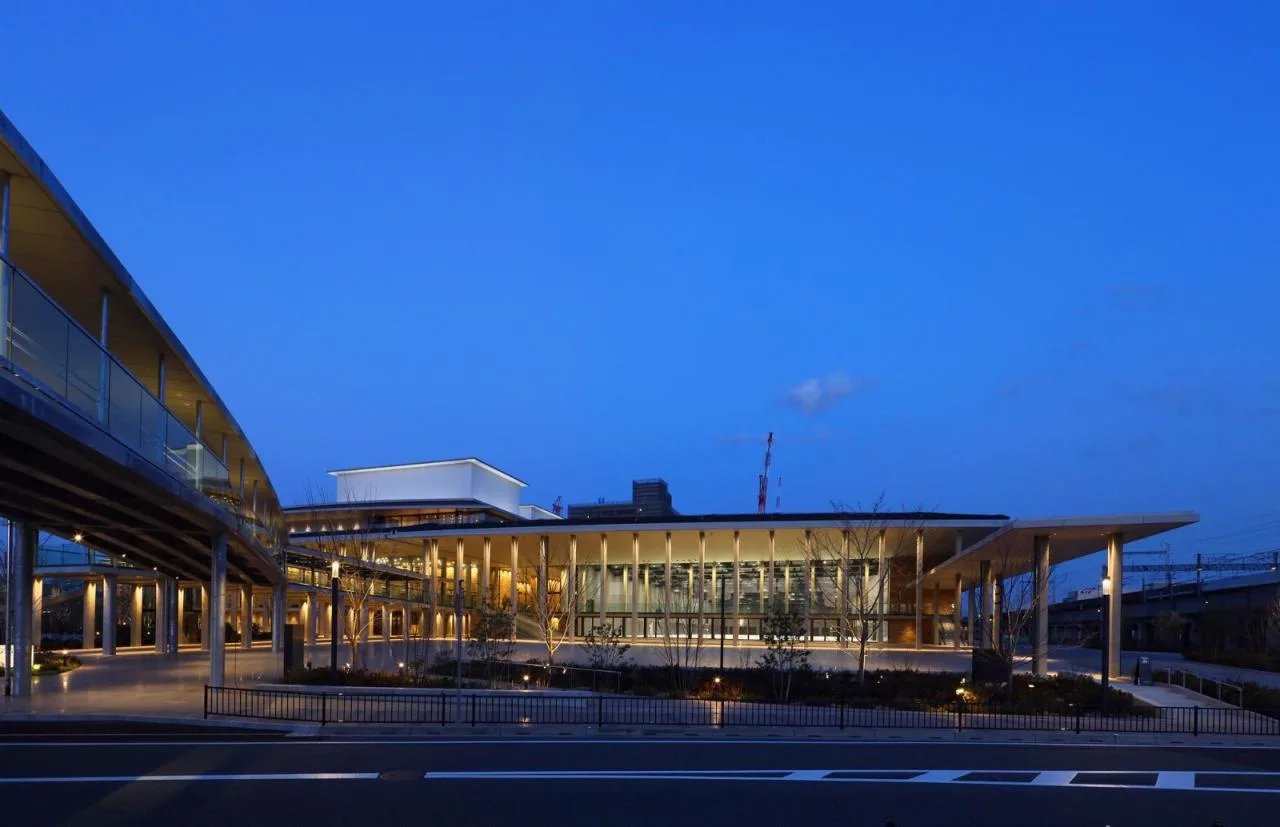
The city planners of Himeji City Station in Hyogo, Japan, have carefully divided the surrounding area into three primary zones to foster a vibrant communication hub that links parks and buildings. These zones include the entrance area centered on the North Exit Front Square, the core area east of the entrance, and the active area. Situated within the active area, the Arcrea Himeji Cultural Conference Center serves as the cultural, artistic, and industrial heart of Harima Town. This center collaborates with the other zones for development while integrating seamlessly with the park on the site’s west side to boost overall appeal.
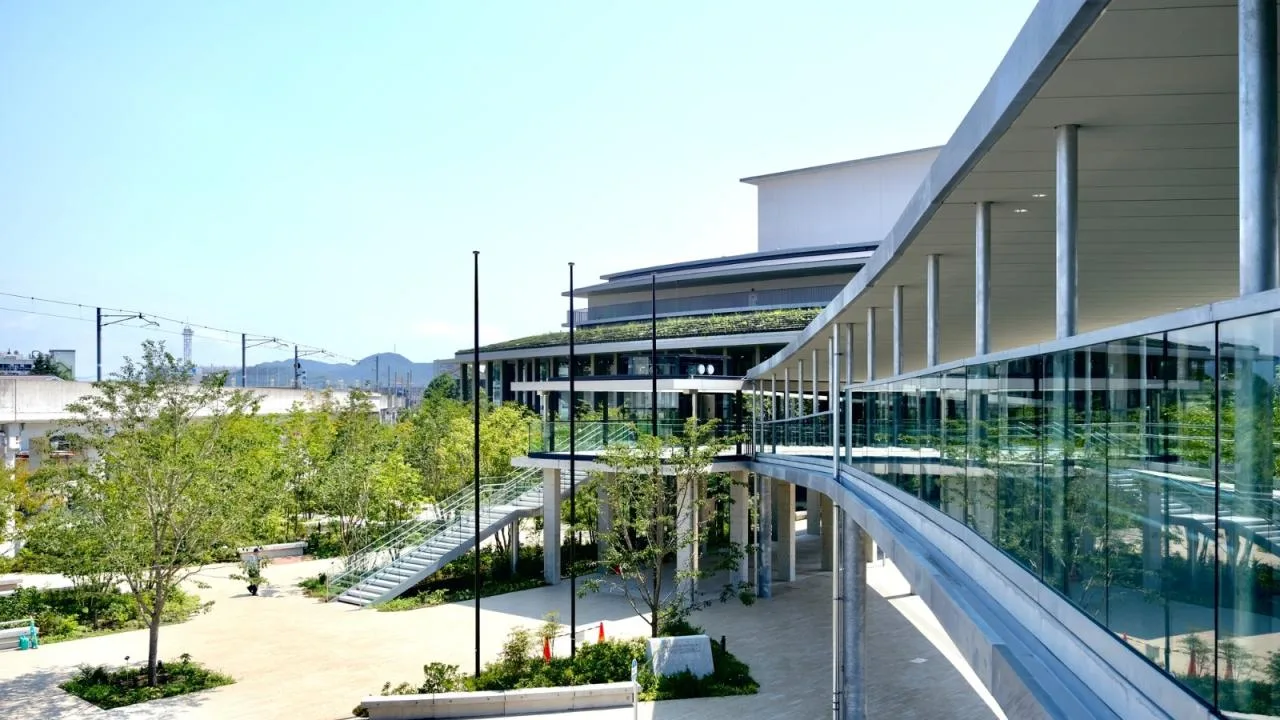
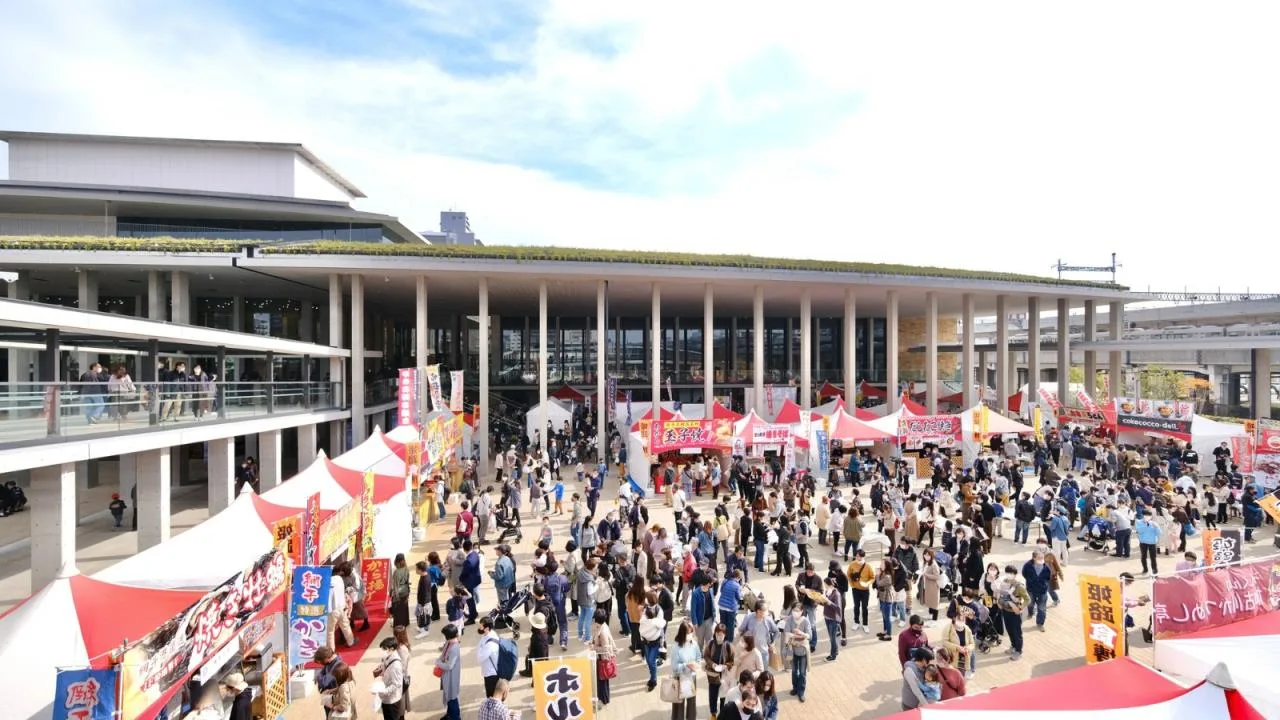
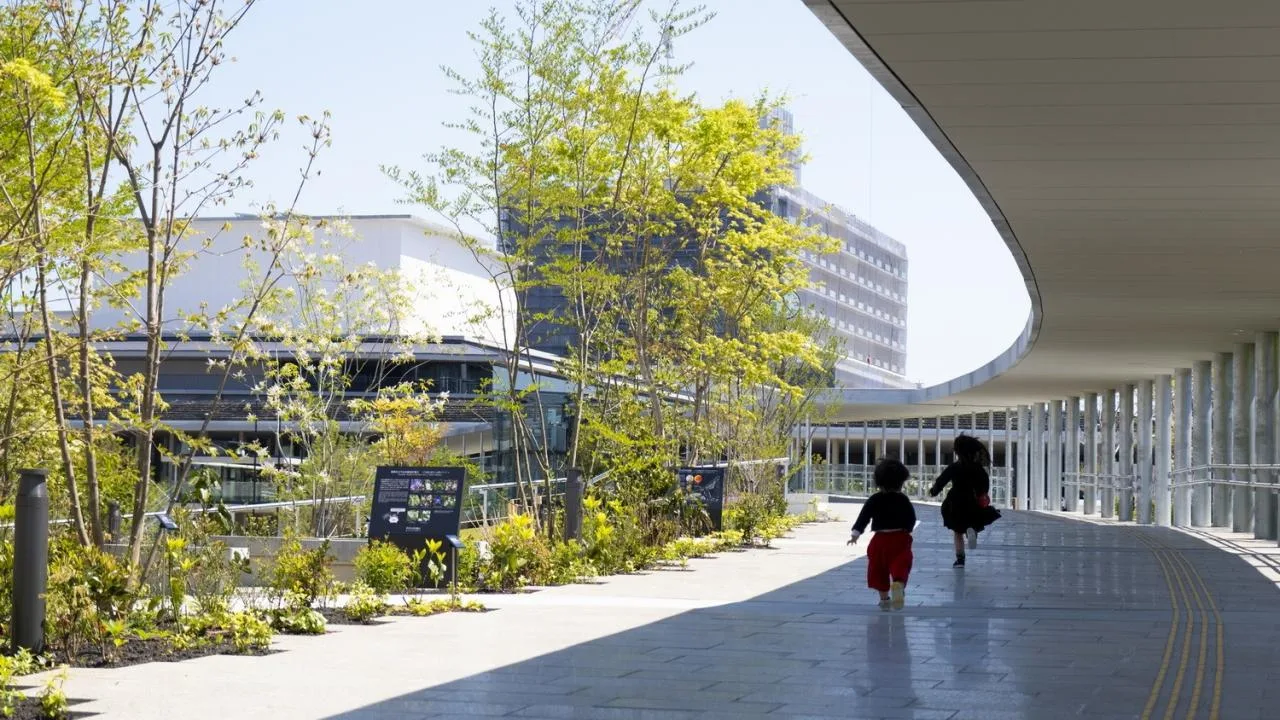
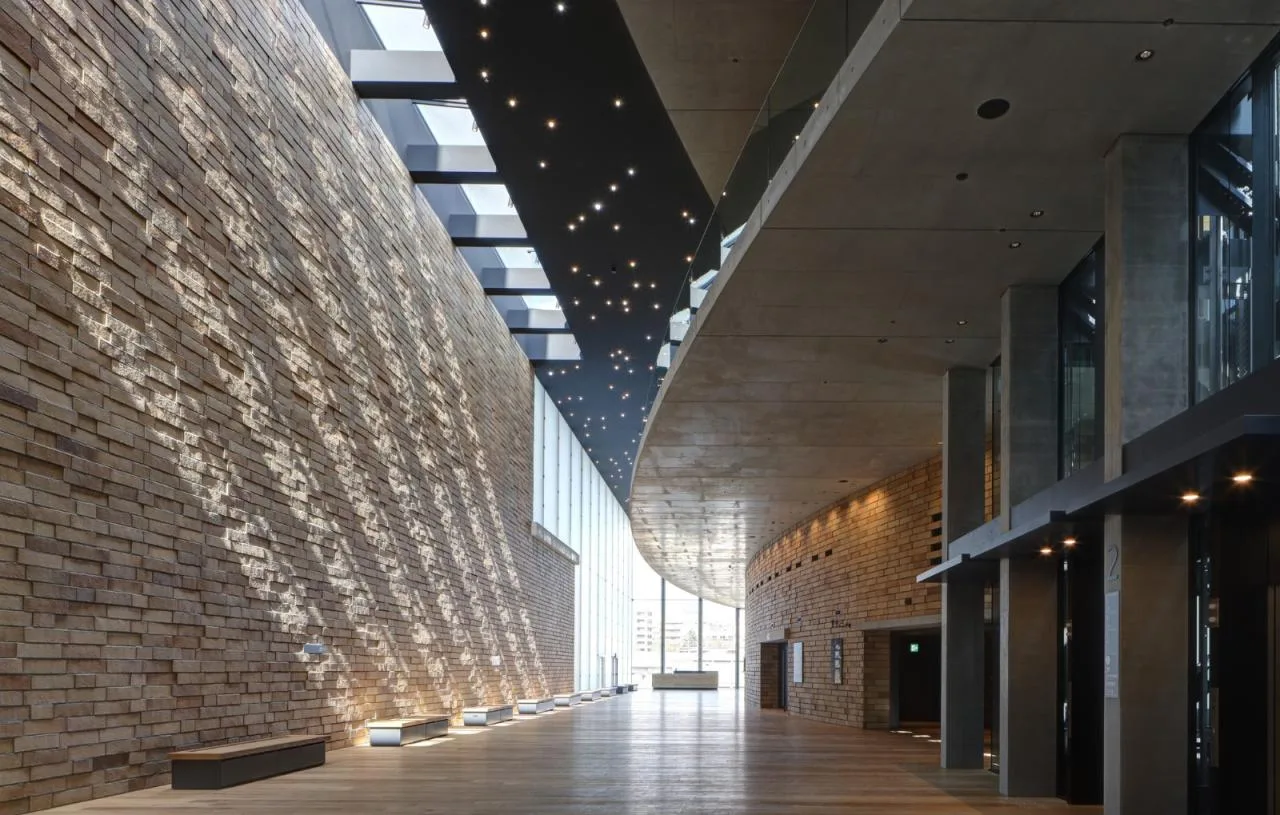
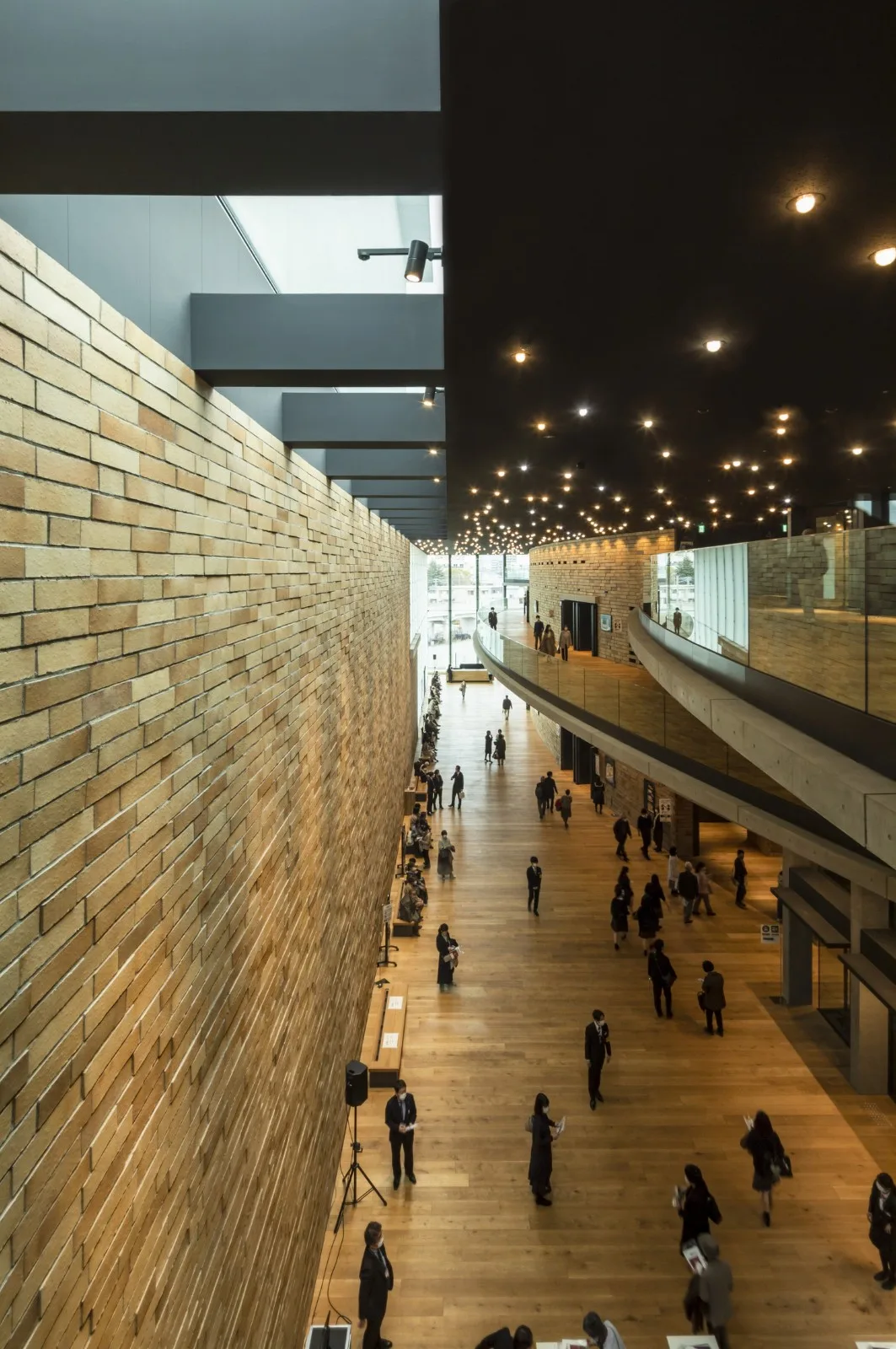
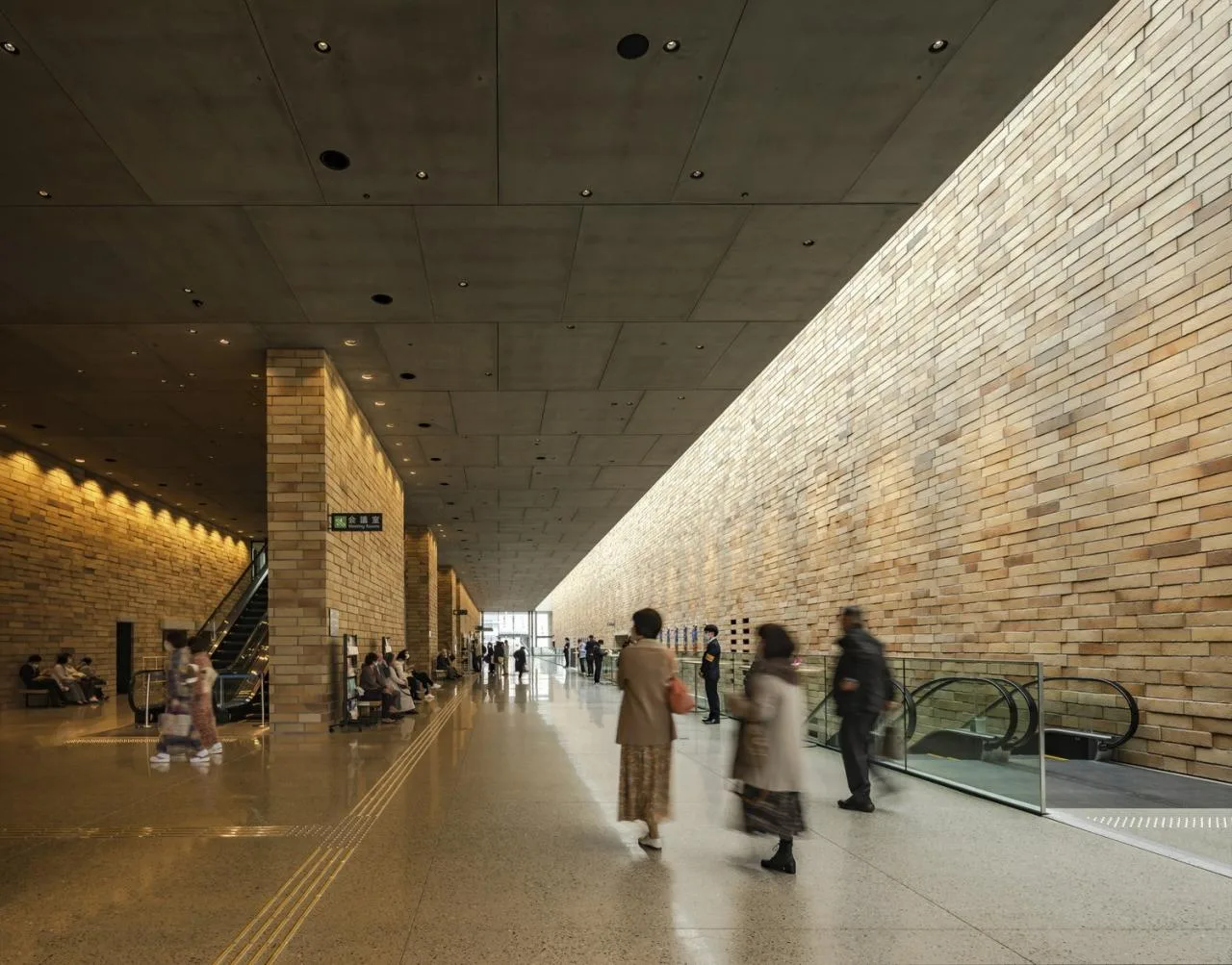
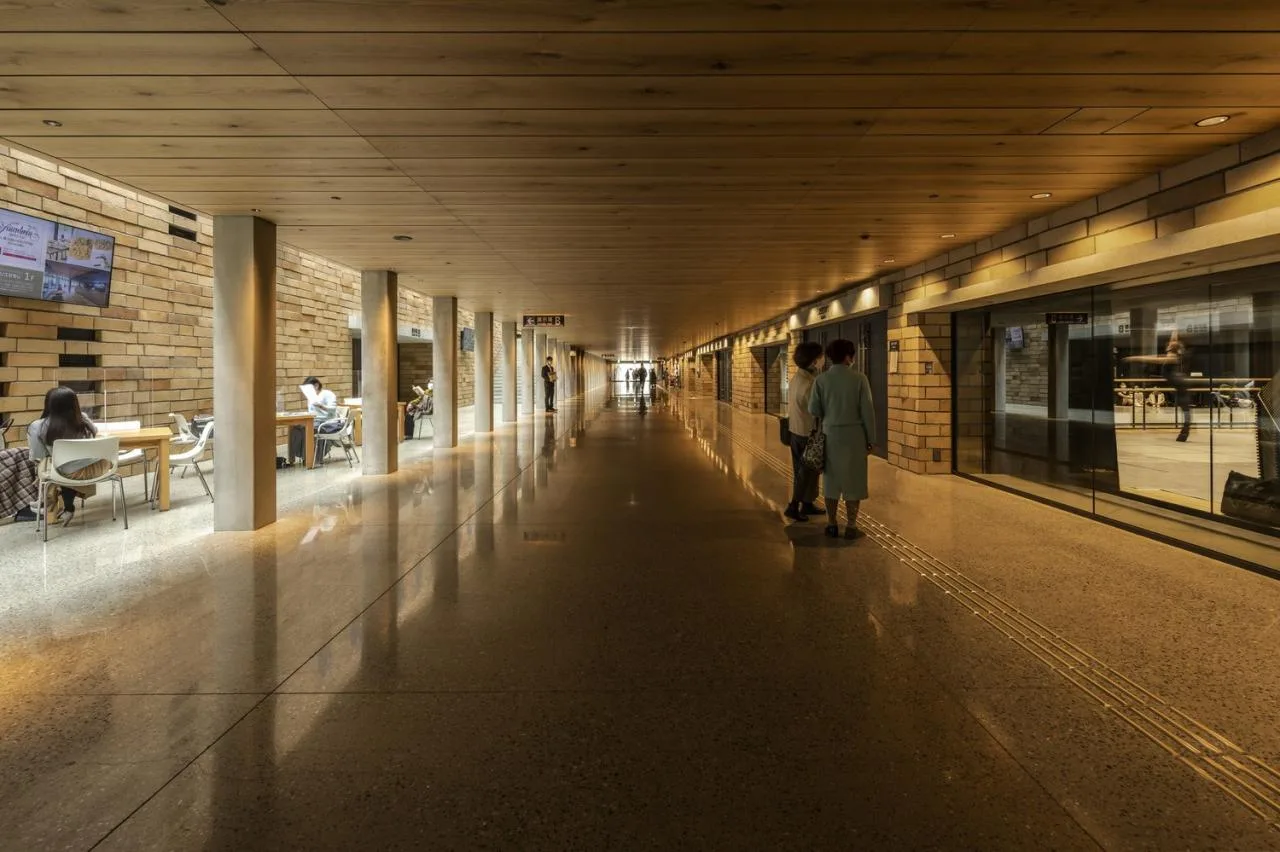
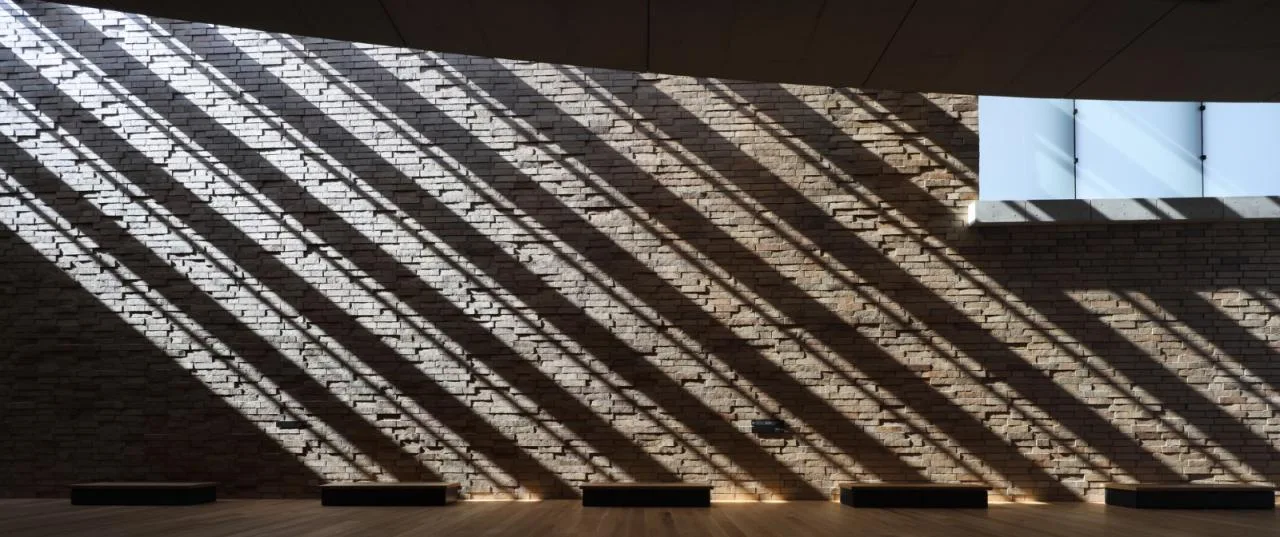
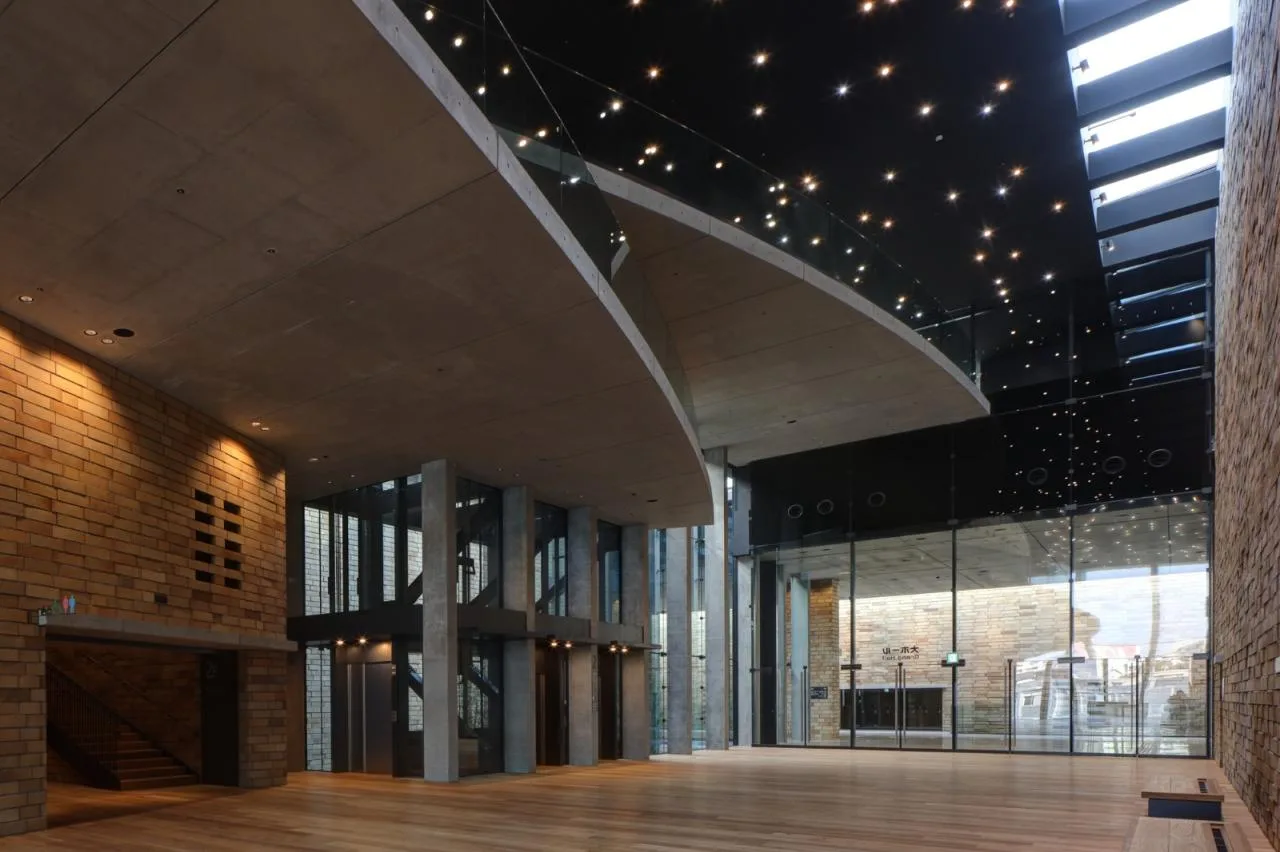
A covered walkway runs along the park, stretching from Himeji Station to the heart of Arcrea Himeji. This pathway offers visitors shade and shelter from sun and rain. The sidewalk is adorned with flowers, plants, and trees native to Himeji City, while benches and water features allow guests to appreciate the changing seasons en route to the center’s second-floor lobby. This east-west lobby provides direct access to small, medium, and large auditoriums, as well as the adjacent county hospital. Skylights cast delicate shadows on the large brick wall within the hall, and visitors can gaze through the hall’s windows to view the exhibition hall and studio below, catching glimpses of local activities in progress.
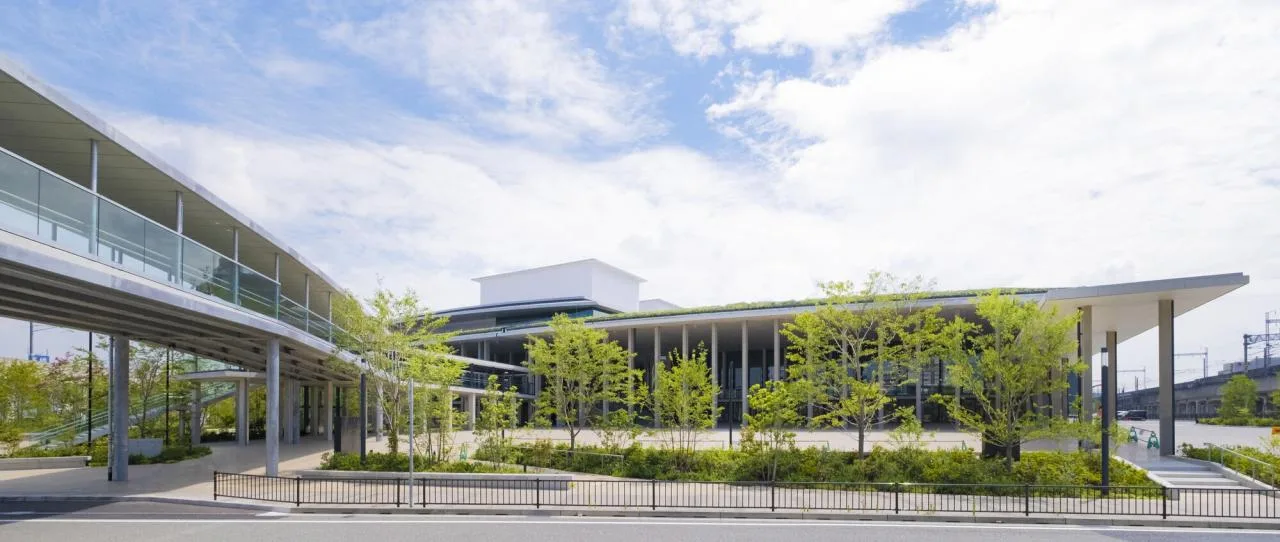
The collaborative cultural, artistic, and industrial complex houses exhibition spaces, multiple conference rooms, and three auditoriums with public halls. The first-floor layout connects the exhibition hall, studio, dressing rooms, audience corridors, hall stage, and loading area, allowing for considerable spatial flexibility. For instance, the hall can host lectures, the dressing rooms can serve as waiting areas for international conferences, and the exhibition space can be adapted for trade fairs. The architects designed the dressing room area, typically accessed from the back, to also be reachable from the front hall. This design grants performers—who are also community members—a dignified entrance and reduces their travel distance, preventing intersections with loading and unloading routes.
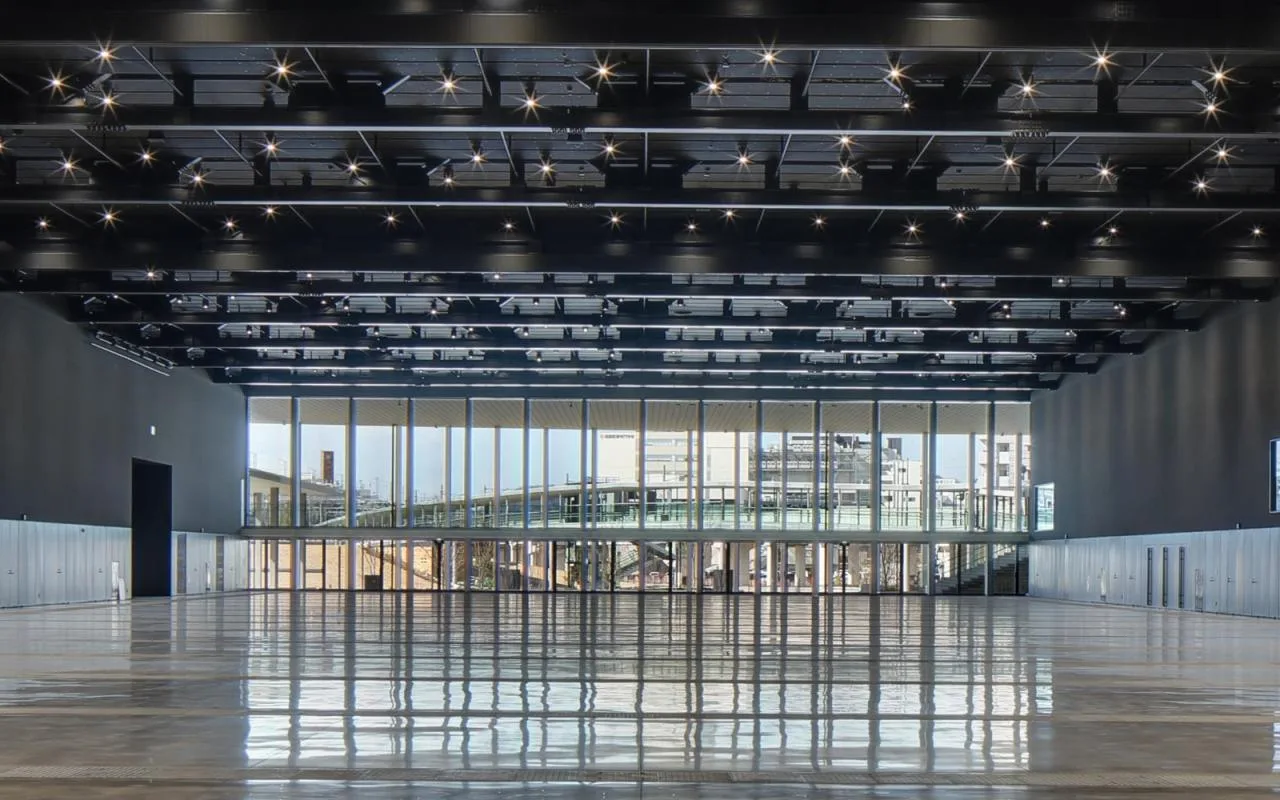
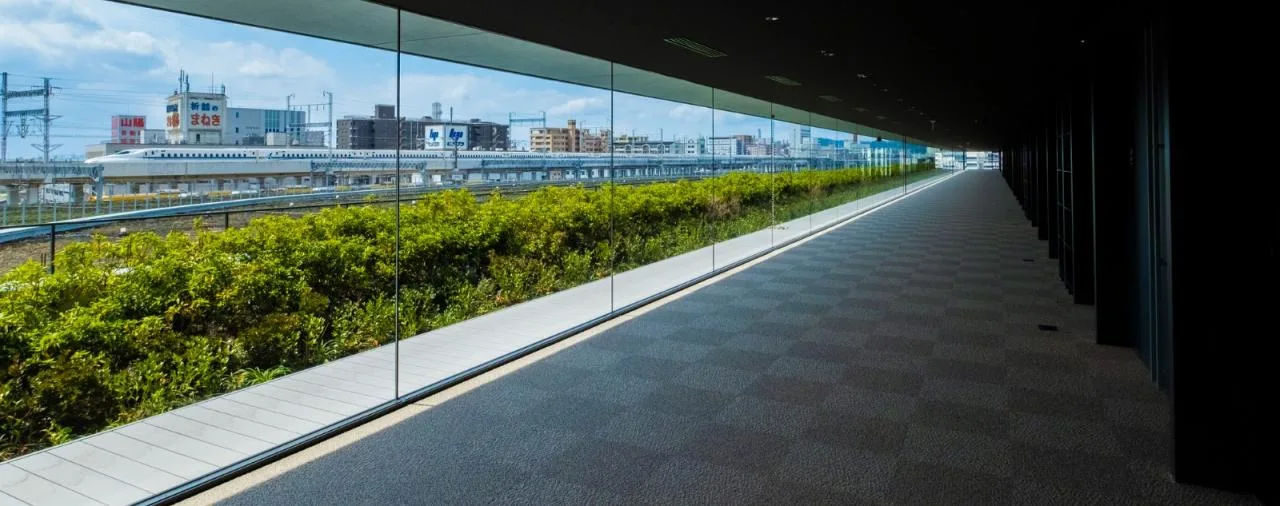
The 4,000-square-meter exhibition hall, with a ceiling height of 10 meters, can be divided into three independent sections using movable partitions. Transparent glass doors enable the hall to connect seamlessly with the expansive outdoor exhibition area located on the park’s west side. The conference rooms on the center’s fourth floor overlook the green roof to the south and the courtyard to the north, immersing visitors in lush greenery. The architect intentionally set the floor height of the south conference room to align with the eye level of passersby on the Shinkansen trains crossing the roof, fostering a unique temporal and spatial connection between the building and the passing trains.
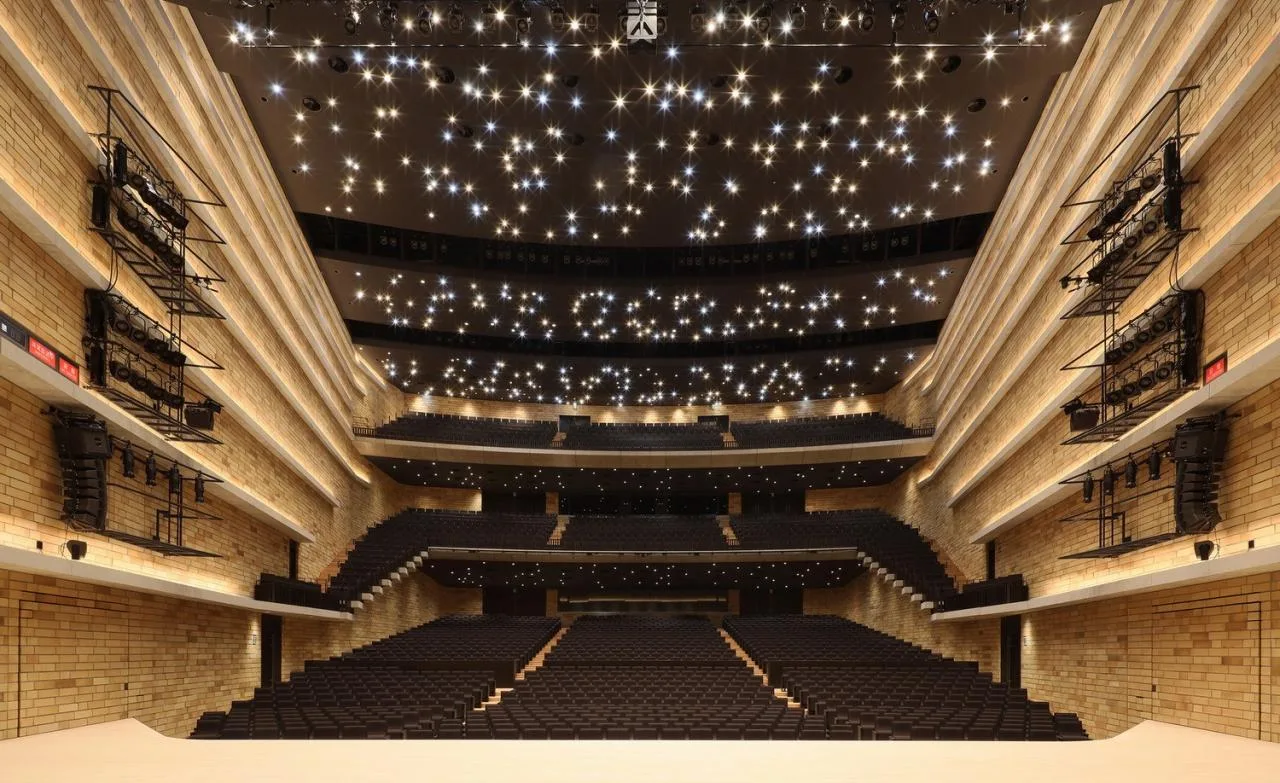
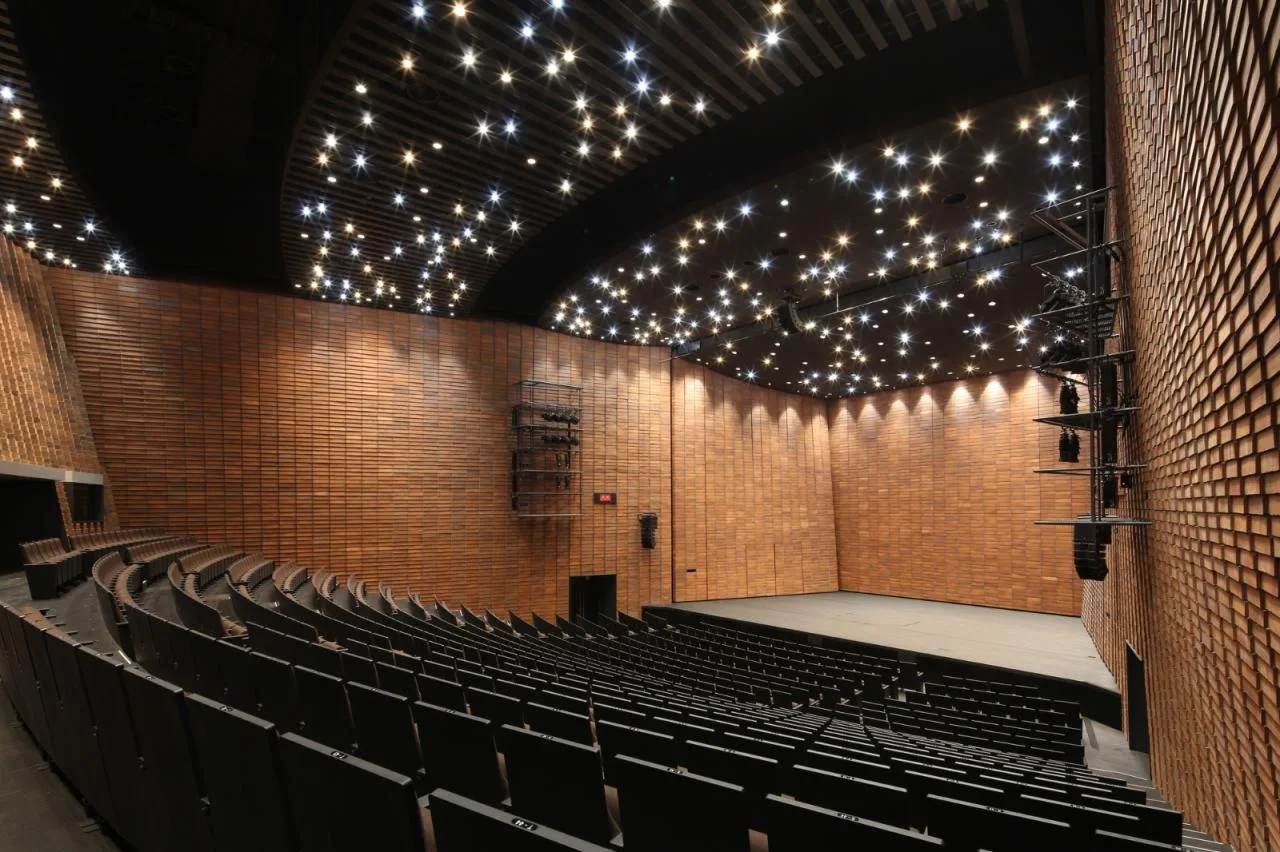
The center features three high-performance multifunctional halls, all finished with full brick interiors and offering a total of 2,010 seats. These halls are equipped with soundproof wall panels and blocks that enhance early sound reflections. Their seismic and soundproof structures isolate the floor, ceiling, and walls from the main framework, ensuring a quiet environment ideal for concerts and other performances. The lighting design uses nine different colors and sizes of spherical, bead, and ceiling-mounted tube lights to recreate the starry night sky from October 1609, the period when Himeji Castle—now a UNESCO World Heritage Site—was completed.
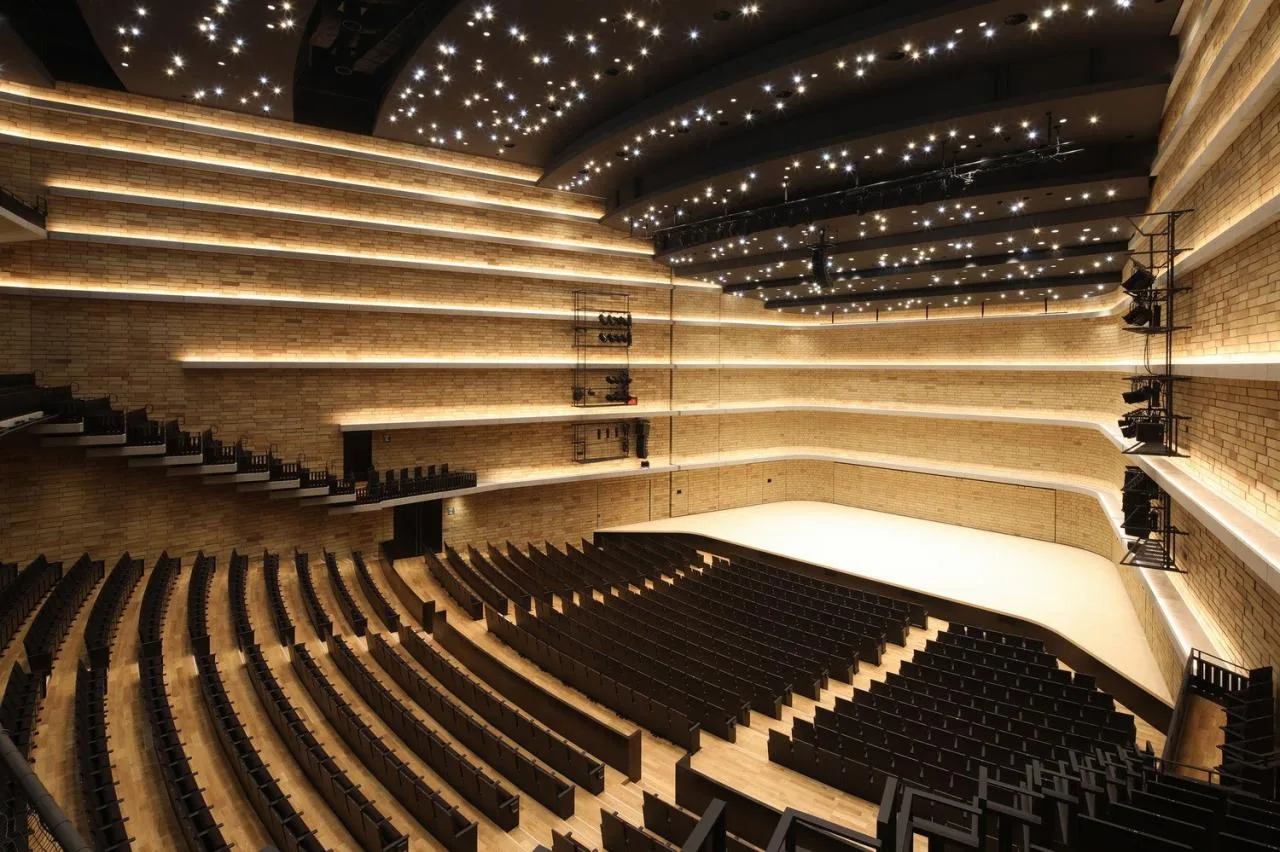
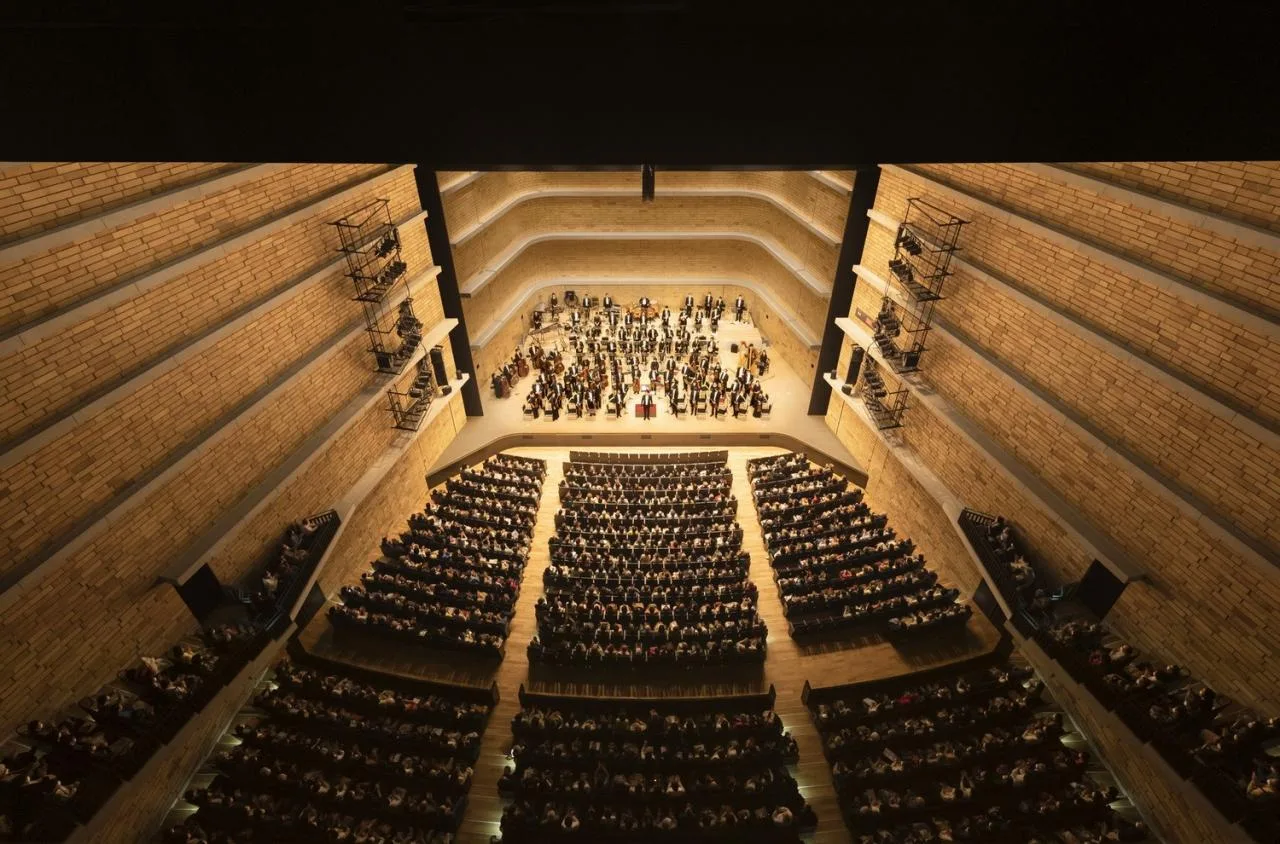
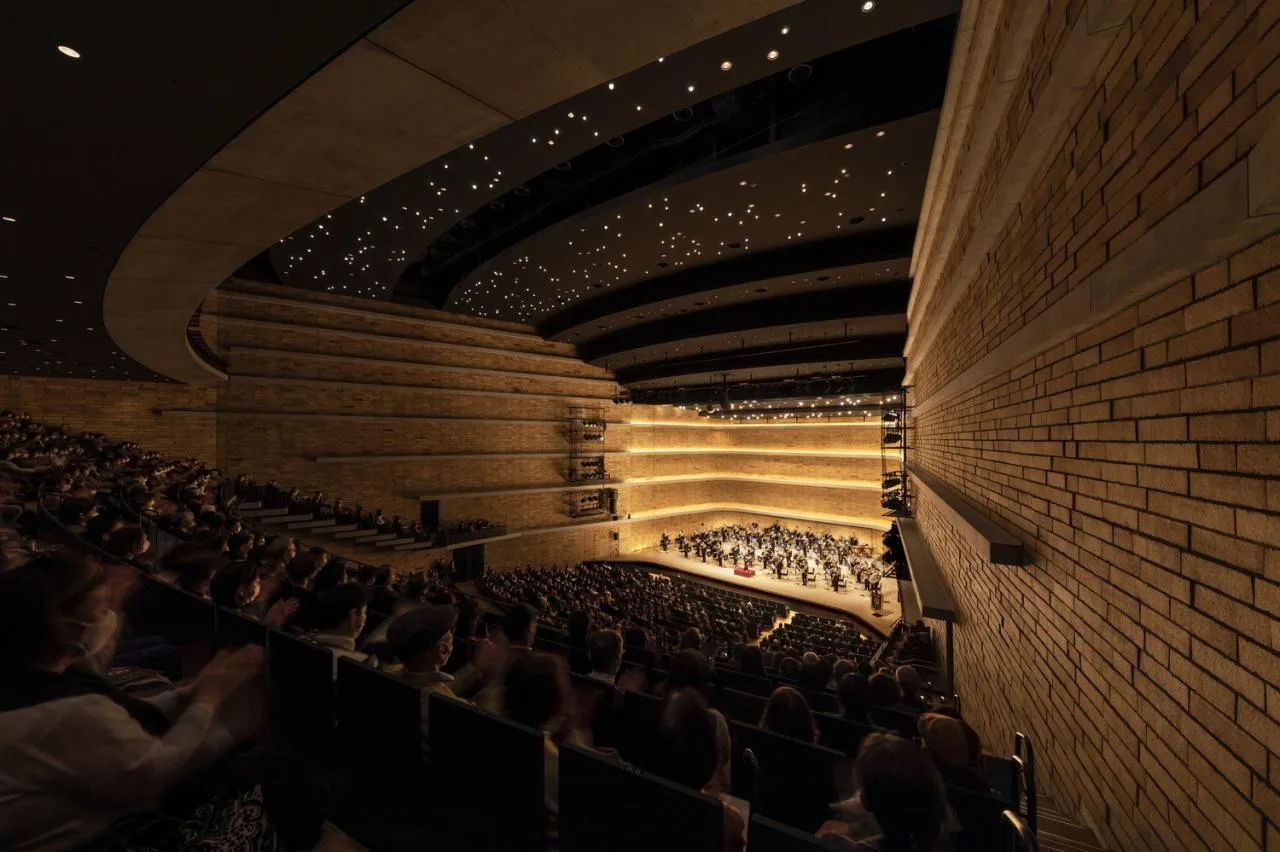
The central hall is designed as a multifunctional theater with a fan-shaped seating arrangement, allowing the audience to feel fully immersed in the stage performances. Its interior brick walls feature a three-dimensional curved design that enhances sound reflection and creates a unified acoustic environment throughout the seating area. The small auditorium, commonly used for intimate concerts and events, also incorporates seismic and sound insulation features. Its four walls incline outward at a five-degree angle to improve acoustic reverberation. The architects envision this building—with its warm, all-brick interior and a range of small, medium, and large auditoriums—becoming a cherished cultural hub for the local community and a significant global venue.
Project Drawings
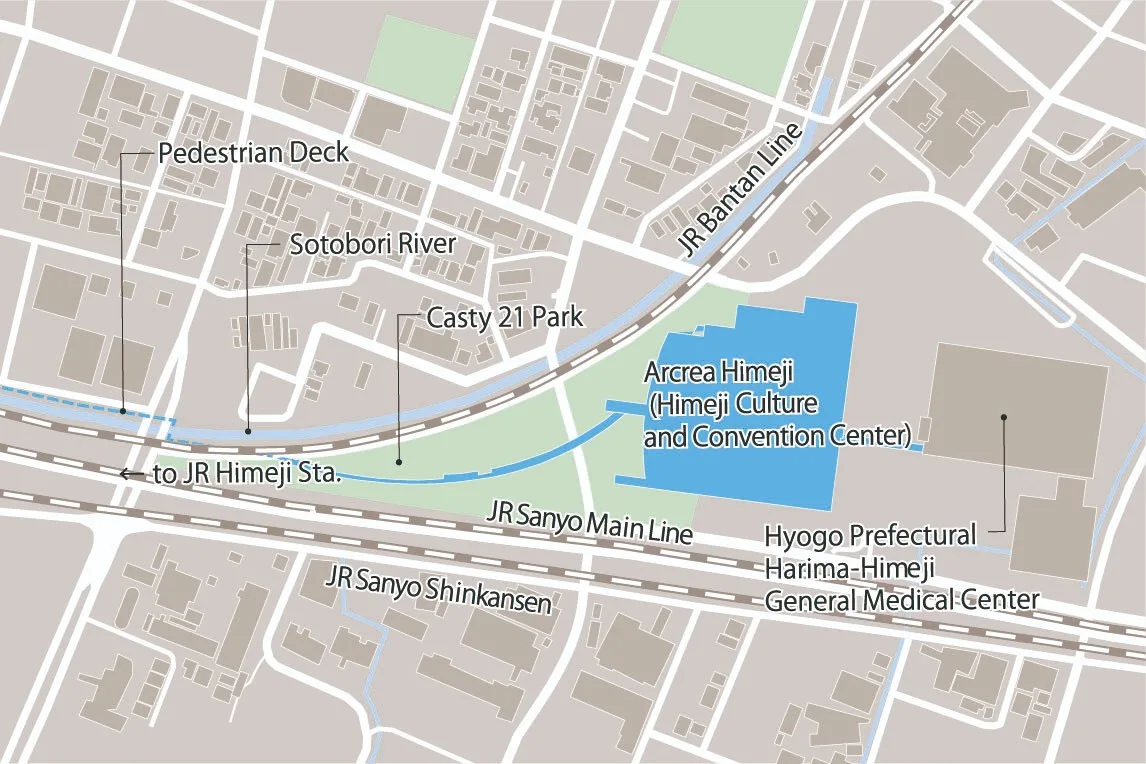
△ Base schematic diagram
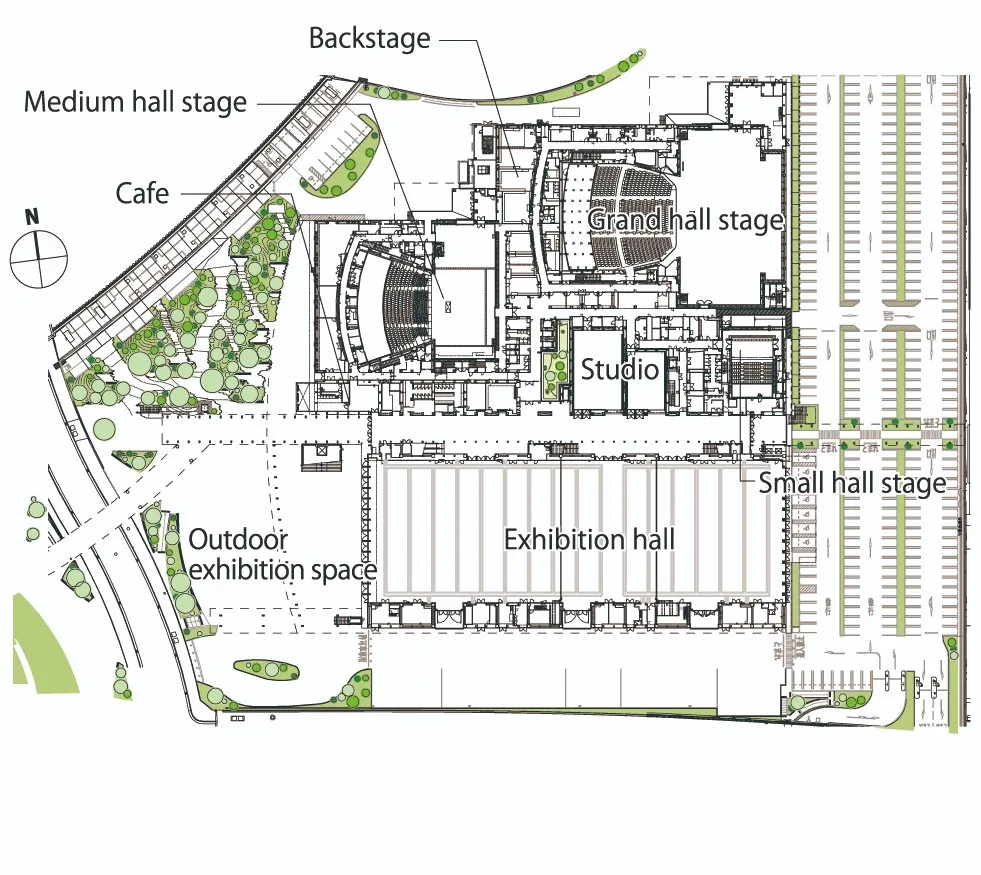
△ Floor plan schematic
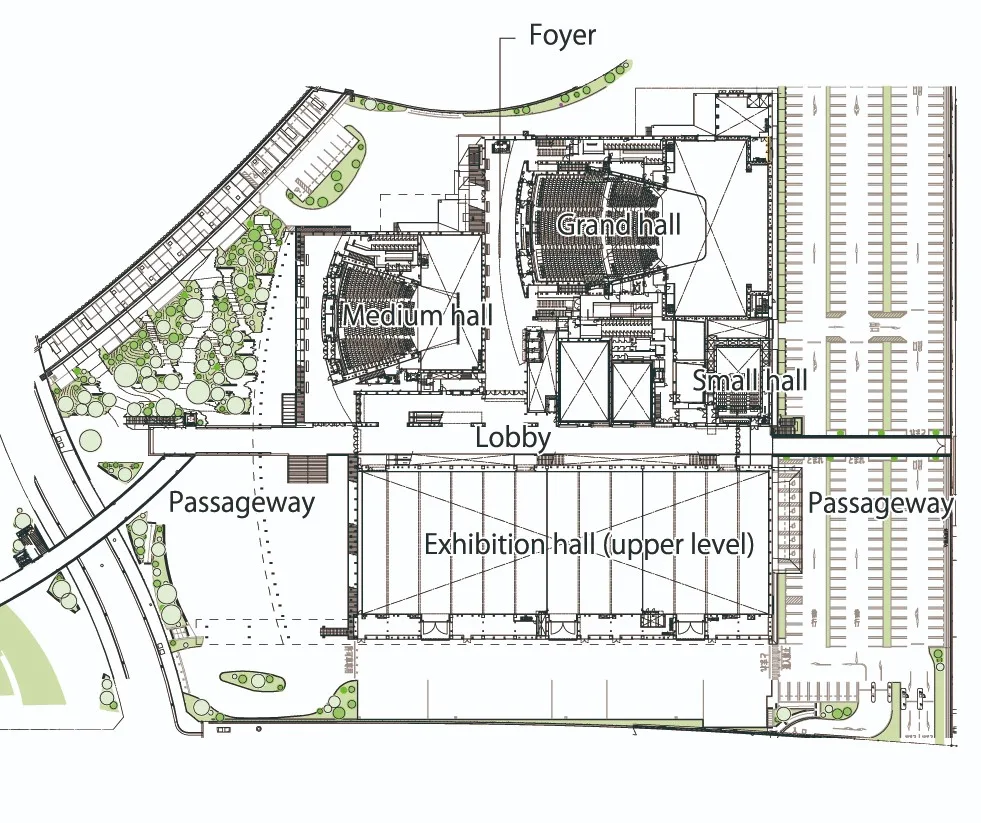
△ Floor plan schematic
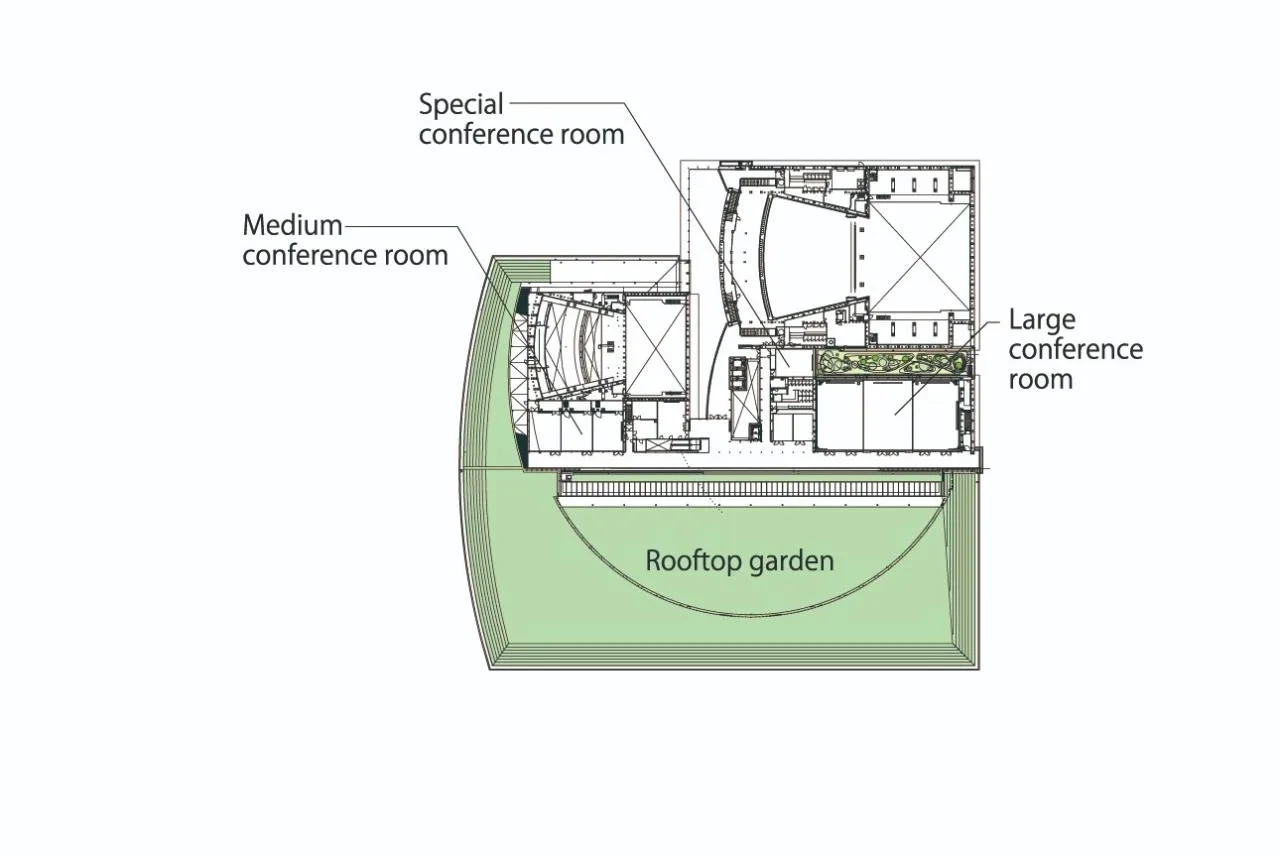
△ Floor plan schematic
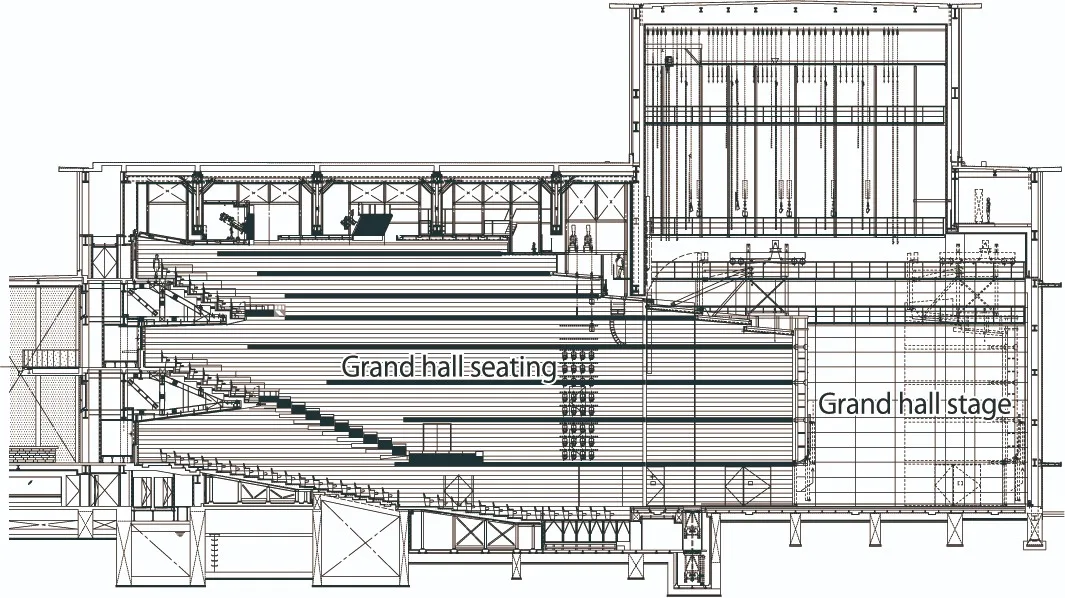
△ Section diagram
Project Information
Architect: Nikken Design
Area: 28,224 m²
Project Year: 2021
Photographers: Taizo Furukawa, Aifoto
Manufacturers: Daiwa, Nippon Sheet Glass Company, Showa Yotal
Project Construction: Takenaka Engineering Store Co., Ltd; Kanzaki/Hiranishiki Special Construction Joint Venture; Hiranishiki Construction Inc.
Location: Himeji City, Japan












Must log in before commenting!
Sign Up